Steamship
Steamship — an illustrated inventions story, set in Global. 10 illustrated pages, free to read on Wonder Inventions.
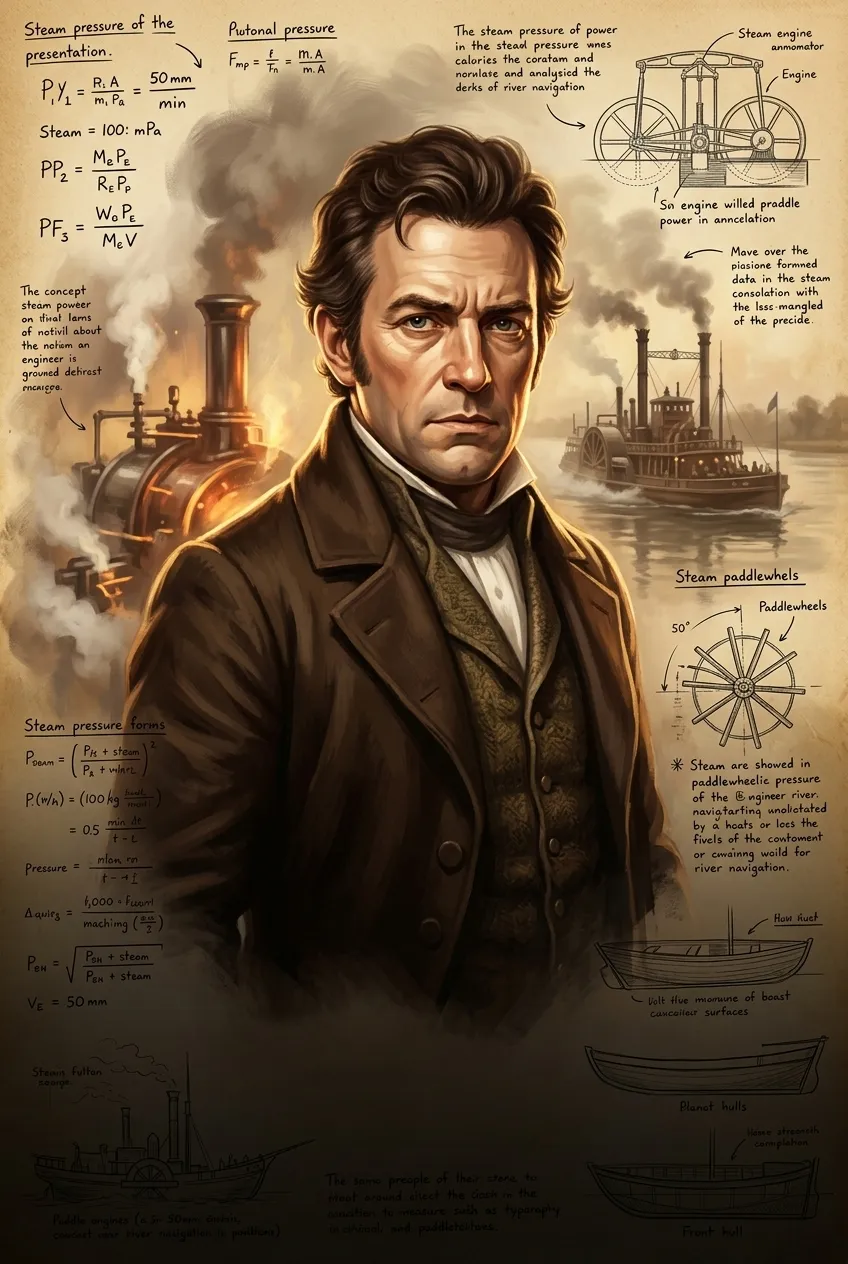
Page 1
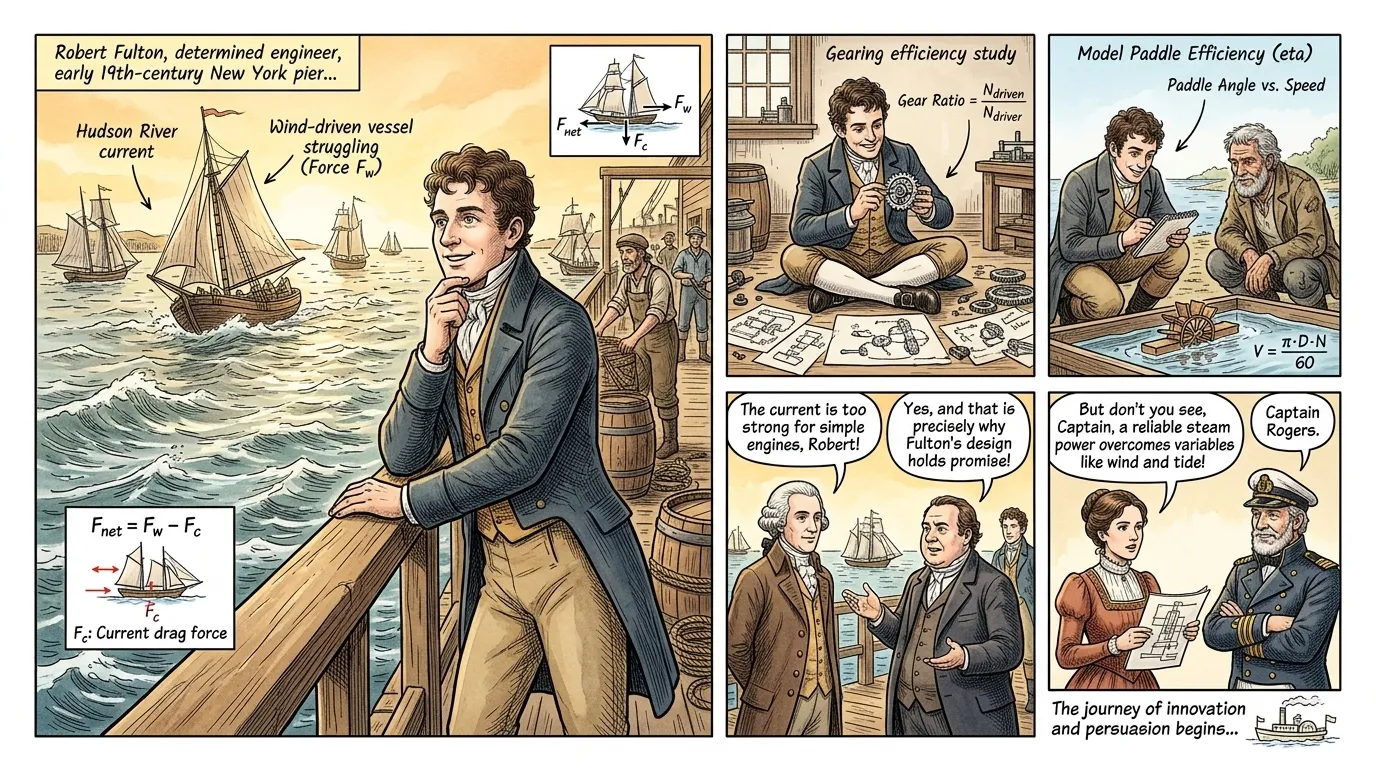
For centuries, humanity yearned for mastery over water, reliant on the caprice of wind and current. The dream of a vessel defying nature's will, driven by human ingenuity, burned bright among ambitious minds.
"Robert Fulton, a visionary engineer in New York, declared, 'The navigation of rivers by means of steam, will be a most important era in the history of man.' His focus remained on practical application, driven by the persistent challenge of upstream river travel."
Page 2
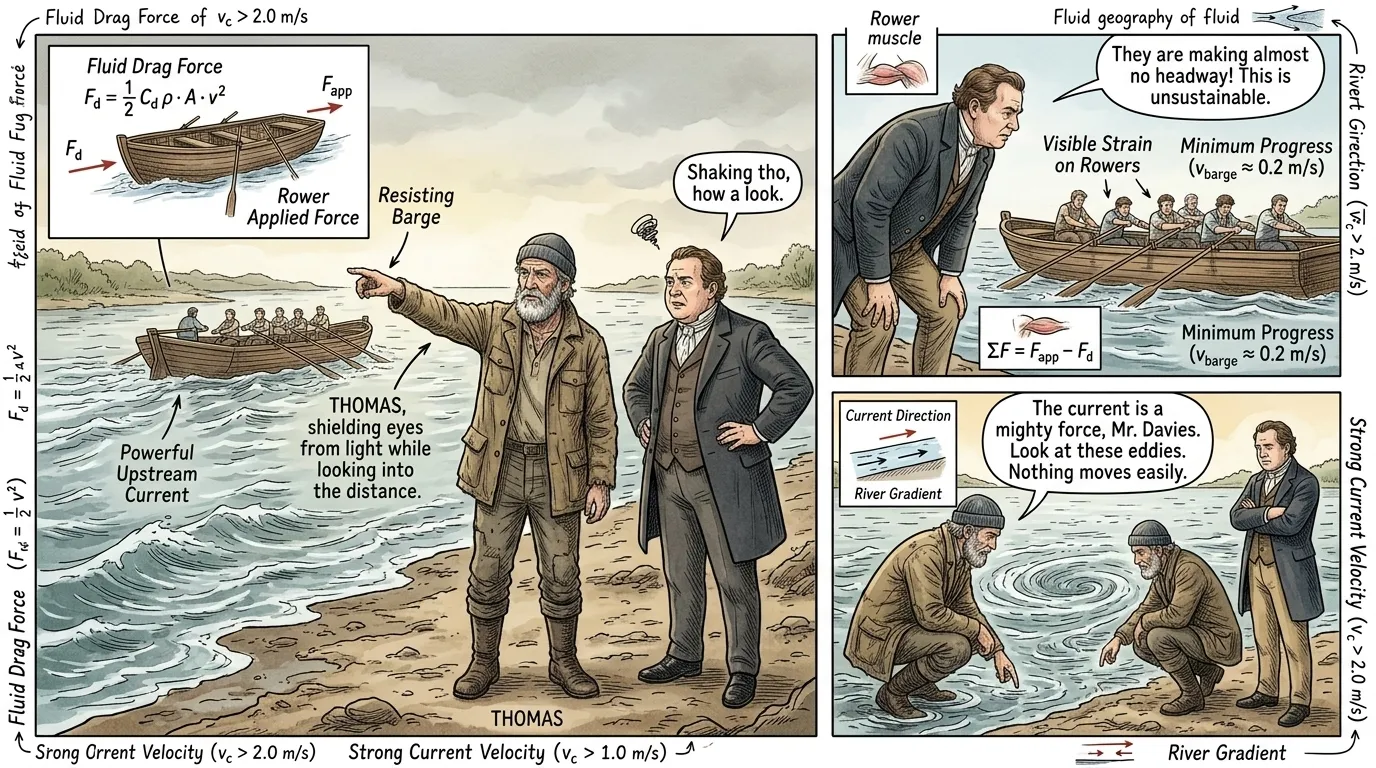
Before steam, river arteries were bottlenecks, governed by the rhythm of wind and muscle. Upstream journeys were arduous, costly, and unpredictable, hindering commerce and connecting communities.
"A grizzled riverboat captain, Thomas, with a weathered face, thick gray beard, and wearing a worn canvas jacket and wool cap, points upstream. 'Against this current,' he explains to a port merchant, Mr. Davies, a stout man in his 50s with neat brown hair and a formal dark suit, 'even the stoutest sails struggle. Rowers exhaust themselves, and barges barely crawl.' Mr. Davies shakes his head, saying, 'Our goods spoil, markets wait, all because reliable power transmission eludes our grasp. The constant need for wind or muscle limits trade severely.'"
Page 3
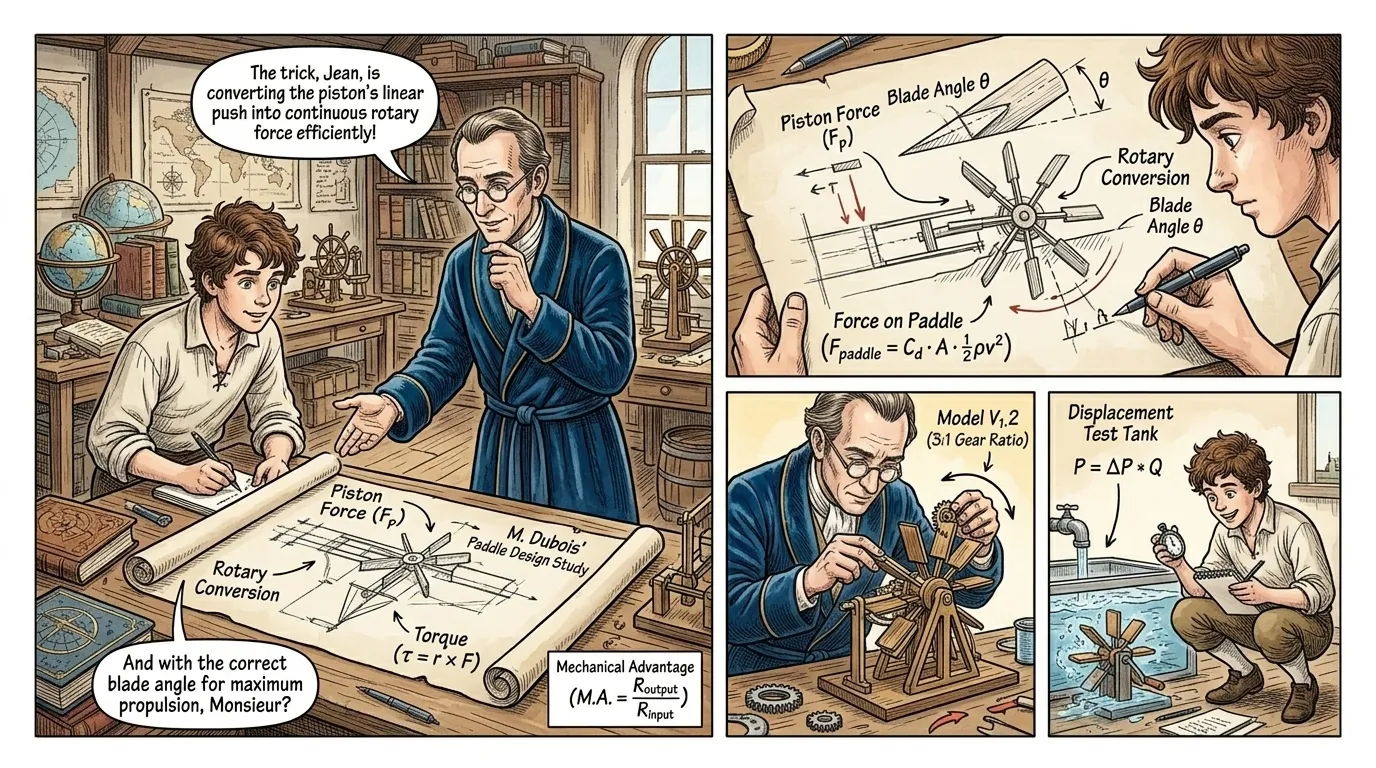
The concept of harnessing steam for propulsion predates Fulton, with pioneers like Denis Papin and John Fitch making early, albeit commercially unviable, attempts. Their work laid foundational knowledge.
"An aged French engineer, Monsieur Dubois, a thin man with spectacles perched on his nose and wearing a velvet banyan robe, holds a detailed sketch of a rudimentary paddle mechanism for a boat. 'As Monsieur Papin himself theorized in the late 17th century,' he muses to a younger apprentice, Jean, a bright-eyed youth with unruly brown hair and a linen shirt, 'steam's expansive force could indeed drive a piston.' Jean nods, adding, 'But the challenge, sir, remains: how do we translate that powerful, reciprocal piston motion into continuous rotary propulsion for a vessel, especially across vast distances? The sheer weight of the engines and the inefficiency of early designs always proved too great.'"
Page 4
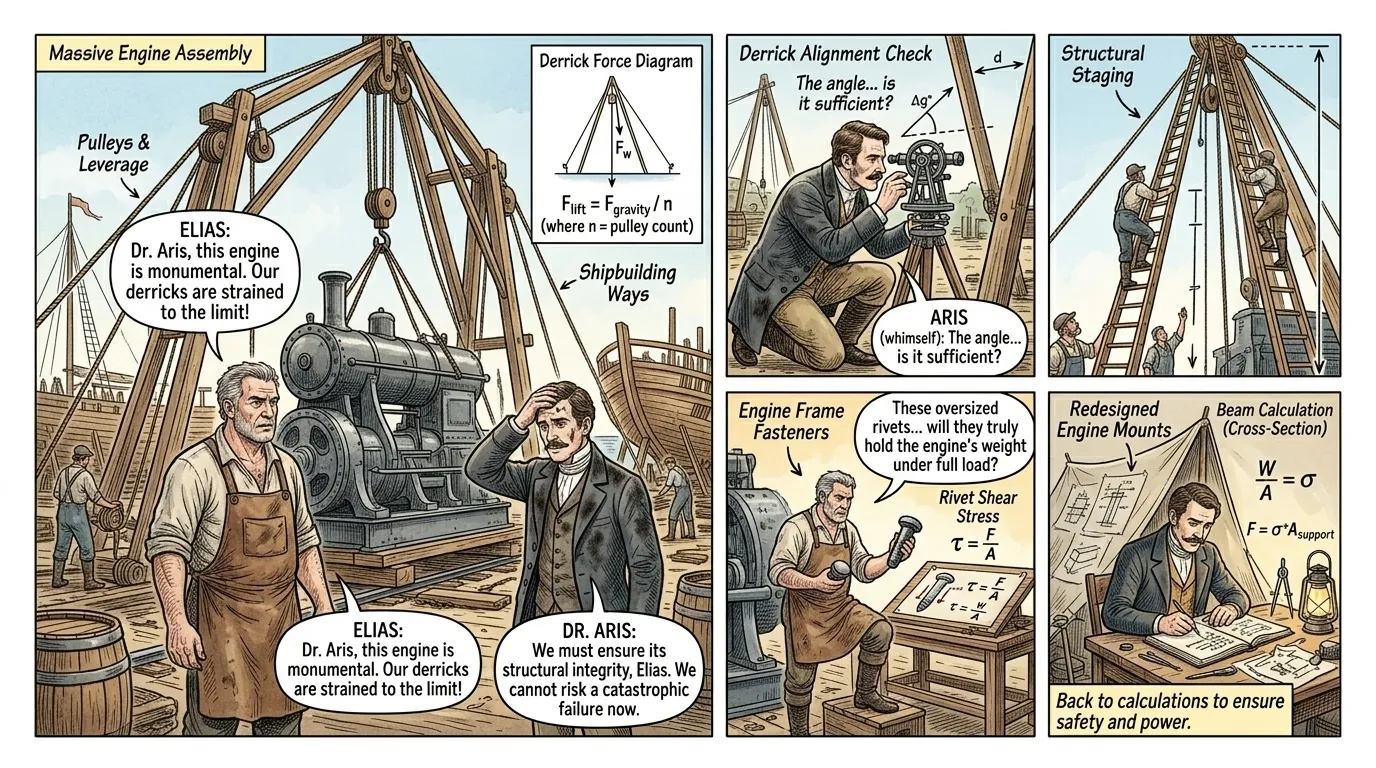
Early steam engines were ponderous, inefficient, and demanded vast quantities of fuel. Integrating such a mechanism into a fragile wooden hull, while generating enough power to move a large vessel, presented formidable engineering hurdles.
"An experienced shipwright, Elias Thorne, a burly man with a leather apron, rolled-up sleeves, and graying temples, gestures at a large, iron steam engine being hoisted in a shipyard. He turns to an exasperated engineer, Dr. Aris, a precise man with a neat mustache and a soot-stained coat. 'The weight alone threatens to overwhelm any hull we build!' Elias exclaims. Dr. Aris wipes his brow, responding, 'And generating sufficient, consistent power to overcome both the vessel's drag and the river's current, while carrying enough coal for any meaningful journey, demands an unprecedented leap in boiler and engine efficiency. Each component must work in precise synchronicity.'"
Page 5
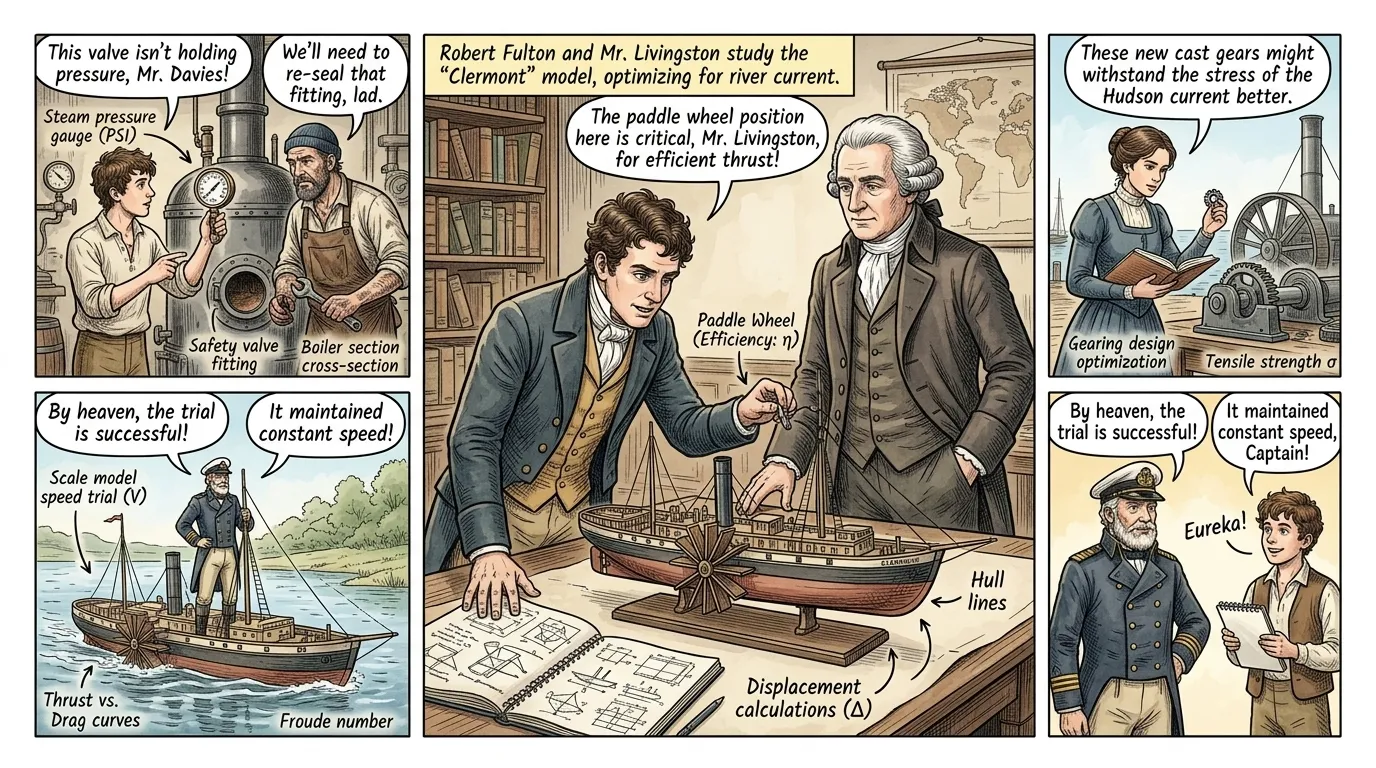
Fulton's genius lay not solely in invention, but in the practical synthesis of existing technologies. He combined a robust Boulton & Watt engine from England with his own efficient hull and paddlewheel designs.
"Robert Fulton, now in earnest discussion with his patron, Robert R. Livingston, a dignified gentleman in his 60s with a powdered wig and an elaborate formal coat, examines a model of the 'Clermont.' Livingston states, 'The Hudson demands a vessel that can reliably navigate its currents, bridging commerce between New York and Albany. Our investment rests on your ability to deliver that dependable, continuous motion.' Fulton, with a determined gaze, replies, 'Our modified engine, coupled with the improved paddle wheels and a hull designed for minimal drag, will provide that consistent power. Every element, from boiler capacity to the connecting rods, is being optimized for practical, sustained operation.'"
Page 6
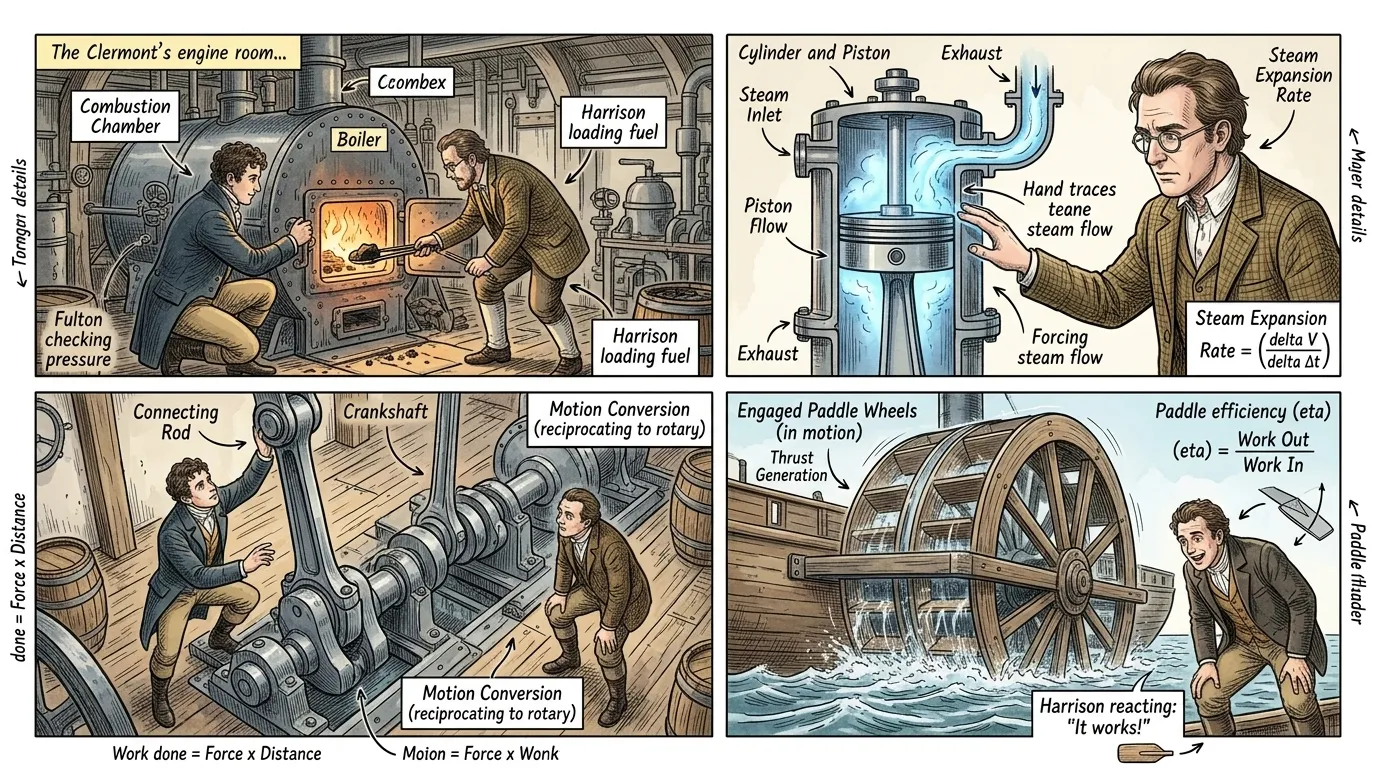
The 'Clermont' was a masterwork of integrated engineering. Its success hinged on a reliable steam engine that converted thermal energy into mechanical power, driving massive paddle wheels.
"A detailed cutaway diagram of the 'Clermont's' engine room is presented. A narrator (voice-over implied by text as technical explanation) explains the process. 'First, a roaring fire heats water in the boiler, generating high-pressure steam.' An engineer, Mr. Harrison, a thin man with spectacles and a serious expression, wearing a tweed jacket, gestures to a glowing firebox. 'This steam is then directed into a cylinder, where its immense pressure forces a piston to move.' He points to a piston's path. 'A robust connecting rod translates this linear motion into rotational force, turning a heavy crankshaft.' Mr. Harrison traces the crankshaft. 'Finally, the crankshaft engages large paddle wheels, propelling the vessel forward against even the strongest currents, demonstrating that reliable, continuous power transmission we so desperately sought!'"
Page 7
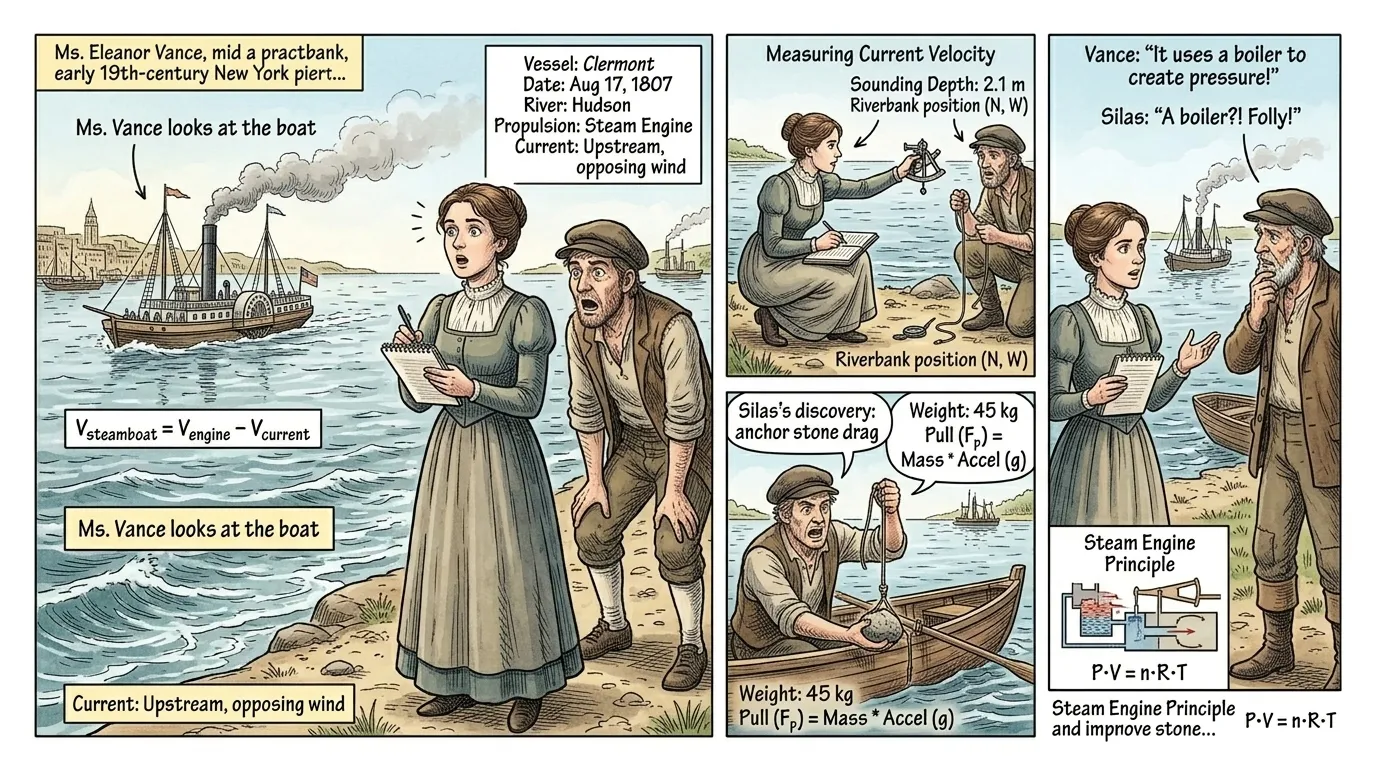
On August 17, 1807, the 'Clermont' embarked on its historic journey from New York City to Albany. Public skepticism quickly turned to astonishment as the vessel moved upstream, seemingly without sails, against the prevailing current.
"A newspaper reporter, Ms. Eleanor Vance, a determined woman in her 30s with her hair pulled back and wearing a practical traveling dress, scribbles notes furiously. She turns to a stunned onlooker, a fisherman named Silas, with a weathered cap and rough clothes. 'It moves,' she exclaims, 'against the current! Did you ever believe such a thing possible?' Silas, mouth agape, responds, 'By God, it's a miracle! No wind, no oars, just fire and iron defying the river. This changes everything, doesn't it? The very thought of it makes all those past failures seem like distant whispers.'"
Page 8
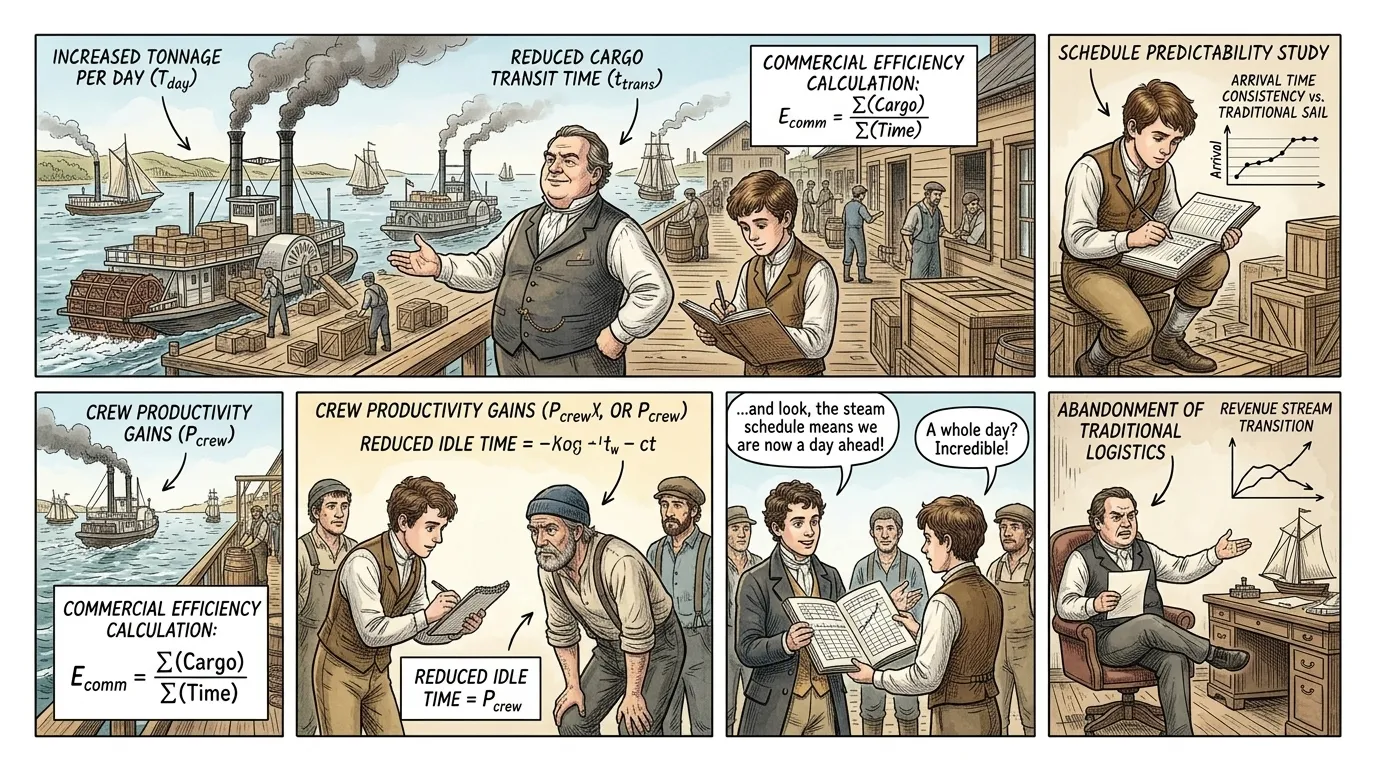
Fulton's 'Clermont' not only proved the viability of steam navigation but also sparked an immediate revolution. Within years, steamships dominated river and coastal routes, accelerating trade and connecting disparate regions.
"A prosperous merchant, Mr. Hawthorne, a portly man in a fine waistcoat, surveys a bustling dock teeming with steamboats. He addresses a young shipping clerk, Samuel, a diligent youth with a neat brown haircut and a ledger in hand. 'Our goods now reach Albany in a mere fraction of the time, Samuel,' Mr. Hawthorne states with satisfaction. Samuel replies, 'And the consistent schedules mean we can plan deliveries with unprecedented accuracy. The reliable, continuous power transmission that Fulton mastered has fundamentally reshaped our entire logistics chain. No more waiting for favorable winds; just dependable steam propelling commerce forward.'"
Page 9
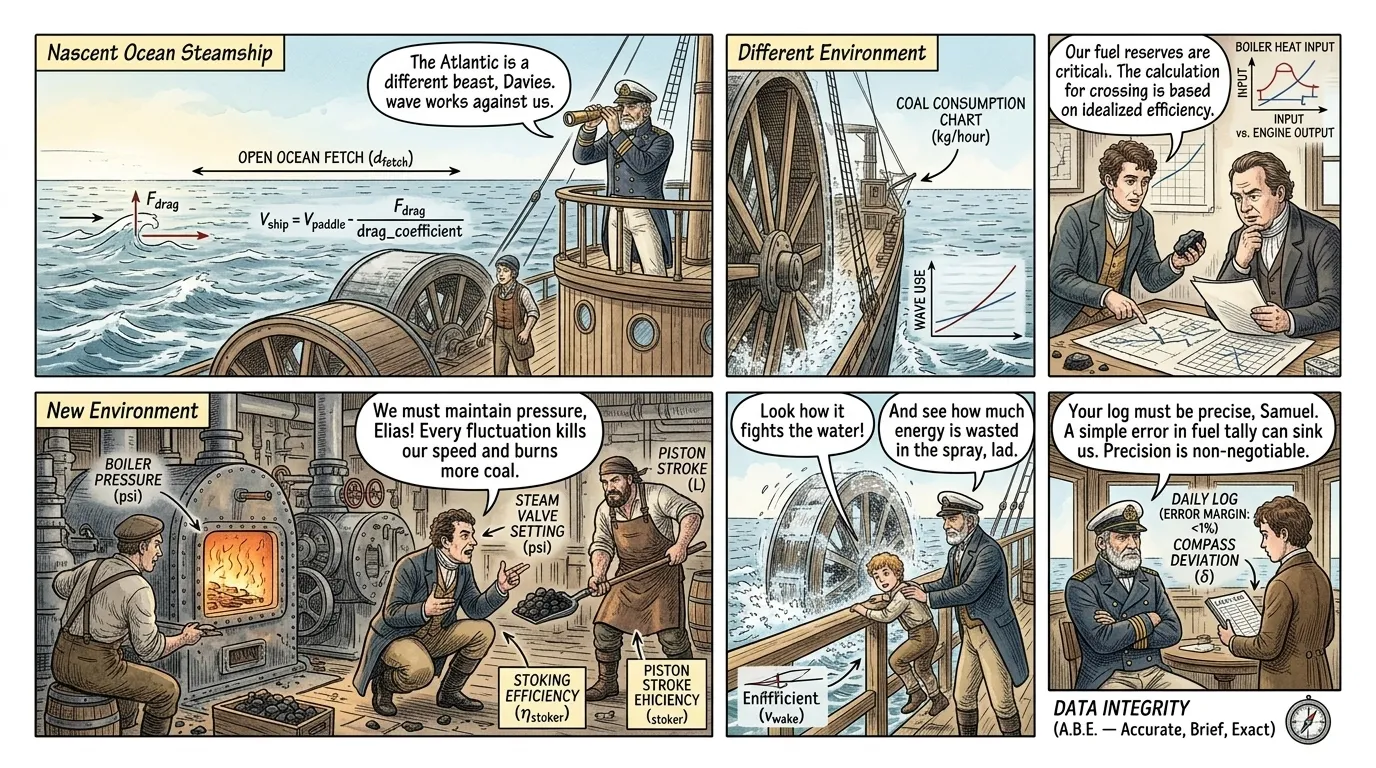
The success on rivers emboldened engineers to tackle the vastness of the ocean. Early transatlantic steam voyages, like the SS Savannah in 1819, proved technically feasible but highlighted new challenges: fuel capacity and engine endurance.
"Captain Rogers, a seasoned sailor with a weathered face and a naval uniform, stands on the bridge of a nascent ocean-going steamship, peering through a spyglass. He speaks to Chief Engineer Davies, a pragmatic man with oil-stained hands and a determined expression. 'The sheer scale of fuel required for an ocean crossing is monumental, Davies,' Captain Rogers observes. 'Every ton of coal displaces cargo.' Chief Engineer Davies responds, 'Indeed, sir. Our focus now shifts to maximizing engine efficiency and optimizing hull design for open waters. Continuous innovation in compound engines and propeller technology will be essential to make these voyages truly viable and economical.'"
Page 10
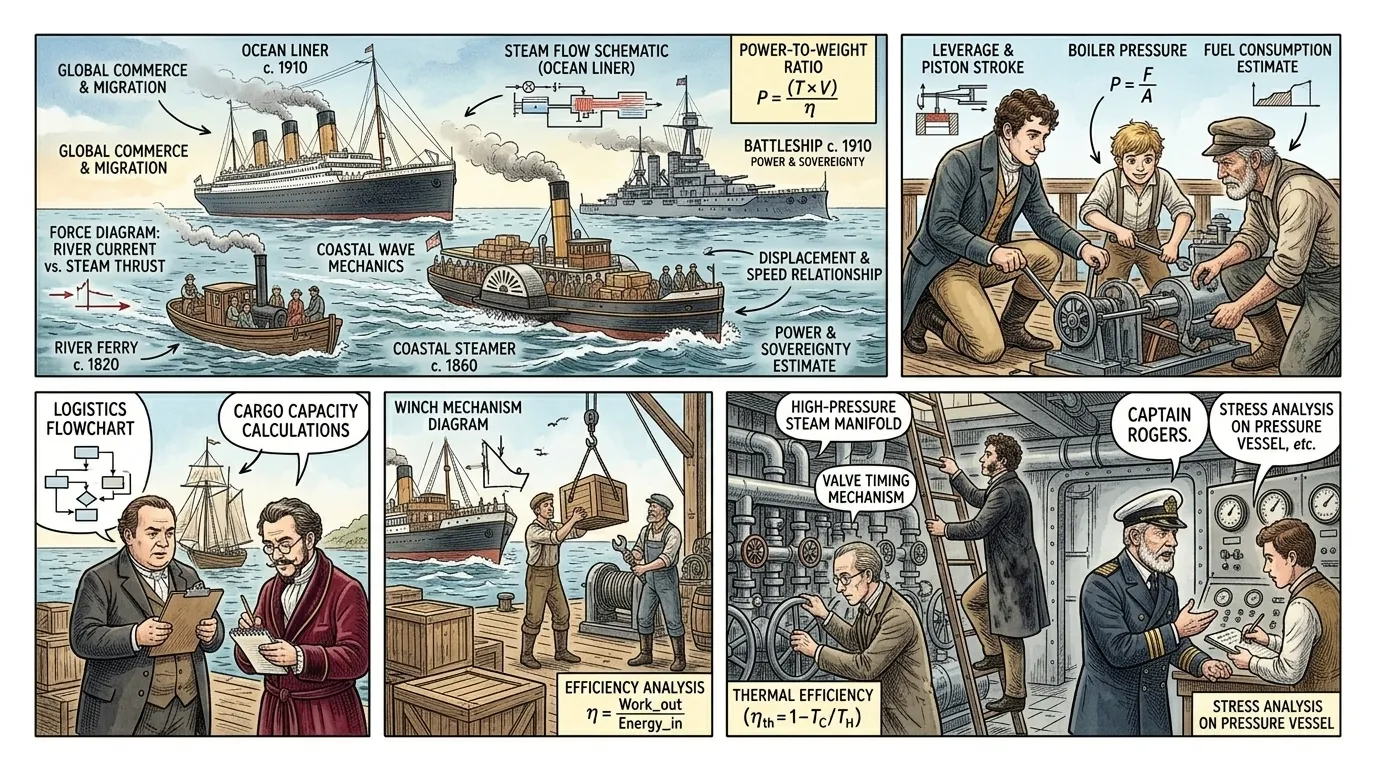
From river ferries to colossal ocean liners and naval behemoths, the steamship irrevocably altered global commerce, migration, warfare, and human perception of distance. It heralded an era of unprecedented connectivity.
About this story
- Location: Global
- Audience: general readers
Questions and answers
Read Wonder Inventions on your phone
Wonder Inventions is available on Android. Get Wonder Inventions on Google Play.