Streaming Media
Streaming Media — an illustrated inventions story, set in Global. 10 illustrated pages, free to read on Wonder Inventions.
Page 1
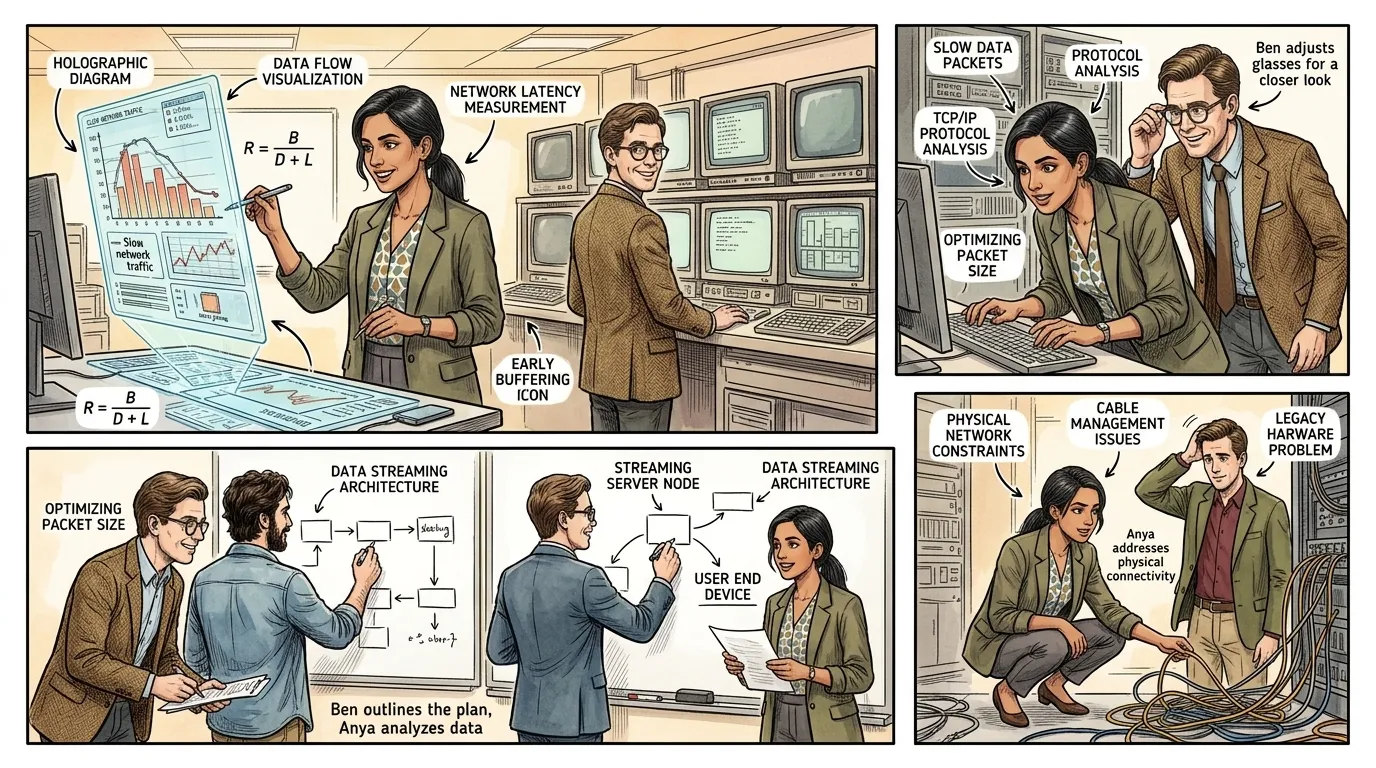
Before the advent of streaming media, accessing digital content was a test of patience, often characterized by agonizing waits for downloads to complete. Media consumption was largely dictated by physical formats like VHS tapes, DVDs, or scheduled broadcast television, limiting personal choice and instant access. The notion of instant, on-demand digital content seemed like a distant dream, hampered by the primitive bandwidth of early internet connections and the sheer size of media files.
"Dr. Anya Sharma tapped her stylus on a diagram of a slow network. "The fundamental challenge wasn't just file size, but delivery speed. Imagine trying to send a full-length film over a dial-up connection; it was simply impractical. How could we make this data flow seamlessly?" Mr. Ben Carter adjusted his glasses, looking at a wall of old CRT monitors displaying buffering icons. "We were constantly battling latency and throughput limits. Every bit of information felt like a boulder being pushed uphill. The user experience was abysmal, and the dream of instant media seemed perpetually out of reach.""
Page 2
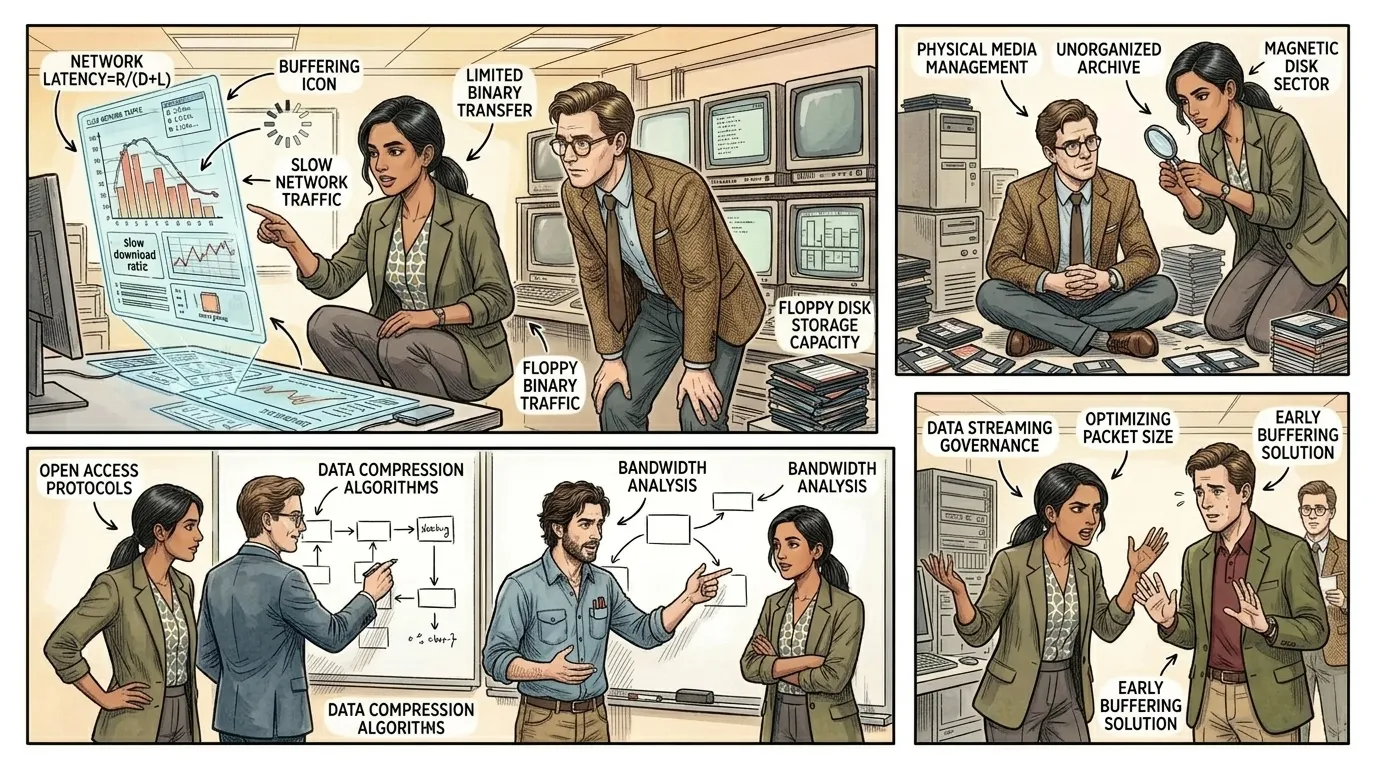
In the early 1990s, the internet primarily served for text and static images. Transferring rich media, such as audio or video, meant enduring lengthy download times. A typical song could take minutes, a video clip hours, consuming precious dial-up connection time. This made spontaneous media consumption impossible and limited the internet's potential as a true entertainment or information platform. The very architecture of the web, designed for discrete file transfers, resisted the continuous flow required for media.
"Dr. Anya Sharma pointed to a graph showing data transfer rates. "Before real-time streaming, every media interaction was a discrete download. You requested a file, waited, and then played it locally. This model just wasn't scalable for a rich media future." Mr. Ben Carter sighed, gesturing towards a stack of floppy disks. "And imagine the storage. Every household would need vast local drives for their media library. The bandwidth issue wasn't just about speed, but about a paradigm shift in how data itself moved across the network. It was fundamentally inefficient, requiring dedicated memory allocation before content could even be accessed.""
Page 3
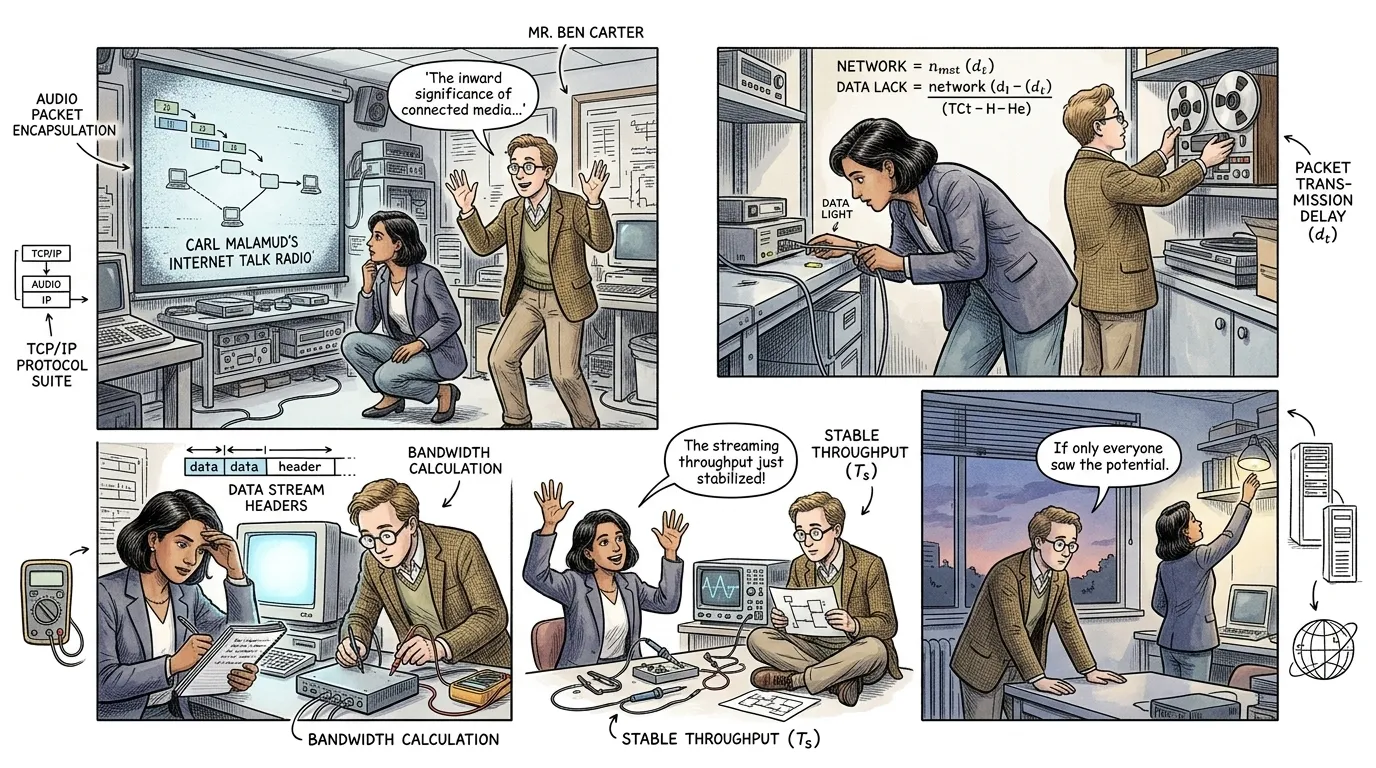
The vision of continuous media began with audio. Carl Malamud, a technology author and advocate, launched 'Internet Talk Radio' in 1993, a groundbreaking experiment to broadcast live and archived audio over the nascent internet. This required pushing the boundaries of existing network capabilities, as users would download audio segments chunk by chunk. While not true real-time streaming by modern standards, it demonstrated the compelling demand for such content and highlighted the immense technical hurdles that needed to be overcome to achieve true fluidity.
"Dr. Anya Sharma watched a grainy animation of audio packets moving. "Carl Malamud's 'Internet Talk Radio' was an audacious proof-of-concept. It showed us that people wanted to listen, even if it meant waiting for segments to load." Mr. Ben Carter nodded thoughtfully. "Indeed. He understood, as the ancient Greek philosopher Aristotle once said, 'The aim of art is to represent not the outward appearance of things, but their inward significance.' Malamud saw the inward significance of a connected, real-time media experience, even when the technology for the outward appearance was still nascent. Our challenge was making that inward significance manifest as a seamless user experience, overcoming constant interruptions and fragmented playback.""
Page 4
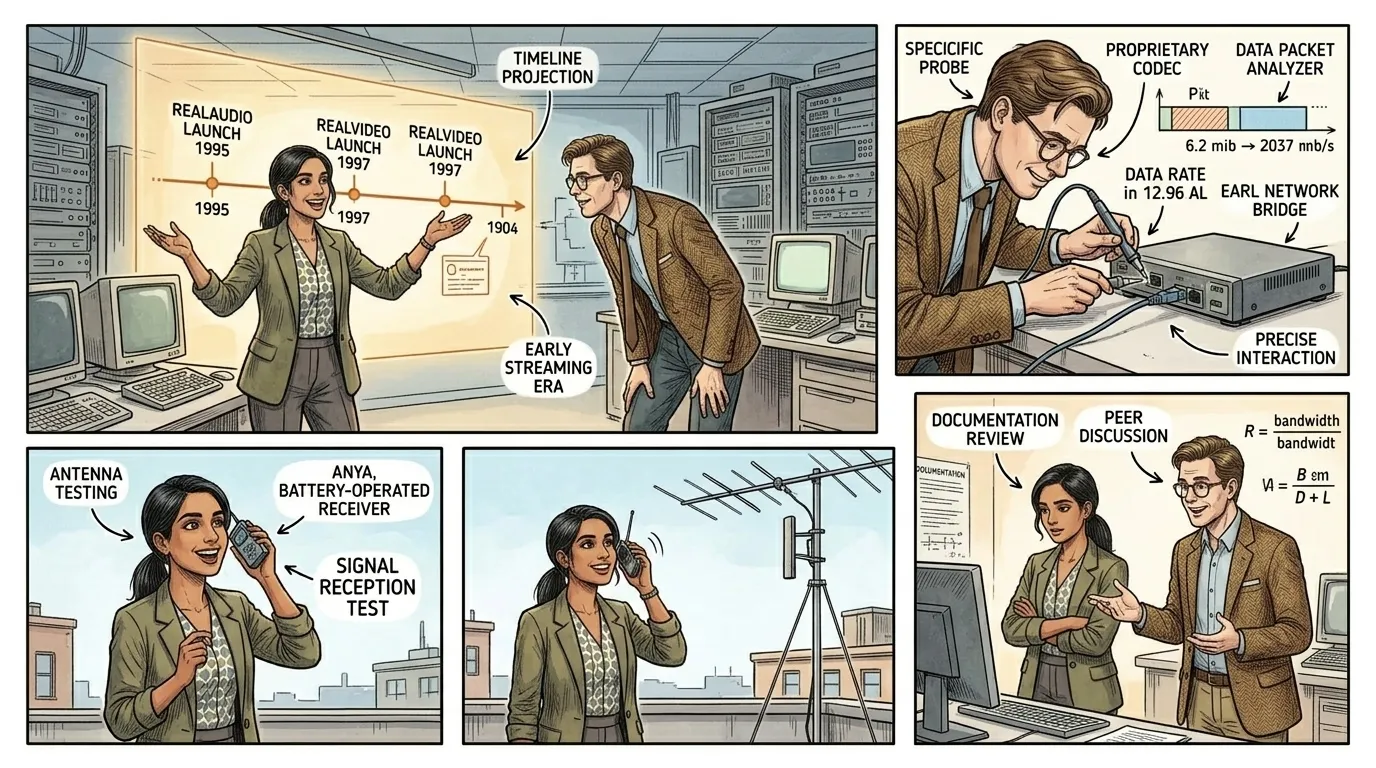
The true breakthrough in streaming began with Progressive Networks, founded by Rob Glaser in 1994. They launched RealAudio in 1995, offering a method to play audio as it arrived, rather than after a full download. This was followed by RealVideo in 1997. The core innovation lay in developing proprietary codecs and streaming protocols that could deliver acceptable quality over the limited bandwidth of the time. This allowed for 'true' streaming, where content playback began almost immediately, forever changing expectations for digital media access.
"Dr. Anya Sharma gestured to a timeline projected on the wall. "RealAudio and RealVideo, developed by Progressive Networks under Rob Glaser, were crucial. They tackled the 'real-time' problem head-on, allowing playback to begin while the file was still arriving. This was a critical shift from static downloads to dynamic delivery, fundamentally redefining how media could interact with network capabilities." Mr. Ben Carter pointed to a diagram of a data packet. "Their proprietary codecs were key. They compressed data aggressively enough to fit through narrow internet pipes, balancing quality with immediate delivery. It wasn't perfect, but it proved the concept was viable, igniting the race for faster and more efficient streaming solutions.""
Page 5
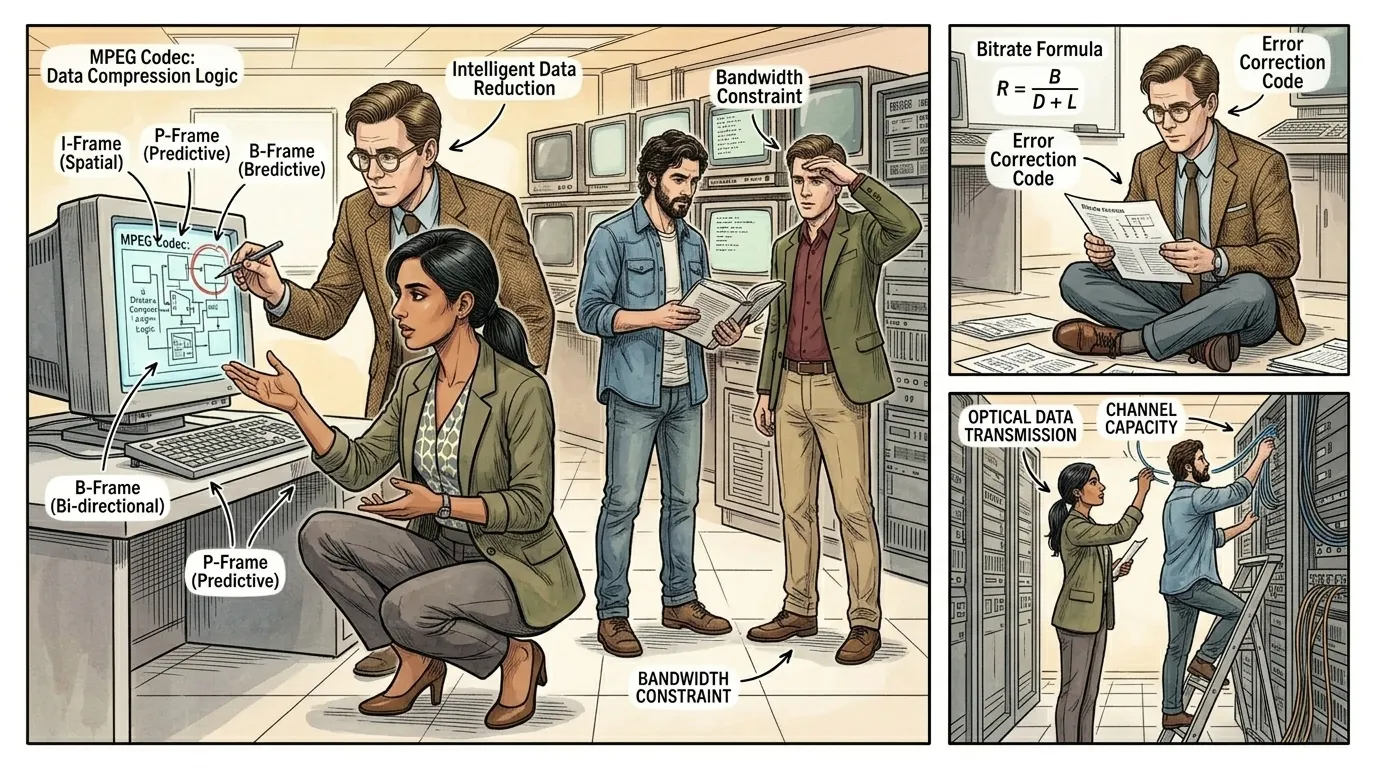
The fundamental challenge for streaming media was (and remains) the vast size of audio and video files versus the finite capacity of network bandwidth. Uncompressed digital video requires enormous data rates, far exceeding what early internet infrastructure could handle. This necessitated aggressive data compression algorithms, known as codecs (coder-decoder), to reduce file sizes dramatically while maintaining acceptable visual and audio quality. Developing these codecs was an intense race against the limitations of network physics and processing power.
"Dr. Anya Sharma gestured to a complex diagram of an MPEG codec. "The raw data of uncompressed video is staggering. To move it across any network in real-time, you need to shed almost all redundant information without making it look like a blurry mess. This is where advanced compression algorithms became indispensable." Mr. Ben Carter added, circling a part of the diagram. "Exactly. Codecs like MPEG weren't just about shrinking files; they were about intelligent data reduction. They analyze consecutive frames, identify what hasn't changed, and only transmit the differences, drastically reducing the data footprint. This technical dance between preserving quality and minimizing data flow was, and still is, at the heart of efficient streaming.""
Page 6
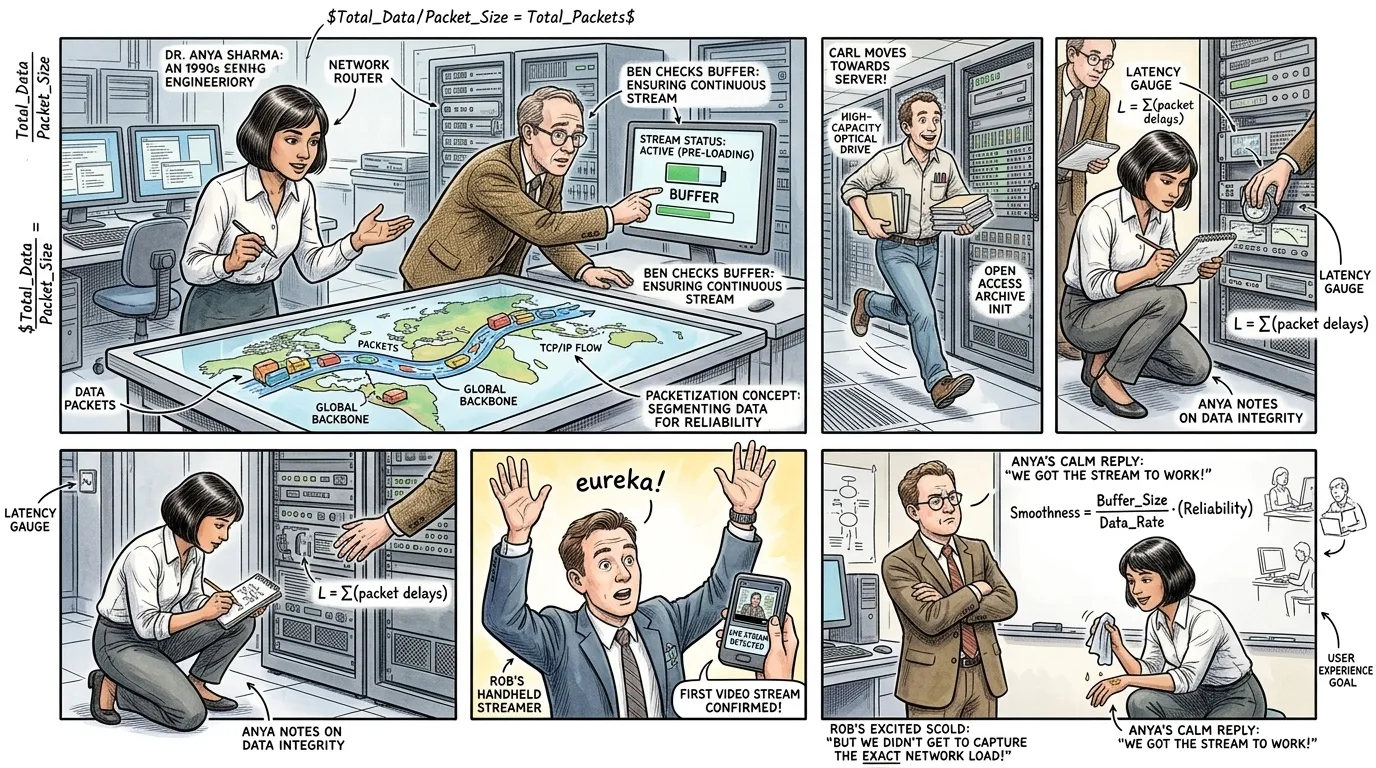
The operational core of streaming relies on two key mechanisms: packetization and buffering. Media files are first broken down into small, manageable 'packets' of data. These packets are then sent across the network. On the receiving end, the client device doesn't wait for the entire file. Instead, it collects enough packets to fill a temporary storage area called a 'buffer.' As soon as the buffer has a sufficient amount of data, playback begins, drawing from the buffer while new packets continue to arrive. This pre-loading smooths out network fluctuations, preventing interruptions.
"Dr. Anya Sharma pointed to a diagram of data packets flowing. "Packetization is fundamental. It allows us to treat a continuous stream as discrete, manageable units. If one packet gets lost, it's a minor hiccup, not a complete halt to the entire download, improving resilience significantly." Mr. Ben Carter nodded, gesturing to a 'buffer' icon on a screen. "And buffering acts as our safety net. It creates a temporary reservoir of data, ensuring that if there's a momentary network slowdown, playback can continue smoothly using the pre-loaded content. It separates the instantaneous delivery from the continuous playback, making the user experience far more reliable and reducing visible interruptions.""
Page 7
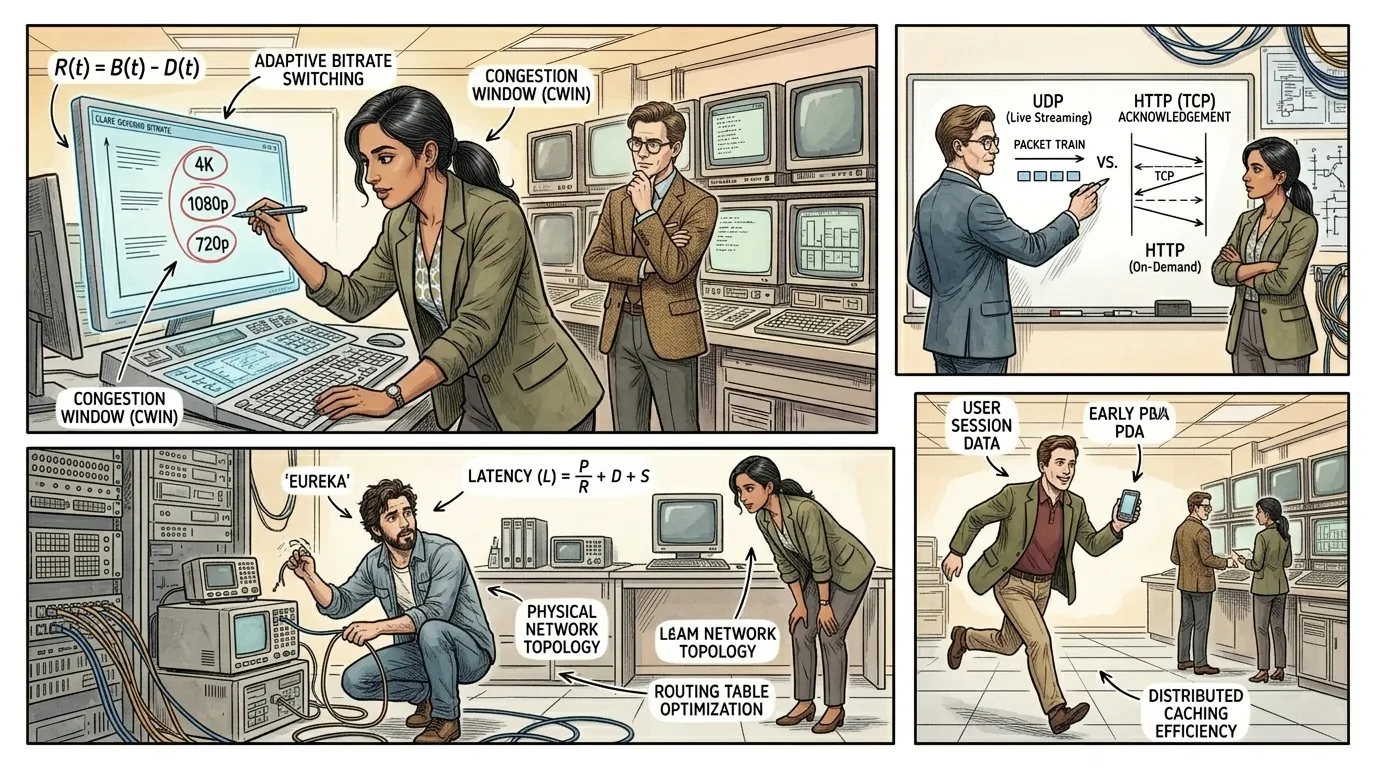
Beyond basic packetization and buffering, modern streaming relies heavily on adaptive bitrate (ABR) technology and specialized protocols. ABR allows a streaming server to dynamically adjust the quality of the video stream (e.g., from 4K to 720p) based on the user's current network conditions and device capabilities. This ensures uninterrupted playback, even if quality degrades. Protocols like UDP (User Datagram Protocol) prioritize speed over guaranteed delivery for live streams, while HTTP-based adaptive streaming has become dominant for on-demand content, leveraging existing web infrastructure.
"Dr. Anya Sharma circled different quality settings on a screen. "Adaptive bitrate is the intelligence behind seamless streaming. Instead of a fixed quality, the system constantly monitors the network and sends the best possible stream. If your Wi-Fi dips, it quickly shifts to a lower bitrate to prevent buffering." Mr. Ben Carter elaborated, pointing to a diagram comparing UDP and HTTP. "It's a negotiation, a constant dance between the server and the client. And the choice of protocol matters. For live events, a slight dropped packet with UDP is preferable to the delay TCP introduces by retransmitting. For on-demand, HTTP adaptive streaming leverages global web infrastructure, making it incredibly robust and scalable.""
Page 8
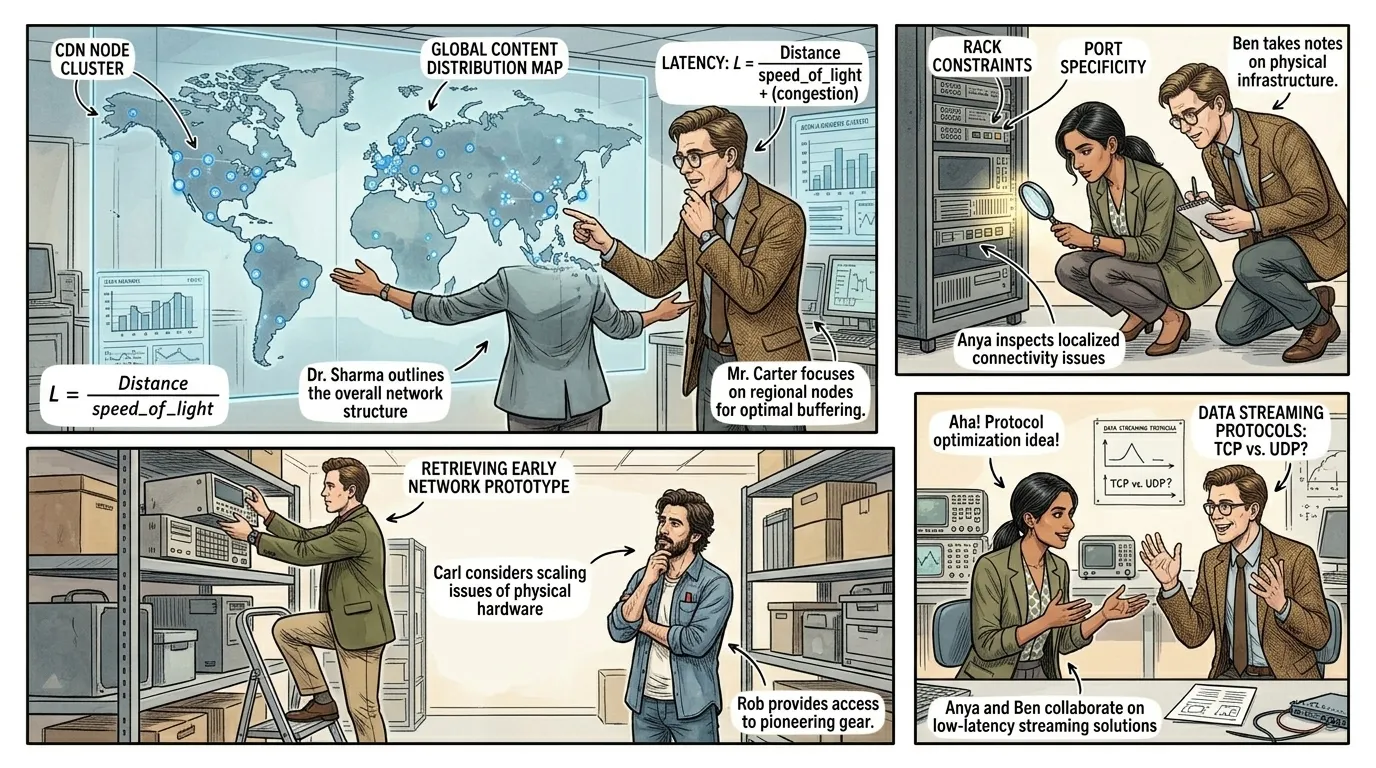
To truly scale streaming media globally, the content itself needed to be distributed geographically. This led to the widespread adoption of Content Delivery Networks (CDNs). A CDN is a network of distributed servers that deliver web content to users based on their geographic location. When a user requests a streamed video, the CDN directs them to the nearest server that hosts the content, drastically reducing latency and improving loading times by minimizing the physical distance data has to travel. This architecture is indispensable for the modern internet's efficiency.
"Dr. Anya Sharma gestured to a world map displayed on a transparent wall, dotted with glowing nodes. "The bottleneck wasn't just the 'last mile' to the user; it was the 'middle mile' across continents. CDNs were the answer, placing content physically closer to the end-users. This isn't just about speed; it's about reducing server load and ensuring resilience against localized outages." Mr. Ben Carter pointed to a cluster of nodes in a specific region. "Think of it as having thousands of mini-warehouses for digital content scattered globally. When you hit play, you're not pulling the data from a single server across the ocean, but from a local cache. This decentralization of content delivery drastically cut down on latency and improved reliability, making global streaming feasible.""
Page 9
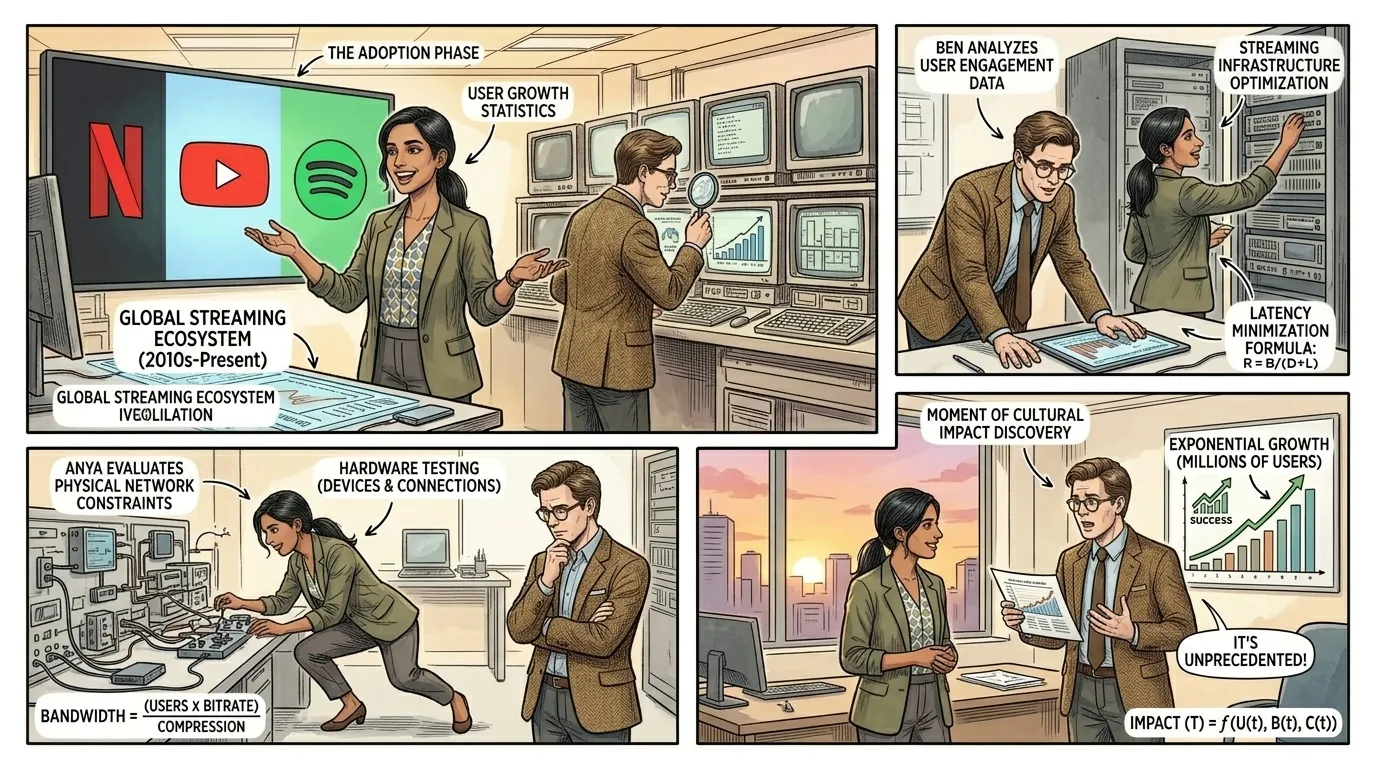
With the technological hurdles largely overcome, the early 21st century saw an explosion in streaming services. Netflix transitioned from a DVD-by-mail service to a streaming behemoth, leveraging its vast library and original content. YouTube democratized video creation and sharing, allowing anyone to broadcast to a global audience. Spotify revolutionized music consumption, offering instant access to millions of songs. These platforms not only proved the viability of streaming but also fundamentally altered how media was produced, distributed, and consumed, making on-demand access the new standard.
"Dr. Anya Sharma gestured to a screen showing the logos of Netflix, YouTube, and Spotify. "Once the underlying technology matured, the content providers truly capitalized. Netflix didn't just stream movies; it created a new distribution model, fundamentally challenging traditional television and cinema. They made 'binge-watching' a cultural phenomenon." Mr. Ben Carter added, looking at user statistics. "And YouTube's impact on user-generated content was immense. Anyone with a camera could become a broadcaster. Spotify utterly transformed the music industry from physical ownership to subscription access, proving that consumers prioritized convenience and breadth of choice over physical collections. These platforms represented the full realization of the seamless digital media experience we envisioned.""
Page 10
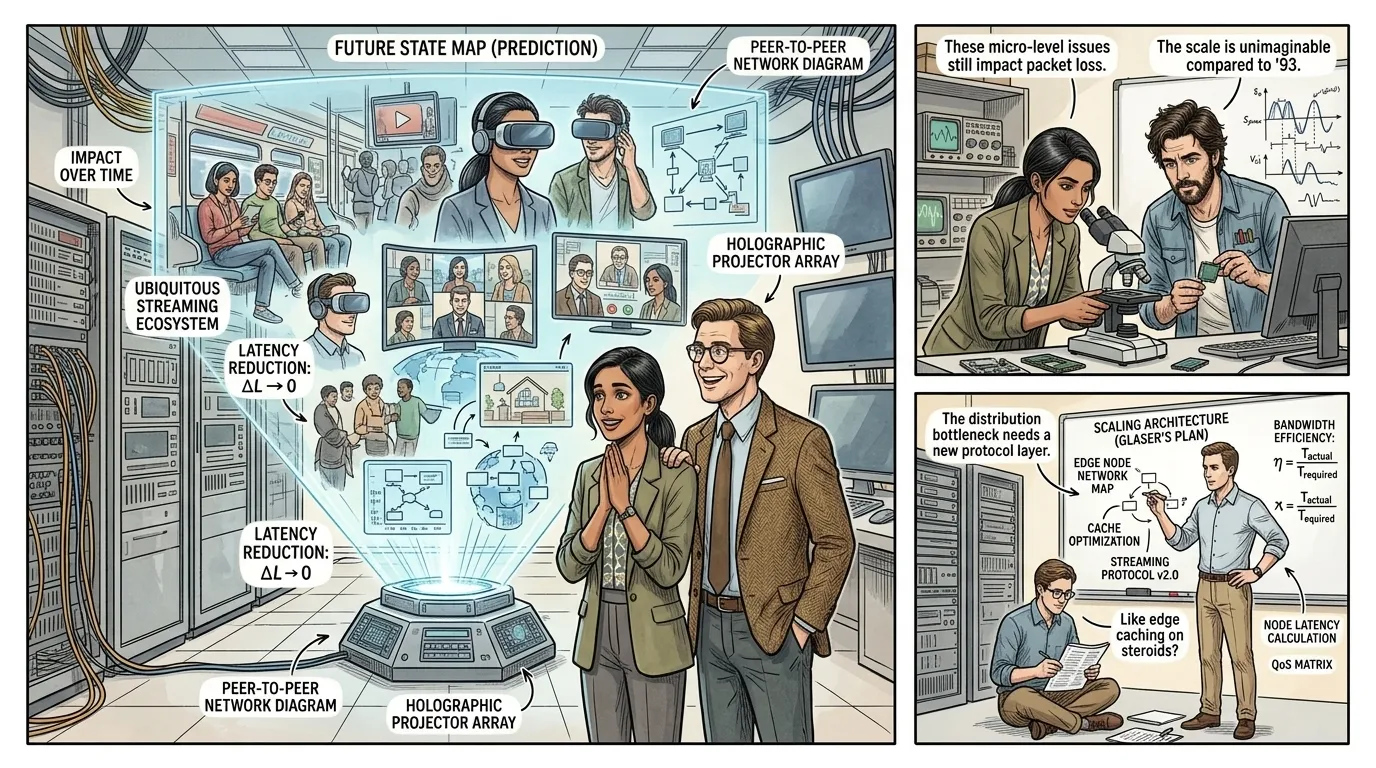
Streaming media has irrevocably transformed our interaction with information and entertainment. From being a niche technical pursuit, it has become an indispensable part of daily life, driving unprecedented demand for bandwidth and content innovation. It has reshaped industries, democratized content creation, and fostered a global culture of instant access. The future promises even more immersive and interactive streaming experiences, from virtual reality broadcasts to personalized AI-driven content feeds, pushing the boundaries of what 'real-time' truly means.
"Dr. Anya Sharma gazed at the bustling montage of images reflecting modern life. "From agonizing downloads to ubiquitous, instant access, streaming has become the silent, seamless backbone of our digital lives. It's more than just entertainment; it's how we consume news, educate ourselves, and stay connected globally." Mr. Ben Carter smiled. "Indeed. We built the pipes, and the world filled them with an unimaginable deluge of creativity and information. The invention wasn't just a technical solution; it was a cultural catalyst, and its evolution continues, demanding even more sophisticated algorithms and faster networks. The quest for perfect, instantaneous delivery is a journey without an end.""
About this story
- Location: Global
- Audience: general readers
Questions and answers
Read Wonder Inventions on your phone
Wonder Inventions is available on Android. Get Wonder Inventions on Google Play.