Syringe
Syringe — an illustrated inventions story, set in Global. 10 illustrated pages, free to read on Wonder Inventions.
Page 1
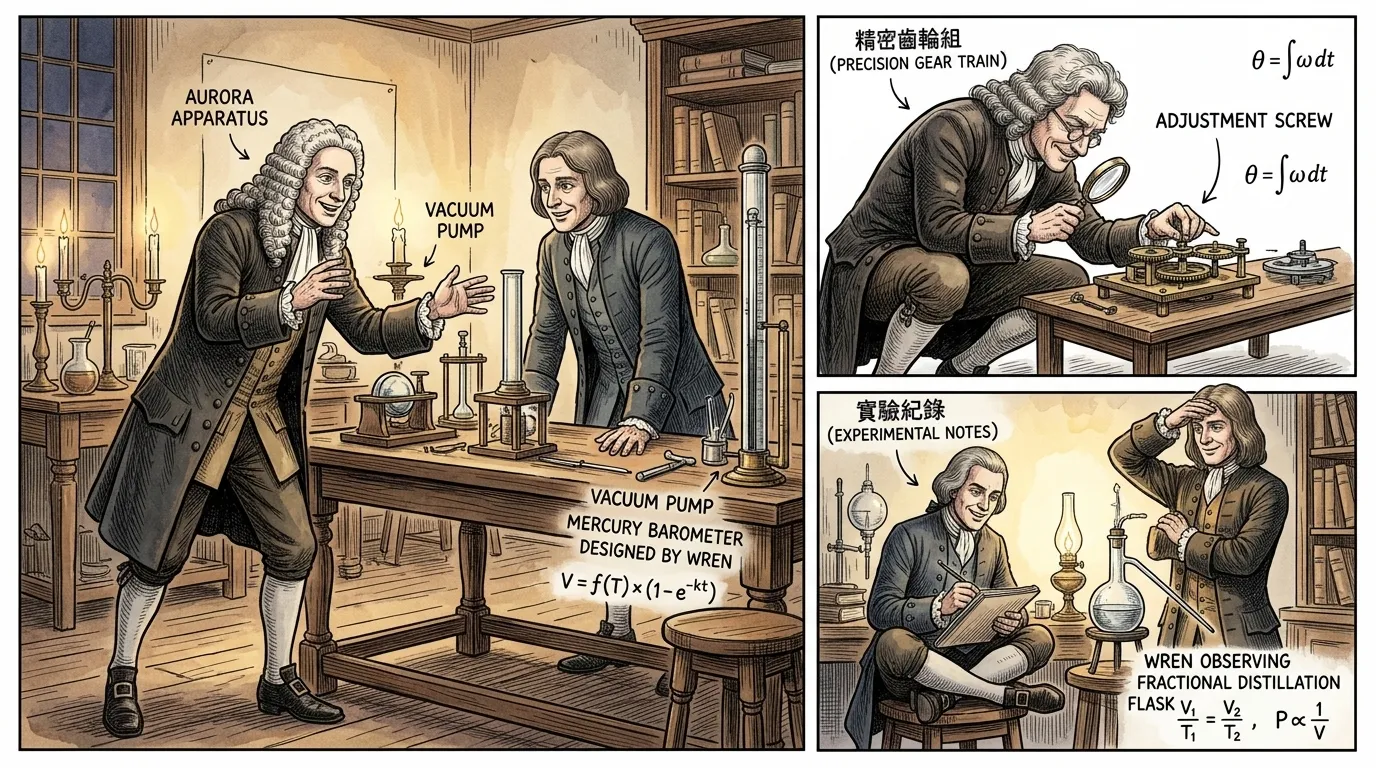
Before the modern syringe, the medical landscape was fraught with challenges in delivering treatments effectively. Oral medications were slow and inconsistent, topical remedies superficial, and invasive procedures lacked precision. The very idea of introducing substances directly into the bloodstream was revolutionary, audacious, and fraught with peril.
""The delivery of remedies, Dr. Lower, requires greater precision than mere ingestion can offer," mused Sir Christopher Wren, his gaze fixed on the intricate setup before them. He added, "As the Roman philosopher Seneca once pondered, 'Every new beginning comes from some other beginning's end.' Our current methods are nearing their limit; a new path for internal delivery is imperative.""
Page 2
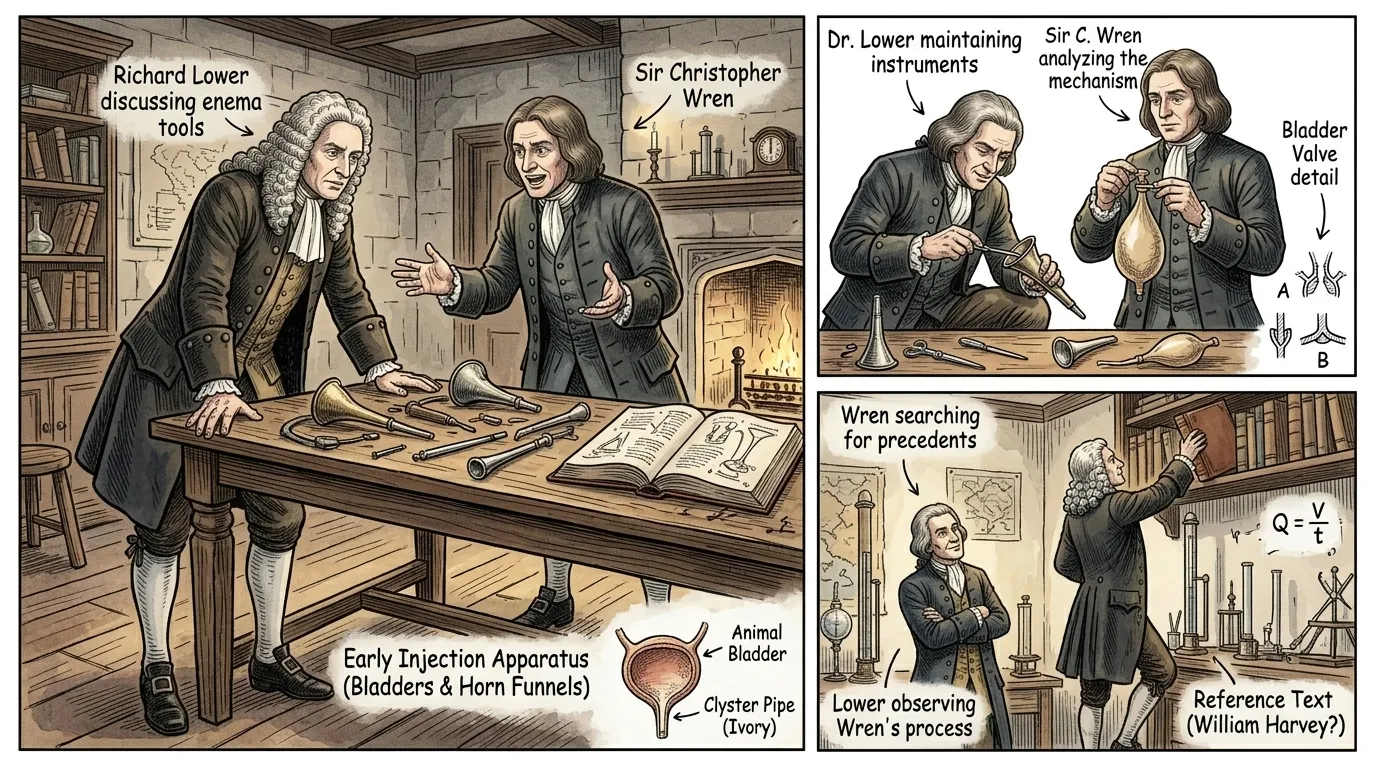
For centuries, physicians grappled with how to introduce potent compounds into the body with accuracy. Traditional methods, though varied, often suffered from limited efficacy, agonizing discomfort, or severe complications. From enemas using animal bladders to rudimentary irrigation, the problem of direct, controlled internal access remained largely unsolved, posing immense hurdles for effective treatment.
""Observe, Professor Wren, the crude nature of these instruments," Dr. Richard Lower gestured to a collection of early enema tools – animal bladders and horn funnels. "While effective for lower bowel irrigation, their application to systemic treatment is limited, messy, and lacks any semblance of dosage control." Wren nodded, a furrow in his brow. "The sheer volume and unpredictable absorption make precise therapeutic intervention impossible, leading to either ineffective treatment or dangerous overdose.""
Page 3
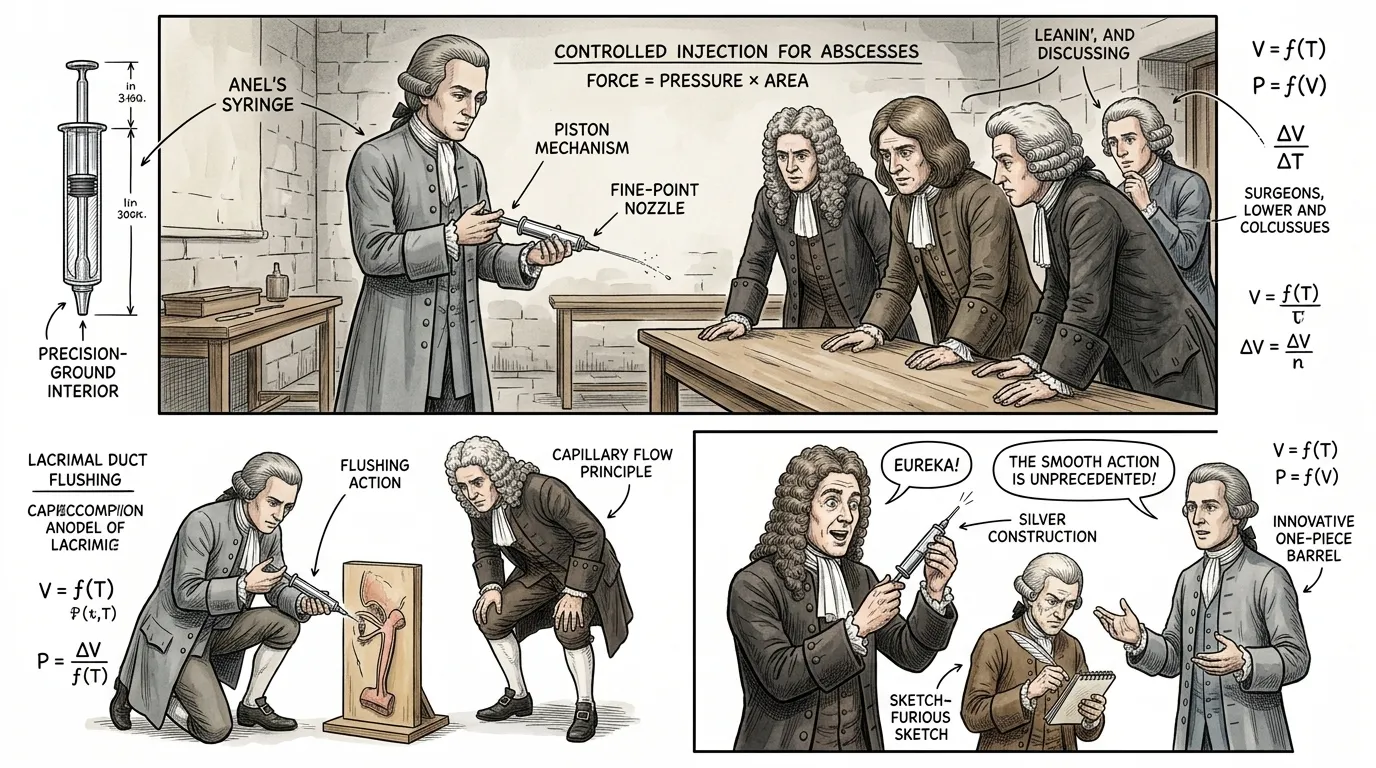
While Wren's experiments laid theoretical groundwork, practical implementation required better tools. In the early 18th century, French surgeon Dominique Anel introduced an innovation: a small, hollow silver tube with an accurately fitting piston. This 'Anel's syringe' was designed not for injection, but primarily for irrigating lacrimal ducts and wounds, marking a crucial step towards controlled fluid manipulation.
""The challenge, my colleagues, is not merely to introduce fluid, but to do so with both control and minimal trauma," Dominique Anel explained to a group of surgeons in 1705, holding up his polished silver instrument. "This device, by creating a precise vacuum, allows for suction and gentle expulsion. It is, as Leonardo da Vinci perhaps implied when he observed, 'Simplicity is the ultimate sophistication,' a far cry from the crude methods of old." He demonstrated the smooth action of the piston."
Page 4
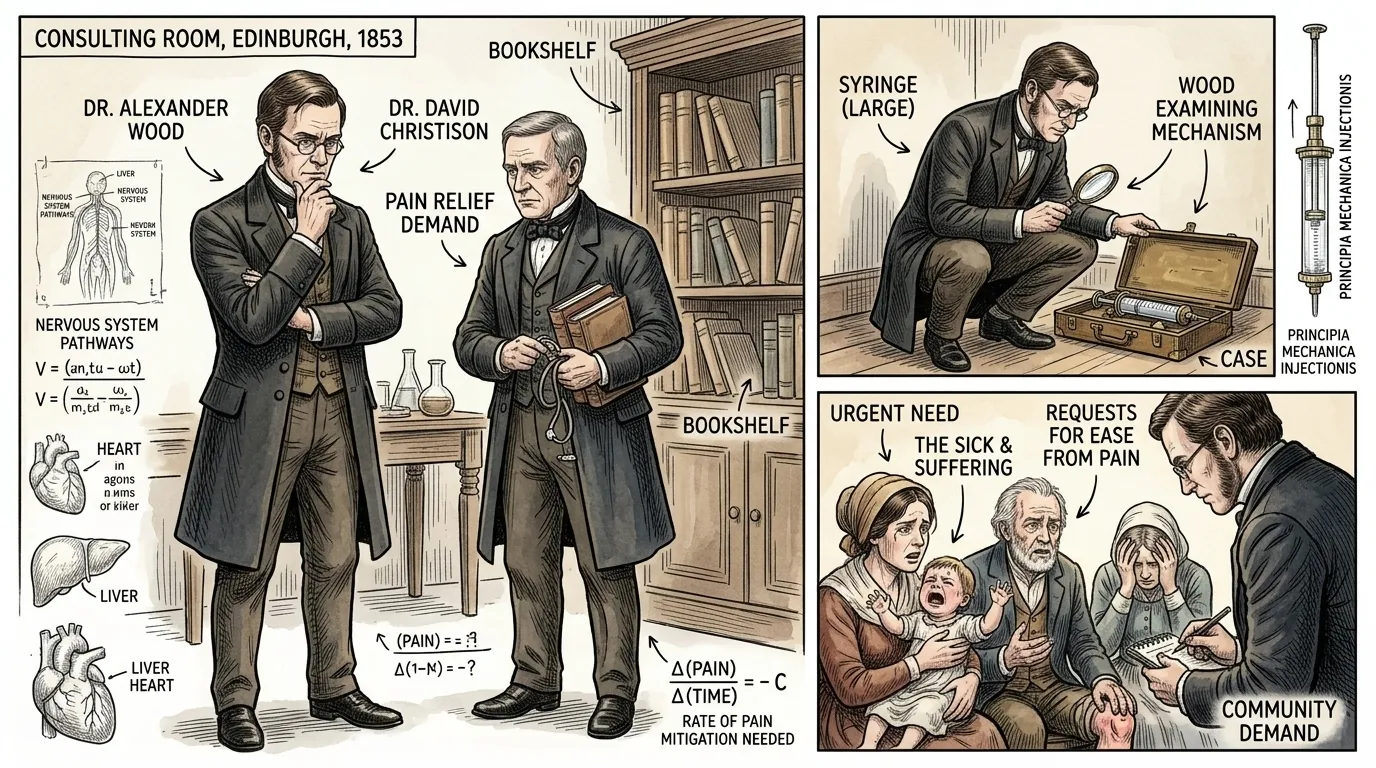
By the mid-19th century, medical science had advanced significantly in understanding pharmacology and pain management. The isolation of potent alkaloids like morphine created an urgent demand for a method to deliver these powerful analgesics directly to the site of pain or for rapid systemic effect. It was an era ripe for the true hypodermic breakthrough.
""The subcutaneous administration of morphine could revolutionize pain relief, if only we had the means to achieve it reliably," pondered Dr. Alexander Wood, a Scottish physician, to his colleague in Edinburgh in 1853. His colleague, Dr. David Christison, nodded gravely. "Precisely, Wood. Oral doses are slow, unpredictable, and often require such quantities they induce severe side effects. We need a direct, precise channel to the tissues.""
Page 5
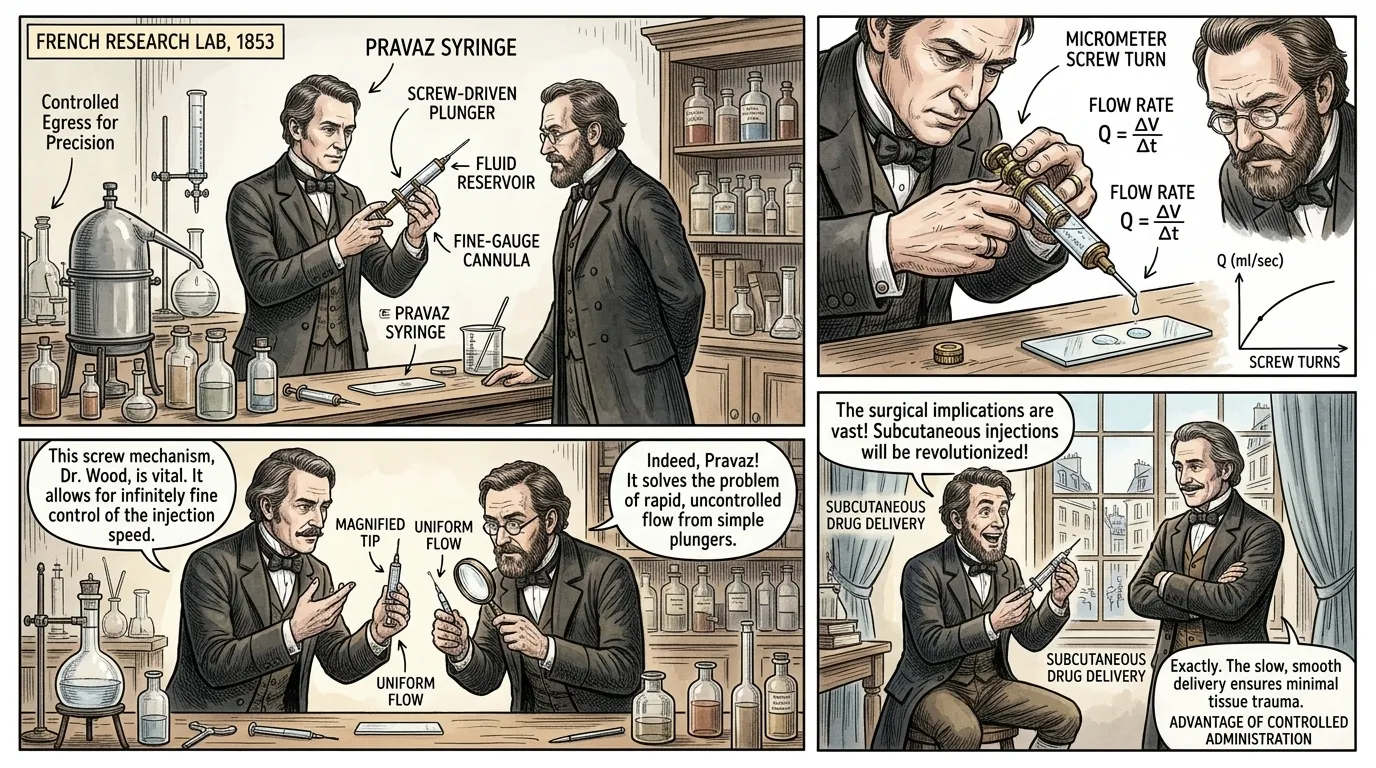
In France, surgeon Charles Gabriel Pravaz was independently tackling the same problem. Recognizing the need for extremely controlled, slow delivery, he designed a syringe with a screw-driven plunger. This robust metallic apparatus allowed for minute adjustments in fluid delivery, mitigating the risk of rapid, uncontrolled injection, which could be fatal with powerful substances.
""The key, Professor, lies in absolute control over the fluid's egress," Pravaz explained to a visiting medical academic in 1853, demonstrating his device. "A simple push risks sudden, unmeasured discharge. My screw mechanism ensures a steady, minuscule flow, allowing for precise titration." He added, reflecting on the complexity, "As the great scientist Marie Curie might later articulate, 'Nothing in life is to be feared, it is only to be understood.' We must understand this mechanism perfectly.""
Page 6
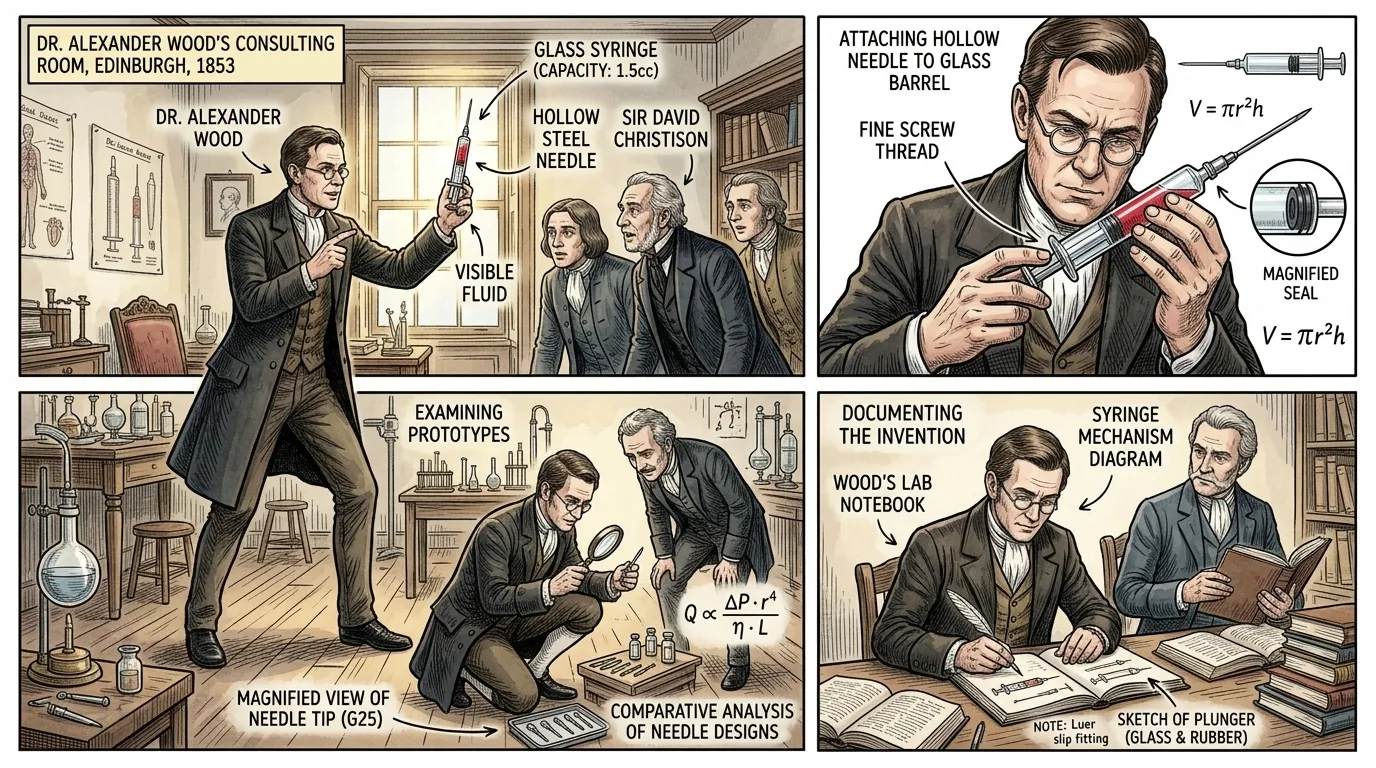
Simultaneously in Scotland, Alexander Wood unveiled his own groundbreaking design. Unlike Pravaz's opaque metal, Wood's syringe featured an all-glass barrel, allowing doctors to visibly monitor the fluid. Crucially, he partnered with instrument maker Fergusson to create a truly hollow needle, sharp enough to penetrate skin and small enough to minimize trauma, directly connected to the syringe barrel.
""Transparency, gentlemen, is paramount for safety and precision," Alexander Wood declared in 1853, holding aloft his glass-barreled syringe to a small gathering in his Edinburgh consulting room. "With the fluid visible, dosage errors are mitigated. And this," he emphasized, pointing to the delicate, hollow steel needle, "is our true innovation – a conduit designed not merely for superficial contact, but for direct, clean entry into the subcutaneous tissue.""
Page 7
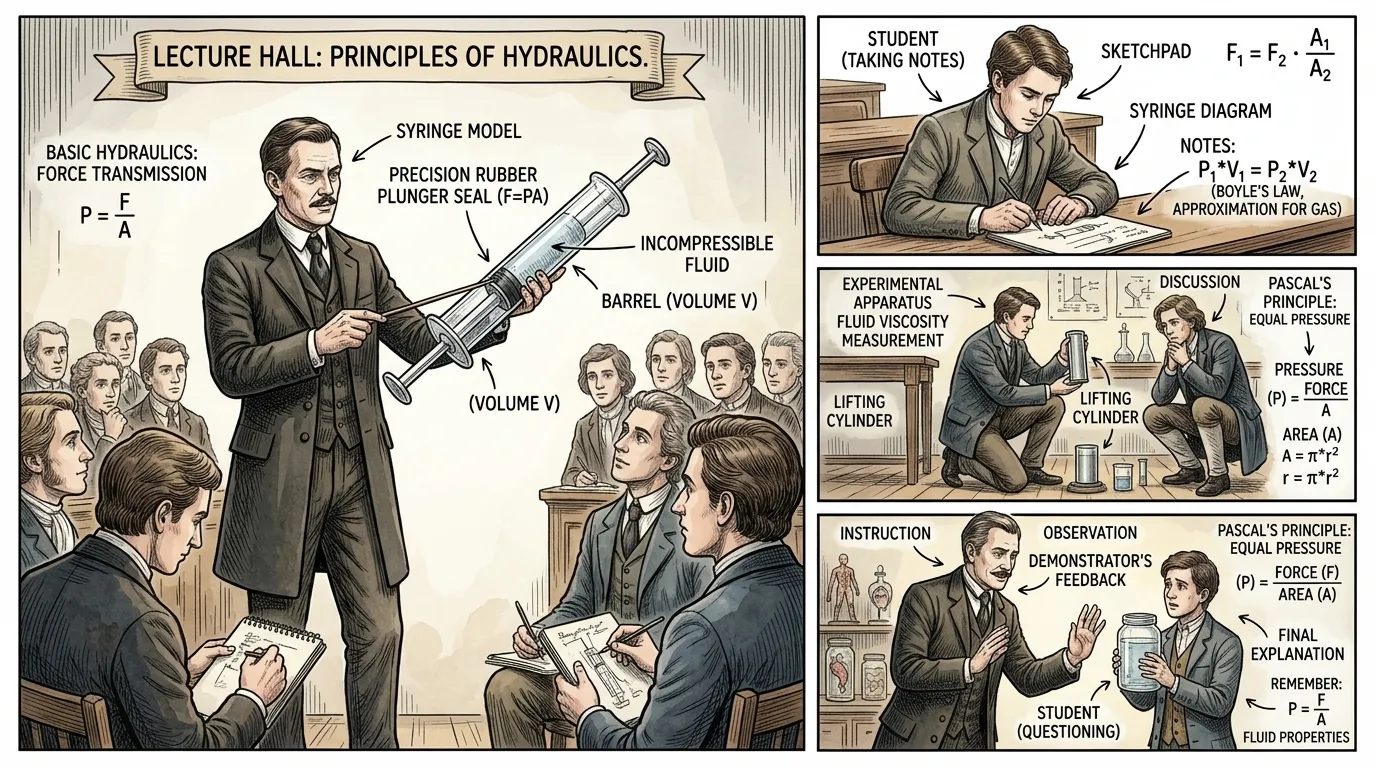
The genius of the modern syringe lies in its deceptively simple, yet highly effective, hydraulic mechanism. A tightly fitting plunger, often made of rubber or leather within the barrel, creates a seal. When pressed, this plunger generates pressure, forcing the liquid through the narrow, hollow needle. When drawn back, it creates a vacuum, drawing fluid into the barrel, allowing for precise measurement and controlled expulsion.
""The principle is fundamental hydraulics, a marvel of applied physics," explained a skilled demonstrator to a group of medical students in the late 19th century, holding a cutaway model. "The plunger's seal is absolutely critical. Without it, the pressure generated would simply escape backward, rendering the entire system useless. It is the very heart of the precision we now take for granted." He paused. "As Galileo once stated, 'All truths are easy to understand once they are discovered; the point is to discover them.' This simple truth of hydraulic force was the discovery.""
Page 8
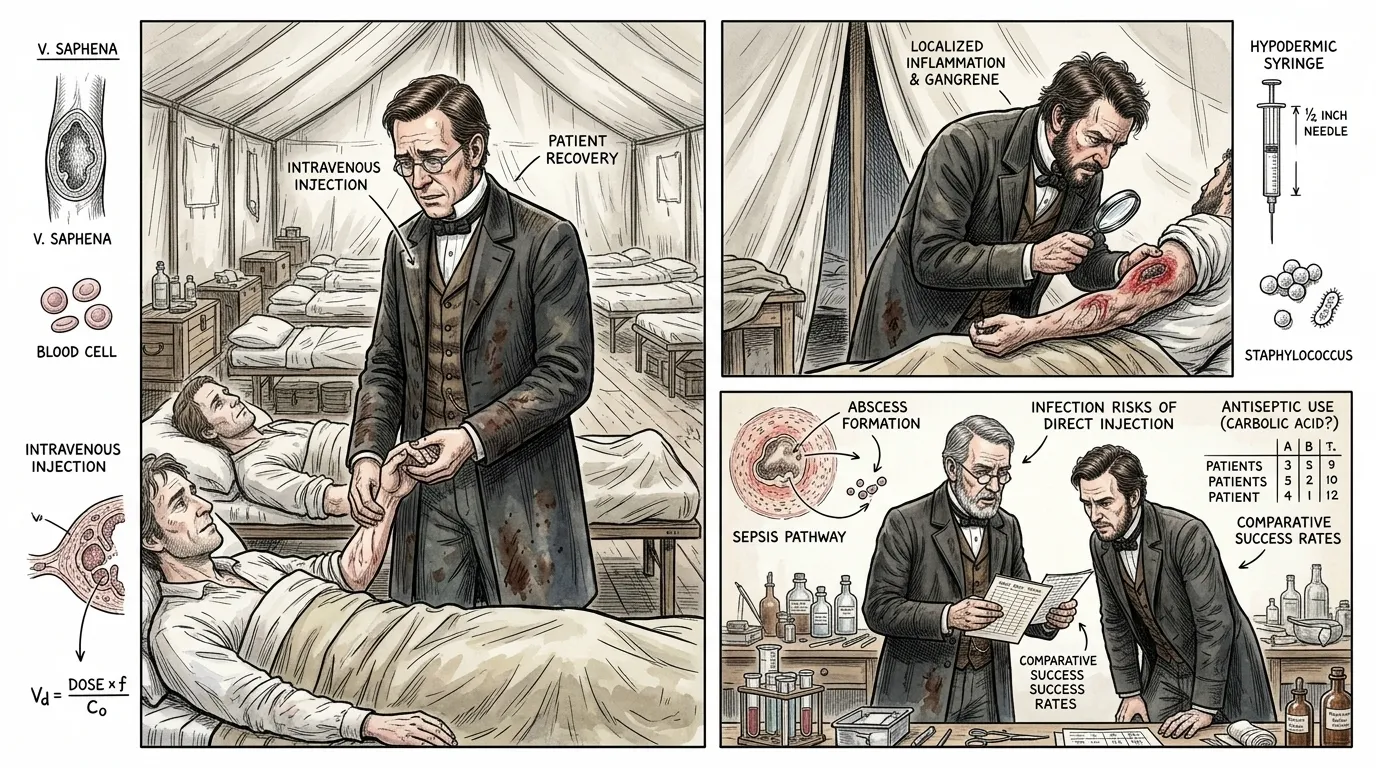
The hypodermic syringe was quickly adopted, especially for administering powerful narcotics like morphine, offering rapid and unprecedented pain relief. However, this early enthusiasm was met with significant challenges. Without understanding germ theory or the transmission of bloodborne pathogens, the reuse of unsterilized syringes led to widespread infections and the spread of diseases, turning this revolutionary tool into a vector for illness.
""The immediate relief for our patients is undeniable; the pain of surgical recovery, the agony of chronic illness, now manageable," remarked a military surgeon in a field hospital, observing a patient receiving morphine in 1865. "But," his colleague countered gravely, examining a patient with a severe localized infection, "we are seeing alarming rates of sepsis and other morbidities. We must question if our tools, though powerful, are inadvertently sowing new seeds of disease.""
Page 9
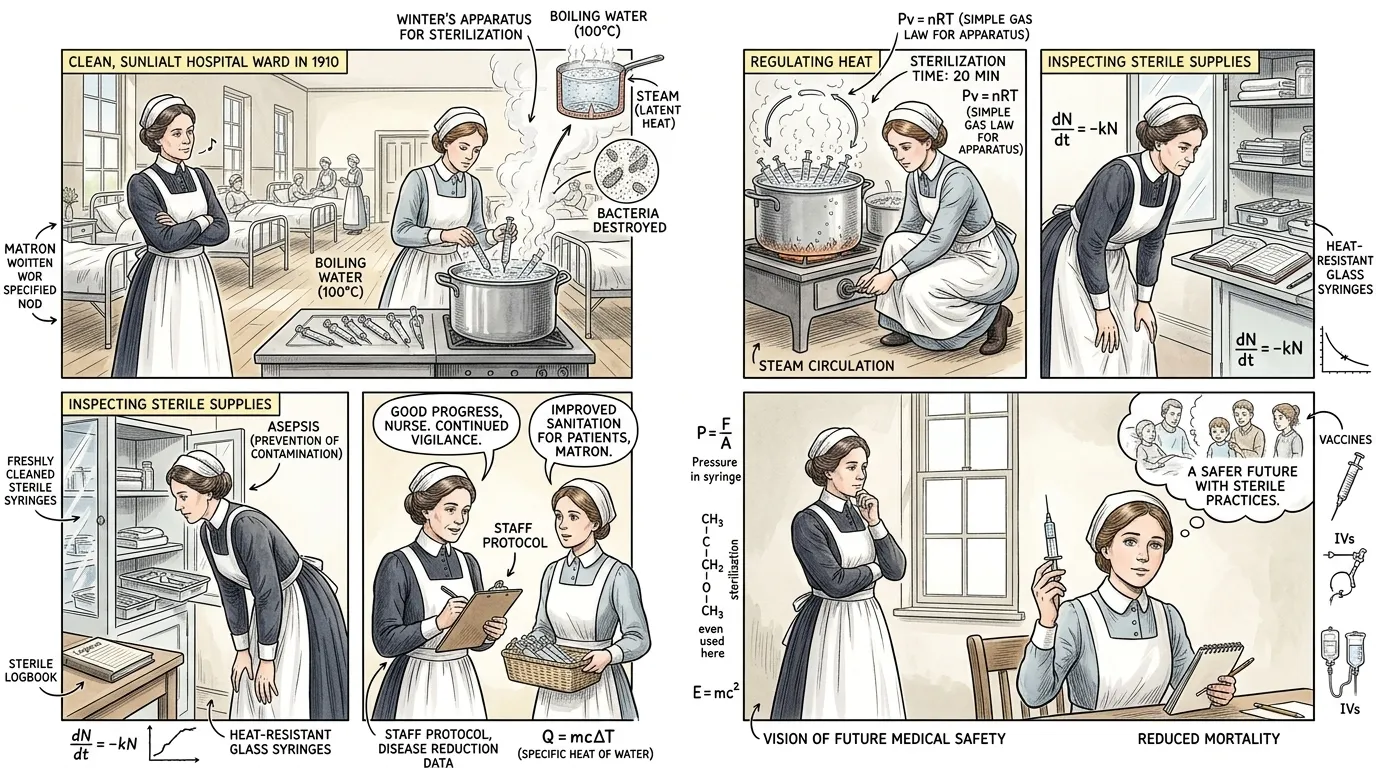
The understanding of germ theory by scientists like Louis Pasteur and Joseph Lister ushered in a new era. Syringes transitioned from basic cleansing to rigorous boiling sterilization for glass versions. Then, in the mid-20th century, the advent of cheap, sterile, disposable plastic syringes truly transformed public health, eliminating the risk of cross-contamination and making widespread vaccination and safe injection practices possible globally.
""The boiling sterilization protocol, as outlined by Lister, has drastically reduced post-injection infections," stated a matron in a hospital ward, overseeing a nurse carefully boiling glass syringes in 1910. "But the manual rigor, the constant cleaning, limits our outreach. Imagine, Nurse," she continued, "a world where every injection uses a brand-new, guaranteed-sterile device. It would be transformative." The nurse, holding a freshly sterilized syringe, nodded, envisioning the future."
Page 10
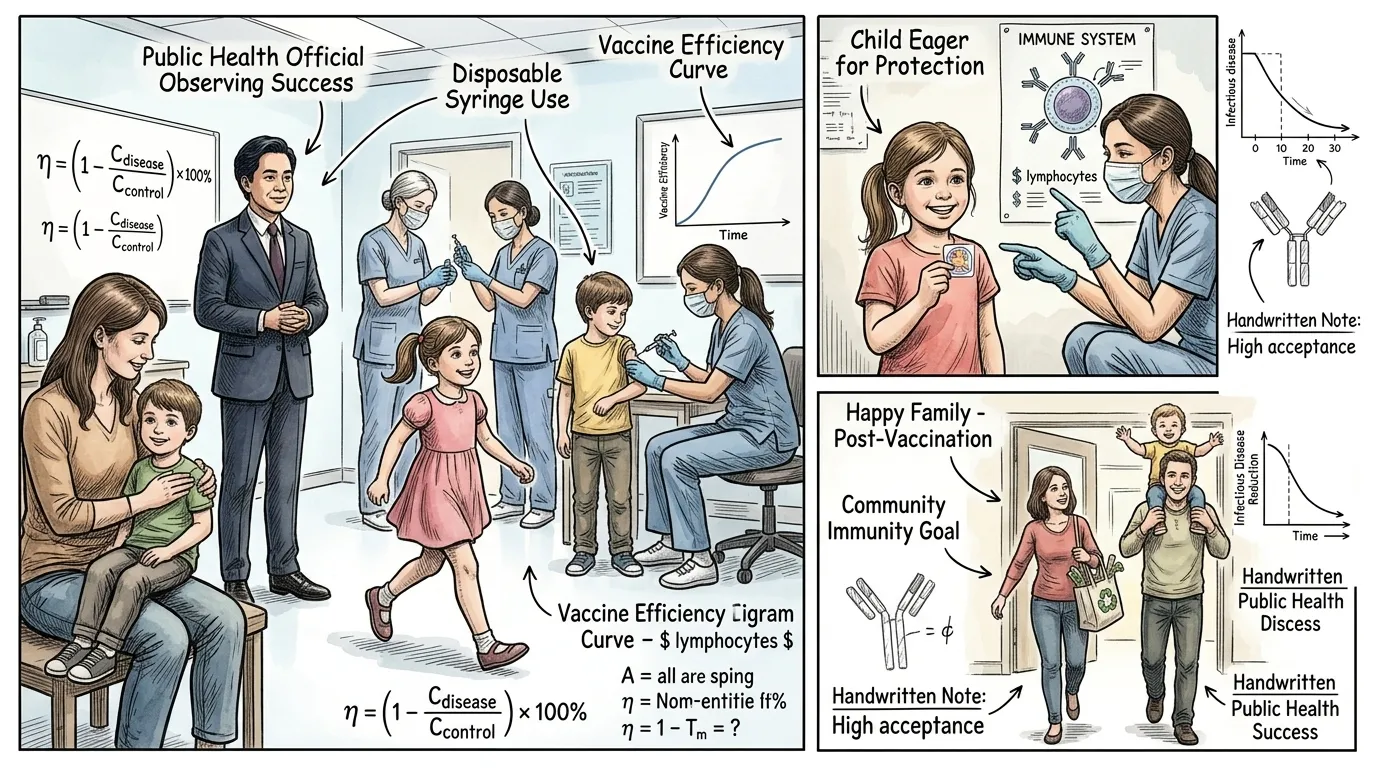
Today, the syringe is an omnipresent, indispensable tool in global healthcare. From mass vaccination campaigns eradicating diseases, to life-saving insulin delivery for diabetes patients, to routine blood sampling for diagnostics, its impact is immeasurable. The journey from crude animal bladders to sophisticated, sterile disposables reflects humanity's persistent quest for precise, effective medical intervention, forever changing the landscape of health and longevity.
""The syringe epitomizes the convergence of necessity and ingenuity, a testament to how simple mechanics can yield profound medical progress," remarked a lead public health official, observing a bustling vaccination clinic in the modern era. "Every child vaccinated, every life-saving dose delivered, reinforces its enduring legacy. It stands as a silent sentinel in the ongoing battle for global health.""
About this story
- Location: Global
- Audience: general readers
Questions and answers
Read Wonder Inventions on your phone
Wonder Inventions is available on Android. Get Wonder Inventions on Google Play.