Submarine
Submarine — an illustrated inventions story, set in Global. 10 illustrated pages, free to read on Wonder Inventions.
Page 1
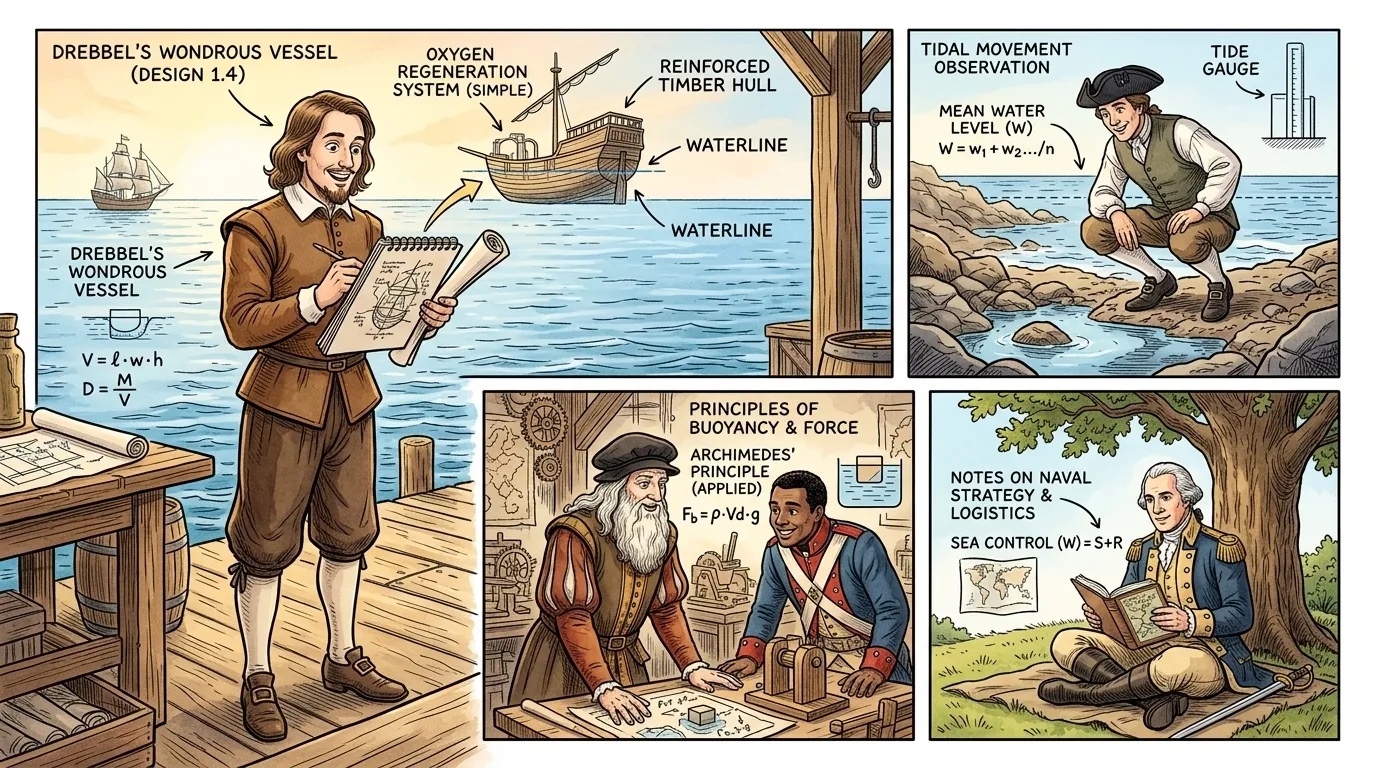
For centuries, the depths of the ocean remained an unconquerable realm, a vast, mysterious frontier beyond human reach. Surface vessels were bound by the very element that sustained them, leaving the underwater world to its ancient inhabitants. The vision of navigating beneath the waves, unseen and unhindered, captivated daring minds, promising an unprecedented advantage in warfare and exploration alike.
"Yet, the fundamental challenges of buoyancy, propulsion, and sustaining life beneath the surface rendered these early dreams into perilous, often fatal, endeavors. It was in this era of nascent exploration that Cornelius Drebbel, a Dutch inventor, began to defy the impossible."
Page 2
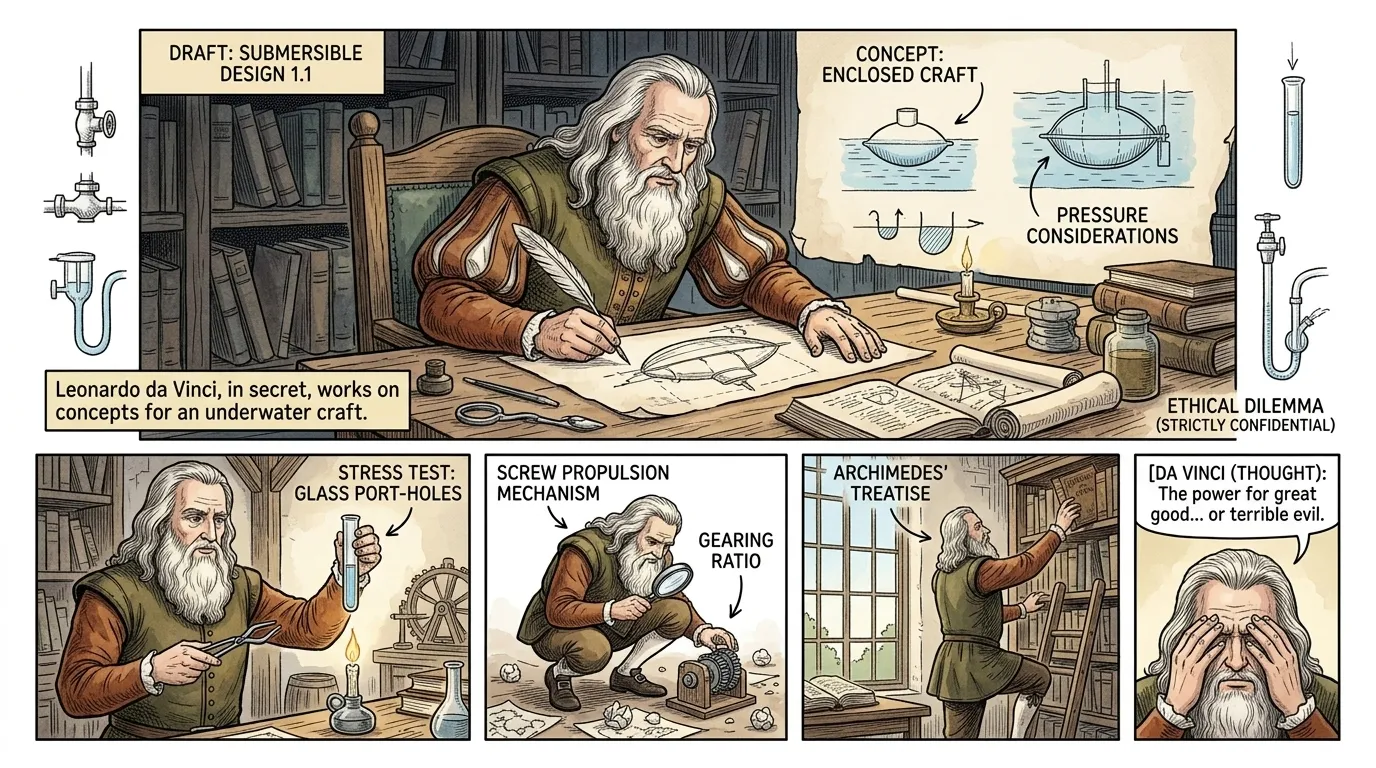
Before any craft could truly navigate beneath the waves, a profound technical hurdle had to be overcome: the precise control of buoyancy. Water, in its immense volume, exerts incredible pressure, and any vessel wishing to dive or surface reliably needed a mechanism to alter its displacement and density with absolute precision. Early concepts, some merely theoretical, grappled with this complex interplay of forces.
"Historical records reveal Leonardo da Vinci, the renowned Renaissance polymath, deeply considered these challenges. He wrote, 'The secrets of the submarine I do not make public or divulge on account of the evil nature of men, who would use them for assassination at the bottom of the seas.' His words underscore the inherent danger and transformative power such a craft represented, even as he envisioned its potential."
Page 3
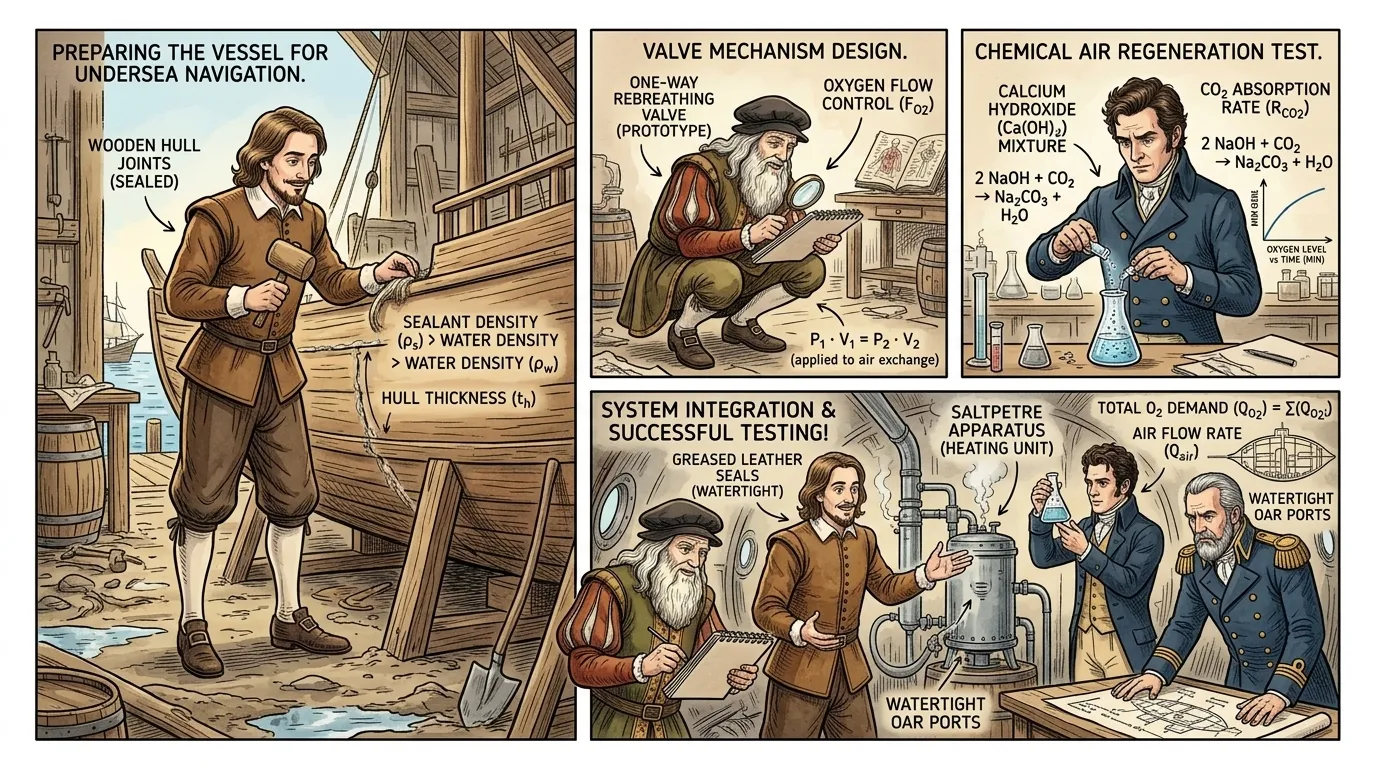
Cornelius Drebbel's approach in 1620 was remarkably pragmatic for its time. Rather than intricate machinery, he leveraged simple principles of waterproofing and manual power. His craft, essentially a wooden rowboat sealed within greased leather, proved that controlled, if limited, submersion was possible. The crew manually operated oars that passed through watertight seals in the hull, providing rudimentary propulsion.
"The true genius lay not just in waterproofing, but in Drebbel's rudimentary understanding of air quality. While not fully grasping the science of oxygen, he is credited with a method to 'renew' the air within his submersible. This involved heating saltpetre (potassium nitrate) to release a small amount of breathable air, a crucial, though dangerous, step towards sustained underwater operations. This early method of air regeneration addressed one of the two core challenges, alongside controlled buoyancy."
Page 4
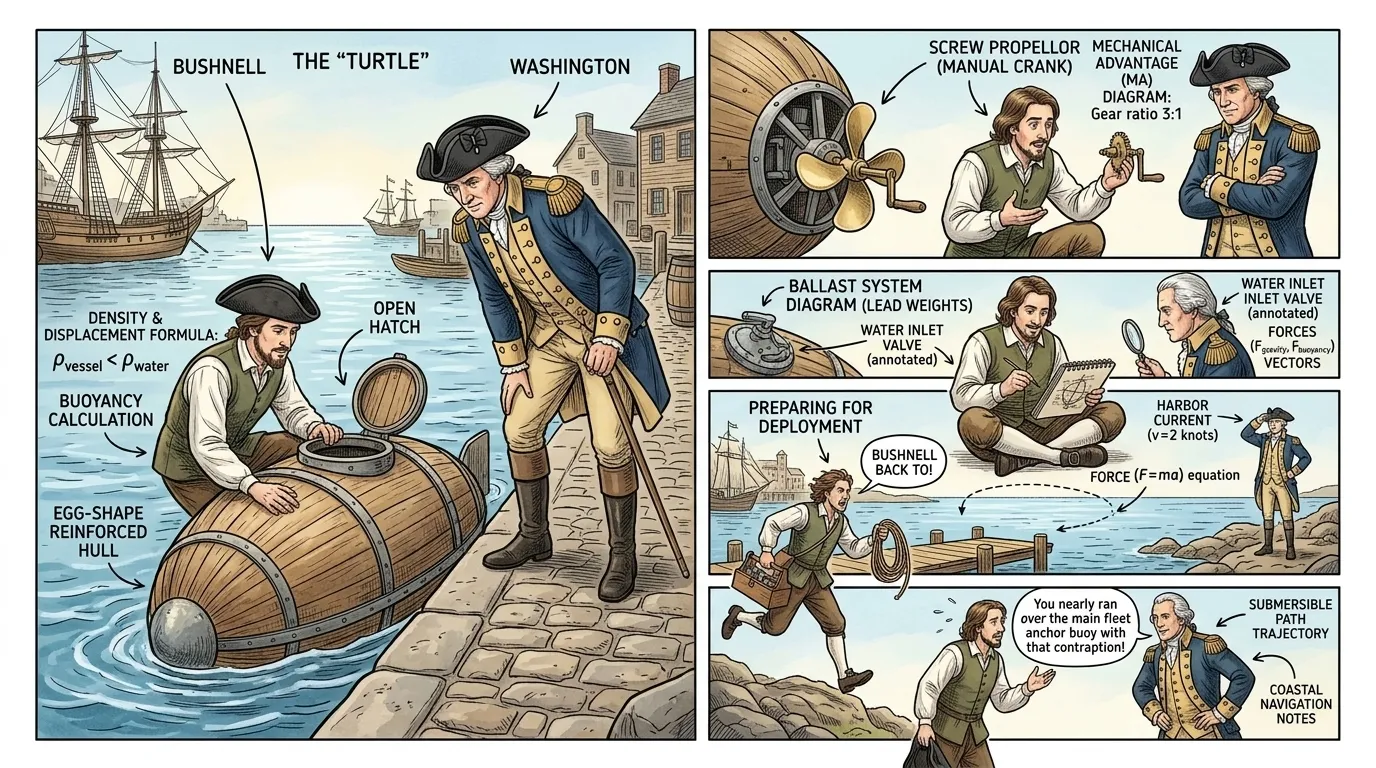
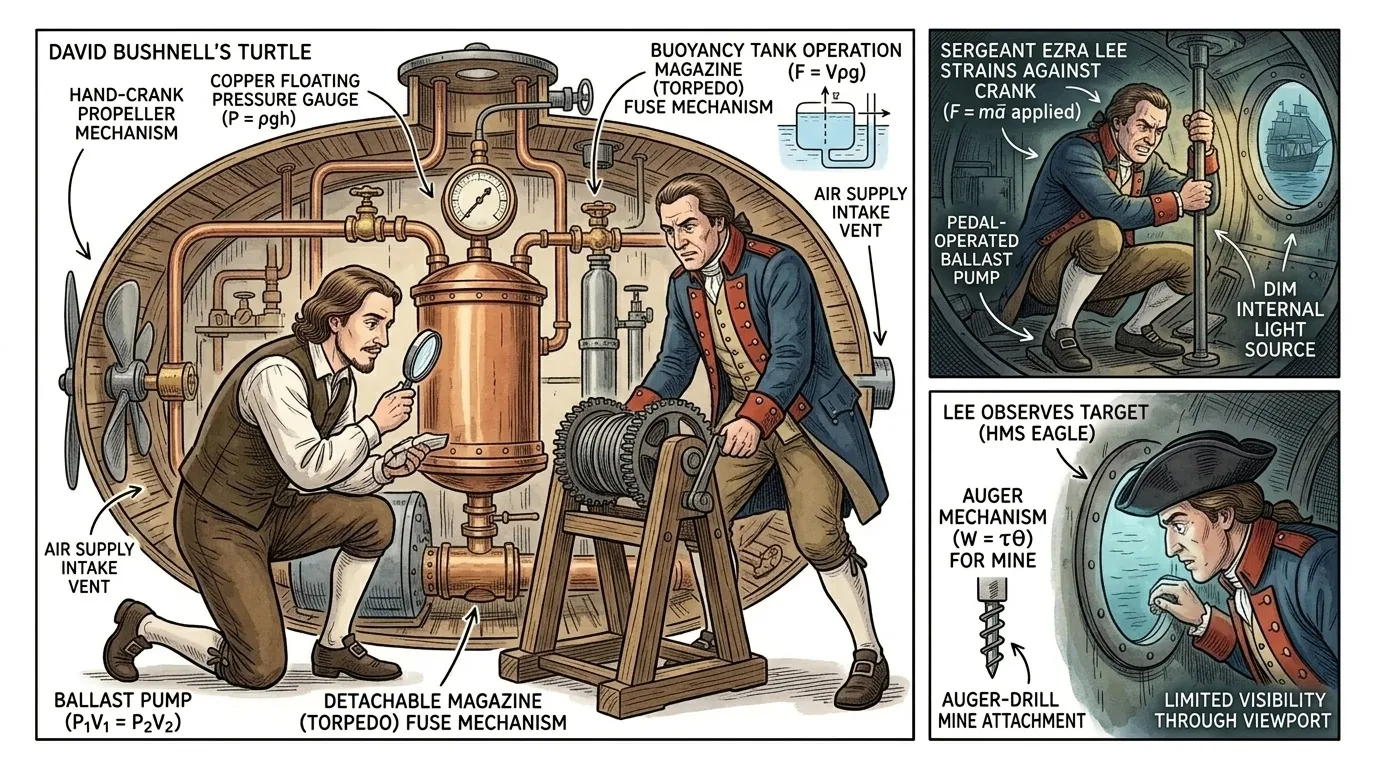
More than a century later, during the American Revolutionary War, David Bushnell, an American inventor, conceptualized and built the 'Turtle.' This innovative vessel, launched in 1776, was a testament to ingenuity, designed specifically for military application against British warships. Unlike Drebbel's recreational craft, the Turtle was a weapon, albeit a highly experimental one.
"Bushnell's contemporaries, particularly General George Washington, observed the Turtle with a mixture of awe and skepticism. Washington, upon hearing of its potential, remarked, 'I then determined to encourage him, as I thought it an effort of genius, and that the success of the enterprise, if it did not injure the enemy, could not in any event injure us.' This endorsement highlighted the desperate need for novel warfare strategies against the dominant British fleet, propelling the submarine from curiosity to potential military asset."
Page 5
Operating the Turtle was an arduous and terrifying ordeal, requiring immense physical strength and courage from its single occupant, Sergeant Ezra Lee. The vessel was entirely human-powered, a testament to the sheer physical and mental endurance demanded of early submariners. Lee would use hand cranks to propel the submarine forward and upward, while foot pedals operated pumps to flood or empty ballast tanks, controlling depth.
"The challenges were immense. Sergeant Lee once attempted to attach a mine to HMS Eagle, a British flagship, but failed. Later describing the incident, he recounted the immense difficulty: 'I made an attempt with the torpedo... against the ship Eagle, but was defeated. It was impossible to make the screw enter the copper bottom of the ship.' His words vividly capture the brutal reality of early underwater combat, where mechanical limitations and unforeseen obstacles often thwarted even the most heroic efforts."
Page 6
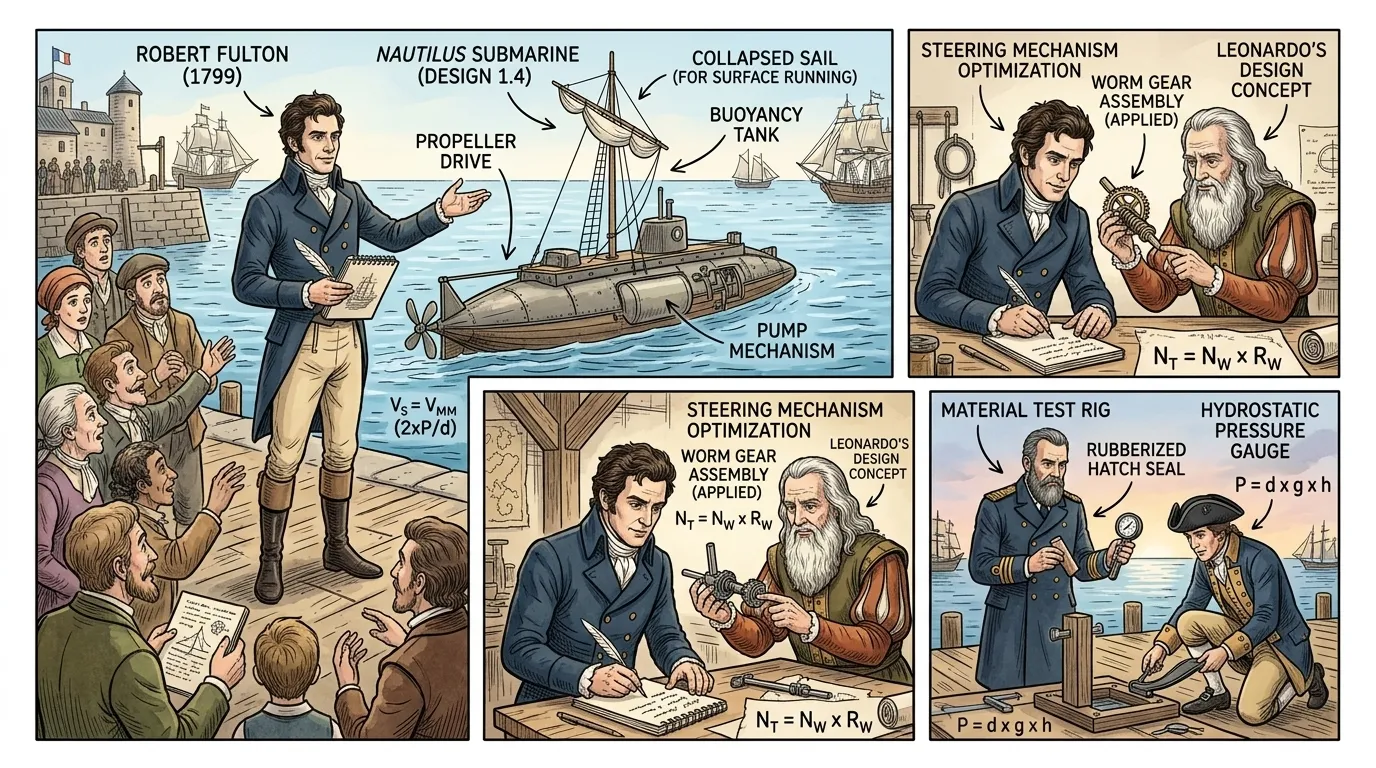
As the 18th century gave way to the 19th, Robert Fulton, an American engineer, brought forward his own formidable design: the Nautilus. Built in France in 1800, Fulton's submarine was a significant leap forward, particularly in its approach to propulsion and ballast. It was the first to use a true propeller for underwater motion and a collapsible sail for surface travel, demonstrating a hybrid operational capability.
"Fulton himself, a visionary in naval engineering, understood the potential of his creation, stating, 'A vessel which could navigate under water would, beyond a doubt, prove of the most extensive advantage, both in civil and military operations.' He foresaw the submarine's dual utility, pushing past the mere concept of underwater attack to a broader vision of maritime capabilities."
Page 7
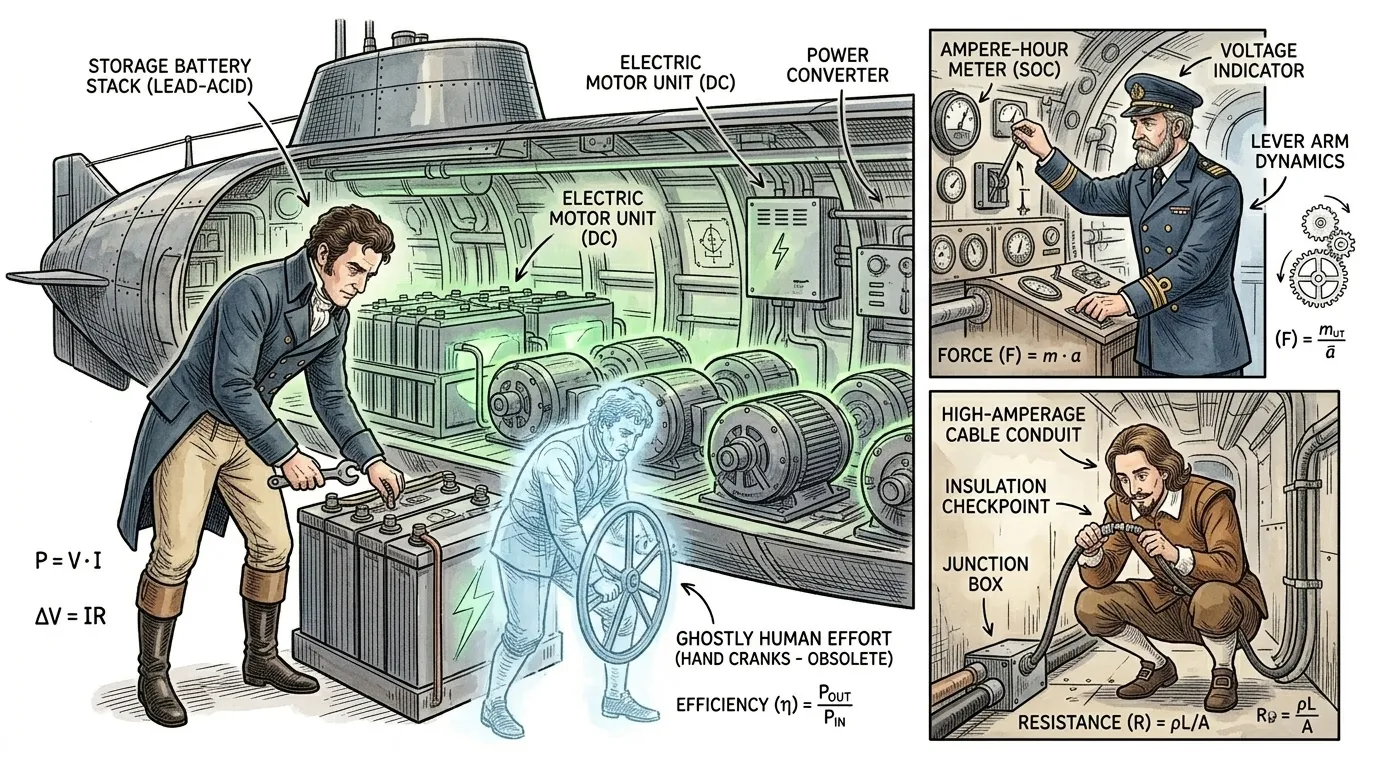
The industrial revolution catalyzed the true transformation of the submarine. Human muscle power, once the sole source of propulsion, gave way to mechanical might. Early experiments with steam engines for submarines were fraught with peril, given the need for air combustion and heat management underwater. However, the advent of electric motors and powerful storage batteries offered a viable, cleaner alternative.
"The engineers and naval strategists of the late 19th century recognized this paradigm shift. A British naval engineer, discussing the emerging electric submarine, might have reflected, 'The silent, unseen menace powered by this new electricity will redefine naval strategy. The age of purely surface dominance is drawing to a close, and a new dimension of warfare is upon us.' This era marked the effective 'payoff' of stable underwater propulsion."
Page 8
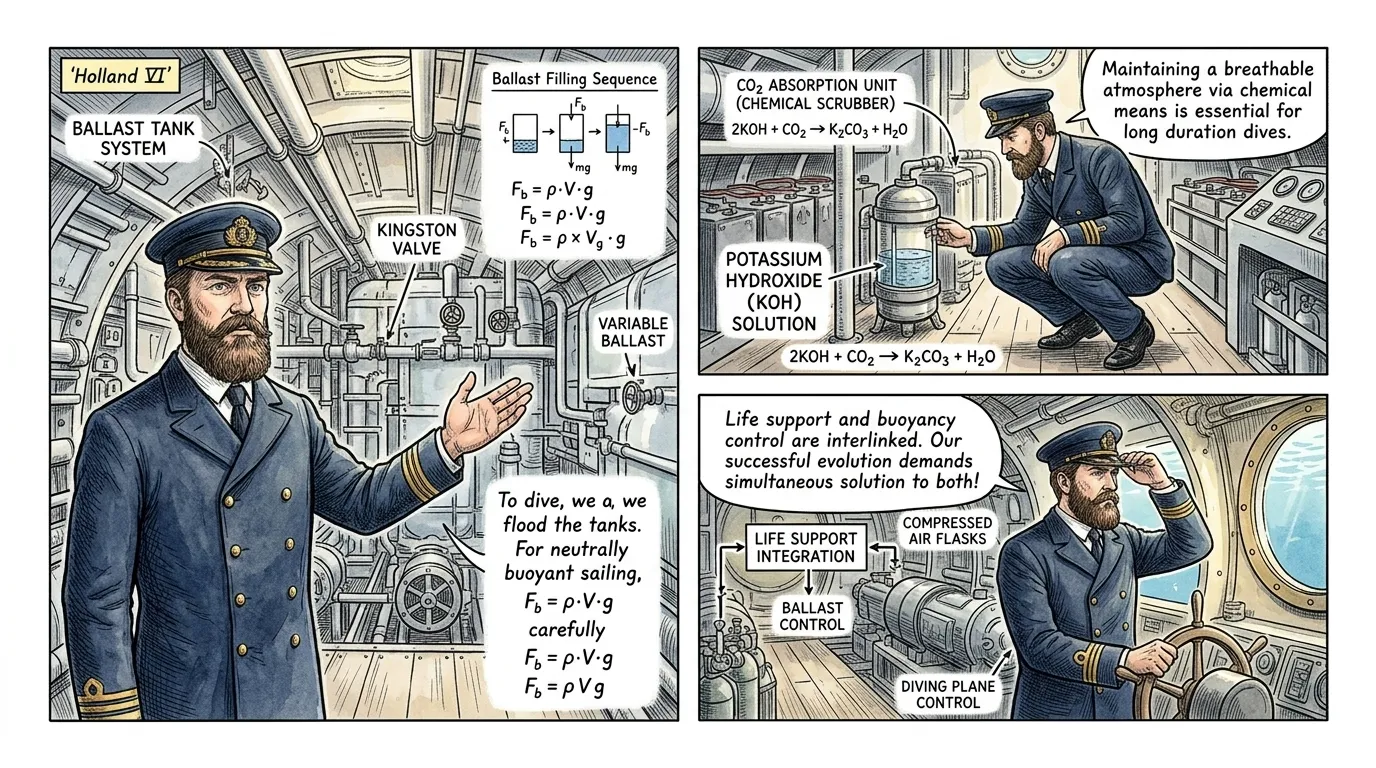
The critical 'knowledge' introduced early on – the principle of controlled buoyancy – finally found its sophisticated application in the late 19th and early 20th centuries. Submarines began incorporating advanced ballast tank systems, capable of rapidly taking on or expelling water using compressed air. This enabled precise depth control, a fundamental requirement for military and scientific operations.
"Simultaneously, the rudimentary air regeneration of Drebbel's era evolved dramatically. Chemical air scrubbers, using substances like soda lime to remove carbon dioxide, and compressed air tanks for replenishment, ensured extended submersion. This dual evolution, combining advanced buoyancy with sustainable life support, represented the ultimate 'payoff' for reliable underwater endurance. As Rear Admiral John P. Holland, a pioneer in modern submarine design, once emphasized: 'The submarine is essentially a submersible boat, and the success of its operations depends on its ability to handle itself with facility both on the surface and submerged.'"
Page 9
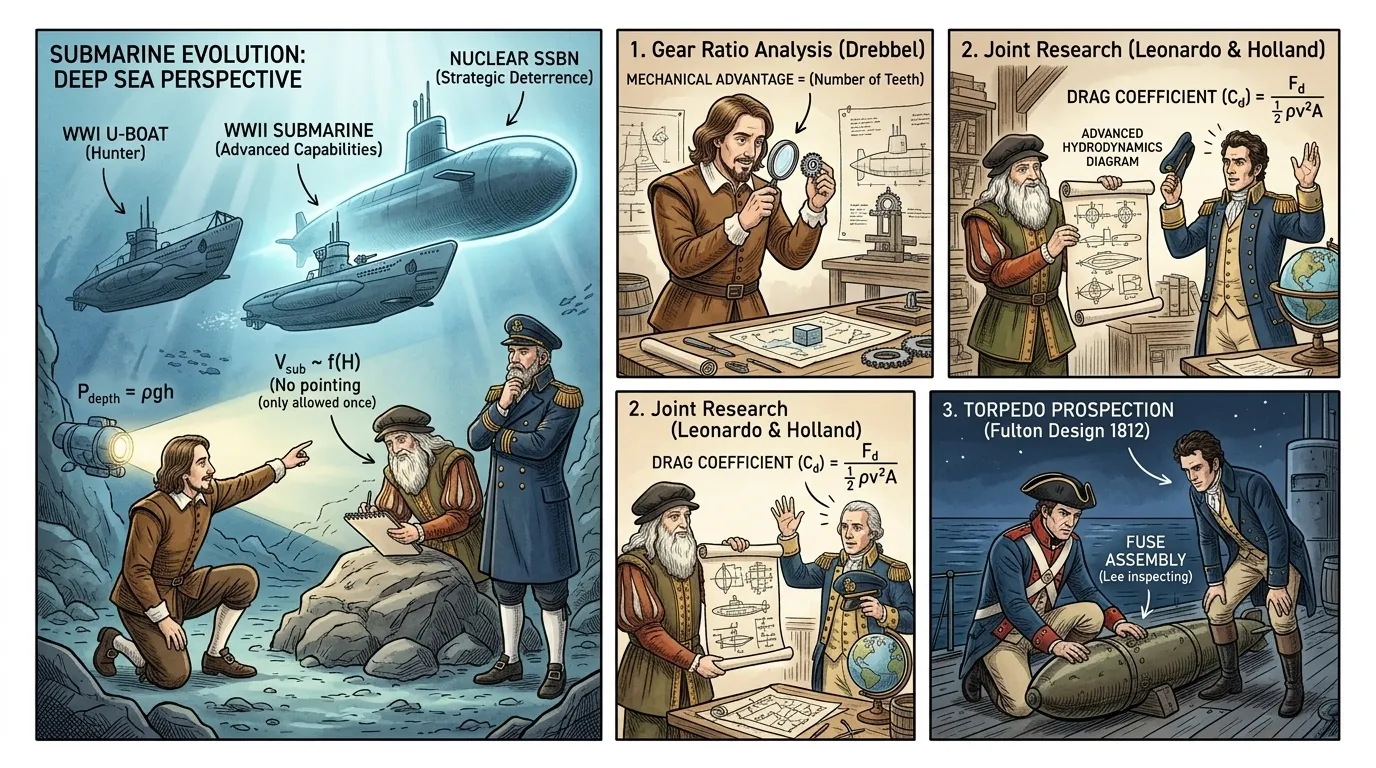
With reliable propulsion, buoyancy control, and life support, the submarine rapidly transformed from an experimental curiosity into a formidable instrument of war. World War I saw the German U-boats become a terrifying new threat to Allied shipping, proving the submarine's capacity for strategic disruption. By World War II, submarines were critical components of every major navy, engaging in widespread combat and patrol duties.
"Post-war, the submarine's strategic importance only grew, culminating in the nuclear era. During the Cold War, nuclear-powered ballistic missile submarines (SSBNs) became the ultimate deterrent, capable of launching devastating attacks from anywhere in the world's oceans, remaining submerged for months. An anonymous naval strategist once declared, 'The nuclear submarine is the most profound strategic weapon ever conceived; it is the silent fist that ensures global stability through fear of its unseen power.' This shift cemented its role in geopolitical strategy."
Page 10
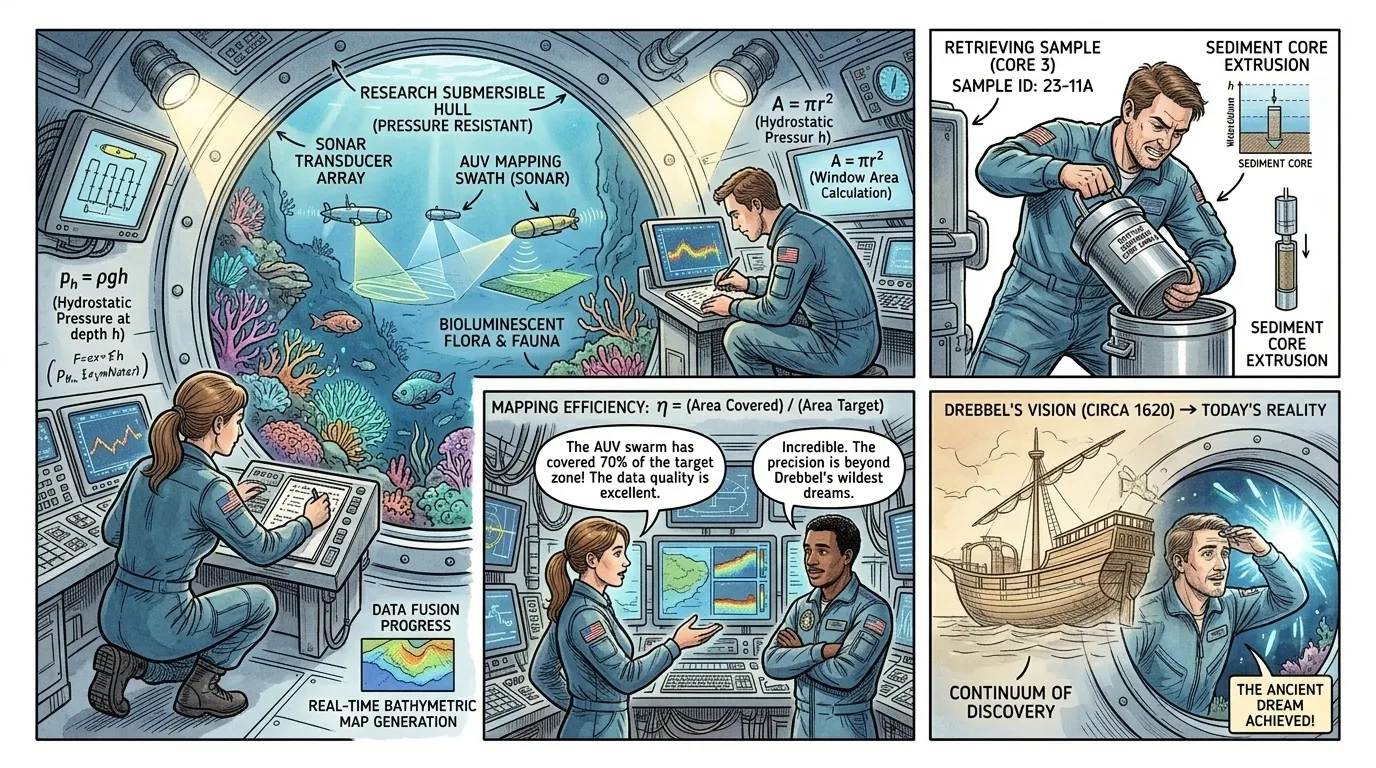
Today, the submarine's influence extends far beyond military might. Scientific research submersibles delve into the deepest, darkest trenches of the ocean, uncovering new species and geological wonders. Autonomous underwater vehicles (AUVs) map vast swathes of the seabed, aiding in resource discovery and environmental monitoring. The initial dream of navigating beneath the waves has been fully realized, opening up an entirely new frontier for human endeavor.
"The evolution of the submarine stands as a testament to humanity's relentless pursuit of the impossible, transforming a perilous concept into an indispensable tool. From Drebbel's leather-clad vessel to the sophisticated nuclear-powered craft of today, the submarine continues to push the boundaries of technology and exploration. As the philosopher Arthur Schopenhauer once observed, 'All truth passes through three stages. First, it is ridiculed. Second, it is violently opposed. Third, it is accepted as being self-evident.' This perfectly encapsulates the journey of the submarine, once a ridiculed notion, now an accepted marvel."
About this story
- Location: Global
- Audience: general readers
Questions and answers
Read Wonder Inventions on your phone
Wonder Inventions is available on Android. Get Wonder Inventions on Google Play.