Supercomputer
Supercomputer — an illustrated inventions story, set in Global. 10 illustrated pages, free to read on Wonder Inventions.
Page 1
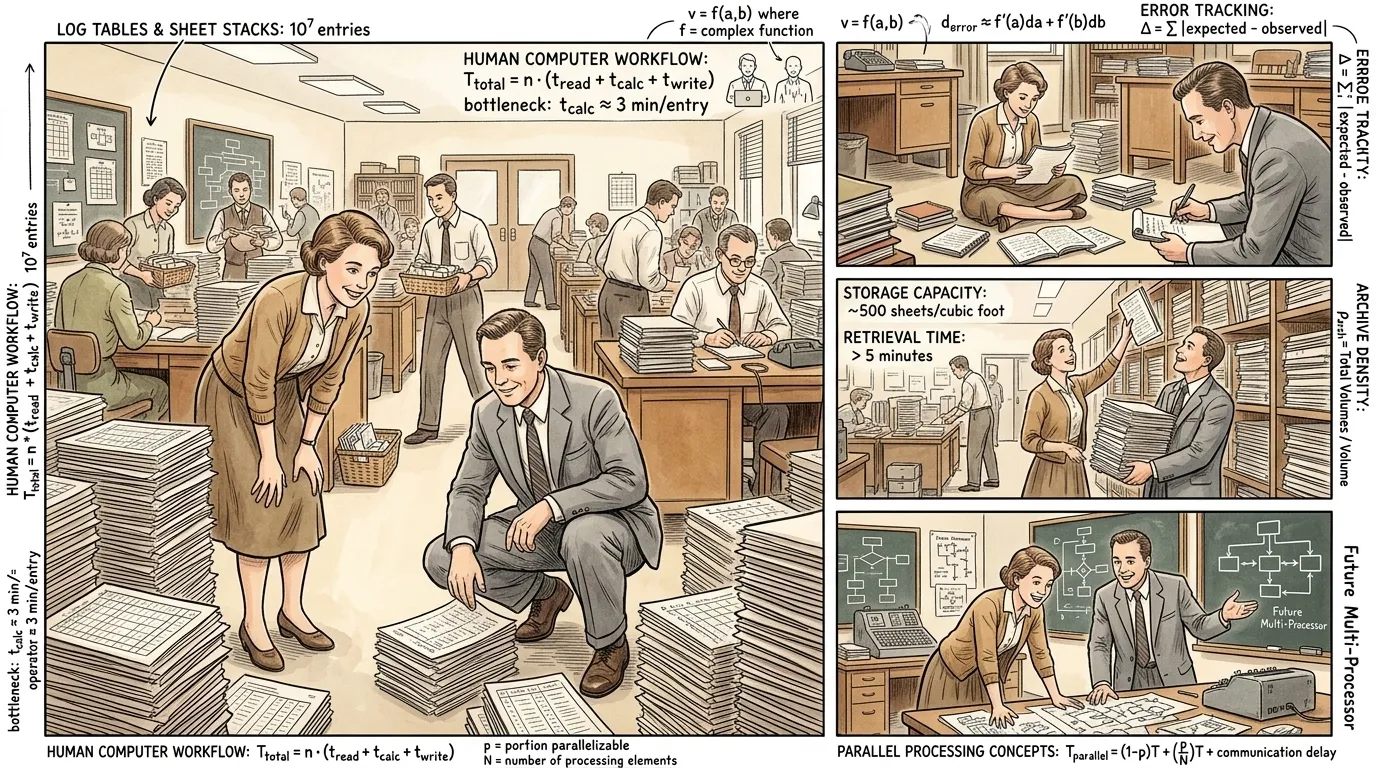
Before the advent of the supercomputer, humanity faced an intractable challenge: how to process the immense datasets required for advanced scientific research, military strategy, and complex simulations. In the mid-20th century, the demand for calculative power far outstripped existing capabilities, threatening to stall critical advancements.
""The sheer volume of these calculations," Dr. Eleanor Vance stated, gesturing at stacks of log tables and calculation sheets, "is overwhelming our brightest minds. We are spending months on problems that should take days, if not hours. This sequential approach is simply unsustainable for the complexity we now face." Another engineer, Mr. Arthur Sterling, nodded gravely. "Our existing electro-mechanical calculators, even early electronic ones, are fundamentally bottlenecks. Each operation waits for the last to complete, a critical limitation for our ambitious projects.""
Page 2
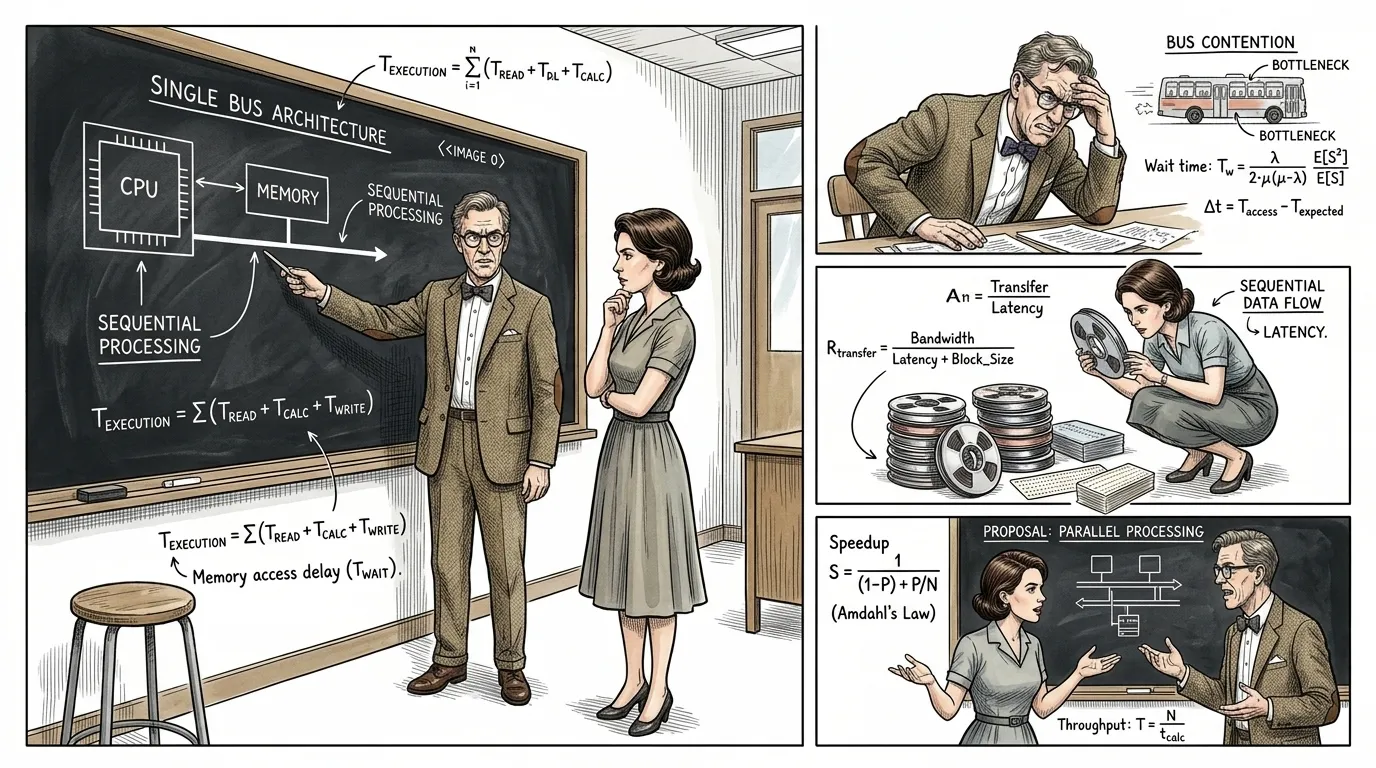
The core issue lay in the fundamental architecture of early digital computers, often referred to as the Von Neumann architecture. This design, while revolutionary, dictated that instructions and data had to pass sequentially through a single processing unit, creating a critical 'bottleneck' for computationally intensive tasks.
""This diagram," Professor Alistair Finch explained, pointing to a schematic on a large blackboard depicting a CPU, memory, and a single bus line, "illustrates the inherent constraint. Data must be fetched from memory, processed, and then returned, one instruction after another. It's like a single lane on a superhighway." Dr. Lena Petrova, a brilliant young mathematician, added, "For applications like global weather modeling, which demands trillions of calculations involving vast datasets, this sequential processing simply cannot scale. We need to analyze atmospheric conditions across thousands of grid points simultaneously. The current paradigm ensures endless waiting.""
Page 3
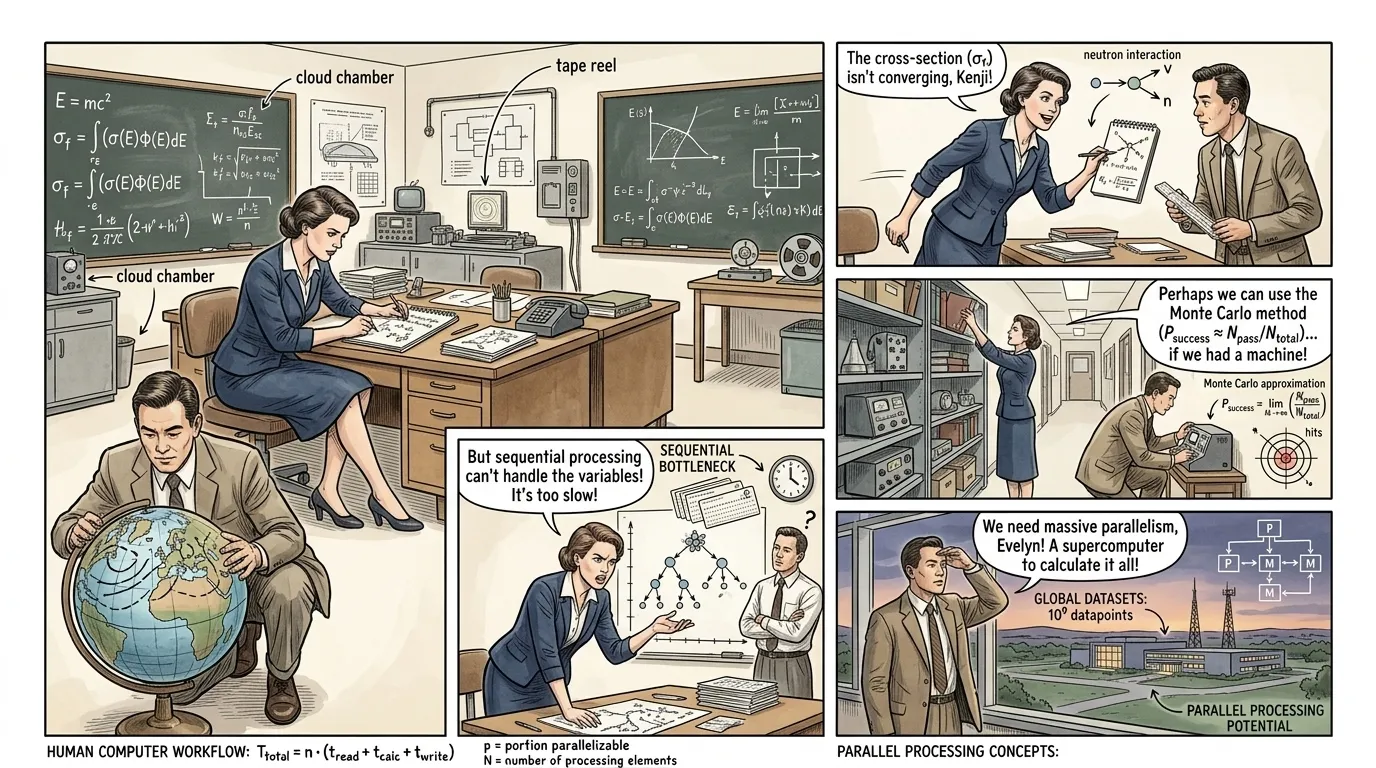
By the late 1950s and early 1960s, the scientific community desperately sought a paradigm shift. Problems in physics, cryptology, and aerospace demanded machines capable of performing billions of operations per second, a feat unimaginable with existing technology. The limits of sequential computation were no longer merely an inconvenience; they were a barrier to progress itself.
""Imagine simulating a nuclear reaction with perfect fidelity, or predicting global weather patterns days in advance," mused Dr. Evelyn Reed, a lead nuclear physicist, sketching equations on a notepad. "Our current machines can barely manage simplified approximations. We require raw computational speed, orders of magnitude beyond what's available." Dr. Kenji Tanaka, a meteorologist, added, "The sheer data volume for accurate forecasts—temperature, pressure, humidity across the entire globe—it's astronomical. Without a fundamental shift in processing capability, real-time prediction remains a distant dream. We are collecting the data, but we lack the computational vehicle to truly leverage it.""
Page 4
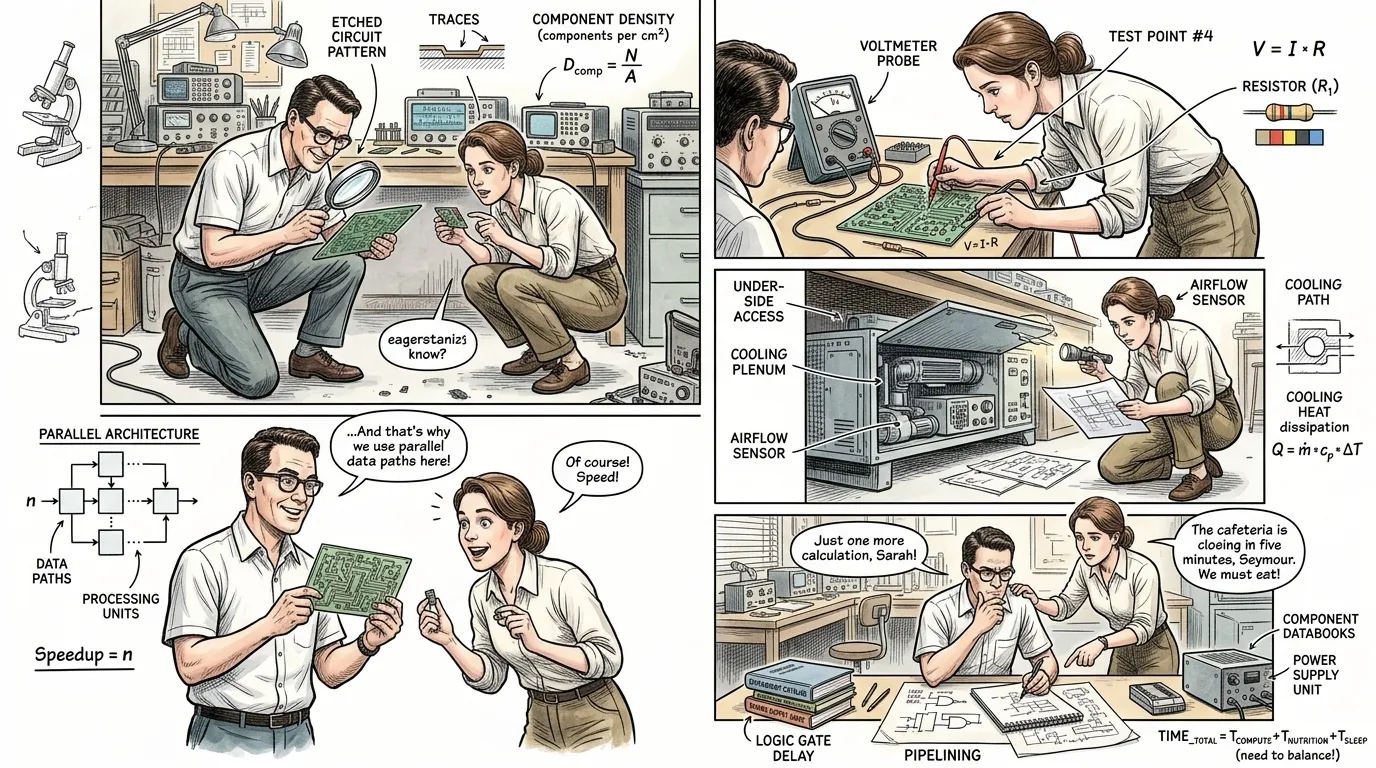
Into this void stepped Seymour Cray, a visionary engineer whose singular focus on speed would define an entire class of machines. Cray believed in elegant simplicity and directness in design, eschewing complexity for raw performance. His relentless pursuit of the fastest possible machine would lay the groundwork for the supercomputer as we know it.
""My goal," Seymour Cray declared, carefully examining a newly etched circuit board, "is to build the fastest possible computer. Not the cheapest, not the most general, but the absolute fastest. Every component, every wire, every architectural decision must serve that single purpose." A younger engineer, Sarah Jenkins, inquired, "But Mr. Cray, the challenges of component speed and heat dissipation are immense at these scales. How do we even begin to manage them?" Cray replied with a confident smile, "By simplifying, by integrating, and by refusing to accept limits. We must think beyond conventional architectures, beyond sequential processing. The path to ultimate speed often lies in surprising places.""
Page 5
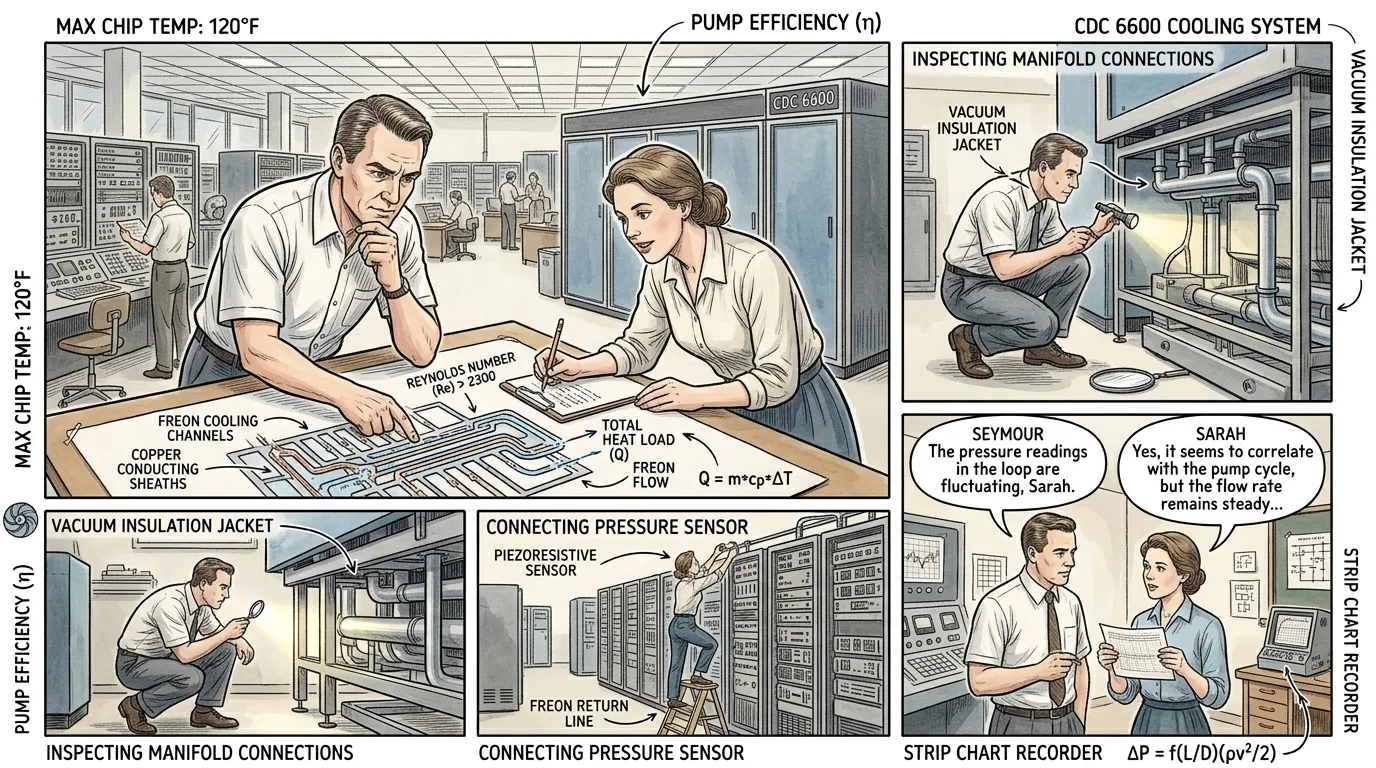
Cray's early work at Control Data Corporation (CDC) yielded powerful machines like the CDC 6600, often considered the first successful supercomputer. He pioneered innovative techniques to push component speeds, minimize signal delays, and manage the formidable heat generated by densely packed electronics. Yet, these successes were merely stepping stones, providing crucial lessons for future, even more ambitious designs.
""The CDC 6600, while a monumental achievement, taught us invaluable lessons about thermal management," reflected Cray, pointing to a cross-section diagram of the machine's complex cooling system. "Liquid Freon cooling was revolutionary, but it highlighted the escalating battle against heat as we increased clock speeds and component density." Dr. Jenkins added, "And the scalar architecture, though highly optimized, still grappled with the inherent sequential bottleneck. It was powerful, but not fundamentally limitless. The next leap needed a different approach to processing.""
Page 6
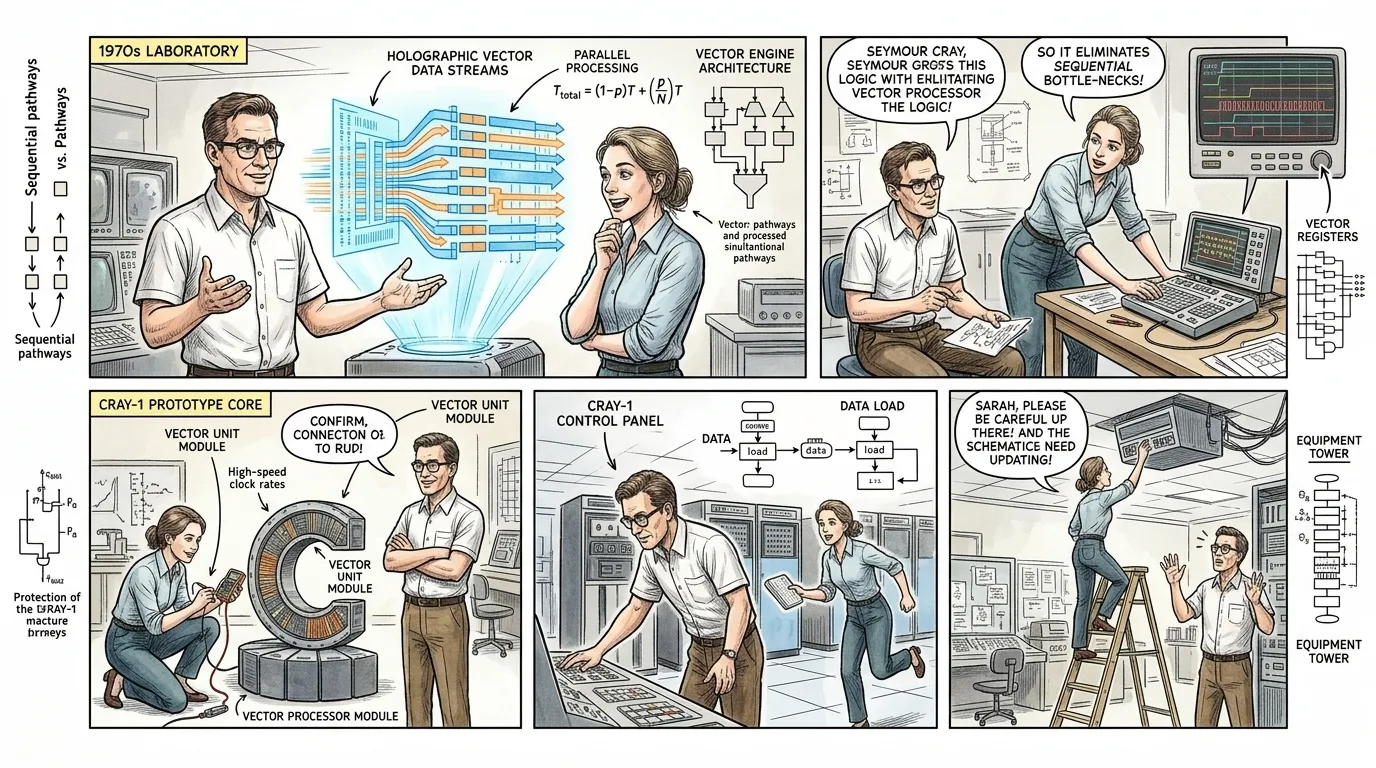
The true breakthrough arrived with the CRAY-1 in 1976. Seymour Cray didn't just make components faster; he fundamentally redesigned how the machine processed data. He implemented 'vector processing,' allowing the computer to perform the same operation on many pieces of data simultaneously, a massive departure from the traditional sequential method.
""Rather than operating on one pair of numbers at a time," Cray explained, illustrating with gestures at a holographic projection of data streams, "a vector processor can take a 'vector'—an array of numbers—and apply the same operation to all of them in parallel. It's a completely different way of thinking about computation." Dr. Jenkins, observing the projection, remarked, "This is where the power truly escalates. Multiplying a thousand numbers by another thousand, simultaneously, rather than sequentially, unlocks orders of magnitude in speed. It directly tackles the 'sequential bottleneck' we identified earlier. As the philosopher Arthur Schopenhauer once said, 'All truth passes through three stages. First, it is ridiculed. Second, it is violently opposed. Third, it is accepted as being self-evident.' Many thought this approach was too radical.""
Page 7
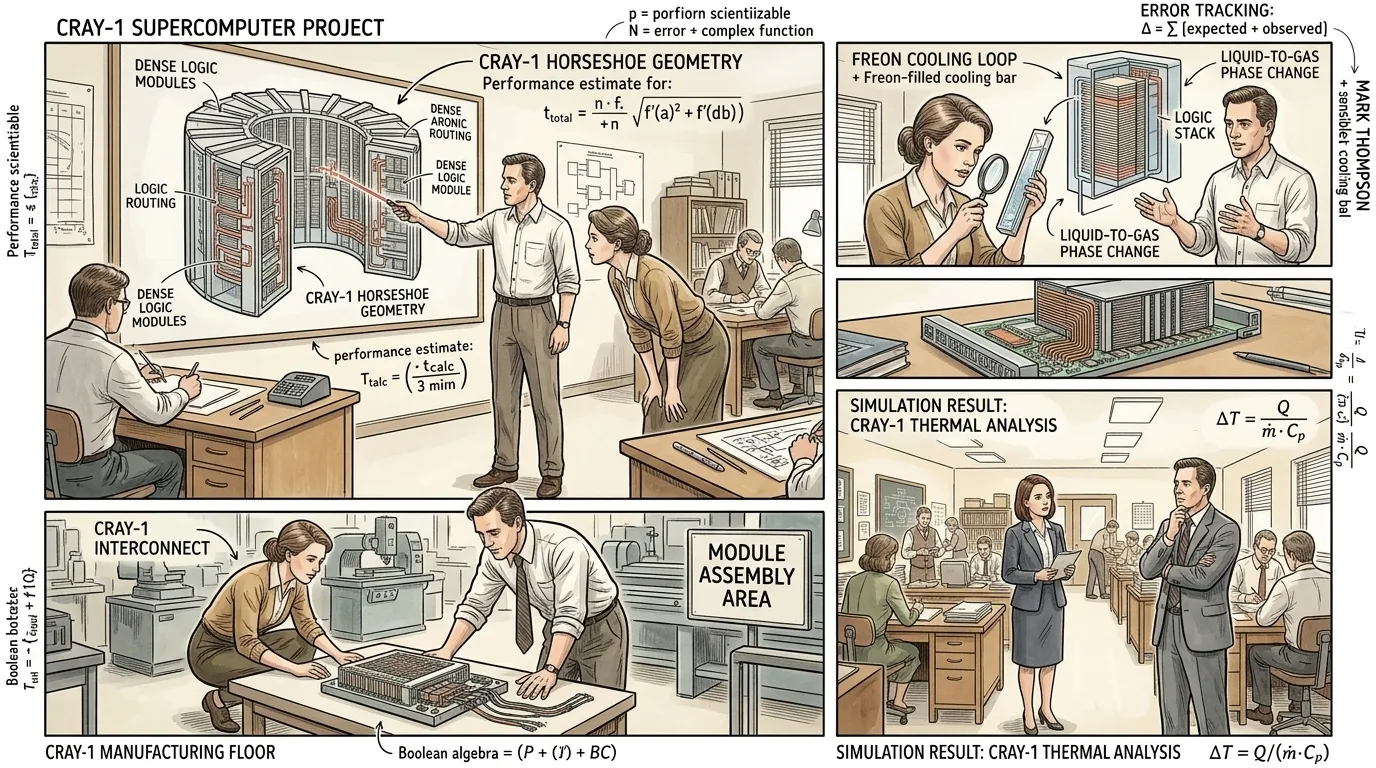
The CRAY-1 was an iconic machine, not just for its speed but for its distinctive design. Its horseshoe shape minimized cable lengths, reducing signal delays. Crucially, its specialized architecture featured multiple functional units working in parallel, fed by fast vector registers, all encased in an innovative cooling system that routed Freon through vertical cooling bars.
""The horseshoe shape isn't merely aesthetic," an engineer named Mark Thompson clarified, pointing to a detailed cutaway diagram of the CRAY-1. "It directly reduces wire lengths, shaving off precious nanoseconds from signal propagation. Every inch matters when you're pushing gigahertz speeds." Dr. Jenkins added, "And the integrated cooling system, with its Freon-filled cold bars directly contacting the circuit boards, was essential. Without it, the dense packing of these powerful components would simply melt under the heat generated. It's a symphony of speed, efficiency, and thermal management.""
Page 8
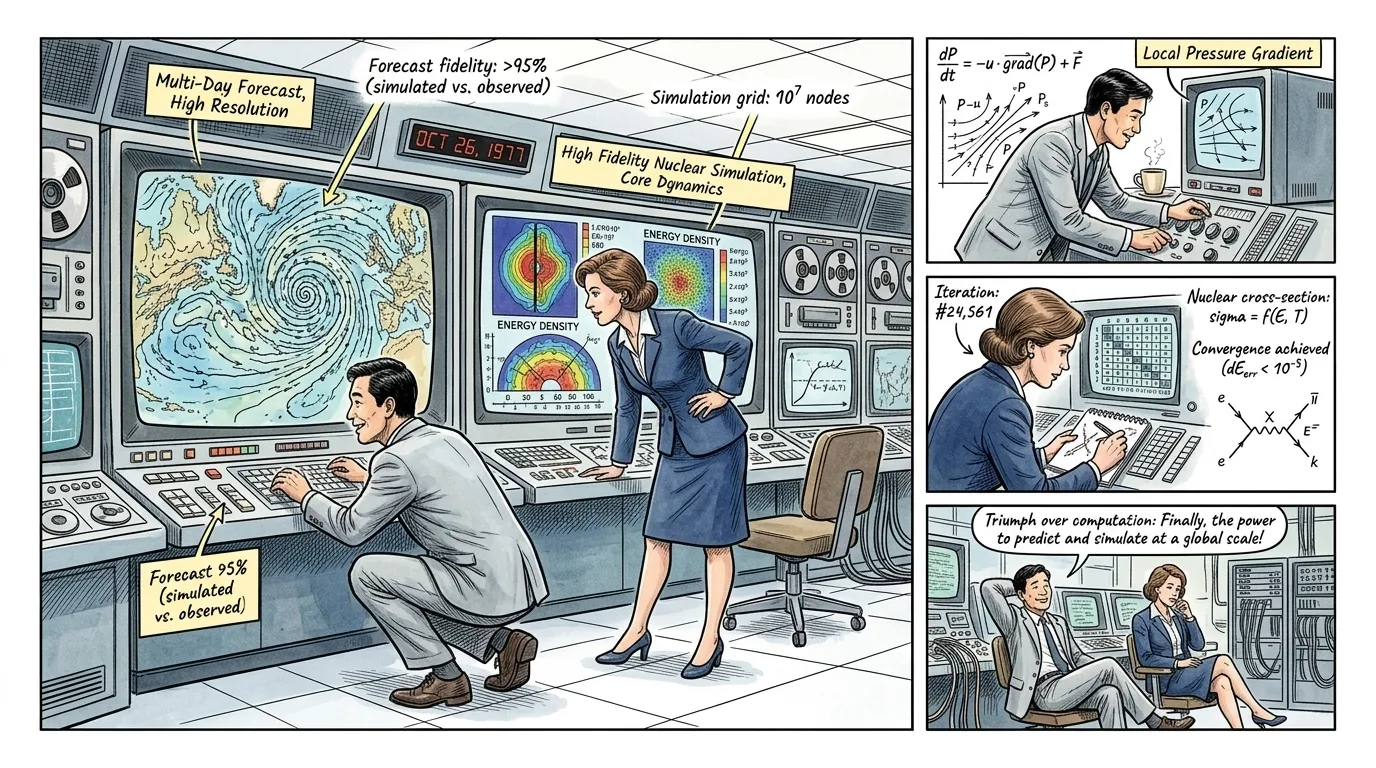
The CRAY-1's impact was immediate and profound. Institutions previously limited by computational power could now tackle problems of unprecedented scale and complexity. Its initial deployments at sites like Los Alamos National Laboratory and the National Center for Atmospheric Research revolutionized fields from nuclear physics to meteorology.
""With the CRAY-1, we can now simulate intricate atmospheric models with a resolution and speed previously impossible," exclaimed Dr. Tanaka, pointing at a detailed weather map generated on a large screen from the supercomputer's output. "Our multi-day forecasts have jumped in accuracy. The revolutionary parallel vector processing architecture, which addresses the sequential bottleneck we once grappled with, is now delivering these unprecedented insights." Dr. Reed, from Los Alamos, added, "For our nuclear simulations, the CRAY-1 provides the computational fidelity needed to understand complex material behaviors under extreme conditions, reducing the need for costly and hazardous physical experiments. It has fundamentally altered our research methodology.""
Page 9
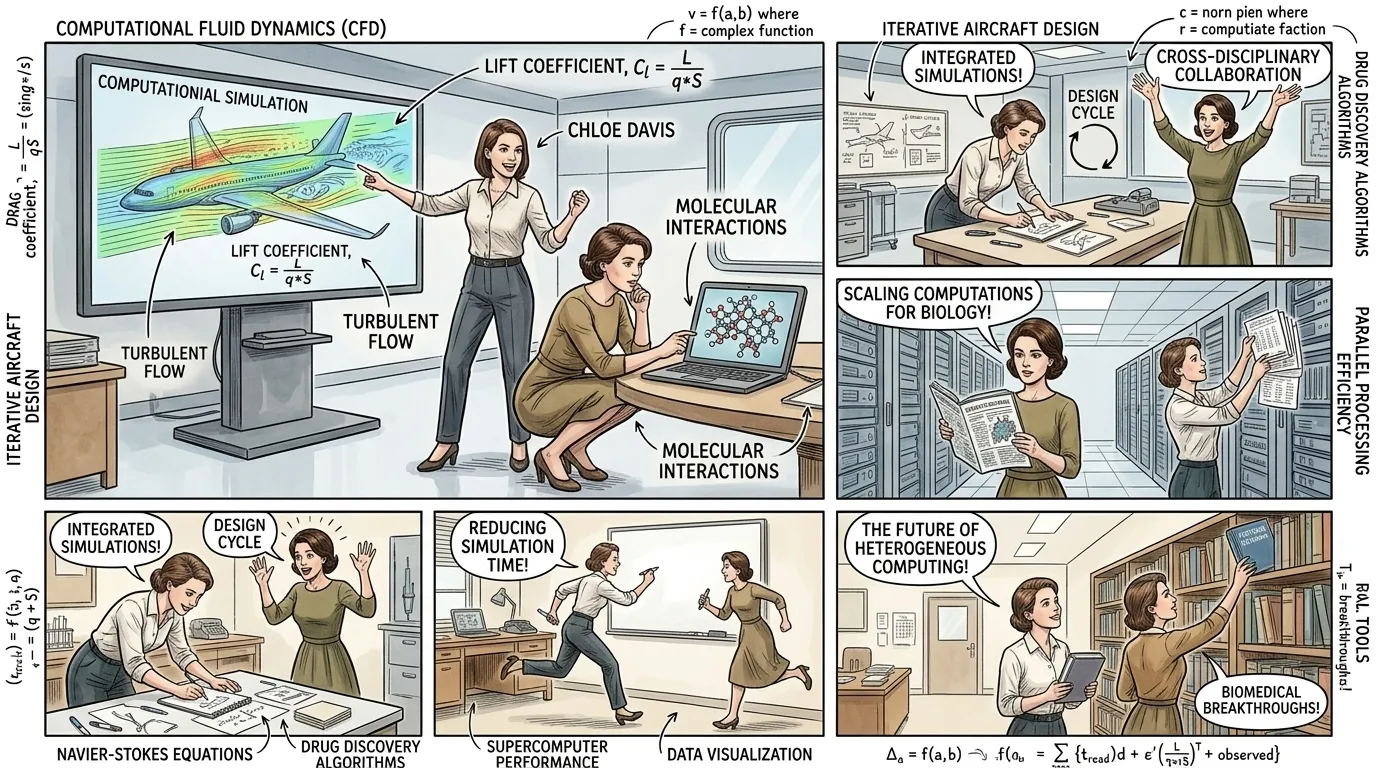
Beyond its initial applications, the supercomputer quickly became indispensable across a myriad of scientific and industrial domains. From designing more aerodynamic aircraft to discovering new drug compounds, and from exploring oil reserves to modeling climate change, supercomputers unlocked a new era of computational discovery.
""The ability to run complex fluid dynamics simulations allows us to design aircraft with unprecedented efficiency," an aerospace engineer, Ms. Chloe Davis, explained, showing a detailed digital model of an airplane wing. "The iterations and optimizations we can achieve are simply impossible without supercomputing power." Dr. Petrova, now a leading biophysicist, added, "In drug discovery, we can simulate molecular interactions at an atomic level, screening millions of compounds virtually. This dramatically accelerates the identification of promising drug candidates, saving years of research. It's truly a game-changer for human health.""
Page 10
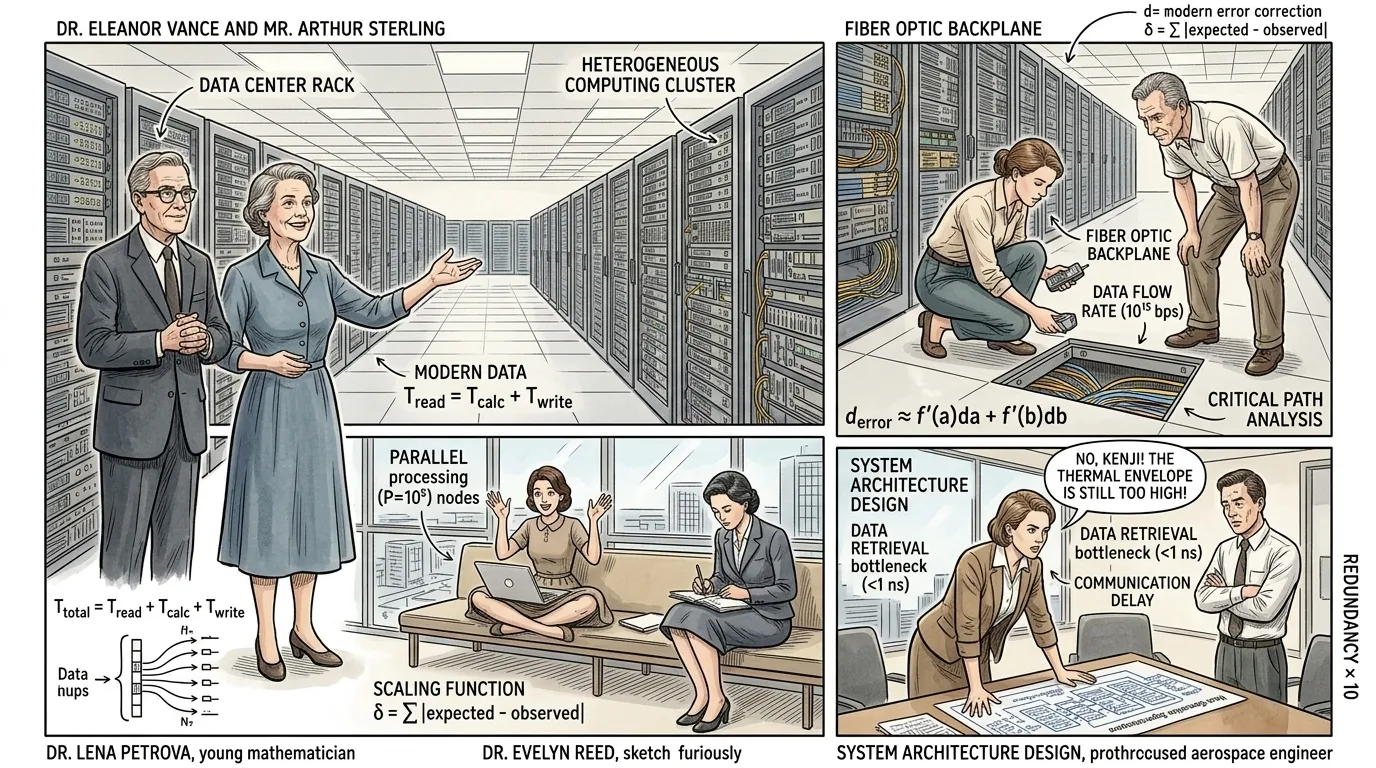
The supercomputer's legacy permeates nearly every aspect of modern technology and scientific inquiry. From weather prediction to artificial intelligence, from genetic sequencing to the simulation of entire universes, these incredibly powerful machines continue to push the boundaries of what is computationally possible, driving humanity's relentless quest for knowledge.
""Today's supercomputers, many operating at exascale, are direct descendants of Cray's vision," remarked Dr. Vance, now a venerable figure in computing history, standing before a modern data center. "They underpin everything from secure communication to cutting-edge medical research. The scale of computation has grown exponentially, yet the core principles of parallelization and specialized architecture remain paramount." Mr. Sterling, equally aged, concluded, "The supercomputer fundamentally changed our relationship with complex problems. It transformed what was once intractable into solvable, accelerating discovery across every scientific discipline. It serves as a constant reminder that the limits of human ingenuity are only those we impose upon ourselves.""
About this story
- Location: Global
- Audience: general readers
Questions and answers
Read Wonder Inventions on your phone
Wonder Inventions is available on Android. Get Wonder Inventions on Google Play.