Surgical Robot
Surgical Robot — an illustrated inventions story, set in Global. 10 illustrated pages, free to read on Wonder Inventions.
Page 1
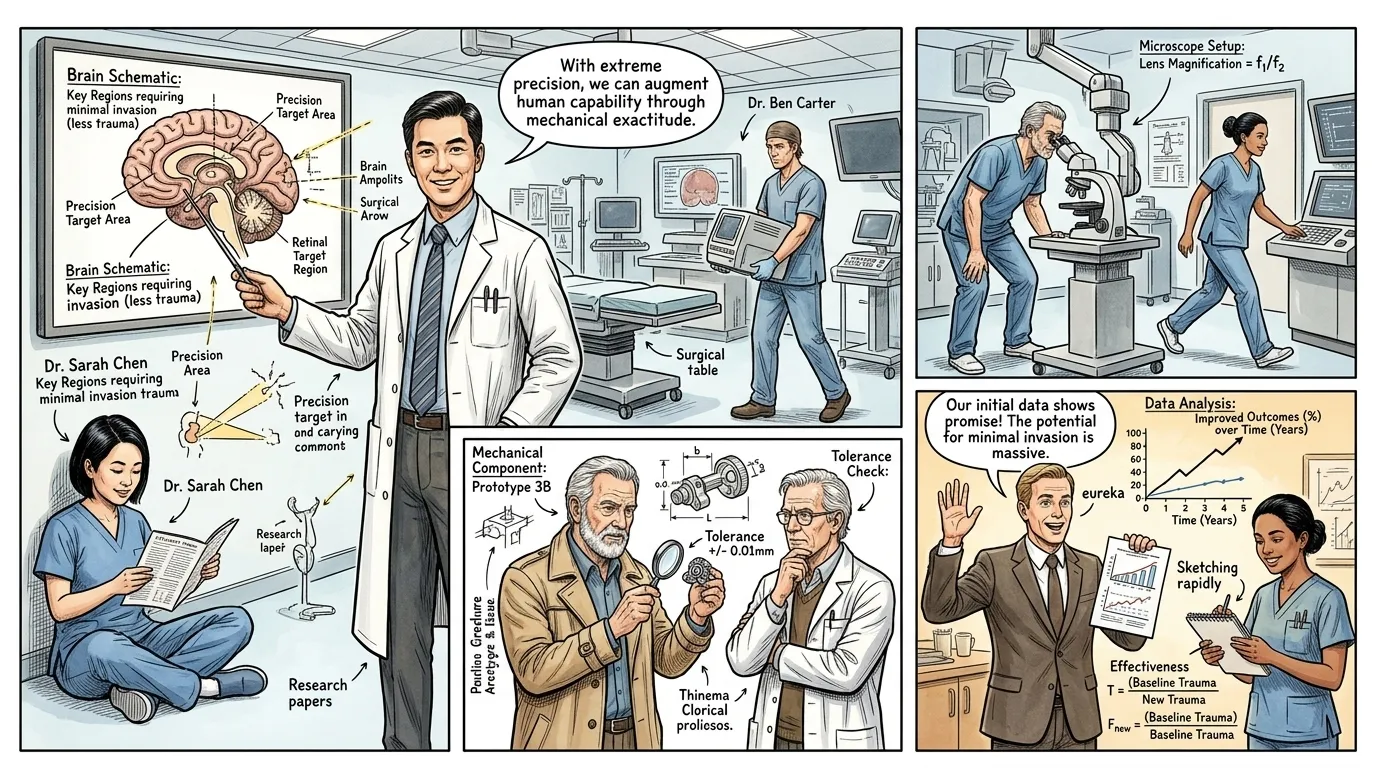
For centuries, the surgeon's hands, guided by keen intellect and years of training, were the sole instruments of intervention. Yet, even the most skilled human hands possessed inherent limitations: tremor, fatigue, and the physical constraints of operating within the human body. Procedures like neurosurgery demanded a level of precision that pushed these limits to their absolute breaking point, often requiring large, invasive incisions to gain even rudimentary access. This fundamental challenge spurred a revolutionary quest: to augment human capability with mechanical exactitude.
""The delicate dance of neurosurgery has always been a battle against the minuscule," explains Dr. Kwoh, gesturing towards a schematic. "A single millimeter can mean the difference between healing and profound injury. Traditional open surgery, while effective, often inflicted its own significant trauma just to reach the target area. We needed a better way to navigate the incredibly complex landscape of the brain.""
Page 2
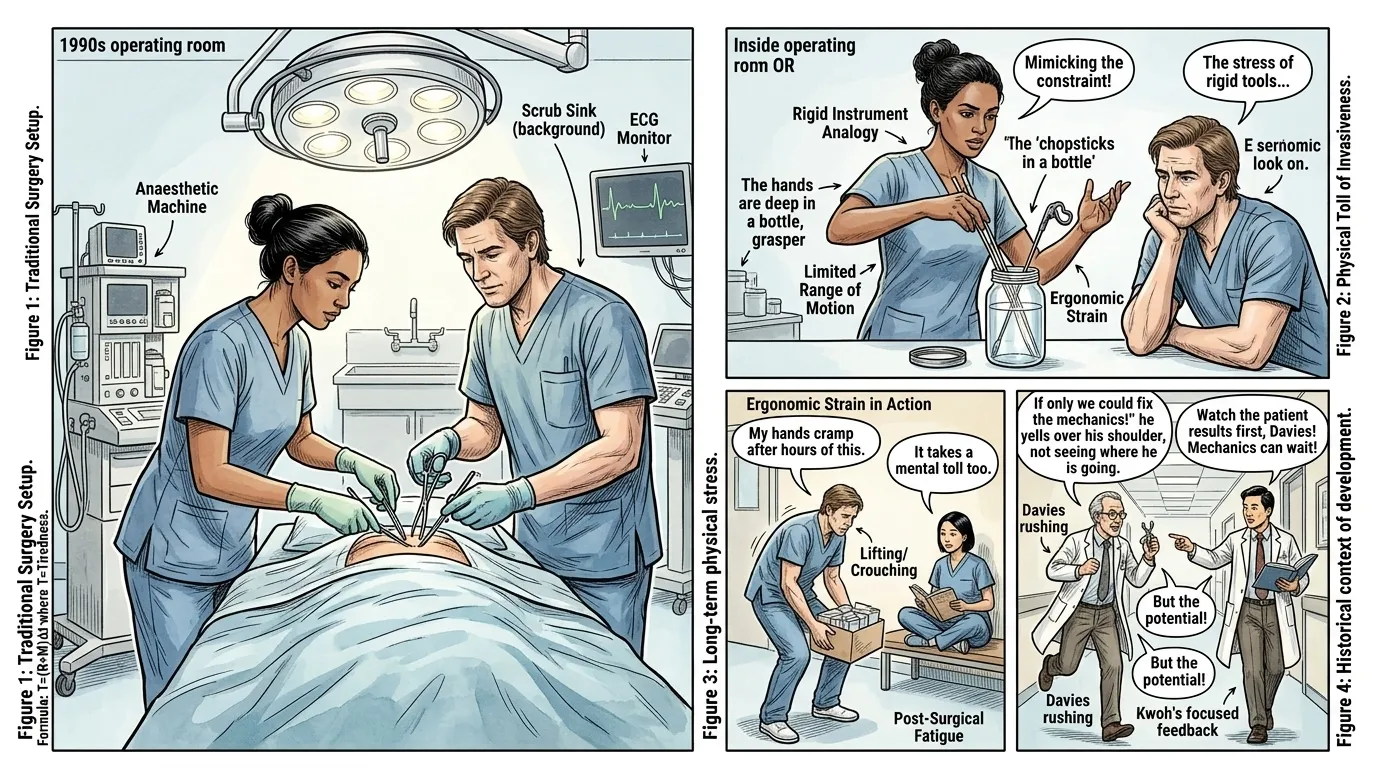
Before robotic assistance, surgeons relied on their innate motor skills, often through long, arduous operations. The human hand, while remarkably versatile, is susceptible to involuntary tremors, especially during prolonged intricate tasks. Furthermore, traditional surgical instruments, designed for open fields, offered limited articulation within confined anatomical spaces. Accessing deep-seated pathologies often necessitated extensive incisions, leading to significant patient recovery times and increased risk of complications. The challenge was to overcome these physiological and mechanical barriers.
""Imagine trying to perform intricate repairs inside a glass bottle using chopsticks," remarks Dr. Anya Sharma, a seasoned surgeon, her dark hair pulled back in a neat bun, her expression serious. "That's often what it felt like working deep within the abdomen or chest. Our instruments were rigid, our vision limited to two dimensions, and every movement, every tremor, was a critical variable." Dr. Ben Carter, a younger colleague with short brown hair and a thoughtful brow, nods in agreement. "And the stamina required for a twelve-hour procedure, maintaining absolute precision... it's a tremendous physical and mental toll. Patient recovery was directly impacted by the scale of our access incision.""
Page 3
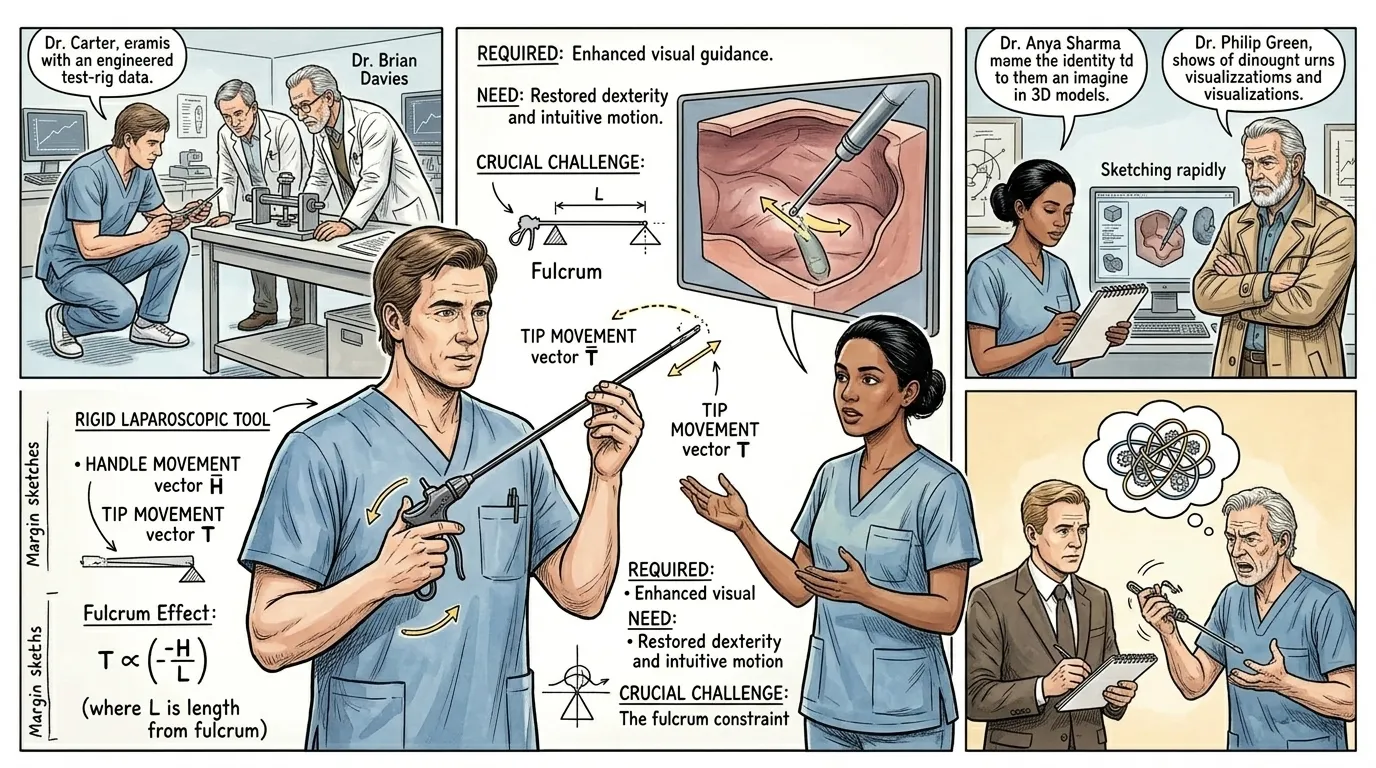
While laparoscopy marked a significant leap forward, replacing large incisions with small keyholes, it introduced its own set of limitations. Surgeons maneuvered straight, rigid instruments through tiny ports, which meant their hand movements at the console often did not intuitively translate to the instrument tips inside the body. This 'fulcrum effect' reversed movements and robbed surgeons of natural wrist articulation. The crucial next step involved restoring the dexterity of the human wrist, but on a miniature scale, deep within the patient's body, and under enhanced visual guidance.
""The irony of early minimally invasive surgery was that we traded invasiveness for a loss of dexterity," Dr. Carter explains, picking up a straight laparoscopic tool. "You see, the instrument pivots at the port site, reversing your hand movements. If I move my hand left, the tip goes right. It's counter-intuitive and severely limits our articulation. We needed instruments that could bend, twist, and grasp with the same freedom as a human wrist, but operate through a tiny incision." Dr. Sharma adds, "And with a clear, magnified, three-dimensional view, not the flat, often obscured 2D images we started with. This challenge—overcoming the fulcrum effect and restoring natural articulation—became a primary goal for the next generation of surgical tools.""
Page 4
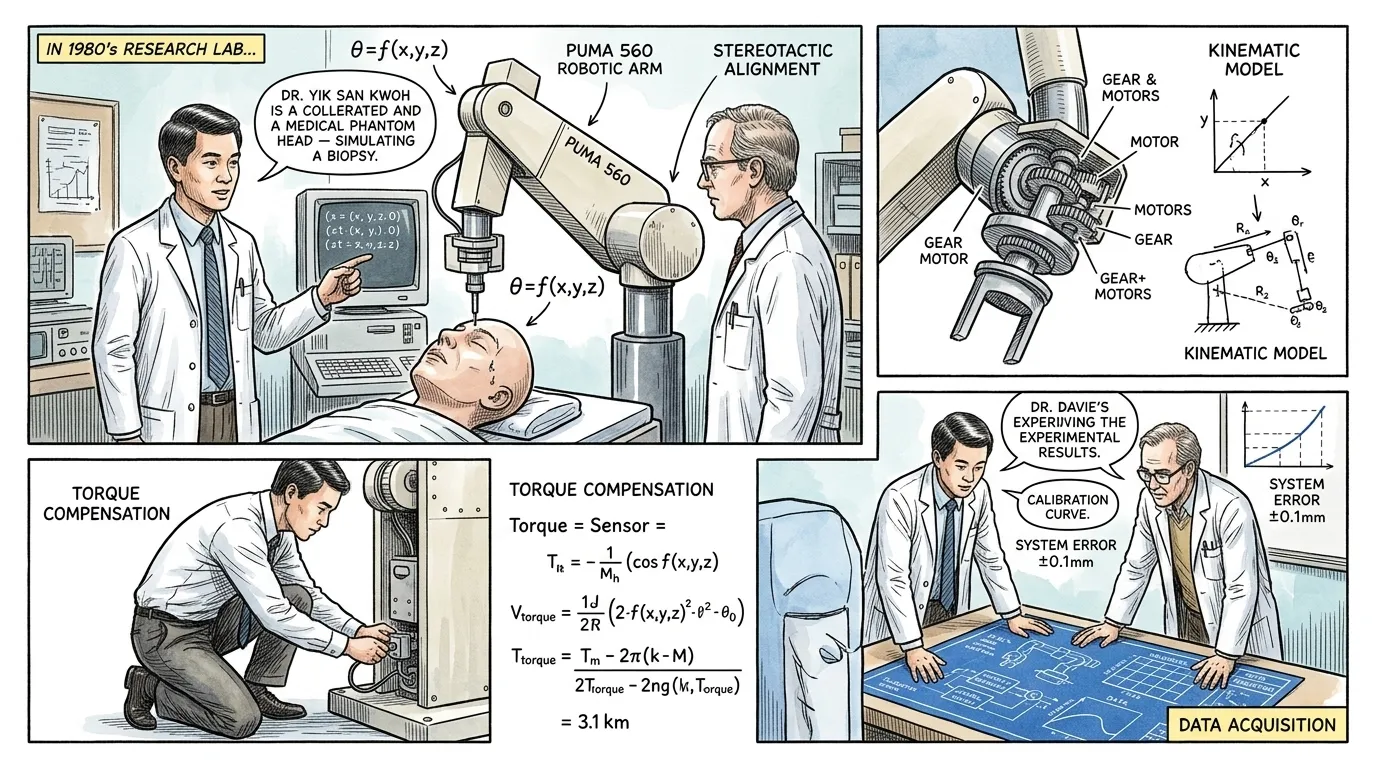
The conceptual leap from human hands to robotic assistance began not in a hospital, but in industrial automation. Early industrial robots, designed for repetitive tasks with high precision, offered a tantalizing possibility. In 1985, Dr. Yik San Kwoh and his team at Memorial Medical Center in Long Beach, California, adapted a PUMA 560 industrial robotic arm to assist with neurosurgical biopsies. This marked the world's first documented use of a robot in surgery, not as an autonomous surgeon, but as a hyper-precise guide, demonstrating the potential for machines to enhance human capability rather than replace it.
""Our initial thought was simple: could an existing industrial robot, known for its accuracy, guide a needle for a brain biopsy?" Dr. Kwoh recounts, his voice filled with a quiet intensity. "The PUMA 560 was designed for factory assembly, handling components with incredible repeatability. We realized that if we could program it with preoperative CT scan data, it could guide a biopsy needle to a tumor target with sub-millimeter precision, far exceeding what a human hand alone could achieve. This was a proof of concept, a demonstration of what was possible when engineering met medicine." He gestures proudly toward the original PUMA 560."
Page 5
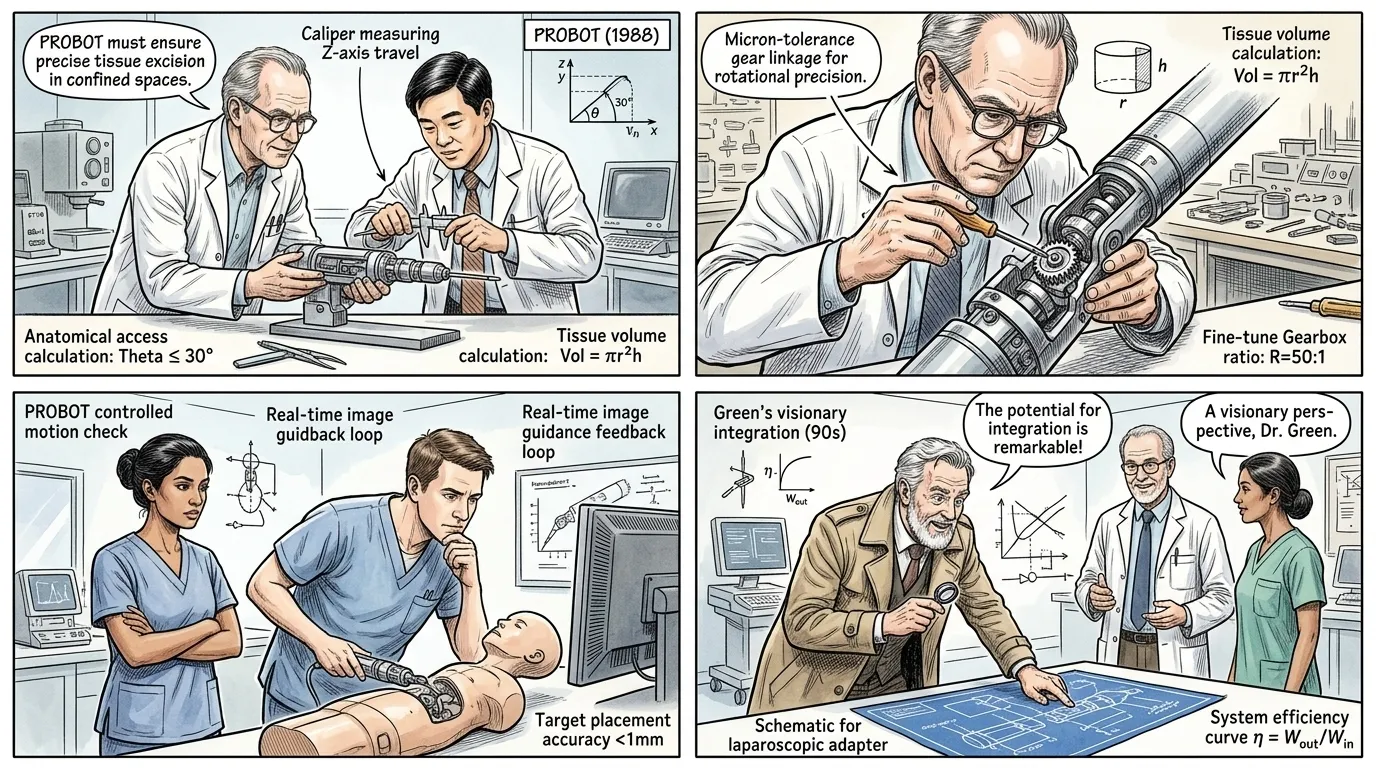
Following Kwoh's pioneering work, the focus shifted from adapting industrial robots to developing machines specifically designed for surgical tasks. In 1988, a team at Imperial College London developed PROBOT, a specialized robotic system for prostate surgery. Unlike the PUMA, PROBOT was conceived from the ground up with surgical constraints in mind, aiming to perform transurethral resections of the prostate with unprecedented accuracy. This transition marked a crucial paradigm shift: robots were no longer just guides but were beginning to perform specific, delicate operative tasks under surgeon supervision.
""The PUMA showed us the 'what,' but PROBOT aimed for the 'how' within a dedicated medical context," explains a British engineer, Dr. Brian Davies, a man in his 50s with receding grey hair and glasses, wearing a lab coat. He points to a diagram of the PROBOT system. "Prostate surgery is incredibly confined, demanding consistent, precise tissue removal. We designed PROBOT to overcome the anatomical challenges and human limitations, providing a stable, repeatable resection. Our goal was to integrate imaging guidance directly into the robot's function, allowing it to perform tasks that were both difficult and fatiguing for a human surgeon to sustain for extended periods. It was about dedicated design for specific clinical needs.""
Page 6
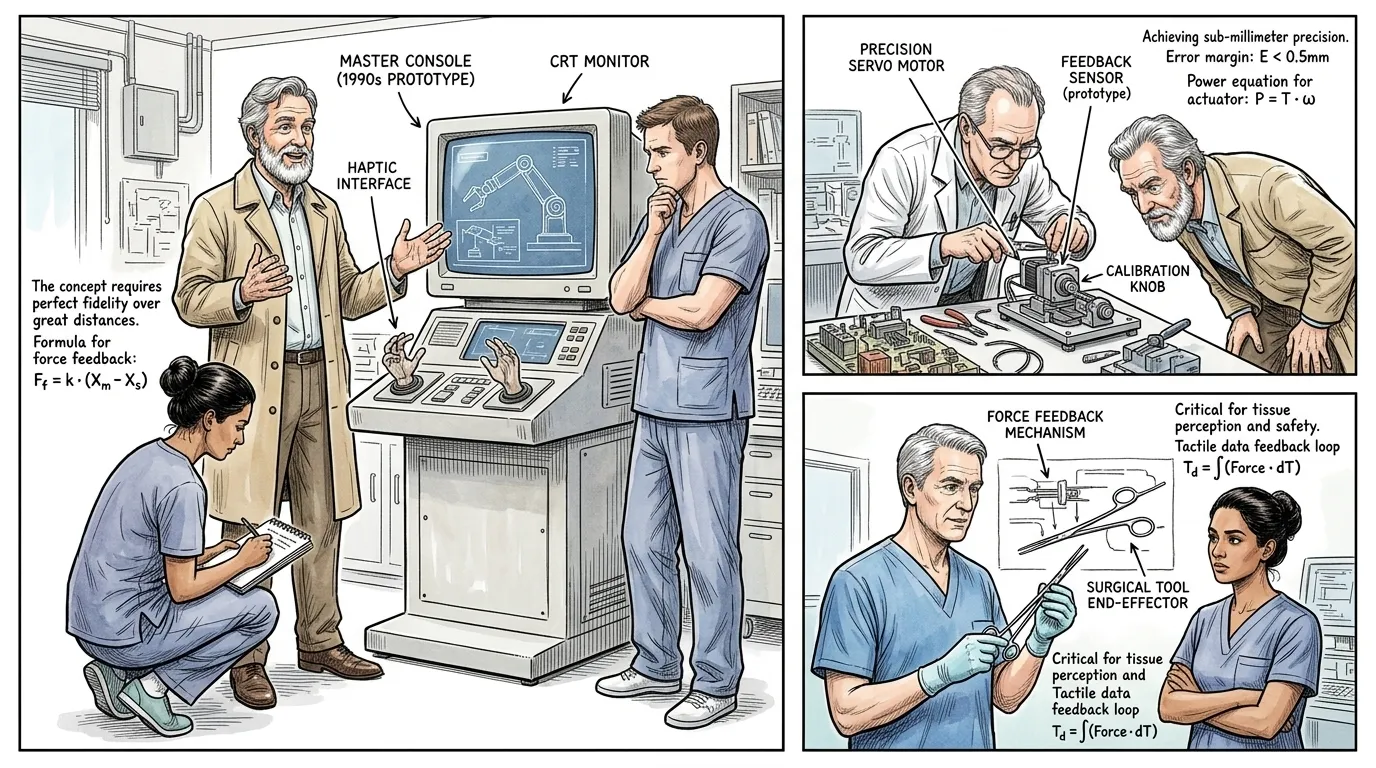
As the Cold War waned, new military applications for technology emerged. The Defense Advanced Research Projects Agency (DARPA) envisioned 'telesurgery'—allowing a surgeon to operate remotely on wounded soldiers from a safe distance. This ambitious concept, developed at SRI International in the 1990s, became the crucible for many core technologies found in modern surgical robots. The focus shifted to creating a master-slave system where the surgeon's hands controlled robotic arms, translating complex movements with high fidelity, while providing immersive visual feedback.
""The initial spark for our work at SRI came from a military need: how could a surgeon operate on a soldier on the battlefield without being physically present?" explains Dr. Philip Green, a visionary American engineer with a distinguished grey beard and bright, intelligent eyes, wearing a beige trench coat over a collared shirt. He stands before a prototype console. "This led us to the master-slave concept. The surgeon operates a 'master' controller, and a robotic arm, the 'slave,' precisely replicates those movements at the patient's bedside. The challenge was to make that translation seamless, intuitive, and safe, incorporating force feedback and an immersive visual experience. We were designing for a future where distance would no longer be a barrier to expert surgical care.""
Page 7
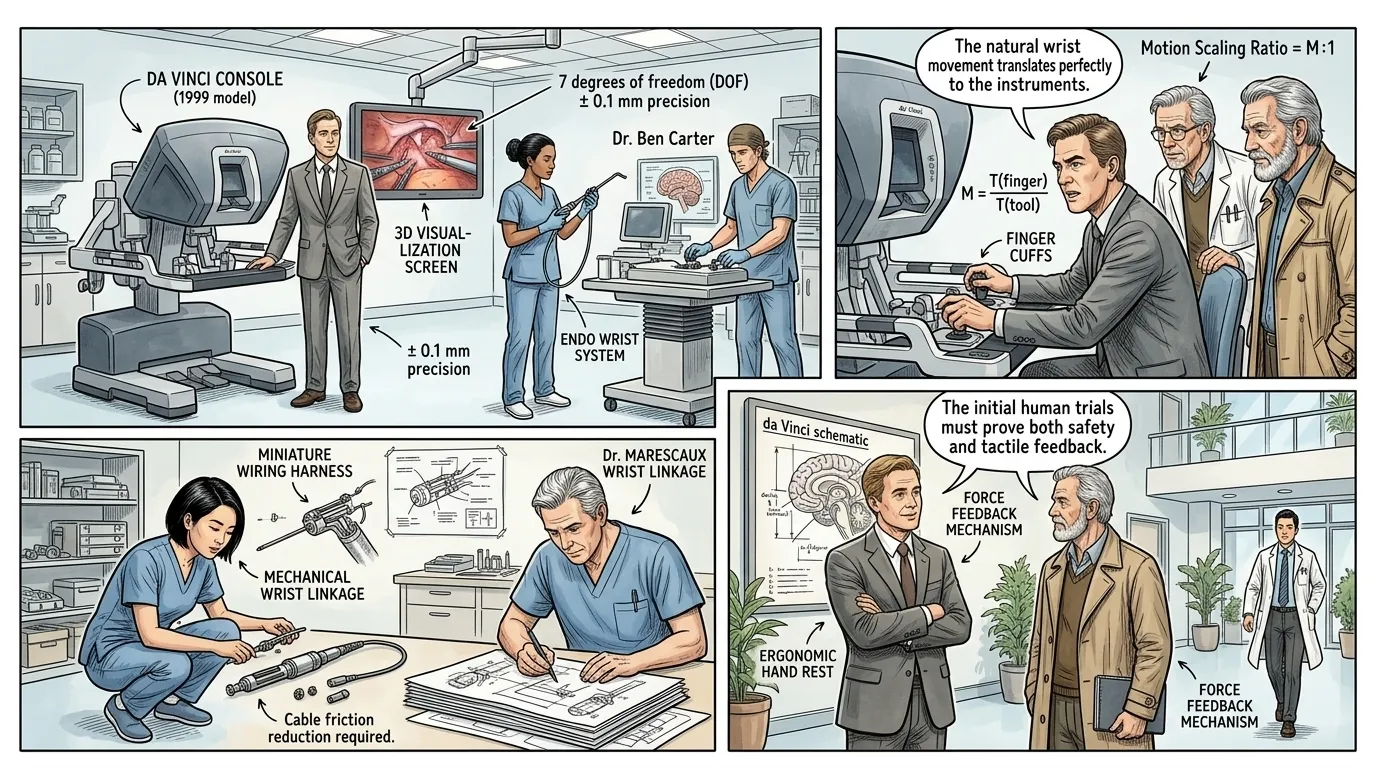
The culmination of these earlier efforts arrived with the da Vinci Surgical System, introduced by Intuitive Surgical in 1999. Leveraging SRI's telesurgery research, the da Vinci transformed minimally invasive surgery. Its key innovations included 'EndoWrist' instruments, which mimicked the full articulation of a human wrist, and a high-definition 3D vision system that immersed the surgeon in the operative field. This combination provided unparalleled dexterity and visualization, directly addressing the limitations of rigid instruments and two-dimensional views faced by surgeons for decades.
""The da Vinci system wasn't just an evolution; it was a revolution," states Dr. Frederic Moll, a co-founder of Intuitive Surgical, a confident Caucasian man in his late 40s with short, light brown hair, dressed in a business suit, standing next to a da Vinci surgeon console. "We integrated that 3D vision, providing depth perception that was missing in traditional laparoscopy. But the real game-changer was the EndoWrist. Remember the rigid instruments? Now, these tiny instruments articulate in seven degrees of freedom, giving surgeons a natural wrist movement inside the patient's body, through tiny incisions. This is what truly enables intuitive control and unparalleled precision, transforming what was once incredibly difficult into a manageable, reproducible task.""
Page 8
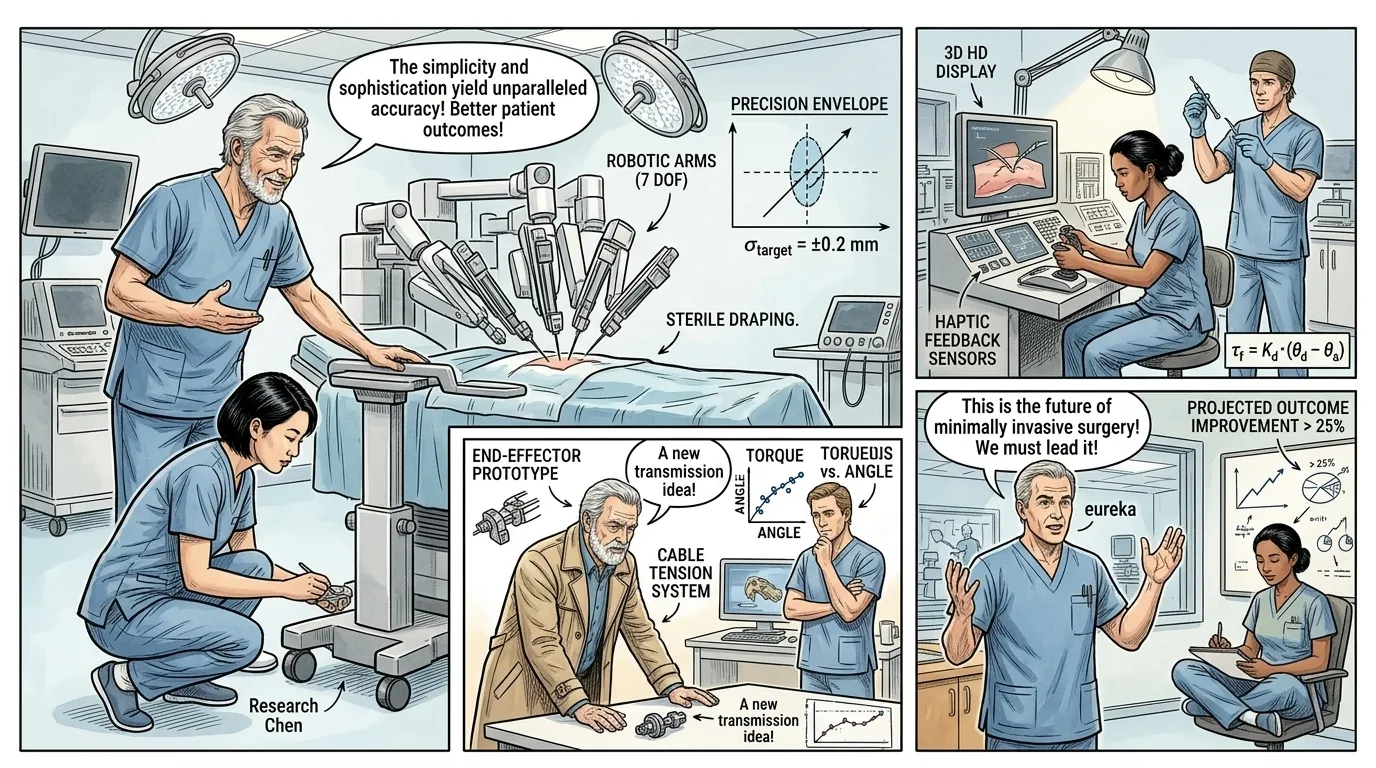
The initial clinical trials and subsequent commercial release of the da Vinci system were met with cautious optimism and rigorous evaluation. Early procedures, particularly in cardiac and urological surgery, showcased the system's transformative potential. Surgeons found that the robot's tremor filtration, scaled movements, and enhanced visualization allowed them to perform complex operations with greater precision and less patient trauma than ever before. The superior patient outcomes—reduced blood loss, shorter hospital stays, and quicker recoveries—began to drive its adoption in leading medical centers worldwide, though the learning curve and initial cost were significant considerations.
""Our first cases, especially in prostatectomy, were revelatory," recalls Dr. Jacques Marescaux, a prominent French surgeon, a distinguished man in his 60s with neatly combed grey hair, wearing blue surgical scrubs, standing next to a da Vinci patient cart. "The enhanced dexterity and crystal-clear 3D vision meant we could dissect with unprecedented accuracy, minimizing nerve damage and blood loss. As Leonardo da Vinci himself once remarked, 'Simplicity is the ultimate sophistication.' The system, though complex, allowed us to perform incredibly sophisticated maneuvers with intuitive ease. It truly simplified the surgeon's interaction with intricate anatomy, leading to significantly better patient results. The initial investment was substantial, but the long-term benefits for patients were undeniable.""
Page 9
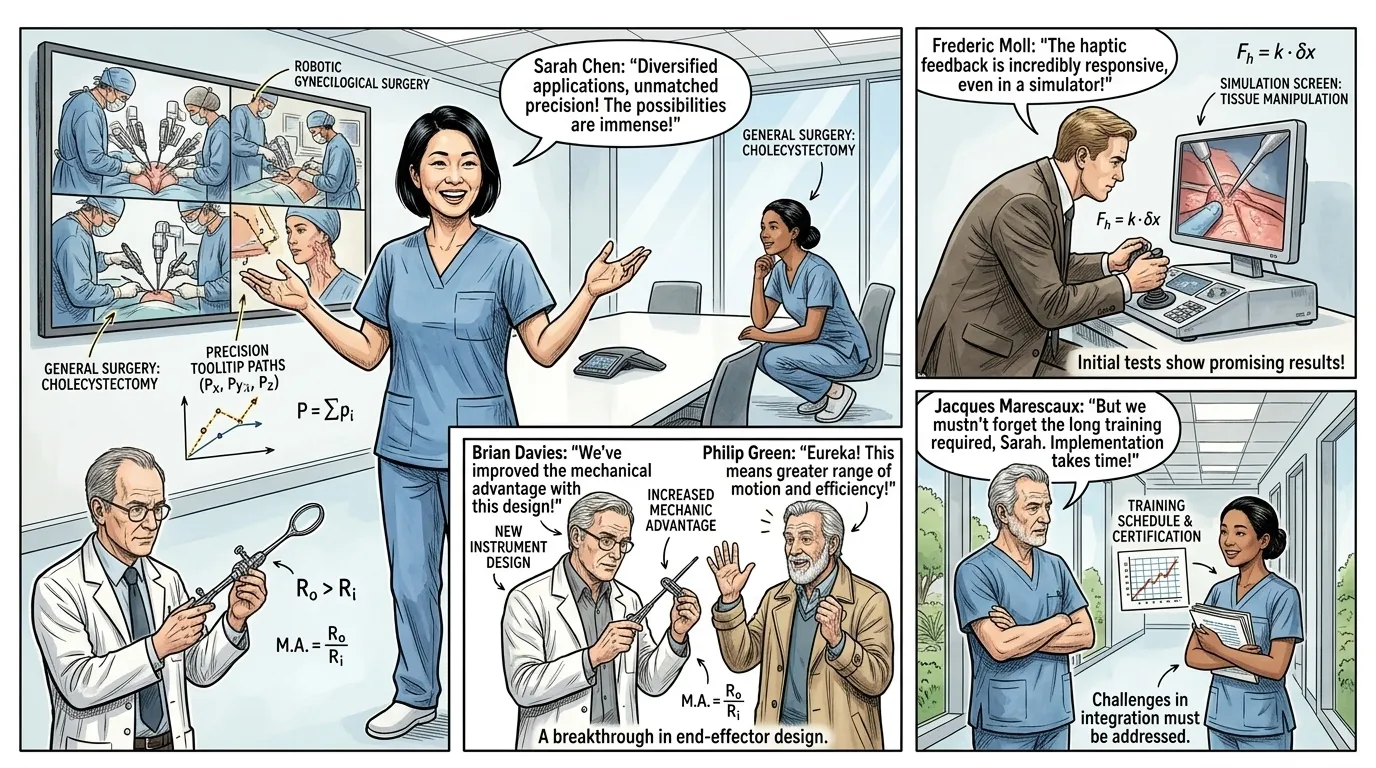
As surgeons mastered the new technology, the applications of the surgical robot expanded rapidly beyond urology and cardiology. Gynecology, general surgery, head and neck surgery, and even thoracic procedures began to benefit from the enhanced precision and minimally invasive nature of robotic assistance. The system allowed for complex resections and reconstructions through small incisions, transforming outcomes for millions of patients globally. The ongoing refinement of robotic platforms, coupled with extensive surgeon training programs, solidified the surgical robot's place as an indispensable tool in modern medicine, continually pushing the boundaries of what was surgically possible.
""It wasn't just about prostatectomies anymore; the capabilities quickly diversified," explains Dr. Sarah Chen, a leading gynecological surgeon, a confident East Asian woman in her 50s with stylish short black hair, wearing professional blue scrubs, gesturing at a wall-mounted screen displaying different surgical procedures being performed by the robot. "We could perform hysterectomies, myomectomies, and complex endometriosis resections with far less blood loss and quicker recovery times than open surgery. The precision for delicate tissue manipulation is simply unmatched. It's a testament to sustained innovation and training that these complex procedures are now routinely performed robotically, benefiting a much wider patient population than initially imagined.""
Page 10
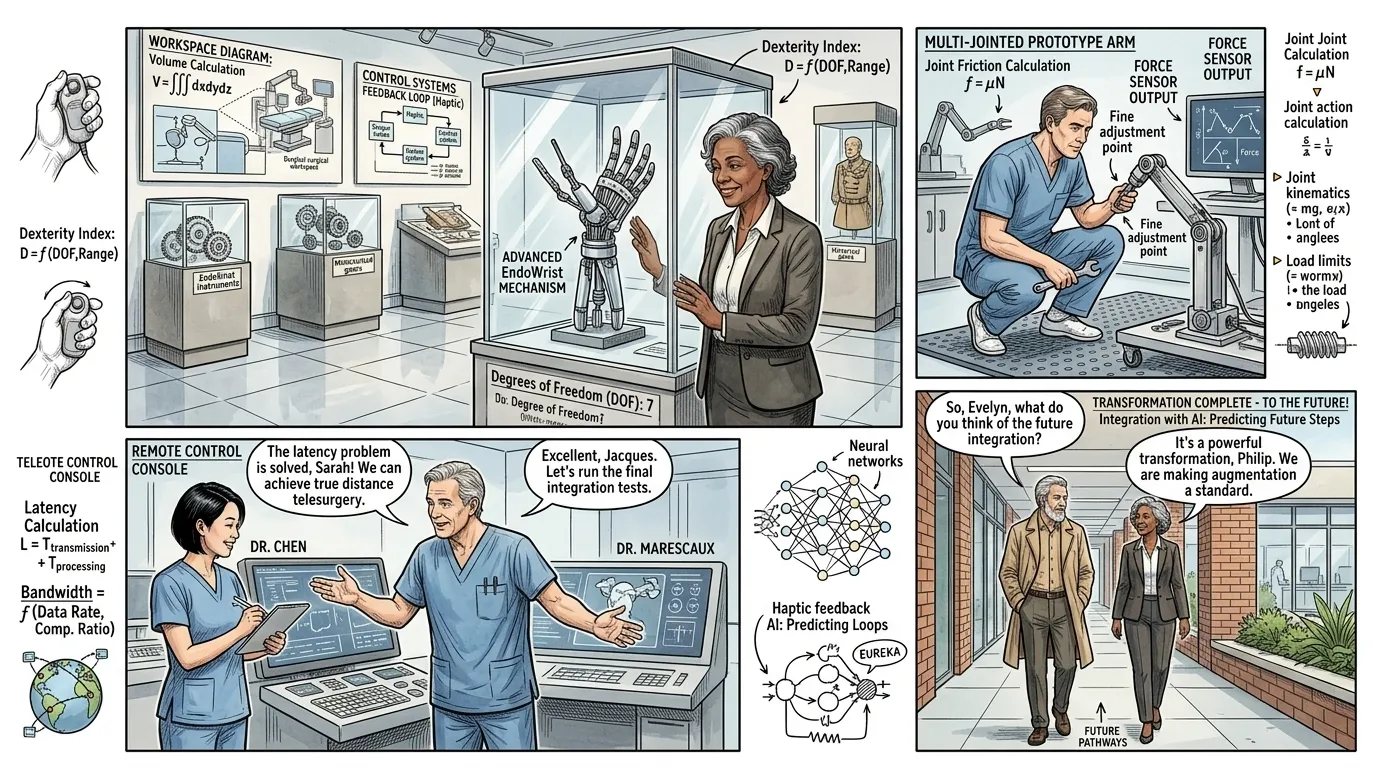
The surgical robot has fundamentally reshaped modern surgery, establishing new standards for precision, minimally invasiveness, and patient recovery. Its legacy extends beyond the operating room, influencing surgical training, medical device innovation, and even the economics of healthcare. As technology continues to advance, future robotic systems promise even greater autonomy, haptic feedback, and integration with artificial intelligence, further expanding the frontiers of what human and machine can achieve together in the delicate art of healing. The journey from industrial arm to an indispensable surgical partner continues, driven by an unyielding commitment to patient welfare.
""The impact has been profound, truly transformational," reflects a seasoned medical historian, Dr. Evelyn Reed, a dignified African American woman in her 60s with silver-streaked hair, observing a display of various robotic surgical tools. "We've seen a shift from highly invasive interventions to procedures that prioritize rapid patient recovery. The robot has not replaced the surgeon; it has augmented their capabilities, allowing them to perform at an unprecedented level of precision. The future promises even more: haptic feedback that truly lets surgeons 'feel' tissue, AI-assisted guidance, and miniaturized systems for even more delicate procedures. The surgical robot stands as a testament to human ingenuity—our relentless drive to improve life, one precise movement at a time.""
About this story
- Location: Global
- Audience: general readers
Questions and answers
Read Wonder Inventions on your phone
Wonder Inventions is available on Android. Get Wonder Inventions on Google Play.