Steam Engine
Steam Engine — an illustrated inventions story, set in Global. 10 illustrated pages, free to read on Wonder Inventions.
Page 1
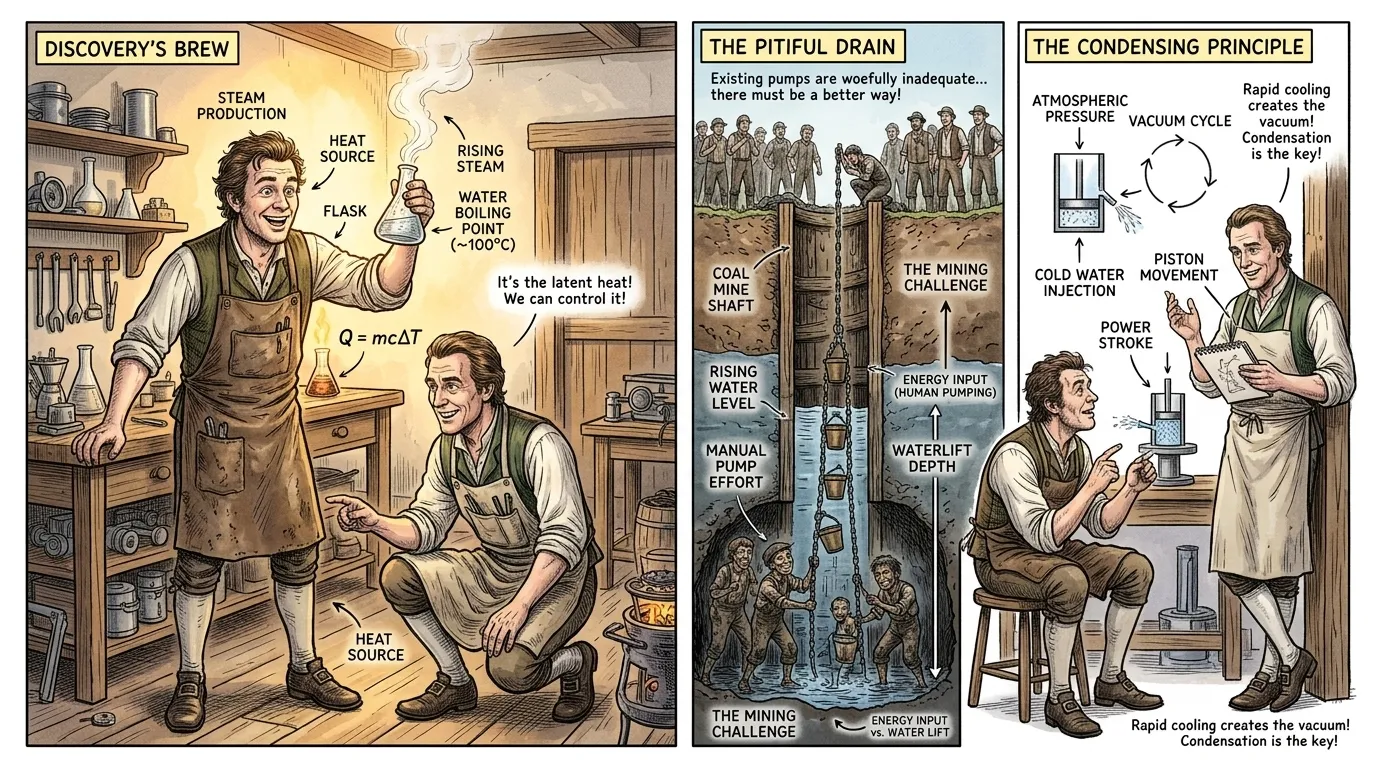
By the late 17th century, Europe's burgeoning industries faced a critical challenge: persistent flooding in deep coal and tin mines, limiting resource extraction. Manual and animal-powered pumps were utterly inadequate for the immense volumes of water encountered underground. The urgent need for a powerful, reliable mechanical solution spurred engineers and inventors towards a radical new energy source, leveraging the profound and often misunderstood properties of steam.
Page 2
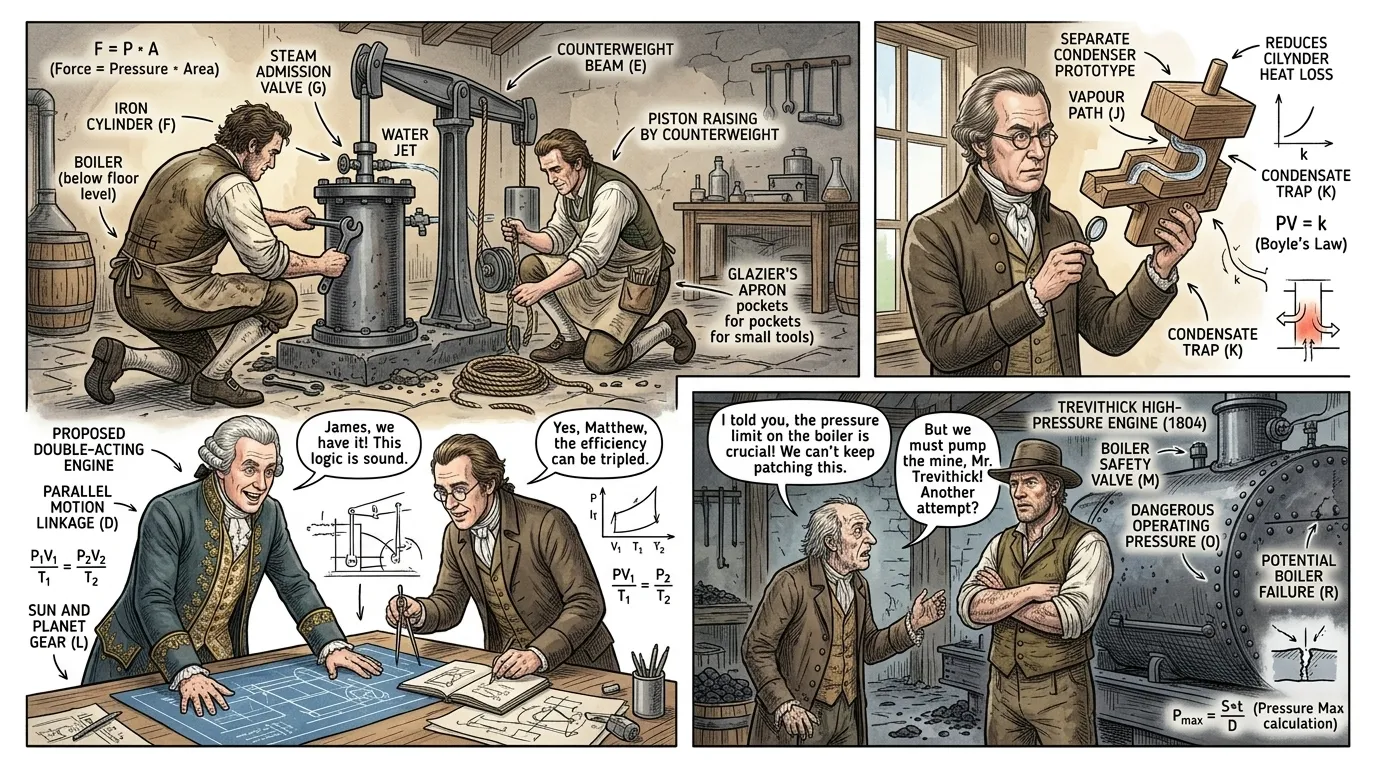
The concept of harnessing steam was not new, with Hero of Alexandria's aeolipile demonstrating rudimentary rotary motion centuries prior, yet practical application remained elusive. Early pioneers like Denis Papin and Thomas Savery experimented with steam's expansive power to create vacuums and lift water, but their designs suffered from dangerous operating pressures and limited capacity. Understanding the true potential required a deeper grasp of atmospheric pressure, a force discovered to be far more profound than the mere push of boiling water.
Page 3
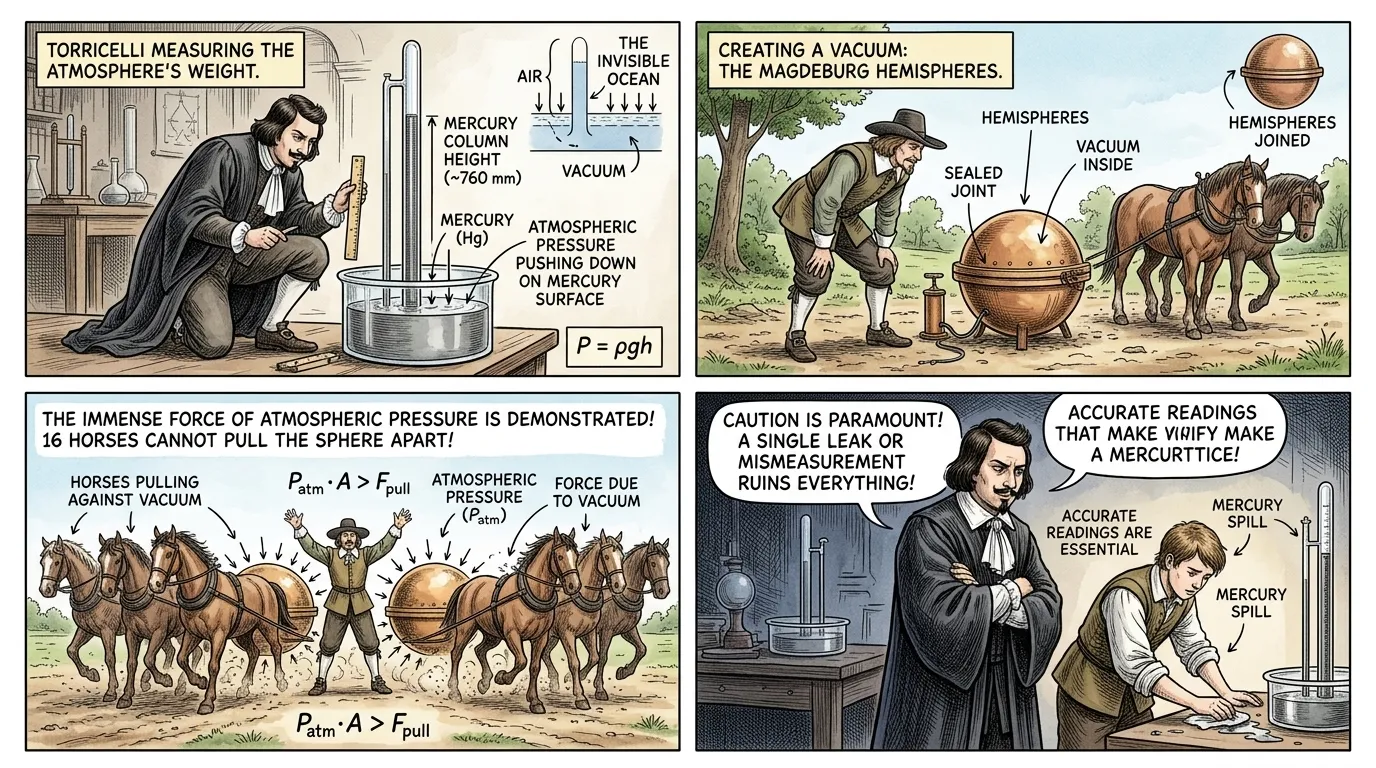
Key to developing a viable steam engine was the scientific understanding that air itself exerts immense pressure, an 'invisible ocean' pushing down on everything. Scientists like Evangelista Torricelli and Otto von Guericke meticulously demonstrated this phenomenon through experiments, proving that creating a vacuum allowed this external atmospheric force to do work. This critical insight, far from being just a scientific curiosity, became the fundamental principle that would underpin the first successful practical steam engine.
"'Nature abhors a vacuum,' a principle often attributed to the ancient philosopher Aristotle, deeply influenced early scientific thought, yet it was later demonstrated that it is the external atmospheric pressure, not nature's abhorrence, that drives a piston into a void."
Page 4
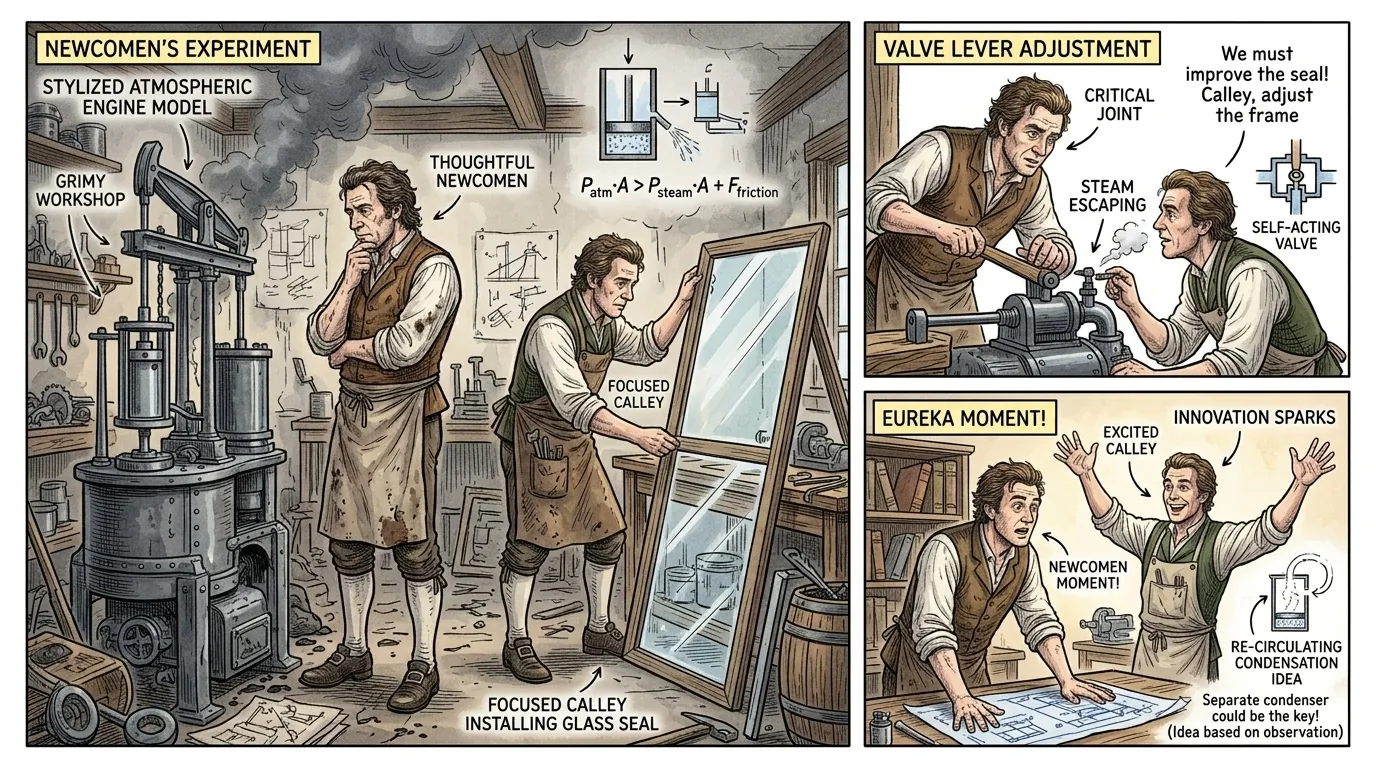
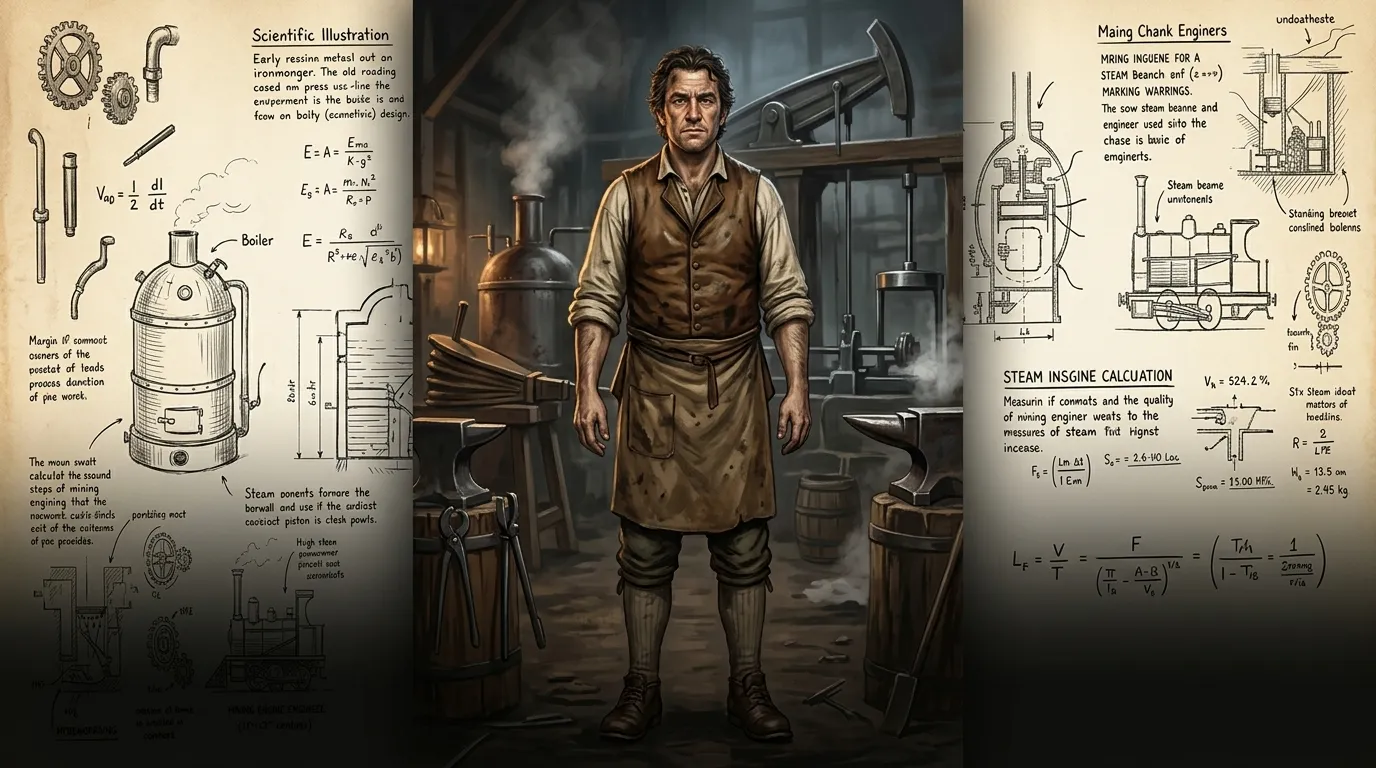
Thomas Newcomen, a shrewd ironmonger from Dartmouth, spent years grappling with the complexities of utilizing atmospheric pressure for pumping, driven by the desperate plight of the Cornish tin mines. Collaborating with glazier John Calley, he tirelessly experimented with various engine designs, facing frequent setbacks with materials unable to withstand the forces involved. His workshop was a constant scene of trial and error, filled with half-built mechanisms and a pervasive smell of coal smoke and hot metal, as he sought to perfect the cycle of steam expansion and condensation.
Page 5
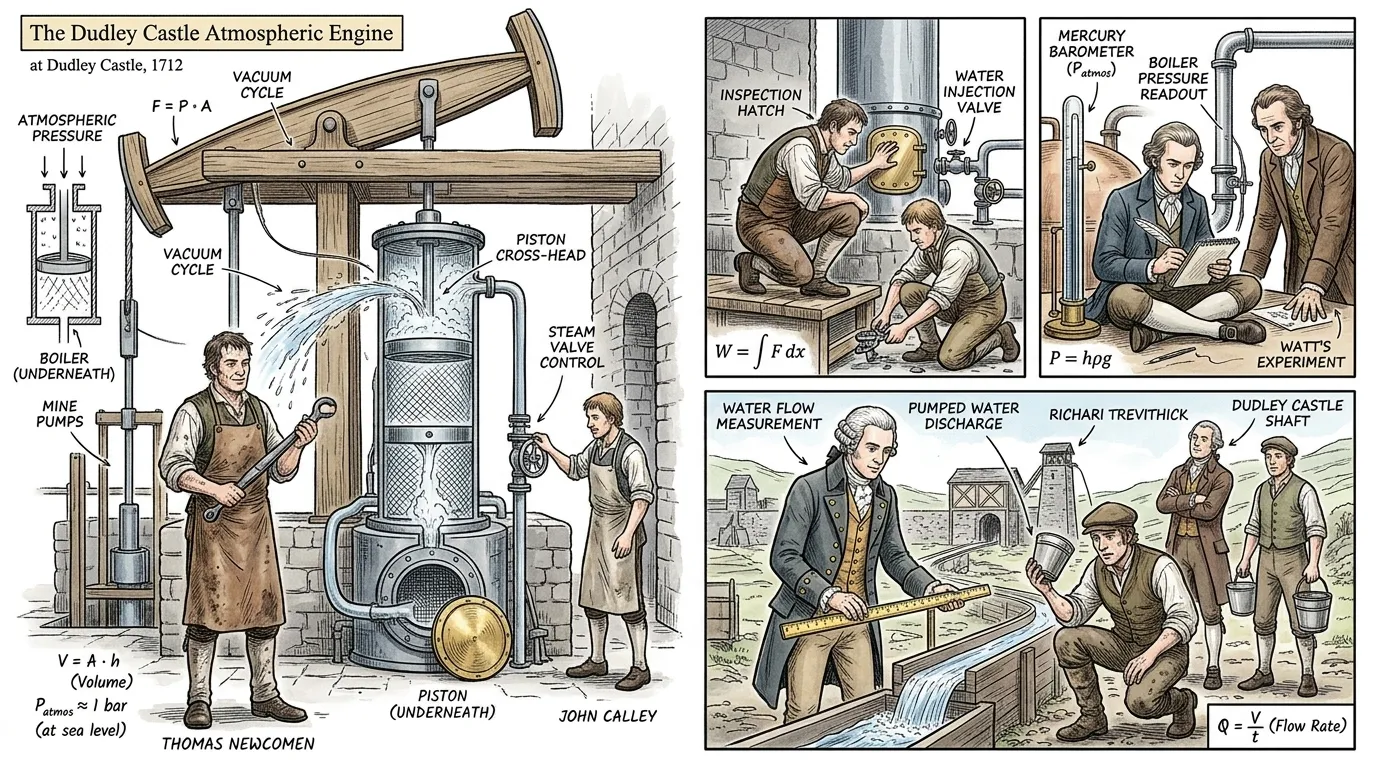
In 1712, Newcomen's perseverance culminated in the construction of the world's first practical atmospheric engine, a massive and impressive machine operating at Dudley Castle. Unlike earlier designs, it achieved a vacuum by injecting a jet of cold water directly into a steam-filled cylinder, rapidly condensing the steam. This created a powerful pressure differential, allowing the external atmosphere to push the piston down, driving a massive beam connected to mine pumps, initiating a cycle that could be repeated tirelessly.
Page 6
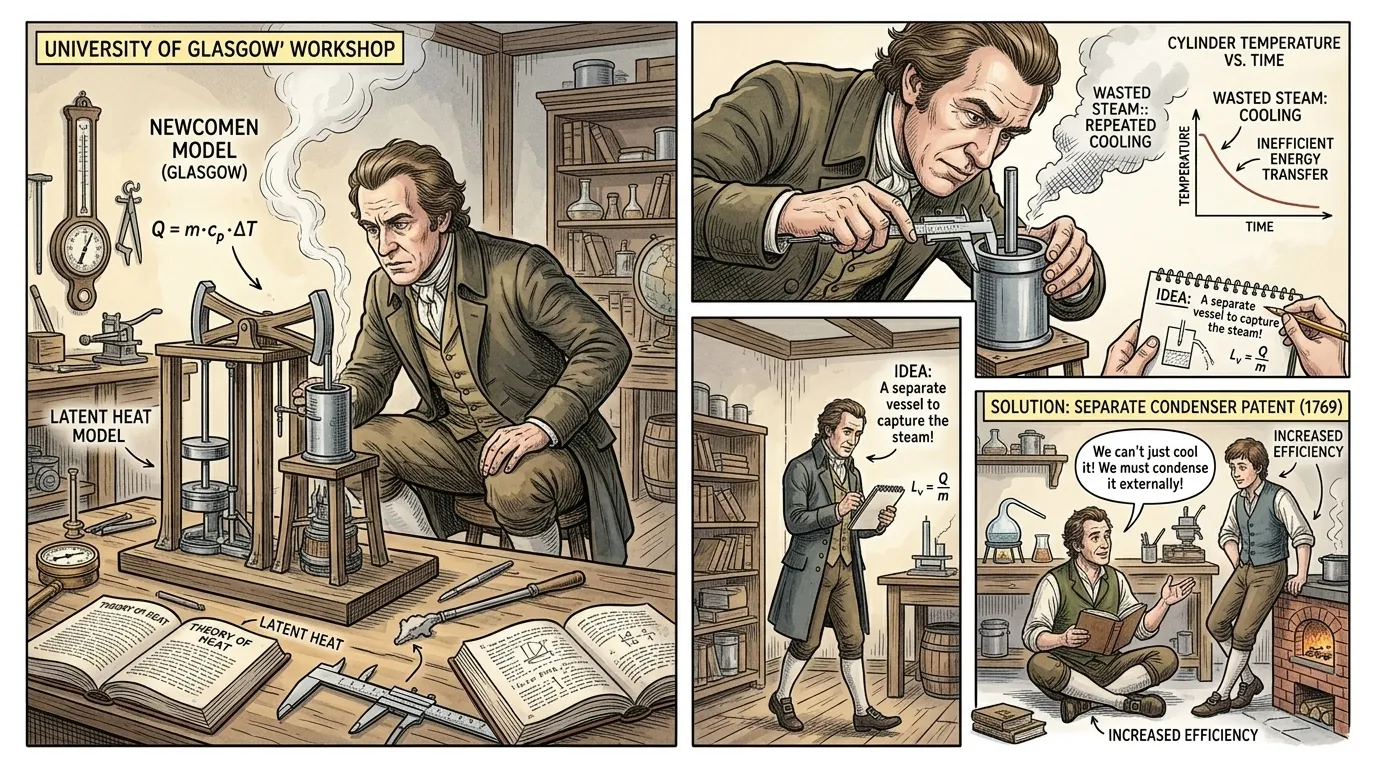
While Newcomen's engine revolutionized mining, its voracious coal consumption remained a significant drawback. A young instrument maker named James Watt, tasked with repairing a Newcomen engine model at the University of Glasgow in 1763, observed its profound inefficiency. He realized that repeatedly cooling and reheating the cylinder with each stroke wasted vast amounts of energy, making the engine economically viable only where coal was cheap and abundant.
Page 7
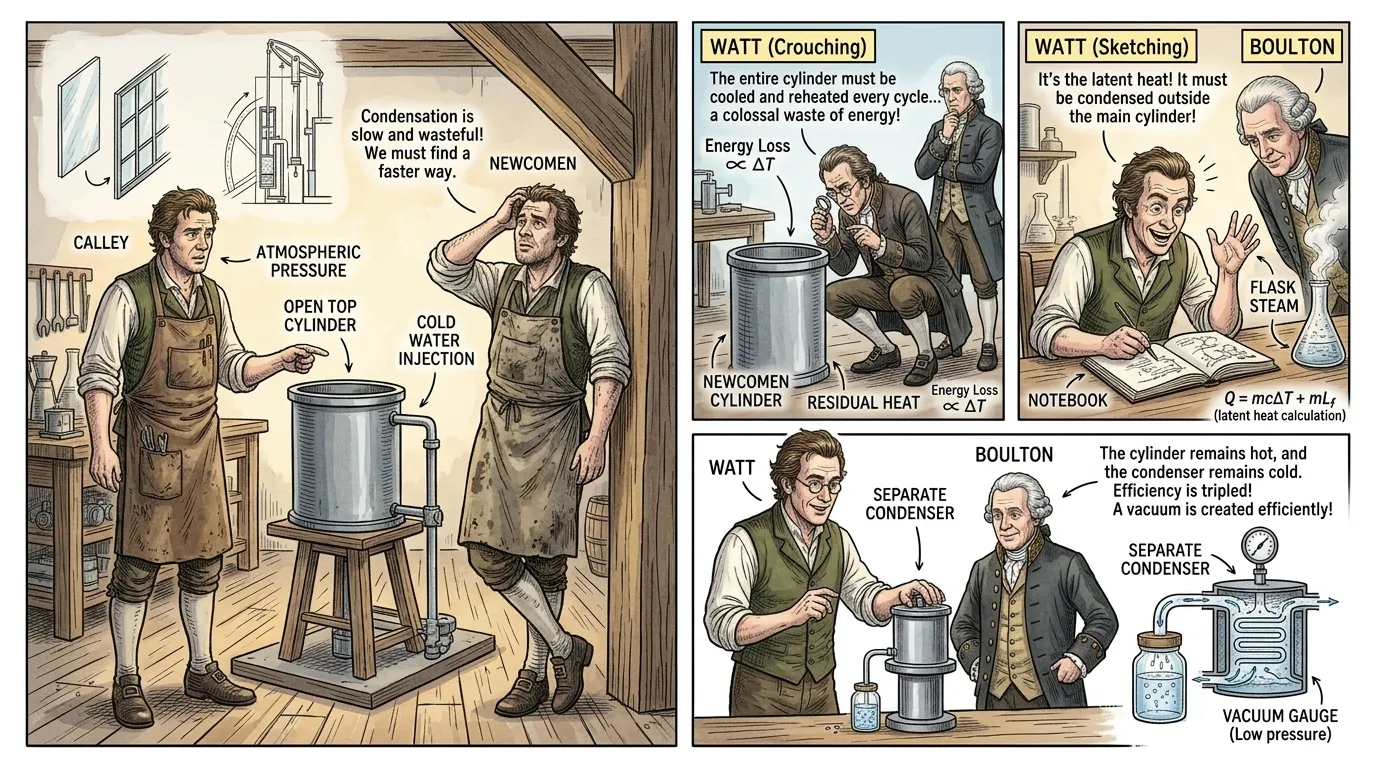
Watt's ingenious solution, patented in 1769, was the separate condenser, a chamber distinct from the main cylinder. This innovation allowed the cylinder to remain continuously hot, while steam was drawn into the cold condenser to create a vacuum. This drastically reduced fuel consumption and dramatically increased the engine's power output and operational speed, transforming it from a slow, expensive mine pump into a versatile power source for diverse industries, truly unleashing the potential of steam.
Page 8
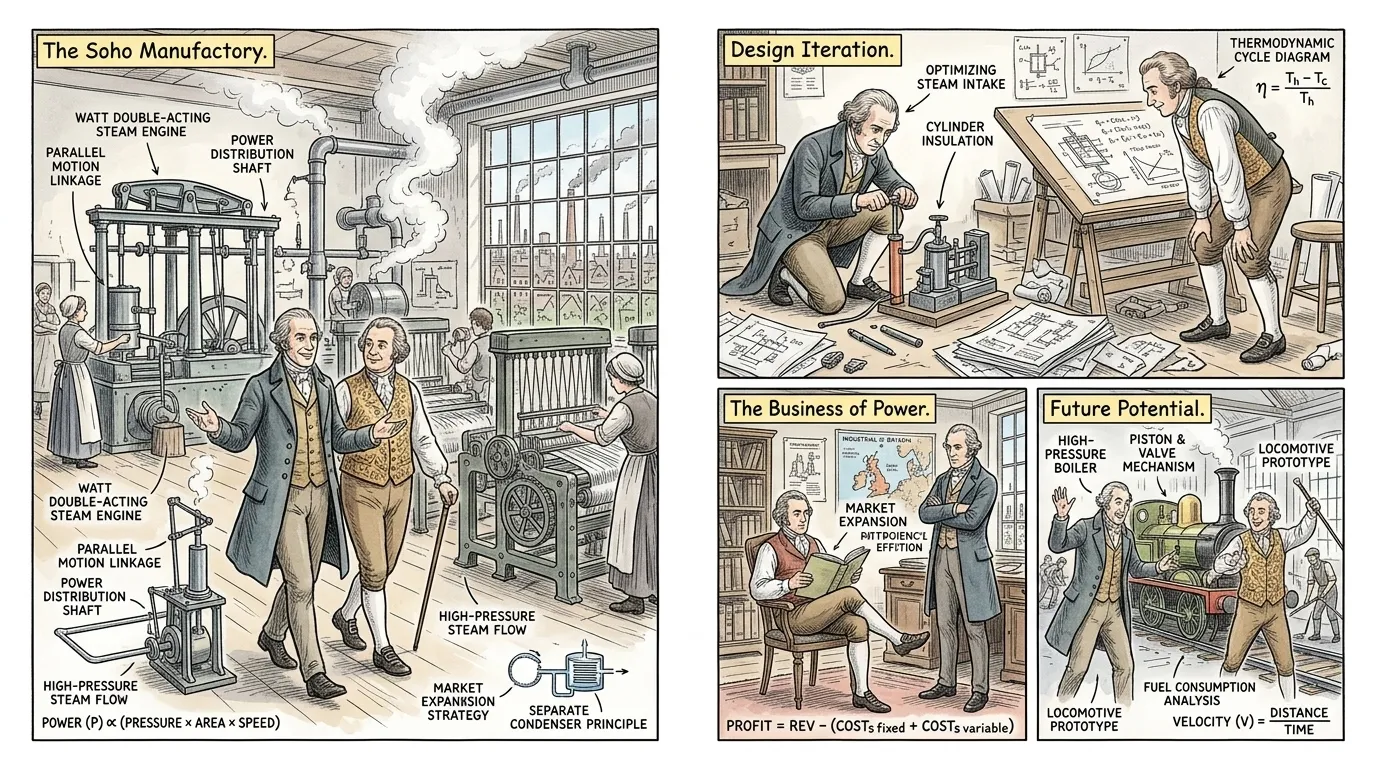
The partnership between James Watt and Matthew Boulton, founded in 1775, propelled the separate condenser engine into widespread adoption. Their advanced, more efficient steam engines quickly found homes beyond the mines, driving textile mills, flour mills, breweries, and ironworks across Britain. This reliable, scalable power source freed factories from reliance on water wheels, enabling them to be built anywhere, accelerating urbanization and setting the stage for the full-scale Industrial Revolution.
Page 9
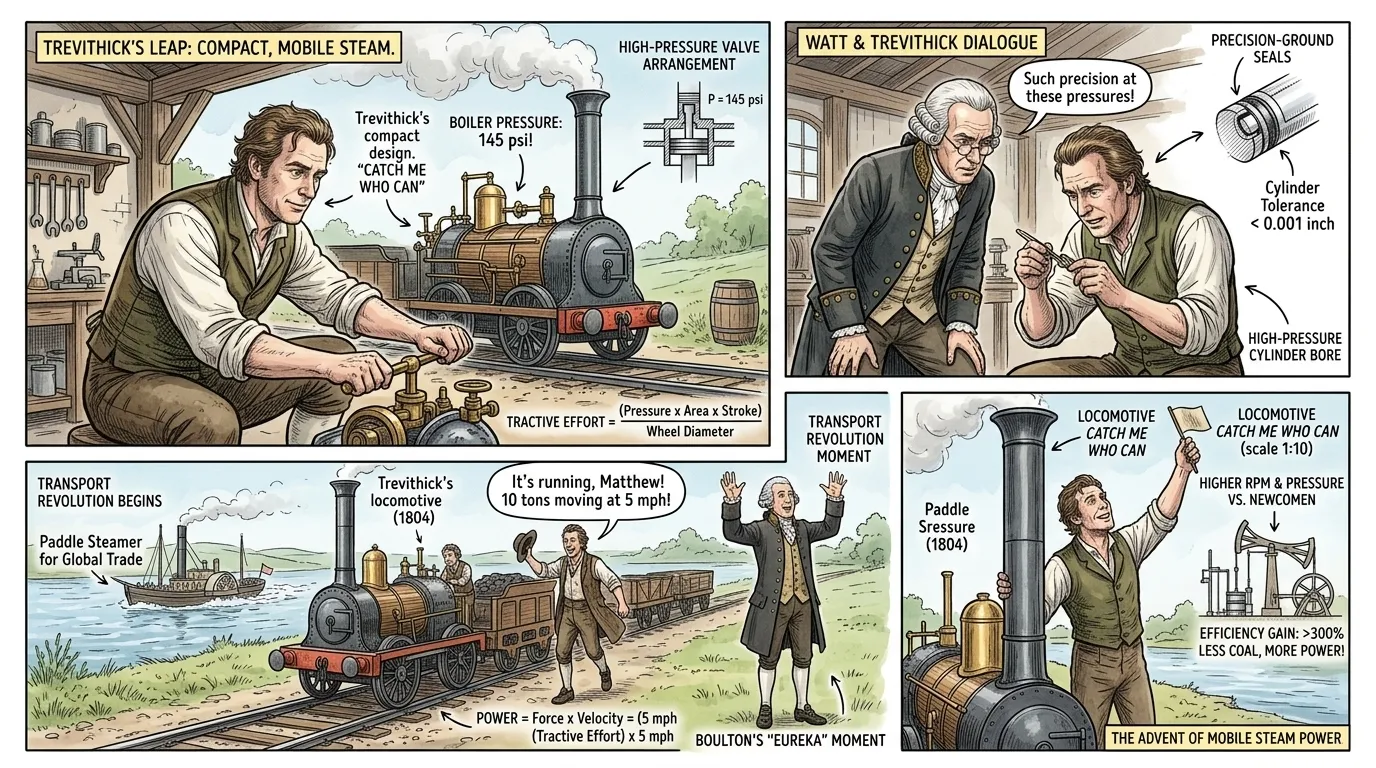
The steam engine's impact soon transcended stationary industrial applications. Richard Trevithick's development of high-pressure engines, which eliminated the need for a separate condenser and allowed for smaller, more powerful designs, made mobile steam power a reality. This crucial step led to the creation of steam locomotives and paddle steamers, fundamentally transforming transportation and shrinking the world through unprecedented speeds and carrying capacities, paving the way for globalized trade and travel.
Page 10
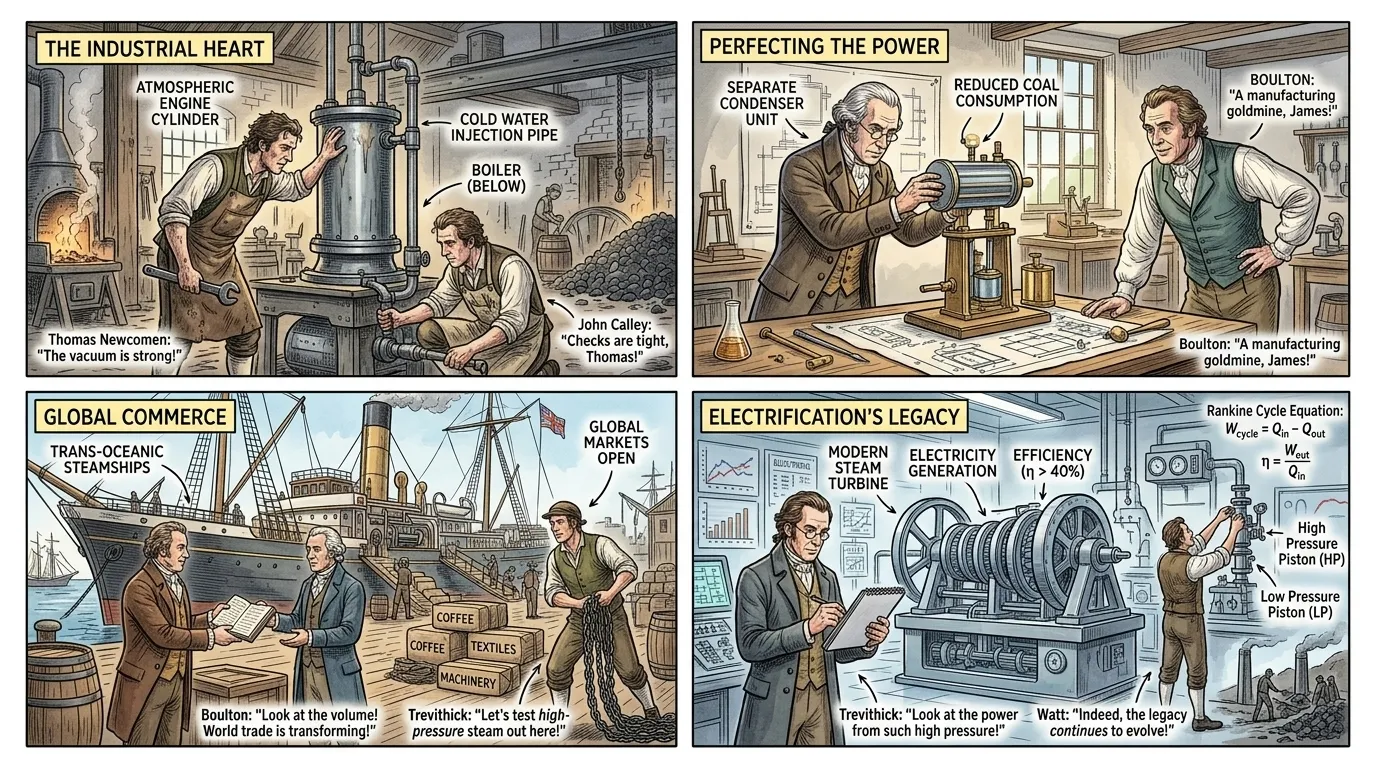
The steam engine's influence is immeasurable, catalyzing the Industrial Revolution, reshaping economies, societies, and geopolitics. It fueled global commerce, enabled mass production, and spurred the growth of cities. Though largely replaced by internal combustion and electric motors for everyday use, the fundamental principles of steam power endure in modern steam turbines, which generate the vast majority of the world's electricity. From coal mines to power grids, the invisible force of steam continues to power our world.
About this story
- Location: Global
- Audience: general readers
Questions and answers
Read Wonder Inventions on your phone
Wonder Inventions is available on Android. Get Wonder Inventions on Google Play.