Typewriter
Typewriter — an illustrated inventions story, set in Global. 10 illustrated pages, free to read on Wonder Inventions.
Page 1
Before the late 19th century, every official document, every legal record, and every piece of mass correspondence relied on the laborious art of handwriting. The sheer volume of paperwork in the burgeoning industrial age created an insurmountable bottleneck, demanding a solution that offered speed, legibility, and standardization.
"Christopher Latham Sholes, a newspaper editor and printer from Milwaukee, Wisconsin, observed this critical need firsthand. He often remarked to his colleagues, 'Our pens are too slow, and our hands too varied; we need something to print our thoughts as fast as we form them.' This conviction drove his early experiments."
Page 2
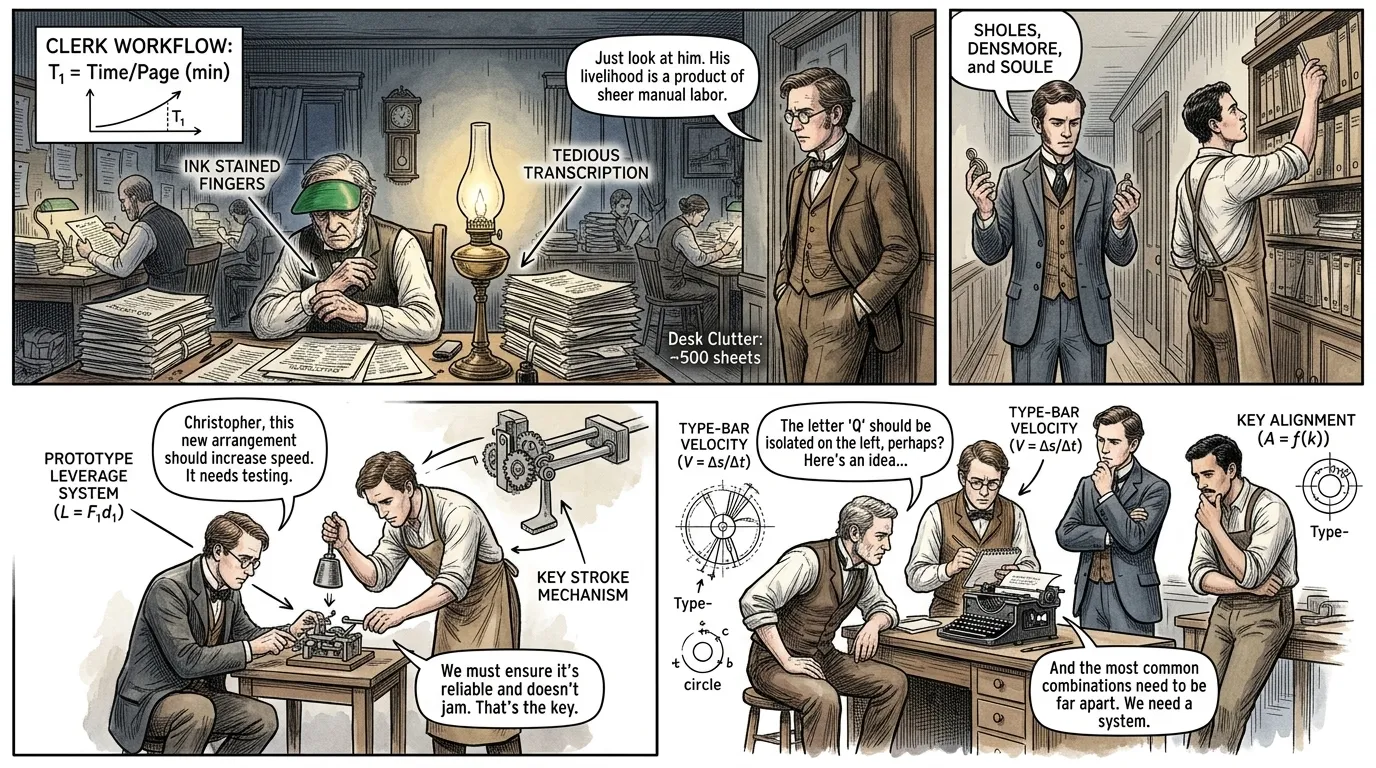
The world before the typewriter was a realm of profound manual effort. Clerks, lawyers, and administrators spent countless hours painstakingly copying documents by hand. This process was not only slow but also prone to error, and the legibility varied wildly from one scribe to another. Imagine the challenge of deciphering crucial contracts or directives!
"A veteran clerk, his fingers stained with ink, might have sighed, 'Each document is a test of patience, and every mistake means starting anew. How many hours are lost to smudged ink and cramped fingers?' The sheer demand for readable, consistent text far outstripped the human capacity to produce it, creating immense pressure on businesses and governments alike."
Page 3
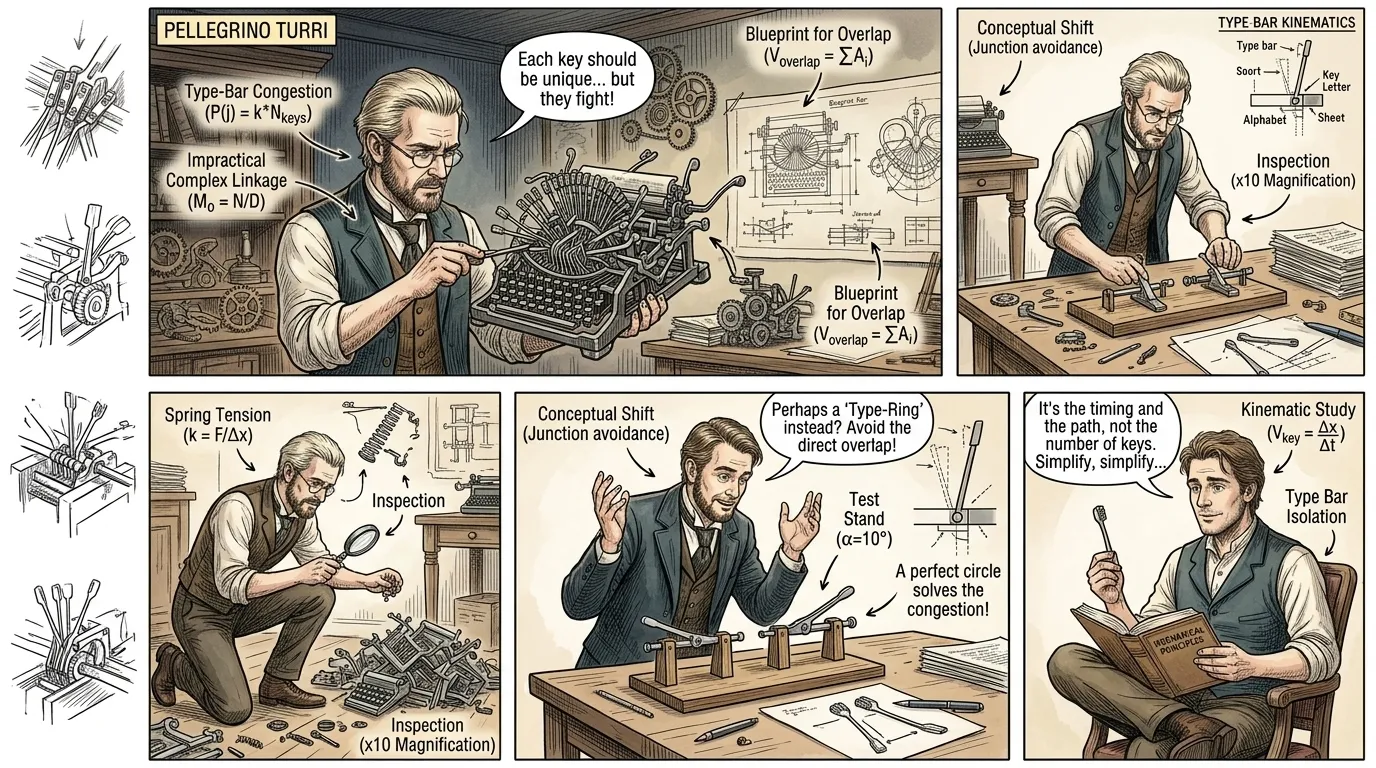
The idea of a mechanical writing machine was not new. As early as 1714, Henry Mill patented 'an Artificial Machine or Method for the Impressing or Transcribing of Letters singly or progressively one after another.' Yet, these early devices remained largely conceptual or impractically complex, failing to achieve commercial viability.
"An imagined 18th-century inventor, Pellegrino Turri, might have mused over his intricate creation, a machine designed to help a blind countess write: 'The difficulty lies not merely in striking the paper, but in ensuring each letter is distinct, in its place, and legible every single time.' He would have held up a prototype with numerous levers, demonstrating how the complex mechanics often led to letters overlapping or jamming."
Page 4
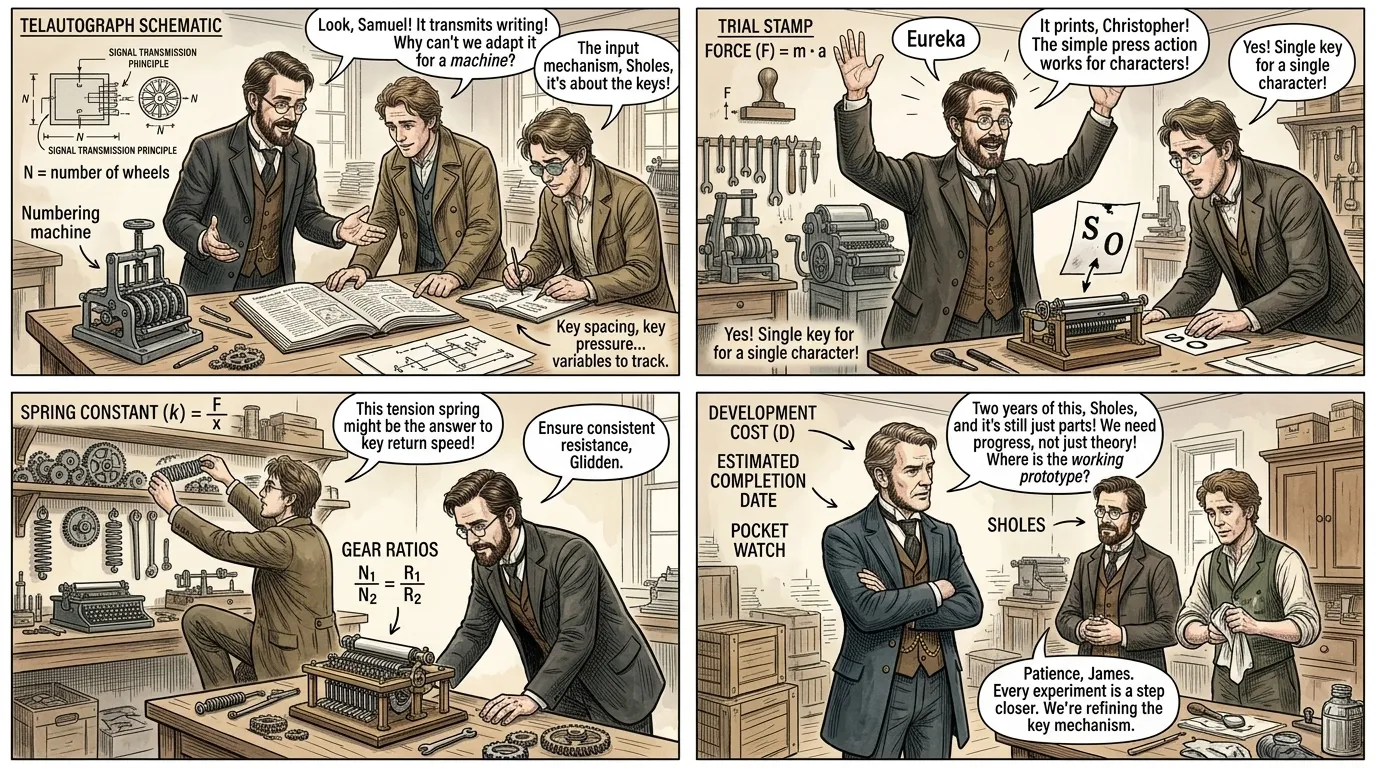
Christopher Latham Sholes, a man of varied talents—a printer, journalist, and politician—did not initially set out to invent a typewriter. His early work involved a machine for numbering pages of books. However, a fellow inventor, Samuel Soule, suggested adapting it to type words, a notion inspired by the telautograph.
"Sholes recounted, 'Soule brought me an article on a British 'telautograph,' a device that could print telegraph messages. It sparked an idea: if a machine could print incoming messages, why not outgoing ones, direct from the operator?' Collaborating with Soule and later Carlos Glidden, they began to evolve their numbering machine into a rudimentary writing engine, driven by curiosity and the clear demand for mechanical text."
Page 5
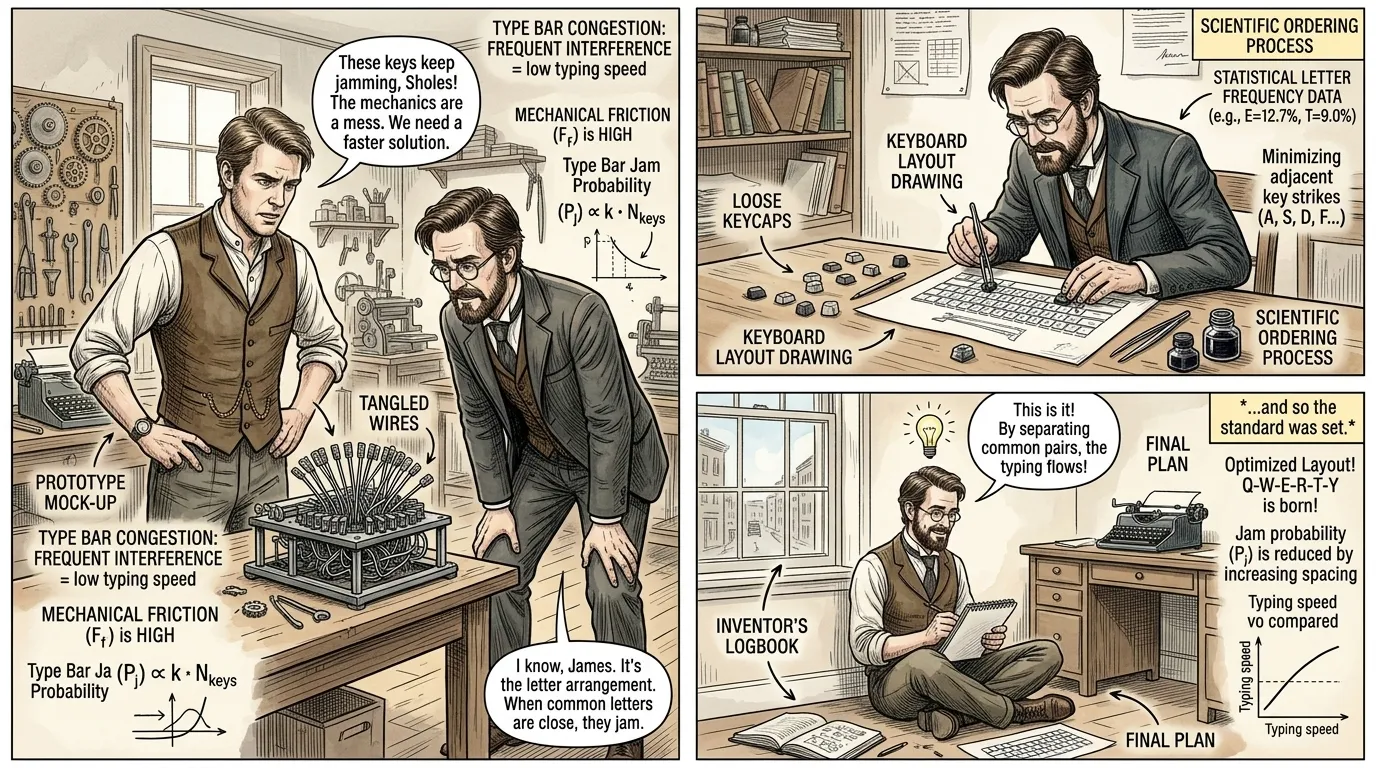
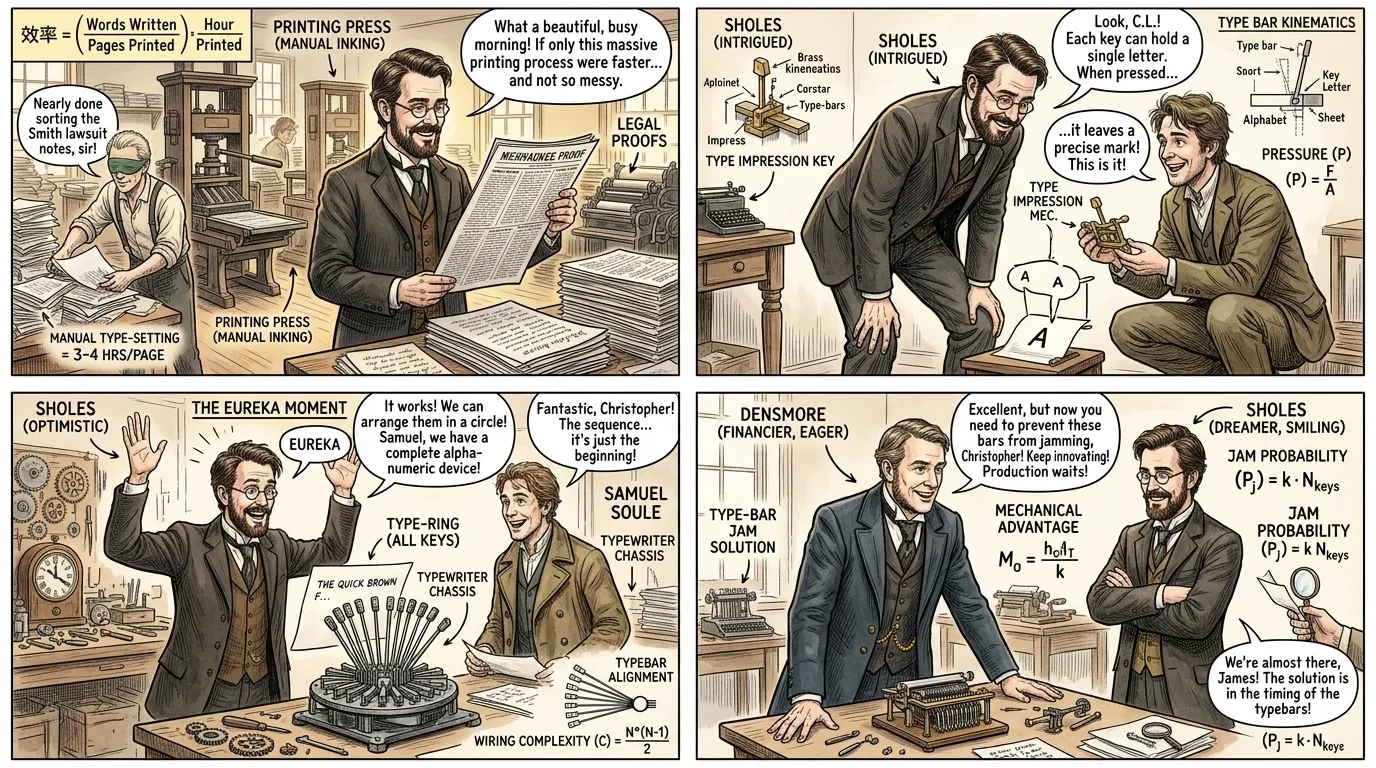
Their initial typewriter designs, much like previous attempts, suffered from a critical flaw: rapid typing caused the type bars to jam. If frequently used letters were placed next to each other, their levers would clash before striking the paper. This fundamental mechanical problem threatened to derail the entire invention.
"James Densmore, a financier and early investor, critically assessed their jamming prototypes. He exclaimed, 'The keys are fighting each other! We need a layout that slows the typist, that separates the common pairs.' Sholes, along with Densmore's analysis, painstakingly rearranged the keyboard, placing commonly used letter combinations like 'th' or 'er' far apart. This counterintuitive design, prioritizing mechanical efficiency over initial speed, became the iconic QWERTY layout."
Page 6
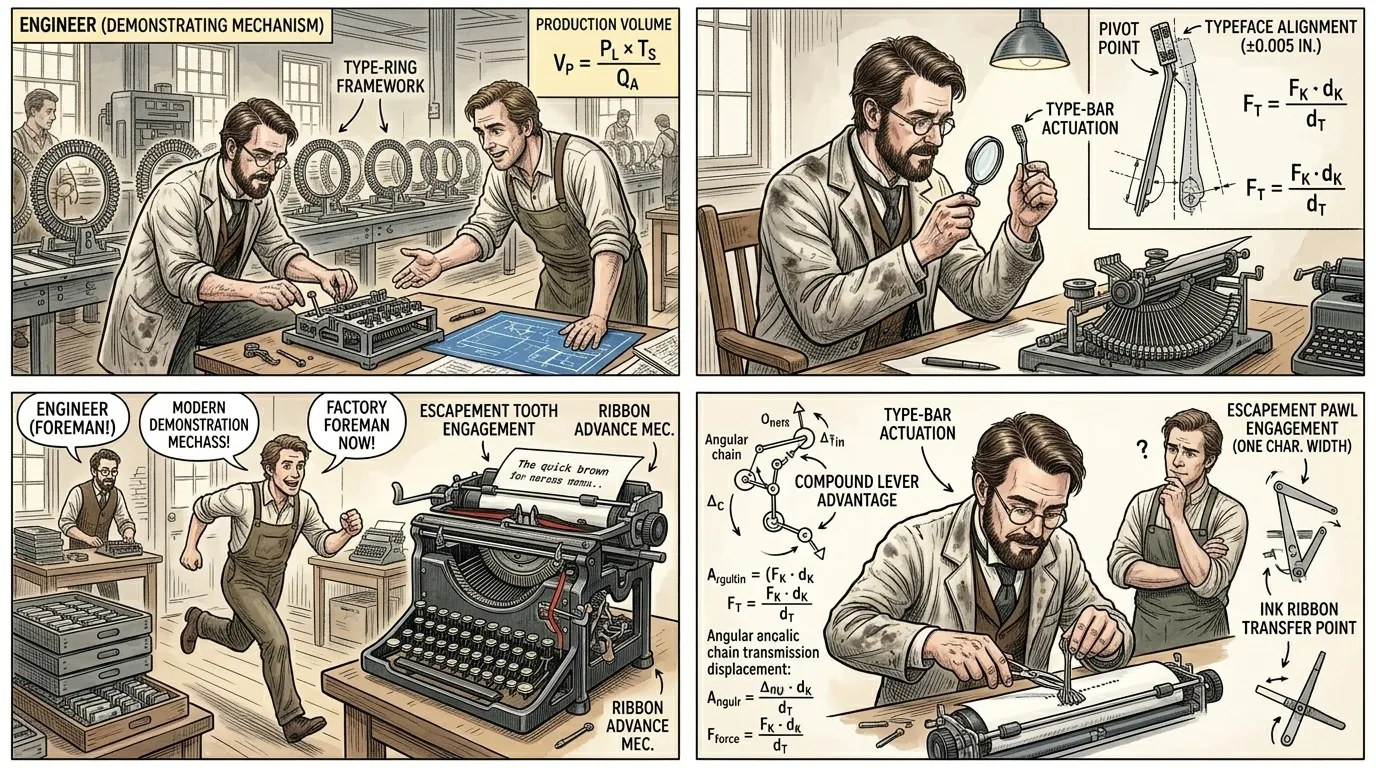
At the heart of Sholes' successful design was an ingenious system of levers. When a key was pressed, it activated a series of linkages, propelling a type bar—a small metal arm with a letter embossed on its end—upward. This bar would strike an ink ribbon, transferring the character onto paper.
"An engineer demonstrating the mechanism might say, 'Observe the precision! The key's motion is translated through a compound lever system, ensuring enough force to strike the ribbon with clarity, yet retract quickly.' He would then articulate, 'Crucially, the escapement mechanism ensures that after each strike, the carriage moves exactly one character width. This creates uniform spacing, vital for legibility.'"
Page 7
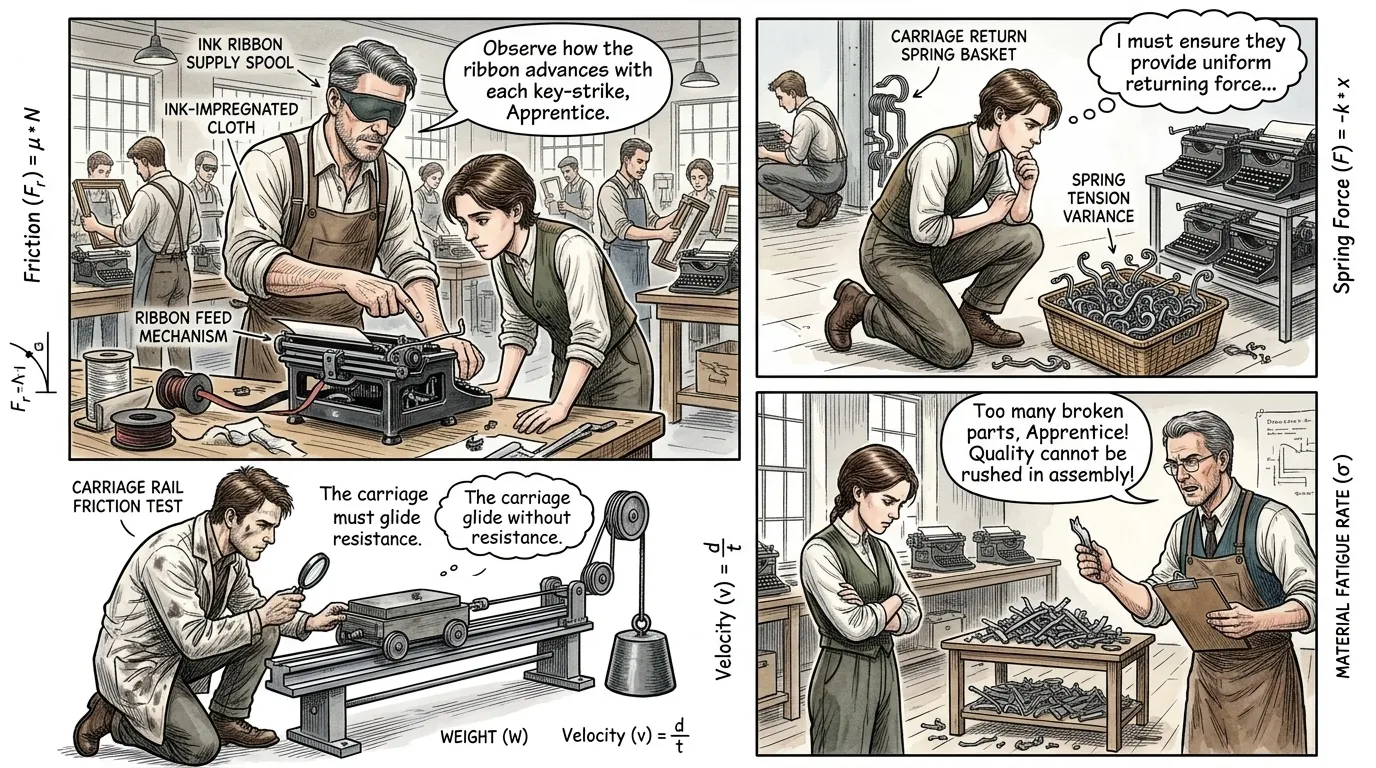
Beyond the striking type bars, two other critical components ensured the typewriter's efficiency and user-friendliness: the ink ribbon and the carriage return. The ribbon, a long strip of cloth impregnated with ink, advanced slightly with each keystroke, ensuring a fresh inked surface for every letter.
"A factory foreman explains to an apprentice, 'The ribbon mechanism is deceptively simple but absolutely essential. Without its continuous feed, we'd only get faint impressions after a few strikes. And the carriage return? That's the unsung hero, snapping the paper back to the left margin for a new line, automatically advancing the paper downward too.' This combination of features made continuous writing possible."
Page 8
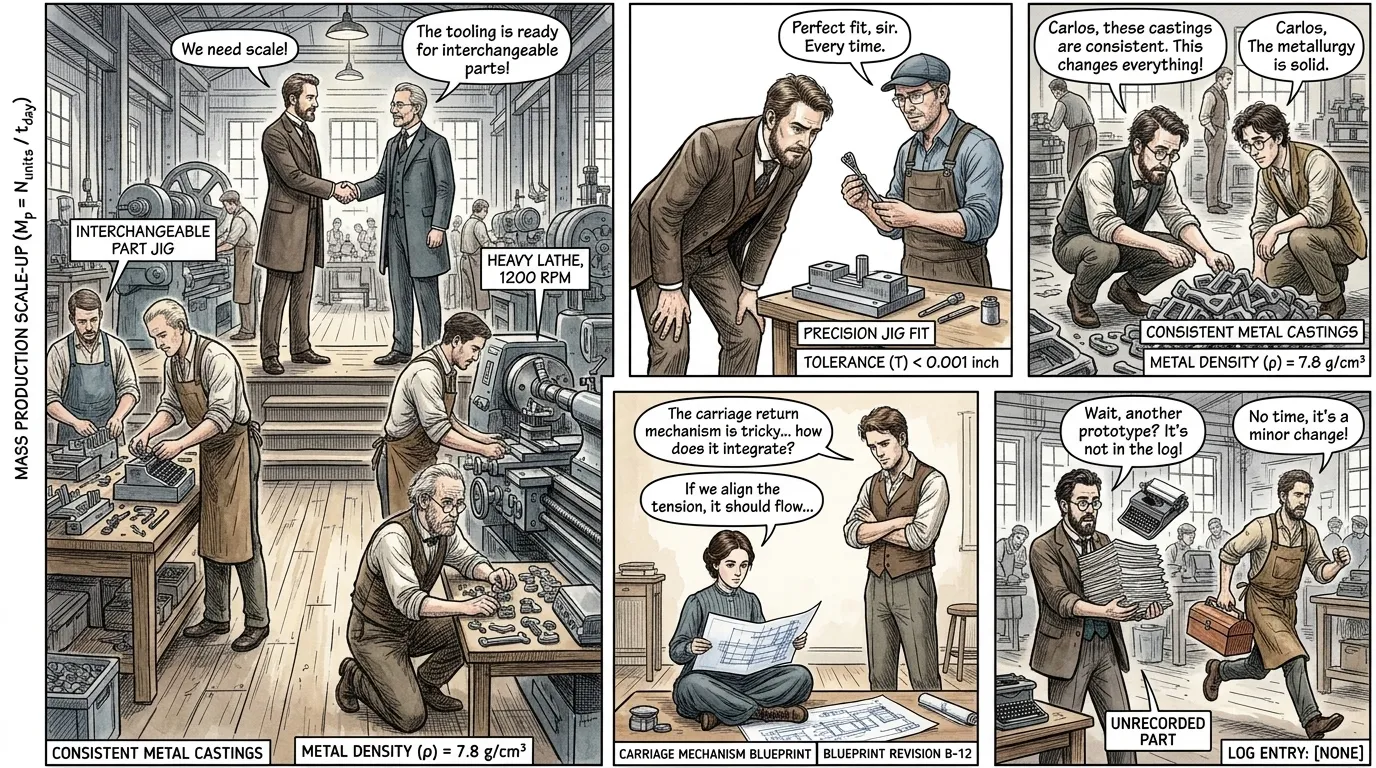
Despite Sholes' inventive genius, the initial models were crude, expensive to manufacture, and lacked the robust engineering needed for mass production. Enter James Densmore, who invested heavily and tirelessly advocated for the machine. Recognizing the need for industrial-scale manufacturing, Densmore secured a crucial partnership.
"In 1873, Densmore successfully negotiated a deal with E. Remington and Sons, a renowned manufacturer of firearms and sewing machines known for its precision engineering. A Remington executive, overseeing the new production line, stated, 'As Benjamin Franklin once mused, 'Necessity is the mother of invention,' and indeed, the demand for legible communication drove us to this moment. Our expertise in interchangeable parts will transform this crude prototype into an indispensable tool for every office.' This partnership was the turning point."
Page 9
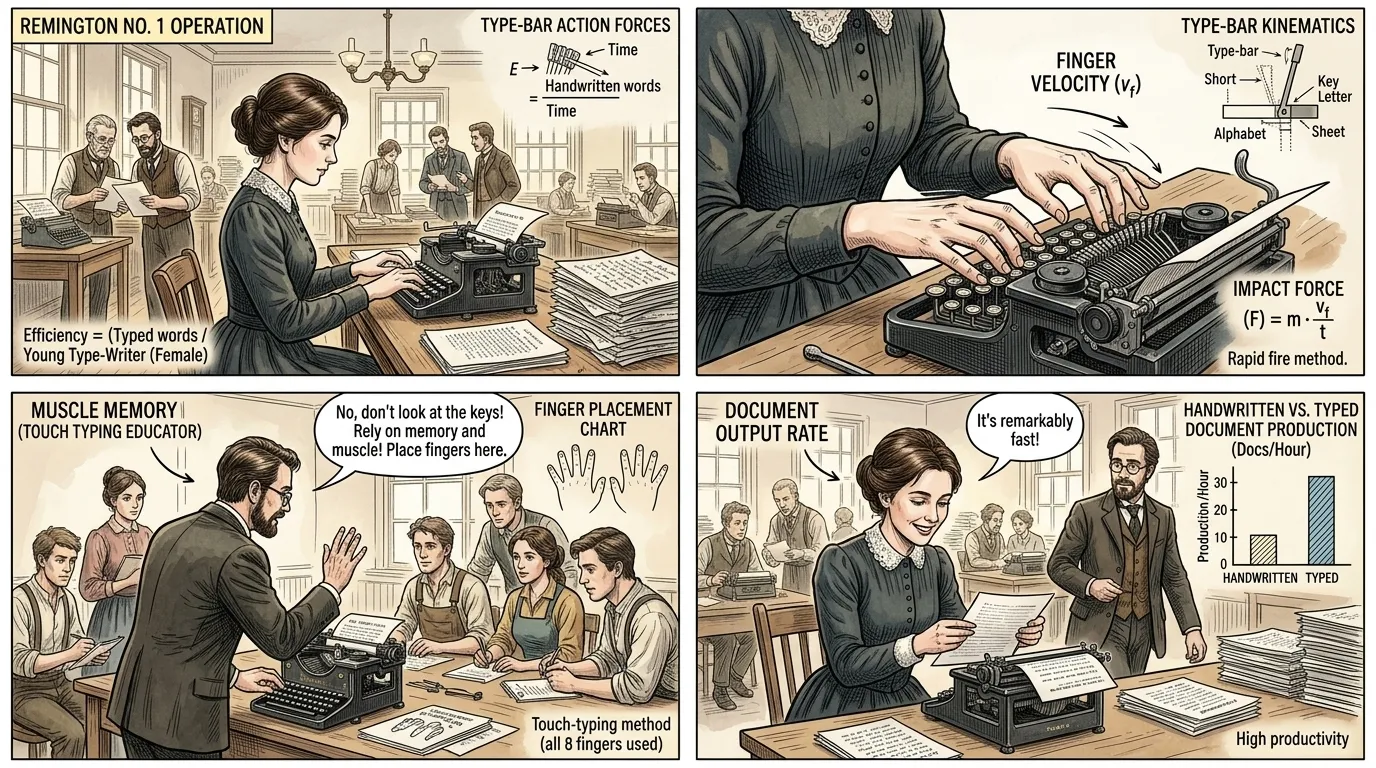
Initially, the Remington Type-Writer sold slowly, seen as a novelty. However, its undeniable efficiency and the demand for clear, standardized documents soon propelled its adoption. The development of 'touch-typing' by educators like Frank McGurrin in the 1870s unlocked the machine's full speed potential.
"By the 1880s, offices began to transform. A young woman, newly employed as a 'type-writer' (the term originally referring to the person, not the machine), might have said to a colleague, 'My fingers fly across the keys now! This machine makes neat, quick work of reports that once took days. It's truly a liberating tool, opening new opportunities for women in the workplace.' This shift marked a significant social and economic change."
Page 10
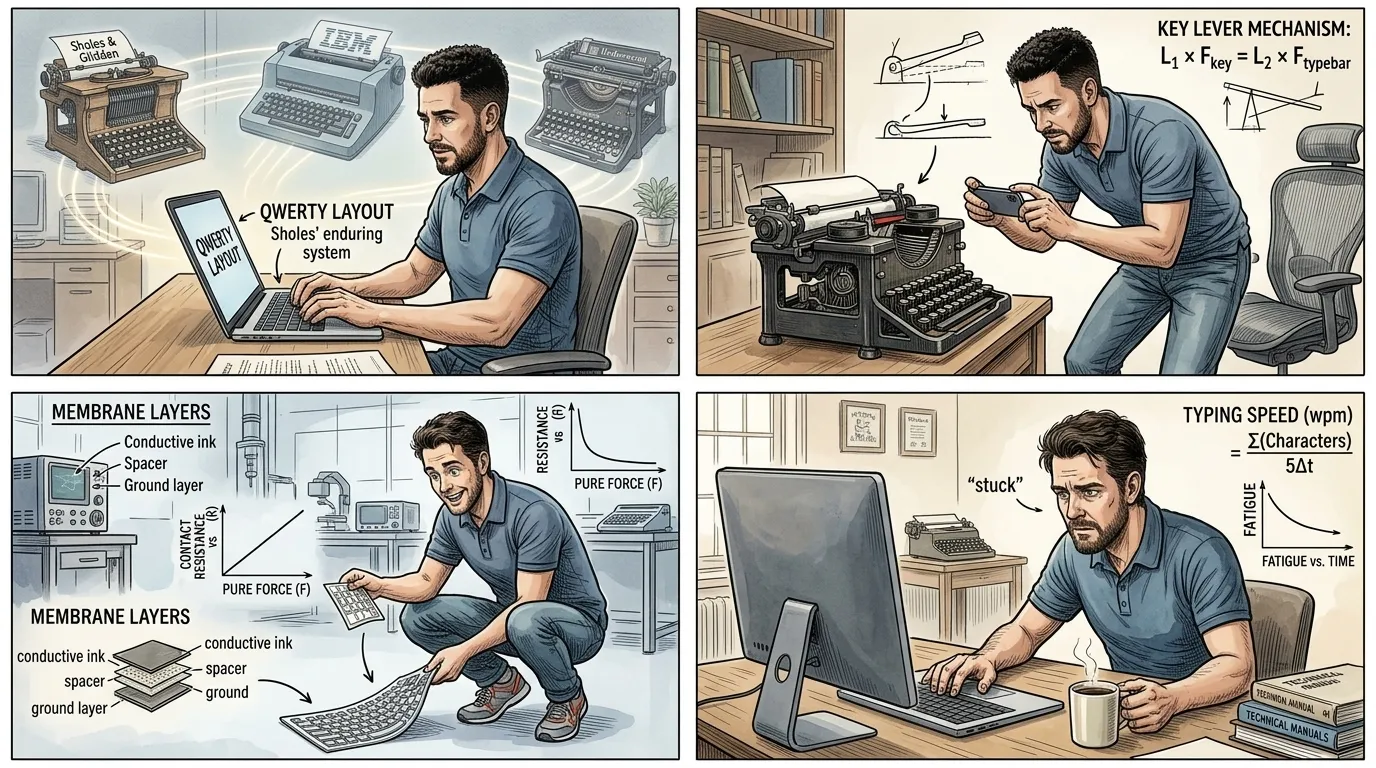
The typewriter reigned supreme for over a century, evolving from mechanical marvels to electric powerhouses and even 'golf ball' typewriters. It fundamentally reshaped communication, business, and even the social fabric of the workplace, creating entirely new professions. Though largely superseded by computers, its influence endures profoundly.
"Modern computer users still engage daily with the typewriter's most enduring legacy: the QWERTY keyboard. A contemporary observer might reflect, 'Every time we type on a laptop, we are, in a way, honoring Sholes' ingenious solution to a century-old problem of mechanical collision. The typewriter's ghost lives on in our digital world, shaping how we interact with information.'"
About this story
- Location: Global
- Audience: general readers
Questions and answers
Read Wonder Inventions on your phone
Wonder Inventions is available on Android. Get Wonder Inventions on Google Play.