A Nest of Gentlefolk
A nobleman's return, a fleeting hope of love, and a life of quiet sorrow
Page 1
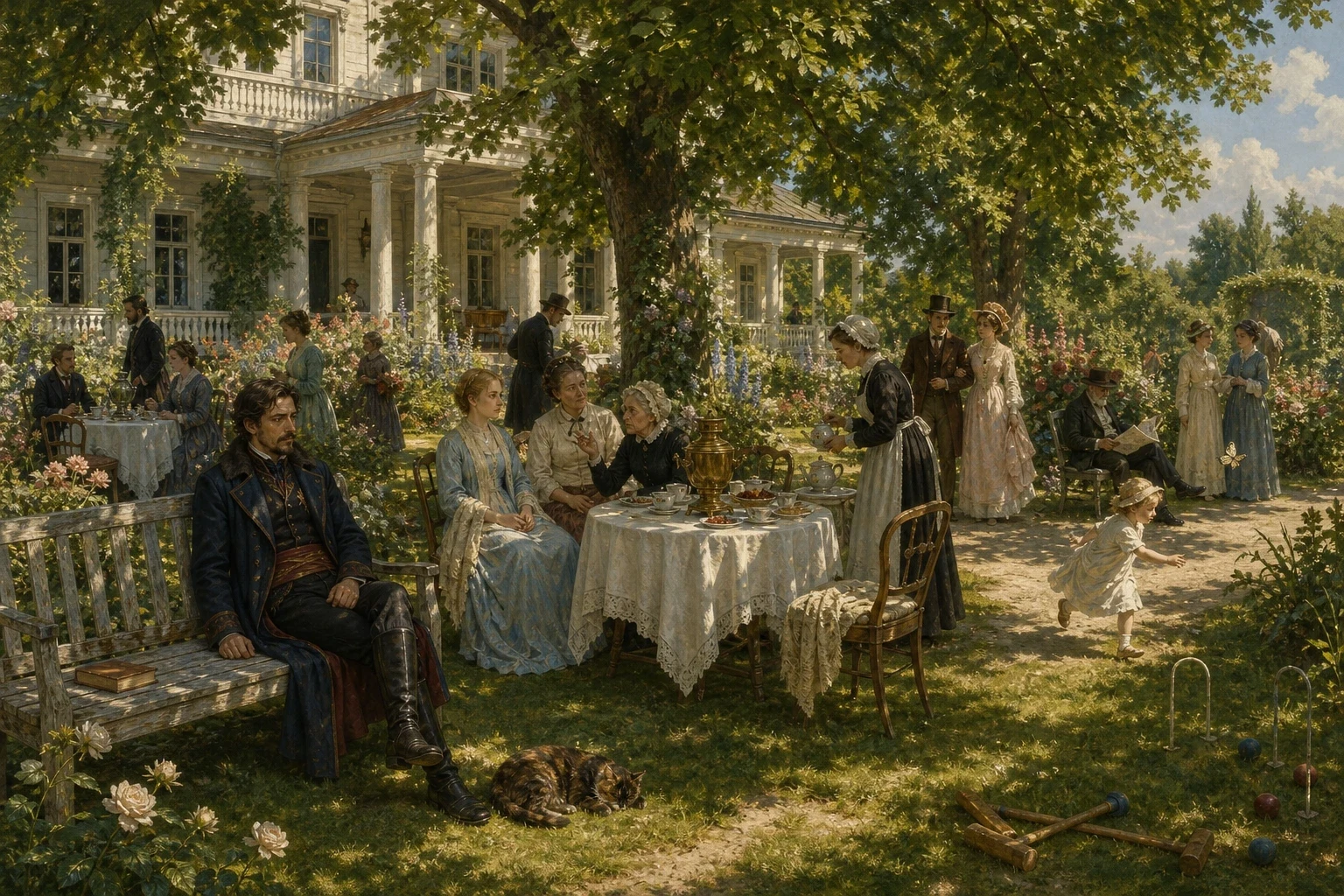
In the garden of the Kalitin house, in the quiet Russian town of O---, gentlefolk took tea in the shade of old lime trees. Fyodor Lavretsky, newly returned from years abroad, sat apart, a quiet observer. A young official, Panshin, held forth on the government. "Progress is everything!" he declared. Lavretsky’s gaze drifted to Liza Kalitina, who sat listening with a serious calm. Her great-aunt, Marfa Timofyevna, noticed his attention. "And you, Fyodor Ivanovich," she said sharply, "you find our provincial life dull after Paris?" Lavretsky started. "Not at all," he answered quietly. "I find it... restful." He had come home to live in solitude, but in Liza’s quiet grace, he felt an unexpected stirring of forgotten feeling, like the scent of rain on dry earth.
Page 2
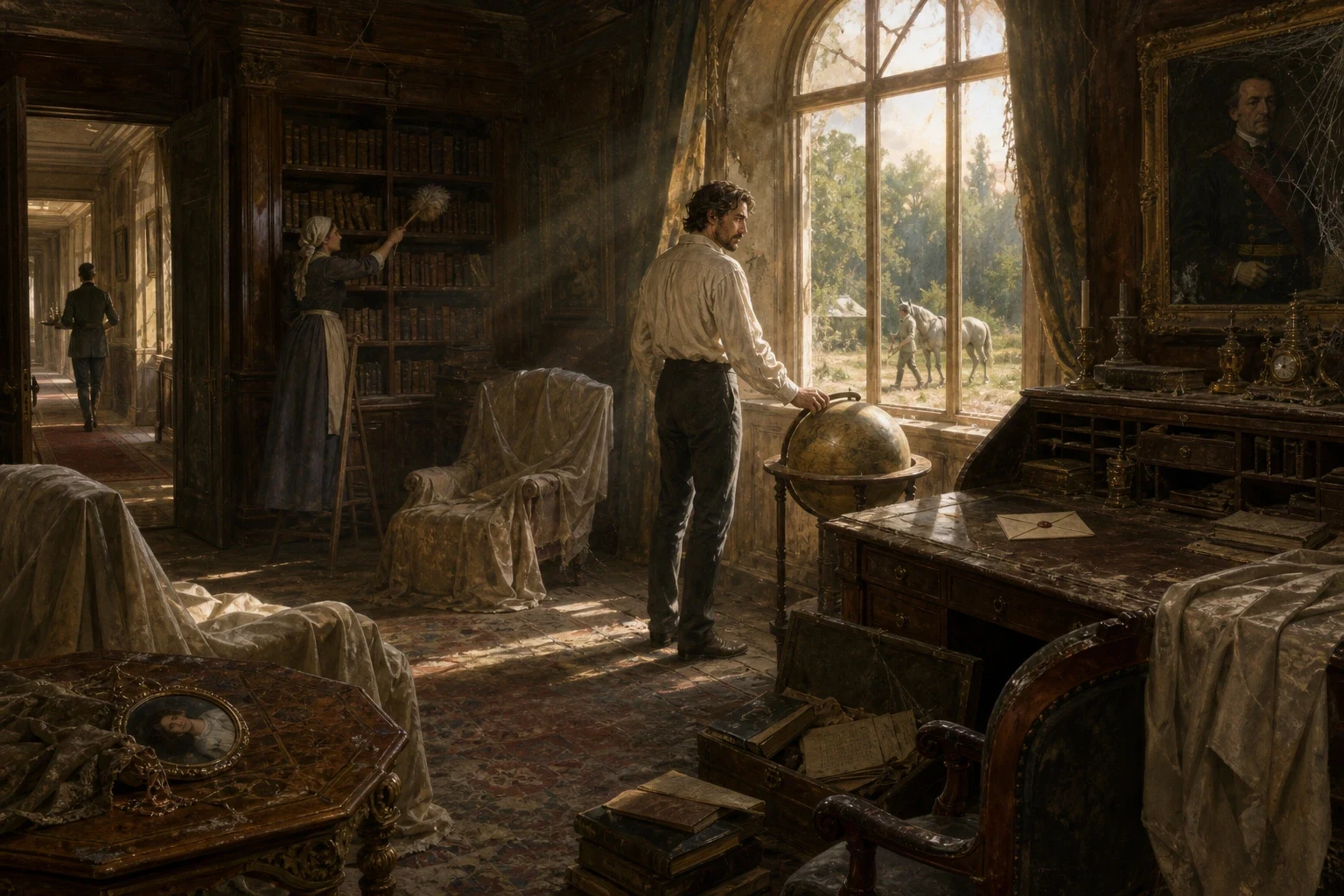
At his neglected family estate, Lavriky, the silence was heavy with dust and memory. Standing in his father’s study, Lavretsky ran a hand over a faded globe. He remembered his strange upbringing, his foolish adoration for the brilliant Varvara Pavlovna, and her casual, cruel betrayal in Paris. He had fled back to Russia, convinced his life was over. He walked to the window, looking out at the overgrown park where he had played as a boy. "It is all finished," he said to the empty room, his voice flat. "There is nothing left but to wait for the end." He saw his reflection in the dusty glass, a man of thirty-five who looked fifty. "What a waste," he murmured, turning away from the window. "What a foolish, useless waste of a life."
Page 3
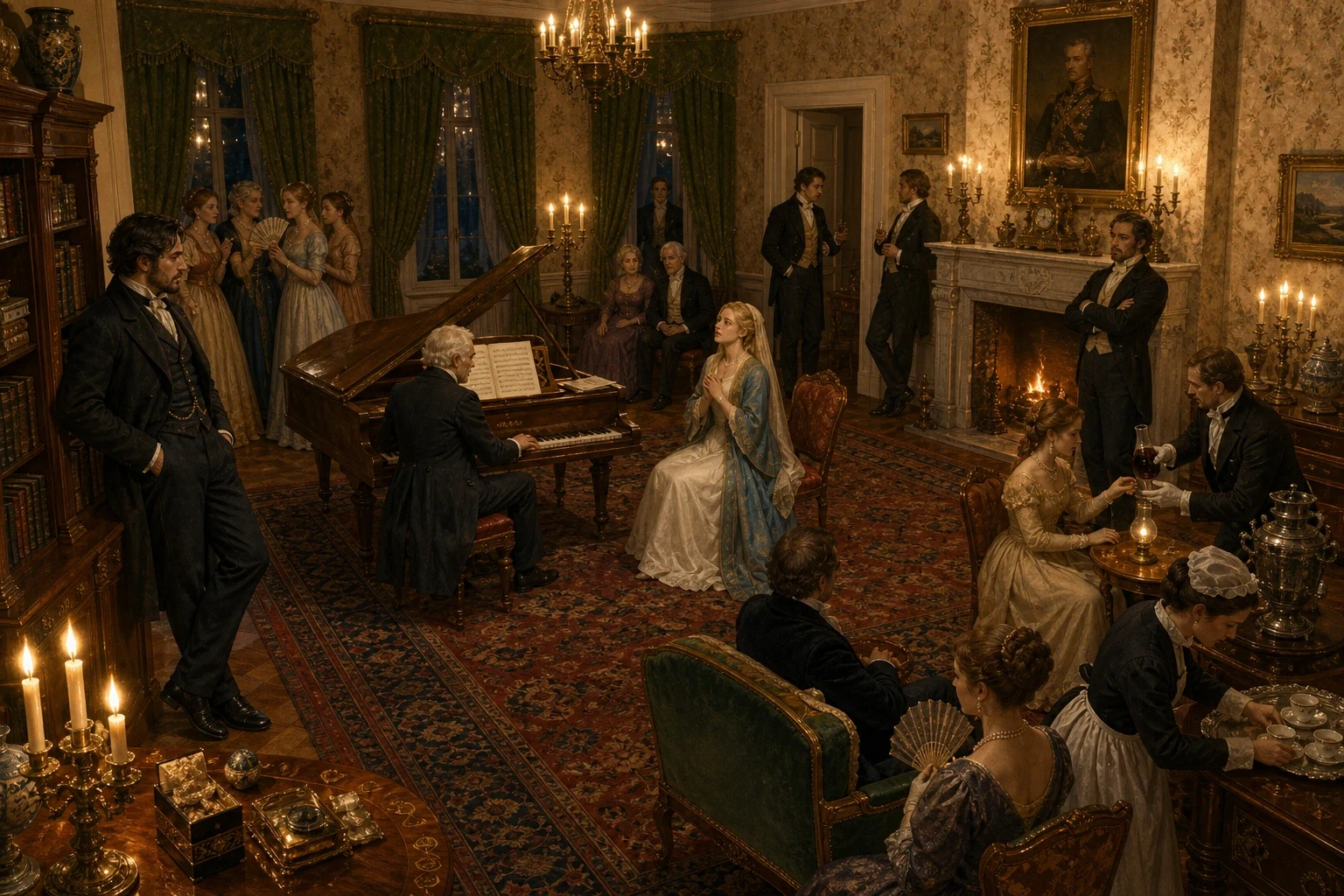
The Kalitin drawing-room buzzed with polite society. Panshin, Liza’s suitor, finished a frivolous French song. "Charming, is it not?" he asked the room. "So much wit." But then, old Christopher Lemm, the German music teacher, sat at the grand piano. The music that filled the room was not witty; it was profound, filled with a sorrowful beauty that silenced all chatter. It spoke of a lonely life and a longing for the unattainable. Lavretsky looked across the room at Liza. Her face was transformed. "My God," Lavretsky whispered to himself, "she understands." In that shared moment, a silent, powerful bond formed between them. When it was over, he approached the old man. "What was that?" Lemm just shook his head, his eyes moist. "It is gone. It cannot be repeated."
Page 4
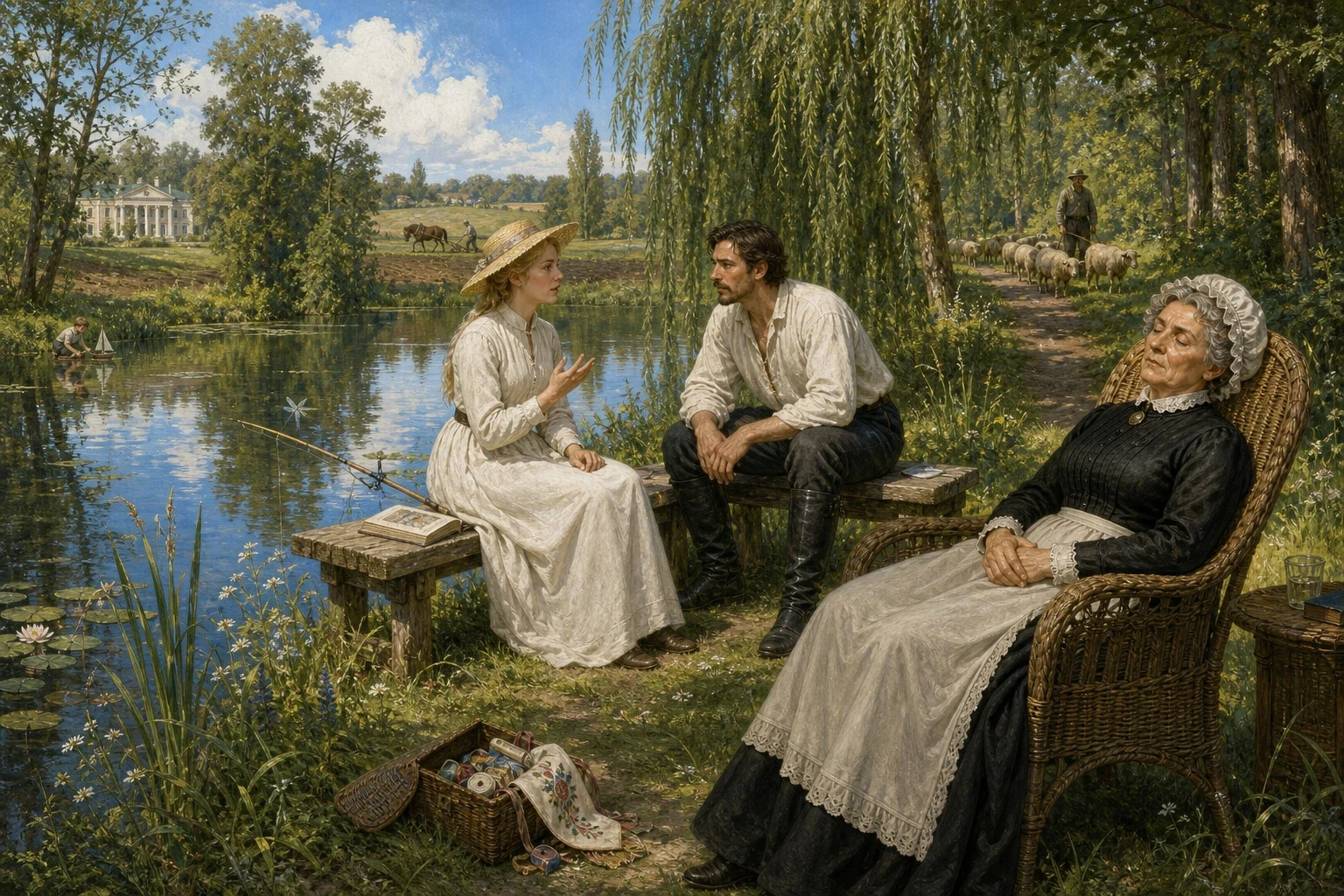
One warm afternoon, Lavretsky sat fishing by the pond with Liza and her great-aunt Marfa. The old lady soon dozed off. They began to talk with a searching honesty. Liza spoke of her faith. "One must not seek one’s own happiness," she said earnestly. "One must do one’s duty and accept God’s will." Lavretsky, who had lost all faith, listened. He told her of his unhappy life. "You cannot imagine what it is to not believe," he said quietly. "But speaking with you, I feel… it is not so bad." She looked at him with her clear, serious eyes, her expression full of a gentle pity that did not wound, but healed. "You must pray," she answered simply. "And you must hope."
Page 5
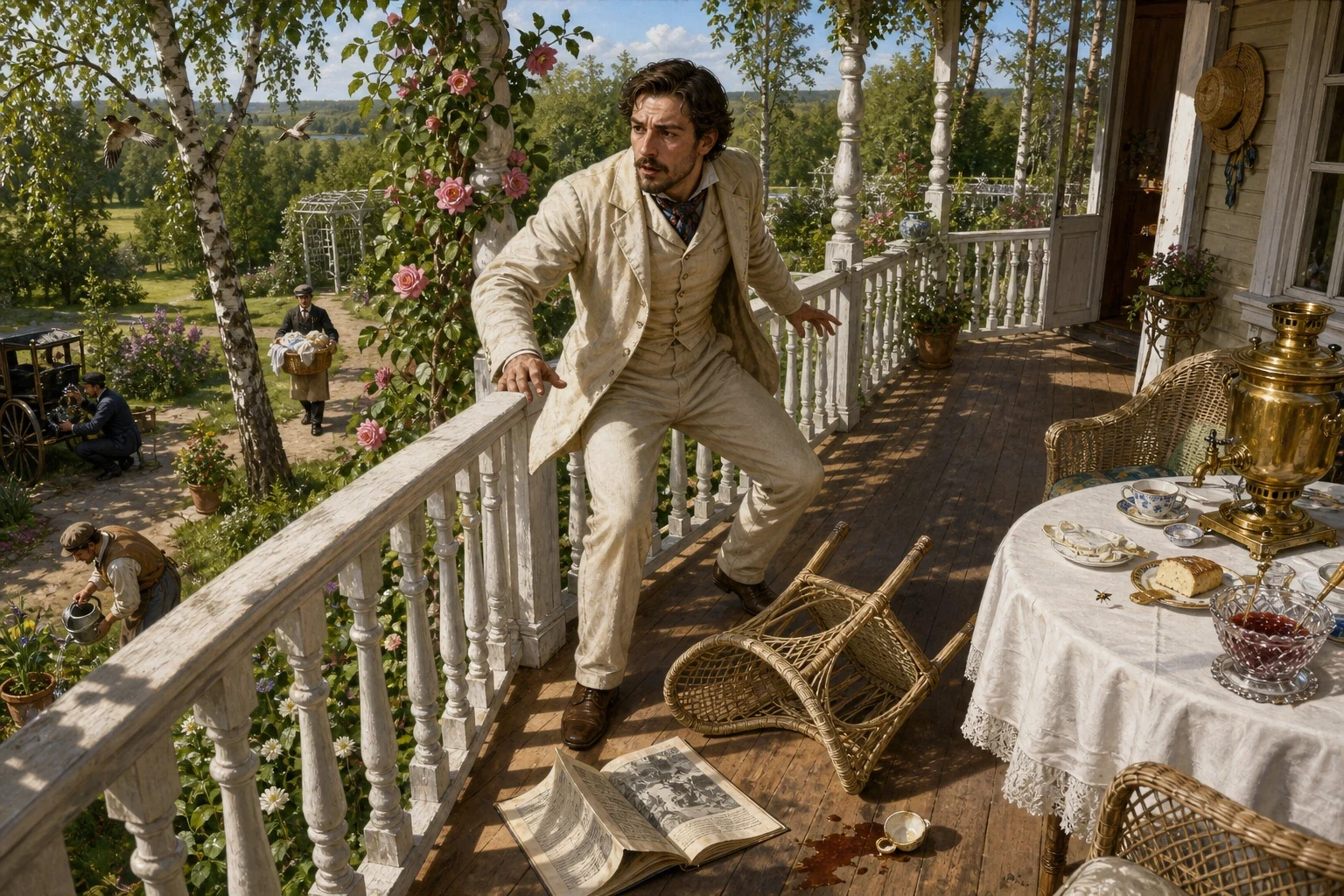
Lavretsky sat alone on the sunny veranda of his house, idly scanning a French journal. His eyes caught a familiar name. He read a short paragraph, then read it again, his heart pounding. The journal reported the sudden death of 'the celebrated Madame de Lavretsky'. He shot to his feet, the journal falling from his numb fingers. Varvara was dead. He was free. A wave of disbelief, then a wild, rising tide of joy washed over him. He was free to love Liza, to begin a new life. He stumbled to the railing of the veranda, gripping it tightly. "Dead?" he said aloud, his voice a choked whisper. "She is dead?" He threw his head back and looked at the vast blue sky, a breathless laugh escaping his lips. "Can life begin again at thirty-five?"
Page 6
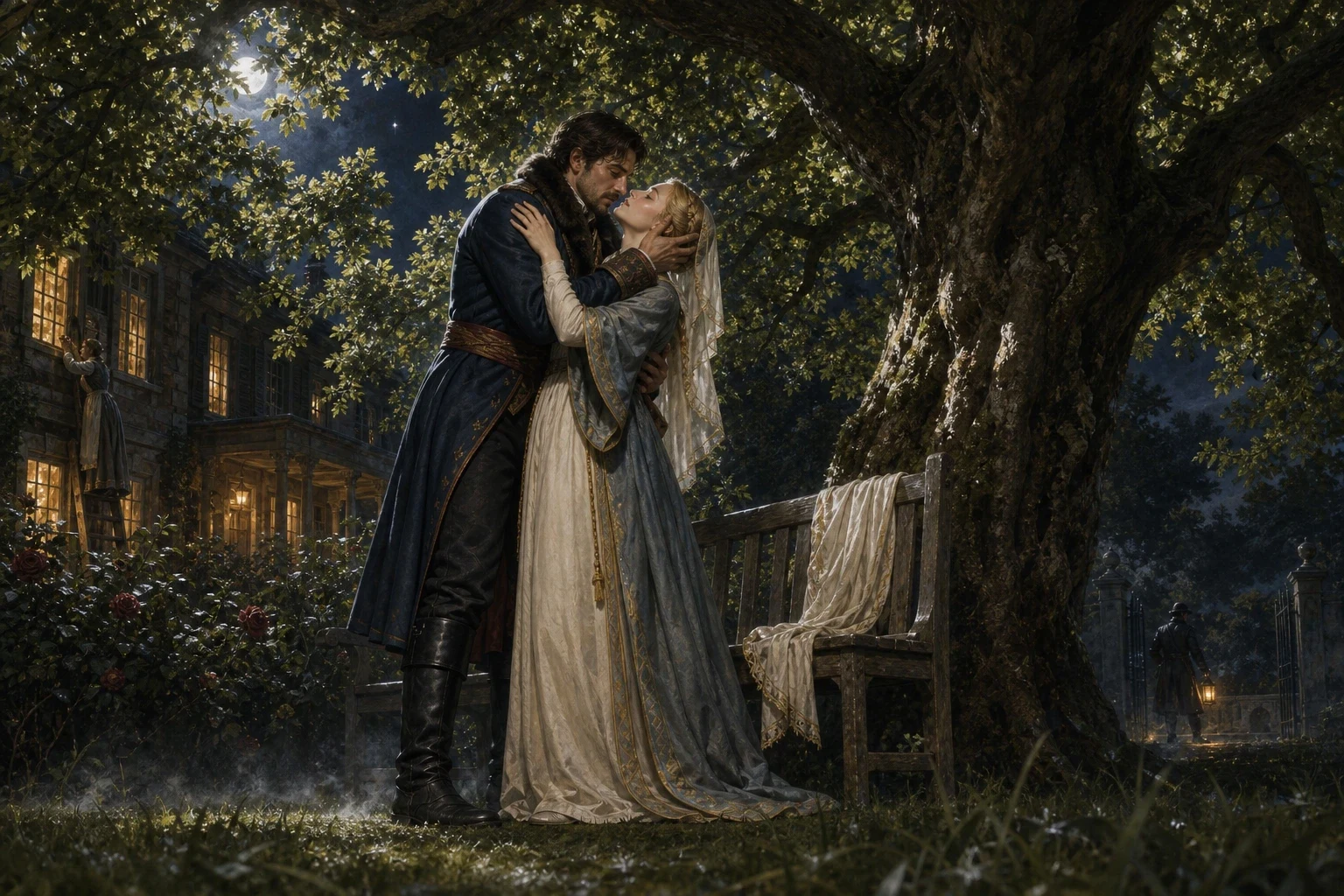
That evening, Lavretsky hurried to the Kalitin estate and found Liza alone in the garden, on their favourite bench. The moon cast a pale light through the leaves. He was breathless. "Liza," he began, "I am a free man. My wife… she is dead." He poured out his heart, telling her he loved her more than life. She listened, her face luminous in the darkness. "I love you," she whispered when he finished. "I have prayed to God to forget you, but I could not." He drew her to her feet and took her in his arms. "Then you will be my wife?" he asked, his voice thick with emotion. "Yes," she breathed, her face turned up to his. "I will." For a moment, the world held nothing but the two of them, their hearts overwhelmed with a pure, trembling happiness.
Page 7
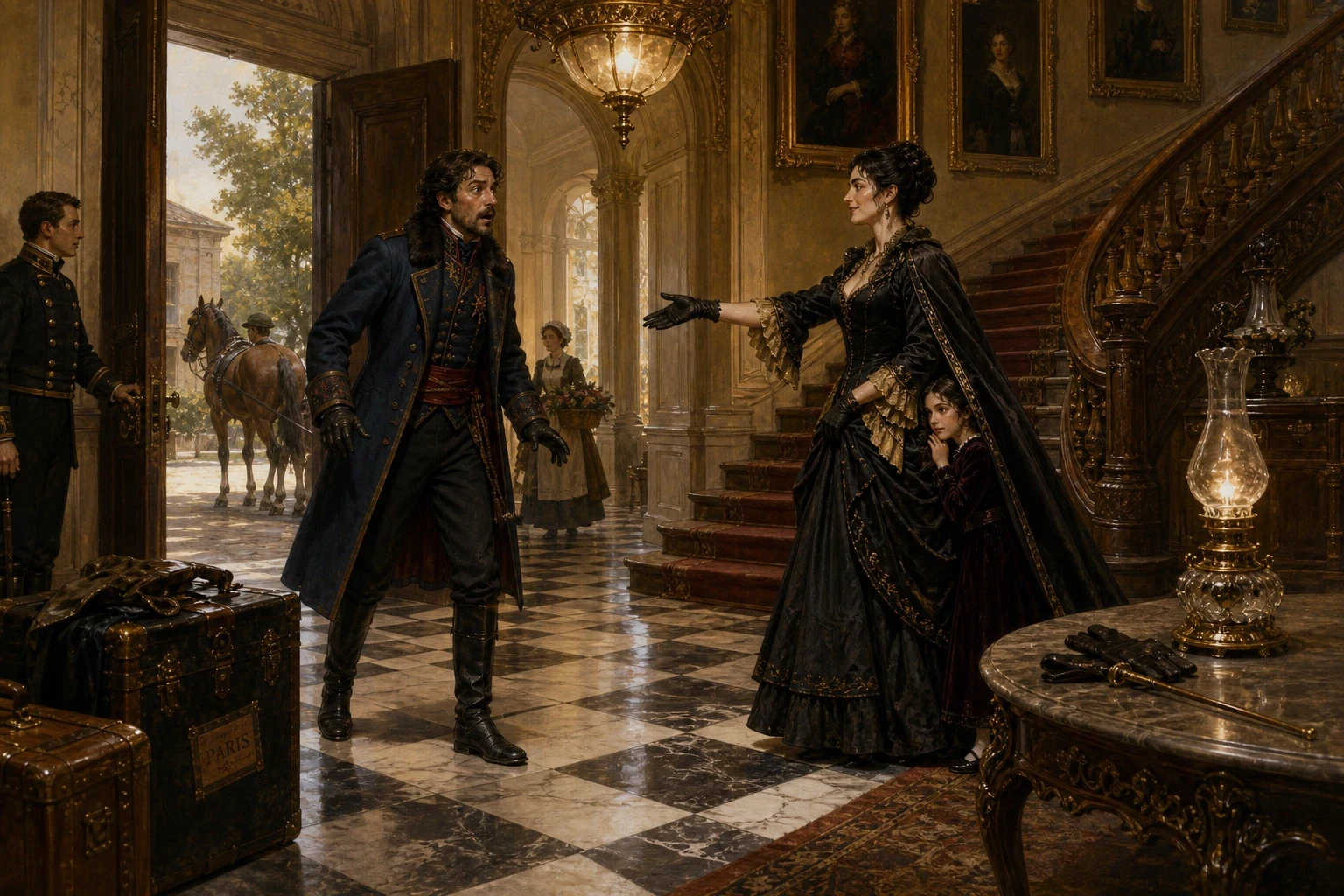
Lavretsky galloped home, his heart singing. He burst through the front door of his house, ready to share his impossible joy. But his voice died. A woman was rising from a chair in the grand entrance hall, beautiful and smiling. "Fyodor," she said, her voice like honey. "I have come home. Will you not forgive your poor, repentant Varvara?" It was his wife. Behind her, a small girl clutched her skirts. "You?" was all he could say, his voice a choked whisper. "But the papers said you were dead." She gave a little laugh, a musical, chilling sound. "A silly mistake, my dear. As you see, I am very much alive." He stared at her, unable to move, as his perfect, impossible dream turned to ashes.
Page 8
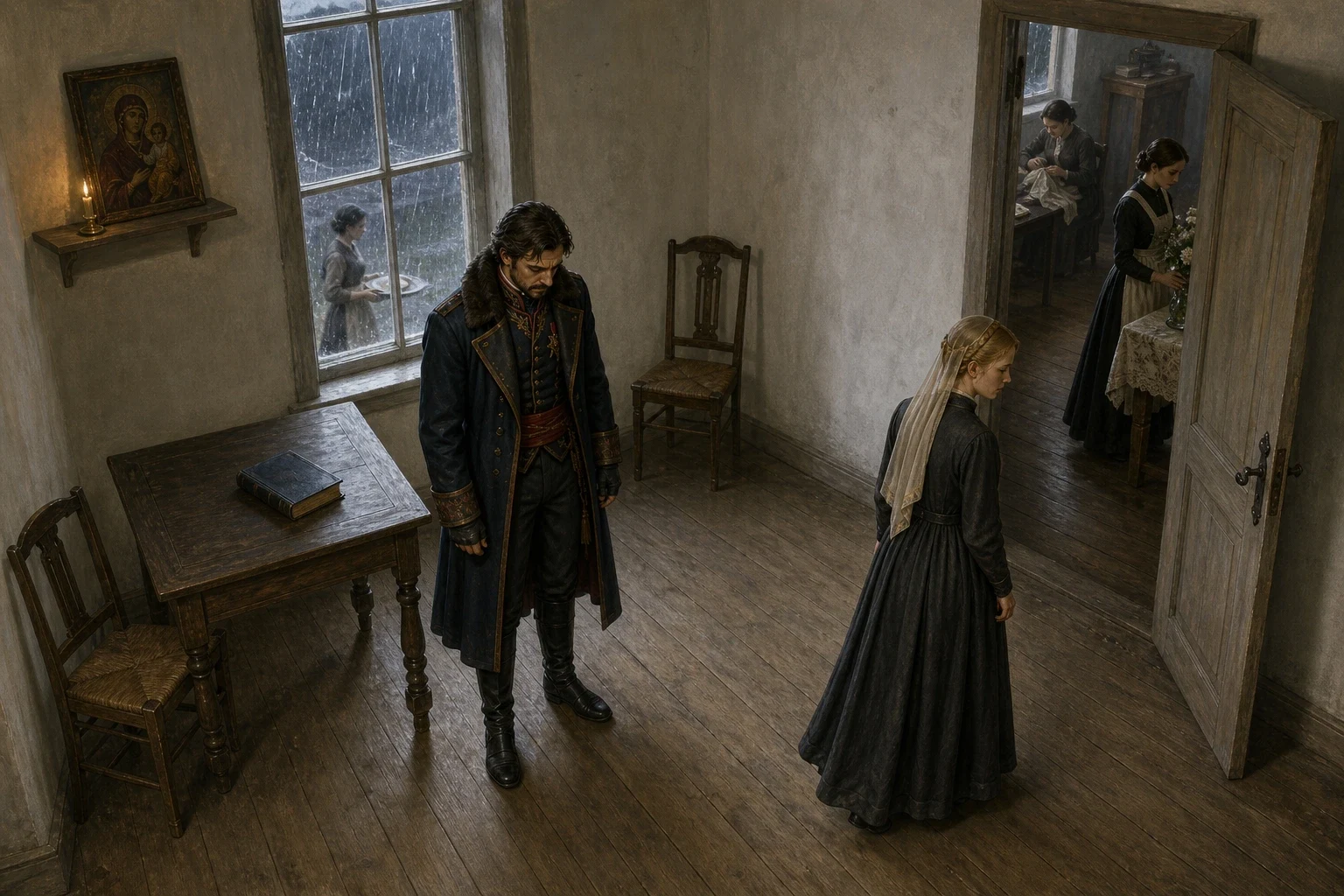
The next day, Lavretsky went to Liza. He found her in a small, plain sitting-room. He told her everything, his voice flat and empty. His wife was alive. Liza listened without crying, her face like stone. "We must forget each other," she said when he had finished, her voice a whisper. "We were wrong to think of our own happiness." "Liza, we can find a way!" he pleaded, taking a step toward her. She held up a hand, stopping him. "No," she said, her voice gaining a terrible firmness. "This is God's will. It is our punishment. Goodbye." She turned and walked from the room without looking back, leaving him utterly alone in the grey, rain-lashed silence. His one moment of hope was over.
Page 9
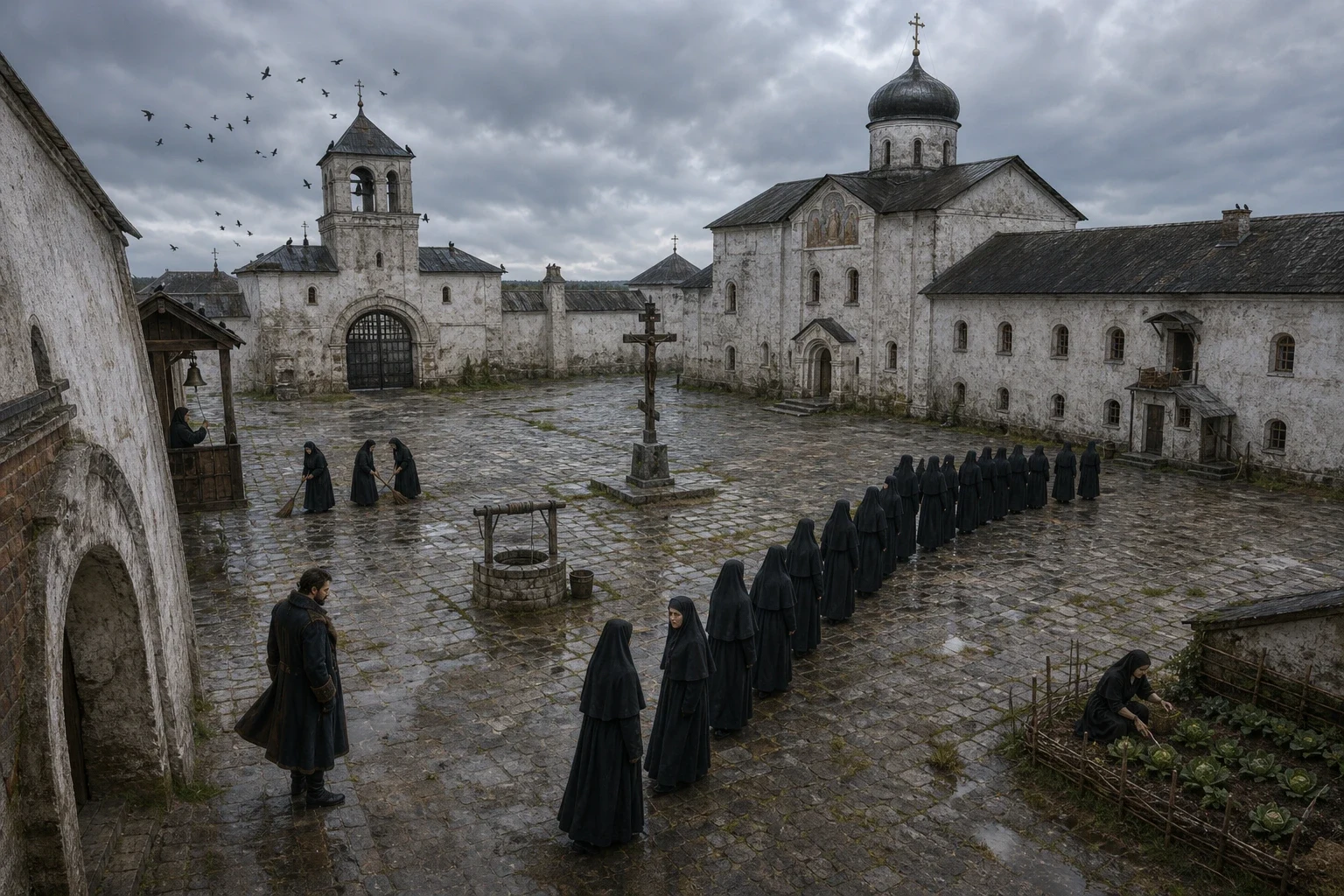
Time passed. Lavretsky learned Liza had entered a convent in a distant corner of Russia. Driven by a desperate need, he journeyed there. He stood in the courtyard and waited. Soon, a procession of nuns emerged, walking in a silent line. They moved like ghosts, their faces hidden. "Is she there?" he thought, his heart pounding. "Will I even know her?" As they passed close by, one of them raised her head slightly, as if she felt his gaze. It was Liza. Her face was thin and pale, but peaceful. Her eyes slid past him, unseeing, fixed on a world he could never enter. "Liza..." he whispered, but the sound was lost in the wind. Then she was gone, disappearing through a heavy oak door, leaving him alone in the vast, cold courtyard.
Page 10
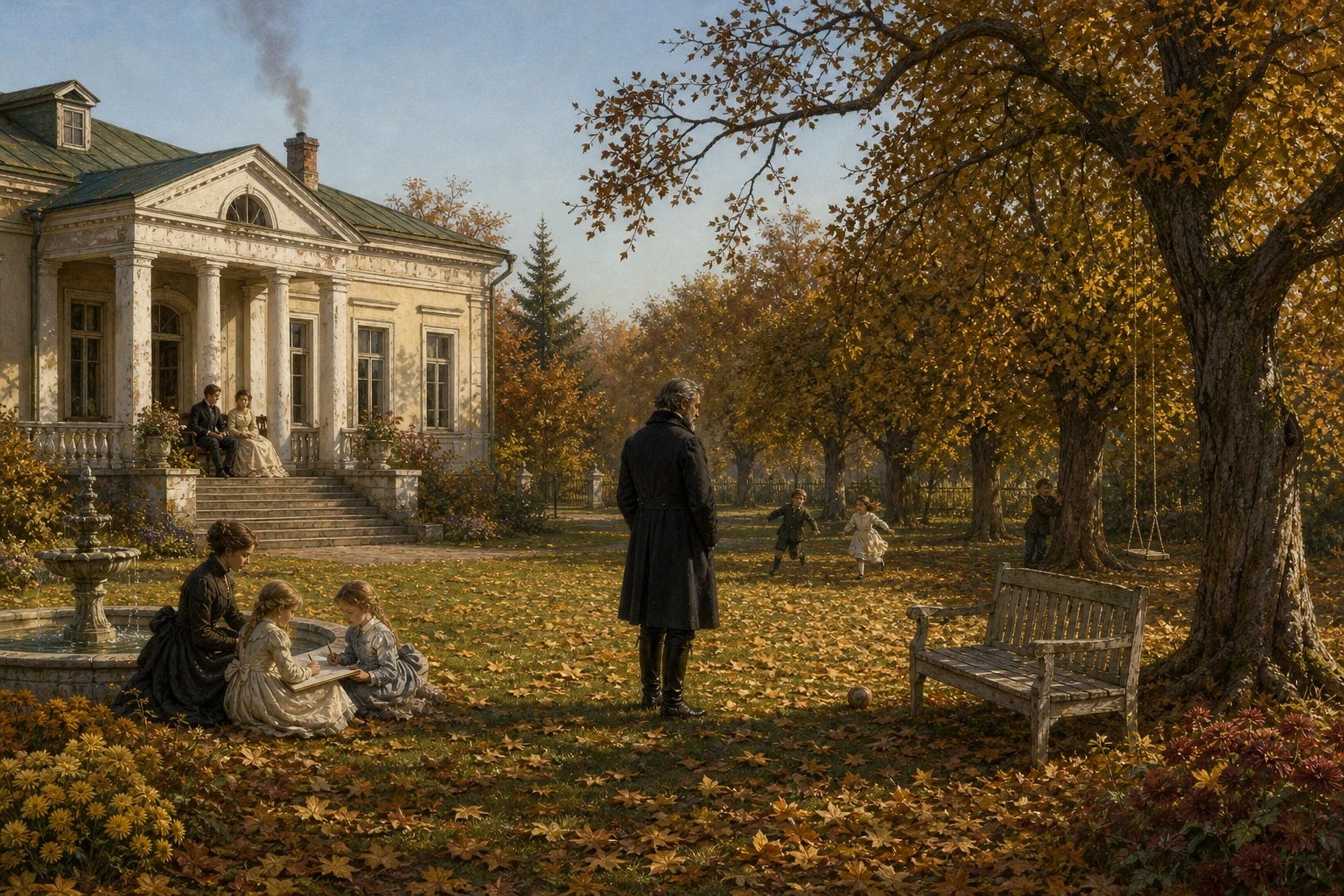
Eight years later, an aging Lavretsky visited the town of O---. He walked to the Kalitin house. The lively family was gone, scattered by time. A new generation, young and full of life, lived there now. He stood in the garden, a lonely ghost. The house, the lawn, the lime trees were all the same. He sat on the bench where he and Liza had dreamed of a future. "So this is the end," he thought, a sad peace settling over him. "Welcome, lonely old age." He thought of his fleeting joy, not with pain, but with a quiet, enduring sorrow. He had not found happiness, but he had lived his life. "Burn out, useless life," he murmured, looking at the young people who did not see him. Their time was now.
About this story
- Audience: general readers
Read Wonder Novels on your phone
Wonder Novels is available on Android. Get Wonder Novels on Google Play.