Anna Karenina
A married woman, a count, and a love that costs her everything
Page 1
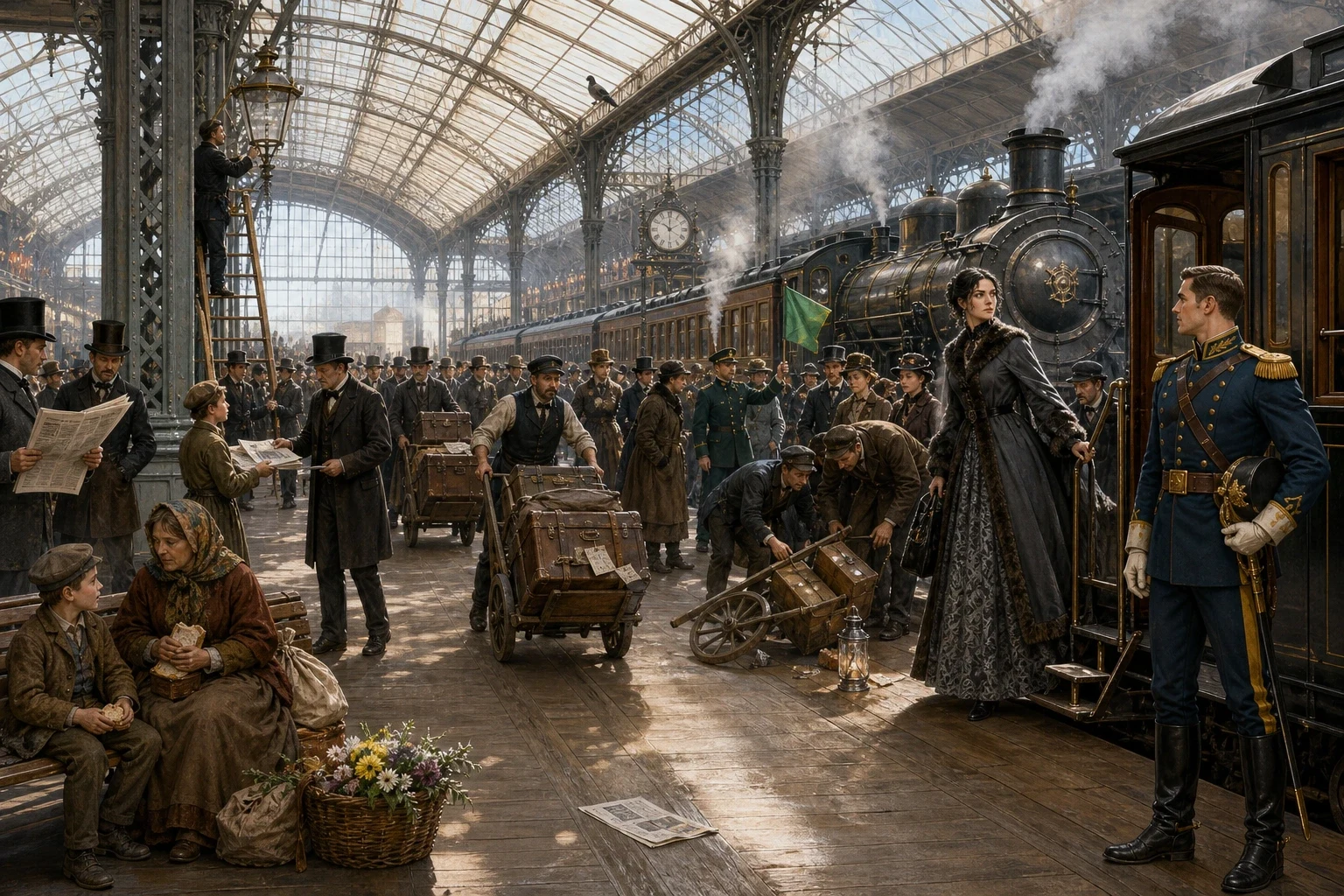
Anna Arkadyevna Karenina stepped down from the Petersburg train onto the platform at Moscow. She had come only to mend her brother Stiva's marriage, after his wife Dolly discovered he had been unfaithful. Anna was a married woman herself, elegant and quiet, with dark curling hair and grey eyes, and she did not expect this short visit to change anything in her life. On the same crowded platform, waiting to meet his mother's carriage, stood a young cavalry officer, Count Alexei Vronsky. Their eyes met only for a moment, but something passed between them that neither one could easily explain away afterward. Then a cry went up along the platform. A railway watchman, stepping back without looking, had been crushed under a shunting train. Anna went pale and asked what had happened. When she was told, she said quietly that it felt like a bad omen. Her brother Stiva came hurrying through the crowd a moment later, delighted to see her, and carried her off at once to his unhappy house.
Page 2
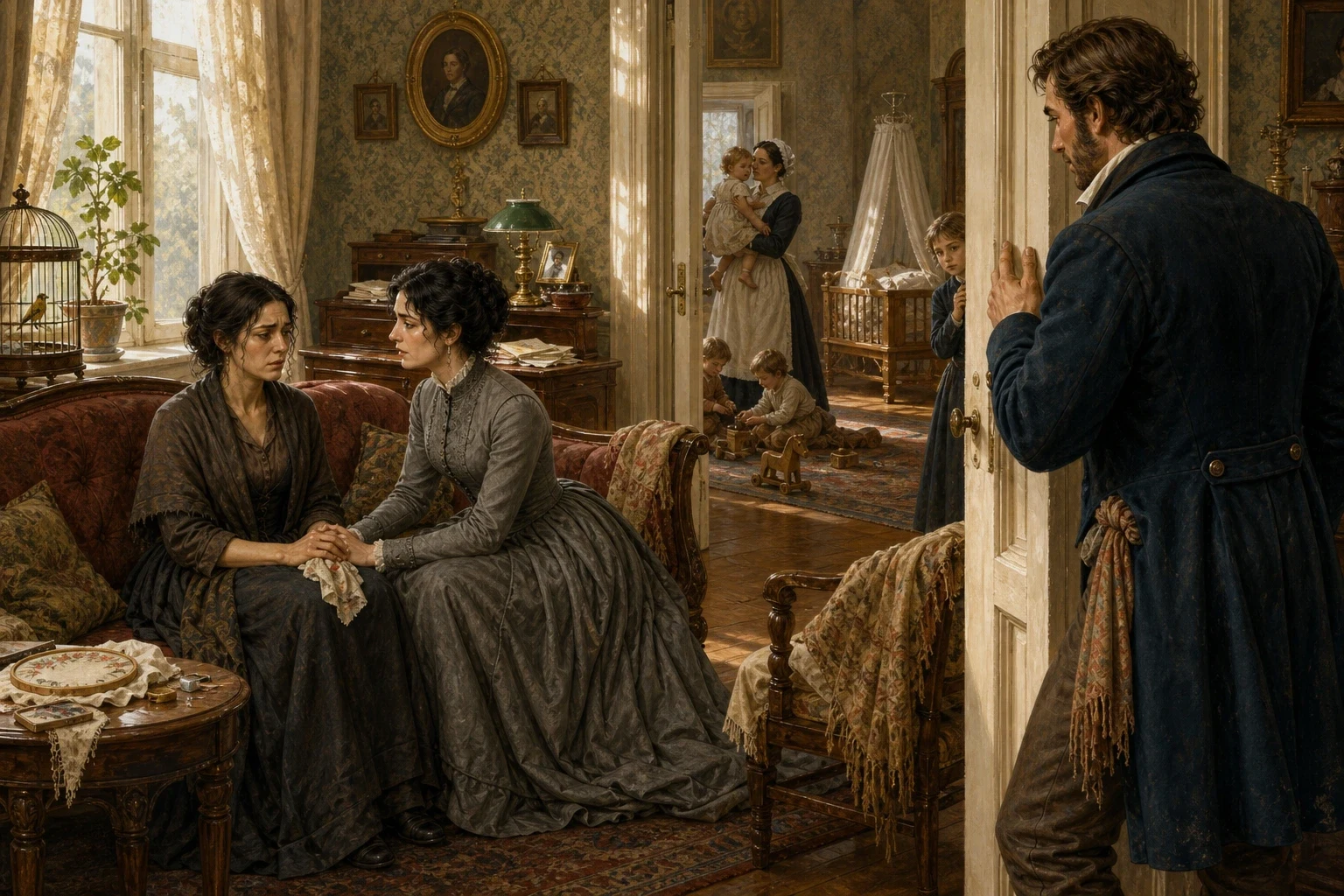
At her brother's house, Anna found Dolly shut away in the nursery, swollen-eyed from crying, surrounded by her children and her own misery. Stiva had been carrying on with their children's former governess, and Dolly could not forgive him, though she still loved him and did not know how to leave. Anna sat with her sister-in-law for a long while, not defending Stiva's behavior, only holding Dolly's hands and talking to her gently about the children, about forgiveness, about what a broken home would cost all of them. Slowly Dolly's anger softened into grief, and her grief, under Anna's steady kindness, softened further still. By the time Anna left the nursery, Dolly had agreed to stay, and to try again, for the sake of the household and the little ones asleep in the next room. Stiva, waiting anxiously outside the door, could hardly believe his sister had managed what he himself could not. He thanked her with real feeling, calling her his rescuing angel.
Page 3
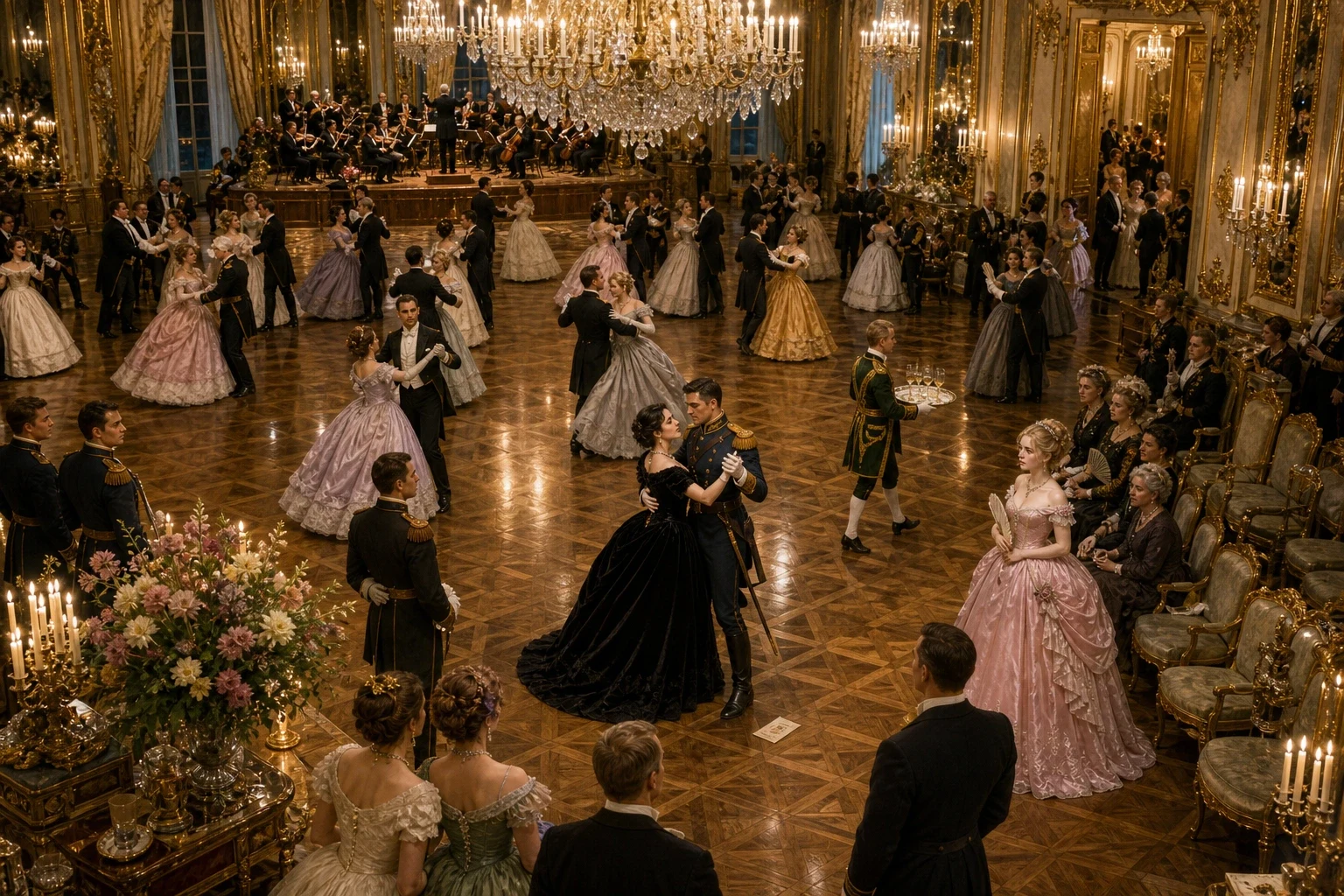
That evening Anna went to a grand ball in Moscow, where young Kitty Shcherbatskaya had been certain, for weeks, that Vronsky would propose to her. Kitty had dressed with great care, choosing a soft pink gown she thought would please him. Anna, by contrast, wore plain black velvet with nothing but a string of pearls, and the whole room noticed her the moment she walked in. When the dancing began, Vronsky crossed the floor not to Kitty but to Anna, and asked her to dance. He danced with her again and again as the evening went on, hardly leaving her side, while Kitty stood watching from the edge of the room, her hopes falling away in front of everyone she knew. By the time the ball ended, Kitty understood, with a kind of cold certainty, that she had lost him — and that Anna, without quite meaning to, had taken him.
Page 4
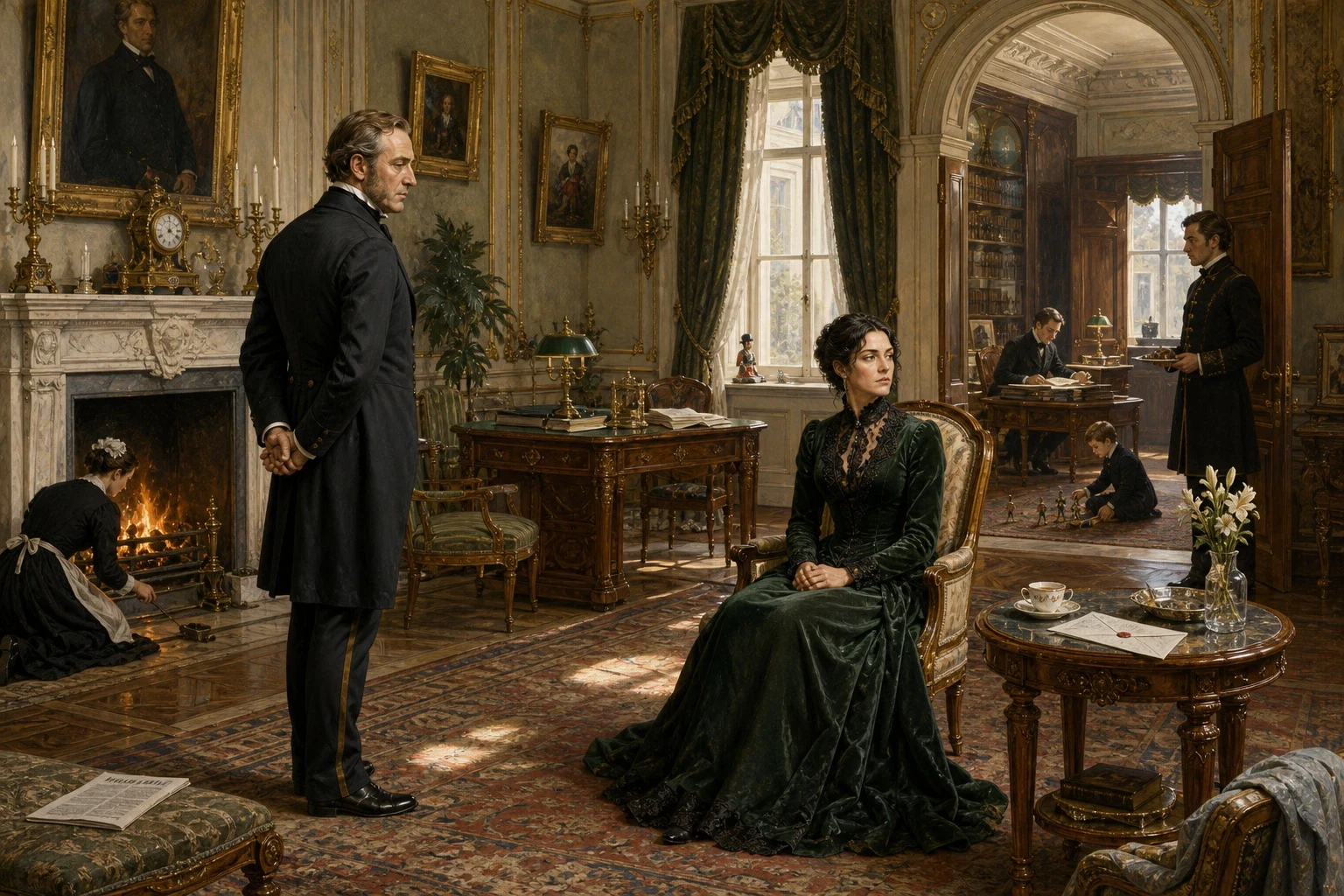
Back home in Petersburg, Anna lived as the correct and respected wife of Alexei Karenin, a senior government official admired for his calm, careful manner. But since the ball she had thought of little besides Vronsky, and when he followed her to Petersburg, she began meeting him in secret, writing to him, living for the moments she could see him. Karenin noticed a change in his wife — a restlessness, a brightness that had not been there before — though for a long time he preferred not to look at it too closely. One evening, in his quiet, measured way, he told her that people were beginning to talk, and that she must be more careful of appearances, for his sake and for the sake of their son. Anna agreed in a flat, distant voice, hardly looking at him, already far away in her thoughts, already further from him than he yet understood.
Page 5
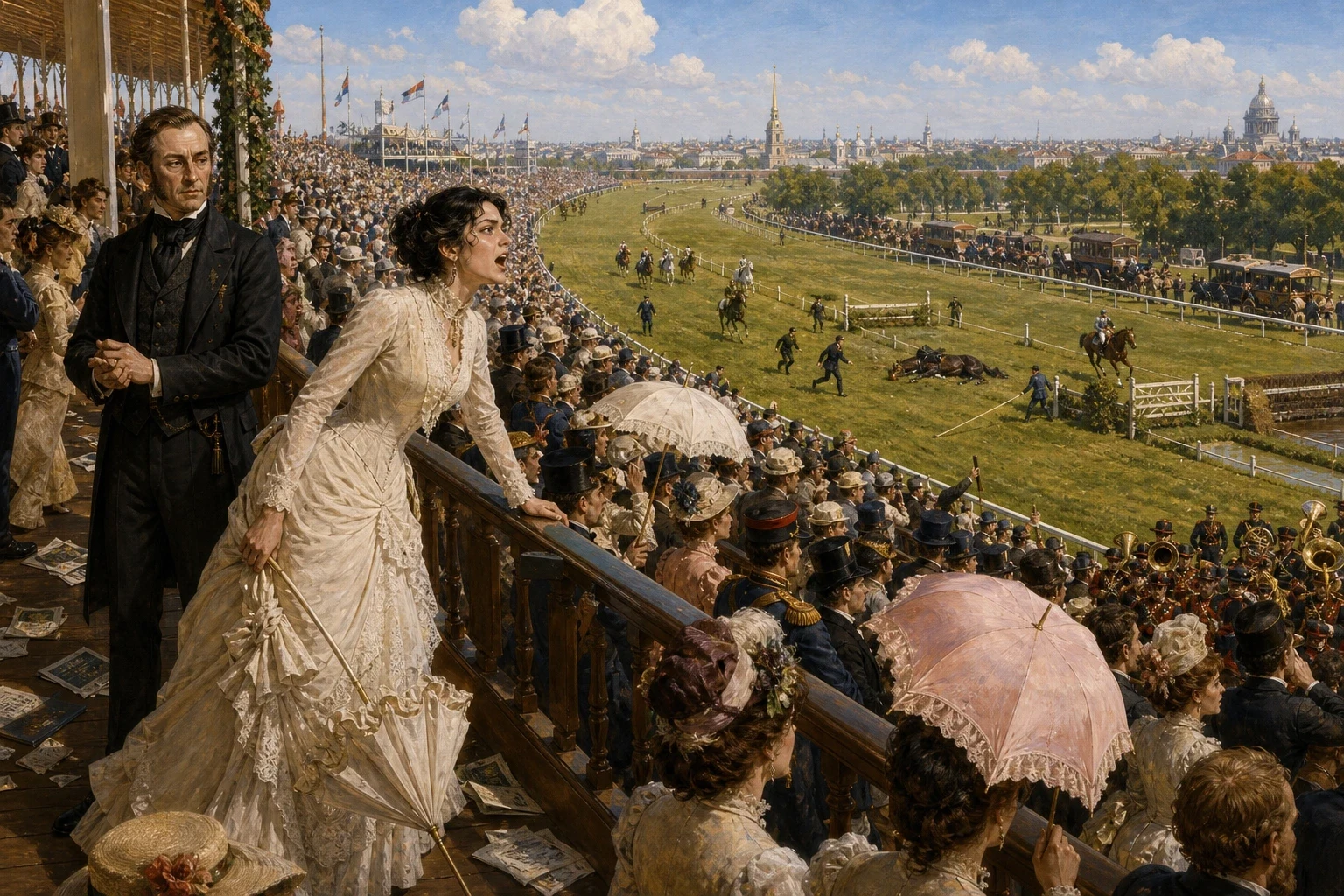
The whole of fashionable Petersburg turned out for the officers' steeplechase, Karenin and Anna among them in the grandstand, watching Vronsky ride his mare Frou-Frou over the jumps. Anna could not keep her eyes from him, and as the race went on her anxiety grew plainer with every fence he cleared. Near the last jump, Vronsky misjudged his landing and fell hard; his horse went down under him, badly hurt, and could not get up again. Anna cried out before she could stop herself, in full view of everyone around her, including her own husband. It was a short, ordinary cry of fear for an injured man, but the whole grandstand understood in an instant exactly what it meant, and so, at that same moment, did Karenin. He said nothing to her there in the crowd, but his quiet, controlled face told her that he finally knew everything the rest of Petersburg had only suspected.
Page 6
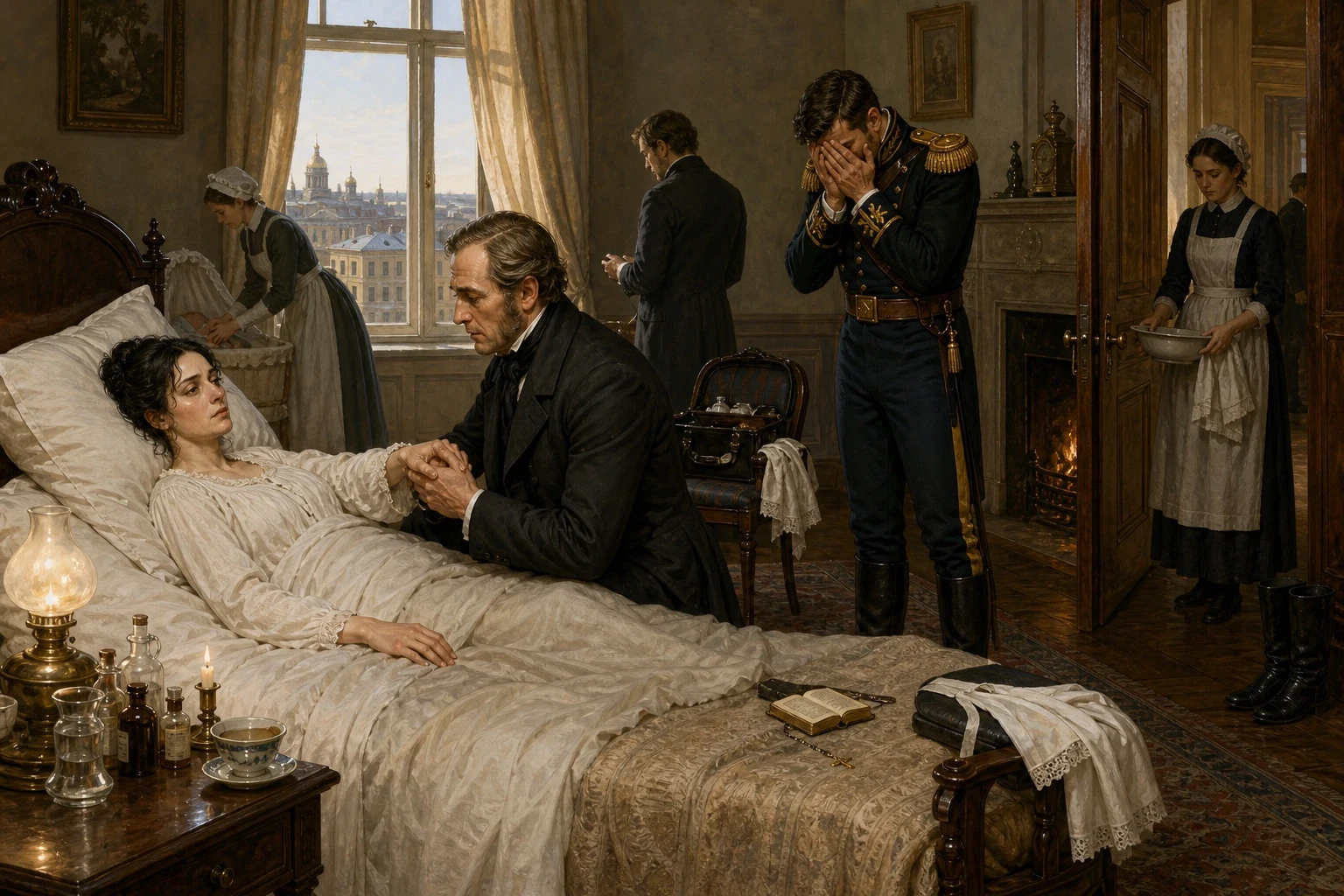
Anna's second child, a daughter by Vronsky, nearly cost her her life. After the birth she fell into a childbed fever so severe that everyone around her believed she was dying, Karenin included. Lying weak and burning in her bed, Anna begged her husband's forgiveness for everything she had done to him, certain she had only a little time left. Karenin, standing over her, found himself moved beyond anything he had expected of his own cold nature, and he forgave her completely, taking her hand in his. Vronsky, who had come to the house in anguish and was allowed into the room, stood watching Karenin's quiet mercy with his face hidden behind his hands, shaking, unable to look at either of them. It was the strangest, most painful moment any of the three would ever share — and against every expectation, Anna did not die of the fever after all. She began, very slowly, to recover.
Page 7
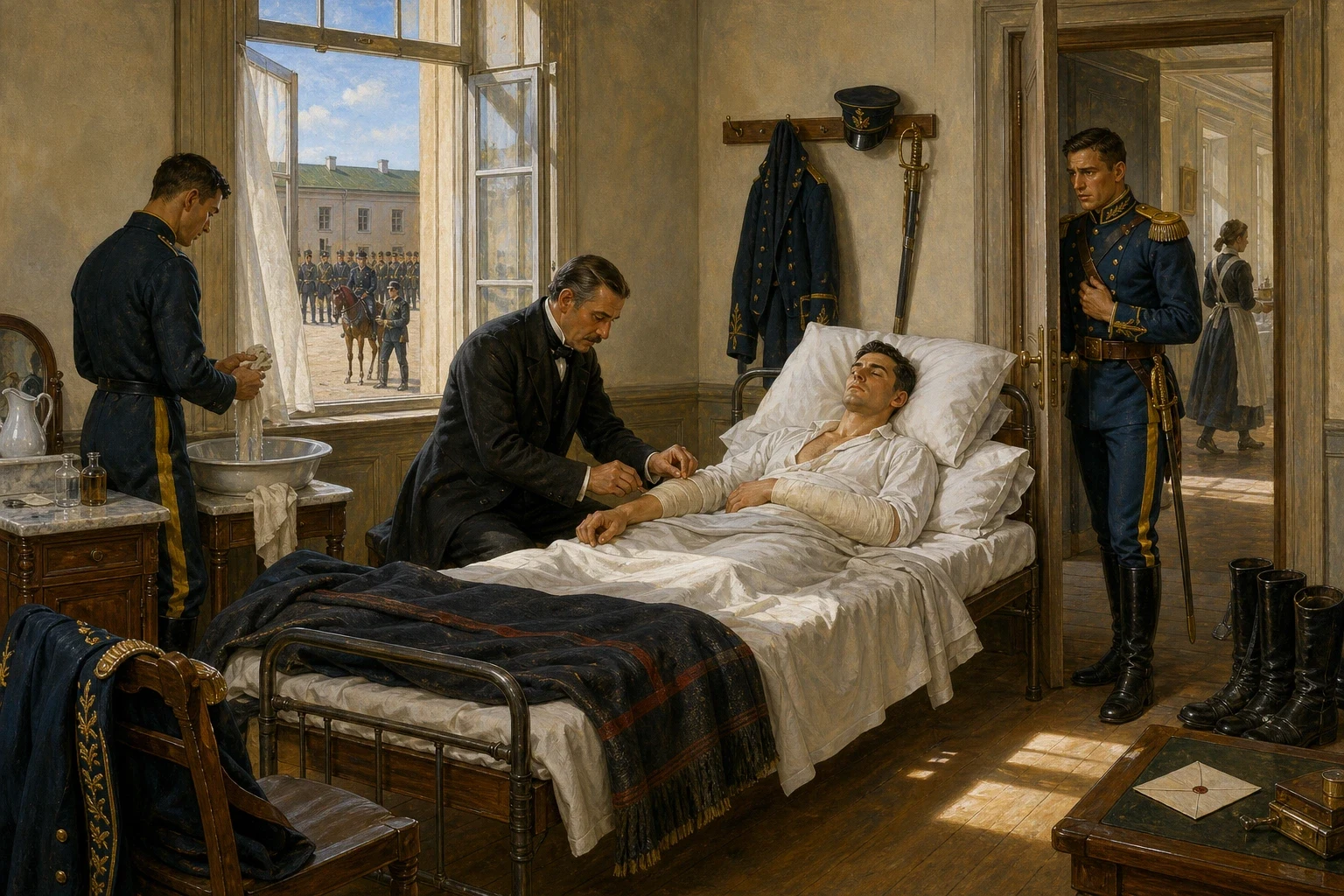
Vronsky left Anna's sickroom in a kind of despair he had never known before. Karenin's generosity had humiliated him more thoroughly than any anger could have, and he could see no honest way forward — not for himself, not for Anna, not for the little girl who was his daughter and would carry another man's name. Alone in his own rooms that night, overwhelmed by shame and hopelessness, he turned a pistol on himself and fired. The wound was serious, but it was not fatal; his fellow officers found him in time, and a doctor was sent for at once. He lived, though it took him many weeks to recover his strength, and longer still to recover any sense of what he meant to do with the ruin he had made of three lives. Anna, still weak herself, was told only that he had been badly hurt, and the news frightened her more than almost anything that had happened yet.
Page 8
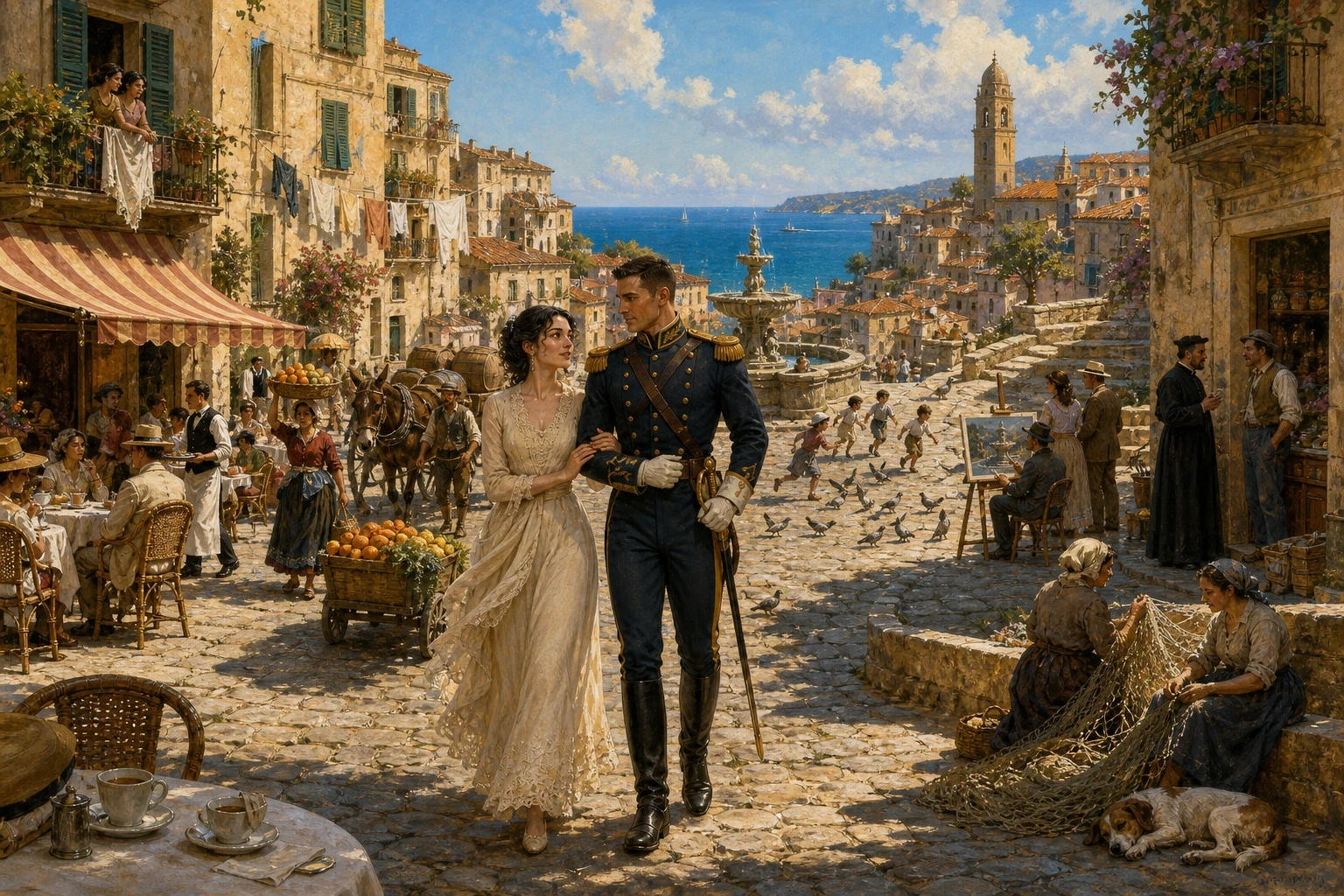
Once both had recovered, Anna and Vronsky left Russia together and settled for a time in Italy, far from the society that had turned against them. For a while they were happy in a way neither had quite managed before — walking the sunlit streets of an old Italian town, dining on balconies overlooking red-tiled roofs and the sea, free of Karenin's name and Petersburg's gossip. Anna, cut off from her son Seryozha and from every friend she had once had, poured all her feeling into Vronsky, who found, to his own surprise, that he sometimes wished for more of his old regimental life than she alone could give him. Still, for those months in Italy, the trouble between them stayed quiet, almost hidden, and they moved through the bright streets together like any other happy couple abroad, with no one watching them, no one judging them, and nothing yet to fear.
Page 9
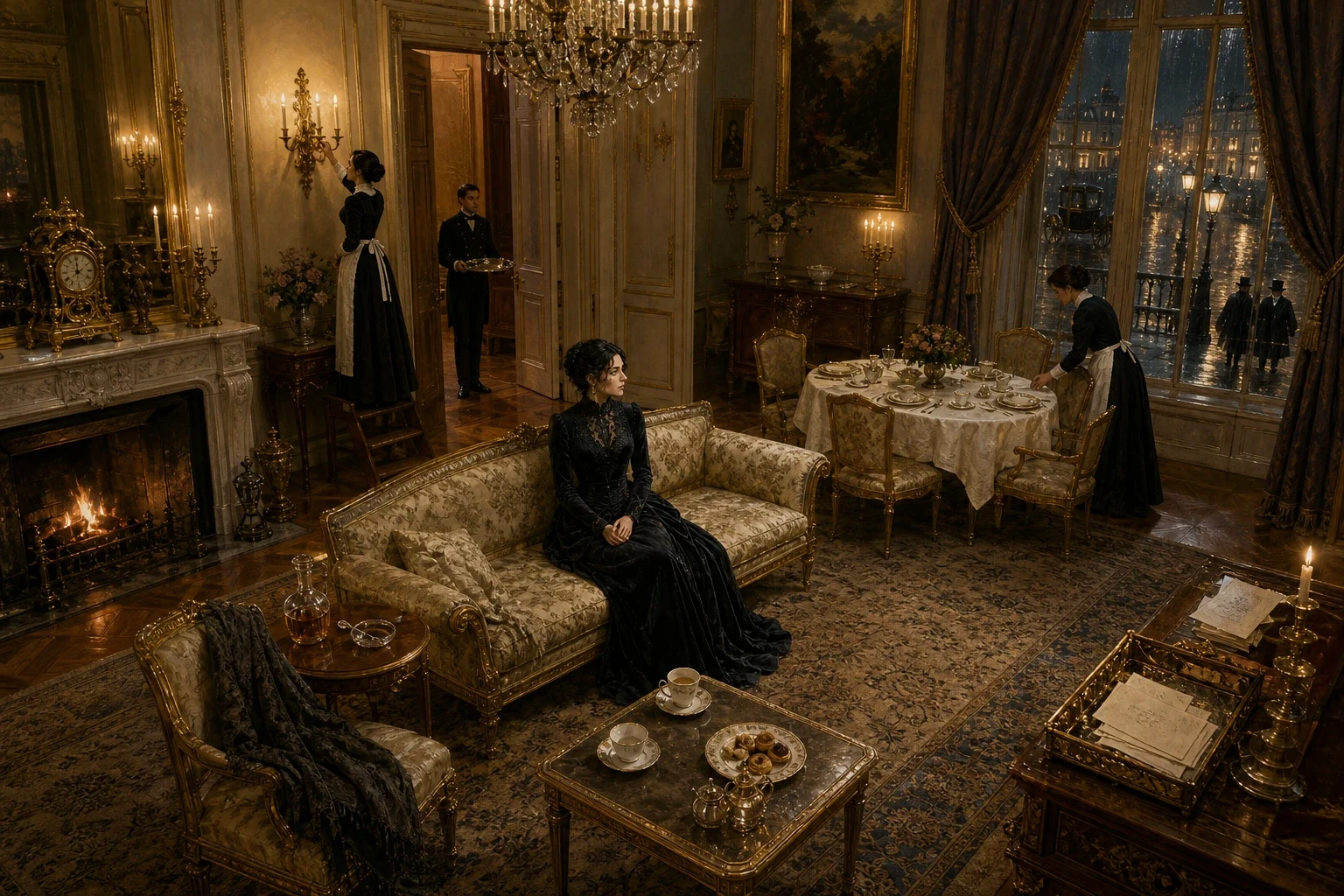
When Anna and Vronsky returned to Russia, she found that society had closed its doors to her completely. Married women who had once called on her now sent their regrets, or did not answer at all, while Vronsky, as a man, moved through the same world almost untouched by the scandal that had ruined her. Left alone for long hours while he kept his old friendships and his regiment, Anna grew increasingly jealous and afraid that his feelings for her were cooling, even as she depended on him for everything she had left. She began taking morphine most nights, just to sleep through the fear and the endless turning of her own thoughts. Sitting now in a fine drawing room no one came to visit, dressed for an evening with nowhere to go, Anna understood, more clearly than she ever had, how completely she had cut herself off from the only life she used to know.
Page 10
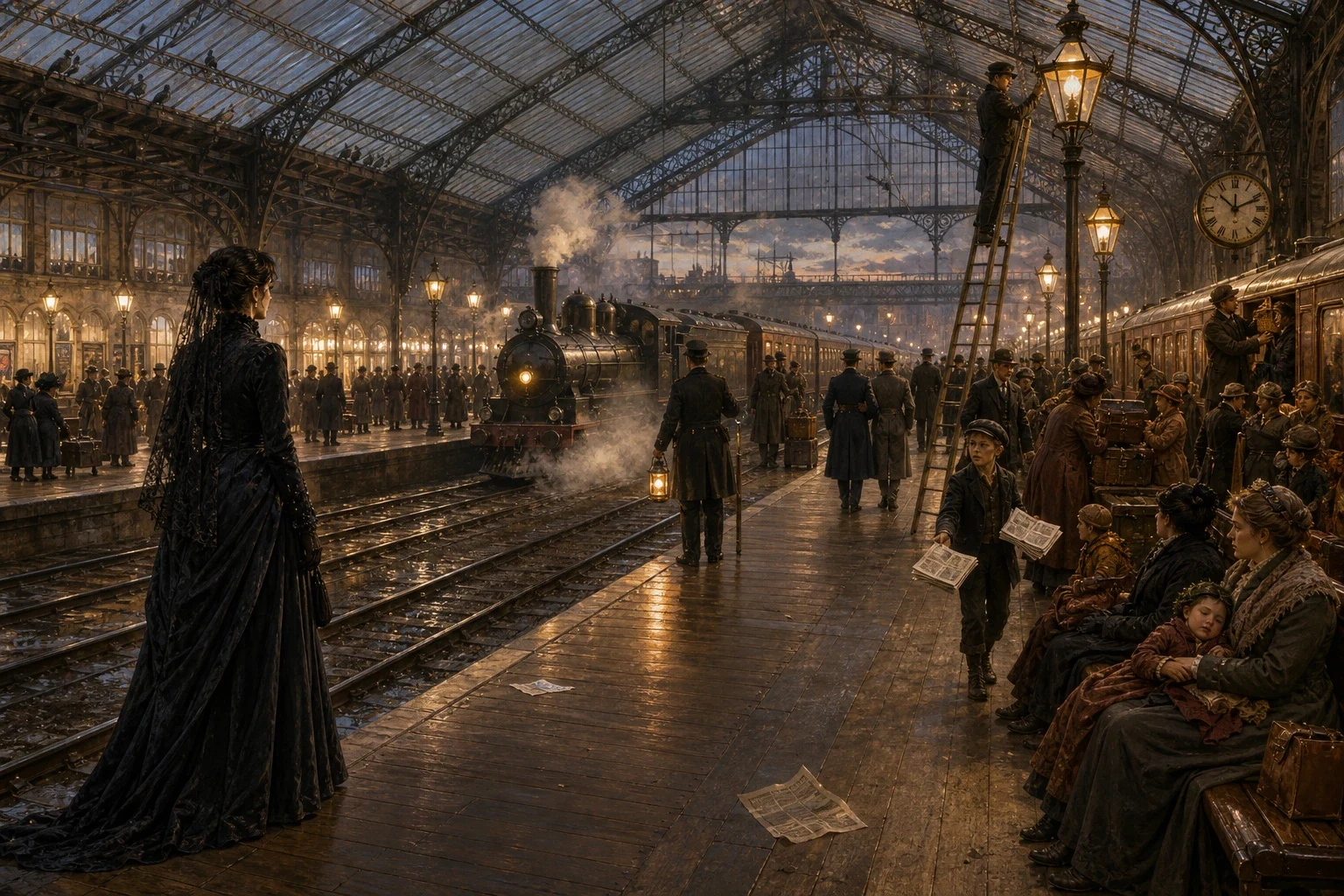
On a grey afternoon, convinced that Vronsky no longer loved her and that there was no way back to the life she had given up for him, Anna went alone to the railway station, not fully certain, even then, what she meant to do. She stood for a while at the edge of the platform as a train came in, thinking of nothing clearly, remembering without wanting to the man crushed beneath a train's wheels on the very day she had first arrived in Moscow and first seen Vronsky. The thought came to her, almost gently, that there was a way to end all her fear and confusion at once. As the train drew close, Anna stepped down onto the tracks. It was over in a moment. The crowded, ordinary evening at the station closed back over the empty place where she had stood, as though nothing at all had happened there.
About this story
- Audience: general readers
Read Wonder Novels on your phone
Wonder Novels is available on Android. Get Wonder Novels on Google Play.