Around the World in Eighty Days
A gentleman's wager, a servant's loyalty, and a race across every ocean and continent on Earth
Page 1
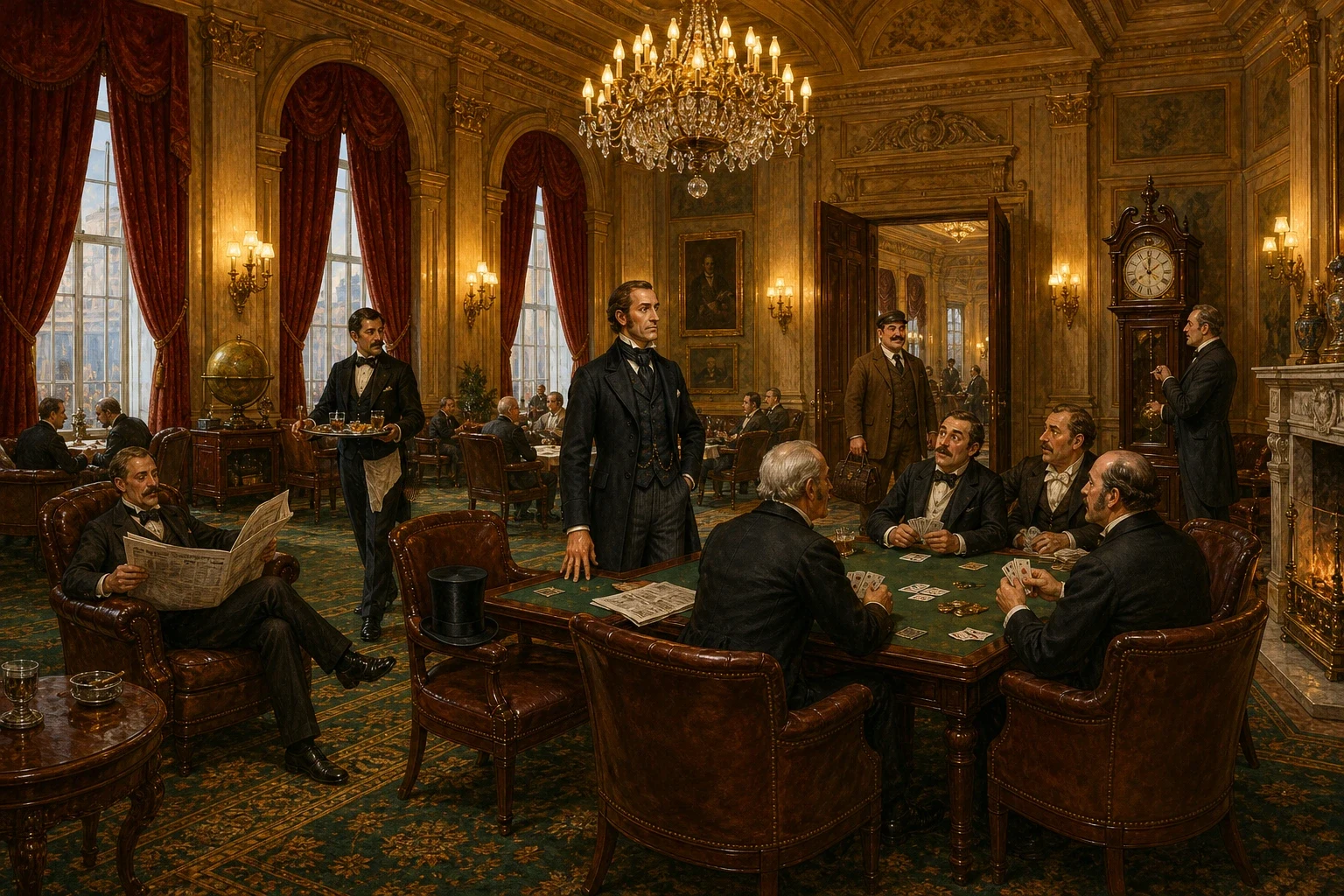
In London, in a tall grey house on Savile Row, lived a gentleman named Phileas Fogg, a man so exact that he seemed to go by clockwork. Nobody knew where his money came from, only that he had a great deal of it, and that every day was exactly like the one before. On the very day his new manservant Passepartout came to work for him, Fogg walked to his club, the Reform Club, as he always did, and sat down to whist with his friends. The talk turned to a newspaper story about a new railway in India, and one member declared that a man could now travel clear around the world in eighty days. Fogg disagreed — he said it could be done in exactly eighty days — and before anyone quite knew how, he had wagered twenty thousand pounds on it. He went home, told Passepartout to pack a single carpet-bag, and that very night they boarded a train for Dover. The race around the world had begun.
Page 2
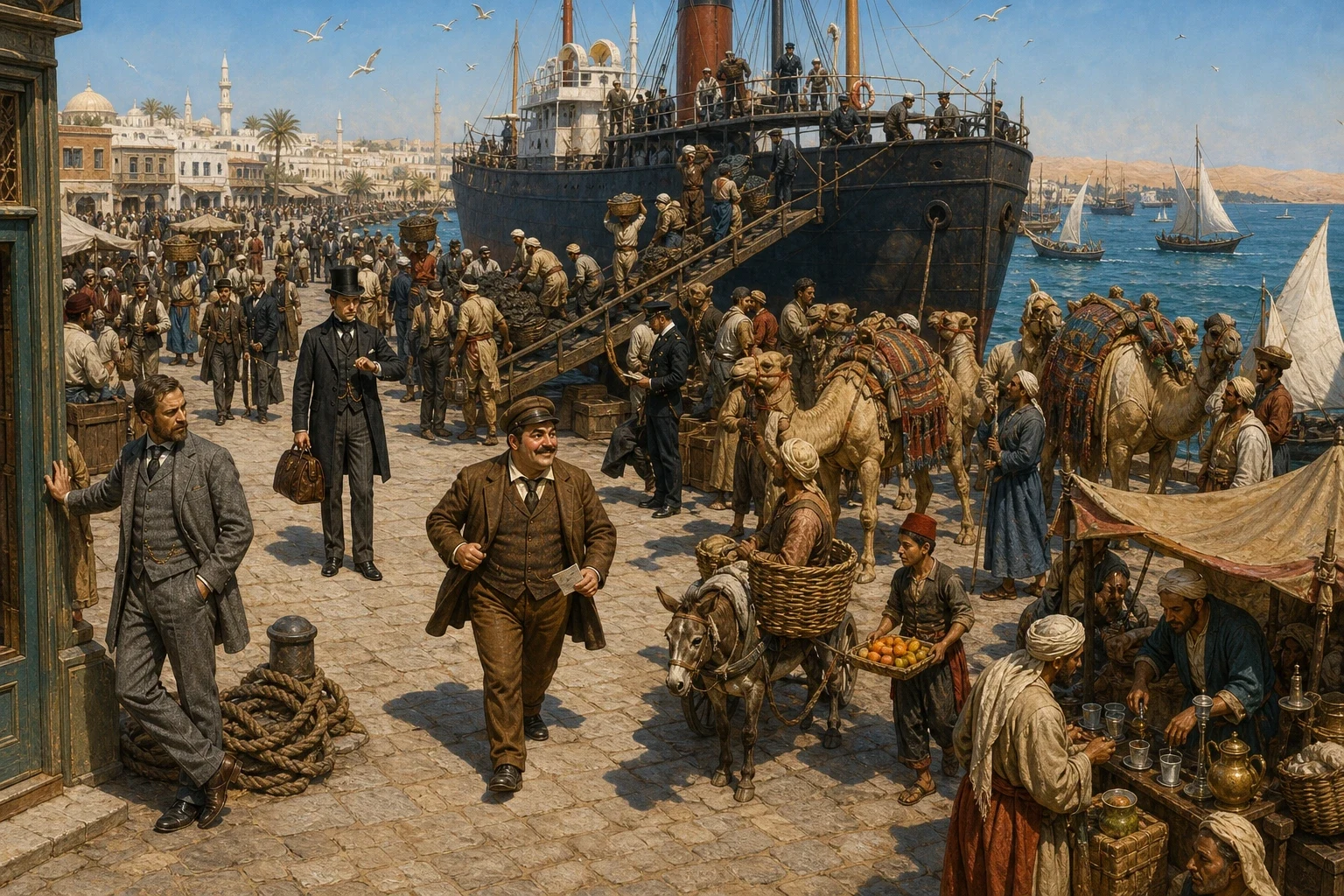
Eight days later, the steamer Mongolia put in at Suez, in Egypt, to take on coal before crossing to India. While Passepartout went ashore to get Fogg's passport stamped, a sharp-eyed English detective named Fix watched him go. Fix had read the description of a bank robber wanted in London — a quiet, precise gentleman who had vanished with fifty-five thousand pounds — and he was certain Phileas Fogg matched it exactly. The reward for catching the thief was enormous, and Fix saw no reason to wait for a warrant when the robber seemed about to sail off to India of his own accord. He introduced himself to Passepartout as a fellow traveler, asked careful questions, and sent an urgent telegram to London asking for the papers to be wired on ahead to Bombay. Then he quietly bought a ticket on the very same steamer, determined not to let Phileas Fogg out of his sight again until the warrant arrived.
Page 3

The railway through India was not finished, so Fogg hired an elephant named Kiouni to cross the broken stretch. Riding through thick forest near the village of Pillaji, they came upon a strange, sad procession: a young woman named Aouda was being led, drugged and only half-aware, to be placed on her dead husband's funeral pyre and burned beside him, as old custom in that region demanded, though she herself did not wish it. Fogg could not bear to pass by and do nothing. That night, while priests kept watch around the pyre, Passepartout — small and quick from his circus days — slipped in close, covered himself in white cloth, and rose up slowly beside the body in the darkness as though the dead rajah himself were waking. The priests, terrified, scattered and fled into the trees. In the confusion, Fogg and Passepartout snatched up Aouda and carried her safely away into the forest, saving her life with only minutes to spare.
Page 4
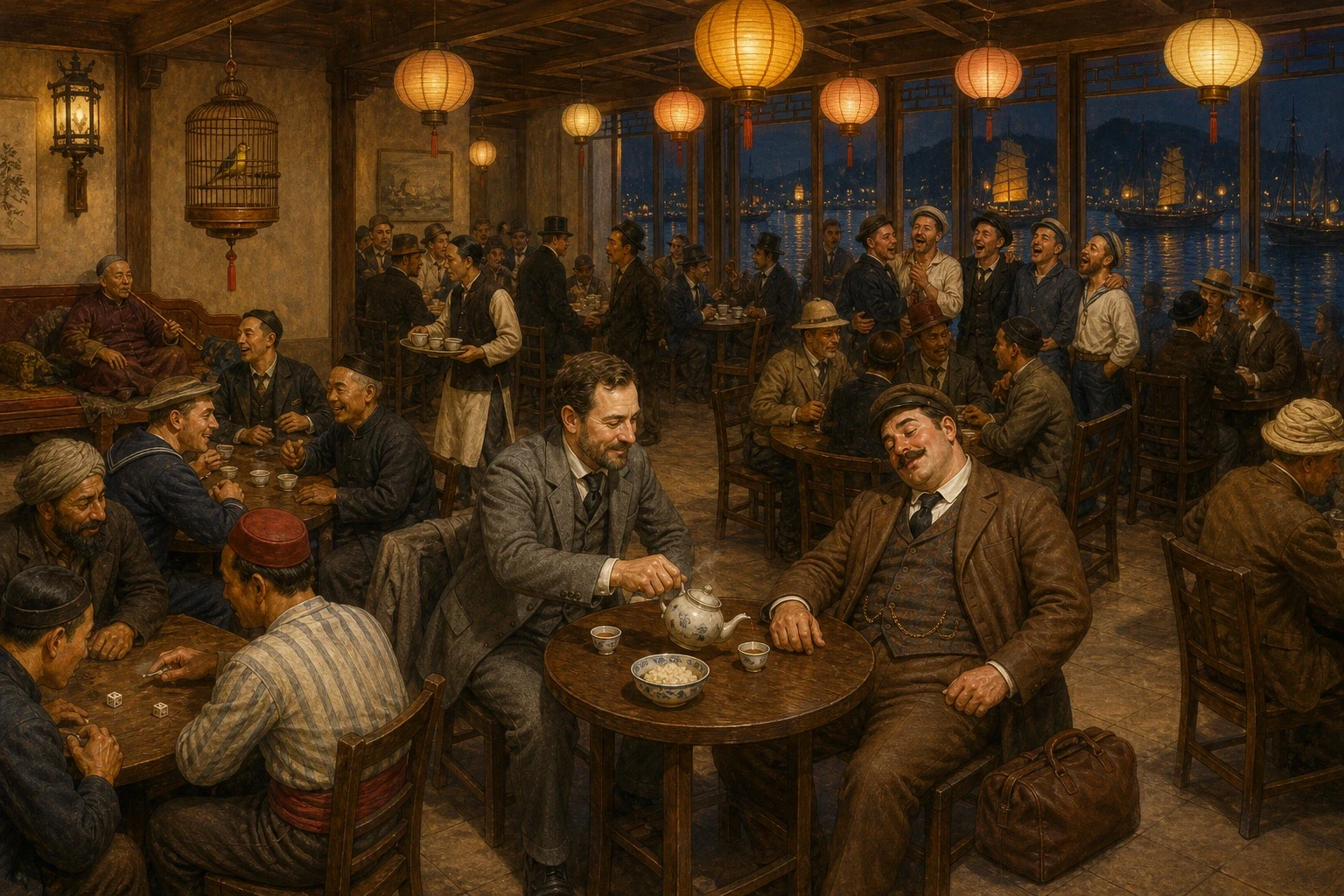
In Hong Kong, Fogg learned that Aouda's relative had moved away, so he resolved to take her on to England himself, and booked passage on a steamer called the Carnatic. Fix, still waiting for his warrant, could not let Fogg slip away to England, where a detective would have no power to arrest him — and he could not reveal Fogg's secret to the ship's captain without giving himself away. So that evening, while Fogg was busy elsewhere, Fix found Passepartout in a lively waterfront house and poured him a drink, chatting warmly and pretending great friendship. He did not tell Passepartout that the ship had been moved up to sail that very night. The drink was far stronger than Passepartout realized, and before long his head grew heavy and his thoughts grew slow and strange, until at last he slipped sideways in his chair, fast asleep, with the Carnatic's whistle already sounding far off across the harbor.
Page 5
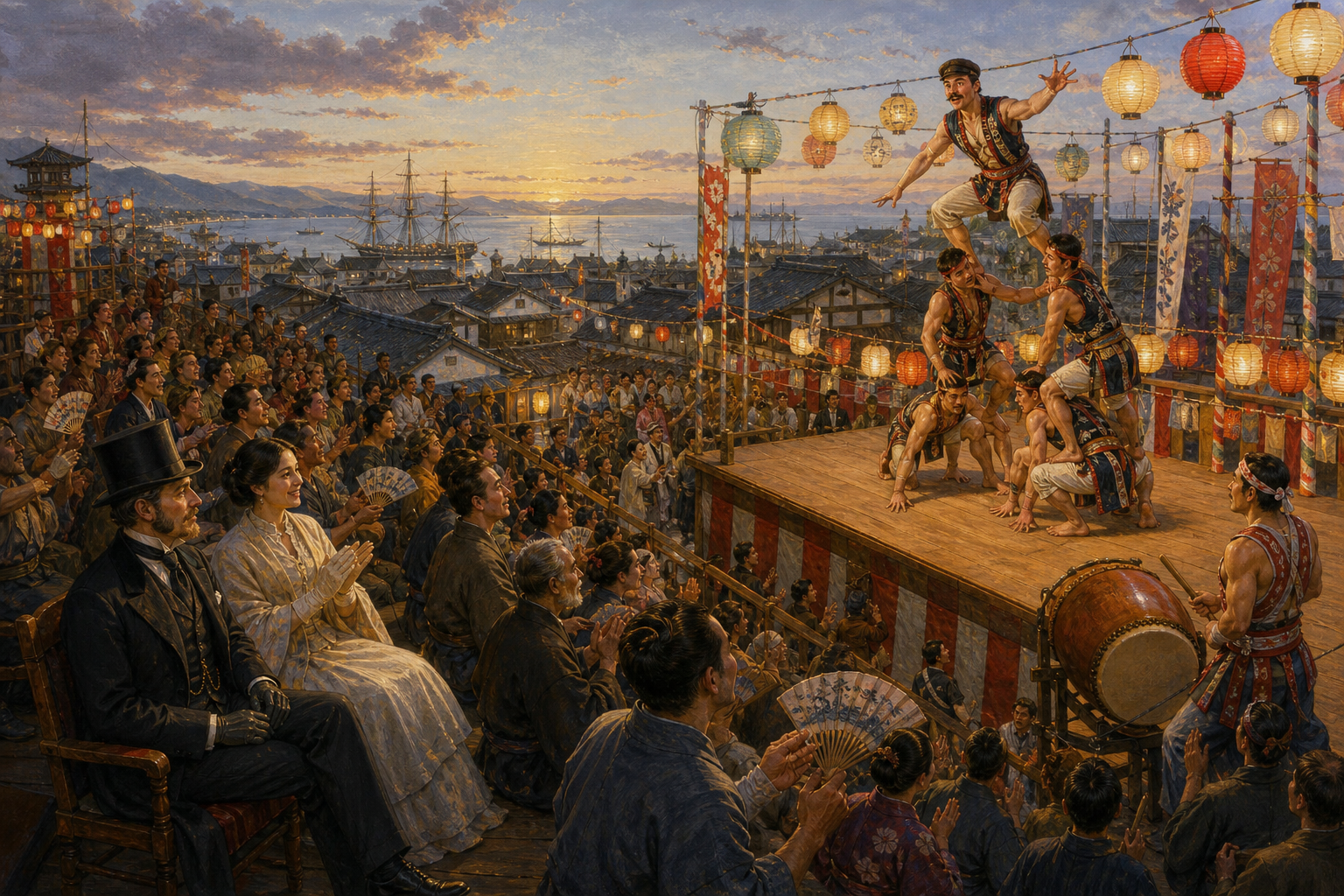
Fogg sailed on without Passepartout, unable to wait, but left word for him at the British consulate in Yokohama, Japan, hoping he would somehow follow. Passepartout did follow — penniless and hungry, he worked his way across on a cargo ship and arrived in Yokohama with nothing to his name. Wandering the streets, he came upon a traveling Japanese troupe of acrobats putting up posters for their show, and since tumbling and balancing had been his trade long before he became a valet, he talked his way into a job with them that very afternoon, just to earn his supper. That evening, performing in their human pyramid before a packed and cheering crowd, he suddenly spotted two familiar faces in the audience: Phileas Fogg, sitting as calm and upright as ever, and Aouda beside him. Passepartout very nearly brought the whole pyramid down with astonishment and joy, but caught himself just in time and finished the trick before rushing to greet them.
Page 6
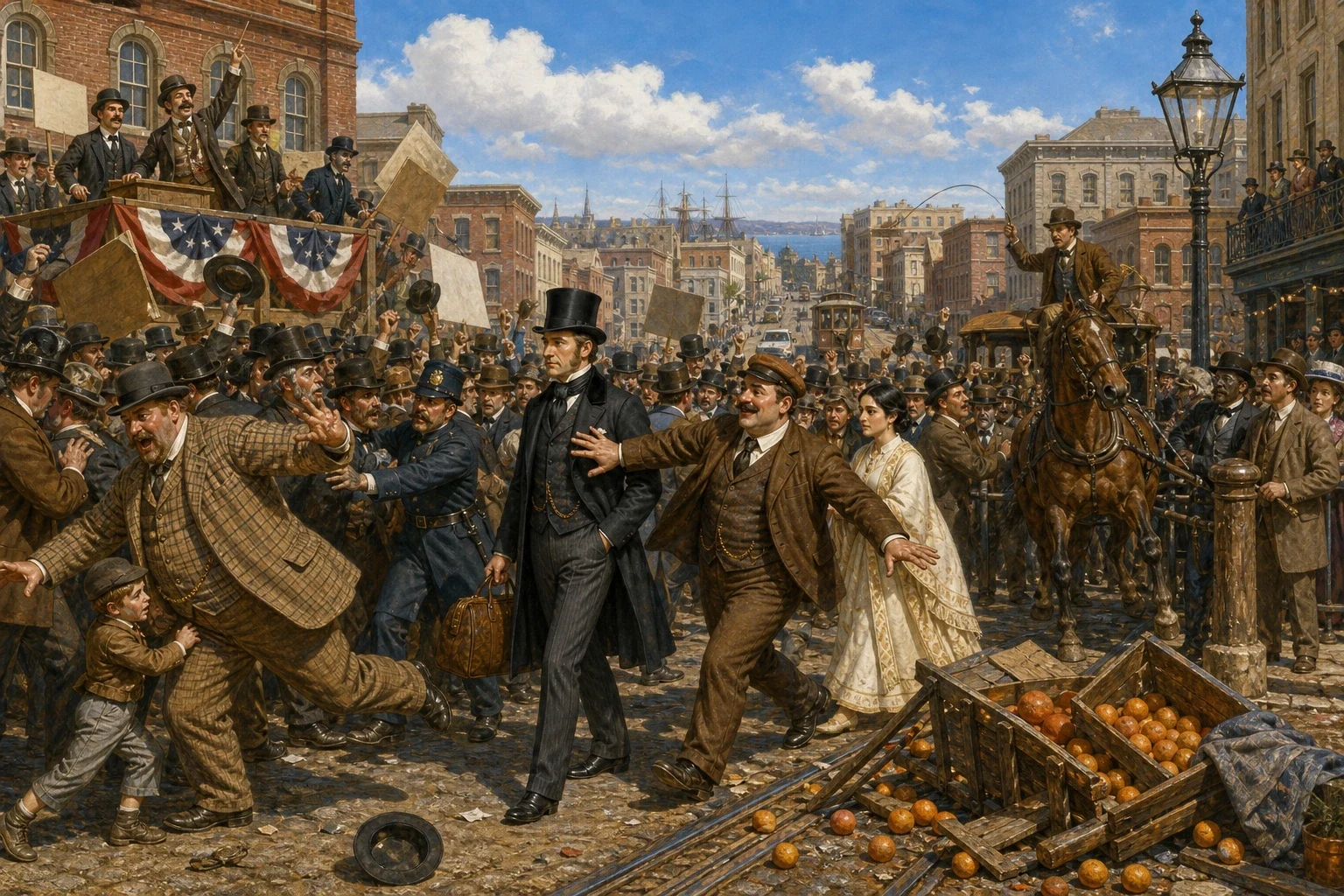
The steamer General Grant carried them across the Pacific to San Francisco, in America, where they landed to find the whole city in an uproar: two rival candidates were holding a rowdy open-air meeting that same morning, and the crowd around them had turned into a shoving, shouting mass just as Fogg, Passepartout and Aouda tried to cross the square. Caught in the crush, Fogg found himself face to face with a loud, quarrelsome man named Colonel Stamp Proctor, who shoved him roughly and spoke to him with great rudeness in front of everyone. Fogg, as calm as ever, simply noted the man's name for later and pressed on, guiding Aouda safely through the crowd with Passepartout clearing a path ahead of them. There was no time to settle the insult properly — the transcontinental train for New York left within the hour, and missing it would cost them the whole bet. They reached the station with only minutes to spare.
Page 7
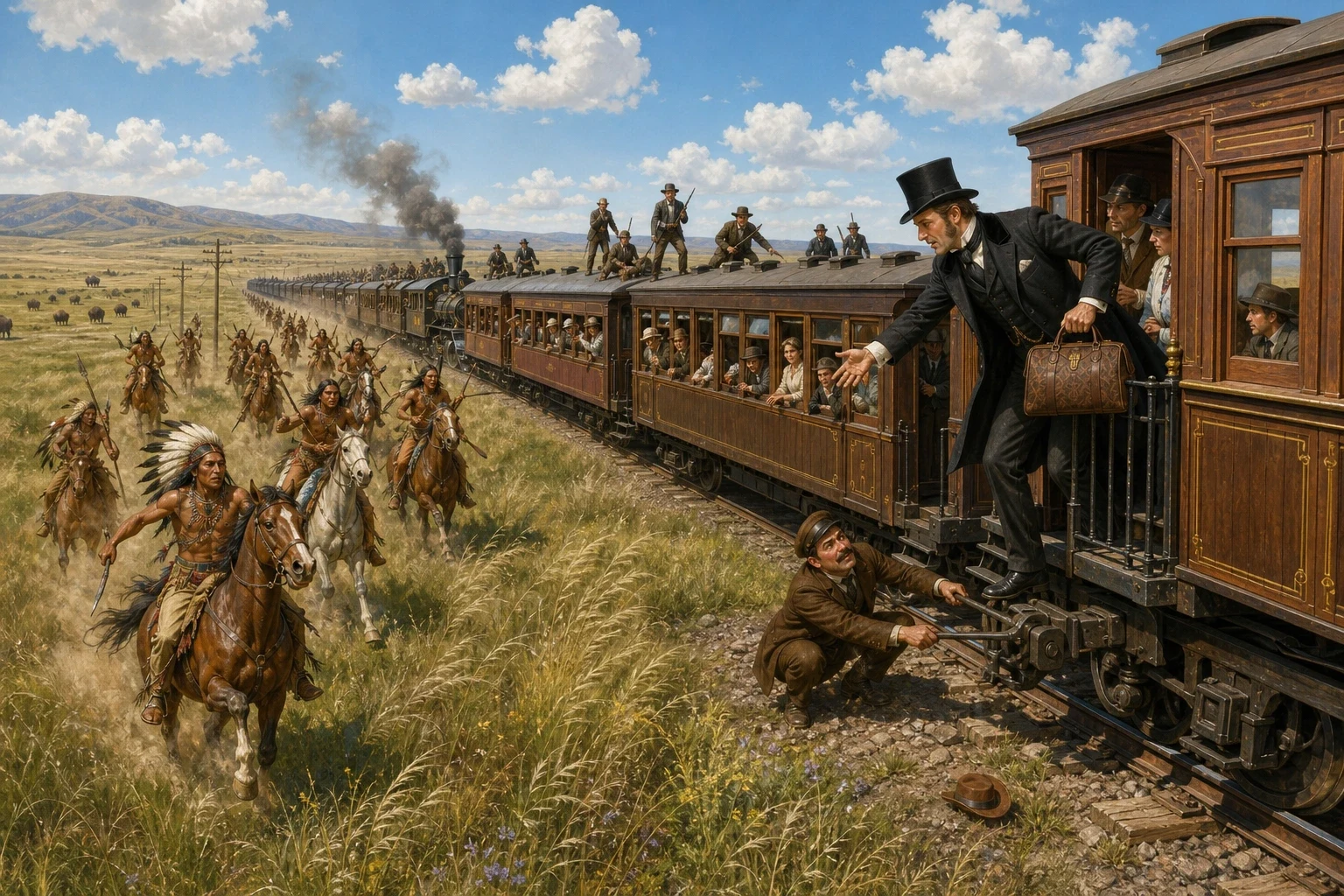
Crossing the wide American plains by train, Fogg's party found themselves suddenly under attack: a band of Sioux warriors swept alongside the moving train on horseback and swarmed aboard the cars, trying to stop and plunder it. Passengers fought back as best they could, and Passepartout, scrambling along outside the carriages with his old acrobat's nerve, managed to crawl beneath the train and uncouple the engine from the rest of the cars, so that the locomotive raced on to safety and brought help from the nearest fort — but in the struggle, Passepartout himself was seized and carried off by the retreating warriors. Fogg would not leave him behind. Though every minute lost might cost him the bet and his fortune, he asked for volunteer soldiers from the fort, mounted up, and rode out across the plains himself to bring his servant back, returning by evening with Passepartout safe, shaken but unharmed.
Page 8
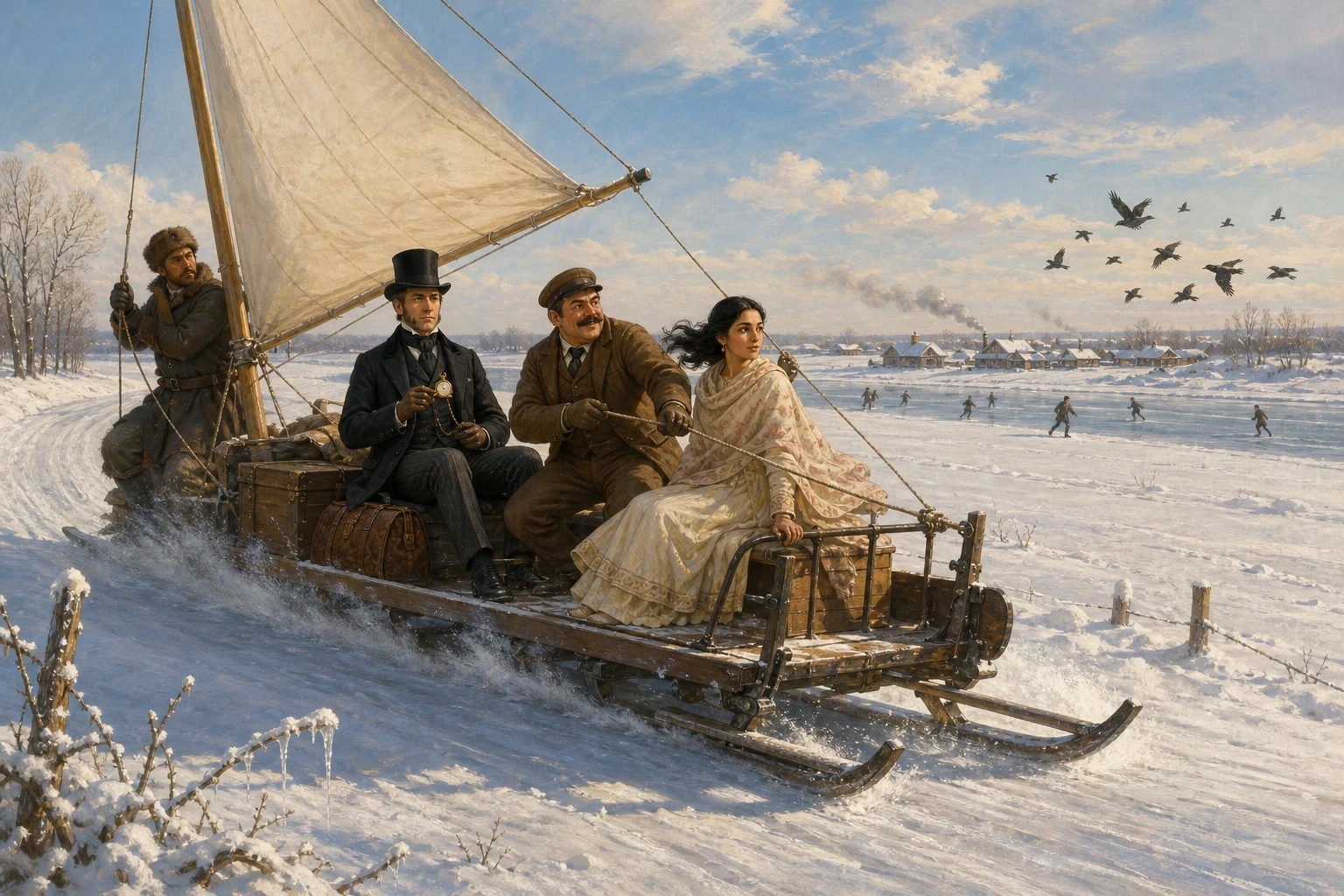
The rescue had cost them their connection, and the next train east was still a day away — a delay that might ruin everything. But a resourceful local offered them a strange solution: a sledge mounted on iron runners and fitted with a great sail, built to skim across the frozen snow at tremendous speed, driven only by the wind. Fogg, Passepartout and Aouda climbed aboard, wrapped against the bitter cold, and the sail filled and the sledge shot forward across the frozen plain faster than any train, skimming over snowdrifts and frozen streams for mile after mile under a vast white winter sky. By racing this way, and then catching a fast train further on, they clawed back the hours they had lost saving Passepartout, and reached the Atlantic coast still inside the eighty days — though only just, with no margin left to spare for anything that might go wrong next.
Page 9
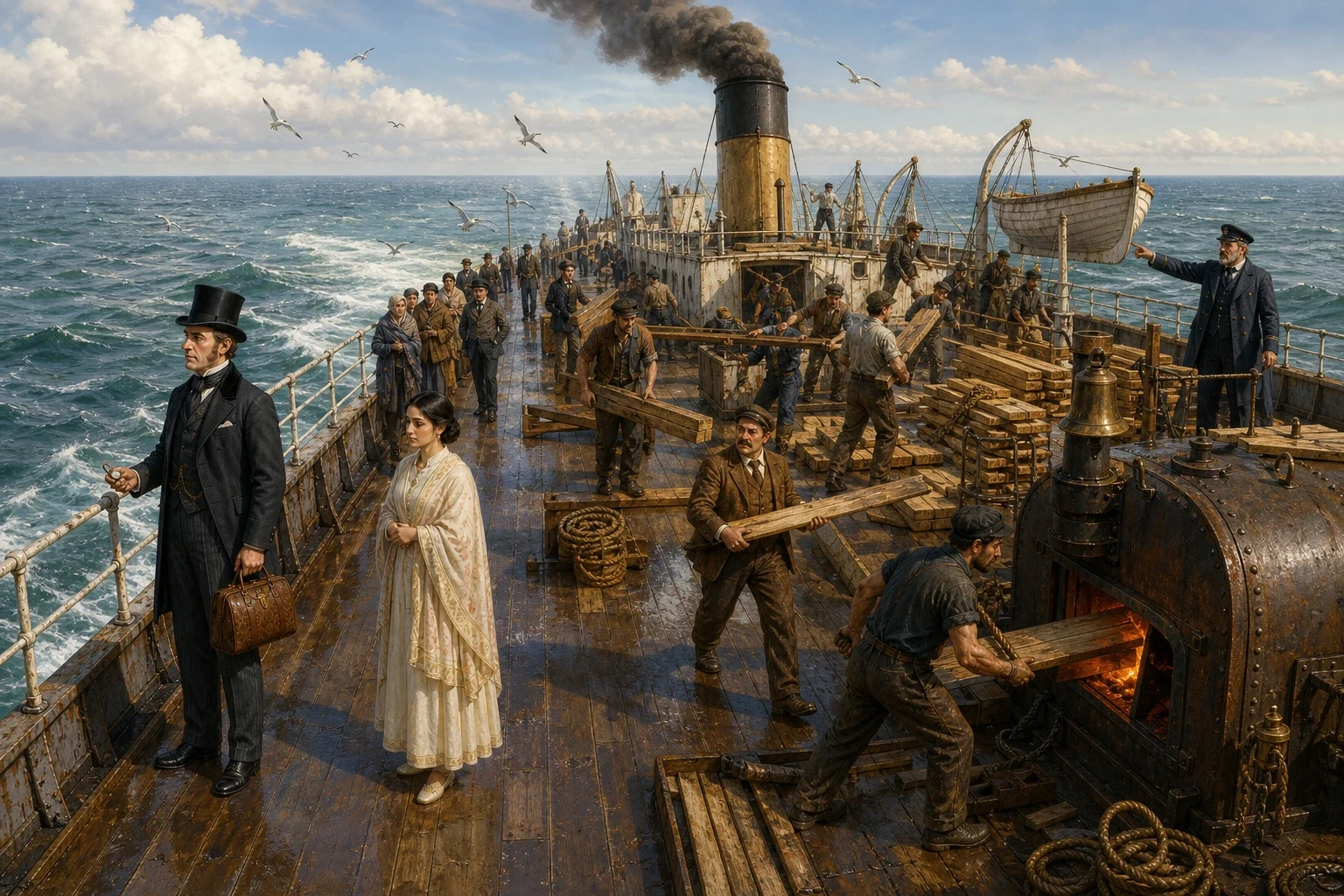
In New York, Fogg found he had missed the regular steamer to England by mere minutes. Rather than give up, he found a smaller ship called the Henrietta bound only partway across, and when her captain refused to change course for England, Fogg simply bought the whole ship from him outright for a great sum of money. Partway across the Atlantic, the coal ran desperately short, and it seemed they might drift to a halt far from land. So Fogg ordered the crew to burn everything aboard that could be spared — the wooden masts, the deck cabins, every spare plank and rail — to keep the engine turning. Passepartout worked alongside the crew, feeding the fire hour after hour, while Aouda watched the ship slowly stripped bare around her, and Fogg stood quietly at the rail, watching the grey ocean ahead, counting the days that remained before the bet would be lost forever.
Page 10
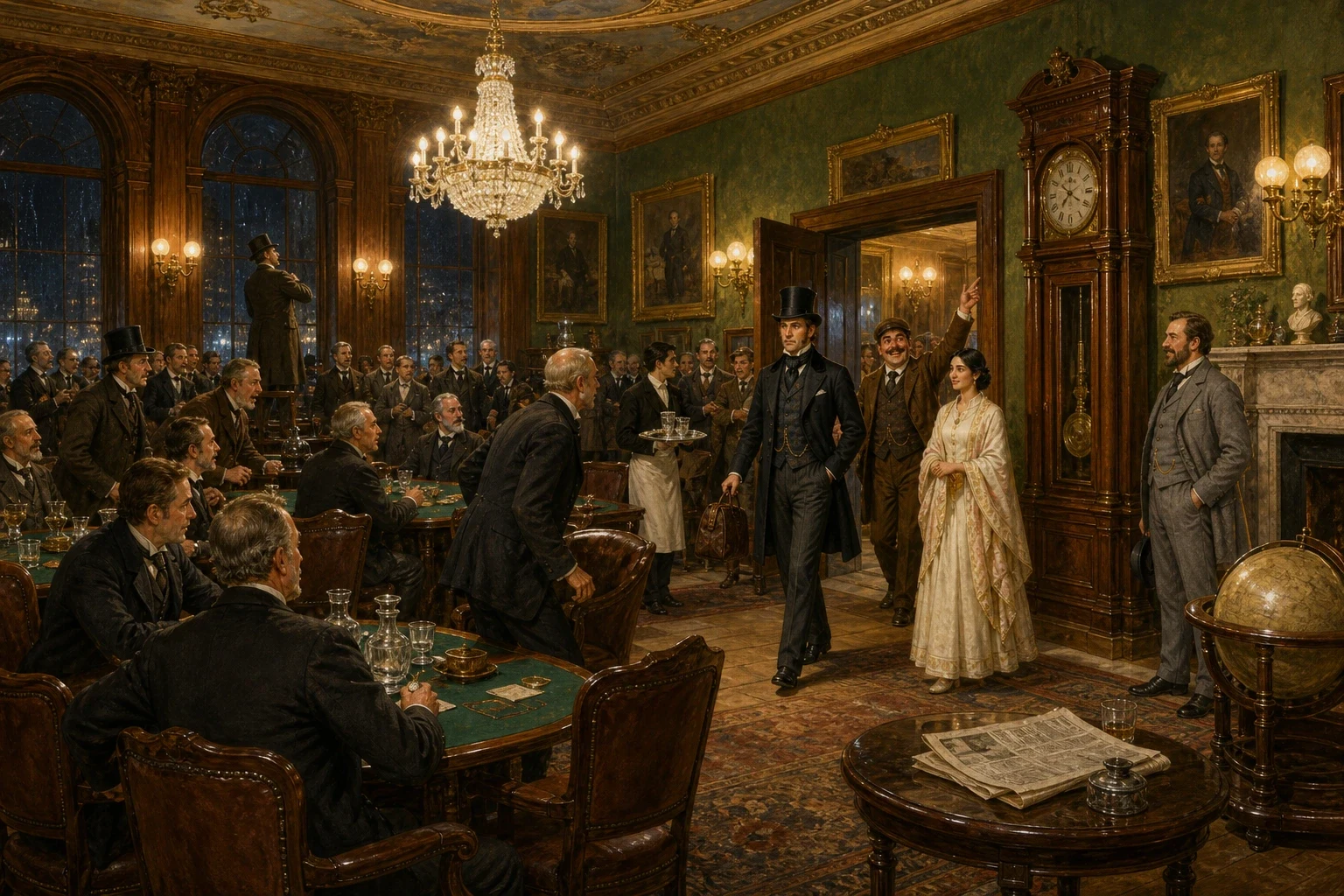
At Liverpool, the moment their ship touched English soil, Fix finally had his warrant, and he arrested Phileas Fogg on the spot, locking him away just long enough to ruin everything — for by the time the mistake was discovered and Fogg set free, it was already evening of what should have been the eightieth and final day, and the race to London seemed hopelessly lost. Fogg reached his house exactly five minutes after the deadline, by his own reckoning, and sat down quietly, certain he had lost both the bet and his fortune. But Passepartout, going over the date in his head, suddenly understood: traveling constantly eastward, they had gained a whole day without noticing, crossing every line of longitude around the earth. It was not the eighty-first day at all — it was the eightieth. Fogg ran the whole way to the Reform Club and arrived with seconds to spare, winning his wager before his astonished friends, and not long after, married Aouda, who had, by then, quite happily agreed.
About this story
- Audience: kids (ages 6–12)
Read Wonder Novels on your phone
Wonder Novels is available on Android. Get Wonder Novels on Google Play.