Candide
A young man taught that this is the best of all possible worlds, and the long hard road across three continents that answers him
Page 1

In the German province of Westphalia there once stood the castle of the Baron Thunder-ten-tronckh, and in it lived a good-natured young man named Candide. Some said he was the Baron's nephew; nobody was certain. His tutor was the learned Dr. Pangloss, who taught that everything in this world happens for the very best reason, and that this is the best of all possible worlds — the castle proved it, the Baron's gout proved it, even a pig's nose proved it; Pangloss could prove anything. Candide believed every word. He loved the Baron's daughter, Cunégonde, as gently and honestly as he believed his tutor, and one spring afternoon, behind a screen in a corridor, she let him kiss her hand, and then her cheek. The Baron came around the corner at the worst possible moment. There was shouting, there were blows, and within the hour Candide was out of the gate and walking away from the only home he had ever known, with nothing in his pockets at all.
Page 2
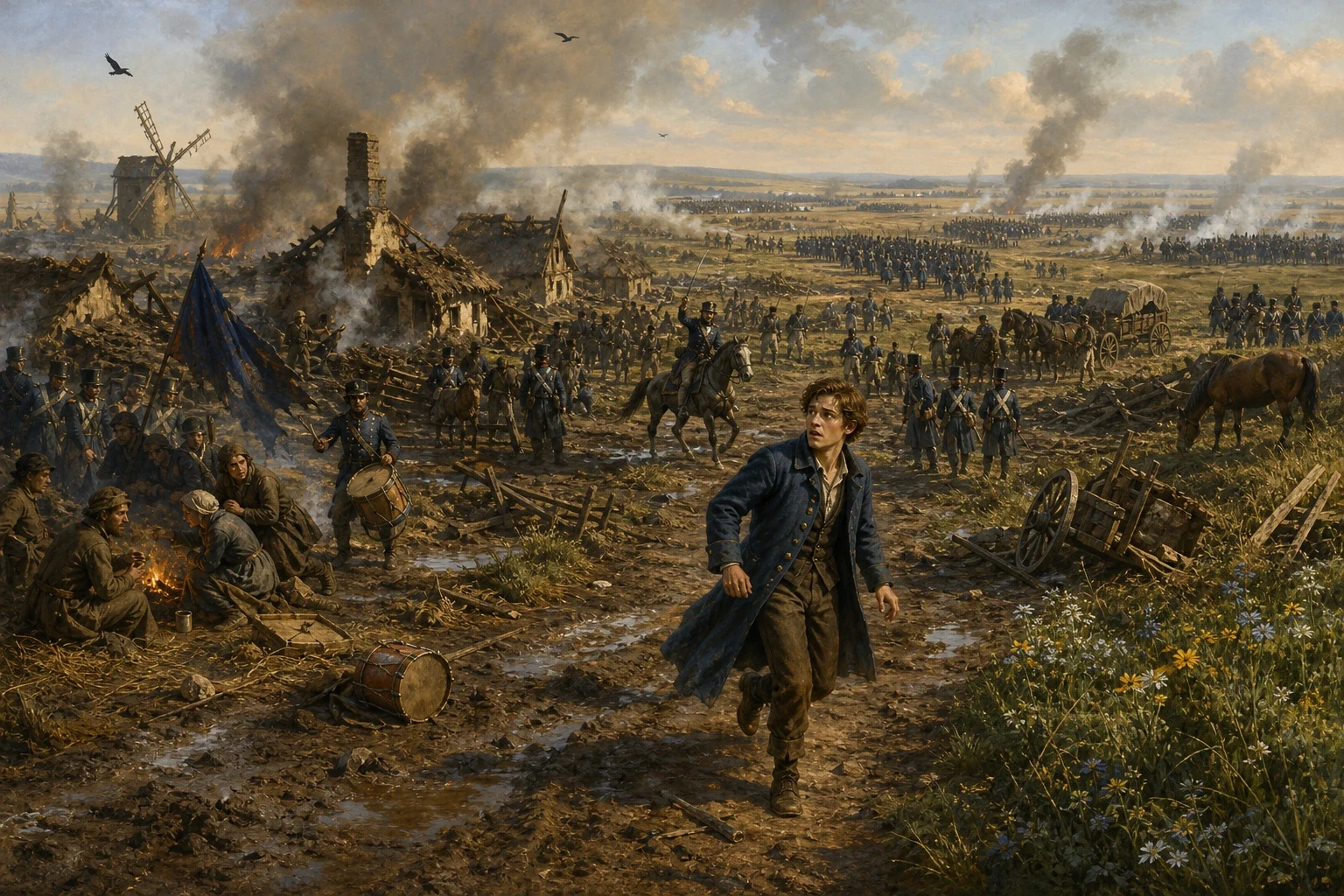
Candide walked on until he reached a town where recruiting officers mistook his good looks for a soldier's and pressed him into the King of the Bulgars' army before he understood what was happening. They drilled him, dressed him in a blue coat, and when he tried simply to walk away and see the world, as any free man might, they near flogged him to death for desertion, and only the King's own pardon saved him. Then came the war. The Bulgars and their enemies the Abares faced each other across an open plain with thirty thousand men on each side, trumpets and drums and cannon all going at once, and in a few hours the ground was littered with dying men and burning villages on both sides. Candide, trembling through the whole business like a philosopher caught in an earthquake, crept away from the carnage the moment the armies marched off to celebrate their separate victories, and kept walking until the sound of guns was far behind him.
Page 3
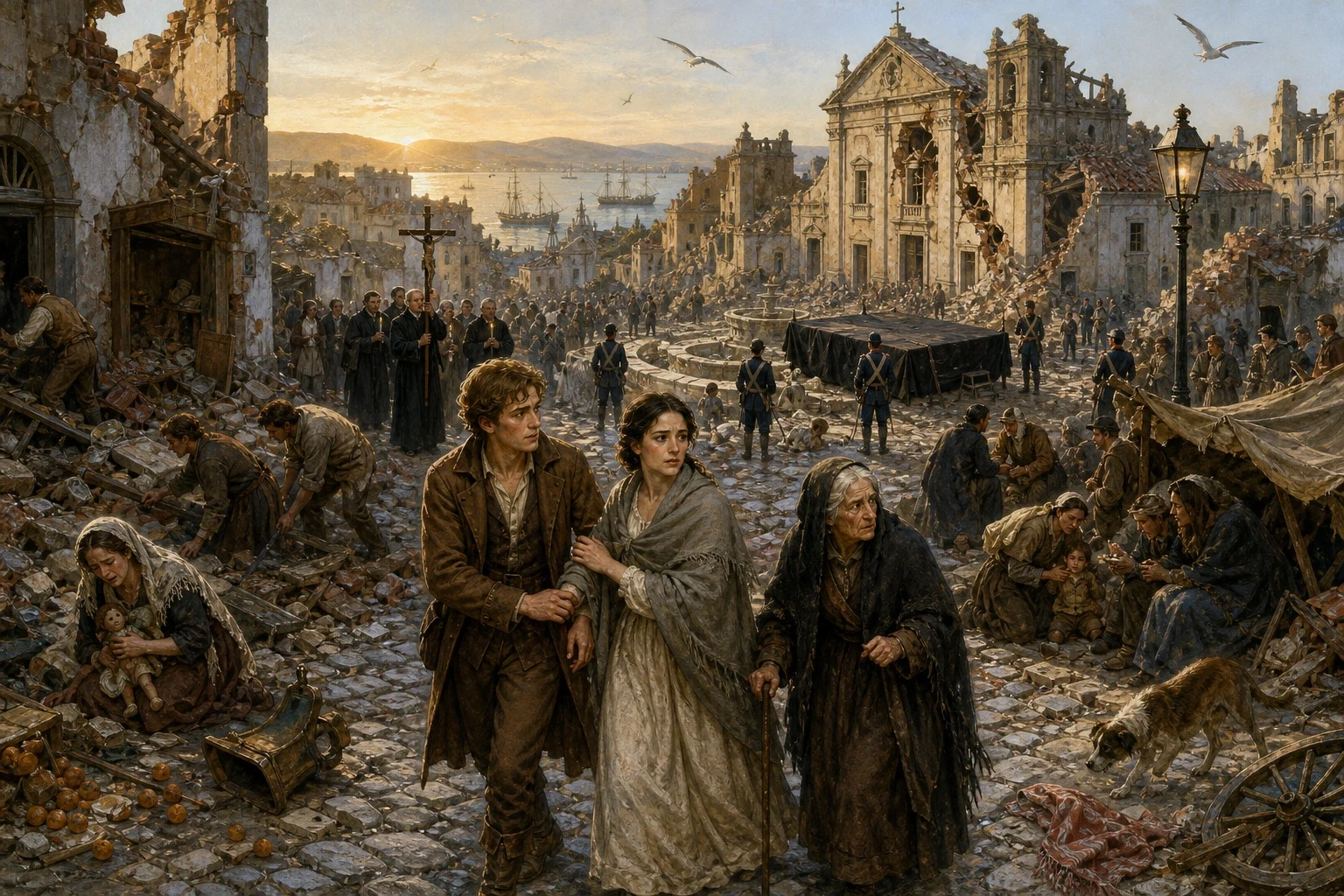
The ship reached Lisbon just as the earth seemed to end: the ground shook, houses fell into the streets, and thirty thousand people were lost within an hour. Pangloss pulled Candide free of the rubble, still insisting even this proved all was for the best. The learned men of Lisbon decided that burning a few unlucky souls alive would calm God's anger and stop the shaking. Pangloss was arrested for a careless word and led away among the condemned; Candide was flogged in the square for having listened to him. Grieving, Candide was found by an old woman who led him secretly to a house — where Cunégonde was waiting, alive, though long given up for dead. She had passed from a soldier's hands into the keeping of a rich merchant and a churchman, both of whom claimed her and neither of whom would release her. When the two men arrived together that same evening, Candide drew his sword rather than lose her again, and in the struggle that followed both men fell. Before dawn, Candide, Cunégonde and the old woman were already on the road out of the city.
Page 4
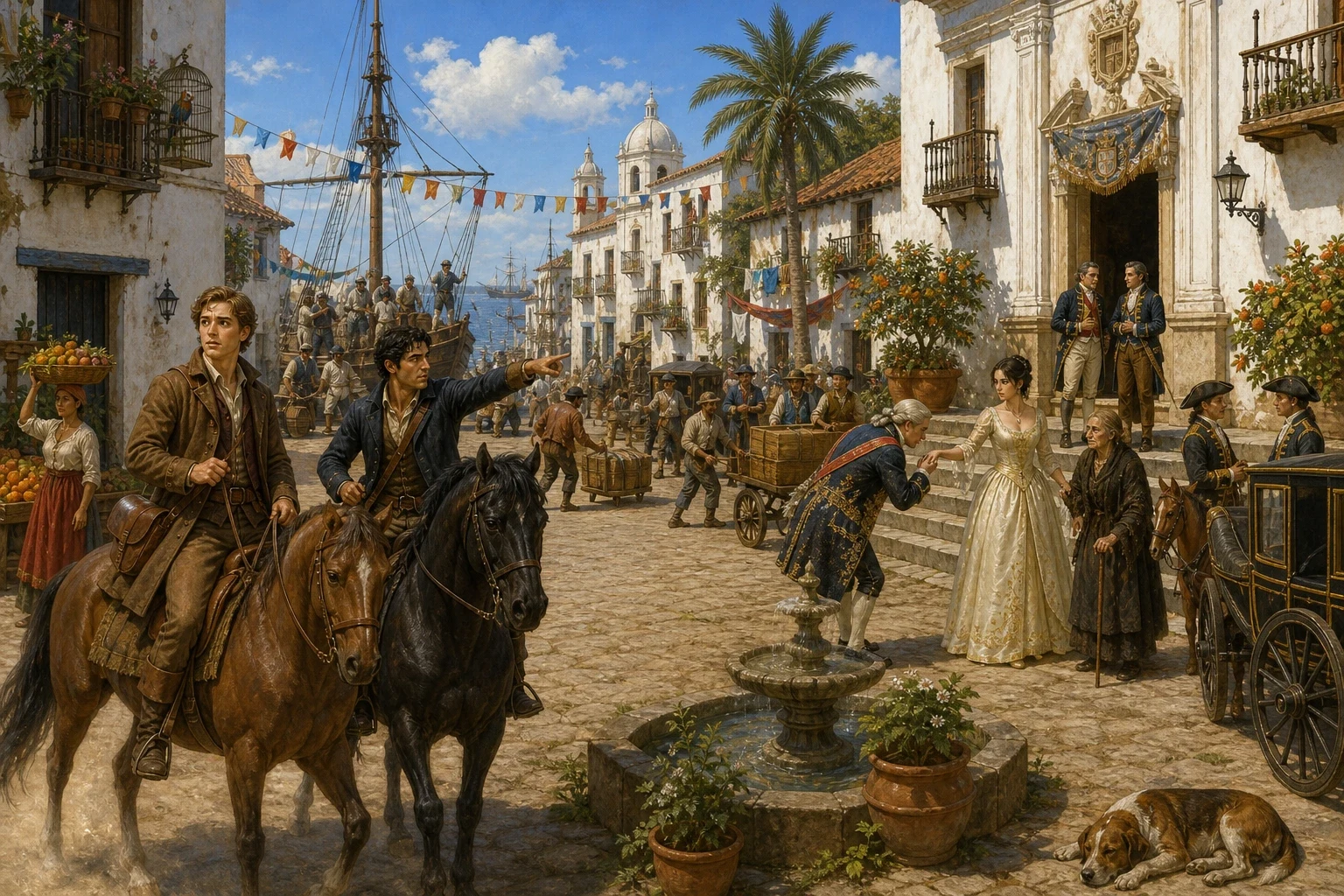
They crossed the ocean to Buenos Aires, where Cunégonde and the old woman told Candide their own terrible stories of survival along the way, each worse than the last, until he almost envied anyone who had suffered only what he had. The Governor of Buenos Aires, Don Fernando, took one look at Cunégonde and decided on the spot to marry her himself, and began making his proposals before Candide's ship had even finished unloading. Candide was still working out how to object when his clever new servant Cacambo came running with worse news: officers had arrived from Spain, hunting the murderer of the Grand Inquisitor of Lisbon, and that murderer was Candide. There was no time to argue, no time even to say a proper goodbye. Cacambo bundled Candide onto two good horses and they galloped out of the city that same hour, leaving Cunégonde in the Governor's keeping and trusting, without any real reason to, that they would somehow find each other again.
Page 5
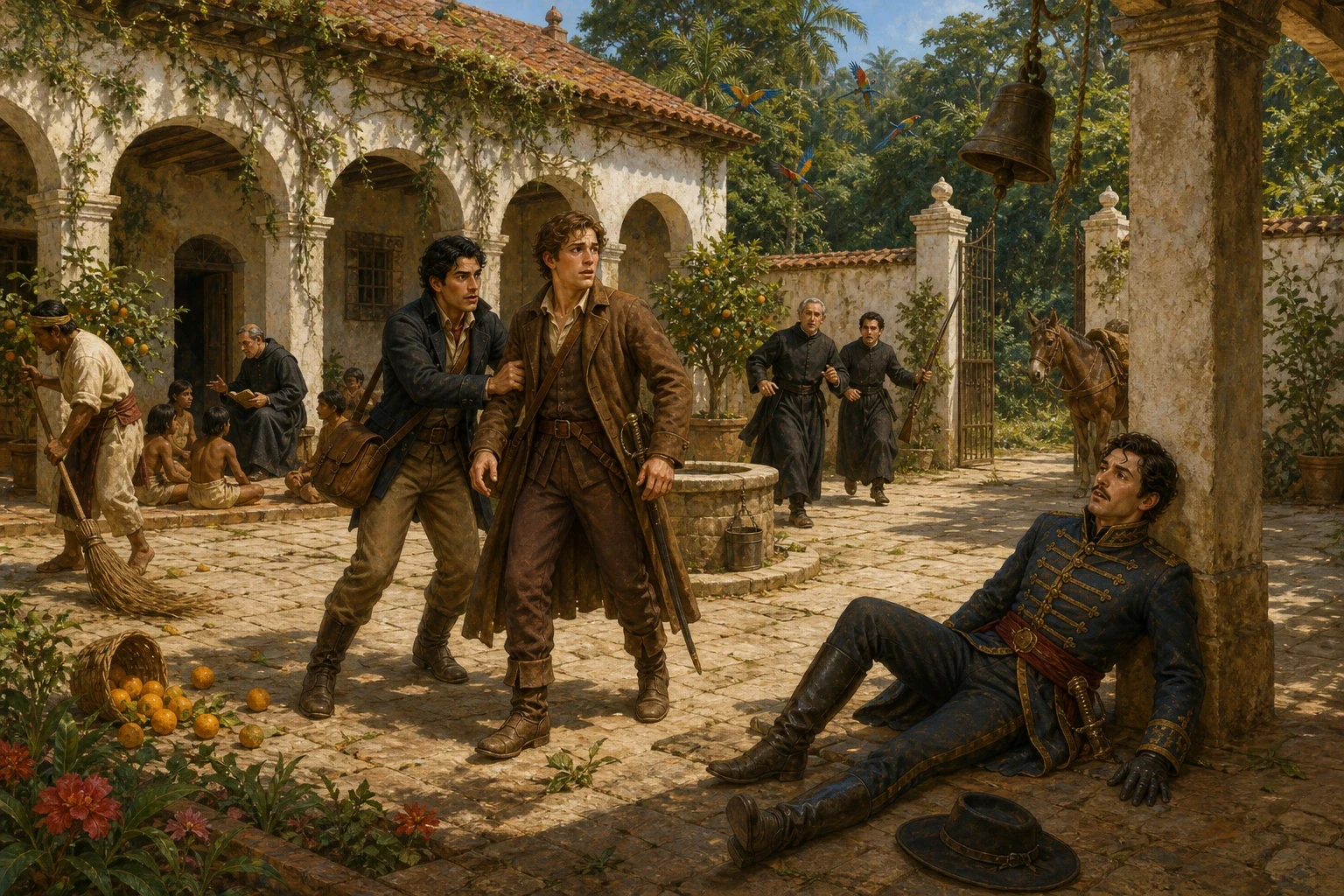
Deep in the Jesuit province of Paraguay, Candide and Cacambo were brought before the mission's Commandant, a proud young officer who turned out, astonishingly, to be Cunégonde's own brother, the young Baron — believed killed with the rest of his family when their castle burned. For a moment there was nothing but joyful embracing, tears, disbelief at the whole long chain of chances that had brought them together again in the middle of a jungle. Then Candide, overjoyed, said that he meant to marry Cunégonde the moment they found her. The Baron's whole manner changed in an instant. His sister marry a man with no family name at all, no quarterings, nothing? He forbade it outright and insulted Candide to his face for even suggesting it. Candide, who had borne a great deal patiently by now, felt something in him finally snap. He drew his sword. In the scuffle that followed the Baron went down, and did not get up, and Cacambo, without wasting a single word on the matter, pulled his stunned master straight out through the gate and into the forest beyond.
Page 6
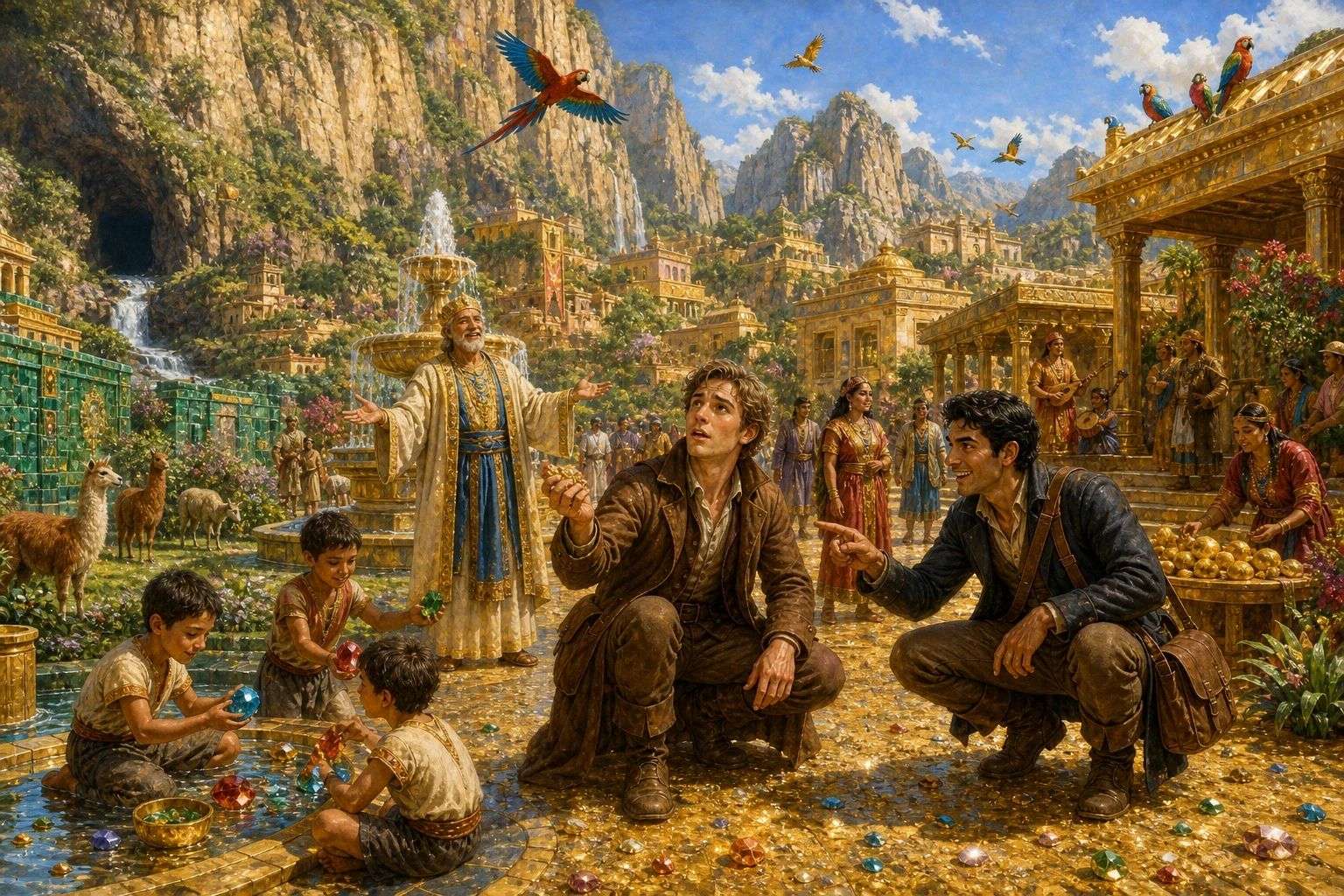
Fleeing through country no map had ever shown, Candide and Cacambo's canoe was swept down a hidden underground river and came out, dazed and starving, in a valley unlike anywhere else on earth. The streets of its one city were paved with what Candide at first took for ordinary stones, until he realized they were solid gold and emeralds, lying about as commonly as gravel elsewhere. The children played with jewels in the gutters as other children play with pebbles. There was no church, no court, no prison and no Inquisition, because there was nothing here worth fighting over and no one here felt the need to lie to anyone else. The old king who received them laughed kindly at their astonishment and let them stay a month as honored guests. But Candide could not stop thinking of Cunégonde, and at last he asked to leave. The king thought this very strange, since no one had ever wanted to leave El Dorado before, but he let them go anyway, and sent them off with a hundred sheep loaded down with more gold than either of them could count.
Page 7
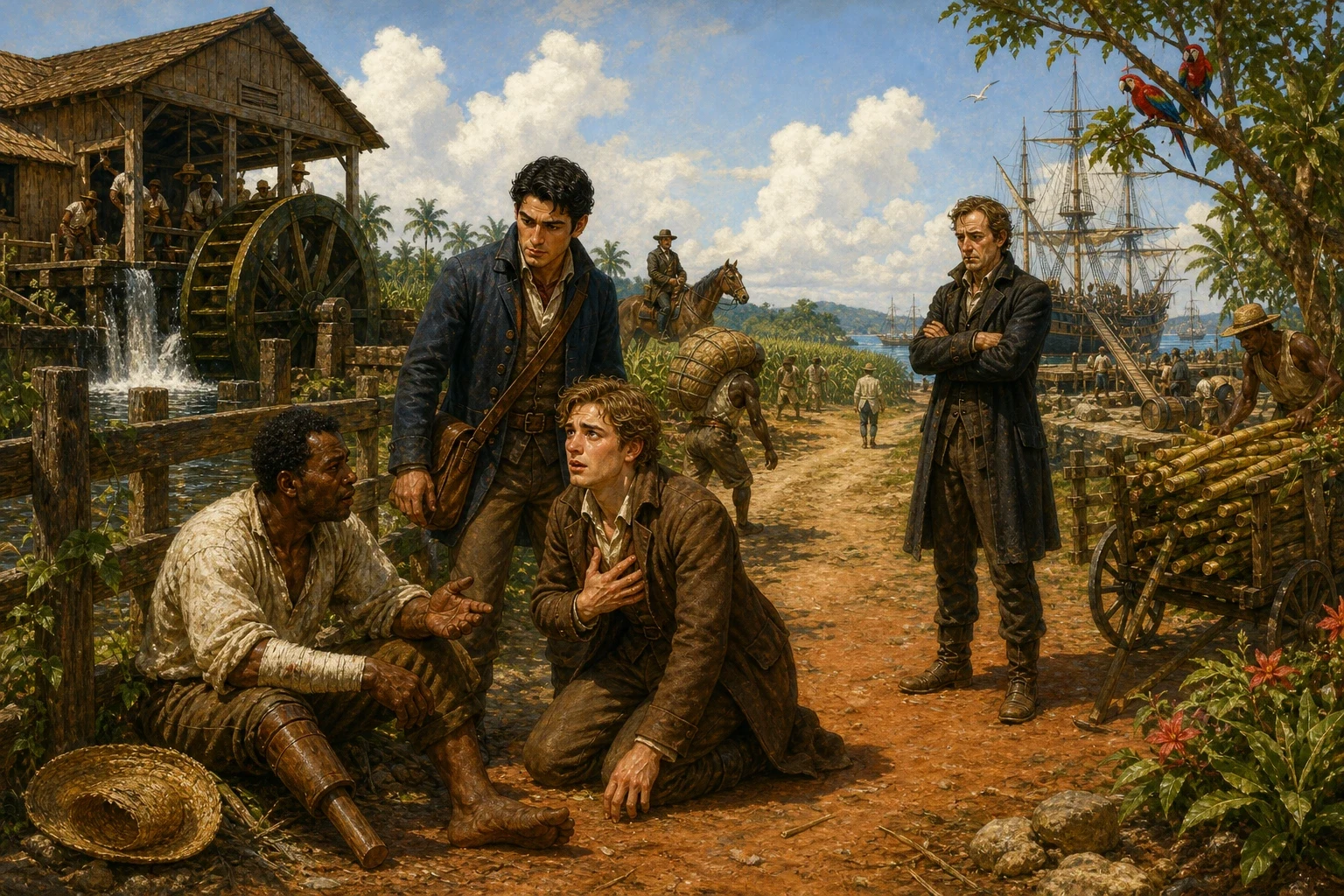
At the Dutch colony of Surinam, Candide met a slave lying exhausted by the road, with one arm bandaged to the shoulder and a wooden leg where his own had once been. The man explained plainly that this was simply the ordinary cost of the sugar that sweetened every cup of coffee in Europe: an arm for an accident at the mill, a leg for trying once to run, and no complaint was heard either way. Candide wept and, for the first time in his life, began to doubt that this really was the best of all possible worlds. Worse followed. He sent the faithful Cacambo back to Buenos Aires with money to buy Cunégonde's freedom, and trusted a merchant named Vanderdendur with his own treasure-laden ship to carry him home — only to watch that ship sail away without him, taking every grain of his El Dorado gold with it. Penniless again and sick with grief, Candide chose for his only companion on the voyage to France a gloomy Dutch scholar named Martin, who believed, as firmly as Pangloss believed the opposite, that the world was built entirely for misery.
Page 8

In Venice, where Candide was certain he would finally find Cunégonde, he found instead old sorrows wearing new faces. A merry young woman at a carnival supper turned out to be Paquette, once a maid at the castle in Westphalia, now reduced to selling her company to strangers for a living, seated beside a miserable monk named Friar Giroflée who hated his own calling and envied anyone free of it. Both insisted, when pressed, that they were perfectly happy, though neither one looked it for a moment. Candide and Martin also called on a fabulously rich nobleman named Pococurante, who owned every fine painting, every rare book and every beautiful garden a man could want, and was bored to death by every single one of them. Martin took all of this as further proof that nobody anywhere was happy; Candide, shaken but still stubborn, kept writing letters and sending agents in every direction, searching for any word of Cunégonde, certain that finding her again would finally prove his old tutor right.
Page 9
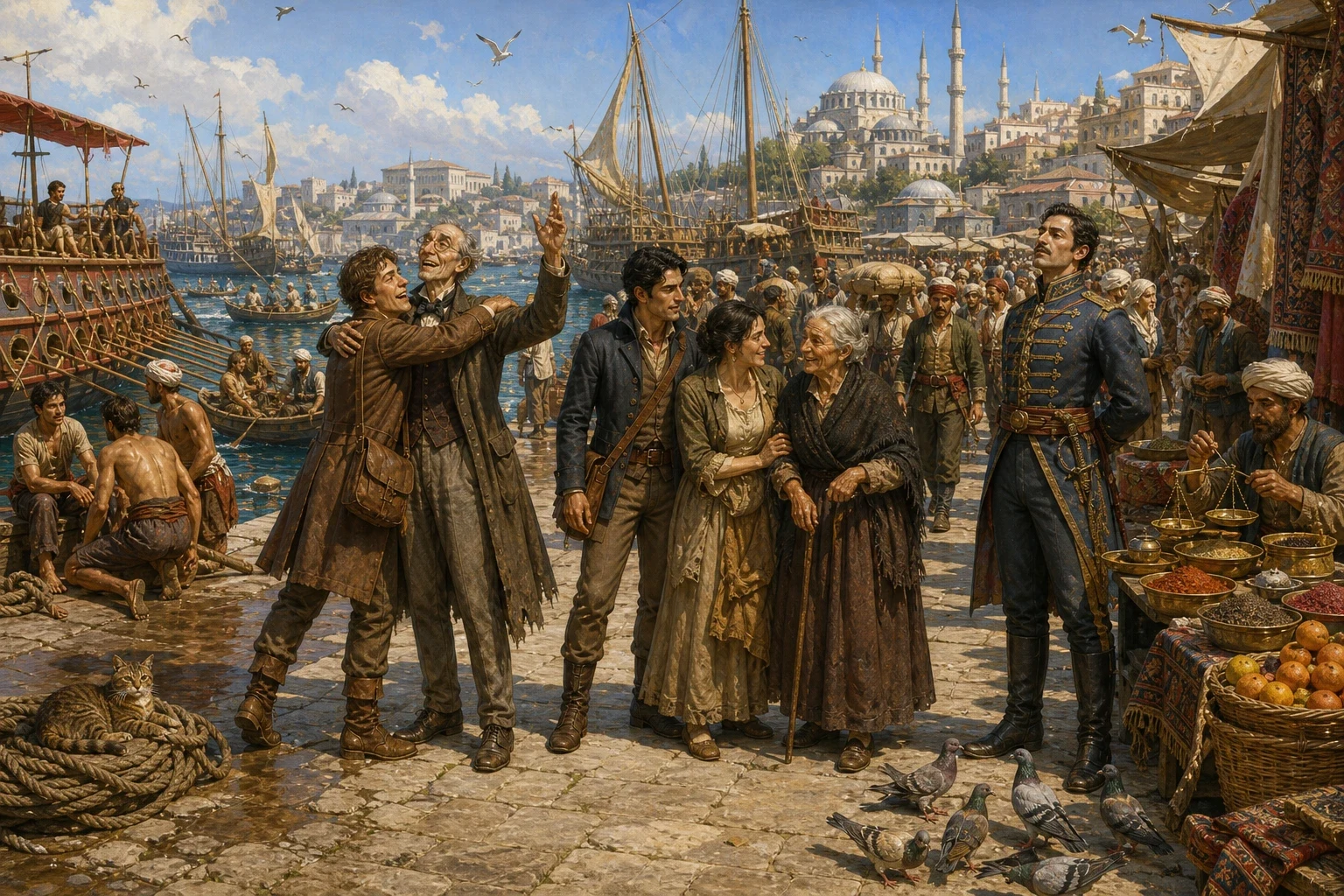
On the way to Constantinople, Candide by sheer chance recognized a galley-slave rowing past as his own lost servant Cacambo, enslaved after all his efforts, and paid at once to have him freed. Cacambo's news nearly stopped Candide's heart: Cunégonde was alive in Constantinople too, but enslaved, grown thin and plain with hardship, cooking for a dethroned prince, and the faithful old woman was beside her, still alive, still complaining cheerfully about her troubles as always. Candide hurried to buy their freedom the moment he arrived, his old love for Cunégonde undimmed by anything Cacambo had told him. Then, rowing another galley in the same harbor, worn thin and ragged, he found two more faces he had mourned as dead: Dr. Pangloss, who had somehow survived his own hanging in Lisbon, still arguing philosophy even with an oar in his hands, and the young Baron, who had somehow survived Candide's sword in Paraguay after all. Candide spent every coin he had left ransoming every one of them, one by one, until his whole scattered family stood free together on the dock.
Page 10
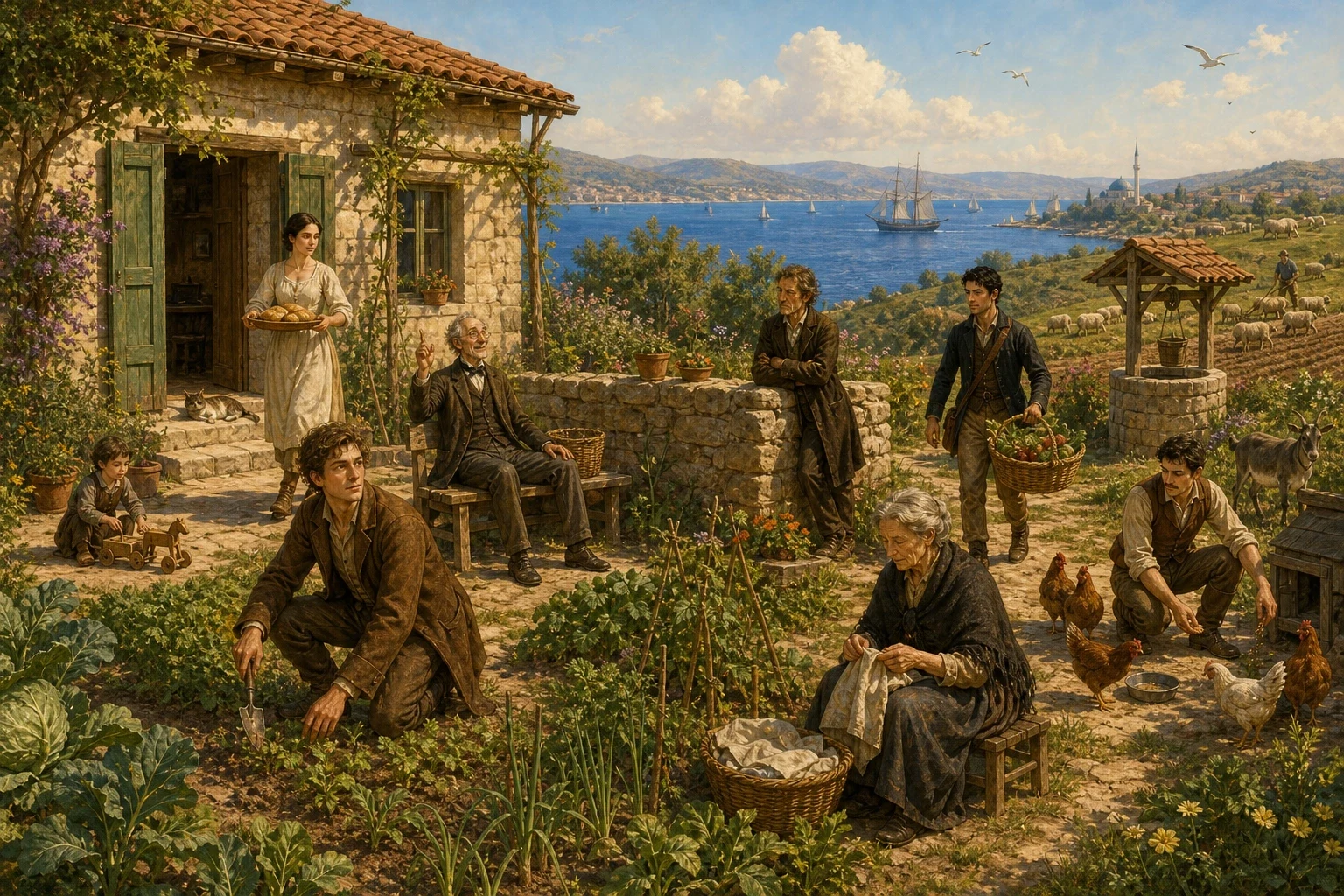
Candide married Cunégonde at last, though her brother the Baron still objected to the match right up until he no longer had the power to stop it, and bought a small farm near the Sea of Marmara for the whole strange, scattered family to live on together. It was not a grand life. Cunégonde had grown plain and difficult; Pangloss still insisted, at every supper, that every single thing that had ever happened to any of them had happened for the best possible reason, and nobody any longer had the energy to argue with him properly. Martin thought the world was exactly as miserable as he had always said. But each of them found some small, useful work to do on the farm — Cacambo in the fields, the old woman mending linen, Cunégonde baking better than anyone expected, Candide himself keeping the garden — and in the doing of it, rather than in any philosophy at all, they found something that had eluded all of them everywhere else they had been. "That is very well said," Candide replied at last, "but we must cultivate our garden."
About this story
- Audience: general readers
Read Wonder Novels on your phone
Wonder Novels is available on Android. Get Wonder Novels on Google Play.