A Tale of Two Cities
London and Paris, a face mistaken for another man's, and the life one of them gives so the other can live
Page 1

In November of 1775, the Dover mail coach toils up Shooter's Hill through thick fog, so slow that the three passengers inside, strangers to each other, keep their faces hidden and trust no one, not even the guard. Mr. Jarvis Lorry, a precise old banker from Tellson's, sits wrapped against the cold, half dozing, half dreaming of digging a man out of a grave. Suddenly a horse comes pounding up out of the mist behind them, and the coach halts in alarm until the rider is known for a messenger, not a highwayman. He carries a letter for Mr. Lorry alone. Inside is a short, strange message, and Lorry, reading it by the coach lamp, speaks the words back into the fog quietly, so there can be no mistake about what he has been asked to do.
Page 2
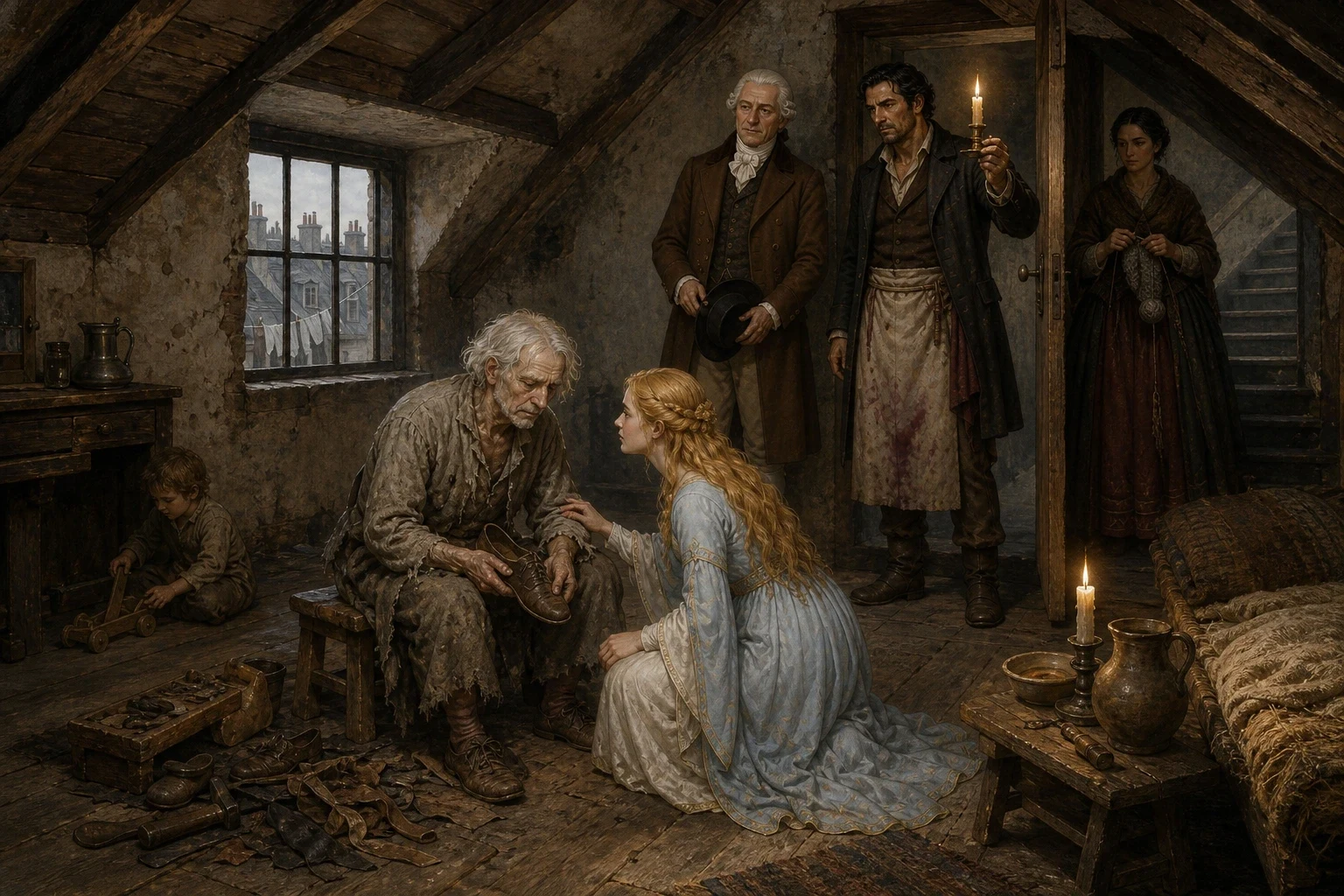
In Paris, Mr. Lorry and Lucie Manette are led by the wine-shop keeper, Ernest Defarge, up a dark narrow stair above his shop in the Faubourg Saint-Antoine, to a locked garret room. Inside, bent over a small cobbler's bench, sits an old man with white hair and a hollow, lost face, trembling over a half-finished shoe. He is Lucie's father, Dr. Manette, though she has never known him; he was taken from his family eighteen years before and has only just been released from the Bastille, where his mind broke under the silence. He does not know his own name, only a number. Lucie kneels beside him and speaks very gently. For a moment his trembling hands go still, and he lifts his head toward her as though something long buried in him almost remembers.
Page 3
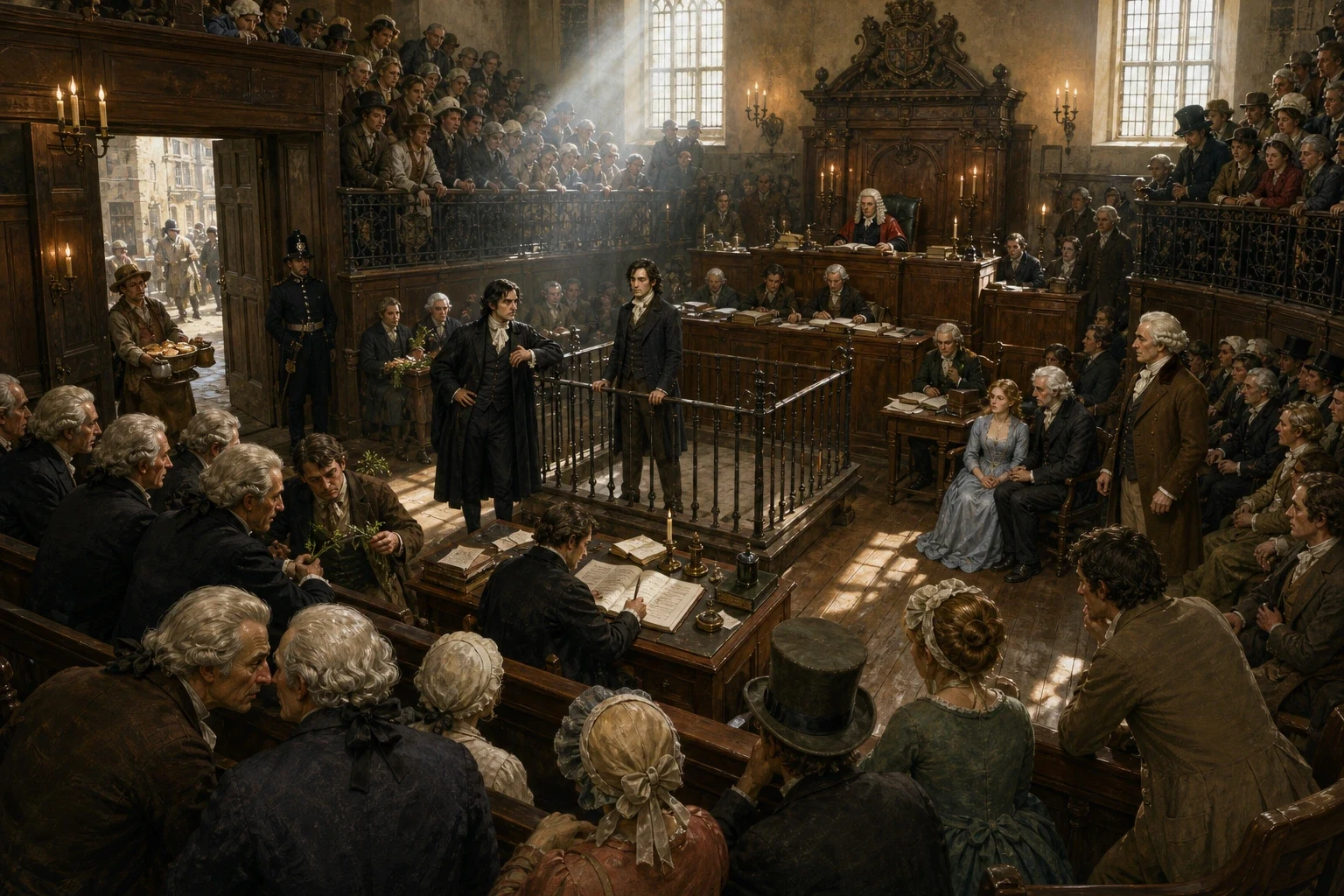
Five years later, in London, Charles Darnay stands in the dock at the Old Bailey, charged with treason — accused of carrying secrets between France and England. The packed court watches eagerly, many of them hoping to see him hanged. At the barristers' table, Sydney Carton lounges with his hands in his pockets, staring at the ceiling as though the whole business bores him, until the chief witness swears he could recognise the prisoner's face anywhere on earth. Carton rises without hurry, stands close beside Darnay so the two faces are seen together, and asks the witness to be equally sure now. The jury cannot tell which man was truly seen that night, and Darnay is acquitted. Lucie, who had been called to testify about a meeting on a Channel boat, sits trembling with relief beside her father, while Mr. Lorry allows himself, for once, a small smile.
Page 4
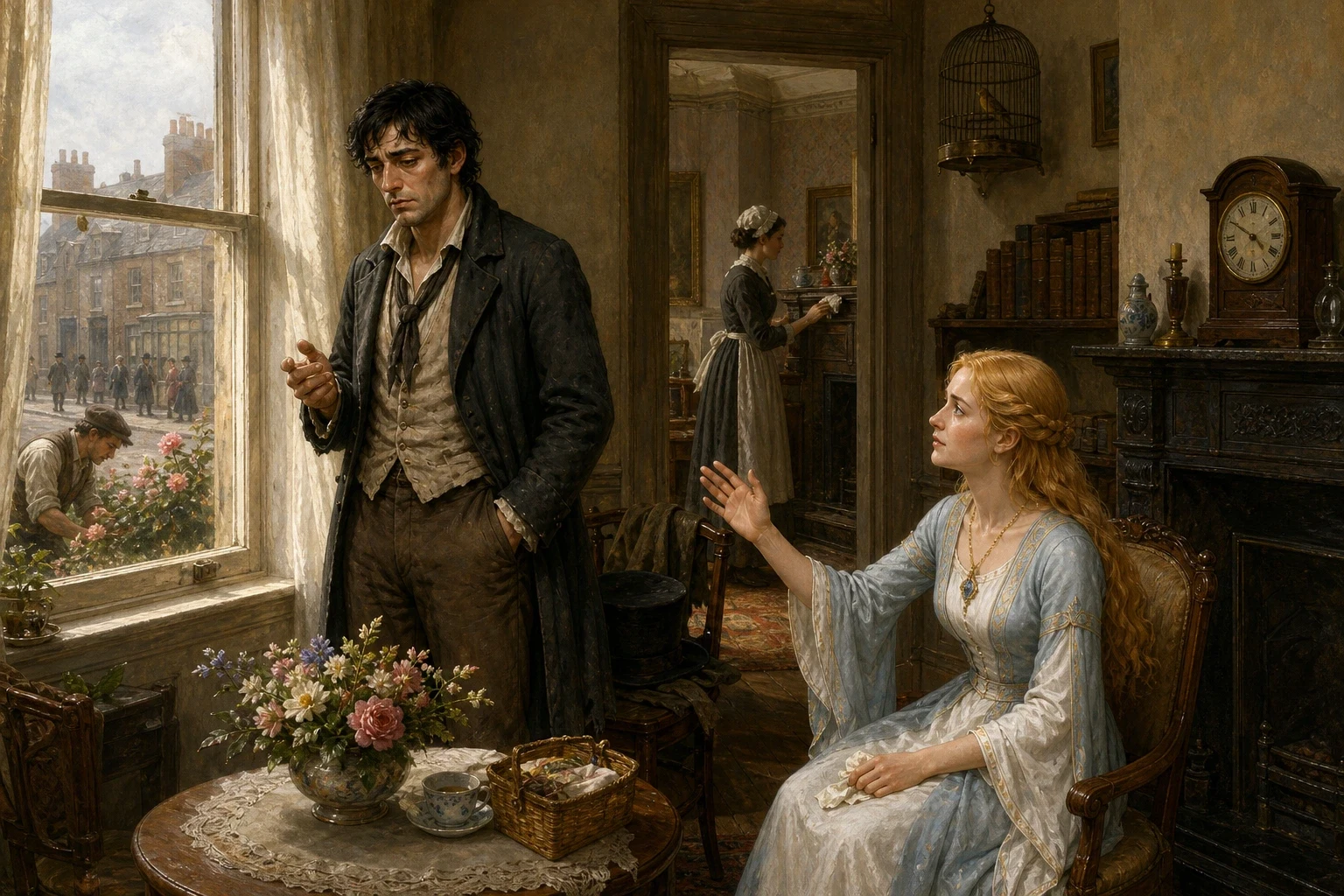
Not long before Lucie's wedding to Charles Darnay, Sydney Carton calls on her alone in the quiet sitting room of the Manette lodgings in Soho. He tells her plainly that his life has been wasted, that he knows it, and that he does not ask her to try to reform him, for he will never change. But he asks leave to say, just once, that she has been the last dream of his soul, and that for her, and for anyone she loves, he would gladly give his life. Lucie, moved to tears, promises she will always keep his confidence. He asks only that she remember, now and then, that there is a man who would do anything to see her happy — and then, as quietly as he came, he takes his leave.
Page 5
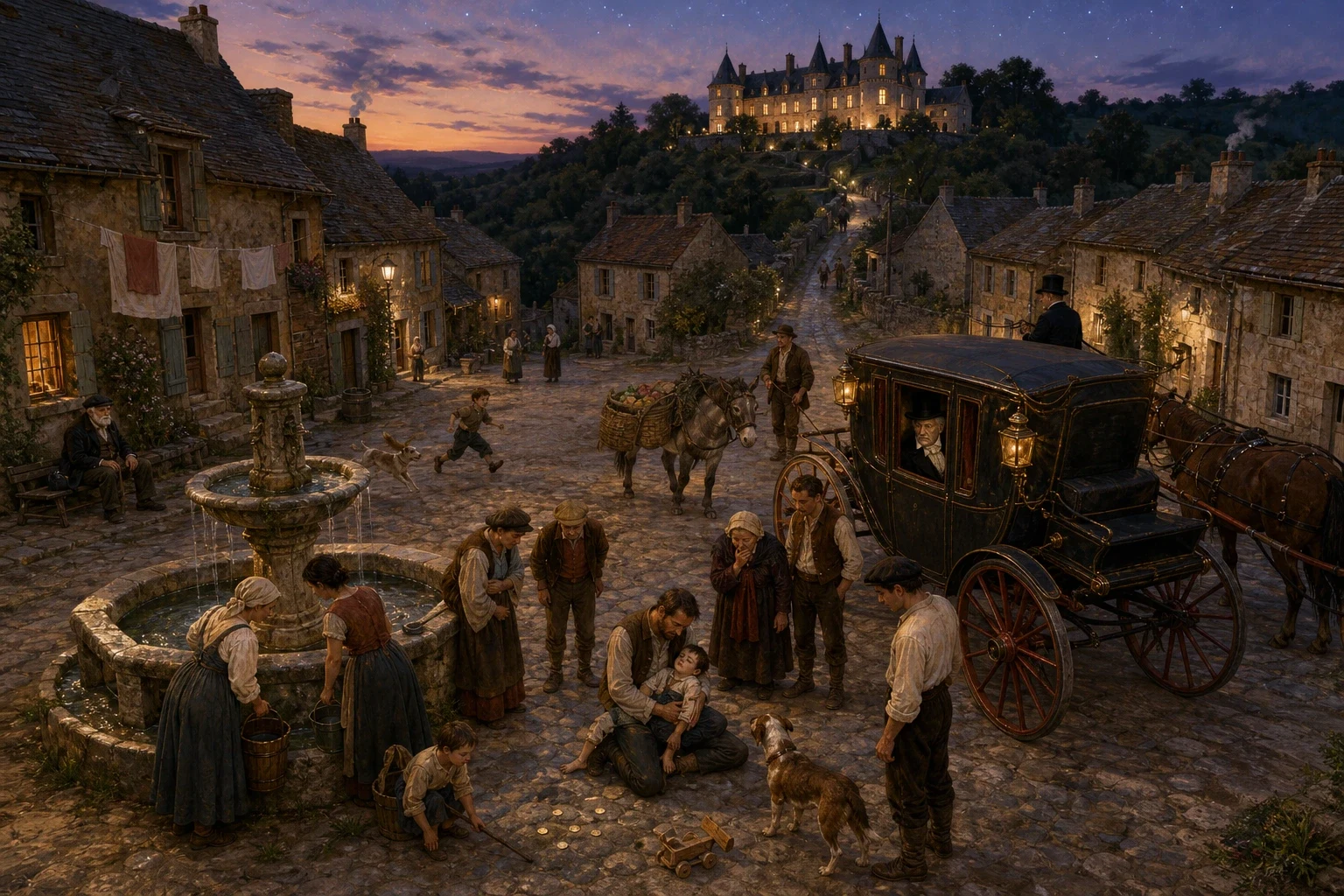
In a small French village, the road down from the chateau crosses a stone fountain where the villagers draw their water. One evening the Marquis d'Evrémonde's carriage comes through at a reckless pace and strikes down a child playing in the road. The boy's father, Gaspard, snatches up his son and stands screaming in the street, but the Marquis, delayed only a moment, tosses a coin to the crowd and tells them they ought to take better care of their children, then drives on up toward the chateau, where his supper is waiting. That same night, in his own bedchamber, the Marquis is found murdered, a note left pinned above him reading only: 'Drive him fast to his tomb. This, from Jacques.' Gaspard is hunted through the countryside but not yet found.
Page 6
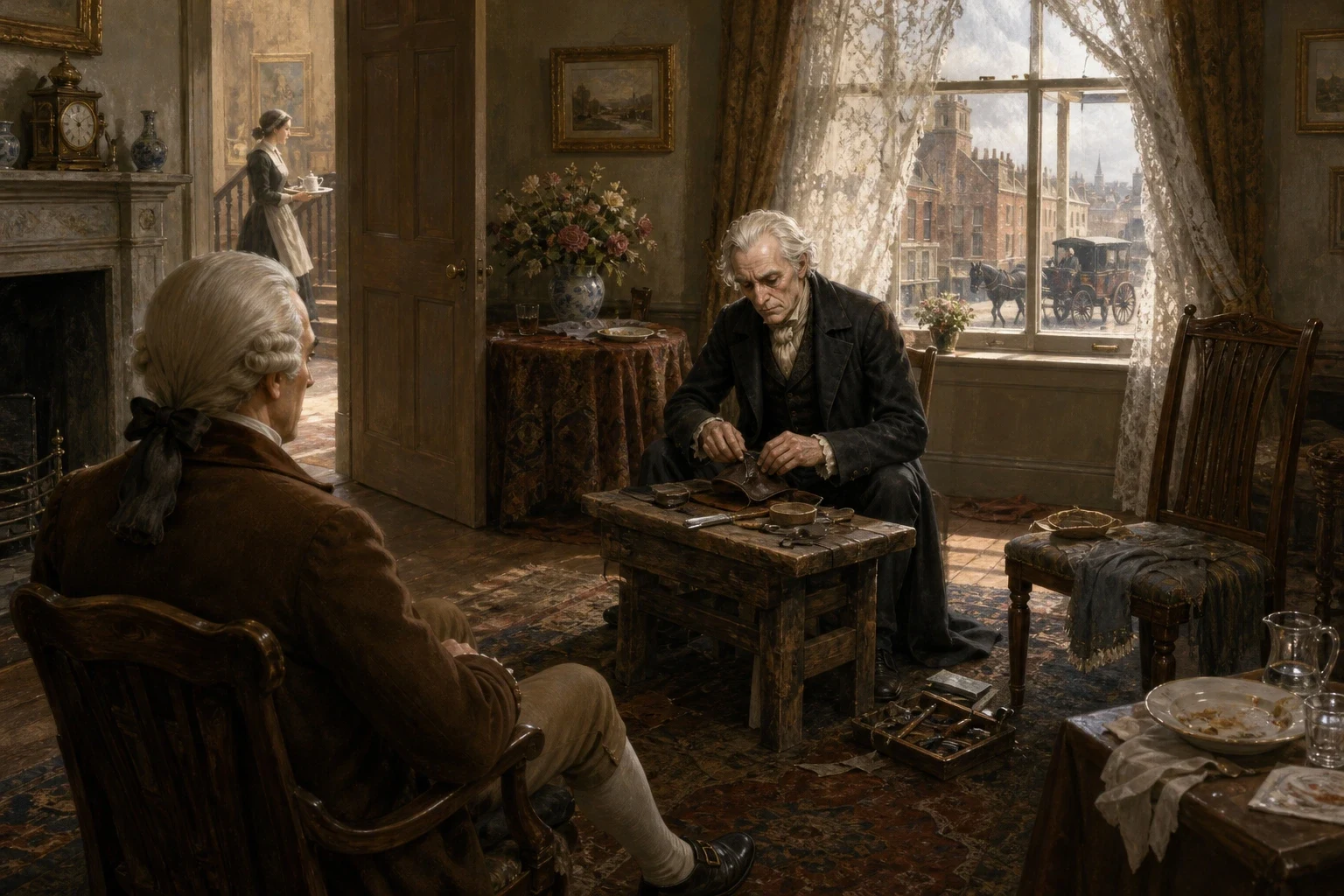
On the morning of Lucie's wedding, Dr. Manette seems entirely himself, steady and glad, walking his daughter to the carriage and waving the newlyweds off with a firm hand. But that evening, when Mr. Lorry calls at the Soho lodgings, he finds the doctor gone from himself again, bent over a small shoemaker's bench that no one in the house knew he still kept hidden, working with trembling fingers exactly as he had in the Paris garret years before, not knowing his own name. Lorry does not question or scold him, but simply sits with him, hour after hour, patient and quiet. The relapse lasts nine days before Dr. Manette comes back to himself all at once, remembering nothing of it, and Lorry, as gently as he can manage, has the bench and tools taken away for good.
Page 7
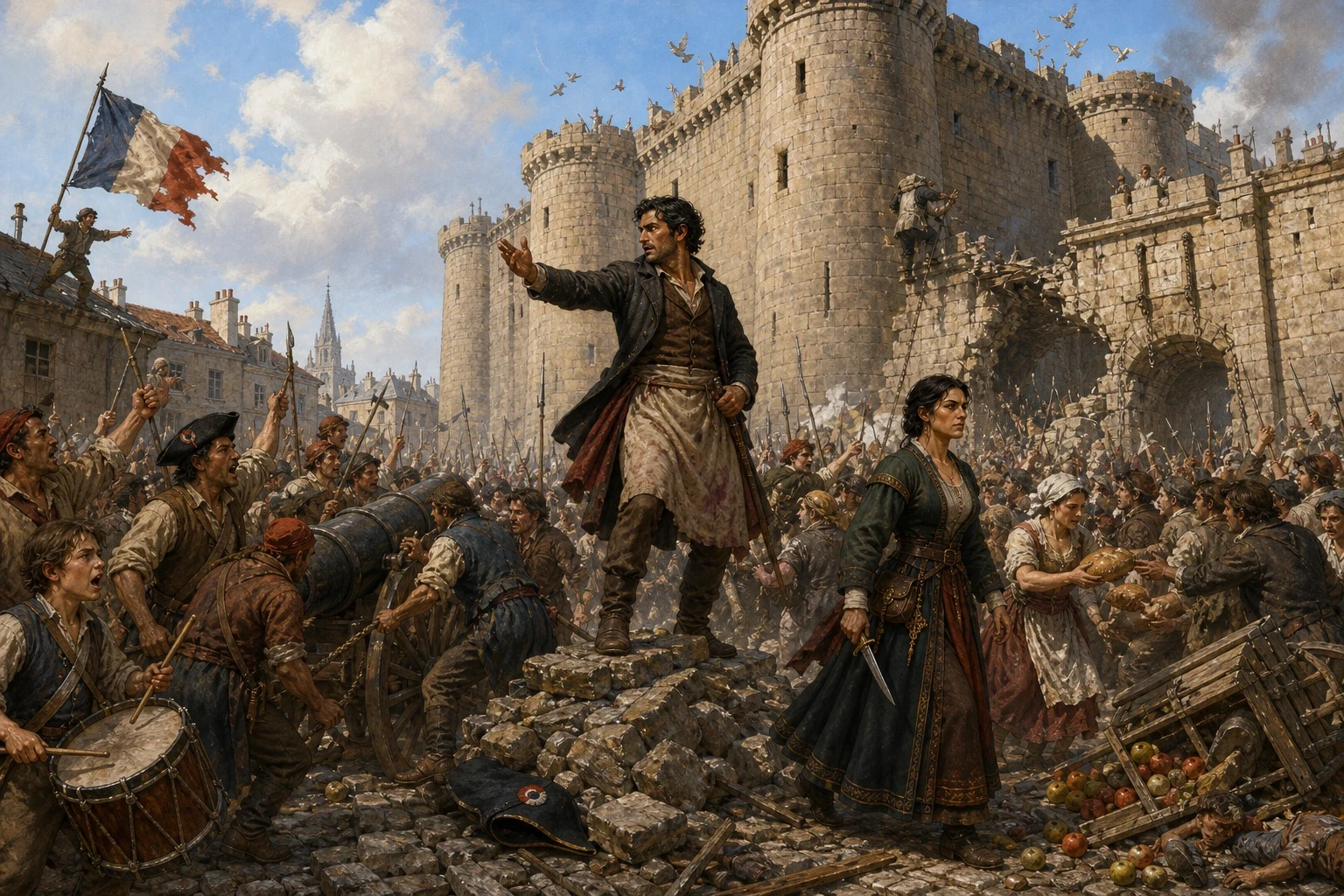
Years later, in July of 1789, all of Paris rises. The whole of the Faubourg Saint-Antoine pours into the streets and marches on the old fortress-prison of the Bastille, Ernest Defarge at the front of the crowd, climbing the walls among the first as the ancient gates finally give way. Madame Defarge moves through the rising tide of the mob calm and unhurried even in the middle of the storm, a knife at her side in place of her usual knitting, utterly sure of herself. By nightfall the fortress has fallen and its prisoners are freed. Defarge forces his way through the crowd to the very cell that once held Dr. Manette, and tears it apart stone by stone, searching for anything the old prisoner might have hidden there years before.
Page 8
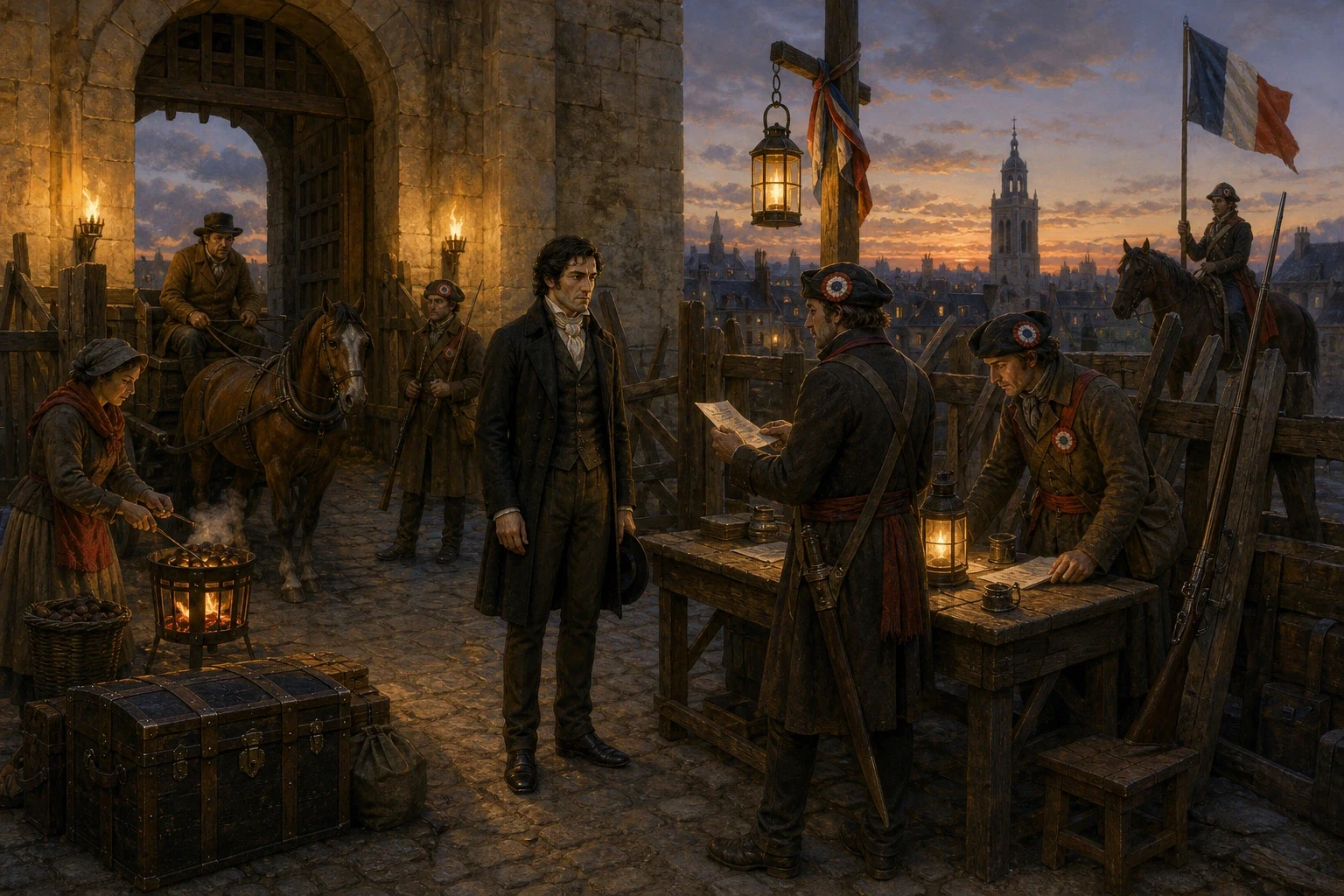
Years afterward, living safely in England, Darnay receives a letter begging him to come to Paris to save the life of an old family servant, Gabelle, imprisoned for once having served an emigrant aristocrat. Though France is now ruled by the Terror and any returning nobleman risks his life, Darnay feels he cannot refuse, and crosses to Paris in secret, telling no one but Lucie why he must go. At the barrier outside the city, armed citizens guarding the gate stop him and check his papers by torchlight. The moment they read his true family name, Evrémonde, the name he gave up long ago, their manner changes completely. He is placed under guard, refused permission to turn back, and told he will be taken before the Republic to answer for his family's crimes.
Page 9
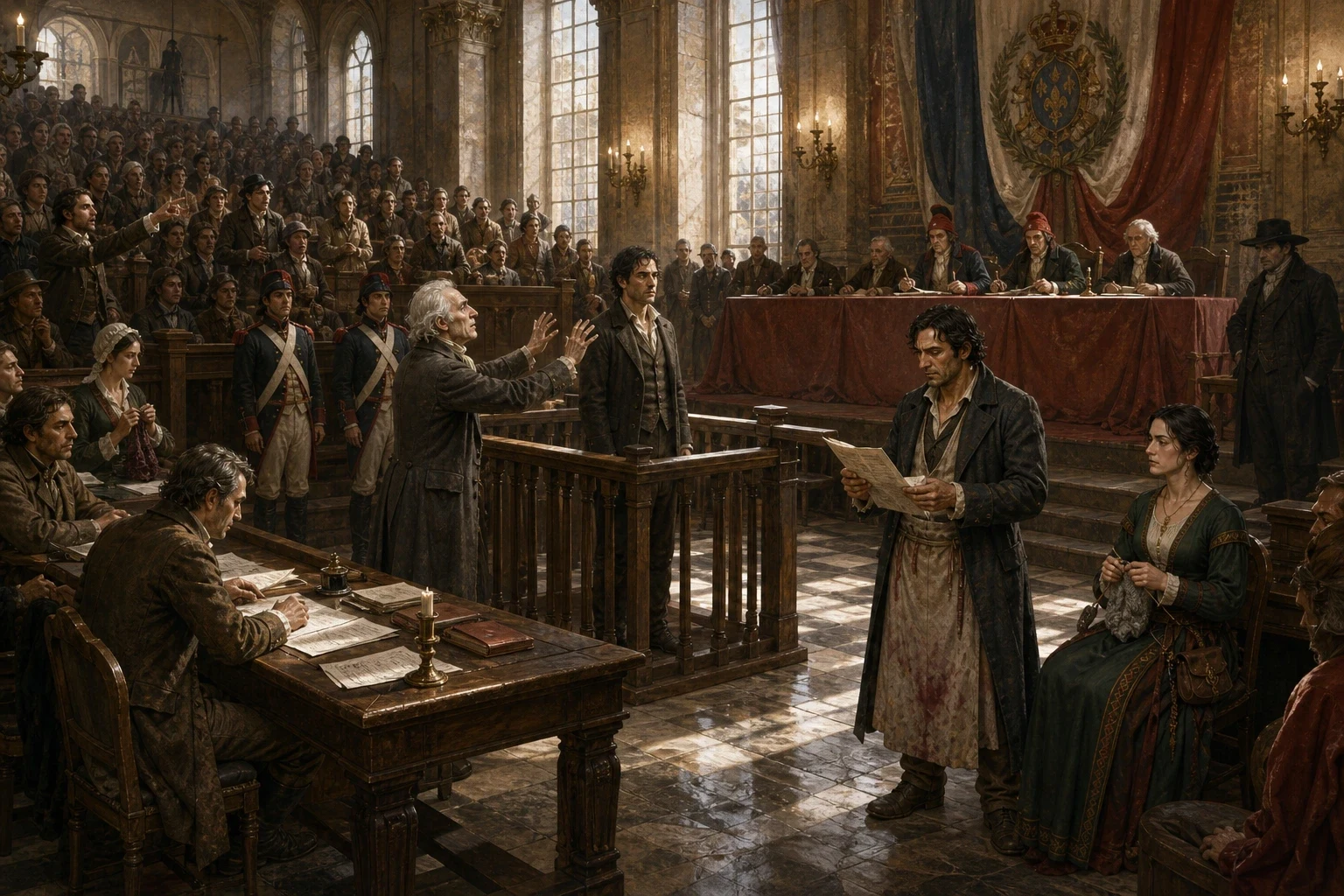
Darnay is brought before the Tribunal in a grand hall that was once a royal court. Dr. Manette, celebrated now as a former Bastille prisoner, speaks for his son-in-law as powerfully as he can, and for a moment it seems Darnay will be freed. But before the day ends, new accusers step forward: Defarge produces an old letter, written by Dr. Manette himself in the Bastille and hidden for years in his own cell, denouncing the entire Evrémonde family for a terrible wrong done to his wife's family long before Darnay was born — a wrong Darnay never committed and never fully knew, though he still carries the name. Madame Defarge, herself of that same wronged family, watches without a flicker of mercy. The Tribunal condemns Darnay to the guillotine within a day. Unnoticed in the crowd, Sydney Carton stands watching everything, already turning over in his mind exactly what he means to do.
Page 10
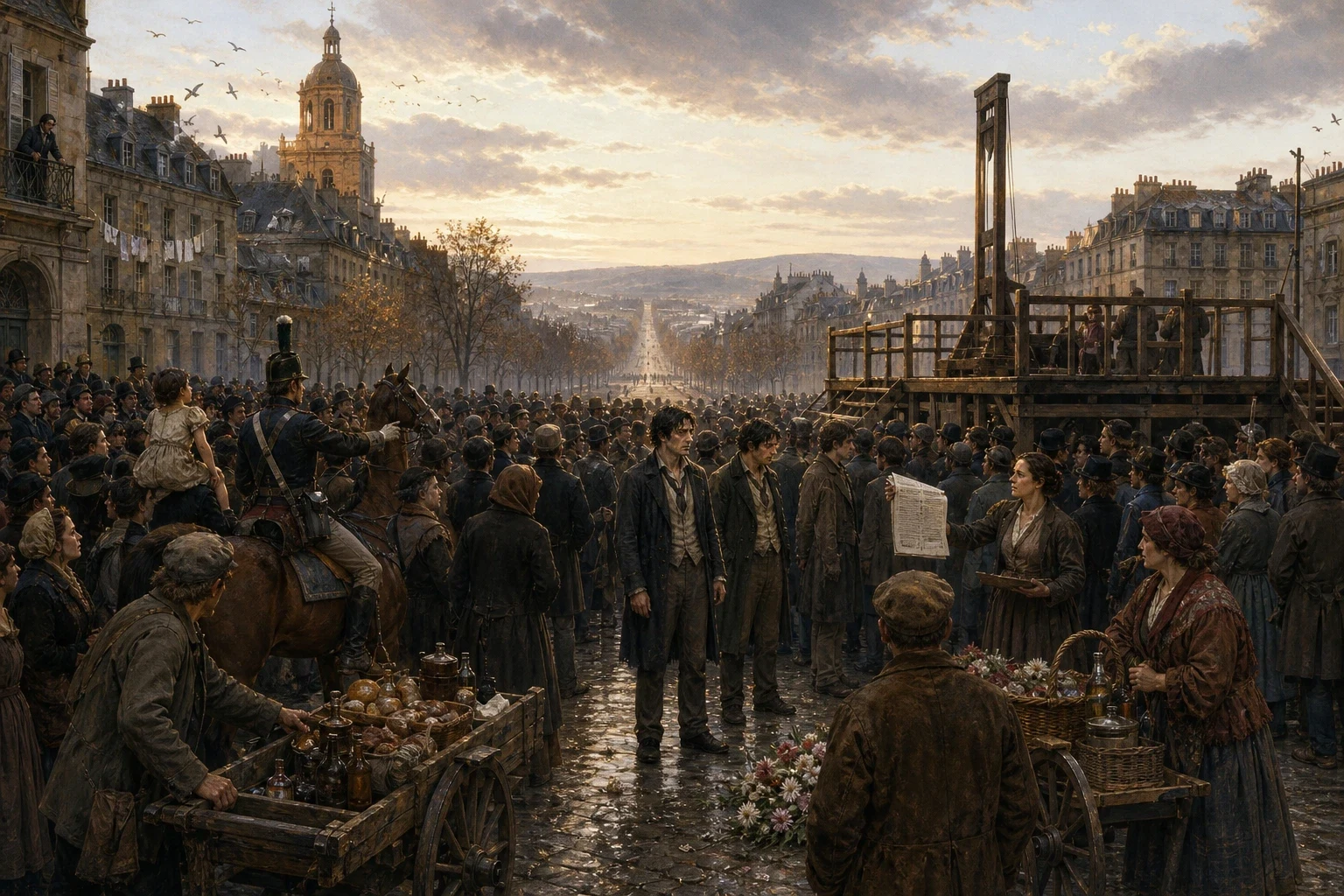
In the last hours before dawn, Sydney Carton has traded places with Darnay in his cell, so that it is Carton, and not Darnay, who now rides among the condemned in the tumbrils rolling toward the Place de la Révolution. He comforts a frightened young seamstress riding beside him, holding her hand all the way to the scaffold steps. He climbs them calmly, and the crowd gathered to watch sees nothing in his quiet face but peace. He does not speak his last thoughts aloud, but as he waits his turn he is certain, as surely as if it were already written, that Lucie and Darnay and their child will live long, safe lives far from this square, that he is remembered in their hearts above all others, and that what he does now is a far better thing than anything he has ever done. Beyond the crowd, past the square, the road out of the city runs on toward the coast, and the sea, and England.
About this story
- Audience: general readers
Read Wonder Novels on your phone
Wonder Novels is available on Android. Get Wonder Novels on Google Play.