Lazarillo de Tormes
The life and fortunes of a boy who served many masters
Page 1
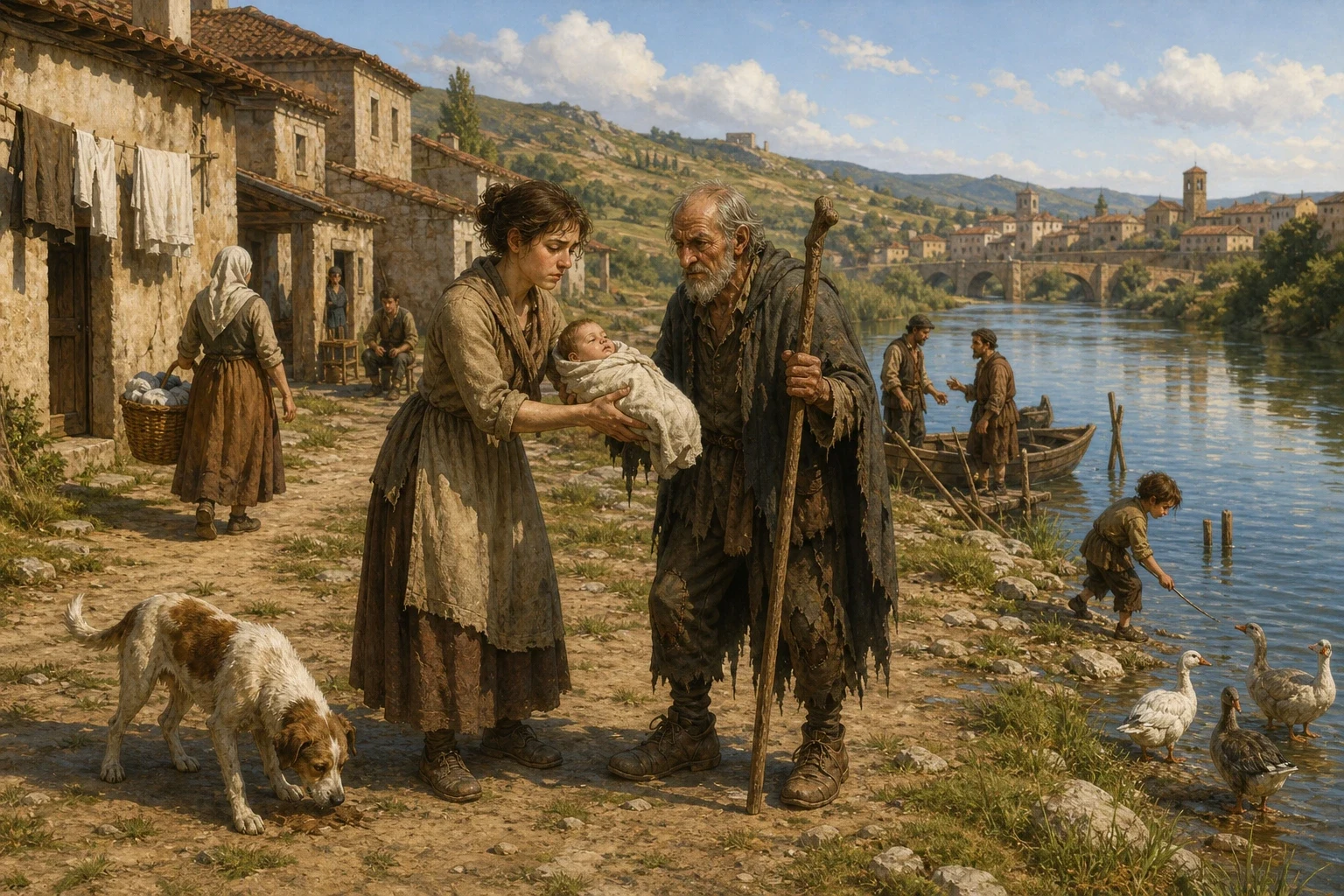
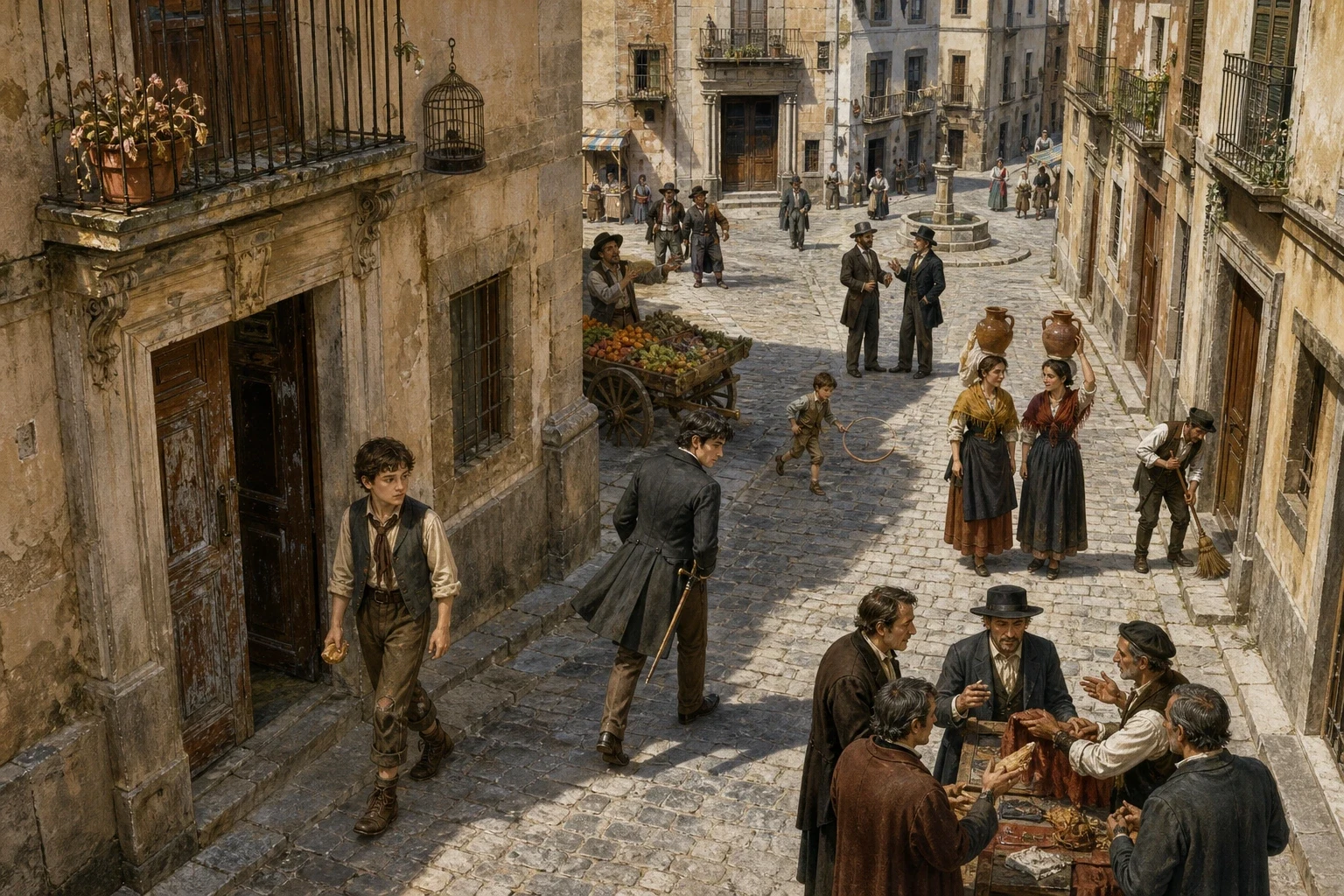
Lázaro was born by the Tormes River, which gave him his name: Lazarillo de Tormes. His father, a miller by trade, worked hard to provide for his family but was accused of stealing from the mill. He later met his end fighting for the King, leaving Lazarillo's mother alone and burdened with a young child. In her hardship, she moved to Salamanca, a bustling city, where she found work at an inn, often bringing her young son with her. One day, a blind man, a wandering beggar known for his cunning and a certain gift for fortune-telling, came to stay at the inn. He offered to take Lazarillo with him as his guide, promising to teach the boy everything he knew about surviving in the harsh world. With a heavy heart, Lazarillo's mother entrusted her son to the stranger, hoping he would find a better life.
Page 2

As Lazarillo and the blind man left Salamanca, their journey began by crossing a great Roman bridge, an ancient structure of weathered stone arches spanning the Tormes River. At one end of this impressive bridge stood a peculiar stone sculpture of a bull. The blind man, always keen to teach a harsh lesson, told Lazarillo to put his ear close to the bull, claiming the boy would hear a great noise inside. Lazarillo, still a trusting and innocent boy, eagerly did as he was told, leaning forward with curiosity. But the blind man, quick as a wink and with a mischievous grin, pushed Lazarillo's head forward with sudden force. Lazarillo bumped his head hard against the cold, unyielding stone, feeling dizzy and a sharp pain. Tears sprang to his eyes from the shock and hurt. The blind man, instead of offering comfort, laughed, telling him that a guide must be sharper and more watchful than a blind man if he was to survive in the world.
Page 3

One day, as they walked through the sun-drenched fields and vineyards of Almorox, the blind man bought a large bunch of ripe grapes. He made a strict deal with Lazarillo: they would each take one grape at a time, fairly, until the bunch was gone. But soon, the blind man, being greedy himself, started secretly taking two grapes at once. Lazarillo, always observant and desperately hungry, quickly noticed his master's trick. Being quick-witted and eager for more food, he began taking three grapes each time. The blind man, though sightless, had keen senses. He noticed that Lazarillo had fallen strangely silent, and knew the boy was taking more than his share. He cleverly accused Lazarillo, proving his deduction by pointing out that the boy only stayed quiet when he was taking more. Lazarillo was caught, but he had enjoyed his stolen grapes, a small victory against his master's stinginess.
Page 4

In a humble inn kitchen in Escalona, the blind man was carefully cooking a sausage over a sputtering fire, along with some humble turnips. Lazarillo, always suffering from gnawing hunger, watched the sizzling sausage with intense longing, his stomach rumbling. While the blind man was momentarily distracted, tending to the turnips, Lazarillo quickly snatched the hot, juicy sausage and swallowed it whole in a single, desperate gulp. To hide his theft, he then swiftly placed one of the turnips into the fire, hoping its smell would cover his tracks. However, the blind man, with his keen sense of smell, noticed the unusual aroma and the absence of the sausage's scent. He sniffed around, growing increasingly suspicious, and soon realized the sausage was gone. He questioned Lazarillo, who feigned innocent ignorance. Furious, the blind man hit Lazarillo with the earthenware pot he was holding, causing a loud thud and making the boy cry out in startled pain.
Page 5
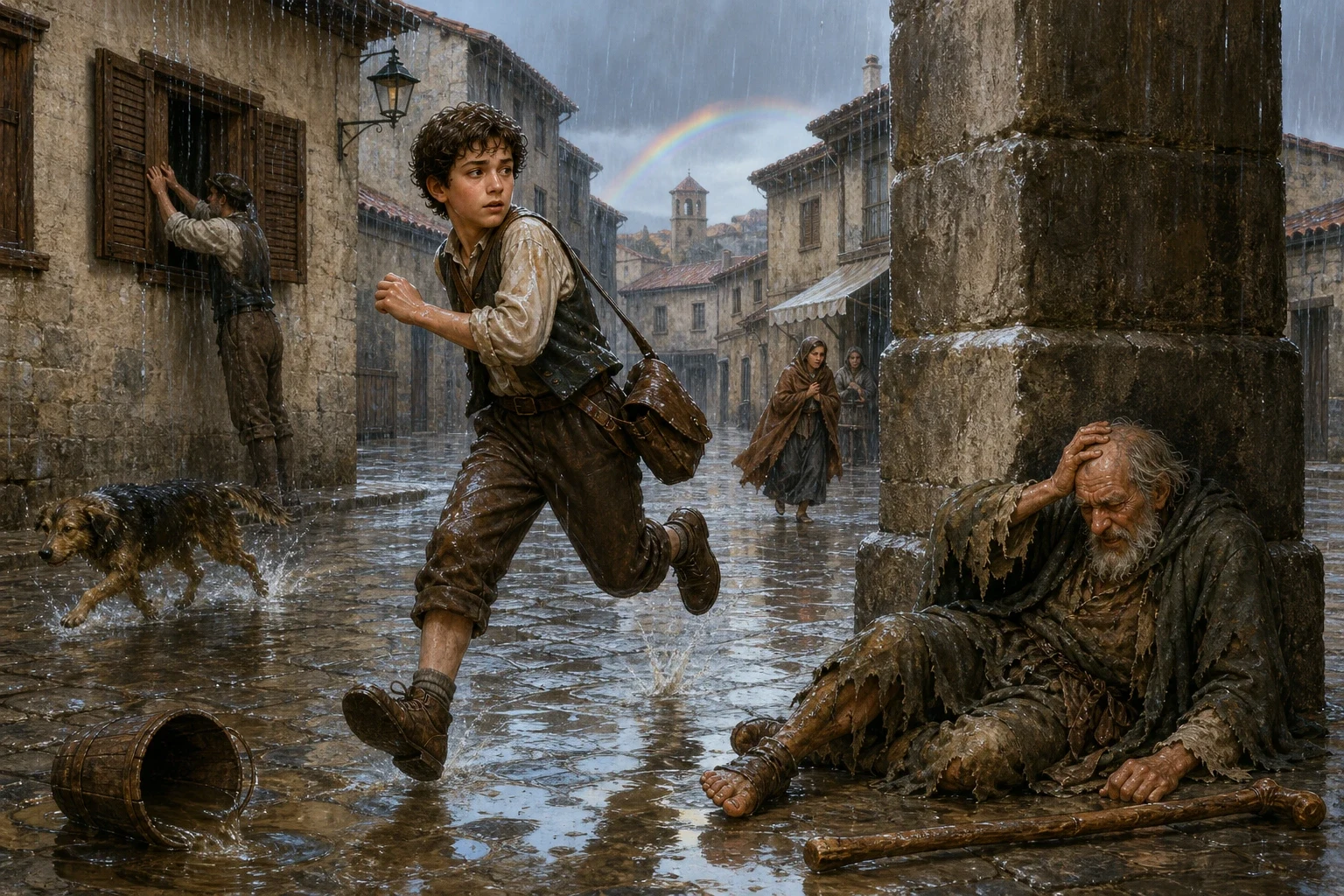
One day, as they journeyed through the town of Maqueda, a heavy and sudden rain began to fall. The blind man, wanting to stay dry, quickly told Lazarillo to lead him across a narrow street to a sturdy stone pillar, believing it would offer good shelter from the downpour. Lazarillo, however, was utterly fed up with the blind man's relentless cruelty and saw this as his golden chance for freedom. He led the blind man directly to the pillar, but instead of guiding him safely around a large puddle that had collected, he deceptively told him to jump with all his might to avoid the water. The blind man, trusting Lazarillo's direction for a moment too long, jumped forward with full force, hitting his head loudly against the stone pillar. He fell down, dazed and confused by the impact. This was Lazarillo's moment; without a second thought, he turned and ran, finally free.
Page 6
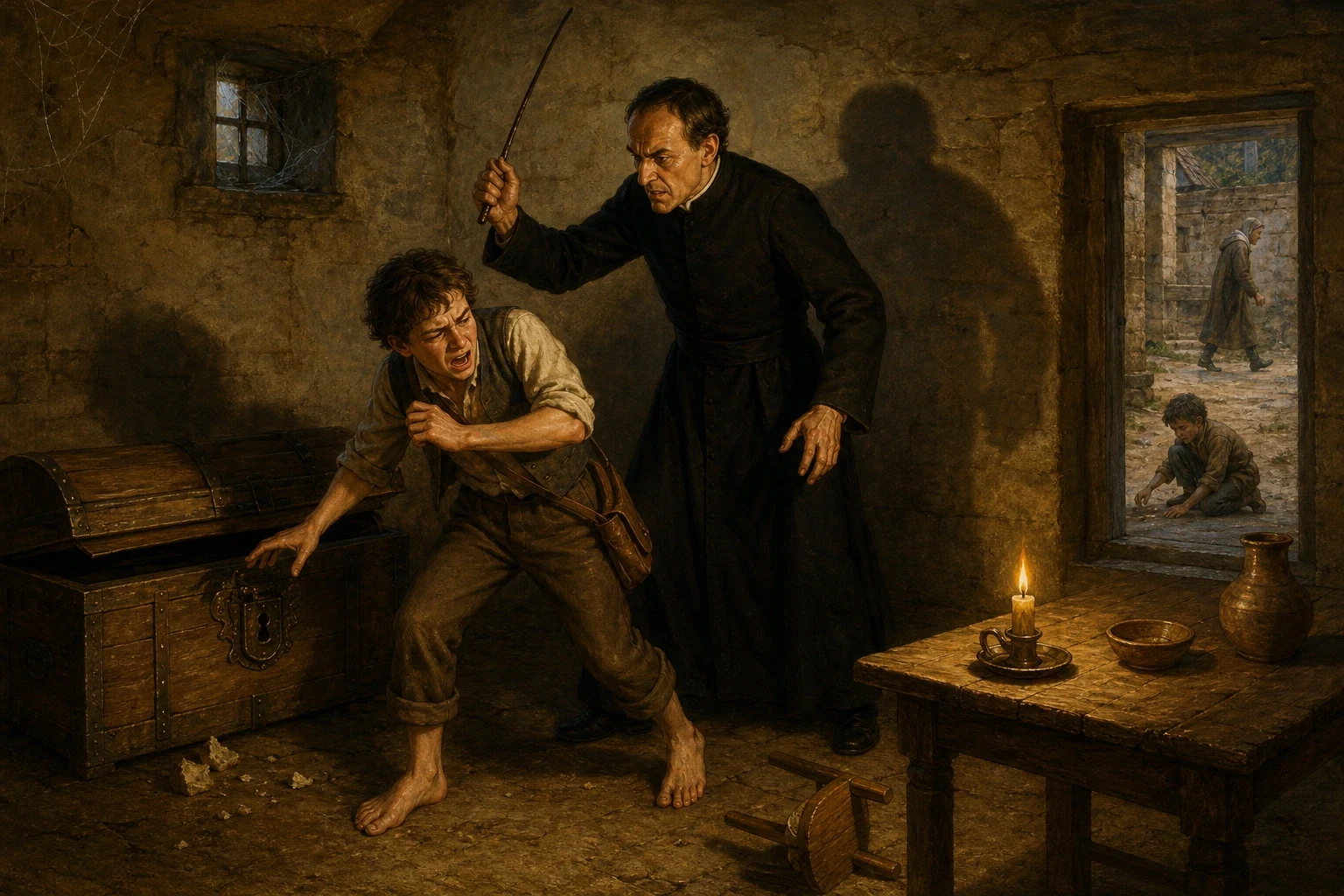
Lazarillo's next master was a stingy cleric in Maqueda, a man whose greed knew no bounds. This cleric barely fed Lazarillo, preferring to hoard all the bread for himself, keeping it strictly locked in a heavy wooden chest. Lazarillo soon grew desperately hungry, his stomach aching constantly. By sheer luck and persistence, he found an old, rusty key that fit the chest's lock. He would secretly take small, careful pieces of bread, then meticulously lock the chest again, leaving no trace. The cleric, however, noticed the bread mysteriously disappearing and at first suspected mice. He repaired the chest, but the bread still vanished, fueling his suspicion. One night, he lay in wait and caught Lazarillo with the tell-tale key, uncovering the truth of the boy's desperate theft. The cleric was enraged, his face contorted with fury, and angrily hit Lazarillo with a stick, causing the boy to cry out in pain and be sore for a while before immediately throwing him out into the street.
Page 7
Lazarillo next found himself in the grand city of Toledo, serving a proud esquire. This new master seemed, at first glance, well-dressed and important, carrying himself with an air of dignity. But Lazarillo soon made a disheartening discovery: the esquire was utterly penniless, owning nothing but his fashionable, albeit worn, clothes and his immense pride. He would walk through the city with great ceremony, maintaining a noble façade, but there was never any food in his house. Lazarillo, once again starving, endured days of hunger. He was forced to beg for food in the streets, not just for himself but for his master too, a humiliating role reversal. The esquire, unable to pay his rent or mounting debts, simply vanished one morning, leaving Lazarillo alone in the empty house to face the angry landlords who came demanding payment. Lazarillo, bewildered, was left to fend for himself once more.
Page 8
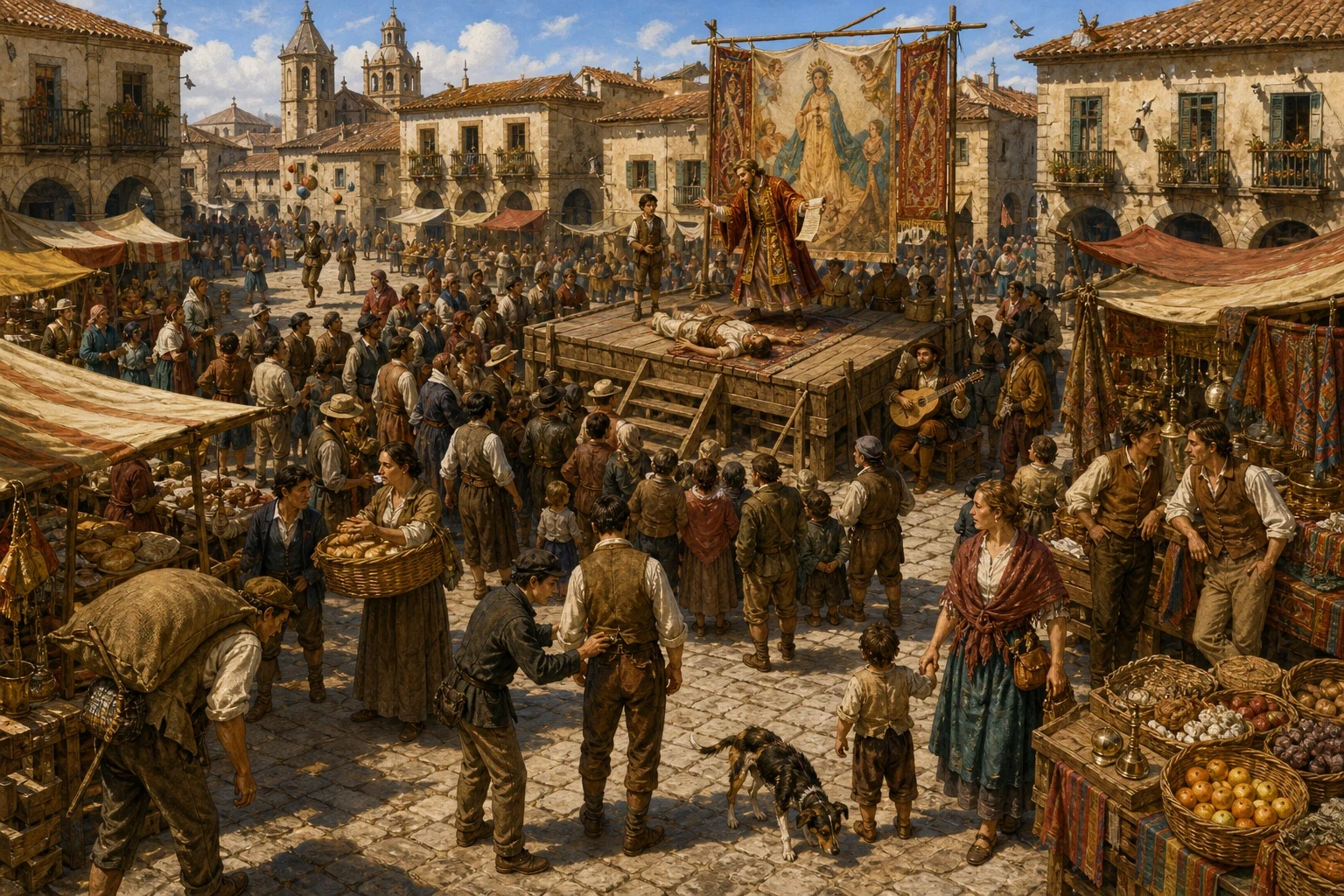
Lazarillo continued his journey through life, serving many masters, each one teaching him a new, often cynical, lesson about the world. For a time, he found himself working with a cunning and theatrical pardoner. This man would travel from town to town, selling papal indulgences with the most elaborate and deceptive tricks. Once, in a busy market square, the pardoner staged a particularly convincing 'miracle' to boost his sales. He pretended that a rival official had spoken ill of the pardoner's holy indulgences, and was then immediately struck down by divine wrath, writhing on the ground. Lazarillo, now older and much wiser to the ways of the world, subtly helped the pardoner by encouraging the crowd's belief with well-placed gasps and nods. The 'miracle' terrified and utterly convinced the townsfolk, who then eagerly rushed forward to buy the pardoner's pardons, filling his pockets with coins and cementing his reputation as a man of God.
Page 9
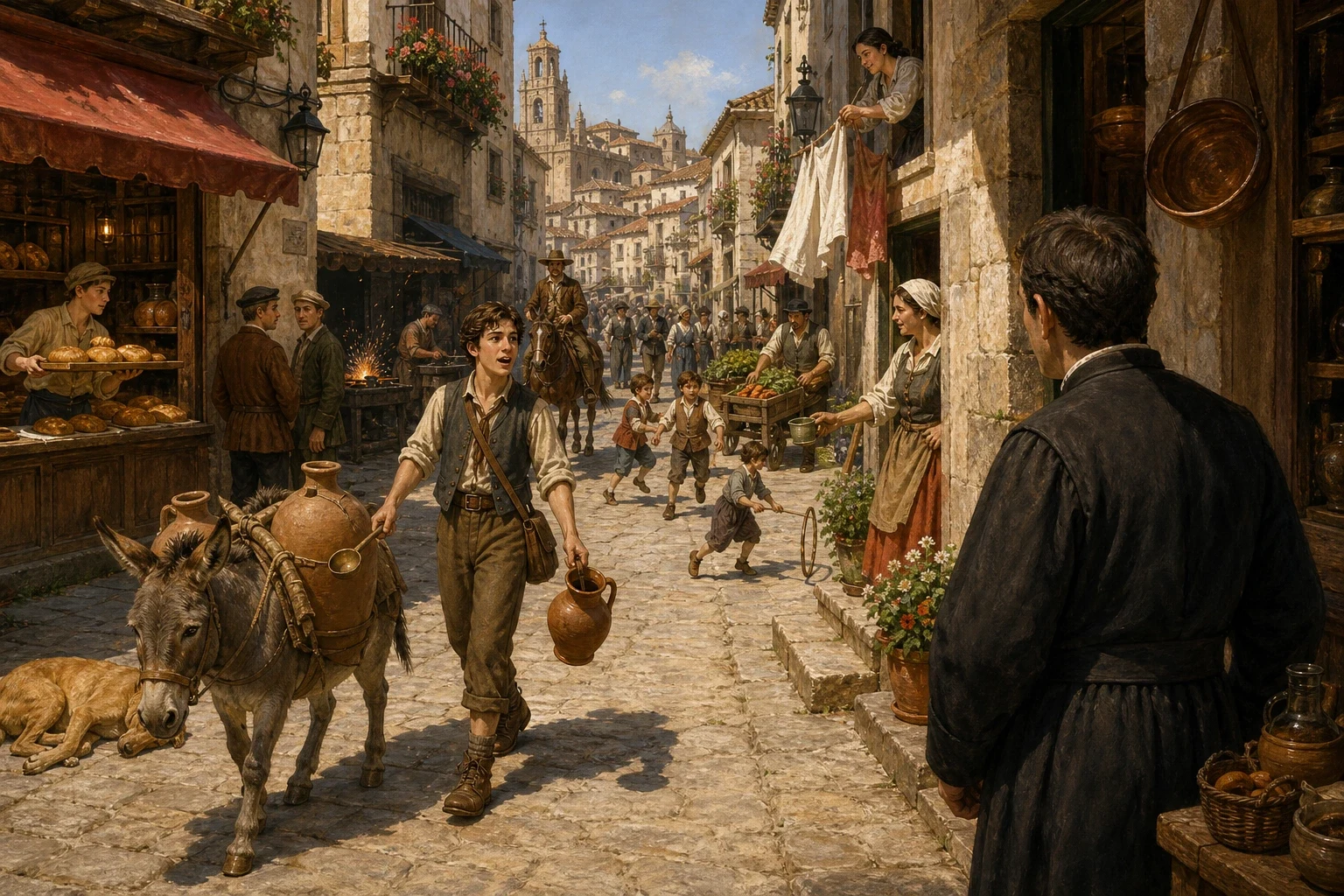
After his adventures with the pardoner, Lazarillo found stable work with a chaplain in Toledo. This chaplain was an industrious and shrewd man, who wisely put Lazarillo to work selling water throughout the bustling city. Lazarillo bought a small, sturdy donkey to help him, and for four tireless years, he diligently carried heavy water jugs from the public fountain to the houses of Toledo's citizens. He worked hard, day in and day out, carefully saving his earnings bit by bit. Slowly, steadily, his small fortune grew until, at last, he had enough money to buy himself a proper sword and a decent cape. For the very first time, Lazarillo felt he looked and dressed like a respectable man, no longer a ragged servant. Having achieved this significant milestone, he proudly left the chaplain's service, ready for a new chapter in his life, one he hoped would be even better.
Page 10
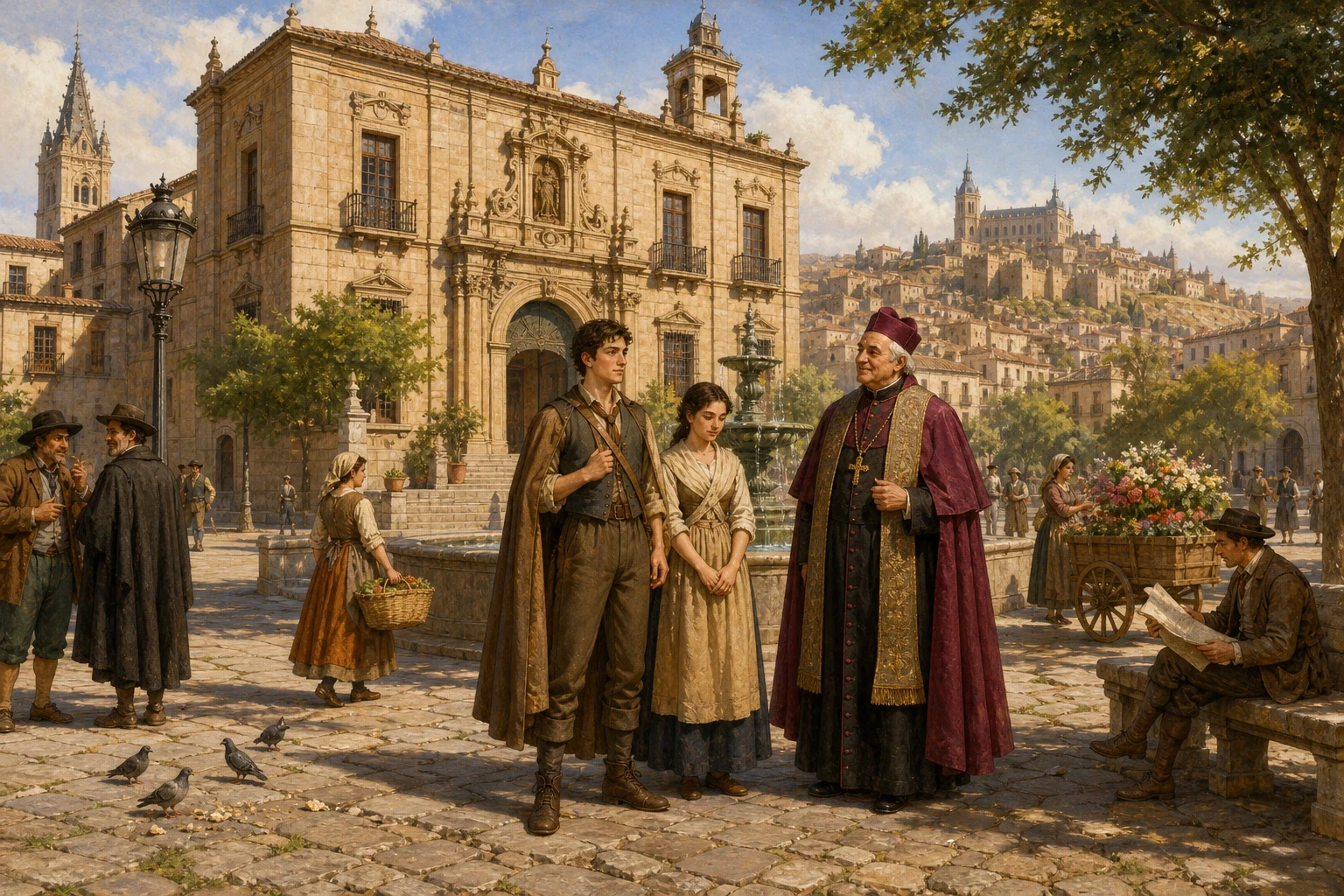
After all his travels and his many masters, Lazarillo finally settled down and found a comfortable life in the grand city of Toledo. He became the town crier, a public announcer who proclaimed local news and ordinances, a position he considered a true mark of good fortune and respectability. He married the maid of the Archpriest of San Salvador, a respected and influential man in the city. Though there were whispers in the town about the unusually close relationship between his wife and the Archpriest, Lazarillo, having learned much about survival and acceptance, chose to ignore them completely. He was content with his comfortable life, his new position, and his marriage, believing himself to be at the peak of all good fortune. He had, at last, found his secure place in the world, a place he was determined to keep, no matter what others might say.
About this story
- Audience: kids (ages 6–12)
Read Wonder Novels on your phone
Wonder Novels is available on Android. Get Wonder Novels on Google Play.