Angela Merkel
Angela Merkel — an illustrated biography story, set in Global. 10 illustrated pages, free to read on Wonder People.

Page 1
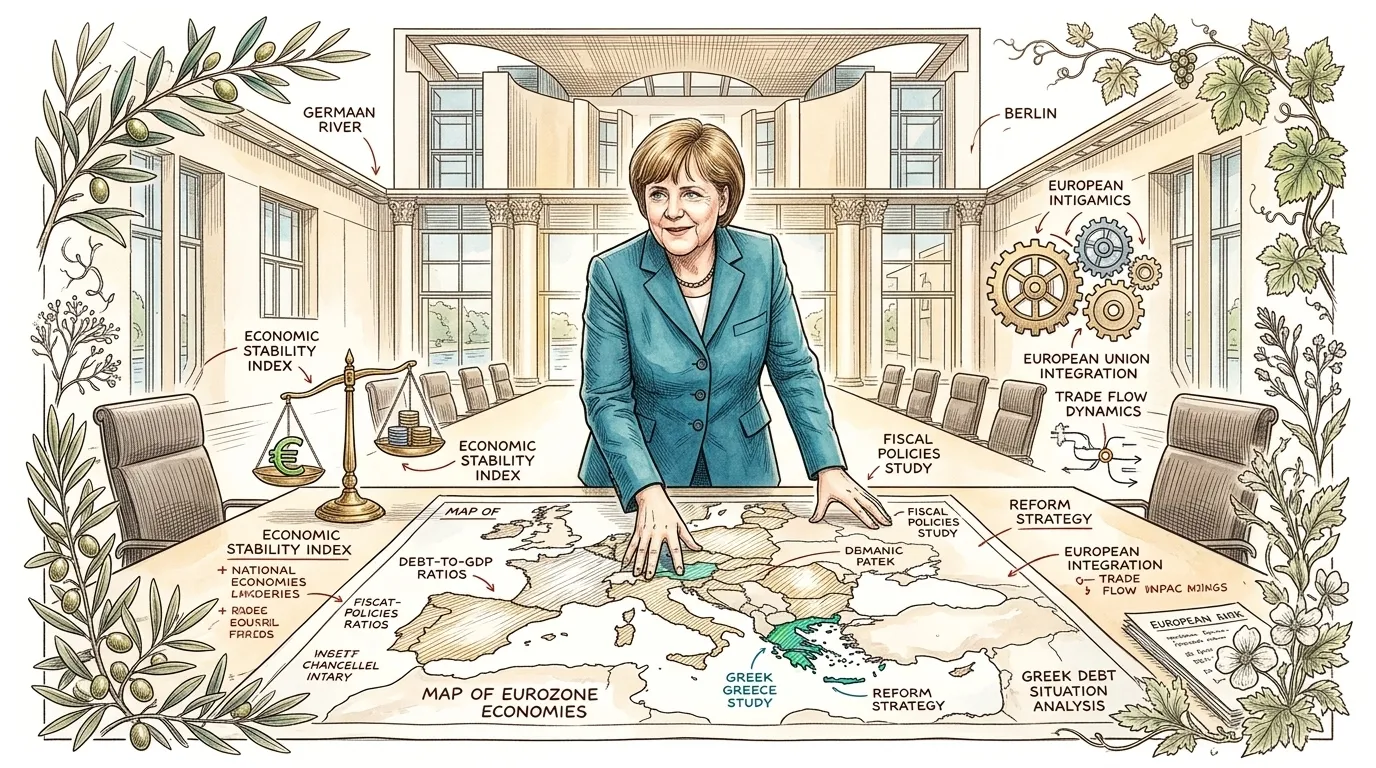
In late 2011, as the sovereign debt crisis threatened to dismantle the Eurozone, Angela Merkel stood at the fulcrum of European stability. From the Chancellery in Berlin, she convened urgent meetings, navigating fierce resistance from her own parliament and the desperate pleas from struggling member states like Greece. Her firm stance, demanding austerity in exchange for bailout funds, reshaped the continent's economic future, committing billions of euros to stabilize the single currency. In that defining moment, she embodied the stark authority required to avert collapse, becoming the undisputed, albeit often embattled, leader of Europe.
Biographical Fact: Late 2011, Berlin. Angela Merkel leads negotiations to stabilize the Eurozone amidst the Greek debt crisis. Billions in aid were committed, contingent on strict austerity measures, asserting German financial leadership.
Page 2

Before the Chancellery, before the Euro, Angela Merkel was Angela Kasner, a young woman growing up in Templin, East Germany. Born the daughter of a Protestant pastor, her early life was steeped in intellectual curiosity and the quiet constraints of the German Democratic Republic. She immersed herself in physics at the University of Leipzig, cultivating a rigorous, analytical mind. This environment, one of limited freedoms but strong academic pursuit, shaped her pragmatic resilience and cautious approach to societal change, a characteristic that would define her later political career.
Biographical Fact: 1970s, East Germany. Angela Merkel (then Kasner) pursued physics, earning her doctorate in quantum chemistry. Her scientific background influenced her methodical approach to politics.
Page 3

In November 1989, the Berlin Wall fell, a seismic shift that shattered the world Angela Merkel knew. This momentous event abruptly opened a path from scientific research to political action. She joined the nascent 'Democratic Awakening' movement, a small political group advocating for reform and democracy in the collapsing GDR. For the first time, her analytical skills were applied not to quantum chemistry, but to the urgent, chaotic demands of political restructuring, navigating a society in profound transition. The quiet scientist found her voice amidst the clamor for freedom.
Biographical Fact: November 1989, Berlin. The fall of the Berlin Wall spurred Angela Merkel to transition from science to politics, joining the 'Democratic Awakening' movement.
Page 4

Following German reunification, Angela Merkel's rapid political ascent caught the attention of Chancellor Helmut Kohl, a towering figure in German and European politics. Kohl, recognizing her intellect and Protestant East German background, appointed her Minister for Women and Youth in 1991. This was her baptism by fire in federal politics, working directly under the 'Chancellor of Unity.' She absorbed the intricate workings of government, the art of coalition-building, and the demands of international diplomacy from a master, even as she often maintained a quiet, observant presence.
Biographical Fact: 1991, Bonn. Chancellor Helmut Kohl appointed Angela Merkel as Minister for Women and Youth. This period was crucial for her political education at the highest levels of government.
Page 5

By the late 1990s, the Christian Democratic Union (CDU) was engulfed in a party funding scandal that threatened to dismantle its legacy, tarnishing Chancellor Kohl's image. Angela Merkel, then the party's General Secretary, made a bold, calculated move. In a decisive op-ed in the Frankfurter Allgemeine Zeitung, she publicly called for the party to distance itself from Kohl and embrace a future without him. This act of political courage, severing ties with her mentor, cleared her path to the party chairmanship in 2000, fundamentally reshaping the CDU's direction and establishing her as its formidable new leader.
Biographical Fact: 2000, Berlin. Angela Merkel, then CDU General Secretary, publicly broke with Helmut Kohl over a party funding scandal, paving her way to become the first female leader of the Christian Democratic Union.
Page 6
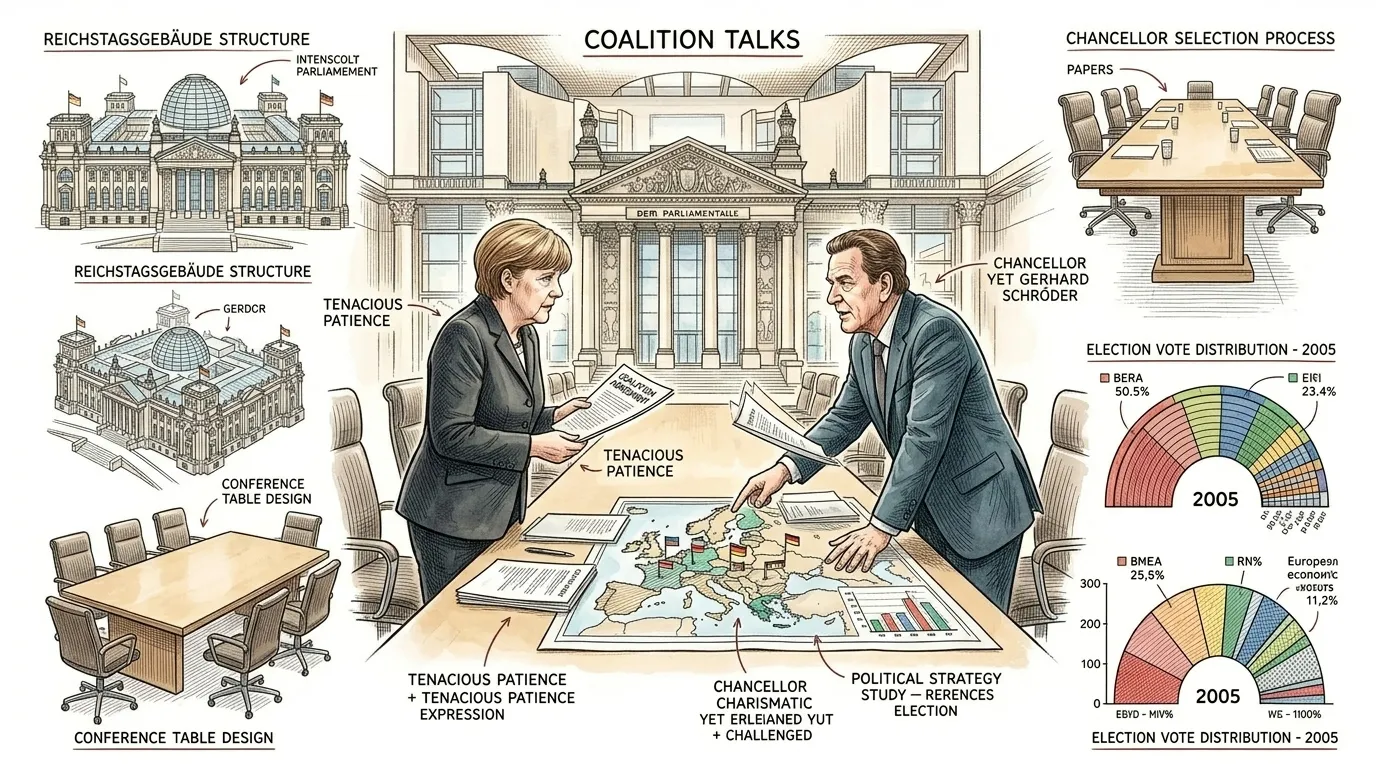
As leader of the opposition, Angela Merkel methodically built her platform, challenging Chancellor Gerhard Schröder's Red-Green coalition. Her campaign in 2005 focused on economic reform and stability, presenting a calm, pragmatic alternative to the incumbent's more charismatic style. The election result was razor-thin, leading to complex coalition negotiations with the Social Democrats. She navigated these talks with her characteristic tenacity and patience, ultimately securing the Chancellorship. This marked not just a personal triumph, but a historic shift, as Germany elected its first female Chancellor and its first leader from the former East Germany.
Biographical Fact: 2005, Germany. After a closely contested election, Angela Merkel led the CDU/CSU to victory, becoming Germany's first female Chancellor and the first from East Germany, following complex coalition negotiations.
Page 7
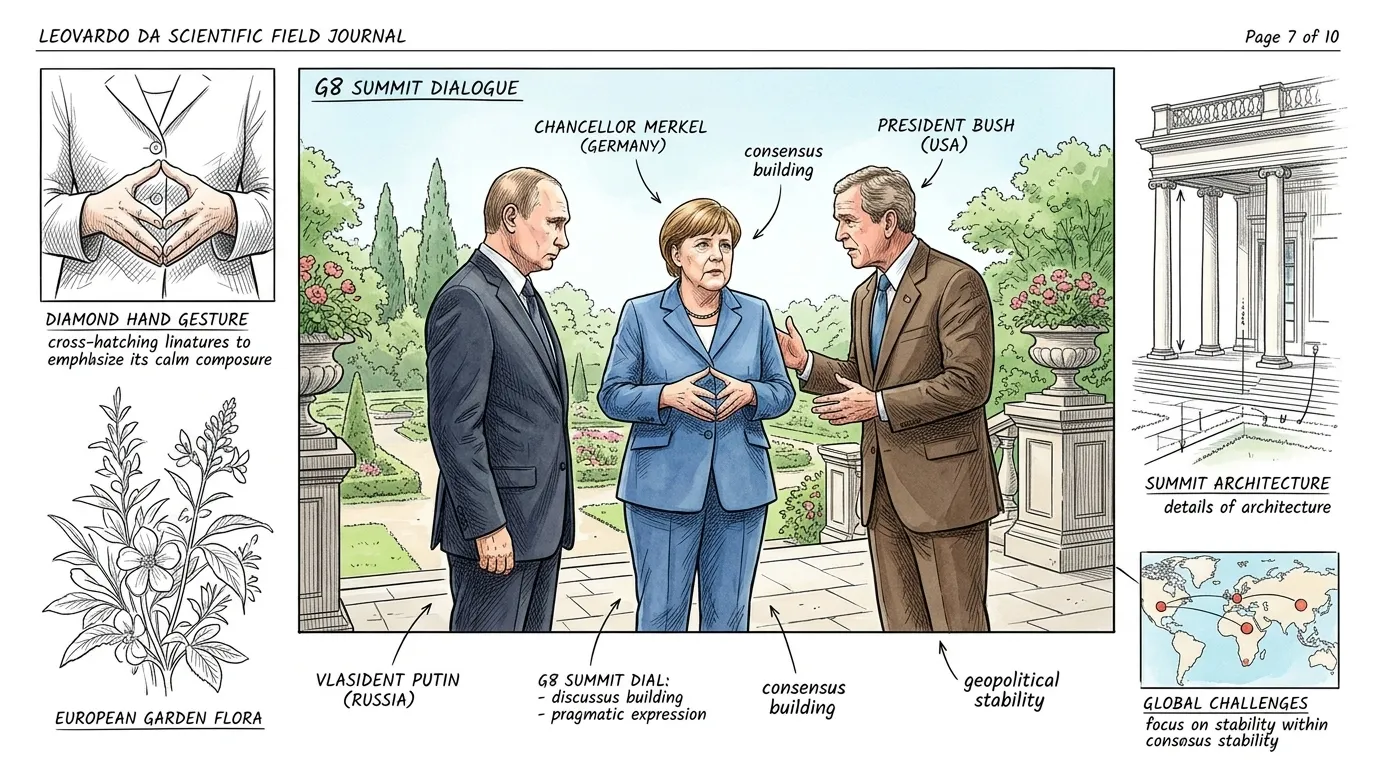
From her first days in office, Angela Merkel faced a relentless series of international challenges: the global financial crisis of 2008, the subsequent Eurozone turmoil, and rising geopolitical tensions. She became a central figure on the world stage, engaging in critical dialogues with leaders like US President George W. Bush and Russian President Vladimir Putin. Her approach was consistently pragmatic, emphasizing consensus-building and multilateral cooperation over unilateral action. She projected an image of stability and measured resolve, often being the voice of reason amidst escalating global anxieties.
Biographical Fact: Late 2000s, G8 Summit. Angela Merkel engaged actively with global leaders, including US President George W. Bush and Russian President Vladimir Putin, during periods of significant international financial and geopolitical crises.
Page 8
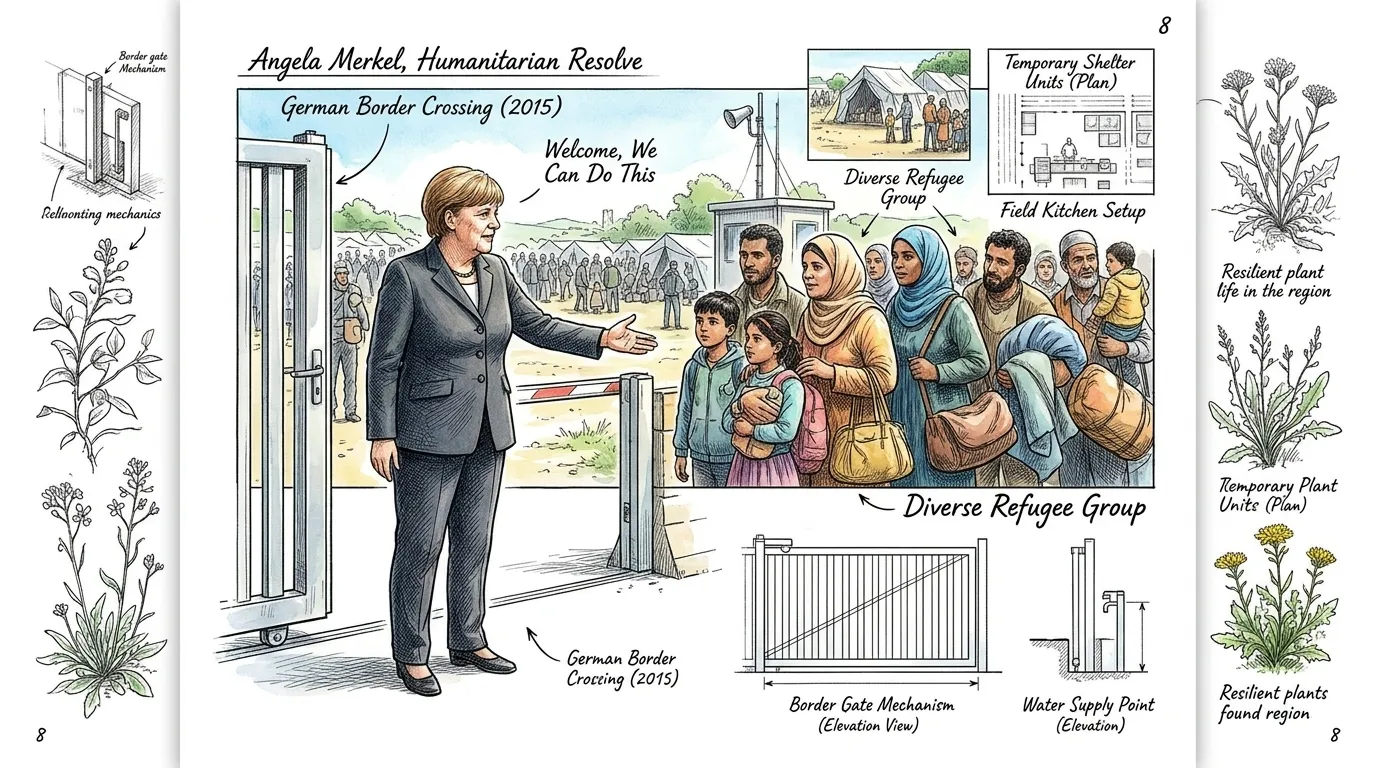
In 2015, Europe faced its most significant refugee influx since World War II. Angela Merkel made a profound, controversial decision to open Germany's borders to hundreds of thousands of asylum seekers, famously declaring 'Wir schaffen das' — 'We can do this.' This humanitarian gesture garnered both global praise and intense domestic and European criticism, profoundly dividing public opinion. Her decision reshaped Germany's social fabric and triggered a continental debate over migration policy, creating lasting political and societal consequences that rippled throughout her remaining time in office and beyond.
Biographical Fact: 2015, Germany/Europe. Angela Merkel's decision to open Germany's borders during the refugee crisis, encapsulated by 'Wir schaffen das,' was a defining moment of humanitarian policy, with extensive social and political ramifications.
Page 9
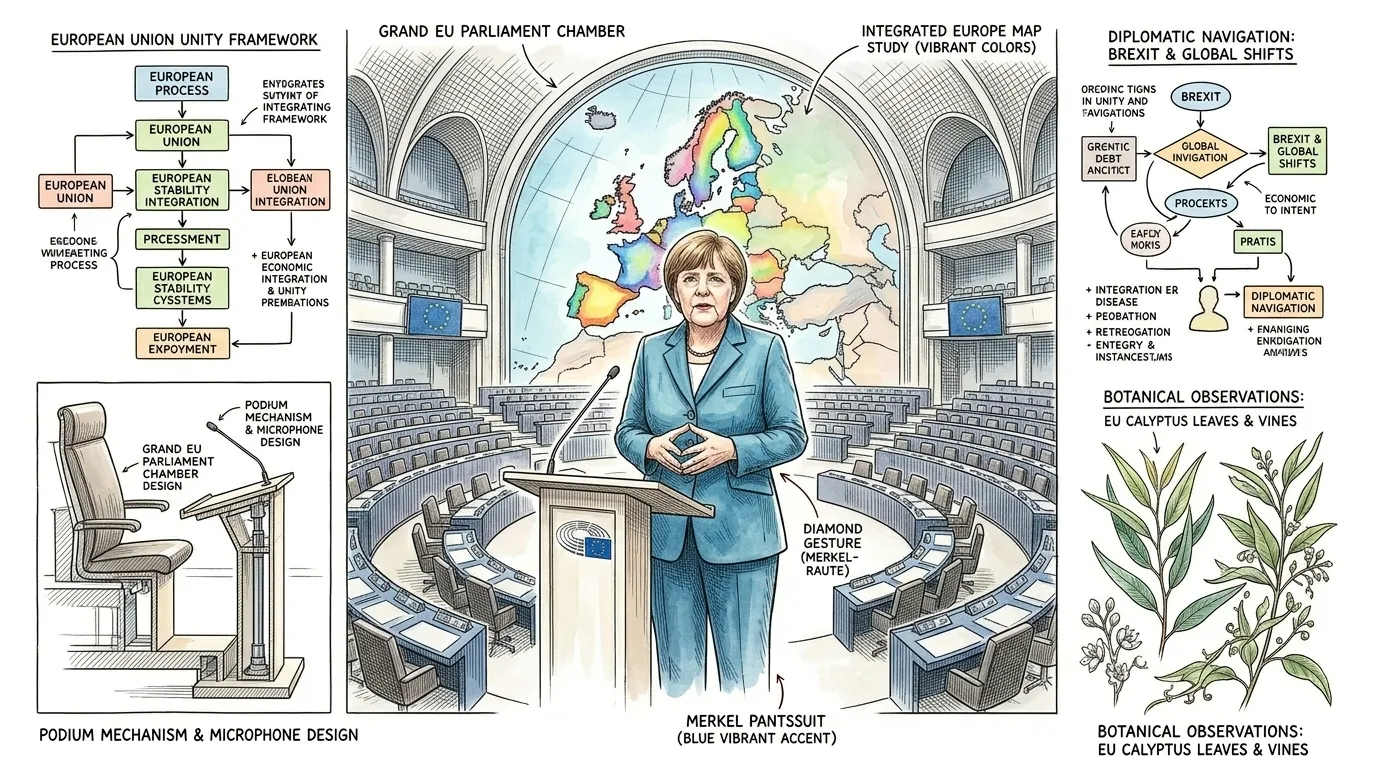
Throughout her sixteen years as Chancellor, Angela Merkel consistently championed European unity, particularly after the UK's decision to leave the European Union. She became the stabilizing force for a bloc increasingly fractured by nationalism and populist movements. Whether negotiating complex trade deals, confronting authoritarianism, or advocating for climate action, she relentlessly pursued a vision of a strong, integrated Europe. Her steadfast diplomacy and capacity for compromise kept the European project cohesive, even as internal and external pressures threatened its foundations.
Biographical Fact: Late 2010s, Brussels. Angela Merkel consistently advocated for European unity, guiding the EU through challenges like Brexit and global political shifts, asserting its role on the international stage.
Page 10
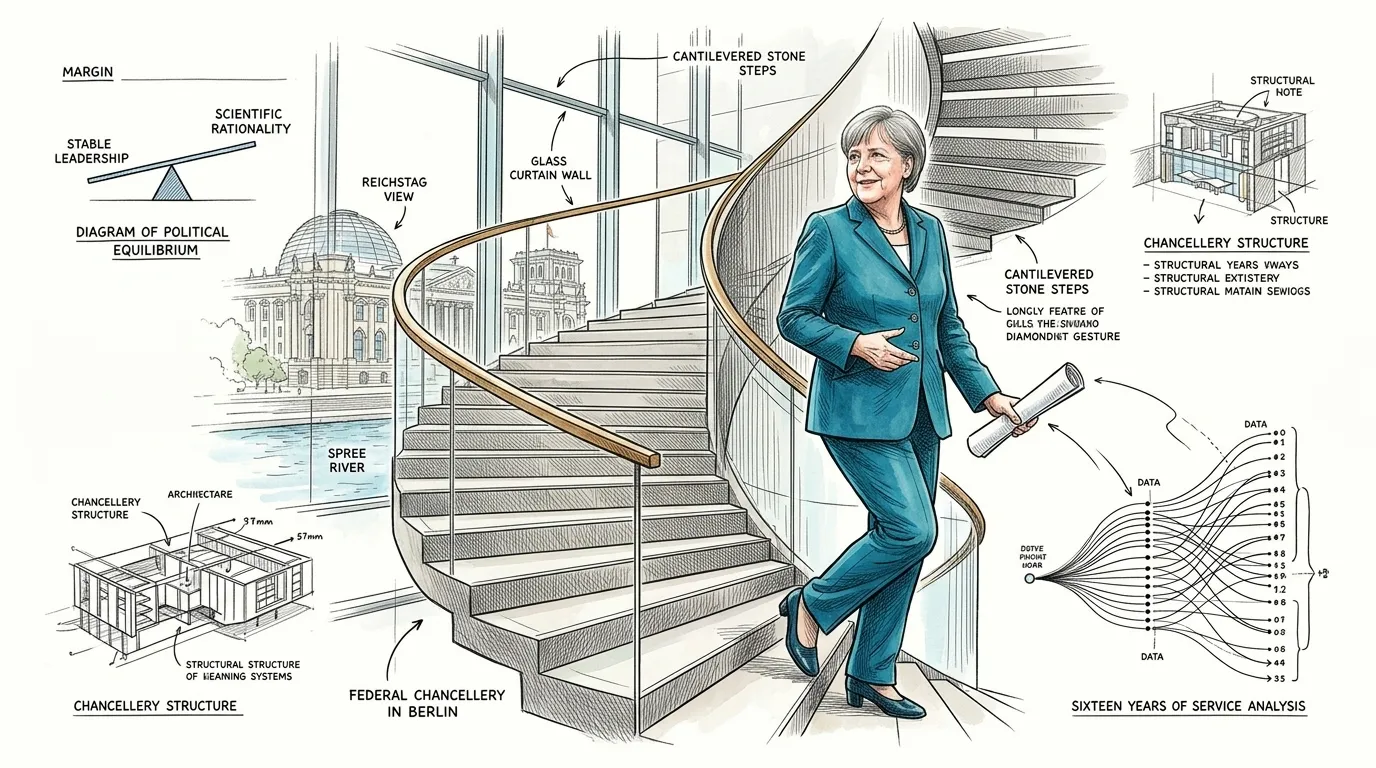
After sixteen years, Angela Merkel stepped down from the Chancellery in 2021, leaving an indelible mark on Germany and the world. Her tenure was characterized by quiet strength, analytical precision, and an unwavering commitment to stability. She navigated financial crises, refugee waves, and geopolitical shifts with a pragmatism that earned her the moniker 'leader of the free world.' Her legacy is one of steady leadership in a turbulent era, cementing Germany's role at the heart of Europe and demonstrating the profound impact of scientific rationality applied to political governance.
Biographical Fact: 2021, Berlin. Angela Merkel concluded sixteen years as Chancellor, leaving a legacy of stable, pragmatic leadership that profoundly influenced Germany and solidified its central role in European and global affairs. Her scientific background often informed her methodical approach to policy.
About this story
- Location: Global
- Audience: general readers