Anton Chekhov
Anton Chekhov — an illustrated biography story, set in Global. 10 illustrated pages, free to read on Wonder People.
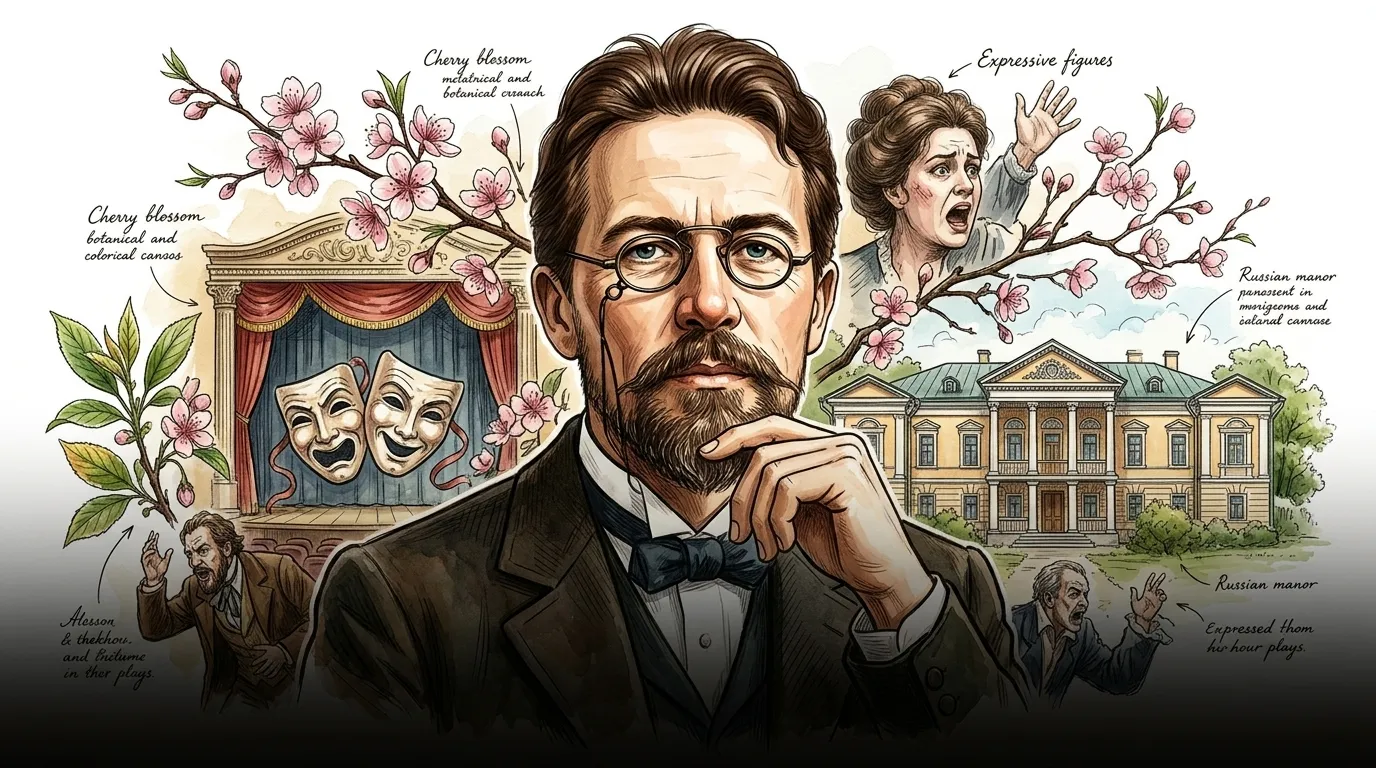
Page 1
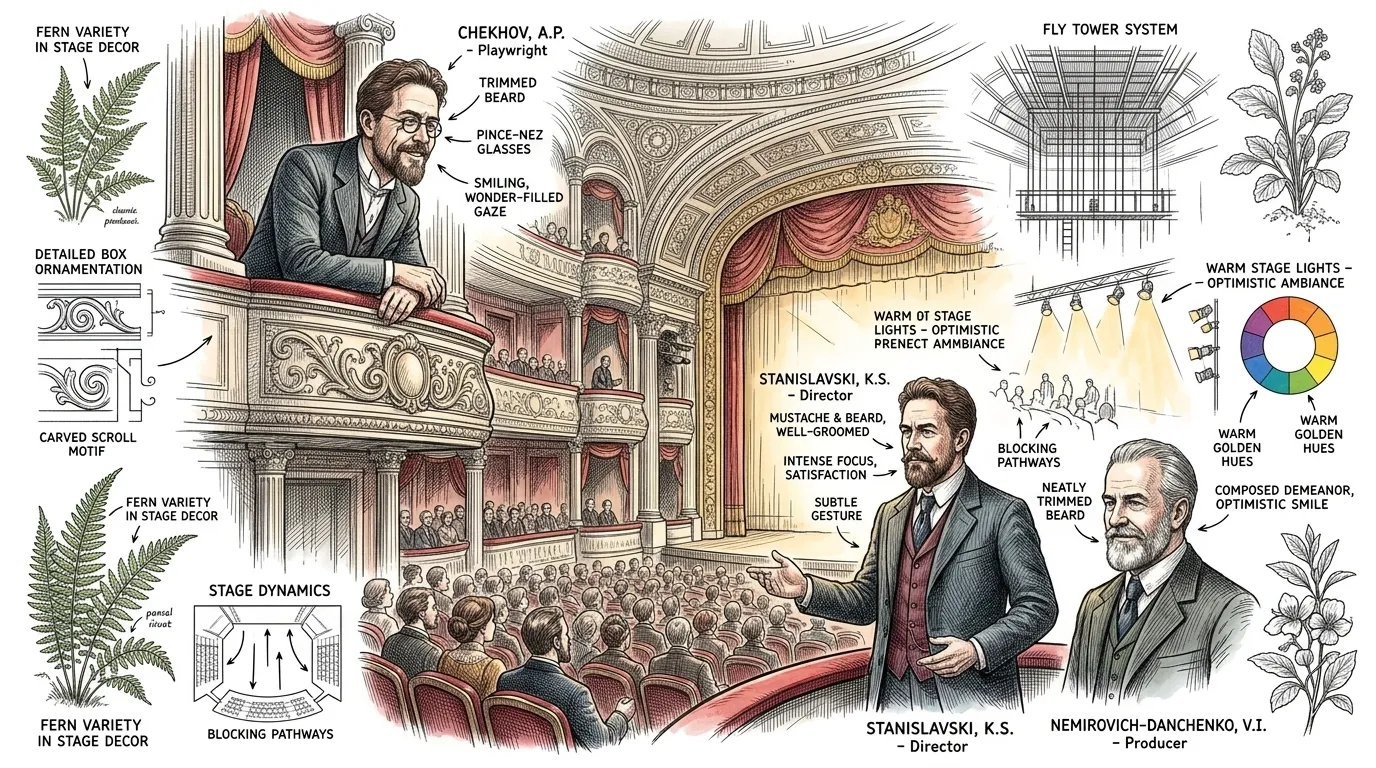
At the Moscow Art Theatre in December 1898, Anton Chekhov witnessed the profound impact of his play, 'The Seagull.' After its disastrous Petersburg premiere two years prior, Konstantin Stanislavski and Vladimir Nemirovich-Danchenko's meticulous direction transformed it into a cultural phenomenon. Chekhov, frail but resolute, observed a captivated audience, their silent intensity a testament to his revolutionary vision for modern drama, which had now unequivocally arrived. This re-staging marked the moment his unique voice solidified its grip on the theatrical world.
Page 2
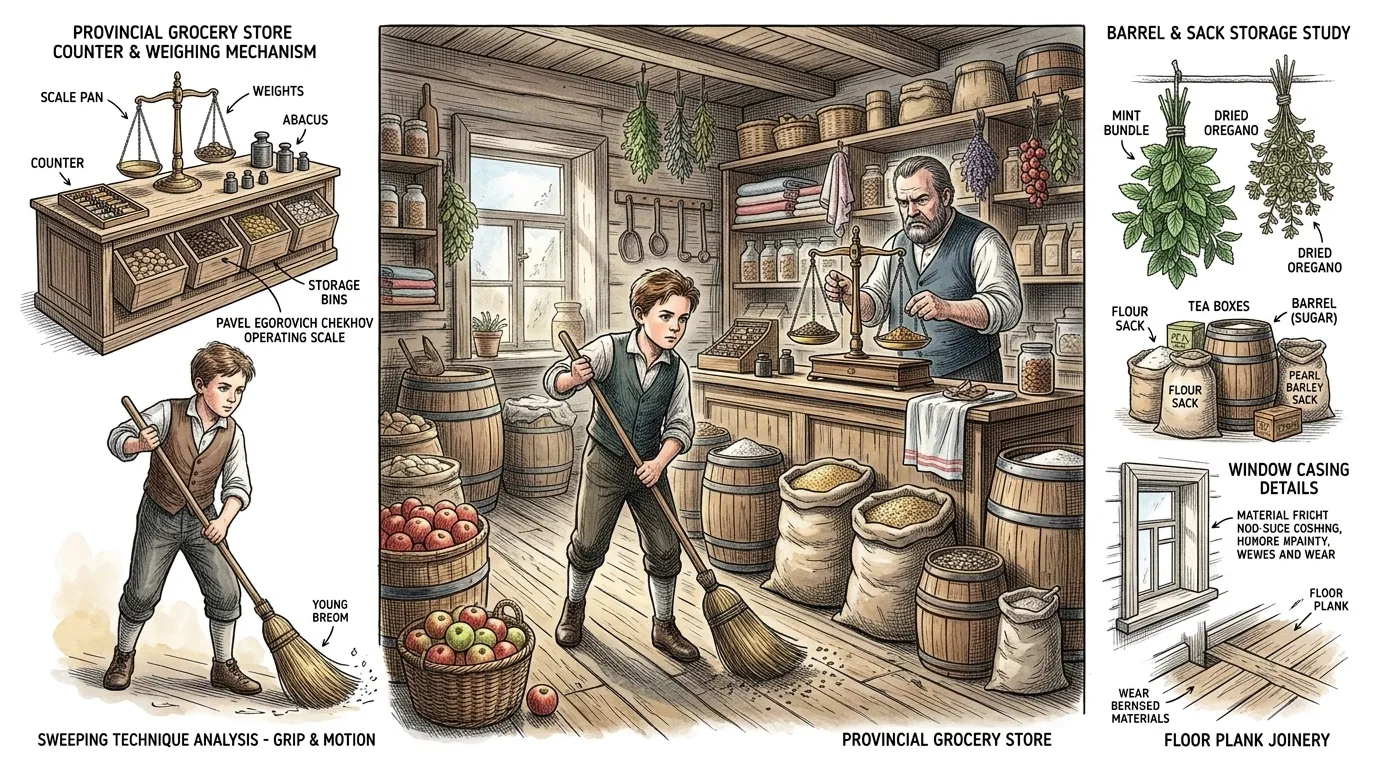
Born in 1860 in Taganrog, Russia, Anton Chekhov's early life was marked by hardship and duty. His tyrannical grocer father, Pavel Egorovich, instilled a rigid piety and work ethic, yet also crushed the family under debt and severity. This formative environment, steeped in provincial life and financial struggle, became the crucible for Chekhov's acute observations of human frailty, societal hypocrisy, and the quiet despair beneath everyday existence. He learned early that life offered few easy answers.
Page 3
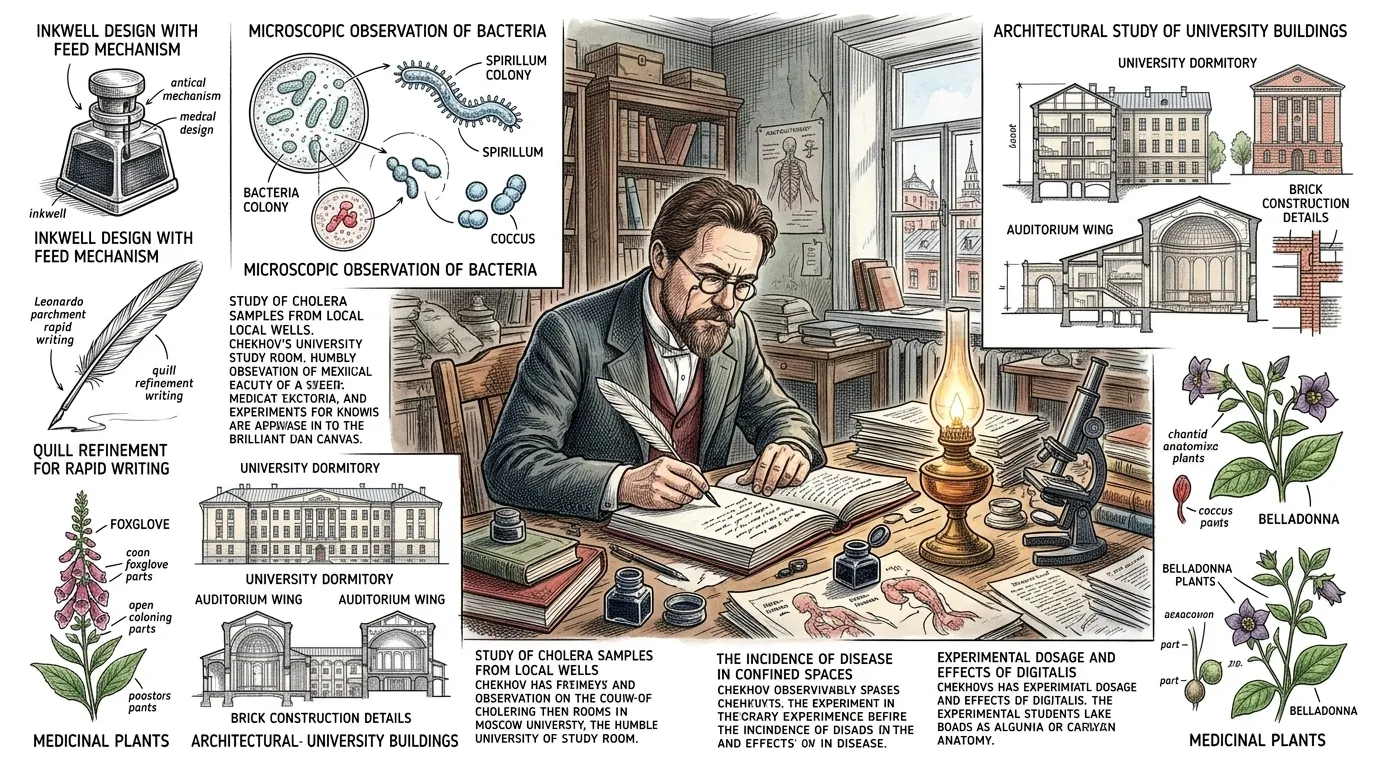
While studying medicine at Moscow University, Chekhov's relentless drive to support his impoverished family compelled him to write. He churned out hundreds of short, often humorous, pieces for various Petersburg journals under pseudonyms like 'Antosha Chekhonte.' This furious output, driven by financial necessity, honed his concise prose and keen eye for absurdity. Each published story, a small fee earned, was a decisive step away from destitution and towards literary mastery, though his primary ambition remained medicine.
Page 4
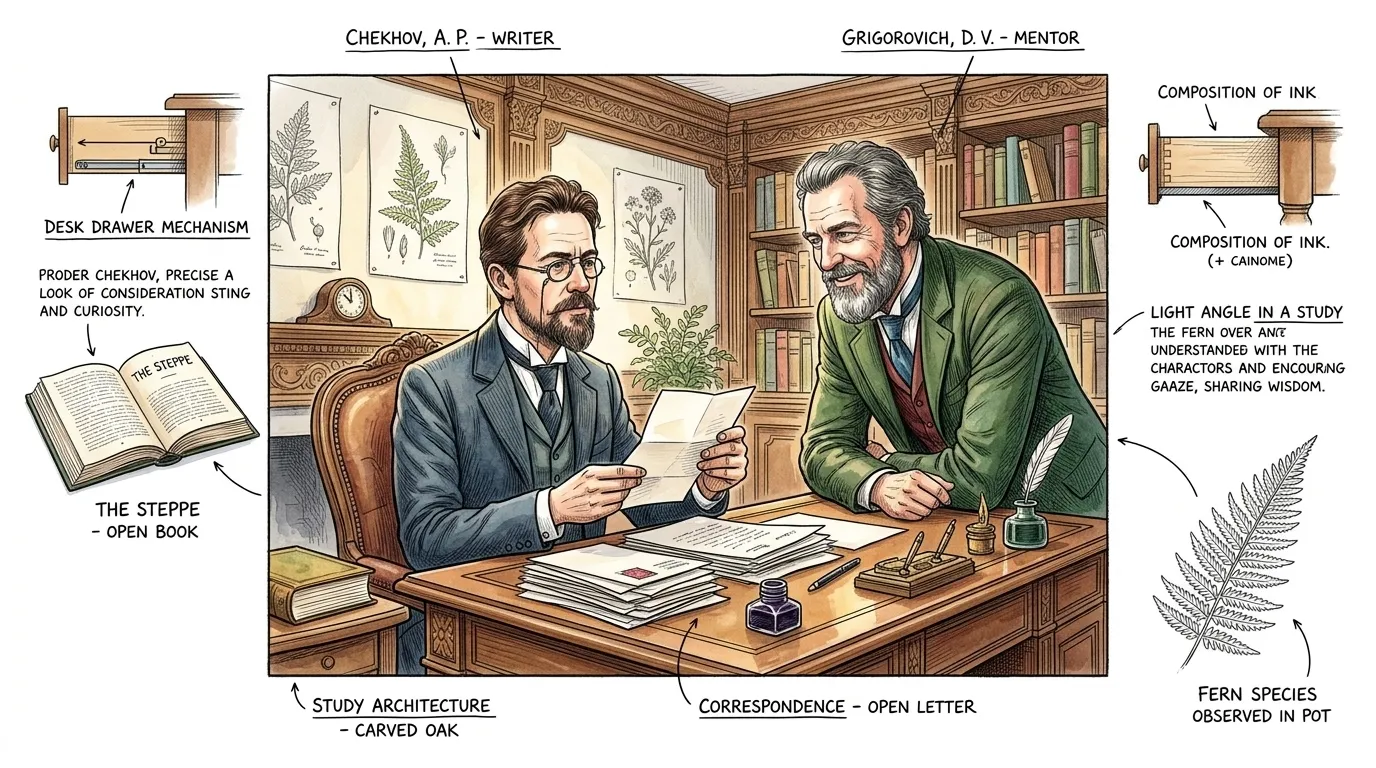
In 1886, a letter from the venerable writer Dmitry Grigorovich urged Chekhov to abandon his journalistic trifles and dedicate himself to serious literature. This recognition from an established master was a pivotal catalyst. Chekhov, taking the advice to heart, began crafting stories with greater depth and psychological nuance, moving beyond satire to explore the profound complexities of ordinary Russian life. He published 'The Steppe,' a significant novella, marking his conscious transition to a more serious literary path.
Page 5
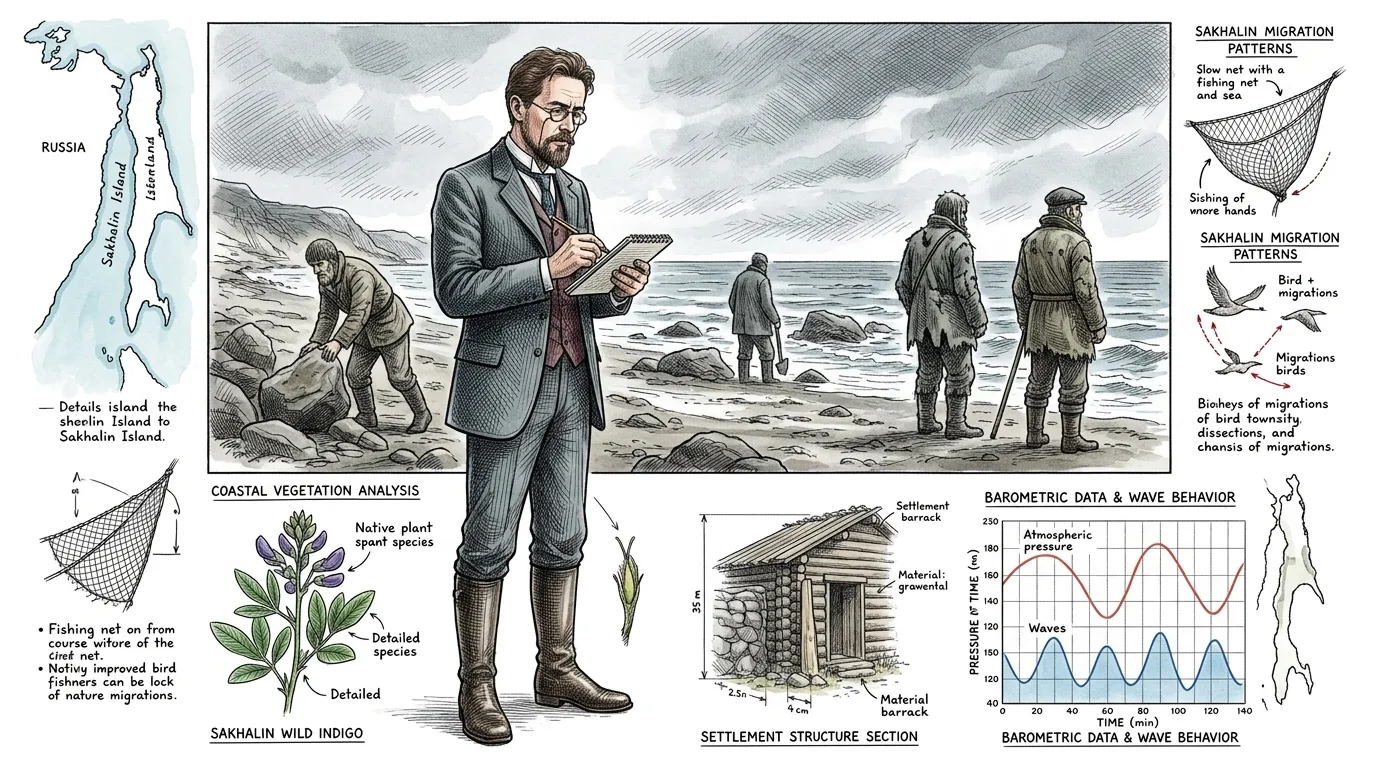
Driven by a physician's curiosity and a moral imperative, Chekhov embarked on a grueling, perilous journey to Sakhalin Island in 1890, Russia's penal colony. He meticulously documented the brutal conditions, widespread disease, and human suffering, conducting a census of 10,000 convicts and settlers. This harrowing experience, culminating in his ethnographic study 'Sakhalin Island,' profoundly deepened his understanding of human injustice and resilience, imbuing his subsequent fiction with an unparalleled sense of moral gravity.
Page 6
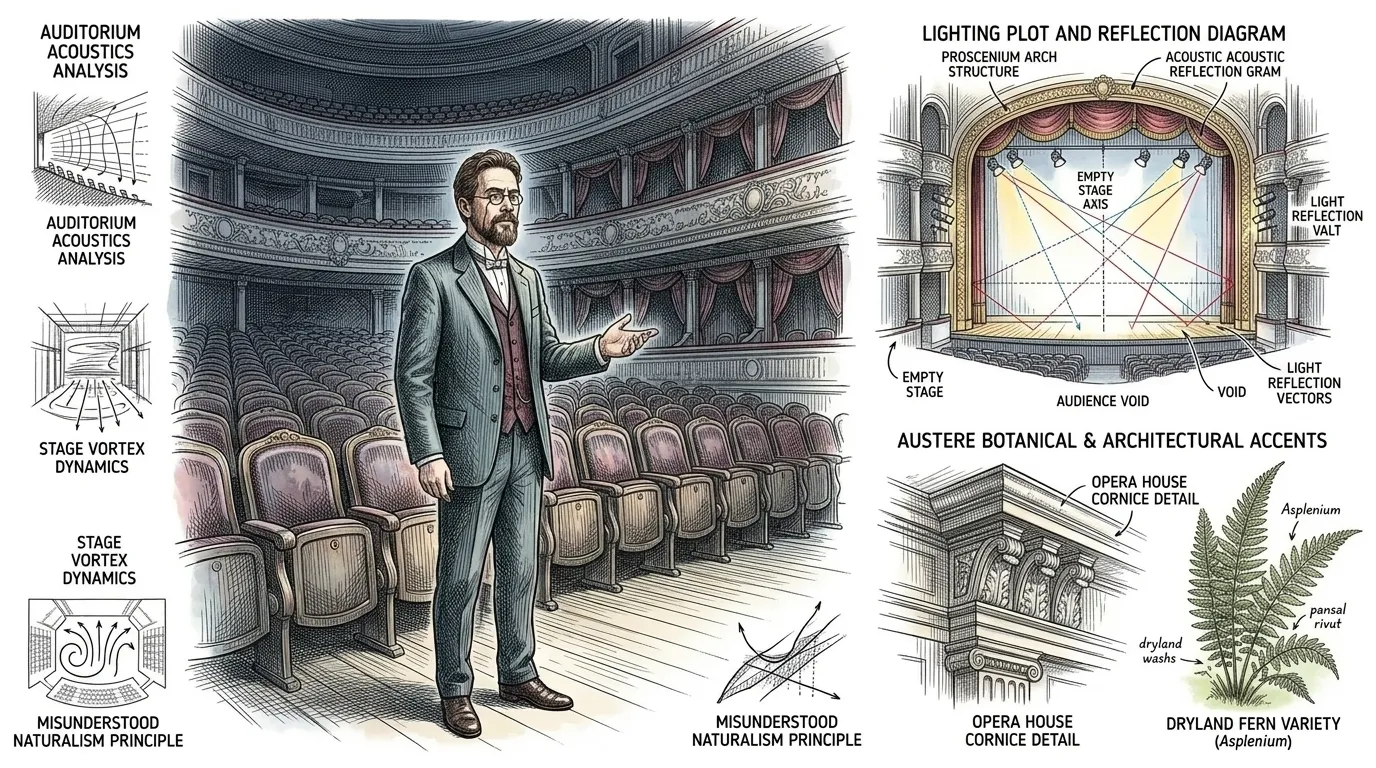
Back in Russia, Chekhov turned his full attention to playwriting, but his innovative naturalism clashed with traditional theatrical conventions. His plays, 'The Wood Demon' (later 'Uncle Vanya') and the initial production of 'The Seagull,' met with misunderstanding and even outright failure. He rejected melodrama, favoring submerged emotions, quiet despair, and dialogue that mirrored real life, a bold departure that baffled critics and audiences accustomed to grand dramatic gestures. He was forcing the stage to confront uncomfortable truths.
Page 7
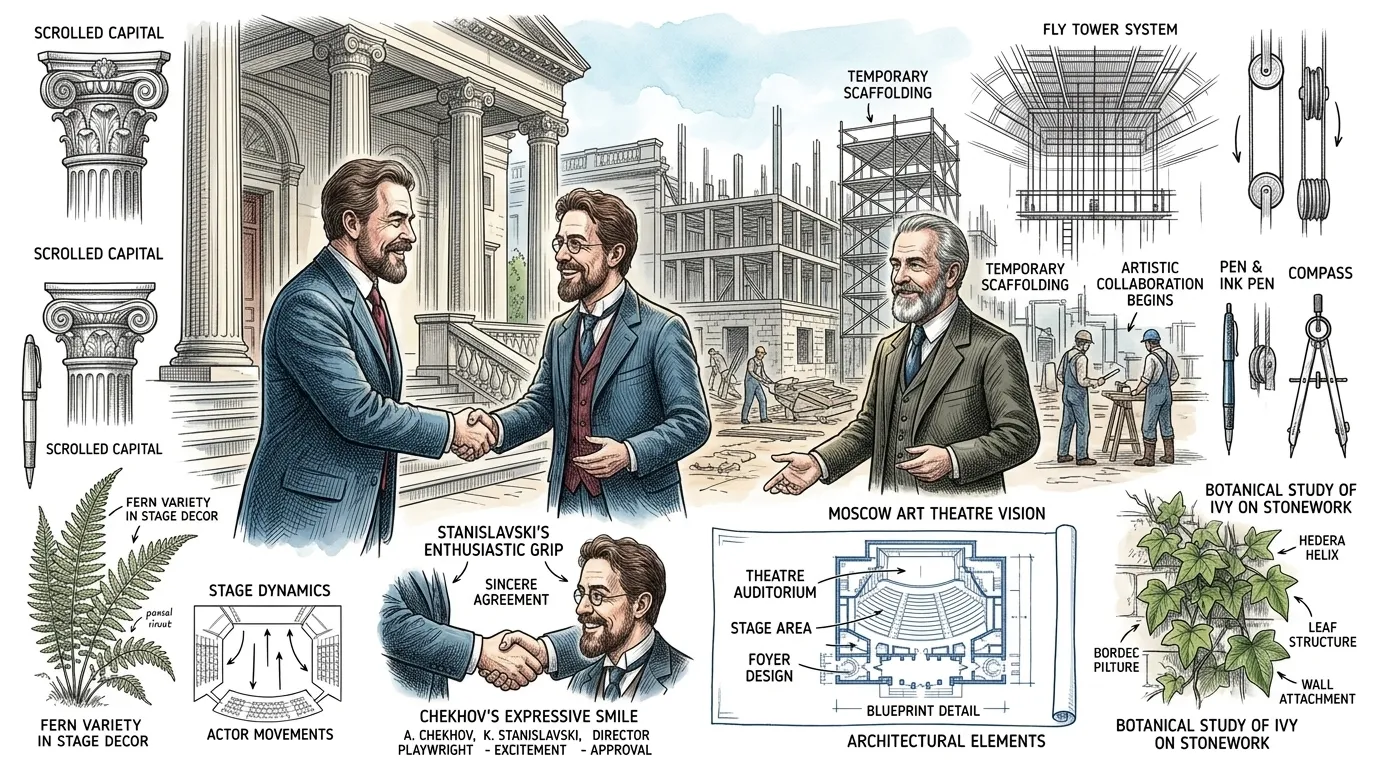
A turning point arrived with the founding of the Moscow Art Theatre in 1898 by Konstantin Stanislavski and Vladimir Nemirovich-Danchenko. They recognized Chekhov's genius, understanding that his subtle plays required a revolutionary acting style: 'subtext,' psychological realism, and an ensemble approach. Their collaboration rescued 'The Seagull' from oblivion and brought 'Uncle Vanya' to life, creating a synergistic partnership that would redefine Russian theater and forever link Chekhov's name with the burgeoning art of modern dramatic performance.
Page 8
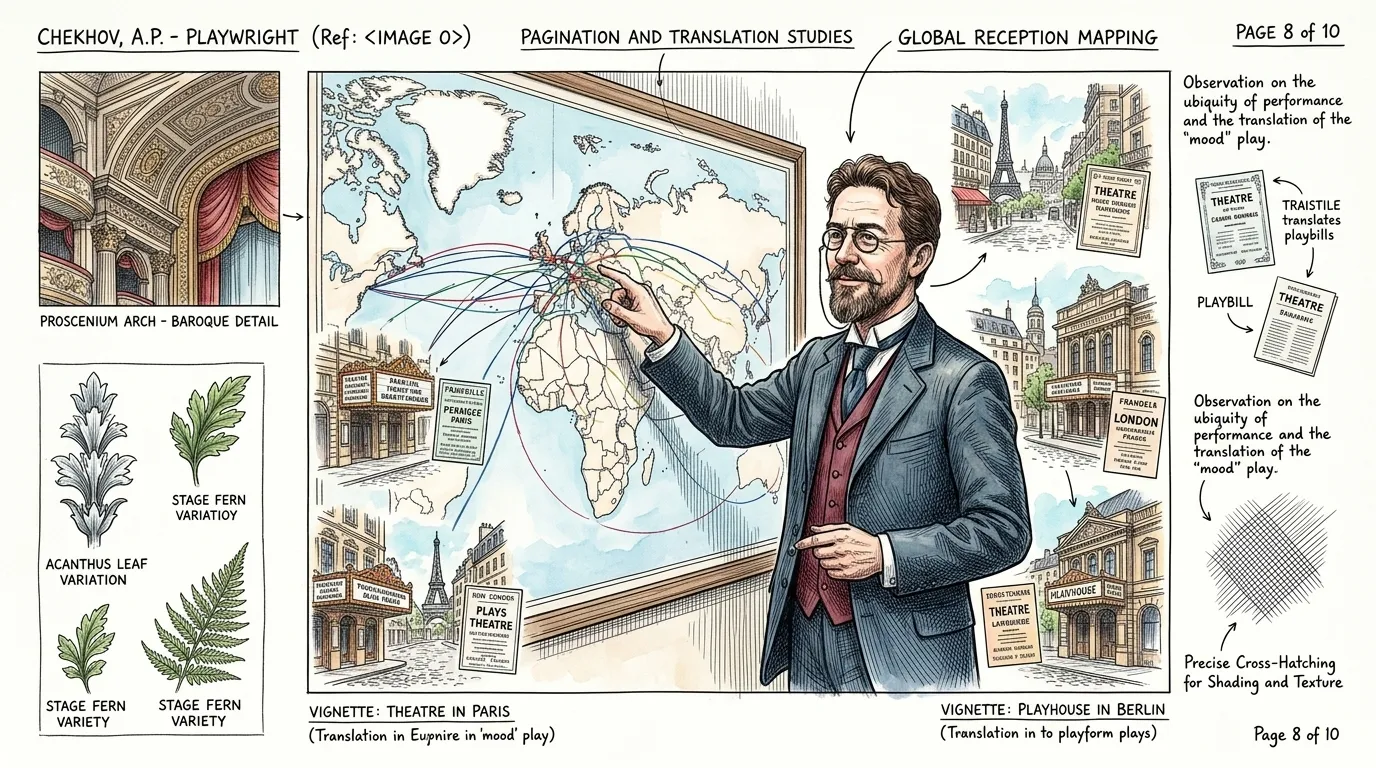
Following the Moscow Art Theatre's successes, Chekhov's plays, including 'Three Sisters' and 'The Cherry Orchard,' cemented his status as a world-renowned dramatist. His works were translated and performed across Europe, influencing a new generation of playwrights from George Bernard Shaw to Eugene O'Neill. The 'Chekhovian mood'—a blend of humor, melancholy, and understated psychological realism—became a recognizable, powerful force in international literature, demonstrating that profound human drama could be found in the most ordinary of lives.
Page 9
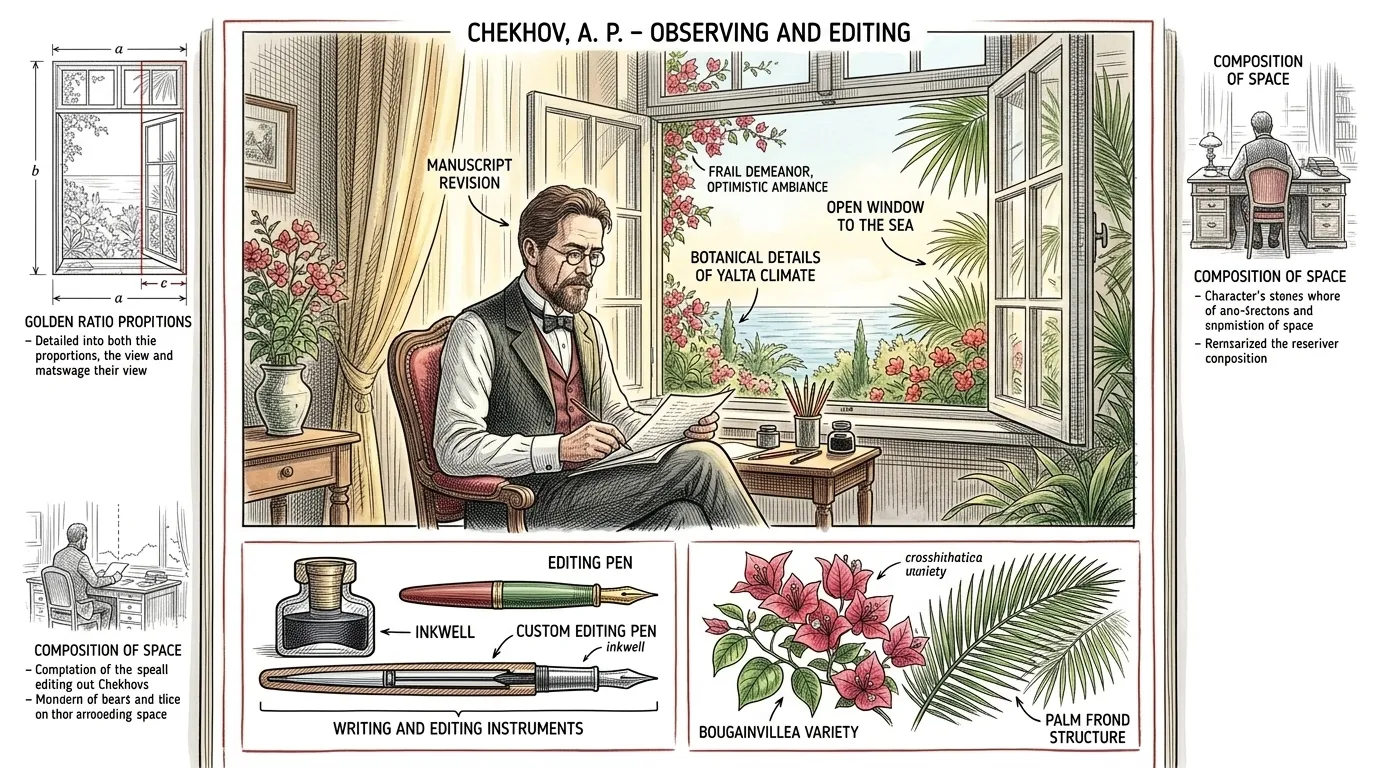
Despite his burgeoning fame, Chekhov's battle with tuberculosis intensified. He moved to Yalta in Crimea, seeking relief in the warmer climate, but his health steadily declined. He continued to write, completing his final, masterpiece plays from his sickbed, dictating revisions, and meticulously overseeing their productions from afar. This relentless creative output, performed against the backdrop of his own fading life, underscored his unwavering commitment to art and his profound understanding of life's fleeting beauty.
Page 10
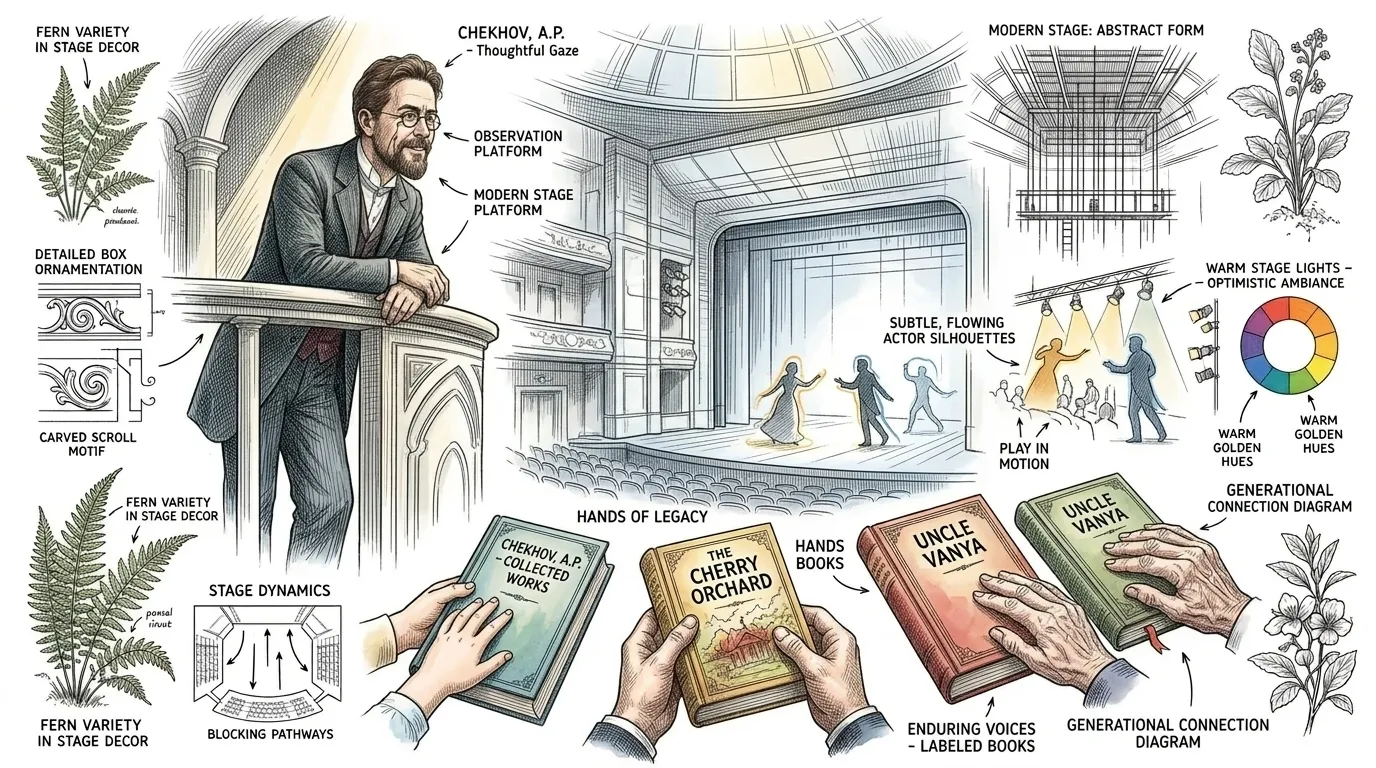
Anton Chekhov died in 1904, but his influence proved immeasurable. He left behind a body of work—hundreds of short stories and four major plays—that profoundly altered the course of literature and theater. His revolutionary realism, his psychological depth, and his compassionate portrayal of ordinary lives established him as a pioneer of modernism. Playwrights, actors, and writers across generations continue to grapple with his questions, perform his dramas, and find solace in his vision, ensuring his voice echoes eternally across the global stage.
About this story
- Location: Global
- Audience: general readers
Questions and answers
Read Wonder People on your phone
Wonder People is available on Android. Get Wonder People on Google Play.