Catherine the Great
Catherine the Great — an illustrated biography story, set in Global. 10 illustrated pages, free to read on Wonder People.
Page 1
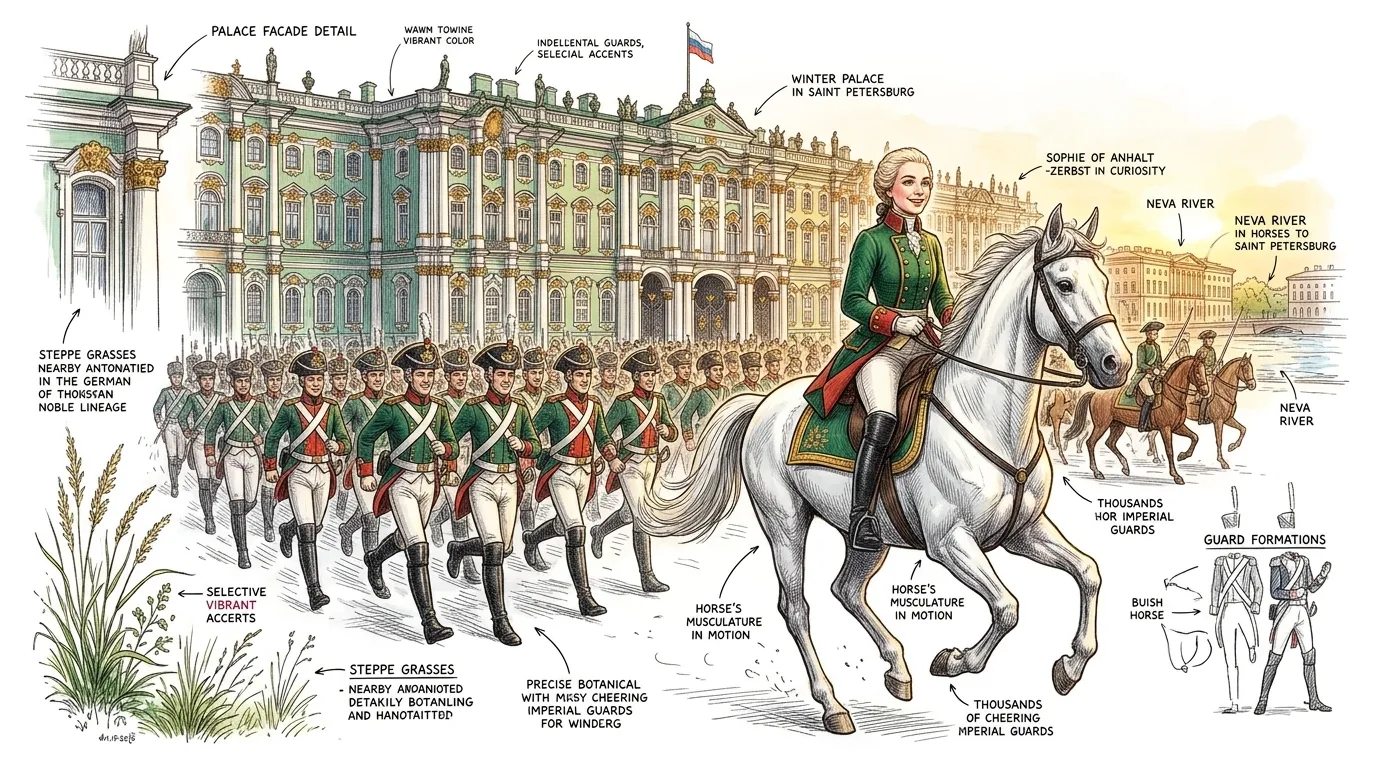
At dawn on June 28, 1762, outside the Winter Palace in Saint Petersburg, Sophie of Anhalt-Zerbst, now Catherine, Empress of All Russia, took absolute command. Dressed in the green uniform of the Preobrazhensky Regiment, she mounted a white charger, rallying thousands of Imperial Guards regiments, including the Izmailovsky and Semenovsky, to her cause. Her swift, decisive action overturned the chaotic reign of her husband, Emperor Peter III, establishing her own rule, a reign that would redefine the Russian Empire for over three decades.
Page 2
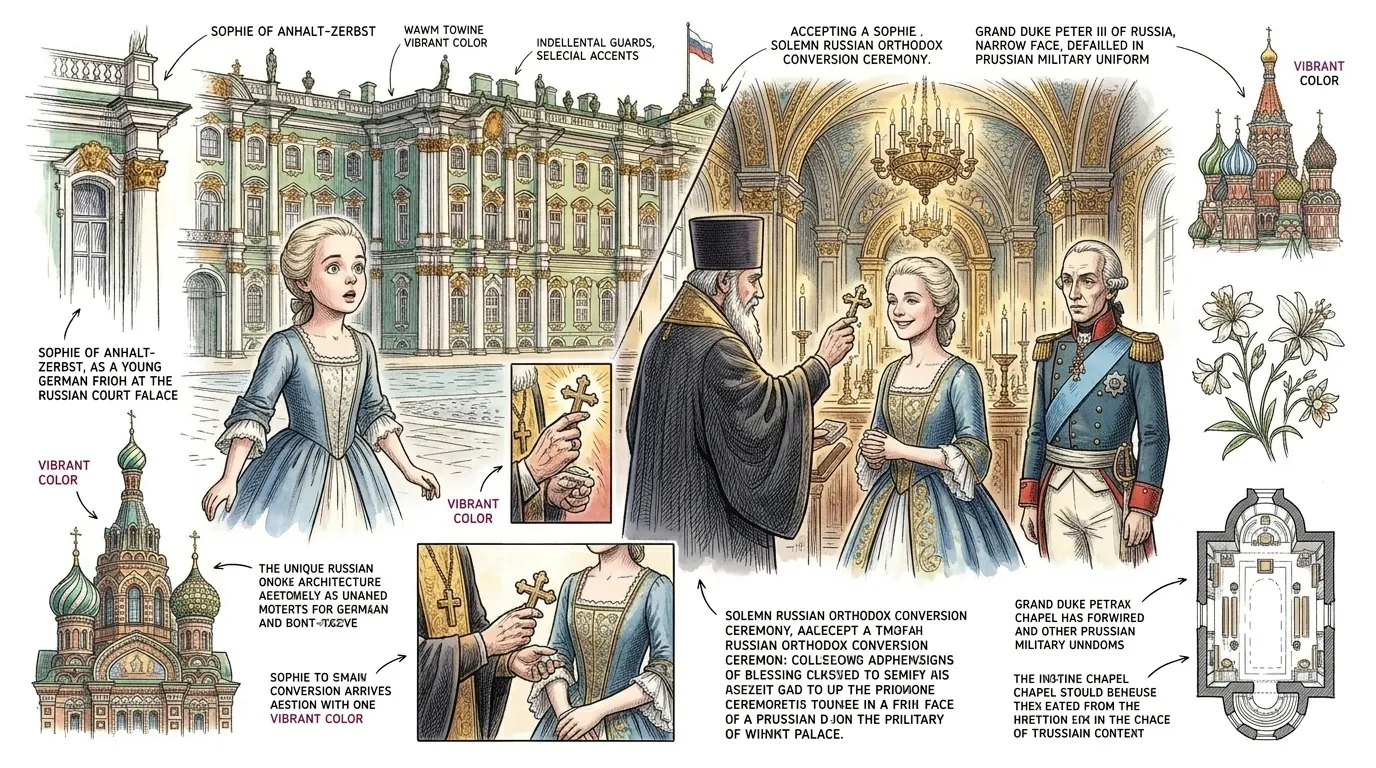
Born Sophie of Anhalt-Zerbst in 1729, her origins were modest, a German princess from a minor Prussian principality. At fifteen, she arrived in Russia, betrothed to Grand Duke Peter, the heir apparent. Her early life in the opulent, alien court demanded adaptation. She embraced the Russian Orthodox faith, converting in 1744 and receiving the name Catherine Alexeievna, a strategic move that signaled her deep commitment to her adopted land and garnered the respect of the Russian people, even as her husband alienated them.
Page 3
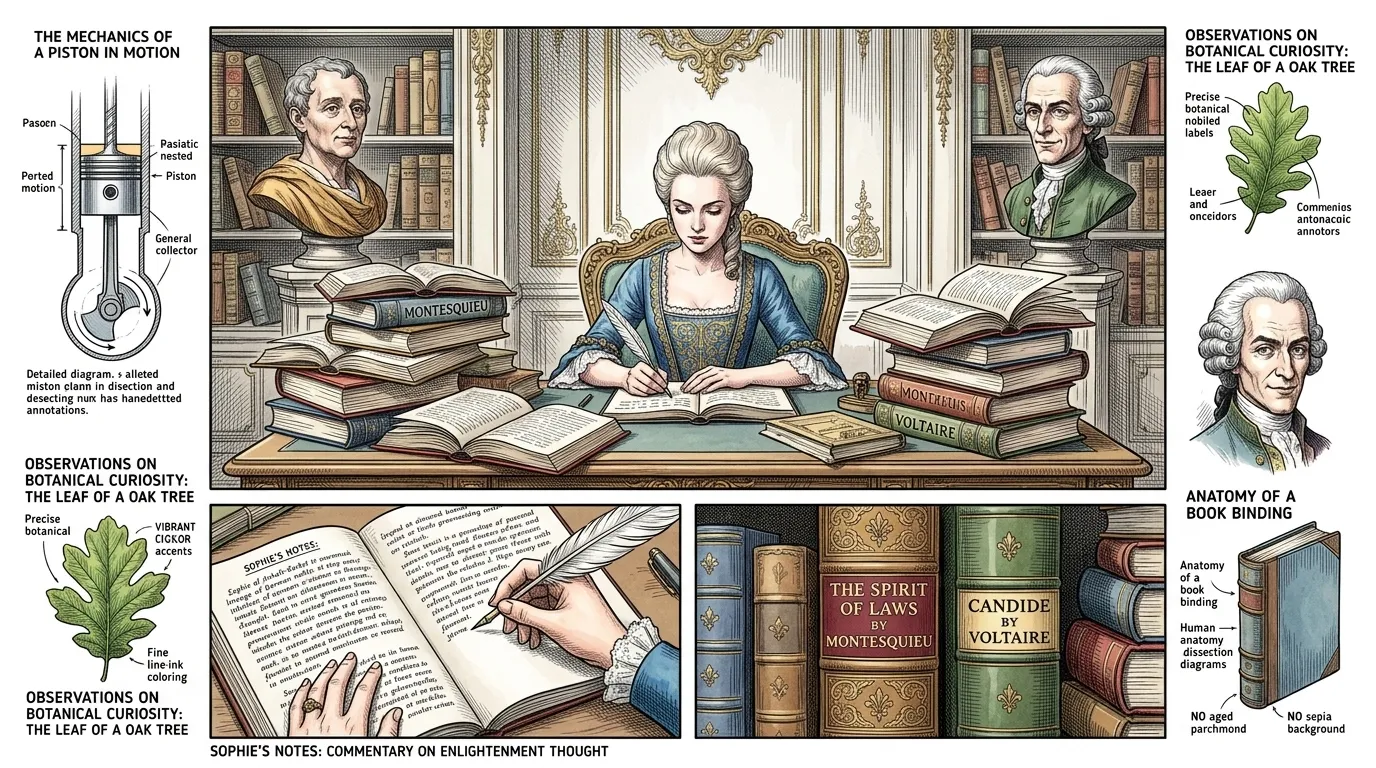
Isolated and often neglected by her husband, Catherine used her decades as Grand Duchess not for idleness, but for rigorous self-education. She devoured books on philosophy, law, history, and governance, particularly the works of Enlightenment thinkers like Montesquieu and Voltaire. This relentless pursuit of knowledge, conducted within the confines of the Russian court, allowed her to understand the mechanisms of power and the aspirations of a modernizing state, preparing her for a role few imagined she would ever command.
Page 4
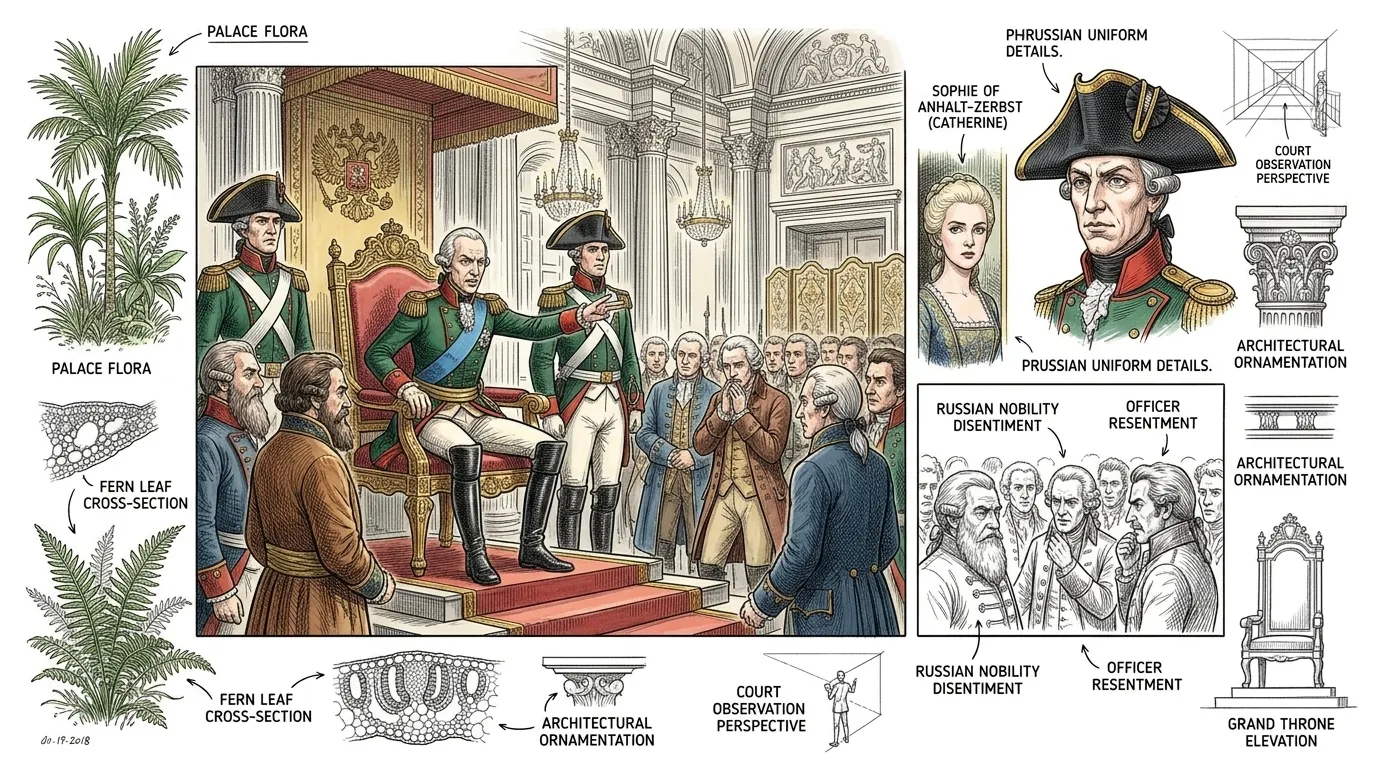
Peter III ascended to the throne in 1762, immediately alienating powerful factions within Russia. His fervent admiration for Prussia, his withdrawal from the Seven Years' War, and his disdain for the Orthodox Church ignited widespread resentment among the nobility, military, and clergy. As Peter made one unpopular decision after another, Catherine, observing from the sidelines, saw not just a failing marriage, but a throne increasingly vulnerable, a void that Russia's future would demand be filled by a more capable leader.
Page 5
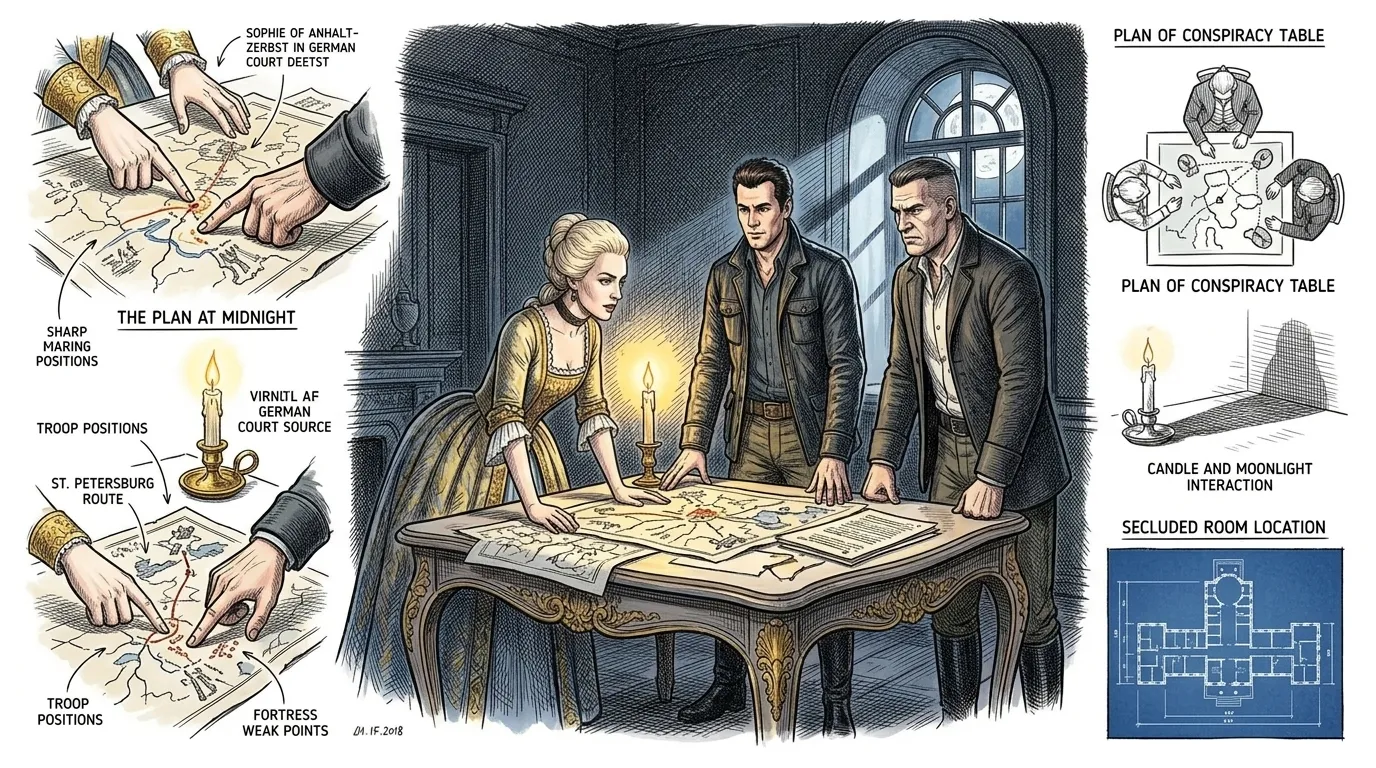
The mounting instability under Peter III created fertile ground for conspiracy. Catherine, recognized for her intelligence and commitment to Russia, became the natural rallying point for those seeking change. She meticulously cultivated a network of allies, most crucially the powerful Orlov brothers, Grigory and Alexei, officers in the Imperial Guard. In secret meetings held under the cloak of night, plans were laid, alliances forged, and the fate of the Russian Empire quietly redirected by a woman determined to save her adopted homeland from impending collapse.
Page 6
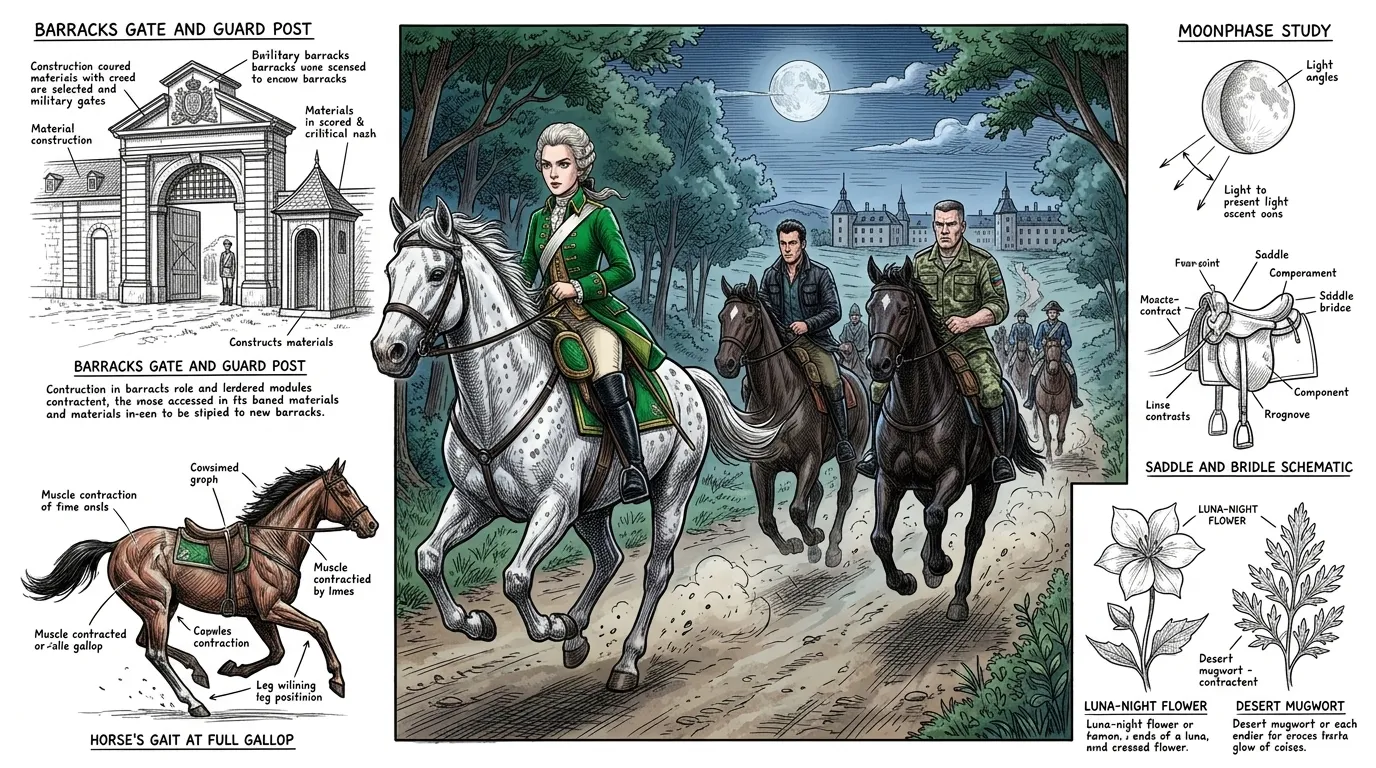
The moment of decision arrived swiftly. Peter III, away at Oranienbaum, provided the opportunity. Catherine, seized from Peterhof, donned the uniform of a guardsman, a symbolic act that united her with the military. Accompanied by the Orlov brothers, she rode directly to the Izmailovsky Guards barracks. This was not a passive plea for support; it was a direct, physical assertion of leadership, a woman stepping out from the shadows of courtly intrigue to personally command the allegiance of the soldiers. She was not asking for power; she was taking it.
Page 7
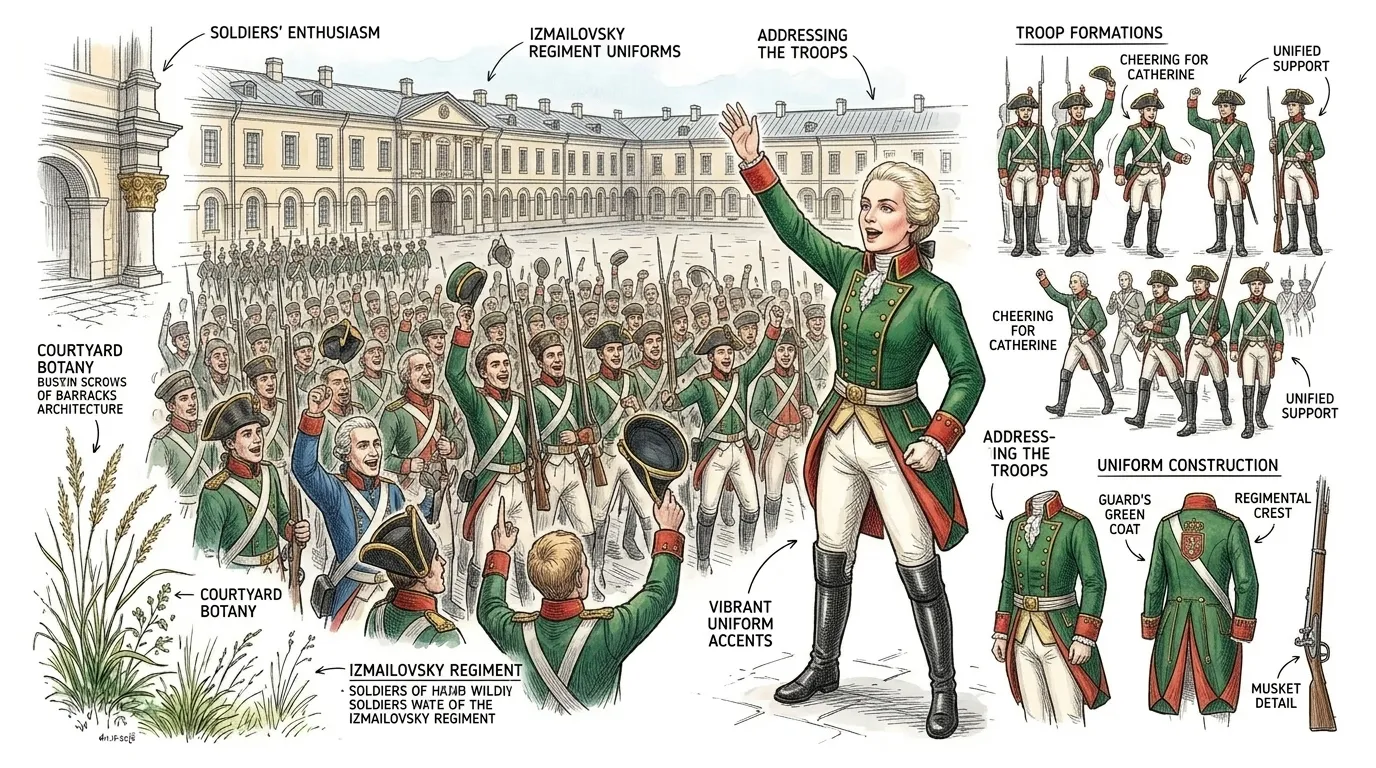
Upon reaching the Izmailovsky Regiment, Catherine did not hesitate. Standing before the assembled soldiers, still in her guard's uniform, she addressed them directly, appealing to their patriotism and loyalty to Russia, rather than to her personal claims. Her words, delivered with conviction, resonated deeply. The soldiers, disgruntled by Peter III's erratic rule, responded with overwhelming enthusiasm. They pledged their allegiance, proclaiming her Empress of All Russia. The momentum became unstoppable, securing her position and marking the definitive shift of power.
Page 8
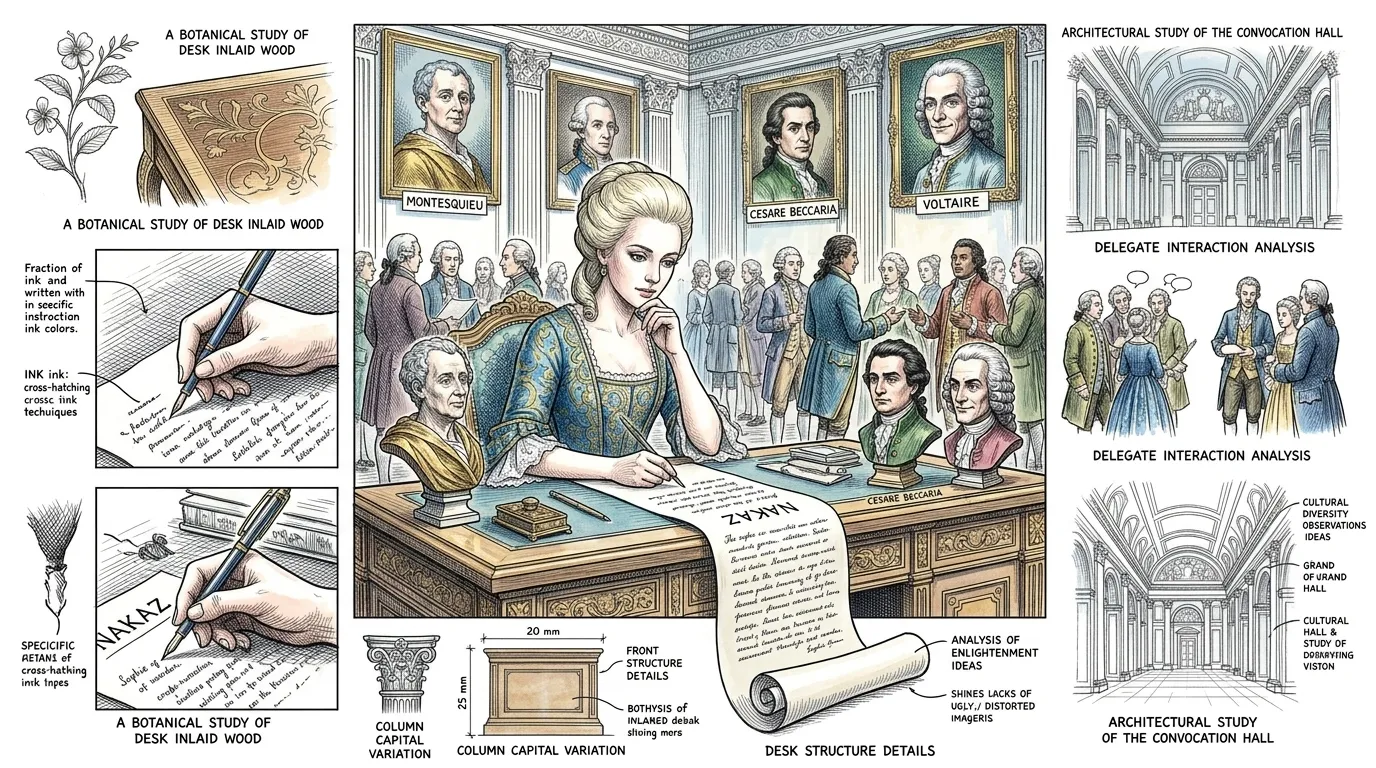
Having secured the throne, Catherine sought to rule not just by force, but by reform. In 1767, she convened the Legislative Commission, bringing together delegates from across Russia to codify laws and propose changes. For this, she drafted her 'Nakaz' (Instruction), a radical document inspired by Montesquieu and Beccaria, advocating for equality before the law, the abolition of torture, and greater religious tolerance. Though the Commission ultimately dissolved without passing new laws, the 'Nakaz' itself stood as a powerful testament to her ambition to modernize Russia along Enlightenment principles, shaping her future policies.
Page 9
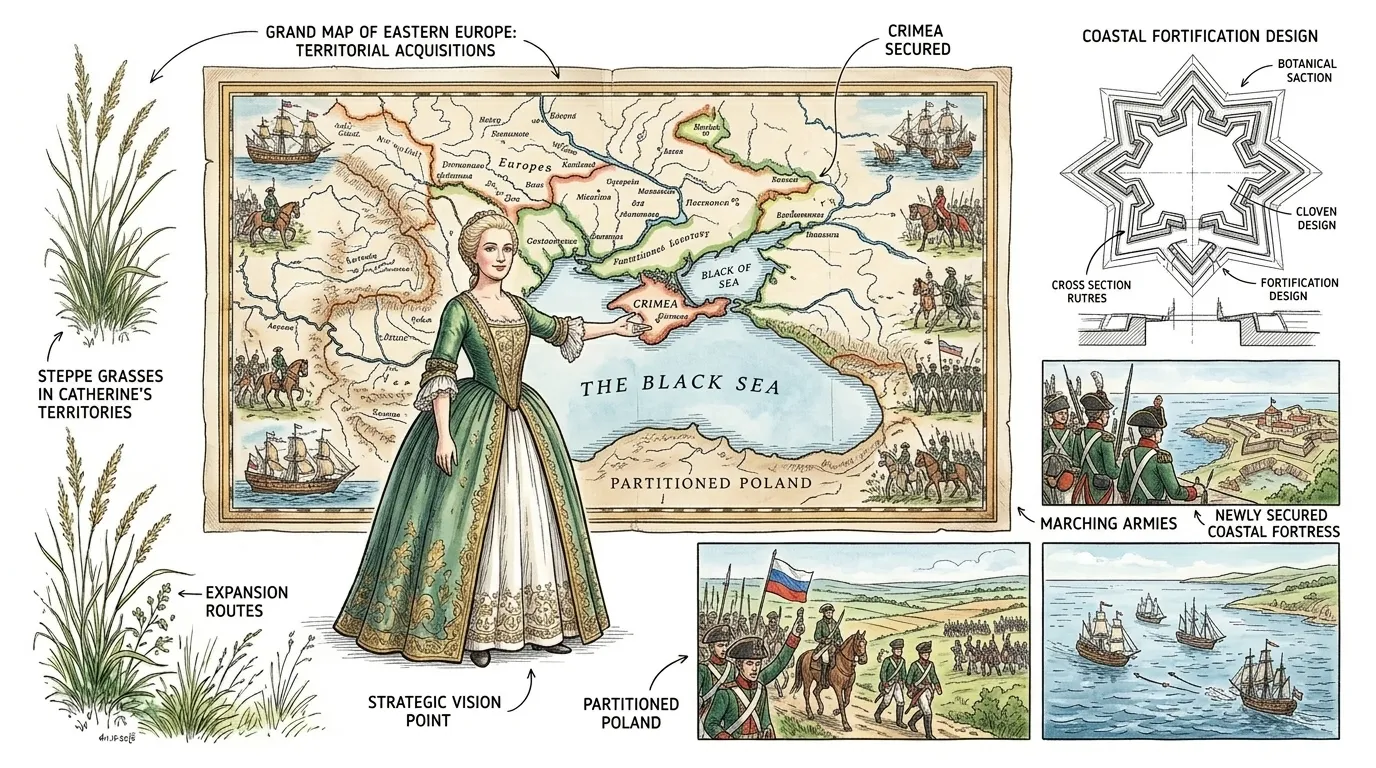
Catherine's reign was defined by aggressive territorial expansion, transforming Russia into Europe's dominant power. Through two successful wars against the Ottoman Empire, she secured crucial access to the Black Sea and annexed Crimea. She also participated in the partitions of Poland, vastly increasing Russia's western territories. These victories fundamentally reshaped the geopolitical map of Eastern Europe, solidifying Russia's status as an empire stretching from the Baltic to the Black Sea, a legacy of power and influence unmatched by her predecessors.
Page 10
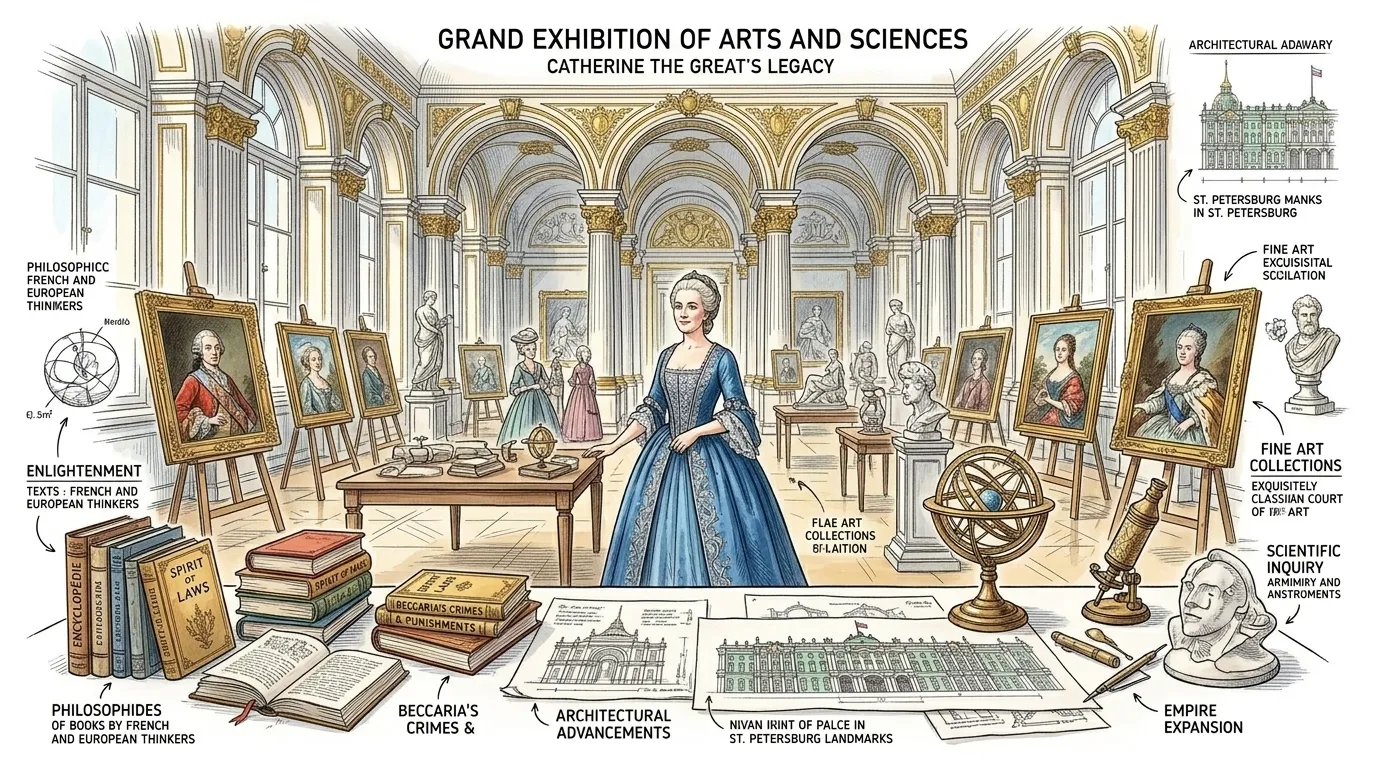
Catherine the Great died in 1796, leaving behind an empire vastly enlarged, culturally enriched, and politically transformed. Her patronage of the arts, sciences, and education, her ambitious legal reforms, and her establishment of institutions like the Hermitage Museum cemented her image as an 'Enlightenment despot' who propelled Russia onto the European stage. Her reign is remembered as a Golden Age of the Russian Empire, a period when a foreign princess, through sheer intellect and iron will, forged a lasting and indelible mark on one of the world's great nations.
About this story
- Location: Global
- Audience: general readers
Questions and answers
Read Wonder People on your phone
Wonder People is available on Android. Get Wonder People on Google Play.