Claude Monet
Claude Monet — an illustrated biography story, set in Global. 10 illustrated pages, free to read on Wonder People.

Page 1
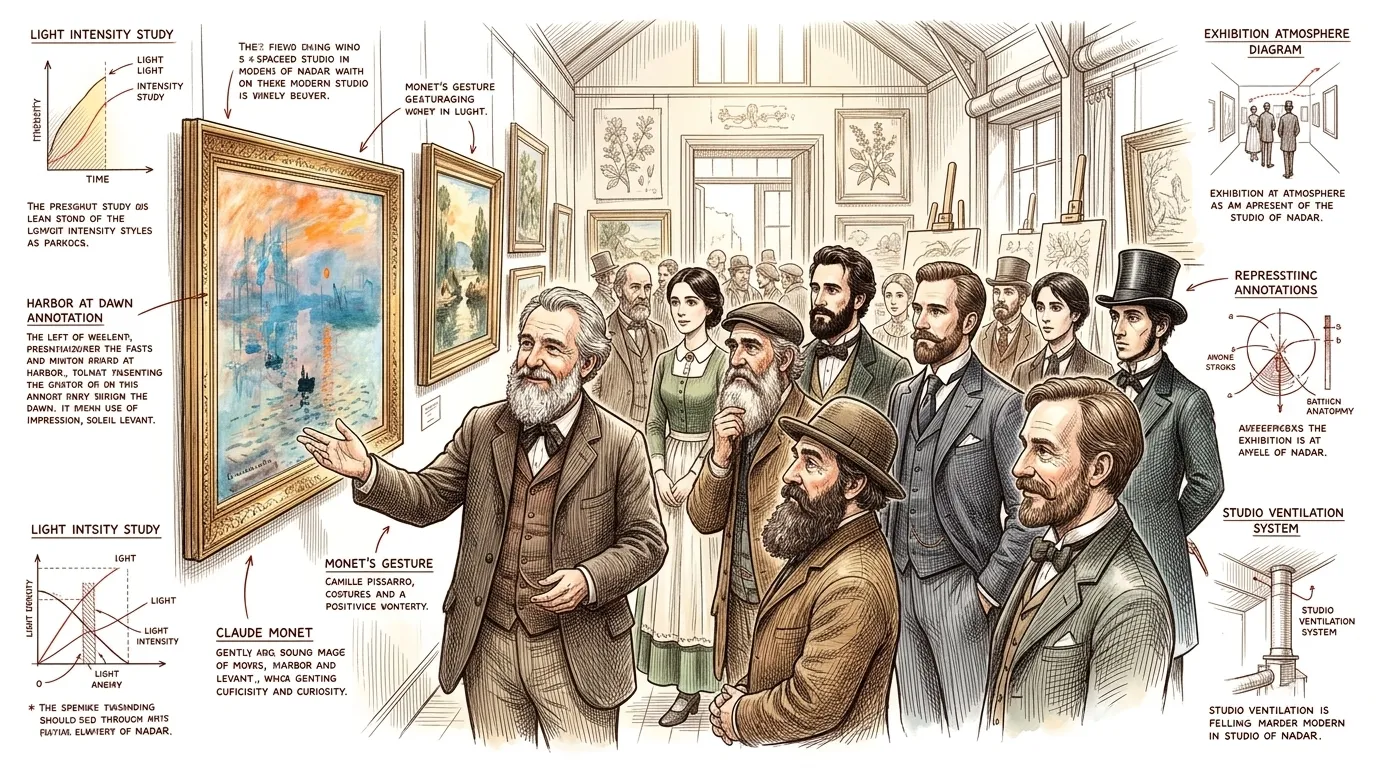
In Paris, 1874, an independent exhibition opened at the former studio of photographer Nadar. Among the radical works presented, one painting, 'Impression, soleil levant,' drew the most fervent and derisive attention. Claude Monet, its creator, stood at the vanguard, his vision poised to shatter centuries of academic tradition. This canvas, a fleeting capture of light and atmosphere over the harbor of Le Havre, was dismissed by critics as mere 'impression,' yet it ignited a revolution that would redefine the course of art.
Page 2
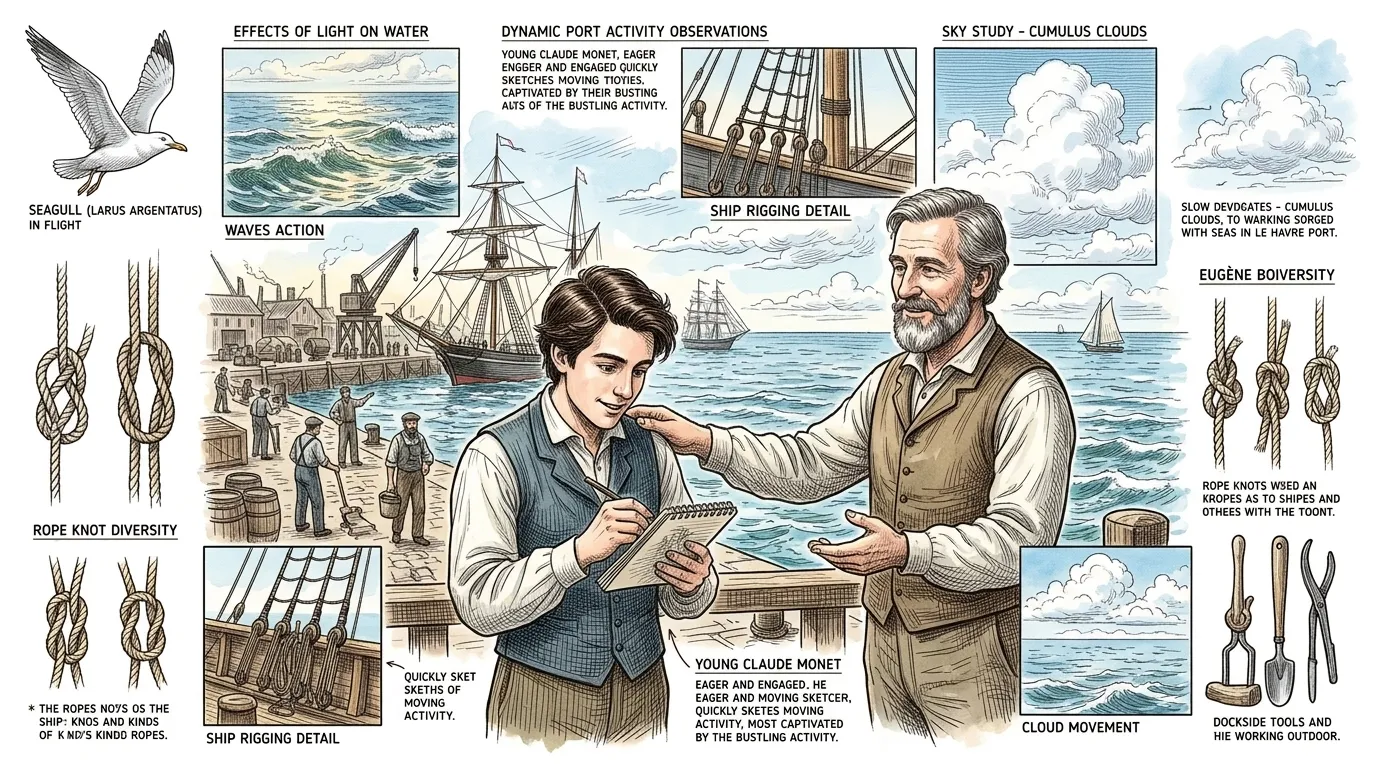
Monet's earliest years in Le Havre, a bustling port city, imprinted upon him a profound connection to the dynamic interplay of sea, sky, and light. From a young age, he exhibited a talent for caricature, sketching local figures with sharp observation. It was the unconventional marine painter Eugène Boudin who recognized a deeper potential, urging young Monet to abandon the studio and embrace the direct experience of painting outdoors. This radical suggestion, a departure from academic norms, set Monet on an irreversible path toward capturing the ephemeral truths of nature.
Page 3
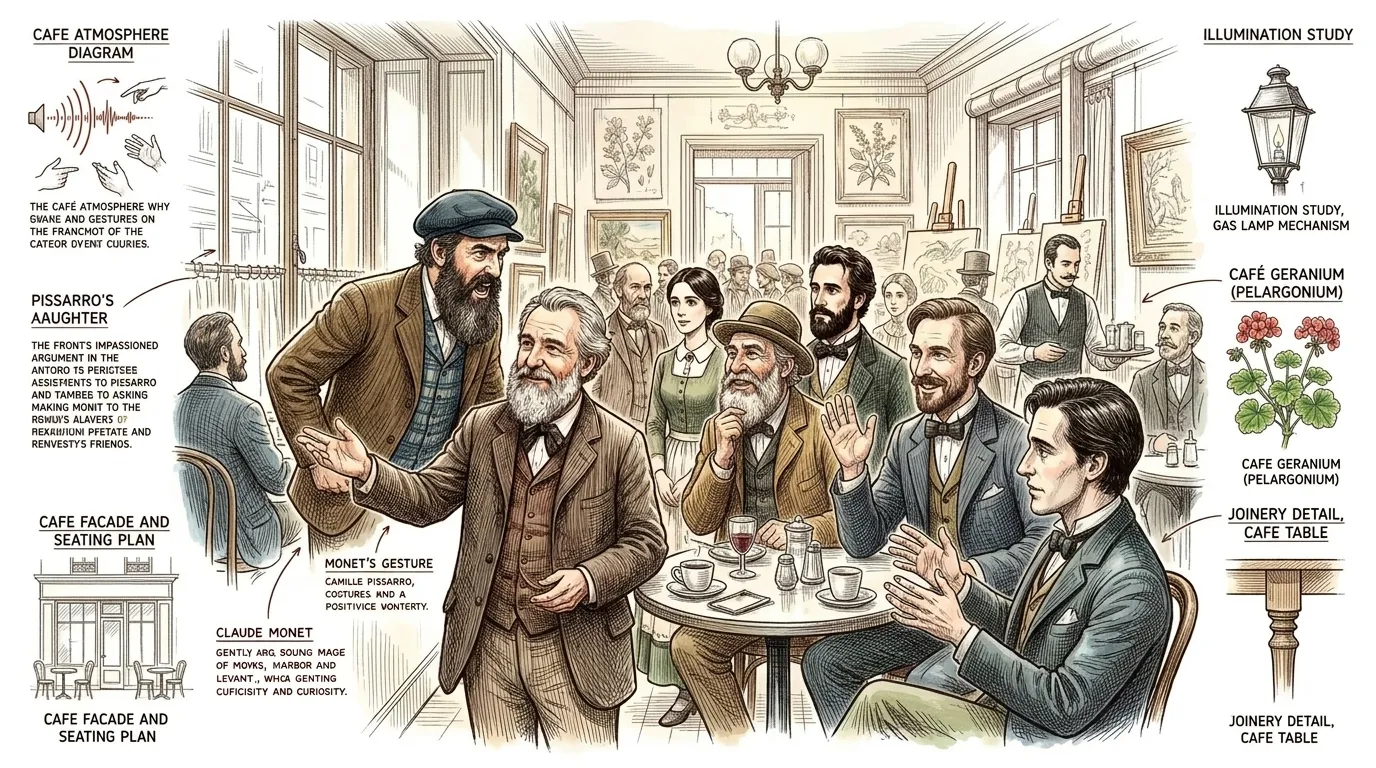
In the vibrant artistic milieu of 1860s Paris, Monet found his intellectual and aesthetic kin. At the Académie Suisse and later in the studio of Charles Gleyre, he connected with Camille Pissarro, Pierre-Auguste Renoir, Alfred Sisley, and Frédéric Bazille. These young painters shared a mutual frustration with the rigid strictures of the official Salon and a radical desire to paint modern life directly, bypassing historical subjects or mythological scenes. Their lively debates in cafes and studios forged a collective defiance, propelling Monet toward a shared vision of light and color.
Page 4
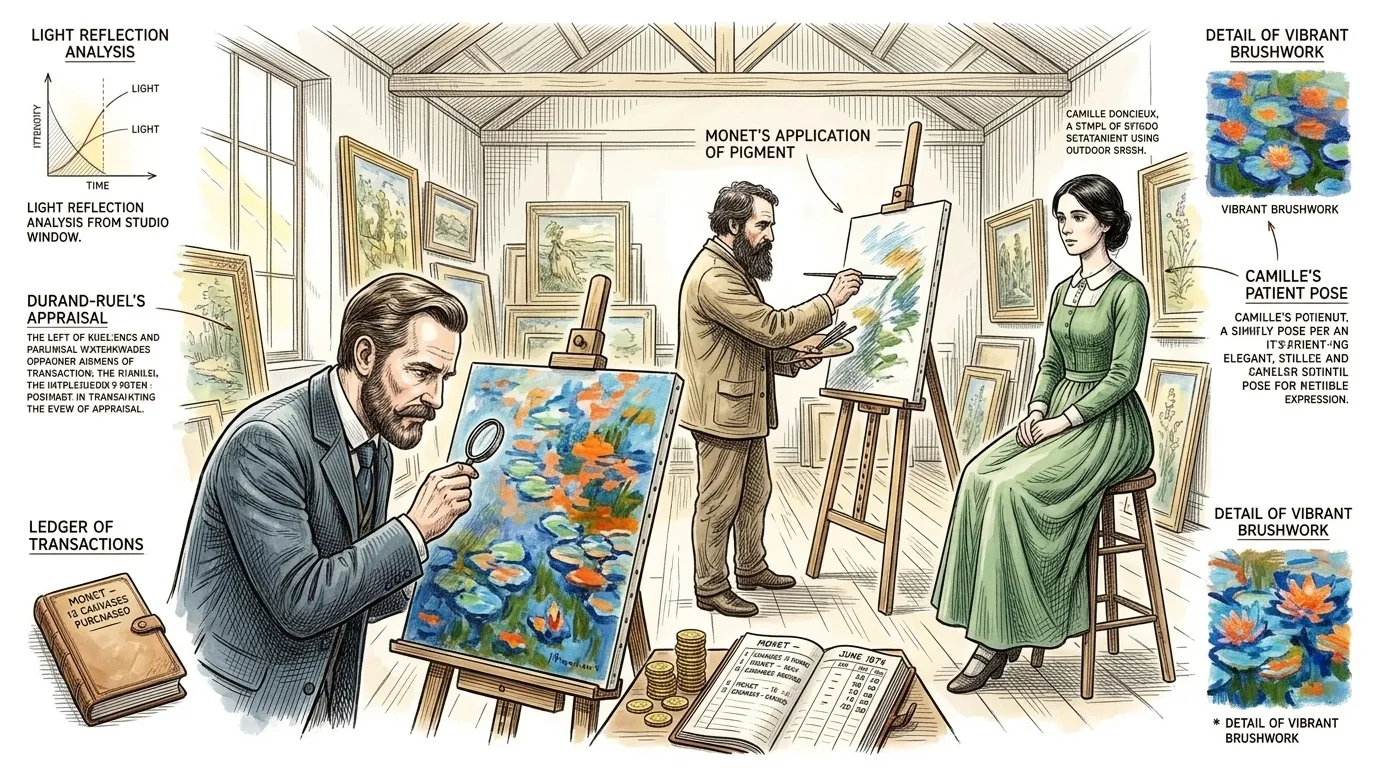
Monet's commitment to his experimental approach often plunged him into severe financial hardship. He married Camille Doncieux, who frequently modeled for his paintings, and faced the constant pressure of supporting a family amidst critical rejection. During these lean years, his resolve was unwavering. He relied on the intermittent patronage of art dealers like Paul Durand-Ruel, who, despite initial public resistance, saw the profound originality in Monet's radical capture of light. Durand-Ruel's belief, though financially strained, provided a lifeline that allowed Monet to continue his vital work.
Page 5
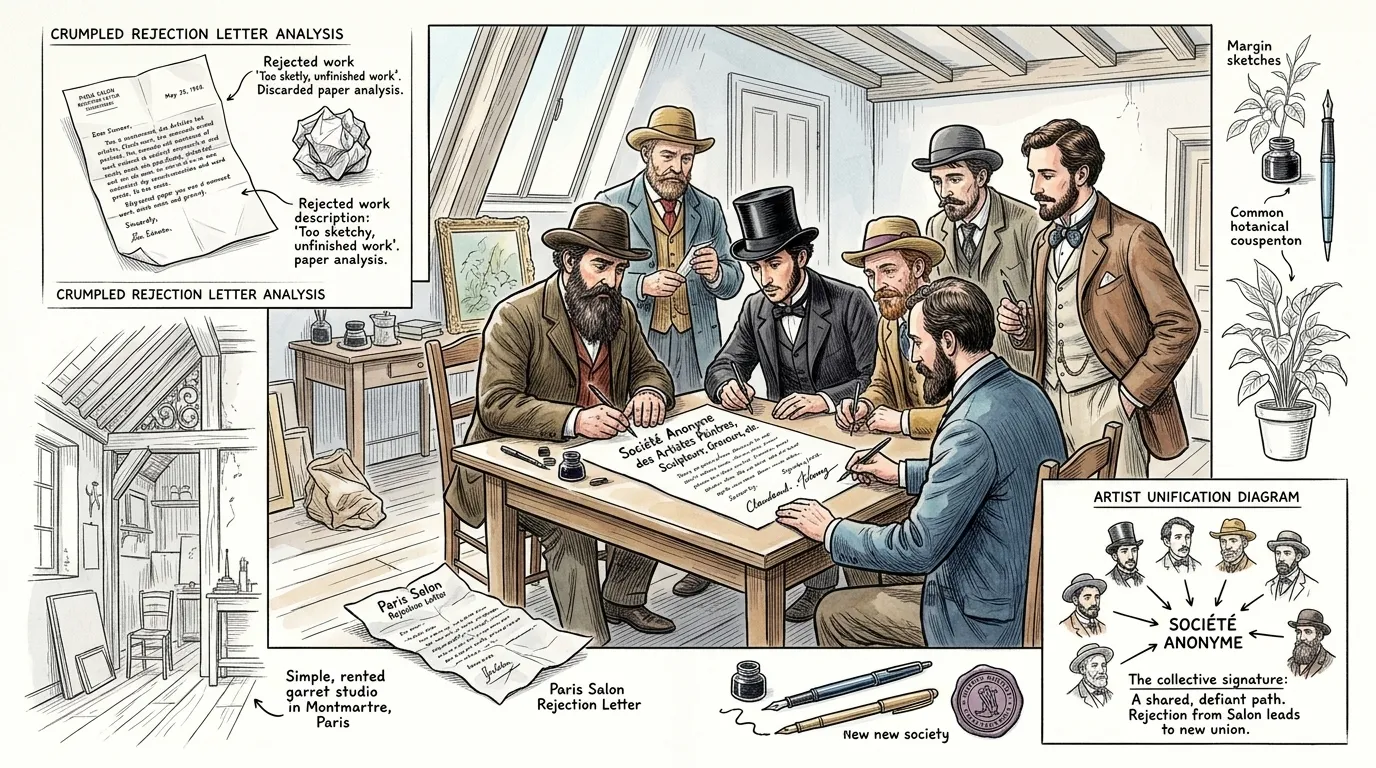
The academic art establishment, symbolized by the prestigious Paris Salon, repeatedly rejected the innovative works of Monet and his circle. This persistent exclusion solidified their conviction that a new path was essential. In 1873, Monet, Pissarro, Degas, and others formally established the 'Société Anonyme des Artistes Peintres, Sculpteurs, Graveurs, etc.' This collective act of defiance was a conscious break, an assertion of artistic independence. They would stage their own exhibition, presenting their work directly to the public, challenging the gatekeepers of conventional taste.
Page 6
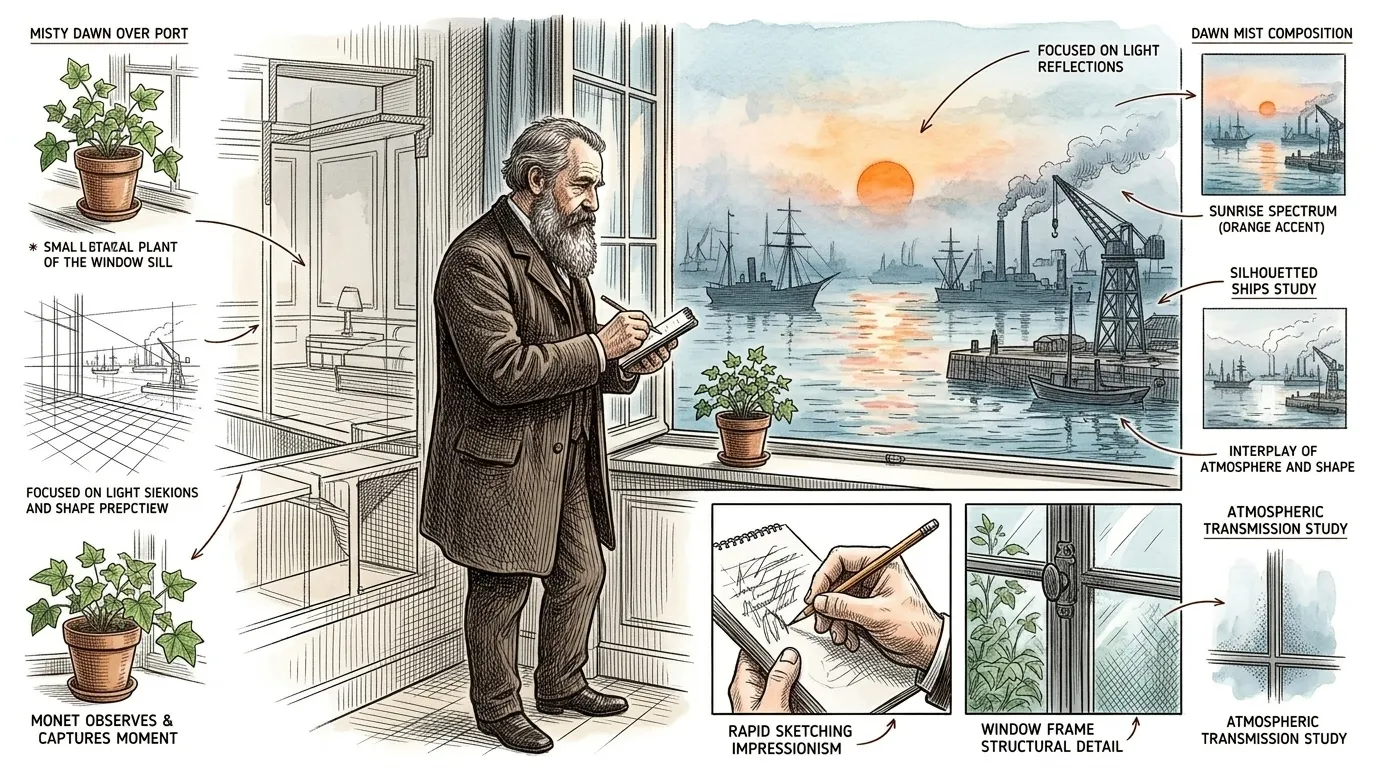
Before the momentous Paris exhibition, Monet returned to his roots in Le Havre. There, in the winter of 1872, he stood at the window of his hotel room overlooking the bustling port. The misty dawn, the silhouetted ships, the industrial smoke, and the orange sun breaking through the fog presented a challenge. He captured this fleeting moment, not with detailed realism, but with a radical emphasis on light, color, and atmosphere. This painting, which he titled 'Impression, soleil levant,' was not merely a landscape; it was a manifesto, an embodiment of his aesthetic philosophy.
Page 7
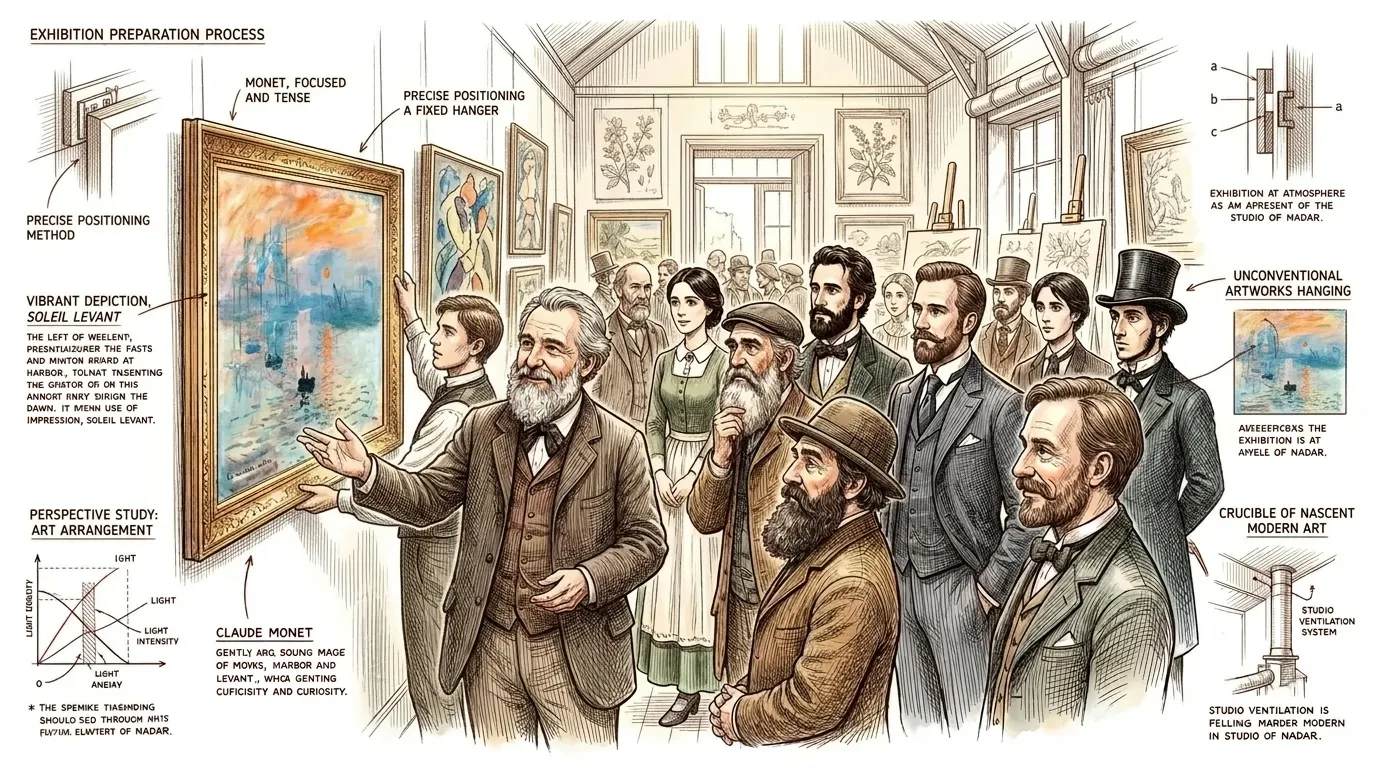
As the independent exhibition at Nadar's studio approached in April 1874, the collective tension of the artists mounted. Monet's 'Impression, soleil levant' was carefully unpacked and positioned. The act of hanging the work, aligning it among others that also defied conventional standards, transformed the studio space into a crucible of nascent modern art. Each placement was a statement, each painting a challenge to the established order. The stage was set for a public confrontation, with Monet's evocative 'impression' at its controversial heart.
Page 8
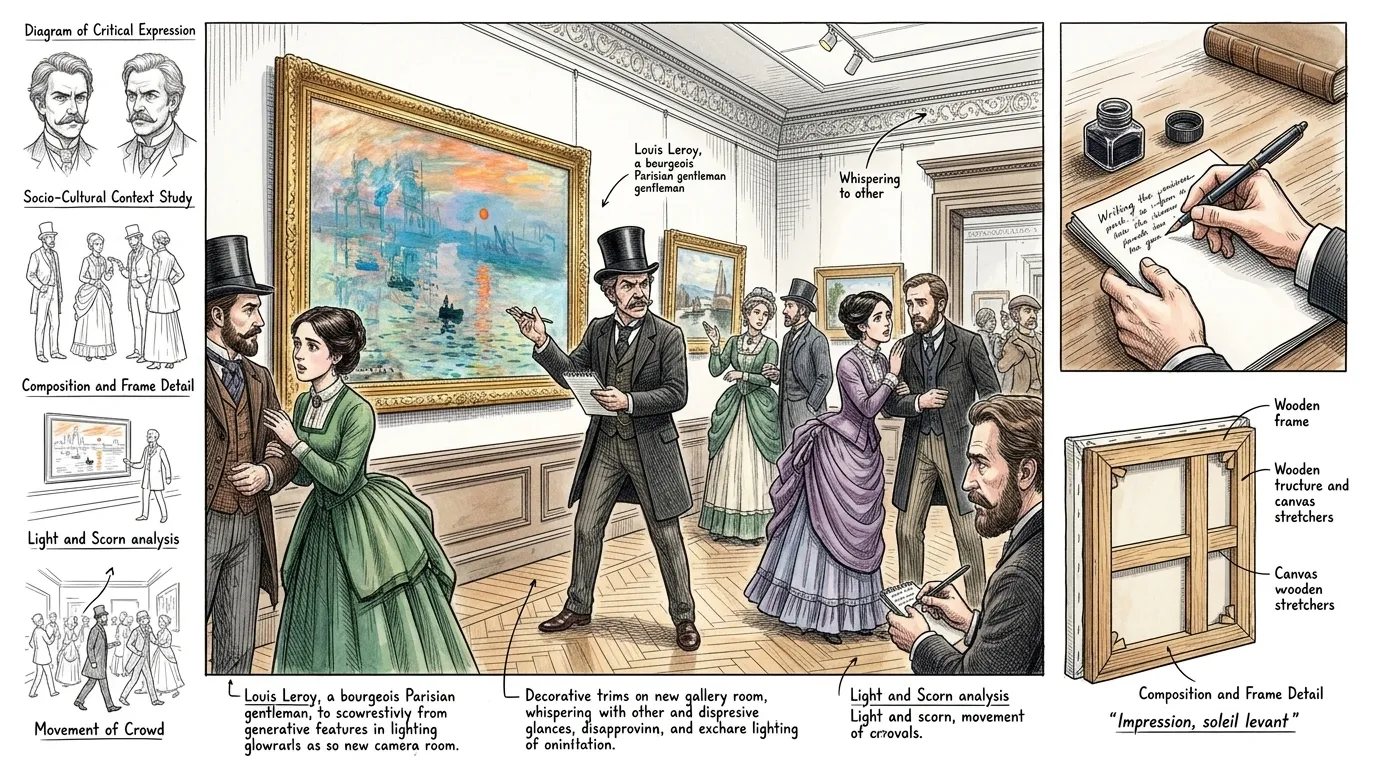
The 1874 exhibition provoked an immediate, ferocious backlash. Critics, accustomed to polished academic realism, found Monet's 'Impression, soleil levant' unfinished, crude, and lacking form. Louis Leroy, a journalist from Le Charivari, famously used the term 'Impressionism' derisively, intending to mock the entire group. Yet, this scorn, aimed to destroy, inadvertently provided the movement with its enduring name and a powerful identity. The initial public ridicule gave way to a slow, undeniable shift in perception, as a new generation began to grasp the profound innovation in capturing light and ephemeral sensation.
Page 9
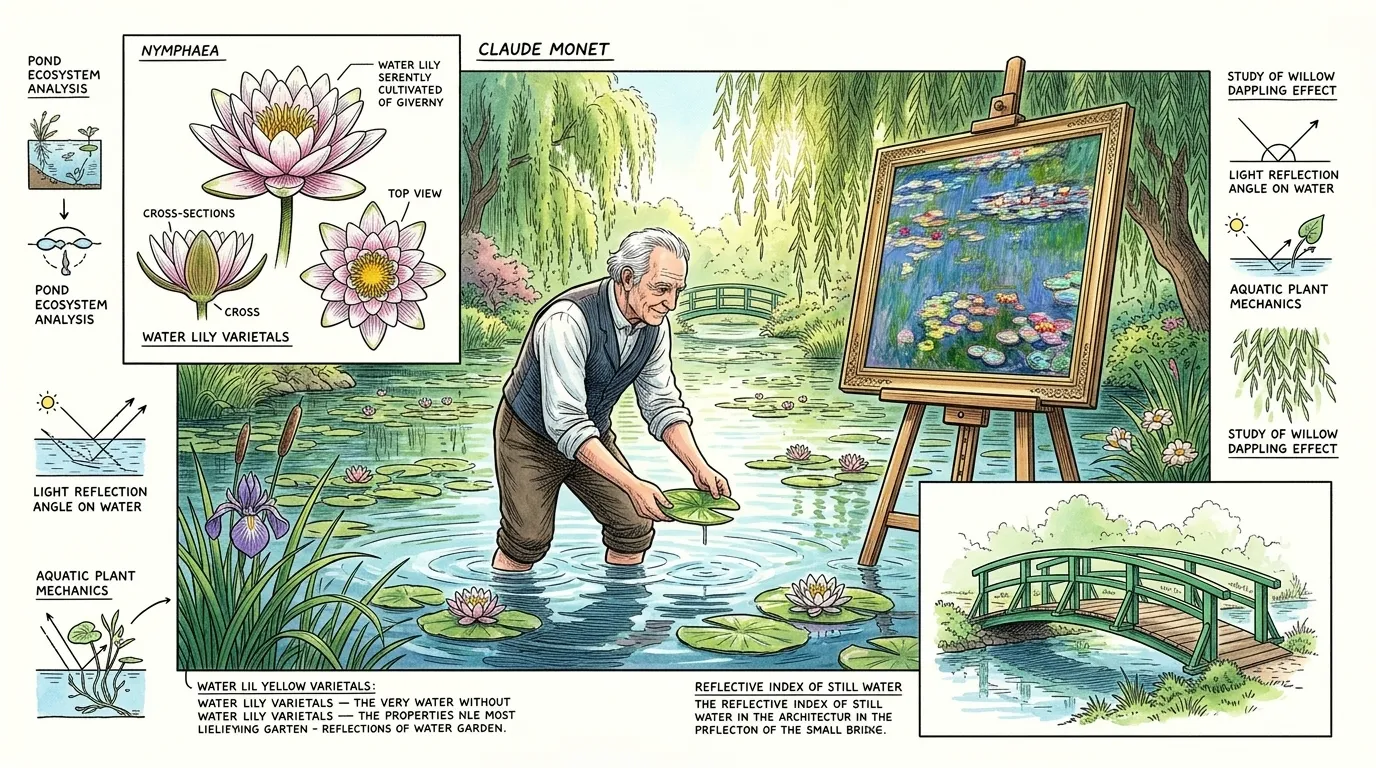
The critical tide turned. By the late 1880s and into the 20th century, Monet's work, and Impressionism as a whole, achieved international acclaim. This allowed him to establish his definitive artistic sanctuary in Giverny, France. There, he meticulously cultivated his renowned water garden, which became his primary subject for the last three decades of his life. The 'Water Lilies' series, a monumental undertaking, explored the infinite variations of light, reflection, and natural form. It was a singular, obsessive pursuit that transcended mere depiction, pushing toward abstraction and profoundly influencing subsequent generations of artists.
Page 10
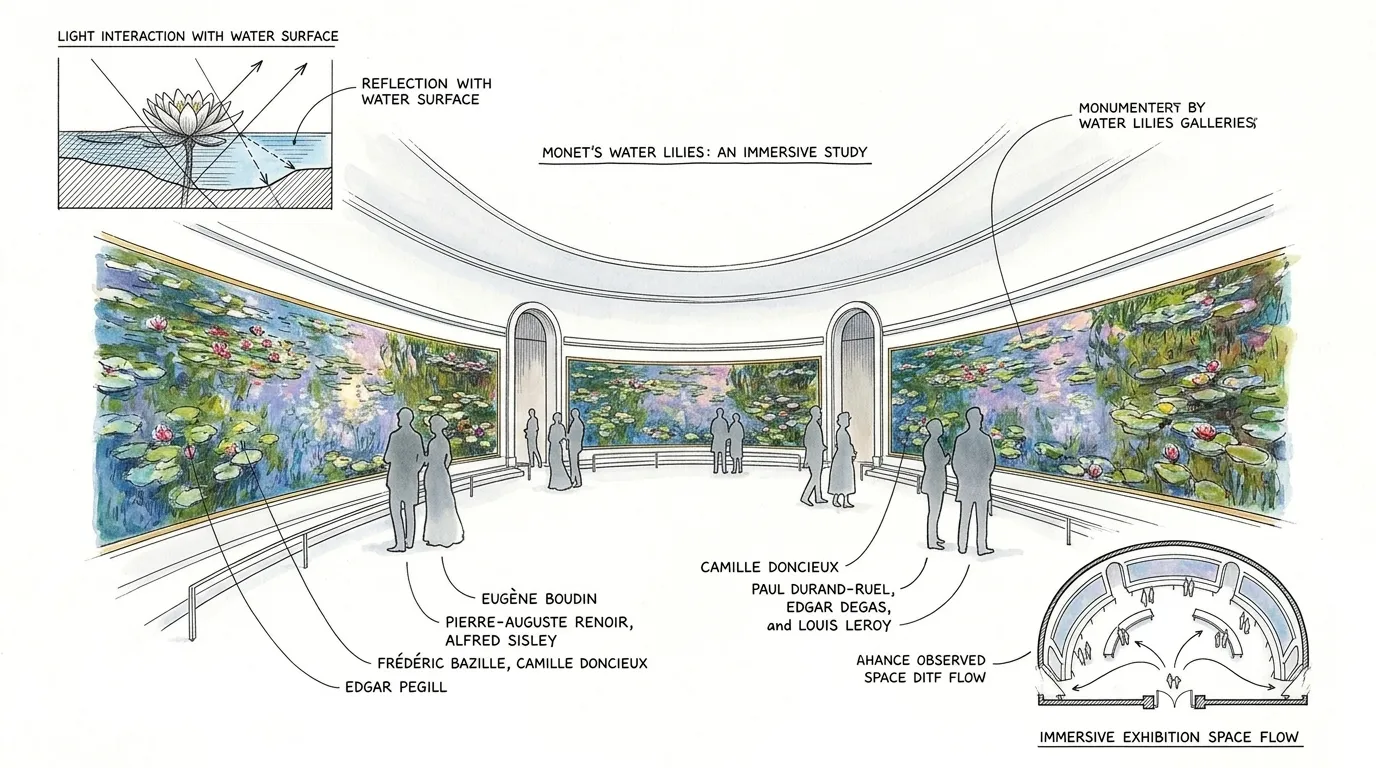
Claude Monet's vision transformed how the world saw light, color, and perception itself. His relentless pursuit of capturing the fleeting moment, his 'impressions,' liberated painting from academic constraints and opened pathways for modern art. The monumental 'Water Lilies' installations at the Orangerie in Paris, completed after his death in 1926, became a testament to his ambition and a global pilgrimage site. His legacy is not merely in the beauty of his canvases, but in the profound shift he orchestrated, forever changing the relationship between art, artist, and observer.
About this story
- Location: Global
- Audience: general readers
Questions and answers
Read Wonder People on your phone
Wonder People is available on Android. Get Wonder People on Google Play.