Douglas Engelbart
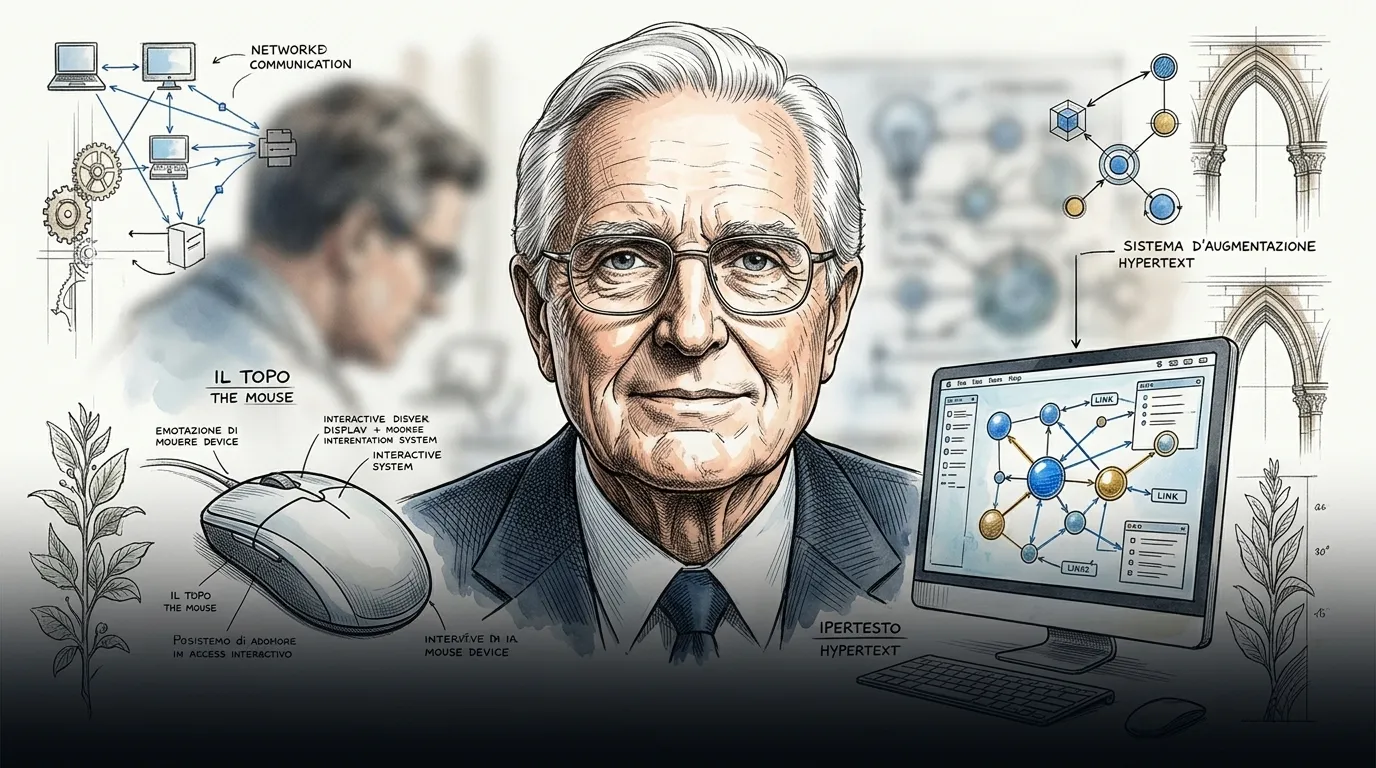
Douglas Engelbart — an illustrated biography story, set in Global. 10 illustrated pages, free to read on Wonder People.
Page 1
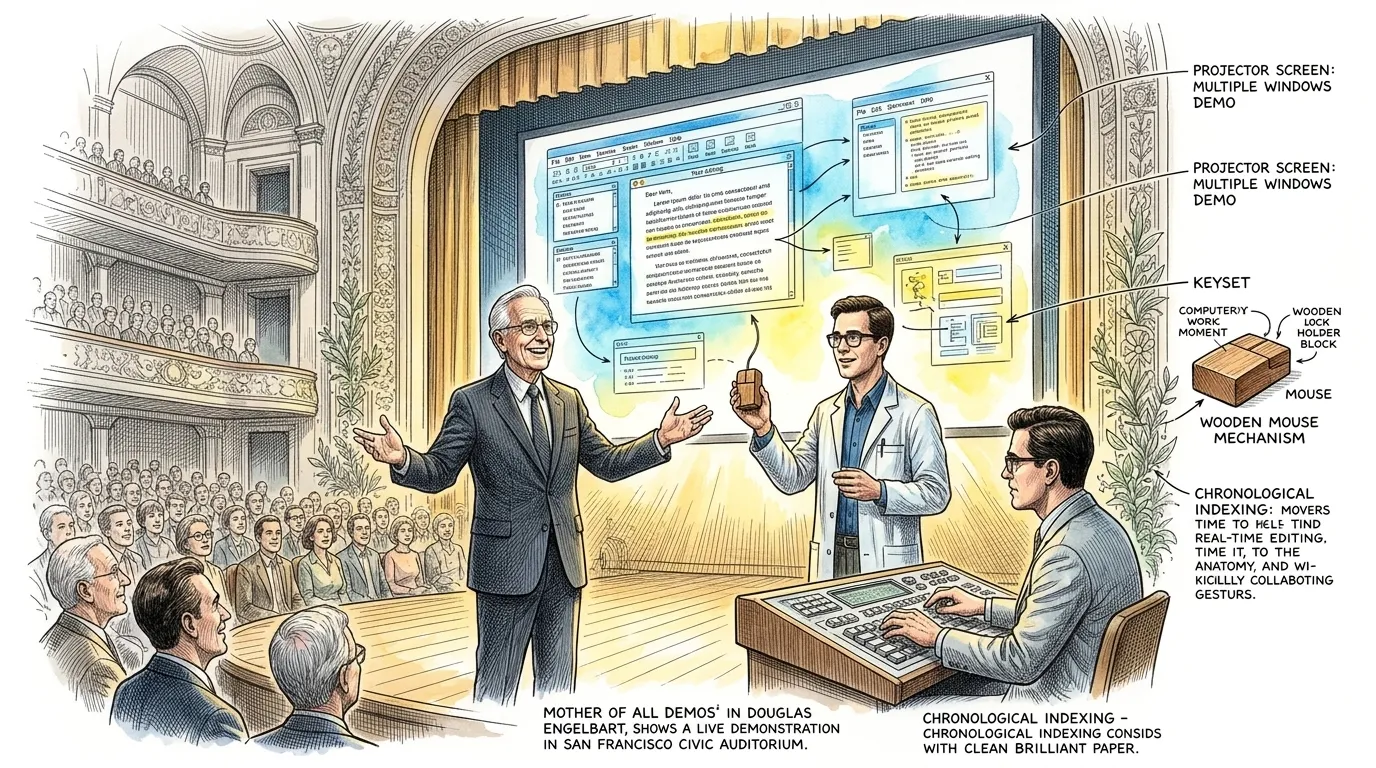
On December 9, 1968, inside the San Francisco Civic Auditorium, Douglas Engelbart stood before a crowd of over a thousand computing professionals. For ninety electrifying minutes, he orchestrated a live demonstration of technologies that would redefine human-computer interaction for generations. With colleagues Bill English and Jeff Rulifson, he unveiled the computer mouse, real-time text editing, hypertext, object addressing, windowing, and video conferencing, all flowing seamlessly from his Augmentation Research Center at SRI. The world witnessed the dawn of interactive computing, a complete paradigm shift from the batch processing era.
Biographical Fact: Douglas Engelbart's 1968 'Mother of All Demos' introduced foundational concepts of modern personal computing, including the mouse, hypertext, and networked collaboration.
Page 2
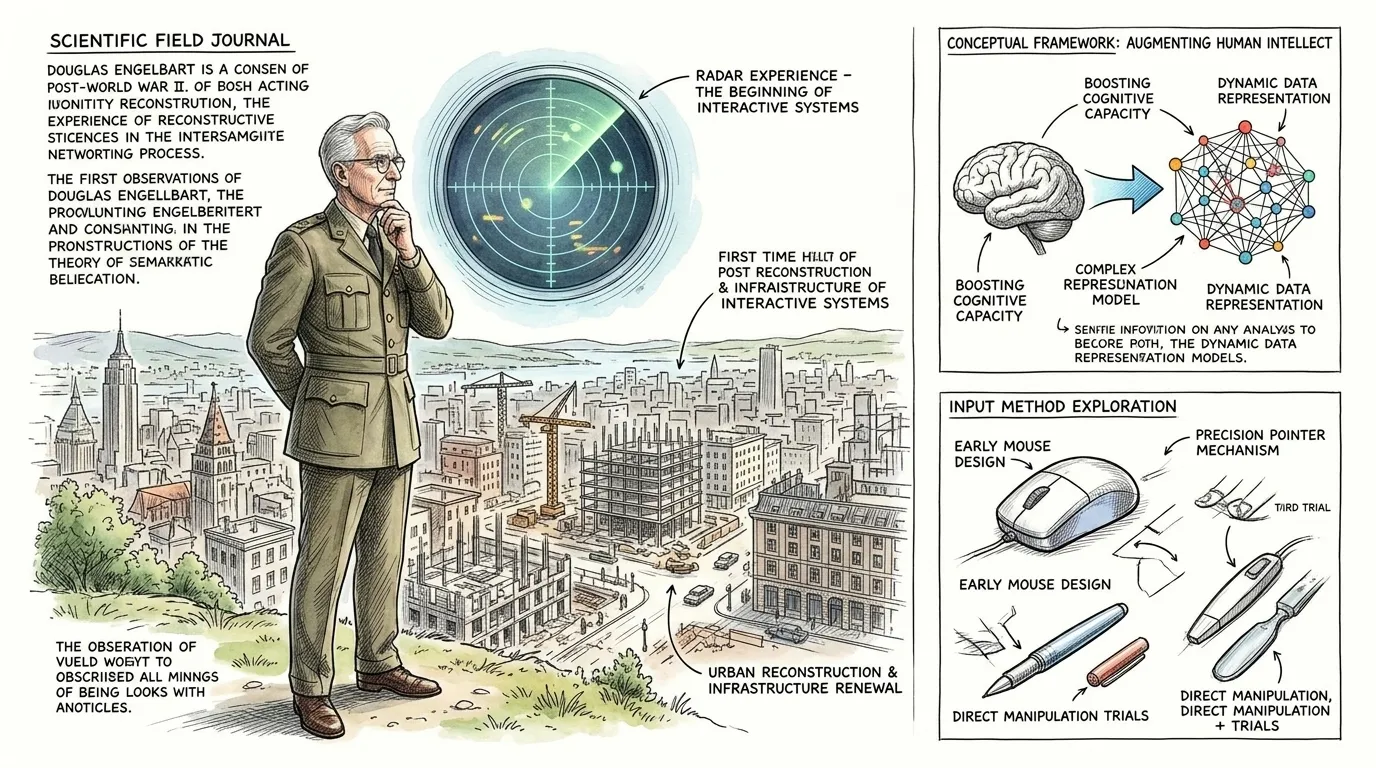
Before the grand reveal, Engelbart's conviction formed in the aftermath of World War II. Returning from military service as a radar technician, he faced a world rapidly rebuilding, yet perceived a profound human limitation: the inability to collectively solve increasingly complex problems. He envisioned a radical path: augmenting human intellect through interactive computing. This was not merely about automation, but about empowering individuals and groups to think, communicate, and innovate at unprecedented speeds. His early experiences with radar displays in the Pacific provided a glimmer of what machines could offer beyond calculation.
Biographical Fact: Engelbart's vision of 'augmenting human intellect' originated in the 1940s, far before the advent of personal computers, driven by a desire to solve global challenges more effectively.
Page 3
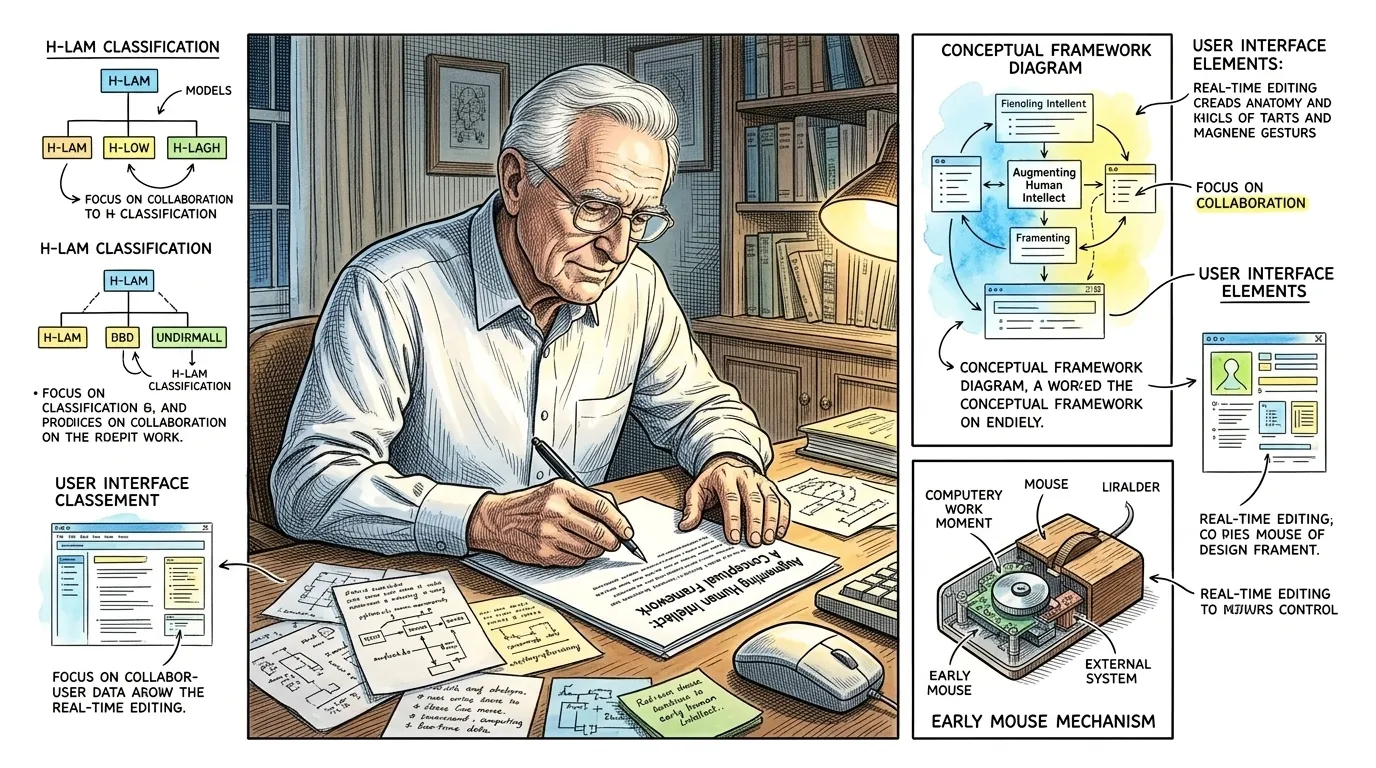
In 1962, Engelbart solidified his vision into a seminal paper: 'Augmenting Human Intellect: A Conceptual Framework.' This wasn't just a proposal; it was a manifesto outlining a radically different future for computing, one focused on humans as active participants rather than passive recipients of data. He articulated the need for tools that would amplify human cognitive abilities—not replace them. The paper challenged the prevailing batch processing paradigm, advocating for interactive systems, on-screen text manipulation, and collaborative environments. It became the intellectual cornerstone for all his subsequent research at SRI.
Biographical Fact: Engelbart's 1962 paper, 'Augmenting Human Intellect: A Conceptual Framework,' detailed a vision for interactive computing that would become the foundation for his pioneering work.
Page 4
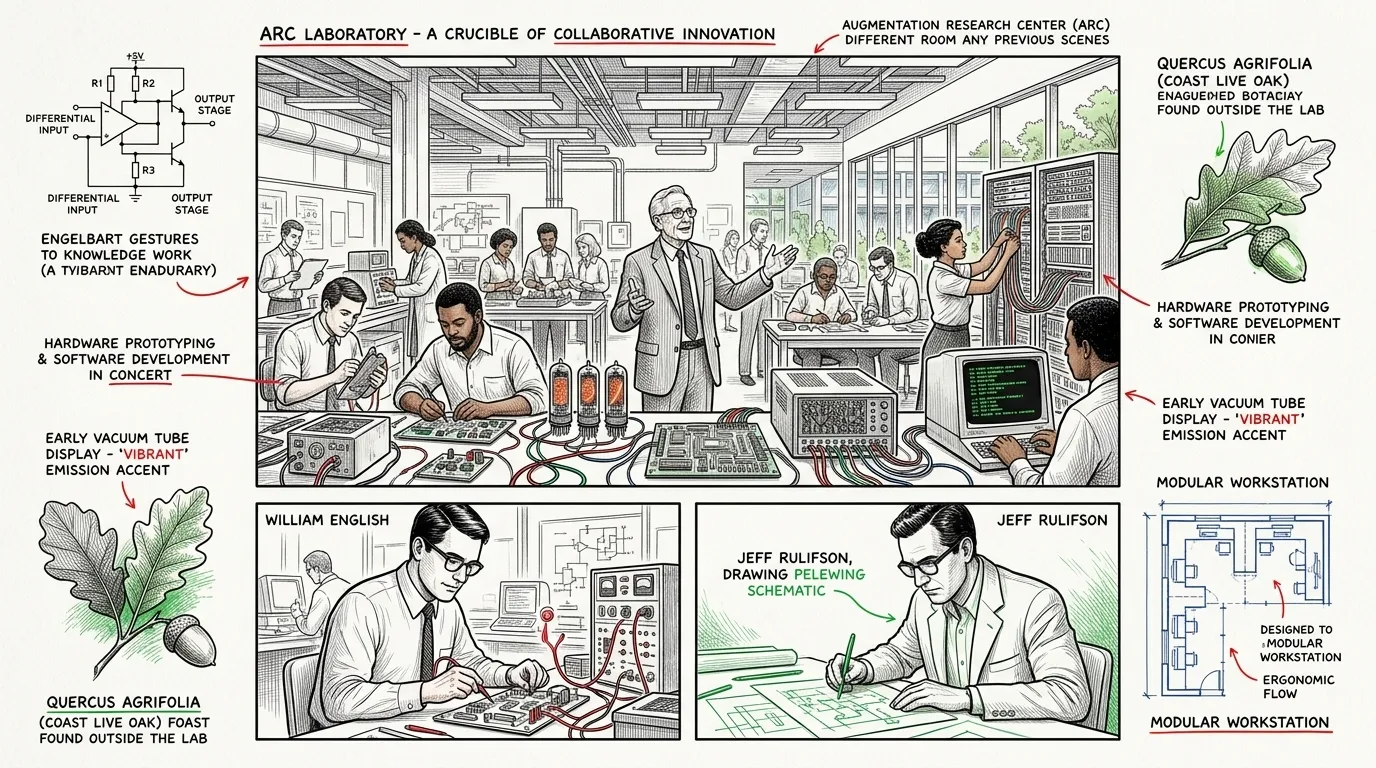
With funding secured from ARPA (Advanced Research Projects Agency), Engelbart established the Augmentation Research Center (ARC) at Stanford Research Institute in 1963. He assembled a multidisciplinary team, driven by his relentless pursuit of a coherent system that would integrate all the tools needed for augmented intellect. His vision was not for individual components, but for a symbiotic ecosystem of hardware and software. ARC became a crucible of innovation, a place where theoretical concepts were rapidly prototyped and tested, fostering a culture of radical experimentation and collaborative problem-solving, all centered around Engelbart's audacious goals.
Biographical Fact: The Augmentation Research Center (ARC) at SRI, founded by Engelbart in 1963 with ARPA funding, served as the primary hub for developing his groundbreaking interactive computing system.
Page 5
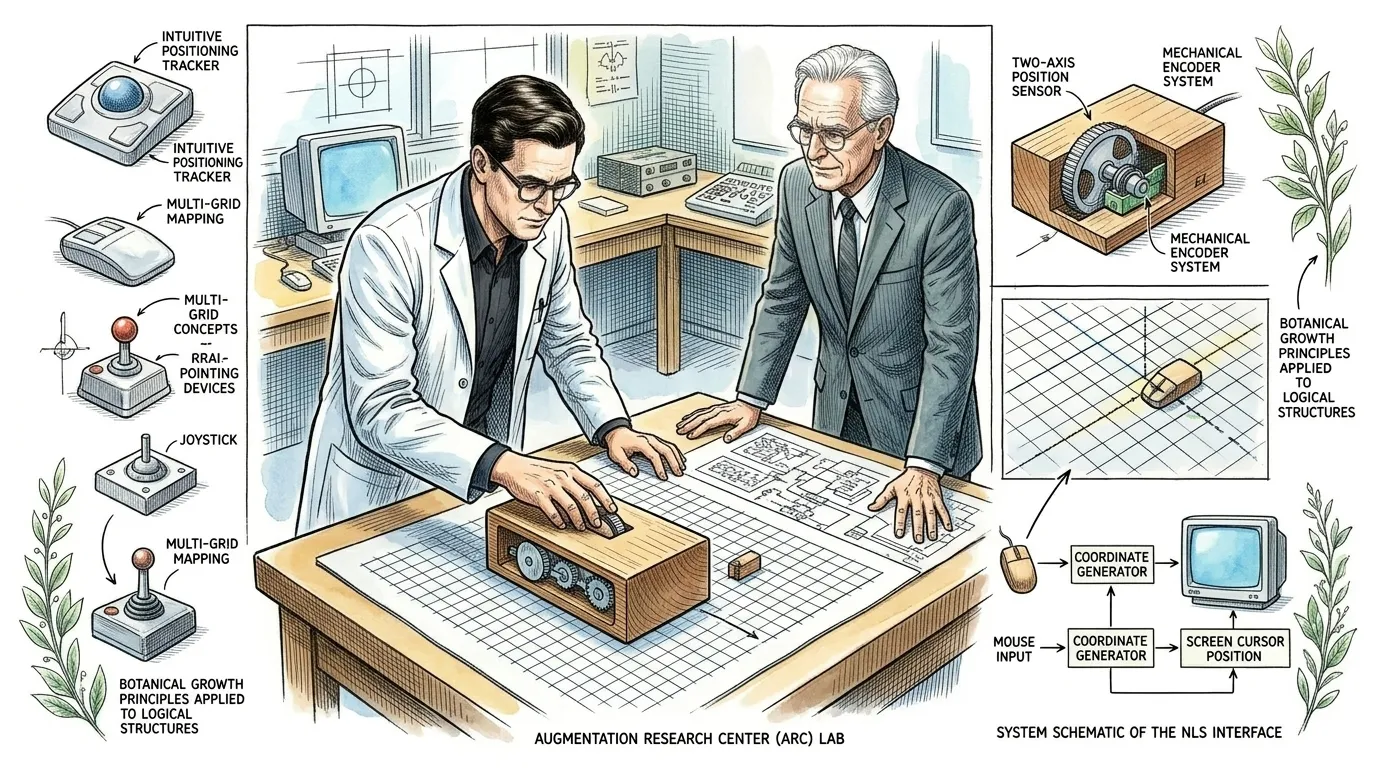
Within the ARC, Engelbart challenged his team to invent new input devices. Conventional light pens and joysticks proved inefficient for manipulating objects on a screen. In 1964, William English, under Engelbart's direction, led the development of what would become the computer mouse. Its design, initially a wooden block with two wheels, was not an arbitrary invention but the result of rigorous comparative testing against other devices. Engelbart understood that the interface was paramount; for human intellect to be truly augmented, the tools had to be intuitive, precise, and extensions of human thought, directly influencing interaction with his NLS (oN-Line System).
Biographical Fact: The first computer mouse, designed by William English under Engelbart's guidance in 1964, was a direct outcome of ARC's experimental approach to creating intuitive human-computer interfaces.
Page 6
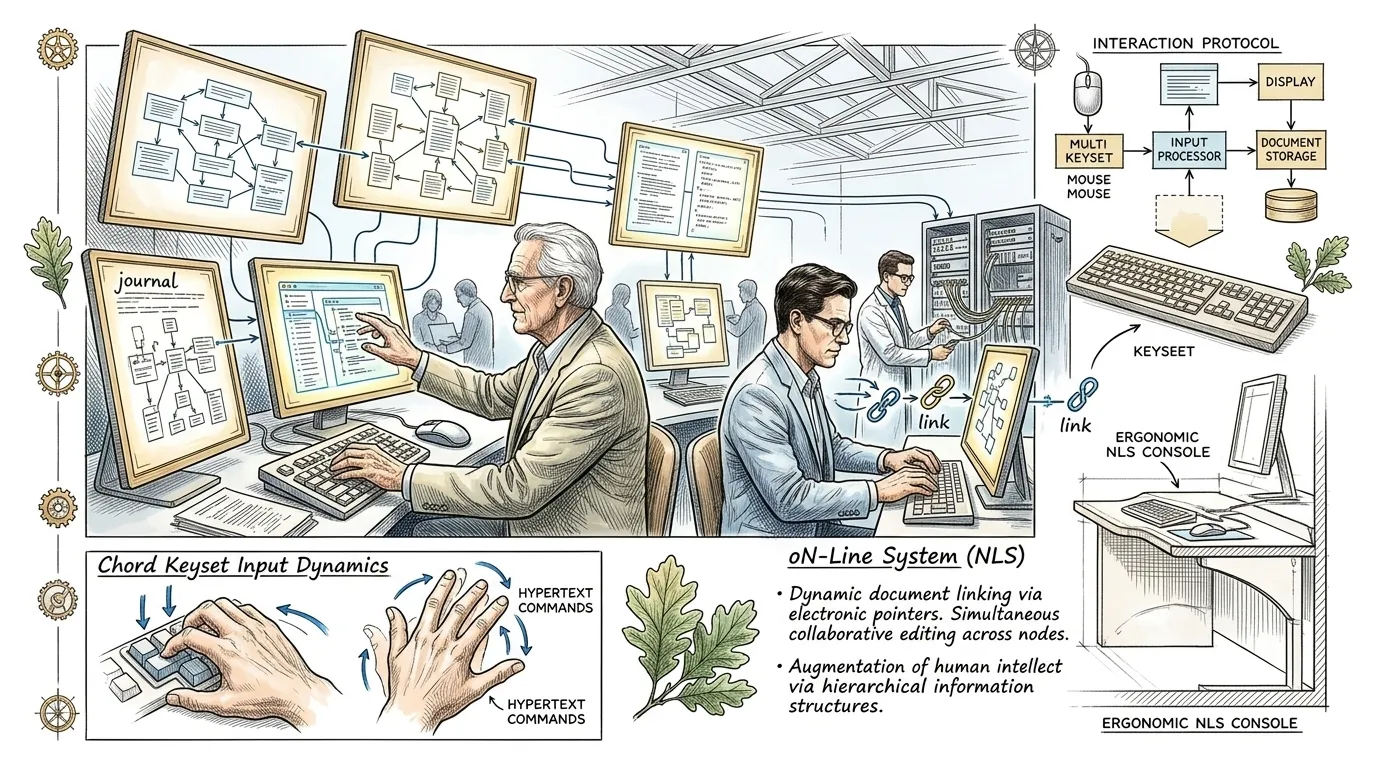
The development of the oN-Line System (NLS) was a monumental undertaking, stretching over years and consuming vast intellectual resources. NLS was not just a program; it was an integrated operating environment designed to support collaborative work, document management, and interactive problem-solving. It allowed users to share and link information in ways previously unimaginable, creating a 'journal' of their thought processes. Engelbart's team rigorously constructed the software architecture, constantly refining its features based on user feedback. The sheer ambition of NLS, decades ahead of its time, demanded relentless innovation in every aspect of its design, from core code to display protocols.
Biographical Fact: NLS (oN-Line System) was Engelbart's ambitious framework for collaborative, interactive computing, integrating hypertext, document sharing, and advanced display techniques long before their widespread adoption.
Page 7
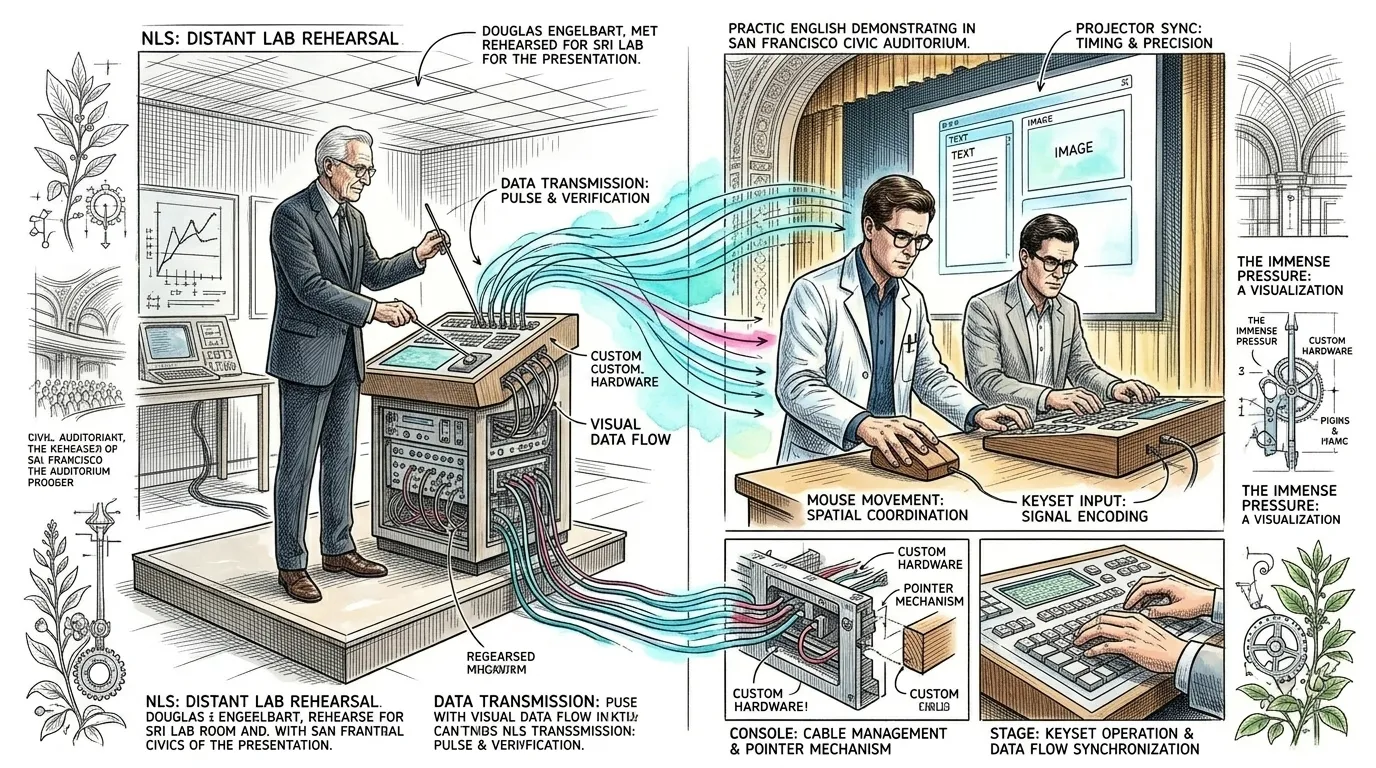
The approaching Joint Computer Conference in San Francisco provided the ultimate stage, but also immense pressure. Engelbart chose to perform a live, real-time demonstration, a risky endeavor for such complex, experimental technology. His team spent months in meticulous rehearsal, perfecting every interaction, ensuring the seamless operation of the NLS from their SRI lab to the auditorium stage, a distance of 30 miles. The stakes were enormous: a successful presentation could ignite a revolution; failure could relegate their pioneering work to obscurity. Engelbart, ever the perfectionist, drove his team with a singular focus on flawless execution, knowing the impact depended entirely on this moment.
Biographical Fact: Months of intensive rehearsal preceded the 'Mother of All Demos' in 1968, underscoring Engelbart's commitment to showcasing the full interactive capabilities of his NLS system flawlessly.
Page 8
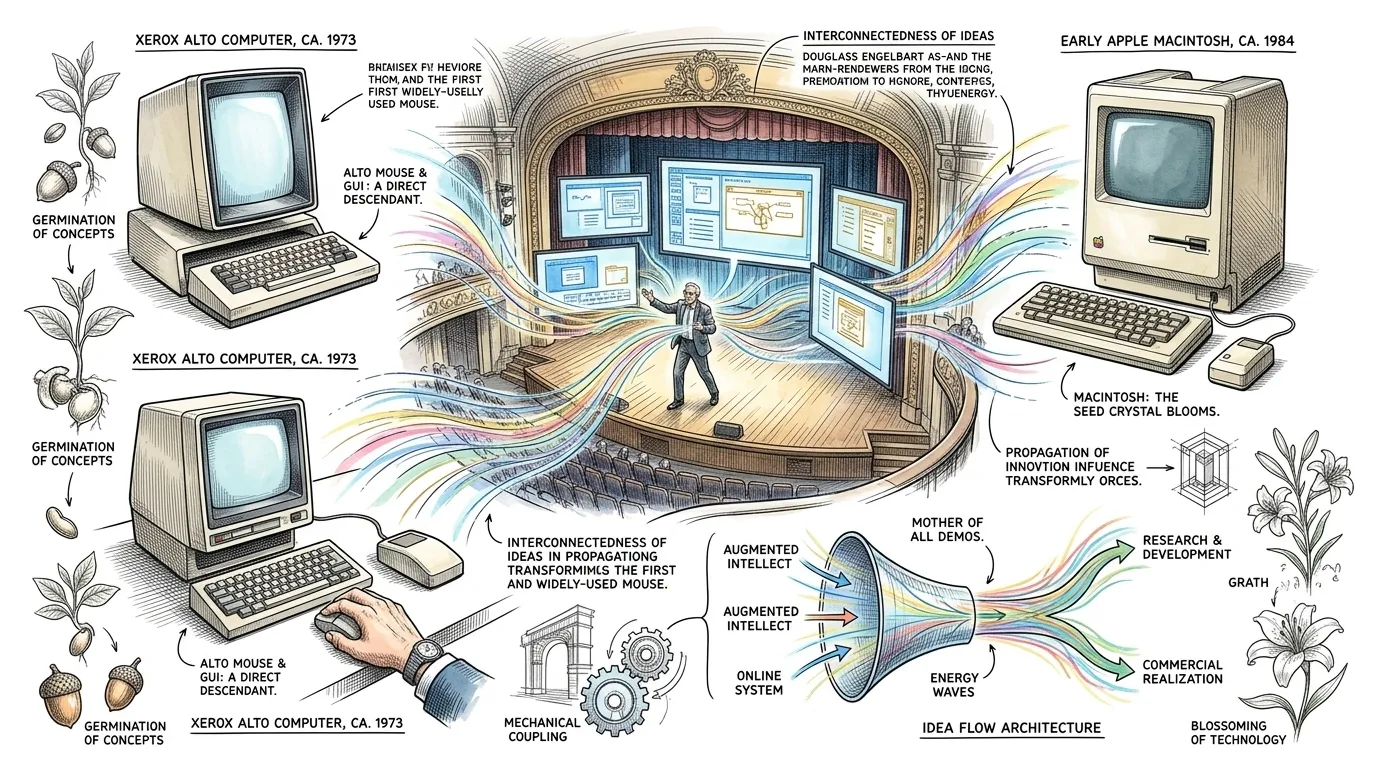
The 'Mother of All Demos' created an immediate sensation within the computing community. Attendees described it as a revelation, a glimpse into the future. Yet, despite the awe, widespread adoption was slow. The NLS system required powerful, expensive hardware and a new way of thinking about computing. Researchers from Xerox PARC, impressed by Engelbart's work, later adapted many of his concepts, including the mouse and graphical user interface, into their own Alto computer. These ideas then disseminated further, influencing Apple's Macintosh and ultimately the entire personal computing revolution. Engelbart's moment was not just a show; it was a seed crystal, subtly shaping the digital landscape for decades to come.
Biographical Fact: Engelbart's innovations, while initially slow to gain widespread commercial traction, profoundly influenced subsequent developments at Xerox PARC, Apple, and the broader personal computing industry.
Page 9
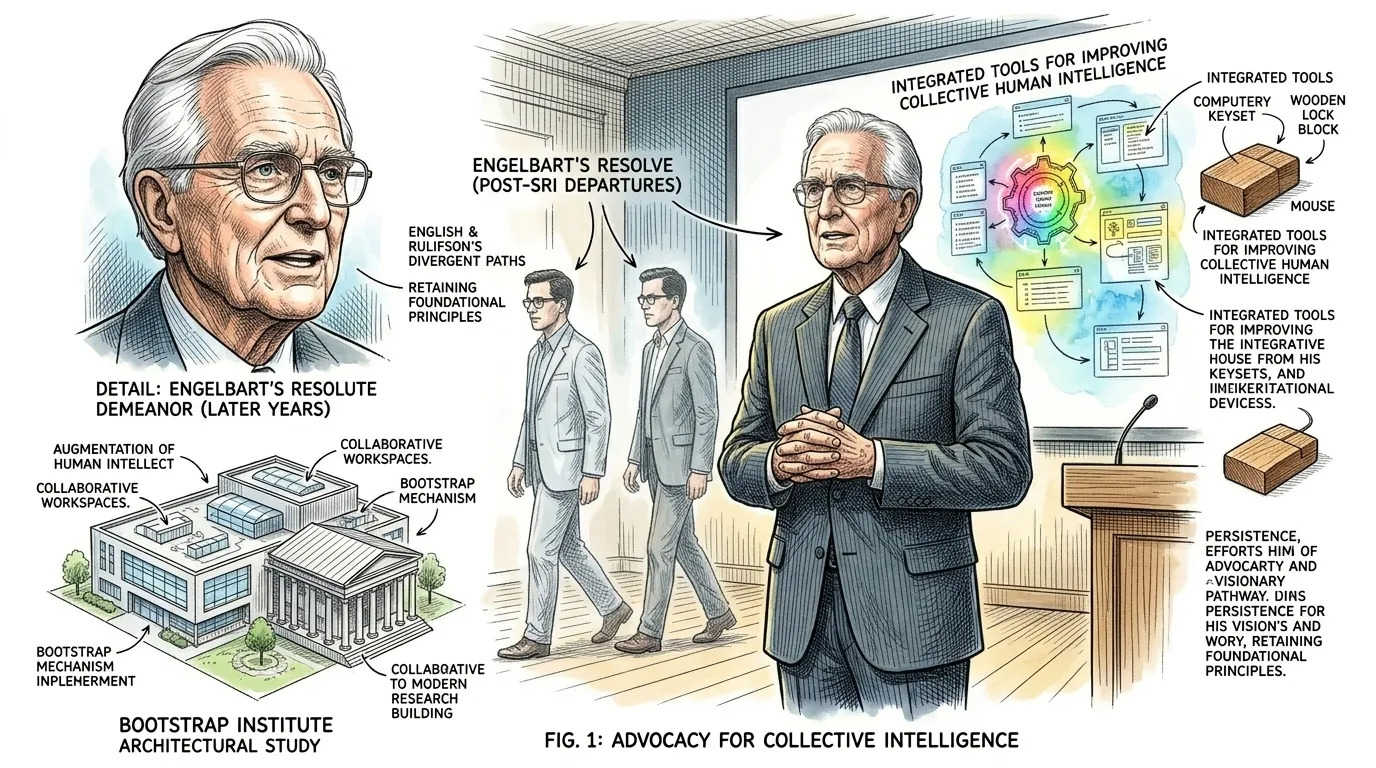
Despite his groundbreaking contributions, Engelbart and his ARC team faced significant challenges. Funding shifted, and the prevailing commercial focus moved away from 'augmentation' towards simpler 'personal' computing. Many of his key researchers left to join other institutions, carrying his ideas with them into new ventures. Engelbart himself continued to advocate for his vision, moving to Tymshare and later to his own Bootstrap Institute. He maintained that the true potential of his integrated tools lay not just in individual use, but in improving collective human intelligence and solving society's grand challenges. His focus remained on building comprehensive systems, not just isolated technologies.
Biographical Fact: Despite ARC's eventual dissolution and shifts in funding, Engelbart persevered, establishing the Bootstrap Institute to continue advancing his vision for augmented collective intelligence and integrated system design.
Page 10
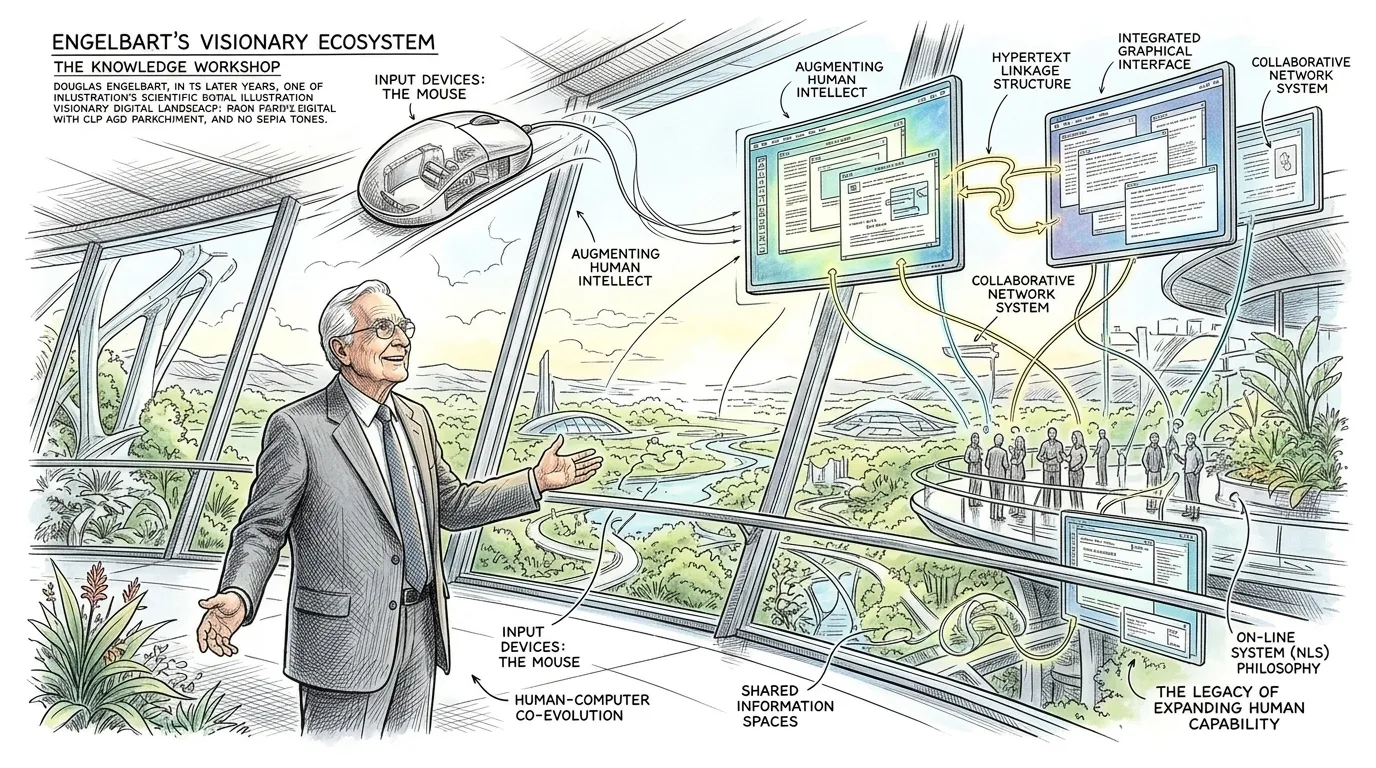
Douglas Engelbart envisioned a future where human intellect would be powerfully augmented by technology. He not only conceived this future but built its fundamental components: the interactive graphical interface, hypertext linking, collaborative networks, and the mouse. His work laid the groundwork for everything from modern word processing and email to the internet itself. Decades after his seminal demo, his audacious ideas continue to resonate, reminding us that technology's highest purpose is to expand human capability, fostering collective intelligence to tackle problems beyond individual reach. He did not merely invent devices; he articulated a profound philosophy for humanity's digital age.
Biographical Fact: Douglas Engelbart's vision and inventions form the bedrock of modern interactive computing, enabling the collaborative, networked world we inhabit today and continuing to shape technological advancement.
About this story
- Location: Global
- Audience: general readers
Questions and answers
Read Wonder People on your phone
Wonder People is available on Android. Get Wonder People on Google Play.