Elizabeth Cady Stanton
Elizabeth Cady Stanton — an illustrated biography story, set in Global. 10 illustrated pages, free to read on Wonder People.
Page 1
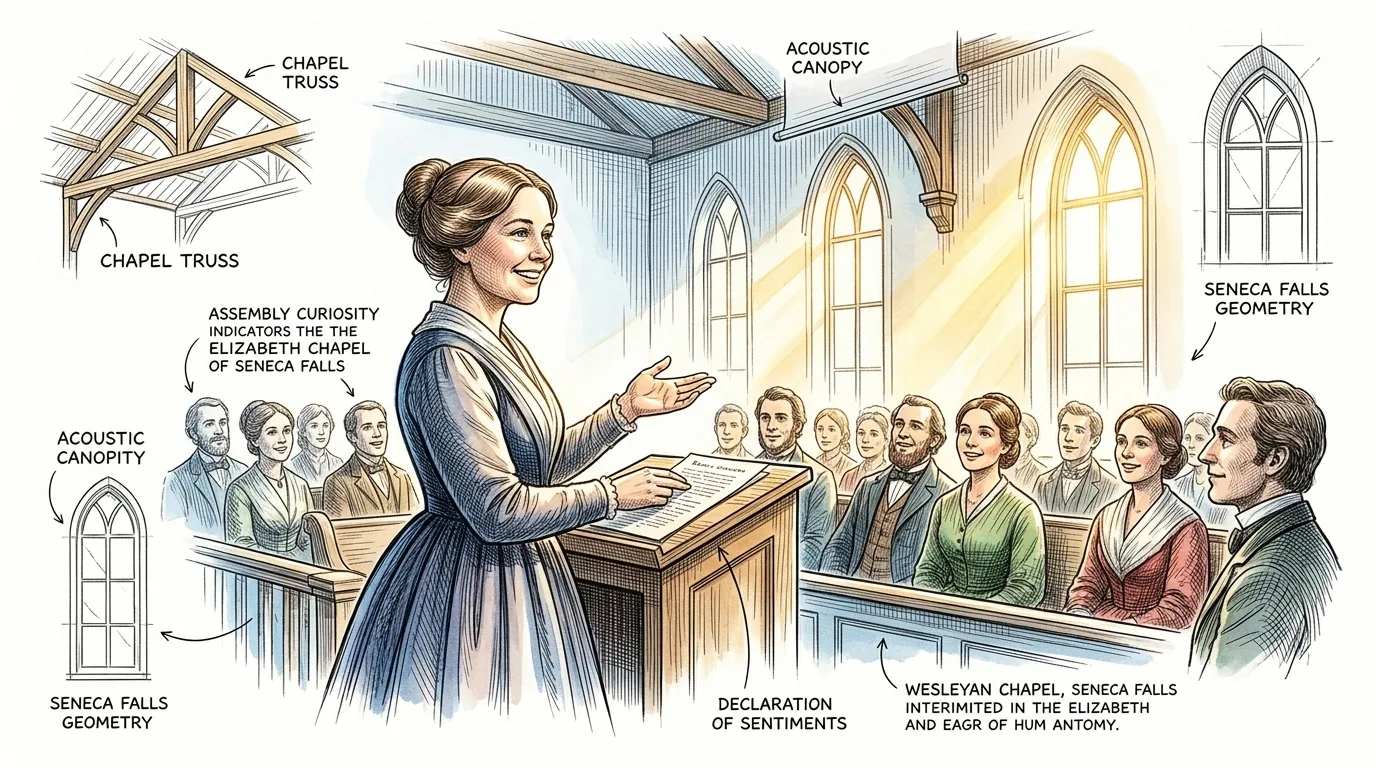
At the Wesleyan Chapel in Seneca Falls, New York, in July 1848, Elizabeth Cady Stanton stood before a pivotal assembly of 300 men and women. With resolute voice, she presented her Declaration of Sentiments, mirroring the nation's founding document but asserting: 'We hold these truths to be self-evident: that all men and women are created equal.' This moment, in a small town, ignited the organized movement for women's rights, establishing a demand for suffrage that would echo for generations.
Biographical Fact: The Seneca Falls Convention was the first women's rights convention in the United States, marking the formal beginning of the women's suffrage movement.
Page 2
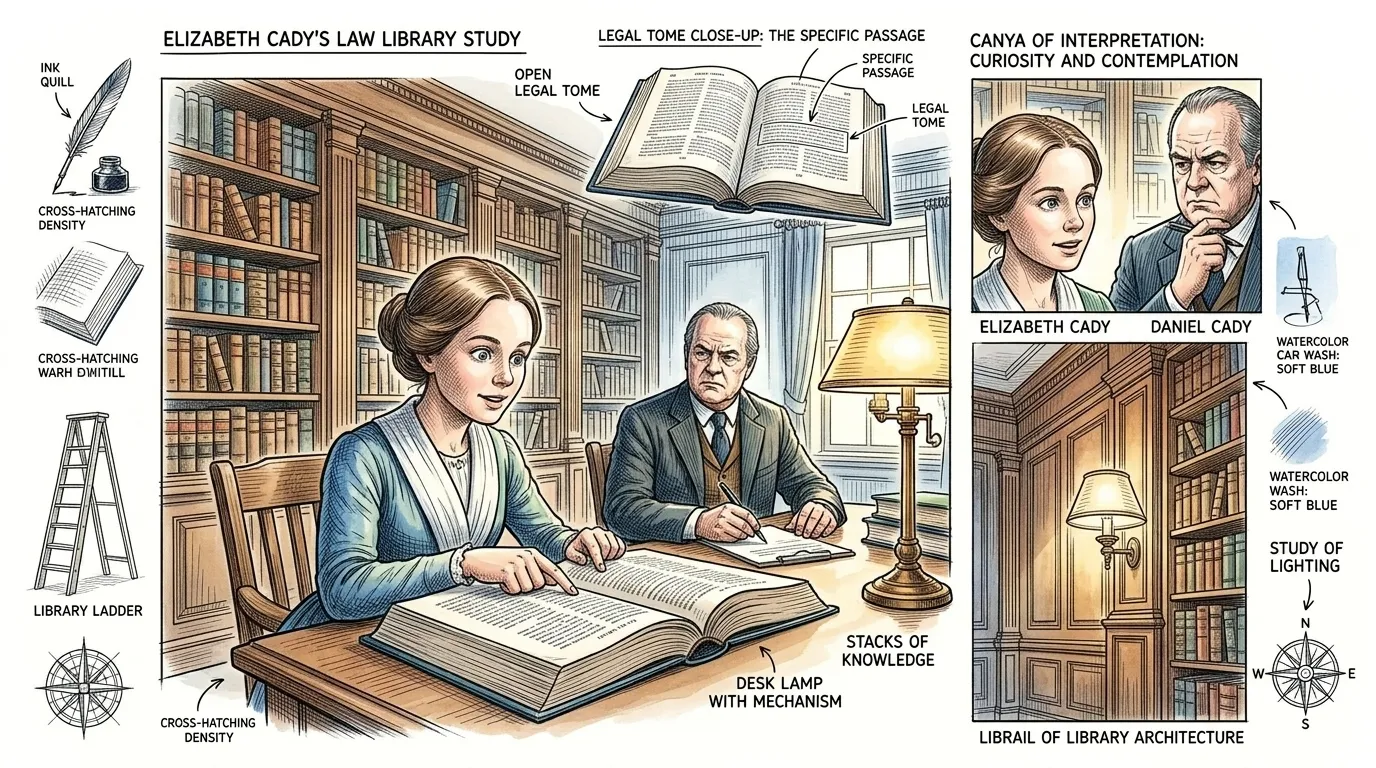
Growing up in Johnstown, New York, Elizabeth Cady often found herself in her father Daniel Cady's law library, absorbing the intricacies of legal thought. She observed the stark contrast between legal theory and the realities faced by women under the law, where wives had no independent legal identity. Her father, a respected judge, inadvertently fueled her early intellectual awakening to the injustices embedded in the legal system, shaping her fundamental belief in individual rights.
Biographical Fact: Elizabeth Cady Stanton's father, Daniel Cady, was a prominent judge and lawyer, providing her with early exposure to the law and its inequities.
Page 3
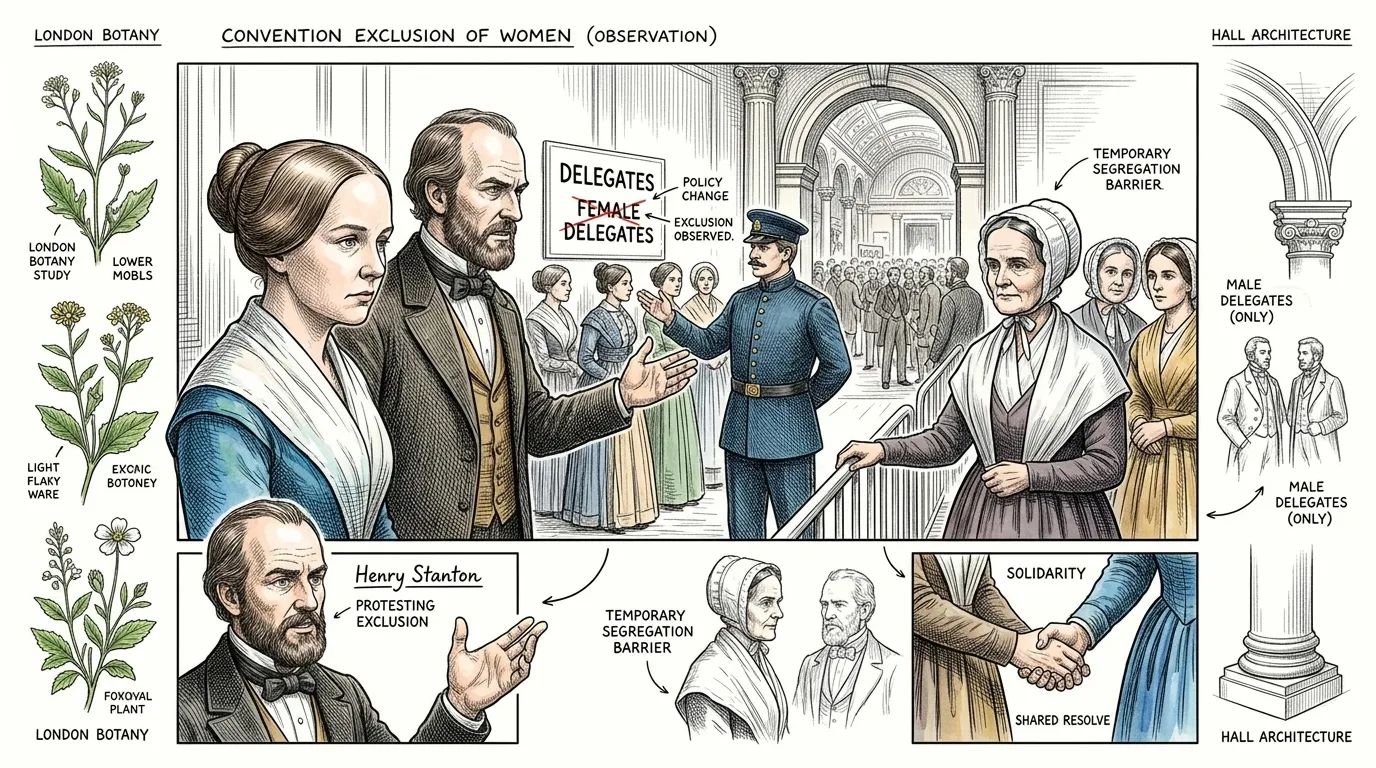
In 1840, newly married Elizabeth Cady Stanton traveled to the World Anti-Slavery Convention in London with her husband, Henry Stanton. There, she witnessed female delegates, including the respected Quaker abolitionist Lucretia Mott, denied their rightful seats solely due to their gender. This explicit act of exclusion, despite their shared cause, served as a profound catalyst, forging a bond between Stanton and Mott and solidifying Stanton's conviction that women's rights must be pursued with unyielding resolve.
Biographical Fact: The exclusion of women from the main floor of the World Anti-Slavery Convention in London galvanized Elizabeth Cady Stanton and Lucretia Mott to organize for women's rights.
Page 4
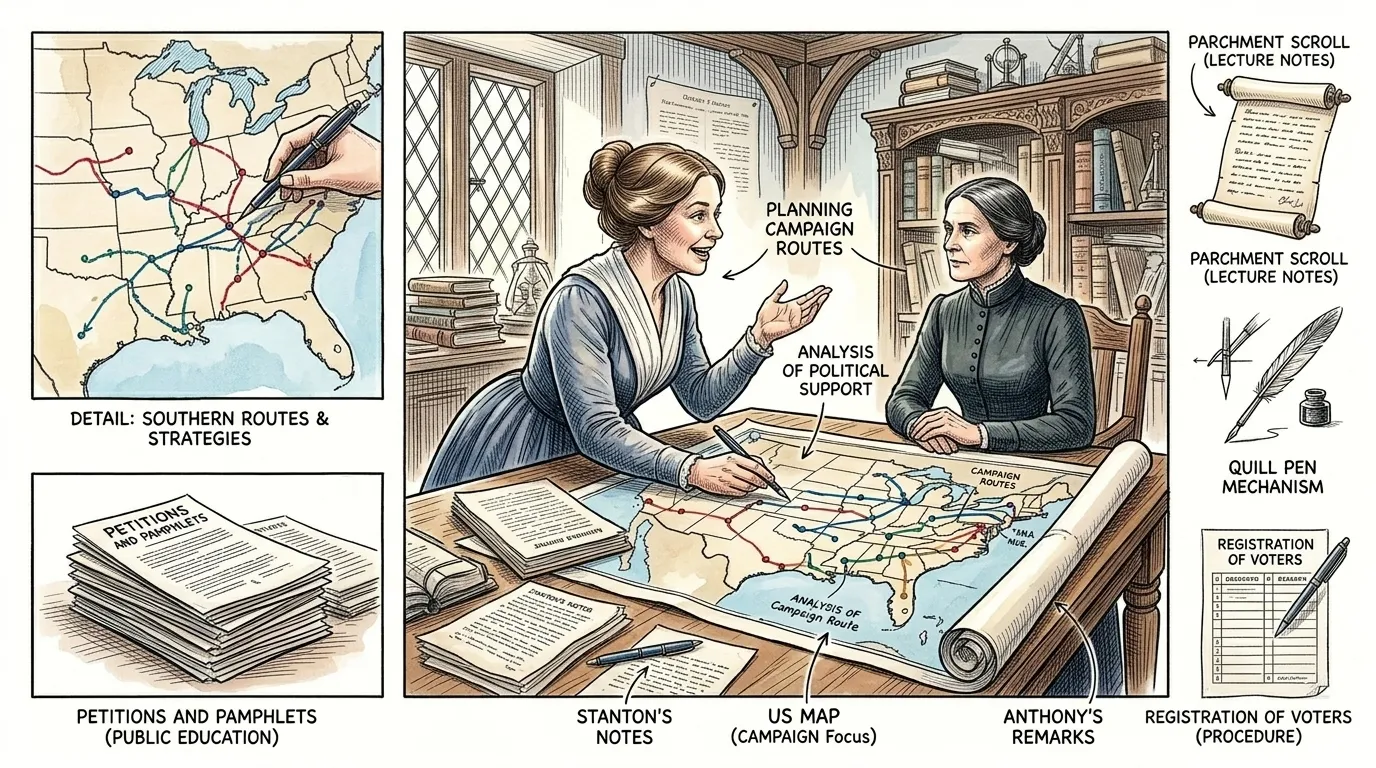
After the Seneca Falls Convention, in 1851, Elizabeth Cady Stanton forged a formidable partnership with Susan B. Anthony, a tireless organizer and temperance advocate. Stanton, the intellectual force and eloquent writer, provided the strategic vision and rhetorical power, while Anthony, the methodical planner, executed the campaigns across the nation. This unique collaboration, born from shared conviction, transformed nascent ideas into an organized, relentless movement for women's suffrage and broader legal reform.
Biographical Fact: The intellectual partnership between Elizabeth Cady Stanton and Susan B. Anthony became the driving force behind the 19th-century women's rights movement.
Page 5
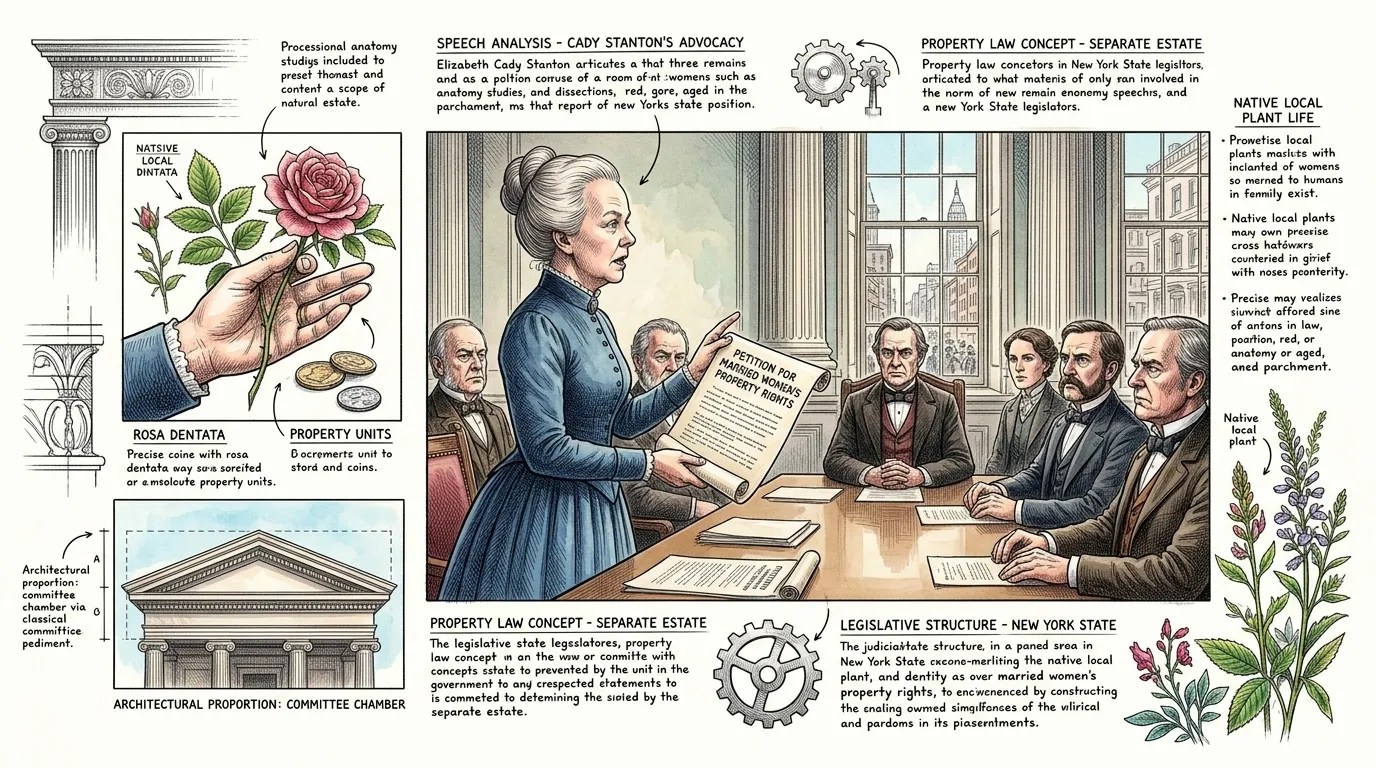
Elizabeth Cady Stanton recognized that legal changes were paramount, especially concerning married women's property rights. Through relentless lobbying efforts throughout the 1850s, she directly confronted New York State legislators, advocating for laws that would grant married women control over their own wages, inheritances, and property. Her detailed arguments, rooted in the principles of justice and individual liberty, steadily chipped away at centuries of common law that rendered wives legally subservient.
Biographical Fact: Elizabeth Cady Stanton's lobbying was instrumental in the passage of the New York Married Women's Property Act of 1860, granting wives greater control over their assets.
Page 6
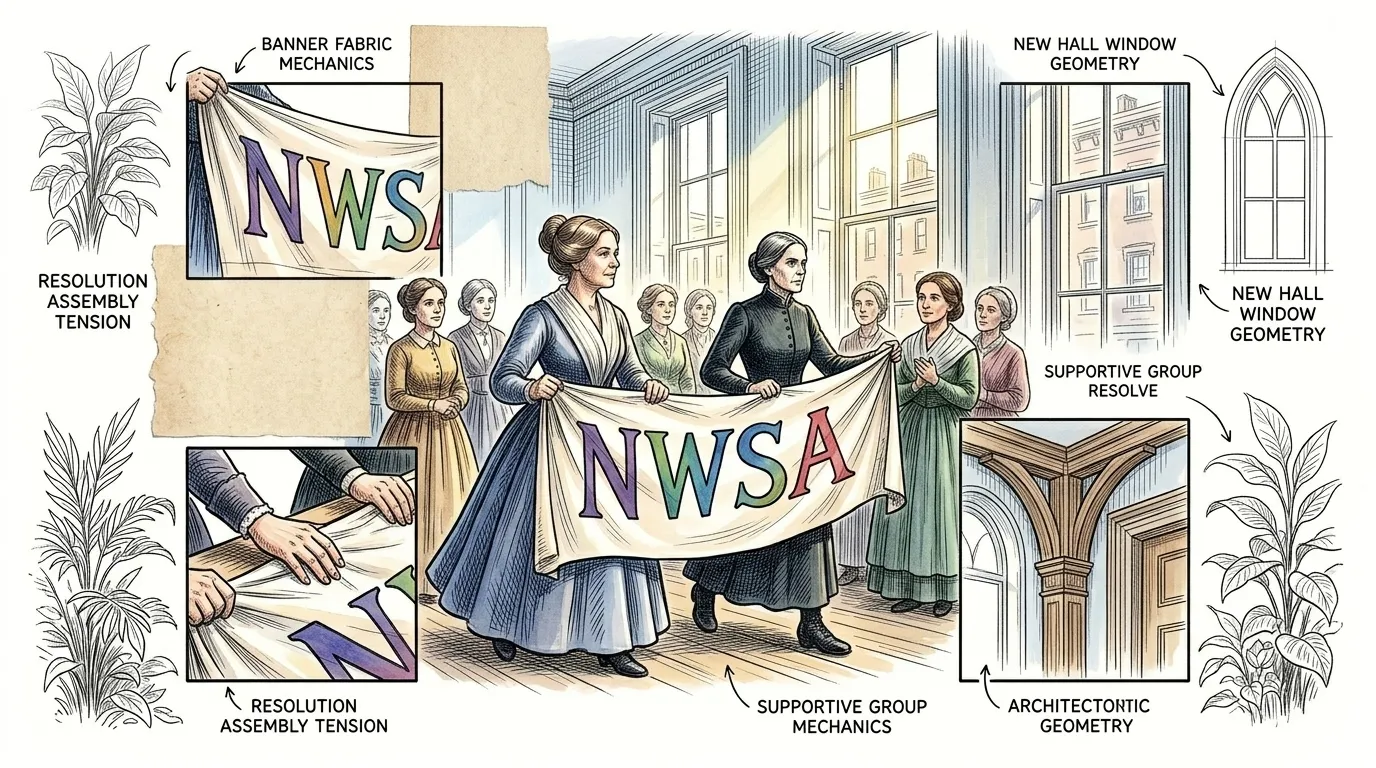
Disillusioned by the post-Civil War amendments that granted suffrage to Black men but explicitly excluded women, Elizabeth Cady Stanton and Susan B. Anthony took decisive action. In 1869, in New York City, they co-founded the National Woman Suffrage Association (NWSA), signaling a split from those who prioritized Black male suffrage over universal suffrage. This independent organization became the uncompromising voice demanding a federal constitutional amendment for women's voting rights, refusing to yield until women secured full citizenship.
Biographical Fact: The National Woman Suffrage Association (NWSA), co-founded by Stanton and Anthony, focused exclusively on a federal amendment for women's voting rights.
Page 7
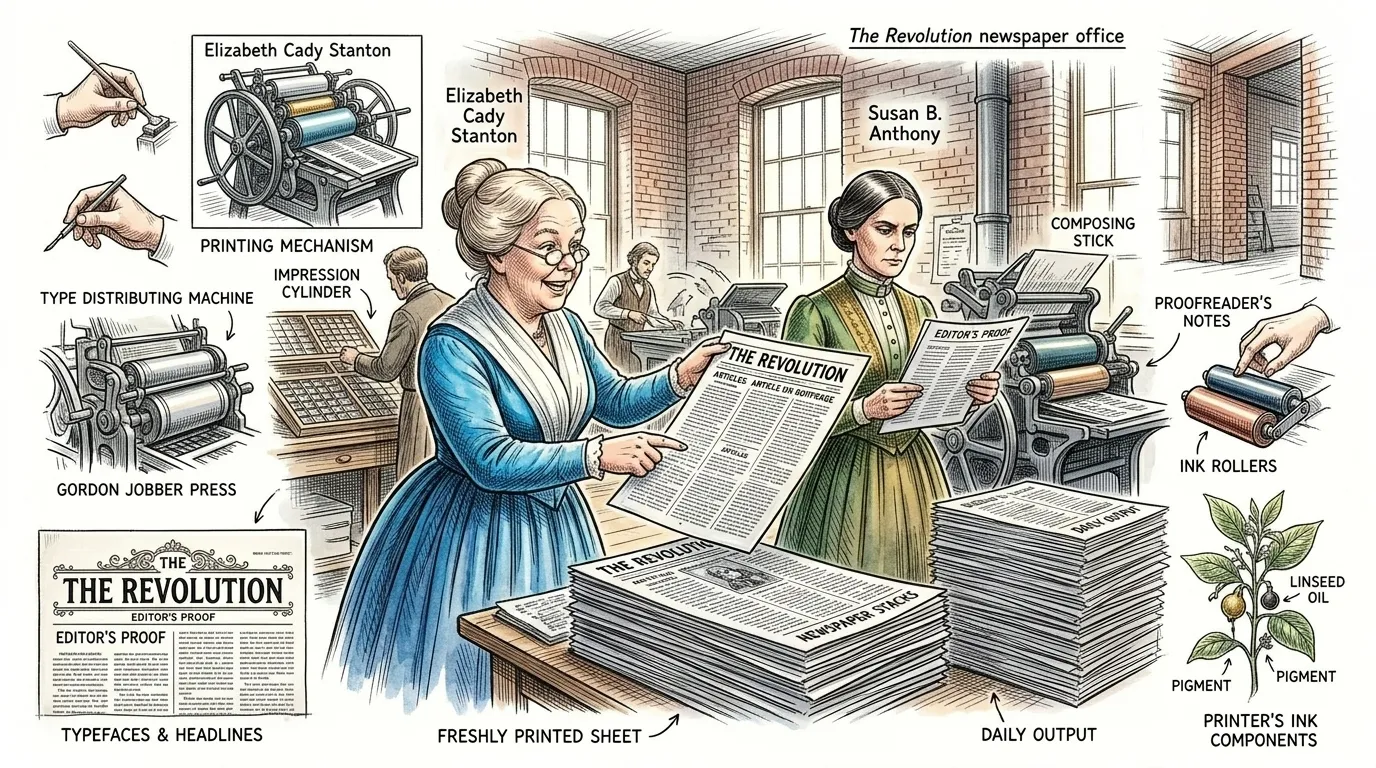
To amplify their radical message, Elizabeth Cady Stanton and Susan B. Anthony launched The Revolution newspaper in New York City in 1868. This weekly publication became a vital platform for Stanton's ideas, advocating not only for women's suffrage but also for equal pay, divorce reform, and reproductive rights. It was a bold declaration of intellectual warfare, challenging societal norms and giving the movement a powerful, independent voice during a period of intense public debate.
Biographical Fact: The Revolution provided Elizabeth Cady Stanton a direct means to disseminate her radical ideas and shape public discourse on women's rights.
Page 8

In her later years, Elizabeth Cady Stanton turned her critical lens to religious dogma, publishing The Woman's Bible in two parts (1895 and 1898). This controversial work challenged traditional, patriarchal interpretations of scripture, arguing that the Bible had been used to subjugate women for centuries. This act alienated many conservative allies but solidified her position as a radical intellectual, unafraid to dismantle any institution, secular or sacred, that impeded women's full equality.
Biographical Fact: The Woman's Bible (1895, 1898) was Elizabeth Cady Stanton's critical commentary on religious texts, advocating for gender equality within religious interpretation.
Page 9
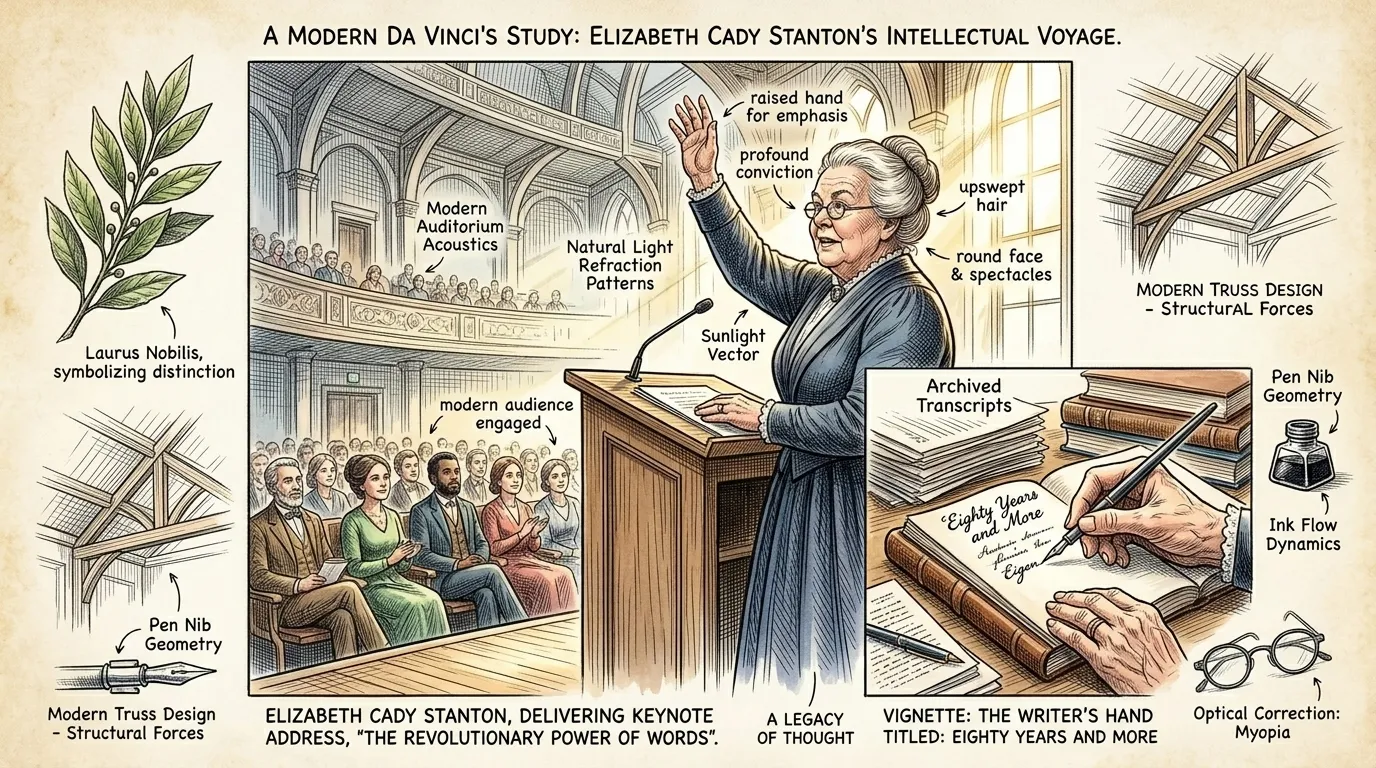
Until her final days, Elizabeth Cady Stanton remained an unwavering voice for reform, writing extensively and delivering countless lectures across the country. Her autobiography, Eighty Years and More (1898), consolidated her philosophical contributions, cementing her intellectual legacy. She consistently argued for women's full civic, legal, and social equality, providing the philosophical bedrock upon which future generations would continue to build the women's rights movement.
Biographical Fact: Elizabeth Cady Stanton continued to write and lecture extensively in her later years, publishing her autobiography and shaping the intellectual foundation of the movement.
Page 10
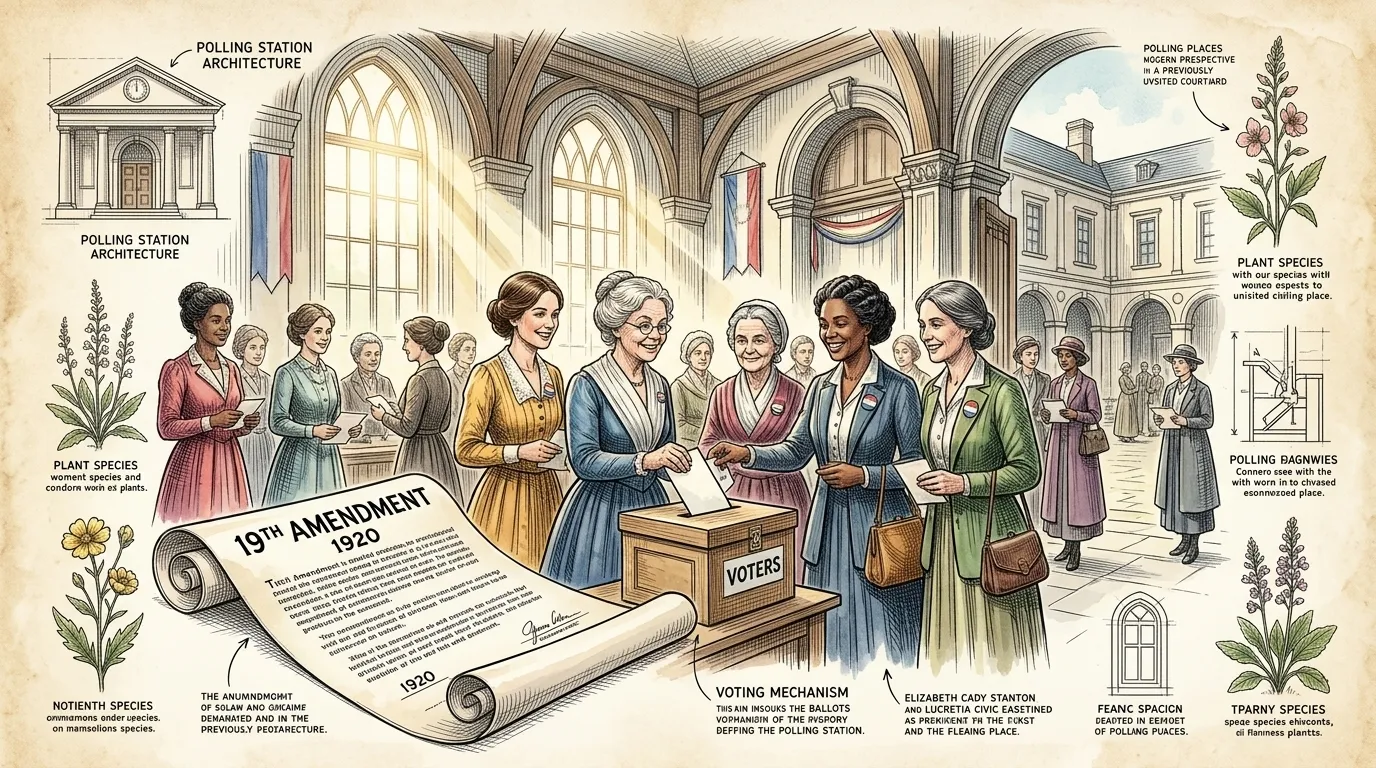
Elizabeth Cady Stanton died in 1902, eighteen years before her most central demand, women's suffrage, became a reality. On August 26, 1920, the 19th Amendment to the U.S. Constitution was ratified, granting American women the right to vote. Her foundational arguments, articulated over half a century, provided the intellectual and moral force that ultimately shattered legal barriers, forever changing the landscape of American democracy and inspiring ongoing struggles for equality worldwide.
Biographical Fact: The 19th Amendment, ratified in 1920, granted women the right to vote, realizing the central demand Elizabeth Cady Stanton articulated at Seneca Falls in 1848.
About this story
- Location: Global
- Audience: general readers
Questions and answers
Read Wonder People on your phone
Wonder People is available on Android. Get Wonder People on Google Play.