Frederick Douglass
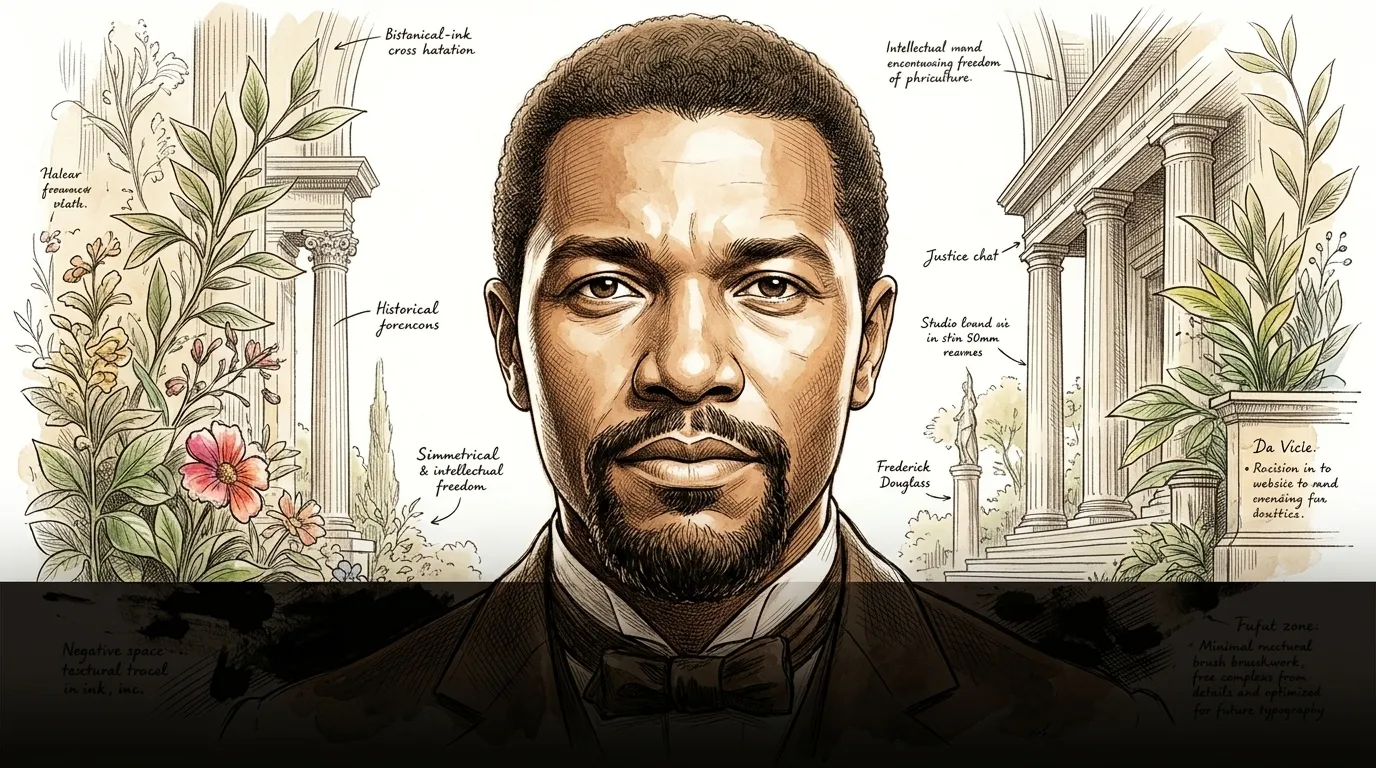
Frederick Douglass — an illustrated biography story, set in Global. 10 illustrated pages, free to read on Wonder People.
Page 1
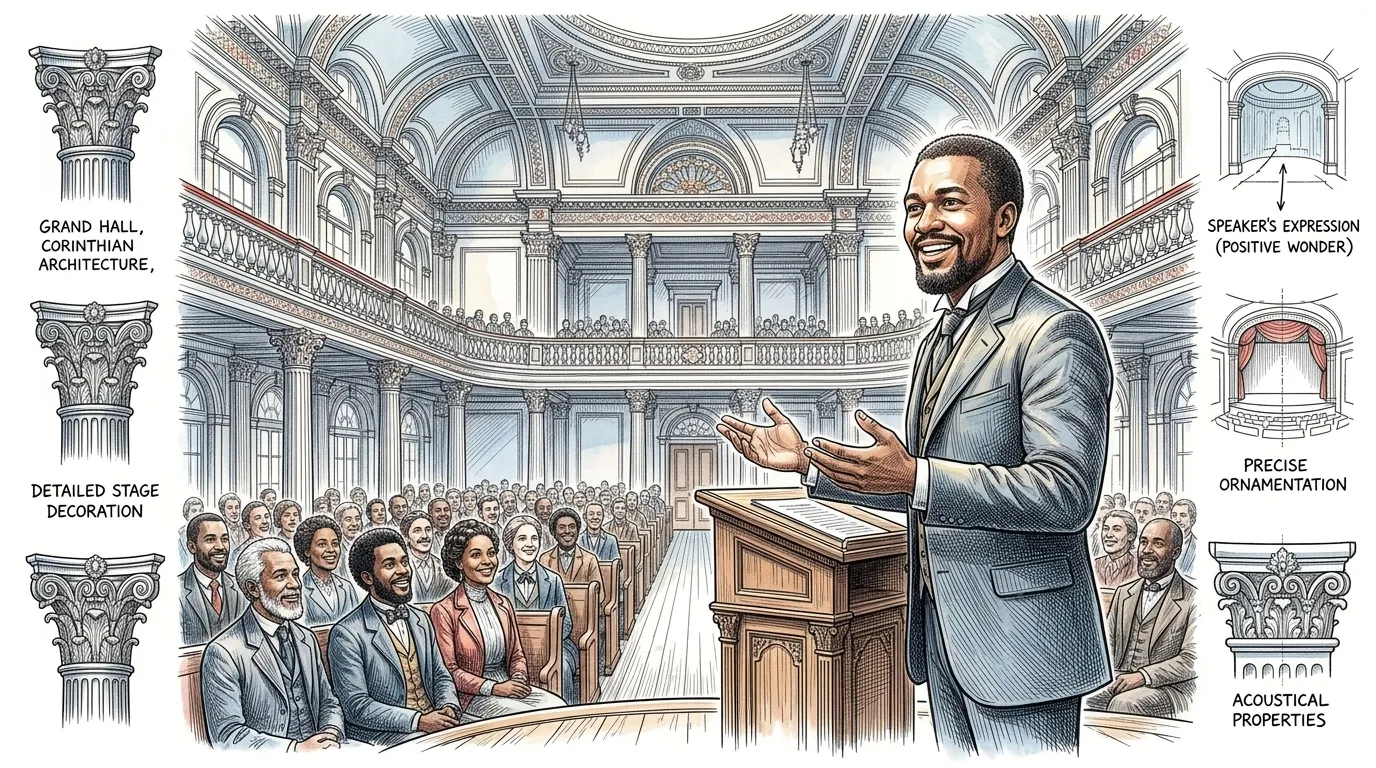
At Corinthian Hall in Rochester, New York, on July 5, 1852, Frederick Douglass rose before a crowd of over 500 citizens and abolitionists. Invited to speak on American independence, he delivered an indictment, not a celebration. His voice, resonant and commanding, echoed through the ornate hall as he challenged the nation's hypocrisy, declaring, 'What to the Slave Is the Fourth of July?' His words were an unyielding force, compelling every ear to confront the moral chasm between rhetoric and reality in a nation steeped in slavery. In that moment, he became impossible to ignore, solidifying his role as an unassailable voice for justice.
Biographical Fact: Douglass's 1852 speech 'What to the Slave Is the Fourth of July?' is considered one of the most significant anti-slavery orations in American history, exposing the inherent contradiction of celebrating freedom while millions remained enslaved.
Page 2
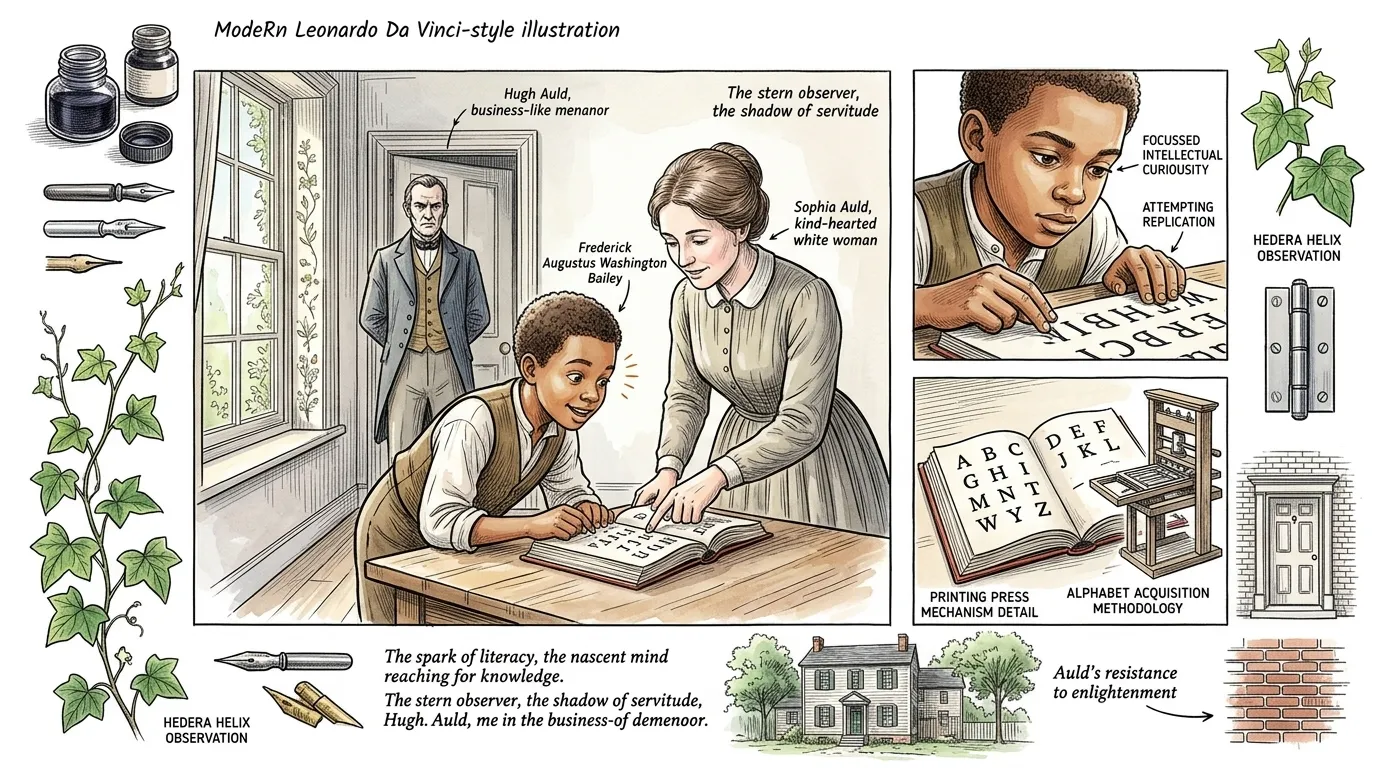
Born into bondage on Maryland's Eastern Shore around 1818, Frederick Augustus Washington Bailey endured the brutal realities of slavery on Colonel Lloyd's vast Wye House plantation. His early life was marked by separation from his mother and scant understanding of his own age. A pivotal, forbidden act occurred when he was around eight: Sophia Auld, his new mistress in Baltimore, began teaching him the alphabet, unaware she was igniting a spark of rebellion. Though quickly forbidden by her husband, Hugh Auld, this initial instruction revealed to young Frederick the transformative power of literacy. He recognized knowledge as the pathway to freedom, and its denial as slavery's ultimate tool of control.
Biographical Fact: The initial act of teaching Douglass to read, though soon halted, was an unwitting catalyst for his intellectual development and lifelong pursuit of abolition.
Page 3
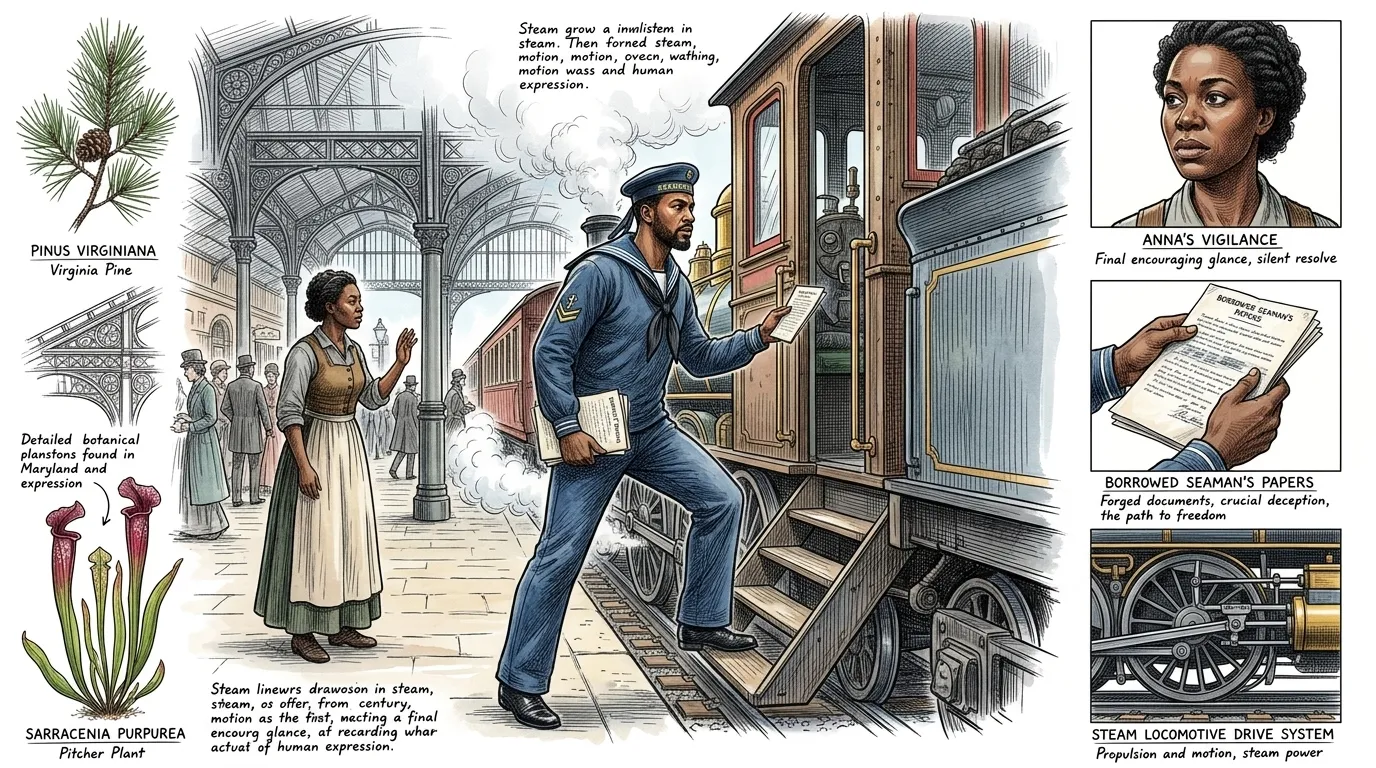
Having mastered reading and writing through clandestine lessons and self-teaching, Douglass grew increasingly restless under the yoke of slavery. He conceived a daring plan for escape from Baltimore. On September 3, 1838, disguised as a sailor, he boarded a train, carrying borrowed identification papers and the resolve of a desperate man. His fiancée, Anna Murray, a free Black woman, provided crucial support and resources for this perilous journey. Every mile North was a gamble, but the promise of self-ownership propelled him forward, demonstrating a profound personal courage that would define his future activism.
Biographical Fact: Douglass's escape from slavery was a pivotal act of self-liberation, demonstrating his extraordinary resourcefulness and courage, which were fundamental to his later leadership.
Page 4
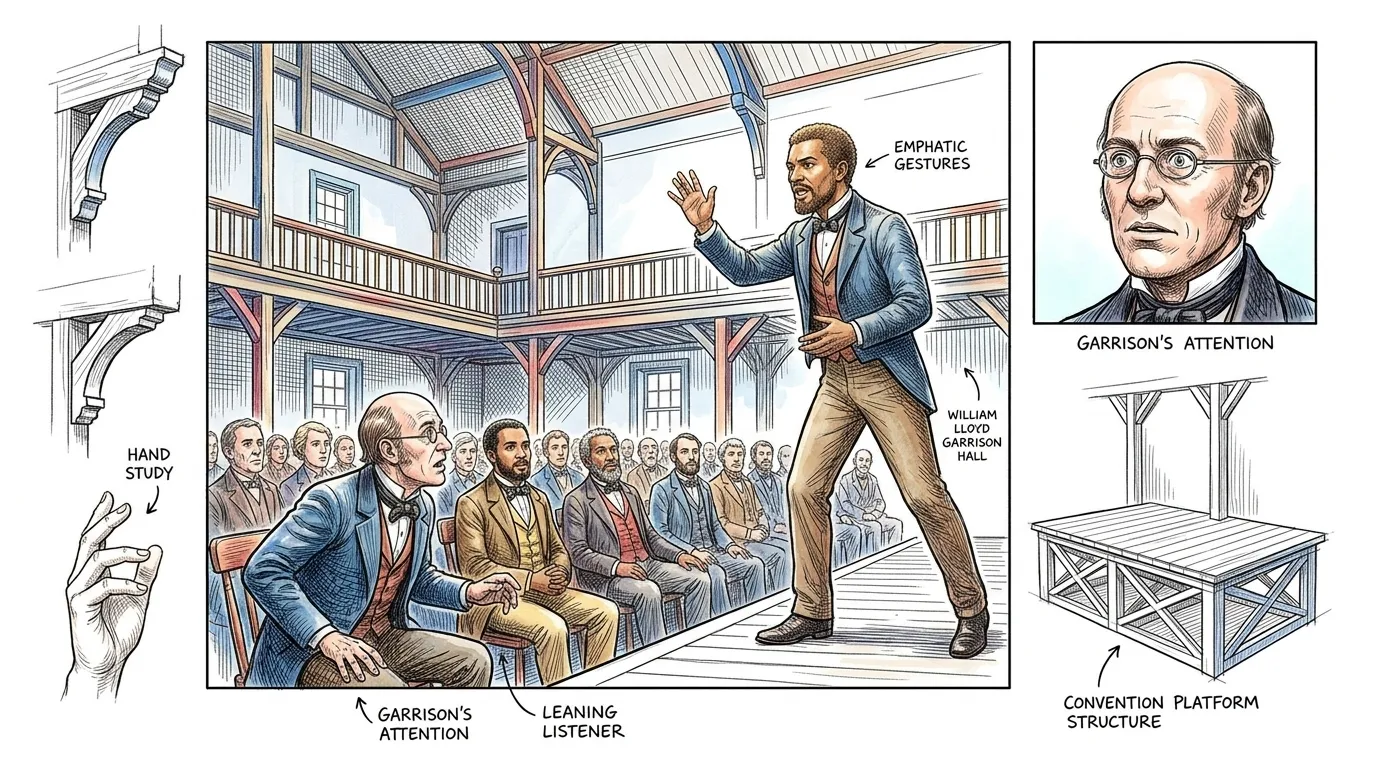
Newly free but living under an assumed name, Frederick Douglass found work as a laborer in New Bedford, Massachusetts. His intellect and passionate convictions soon drew him into abolitionist circles. In August 1841, attending an anti-slavery convention on Nantucket Island, he was unexpectedly called upon to speak. Hesitant at first, he rose and delivered an impromptu address describing the horrors of slavery and his own experience. His raw eloquence electrified the audience, including the renowned abolitionist William Lloyd Garrison, who instantly recognized Douglass's profound oratorical power. This moment marked Douglass's transformation from an anonymous fugitive to a nascent public figure, his powerful voice now unleashed upon the national stage.
Biographical Fact: Douglass's impromptu speech at Nantucket revealed his exceptional oratorical talent, launching his career as a leading voice in the abolitionist movement.
Page 5
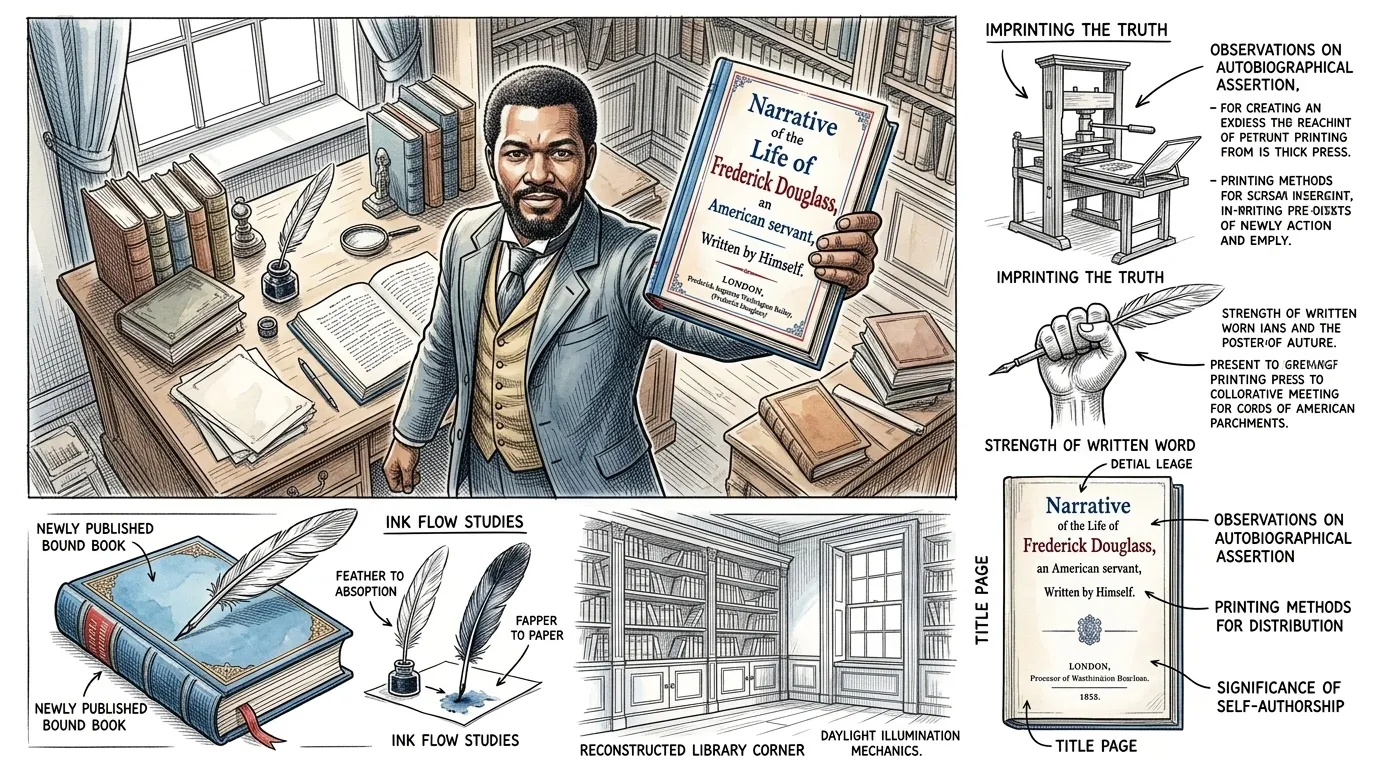
As Frederick Douglass's fame grew, so did the skepticism of those who doubted a former slave could possess such eloquence. To counter these accusations and provide irrefutable proof of his origins, Douglass made a courageous decision: he would publish his autobiography. In 1845, 'Narrative of the Life of Frederick Douglass, an American Slave, Written by Himself' was released. This powerful, unvarnished account detailed the brutality of his life in bondage and became an immediate sensation. By putting his true story on record, he risked re-enslavement but asserted his identity and his truth with unwavering resolve, transforming his personal narrative into a potent weapon against slavery.
Biographical Fact: The publication of his 'Narrative' in 1845 provided an undeniable and harrowing firsthand account of slavery, silencing critics and galvanizing the abolitionist cause, though it forced him to flee to Europe for safety.
Page 6
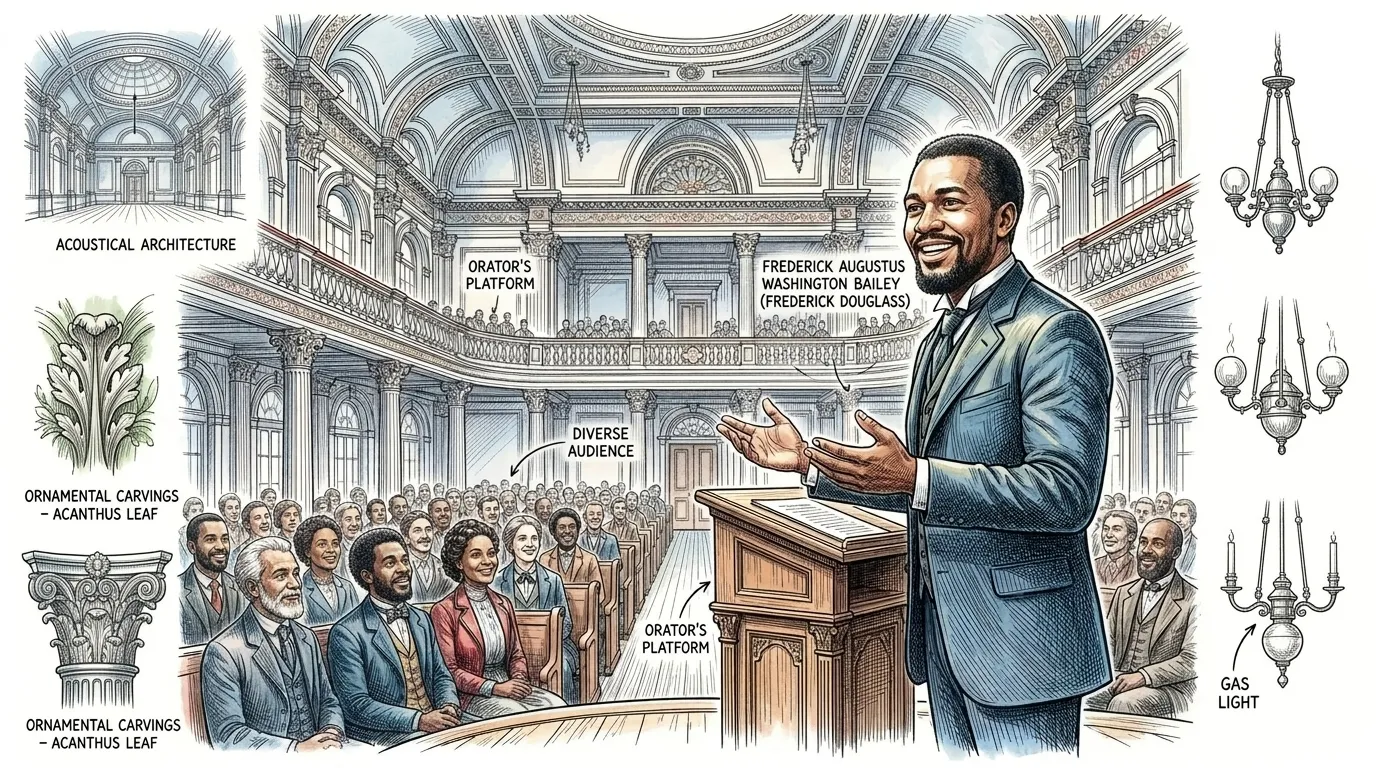
The release of Douglass's Narrative amplified his renown but also put him in danger, as his former master could legally reclaim him. Seeking refuge and an expanded platform, he embarked on a two-year speaking tour of Great Britain and Ireland from 1845 to 1847. There, he captivated large audiences, speaking in churches, meeting halls, and public forums, sharing his story with unparalleled eloquence. He forged powerful alliances with prominent British abolitionists like Thomas Clarkson and Elizabeth Pease, gaining crucial moral and financial support. These tours were instrumental in shaping international anti-slavery sentiment and ultimately securing funds to purchase his freedom, transforming him into a legally free man and a global advocate for human rights.
Biographical Fact: Douglass's European tours solidified his international reputation, garnering crucial support from British abolitionists and leading to the purchase of his freedom for 150 in 1846.
Page 7
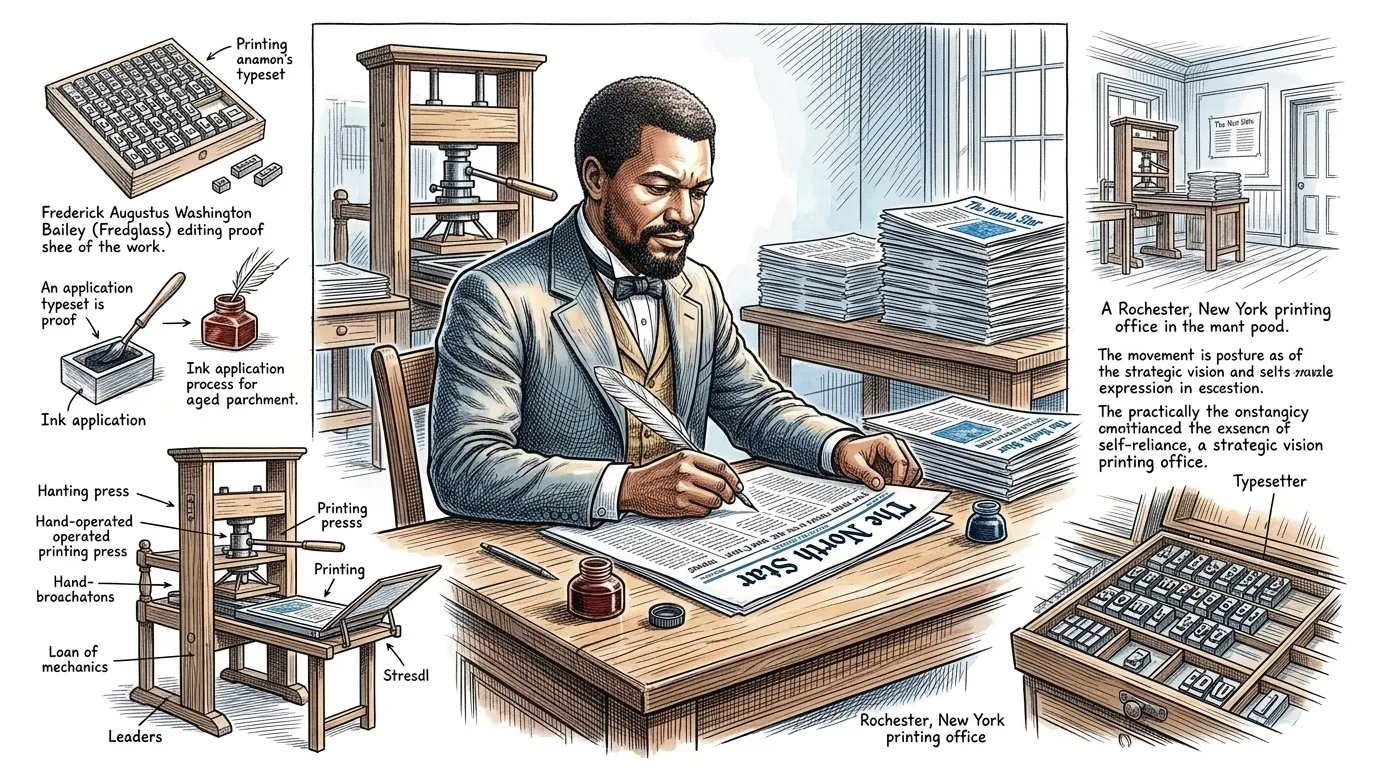
Returning to America a free man, Frederick Douglass faced a critical decision: continue as a lecturer or establish his own independent voice. Defying the advice of some mentors, including William Lloyd Garrison, he resolved to found his own newspaper. In December 1847, 'The North Star' published its first issue from Rochester, New York. Douglass, as its editor and publisher, now had a direct means to articulate his evolving views on abolition, women's rights, and social reform. This bold move demonstrated his unwavering self-reliance and strategic vision, creating an essential platform that shaped public discourse and allowed him to direct the narrative of freedom with unparalleled autonomy.
Biographical Fact: The establishment of 'The North Star' marked Douglass's strategic independence, allowing him to control the narrative of abolition and advocate for a broader range of human rights issues, including women's suffrage.
Page 8
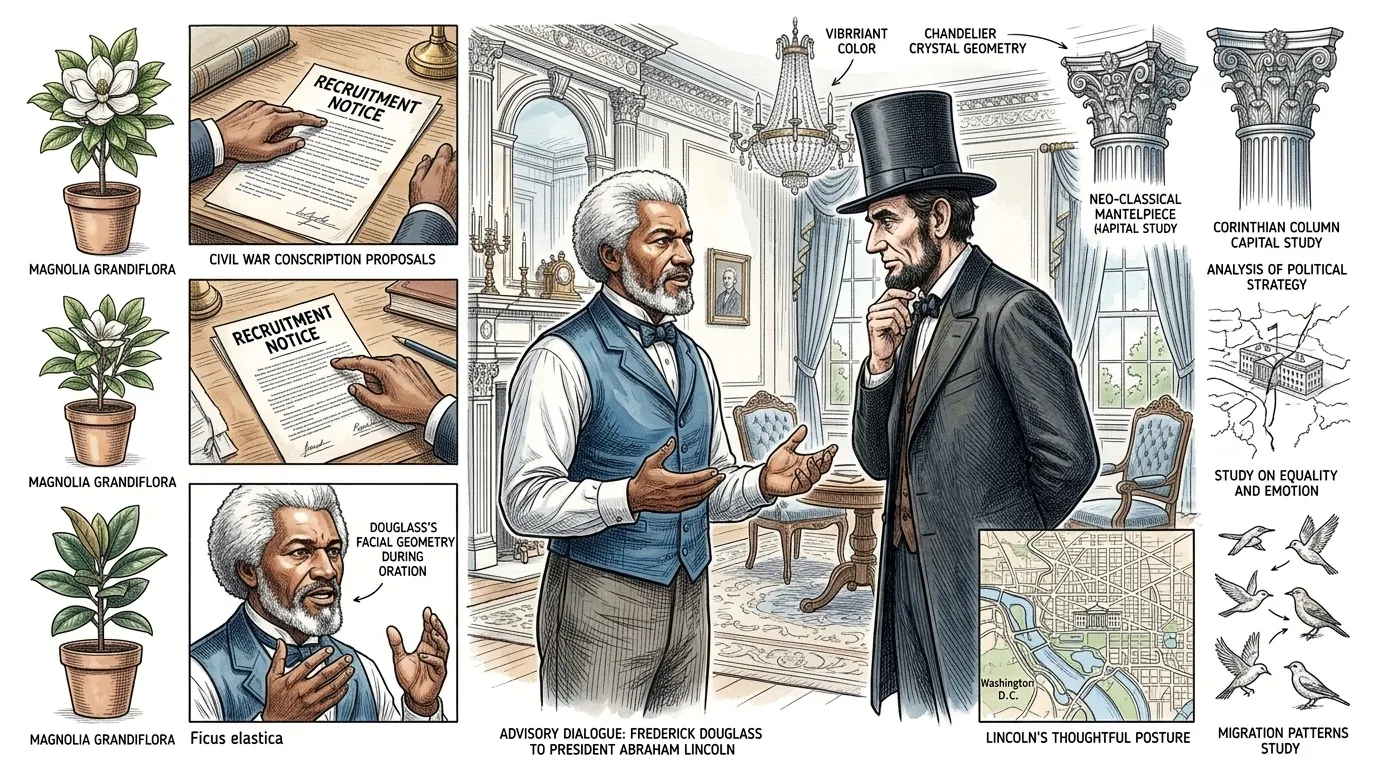
As the Civil War raged, Frederick Douglass's influence extended to the highest office in the land. On August 10, 1863, President Abraham Lincoln, seeking counsel on the recruitment and fair treatment of Black soldiers, invited Douglass to the White House. Their meeting was a landmark event, a testament to Douglass's moral authority and an unprecedented dialogue between a former slave and the President of the United States. Douglass offered forthright advice, advocating for equal pay and protections for Black troops. Lincoln, listening intently, recognized Douglass's wisdom, demonstrating a profound shift in national leadership and signaling the rising power of Black voices in shaping American policy.
Biographical Fact: The meeting between Douglass and Lincoln was a historic dialogue, elevating Douglass's status as an advisor to the President and influencing policies regarding Black soldiers during the Civil War.
Page 9
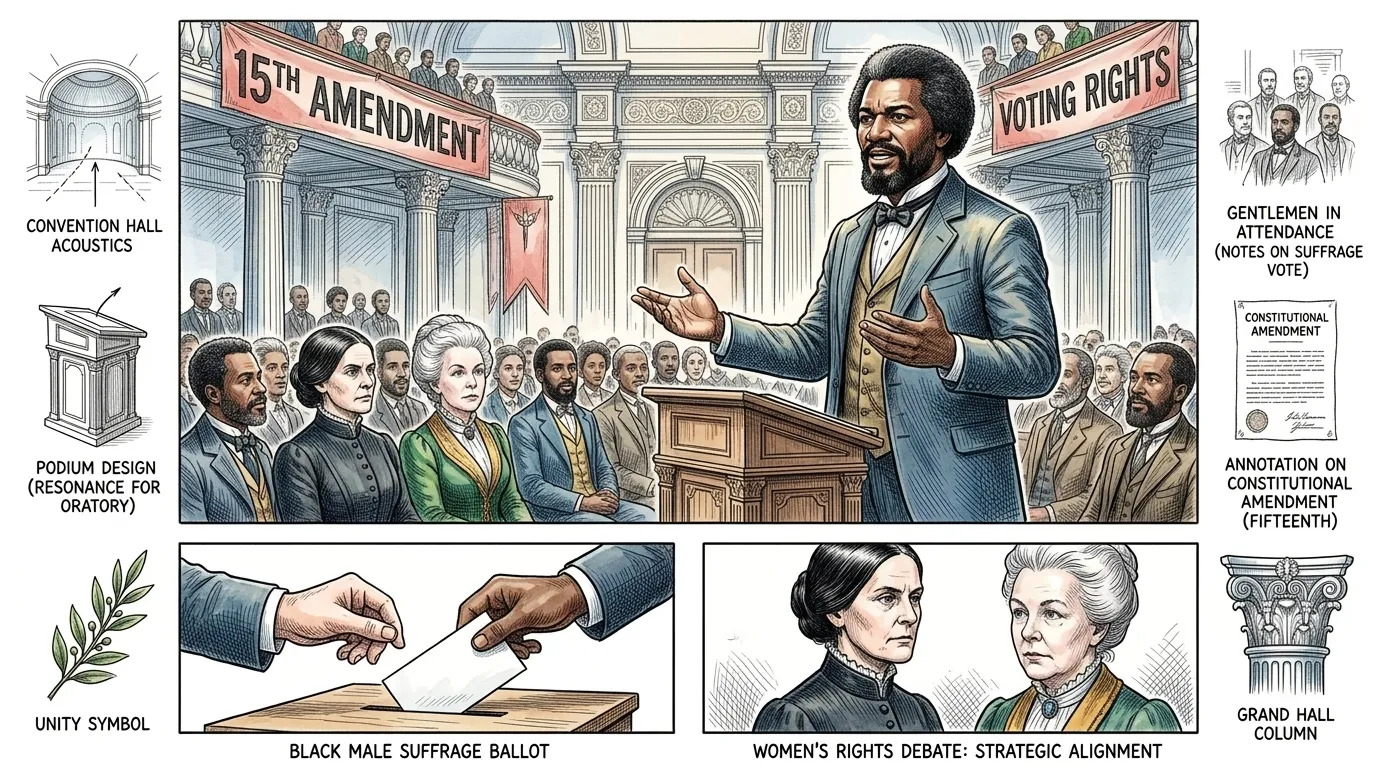
Even after the Civil War and the abolition of slavery, Frederick Douglass understood the fight for true equality was far from over. He became a tireless advocate for the political rights of Black Americans, particularly the right to vote. At conventions and on lecture circuits throughout the Reconstruction era, he eloquently pressed for the 15th Amendment, which granted suffrage to Black men. While a staunch supporter of women's rights, including suffrage, he prioritized the immediate enfranchisement of Black men, a stance that sometimes caused friction with allies like Susan B. Anthony and Elizabeth Cady Stanton. His unwavering commitment ensured that the promise of freedom extended to the ballot box, fundamentally reshaping the American electorate.
Biographical Fact: Douglass played a critical role in the fight for Black male suffrage, advocating tirelessly for the 15th Amendment, though his strategic prioritization caused rifts with women's rights advocates.
Page 10
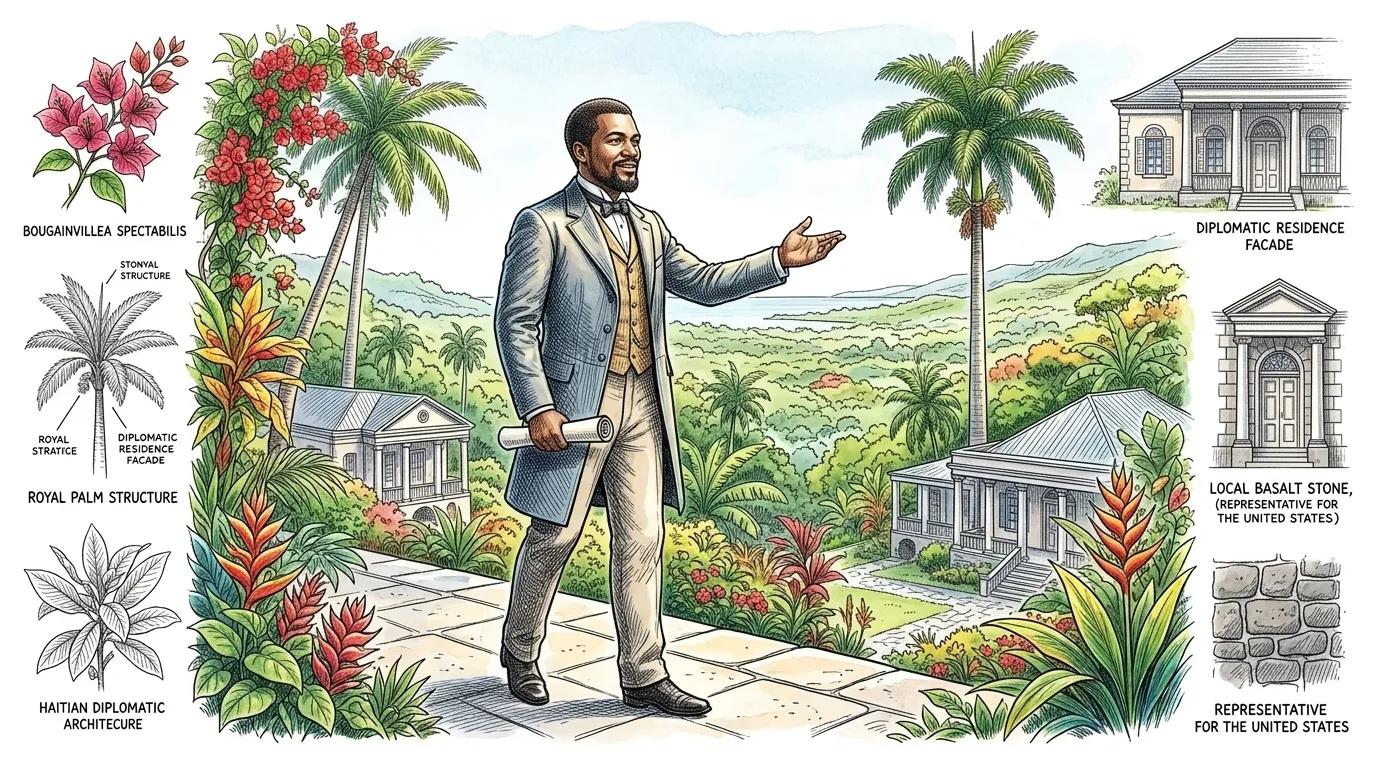
In his later years, Frederick Douglass continued to serve the nation he had so profoundly challenged and helped transform. In 1889, President Benjamin Harrison appointed him as the U.S. Minister Resident and Consul General to Haiti, an unprecedented diplomatic role for a Black American. Standing on Haitian soil, he represented a nation that had once denied his humanity, now entrusting him with its foreign policy. Douglass's life, from slave to statesman, became an enduring testament to the power of self-emancipation, intellectual rigor, and unwavering moral conviction. He cemented his legacy not only as the leading voice of 19th-century abolitionism but as a foundational figure in the global struggle for human rights, forever altering the trajectory of American and international justice.
Biographical Fact: Frederick Douglass's appointment as a diplomat to Haiti underscored his extraordinary journey from slavery to statesmanship, solidifying his legacy as an enduring symbol of freedom, equality, and diplomatic achievement on the global stage.
About this story
- Location: Global
- Audience: general readers
Questions and answers
Read Wonder People on your phone
Wonder People is available on Android. Get Wonder People on Google Play.