Fyodor Dostoevsky
Fyodor Dostoevsky — an illustrated biography story, set in Global. 10 illustrated pages, free to read on Wonder People.
Page 1
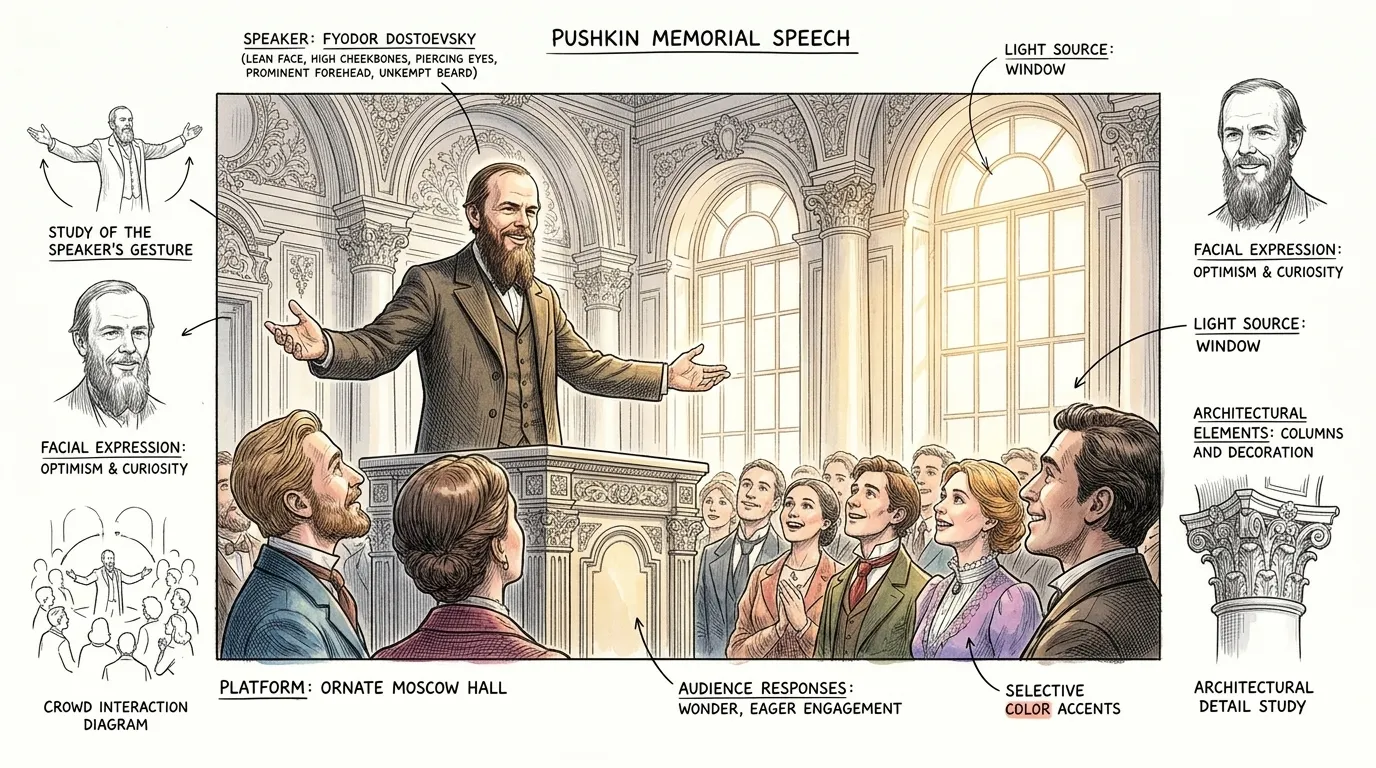
In Moscow, at the height of his influence, Fyodor Dostoevsky ascended the platform. It was June 8, 1880, at the Pushkin Memorial celebration, a gathering intended to honor Russia's greatest poet. Dostoevsky delivered a speech that transcended mere literary tribute, resonating deeply with the divided Russian intelligentsia. He proclaimed Pushkin as a universal genius, embodying the Russian spirit of empathy and reconciliation, a vision that momentarily united liberals and conservatives in an extraordinary wave of national euphoria. For a single, incandescent moment, his words forged a profound, collective understanding, demonstrating the immense power of his literary and moral authority.
Page 2
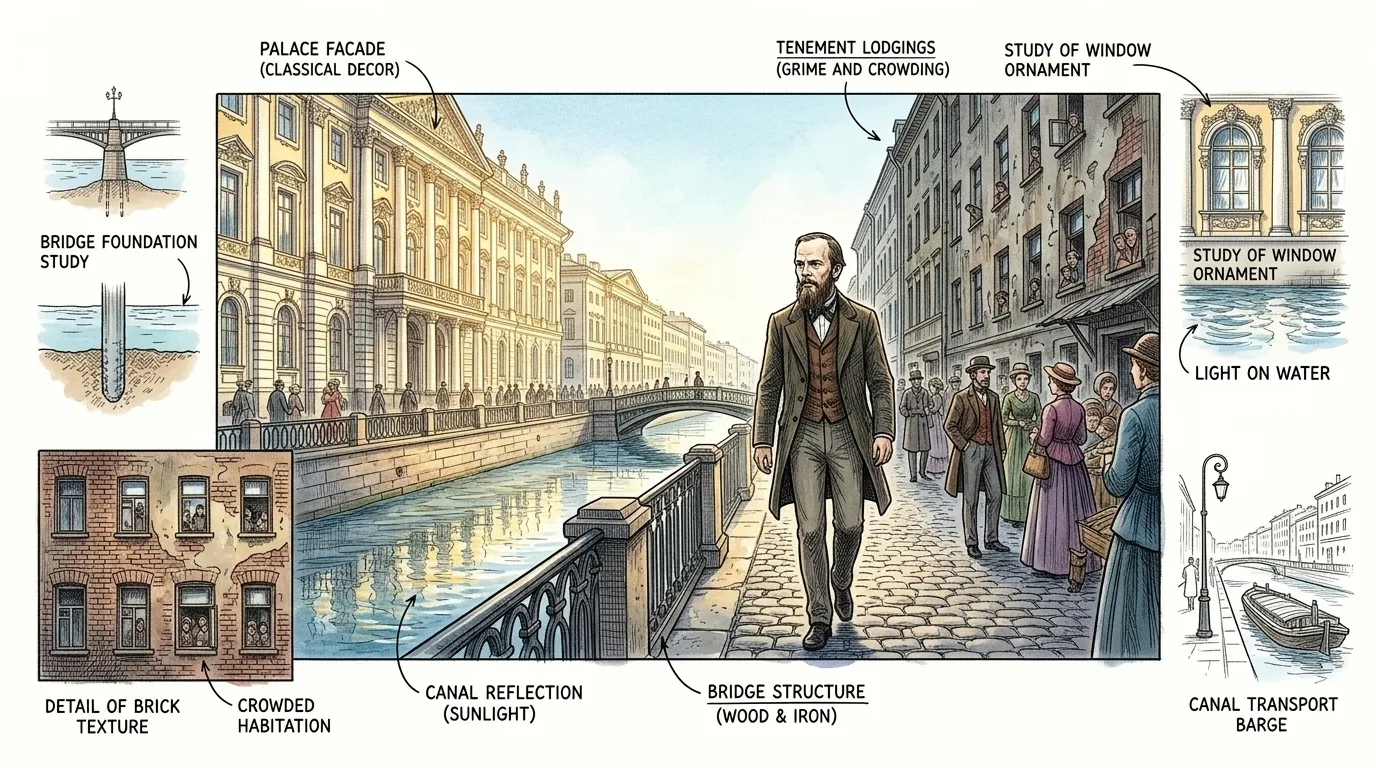
Having abandoned his military engineering studies, a young Fyodor Dostoevsky navigated the labyrinthine streets of mid-1840s St. Petersburg. This city, with its opulent palaces and squalid tenements, became his crucible, revealing the profound social inequalities that would fuel his early literary imagination. He observed the stark contrasts, the human struggles, and the burgeoning intellectual currents that flowed beneath the city's glittering façade. His mind, already fertile with empathy, began to absorb the essence of a society grappling with its own soul, a reality he was determined to render on the page.
Page 3
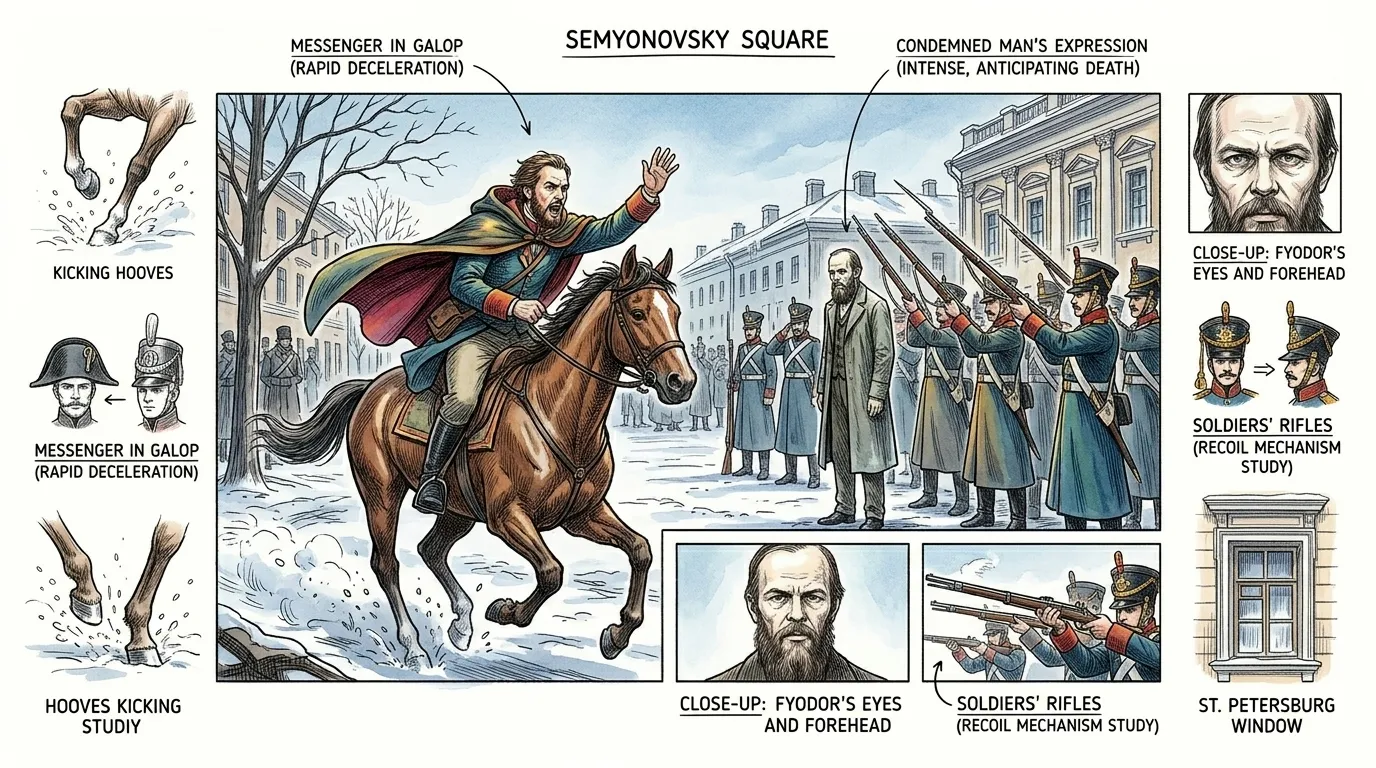
On a frigid December morning in 1849, Fyodor Dostoevsky stood before a firing squad in St. Petersburg's Semyonovsky Square. Convicted for involvement with the Petrashevsky Circle, a group discussing forbidden utopian socialist texts, he faced death alongside fellow conspirators. The last rites were administered, the execution command given, and the soldiers raised their rifles. In that final, agonizing moment, a messenger rode in, halting the execution. Tsar Nicholas I had commuted their sentences to penal servitude in Siberia. This mock execution seared itself into Dostoevsky's consciousness, irrevocably altering his perception of life, death, and human resilience.
Page 4
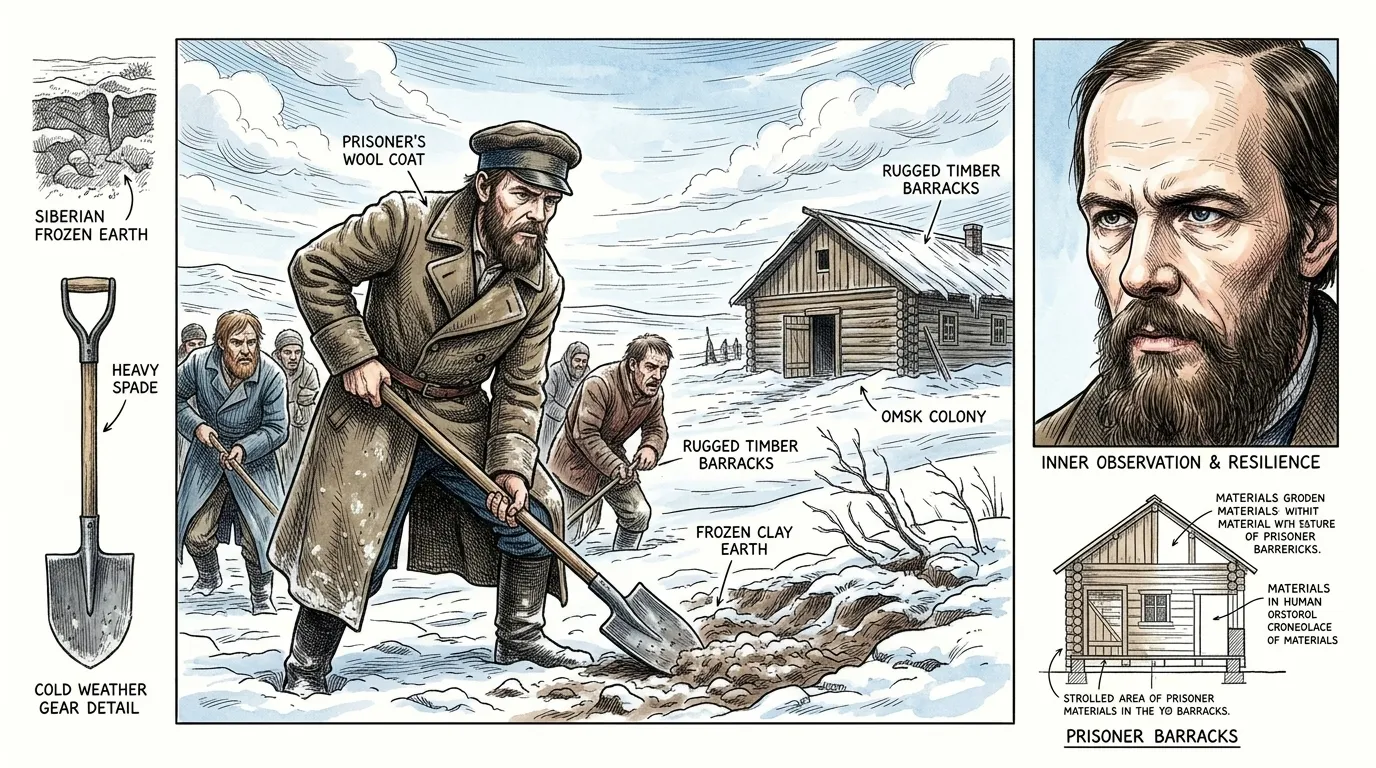
Exiled to Omsk, Siberia, Fyodor Dostoevsky endured four years of katorga, penal servitude, living among hardened criminals. Stripped of his aristocratic status, he toiled in brutal conditions, the daily suffering forcing a profound reevaluation of his beliefs. He observed the darkest recesses of the human soul and discovered unexpected flickers of compassion and spirituality among the condemned. This crucible transformed him, deepening his psychological insight and cementing his conviction that suffering was a path to redemption, a theme that would permeate his greatest works.
Page 5
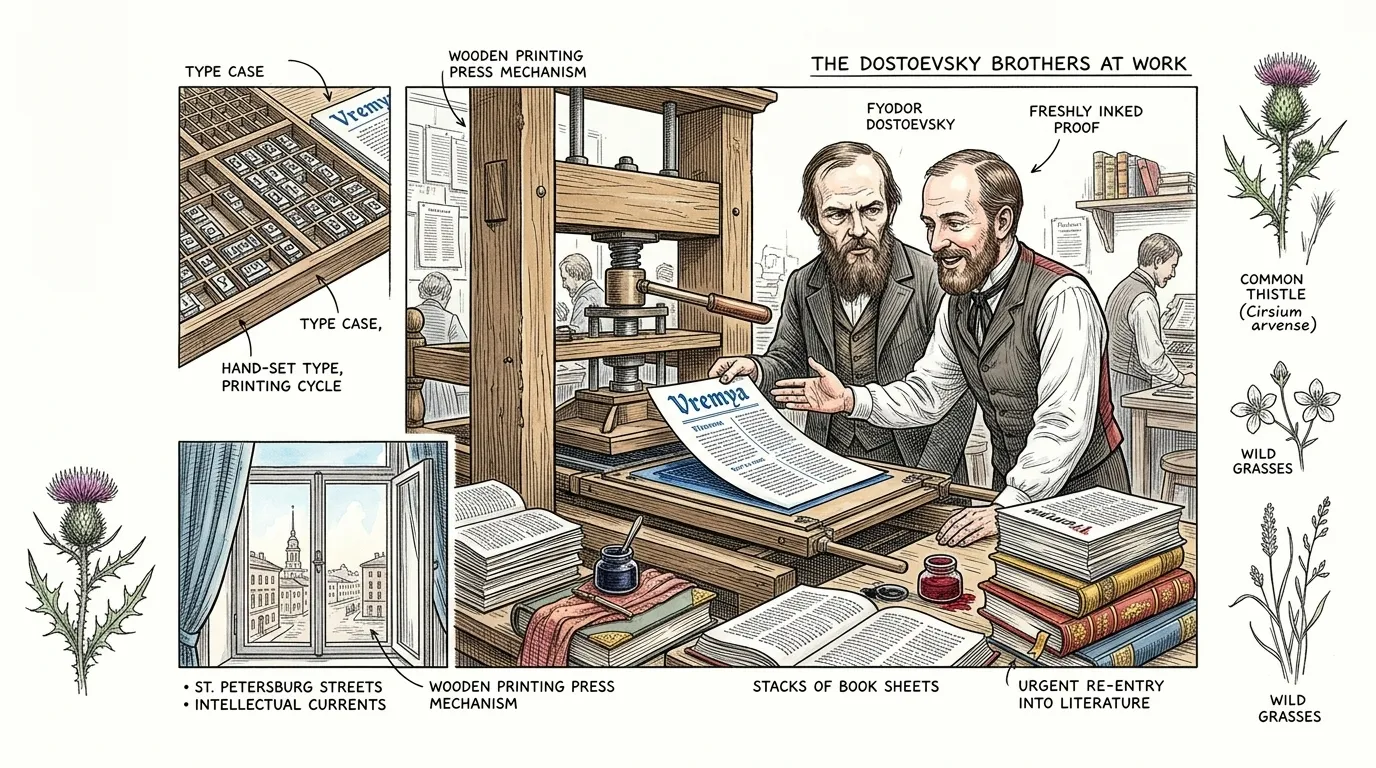
After his decade in exile, Fyodor Dostoevsky returned to St. Petersburg, a changed man. Driven by an urgent need to articulate his matured worldview, he collaborated with his elder brother Mikhail to launch two literary journals, Vremya (Time) and Epoch. Through these publications, he sought to engage directly with Russia's intellectual debates, publishing his own work, including Notes from Underground, and championing his unique brand of 'pochvennichestvo' — a call for spiritual grounding in Russian soil. These ventures, though plagued by censorship and financial instability, marked his powerful re-entry into the literary scene.
Page 6
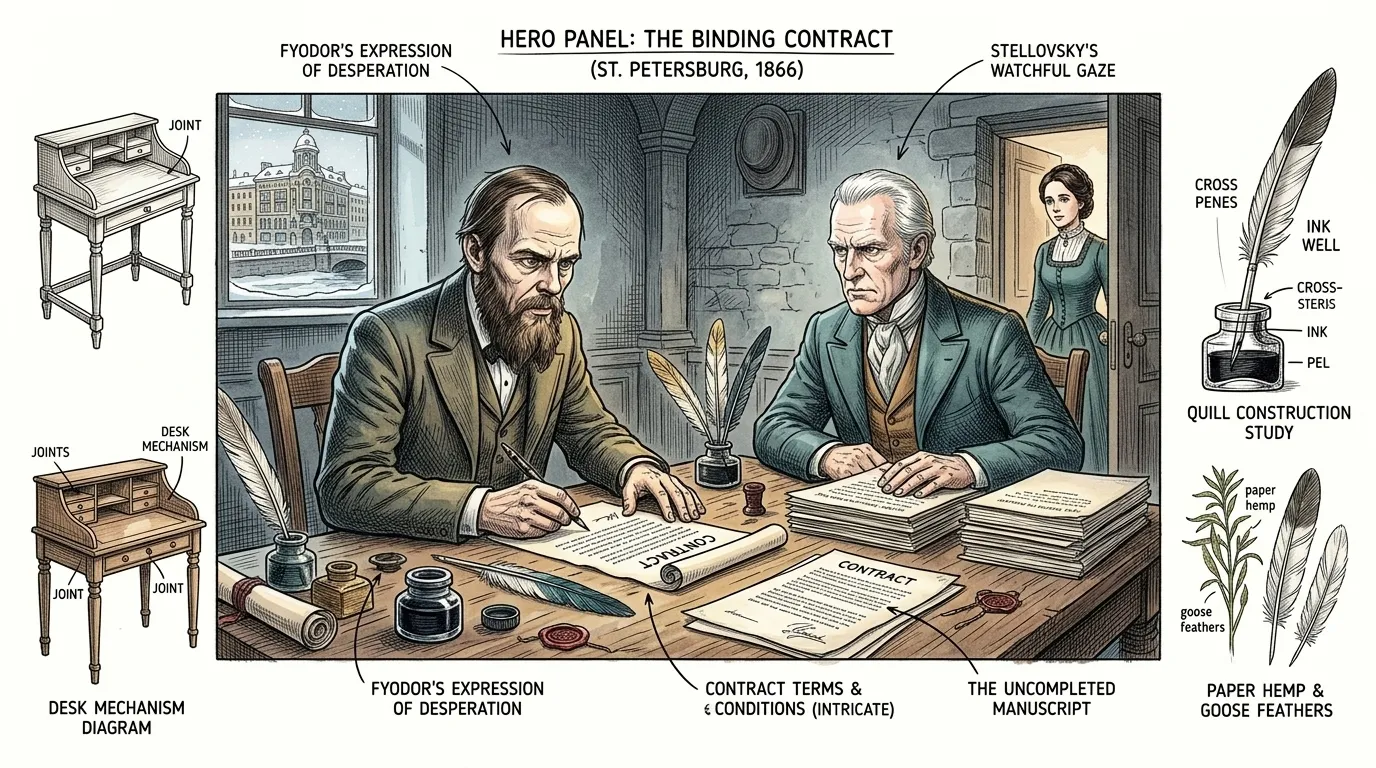
In October 1866, Fyodor Dostoevsky faced financial ruin. He had signed a ruinous contract with publisher F.T. Stellovsky, promising a new novel by a strict deadline or forfeit the rights to all his past and future works. With Crime and Punishment nearing completion, he desperately committed to writing another entire novel, The Gambler, in just 26 days. This impossible task forced him to hire a stenographer, Anna Grigorievna Snitkina, a decision born of sheer desperation that would serendipitously alter the course of his personal and literary life forever. It was an act of pure will against crushing circumstances.
Page 7
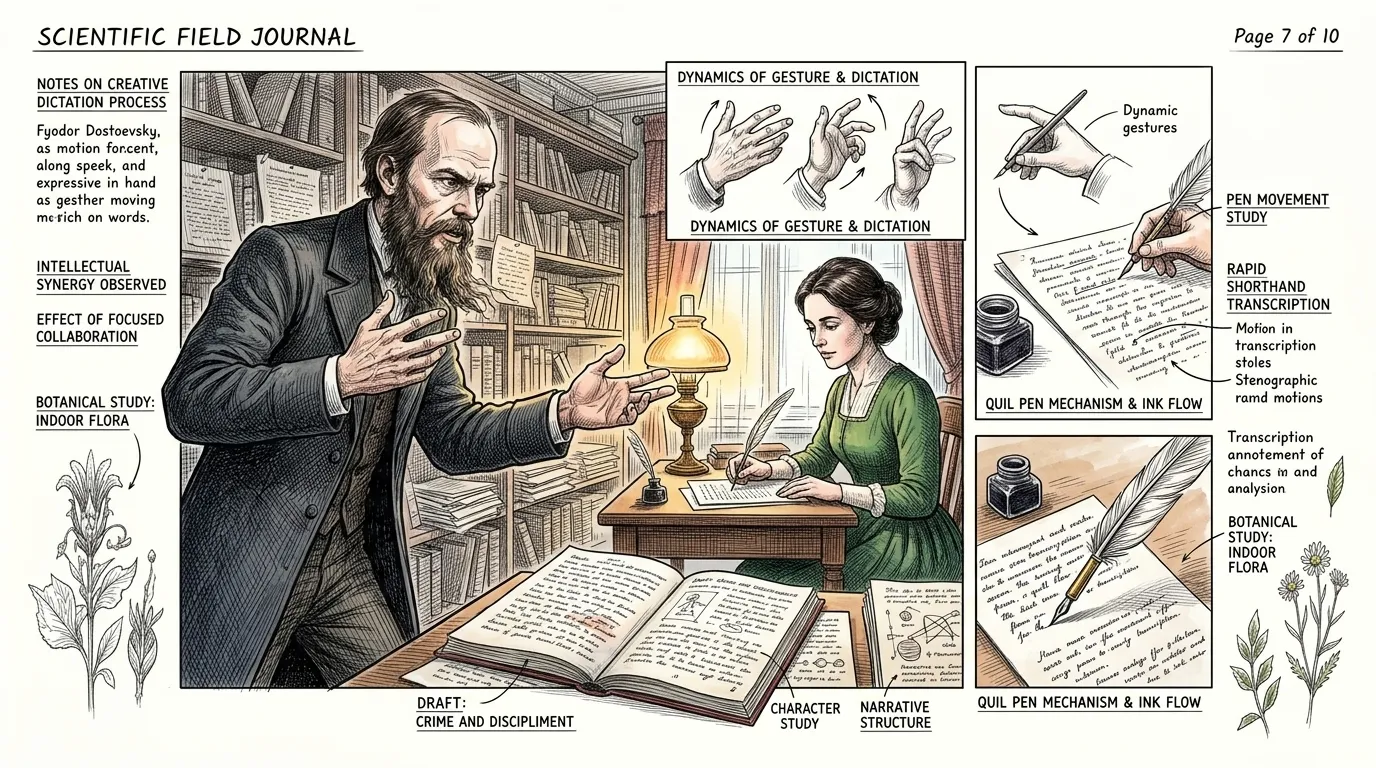
The deadline for The Gambler loomed large. Fyodor Dostoevsky, in a surge of creative intensity, dictated the novel to his young stenographer, Anna Grigorievna Snitkina. Day and night, he paced and spoke, she transcribed, capturing every word, every nuance of his frenzied narrative. Simultaneously, he was finishing Crime and Punishment. This period of intense collaboration, driven by necessity, forged an immediate, deep connection between them, demonstrating Anna's indispensable role not just as a transcriber, but as a silent partner in his creative process. They completed The Gambler exactly on time.
Page 8
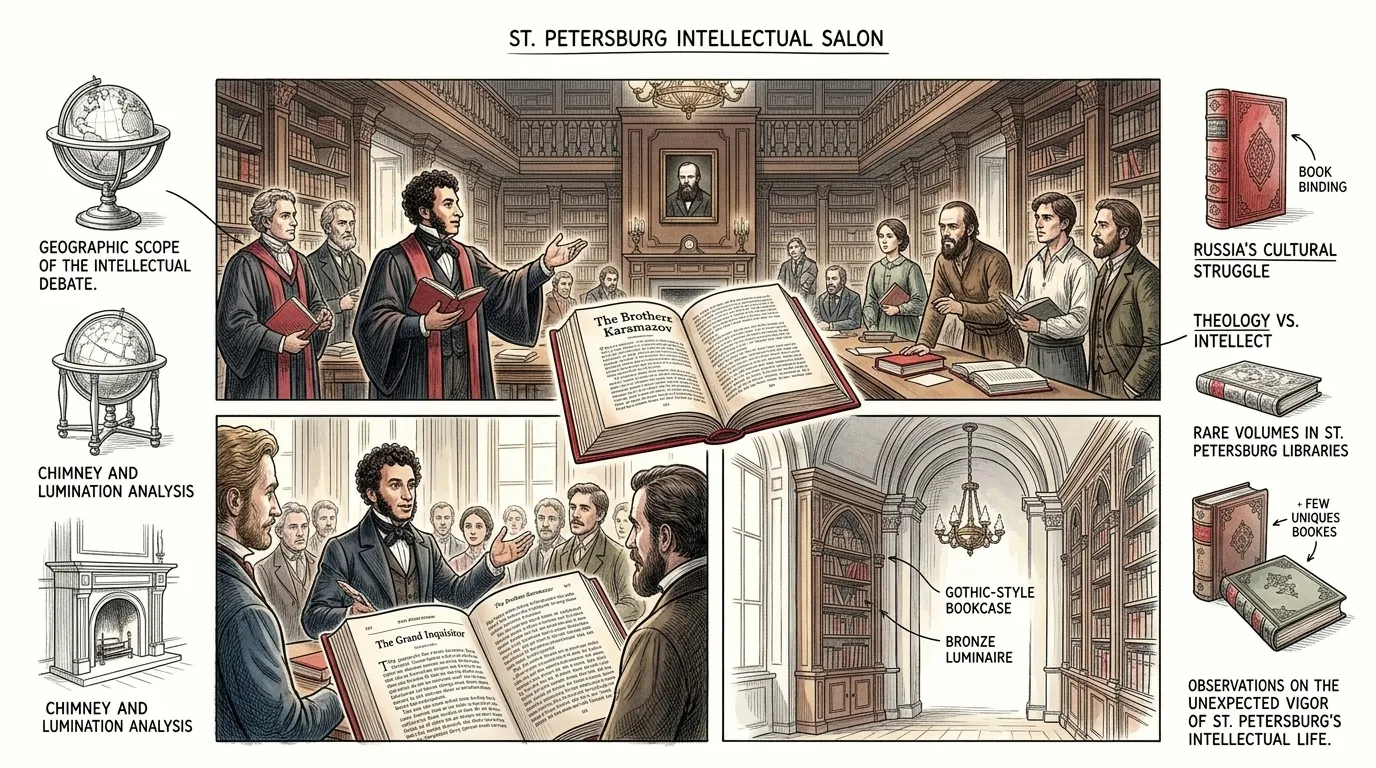
With the publication of The Brothers Karamazov between 1879 and 1880, Fyodor Dostoevsky presented the world with his most complex philosophical statement. The 'Grand Inquisitor' chapter, a profound parable questioning faith, free will, and the nature of authority, ignited fervent intellectual and theological debate across Russia and Europe. Scholars, priests, and revolutionaries grappled with its implications, recognizing in its pages a distillation of universal human dilemmas. The novel's impact was immediate and monumental, solidifying Dostoevsky's position as a visionary thinker who dared to plumb the depths of human contradiction.
Page 9
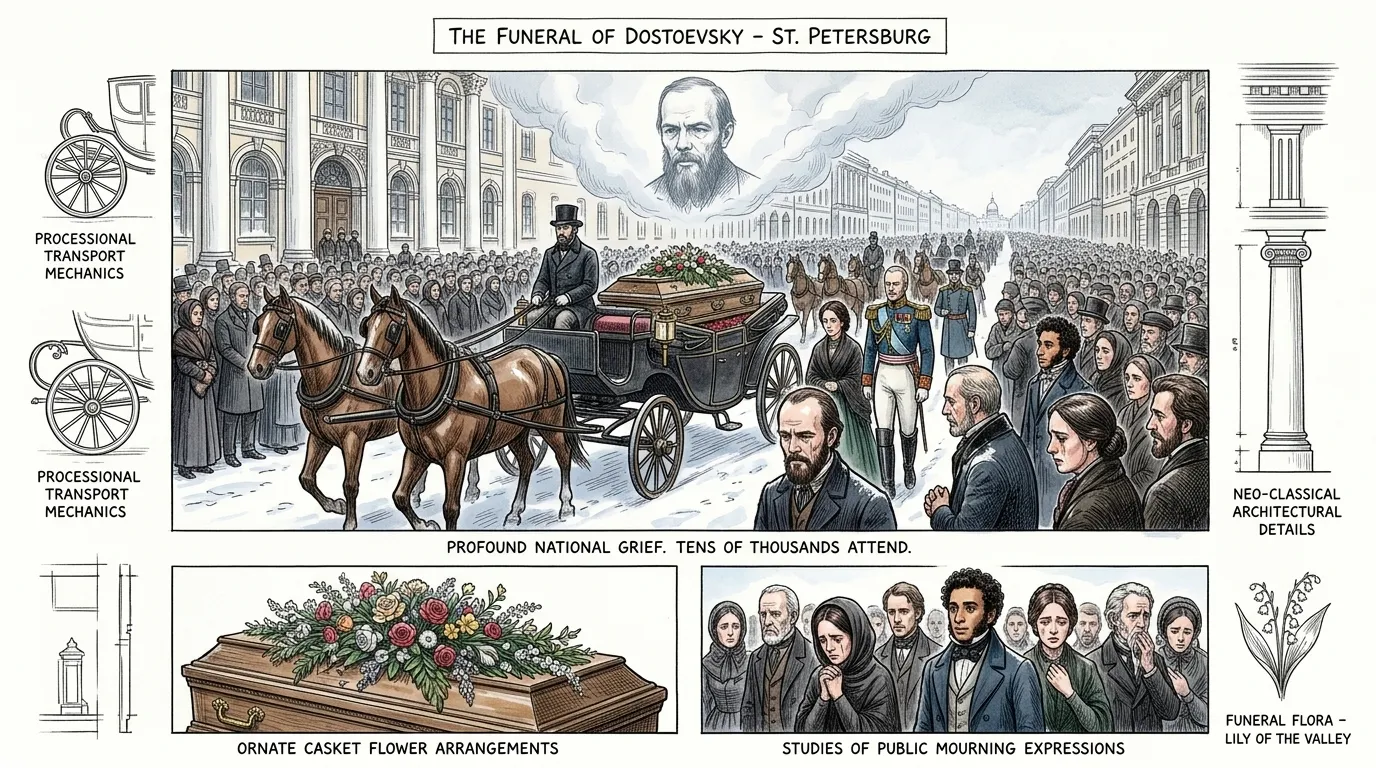
The national adulation following his Pushkin speech in June 1880 was unprecedented. Yet, the emotional and physical toll proved immense. Fyodor Dostoevsky, already frail, returned to St. Petersburg, his health rapidly deteriorating. Just months later, in February 1881, he suffered a fatal lung hemorrhage. His death, coming so swiftly after a moment of apotheosis, sent shockwaves through Russia. Tens of thousands attended his funeral, a testament to the profound connection he had forged with the soul of his nation, leaving a palpable void in its intellectual and spiritual landscape.
Page 10
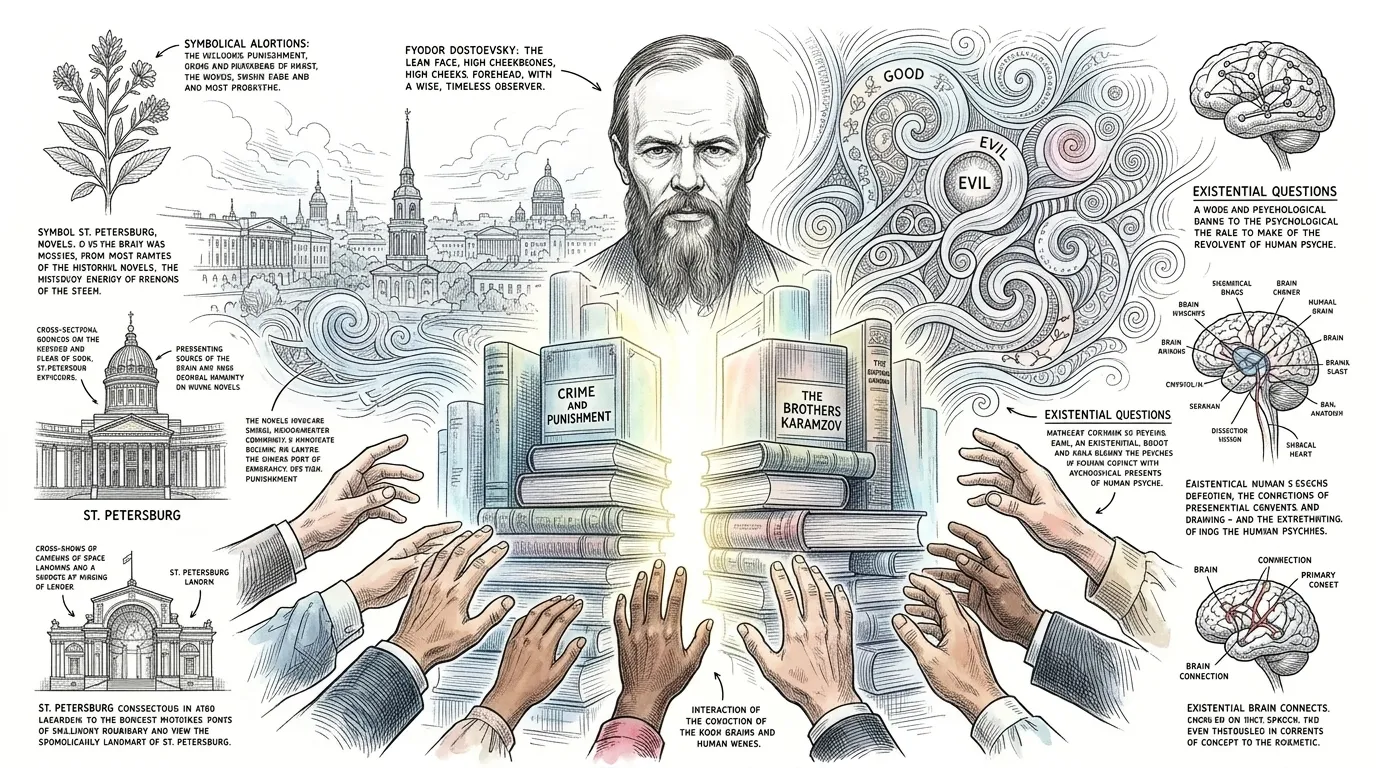
Fyodor Dostoevsky's legacy is etched not merely in literary history but in the very fabric of human thought. His novels, raw and unflinching explorations of psychology, morality, and faith, continue to challenge and illuminate across generations. From the bleak streets of St. Petersburg to the darkest corners of the human psyche, he mapped the terrain of existential struggle with unparalleled depth. His work endures as a timeless testament to the complexities of good and evil, freedom and responsibility, forever compelling humanity to confront its own enduring questions.
About this story
- Location: Global
- Audience: general readers
Questions and answers
Read Wonder People on your phone
Wonder People is available on Android. Get Wonder People on Google Play.