Gabriel Garcia Marquez
Gabriel Garcia Marquez — an illustrated biography story, set in Global. 10 illustrated pages, free to read on Wonder People.
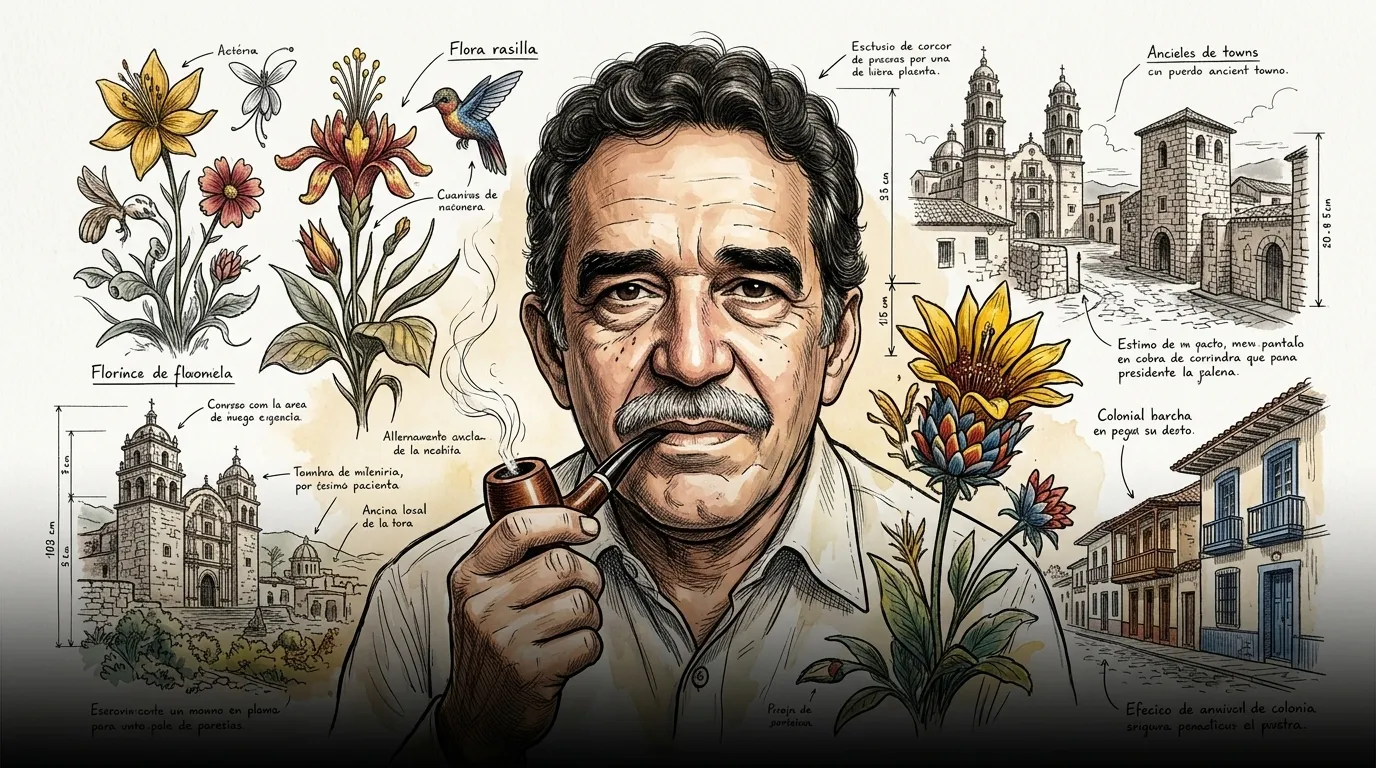
Page 1
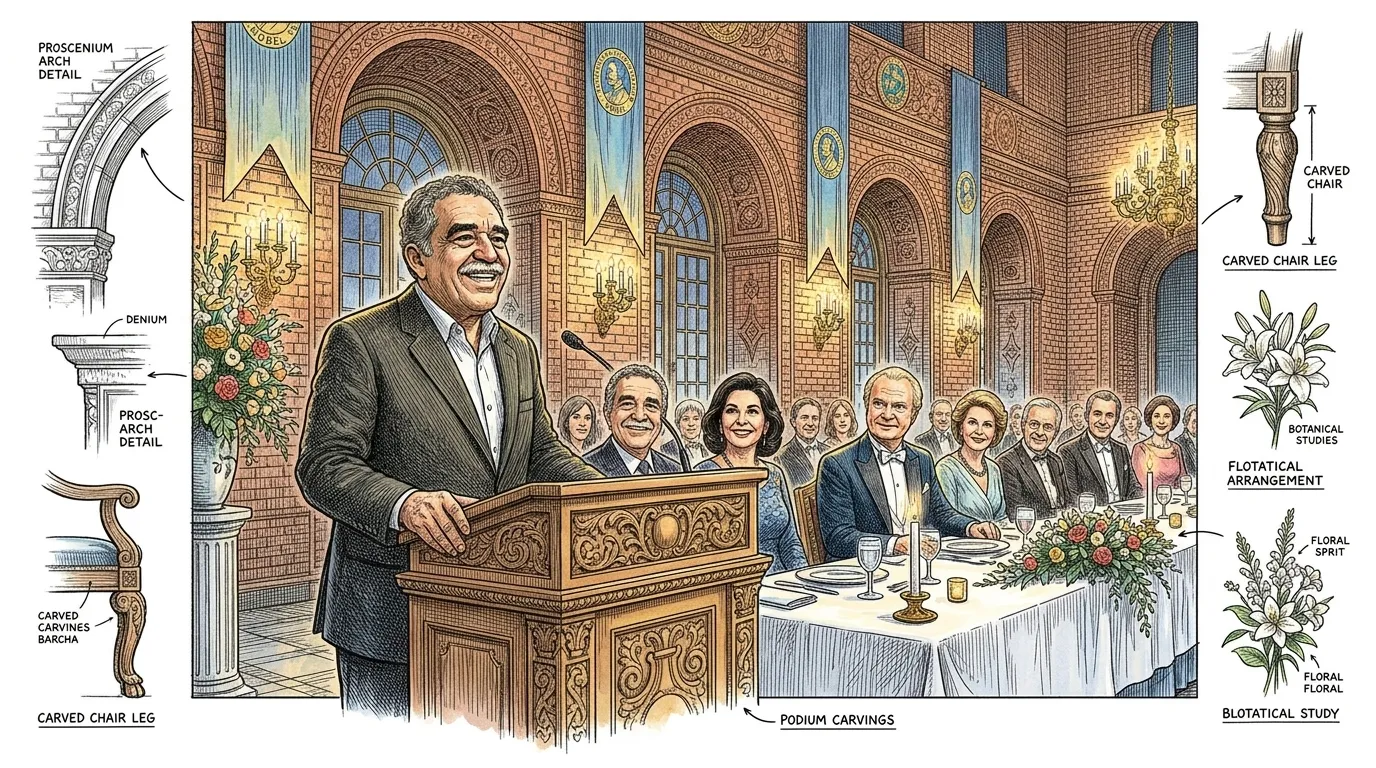
In Stockholm, Sweden, on December 10, 1982, the world watched as Gabriel Garcia Marquez approached the podium. The Swedish Academy recognized his singular literary achievement, a narrative tapestry that had captivated millions.
"'It seems like this solitude has been finally shared,' Gabriel Garcia Marquez mused, his voice carrying through the opulent hall to King Carl XVI Gustaf and the assembled dignitaries, acknowledging the collective triumph of his unique vision."
Biographical Fact: Gabriel Garcia Marquez received the Nobel Prize in Literature 'for his novels and short stories, in which the fantastic and the realistic are combined in a richly composed world of imagination, reflecting a continent's life and conflicts.'
Page 2
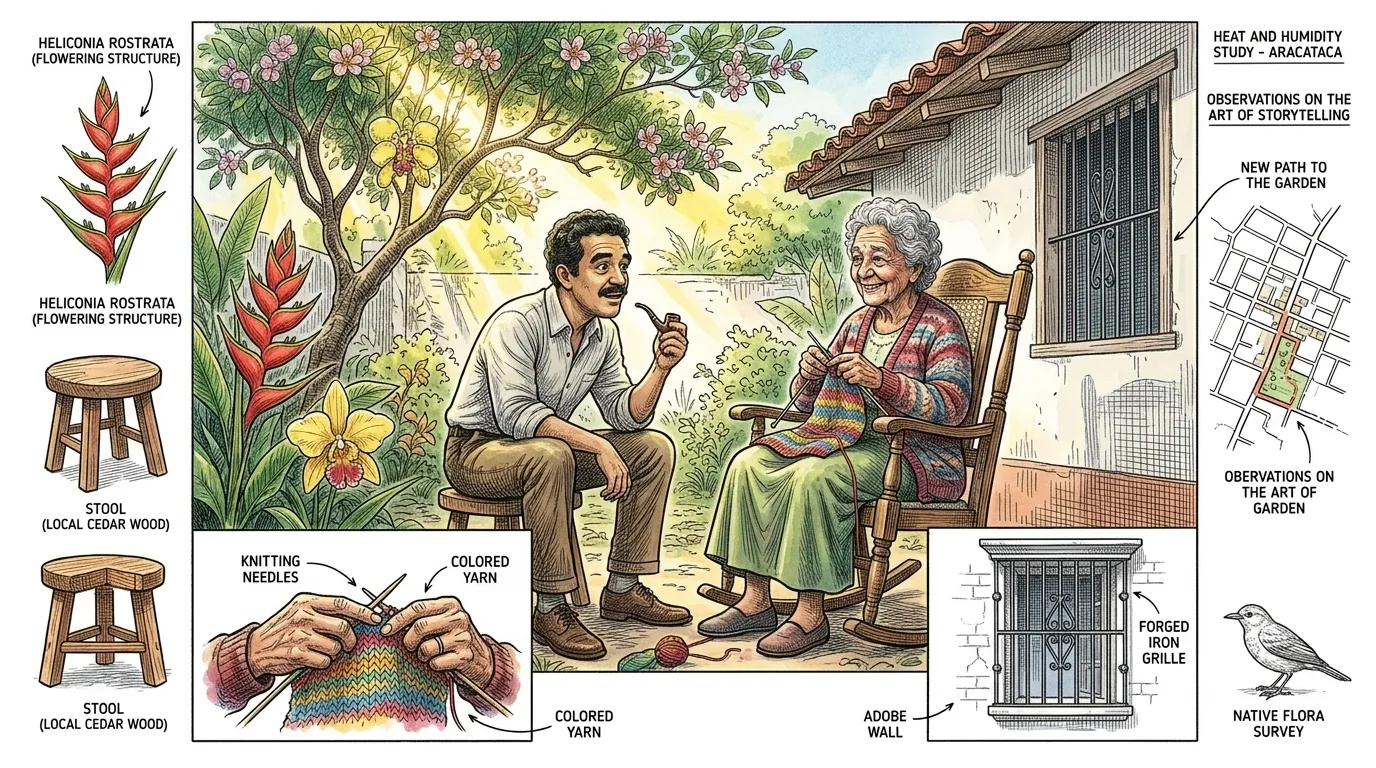
Years earlier, in the sweltering heat of Aracataca, Colombia, a young Gabriel sat entranced. His grandmother, Tranquilina Iguarán Cotes, wove tales of ghosts and prophecies with the same casual tone she used for grocery lists, blurring the lines of reality and myth.
"'My dear Gabito,' Tranquilina would say, her eyes twinkling as she knitted, 'you must always tell stories as if they were true, even if they are impossible. That is how the world listens.' Gabriel leaned closer, absorbing every word."
Biographical Fact: Gabriel Garcia Marquez often credited his grandmother's storytelling style—which presented fantastic events as ordinary occurrences—as the foundation of his literary technique, later known as magical realism.
Page 3

Moving to Barranquilla, Gabriel Garcia Marquez embraced the world of journalism. He honed his craft, writing for El Heraldo and immersing himself in intellectual discussions with the 'Barranquilla Group.'
"'We must not merely report the facts, Alfonso,' Gabriel declared to his colleague Alfonso Fuenmayor, gesturing with a coffee cup in the bustling newsroom. 'We must imbue them with life, with the very spirit of our people, or they remain just ink on paper.'"
Biographical Fact: His time as a journalist and his association with the Barranquilla Group were crucial for Garcia Marquez, providing intellectual stimulation and sharpening his observational and narrative skills.
Page 4
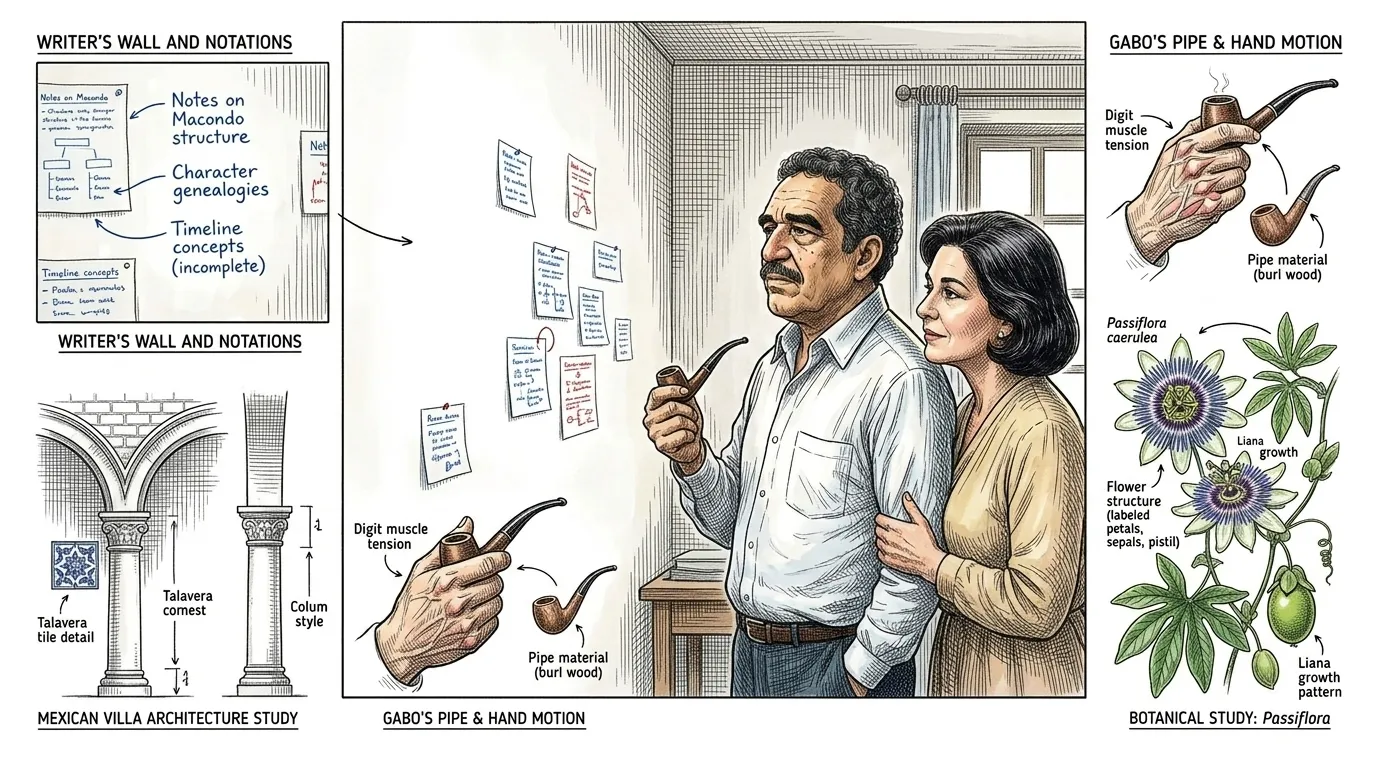
Years of intermittent writing brought little success. In Mexico City, facing mounting debt and the pressure of a family to support, Gabriel Garcia Marquez experienced a profound moment of creative despair and renewed resolve.
"'I know it, Mercedes,' Gabriel said to his wife, Mercedes Barcha, his voice low but firm, as he stood before an empty wall covered with notes. 'The story I must tell, the one that has haunted me, cannot wait any longer. I will write One Hundred Years of Solitude, even if I must stop the world.'"
Biographical Fact: It was during a moment of intense clarity in 1965, while driving his family to Acapulco, that Garcia Marquez conceived the structure and tone for his magnum opus, One Hundred Years of Solitude.
Page 5
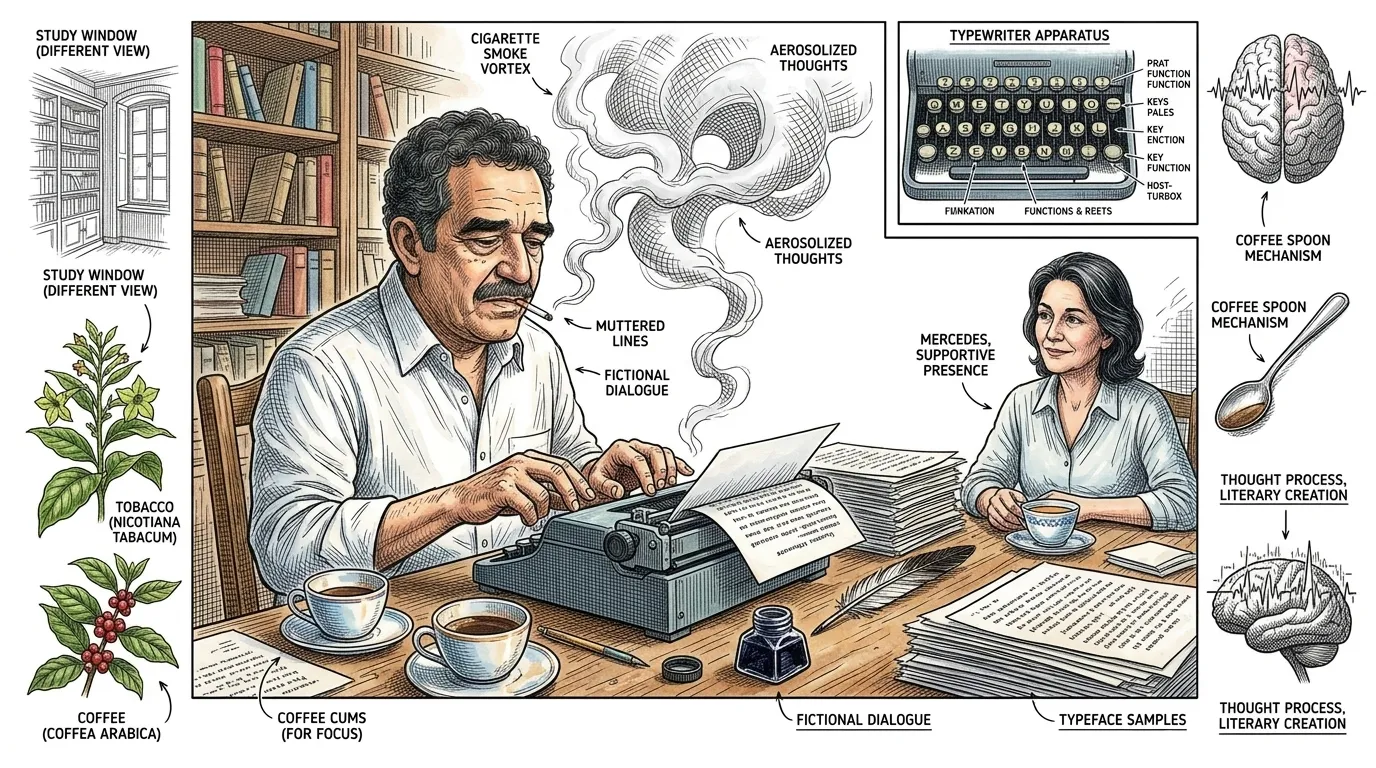
For eighteen relentless months, Gabriel Garcia Marquez sequestered himself. He smoked sixty cigarettes a day, consumed countless cups of coffee, and wrote with an almost feverish intensity, pouring the essence of Aracataca into the mythical town of Macondo.
"'The Colonel wants his coffee strong, like his memories,' Gabriel muttered to himself, his fingers flying across the typewriter keys, bringing the intricate lives of the Buendía family into being. 'This family, this village, they must live on these pages as they live in my mind.'"
Biographical Fact: During the writing of One Hundred Years of Solitude, Garcia Marquez mortgaged his house and relied on credit to support his family, dedicating himself entirely to the novel's completion.
Page 6

Upon its publication in 1967, One Hundred Years of Solitude became an immediate phenomenon in Latin America. Copies vanished from bookstores as readers discovered the vibrant, haunting world of Macondo.
"'Have you read it?' one excited young woman asked a friend, holding up a copy of the novel in a bustling Buenos Aires café. 'It's like he's telling our very own stories, the ones we only whispered. It's us, finally written down!'"
Biographical Fact: The first edition of One Hundred Years of Solitude sold out in a single week in Argentina, launching Gabriel Garcia Marquez onto the international literary stage.
Page 7

The novel's success quickly transcended linguistic barriers. Publishers and translators from around the globe clamored for rights, and One Hundred Years of Solitude soon became a universal touchstone for a new literary movement.
"'This style, this magical realism, it is not just a book for Latin America,' proclaimed an excited European publisher to Gabriel Garcia Marquez at an international book fair. 'It is a new way of seeing the world, and it will change literature forever across every continent!'"
Biographical Fact: One Hundred Years of Solitude has been translated into over 40 languages and has sold more than 50 million copies worldwide, cementing magical realism as a globally recognized literary genre.
Page 8

Gabriel Garcia Marquez leveraged his towering literary fame not only for art but also for political dialogue. His close friendship with Cuban President Fidel Castro became one of his most scrutinized yet unwavering commitments, seeking to bridge divides and influence policies.
"'A writer's greatest weapon, Fidel,' Gabriel Garcia Marquez stated to Fidel Castro in a private meeting, 'is not just the story itself, but the truth it reveals, and the dialogue it provokes. As Jean-Paul Sartre once wrote, 'Words are loaded pistols.' My stories, our conversations, they are aimed at understanding.'"
Biographical Fact: Garcia Marquez's friendship with Fidel Castro, spanning decades, allowed him to act as an unofficial intermediary in various international diplomatic efforts, particularly between Cuba and the United States.
Page 9
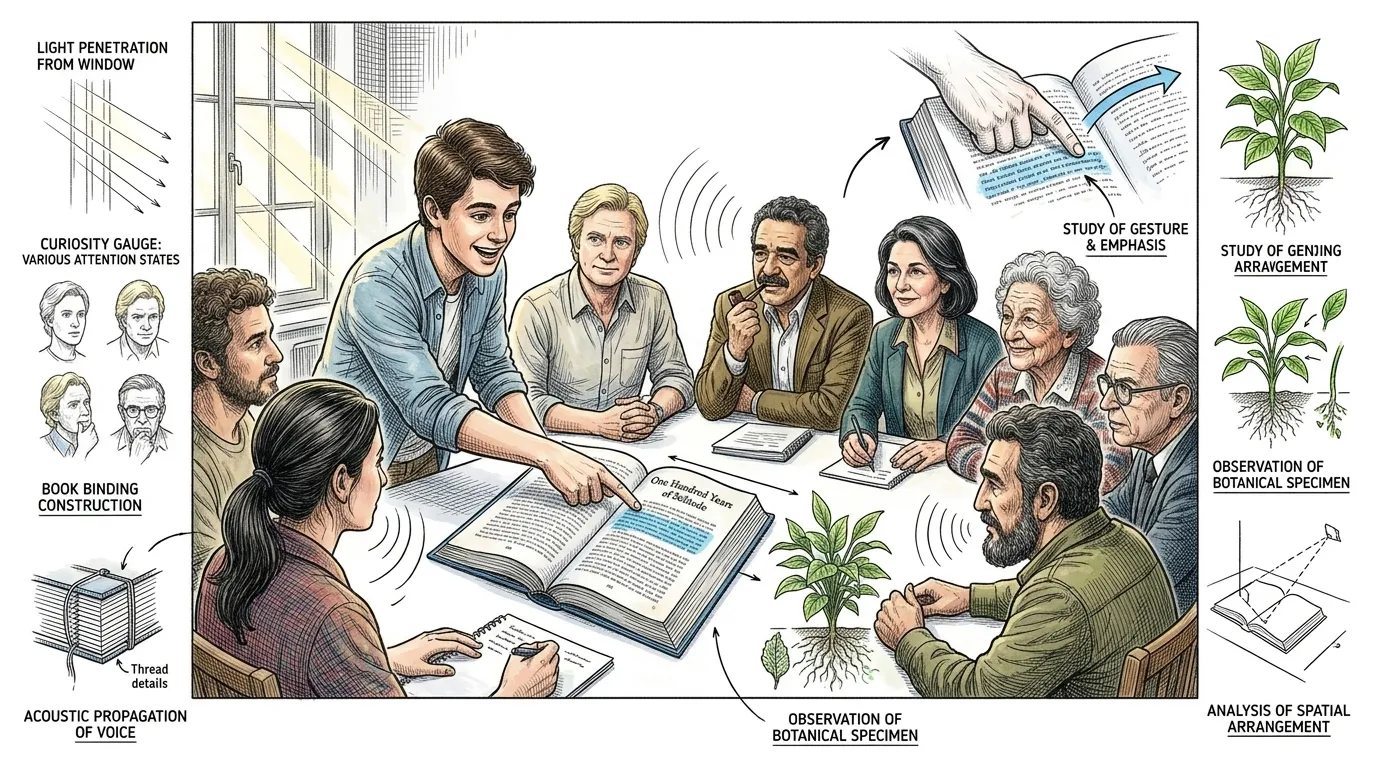
His influence stretched beyond mere sales. Generations of writers, scholars, and readers absorbed the unique texture of his narratives, using the very 'knowledge' of his style—the magical blend of realism and fantasy—to understand their own worlds.
"'Just like García Márquez showed us with the Buendías,' a young literature student explained, pointing to a passage in One Hundred Years of Solitude during a vibrant university seminar, 'the fantastical isn't just escapism. It's a lens, a way to reveal profound truths about history and memory. This is the enduring power of his method.'"
Biographical Fact: The narrative techniques and thematic concerns pioneered by Garcia Marquez, particularly magical realism, continue to inspire and shape contemporary literature, critical theory, and cultural studies globally.
Page 10

Gabriel Garcia Marquez departed the world in 2014, but his stories persist, echoing in the collective imagination. He crafted an indelible literary universe, forever changing how reality and myth intertwine.
"His words, captured on countless pages, continued to whisper across generations. 'Macondo,' readers seemed to murmur in unison, 'is everywhere we allow the impossible to reveal the truth, a testament to his eternal vision.'"
Biographical Fact: Gabriel Garcia Marquez's work remains a cornerstone of 20th-century literature, his name synonymous with magical realism and the vibrant literary tradition of Latin America. His legacy continues to inspire and challenge readers and writers worldwide.
About this story
- Location: Global
- Audience: general readers
Questions and answers
Read Wonder People on your phone
Wonder People is available on Android. Get Wonder People on Google Play.