Genghis Khan
Genghis Khan — an illustrated biography story, set in Global. 10 illustrated pages, free to read on Wonder People.
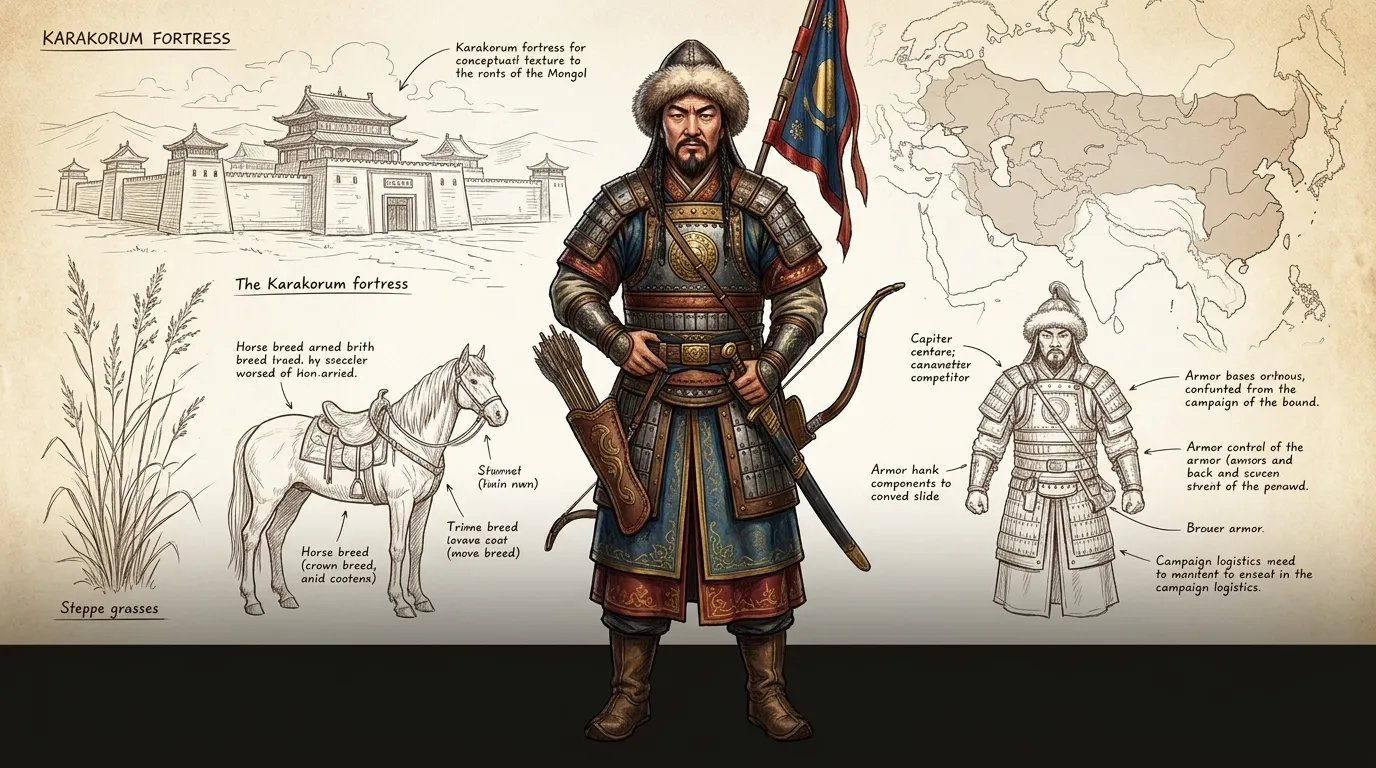
Page 1
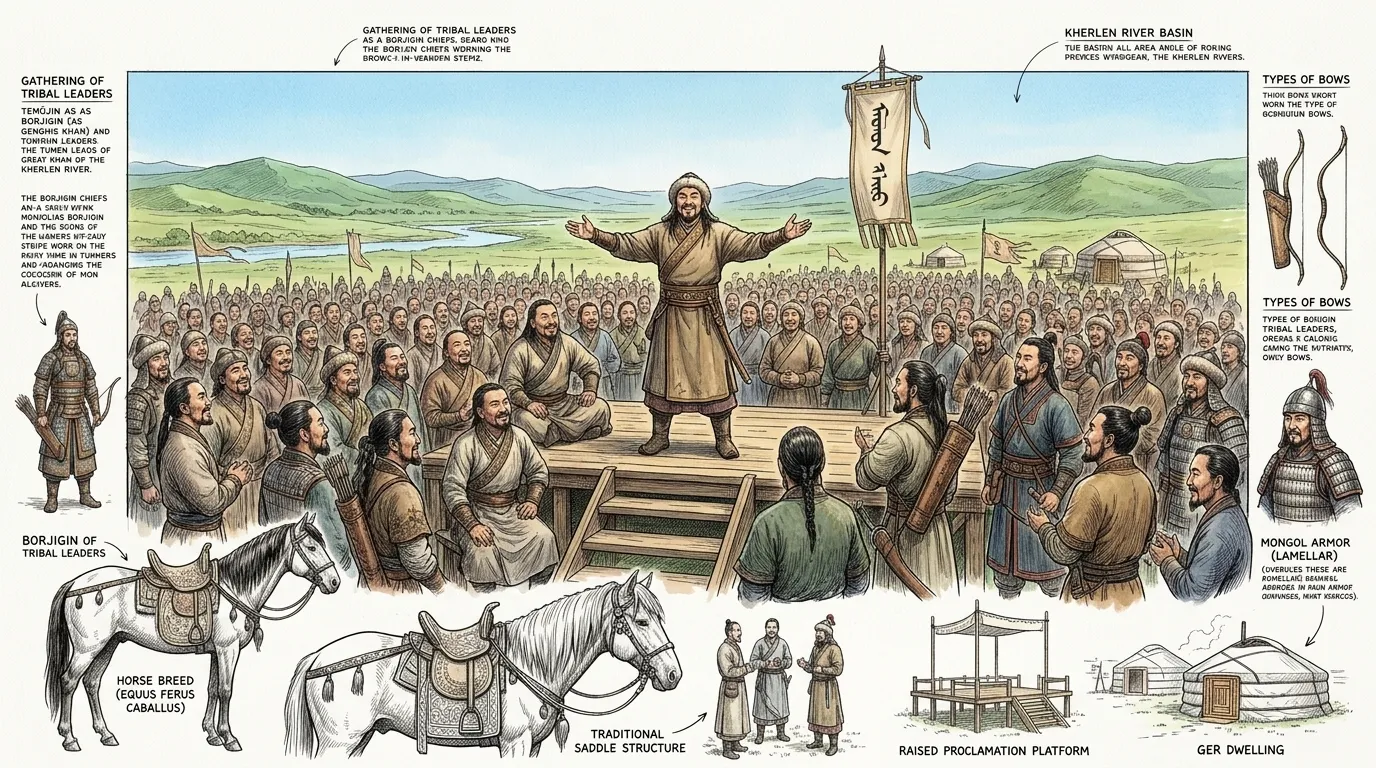
On the vast, windswept plains beside the Kherlen River in Mongolia, the year 1206 dawned with an unyielding declaration. Temüjin, who had endured captivity and tribal wars, now stood before a gathering of the Borjigin chiefs and countless tumen leaders. In this decisive moment, he was no longer merely a warlord; he was proclaimed Genghis Khan, ruler of all Mongols, forging a unified empire that would become the largest contiguous land empire in history, stretching across a million square miles. The disparate tribes, once rivals, now acknowledged a single, undeniable authority.
Page 2
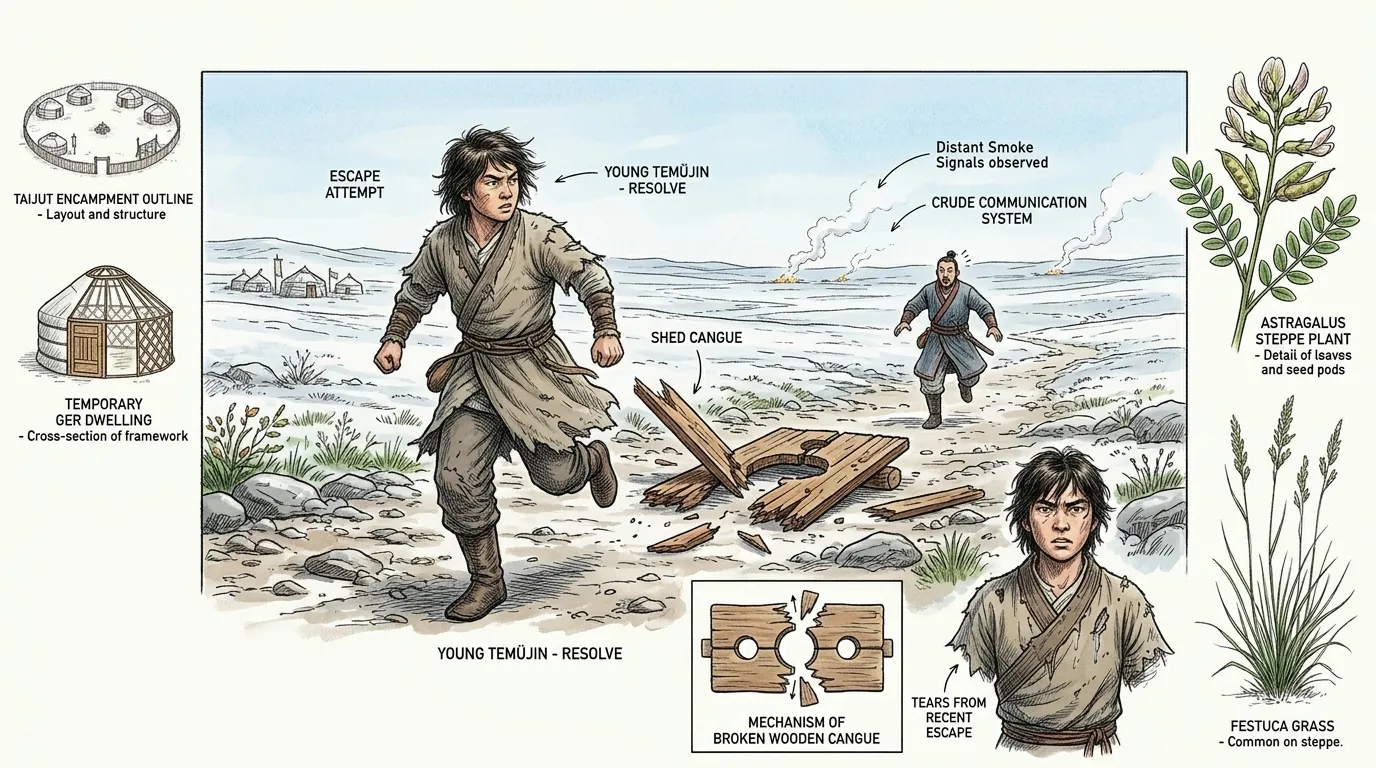
Years earlier, the young Temüjin, then just 16, faced desperation after his capture by the rival Taijut tribe. Bound by a wooden cangue, he seized a fleeting opportunity during a feast, striking a guard and fleeing into the cold, unforgiving steppe. Alone and pursued, he traversed the vast, desolate landscape, learning the brutal lessons of survival. As he evaded his captors, he observed how rudimentary smoke signals carried messages over immense distances, realizing the profound power of swift, far-reaching communication across this immense terrain. He resolved that one day, he would master such distances, turning them into an advantage.
"'The greatest glory in living lies not in never falling, but in rising every time we fall,' young Temüjin muttered to himself, remembering the wisdom of figures like Nelson Mandela, as he pushed himself forward through the harsh wilderness. 'My father, Yesügei, always spoke of resilience; this vastness demands more than mere survival—it demands foresight in movement and understanding in communication.'"
Page 3
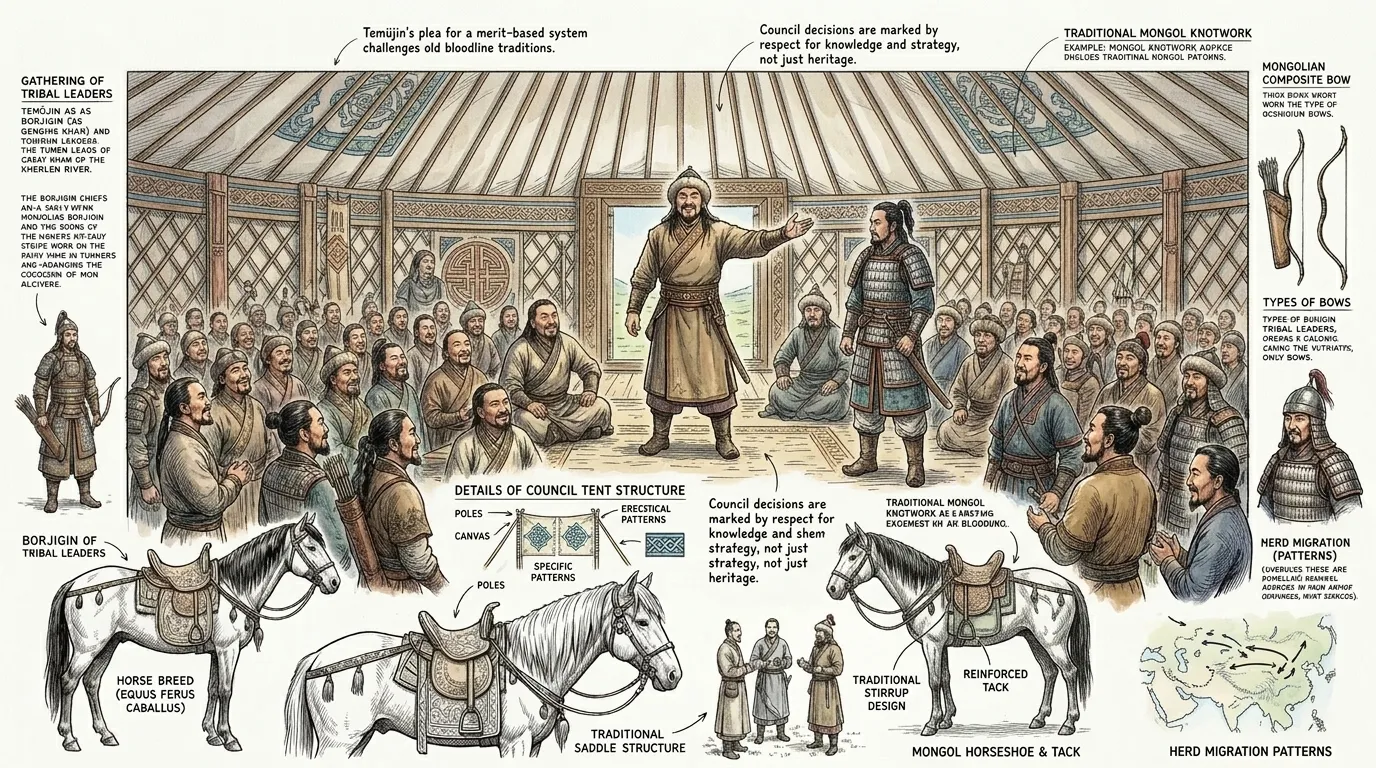
After his escape, Temüjin began to build alliances, notably with his childhood sworn brother Jamukha and the powerful Kereyit leader Toghrul, also known as Ong Khan. Unlike the traditional Mongol chiefs who relied solely on blood ties, Temüjin championed merit, promoting warriors like Jebe, a former enemy archer, based on their skill and loyalty rather than tribal origin. This radical shift began to undermine the old order, laying the groundwork for a truly unified fighting force.
"Temüjin, a resolute 25-year-old leader, addressed his gathered followers in a council tent. 'When a man proves his worth on the battlefield, his lineage matters less than his spirit,' he declared, gesturing towards a capable but low-born warrior. 'We will not be bound by old names, but by deeds. Jamukha, my sworn brother, and Toghrul, my foster father, know that unity, forged in skill and loyalty, will elevate us all.'"
Page 4
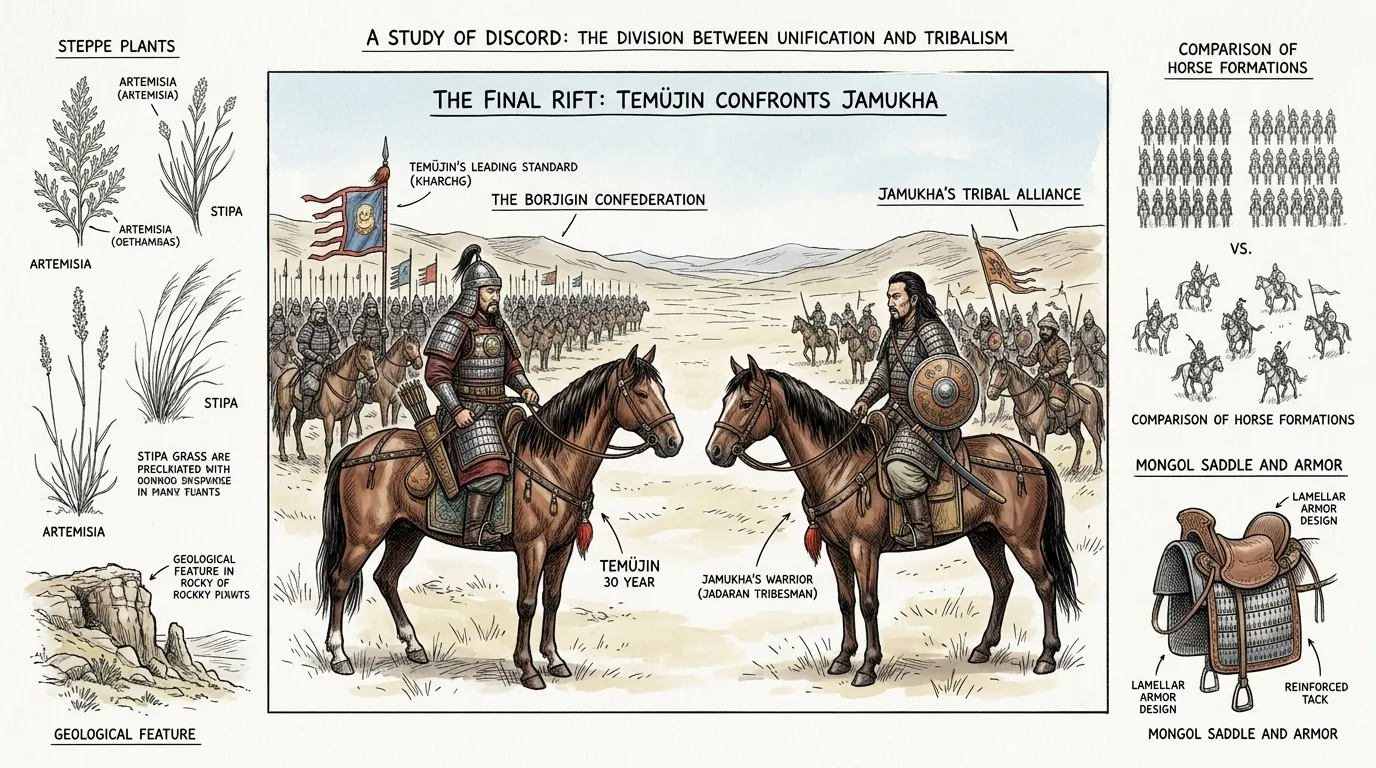
Temüjin's ambition to create a unified state, with laws and order beyond tribal custom, inevitably clashed with Jamukha's traditional nomadic values. Jamukha sought to preserve the old ways of raiding and tribal autonomy, seeing Temüjin's vision as an imposition. The profound philosophical difference led to an irreparable rift, forcing a confrontation on the open steppe, where their followers were given a choice: tribal independence or a unified destiny under a single leader. The schism was decisive, marking Temüjin's irreversible commitment to a new order.
"Facing his estranged sworn brother Jamukha, Temüjin, now a formidable 30-year-old commander, spoke with unwavering resolve. 'My path is towards a single, unbroken nation, a people united under one sky, not scattered tribes bound by shifting loyalties,' he asserted. Jamukha, his face etched with grim determination, responded, 'But this land belongs to the free spirit, to the swift horse and the open plain, not to the iron fist of a single ruler.' Their words echoed the profound division that would shape the steppe."
Page 5
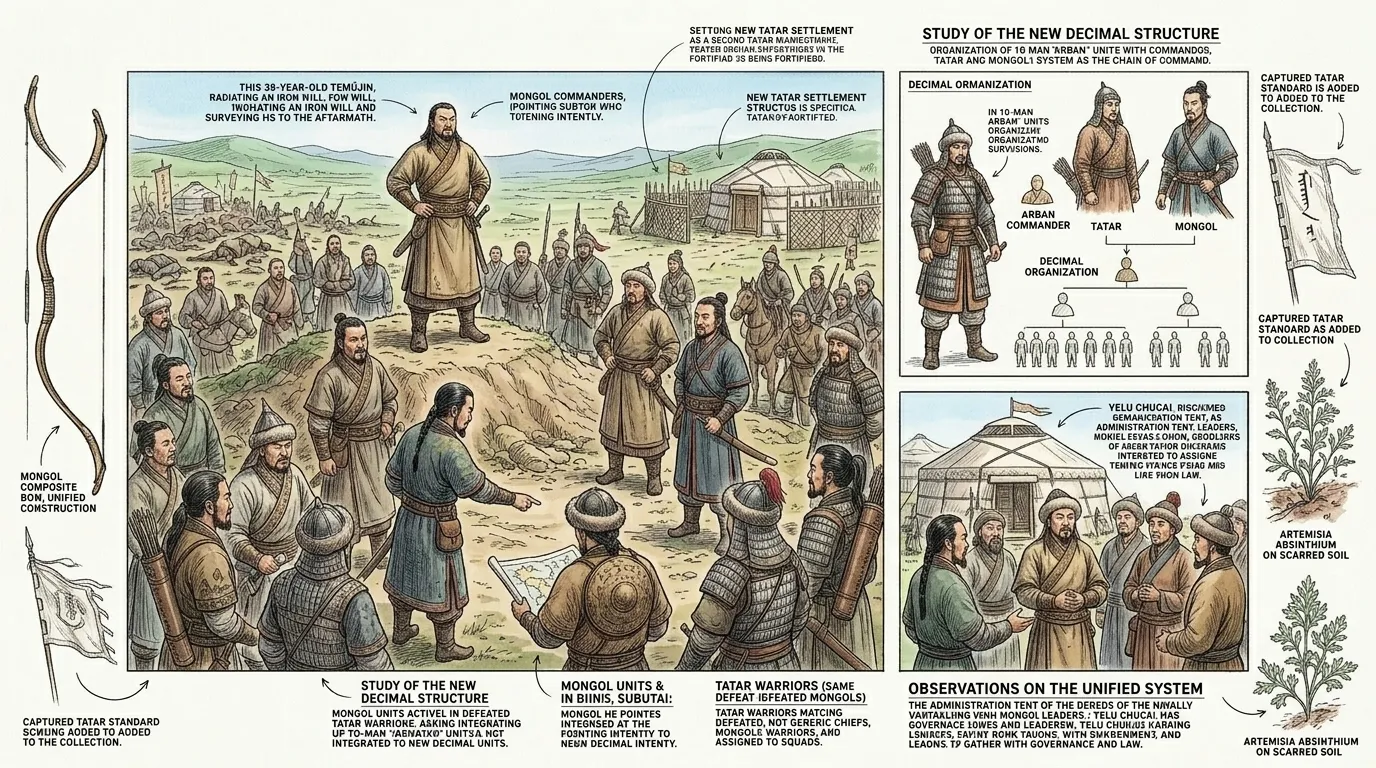
The conflict escalated, forcing Temüjin to demonstrate his strategic genius and an unwavering iron will. Against the powerful Tatar confederation, his forces executed a series of calculated maneuvers, culminating in a devastating victory. This triumph was not merely a conquest; it allowed Temüjin to systematically dismantle the traditional tribal structures within the defeated Tatars, integrating their warriors into his burgeoning merit-based army. This act showcased his revolutionary approach to warfare and state-building, turning former enemies into subjects of a new, unified system.
"After the decisive engagement against the Tatars, Temüjin, a 38-year-old leader, surveyed the field and addressed his triumphant commanders, including the young general Subutai. 'Discipline and unity proved stronger than numbers,' he stated, his voice resonating across the battlefield. 'Now, we do not simply take their lands; we absorb their strength. These warriors will join our tumens, and their loyalty will be to the Khan, not to their fallen tribal lords. This is how we build the future.'"
Page 6
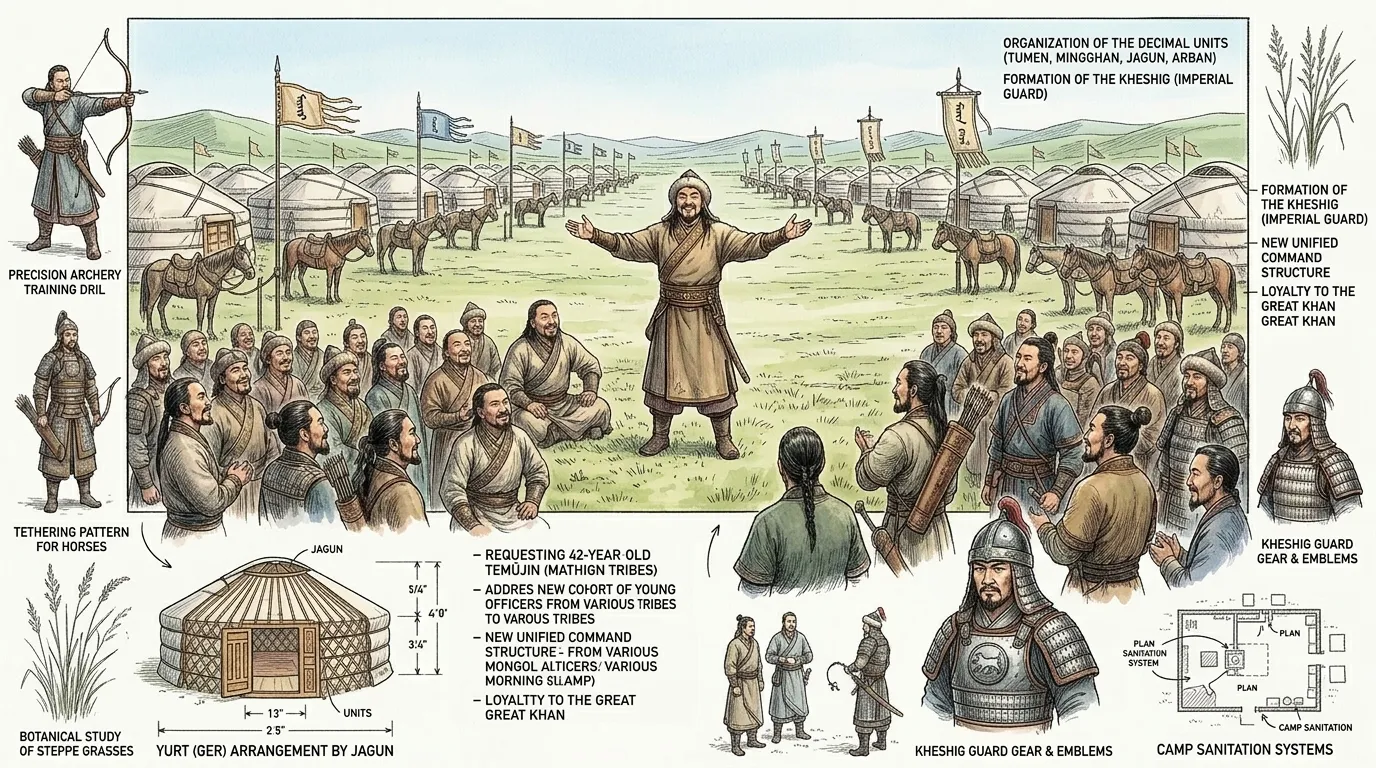
Temüjin, now solidified as a military power, turned his formidable organizational skills to refining his army. He abolished all tribal distinctions, reorganizing his entire fighting force into decimal units: thousands (mingghan) and tens of thousands (tumen), directly commanded by officers loyal only to him. He created the Kheshig, an elite imperial guard of ten thousand, composed of the sons of his most loyal commanders, ensuring his personal protection and a corps of dedicated administrators. This radical restructuring transformed a collection of nomadic warriors into a disciplined, loyal, and terrifyingly efficient imperial instrument.
"Addressing a new cohort of young officers from across various former tribes, Temüjin, a commanding 42-year-old, declared, 'You are not Naiman, not Tatar, not Merkit. You are Mongols, loyal to the Great Khan alone.' He gestured to the meticulously arranged camp. 'Your place in the tumen is earned by skill, not birth. This new order ensures our strength is unbreakable, our will unyielding. The Kheshig will be the heart of this unified strength, bound by unbreakable vows.'"
Page 7
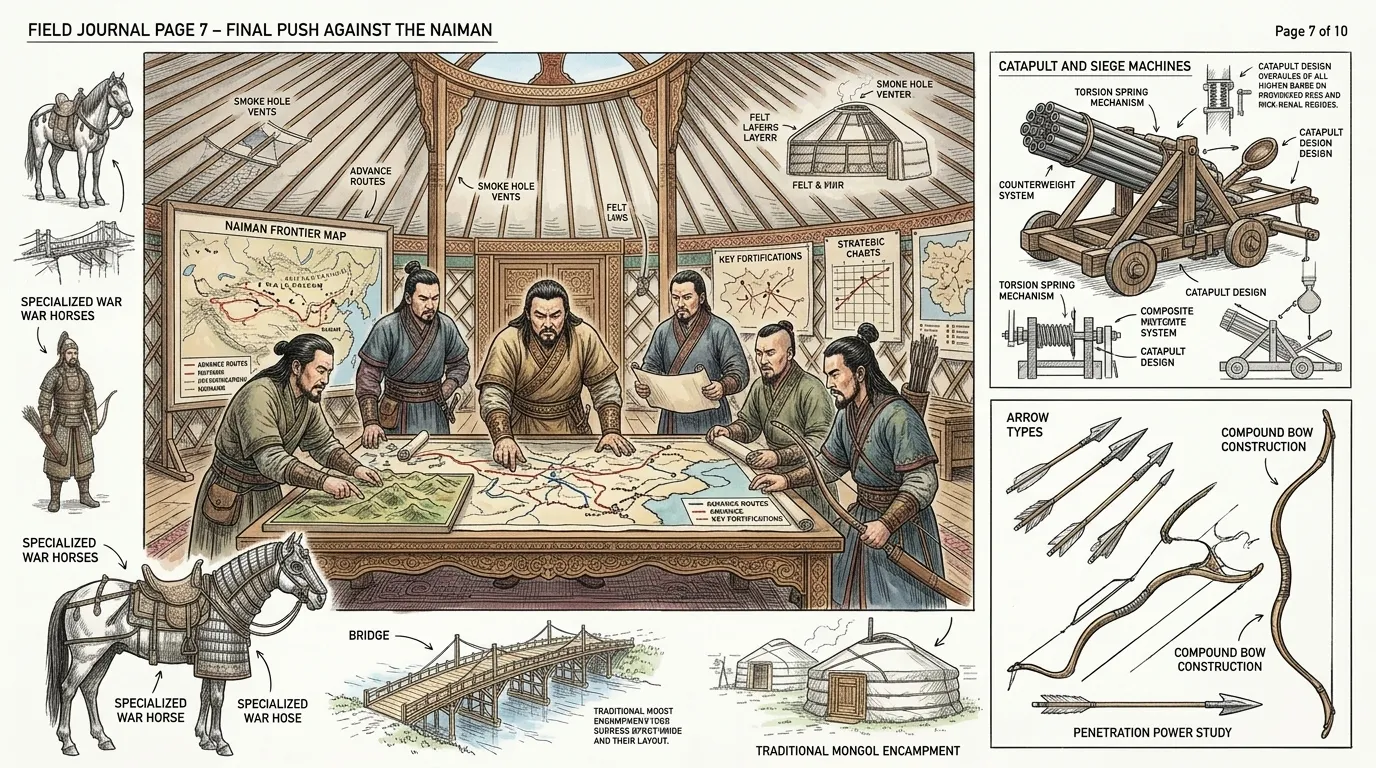
With his restructured army, Temüjin methodically eliminated the last remaining powerful tribal confederations that resisted his authority. Campaigns against the Naimans and the remaining Kereyit factions were swift and brutal, characterized by his army's unparalleled speed, coordination, and tactical prowess. The final victory brought every major steppe people under his dominion. He had achieved what no other leader before him ever had: a truly unified Mongol nation, poised for a new destiny.
"Inside a richly appointed war tent, Temüjin, now a formidable 44-year-old strategist, leaned over a large map spread on a low table, his fingers tracing lines of advance. His sons—Jochi, Chagatai, Ögedei, and Tolui—and his trusted generals, Subutai and Jebe, gathered around. 'The Naiman Khan, Küchlüg, believes his western mountains offer refuge,' Temüjin stated, his eyes alight with strategic fire. 'But even mountains cannot withstand the unified will of the Mongol nation. Our strength now lies in our absolute unity, and that unity will sweep away all who cling to the old divisions. This is the final push.'"
Page 8
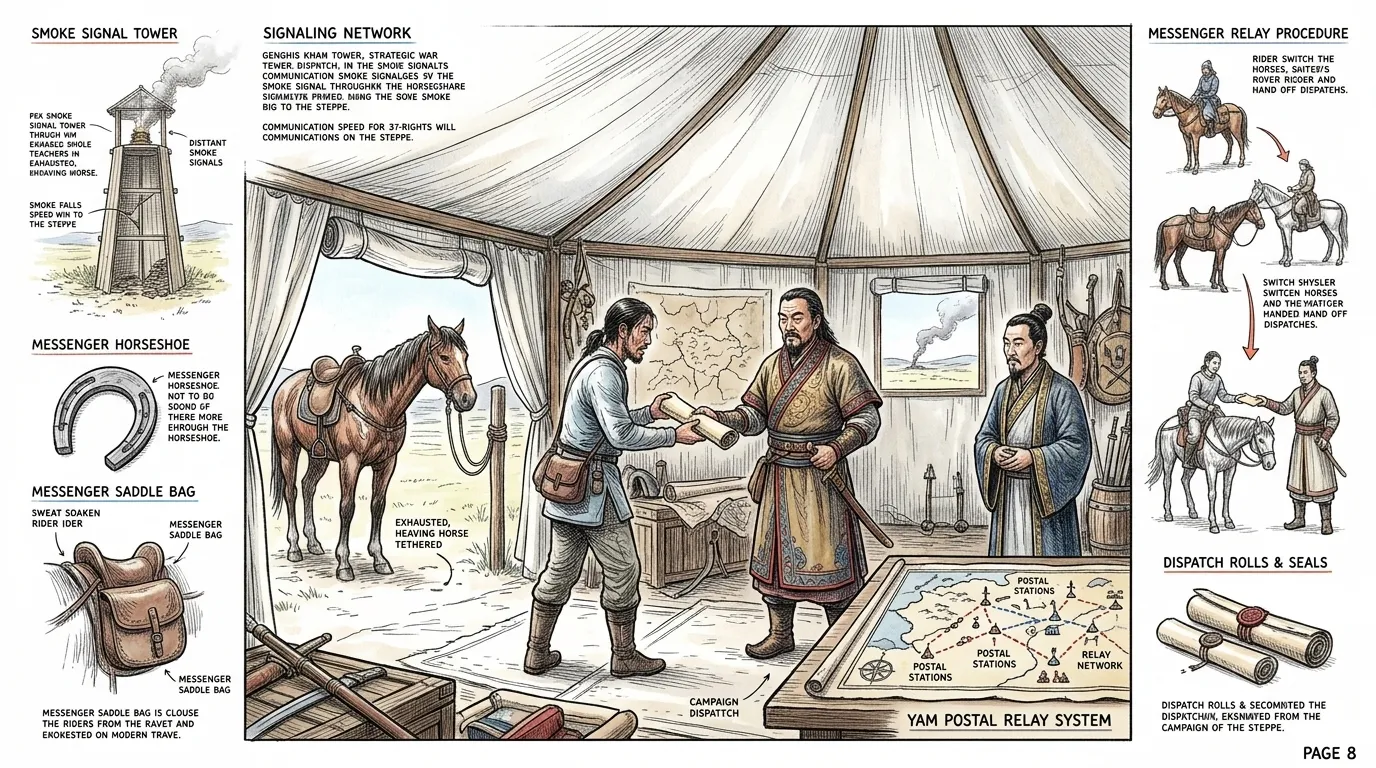
Having forged a unified state, Genghis Khan unleashed its power westward. In 1219, he turned his attention to the mighty Khwarezmian Empire. To coordinate an army spread across thousands of miles, striking simultaneously from multiple directions, he implemented the Yam, an ingenious postal relay system. This network of stations and swift riders, a system he had envisioned since his youth by observing distant smoke signals, ensured rapid intelligence gathering and seamless communication. The Yam allowed him to command vast distances, becoming the nervous system of an unprecedented military machine that overwhelmed its formidable opponent.
"Genghis Khan, a commanding 58-year-old, stood in his war tent, receiving a dispatch from a sweat-soaked rider, whose horse waited, exhausted, outside. 'This intelligence, delivered across a thousand li in days, confirms the Khwarezm Shah's movements,' he told Yelu Chucai, his trusted Khitan statesman. 'My youthful observations of distant smoke signals taught me that swift communication across this vastness is not a luxury but the very sinews of an empire. The Yam system, Yelu Chucai, now allows our will to flow like a river, reaching every commander at speed. It is the backbone of our Western Campaign.'"
Page 9
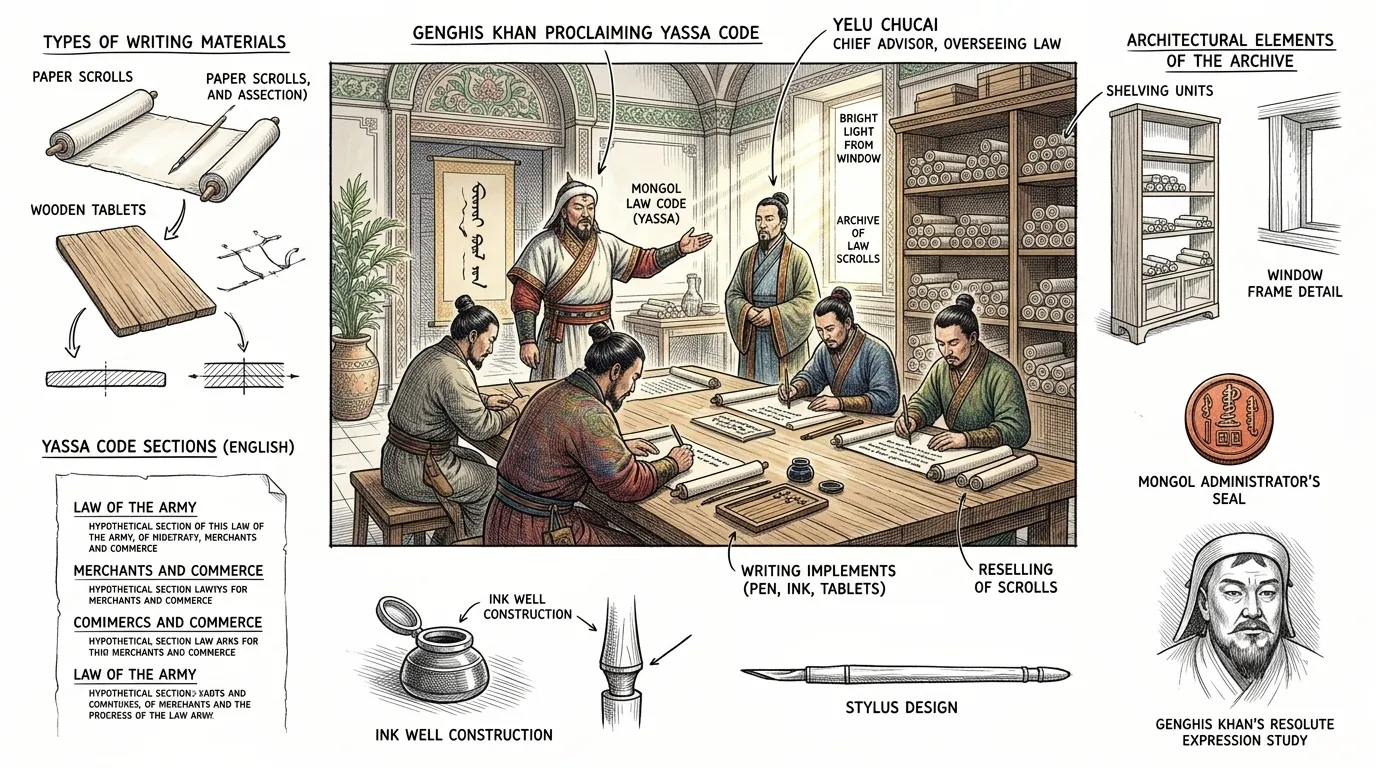
Beyond military conquest, Genghis Khan understood that lasting power required order and governance. He decreed the Yassa, a comprehensive written legal code that transcended tribal customs. It established harsh penalties for theft, adultery, and treason, enforced religious tolerance, and regulated trade, hunting, and military discipline. The Yassa provided a unified legal framework for the sprawling Mongol Empire, creating a stable, predictable society for both conquerors and conquered, preventing internal feuds and ensuring the efficient functioning of his vast domain. It was a monumental shift from nomadic lawlessness to imperial administration.
"Genghis Khan, a visionary 60-year-old, stood before a group of scribes and administrators, overseen by Yelu Chucai. 'A people cannot be united by the sword alone,' he declared, gesturing to the scribes diligently writing on parchment and wooden tablets. 'The Yassa, this code of law, will bind us more firmly than any chain. It establishes justice for all, ensures religious freedom, and prevents the feuds that once tore us apart. Yelu Chucai, ensure every clause is clear, for this is the bedrock upon which the Mongol nation will stand, lasting beyond my lifetime.'"
Page 10
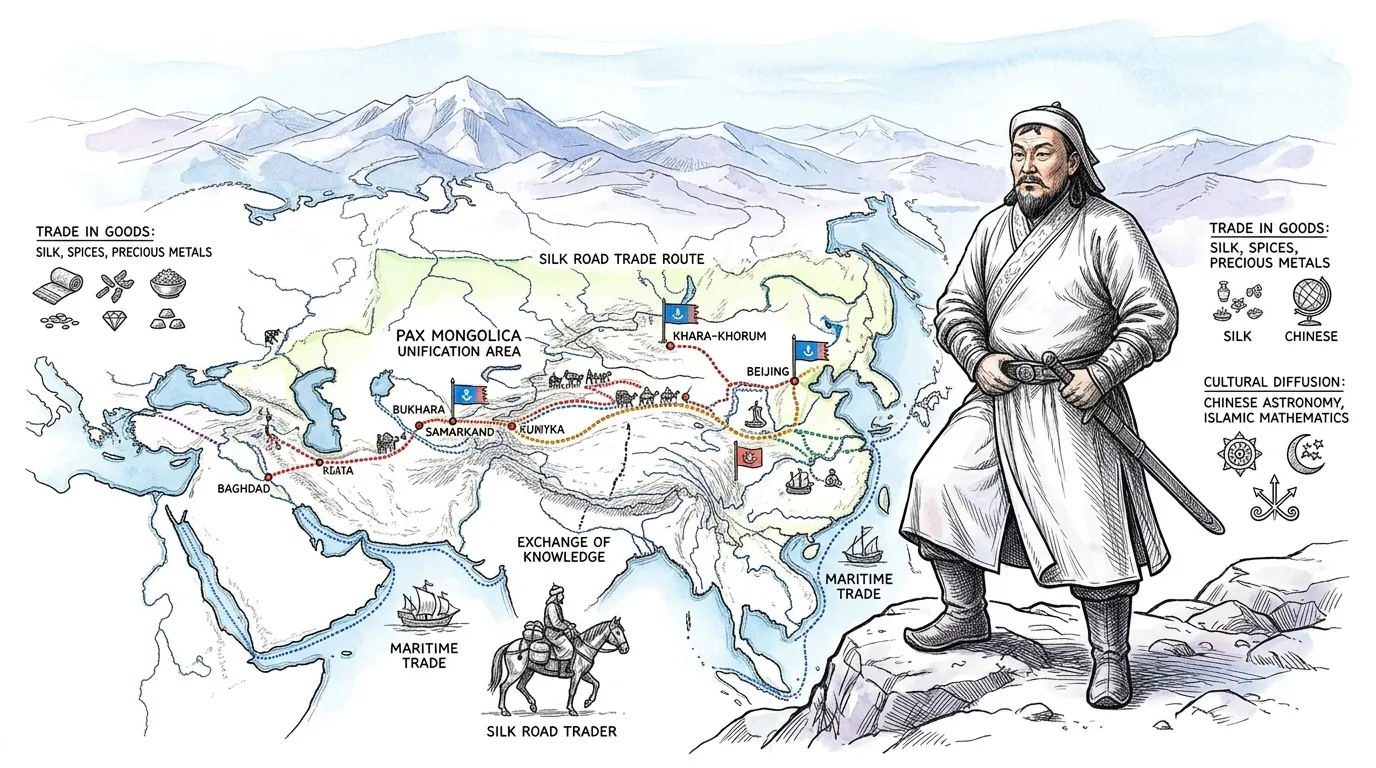
When Genghis Khan died in 1227, his empire stretched from the Pacific Ocean to the Caspian Sea. His successors expanded it further, leaving an indelible mark on Eurasia. The Pax Mongolica, a period of relative peace and stability under Mongol rule, fostered unprecedented trade along the Silk Road, leading to a vibrant exchange of goods, technologies, and ideas across continents. His reforms in governance, law, and military organization endured for centuries, influencing subsequent empires and forever altering the geopolitical landscape. His legacy is one of transformative, albeit brutal, unification and a reshaping of the global order.
"Genghis Khan, a figure of enduring power, looked out over a vast, imagined landscape. 'My vision was not merely for conquest, but for an order that would endure,' he reflected. 'A world connected, where the law flows like a steady river. My body may return to the earth, but the spirit of the Mongol nation, forged in unity and discipline, will ride on forever, connecting distant lands and influencing generations yet unborn. This legacy, built on iron and intellect, will echo across time.'"
About this story
- Location: Global
- Audience: general readers
Questions and answers
Read Wonder People on your phone
Wonder People is available on Android. Get Wonder People on Google Play.