George Orwell
George Orwell — an illustrated biography story, set in Global. 10 illustrated pages, free to read on Wonder People.
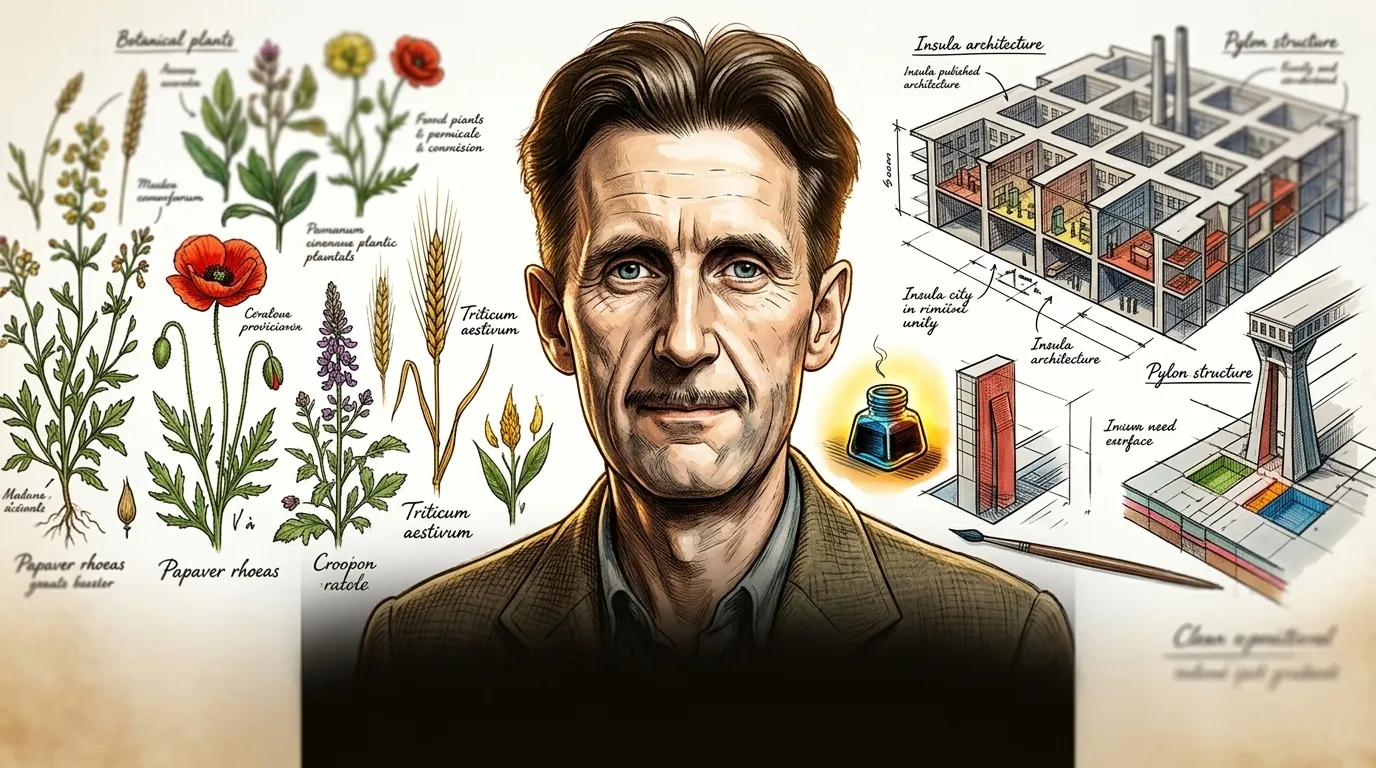
Page 1
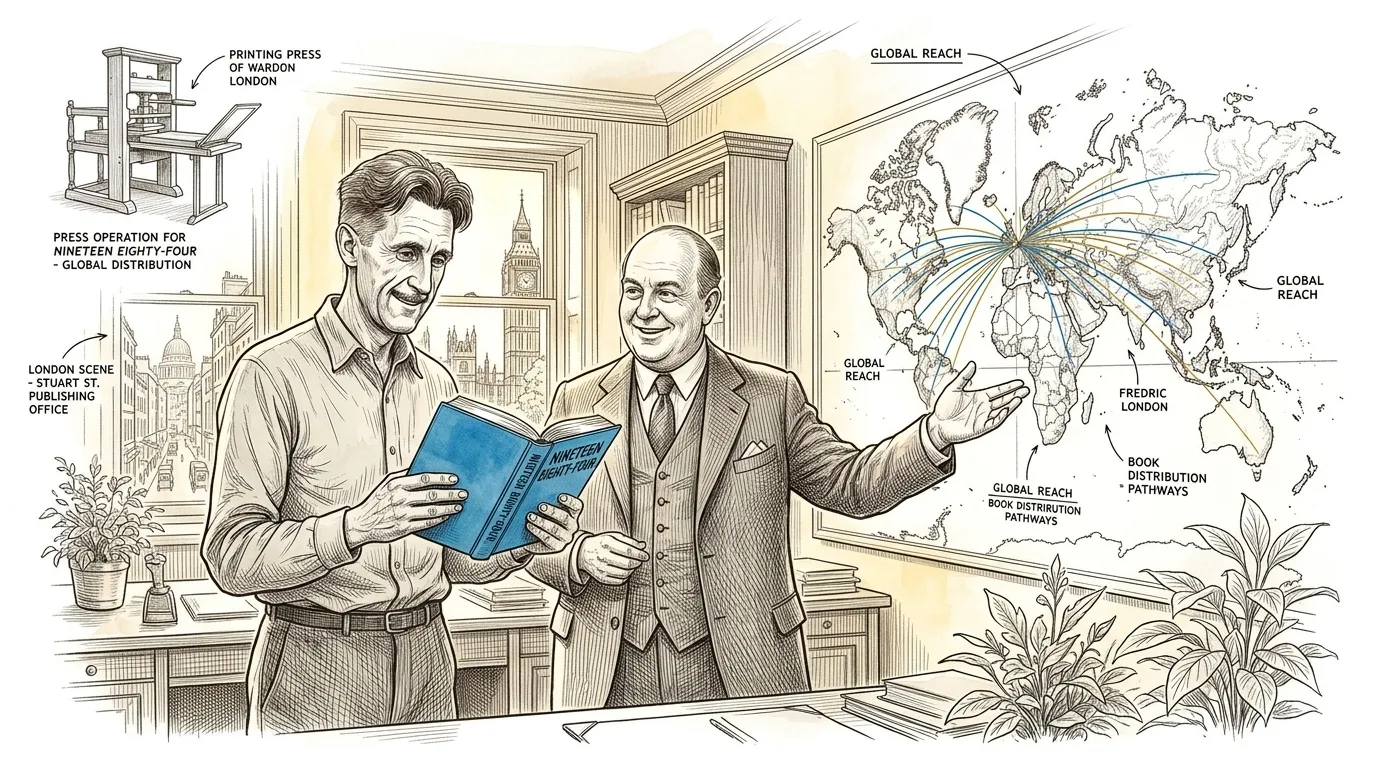
In London, June 1949, on the eve of his death, Eric Blair, known to the world as George Orwell, released his final, most formidable work: Nineteen Eighty-Four. The novel, published by Fredric Warburg's Secker & Warburg, immediately detonated across global consciousness, selling hundreds of thousands of copies within its first year. It cemented Orwell's reputation as a prophet of authoritarian warning, a voice that would irrevocably define the coming Cold War era. The world began to speak of Big Brother, Thought Police, and Newspeak, terms that would become indelible parts of the modern lexicon.
Biographical Fact: George Orwell (Eric Blair): Author. Fredric Warburg: Publisher. Location: London, UK. Year: 1949. Impact: 'Nineteen Eighty-Four' sold over 250,000 copies in its first year in the UK and US alone, fundamentally altering political discourse.
Page 2
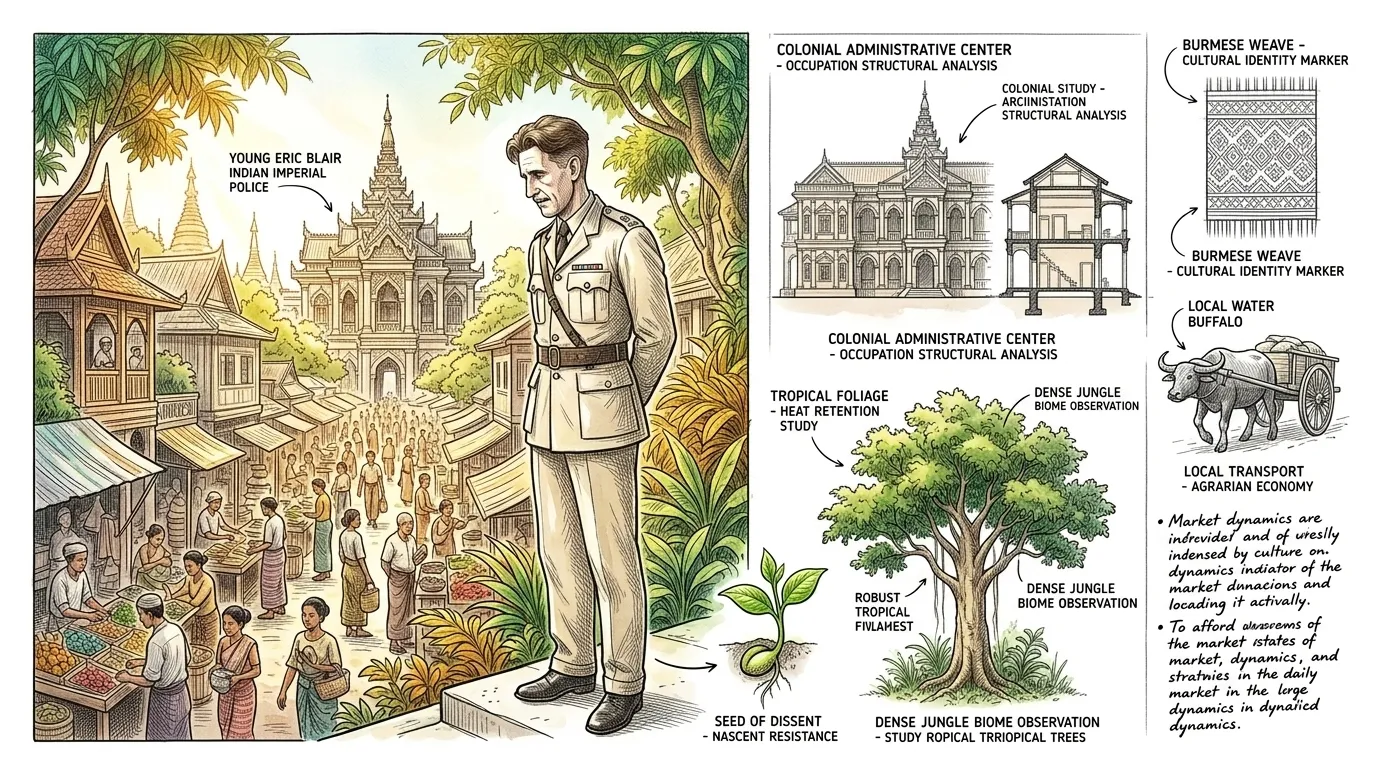
Years earlier, the young Eric Blair arrived in Burma, 1922, as an Assistant Superintendent in the Indian Imperial Police, a direct instrument of colonial power. His five years there, observing firsthand the brutalities of empire and the hypocrisy of its administrators, forged a deep-seated antagonism toward all forms of oppression. This crucible of experience, particularly witnessing the degradation of both oppressor and oppressed, became a foundational bedrock for his later critiques of totalitarianism and injustice. The seed of dissent was sown in the suffocating heat of imperial rule.
Biographical Fact: Eric Blair: Future George Orwell. Role: Assistant Superintendent, Indian Imperial Police. Location: Katha, Burma. Period: 1922-1927. Experience: Witnessed colonial injustice, informing his anti-authoritarianism.
Page 3
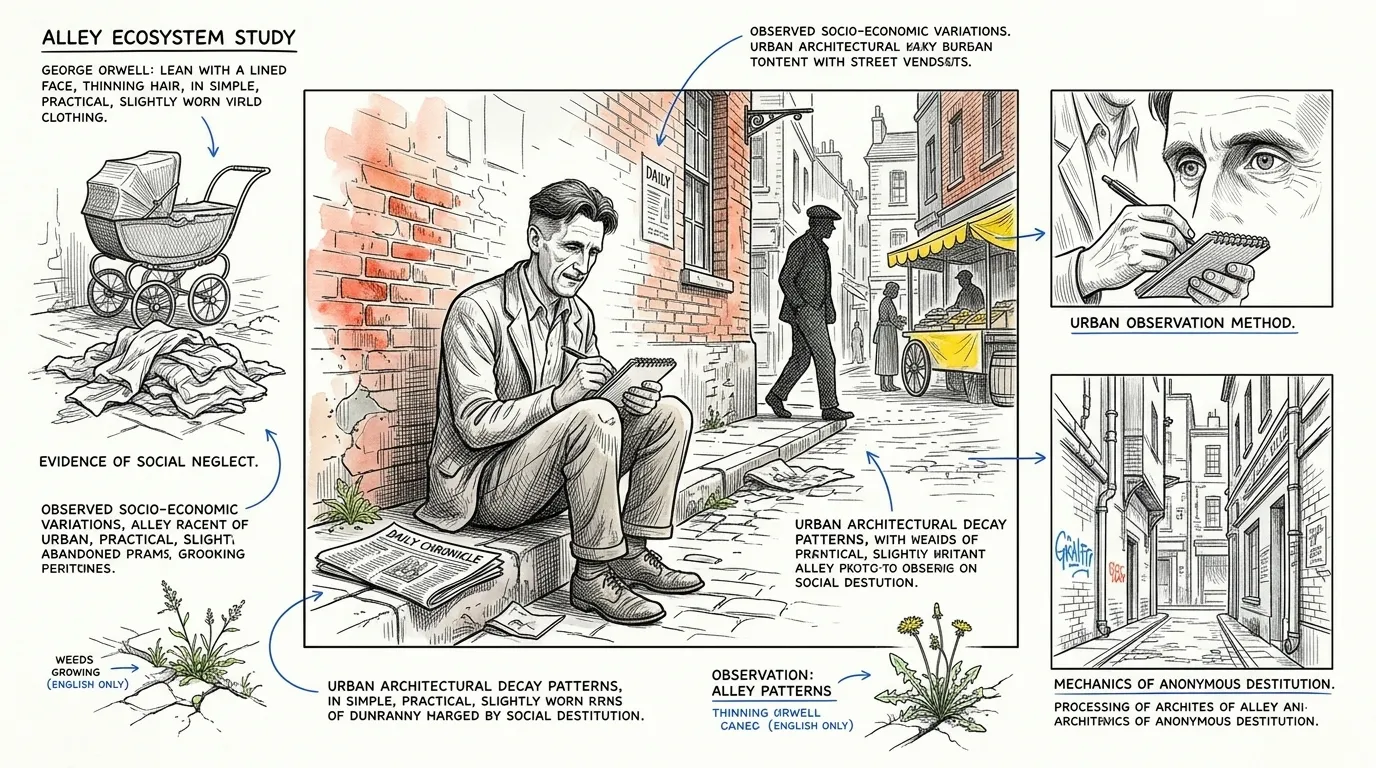
Shedding his colonial past, Blair deliberately plunged into the depths of poverty in Paris and London, beginning in 1928. Renaming himself George Orwell, he lived as a tramp, a dishwasher, a casual labourer, experiencing the brutal indifference of urban destitution. This voluntary descent was not merely an act of observation but a profound engagement with the underclass, providing the raw, unfiltered material for Down and Out in Paris and London. Through this harsh immersion, he sought not just to report, but to truly understand the mechanics of societal neglect.
Biographical Fact: George Orwell (Eric Blair): Author. Experience: Lived among the poor in Paris and London. Period: 1928-1932. Outcome: Published 'Down and Out in Paris and London' (1933), his first full-length work.
Page 4
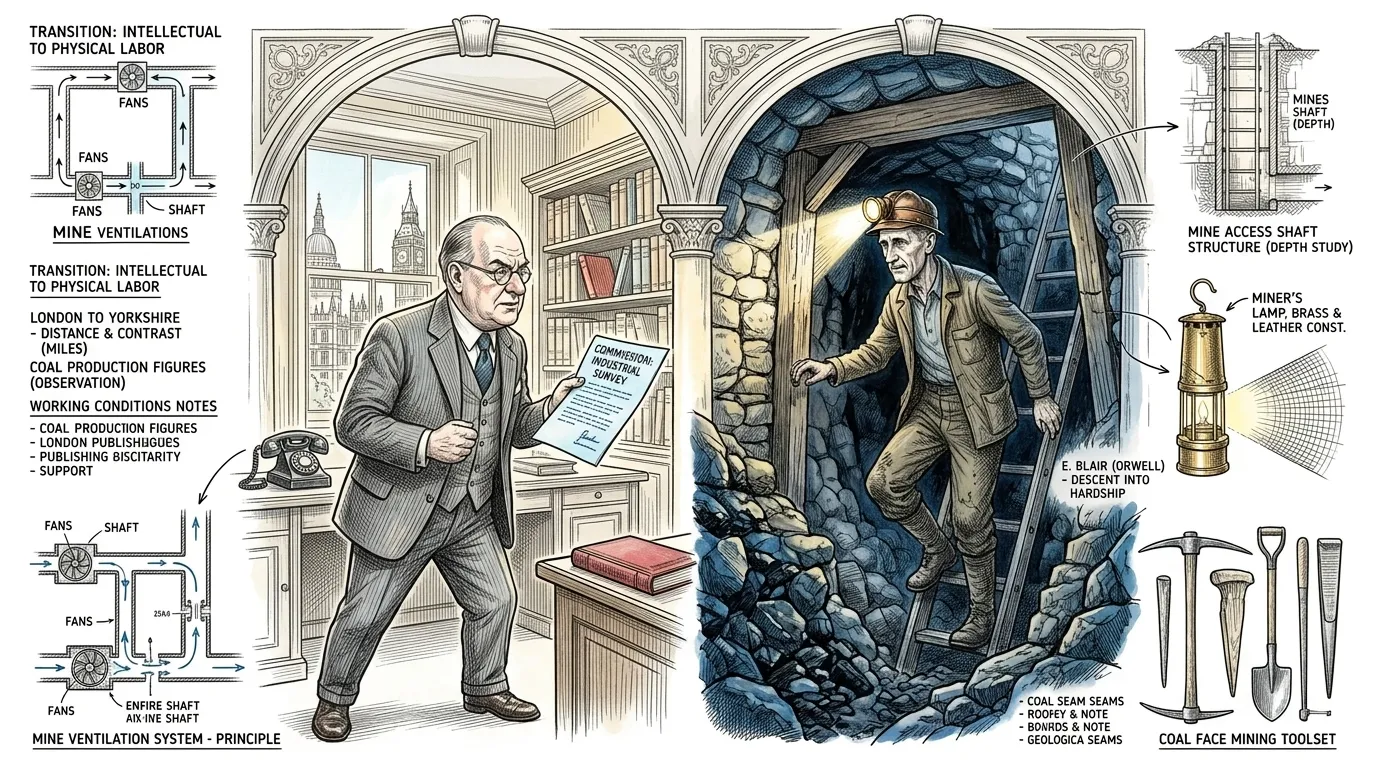
In 1936, publisher Victor Gollancz commissioned Orwell to document the living conditions of the working class in Northern England. Orwell immersed himself in the coalfields of Lancashire and Yorkshire, sharing the lives of miners and factory workers. He descended into the mines, observed the pervasive unemployment, and chronicled the stark realities of industrial hardship. This intense period of journalistic investigation directly fueled The Road to Wigan Pier, a work that laid bare the social injustices of his era and deepened his commitment to democratic socialism. He confronted the human cost of industrial society.
Biographical Fact: George Orwell: Author and journalist. Mission: Document working-class conditions. Location: Wigan, Northern England. Year: 1936. Outcome: Published 'The Road to Wigan Pier' (1937), a seminal work on social class.
Page 5
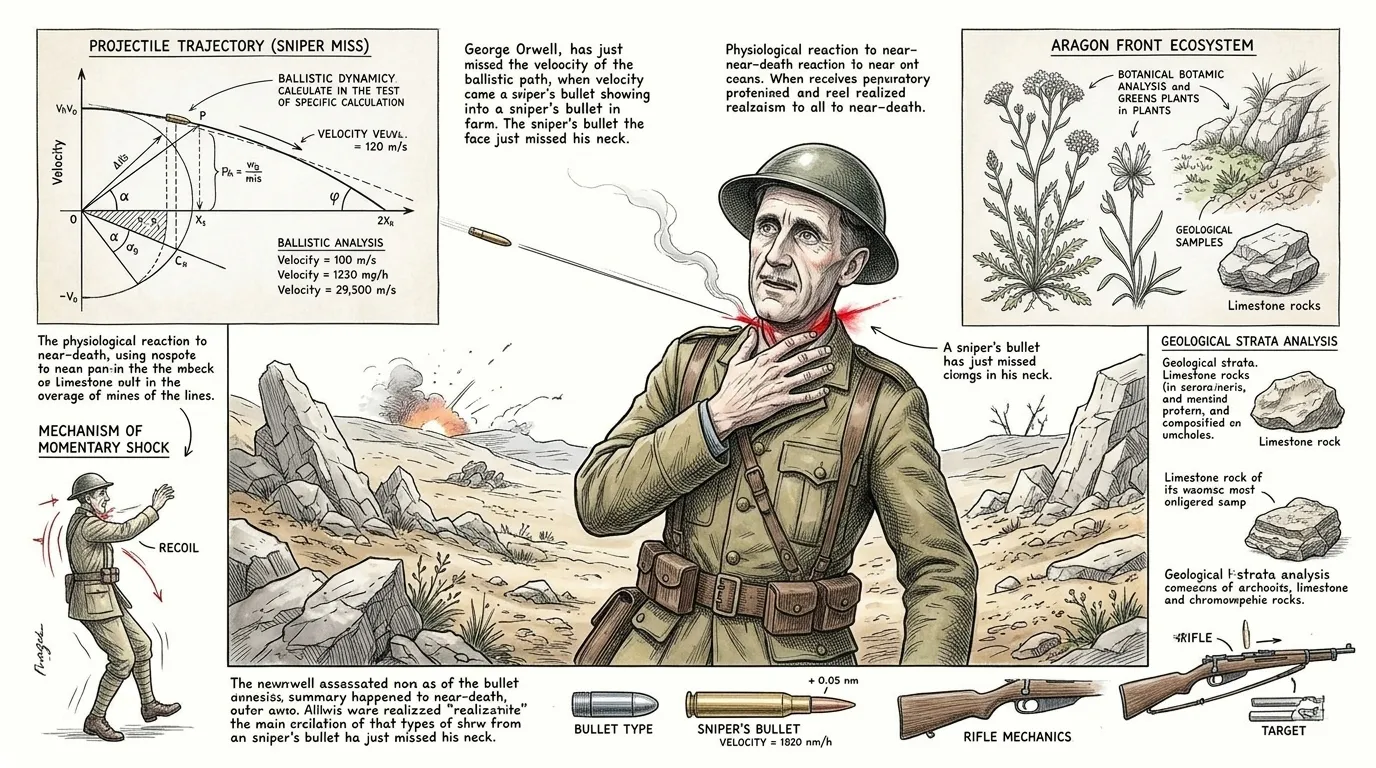
Driven by fervent anti-fascism, Orwell journeyed to Spain in December 1936 to fight for the Republican cause in the Spanish Civil War. He joined the Workers' Party of Marxist Unification (POUM) militia on the Aragon Front. On May 20, 1937, a sniper's bullet pierced his throat, narrowly missing his carotid artery. This near-fatal injury and his subsequent experience with the brutal political purges within the Republican ranks, where Soviet-backed communists turned on anarchists and independent socialists, profoundly shaped his understanding of totalitarianism's internal mechanisms. He witnessed betrayal from within the left, a stark lesson that would resonate deeply in his later fiction.
Biographical Fact: George Orwell: Volunteer soldier and writer. Conflict: Spanish Civil War, Aragon Front. Year: 1937. Consequence: Shot in the throat, witnessed communist purges, inspired 'Homage to Catalonia'.
Page 6
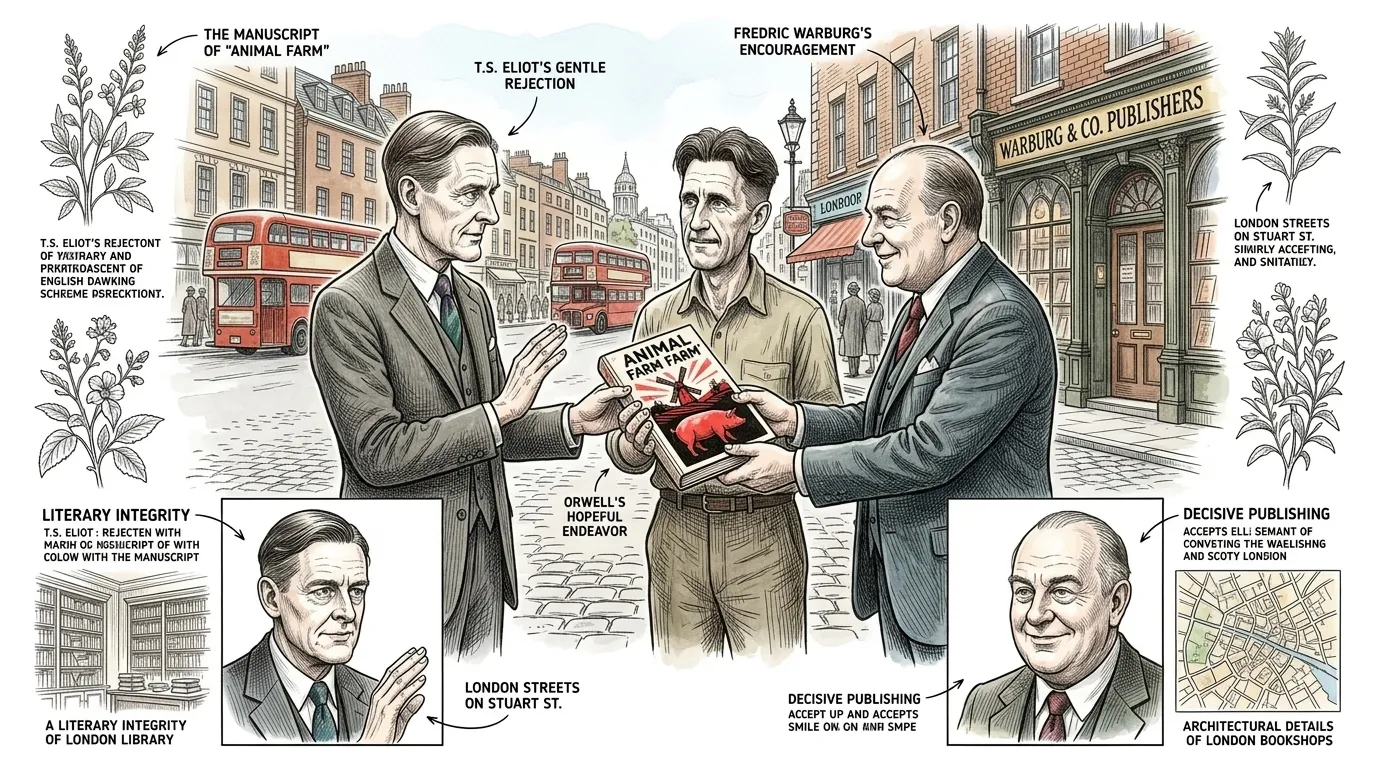
Returning from Spain with a new clarity on political deceit, Orwell completed Animal Farm in 1943. This allegorical novella, a biting satire of the Russian Revolution and the corruption of Soviet communism, faced immediate resistance from publishers. Britain was allied with the Soviet Union against Nazi Germany, and criticizing Stalin was deemed unpatriotic. T. S. Eliot, then a director at Faber and Faber, rejected it. After multiple rejections, Fredric Warburg finally published it in 1945. Animal Farm swiftly became a global phenomenon, establishing Orwell as a courageous voice against tyranny and setting the stage for his subsequent, even more impactful, work.
Biographical Fact: George Orwell: Author. Work: 'Animal Farm' completed. Period: 1943-1944. Challenge: Faced significant publishing resistance due to wartime politics. Publisher: Fredric Warburg.
Page 7
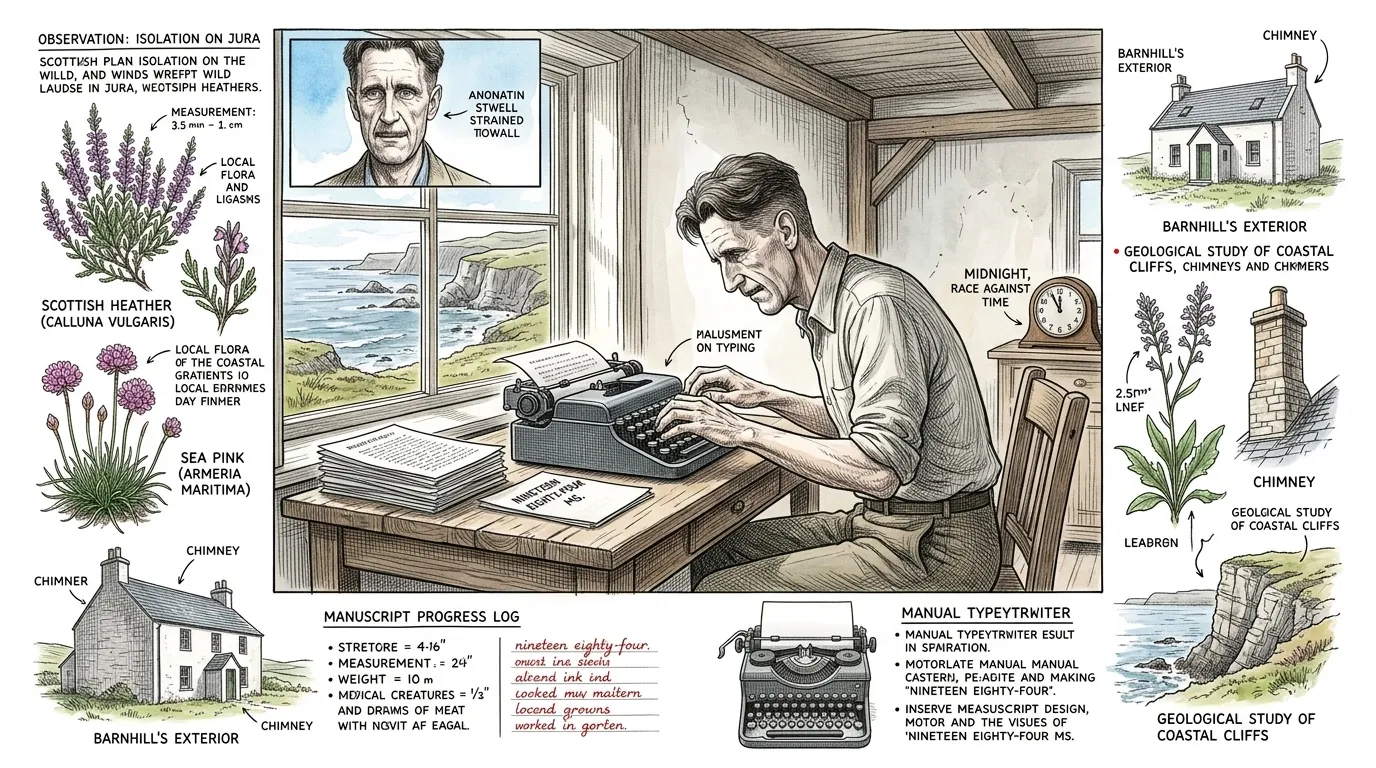
With his health rapidly deteriorating from tuberculosis, Orwell sought refuge on the remote island of Jura, Scotland, from 1946 to 1948. There, in the austere isolation of Barnhill, he painstakingly wrote Nineteen Eighty-Four. The extreme conditions, combined with his worsening illness, infused the novel with its chilling intensity and bleak vision. He worked against the clock, literally, knowing his time was short. Every typed word was a battle against his failing body, a race to complete his final, most urgent warning to humanity. The novel became a testament to his singular will.
Biographical Fact: George Orwell: Author. Project: Writing 'Nineteen Eighty-Four'. Location: Barnhill, Isle of Jura, Scotland. Period: 1946-1948. Context: Battled severe tuberculosis while completing his magnum opus.
Page 8
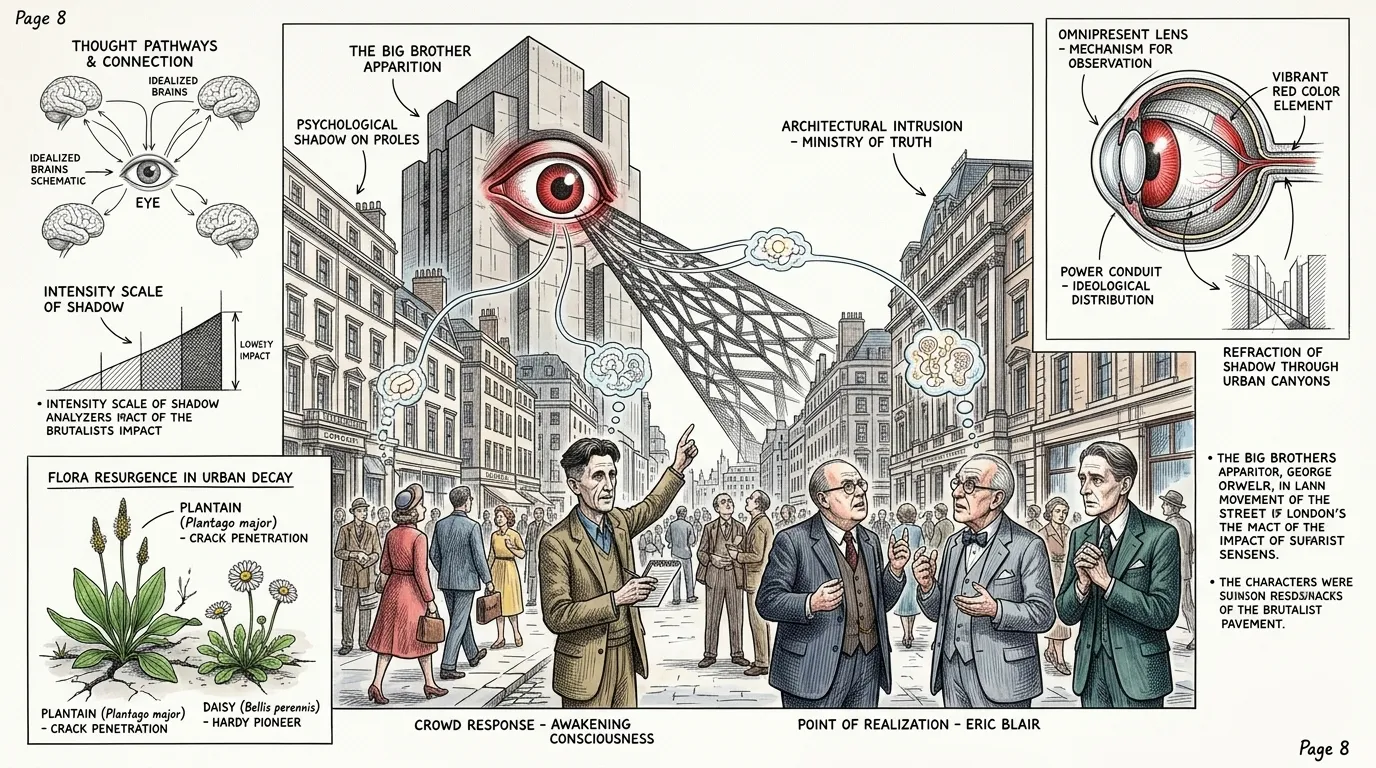
The release of Nineteen Eighty-Four in 1949 created an immediate global tremor. The novel's chilling depiction of a totalitarian future where surveillance, censorship, and psychological manipulation controlled every aspect of life resonated deeply in a world grappling with the rise of communism and the dawn of the Cold War. Phrases like 'Big Brother is Watching You' and 'Newspeak' swiftly transcended literature, entering everyday political discourse and popular culture. Orwell's warning became a lens through which millions began to understand the threats to individual liberty. He provided the vocabulary for a generation's anxieties.
Biographical Fact: 'Nineteen Eighty-Four': Published 1949. Impact: Introduced 'Big Brother,' 'Thought Police,' 'Newspeak' into global consciousness. Cultural effect: Provided a framework for understanding and critiquing totalitarianism and surveillance.
Page 9
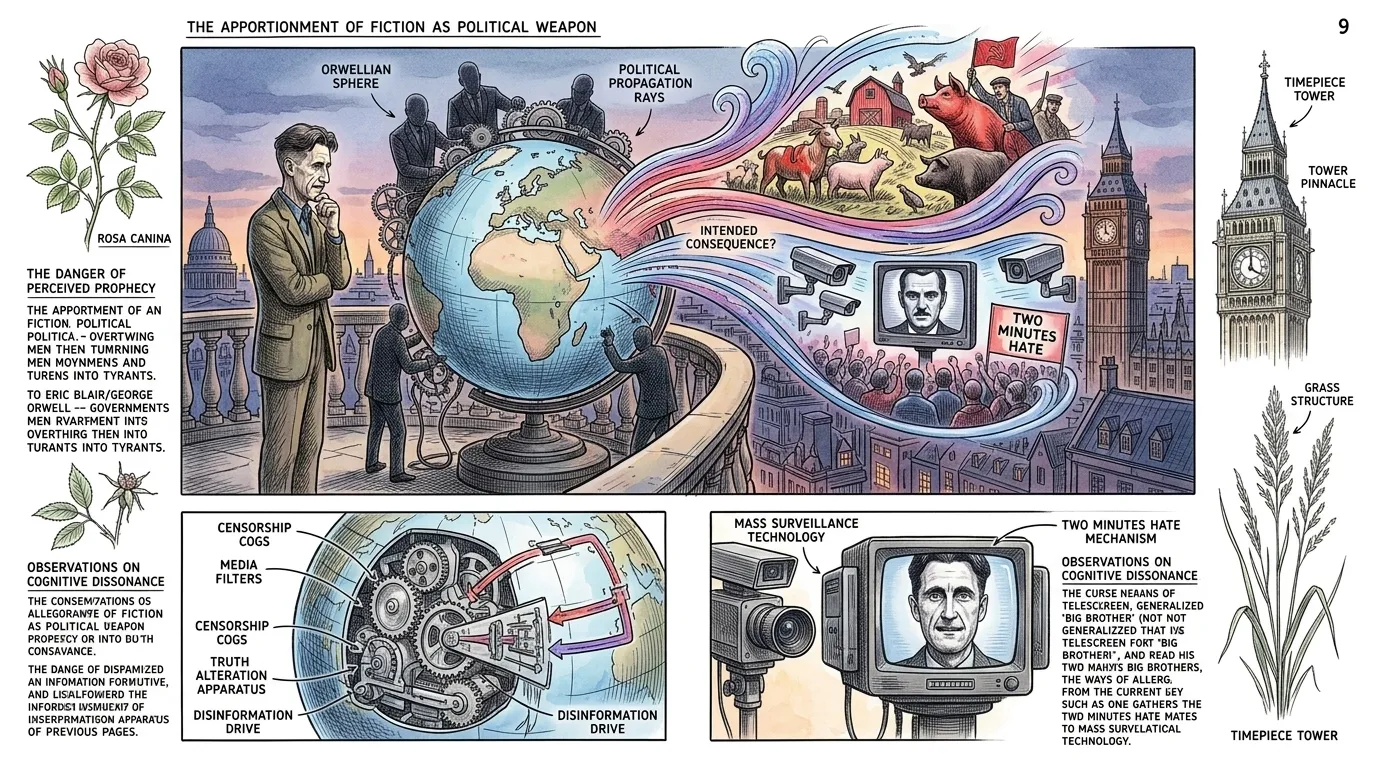
Following Orwell's death in 1950, his works, particularly Animal Farm and Nineteen Eighty-Four, became potent ideological weapons in the Cold War. Western governments, including the CIA, funded adaptations and translations, portraying Orwell as a staunch anti-communist crusader. This appropriation of his work, often simplifying his complex democratic socialist convictions, highlighted the enduring power of his narratives to shape geopolitical perceptions. His fictions provided a stark, accessible critique of totalitarian regimes, profoundly influencing the intellectual battlefields of the era and defining global understanding of Soviet-style communism for decades. His words transcended his intent, becoming tools in a global conflict.
Biographical Fact: George Orwell's Works: Utilized as anti-communist propaganda during the Cold War. Influence: Shaped Western perception of totalitarianism. Outcome: His narratives became central to ideological conflict, often oversimplifying his personal political beliefs.
Page 10

Decades after his passing, George Orwell's influence persists, an unblinking eye on the perils of unchecked power. His warnings about manipulation of language, the distortion of truth, and the omnipresence of surveillance remain profoundly relevant. From government overreach to the digital age's data collection, his concepts continue to serve as critical tools for analysis and resistance. He created not just literature, but a timeless lexicon for confronting authoritarianism in all its guises. His legacy is not merely literary; it is a permanent caution etched into the collective consciousness, a call to eternal vigilance against those who would control thought itself.
Biographical Fact: Legacy: George Orwell's concepts ('Big Brother,' 'Newspeak,' 'Thoughtcrime') remain potent critiques of power, surveillance, and truth manipulation. Enduring Impact: His work serves as a foundational text for understanding political authoritarianism and defending intellectual freedom.
About this story
- Location: Global
- Audience: general readers
Questions and answers
Read Wonder People on your phone
Wonder People is available on Android. Get Wonder People on Google Play.