Georgia O Keeffe
Georgia O Keeffe — an illustrated biography story, set in Global. 10 illustrated pages, free to read on Wonder People.
Page 1
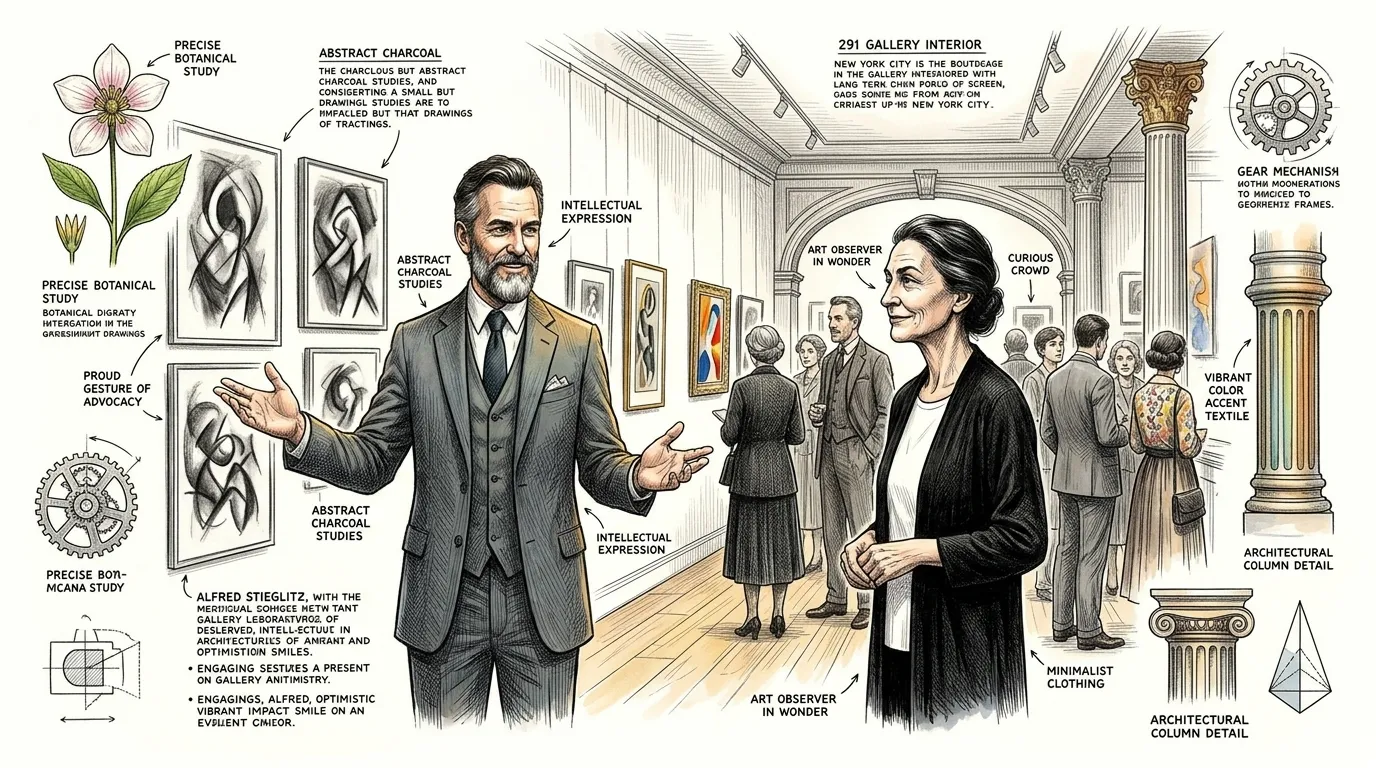
In 1917, at the diminutive yet monumental 291 Gallery in New York City, Georgia O'Keeffe's abstract charcoals redefined American art. Alfred Stieglitz, the visionary photographer and gallerist, presented her work to a startled public, showcasing her raw, unconventional genius without her explicit permission. The exhibition, a bold statement against the prevailing artistic norms, ignited a controversy that instantly cemented O'Keeffe as a force impossible to ignore, marking her definitive emergence onto the national stage.
Page 2
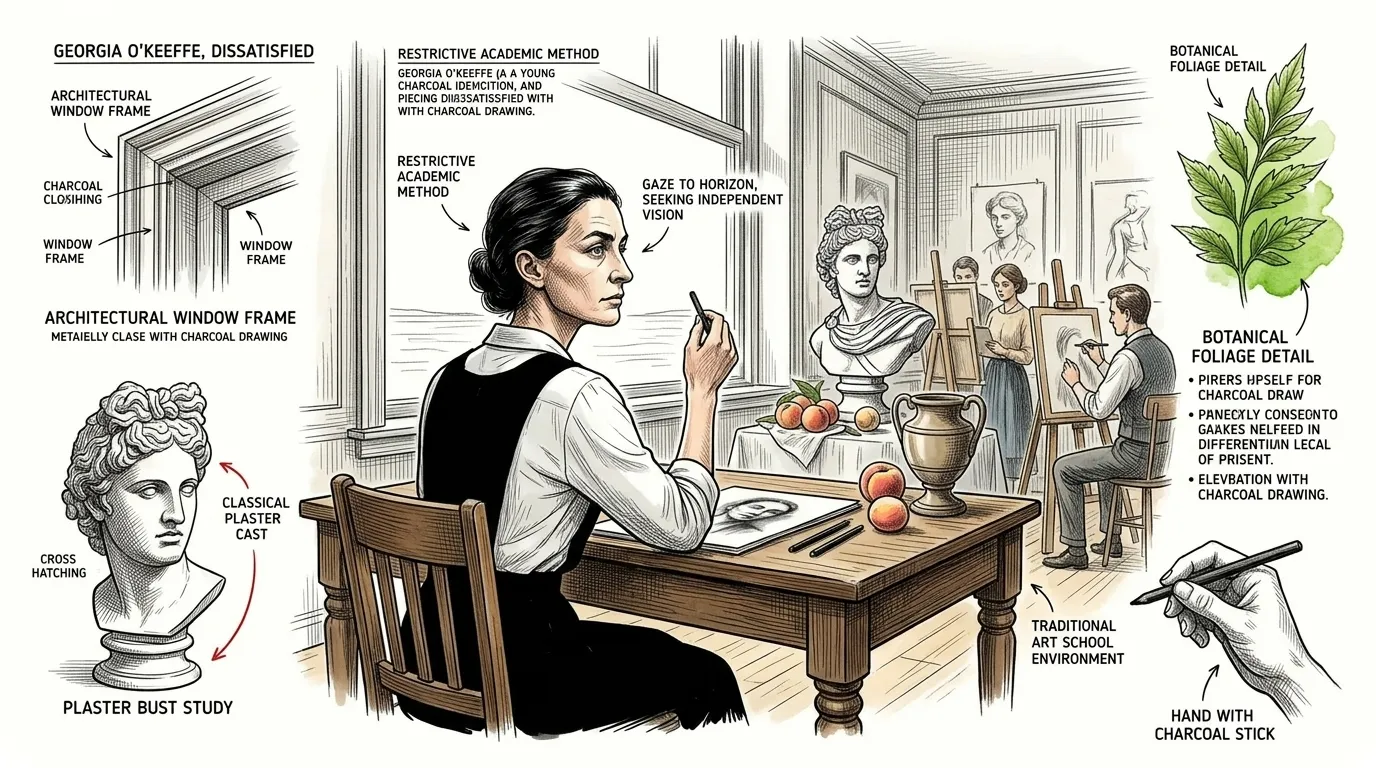
Born in 1887 in Sun Prairie, Wisconsin, Georgia O'Keeffe's early artistic education proved restrictive. From the Art Institute of Chicago to the Art Students League of New York, she absorbed traditional techniques but chafed under academic dogma. By 1908, the conventional path felt stifling; she questioned the very purpose of painting what others saw. This profound dissatisfaction fueled an urgent search for a personal visual language, setting the stage for a radical departure from established forms.
Page 3
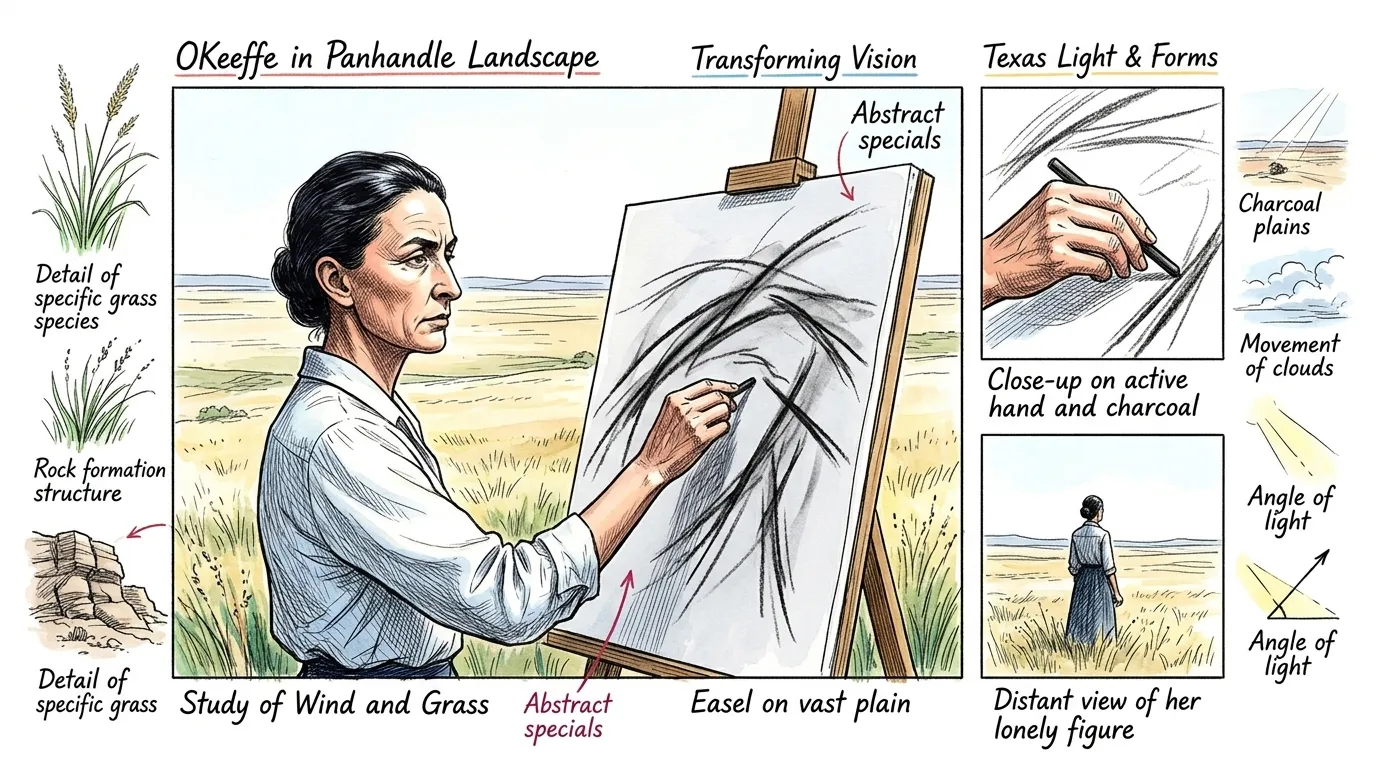
By 1915, teaching art in Canyon, Texas, O'Keeffe found her environment transforming her vision. The vast, uncluttered landscapes and intense light of the Texas Panhandle demanded a new mode of expression. Rejecting literal representation, she began a series of abstract charcoal drawings, 'specials,' translating her deepest feelings onto paper with pure lines and forms. These radical works, sent to a trusted friend in New York, were the first tangible evidence of her unique artistic identity taking hold.
Page 4
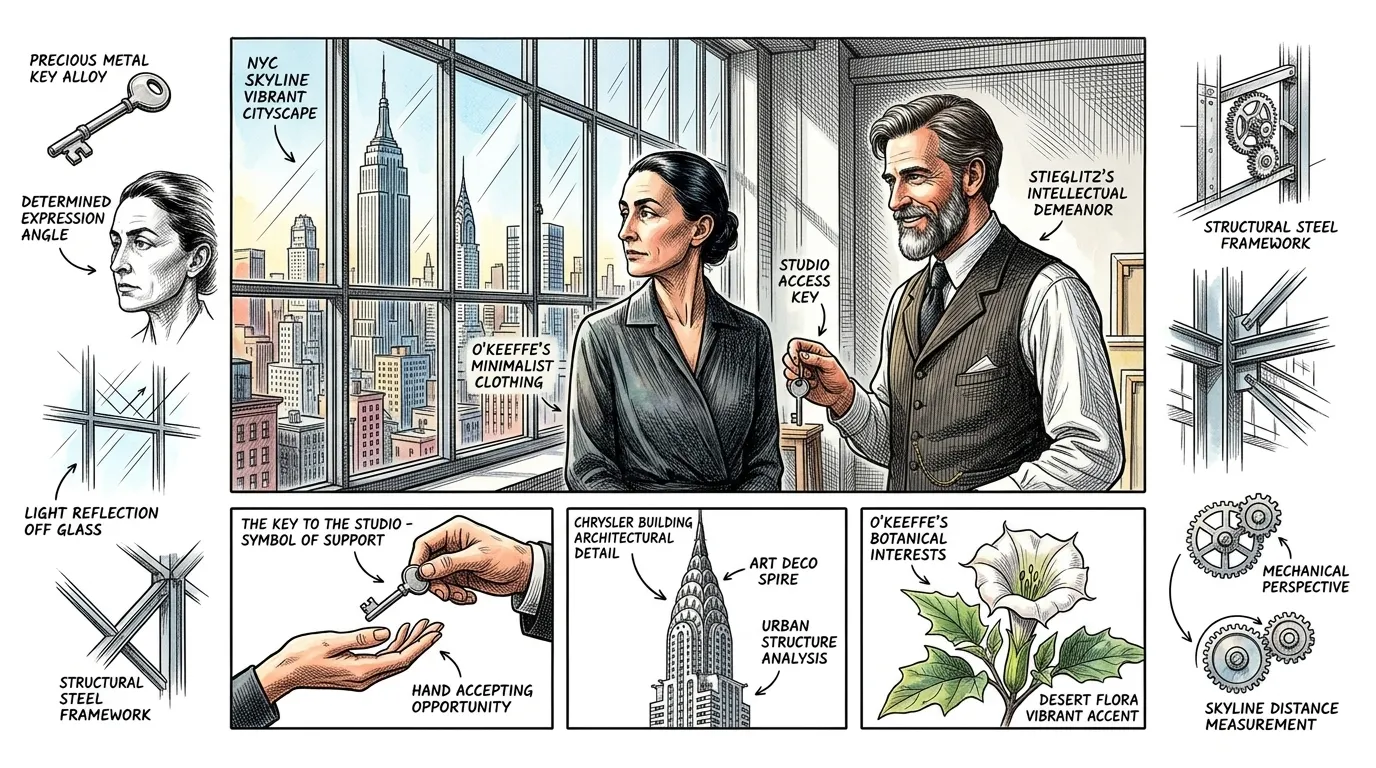
In 1918, drawn by Alfred Stieglitz's fervent belief in her work, Georgia O'Keeffe arrived in New York City. The dynamic metropolis, a stark contrast to the Texas plains, offered a new canvas for her developing vision. Stieglitz, recognizing her immense talent, provided a studio and unwavering support, becoming her gallerist, mentor, and eventually, her husband. This move launched her into the heart of American modernism, a challenging yet fertile ground for her burgeoning career.
Page 5
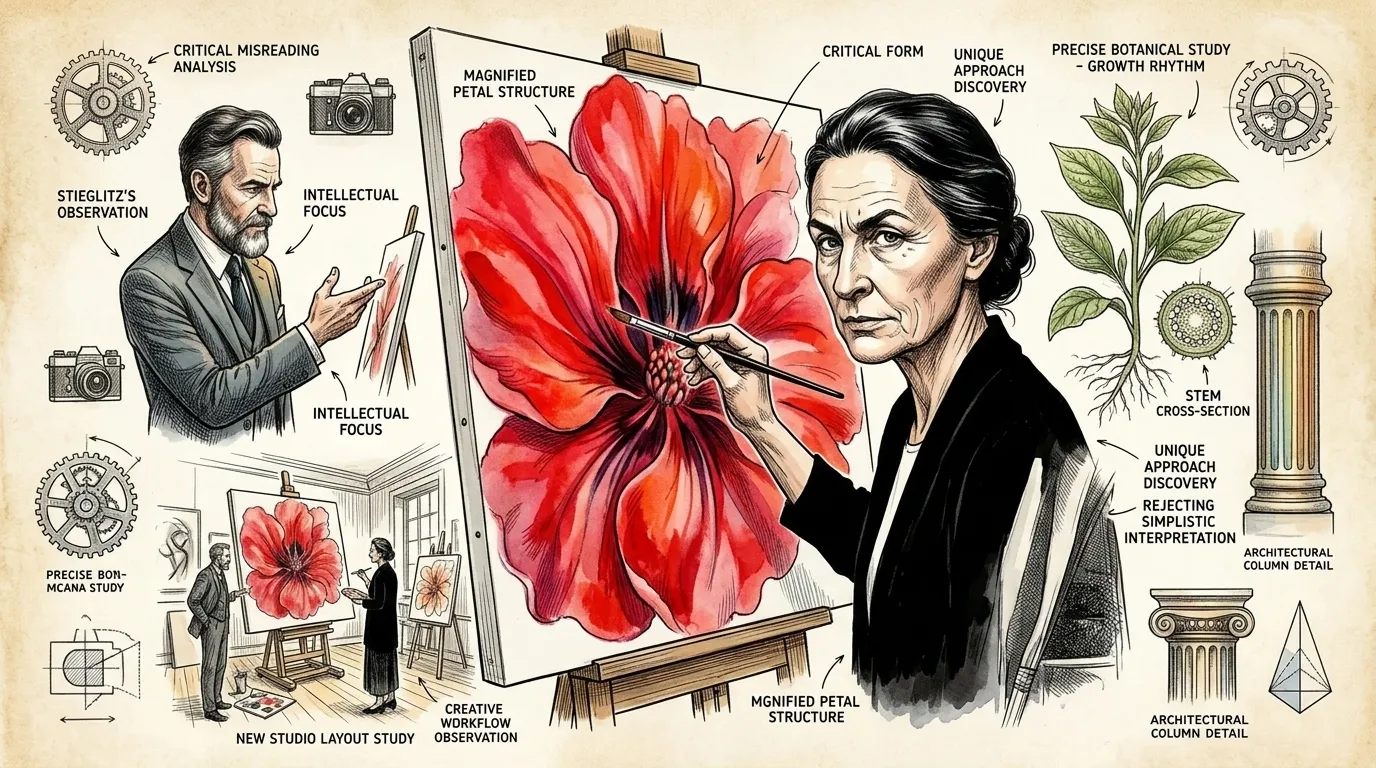
As O'Keeffe painted the natural world, particularly her iconic magnified flowers, critics began to interpret her work through a Freudian psychoanalytic lens, often reducing her profound artistic intentions to simplistic sexual metaphors. This reductive gaze frustrated her, yet she intensified her unique approach, painting the flowers even larger, demanding that viewers truly see their form, color, and internal rhythm, challenging them to move beyond superficial interpretations. Her resolve solidified amidst this critical misreading.
Page 6
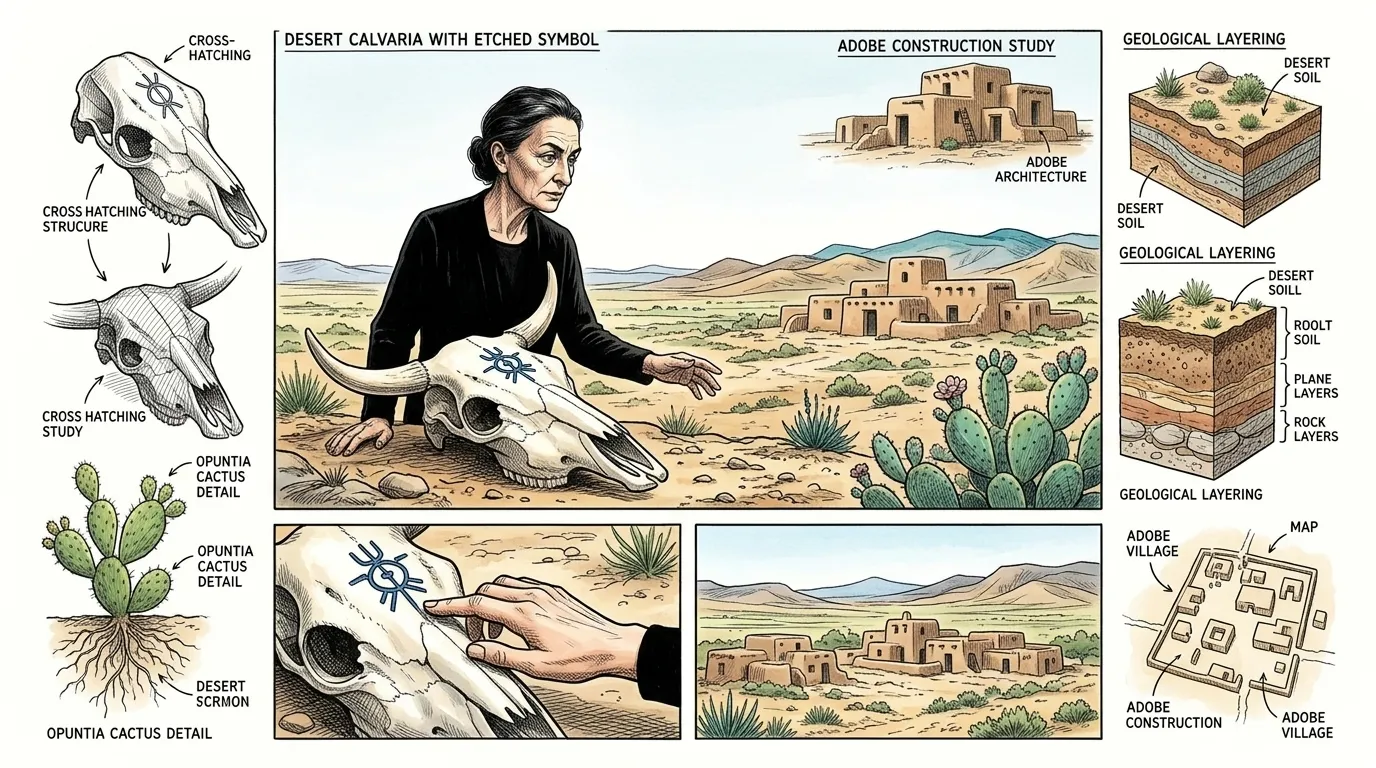
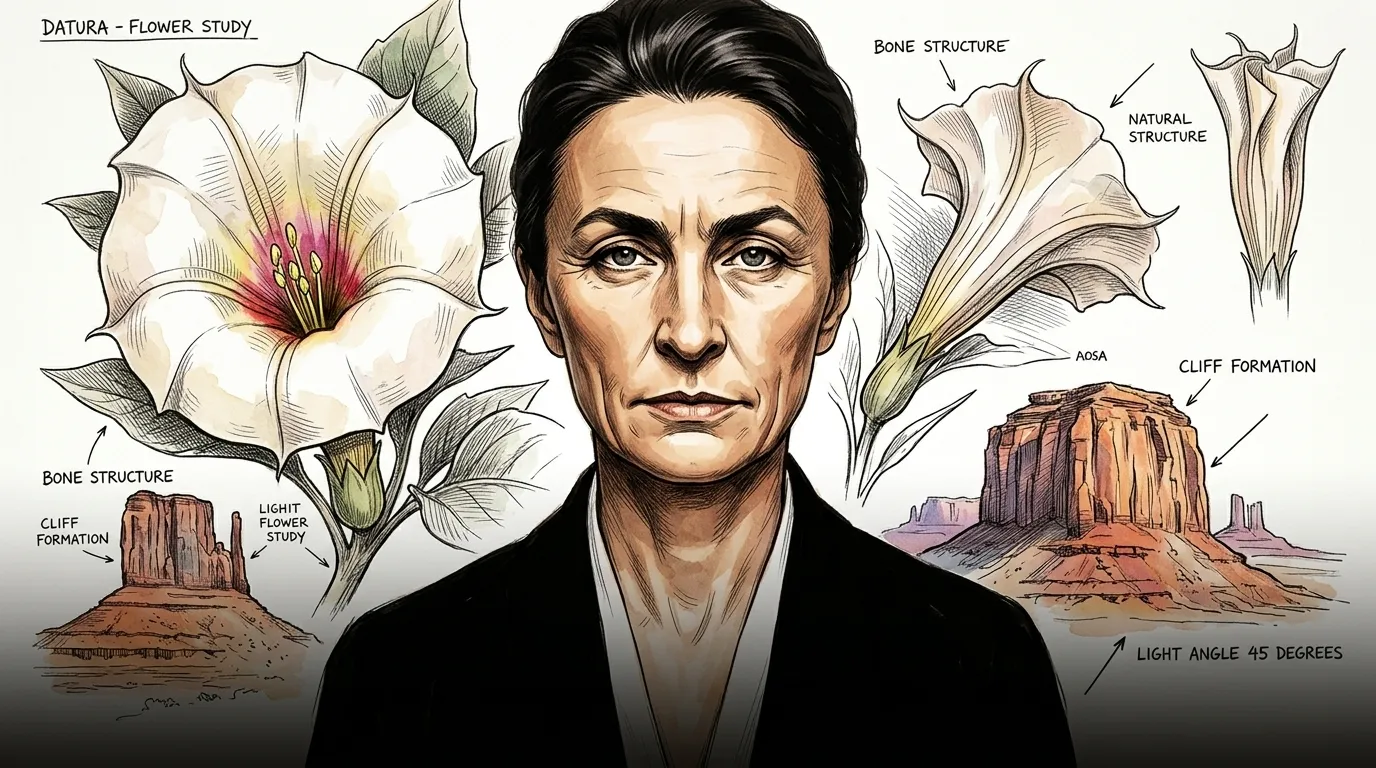
In 1929, Georgia O'Keeffe undertook her first journey to New Mexico, a pivotal trip that irrevocably altered her artistic direction. The stark beauty of the landscape—its vast expanses, sun-bleached bones, and adobe architecture—resonated with a primal force she had long sought. She experienced an immediate, profound connection to this arid land, recognizing it as a spiritual home that offered new, unfiltered inspiration, pulling her away from the urban complexities of New York.
Page 7
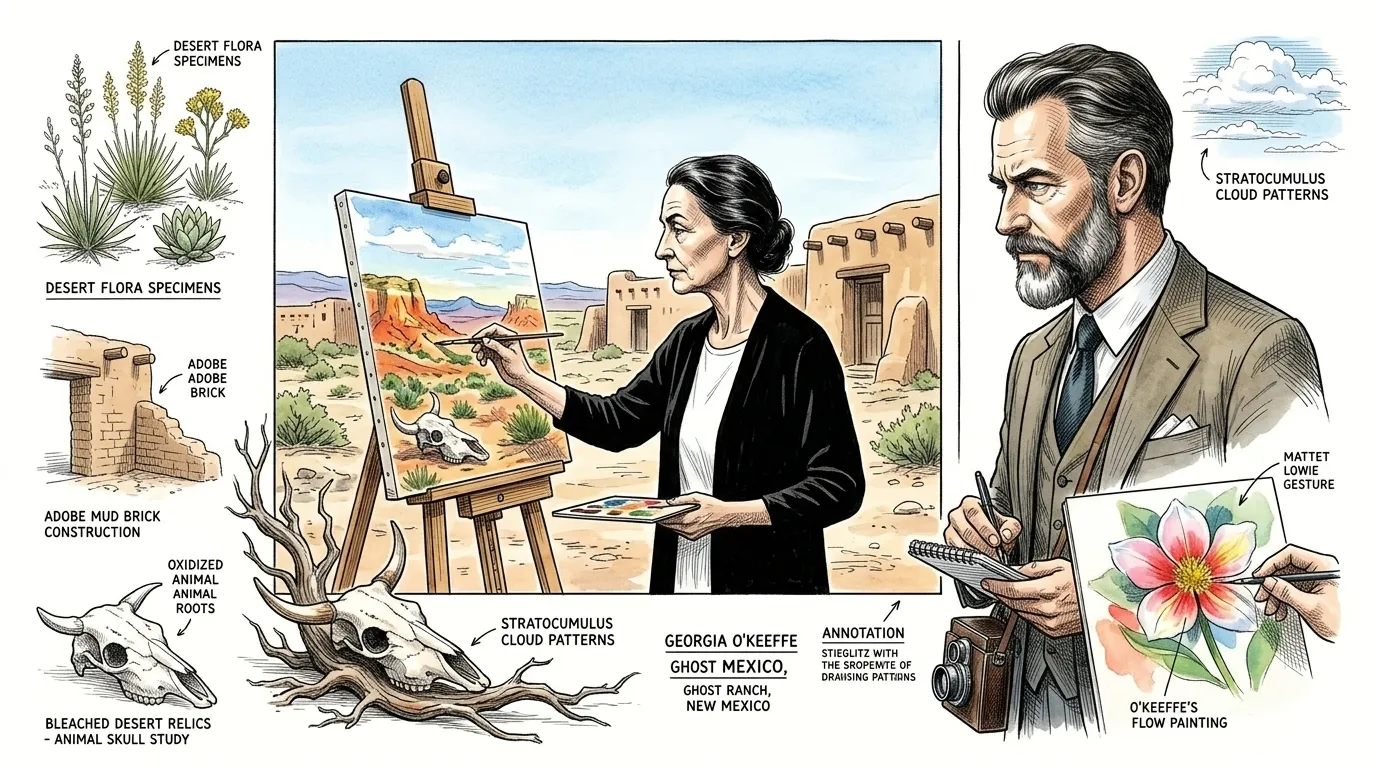
Committing to New Mexico, O'Keeffe found her sanctuary at Ghost Ranch, returning year after year, eventually making it her permanent home. Here, isolated from the bustling New York art scene, her unique vision fully matured. She meticulously painted the region's distinctive architecture, the bleached desert bones, and the endless sky, translating the silence and grandeur of the Southwest onto canvas. This period of intense, solitary creation cemented her status as an unparalleled interpreter of the American landscape.
Page 8
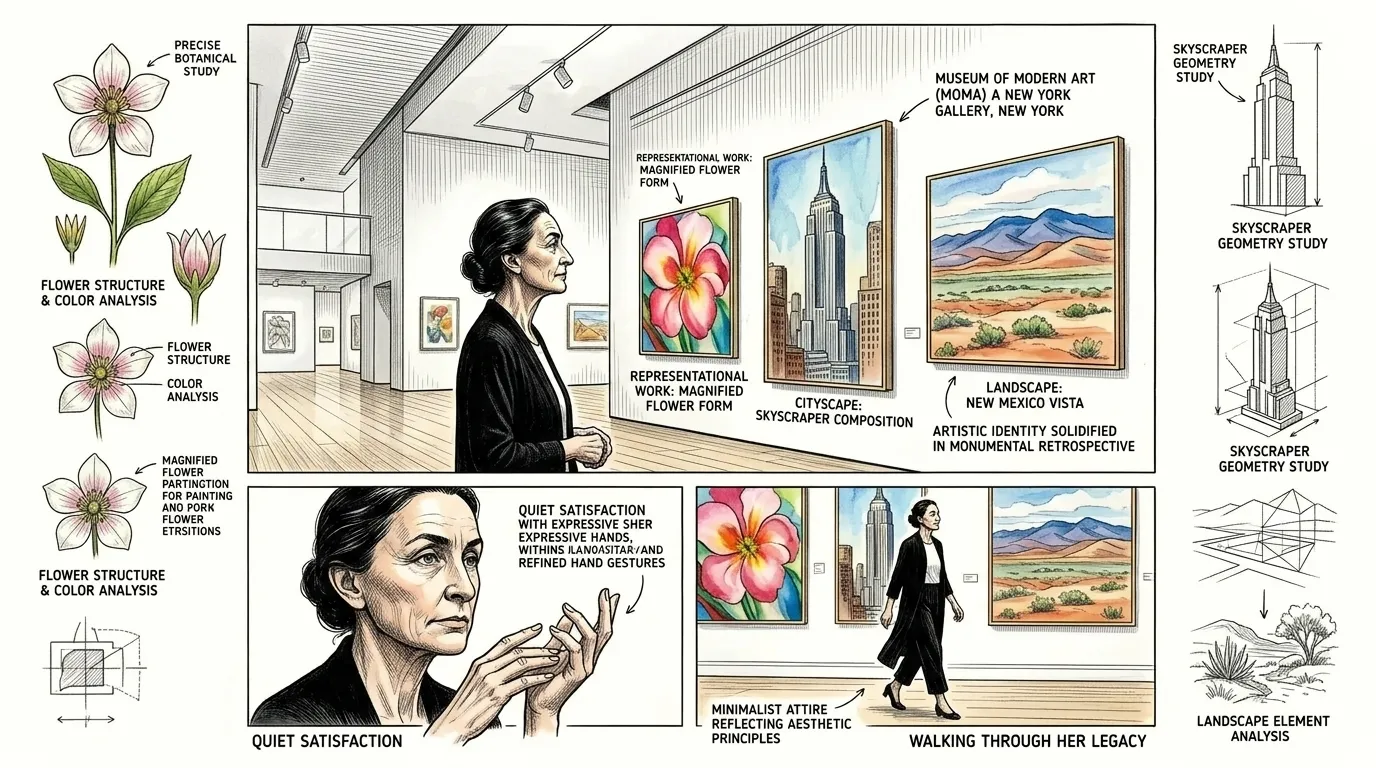
After Alfred Stieglitz's death in 1946, Georgia O'Keeffe became fully untethered, solidifying her independent artistic identity. That same year, the Museum of Modern Art in New York mounted her first major retrospective, a monumental exhibition that celebrated her pioneering contribution to American modernism. Her distinctive vision of magnified flowers, New York skyscrapers, and New Mexico landscapes was presented as a cohesive, powerful body of work, establishing her as an undeniable American icon in her own right.
Page 9
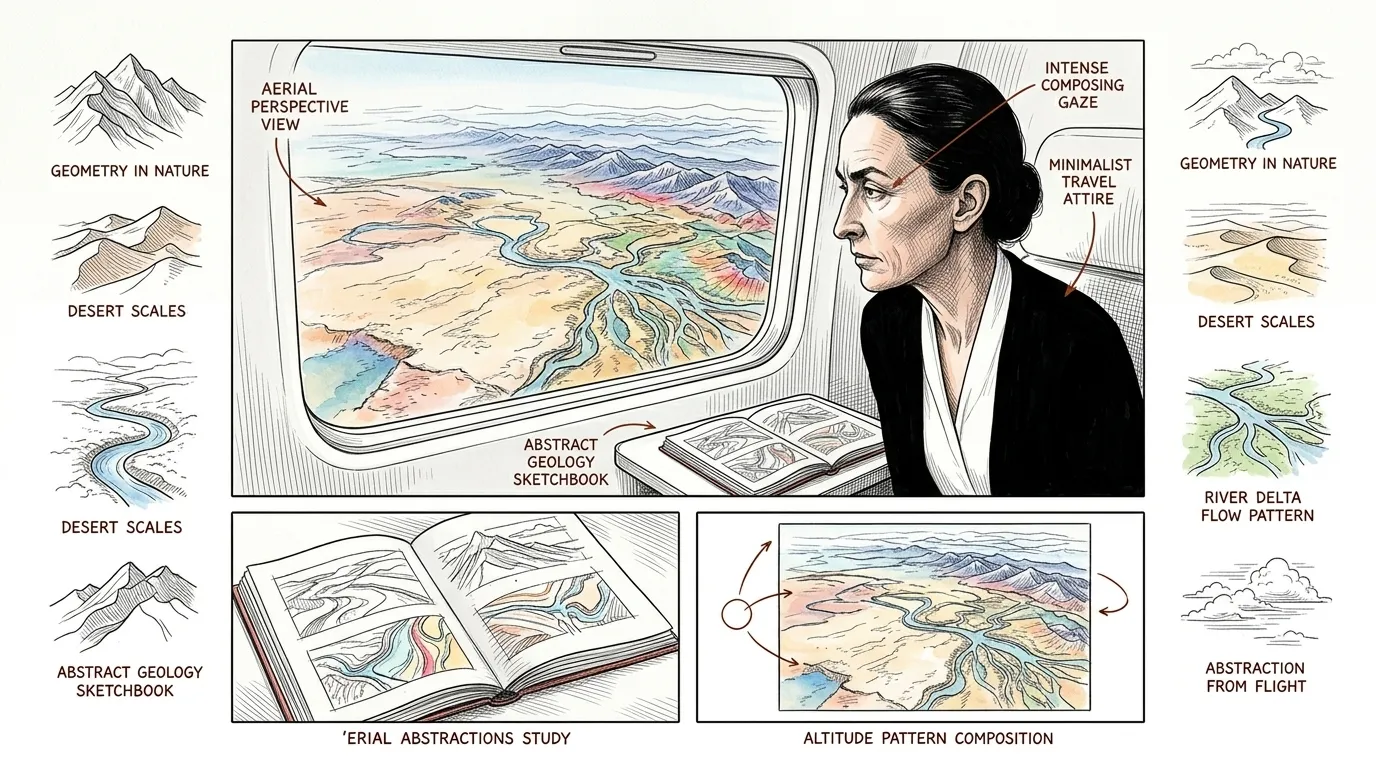
From the late 1950s into the 1960s, Georgia O'Keeffe embarked on extensive global travels, journeys that once again expanded her artistic horizons. Flying over vast landscapes—Peru, Japan, the Middle East—she was captivated by the abstract patterns and sweeping forms of the Earth seen from above. This aerial perspective inspired a new series of paintings, capturing the immense scale and intricate beauty of the planet, demonstrating her lifelong pursuit of unique vantage points and pushing her work to an international scale.
Page 10
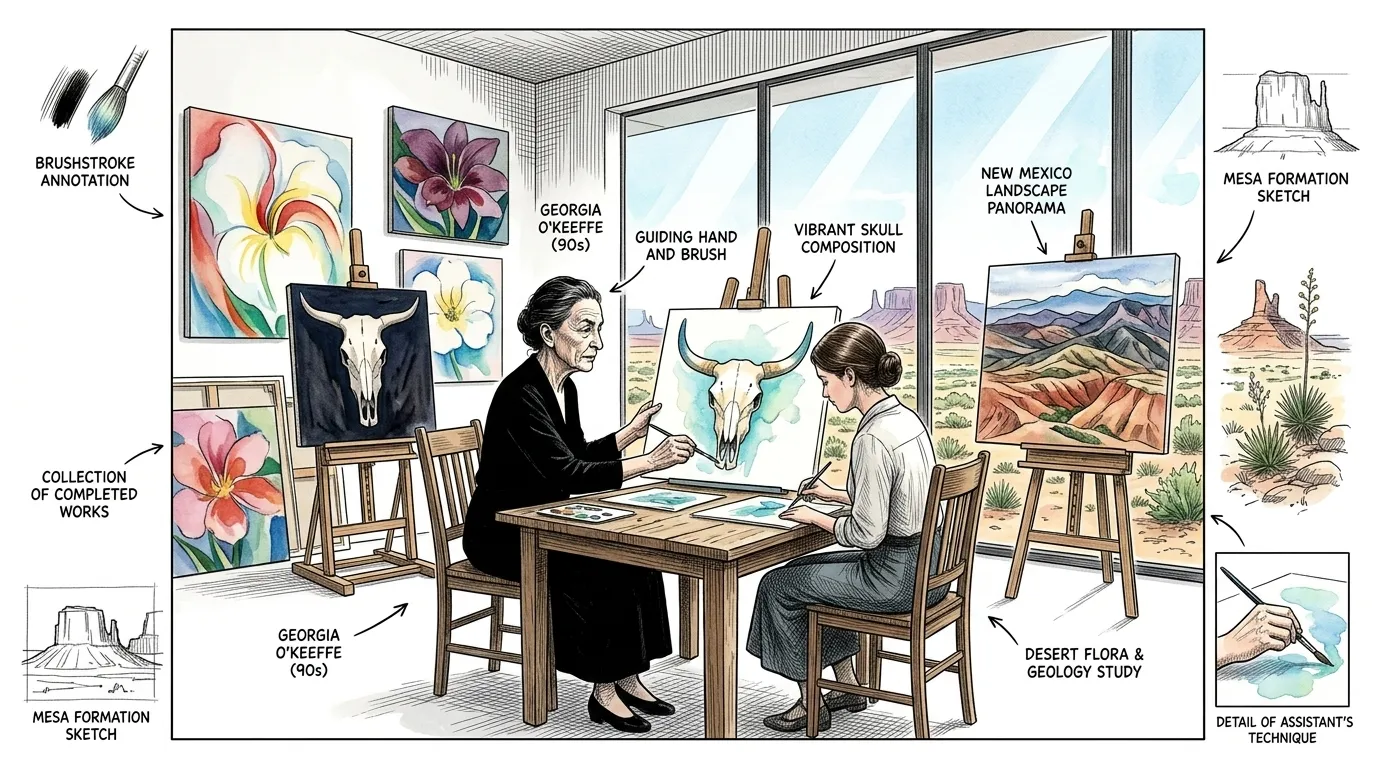
Georgia O'Keeffe continued to paint well into her nineties, even as her eyesight failed, guiding assistants to realize her vision. She died in 1986, having left an indelible mark on American modernism. Her unwavering independence, her singular vision of the American Southwest, and her ability to transcend conventional interpretations established her as a preeminent artist. Her works, from magnified flowers to stark landscapes and sun-bleached bones, continue to captivate and challenge, ensuring her timeless image as an enduring icon of artistic freedom.
About this story
- Location: Global
- Audience: general readers
Read Wonder People on your phone
Wonder People is available on Android. Get Wonder People on Google Play.