Hedy Lamarr
Hedy Lamarr — an illustrated biography story, set in Global. 10 illustrated pages, free to read on Wonder People.

Page 1
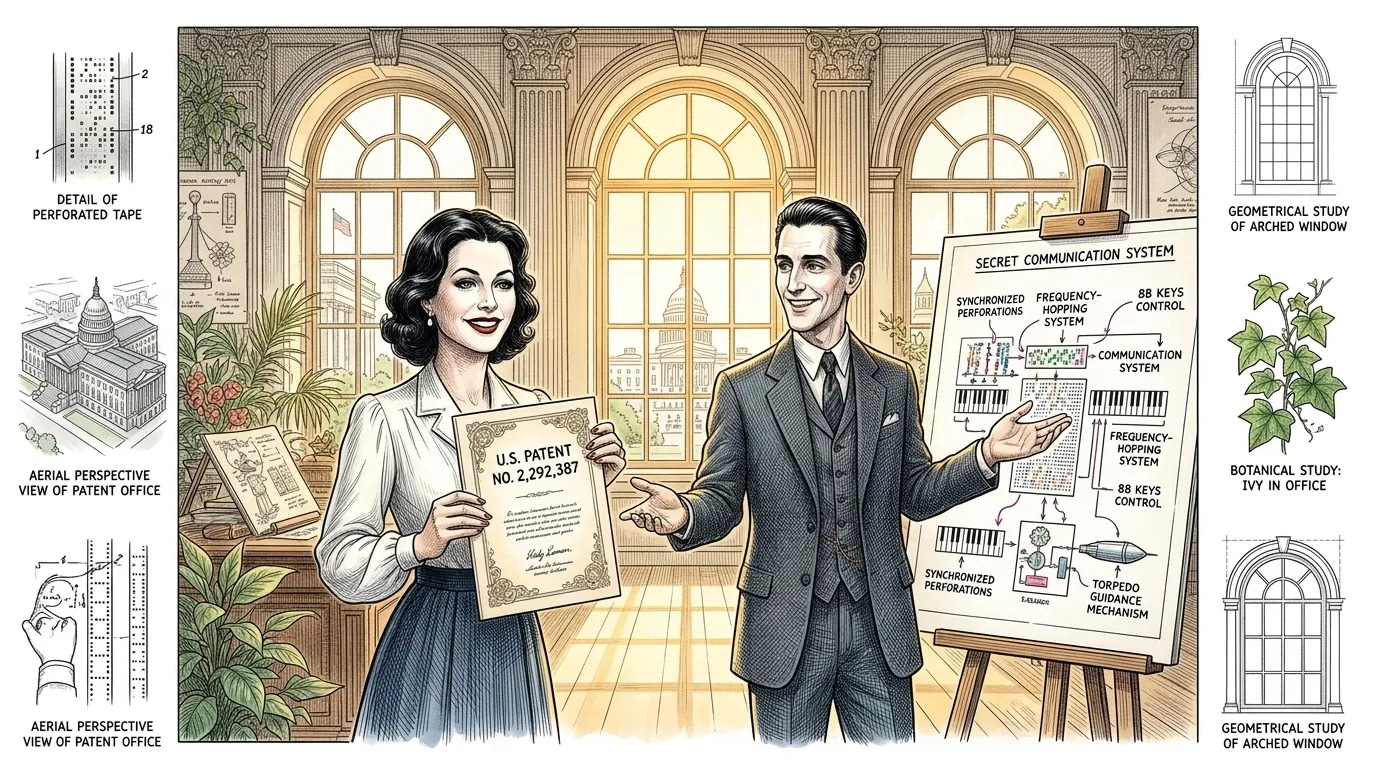
In Washington D.C., at the U.S. Patent Office on August 11, 1942, Hedy Lamarr, the famed film star, stood with composer George Antheil. Together, they presented U.S. Patent No. 2,292,387 for their 'Secret Communication System.' This invention, developed in the crucible of World War II, laid the foundation for technologies that would define the modern wireless age, a revolutionary concept conceived by an unlikely mind at a critical juncture in history. The world had no idea the silent force she had unleashed.
Page 2
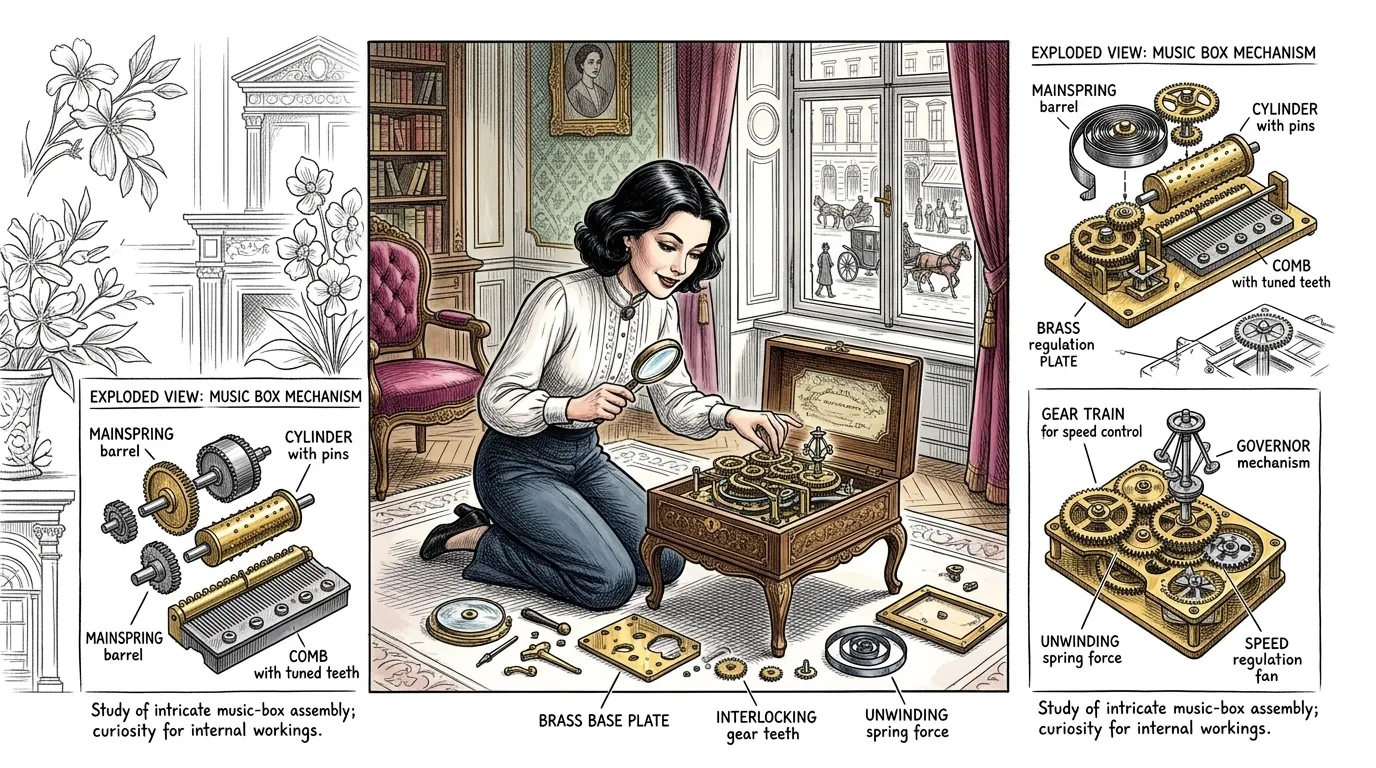
Before Hollywood, before invention, Hedy Lamarr was Hedwig Kiesler in Vienna, Austria. From an early age, her sharp intellect probed beyond societal expectations. While many saw only budding beauty, she possessed a profound fascination with how things worked, often observing the inner mechanisms of complex devices rather than merely their surface. Her drive to understand systems, whether cinematic or mechanical, was evident even in her youth, setting her apart from her peers and foreshadowing a path far grander than mere celebrity.
Page 3
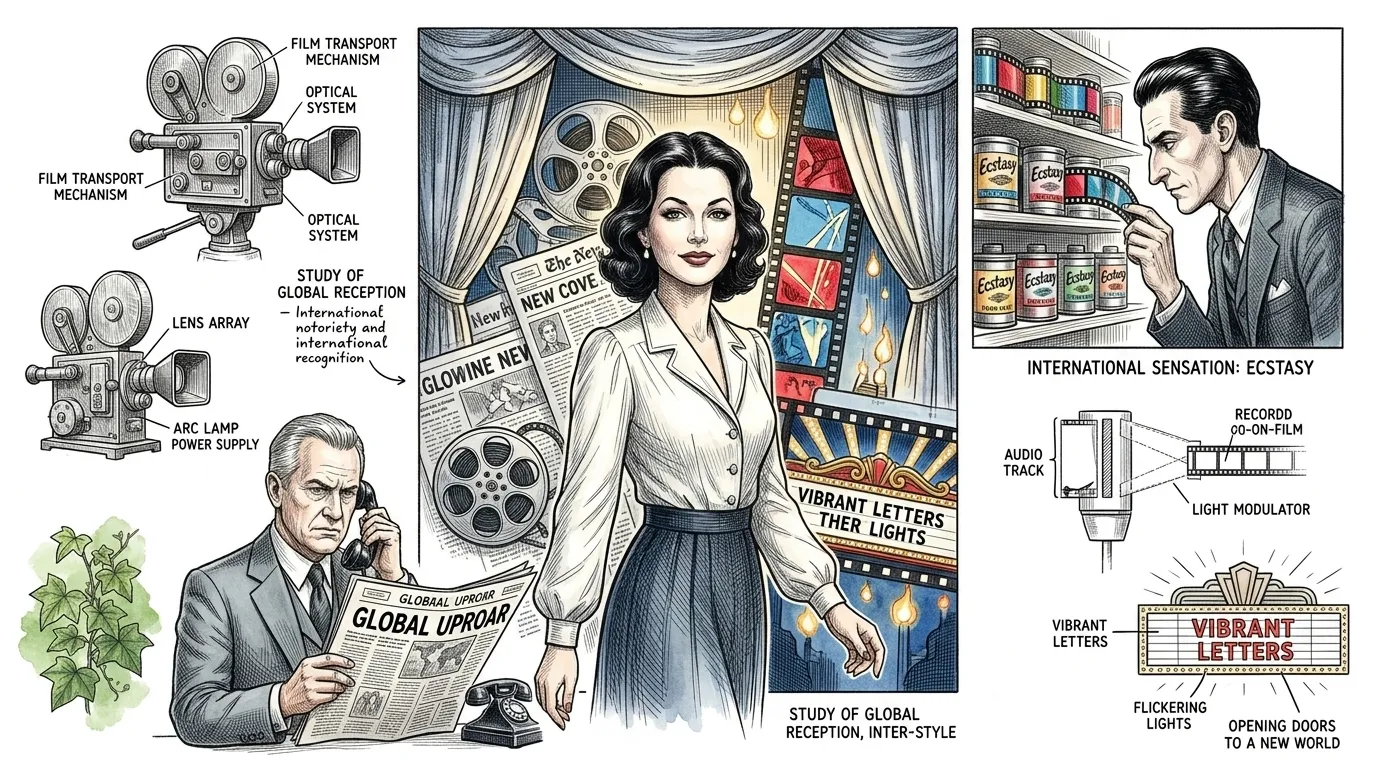
In 1933, the film Ecstasy propelled Hedwig Kiesler onto the global stage, though not in the manner she might have anticipated. Its controversial scenes sparked outrage and censorship debates across Europe and America, yet they also made her an undeniable sensation. This explosive notoriety, though often misconstrued, solidified her international recognition and opened the doors to a world far beyond Vienna, creating a pathway to the very industry that would later fund her inventive ambitions.
Page 4

Escaping an unhappy marriage to wealthy Austrian industrialist Friedrich Mandl, Hedwig Kiesler made a decisive move. Aboard an ocean liner bound for America, she met Louis B. Mayer, the head of MGM. In a strategic maneuver, she negotiated a lucrative contract, reinvented her image, and embraced a new identity: Hedy Lamarr. This transformation from European sensation to Hollywood star was not merely a career shift; it was an act of liberation, providing her with a new platform and the financial independence crucial for her clandestine scientific pursuits.
Page 5
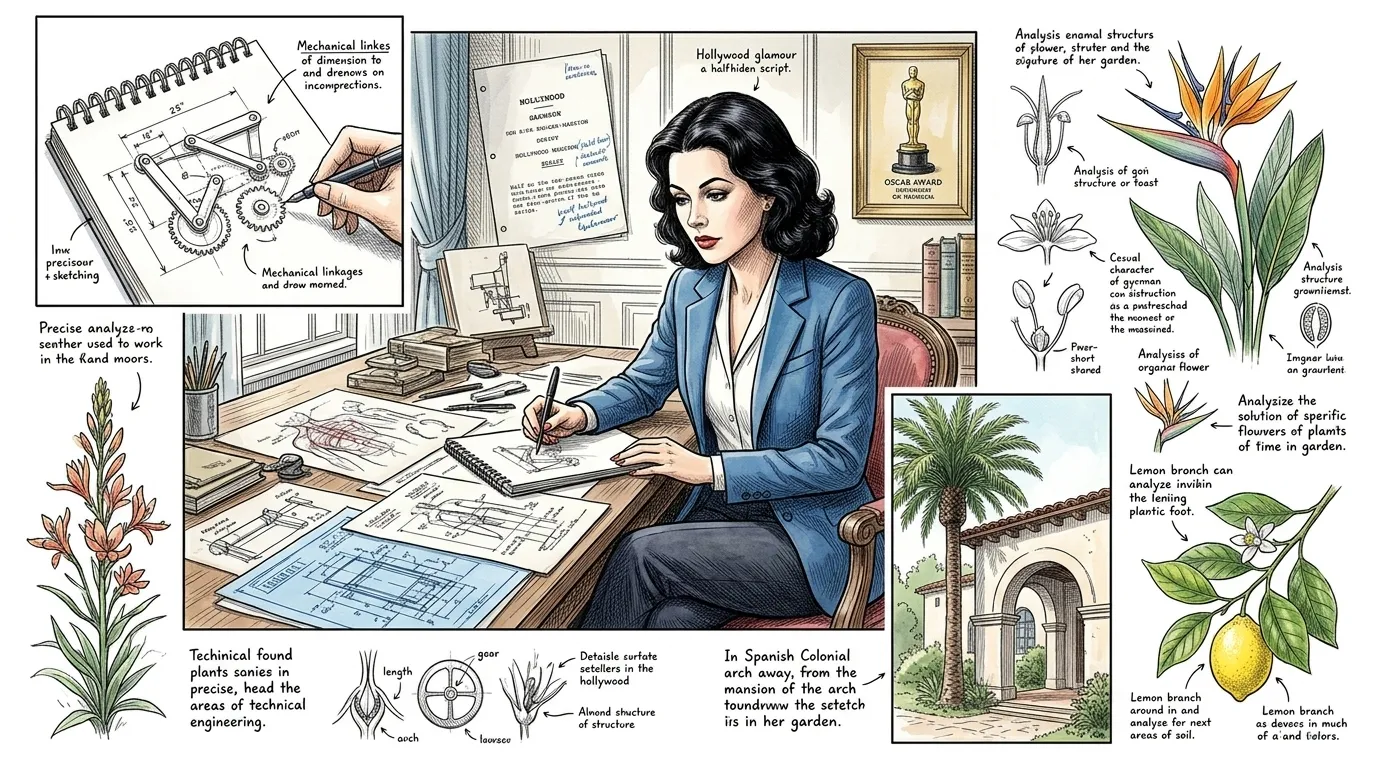
Hollywood embraced Hedy Lamarr as a dazzling siren, but behind the studio gates, her mind was rarely at rest. Between takes and publicity events, she would retreat to her home, transforming into an amateur inventor. She meticulously sketched designs, consulted with engineers, and absorbed technical manuals, driven by an unyielding curiosity. Her mansion, filled with scripts and accolades, also harbored the quiet hum of her scientific ambition, a hidden facet of her persona few in Hollywood ever truly recognized.
Page 6
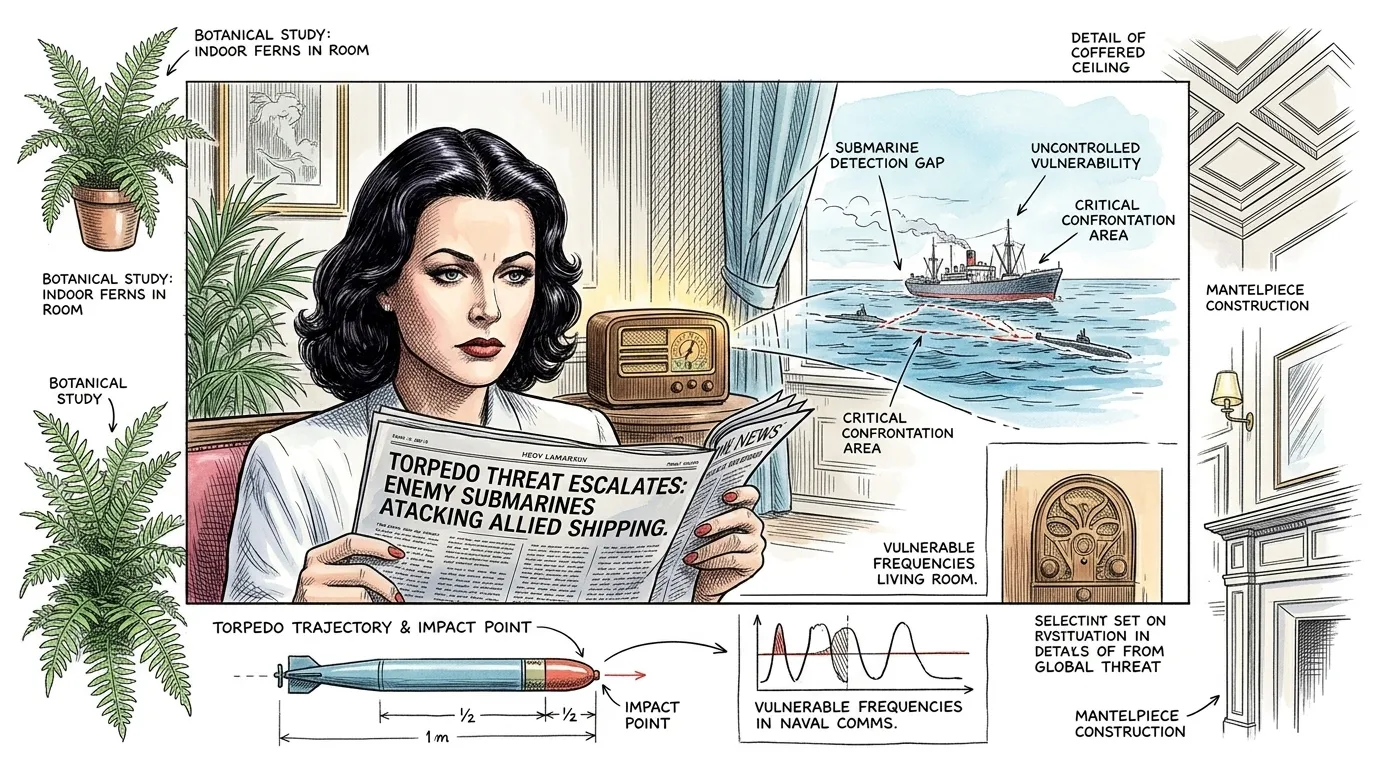
As World War II escalated, news of torpedo attacks on Allied ships deeply disturbed Hedy Lamarr. She understood the strategic vulnerability of conventional radio-controlled weapons, where constant frequency signals were easily jammed. Her fame felt insufficient against such global threats. A profound sense of urgency settled upon her, transforming her inventive spirit from a hobby into a critical mission, compelling her to leverage her intellect for the war effort, even if it meant stepping far outside the Hollywood spotlight.
Page 7
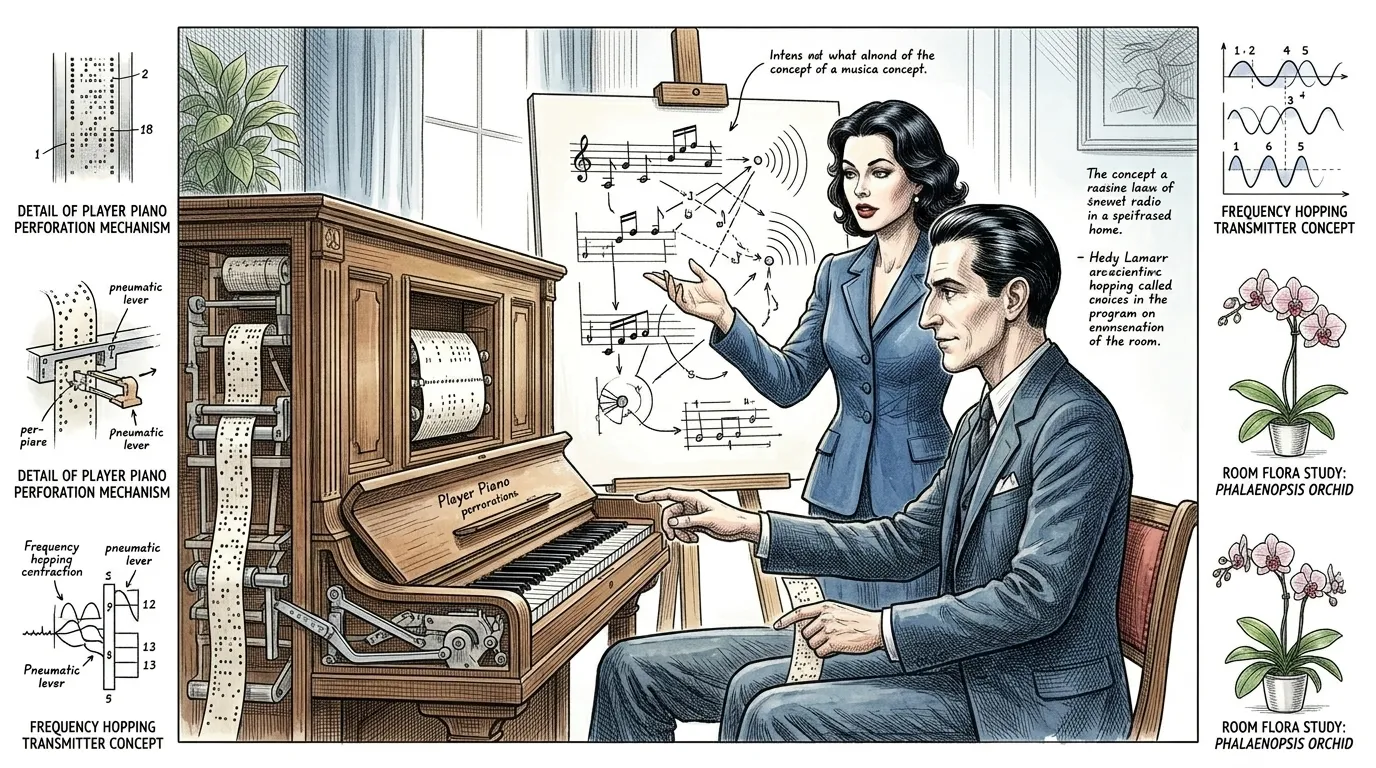
Driven by her wartime concerns, Hedy Lamarr recognized the need for an unjammable communication system. She sought out composer George Antheil, a neighbor known for his experimental mechanical music, particularly his work with synchronized player pianos. In a pivotal meeting at her home, she articulated her concept: using frequency hopping, akin to a player piano's random key changes, to make radio signals undetectable. This unlikely collaboration, marrying a film star's technical intuition with a composer's understanding of synchronization, ignited the spark for their groundbreaking patent.
Page 8
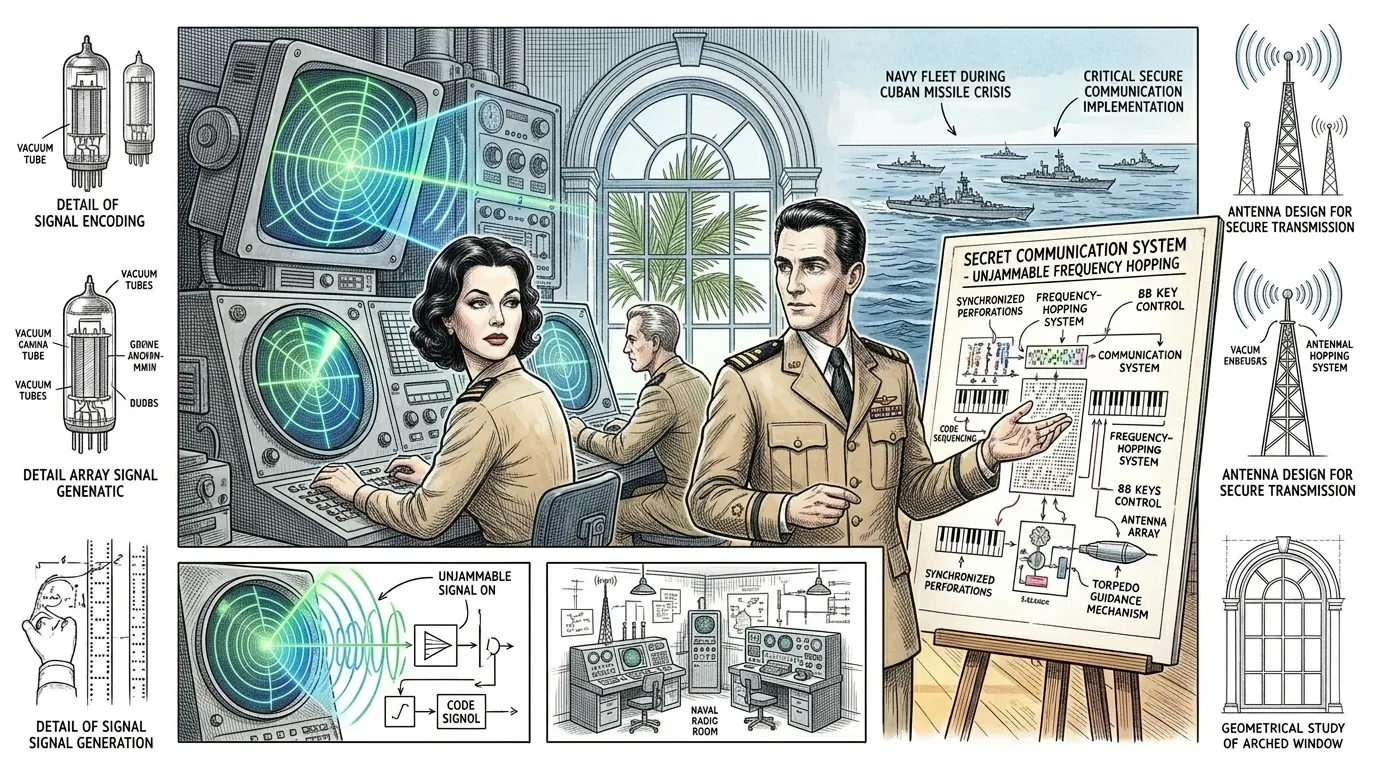
Though patented in 1942, Hedy Lamarr and George Antheil's frequency hopping invention was initially dismissed by the U.S. Navy, deemed too complex for wartime deployment. Their visionary concept languished for years. However, by the 1950s, the escalating Cold War and the urgent need for secure communication revived interest. The patent, once a mere document, was finally implemented in secure military applications, critically securing naval communications during the Cuban Missile Crisis, proving its indispensable value decades after its creation.
Page 9

The foundational principles of Hedy Lamarr and George Antheil's 'Secret Communication System' ultimately transcended its military origins. Frequency hopping spread spectrum technology became the bedrock for a revolution in wireless communication. From the ubiquitous Wi-Fi networks connecting homes and offices to the seamless short-range connections of Bluetooth devices, and even the precise global positioning systems, her early innovation silently powers much of the modern digital world. Her vision, initially for torpedoes, became the architecture of ubiquitous connectivity.
Page 10
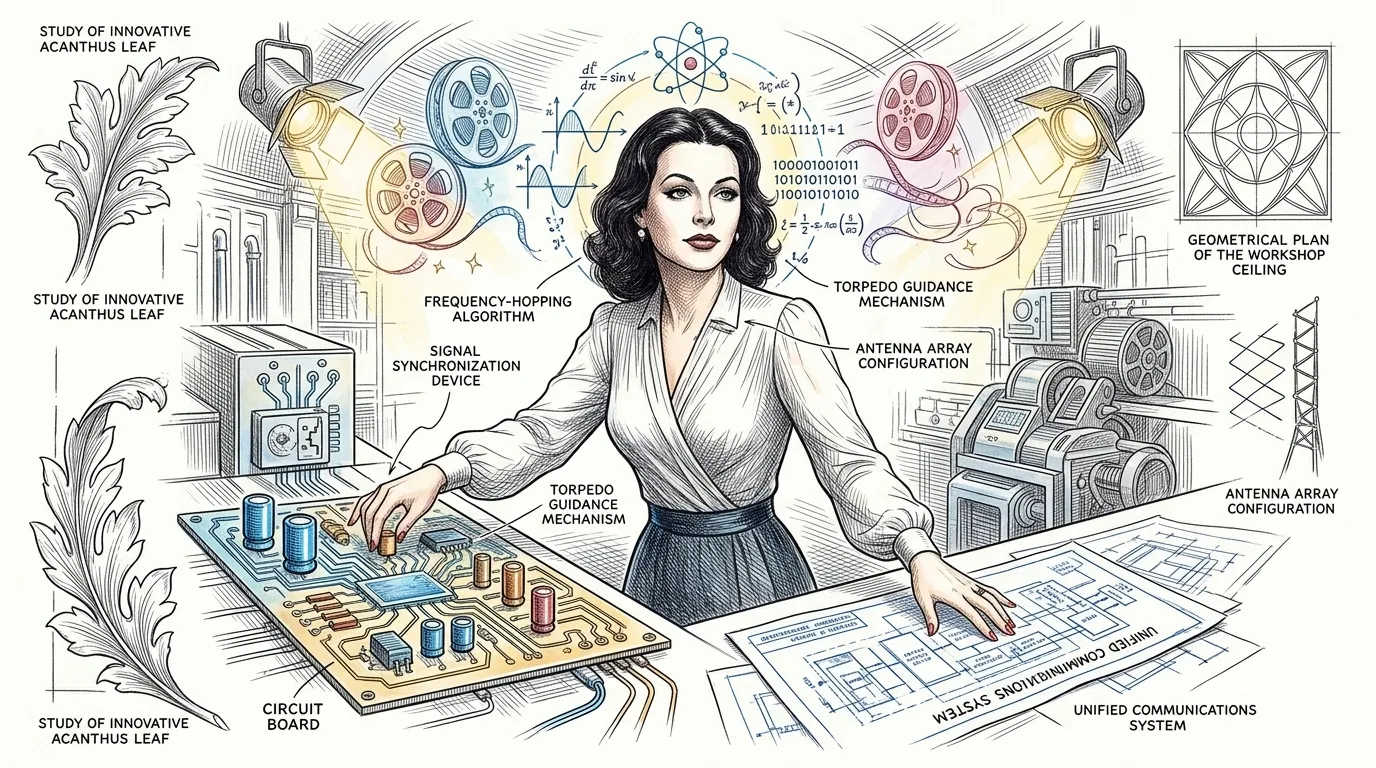
Hedy Lamarr, once primarily celebrated for her beauty and Hollywood glamour, is now recognized as a pioneering inventor whose intellect shaped the future of technology. Her story challenges perceptions, revealing a woman who quietly pursued scientific breakthroughs while living a life of public spectacle. Her enduring legacy is not just the technology she helped create, but the inspiration she provides: a testament to the fact that innovation can emerge from the most unexpected places, proving that a brilliant mind can wear many guises.
About this story
- Location: Global
- Audience: general readers
Questions and answers
Read Wonder People on your phone
Wonder People is available on Android. Get Wonder People on Google Play.