Hero of Alexandria
Hero of Alexandria — an illustrated biography story, set in Global. 10 illustrated pages, free to read on Wonder People.
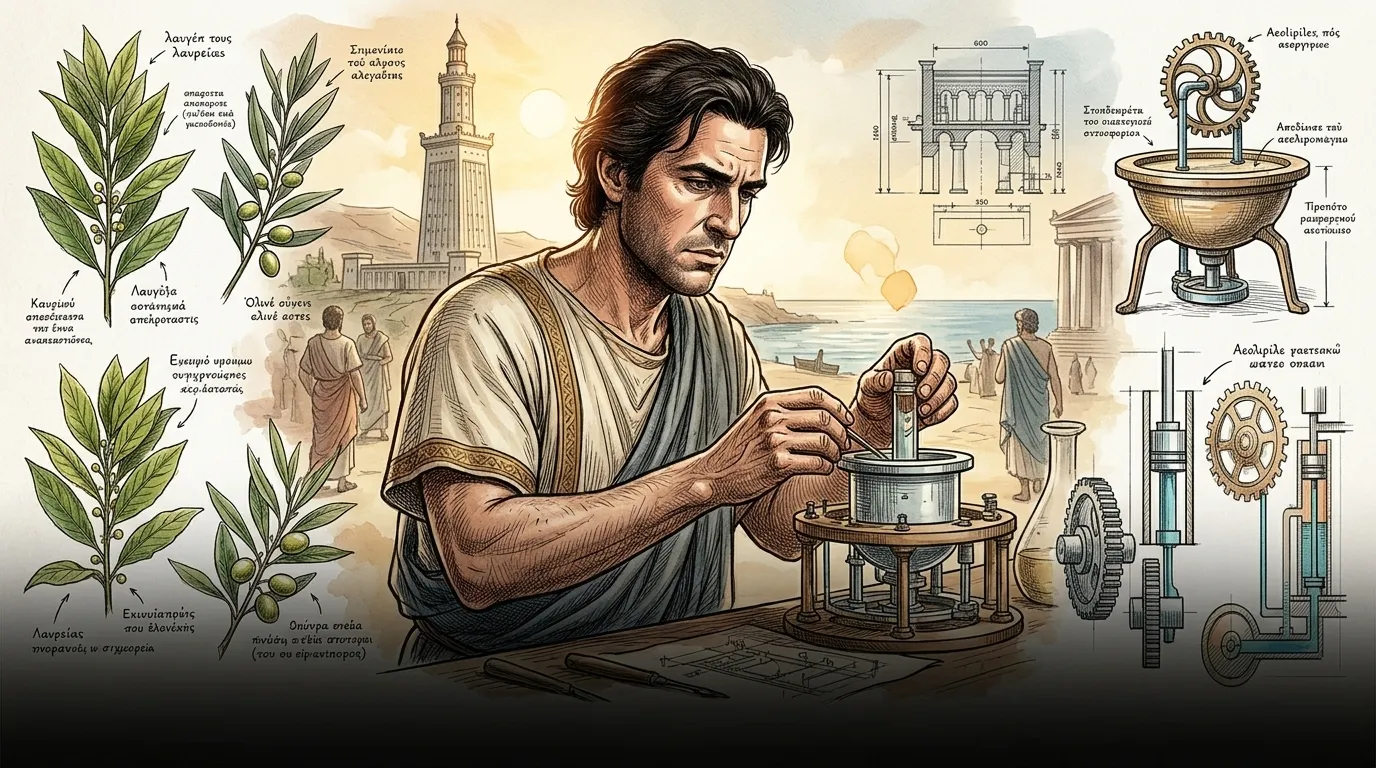
Page 1
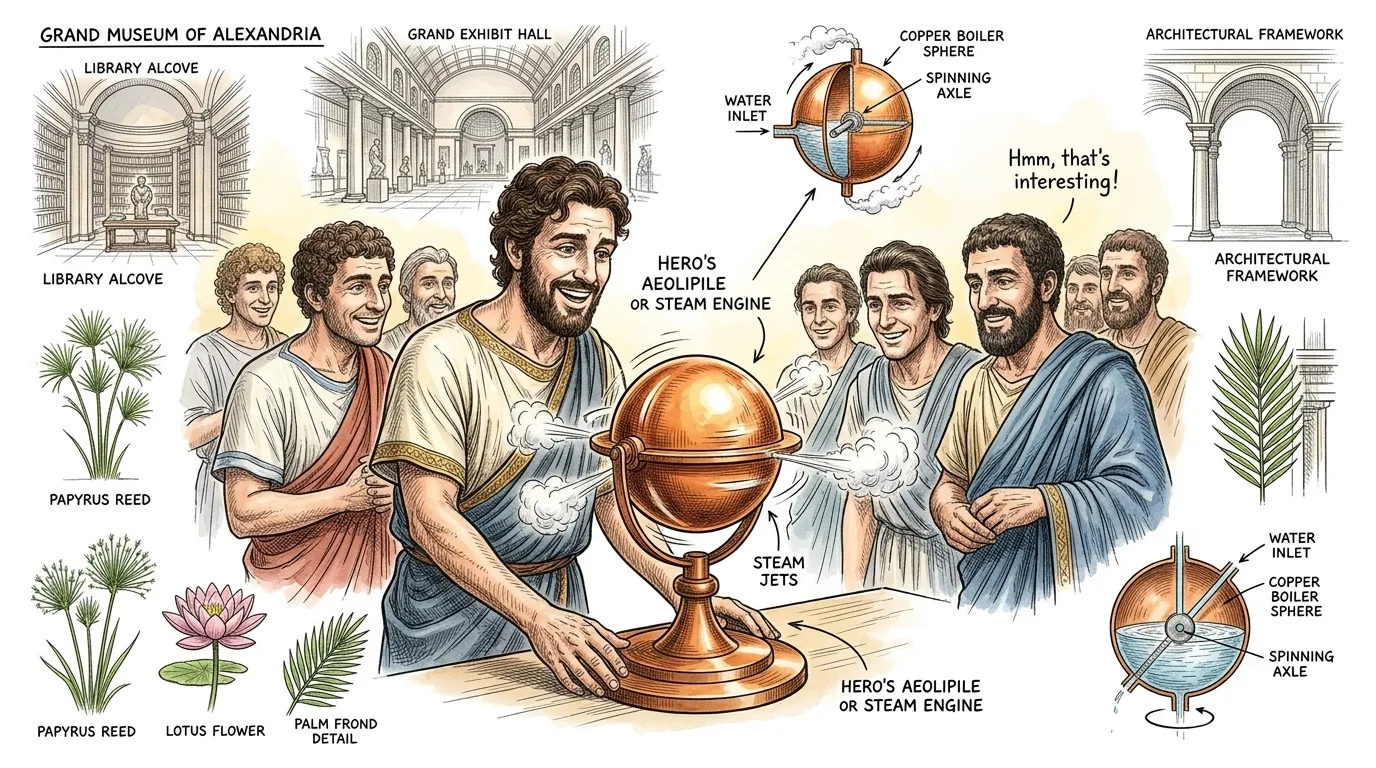
In the bustling intellectual nexus of Alexandria, around 60 AD, Hero of Alexandria unveiled a device that defied conventional understanding of power. Before an assembly of Egypt's most esteemed philosophers and engineers within the Grand Museum, his Aeolipile, a spherical vessel rotated by steam jets, spun with an impossible, relentless force. This was not a toy; it was a potent demonstration of thermodynamic principles, a vision of harnessed elemental power. The world watched, captivated by an invention that would echo through millennia, long before its true potential could be realized.
Biographical Fact: The Aeolipile, often called Hero's engine, was a reaction steam turbine first described by Hero of Alexandria in the 1st century AD. It rotated by the force of steam escaping from nozzles, showcasing an early understanding of steam power and jet propulsion, centuries ahead of its time.
Page 2
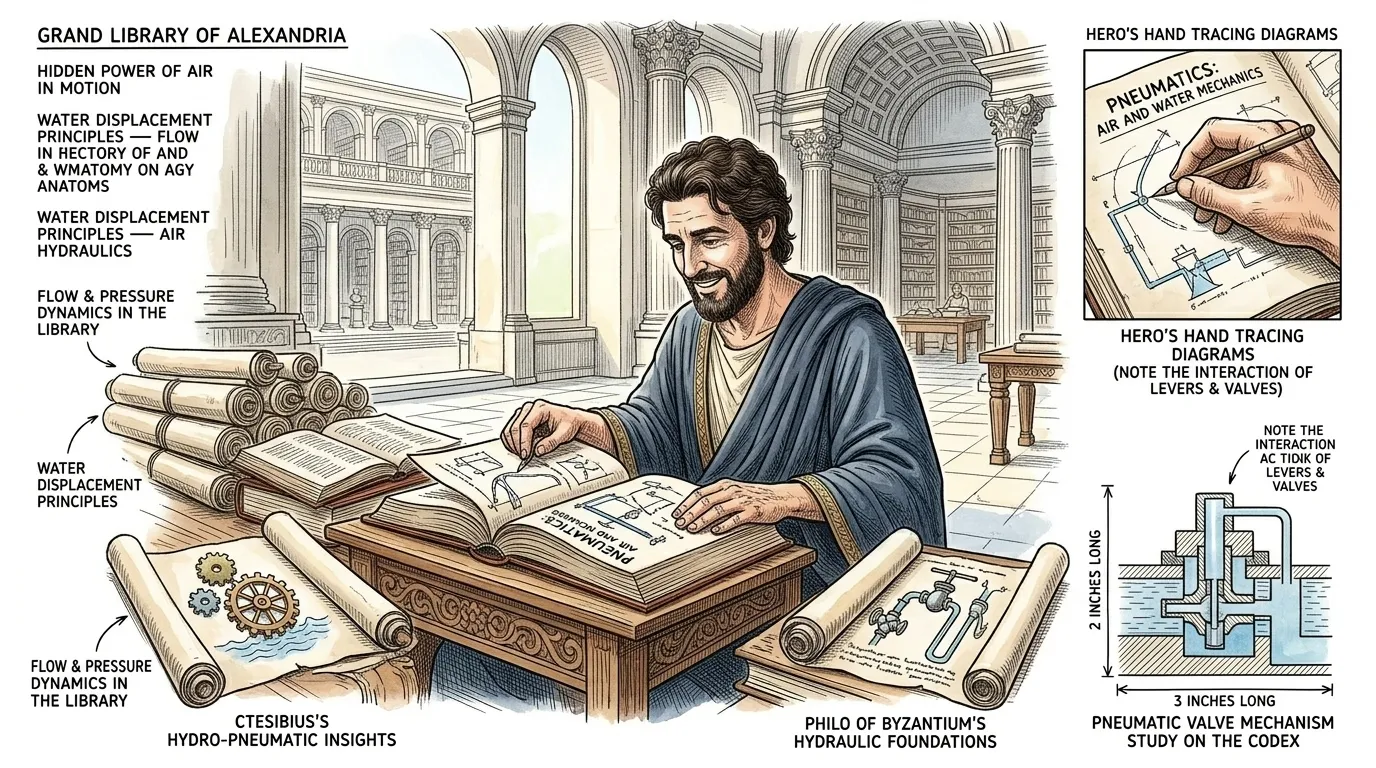
Long before his public demonstrations, Hero spent his formative years immersed in the unparalleled intellectual wealth of the Library and Museum of Alexandria. He delved deep into the texts of his predecessors, meticulously studying the works of Ctesibius and Philo of Byzantium. This foundational engagement focused on the hidden power of air and water, meticulously dissecting the intricate principles of pneumatics and hydraulics. He understood that these ancient scrolls contained not just theories, but the keys to a mechanical future.
Biographical Fact: Hero built extensively on the theoretical and practical work of earlier Alexandrian inventors like Ctesibius (3rd century BC) and Philo of Byzantium (3rd century BC), particularly their advancements in pneumatics and hydraulics. These foundational texts formed the bedrock of his own revolutionary designs.
Page 3
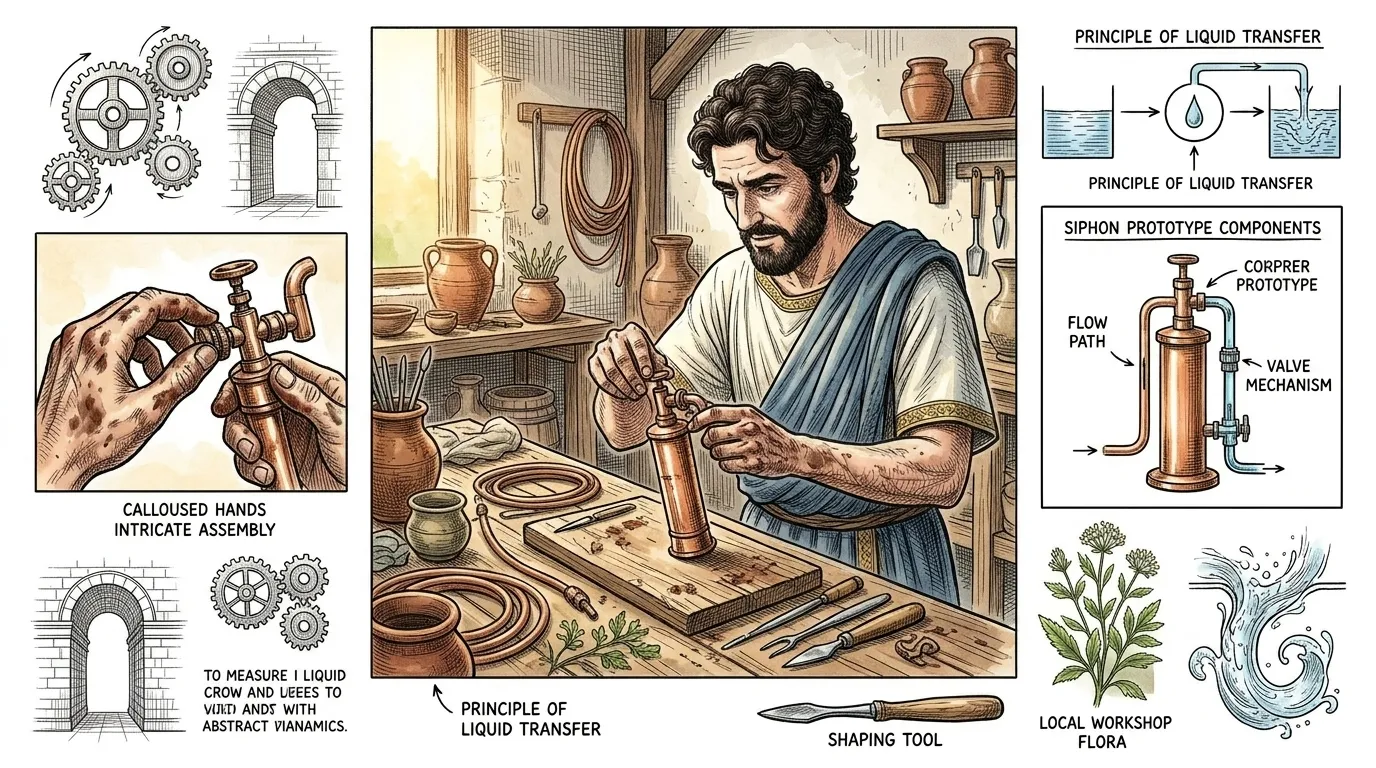
From theoretical scrolls, Hero swiftly moved to tangible experimentation. In a modest, sun-drenched workshop adjacent to the academic halls, he began to construct his own devices. His hands, now stained with clay and bronze dust, meticulously shaped components for an early siphoning mechanism, a device he had read about but now sought to perfect. This direct engagement, translating abstract diagrams into working prototypes, marked his transition from student to active inventor, testing and proving the very pneumatic theories he had absorbed.
Biographical Fact: Hero was known for not only documenting existing knowledge but also for his practical ingenuity in constructing devices. His early work likely involved refining simpler mechanisms, such as siphons and hydraulic organs, to understand and demonstrate pneumatic principles firsthand.
Page 4
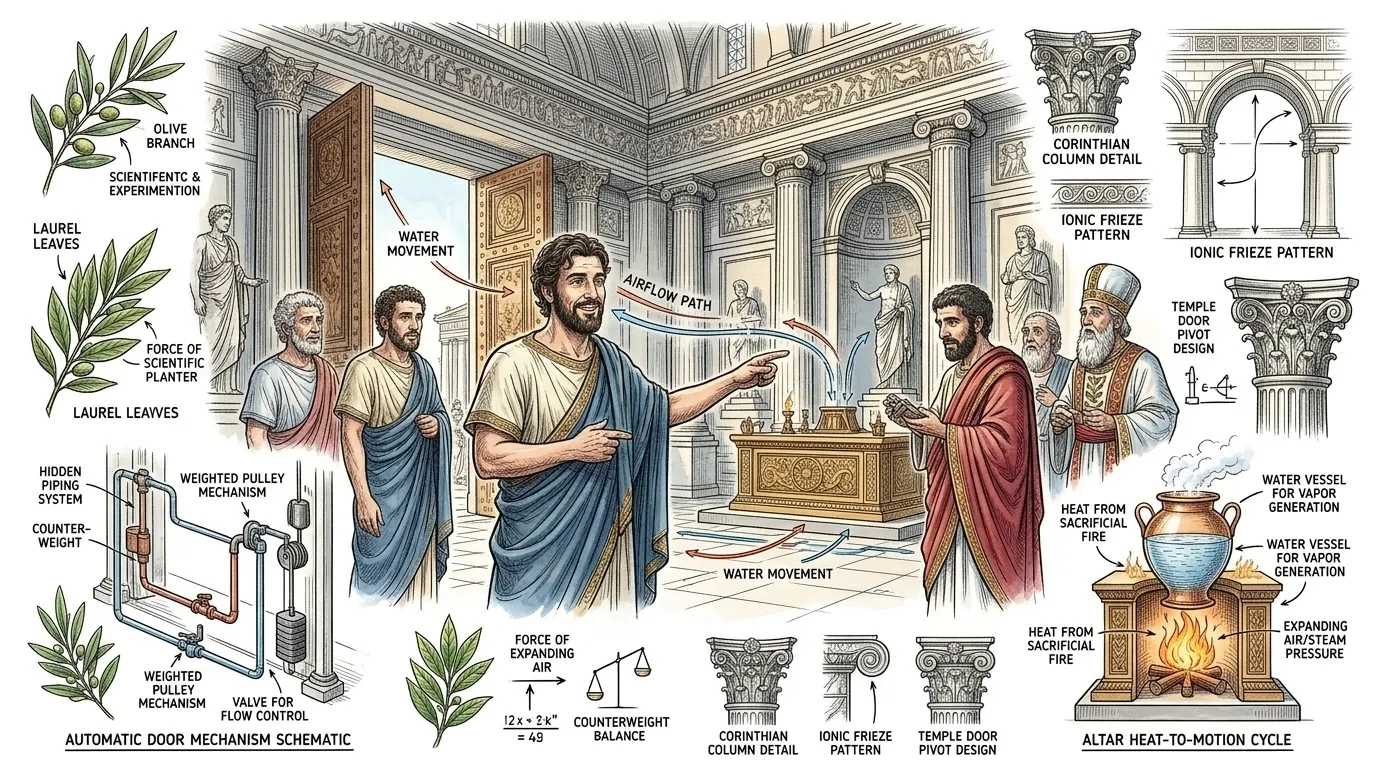
In the sacred precincts of a temple, Hero demonstrated his ingenuity beyond mere laboratory curiosities. He presented a mechanism designed to automatically open temple doors when a fire was lit on the altar, a feat that blurred the line between engineering and the divine. Elder priests, men of profound tradition and skepticism, watched as the colossal doors swung open with no visible human intervention, their expressions shifting from doubt to profound wonder. Hero, however, patiently explained the hidden forces of heated air and water, asserting the triumph of intelligent design over supernatural intervention.
Biographical Fact: Hero devised numerous automata for temples, including mechanisms for automatically opening temple doors, libation dispensers, and figures that poured wine, often employing principles of pneumatics and hydraulics to create what appeared to be divine miracles. These practical applications showcased his ability to integrate complex engineering into societal functions.
Page 5
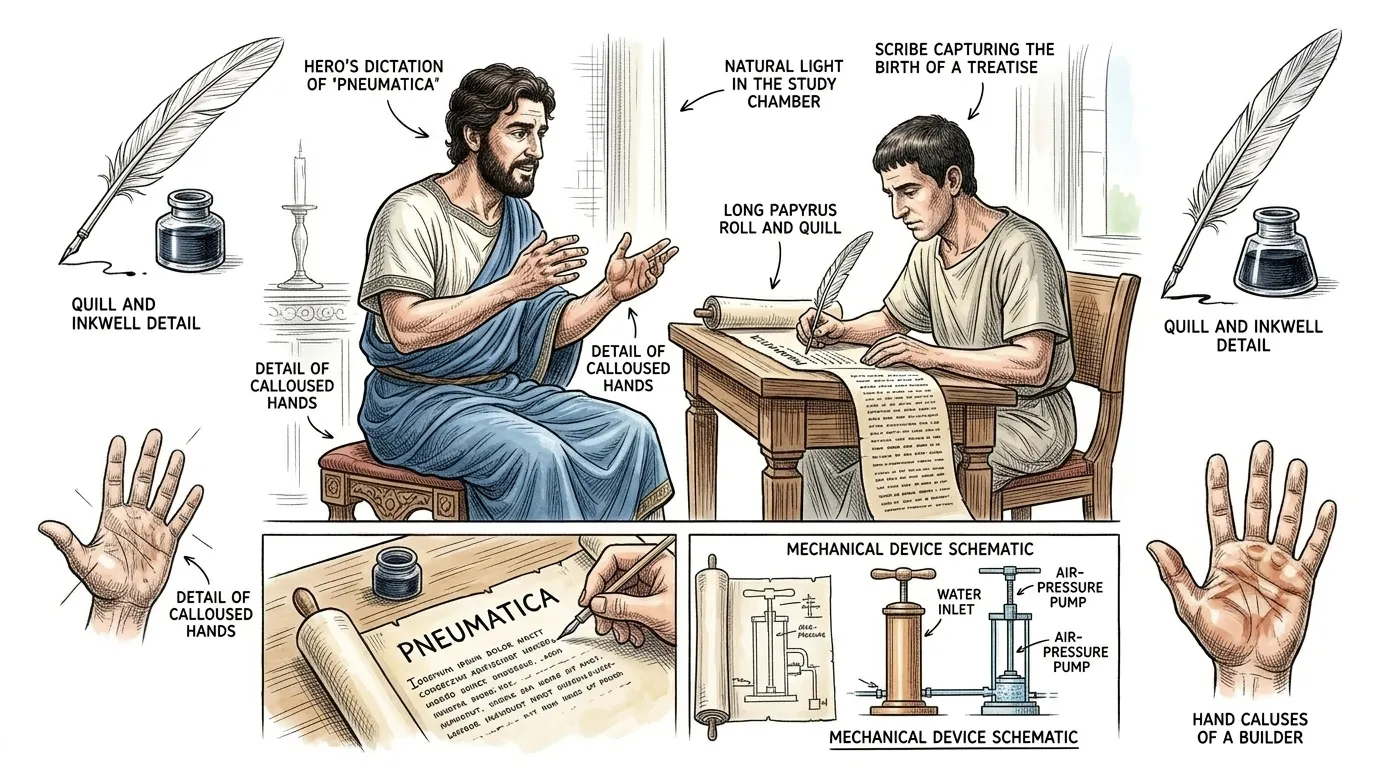
Recognizing the ephemeral nature of undocumented invention, Hero undertook the monumental task of codifying his discoveries. In a chamber filled with the scent of papyrus and ink, he dictated his designs and theoretical treatises to a dedicated scribe. This was the birth of his seminal work, 'Pneumatica,' a text that meticulously detailed his inventions and the underlying principles of air and steam pressure. Through this act, Hero transitioned from inventor to profound educator, ensuring his knowledge would transcend his lifetime, accessible to future generations of thinkers and builders.
Biographical Fact: Hero's 'Pneumatica' is a pivotal work, describing over 100 machines and automata, including the Aeolipile, a fire engine, and various siphons and fountains. It codified his understanding of air pressure, vacuum, and steam, providing a comprehensive theoretical and practical guide that was studied for centuries.
Page 6
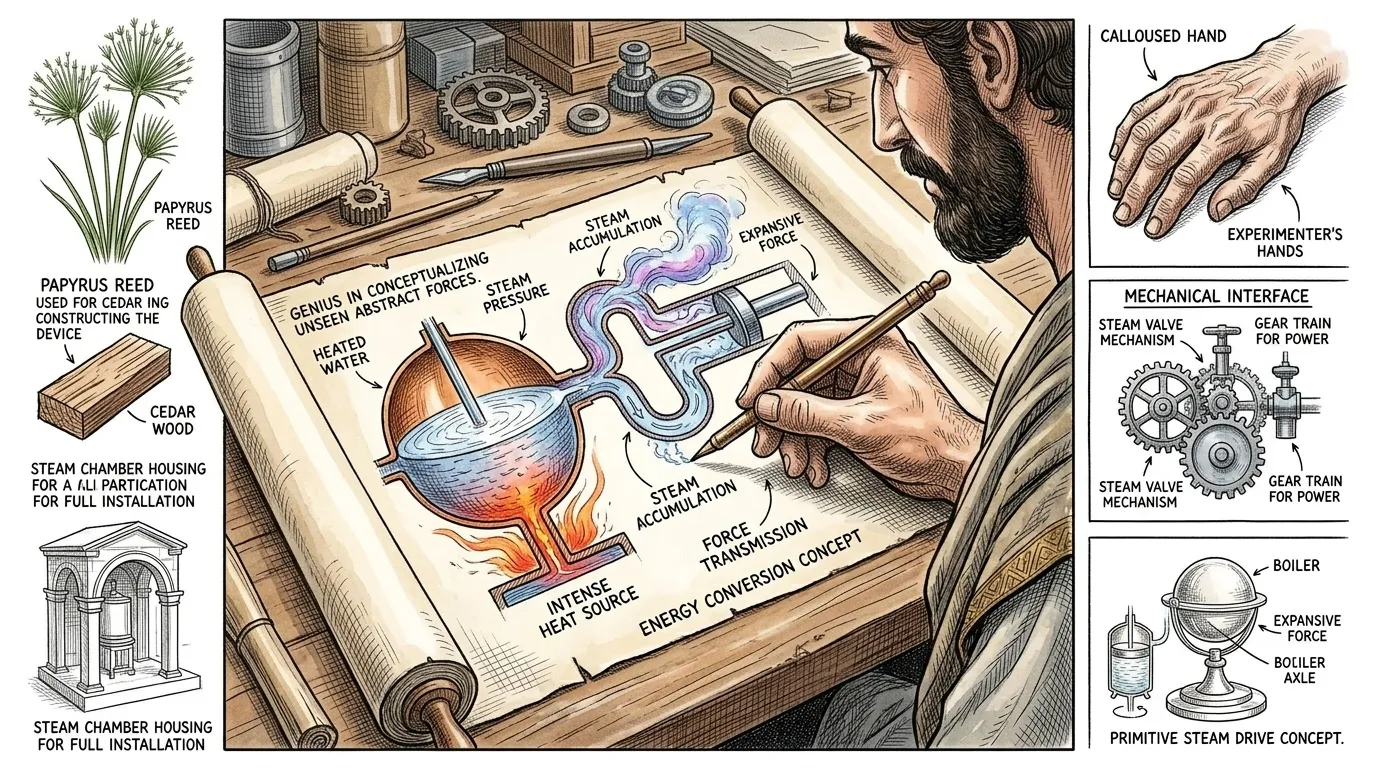
Hero's genius lay not just in building, but in conceptualizing the unseen. He dedicated himself to charting the abstract forces at play within his mechanisms. With a stylus, he meticulously diagrammed the transformation of heated water into expansive steam, illustrating how this invisible pressure could be channeled and directed to produce mechanical work. His diagrams moved beyond mere component layout, representing an early form of physics, attempting to visualize energy conversion. This intellectual breakthrough propelled mechanical thought into a new era, bridging raw force with predictable, repeatable engineering.
Biographical Fact: Hero's work extended beyond practical invention to theoretical physics. He was among the first to articulate the principles behind the conversion of thermal energy into mechanical energy, particularly in his Aeolipile, by illustrating the reactive force of escaping steam. His insights laid conceptual groundwork for thermodynamics.
Page 7
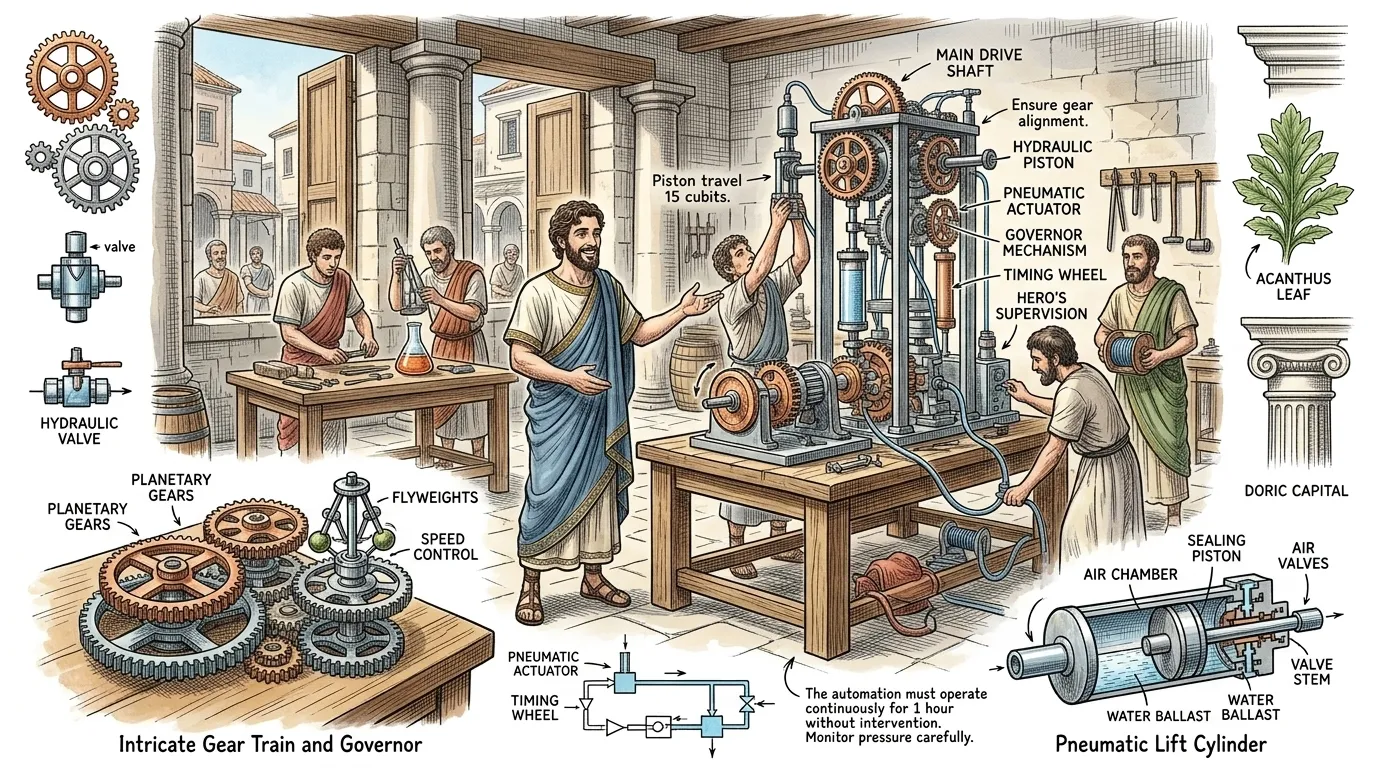
The true test of Hero's theoretical understanding came in the orchestration of complex mechanical systems. In a bustling workshop, he meticulously supervised a team of skilled artisans assembling a new, elaborate automated device. It combined pneumatic lifts, hydraulic timers, and intricate gearing, all working in synchronicity. Hero moved among the craftsmen, his presence commanding, his instructions precise, ensuring every component aligned with his overarching design. This was the culmination of his vision: bringing abstract principles to life through coordinated effort, proving the scalability and reliability of his integrated systems.
Biographical Fact: Hero's ability to integrate multiple mechanical principles into complex automata, such as those used for temple theatrics or elaborate water organs, demonstrated advanced engineering and project management skills. He seamlessly blended pneumatics, hydraulics, and simple machines to create sophisticated, pre-programmed devices.
Page 8
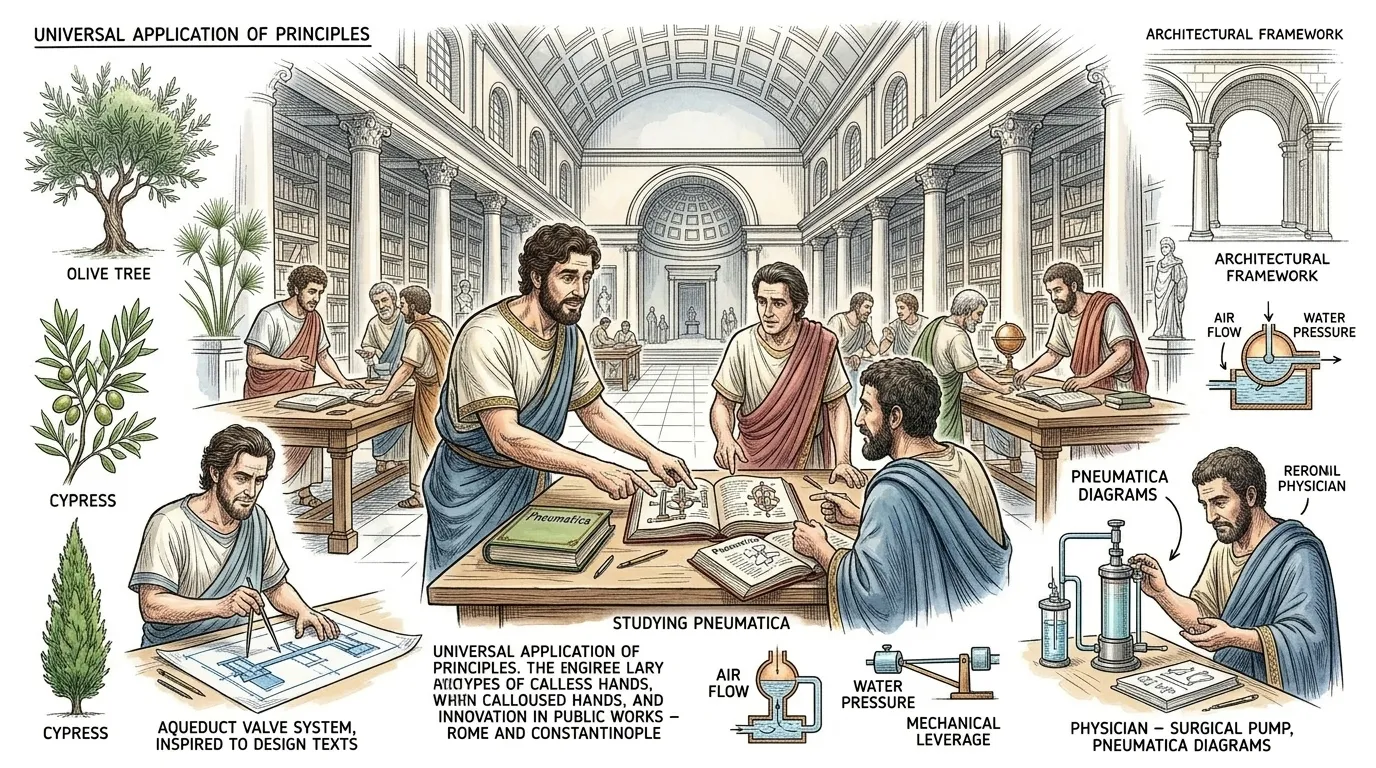
Centuries after Hero's lifetime, his meticulously documented works became indispensable across the vast Roman and Byzantine empires. In libraries from Rome to Constantinople, his 'Pneumatica' was not merely preserved, but actively studied and replicated. Scholars, physicians, and engineers debated his principles, finding in his detailed descriptions the inspiration for new public works, medical instruments, and even military applications. Hero's abstract understanding of air and water, once confined to Alexandrian scrolls, now provided a universal language for mechanical innovation. His words became a silent, omnipresent teacher.
Biographical Fact: Hero's treatises, including 'Pneumatica' and 'Automatopoietica,' were preserved and widely studied in the Byzantine world and later by Arab scholars. They were translated into Latin during the Renaissance, profoundly influencing European engineers and thinkers, demonstrating the long-term impact of his codified knowledge.
Page 9
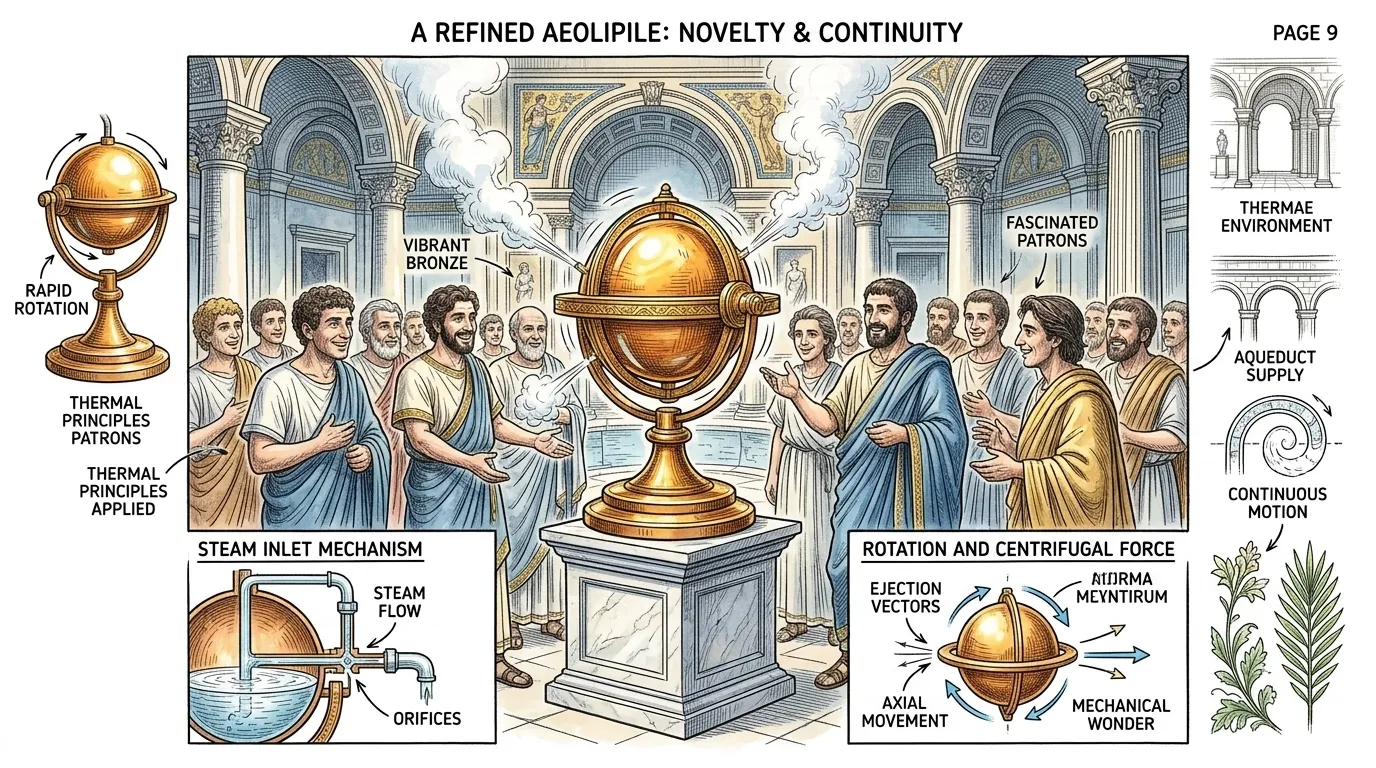
The legacy of Hero was not merely textual; it was manifest in the enduring presence of his machines and their descendants. In a Roman bathhouse two centuries later, an ornate, large-scale Aeolipile, an evolution of Hero's original design, spun effortlessly, a perpetual novelty and a testament to his groundbreaking principles. Spectators, a blend of wealthy patrons and curious commoners, gathered around, their faces alight with fascination at the steam-powered rotation. Hero's genius continued to captivate, demonstrating that fundamental mechanics, once understood, could persist and charm across generations, providing both utility and wonder.
Biographical Fact: While the Aeolipile wasn't widely adopted for practical work in antiquity, its principles were documented and understood. Later engineers and craftsmen replicated and refined Hero's designs, often for amusement, educational demonstration, or as components in more complex automata, ensuring his mechanical legacy endured.
Page 10
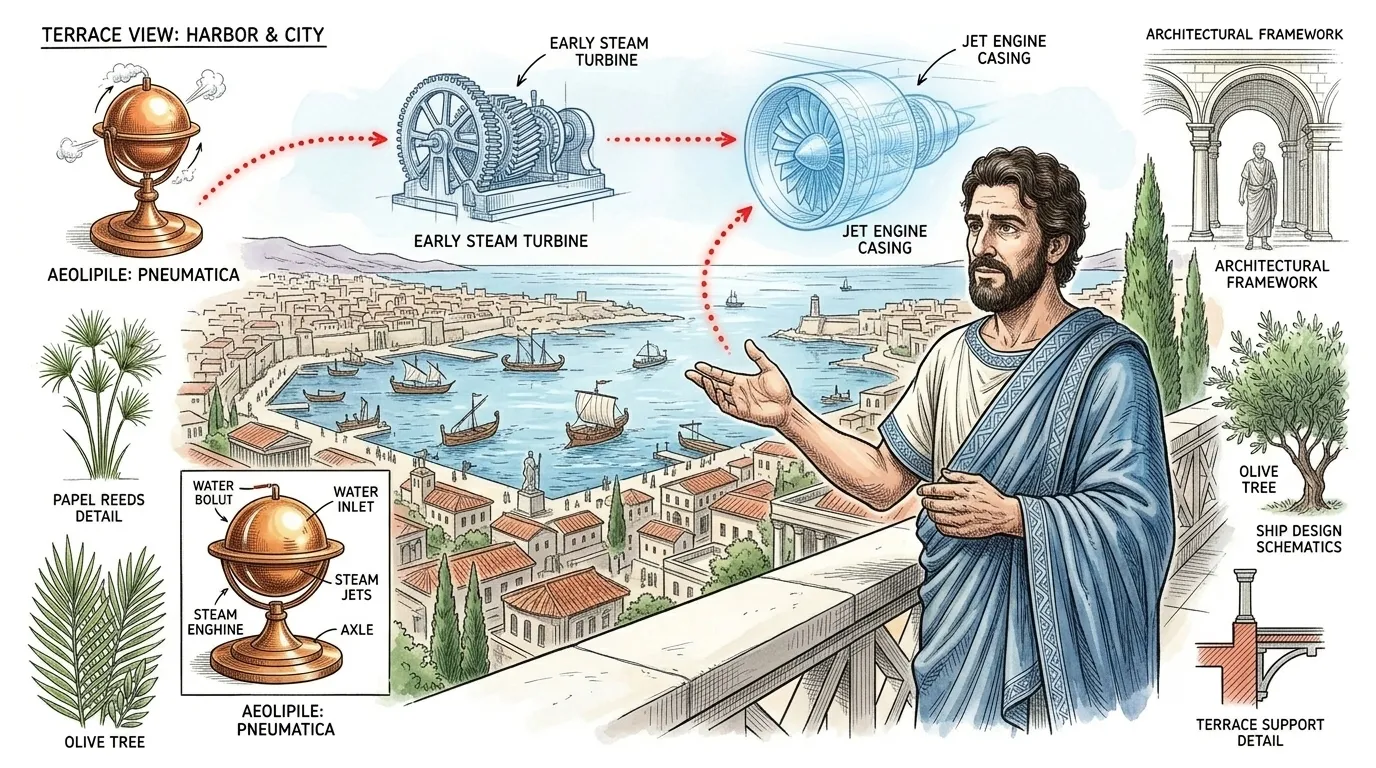
Hero of Alexandria left behind more than just ingenious devices; he bequeathed a revolutionary way of thinking about mechanical power. His abstract understanding of pneumatics, hydraulics, and the conversion of heat into motion laid the foundational blueprints for an industrial future he could never have fully foreseen. From the principles of his Aeolipile, one can trace a direct, unbroken conceptual line to the steam turbines of the Industrial Revolution and even the reactive thrust of modern jet engines. His timeless image stands as a testament to the enduring power of fundamental scientific inquiry, a constant reminder that the seeds of future revolutions are often sown in the elegant, precise logic of ancient minds.
Biographical Fact: Hero's detailed work on mechanical devices, especially his Aeolipile, demonstrated the principles of reaction propulsion and thermodynamics. These concepts, though not fully exploited in his era, proved foundational for later scientific and technological advancements, influencing thinkers like Leonardo da Vinci and ultimately contributing to the theoretical bedrock of the Industrial Revolution and beyond.
About this story
- Location: Global
- Audience: general readers
Questions and answers
Read Wonder People on your phone
Wonder People is available on Android. Get Wonder People on Google Play.