Ho Chi Minh
Ho Chi Minh — an illustrated biography story, set in Global. 10 illustrated pages, free to read on Wonder People.
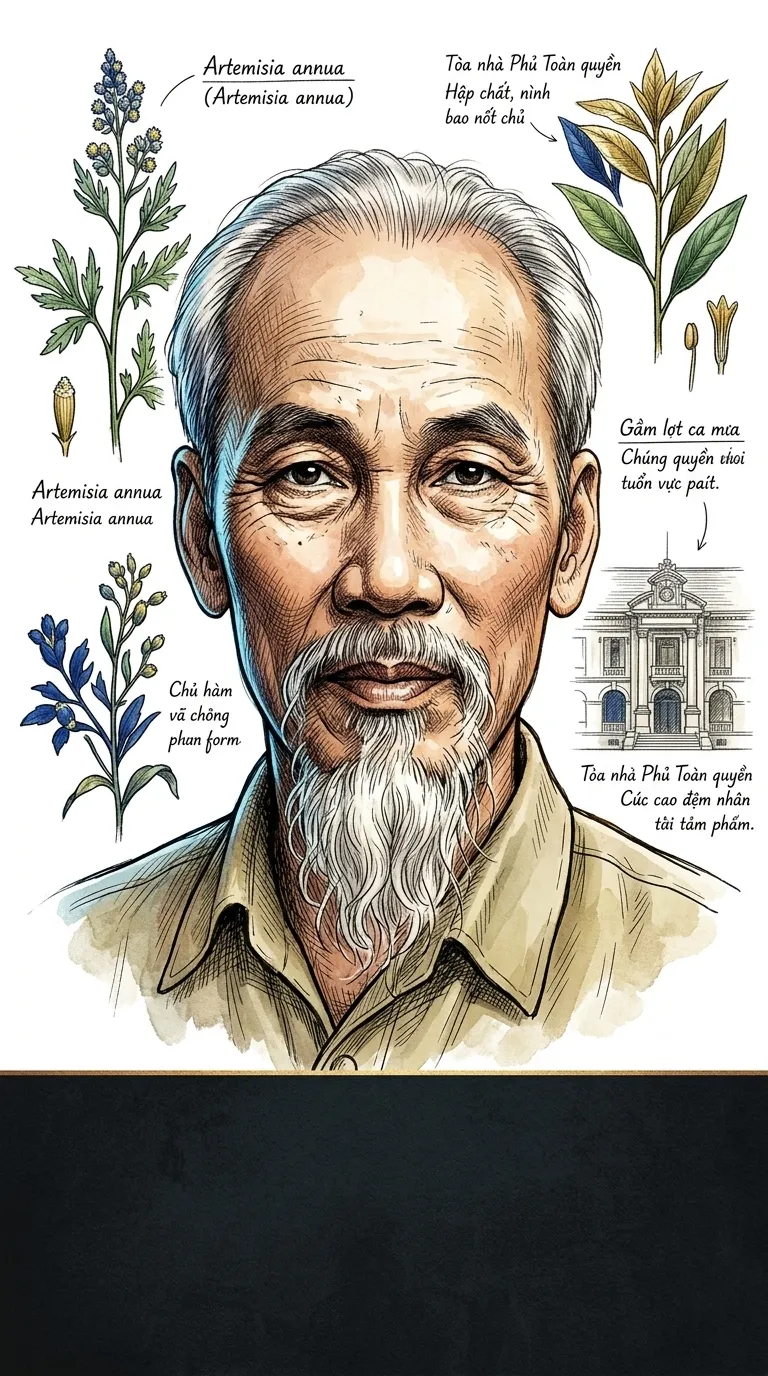
Page 1
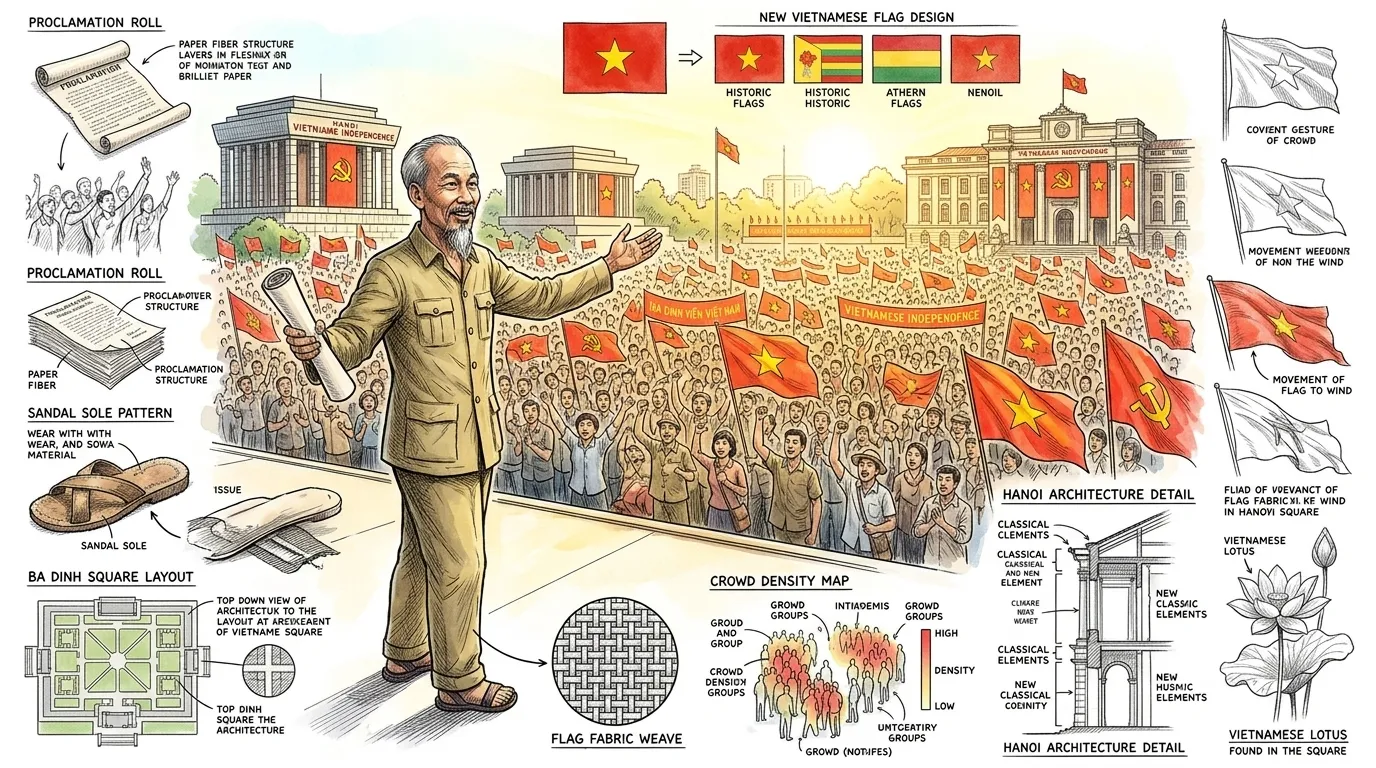
On September 2, 1945, in Hanoi's Ba Dinh Square, a defining moment etched itself into history. Before a jubilant crowd of hundreds of thousands, a figure in a simple khaki suit stepped forward. He was Ho Chi Minh, proclaiming the birth of the Democratic Republic of Vietnam, asserting the nation's independence from colonial rule. This act reverberated across the globe, signaling the end of an old order and the dawn of a new, self-determined era for a people long under foreign dominion. The power of his declaration ignited a profound shift, making his presence impossible to ignore on the world stage.
Page 2
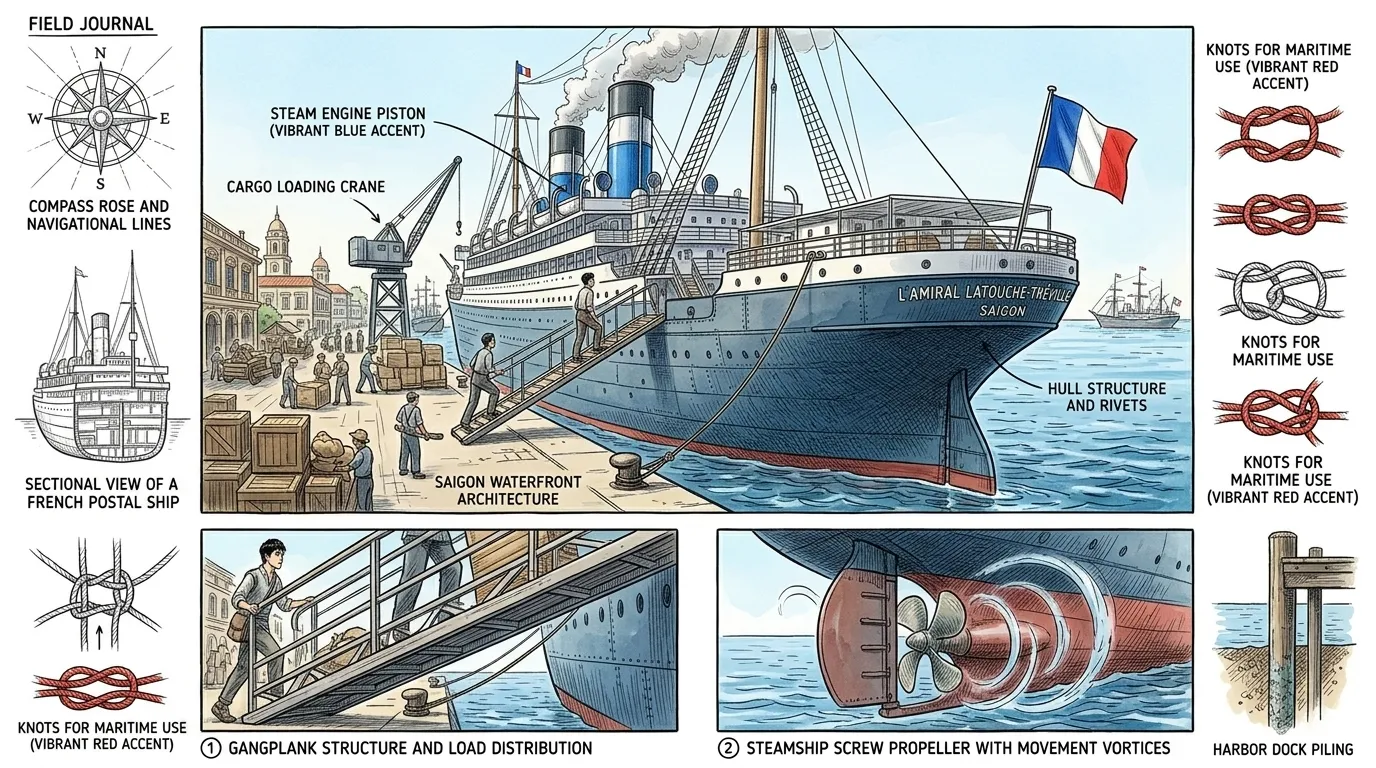
Before he was Ho Chi Minh, he was Nguyen Tat Thanh, the son of a scholar from Nghe An province in Central Vietnam. Born into a land under French colonial rule, he witnessed firsthand the injustices and suppression of his people. This early exposure to colonial oppression and his father's unwavering patriotism instilled in him a profound yearning for national liberation. In 1911, at the age of 21, he made a decisive break, stepping aboard a French steamship in Saigon, not as a passenger, but as a kitchen hand, embarking on a quest to understand the colonizers and find a path to freedom for his homeland. His journey began with a personal act of defiance, trading comfort for the harsh realities of a global search.
Page 3
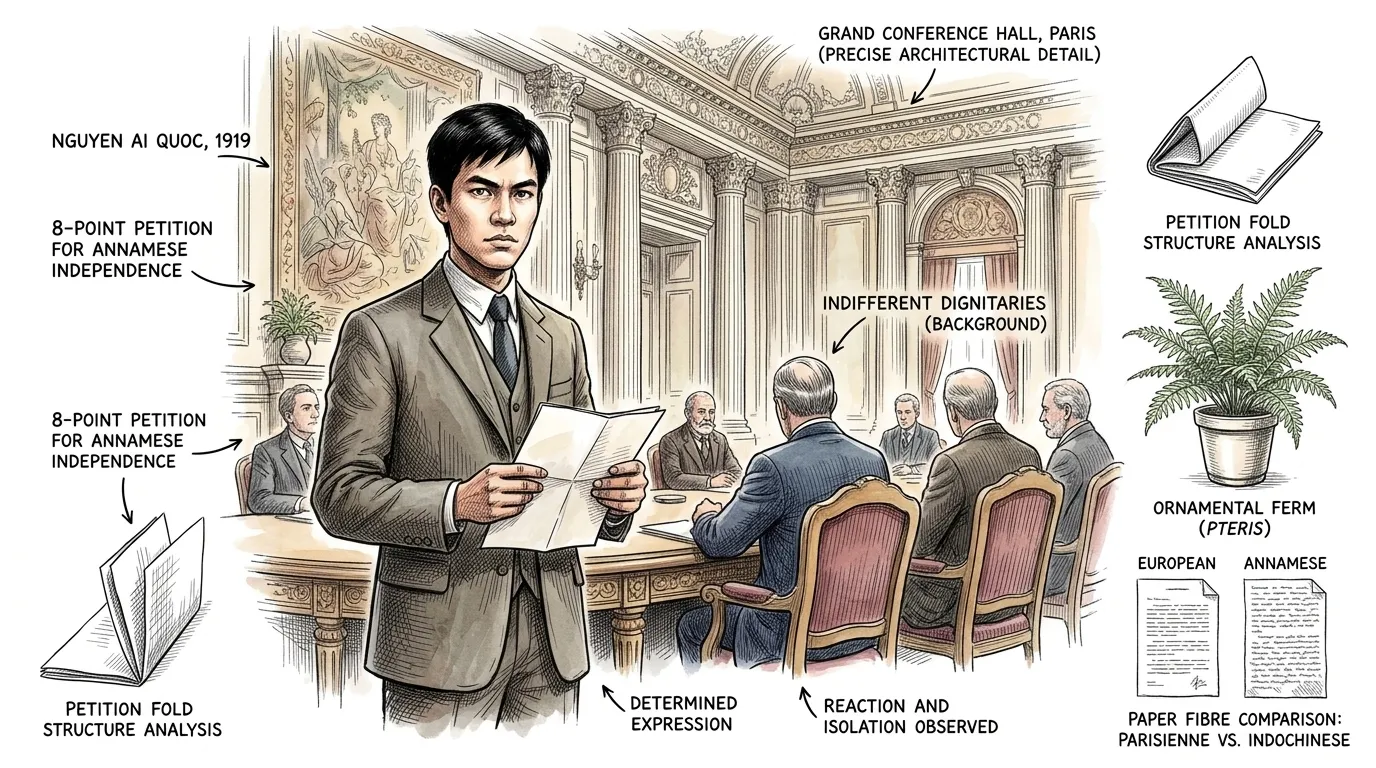
In Paris, 1919, the young Nguyen Ai Quoc, as he was then known, attempted to seize a fleeting opportunity for change. Amidst the global restructuring of the Versailles Peace Conference, he submitted an eight-point petition, 'The Demands of the Annamese People.' It called for self-determination, representation, and civil liberties for the Vietnamese under French rule. The petition was met with polite indifference, ignored by the very world leaders who spoke of freedom and democracy. This pivotal rejection clarified his path: diplomatic pleas alone would not break the chains of colonialism, forcing him towards a more radical understanding of power and liberation. He stood, isolated, against the entrenched powers of empires.
Page 4
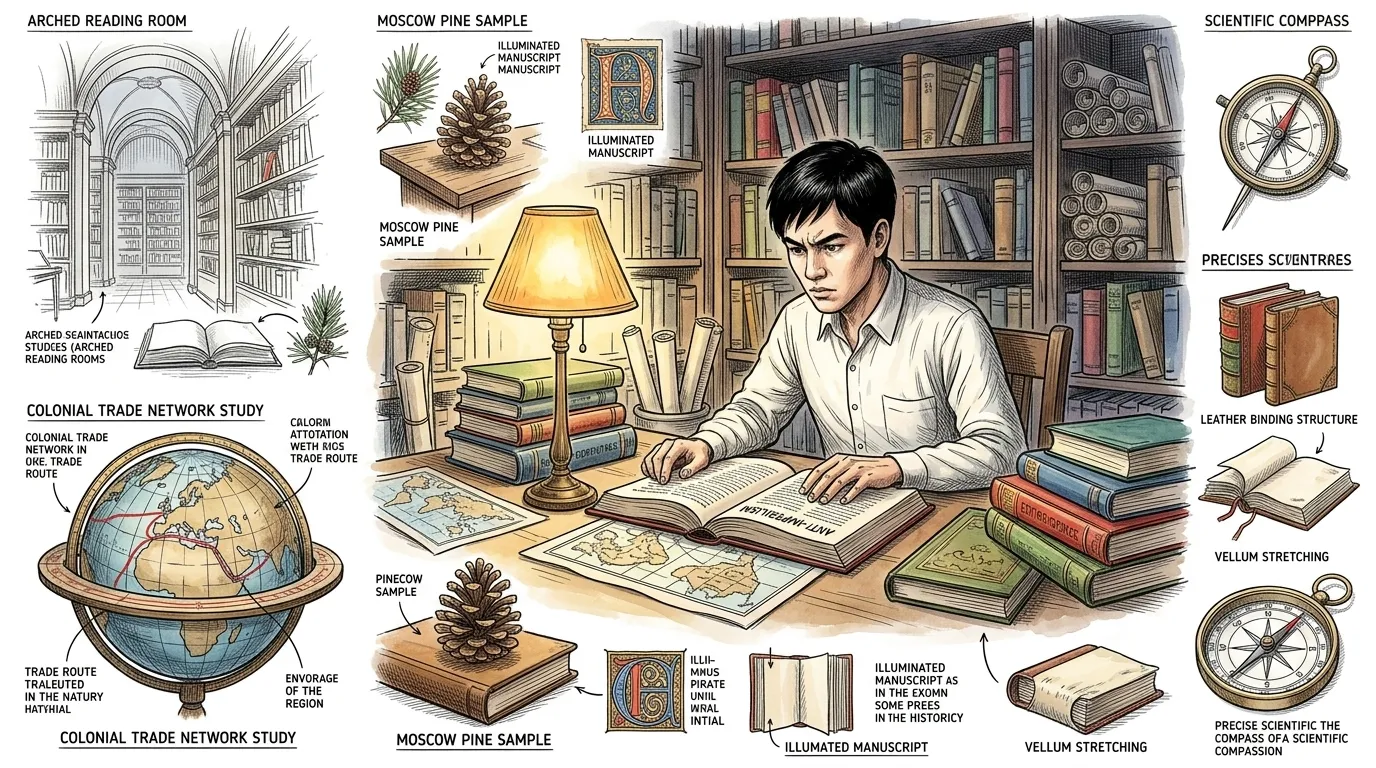
The path to Vietnamese liberation, Ho Chi Minh concluded, lay not in Western liberal appeals but in revolutionary action. By the early 1920s, he immersed himself in the nascent communist movement, traveling to Moscow and joining the Comintern. He studied Marxist-Leninist theories of anti-imperialism and national liberation, finding a framework that resonated with Vietnam's struggle. This ideological commitment provided him with both a clear strategy and a global network of support, transforming him from a nationalist petitioner into a hardened revolutionary. He now saw the colonial question as an integral part of a larger global struggle against capitalism and exploitation.
Page 5
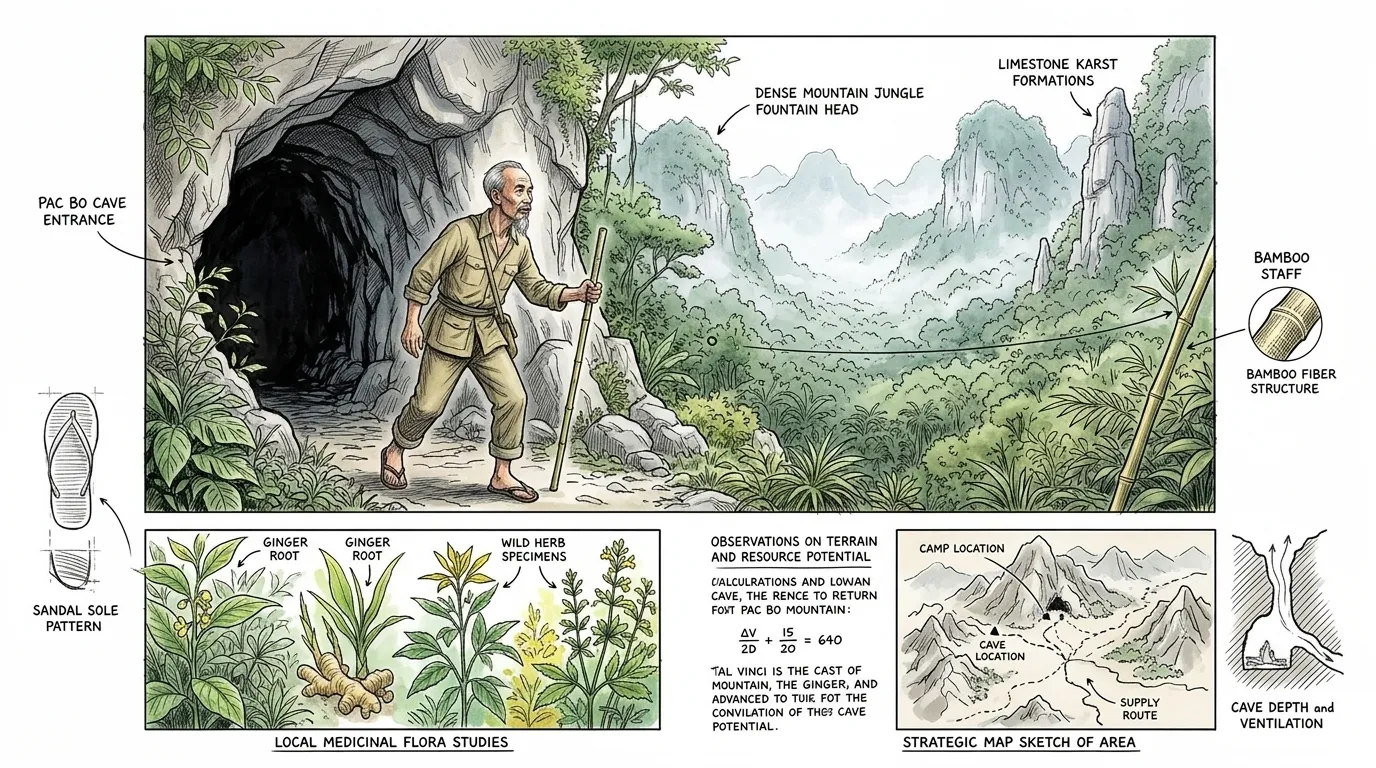
After three decades of exile, Ho Chi Minh returned to Vietnam in 1941, settling in a remote cave in Pac Bo, Cao Bang province, near the Chinese border. This return marked a crucial turning point, shifting from theoretical study to direct action on home soil. From this humble, hidden base, he established the Viet Minh, the League for the Independence of Vietnam, uniting various nationalist factions under a common banner against both French colonial rule and Japanese occupation during World War II. It was in these rugged mountains that he began to forge a people's army, meticulously preparing for the day of national uprising, becoming a living symbol of resistance for his people.
Page 6
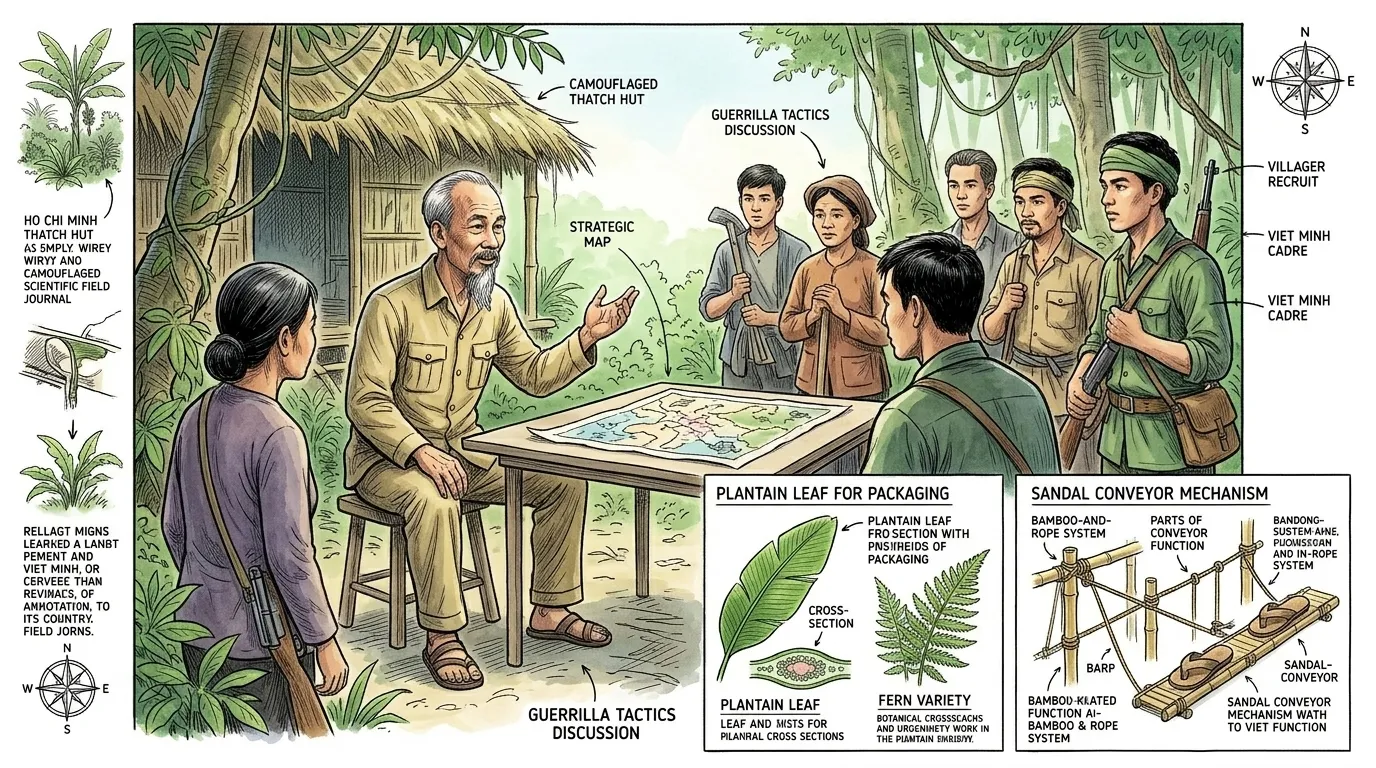
From his jungle hideouts, Ho Chi Minh directed the painstaking organization of the Viet Minh. He understood that military strength alone was insufficient; success depended on popular support. Cadres were dispatched to villages, educating the populace, building local support networks, and training guerrilla fighters. He emphasized self-sufficiency and the strategic importance of the countryside, preparing for a long and arduous struggle against superior foreign forces. Under his leadership, the Viet Minh grew into a disciplined, politically aware movement, ready to exploit any opportunity, laying the groundwork for a nationwide insurrection. He meticulously cultivated the popular will for liberation.
Page 7
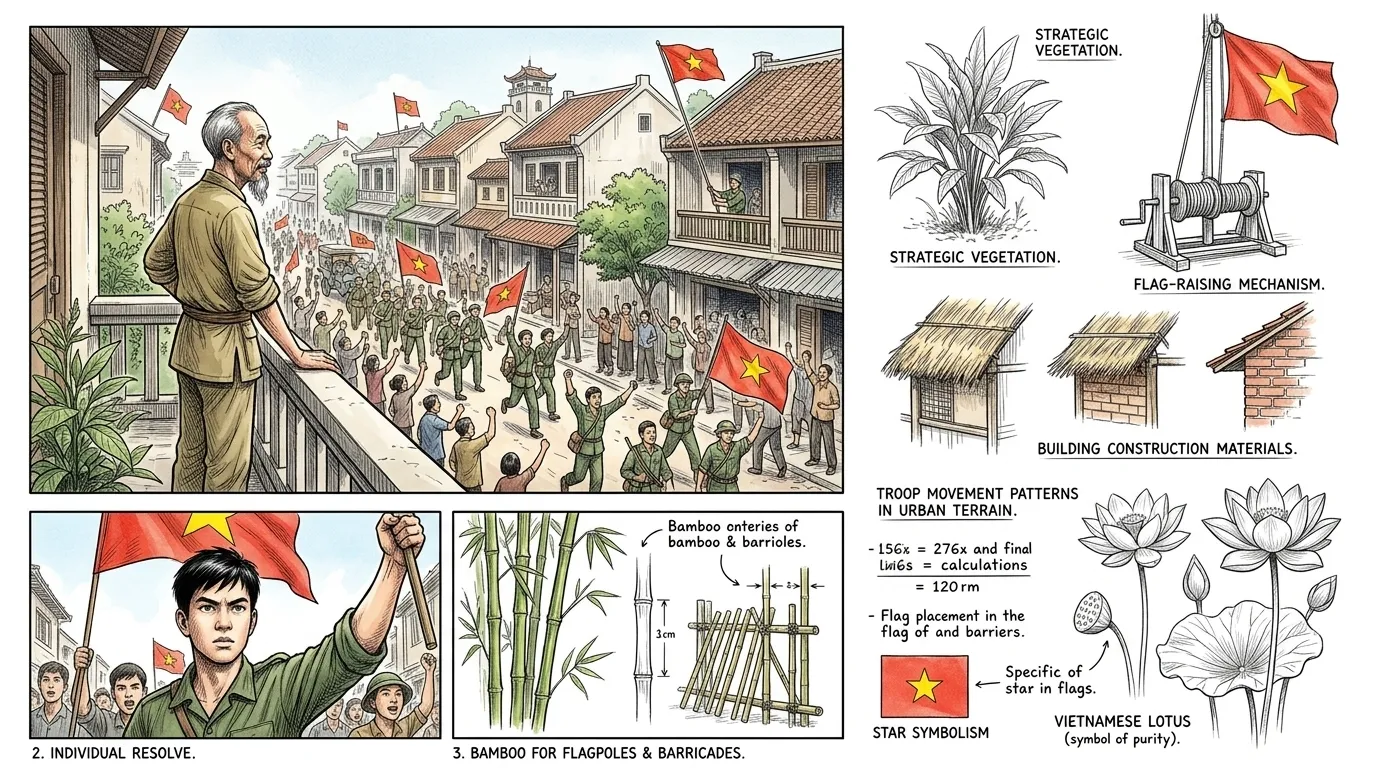
The collapse of Japanese power in August 1945 presented a critical, fleeting window. Ho Chi Minh, with precise timing, issued the call for a general uprising across Vietnam. The Japanese surrender to the Allies left a power vacuum, which the Viet Minh swiftly moved to fill. In a synchronized series of actions, Viet Minh forces, supported by popular uprisings, seized control of provincial capitals and vital strategic points. Within weeks, Hanoi itself fell under their control, demonstrating the effectiveness of years of meticulous preparation and popular mobilization. This rapid seizure of power set the stage for the dramatic declaration of independence, demonstrating the Viet Minh's strategic acumen and popular support.
Page 8
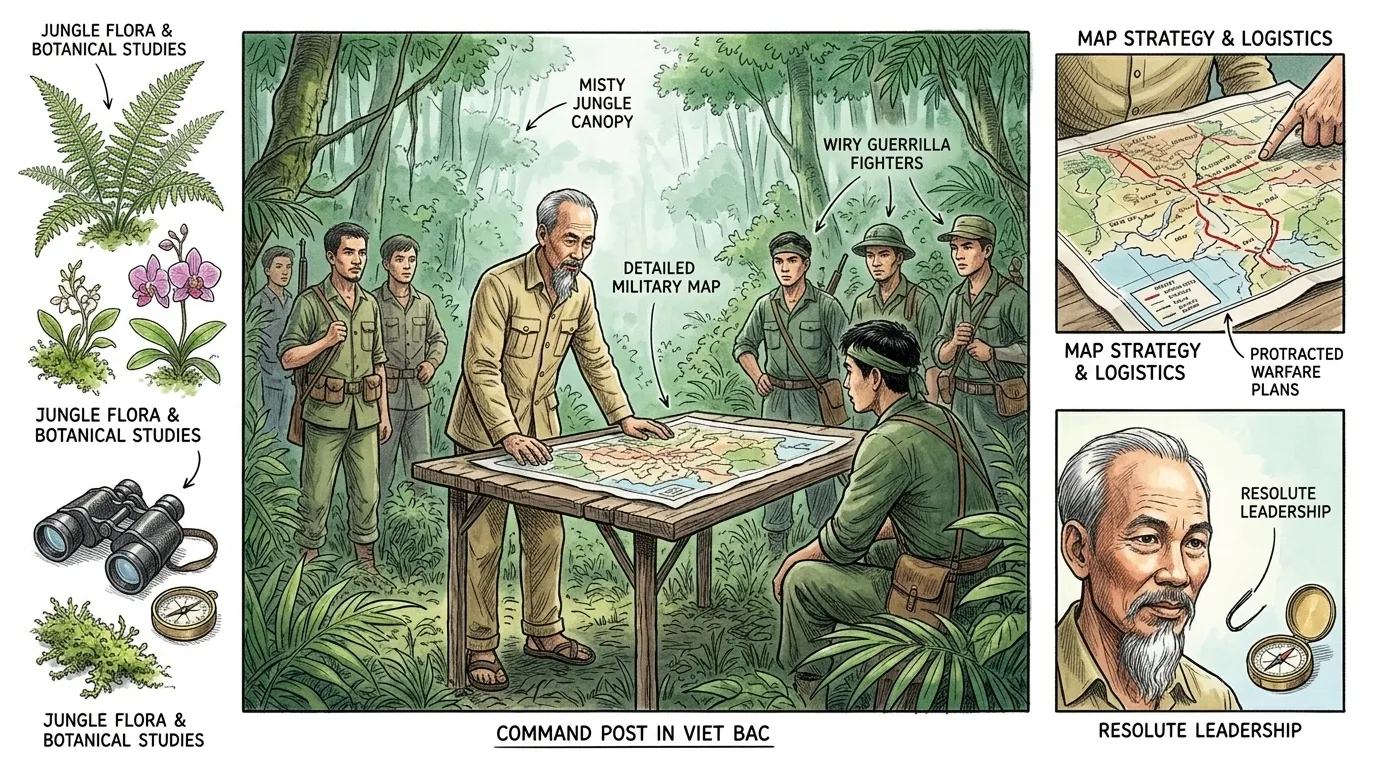
The euphoria of independence was short-lived. France, unwilling to relinquish its colonial jewel, moved to reassert control, triggering the First Indochina War. Ho Chi Minh, now President of the Democratic Republic of Vietnam, was forced to lead his nation into another protracted struggle. From the remote jungles of Viet Bac, he directed a protracted guerrilla war, outmaneuvering the technologically superior French forces. His strategy of 'protracted warfare' gradually wore down the colonial power, culminating in the decisive victory at Dien Bien Phu in 1954. This triumph forced France to the negotiating table, but it marked only a temporary pause in the nation's fight for full sovereignty.
Page 9
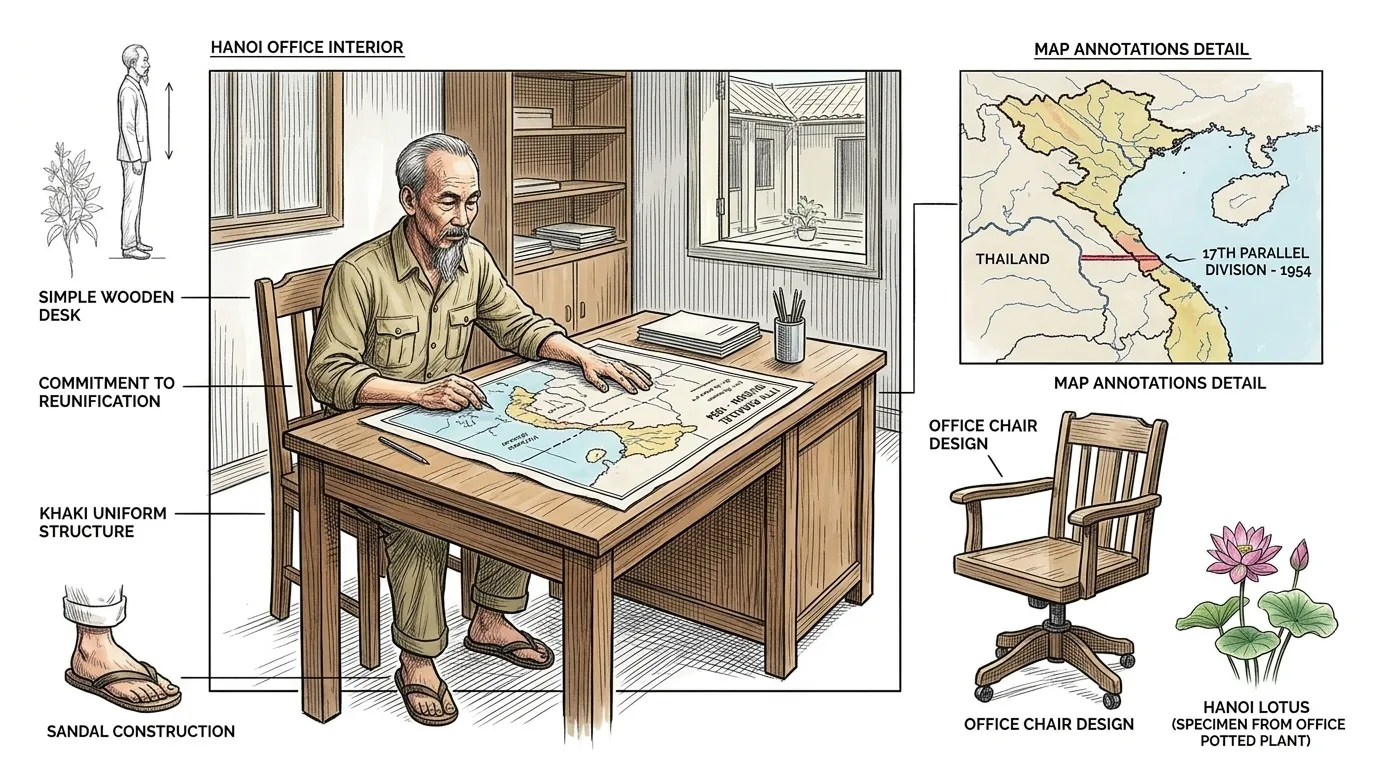
The 1954 Geneva Accords temporarily divided Vietnam at the 17th parallel, establishing the North (Democratic Republic of Vietnam) under Ho Chi Minh's leadership and a U.S.-backed South. This partition, intended to be temporary, hardened into a political reality that would ignite the devastating Second Indochina War, or the Vietnam War. From Hanoi, Ho Chi Minh continued to direct the political and military struggle for reunification, overseeing the immense efforts to support the southern insurgency. He remained the unwavering symbol of Vietnamese nationalism and resistance against foreign intervention, a beacon of determination even as the conflict escalated into a global proxy war. He never lived to see the full realization of his ultimate goal.
Page 10
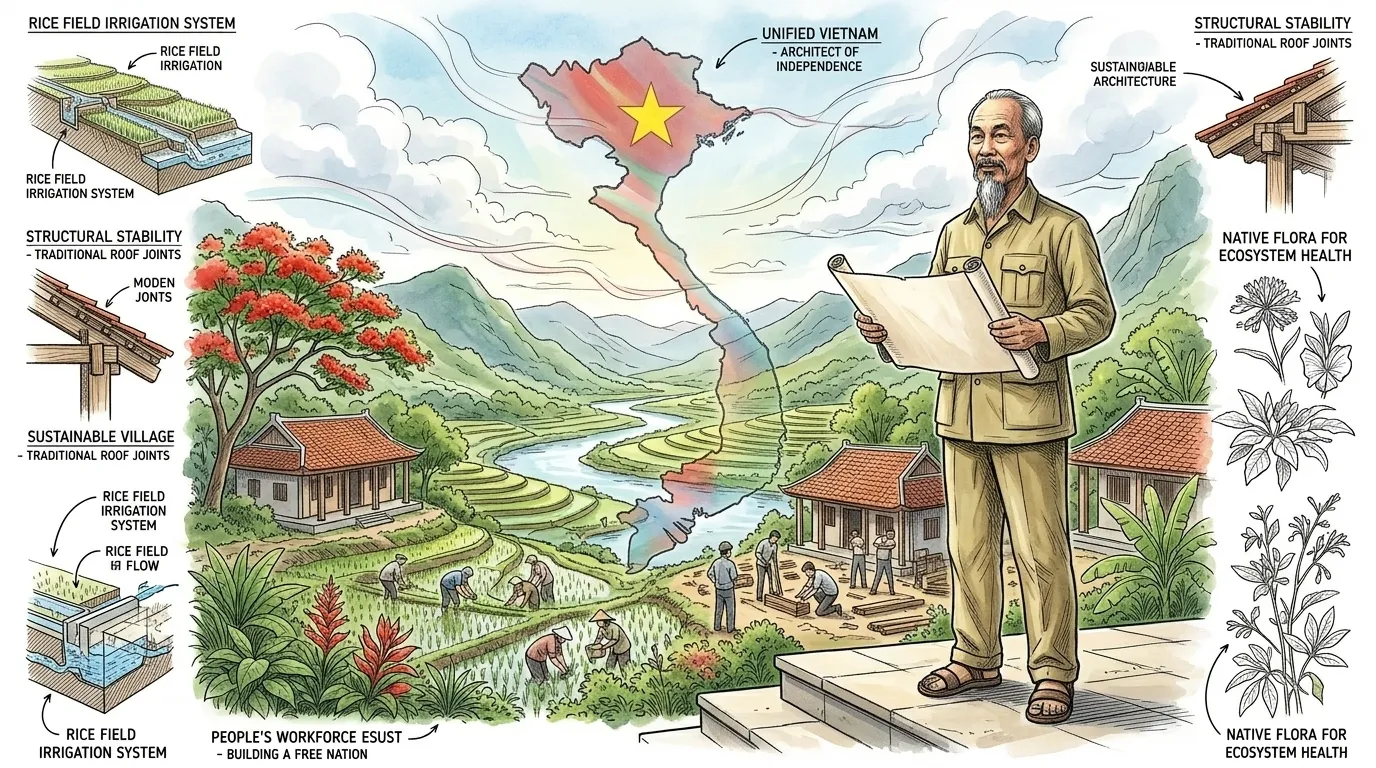
Ho Chi Minh died in 1969, six years before the fall of Saigon and the reunification of Vietnam. Yet, his legacy endured, a powerful force that continued to inspire the final victory in 1975. He became the architect of modern Vietnam, a nation forged through relentless struggle against two global powers. His unwavering commitment to national independence, his ability to mobilize and unify his people, and his strategic vision cemented his place as one of the 20th century's most impactful transformational leaders. His image today remains synonymous with freedom and self-determination, a testament to the enduring power of a leader who dared to challenge empires.
About this story
- Location: Global
- Audience: general readers
Questions and answers
Read Wonder People on your phone
Wonder People is available on Android. Get Wonder People on Google Play.