Homer
Homer — an illustrated biography story, set in Global. 10 illustrated pages, free to read on Wonder People.
Page 1
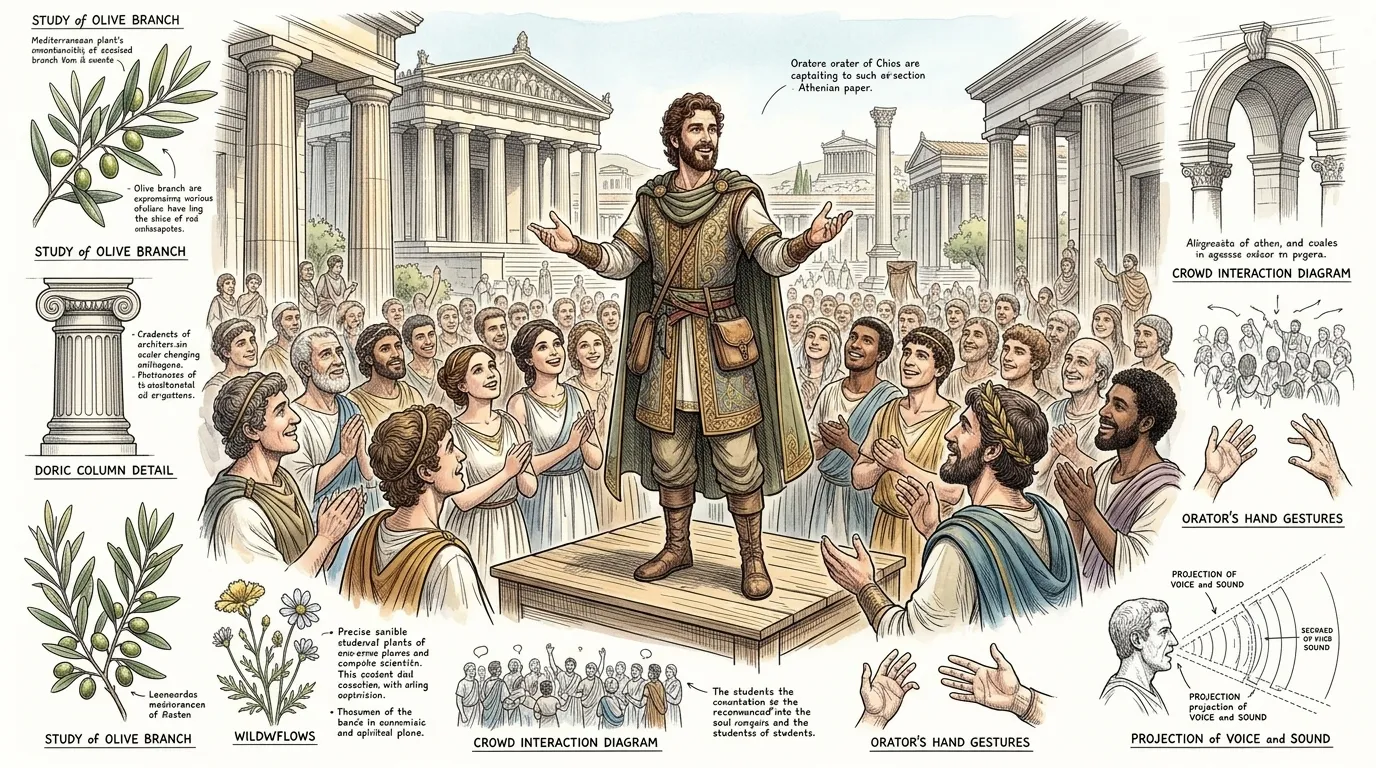
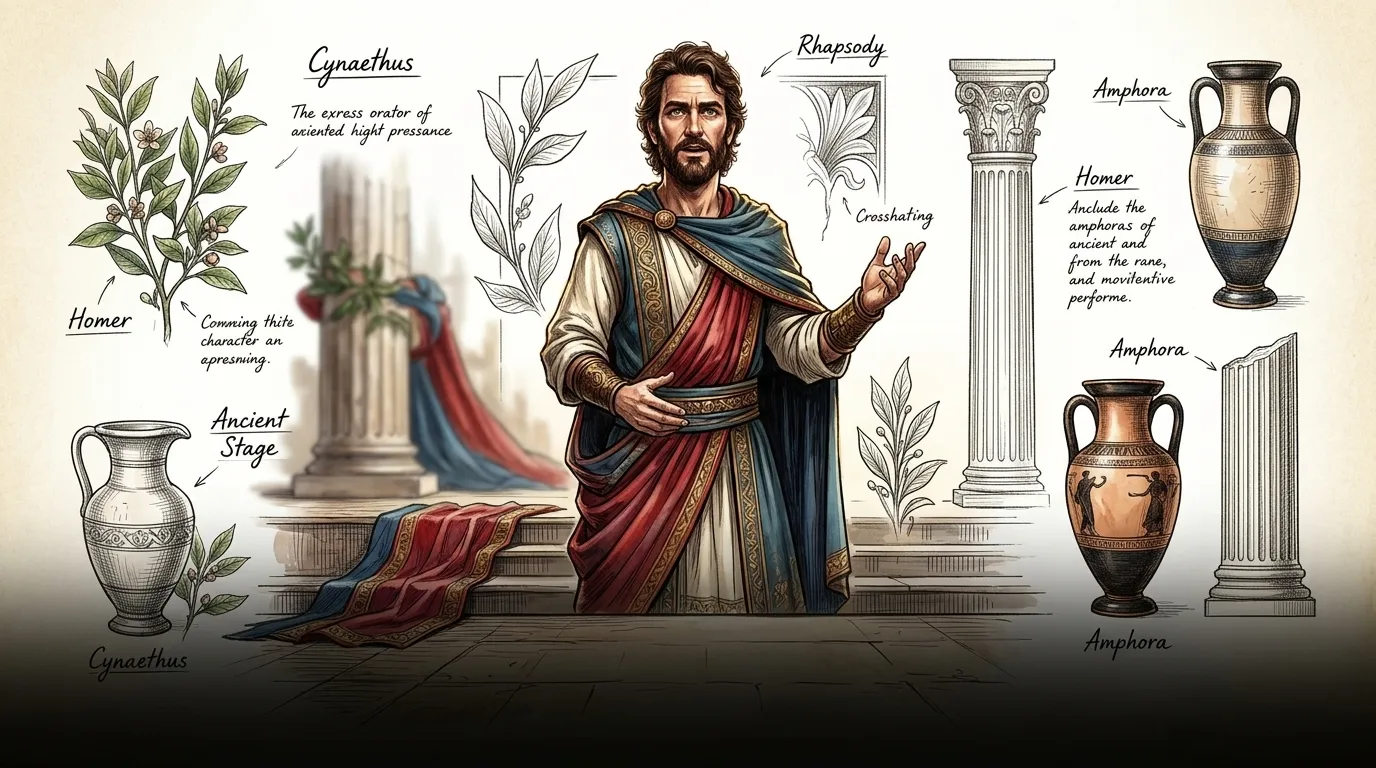
In the burgeoning city-states of ancient Greece, a seismic cultural force began to coalesce. Through the voices of countless rhapsodes, the narratives of 'Homer' echoed from public squares to private academies. In Athens, around 450 BCE, a master rhapsode like Cynaethus of Chios, his hands sweeping, brought the Trojan War's fury to life before hundreds of rapt citizens and young students. These epics, attributed to a singular, foundational poet, were not merely stories; for over 2,500 years, The Iliad and The Odyssey would serve as the bedrock of Western education, shaping ethical thought and literary tradition with unparalleled authority.
Page 2
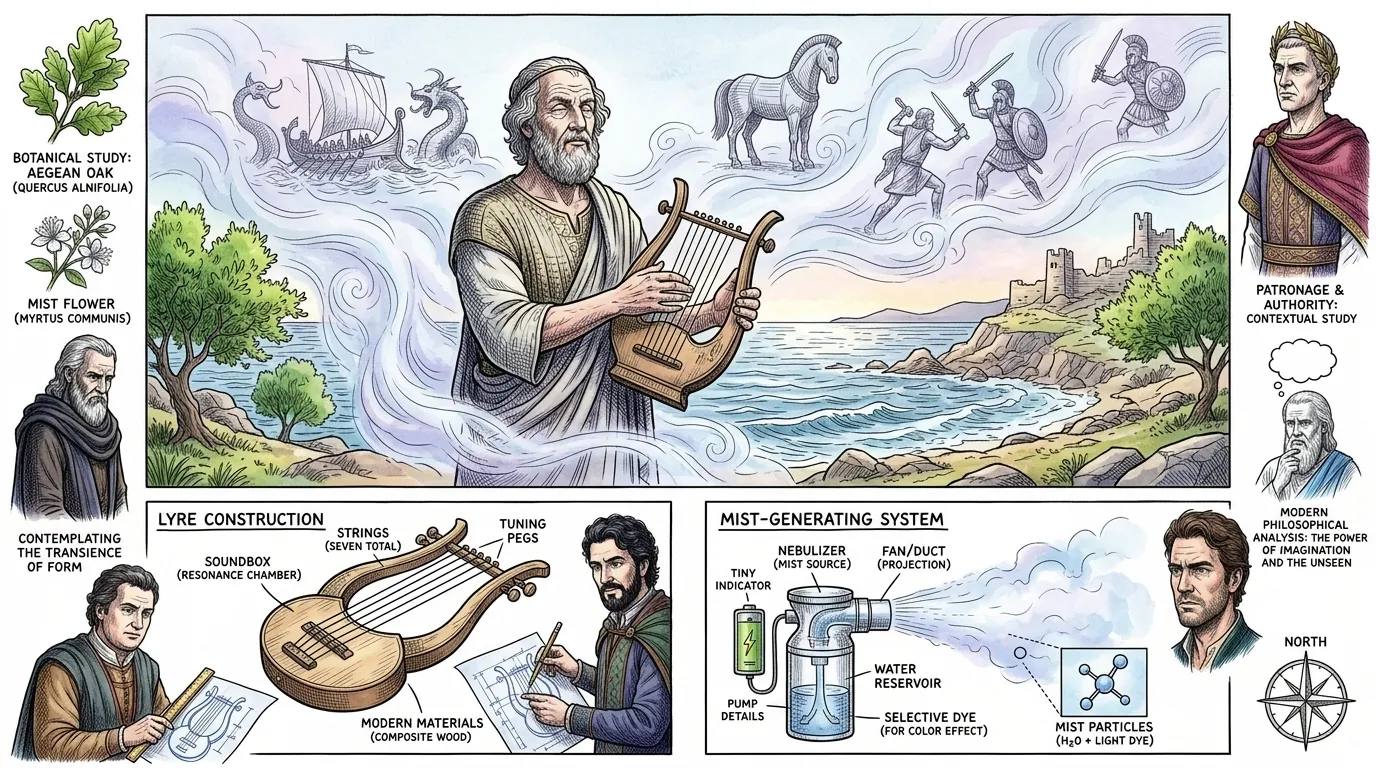
The origins of Homer remain shrouded in the mists of time, a figure more tradition than biography. While often envisioned as an ancient Ionian bard, likely blind, his existence embodies the very essence of the archaic Greek oral tradition. He was not merely a poet; he was the vast collective memory of a people, channeling centuries of myths, legends, and heroic deeds into compositions of unparalleled scope and beauty. This tradition, passed down through generations, shaped the linguistic and thematic foundations from which his monumental epics would eventually emerge, defining a cultural identity before it could be written.
Page 3
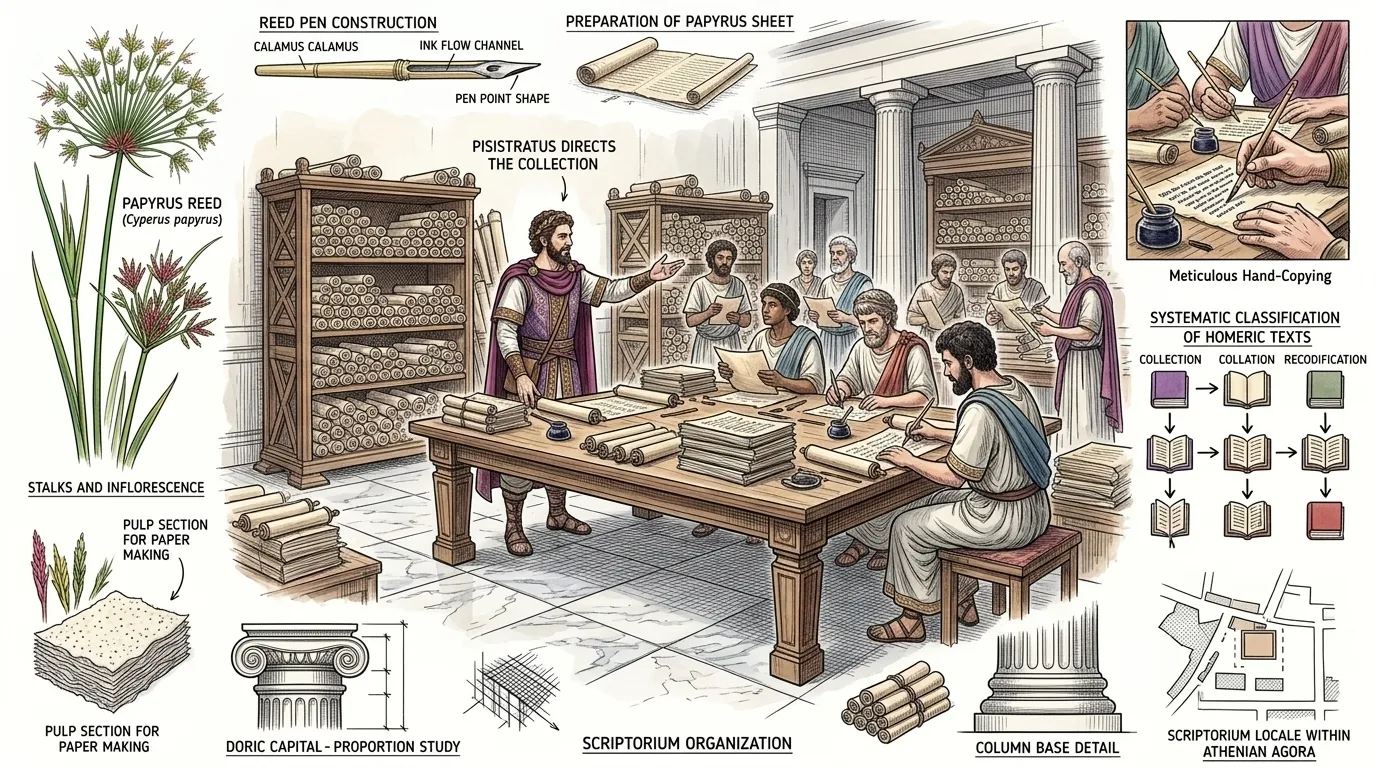
For centuries, the Homeric narratives existed in a fluid, oral state, reshaped by each successive bard. But in 6th-century BCE Athens, a critical transformation began under figures like the tyrant Pisistratus, who understood the unifying power of these shared stories. He initiated a monumental effort, assembling scholars and scribes to collect, collate, and standardize the vast oral tradition into written form. This decisive action marked the beginning of Homer's rise from a performance tradition to a fixed literary canon, ensuring his epics would be preserved and disseminated far beyond the reach of any single rhapsode's voice.
Page 4
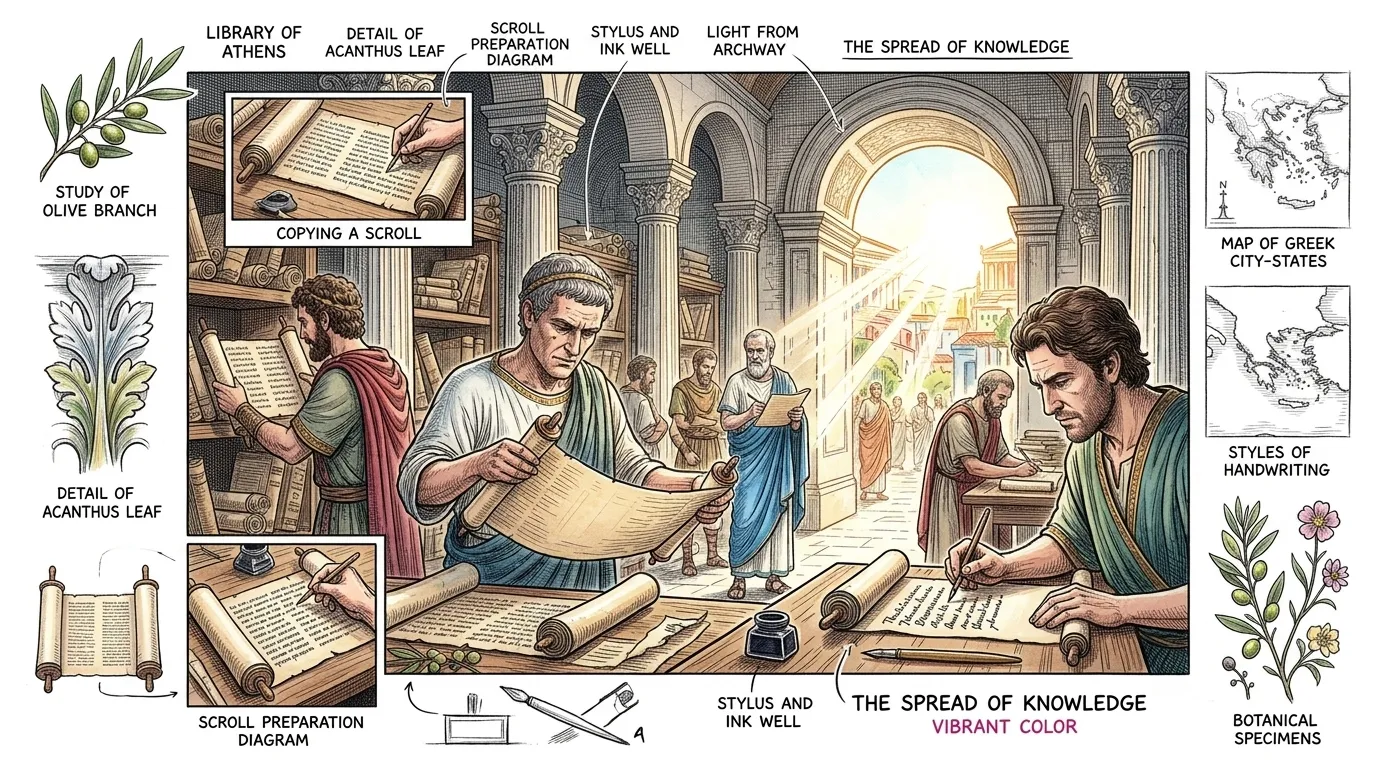
With the Homeric epics now committed to papyrus, a new era of cultural dissemination began. Scholars meticulously copied and studied the texts, creating critical editions that refined the language and narrative structure. This process of textual stabilization meant that every Greek citizen, from the Aegean coast to the colonies, could engage with the same foundational stories, fostering a shared sense of Hellenic identity. Homer's influence was no longer limited by the ephemeral nature of performance; his carefully curated words now traveled, solidifying his role as the great educator of Greece.
Page 5
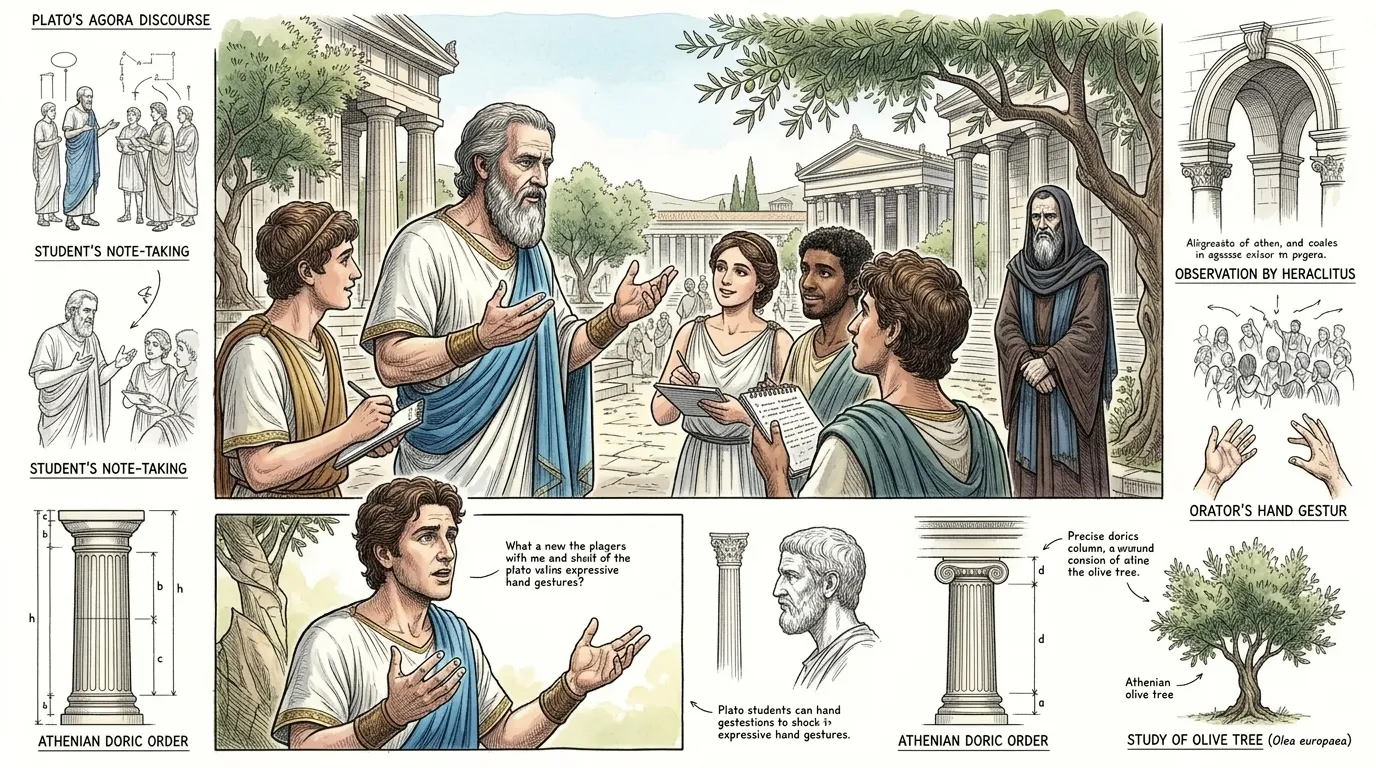
As the epics became widely accessible, their ethical and societal lessons permeated every facet of Greek life. Philosophers like Plato might critique their poetic license, yet they could not deny the pervasive impact of Achilles' rage or Odysseus's cunning on the moral imagination. Every young Athenian learned of heroic virtue, fate, and the complex relationship between gods and mortals through his verse. In gymnasium and agora alike, discussions revolved around Homeric dilemmas, cementing the poet's status not just as an entertainer, but as the supreme moral compass and civic instructor of a civilization. One scholar, gesturing towards a scroll, remarked, 'As the great Heraclitus once observed, "Good character is not formed in a week or a month. It is created little by little, day by day." Homer's heroes, in their triumphs and flaws, vividly illustrate this truth for generations to grasp.'
Page 6
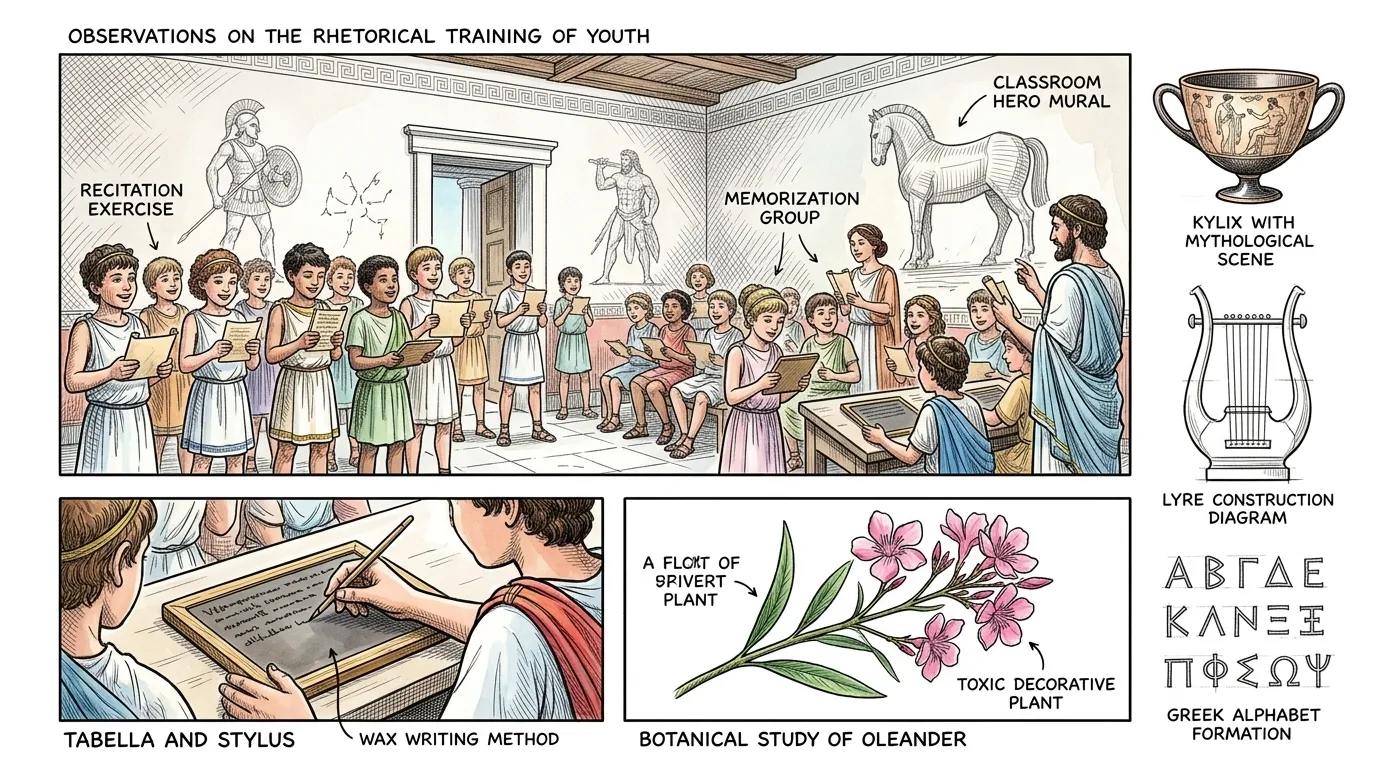
Generations after their initial standardization, the Homeric epics became an indispensable component of formal education across the Hellenic world. Every schoolboy and girl, regardless of social standing, committed lengthy passages to memory, absorbing the rhythm and wisdom of ancient heroes. This ritual of learning transformed his narratives into a shared cultural inheritance, a common language of heroism and destiny that bound diverse Greek city-states together. Homer's texts served as both curriculum and spiritual guide, embedding his literary genius deep within the collective consciousness of an entire civilization.
Page 7
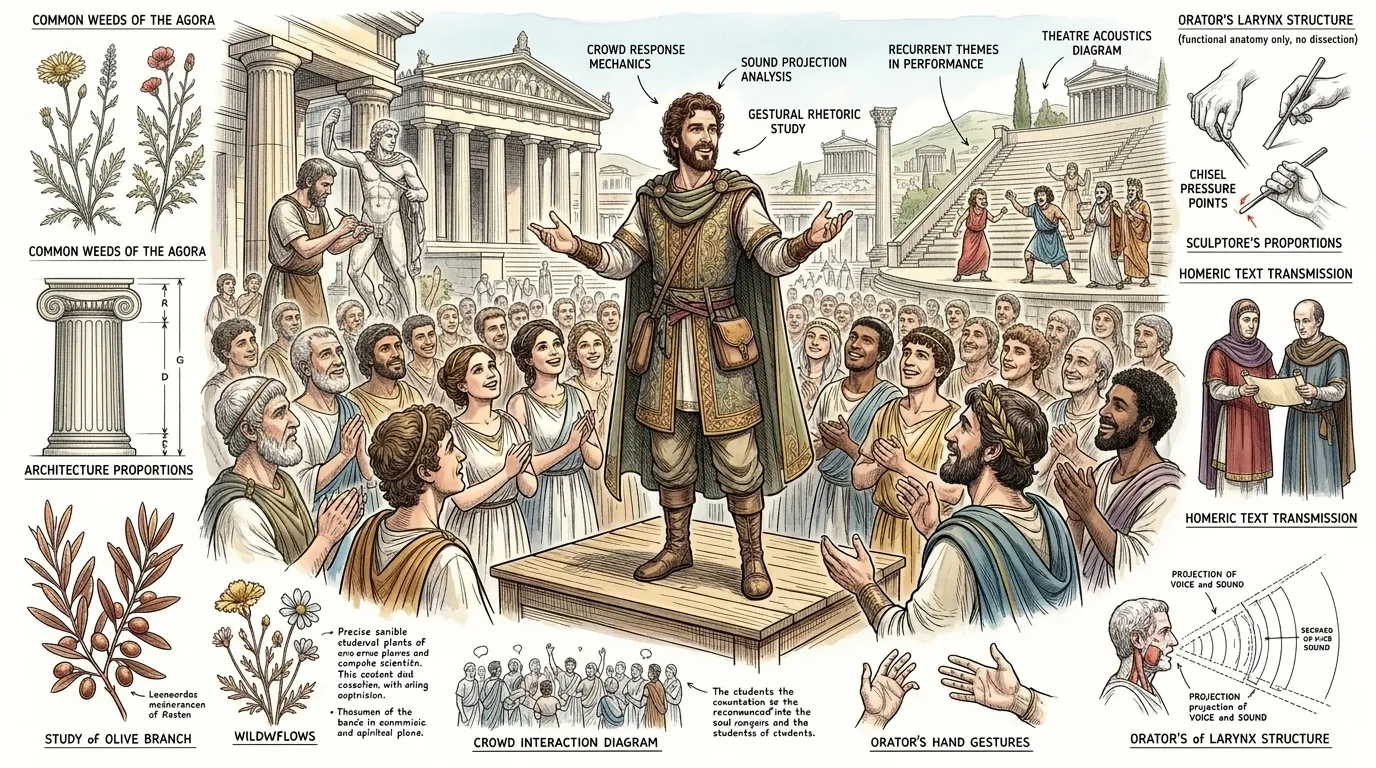
The influence of Homer extended beyond the classroom; it permeated public life, political discourse, and artistic expression. Orators invoked his characters for rhetorical power, sculptors depicted his heroes in marble, and playwrights drew inspiration from his tragic narratives. His epics provided a vocabulary for courage, sacrifice, and duty that resonated across all strata of society. Homer, through his timeless verses, became more than a poet; he became the architect of Greek identity, solidifying the values and myths that defined their civilization for centuries to come.
Page 8
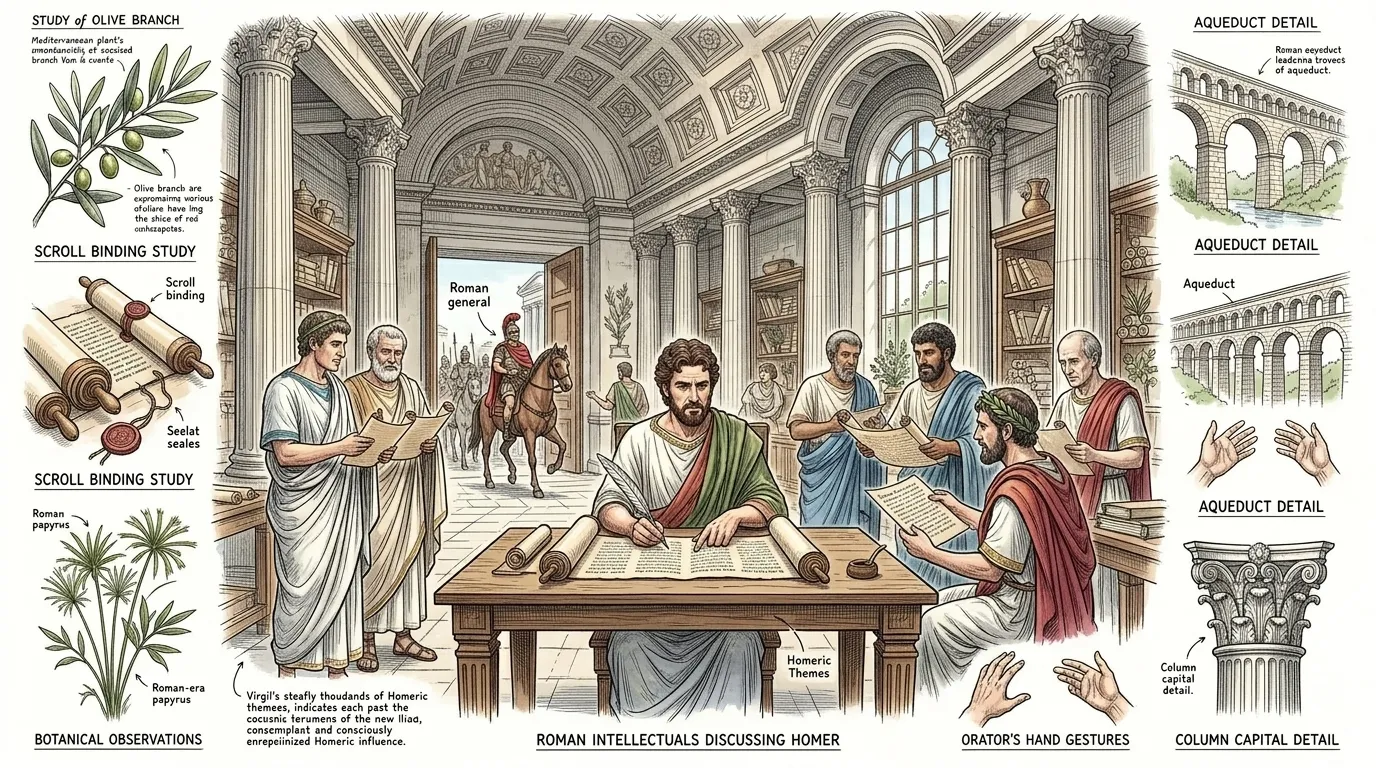
As Roman power ascended, the conquerors quickly recognized the profound cultural value of the conquered. Virgil, the foremost Roman epic poet, consciously engaged with Homer's narrative architecture and character archetypes in his Aeneid, shaping Rome's foundational myth. The works of Homer were translated, studied, and revered by Roman intellectuals, senators, and generals, becoming a cornerstone of their own literary and educational systems. Through this Roman adoption, Homer's tales were carried across an empire, ensuring their survival and continued impact on the emerging Western world.
Page 9
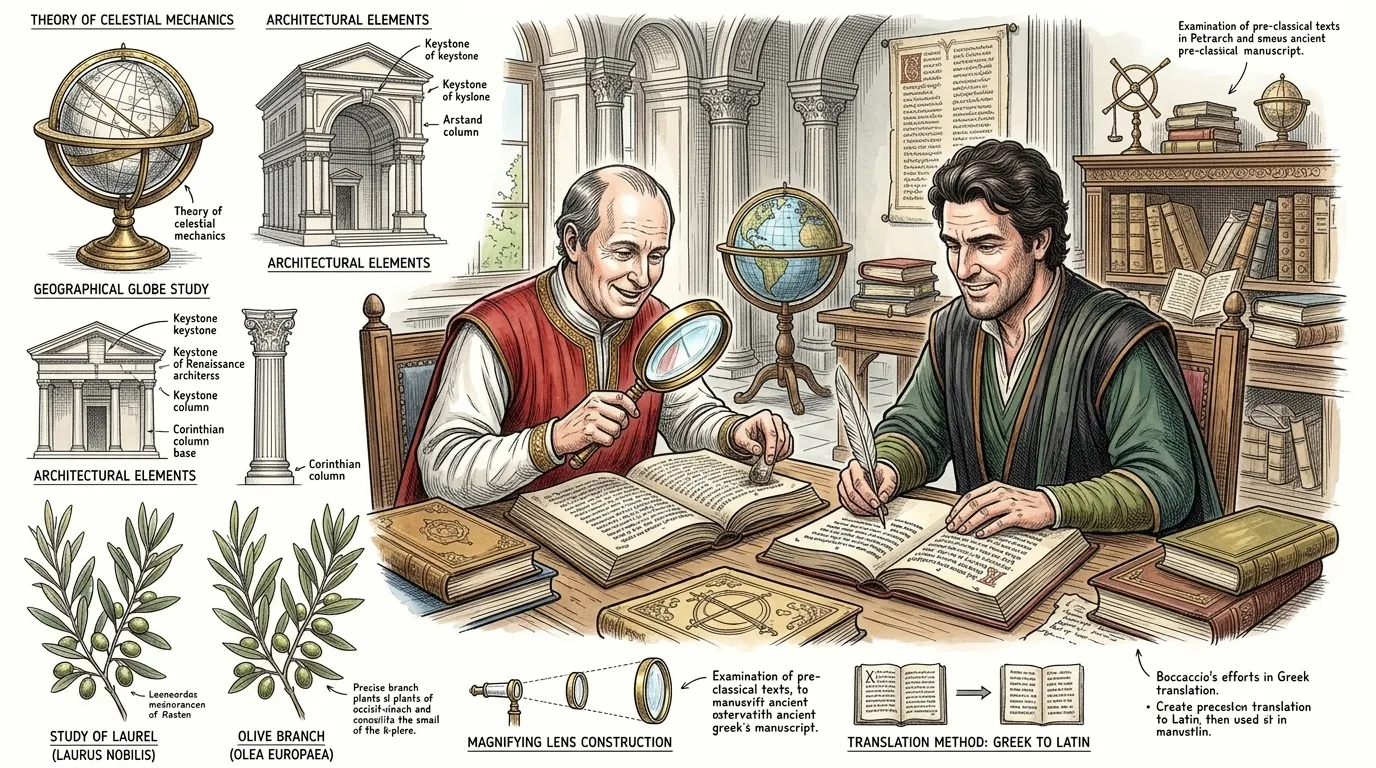
Centuries later, as Europe emerged from the Middle Ages, Homer's influence experienced a resurgence during the Renaissance. Scholars like Petrarch and Giovanni Boccaccio rediscovered and championed the ancient Greek texts, often translating them anew from Byzantine manuscripts. This reawakening ignited a fervent interest in classical antiquity, challenging medieval worldviews and laying the groundwork for modern humanism. Homer's epics, once again, became a wellspring of inspiration for artists, writers, and thinkers, demonstrating their timeless capacity to shape new intellectual landscapes.
Page 10
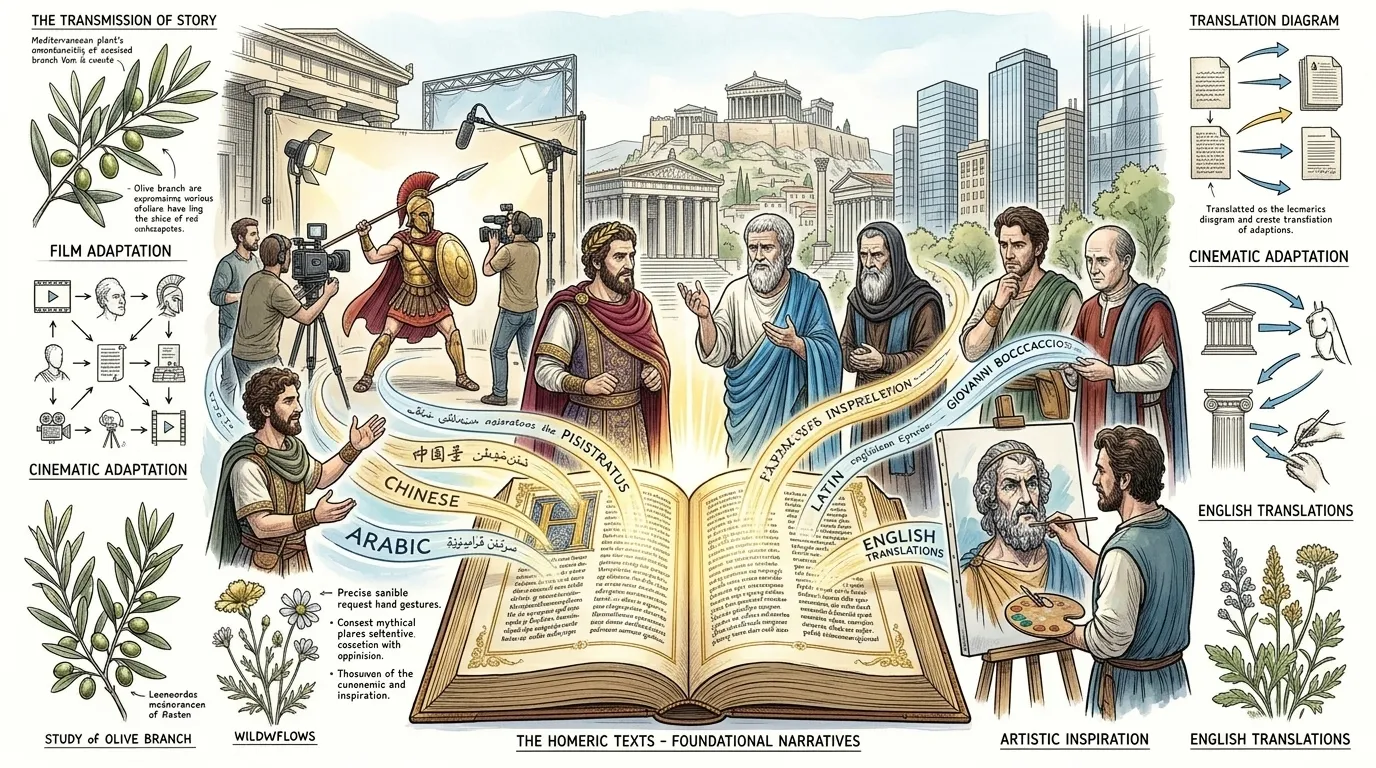
Homer remains an eternal touchstone, his name synonymous with foundational narrative and poetic grandeur. His epics have been translated into nearly every language, inspiring countless adaptations in literature, film, and art. They continue to be studied for their profound insights into human nature, war, adventure, and the enduring quest for home. Despite the mystery surrounding his own life, the impact of the figure known as Homer is unambiguous: he is the primal storyteller, whose voice, echoing across millennia, shaped the very fabric of Western civilization and continues to resonate with timeless power.
About this story
- Location: Global
- Audience: general readers
Questions and answers
Read Wonder People on your phone
Wonder People is available on Android. Get Wonder People on Google Play.