James Dyson
James Dyson — an illustrated biography story, set in Global. 10 illustrated pages, free to read on Wonder People.
Page 1

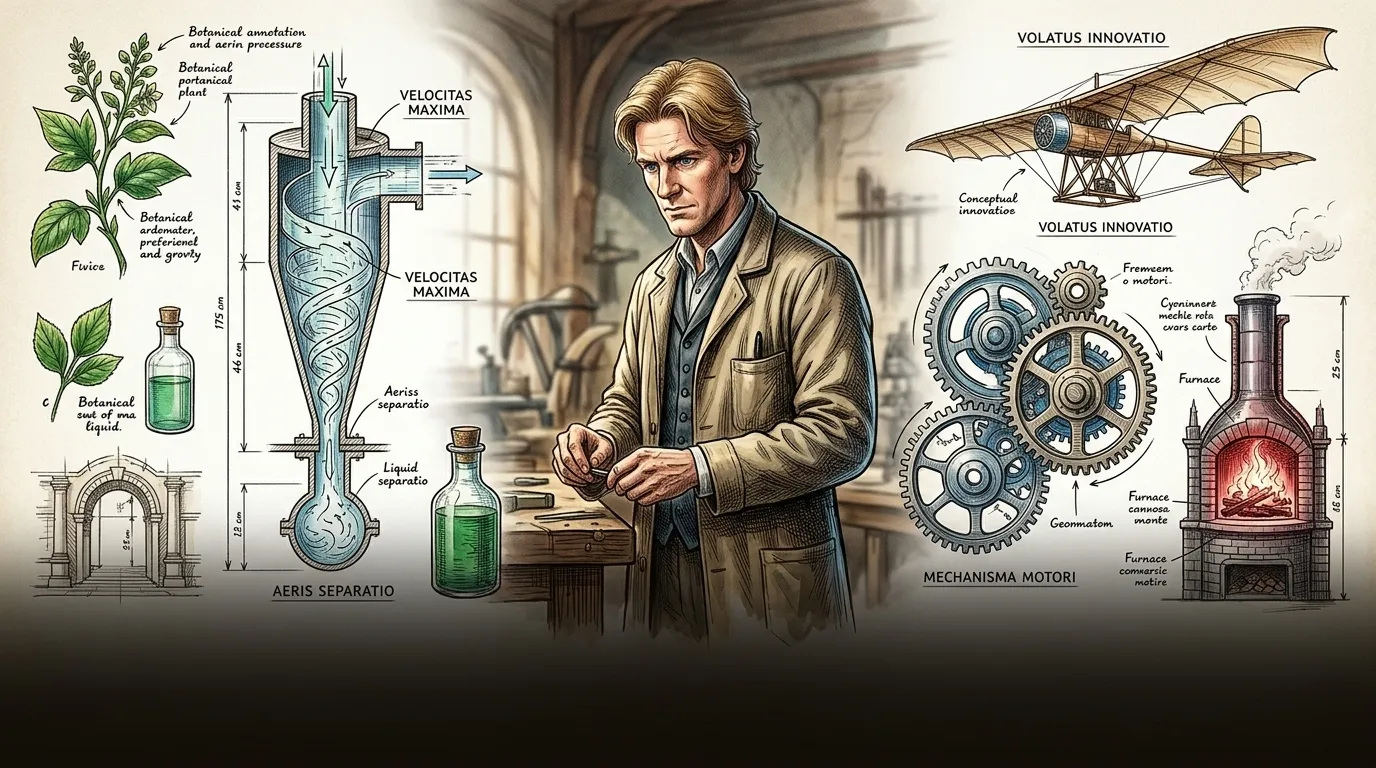
In 1993, at a London department store, James Dyson unveiled the DC01, the world's first cyclonic bagless vacuum cleaner. The move was audacious, challenging an entrenched market dominated by appliance giants and their disposable bags. He stood against decades of consumer conditioning, betting on a technology proven only in industrial settings, yet his singular vision was poised to redefine domestic cleaning forever. The device, a vibrant yellow-grey machine, promised an end to declining suction and costly bags, delivering a staggering 280 air watts of constant power.
Page 2
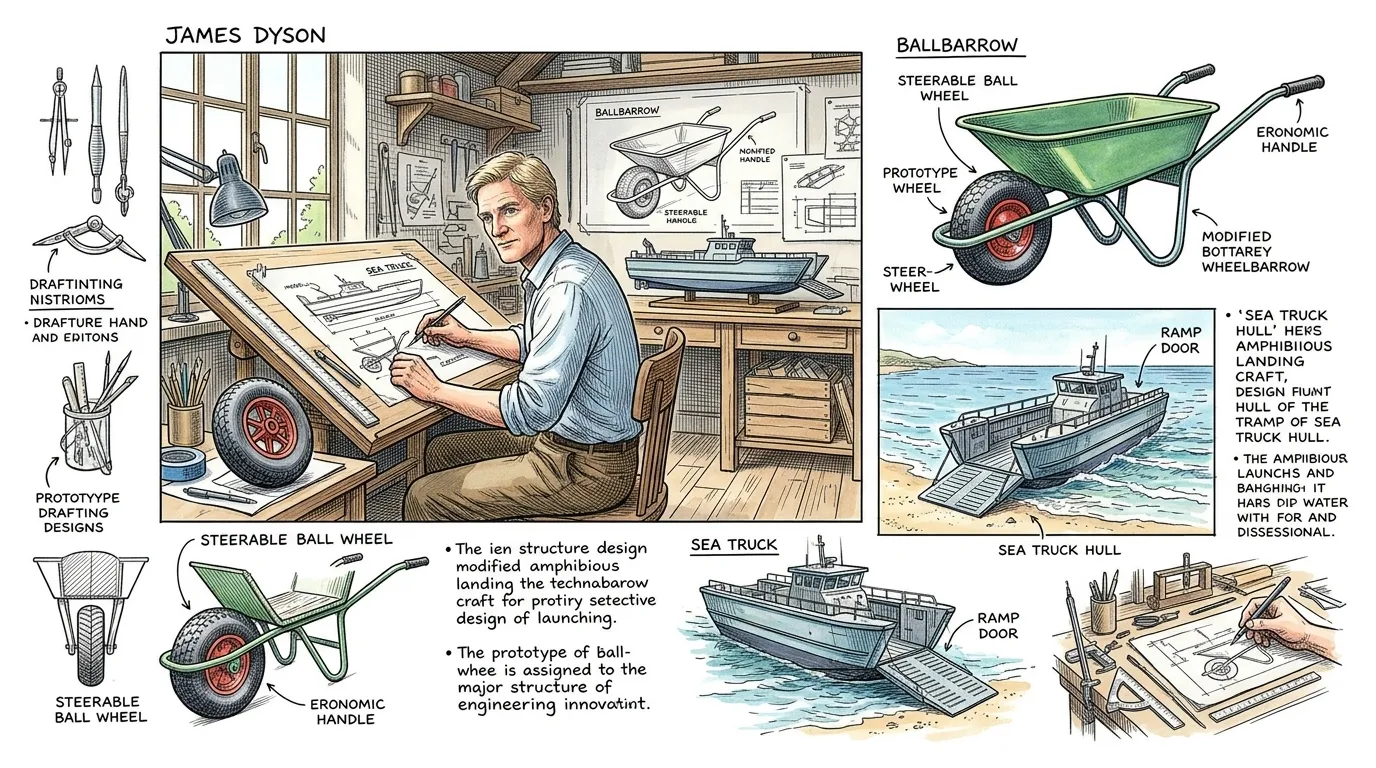
James Dyson's early path was not one of conventional engineering, but rather a blend of art and technology. Graduating from the Royal College of Art in the late 1960s, he immersed himself in industrial design, seeking to solve practical problems with elegant, functional solutions. His early projects, such as the Sea Truck, an amphibious landing craft, and the Ballbarrow, a modified wheelbarrow using a ball instead of a wheel, demonstrated a relentless drive to challenge existing paradigms and improve everyday objects through unconventional thinking and hands-on experimentation. This foundation would shape his approach to every subsequent challenge.
Page 3

Years later, after encountering issues with his existing vacuum cleaner's diminishing suction power, Dyson observed a local sawmill using a large cyclonic separator to remove sawdust from the air. This industrial technology, with its powerful vortex and bagless collection system, became a pivotal revelation. He saw the elegant simplicity and efficiency of this process—a constant, unimpeded airflow. This direct observation sparked a singular question: could this same principle be scaled down and applied to domestic vacuum cleaners, eliminating the inherent flaws of filter bags that clogged and reduced suction?
Page 4

From that insight, a grueling process began. Dyson retreated to a small coach house workshop behind his home, dedicating five years to relentless experimentation. He built prototype after prototype, iterating through countless designs, each attempt a step closer but still far from perfect. The floor became littered with failed models, discarded components, and reams of technical drawings. Financial strain mounted as he poured every resource into the project, fueled by an unwavering conviction that a bagless vacuum could fundamentally change the industry. His wife, Deirdre Dyson, a teacher, supported the family, enabling his single-minded pursuit.
Page 5
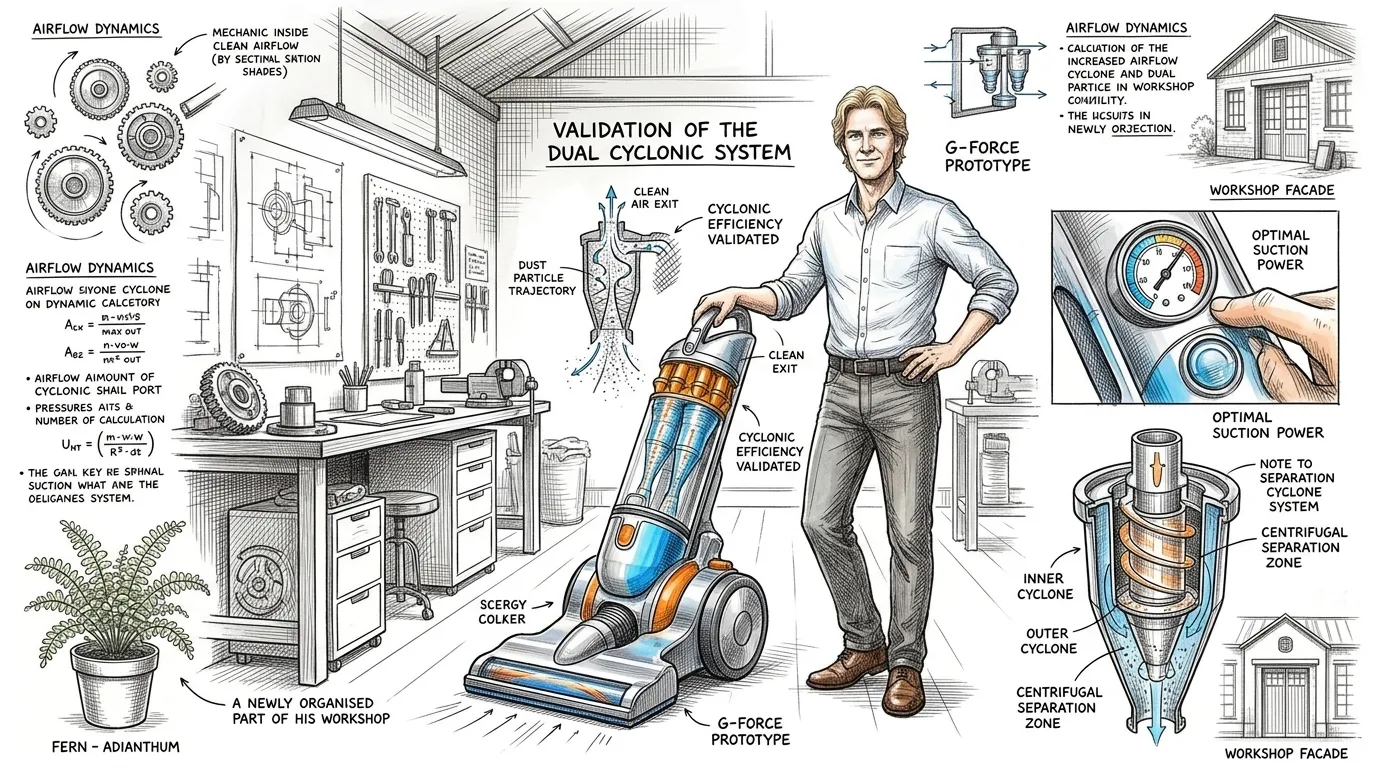
After 5,127 prototypes, the breakthrough arrived. Dyson perfected the dual cyclonic system, creating a vacuum cleaner that maintained constant suction, never losing power as its dust chamber filled. This functional prototype, later named the G-Force, was an undeniable validation of his theory. It was sleek, efficient, and, most importantly, delivered on its promise. This moment in his workshop marked the culmination of years of isolated, painstaking work, transforming a persistent problem into a tangible, revolutionary solution. The G-Force stood as a testament to his tenacity.
Page 6

Armed with his revolutionary G-Force prototype, Dyson approached major appliance manufacturers across Europe, seeking licensing agreements. Over three years, he met with companies like Electrolux and Hoover, only to face uniform rejection. The established players, deeply invested in the lucrative disposable bag market, saw no incentive to adopt a technology that would disrupt their existing profit streams. Each 'no' reinforced Dyson's growing understanding that if his invention was to reach the world, he would have to build the business himself. This systemic refusal solidified his resolve to forge an independent path.
Page 7
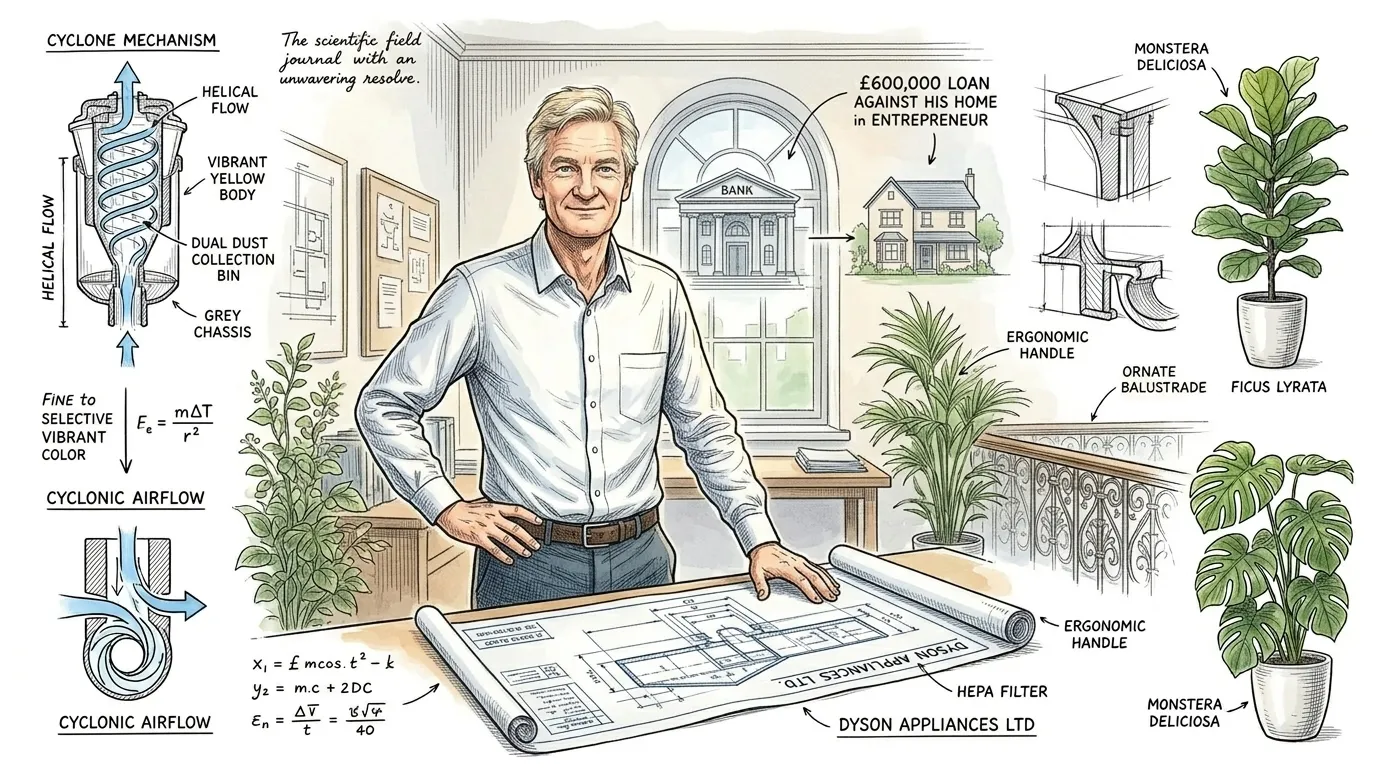
In 1991, with no major manufacturer willing to license his design, James Dyson made the momentous decision to launch his own company. He secured a bank loan of 600,000 against his home and formed Dyson Appliances Ltd. It was a perilous gamble: he had mortgaged his entire future on a single invention that the industry had dismissed. This financial leap of faith, driven by an unshakeable belief in his product's superiority, marked his transformation from an inventor seeking a partner to an entrepreneur building an empire. The path ahead was uncertain, but he was now in control of his destiny.
Page 8
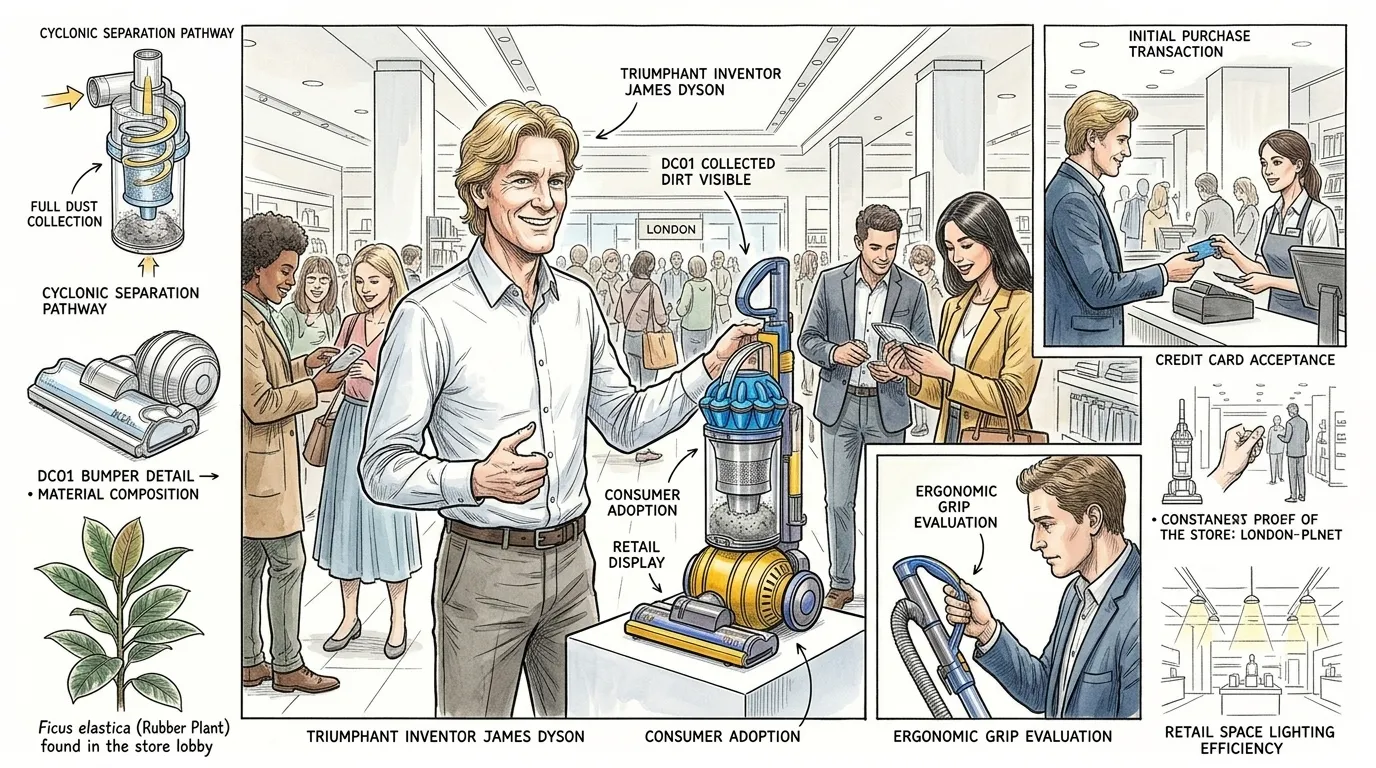
The launch of the DC01 in 1993 was an unprecedented success. Against all odds, Dyson's bagless vacuum captured the public imagination and market share. Its clear dustbin became a visual icon, demonstrating the dirt it collected, a stark contrast to the hidden grime of bagged machines. Within 18 months, the DC01 became the best-selling vacuum cleaner in the UK, outselling models from companies that had rejected him. The success compelled competitors to scramble, attempting to replicate his technology, proving the profound impact of his singular vision on an entire industry.
Page 9

Dyson's success with vacuums proved his core cyclonic technology was transferable. He expanded his company's portfolio to include new product categories, from the Airblade hand dryer, which used sheets of air to dry hands efficiently, to the bladeless fan, a revolutionary approach to air circulation. These inventions, all rooted in his design philosophy of solving problems elegantly, propelled Dyson into a global technology powerhouse. His innovations consistently challenged existing norms, forcing entire industries to re-evaluate fundamental product designs and user experiences.
Page 10

Today, James Dyson's legacy extends beyond innovative products. His commitment to practical problem-solving and fearless invention culminated in the establishment of the Dyson Institute of Engineering and Technology in Malmesbury. This institution offers a new model of higher education, combining academic study with hands-on work experience, nurturing the next generation of engineers and innovators. Dyson's life is a testament to the power of persistence, critical observation, and an unwavering belief in challenging the status quo, leaving an indelible mark on how we conceive of design, technology, and education.
About this story
- Location: Global
- Audience: general readers