Jane Austen
Jane Austen — an illustrated biography story, set in Global. 10 illustrated pages, free to read on Wonder People.
Page 1
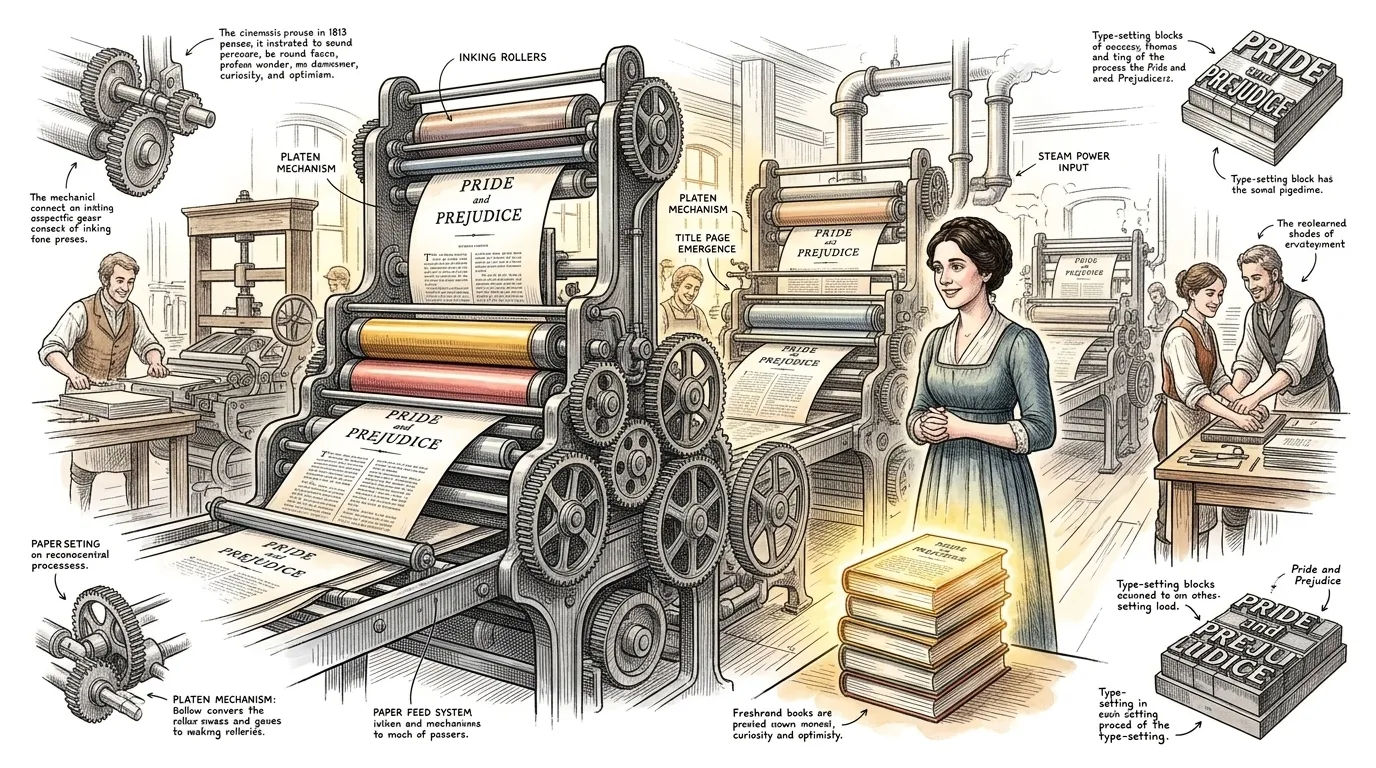
In a bustling London printing house, 1813, the presses roared, marking a profound shift in English literature. Jane Austen, her presence discreet yet commanding, observed the relentless churning of the machinery that gave physical form to her vision. Her novel, Pride and Prejudice, was not merely a book; it was a phenomenon already stirring conversations across drawing-rooms and circulating libraries. With an initial print run of 1,500 copies, its elegant prose and incisive social commentary would soon captivate a nation, establishing her as an indelible voice in the literary canon. The world was about to fully receive her wit, and through it, she would become impossible to ignore.
Page 2
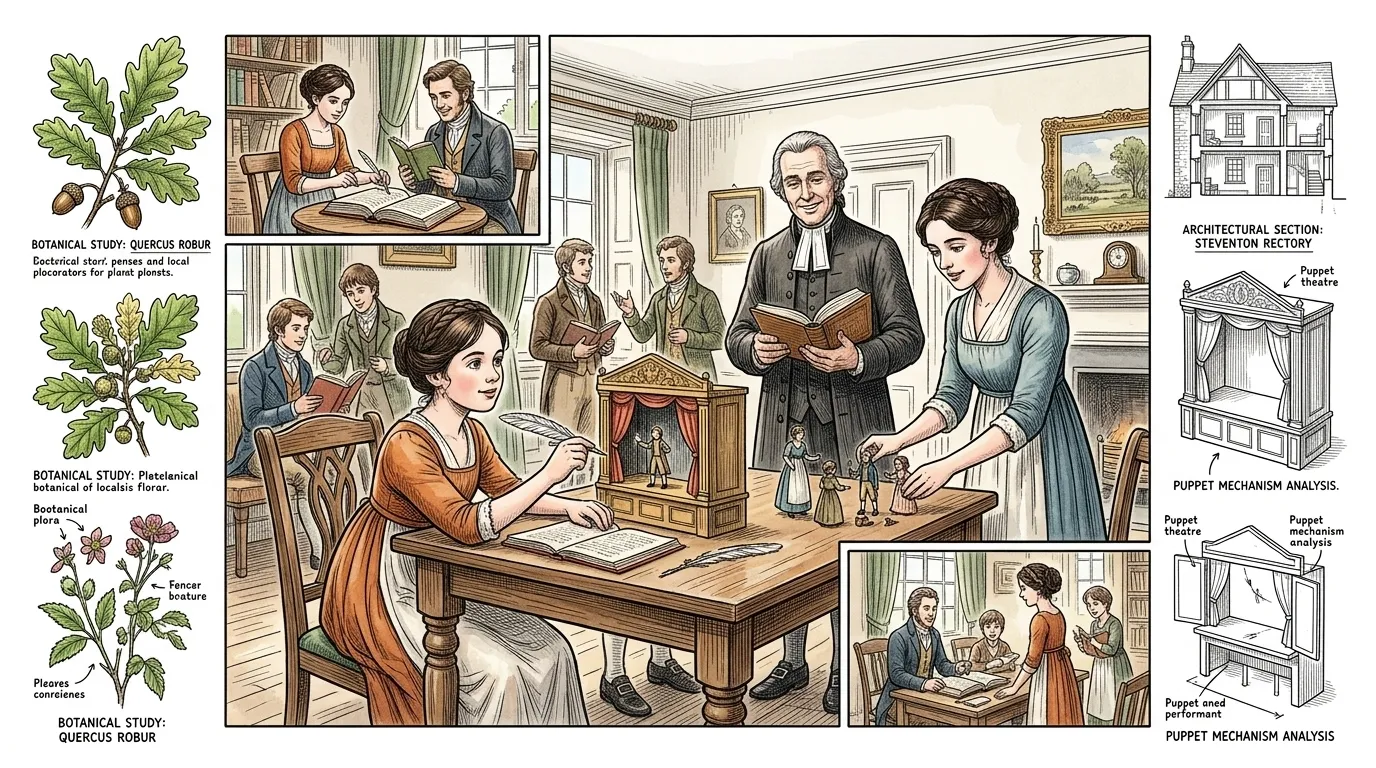
Born in 1775 at Steventon Rectory, Hampshire, Jane Austen's early life unfolded within a family rich in intellect and literary pursuits. Her father, Reverend George Austen, fostered a vibrant domestic environment, encouraging reading and dramatic performance. This fertile ground shaped Jane's keen observational skills and satirical voice. Surrounded by six brothers and her beloved sister, Cassandra, Jane absorbed the nuances of genteel society, crafting youthful narratives that playfully skewered its conventions. This intimate, intellectually charged world provided the essential foundation for her later, profound analyses of human nature.
Page 3
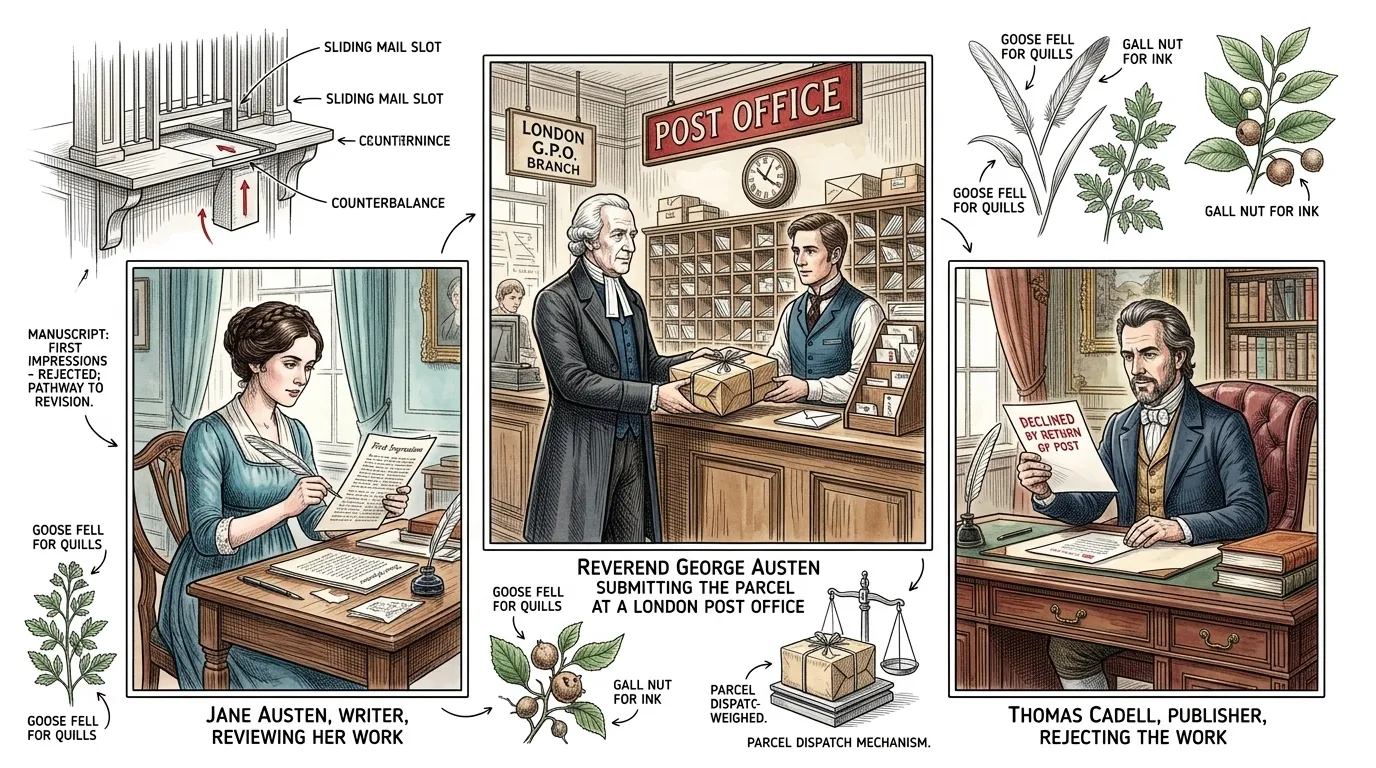
By 1797, a twenty-two-year-old Jane Austen had completed 'First Impressions,' the early version of what would become Pride and Prejudice. This pivotal manuscript was her audacious entry into the literary world. Her father, taking on the role of an agent, dispatched it to Thomas Cadell, a prominent London publisher. The publisher's swift rejection, a stark two-word 'Declined by return of post,' landed not as a defeat but as a formative lesson. Austen faced the uncompromising realities of the publishing industry, yet her resolve to refine her craft remained unshaken, an internal commitment no external dismissal could diminish.
Page 4
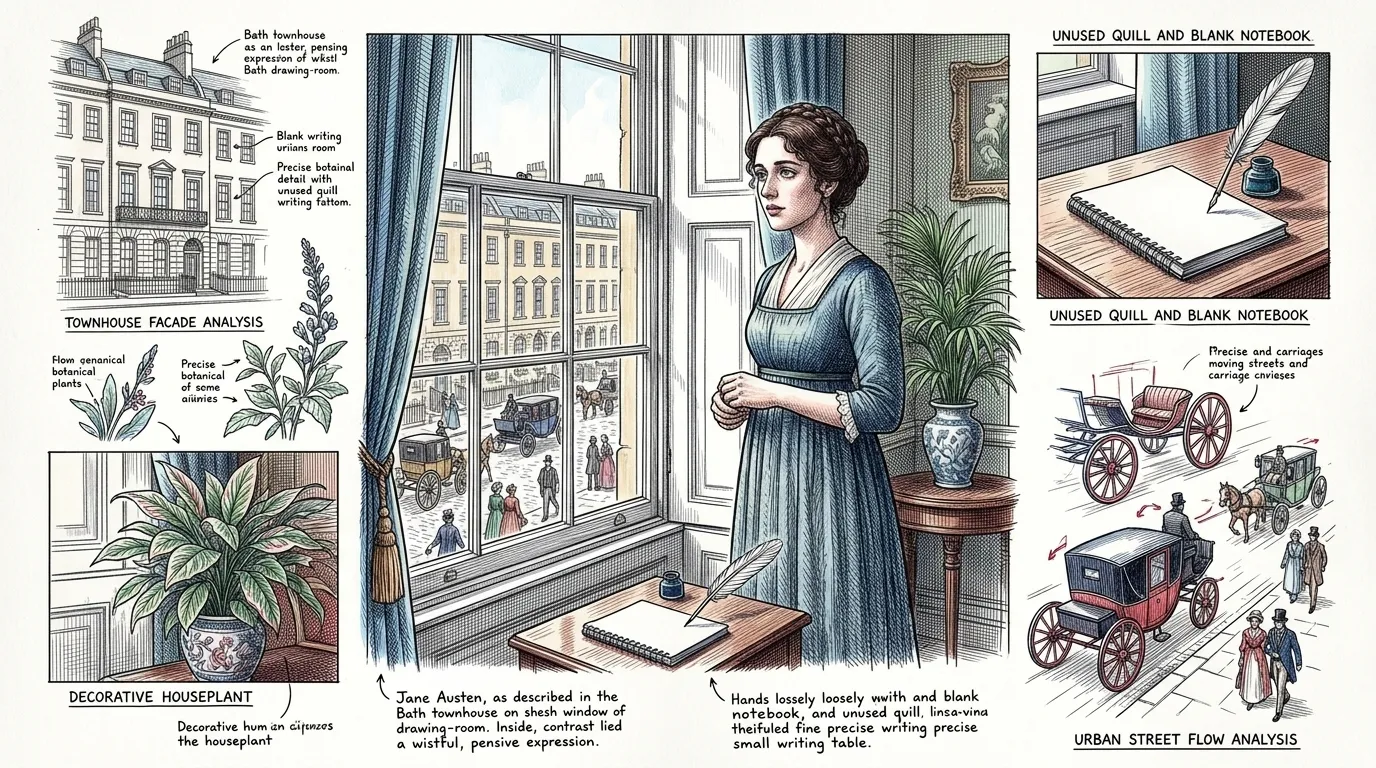
In 1801, Reverend Austen's unexpected retirement uprooted the family from Steventon to the fashionable city of Bath. This abrupt change shattered Jane's established routine and her creative rhythm, initiating a nearly seven-year silence in her writing output. The constant social demands and the absence of a dedicated writing space stifled her inspiration. Despite the vibrant urban setting, Jane struggled to find the solitude and perspective essential for her art. This period of creative dormancy revealed how deeply her environment influenced her ability to translate observation into enduring literature, forcing a profound internal struggle.
Page 5
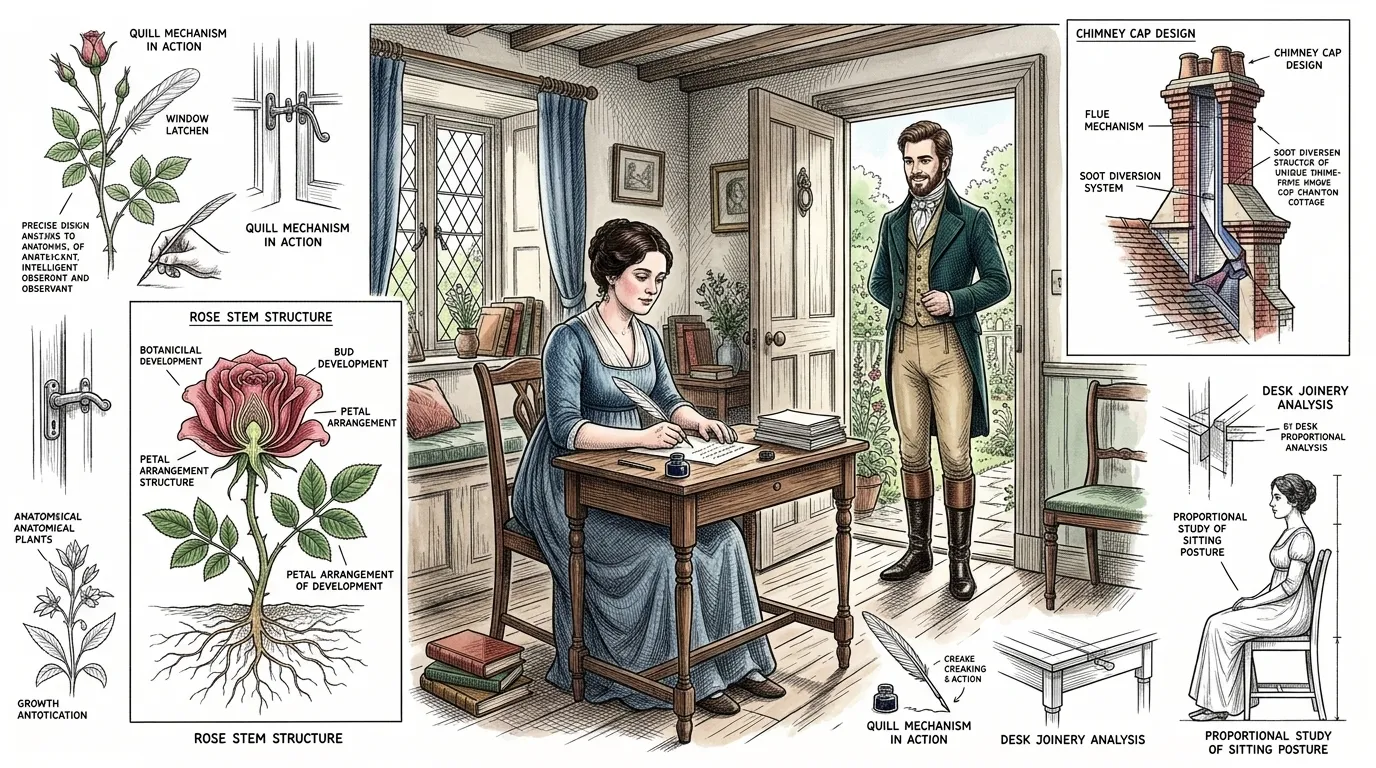
A decade after leaving Steventon, Jane Austen found her true creative sanctuary in Chawton Cottage, Hampshire, in 1809. Her brother Edward provided the humble abode, offering the stability and quiet her spirit craved. Here, with a small, creaking writing desk set strategically in the common drawing-room, she regained her literary momentum. The familiar rhythm of domestic life, observed anew, fueled her imagination. This return to rural comfort allowed her to revise 'First Impressions' into Pride and Prejudice and to complete Sense and Sensibility, marking the beginning of her most prolific and impactful creative phase.
Page 6
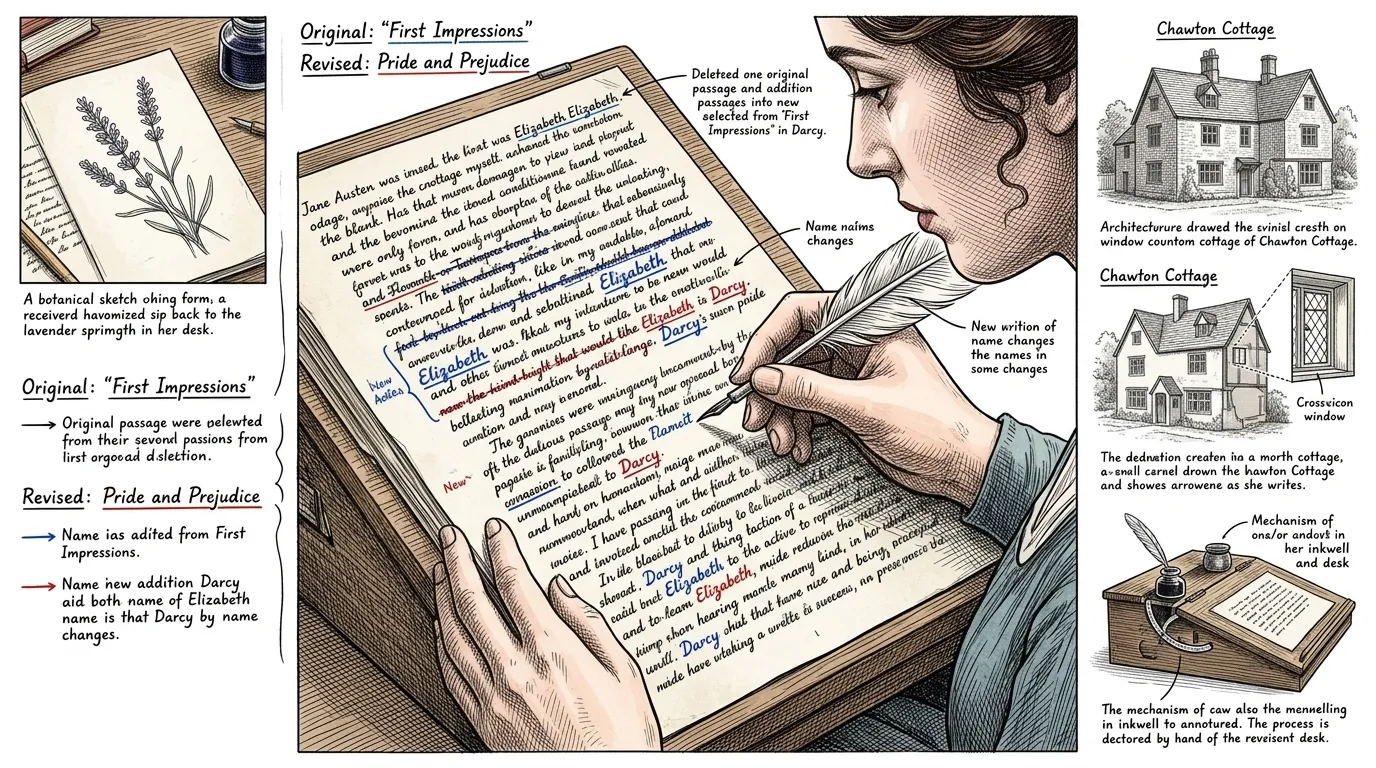
At Chawton, Jane Austen embarked on the painstaking process of transforming 'First Impressions' into Pride and Prejudice. This was not a mere edit but a radical refinement, sharpening characters, elevating dialogue, and perfecting the intricate dance of social interaction. For two years, she meticulously reworked the manuscript, each stroke of her pen imbuing the narrative with deeper psychological insight and enhanced satirical edge. This act of dedicated revision demonstrated her unwavering commitment to literary excellence, turning a promising early work into a timeless masterpiece, a testament to her exacting artistic standards.
Page 7
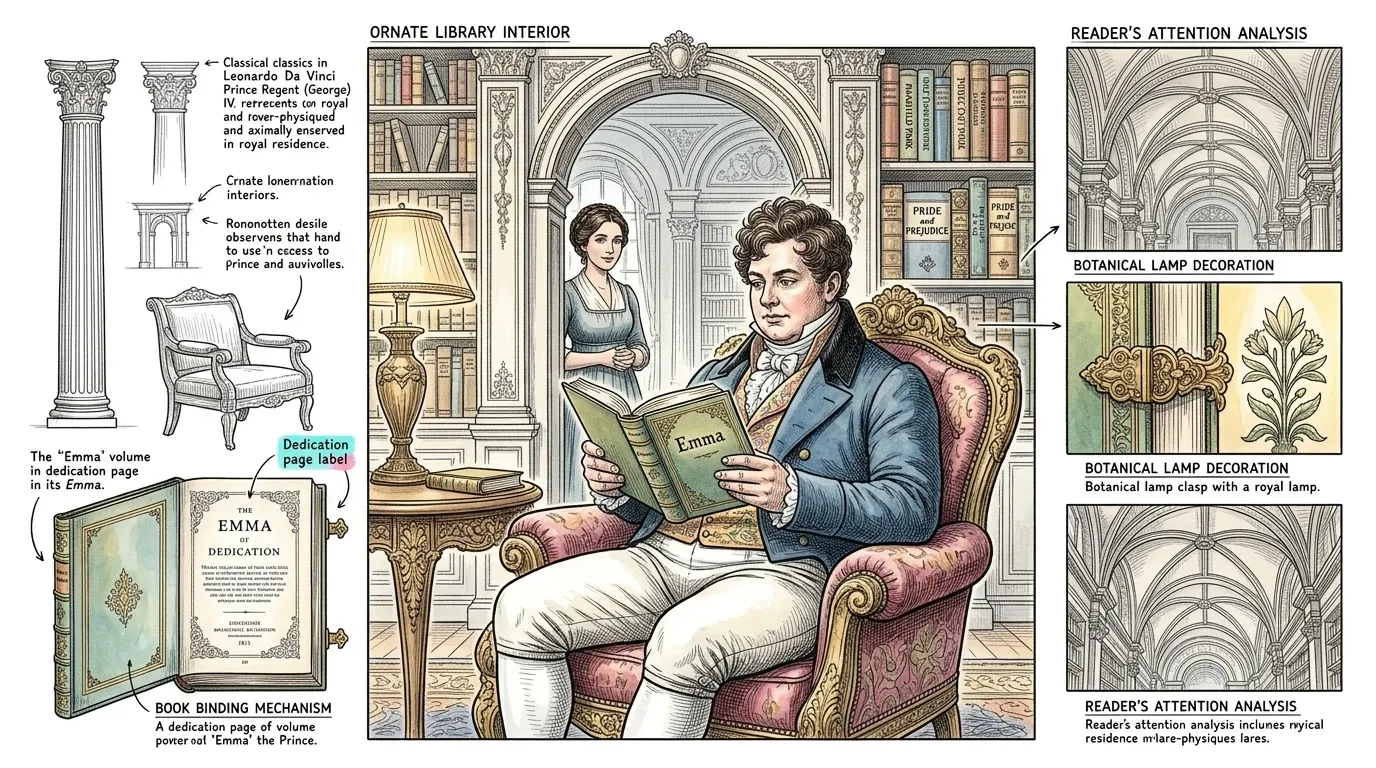
Following Pride and Prejudice, Jane Austen continued her prolific output, publishing Mansfield Park in 1814 and Emma in 1815, both 'By the Author of Pride and Prejudice.' Her decision to publish anonymously was a shield against the public scrutiny of female authors, yet her works quickly gained critical and popular acclaim. The Prince Regent, an ardent admirer, even granted her permission to dedicate Emma to him. Despite her hidden identity, Austen's incisive novels resonated deeply, shaping tastes and capturing the imagination of a growing readership. She was, unequivocally, becoming a literary star, though her name remained concealed behind the strength of her prose.
Page 8
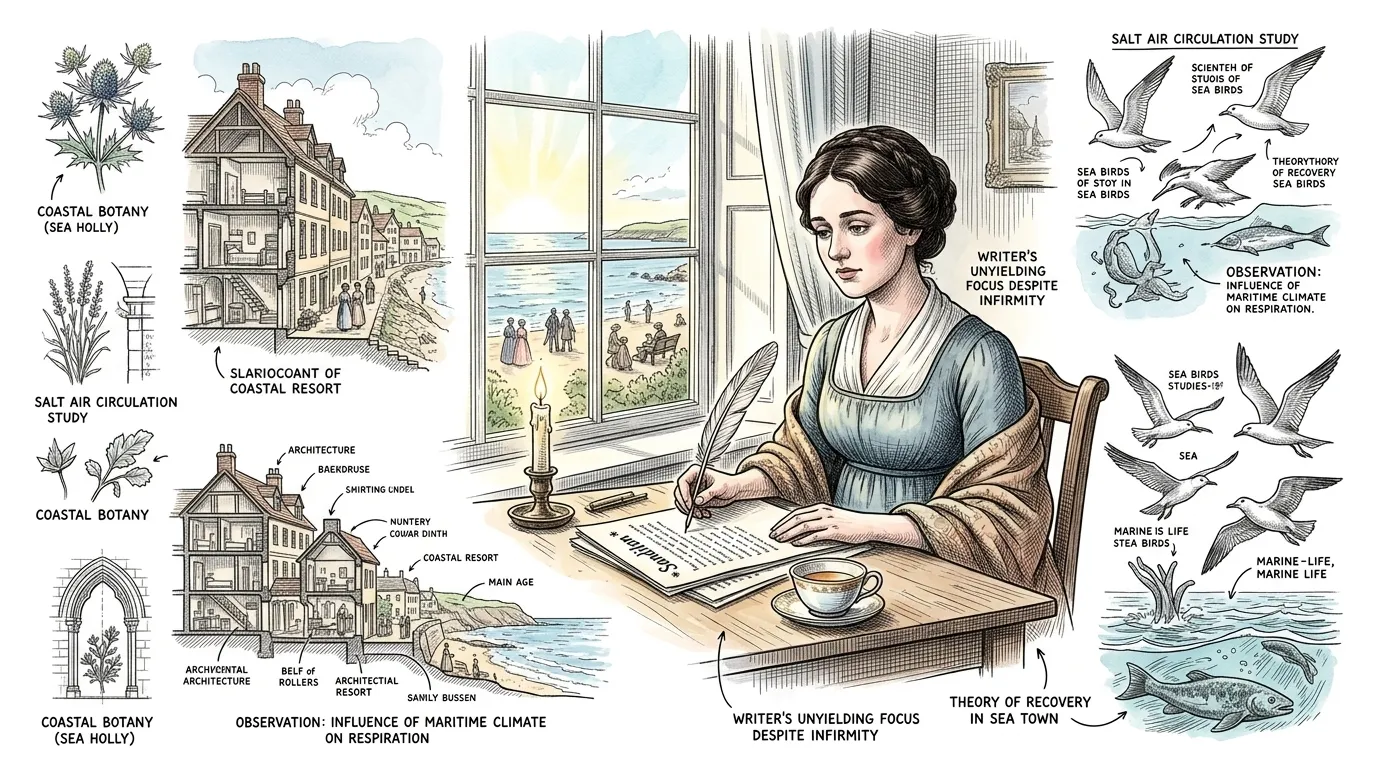
By 1816, Jane Austen's health began to fail, likely from Addison's disease, yet her creative drive persisted. Enduring debilitating symptoms, she commenced writing Sanditon, an unfinished but boldly experimental novel that diverged from her established style. This late-stage effort, marked by an exploration of health tourism and social change, demonstrated her intellectual curiosity and resilience even as her body weakened. Her final period of writing, undertaken amidst profound physical suffering, underscored her unyielding dedication to her art, a testament to a spirit that refused to be silenced by illness.
Page 9
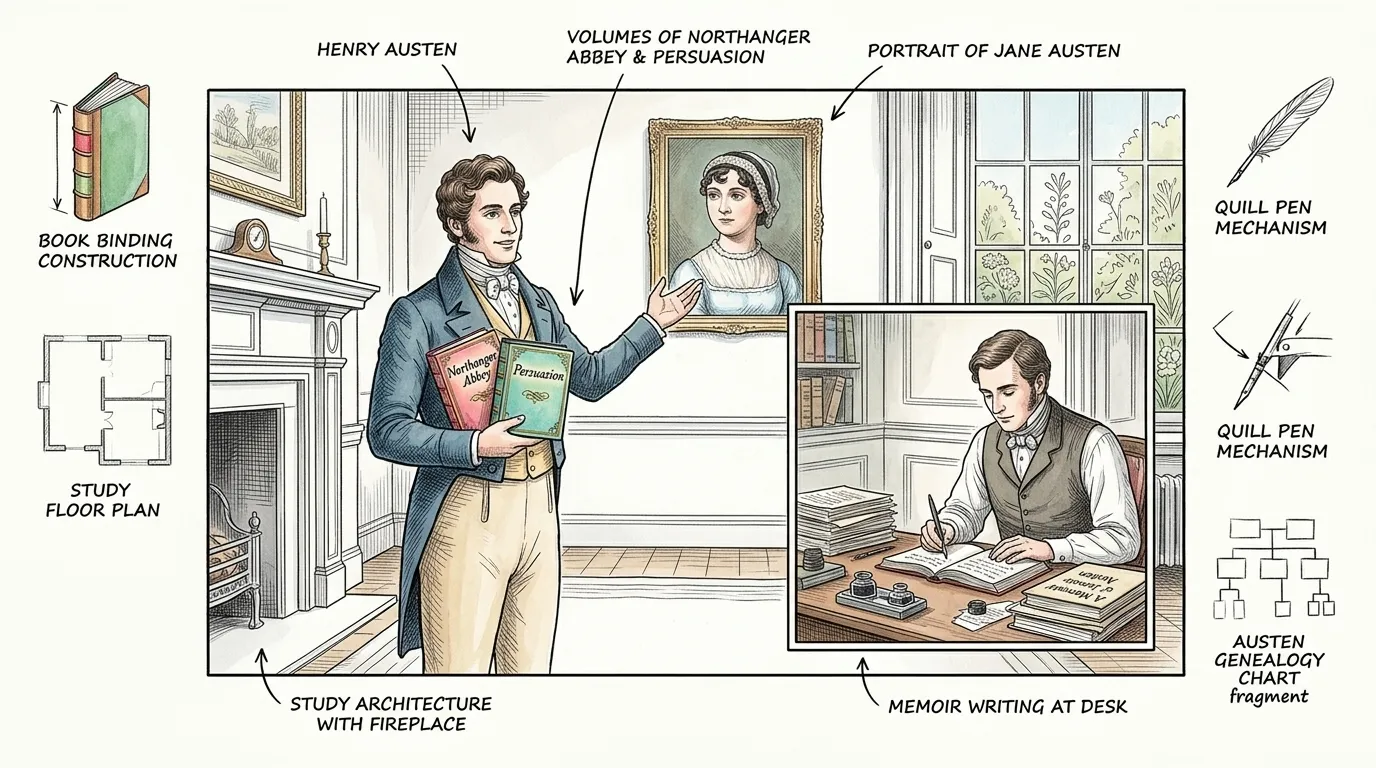
Jane Austen died in Winchester in 1817, at the age of 41, her genius still largely unrecognized by the wider public due to her anonymity. It was her brother Henry Austen who, in the posthumous publication of Northanger Abbey and Persuasion in 1818, finally revealed her identity as the author. This revelation ignited a fresh wave of appreciation and critical analysis. Later, her nephew, James Edward Austen-Leigh, published A Memoir of Jane Austen in 1869, cementing her biography and bringing her works into the full light of literary history. The world finally understood the woman behind the beloved narratives, and her stature began its ascent.
Page 10
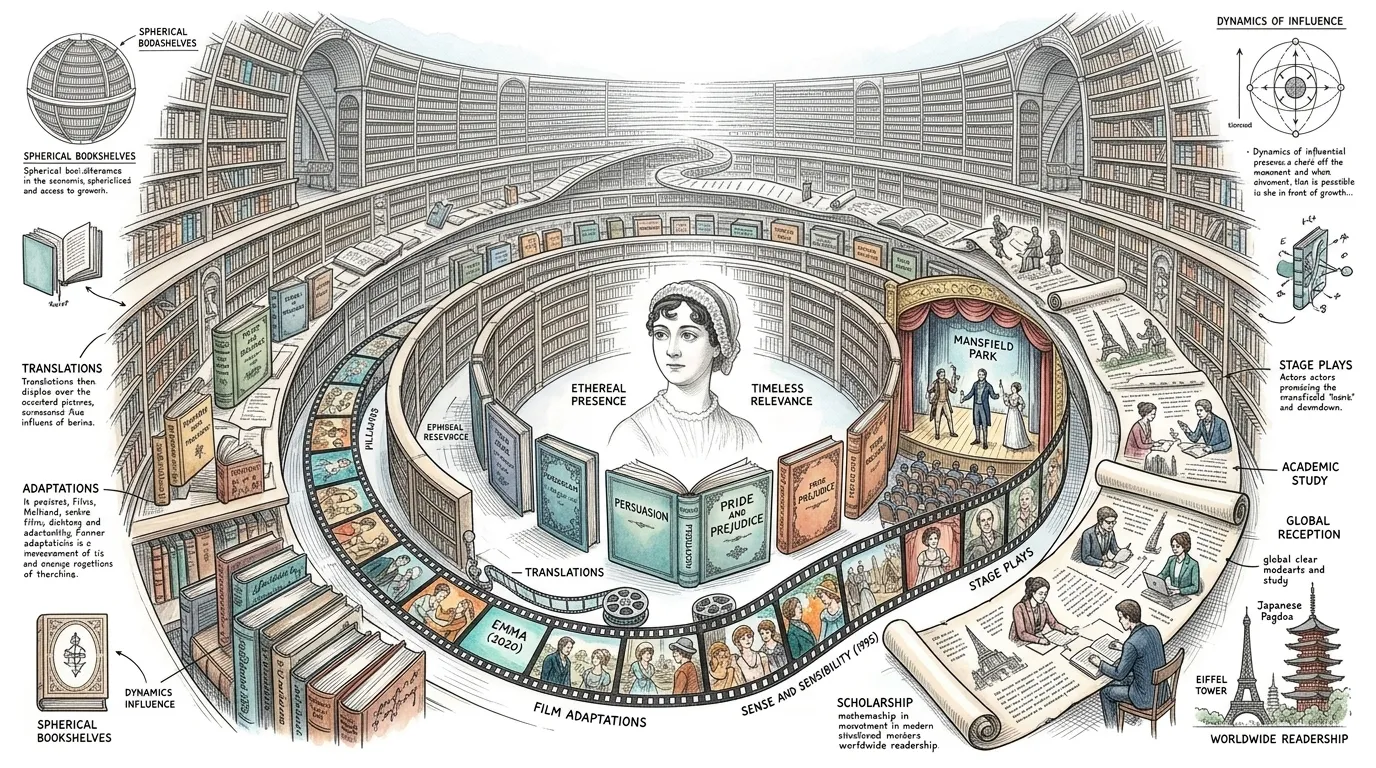
Two centuries after her passing, Jane Austen's influence remains profound and pervasive, a testament to her timeless insight into human nature. Her novels, once circulating in private libraries, now span continents, translated into countless languages and adapted into iconic films, television series, and stage productions. From academic scholarship dissecting her narrative techniques to popular culture embracing her romantic narratives, Austen's keen observations on society, class, and love continue to resonate. She stands as a monumental figure, her elegant prose and sharp wit having irrevocably shaped the landscape of literature and our understanding of the human heart.
About this story
- Location: Global
- Audience: general readers
Questions and answers
Read Wonder People on your phone
Wonder People is available on Android. Get Wonder People on Google Play.