John Logie Baird

John Logie Baird — an illustrated biography story, set in Global. 10 illustrated pages, free to read on Wonder People.
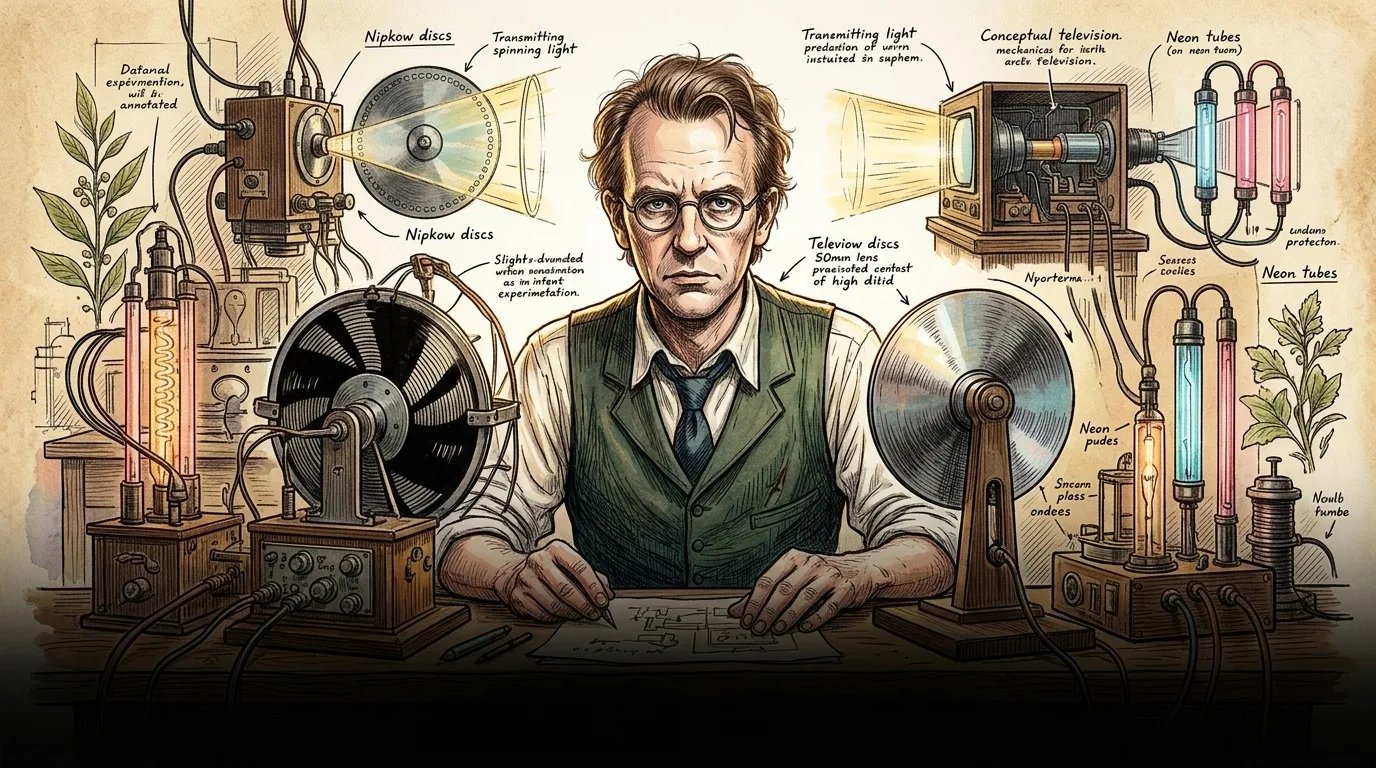
John Logie Baird — book cover — Wonder People
John Logie Baird — an illustrated biography story, set in Global. 10 illustrated pages, free to read on Wonder People.

Page 1
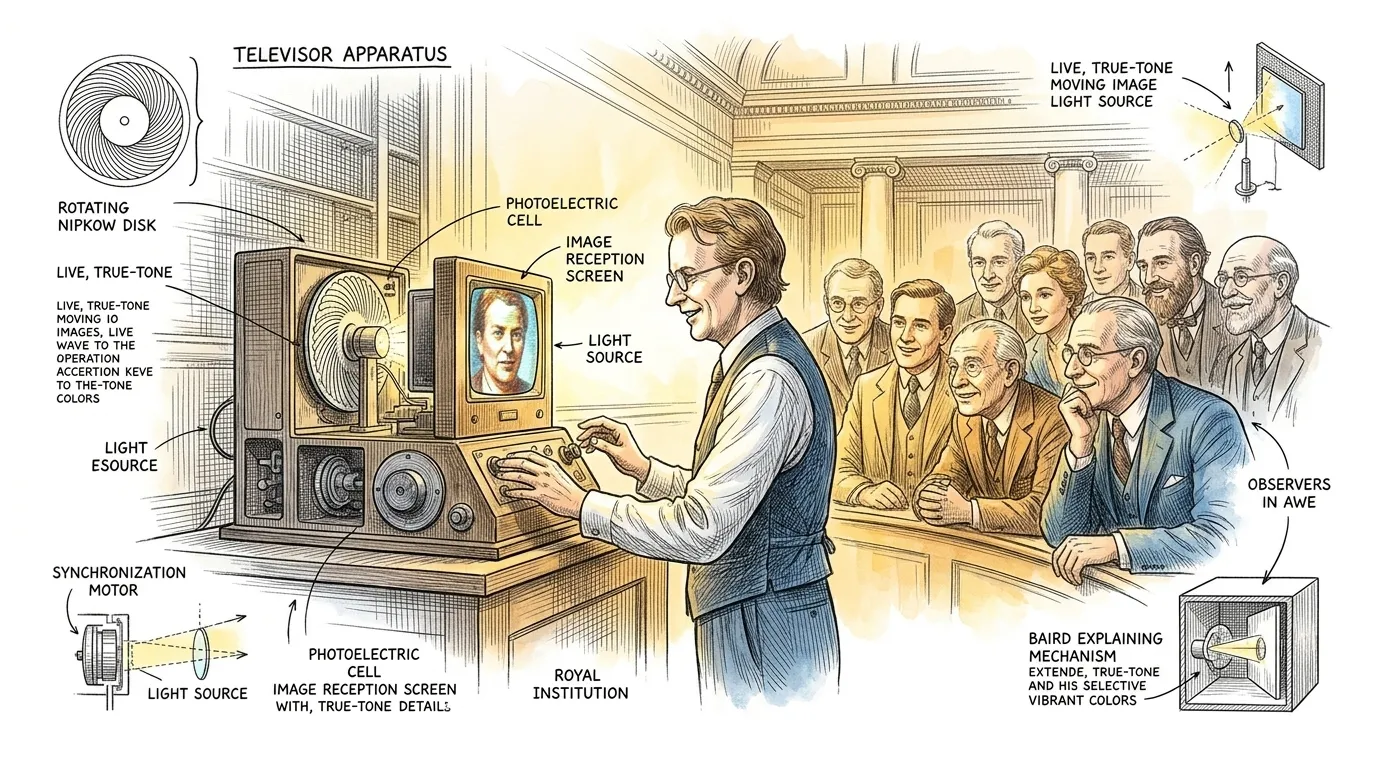
At the Royal Institution in London, on January 26, 1926, John Logie Baird achieved what many deemed impossible. Before 50 esteemed scientists and journalists…
At the Royal Institution in London, on January 26, 1926, John Logie Baird achieved what many deemed impossible. Before 50 esteemed scientists and journalists, he activated his 'Televisor' apparatus, transmitting the first live, true-tone moving images of a human face. In that decisive moment, a flicker on a screen transformed the future of human communication forever, marking the irrefutable birth of television.

At the Royal Institution in London, on January 26, 1926, John Logie Baird achieved what many deemed impossible. Before 50 esteemed scientists and journalists, he activated his 'Televisor' apparatus, transmitting the first live, true-tone moving images of a human face. In that decisive moment, a flicker on a screen transformed the future of human communication forever, marking the irrefutable birth of television.

Page 2
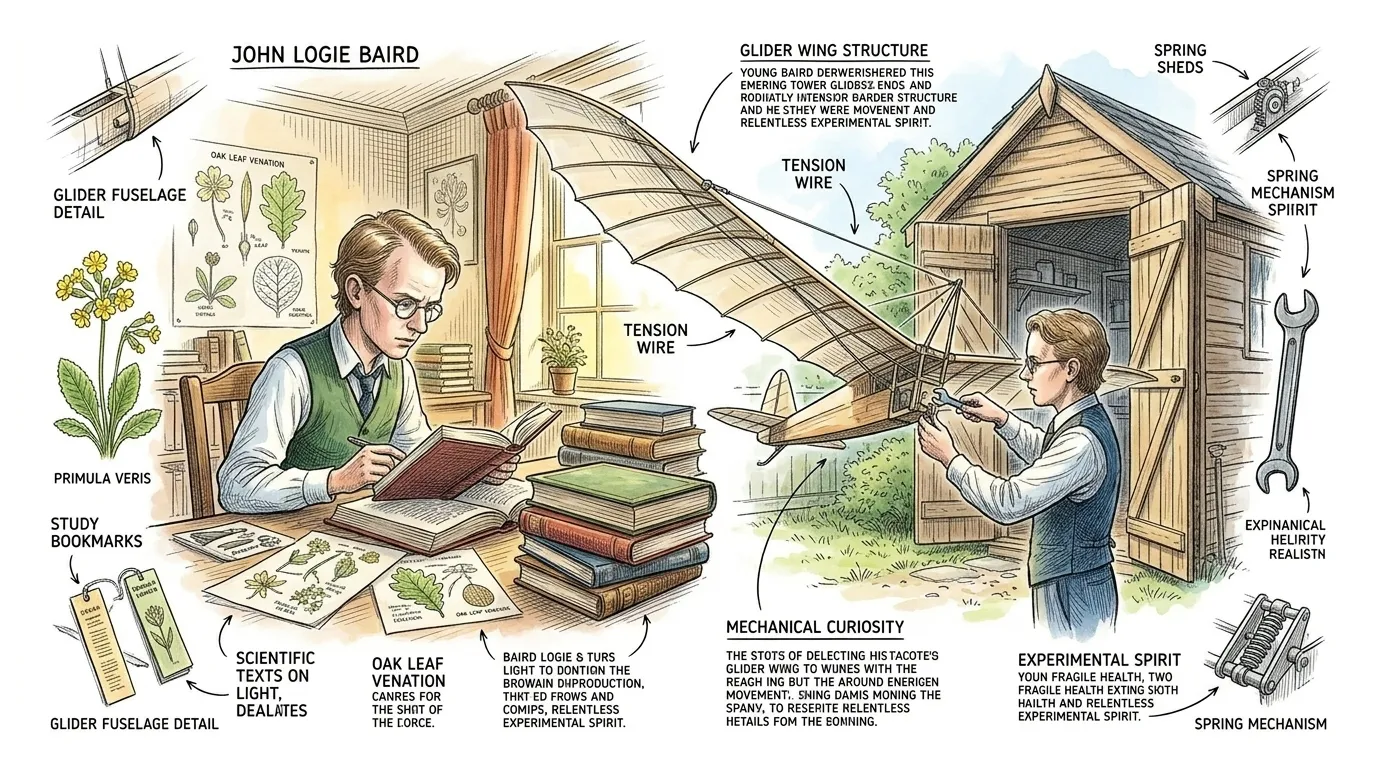
Born in Helensburgh, Scotland, in 1888, John Logie Baird's early life was marked by fragile health, yet an unyielding mechanical curiosity defined him.
Born in Helensburgh, Scotland, in 1888, John Logie Baird's early life was marked by fragile health, yet an unyielding mechanical curiosity defined him. Confined indoors, he devoured scientific texts and relentlessly experimented, constructing rudimentary telephone exchanges and even attempting to fly an early manned glider from his garden shed. This intense, isolated dedication forged the foundational mindset for his future innovations.

Born in Helensburgh, Scotland, in 1888, John Logie Baird's early life was marked by fragile health, yet an unyielding mechanical curiosity defined him. Confined indoors, he devoured scientific texts and relentlessly experimented, constructing rudimentary telephone exchanges and even attempting to fly an early manned glider from his garden shed. This intense, isolated dedication forged the foundational mindset for his future innovations.

Page 3
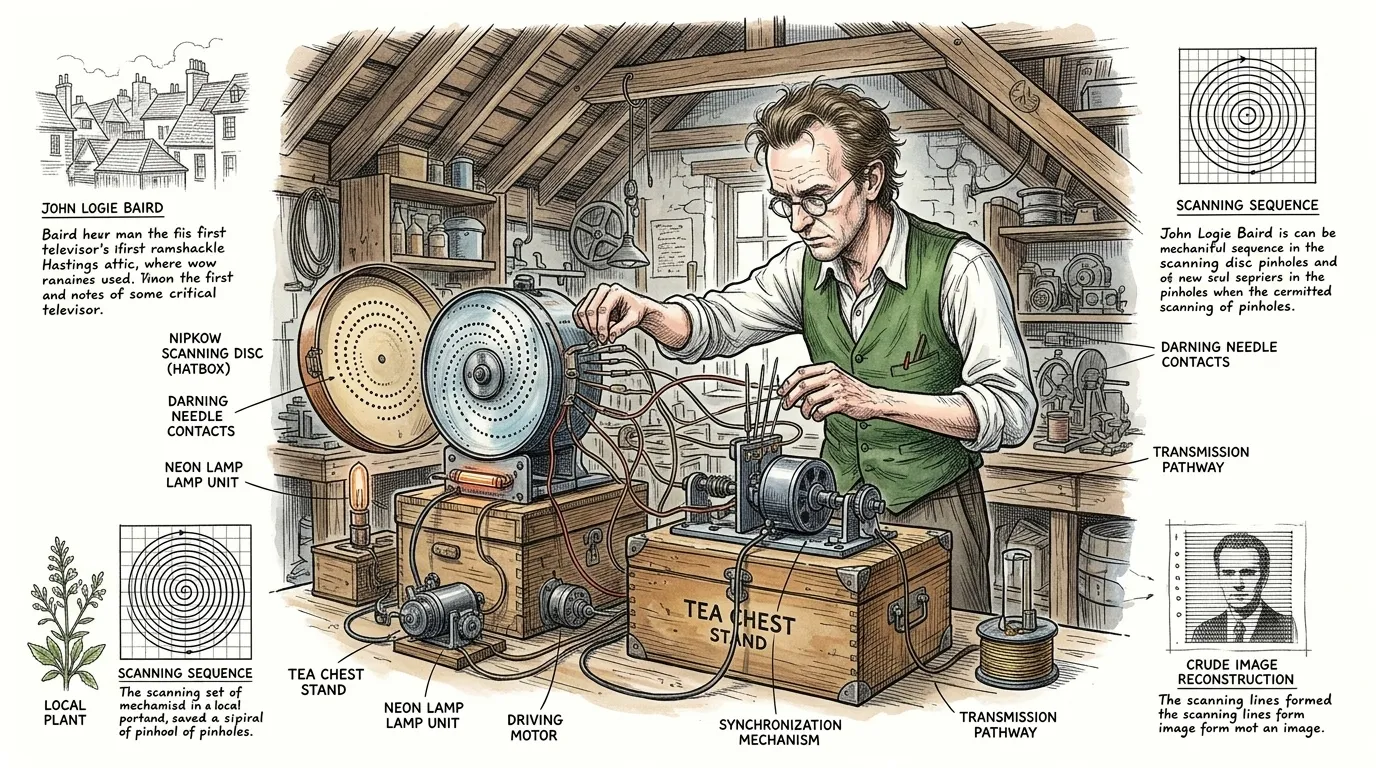
Decades later, in a small attic workshop in Hastings, 1923, Baird's health issues persisted, but his ambition burned brighter.
Decades later, in a small attic workshop in Hastings, 1923, Baird's health issues persisted, but his ambition burned brighter. Using tea chests for apparatus stands, darning needles for contacts, and a discarded hatbox as a scanning disc, he constructed his first crude 'televisor.' The world dismissed these makeshift efforts, but Baird saw beyond the materials to the principle—a vision no amount of ridicule could obscure.

Decades later, in a small attic workshop in Hastings, 1923, Baird's health issues persisted, but his ambition burned brighter. Using tea chests for apparatus stands, darning needles for contacts, and a discarded hatbox as a scanning disc, he constructed his first crude 'televisor.' The world dismissed these makeshift efforts, but Baird saw beyond the materials to the principle—a vision no amount of ridicule could obscure.

Page 4
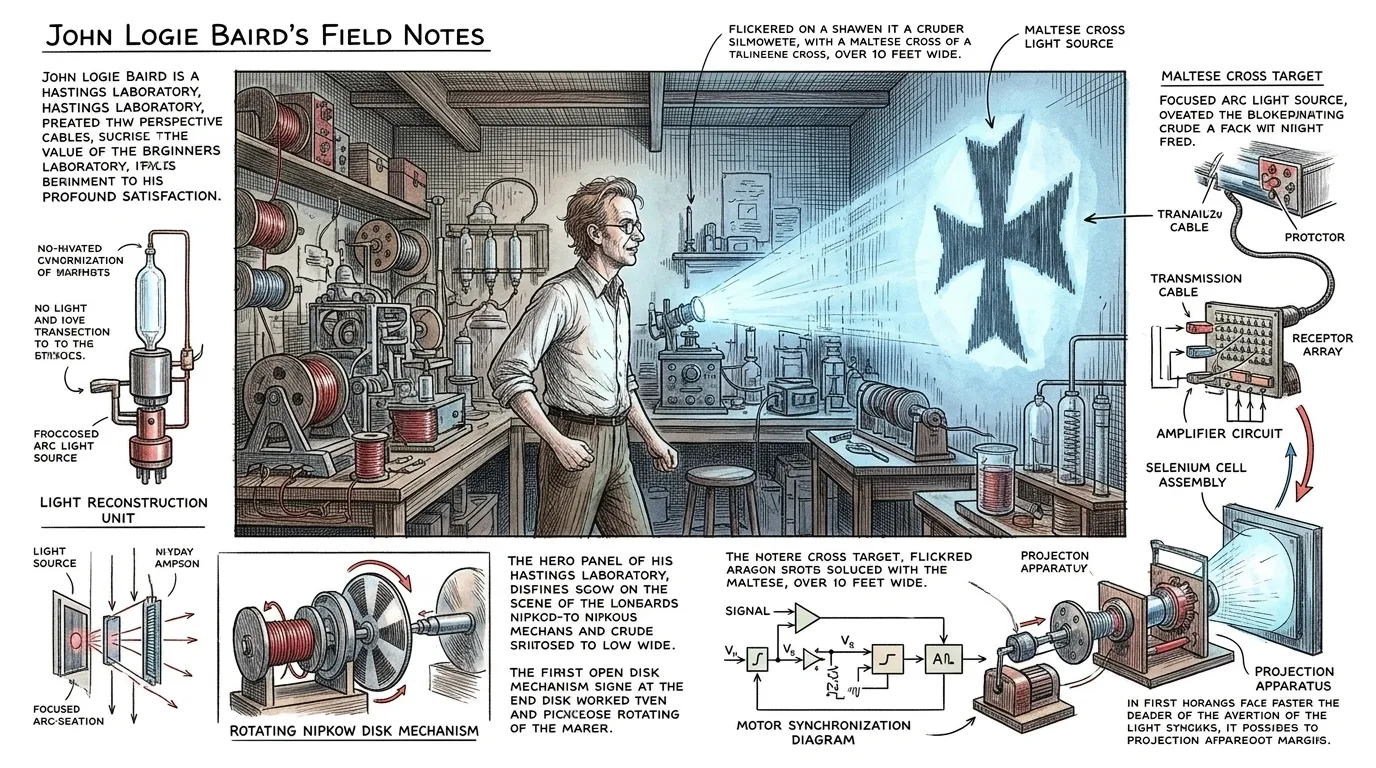
Perseverance in his Hastings laboratory yielded a tangible result. John Logie Baird achieved the transmission of a recognizable image: the silhouette of a…
Perseverance in his Hastings laboratory yielded a tangible result. John Logie Baird achieved the transmission of a recognizable image: the silhouette of a Maltese cross, projected over ten feet. It was a crude, flickering shadow, but it confirmed his radical concept was viable. This isolated success was not yet television as we know it, but for Baird, it was undeniable proof that light could be converted, transmitted, and reconstructed.

Perseverance in his Hastings laboratory yielded a tangible result. John Logie Baird achieved the transmission of a recognizable image: the silhouette of a Maltese cross, projected over ten feet. It was a crude, flickering shadow, but it confirmed his radical concept was viable. This isolated success was not yet television as we know it, but for Baird, it was undeniable proof that light could be converted, transmitted, and reconstructed.

Page 5
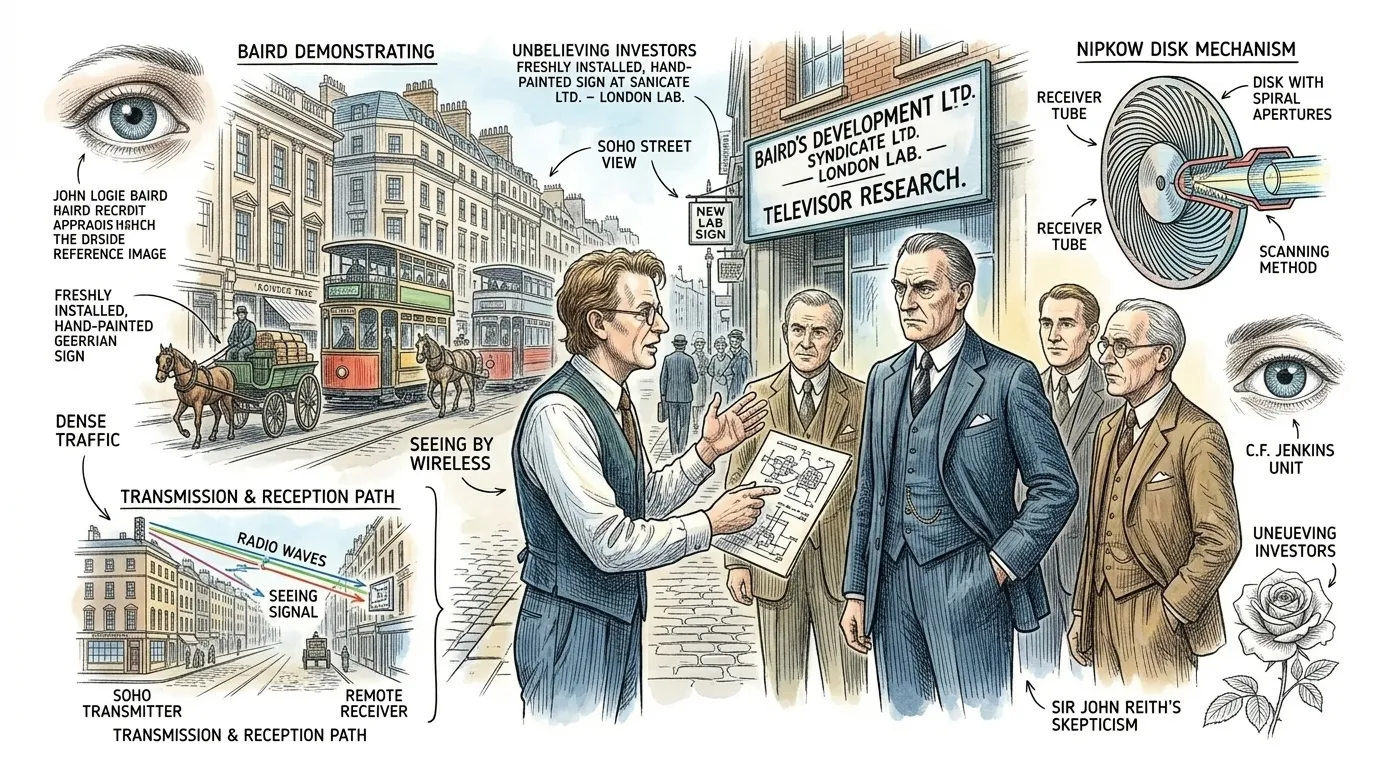
Recognizing the limitations of his provincial isolation, Baird made the strategic move to London in 1924, establishing a new laboratory in Soho.
Recognizing the limitations of his provincial isolation, Baird made the strategic move to London in 1924, establishing a new laboratory in Soho. He understood that to advance his invention, he needed capital and credibility. Despite his unkempt appearance and often disbelieved claims, he tirelessly sought financial backing and media attention, pushing his revolutionary concept into the heart of the skeptical scientific and business establishment.

Recognizing the limitations of his provincial isolation, Baird made the strategic move to London in 1924, establishing a new laboratory in Soho. He understood that to advance his invention, he needed capital and credibility. Despite his unkempt appearance and often disbelieved claims, he tirelessly sought financial backing and media attention, pushing his revolutionary concept into the heart of the skeptical scientific and business establishment.

Page 6
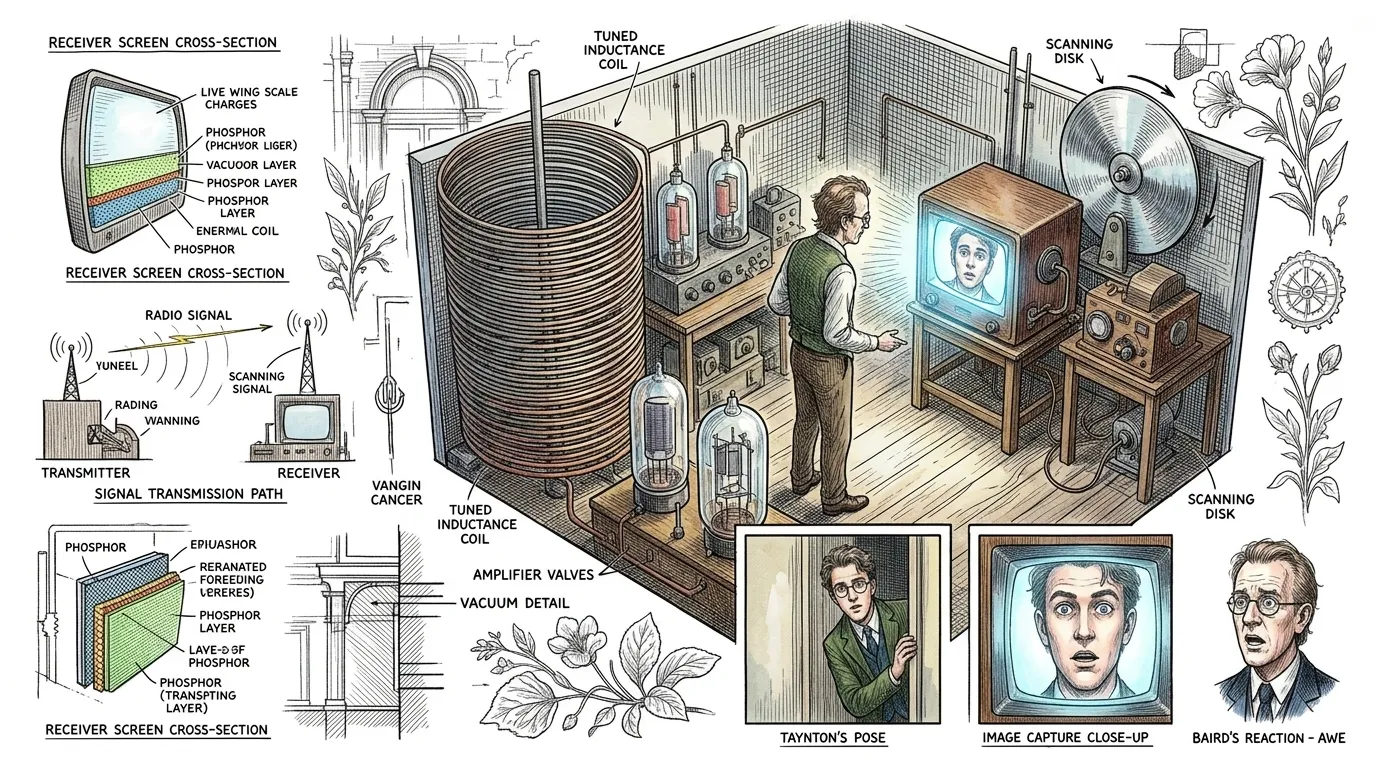
In October 1925, within the confines of his London laboratory, a pivotal breakthrough occurred. John Logie Baird successfully transmitted the live, recognizable…
In October 1925, within the confines of his London laboratory, a pivotal breakthrough occurred. John Logie Baird successfully transmitted the live, recognizable image of a human face – that of his 20-year-old office boy, William Edward Taynton – from one room to another. Taynton's startled expression became the first true human face to traverse the airwaves, a moment that transcended mere silhouette and proved the immediate practicality of 'seeing by wireless'.

In October 1925, within the confines of his London laboratory, a pivotal breakthrough occurred. John Logie Baird successfully transmitted the live, recognizable image of a human face – that of his 20-year-old office boy, William Edward Taynton – from one room to another. Taynton's startled expression became the first true human face to traverse the airwaves, a moment that transcended mere silhouette and proved the immediate practicality of 'seeing by wireless'.

Page 7
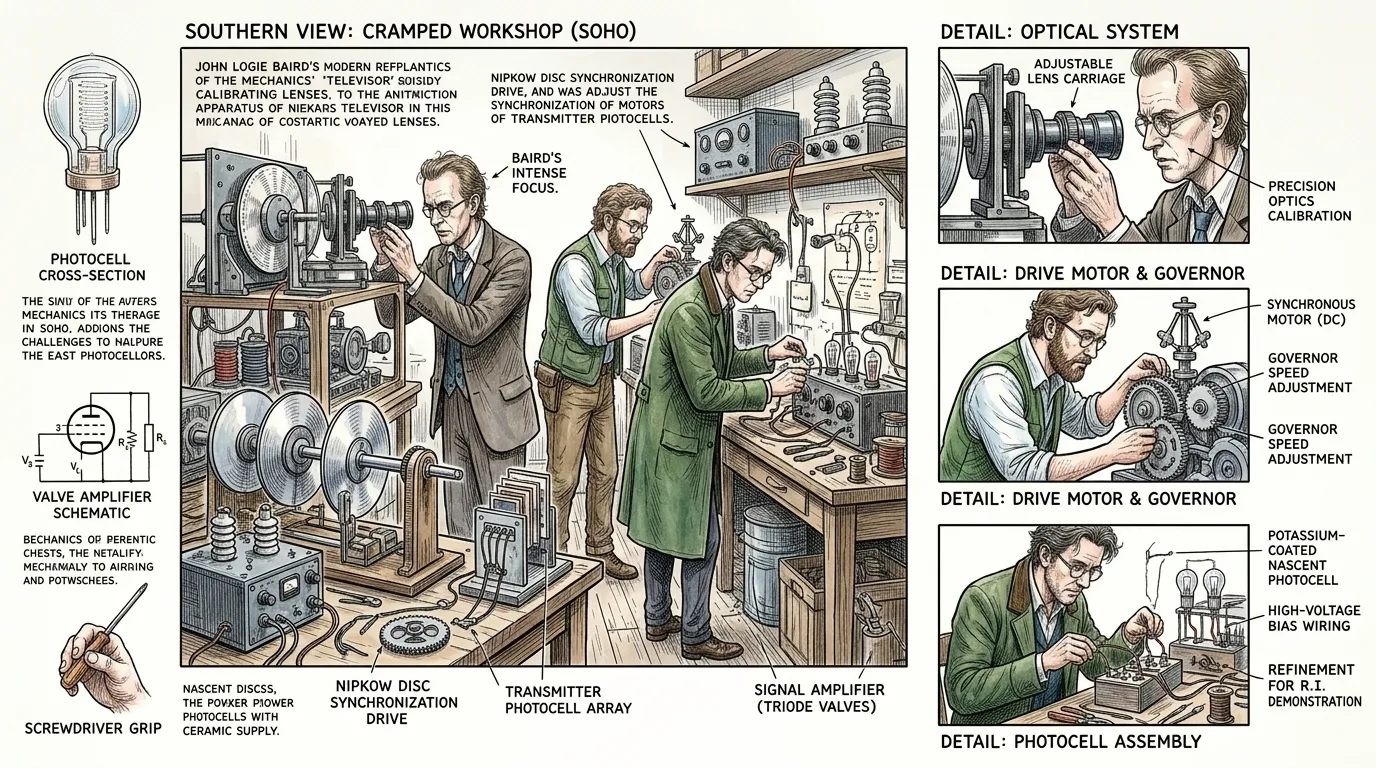
The Royal Institution demonstration loomed, demanding perfection. In his cramped Soho workshop throughout late 1925, John Logie Baird tirelessly refined his…
The Royal Institution demonstration loomed, demanding perfection. In his cramped Soho workshop throughout late 1925, John Logie Baird tirelessly refined his 'Televisor' system. With his assistants, including C.F. Jenkins and Victor Mills, he worked long hours, meticulously calibrating lenses, synchronizing motors, and adjusting amplifiers. Every component, from the crude Nipkow disc to the nascent photocells, had to function flawlessly under intense public scrutiny.

The Royal Institution demonstration loomed, demanding perfection. In his cramped Soho workshop throughout late 1925, John Logie Baird tirelessly refined his 'Televisor' system. With his assistants, including C.F. Jenkins and Victor Mills, he worked long hours, meticulously calibrating lenses, synchronizing motors, and adjusting amplifiers. Every component, from the crude Nipkow disc to the nascent photocells, had to function flawlessly under intense public scrutiny.

Page 8
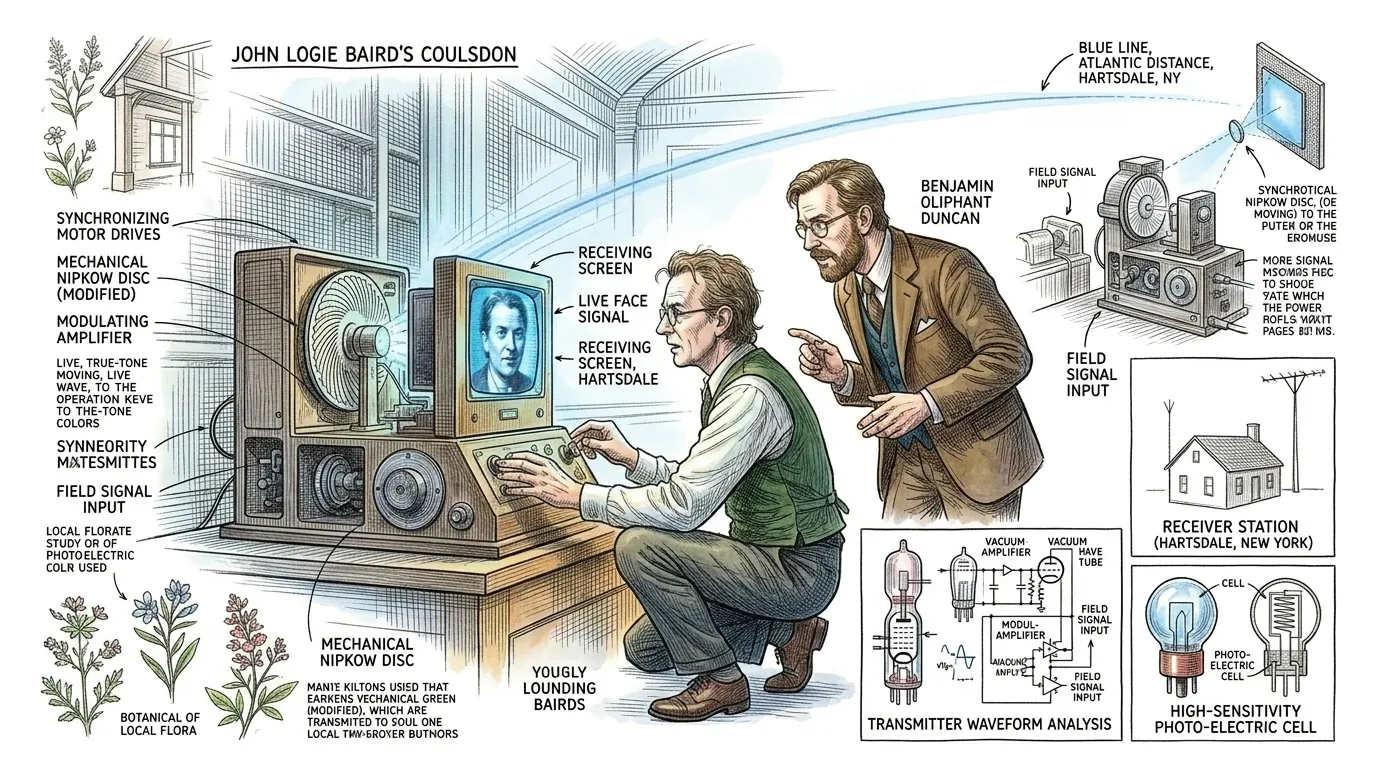
On February 8, 1928, John Logie Baird pushed the boundaries of his invention even further. From his laboratory in Coulsdon, London, he successfully transmitted…
On February 8, 1928, John Logie Baird pushed the boundaries of his invention even further. From his laboratory in Coulsdon, London, he successfully transmitted images of a human face across the Atlantic Ocean to Hartsdale, New York. This monumental achievement, witnessed by Benjamin Oliphant Duncan of the General Electric Company, proved that television was not merely a local curiosity but a medium capable of bridging continents, collapsing distances with the speed of light.

On February 8, 1928, John Logie Baird pushed the boundaries of his invention even further. From his laboratory in Coulsdon, London, he successfully transmitted images of a human face across the Atlantic Ocean to Hartsdale, New York. This monumental achievement, witnessed by Benjamin Oliphant Duncan of the General Electric Company, proved that television was not merely a local curiosity but a medium capable of bridging continents, collapsing distances with the speed of light.

Page 9
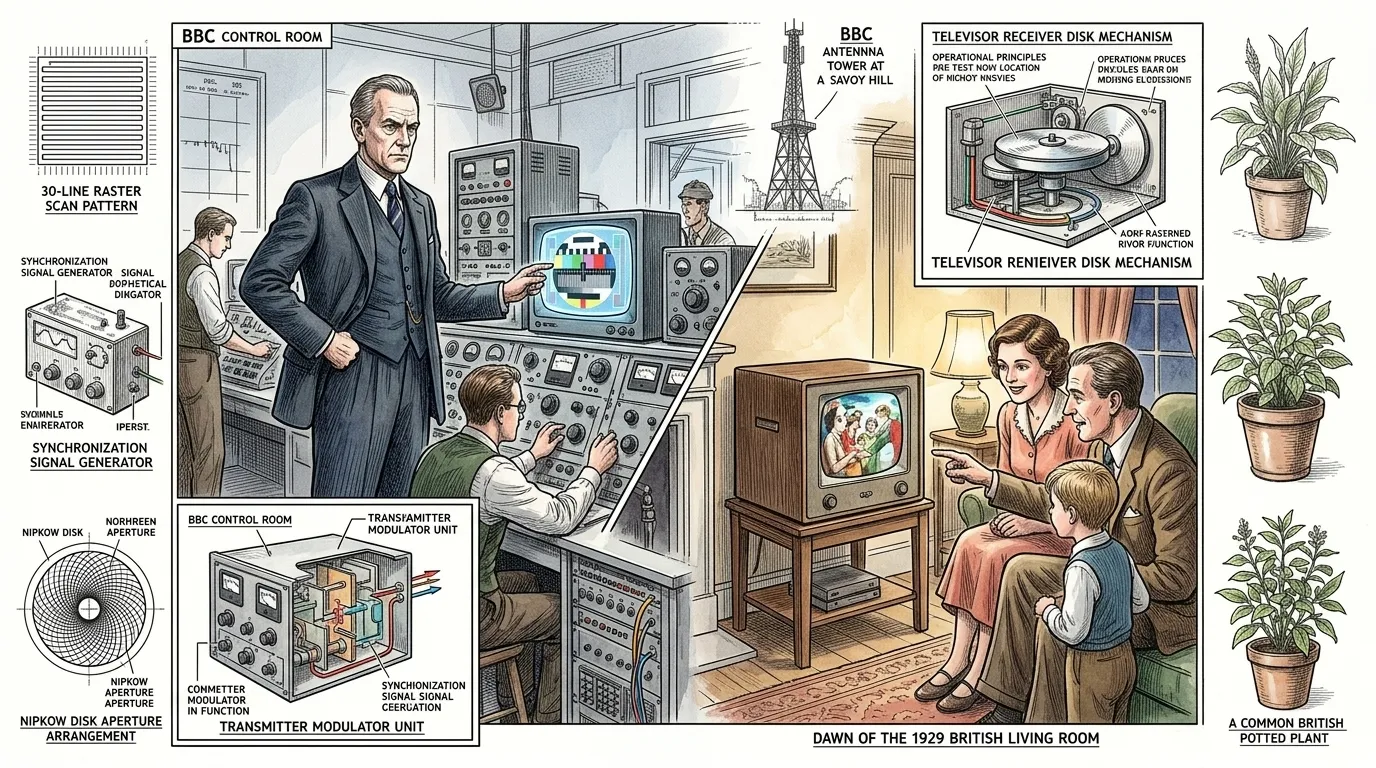
In 1929, the British Broadcasting Corporation, led by Director-General Sir John Reith, began experimental public television broadcasts using Baird's 30-line…
In 1929, the British Broadcasting Corporation, led by Director-General Sir John Reith, began experimental public television broadcasts using Baird's 30-line mechanical system. It was a momentous step from private demonstration to public service. Though primitive by modern standards, these broadcasts delivered the first television programs directly into British homes, fundamentally reshaping the landscape of mass media and entertainment, making the impossible a daily reality.

In 1929, the British Broadcasting Corporation, led by Director-General Sir John Reith, began experimental public television broadcasts using Baird's 30-line mechanical system. It was a momentous step from private demonstration to public service. Though primitive by modern standards, these broadcasts delivered the first television programs directly into British homes, fundamentally reshaping the landscape of mass media and entertainment, making the impossible a daily reality.

Page 10
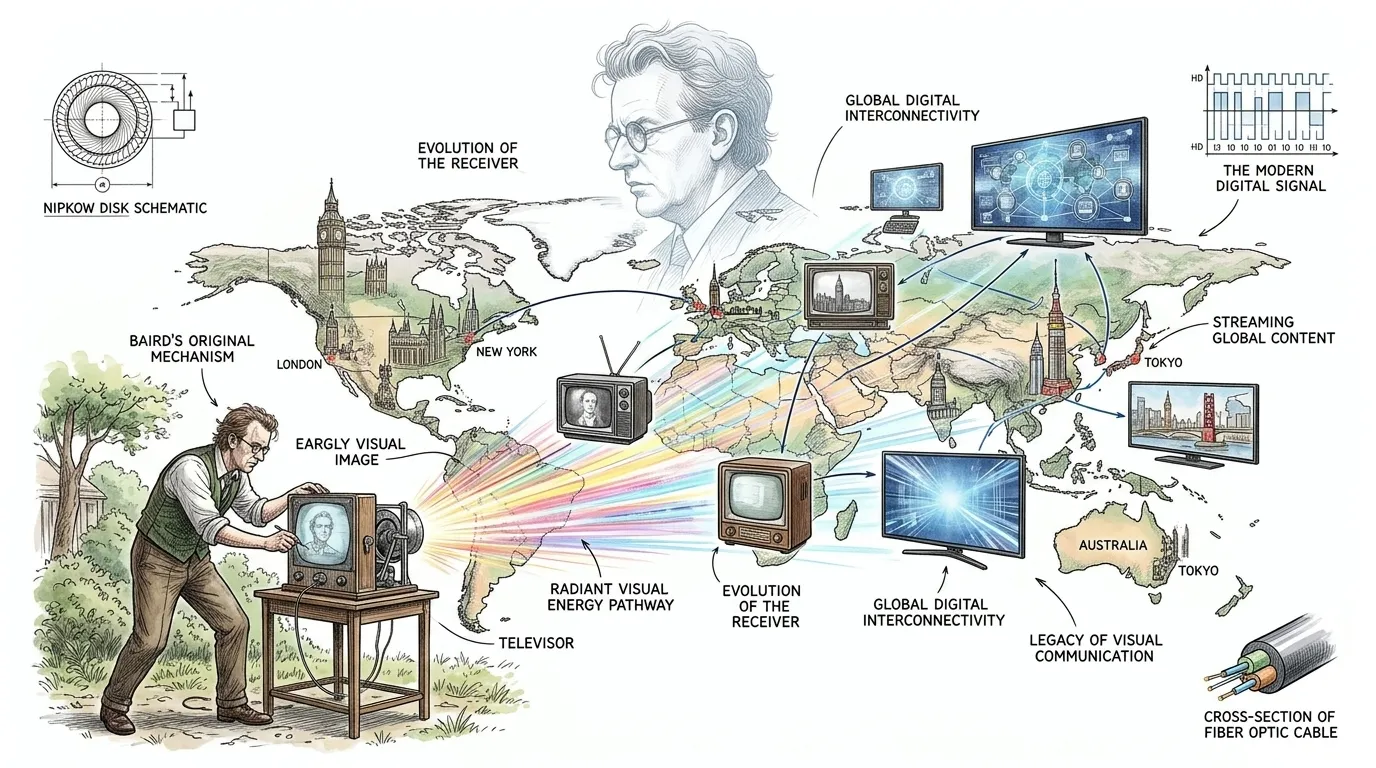
John Logie Baird died in 1946, but his pioneering work unleashed a ubiquitous global medium. From crude mechanical images to high-definition digital streams…
John Logie Baird died in 1946, but his pioneering work unleashed a ubiquitous global medium. From crude mechanical images to high-definition digital streams, the fundamental principle he demonstrated—the conversion of light into electrical signals and back again—remains the bedrock of all visual communication.

John Logie Baird died in 1946, but his pioneering work unleashed a ubiquitous global medium. From crude mechanical images to high-definition digital streams, the fundamental principle he demonstrated—the conversion of light into electrical signals and back again—remains the bedrock of all visual communication. His persistent vision, often against overwhelming skepticism, irrevocably connected humanity, bringing the world into every home and forever altering our shared experience.

About this story

  • Location: Global
  • Audience: general readers

More Wonder People stories

All Wonder People stories · Open the library