Kwame Nkrumah
Kwame Nkrumah — an illustrated biography story, set in Global. 10 illustrated pages, free to read on Wonder People.
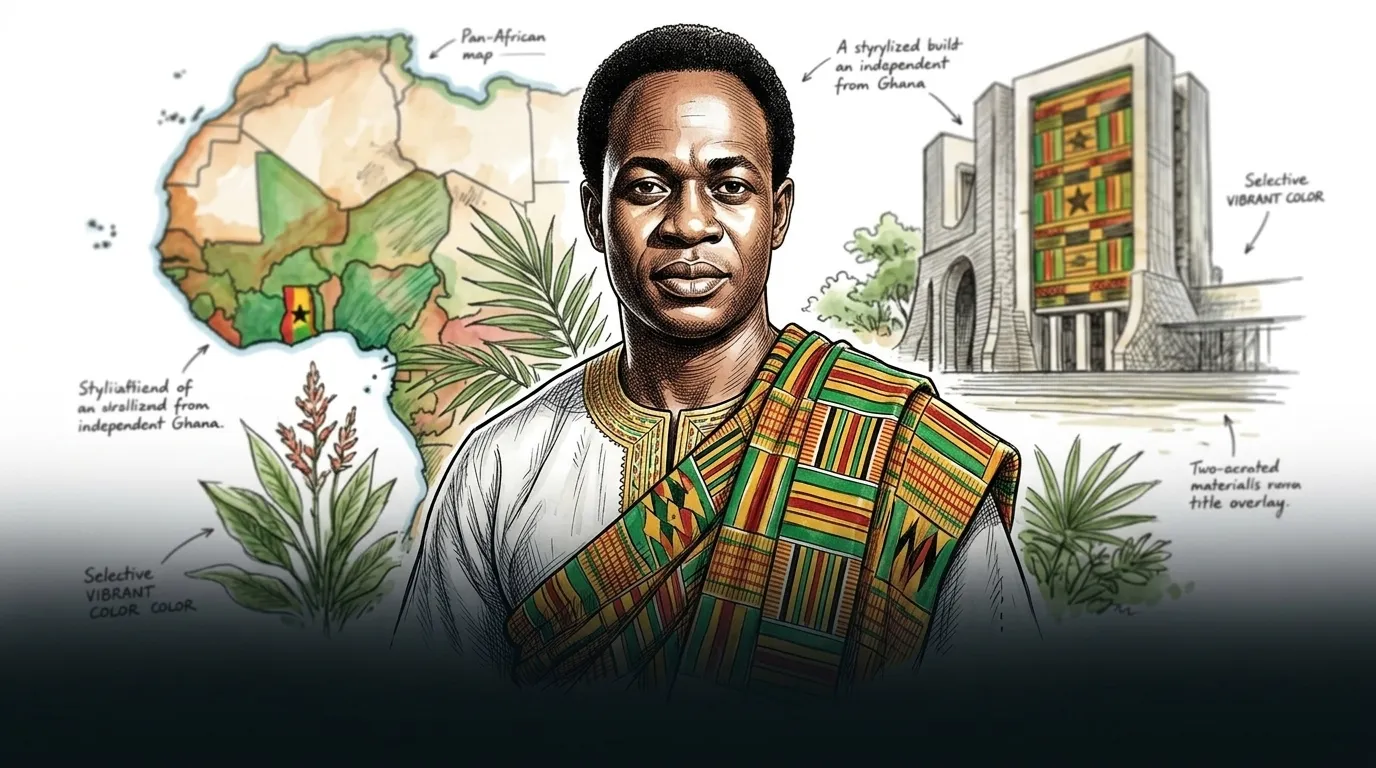
Page 1
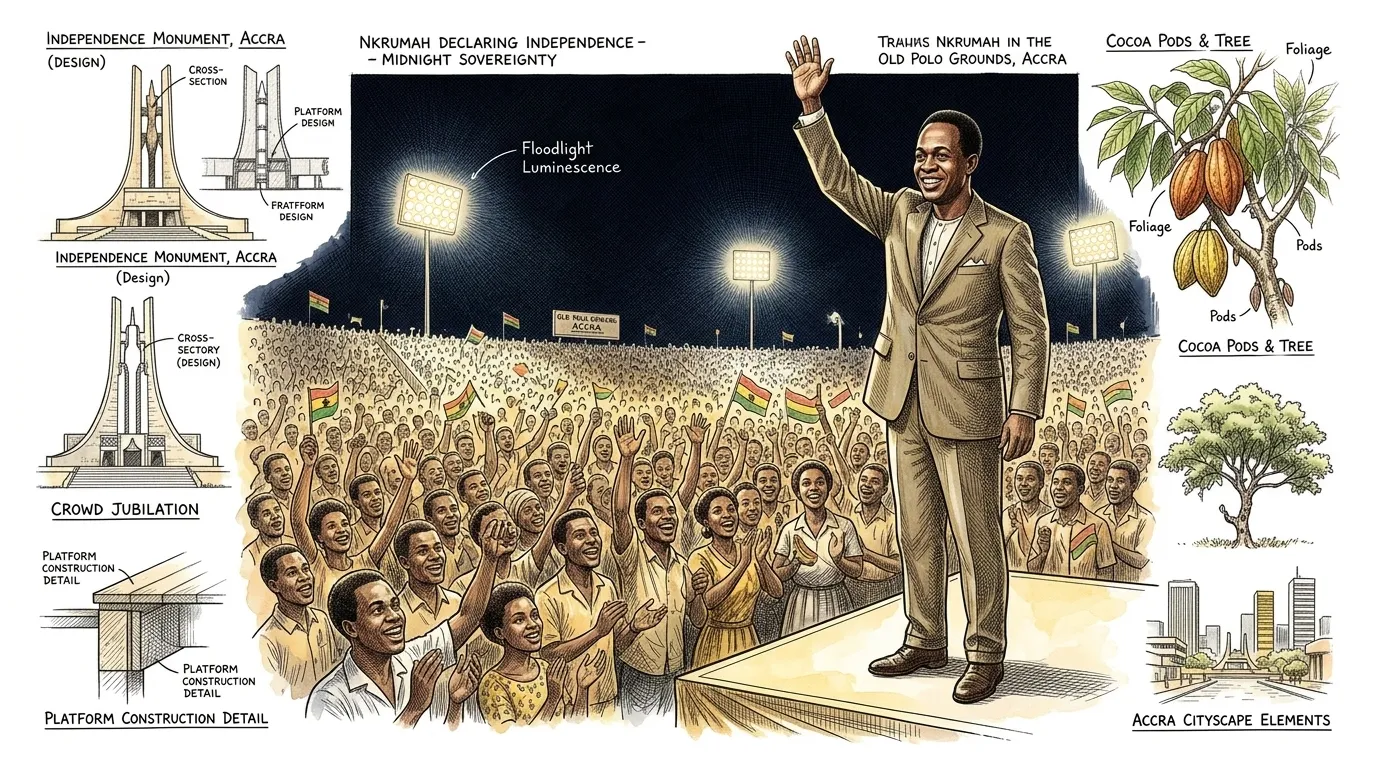
At the stroke of midnight, on March 6, 1957, in Accra, Gold Coast, Kwame Nkrumah stood before an immense, jubilant crowd at the Old Polo Grounds. With a thunderous declaration, he proclaimed Ghana's sovereignty, marking the end of British colonial rule and making Ghana the first sub-Saharan African nation to achieve independence. This pivotal moment reverberated across the continent, igniting a powerful wave of liberation movements and challenging the foundations of European imperial power. The world witnessed the birth of a new nation, driven by one man's relentless vision.
Biographical Fact: Kwame Nkrumah (1909-1972): First Prime Minister and President of Ghana. A leading figure in the decolonization of Africa and a staunch advocate of Pan-Africanism.
Page 2
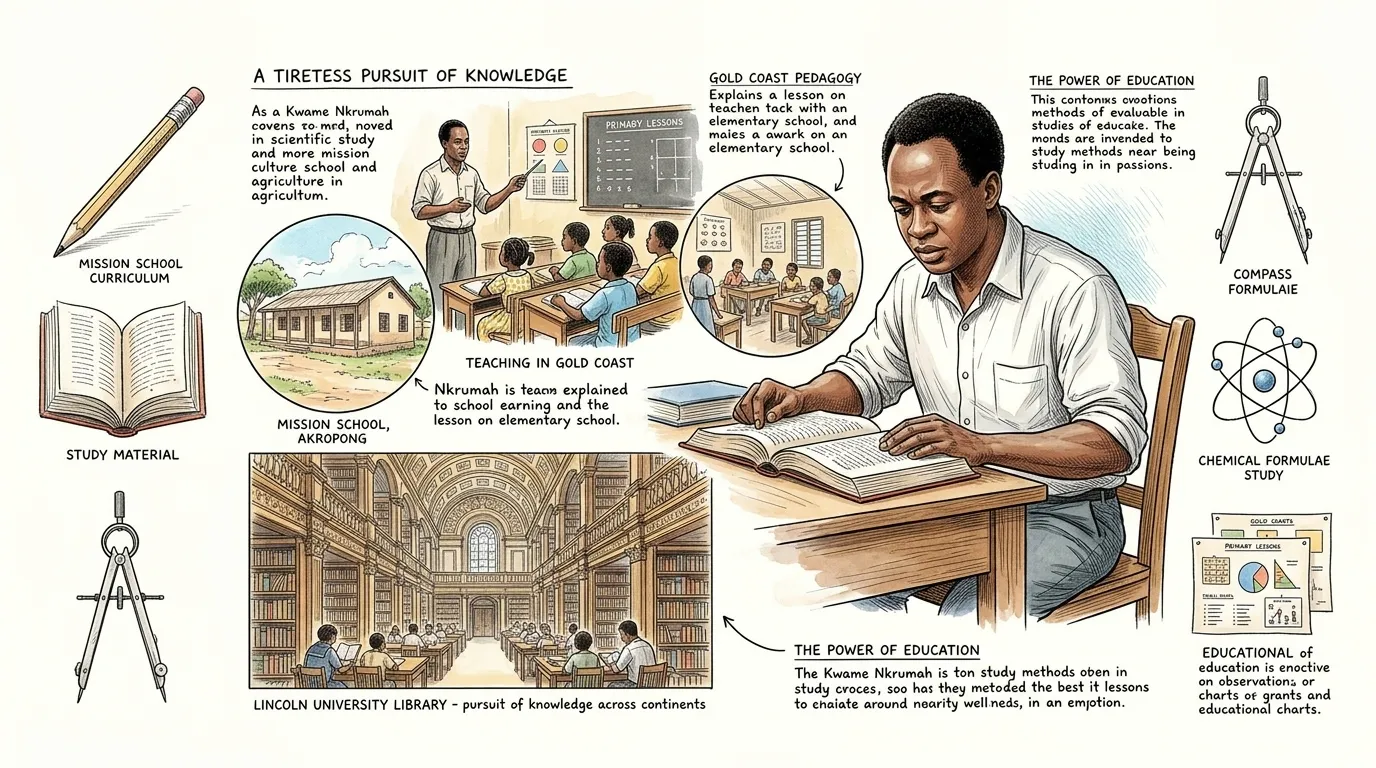
From the small village of Nkroful, a young Kwame Nkrumah absorbed lessons from local missionaries, a foundation that fueled an insatiable intellectual hunger. His pursuit led him across continents, from teaching at elementary schools in the Gold Coast to the hallowed halls of Lincoln University in Pennsylvania. Nkrumah immersed himself in philosophy, economics, and political science, meticulously studying the works of revolutionaries and thinkers, forging the intellectual arsenal for a future yet unwritten.
Biographical Fact: Lincoln University: A historically black university in Pennsylvania, USA, where Nkrumah earned bachelor's degrees in economics, sociology, and theology between 1935 and 1939.
Page 3
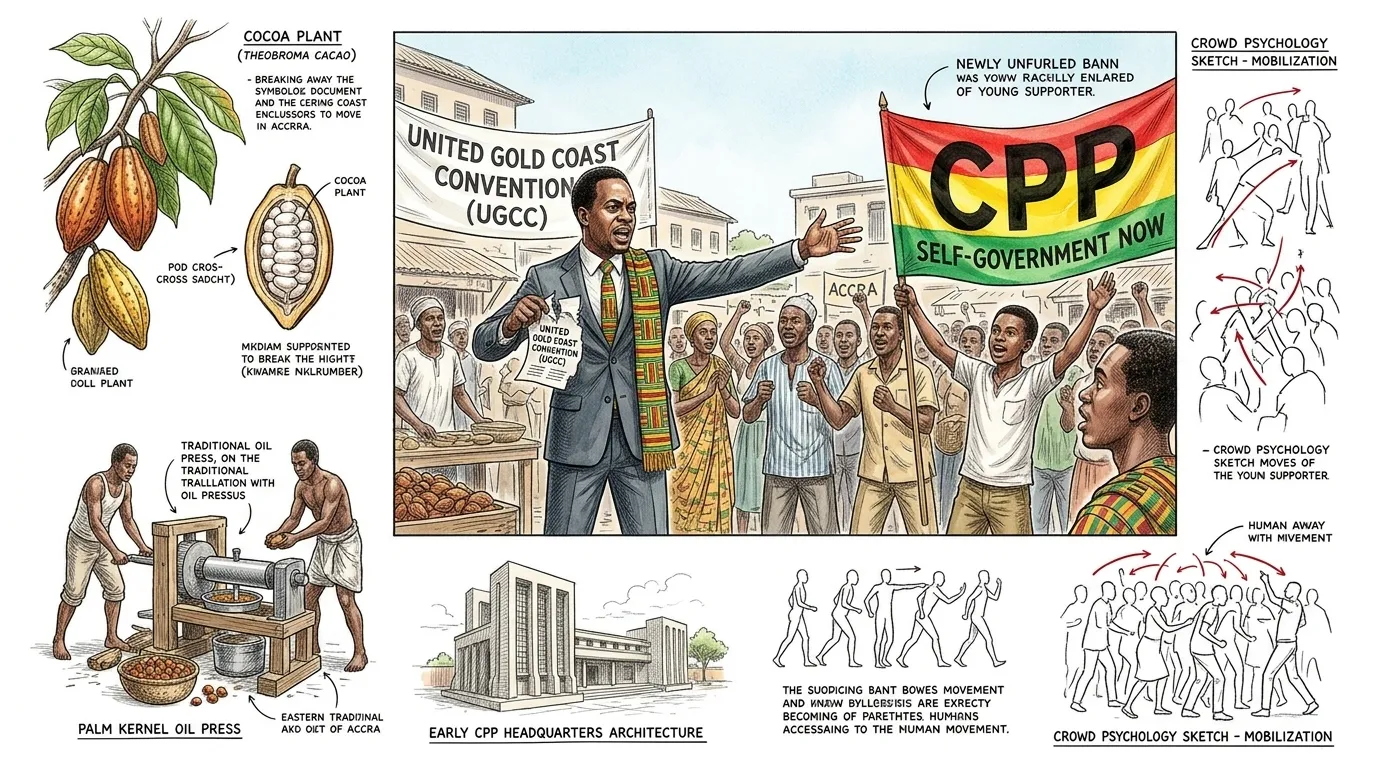
Returning to a Gold Coast simmering with nationalist aspirations, Nkrumah joined the United Gold Coast Convention (UGCC) but soon found their approach too slow. In June 1949, he decisively broke away, forming the Convention People's Party (CPP). With the rallying cry of 'Self-Government Now,' Nkrumah moved to mobilize the masses, rejecting gradualism for immediate, radical action, fundamentally reshaping the political landscape with a populist appeal.
Biographical Fact: Convention People's Party (CPP): Founded by Nkrumah in 1949, it became the leading force for Ghana's independence, advocating for immediate self-governance and mass mobilization.
Page 4
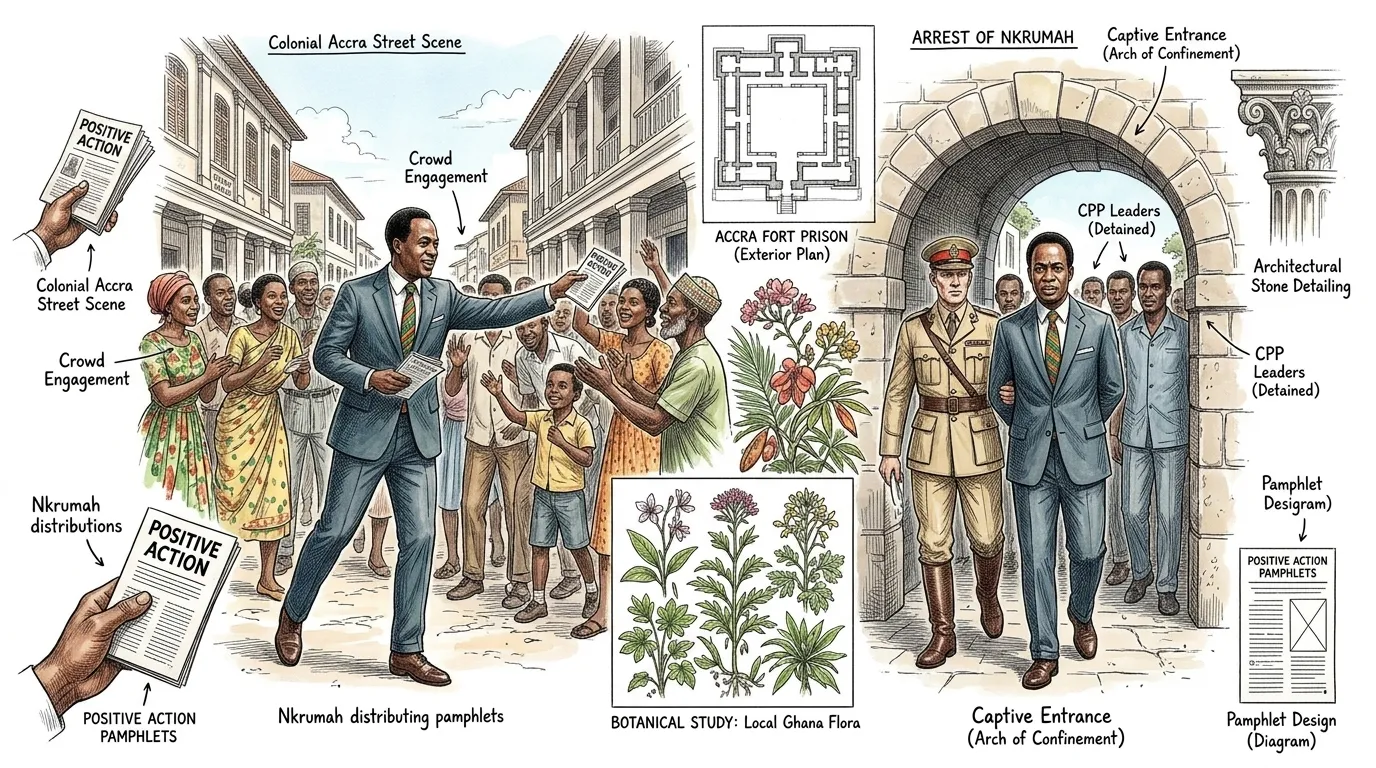
In January 1950, Nkrumah launched the 'Positive Action' campaign, a program of non-violent civil disobedience, strikes, and boycotts to press for immediate self-government. The British colonial authorities responded swiftly. Nkrumah, along with other CPP leaders, was arrested and imprisoned, a move intended to quell the growing nationalist fervor but which instead solidified his image as a martyr and a potent symbol of resistance.
Biographical Fact: Positive Action: Nkrumah's strategy of non-violent resistance, including civil disobedience and strikes, against British colonial rule, inspired by Gandhi's methods.
Page 5
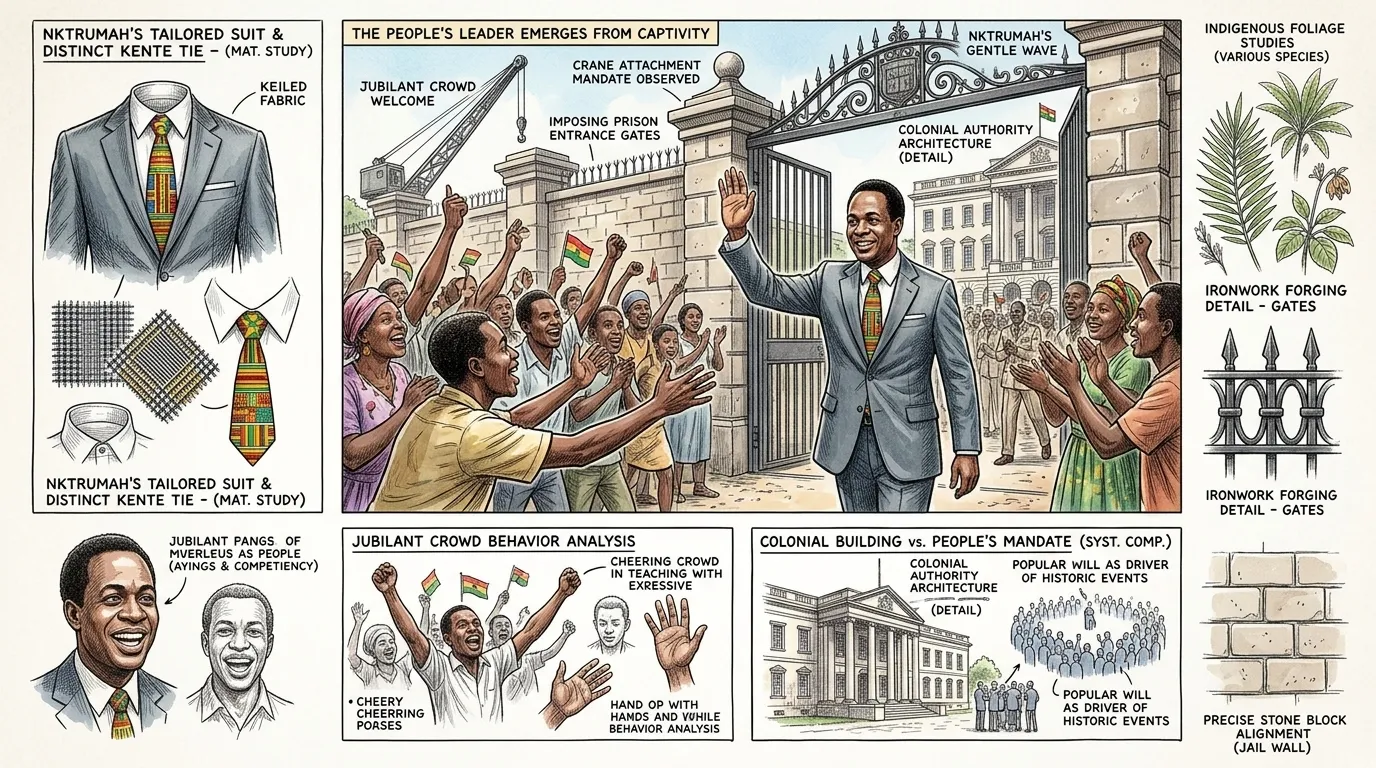
Despite his imprisonment, the Convention People's Party, under Nkrumah's symbolic leadership, achieved a landslide victory in the 1951 general election. The colonial administration, stunned by the overwhelming mandate, had no choice but to release him. The dramatic scene of Nkrumah walking free from jail, greeted by ecstatic crowds, became a powerful testament to the people's will and his undeniable political force.
Biographical Fact: 1951 General Election: The first election held under the new Macpherson Constitution, which allowed for a greater degree of internal self-government. Nkrumah won his constituency while imprisoned.
Page 6
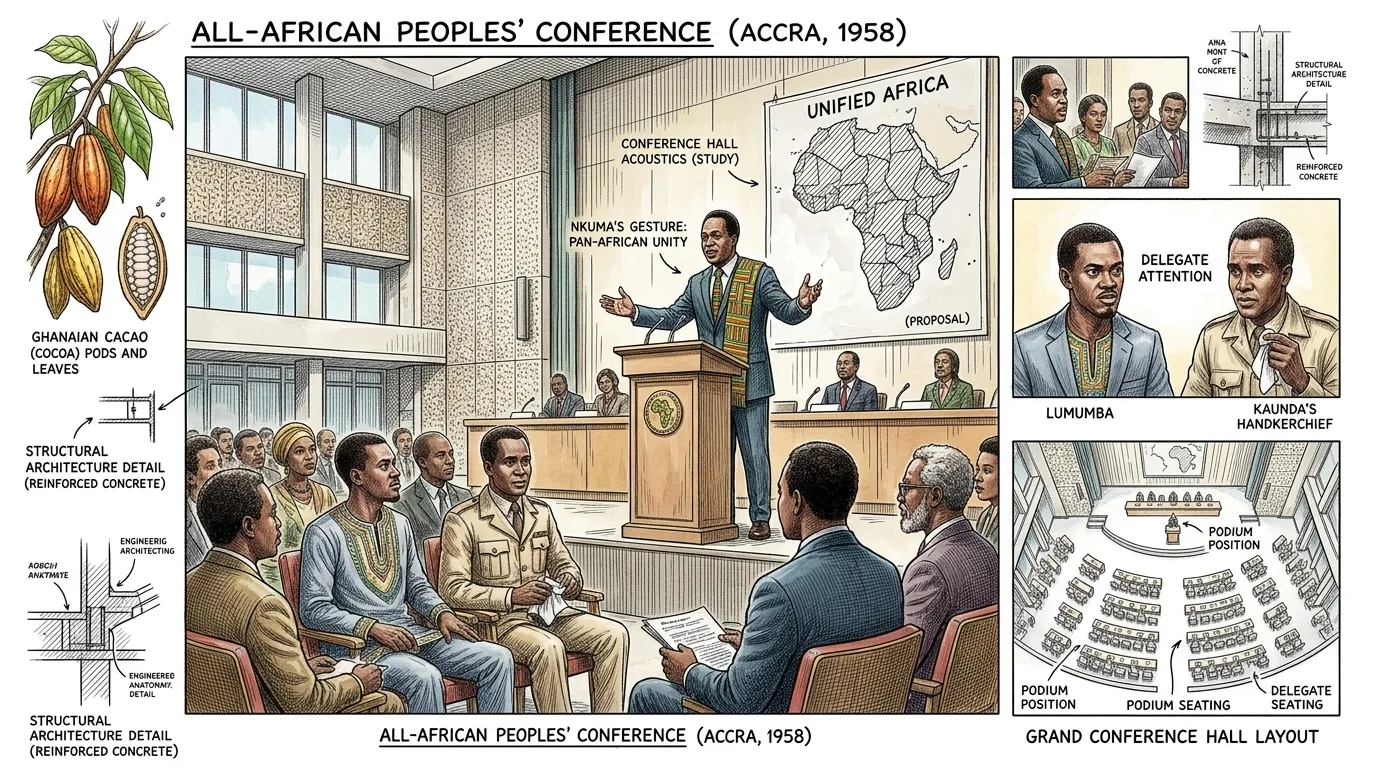
In December 1958, barely a year after independence, Kwame Nkrumah convened the All-African Peoples' Conference in Accra, Ghana. This historic gathering united African nationalist leaders, including Patrice Lumumba and Kenneth Kaunda, who arrived from across the continent, solidifying a common front against colonialism and apartheid. Nkrumah's vision extended beyond Ghana, advocating for a united Africa, politically and economically integrated, as the only path to true liberation and strength on the global stage.
Biographical Fact: All-African Peoples' Conference: A landmark event hosted by Nkrumah, bringing together nationalist movements and leaders from across Africa to strategize on decolonization and unity.
Page 7
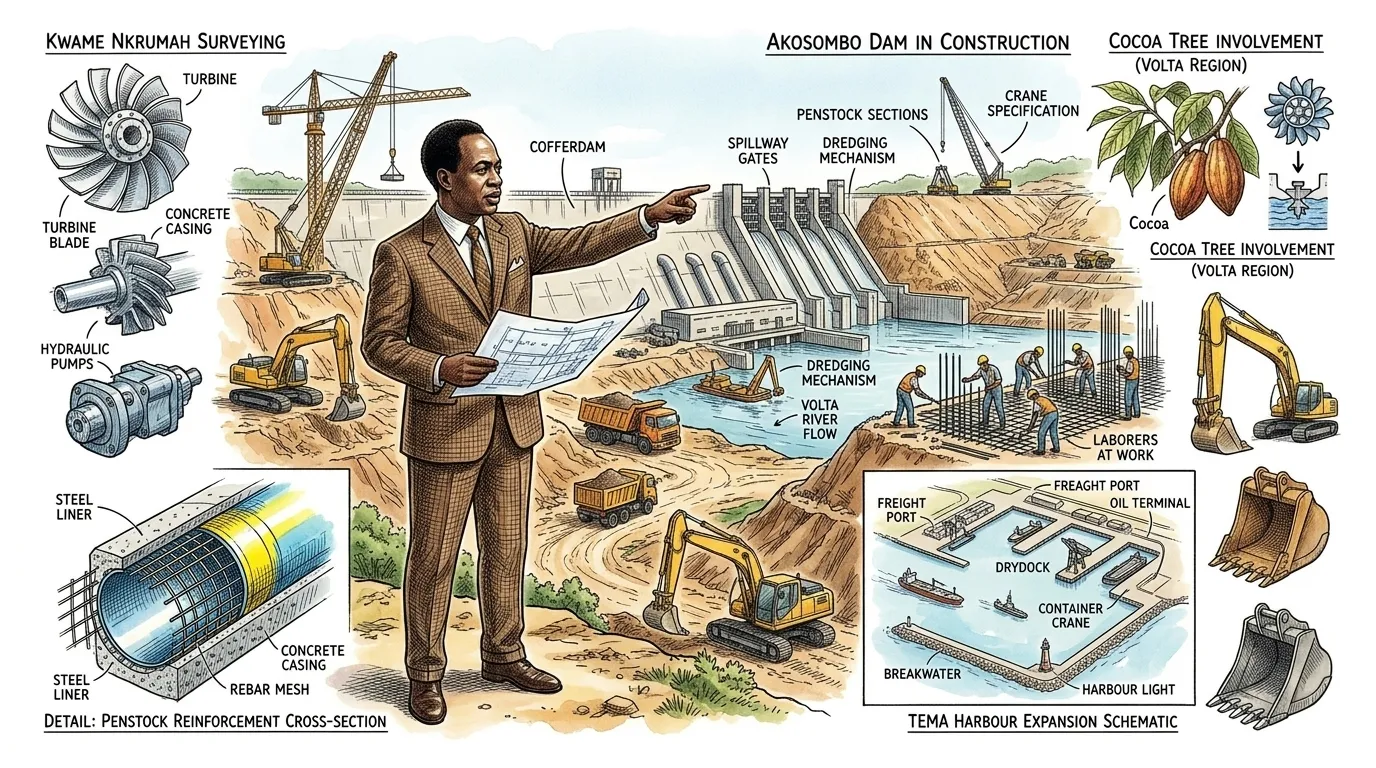
As President, Nkrumah embarked on an ambitious modernization program, investing heavily in infrastructure, education, and industrialization. Projects like the Akosombo Dam and Tema Harbour exemplified his determination to transform Ghana into a modern, self-sufficient nation. He meticulously reviewed blueprints, inspected construction sites, and spurred his engineers and workers to realize a future where Ghana stood as a beacon of African progress, demonstrating practical leadership and strategic foresight.
Biographical Fact: Akosombo Dam: A monumental hydroelectric dam on the Volta River, a flagship project under Nkrumah, intended to provide power for Ghana's industrialization.
Page 8
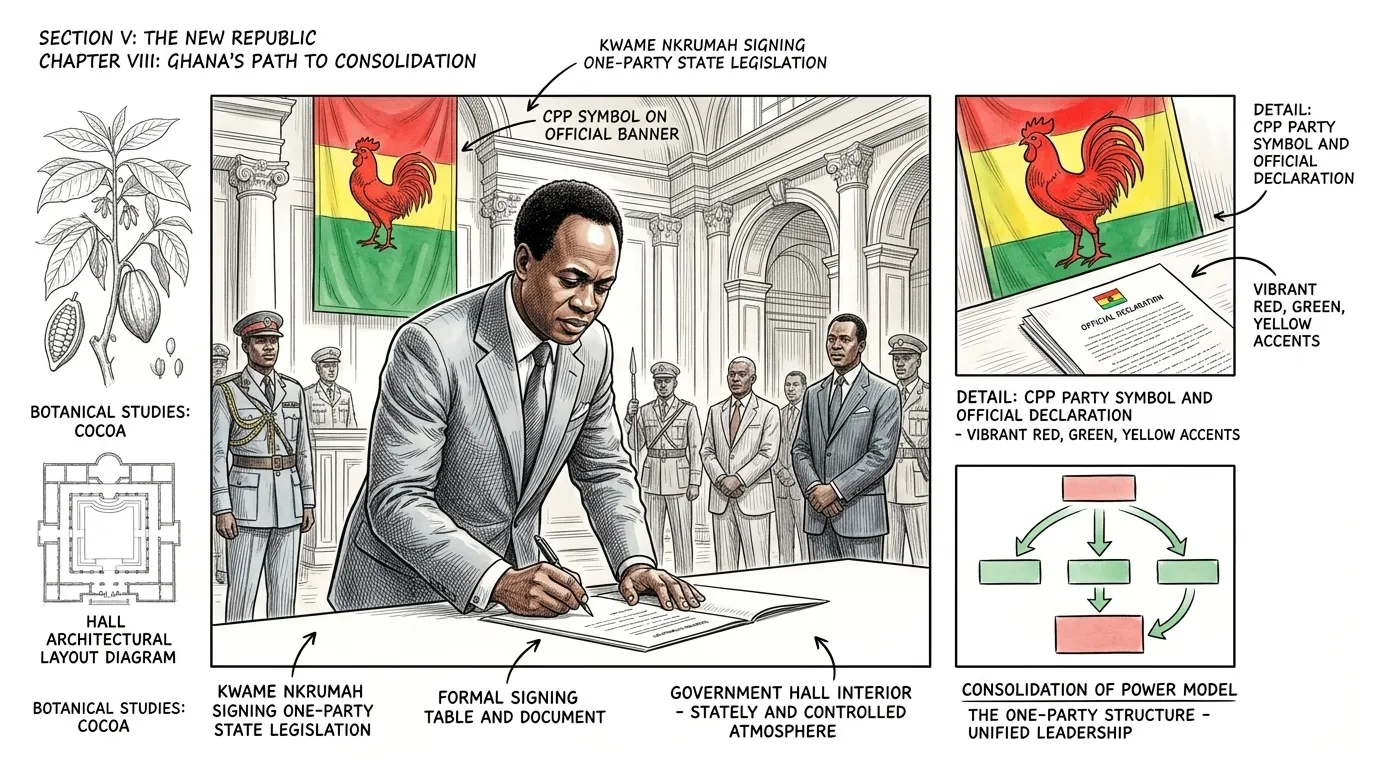
Nkrumah's increasing focus on national unity and rapid development led to the consolidation of power. In 1964, Ghana became a one-party state under the CPP, with Nkrumah declared President for Life. Laws like the Preventive Detention Act, passed years earlier, allowed for detention without trial, silencing opposition and raising concerns about democratic freedoms. The bold architect of independence found himself balancing the demands of nation-building with the complexities of governance.
Biographical Fact: Preventive Detention Act: Passed in 1958, this law allowed the government to detain individuals for up to five years without trial, widely criticized for suppressing political dissent.
Page 9
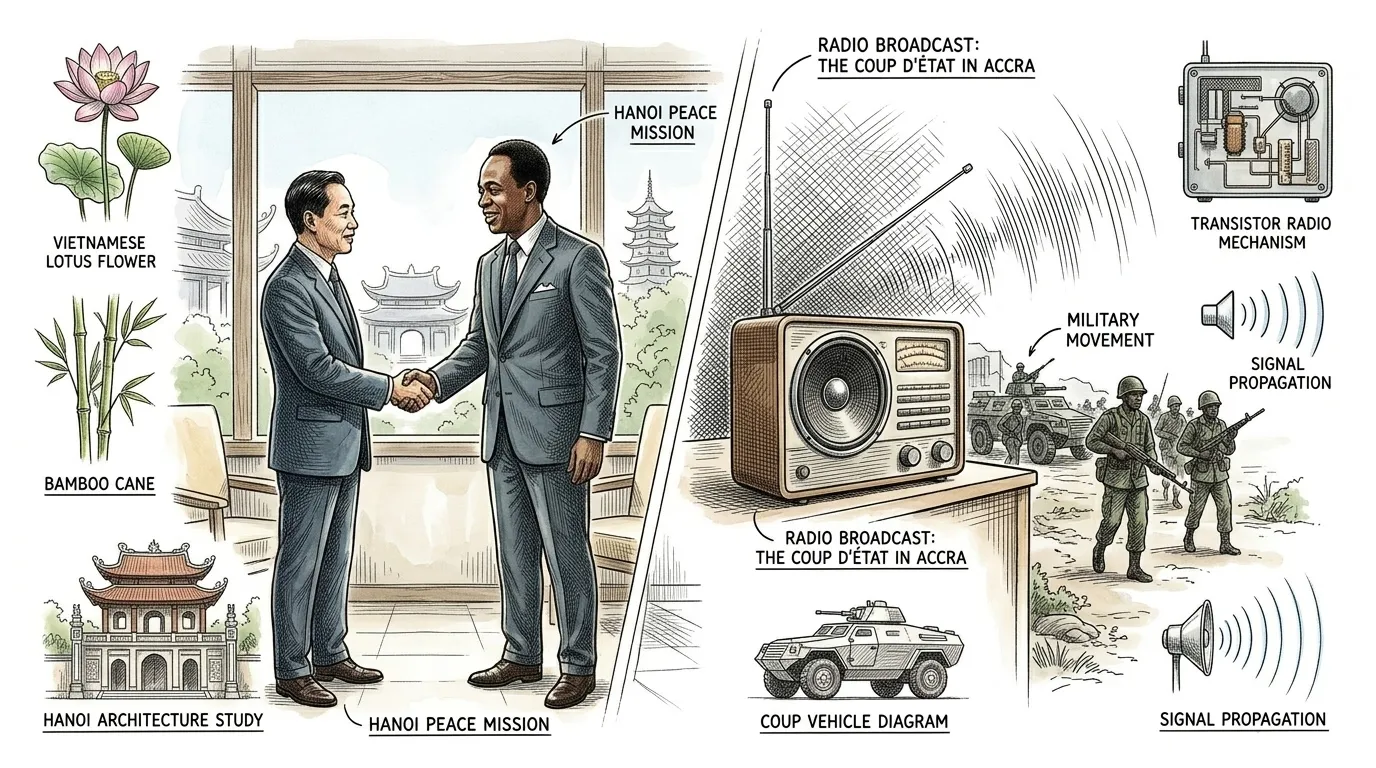
While Nkrumah was on a peace mission to Hanoi in February 1966, a military coup d'état, orchestrated by the National Liberation Council, seized power in Ghana. Radio broadcasts announced his overthrow, plunging the nation into turmoil. The leader who had defied colonial powers now found himself exiled, unable to return to the country he had liberated. His bold experiment in African socialism and unity was abruptly halted.
Biographical Fact: 1966 Coup d'état: While Nkrumah was abroad, his government was overthrown by the National Liberation Council, marking a significant setback for his Pan-Africanist ambitions.
Page 10
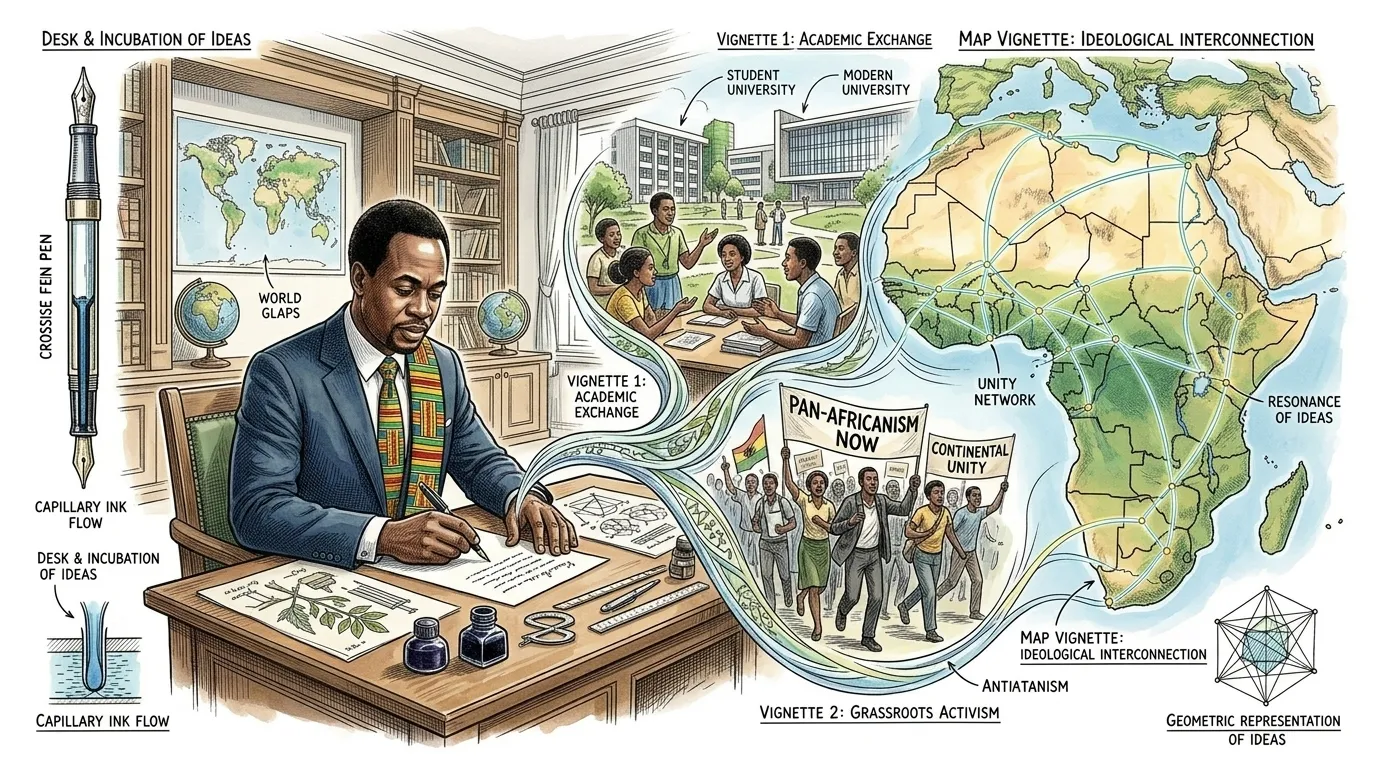
Kwame Nkrumah spent his remaining years in exile, a tireless advocate for African unity and socialism, writing prolifically until his death in 1972. His physical presence faded, but his ideas, particularly his unwavering commitment to Pan-Africanism, continued to resonate. From university campuses to political movements, his call for African self-reliance and continental solidarity endures, forever shaping the discourse on post-colonial identity and future aspirations across Africa.
Biographical Fact: Pan-Africanism: A political movement and ideology advocating the global solidarity of Africans and people of African descent, a central tenet of Nkrumah's philosophy and legacy.
About this story
- Location: Global
- Audience: general readers
Questions and answers
Read Wonder People on your phone
Wonder People is available on Android. Get Wonder People on Google Play.