Marcel Proust
Marcel Proust — an illustrated biography story, set in Global. 10 illustrated pages, free to read on Wonder People.
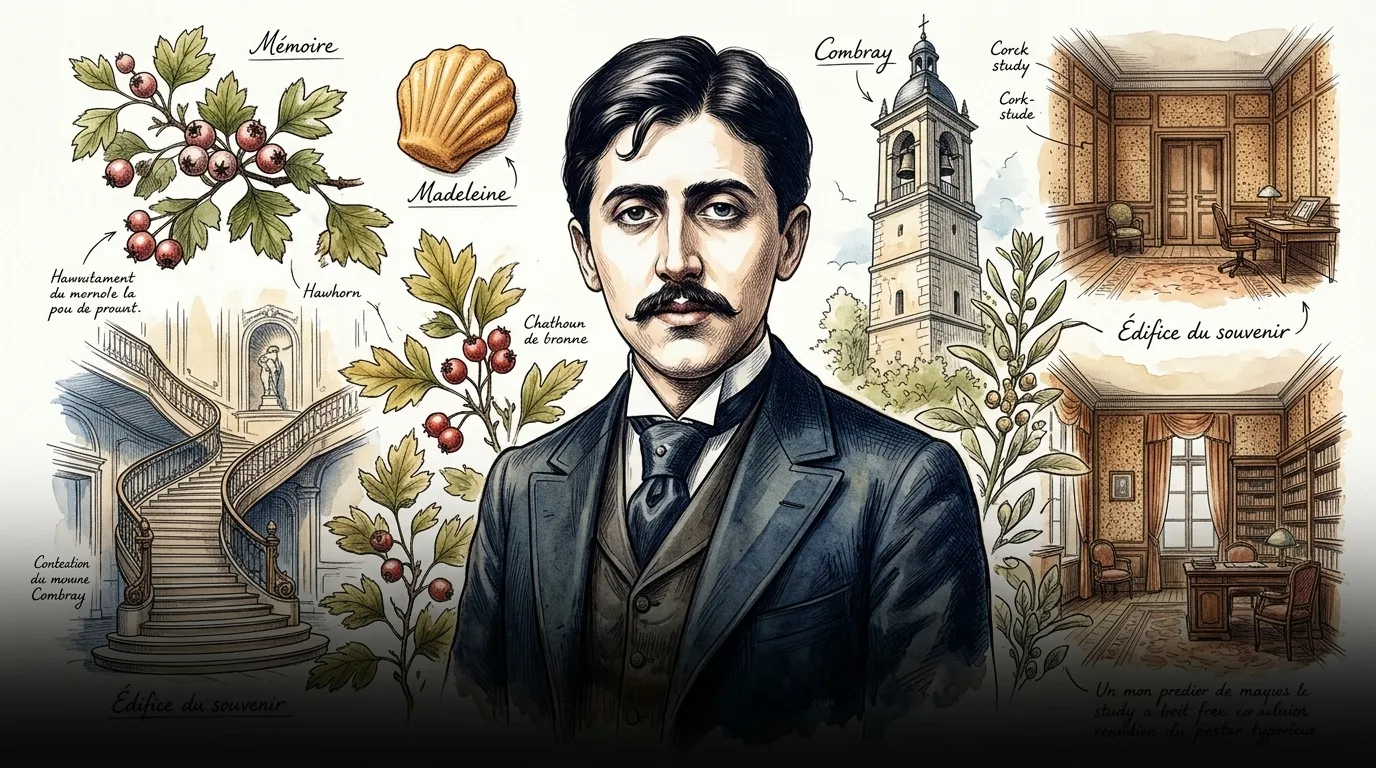
Page 1
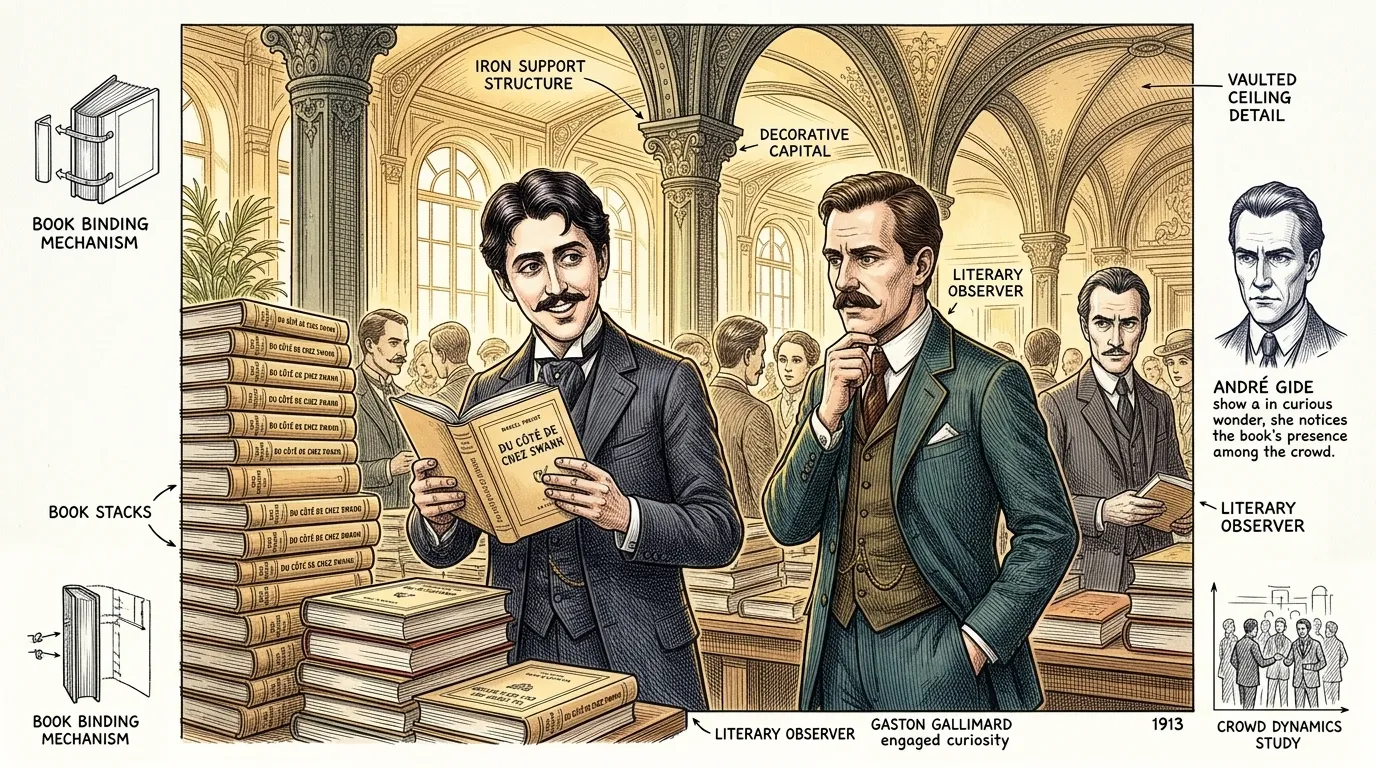
In Paris, France, during the nascent literary bustle of 1913, Marcel Proust stands amidst stacks of a newly released book. This moment marks the self-published debut of Du côté de chez Swann (Swann's Way), the first volume of his colossal work, À la recherche du temps perdu (In Search of Lost Time). Publisher Gaston Gallimard, having initially rejected the manuscript, now observes the burgeoning attention, while literary figures like André Gide, who dismissed it as a 'socialite's ramblings,' will soon confront its undeniable power, a work spanning over 3,000 pages and 1.5 million words that will redefine the novel.
Page 2
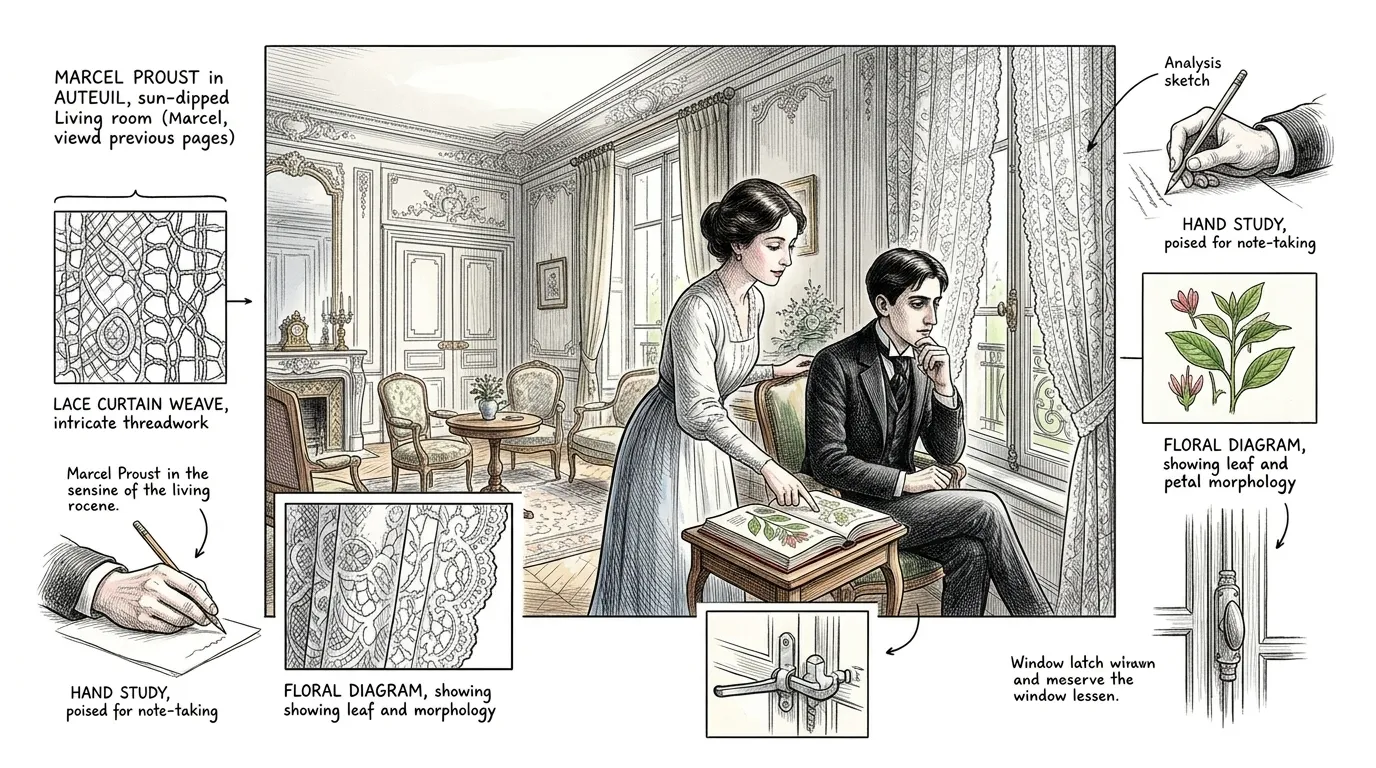
Born in 1871, Marcel Proust's earliest years were shadowed by chronic asthma and a profound sensitivity that separated him from the robust world outside. In the tranquil, often cloistered environment of his family home in Auteuil, his keen observations began. His mother, Jeanne Weil Proust, a figure of immense influence, nurtured his intellect and artistic inclinations, setting the foundation for a mind uniquely attuned to memory and sensation. This sheltered existence was not merely an infirmity; it was the crucible of his singular perspective.
Page 3
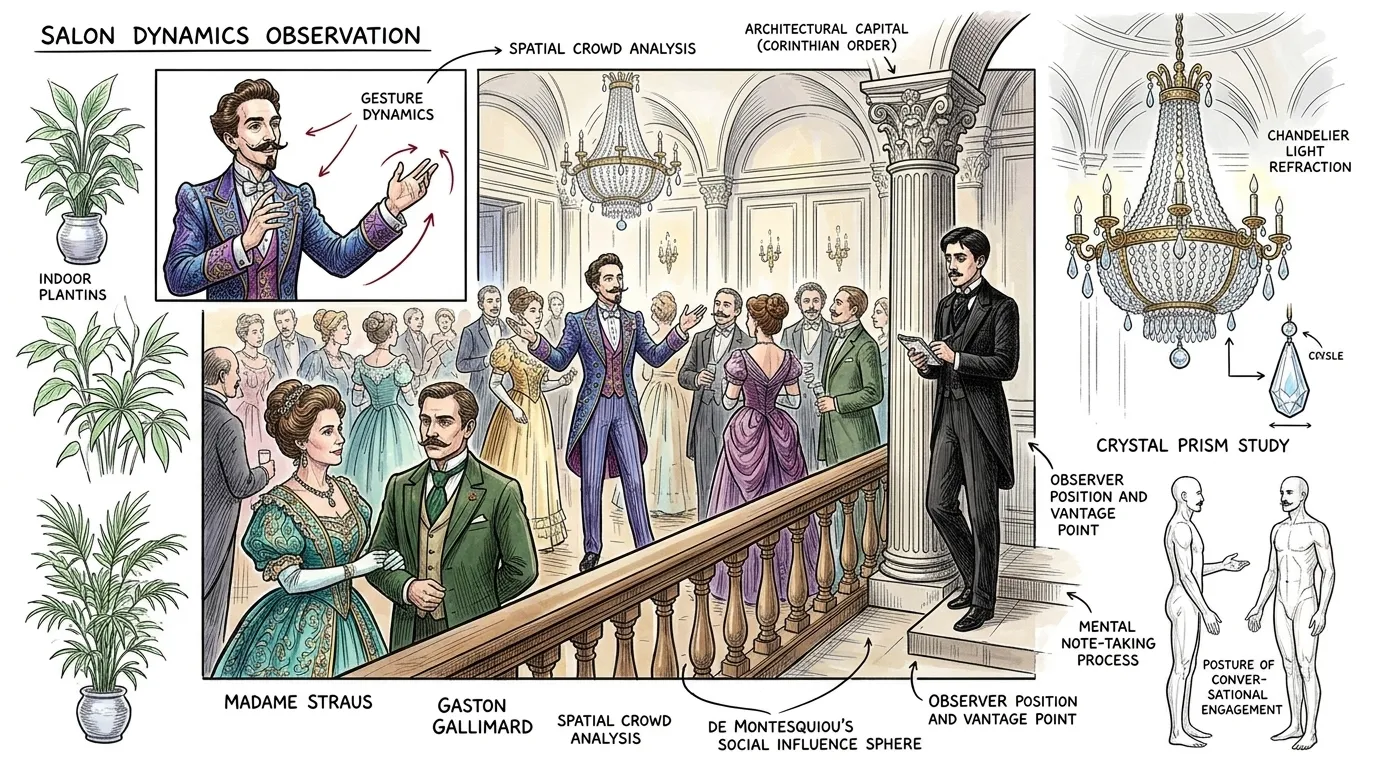
As a young man in the 1890s, Marcel Proust moved with ease through the exclusive Parisian salons, not merely as a guest, but as an acute observer. From the salon of Madame Straus, a celebrated hostess, to gatherings with Robert de Montesquiou, a prominent aesthete, Proust meticulously absorbed the nuances of aristocratic society. These glittering evenings, filled with witty conversation and subtle power dynamics, became his living laboratory. He collected gestures, phrases, and characters, transforming fleeting impressions into the raw material for his future literary universe.
Page 4
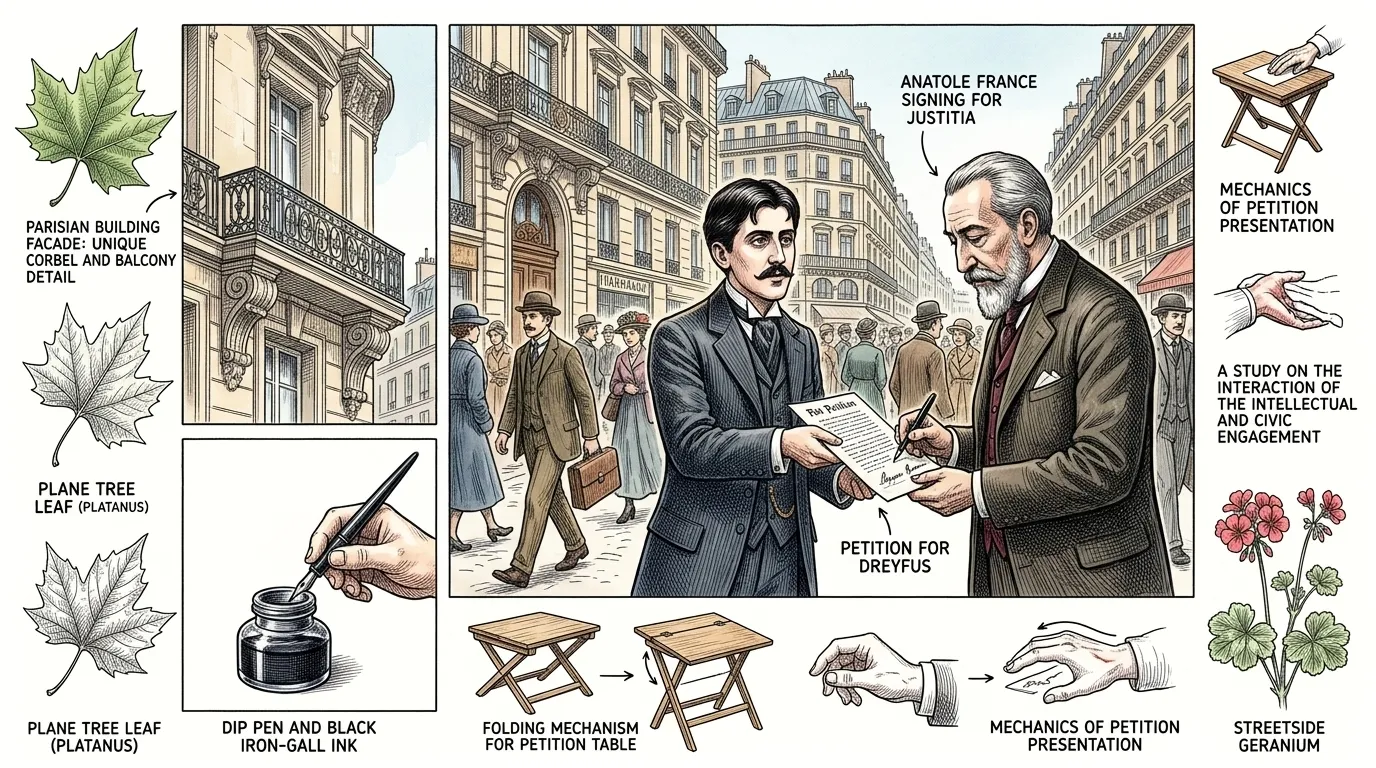
The seismic 'Affaire Dreyfus' gripped France at the turn of the century, dividing the nation. Marcel Proust, despite his delicate health and aristocratic connections, took an unequivocal stand in favor of Alfred Dreyfus, the Jewish army captain falsely accused of treason. He actively circulated petitions, gathering signatures alongside prominent figures like Anatole France, challenging the entrenched anti-Semitism and injustice. This public commitment, a rare political intervention for him, revealed a deep moral core beneath his aesthete's facade, aligning him with the forces of truth over social conformity.
Page 5
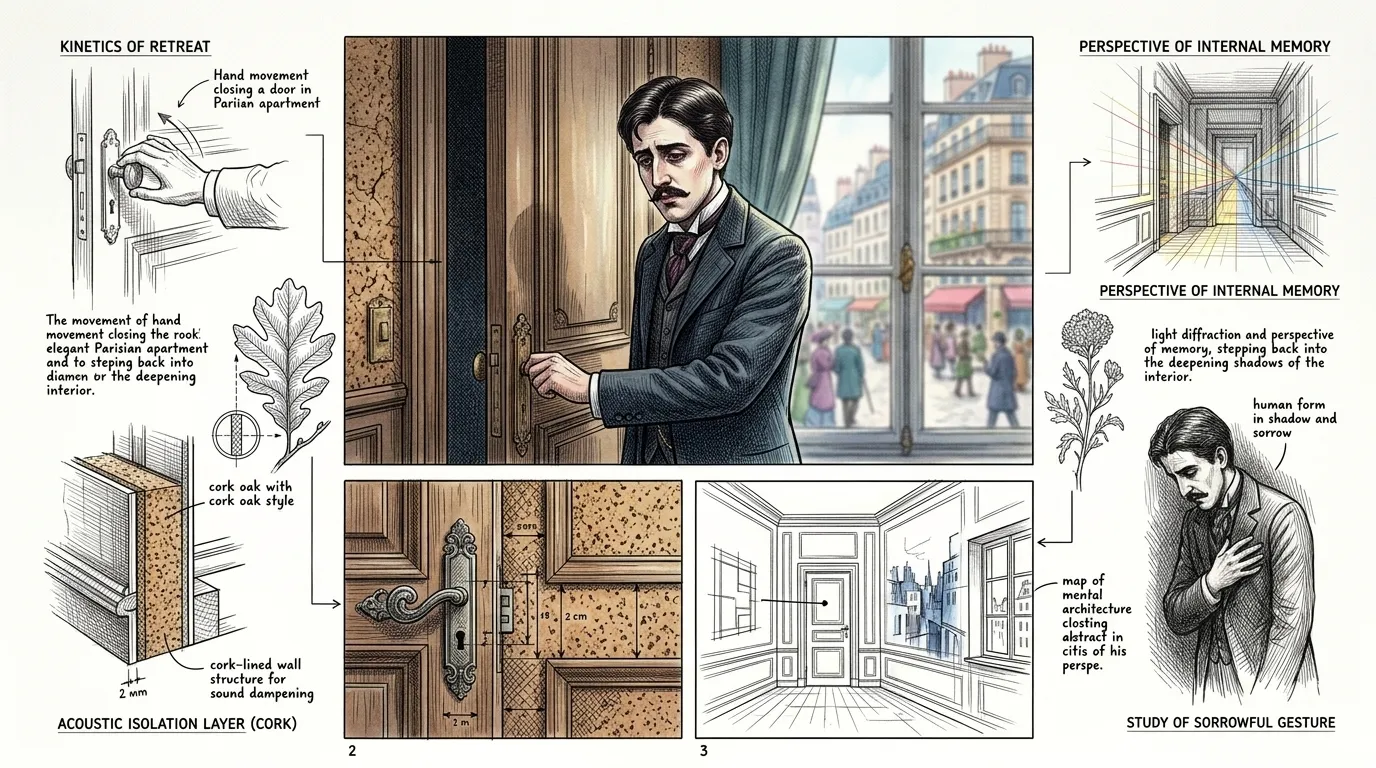
The death of his beloved mother in 1905 proved to be a pivotal and devastating blow for Marcel Proust. This profound loss, combined with the earlier death of his father, severed his last anchors to conventional life and amplified his already intense reclusiveness. He retreated definitively into his apartment, transforming grief and isolation into absolute dedication to his magnum opus. The world outside receded, replaced by the internal landscape of memory and creation, where his sprawling narrative would finally take shape.
Page 6
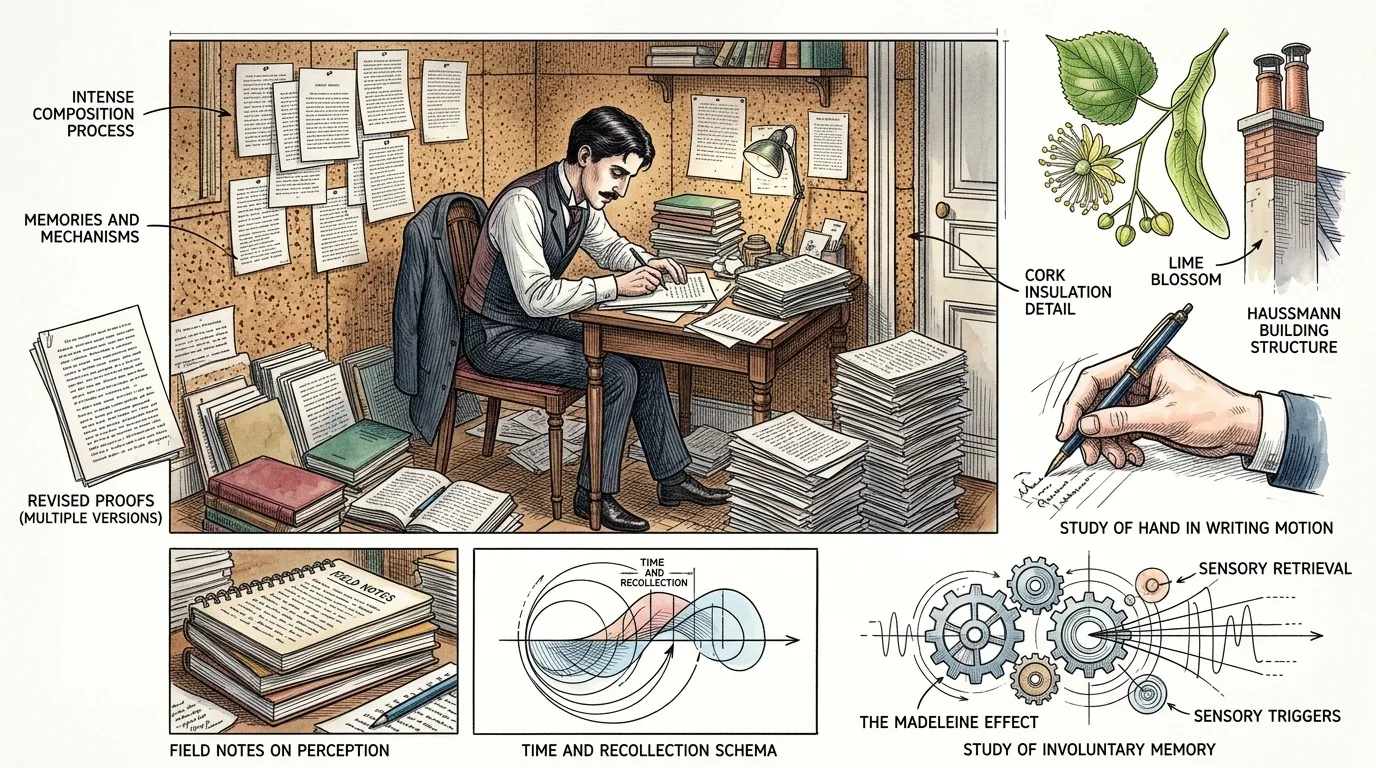
From 1910 onward, Marcel Proust's apartment on Boulevard Haussmann became his sanctuary, specifically his famous cork-lined bedroom. Here, insulated from the city's noise and the pollen that triggered his asthma, he worked tirelessly, often through the night. Piles of notebooks, proofs, and added pages accumulated around him as he dictated and endlessly revised, driven by an unyielding compulsion to capture the entirety of memory and human experience within his epic narrative. This self-imposed fortress allowed for a concentration few writers ever achieve, yielding unprecedented depths of psychological exploration.
Page 7
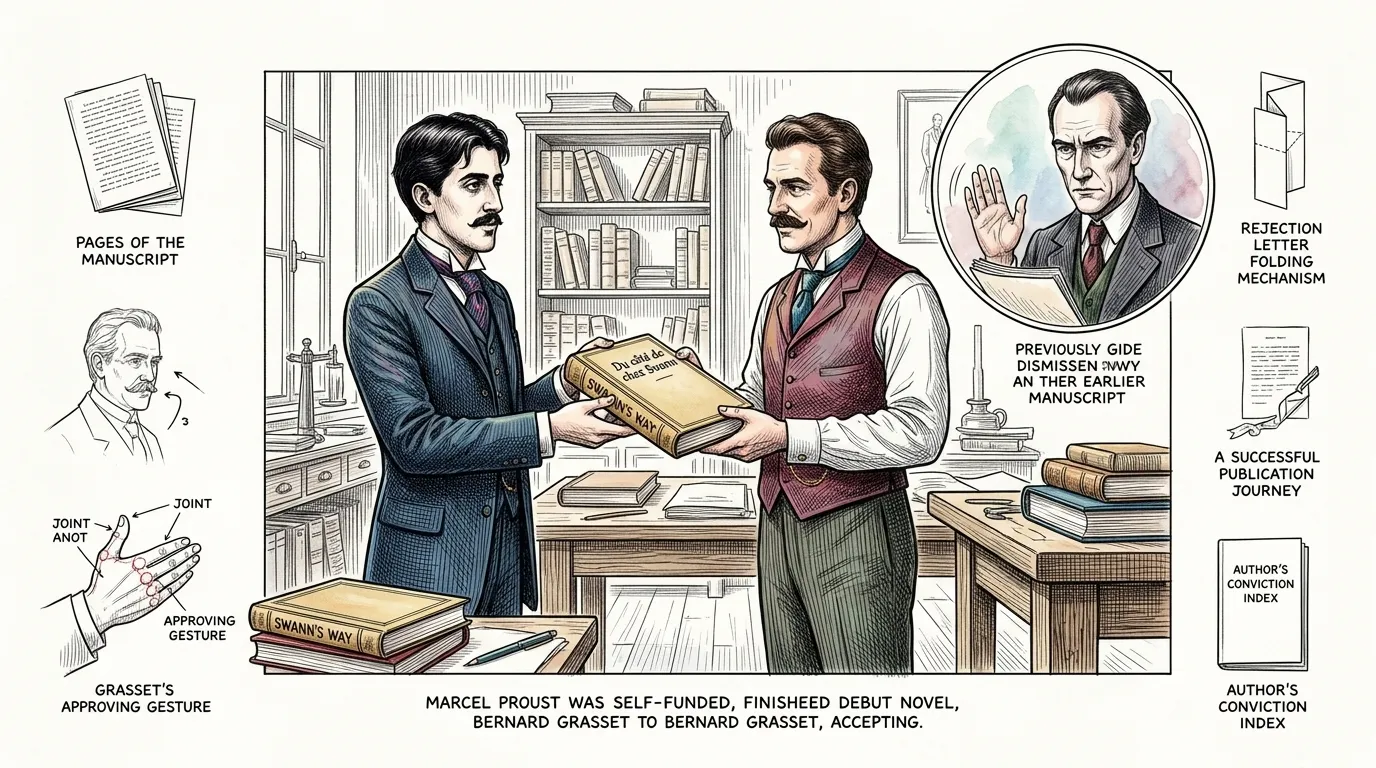
Before its eventual triumph, In Search of Lost Time faced formidable hurdles. Marcel Proust encountered rejection after rejection, notably from André Gide at the prestigious Éditions Gallimard, who famously dismissed the early manuscript. Undeterred, Proust chose to self-fund the publication of Du côté de chez Swann through Bernard Grasset in 1913. This act of conviction, a direct challenge to the literary establishment, demonstrated his unwavering belief in his vision, ultimately forcing the world to acknowledge a new, monumental voice in literature, with Gallimard eventually acquiring the rights.
Page 8
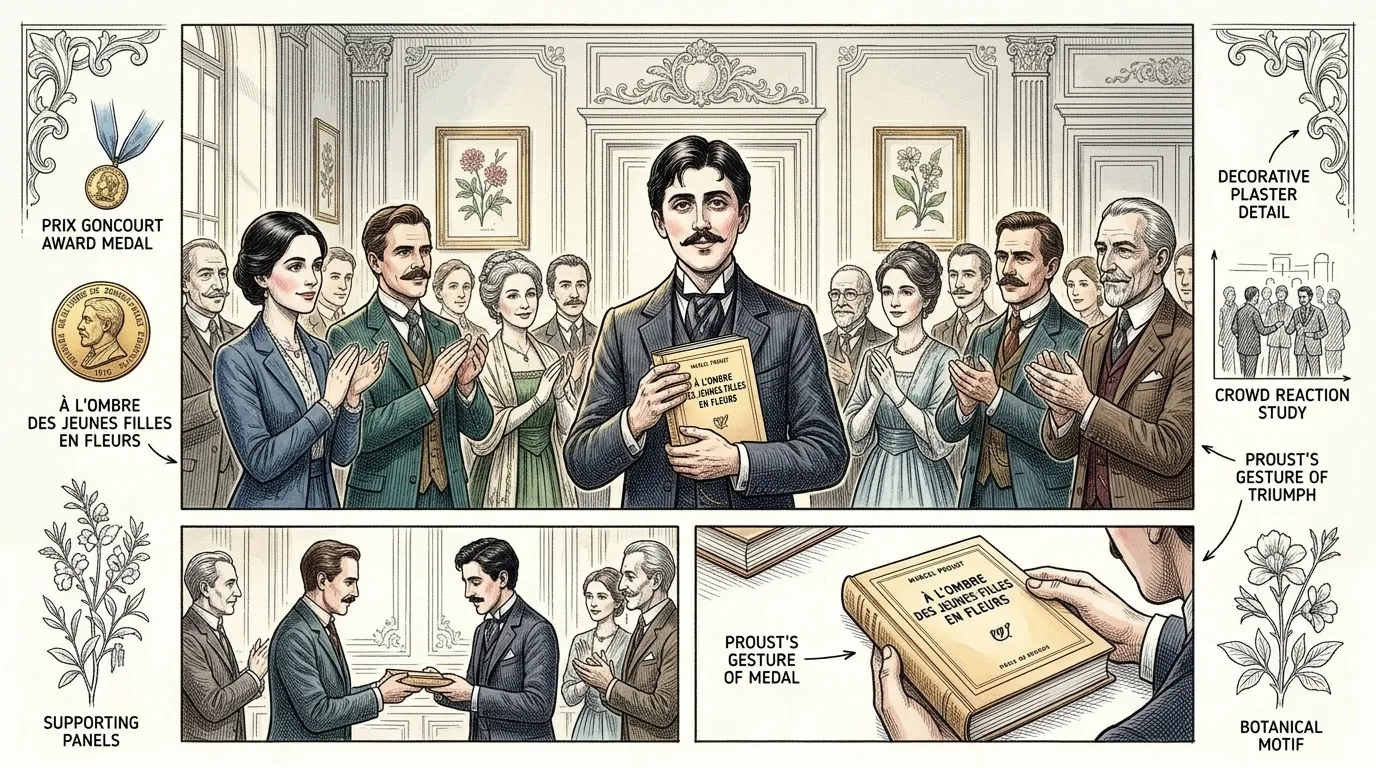
In 1919, despite the challenges of his reclusive life and frail health, Marcel Proust's second volume, À l'ombre des jeunes filles en fleurs (Within a Budding Grove), was awarded the prestigious Prix Goncourt. This major literary prize, though controversial due to Proust's perceived 'socialite' status and the unconventional nature of his work, finally brought him widespread critical recognition. Against the backdrop of a post-war France, his intricate exploration of memory and consciousness resonated, elevating him from a self-published outsider to a celebrated literary master, forever changing his standing.
Page 9
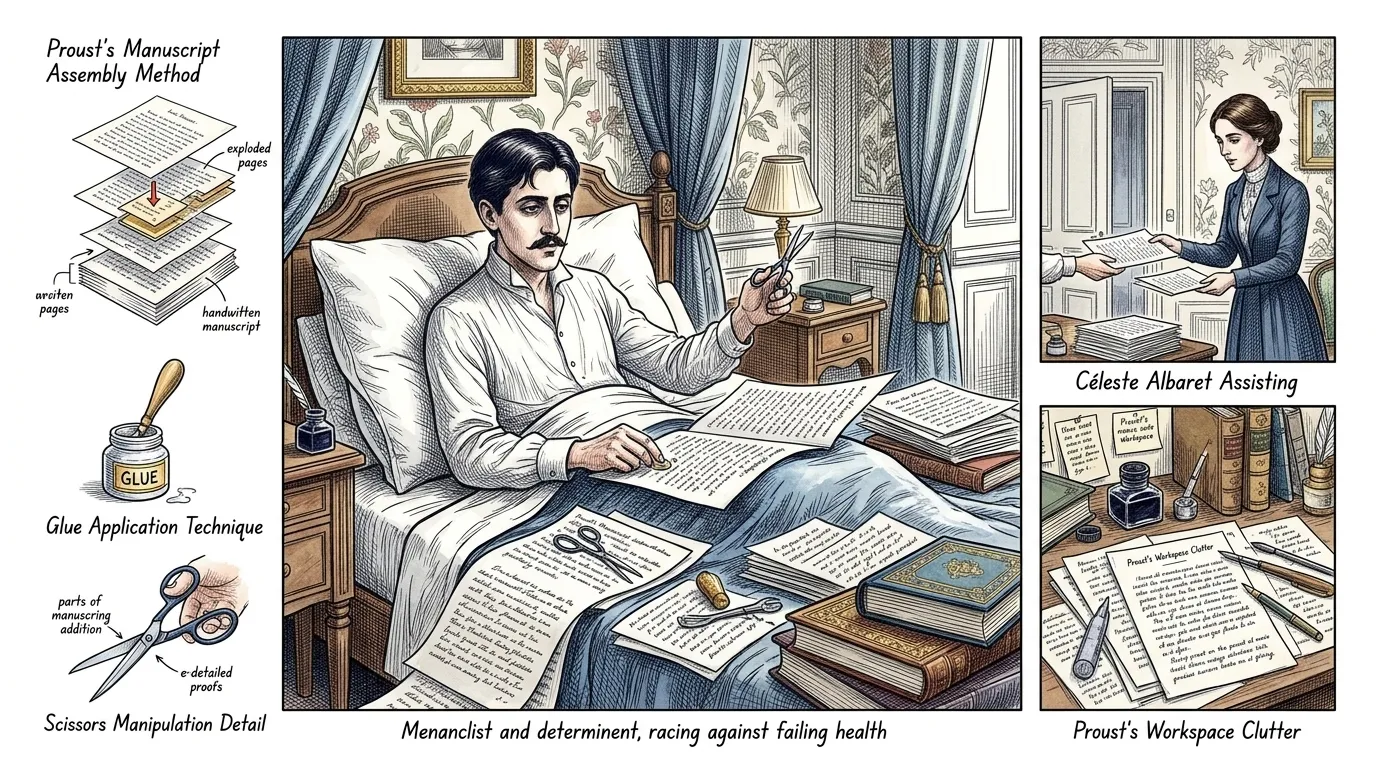
In the final years of his life, until his death in 1922, Marcel Proust engaged in a relentless race against time, his rapidly failing health contrasted by an explosive surge of creative energy. Confined to his bed, he continued to expand and revise his novel, dictating additions to his secretaries and painstakingly affixing new pages to his proofs with scissors and glue. His magnum opus grew beyond its initial scope, becoming a vast, unfinished symphony of human experience, a testament to an artist's fierce determination to complete his vision before his body succumbed.
Page 10
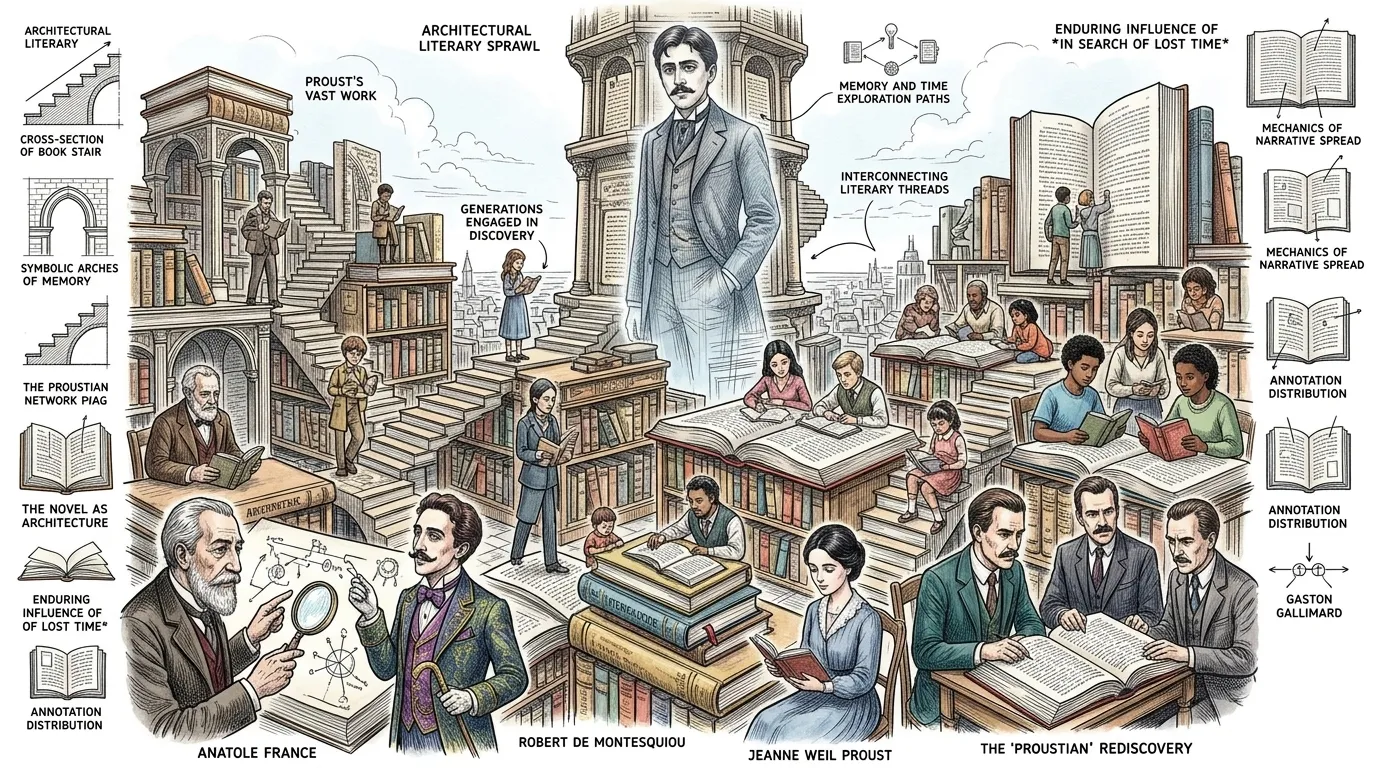
Marcel Proust's In Search of Lost Time stands as a towering achievement of 20th-century literature, its influence permeating philosophy, psychology, and art. His revolutionary narrative technique, delving into involuntary memory, stream of consciousness, and the intricate social tapestry of an era, redefined the novel's possibilities. Generations of readers and writers continue to grapple with its vastness, its insights into human consciousness, and the profound, 'Proustian' understanding that the past is never truly lost, but forever waiting to be rediscovered within the depths of memory. What he built would outlive him, shaping the future of literary thought.
About this story
- Location: Global
- Audience: general readers
Questions and answers
Read Wonder People on your phone
Wonder People is available on Android. Get Wonder People on Google Play.