Michelangelo
Michelangelo — an illustrated biography story, set in Global. 10 illustrated pages, free to read on Wonder People.
Page 1
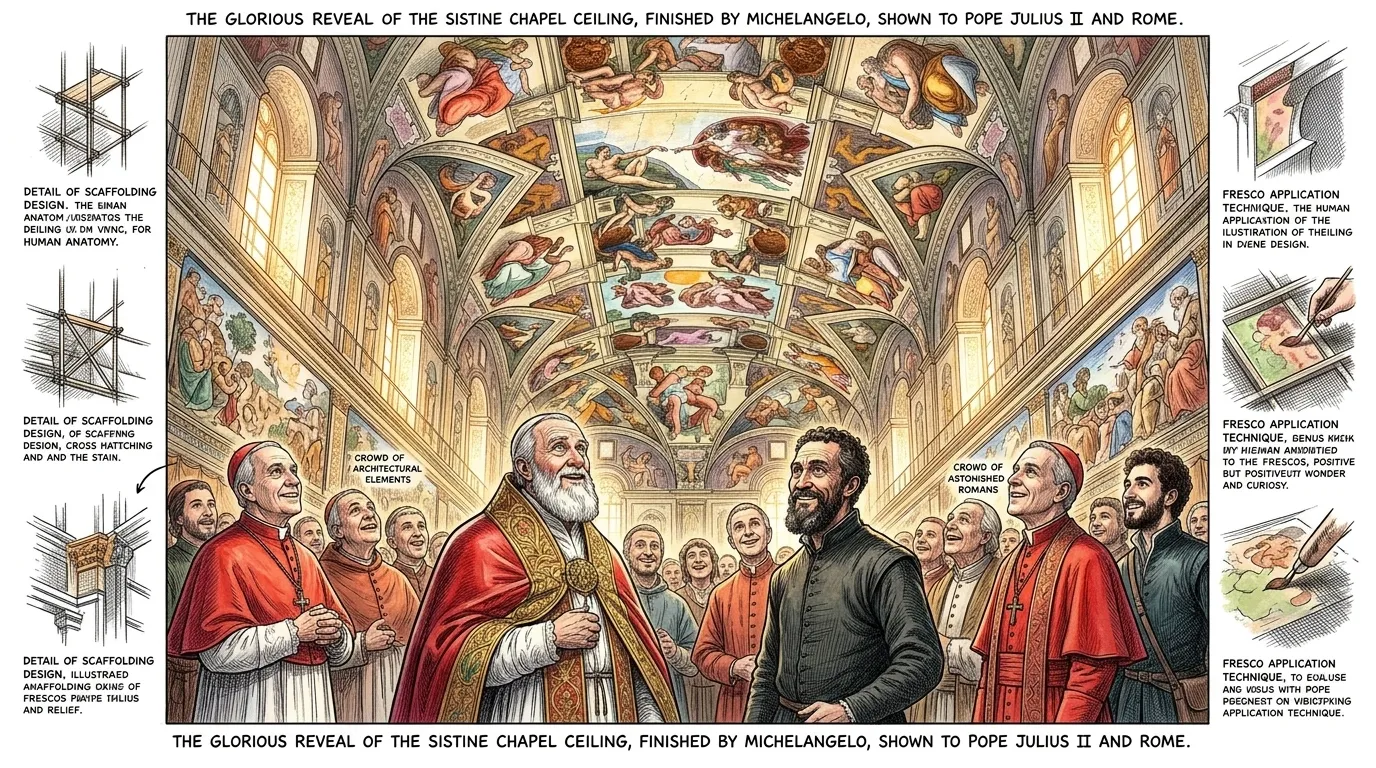
Pope Julius II stood before the newly revealed Sistine Chapel ceiling in October 1512, his gaze fixed upward alongside a throng of astonished cardinals and Roman citizens. Above them, Michelangelo's monumental creation, a swirling cosmos of divine figures, spanned over 5,000 square feet, completely transforming the sacred space. The sheer scale and audacious vision instantly redefined the possibilities of human artistry, forcing all who witnessed it to confront its overwhelming power.
"'It is done, Your Holiness,' Michelangelo declared, his voice strained from years of work, 'a world reborn upon this vault.' Pope Julius II, his face a mixture of awe and relief, replied, 'Truly, Buonarroti, you have brought the heavens to earth, a glory for God and Rome beyond measure.'"
Page 2
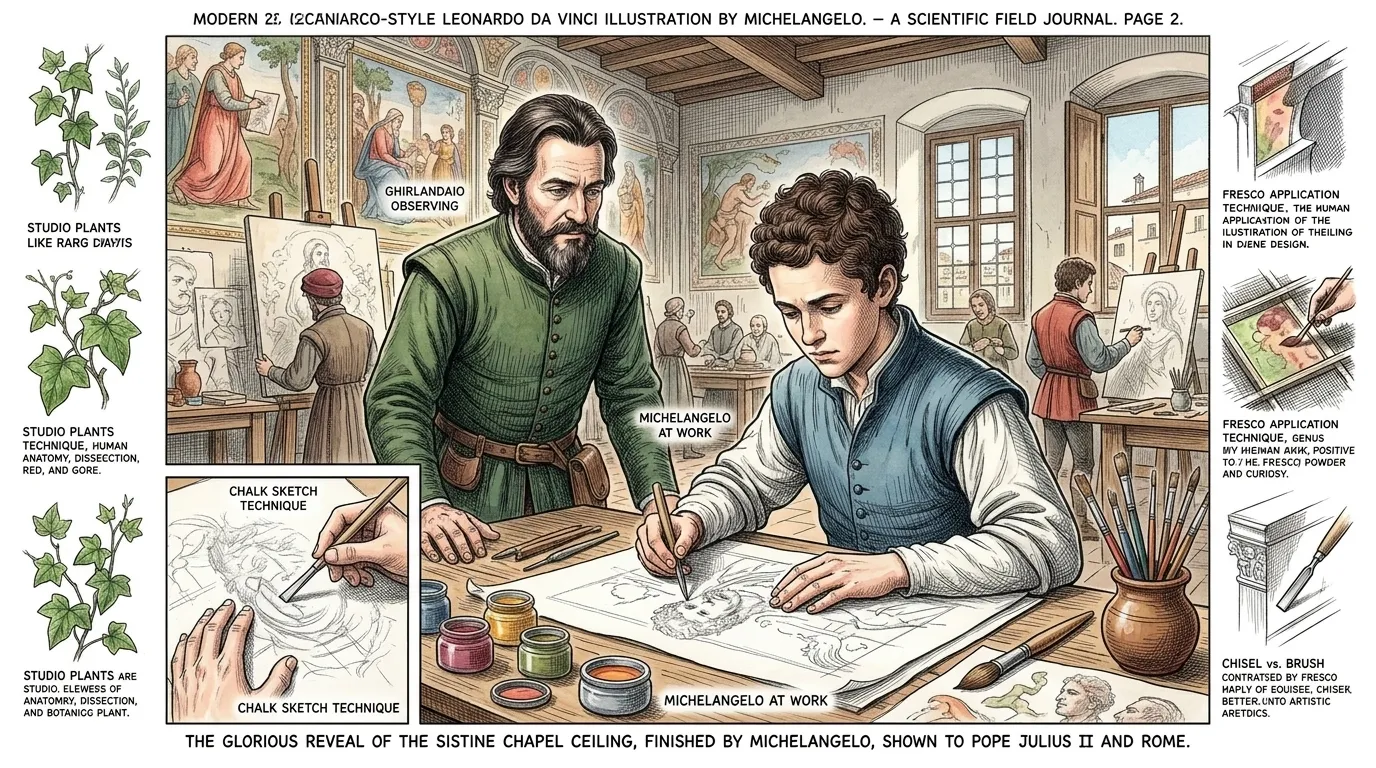
In the bustling workshop of Domenico Ghirlandaio in Florence, circa 1488, a young 13-year-old Michelangelo honed his drawing skills, yet his true passion lay elsewhere. Surrounded by paints and brushes, his hands yearned for the cold, unyielding challenge of stone. He saw forms locked within raw material, a vision distinct from the vivid frescoes his master embraced.
"'Buonarroti, your hand with the chalk is exceptional,' Domenico Ghirlandaio, a distinguished 40-year-old Florentine painter with a neatly trimmed beard, remarked, observing Michelangelo's detailed sketch. 'Yet you spend hours with the chisel in the Medici gardens, seeking only marble. Why this steadfast devotion to hard stone?' Young Michelangelo, his face intent, replied, 'Maestro, the block speaks to me; it holds a figure waiting to be freed. It is not I who sculpt, but the stone revealing its truth.'"
Page 3
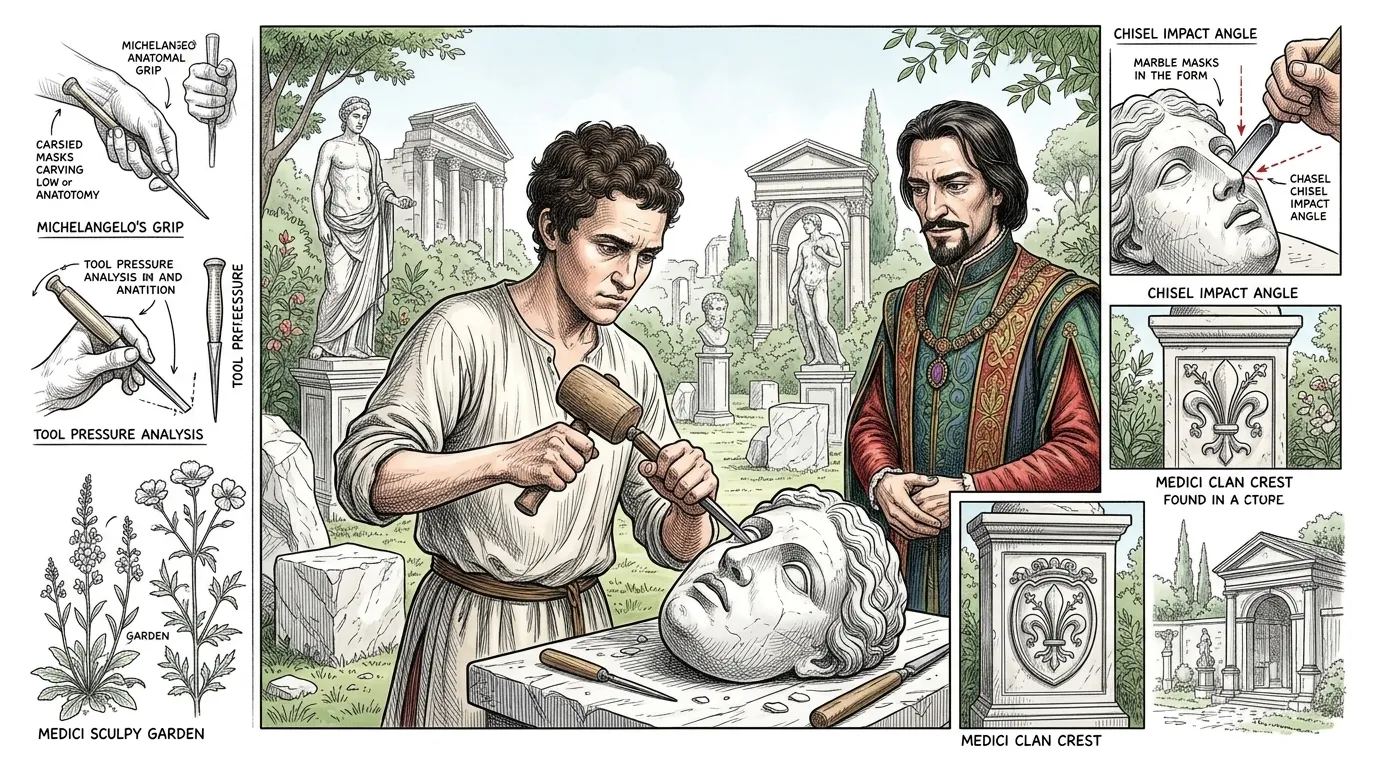
Within the serene grounds of the Medici sculpture gardens in Florence, around 1489, Lorenzo de' Medici, known as 'the Magnificent,' discovered the young Michelangelo at work. He observed the boy's unusual talent and fierce dedication, recognizing a raw genius that defied conventional training. This encounter would irrevocably alter the artist's path, granting him access to patronage, classical learning, and intellectual giants.
"'Your skill, young Buonarroti, far surpasses your years,' Lorenzo de' Medici, a dignified 40-year-old patron with sharp features and elaborate Renaissance garments, mused, observing Michelangelo carve a marble mask. 'You find beauty where others see only stone. Tell me, what do you learn from the ancient forms here?' Michelangelo, a focused 14-year-old, his brow furrowed with concentration, responded, 'They teach proportion, Sire, and the grace of the human form, to which I aspire to give life through my hands.'"
Page 4
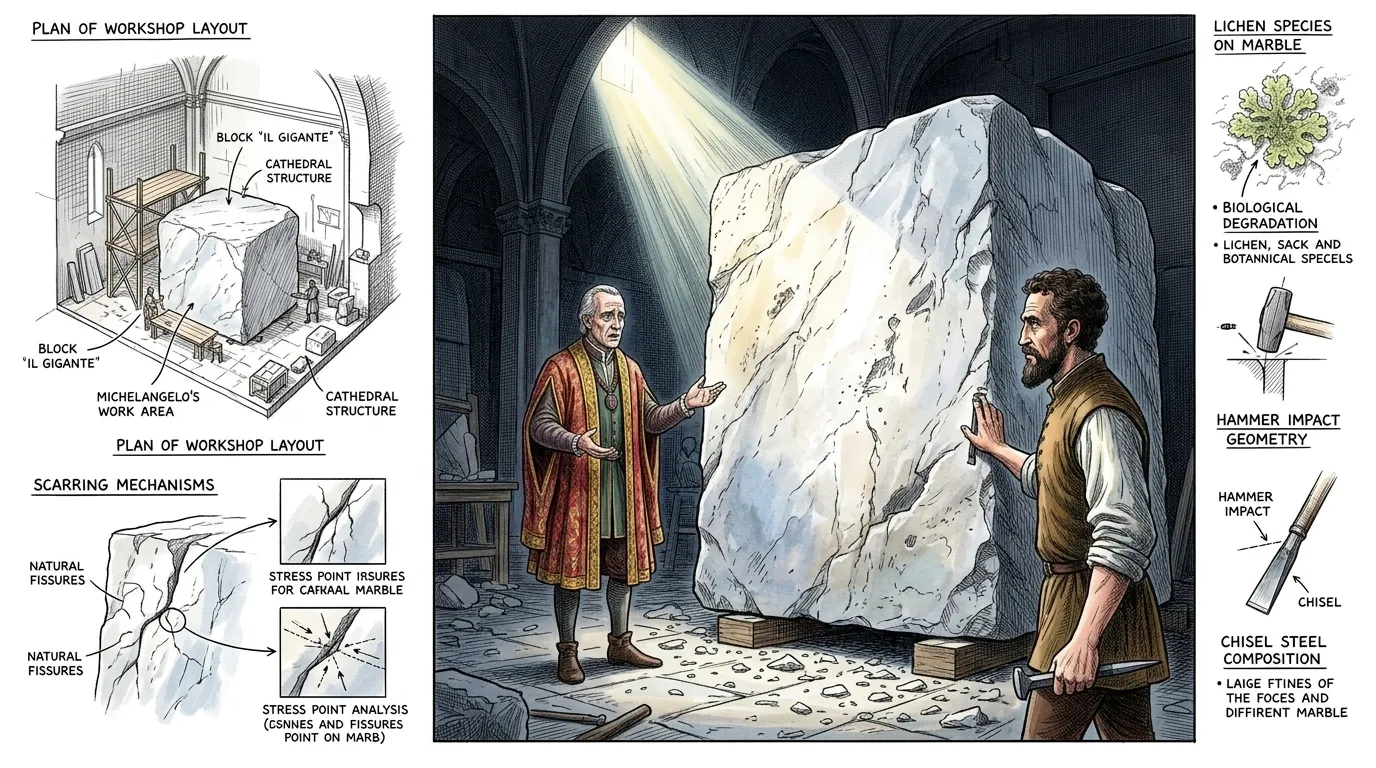
By 1501, Florence sought a monumental 'David,' a symbol of republican strength, but possessed only a massive, previously abandoned block of Carrara marble, deemed 'unworkable' by earlier sculptors. Michelangelo, now 26, surveyed the colossal, damaged stone in the cathedral workshop, recognizing not its flaws, but the heroic figure already imprisoned within its mass. He alone possessed the vision to liberate it.
"'This block has been discarded for forty years, Buonarroti,' Piero Soderini, the 52-year-old Gonfaloniere of Florence, his face etched with concern, stated, gesturing to the immense marble. 'Giants have attempted it and failed. Can you truly see a figure, a David, within this scarred stone?' Michelangelo, resolute, replied, 'Signor Soderini, I see not a damaged block, but a challenge. The imperfections merely guide the hand to the form the stone already desires to be.'"
Page 5
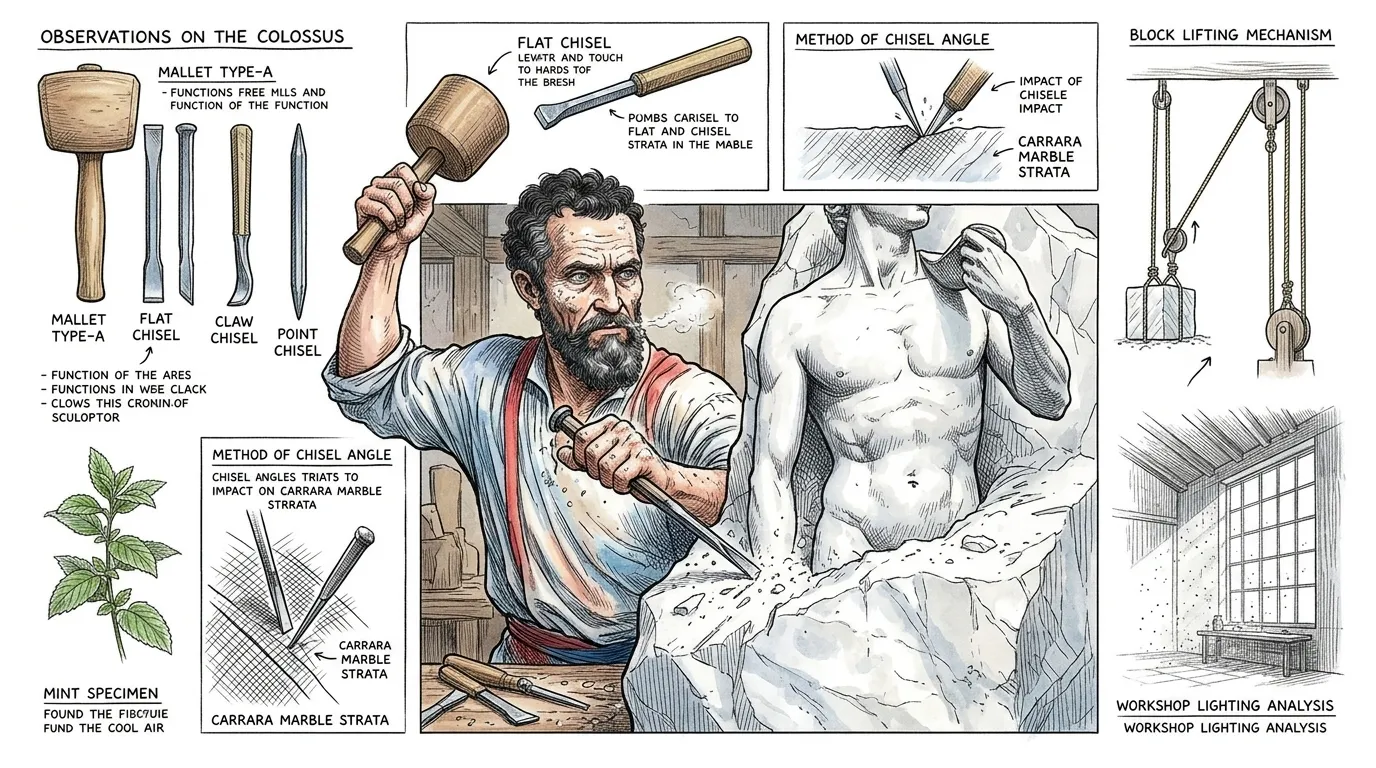
For over two years, from 1501 to 1504, Michelangelo labored relentlessly on the colossal marble. He worked in secret, protecting his vision, knowing that every strike of the chisel was an act of both destruction and revelation. The city held its breath as the impossible block slowly yielded its heroic prisoner, a testament to the artist's belief in the unseen potential within raw matter.
"'They called it unworkable, stubborn,' Michelangelo muttered to himself, his breath fogging in the cool workshop air, as marble dust coated his skin. He paused, looking at the emerging form of David, muscles tensed, sling over shoulder. 'But I saw the angel in the marble and carved until I set him free.' He lifted his mallet once more, striking the chisel with renewed precision, his eyes burning with conviction, as he sought to bring life to the hero within the stone."
Page 6
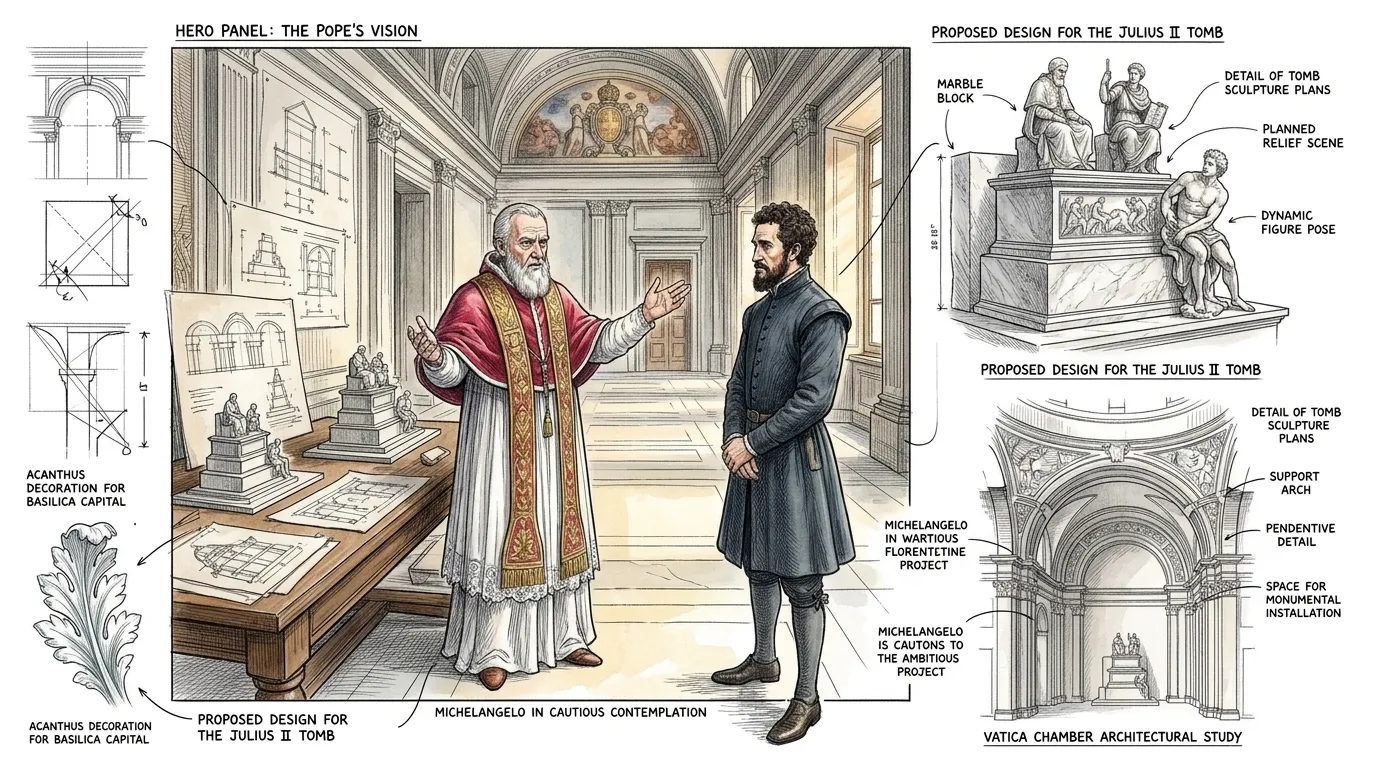
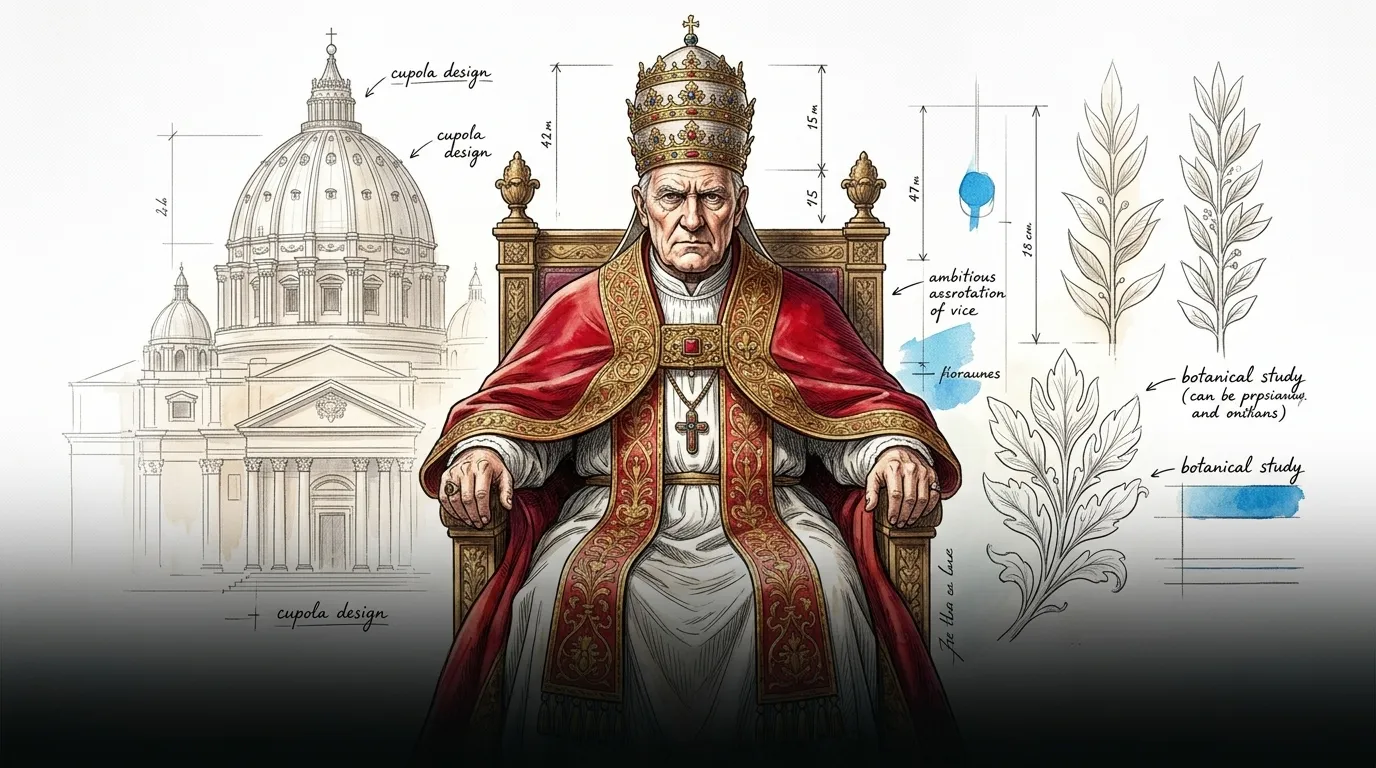
In 1505, Pope Julius II, a formidable and ambitious pontiff, summoned Michelangelo to Rome. Julius envisioned a magnificent tomb for himself, a grand sculptural project that promised to be the artistic undertaking of a lifetime. The artist, known primarily as a sculptor, was drawn into the turbulent world of papal ambition, an arena where artistic freedom often clashed with powerful patronage.
"'Buonarroti, I require a tomb that proclaims my glory to eternity!' Pope Julius II, a powerful 72-year-old man in opulent papal vestments, declared, his voice echoing in the Vatican chamber. 'A monument unparalleled in Christian history, with forty magnificent statues!' Michelangelo, a respectful but wary 30-year-old, dressed in dark, formal Florentine attire, responded, 'Your Holiness, such a work demands years, a lifetime of dedication. It is a grand vision, indeed.'"
Page 7
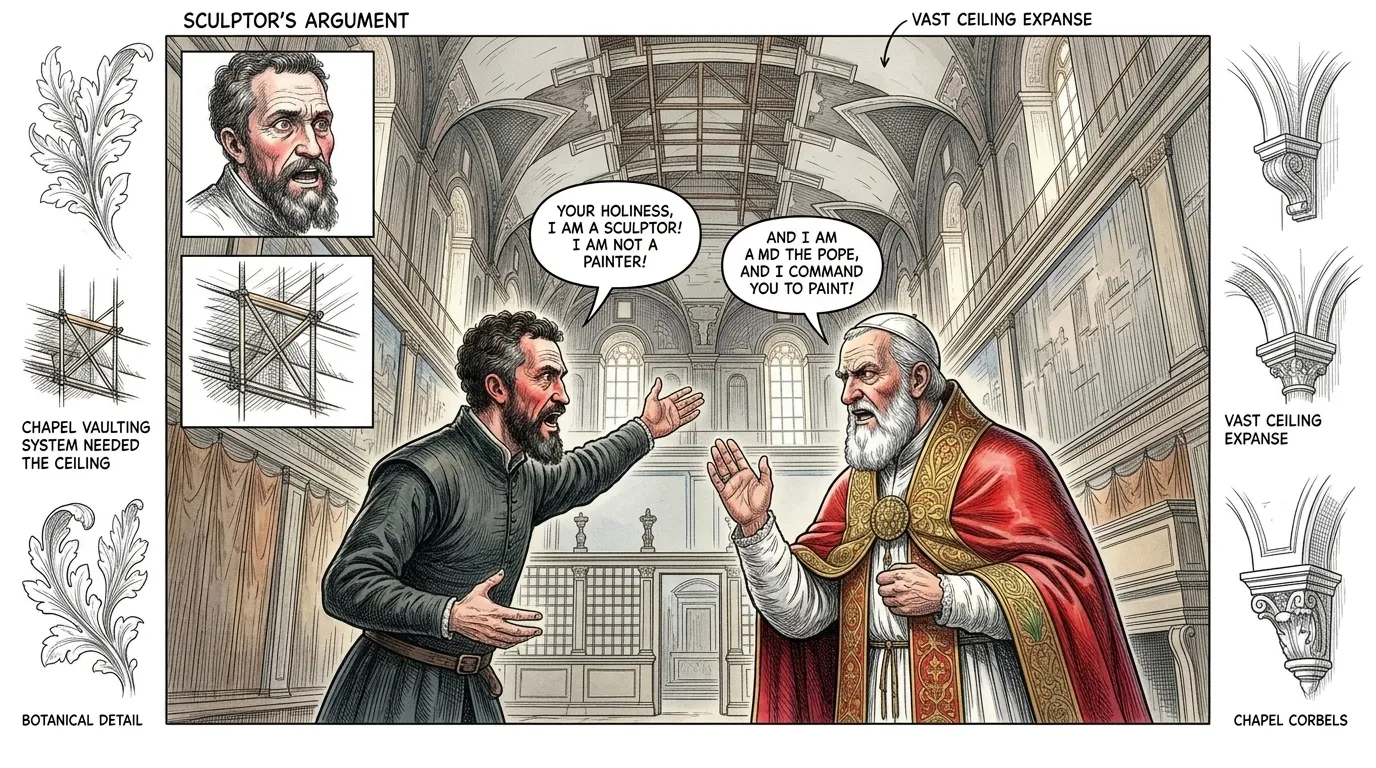
The tomb project became a source of endless frustration. Then, in 1508, Pope Julius II pivoted, ordering Michelangelo, a sculptor, to paint the vault of the Sistine Chapel. The artist protested fiercely, claiming he was no painter, but the indomitable Pope refused to be defied. Michelangelo was compelled to accept a commission that would ultimately define his legacy, battling both artistic doubt and the physically grueling task.
"'Your Holiness, I am a sculptor! I am not a painter!' Michelangelo, a frustrated 33-year-old, his face flushed with argument, pleaded, gesturing emphatically towards the vast, empty chapel ceiling above them. Pope Julius II, his temper flaring, retorted, 'I command you to paint, Buonarroti! Is the Vicar of Christ to be gainsaid by a mere stone-cutter? Do it, or face my wrath!' The Pope's booming voice filled the solemn space, leaving no room for further argument."
Page 8
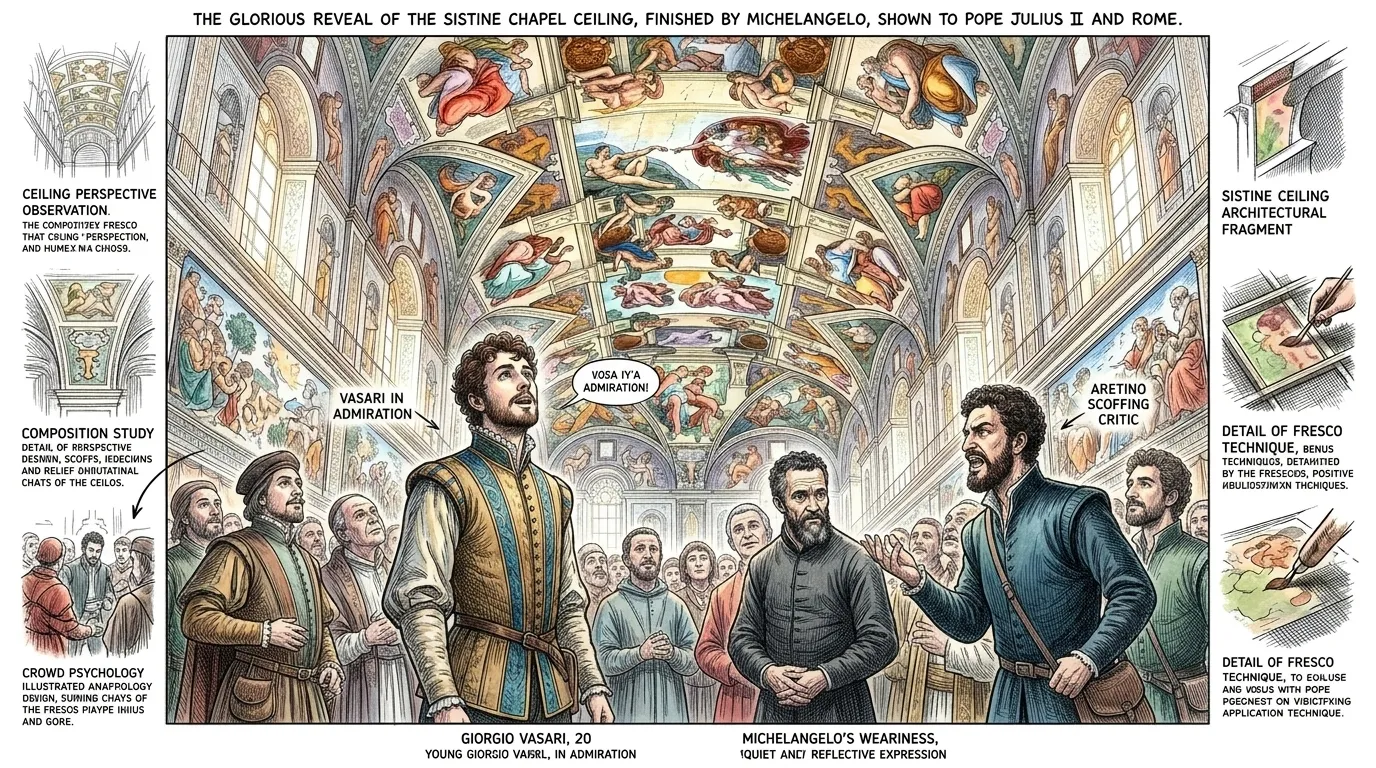
After four punishing years, the Sistine Chapel ceiling was finally unveiled, instantly transforming the world of art. The public's reaction was one of overwhelming awe, but also sparked intense debate. Critics like Pietro Aretino voiced objections to the nudity and daring style, yet the sheer power of Michelangelo's vision was undeniable, solidifying his reputation as a master who pushed boundaries, for better or worse.
"'It is a divine masterpiece, a triumph of the human spirit!' Giorgio Vasari, a younger 20-year-old artist and future biographer, exclaimed, his eyes wide with wonder as he gazed at the Sistine ceiling. Pietro Aretino, a 22-year-old intellectual and caustic critic, scoffed, 'A triumph of muscle and nakedness, perhaps! Does God truly desire such pagan displays in His holiest chapel?' Michelangelo, a weary 37-year-old, standing quietly amidst the throngs, merely observed the polarized reactions, knowing his work had irrevocably shifted the landscape of art."
Page 9
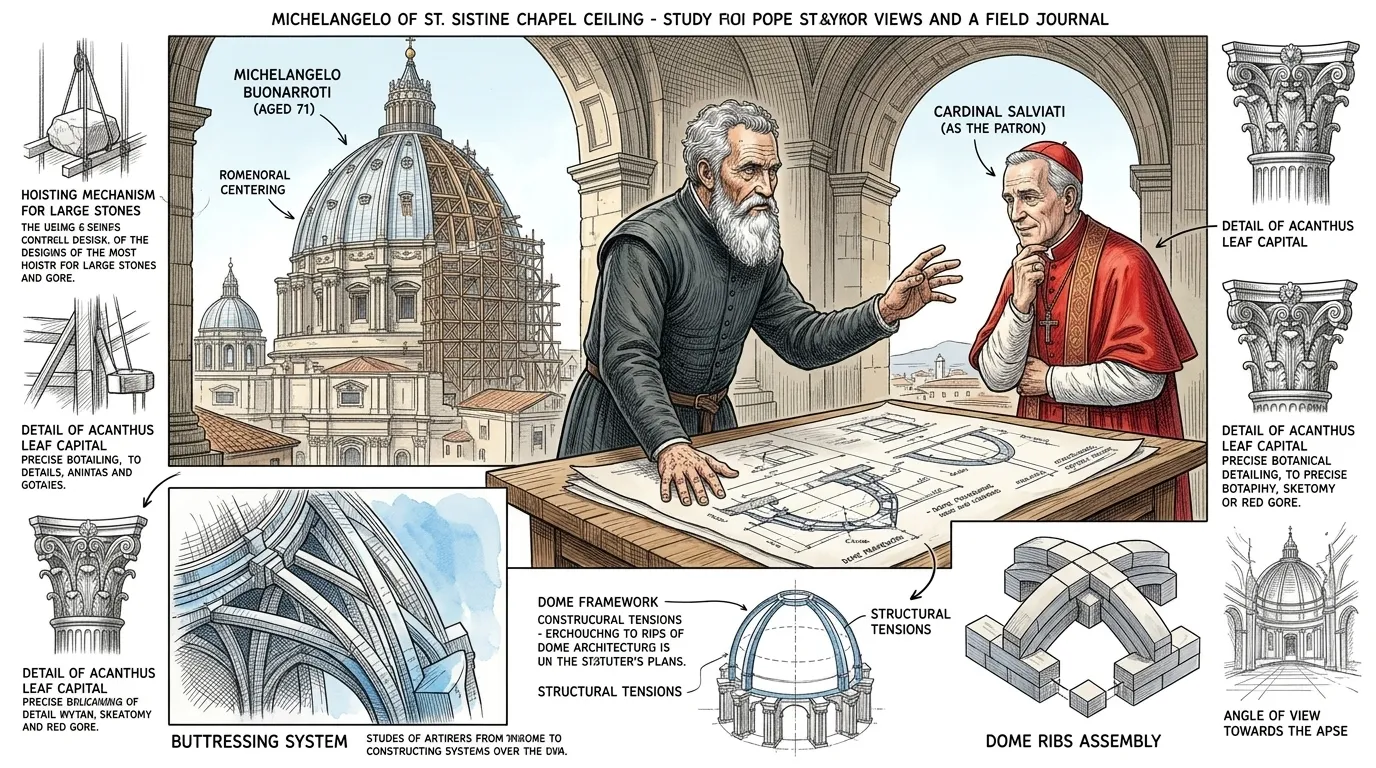
Decades later, in his twilight years, Michelangelo, now a revered but stubborn architect, undertook the formidable task of completing St. Peter's Basilica. He inherited a chaotic project, but his uncompromising vision and engineering genius brought order and scale. He redesigned the dome, ensuring its iconic grandeur and structural integrity, a testament to his versatility and unwavering commitment to monumental form, even at 71 years old.
"'The ambition of this dome must rise to the heavens, not crumble before the winds,' Michelangelo, an imposing 71-year-old man with a long, flowing white beard and serious eyes, declared, gesturing with a weathered hand at the construction plans laid on a table. Cardinal Salviati, a respectful 55-year-old church official in crimson robes, nodded, 'Your resolve, Maestro, is the foundation of this church's future. What challenges do you foresee in its structure?' Michelangelo, tracing a line on the parchment, replied, 'The weight, Eminence, the immense thrust. We must bind it with stone and iron, as if it were a sculpture to hold the very sky.'"
Page 10
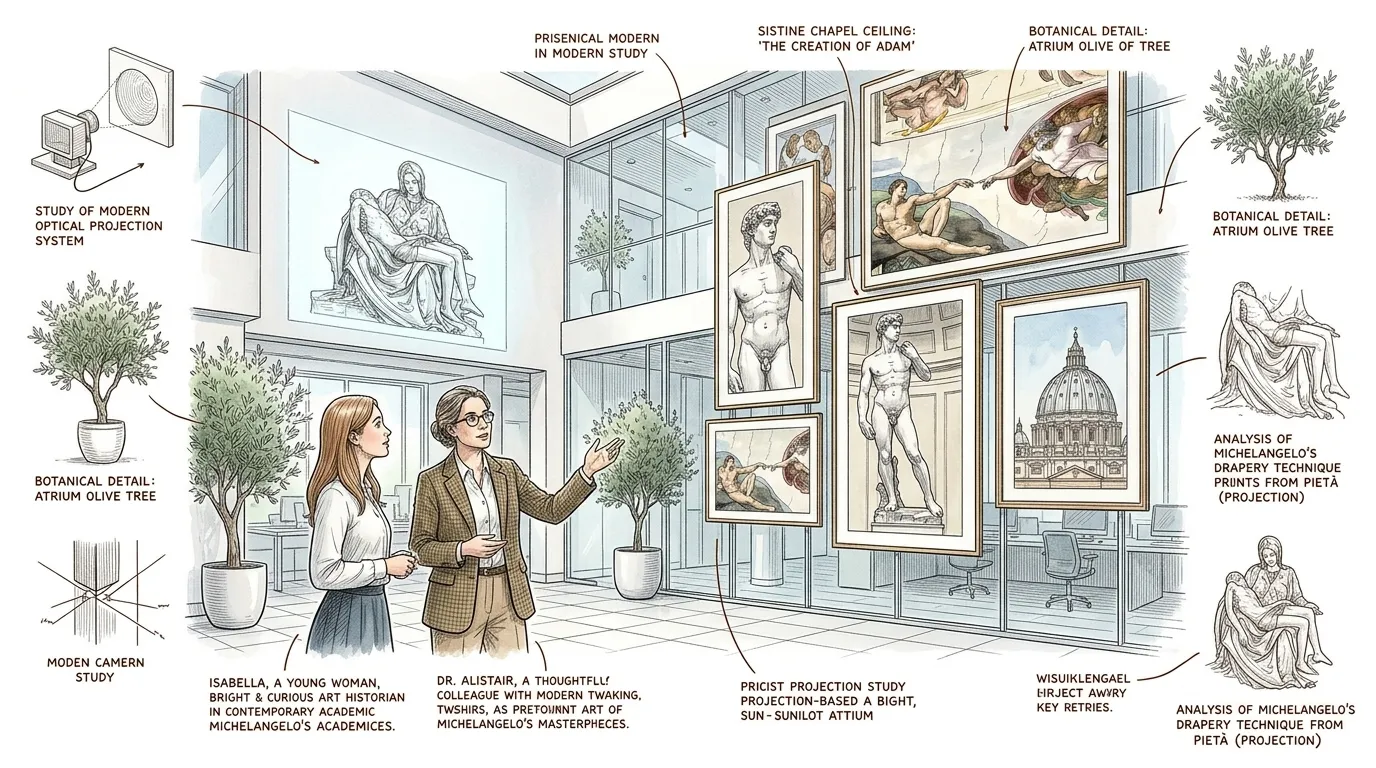
Michelangelo Buonarroti left behind a body of work that transcended his era. His creations — from the soulful Pietà to the heroic David, from the epic Sistine ceiling to the monumental dome of St. Peter's — continue to define human artistic achievement. Each piece speaks of an individual wrestling with stone, paint, and divine inspiration, forever shaping the visual language of the Western world. His legacy endures, an immortal testament to the power of one man's relentless pursuit of beauty and truth.
"His art historian descendant, Isabella, remarked, 'Michelangelo's work captures the profound drama of the human spirit, a universal language spoken across centuries.' Her colleague, Dr. Alistair, added, 'Indeed. As the Roman poet Horace once wrote, 'Exegi monumentum aere perennius' — I have built a monument more lasting than bronze. Michelangelo, through his art, achieved just that, an eternal resonance.'"
About this story
- Location: Global
- Audience: general readers
Questions and answers
Read Wonder People on your phone
Wonder People is available on Android. Get Wonder People on Google Play.