Pablo Neruda
Pablo Neruda — an illustrated biography story, set in Global. 10 illustrated pages, free to read on Wonder People.
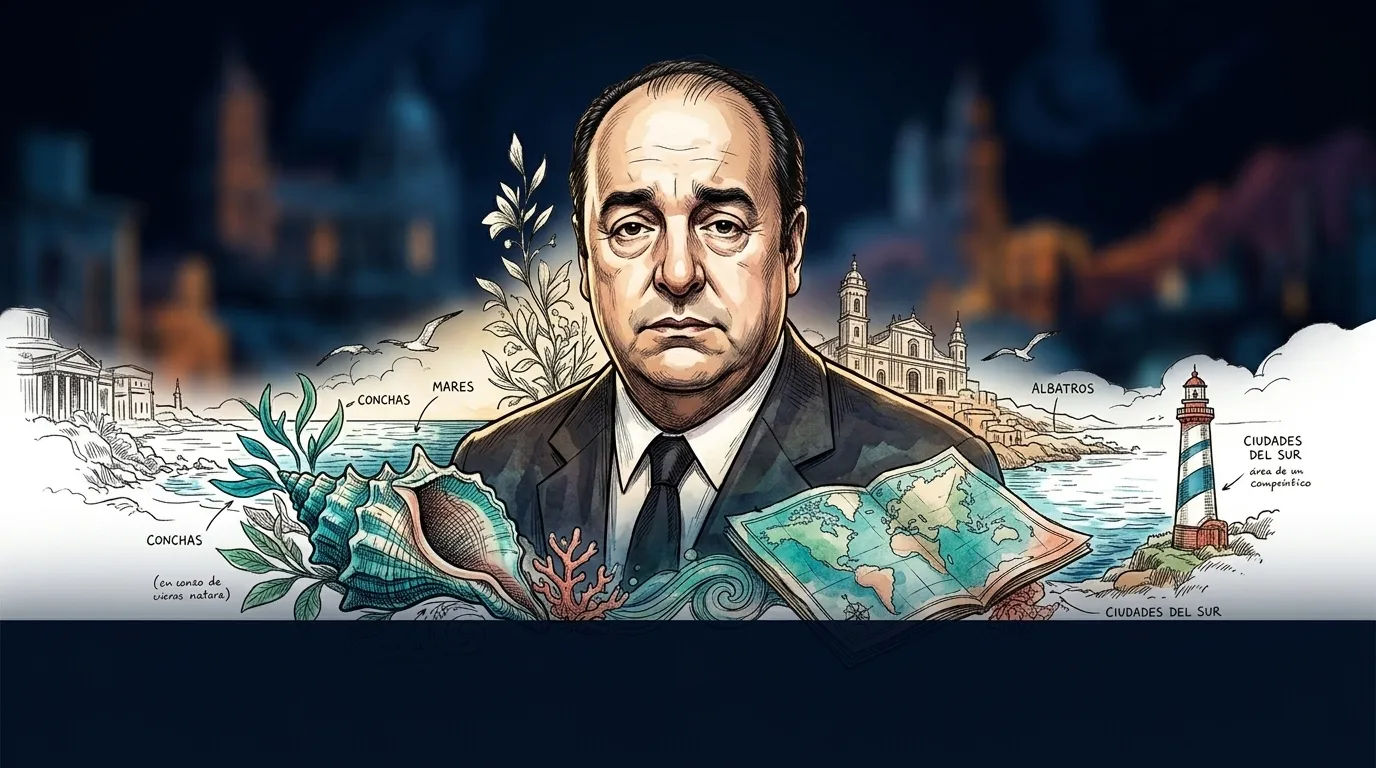
Page 1
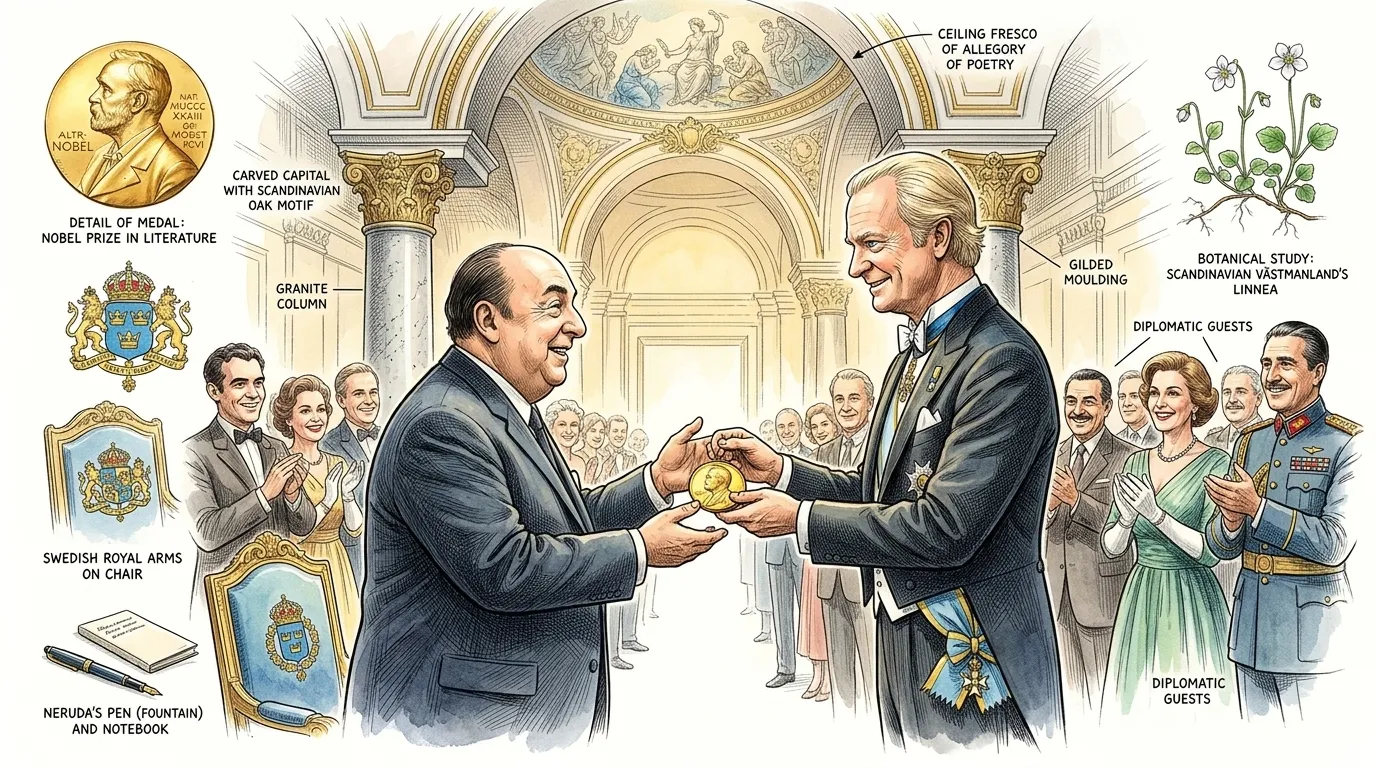
In the grand hall, recognition arrived for the voice of a continent. Pablo Neruda, having navigated political turmoil and literary triumph, stood before the world. King Carl XVI Gustaf of Sweden presented him with the Nobel Prize in Literature, an acknowledgment of poetry that had reached 25 million readers in 100 languages. This moment in Stockholm, 1971, cemented his place as a universal poet, his words resonating far beyond the borders of Chile.
Page 2
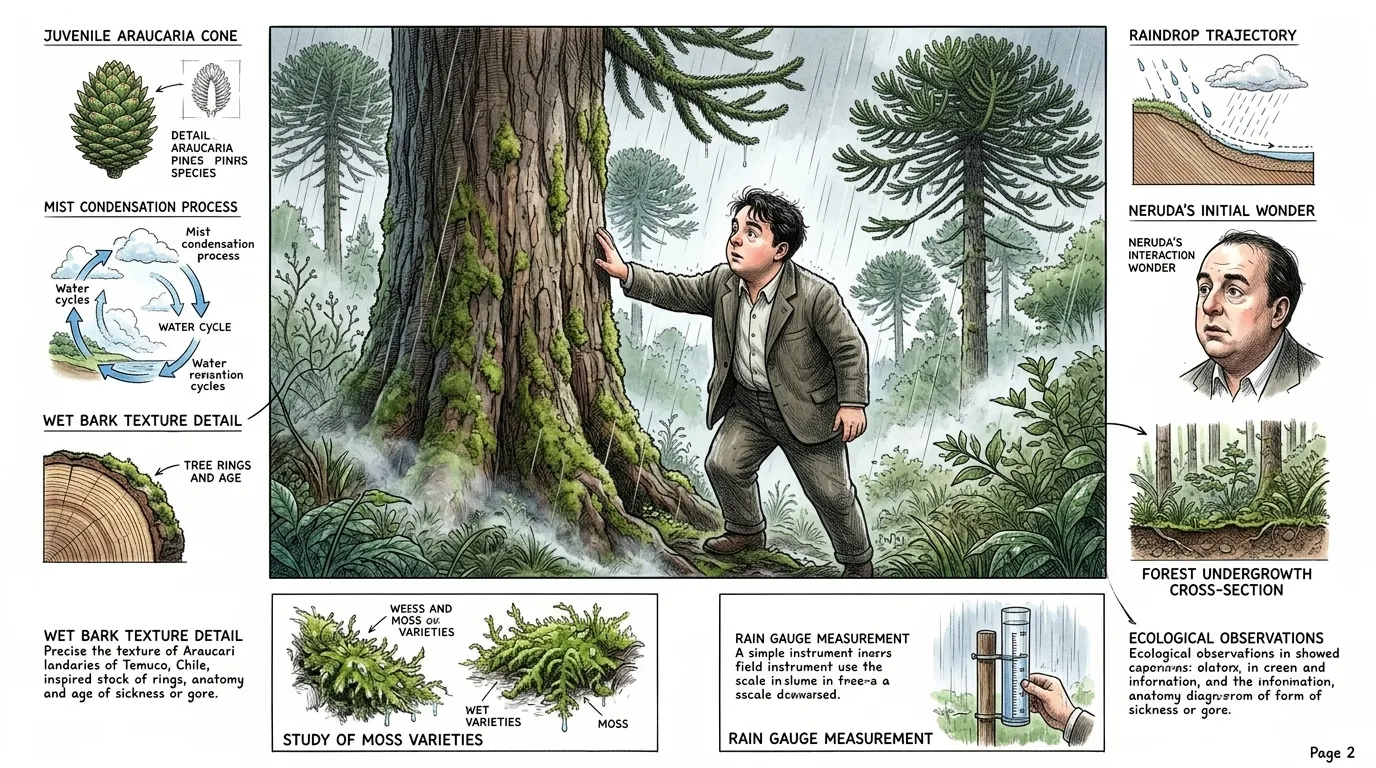
Born Neftalí Ricardo Reyes Basoalto in Parral, Chile, his childhood was shaped by the rugged, rain-soaked landscapes of Temuco. He absorbed the raw power of nature, the vast forests, and the relentless elements. This isolation and immersion forged a deep connection to the earth, a wellspring for the lyrical intensity that would define his future work. It was in this fertile, solitary ground that his poetic sensibilities first took root, far from any established literary world.
Page 3
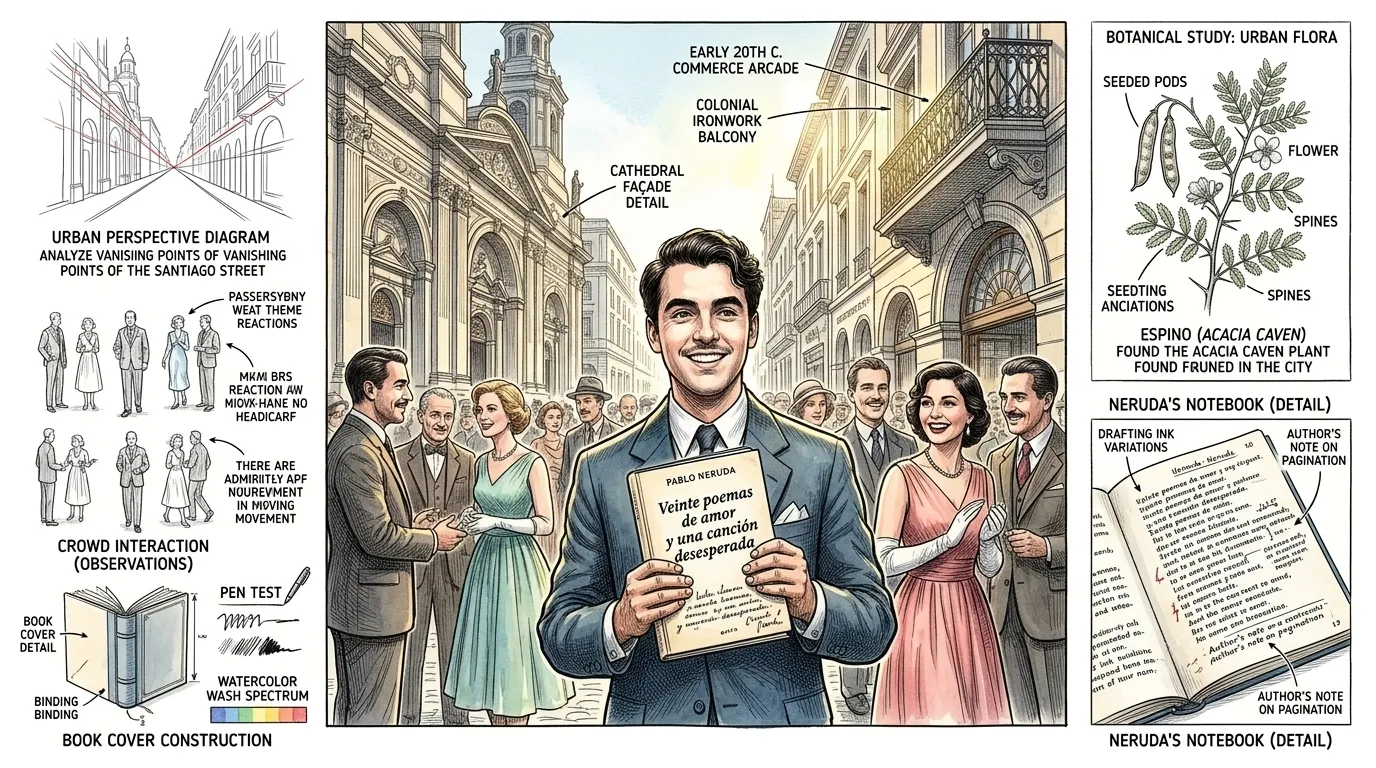
At just nineteen, the young poet, now known as Pablo Neruda, unleashed Veinte poemas de amor y una canción desesperada upon the world. This collection, raw and passionate, instantly captured the imagination of a generation. Its unprecedented success in Santiago solidified his burgeoning reputation, transforming him from an aspiring writer into a formidable literary presence. He had published his voice into permanence, marking his definitive arrival.
Page 4
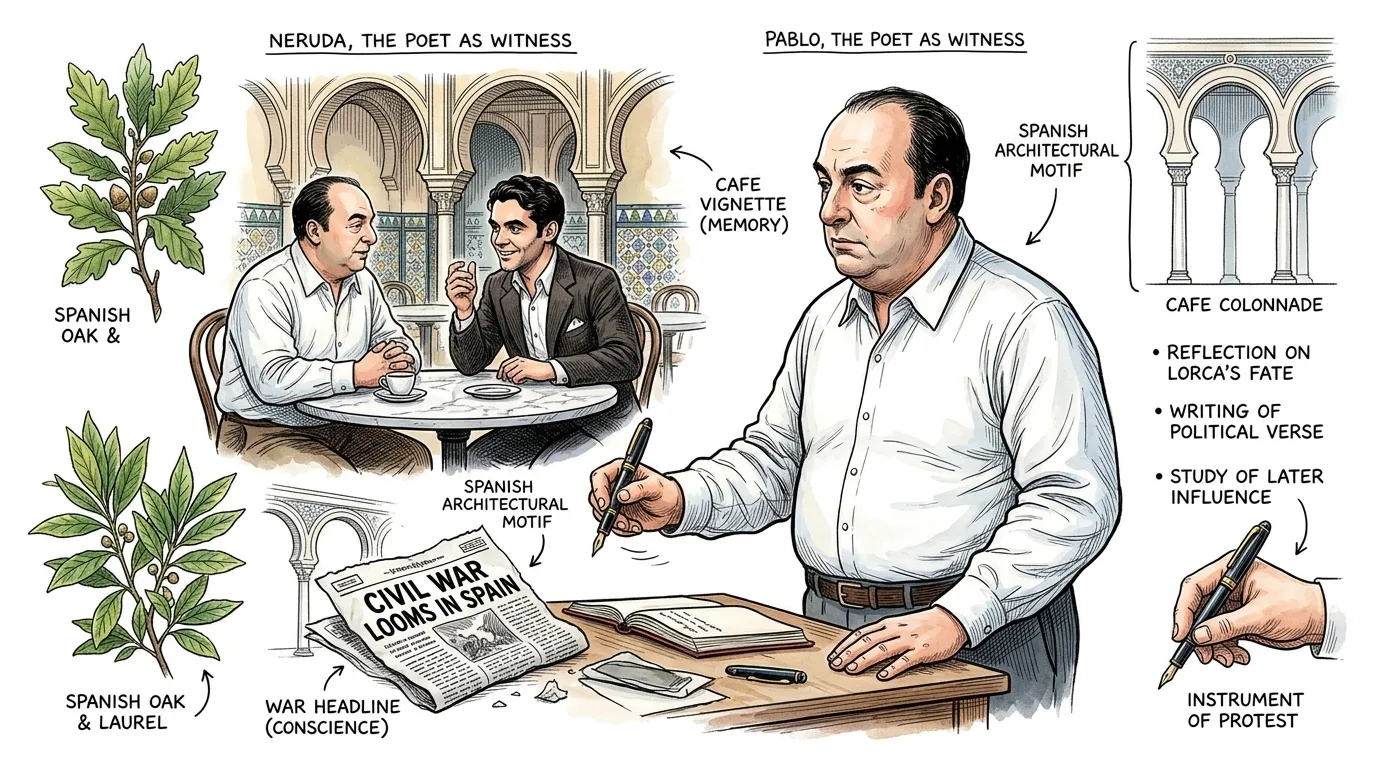
His diplomatic assignments led him to Spain in the 1930s, where he befriended fellow poet Federico García Lorca. The brutal outbreak of the Spanish Civil War, and Lorca's subsequent murder, shattered Neruda's earlier poetic detachment. The horror he witnessed ignited a fierce political conscience, irreversibly shifting his work from purely romantic verse to a powerful testament against fascism. This crucible of conflict sharpened his resolve to use poetry as a weapon.
Page 5
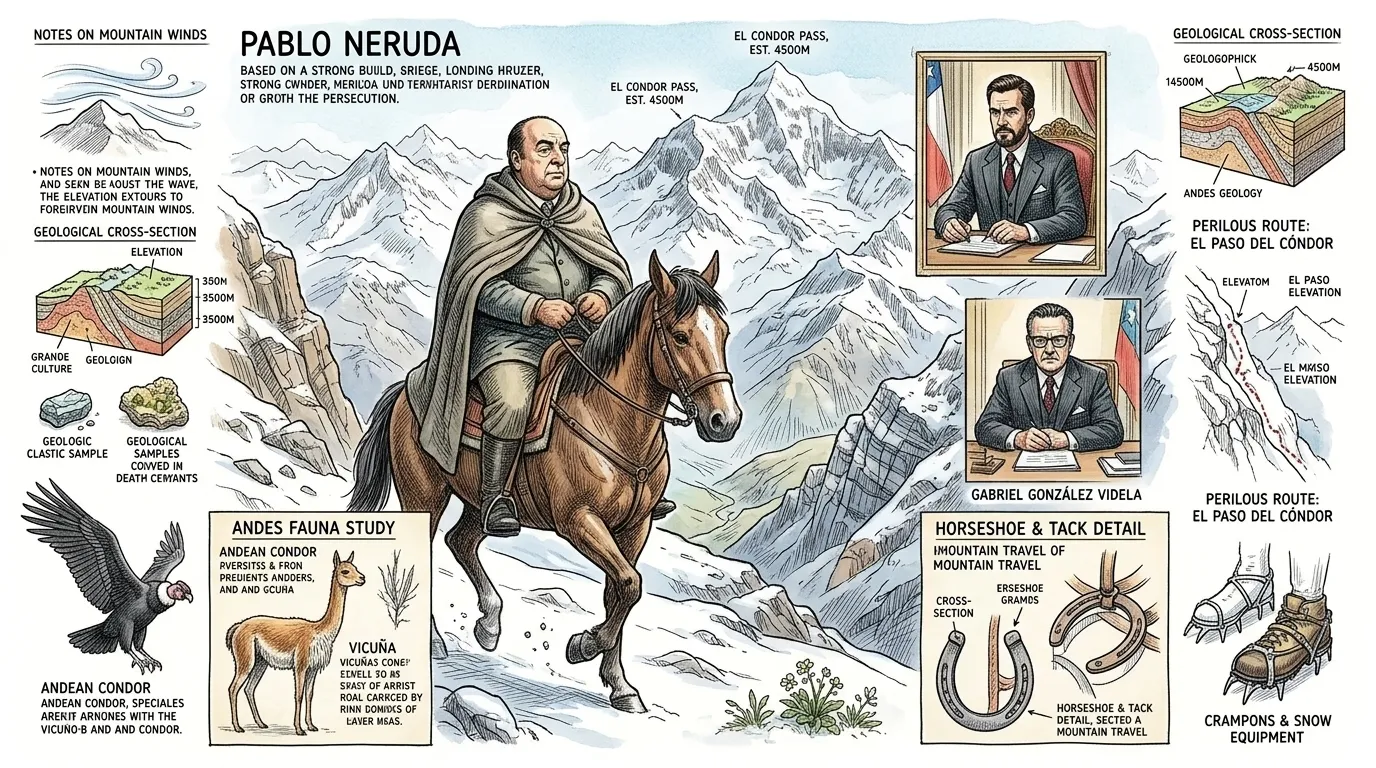
His commitment to the Communist Party and his outspoken criticism of President Gabriel González Videla's government in Chile led to his persecution and an order for his arrest in 1948. Neruda was forced into hiding, undertaking a perilous journey across the Andes Mountains on horseback into Argentina. This period of clandestine existence and exile became the crucible for his monumental work, Canto General, an epic poem chronicling the history, geography, and people of Latin America. His flight transformed personal struggle into a continental declaration.
Page 6
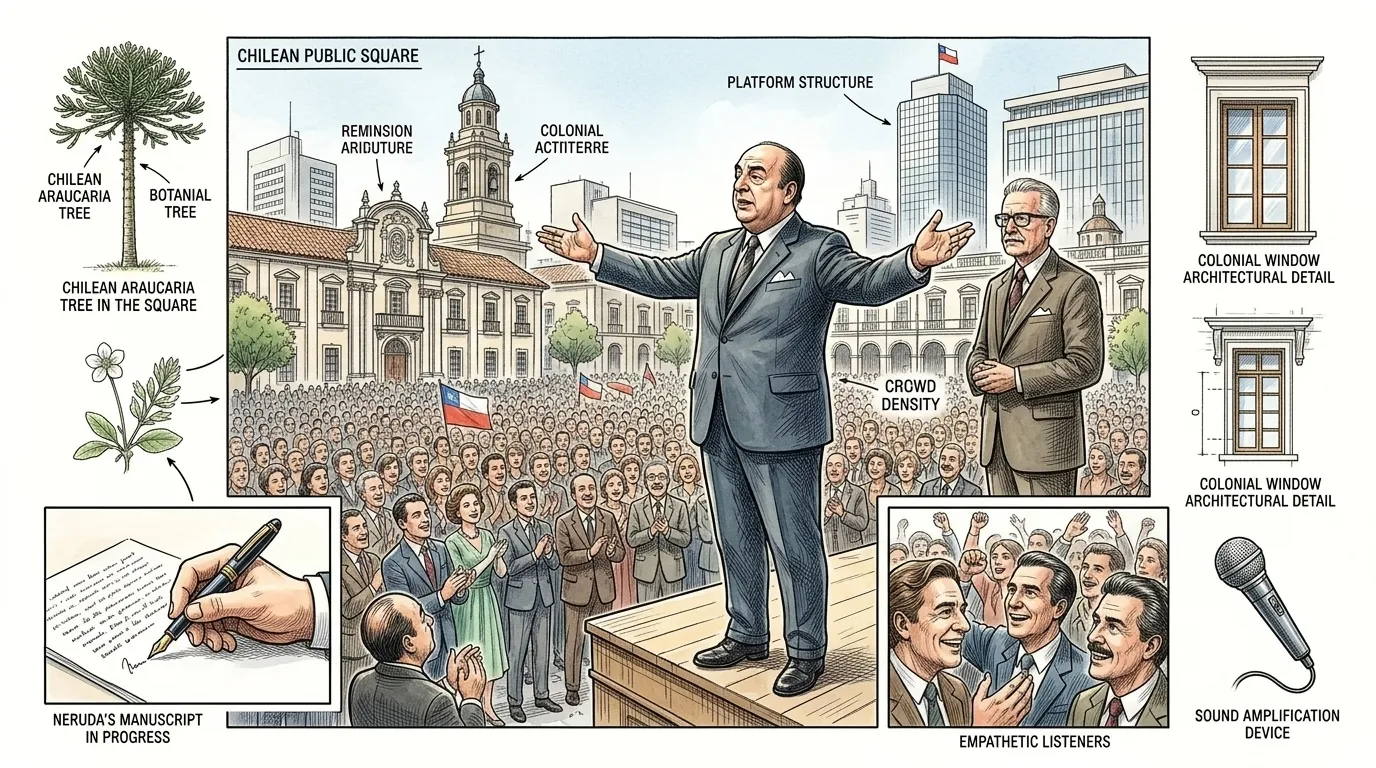
Upon his return to Chile, Neruda fully embraced his role as a public intellectual and political figure. He used his formidable influence to advocate for social justice, becoming a vocal proponent of Salvador Allende and the Unidad Popular coalition. Standing before immense crowds, his powerful rhetoric and deeply empathetic poetry moved hundreds of thousands. He chose to wield his art not just in isolation but as a direct instrument of political change, shaping the national discourse with every spoken word.
Page 7
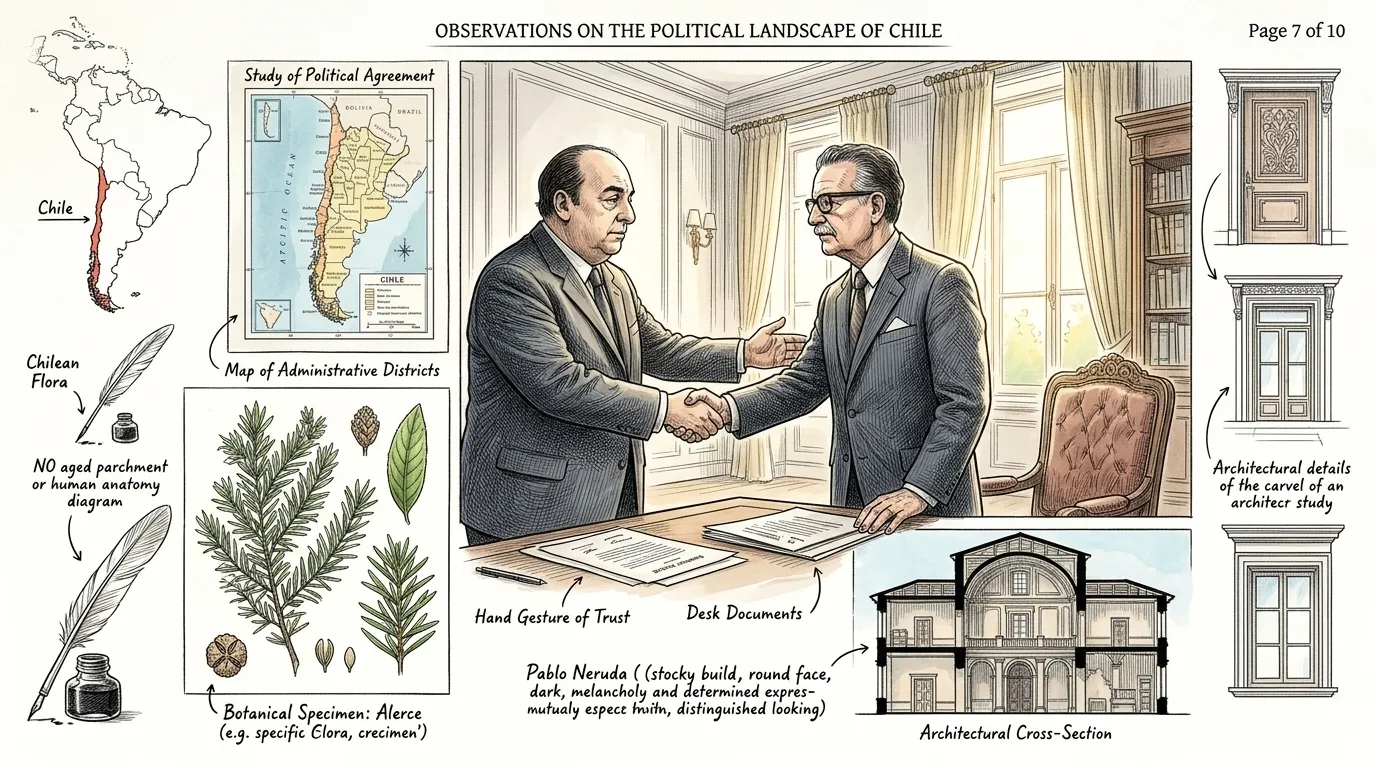
Initially, Neruda himself was a candidate for the Chilean presidency, commanding significant support. However, recognizing the urgent need for unity among leftist forces, he made the decisive choice to withdraw his candidacy in favor of his friend, Salvador Allende. This act of political sacrifice cleared the path for Allende's historic election in 1970, marking a profound moment of personal conviction placed at the service of a larger national vision. Neruda's influence was instrumental in shaping Chile's democratic future.
Page 8
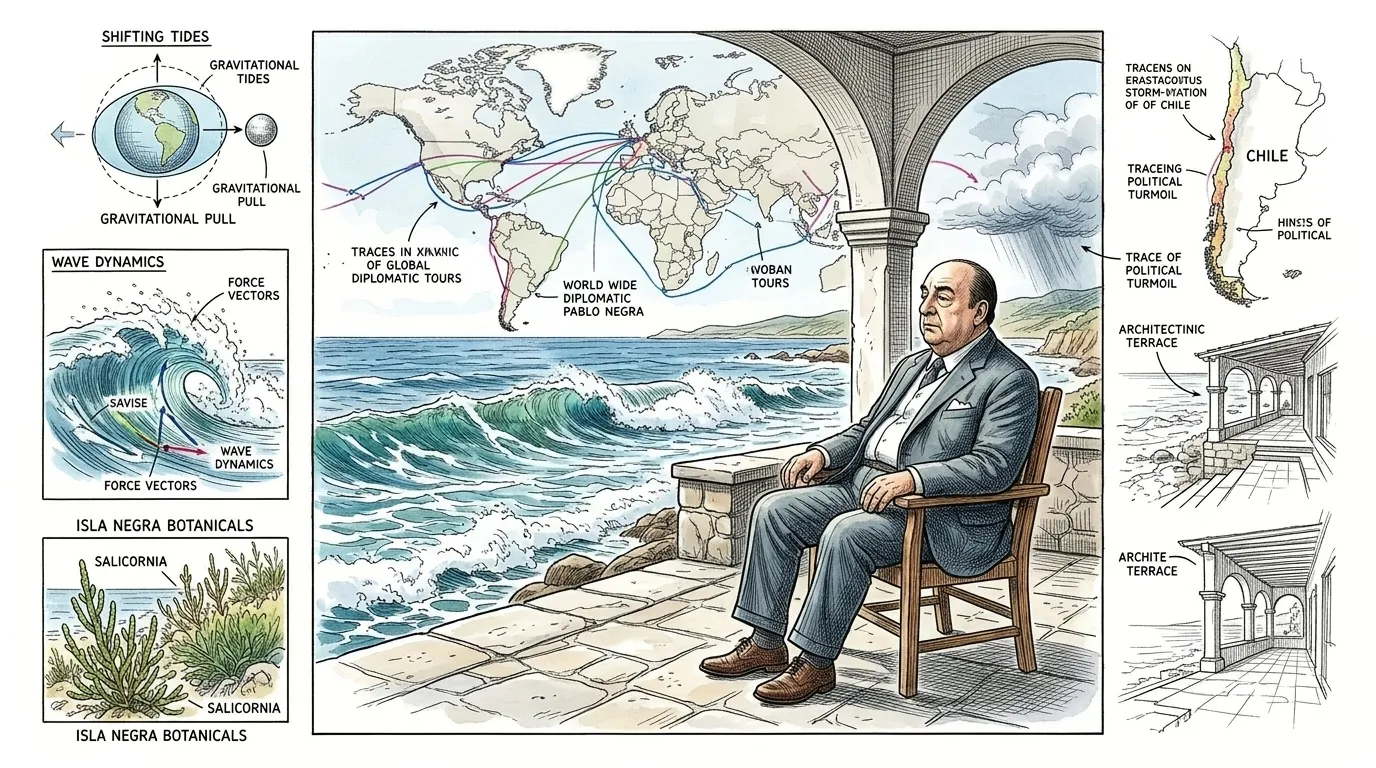
Following his Nobel triumph, Neruda embarked on global tours, a celebrated figure whose words transcended borders. Yet, even as his fame peaked, his health began to decline significantly, and the political stability he had championed in Chile grew increasingly fragile. He returned to his beloved homes, particularly Isla Negra, where he sought solace by the ocean, observing the shifting tides as the political landscape of his nation became equally tumultuous. The world acclaimed him, but his body and nation were faltering.
Page 9
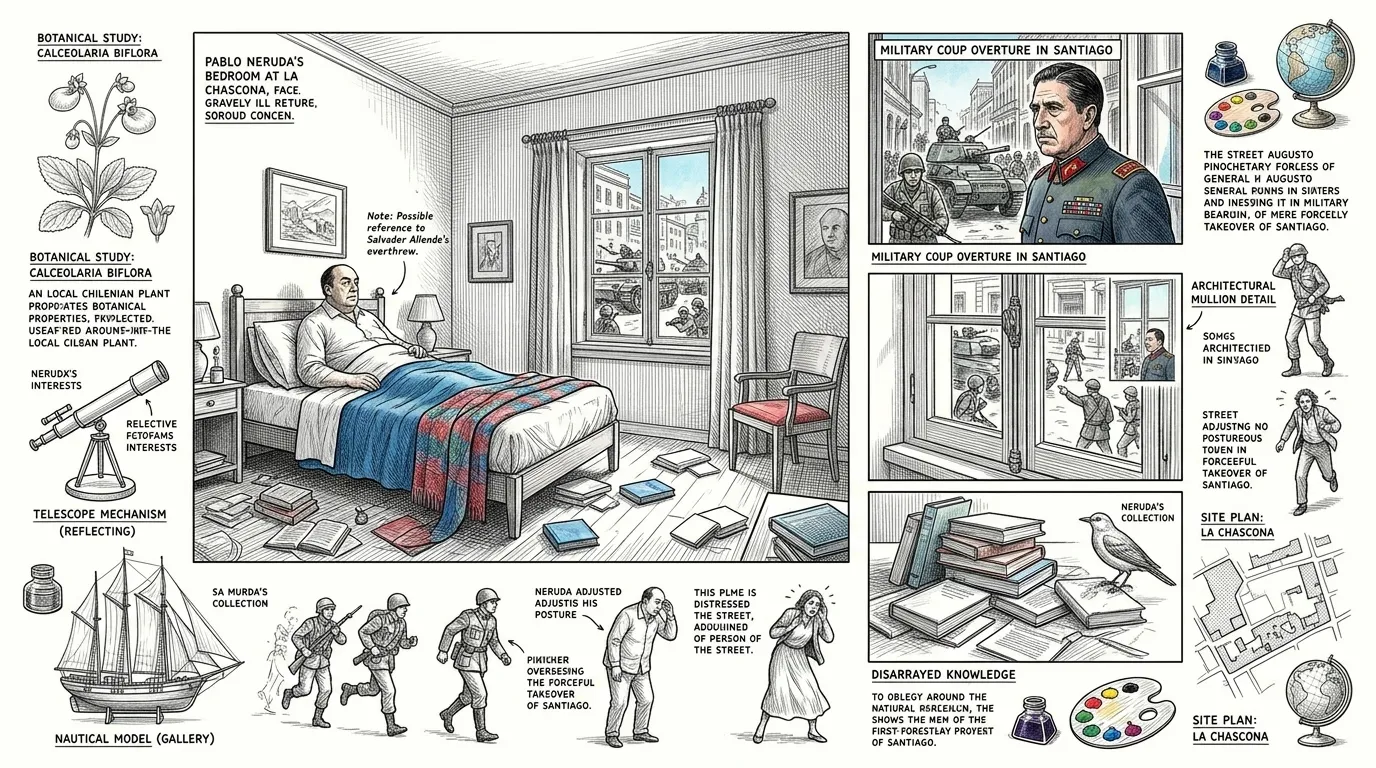
On September 11, 1973, General Augusto Pinochet's military coup overthrew Salvador Allende's democratic government, plunging Chile into brutal dictatorship. Neruda, already gravely ill, witnessed the destruction of his country's democratic dream and the ransacking of his beloved home, La Chascona. Just twelve days after the coup, Pablo Neruda died, his last days overshadowed by the violence and repression that engulfed his nation. His passing marked the end of an era, inextricably linked to Chile's tragic descent.
Page 10
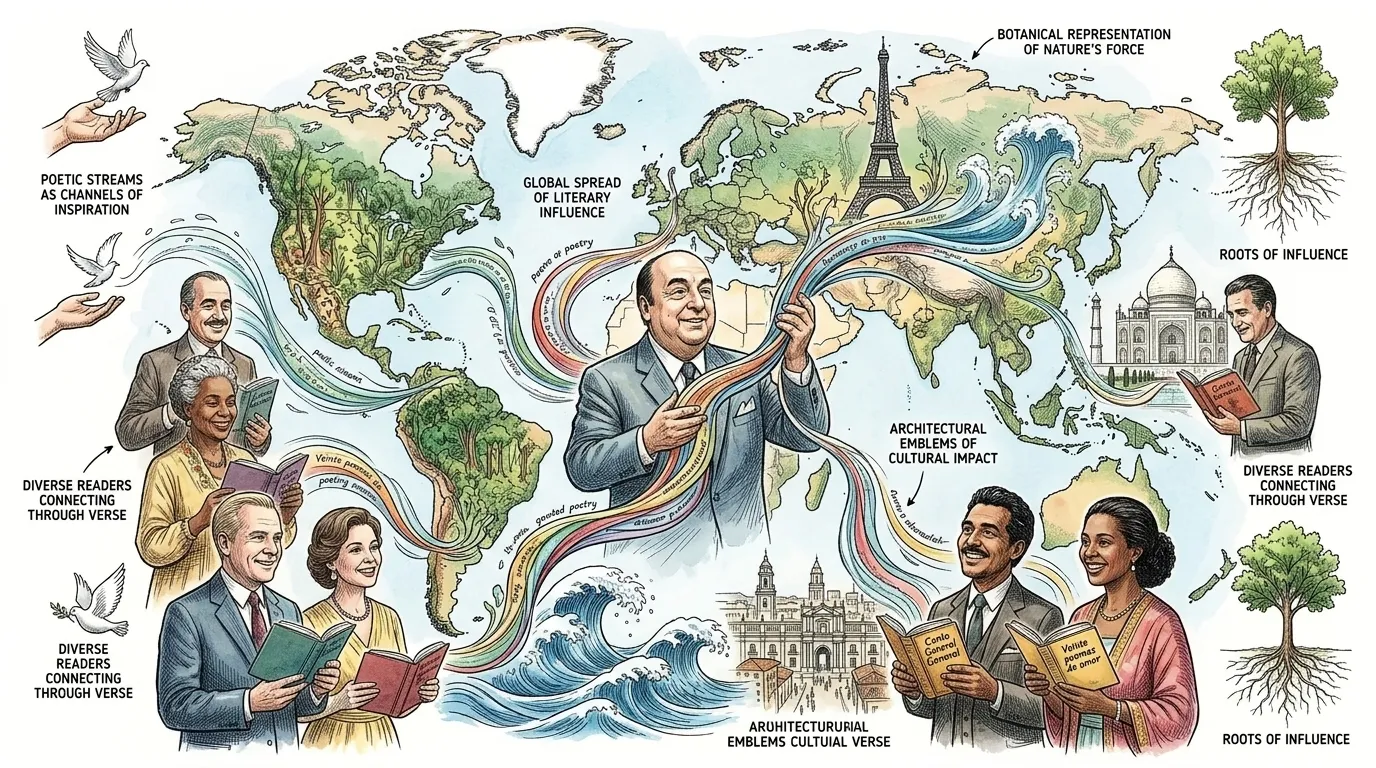
Pablo Neruda's death did not silence his voice. His poetry, steeped in love, nature, politics, and humanity, continued to circulate globally, a testament to enduring art and resistance. From his early love poems to the epic Canto General, his words became anthems for freedom, passion, and the dignity of the oppressed. Generations continue to discover his vast oeuvre, cementing his legacy as one of the 20th century's most vital and influential literary figures, his impact resonating across cultures and time.
About this story
- Location: Global
- Audience: general readers
Questions and answers
Read Wonder People on your phone
Wonder People is available on Android. Get Wonder People on Google Play.