Rabindranath Tagore

Rabindranath Tagore — an illustrated biography story, set in Global. 10 illustrated pages, free to read on Wonder People.
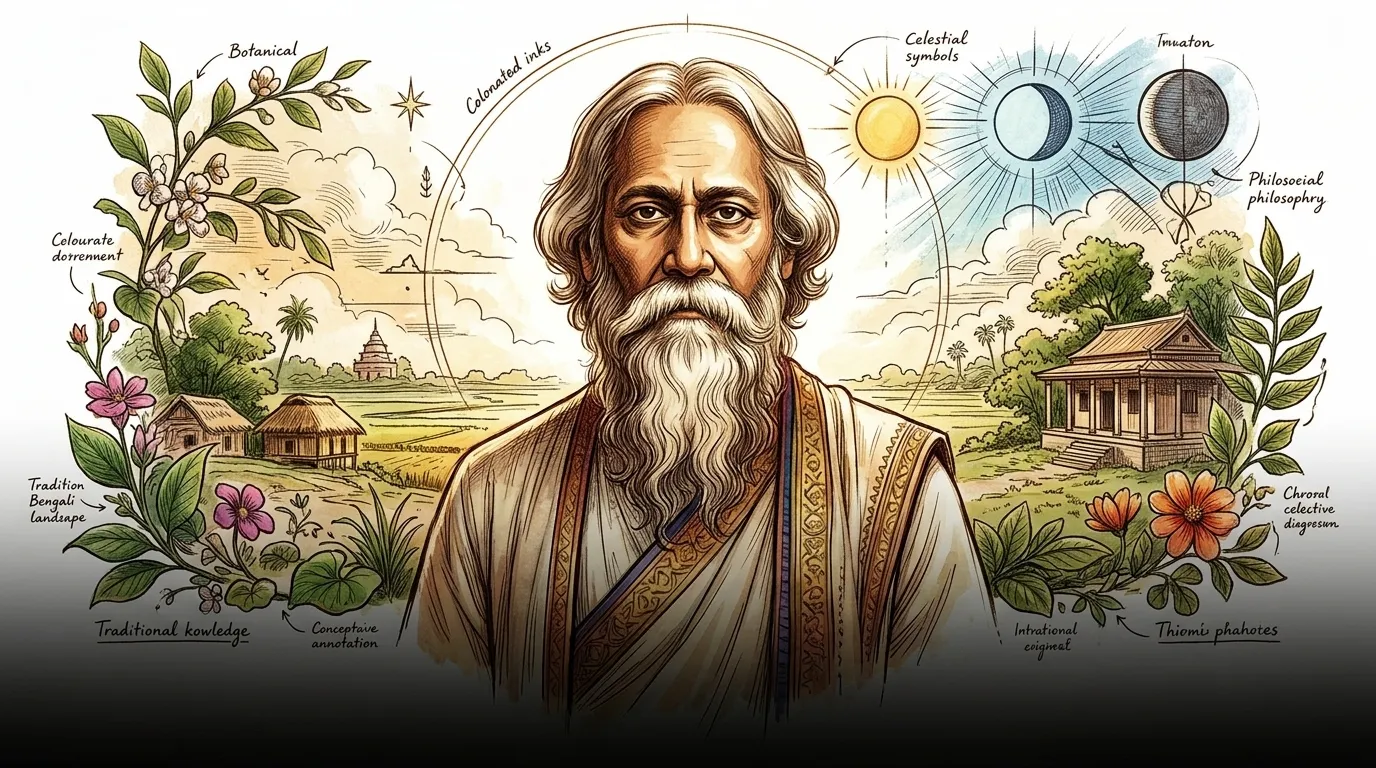
Rabindranath Tagore — book cover — Wonder People
Rabindranath Tagore — an illustrated biography story, set in Global. 10 illustrated pages, free to read on Wonder People.

Page 1
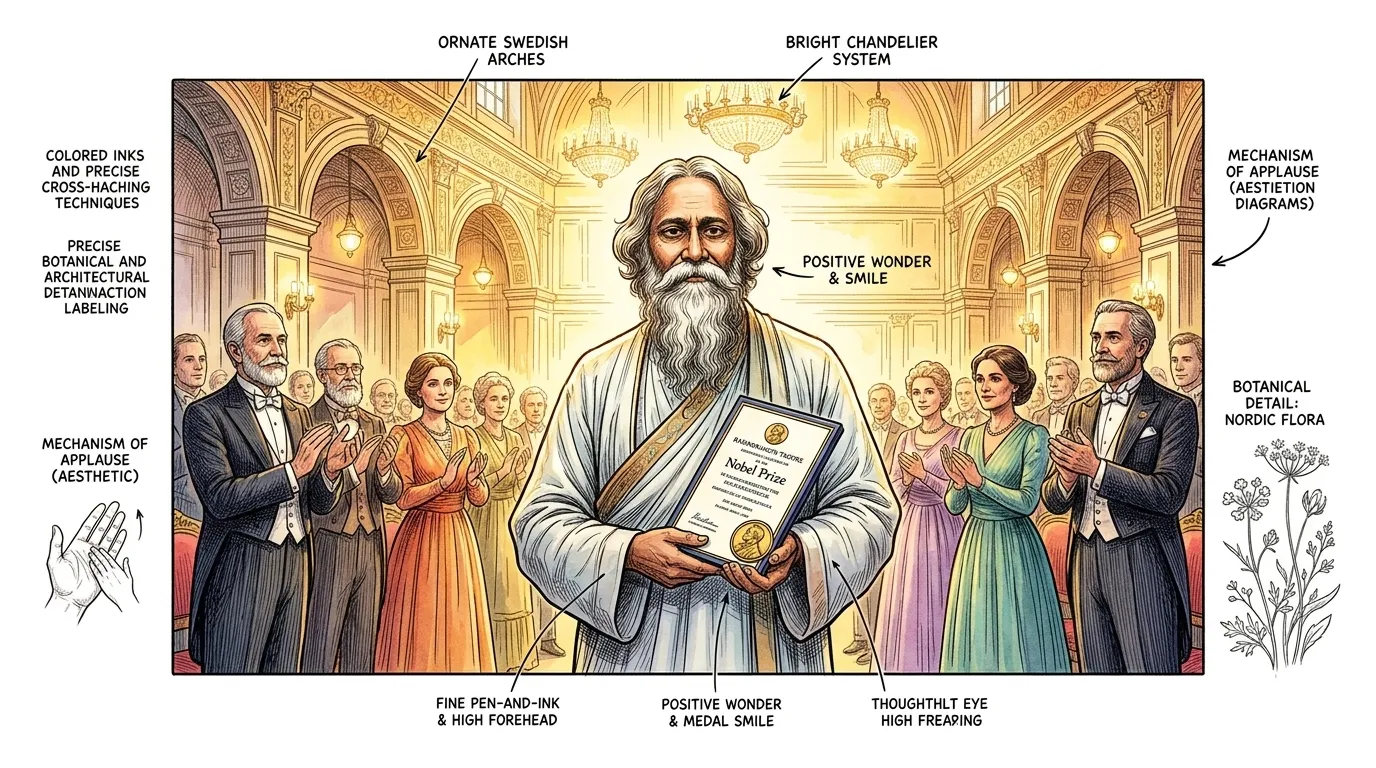
In Stockholm, Sweden, on December 10, 1913, the global literary establishment convened, their gaze fixed on a singular figure.
In Stockholm, Sweden, on December 10, 1913, the global literary establishment convened, their gaze fixed on a singular figure. Rabindranath Tagore, a Bengali poet of profound sensibility, stepped forward to receive the Nobel Prize in Literature, the first non-European to be so honored. This moment solidified his place, not just as a national treasure but as a voice speaking to the universal human spirit.

In Stockholm, Sweden, on December 10, 1913, the global literary establishment convened, their gaze fixed on a singular figure. Rabindranath Tagore, a Bengali poet of profound sensibility, stepped forward to receive the Nobel Prize in Literature, the first non-European to be so honored. This moment solidified his place, not just as a national treasure but as a voice speaking to the universal human spirit. His collection 'Gitanjali: Song Offerings' had transcended cultural barriers, marking a seismic shift in how the Western world perceived Eastern thought and artistry.

Page 2
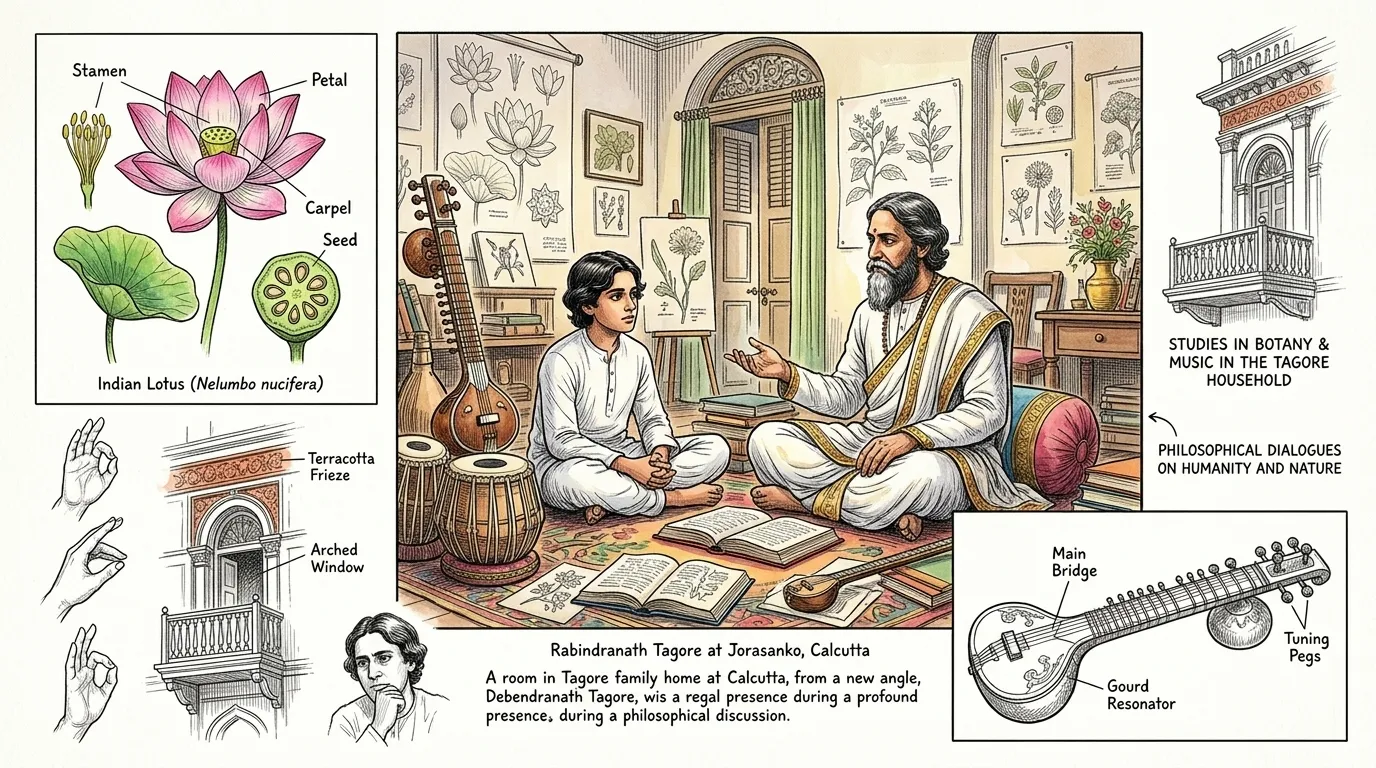
Born into the wealthy and culturally influential Tagore family of Jorasanko, Calcutta, in 1861, Rabindranath was immersed from birth in a world of intellectual…
Born into the wealthy and culturally influential Tagore family of Jorasanko, Calcutta, in 1861, Rabindranath was immersed from birth in a world of intellectual ferment. His father, Debendranath Tagore, a prominent leader of the Brahmo Samaj movement, instilled in him a spirit of spiritual inquiry and a rejection of rigid dogma.

Born into the wealthy and culturally influential Tagore family of Jorasanko, Calcutta, in 1861, Rabindranath was immersed from birth in a world of intellectual ferment. His father, Debendranath Tagore, a prominent leader of the Brahmo Samaj movement, instilled in him a spirit of spiritual inquiry and a rejection of rigid dogma. This unique environment, rich with artistic expression and philosophical discourse, allowed him to forge an identity unbound by conventional schooling, nurturing a precocious talent that would define his future contributions.

Page 3
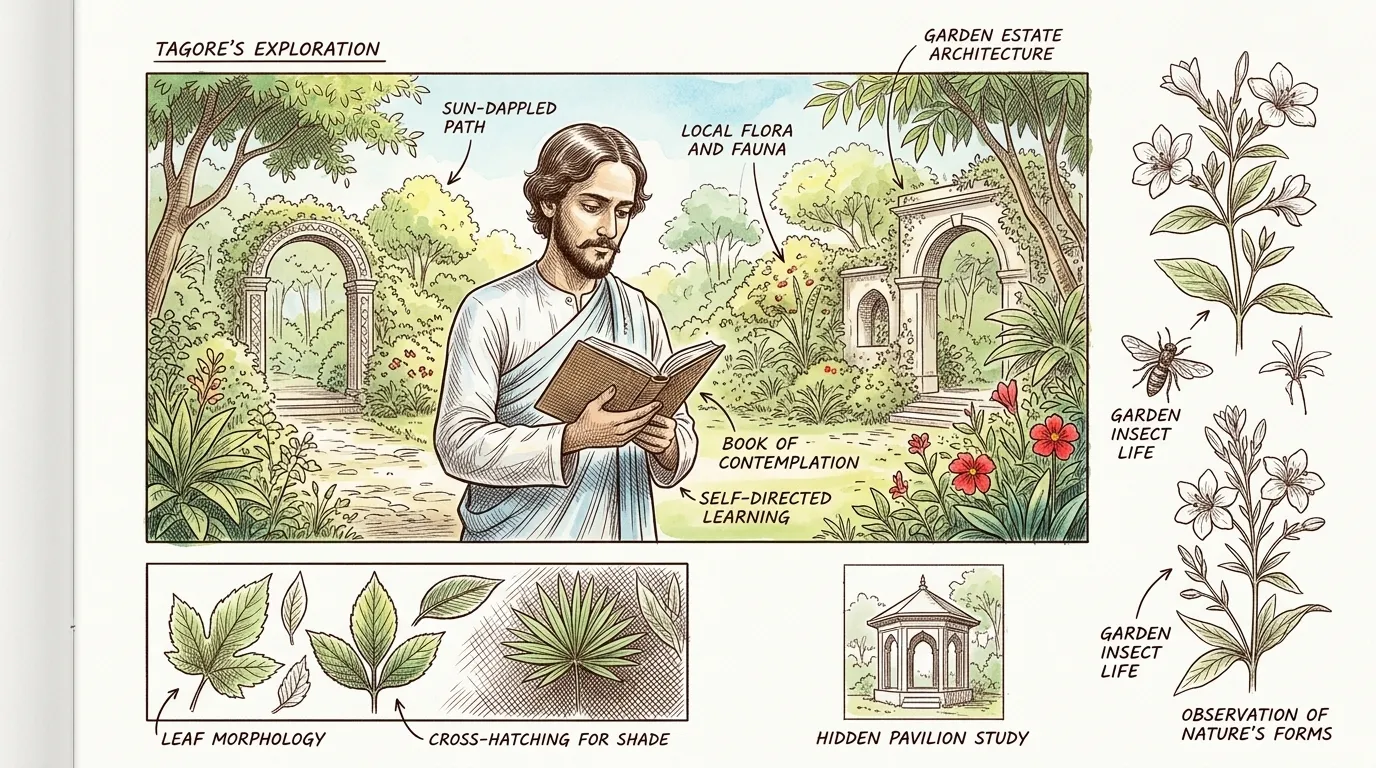
Disillusioned by the rigid, rote learning of formal schools, young Rabindranath consistently resisted their confines. He found true education in solitary…
Disillusioned by the rigid, rote learning of formal schools, young Rabindranath consistently resisted their confines. He found true education in solitary wanderings through the family estate, devouring literature, observing nature, and engaging in profound introspection. This self-directed exploration, a rejection of prescribed paths, marked his early resolve to forge his own intellectual and artistic universe, laying the foundation for his distinctive literary voice and…

Disillusioned by the rigid, rote learning of formal schools, young Rabindranath consistently resisted their confines. He found true education in solitary wanderings through the family estate, devouring literature, observing nature, and engaging in profound introspection. This self-directed exploration, a rejection of prescribed paths, marked his early resolve to forge his own intellectual and artistic universe, laying the foundation for his distinctive literary voice and pedagogical philosophy.

Page 4
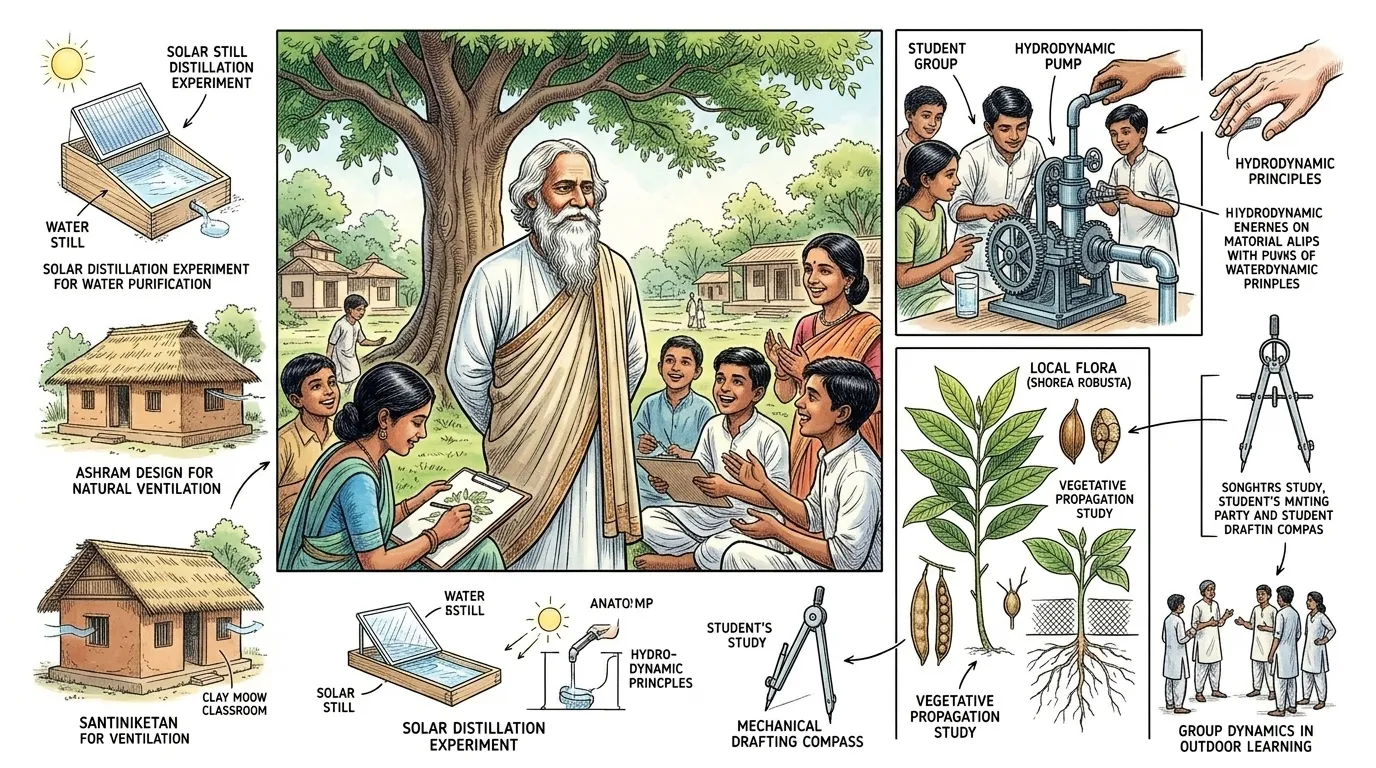
In 1901, Tagore acted on his revolutionary educational ideals, establishing a unique ashram school at Santiniketan, a tranquil rural retreat in Bengal.
In 1901, Tagore acted on his revolutionary educational ideals, establishing a unique ashram school at Santiniketan, a tranquil rural retreat in Bengal. He believed learning should be joyful, holistic, and deeply connected to nature, a stark contrast to the colonial education system. He taught subjects ranging from art and music to environmental science, encouraging creativity and critical thinking, drawing students from across India who sought intellectual freedom.

In 1901, Tagore acted on his revolutionary educational ideals, establishing a unique ashram school at Santiniketan, a tranquil rural retreat in Bengal. He believed learning should be joyful, holistic, and deeply connected to nature, a stark contrast to the colonial education system. He taught subjects ranging from art and music to environmental science, encouraging creativity and critical thinking, drawing students from across India who sought intellectual freedom.

Page 5
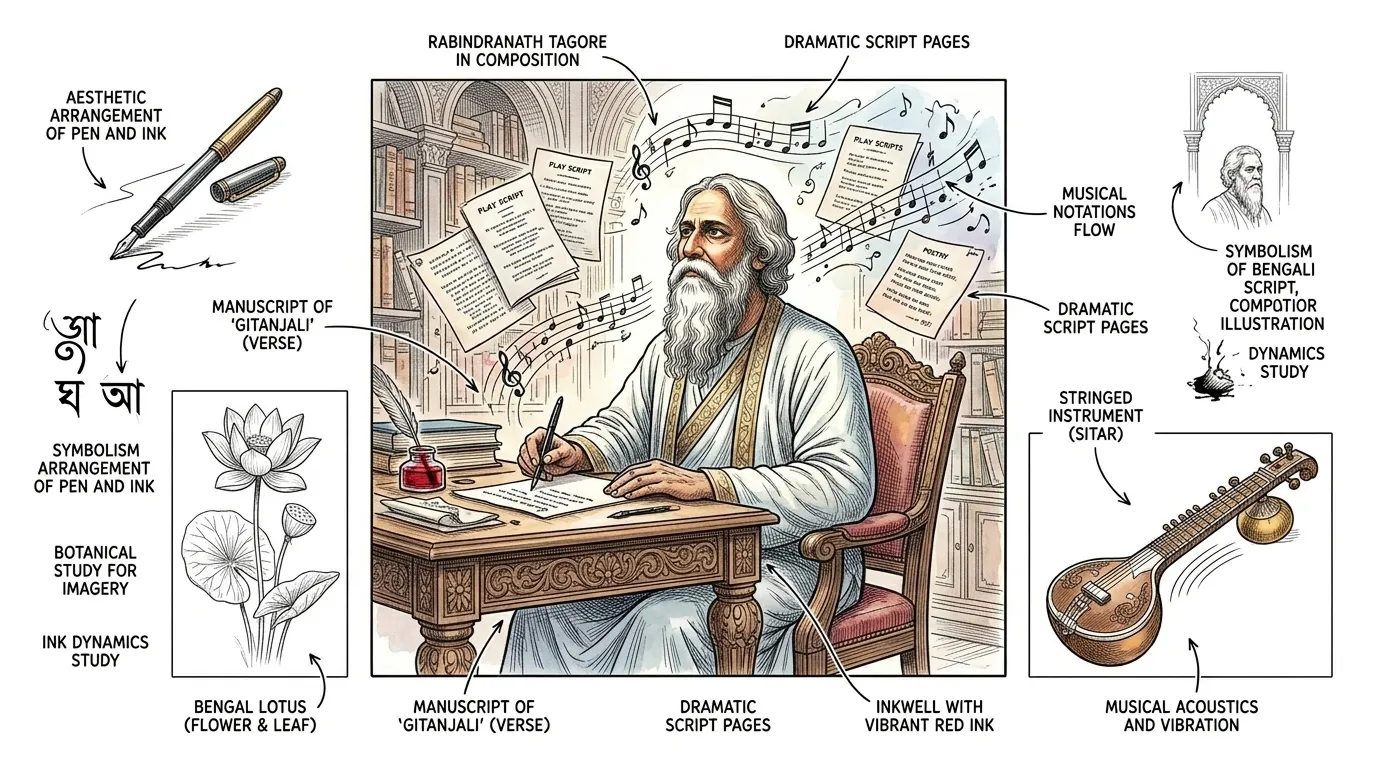
Even as he built Santiniketan, Tagore's literary output soared across genres. His Bengali poetry, songs, and plays began to define modern Bengali literature…
Even as he built Santiniketan, Tagore's literary output soared across genres. His Bengali poetry, songs, and plays began to define modern Bengali literature, resonating deeply with his countrymen. He produced hundreds of songs, plays like 'Raja' (The King of the Dark Chamber), and a stream of poetry that explored spiritualism, nature, and human relationships, establishing himself as an unparalleled literary force within India.

Even as he built Santiniketan, Tagore's literary output soared across genres. His Bengali poetry, songs, and plays began to define modern Bengali literature, resonating deeply with his countrymen. He produced hundreds of songs, plays like 'Raja' (The King of the Dark Chamber), and a stream of poetry that explored spiritualism, nature, and human relationships, establishing himself as an unparalleled literary force within India. His words moved millions, marking him as a pivotal cultural figure.

Page 6
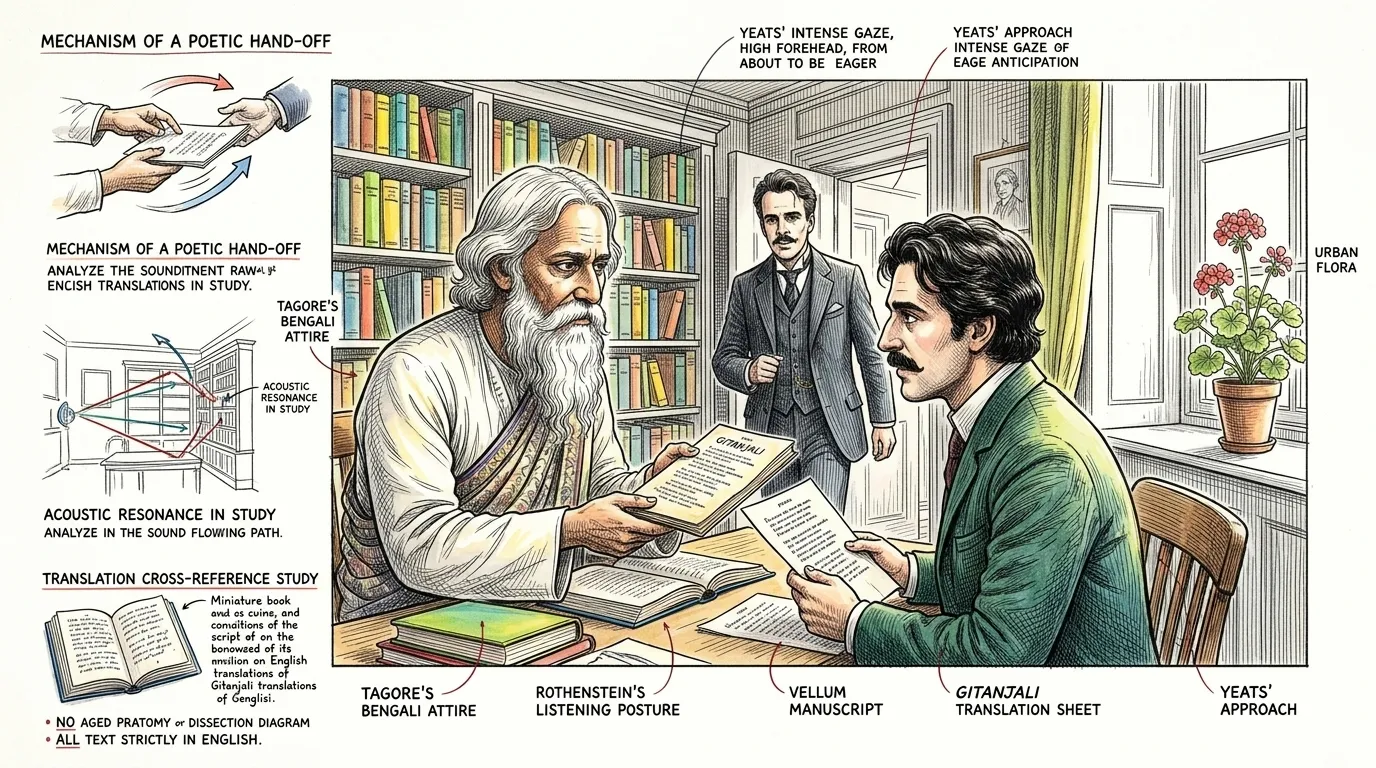
Determined to share his unique worldview with a broader audience, Tagore embarked on the formidable task of translating his Bengali poems, especially…
Determined to share his unique worldview with a broader audience, Tagore embarked on the formidable task of translating his Bengali poems, especially 'Gitanjali', into English. This was no mere linguistic exercise but an act of cultural bridge-building. During his 1912 visit to London, he shared these raw translations with friends like painter William Rothenstein, who then introduced them to the renowned Irish poet W. B. Yeats.

Determined to share his unique worldview with a broader audience, Tagore embarked on the formidable task of translating his Bengali poems, especially 'Gitanjali', into English. This was no mere linguistic exercise but an act of cultural bridge-building. During his 1912 visit to London, he shared these raw translations with friends like painter William Rothenstein, who then introduced them to the renowned Irish poet W. B. Yeats. Yeats's powerful advocacy became crucial, elevating Tagore's work to international prominence.

Page 7
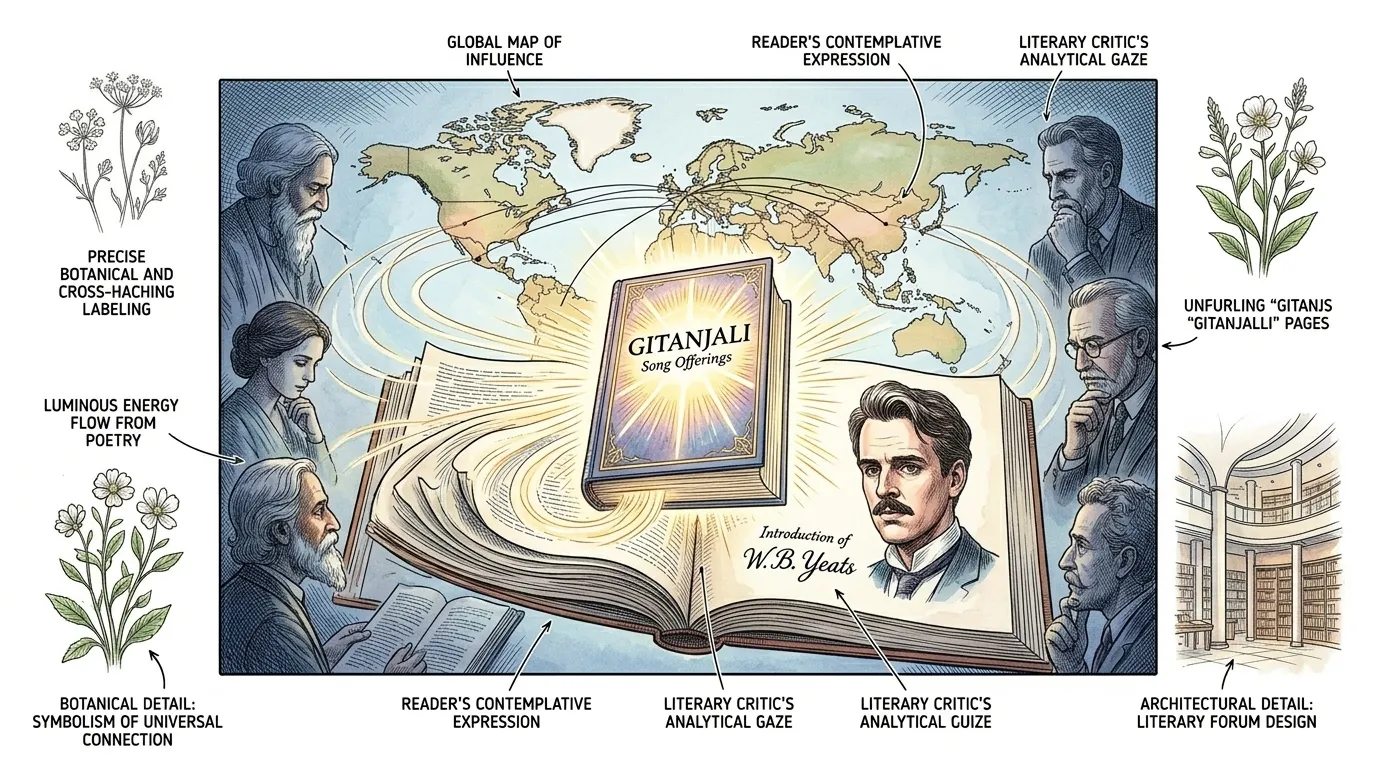
The publication of 'Gitanjali: Song Offerings' in 1912, with a compelling introduction by W. B. Yeats, unleashed a literary sensation in the West.
The publication of 'Gitanjali: Song Offerings' in 1912, with a compelling introduction by W. B. Yeats, unleashed a literary sensation in the West. Critics lauded its spiritual depth, lyrical beauty, and profound humanism. The small collection of poems quickly garnered widespread critical acclaim, creating an unprecedented buzz for an Indian writer. The world was now reacting to his unique voice, setting the stage for the ultimate recognition of his extraordinary talent.

The publication of 'Gitanjali: Song Offerings' in 1912, with a compelling introduction by W. B. Yeats, unleashed a literary sensation in the West. Critics lauded its spiritual depth, lyrical beauty, and profound humanism. The small collection of poems quickly garnered widespread critical acclaim, creating an unprecedented buzz for an Indian writer. The world was now reacting to his unique voice, setting the stage for the ultimate recognition of his extraordinary talent.

Page 8
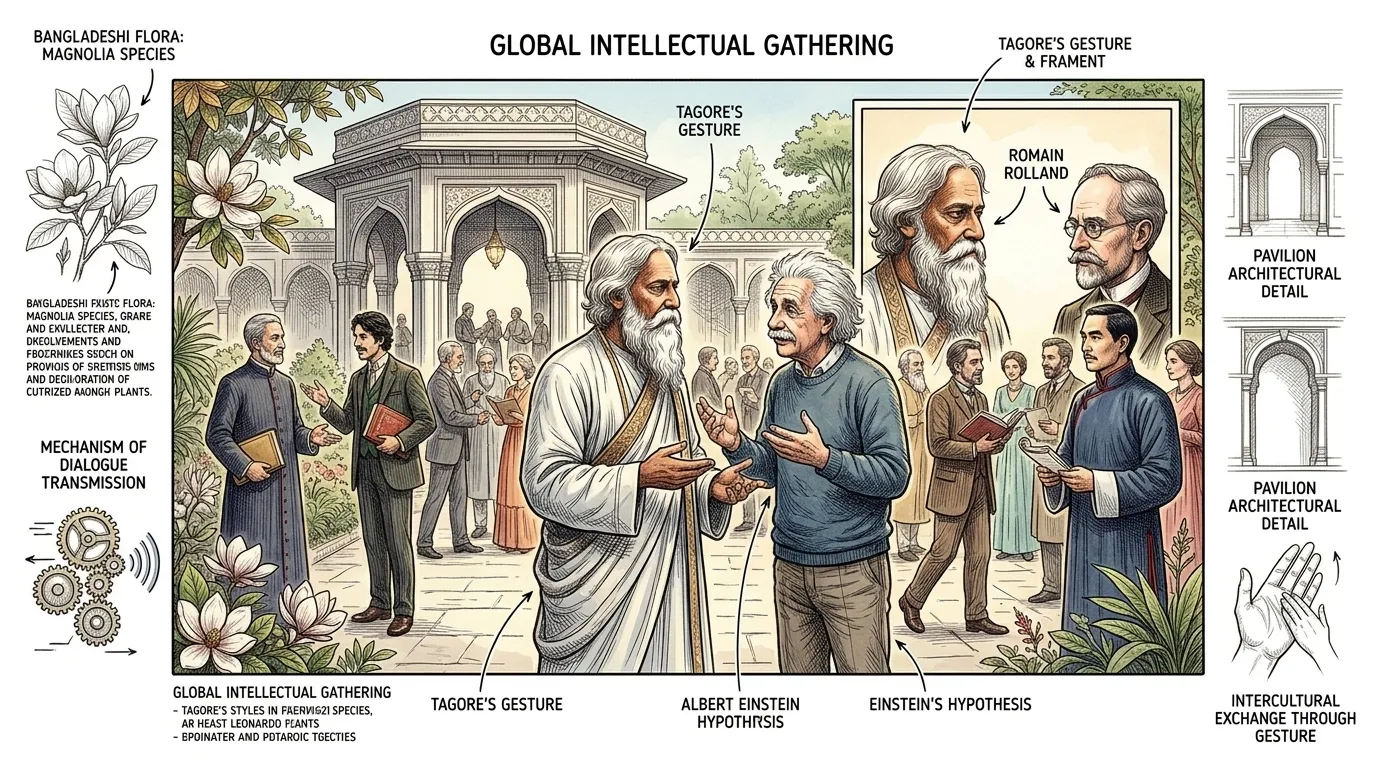
Following the Nobel Prize, Tagore embarked on extensive international tours, transforming from a poet into a global cultural ambassador.
Following the Nobel Prize, Tagore embarked on extensive international tours, transforming from a poet into a global cultural ambassador. He lectured across Europe, America, and Asia, meeting luminaries like Albert Einstein, Romain Rolland, and Sun Yat-sen. These interactions weren't mere pleasantries; they were profound dialogues on science, philosophy, and the future of humanity.

Following the Nobel Prize, Tagore embarked on extensive international tours, transforming from a poet into a global cultural ambassador. He lectured across Europe, America, and Asia, meeting luminaries like Albert Einstein, Romain Rolland, and Sun Yat-sen. These interactions weren't mere pleasantries; they were profound dialogues on science, philosophy, and the future of humanity. His unwavering advocacy for international understanding and cooperation deeply influenced global intellectual discourse.

Page 9
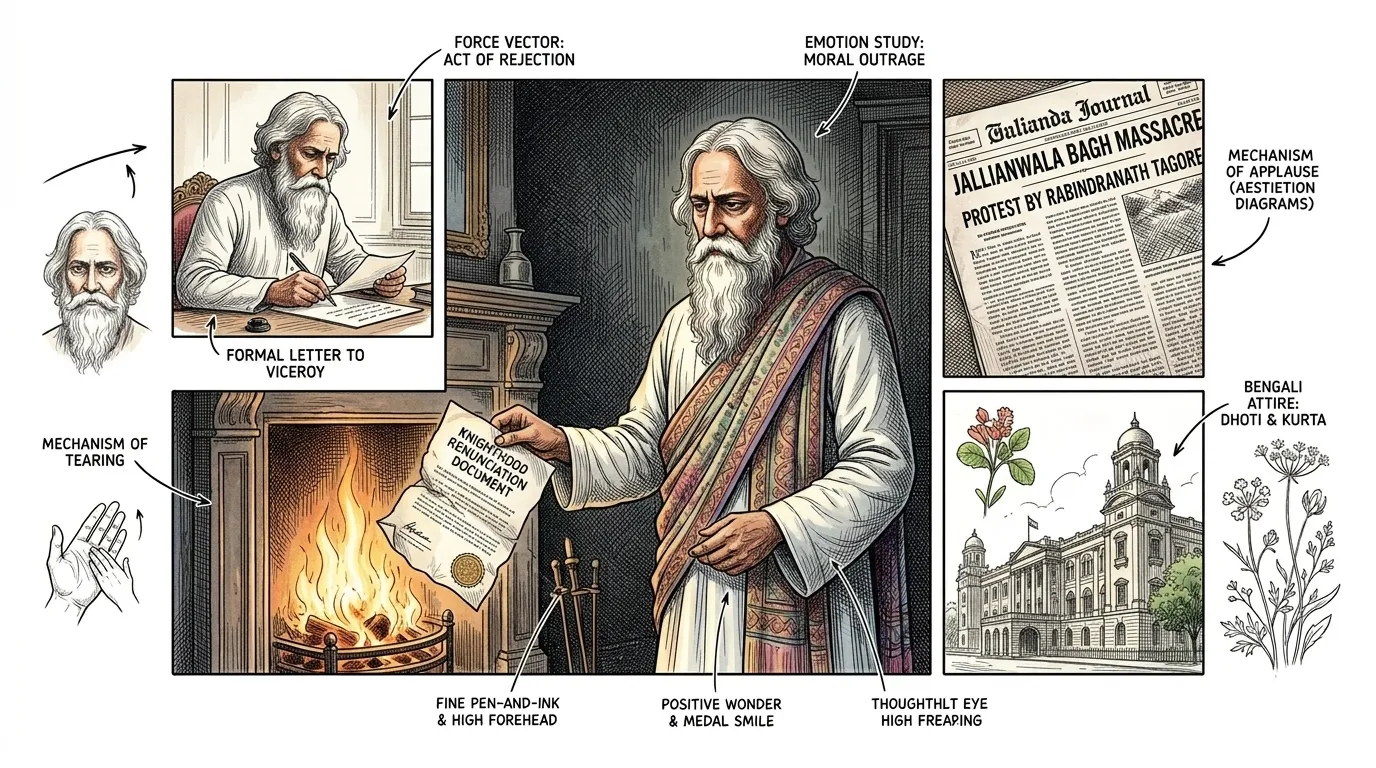
Tagore's global acclaim brought both influence and immense responsibility. In 1919, deeply disturbed by the Jallianwala Bagh massacre, where British troops…
Tagore's global acclaim brought both influence and immense responsibility. In 1919, deeply disturbed by the Jallianwala Bagh massacre, where British troops fired on unarmed civilians, he publicly renounced his British knighthood, an act of profound moral courage that resonated across India and the world.

Tagore's global acclaim brought both influence and immense responsibility. In 1919, deeply disturbed by the Jallianwala Bagh massacre, where British troops fired on unarmed civilians, he publicly renounced his British knighthood, an act of profound moral courage that resonated across India and the world. This decisive act cemented his role as a principled voice against injustice and colonial oppression, demonstrating that his universalist ideals were not merely academic but fiercely active in the face of tyranny.

Page 10
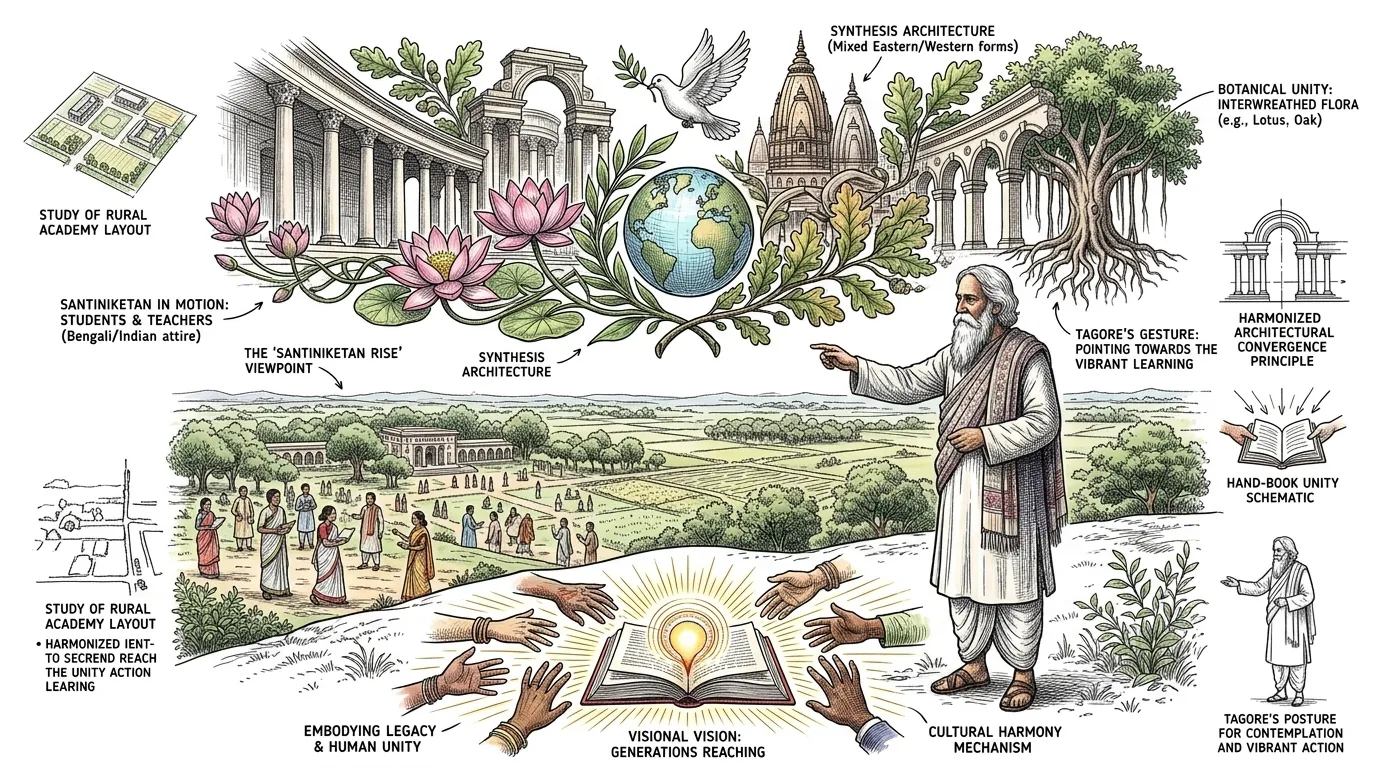
Rabindranath Tagore's legacy transcends borders and disciplines, an enduring testament to the power of human creativity and universal kinship.
Rabindranath Tagore's legacy transcends borders and disciplines, an enduring testament to the power of human creativity and universal kinship. His profound synthesis of East and West, his revolutionary educational philosophy, and his lyrical expressions of spirituality, nature, and human dignity continue to inspire generations. He established an institution where the world could meet, a vision of human unity that remains as vital and urgent today as it was in his lifetime.

Rabindranath Tagore's legacy transcends borders and disciplines, an enduring testament to the power of human creativity and universal kinship. His profound synthesis of East and West, his revolutionary educational philosophy, and his lyrical expressions of spirituality, nature, and human dignity continue to inspire generations. He established an institution where the world could meet, a vision of human unity that remains as vital and urgent today as it was in his lifetime. What he built, thought, and wrote would outlive him, shaping global culture.

About this story

  • Location: Global
  • Audience: general readers

More Wonder People stories

All Wonder People stories · Open the library