Saladin
Saladin — an illustrated biography story, set in Global. 10 illustrated pages, free to read on Wonder People.
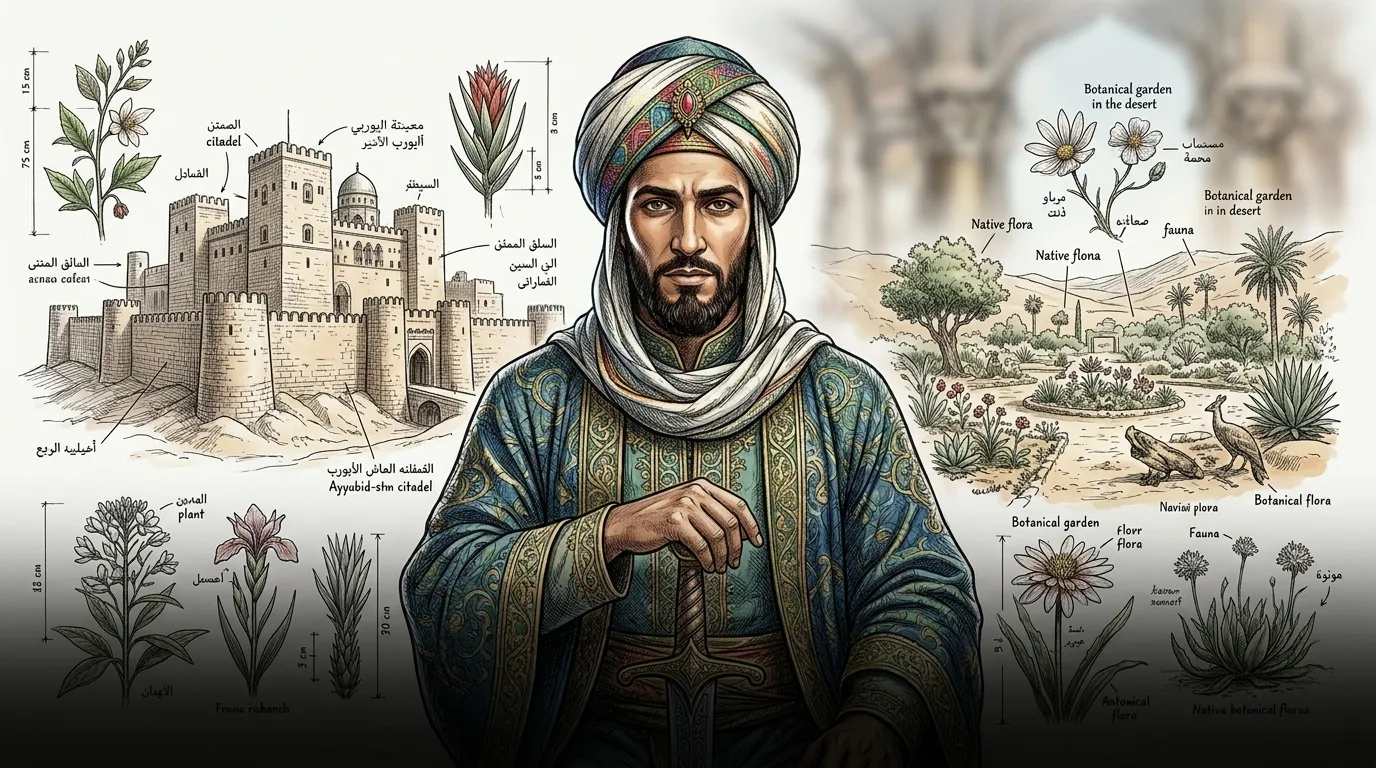
Page 1
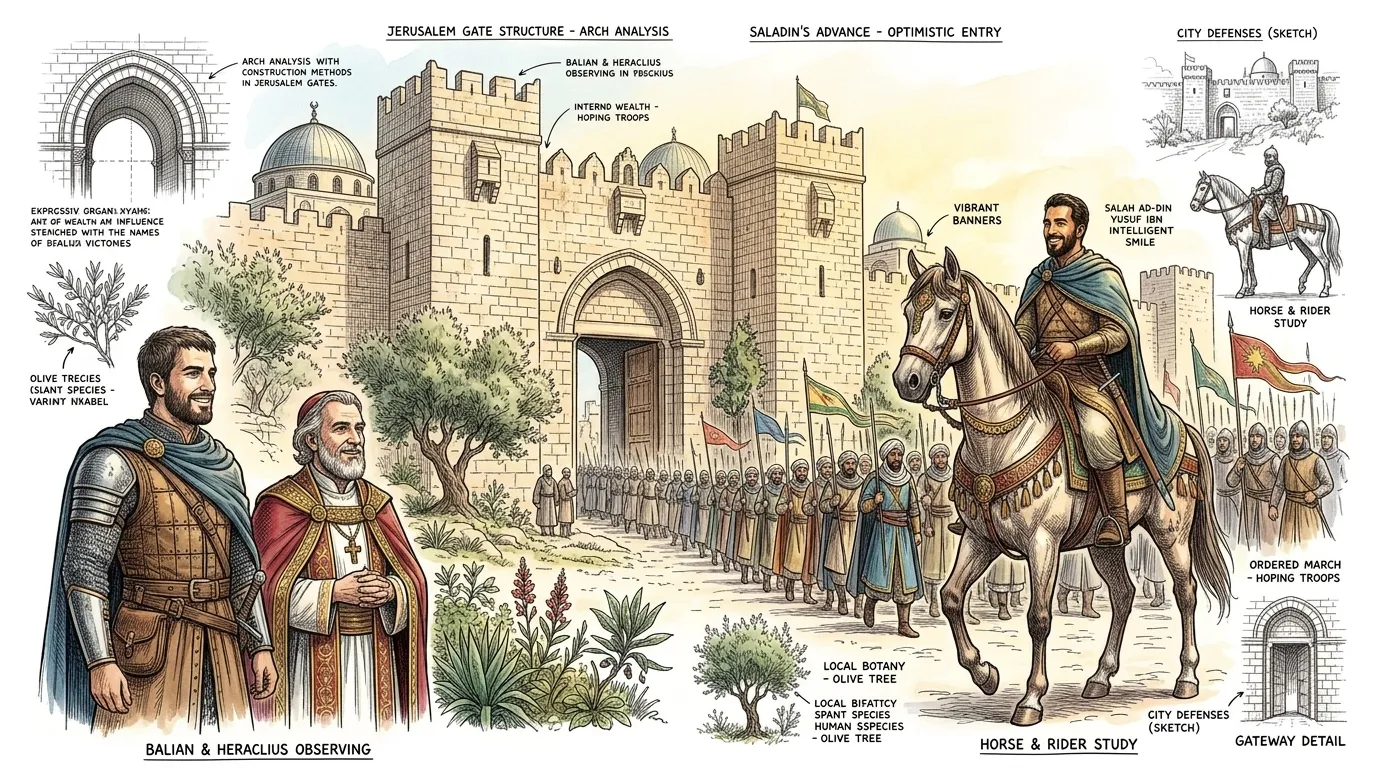
On October 2, 1187, after an 88-year occupation by Crusader forces, Salah ad-Din Yusuf ibn Ayyub, known to history as Saladin, led his victorious army through the gates of Jerusalem. The city, a spiritual center for three faiths, yielded after a two-week siege. Inside, the Crusader leaders, Balian of Ibelin and Patriarch Heraclius, had negotiated its surrender, securing the lives of its Christian inhabitants. Saladin's entry marked a pivotal moment, re-establishing Muslim control and dramatically shifting the balance of power in the Levant. His strategic triumph resonated across both the Islamic and Christian worlds, cementing his legend.
Page 2
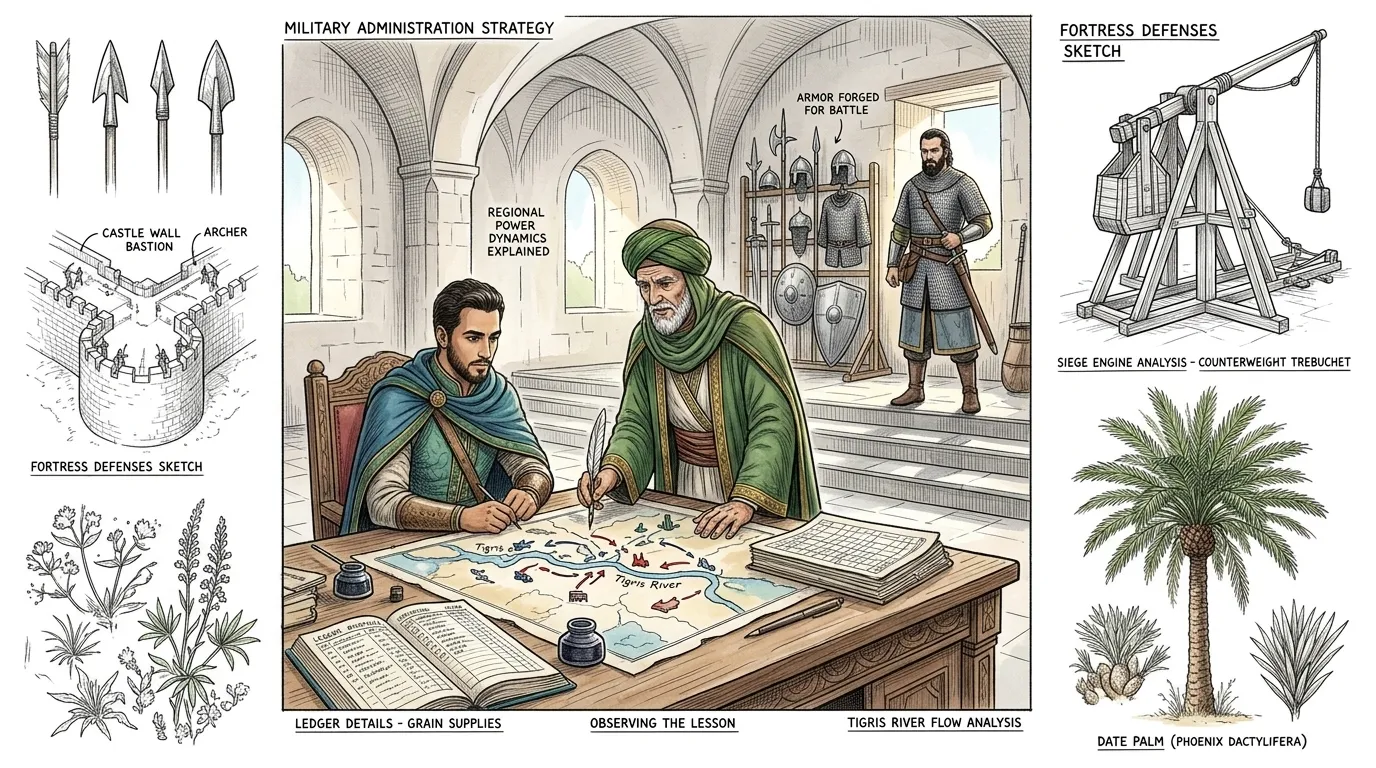
Saladin was born in 1137 in Tikrit, a town situated along the Tigris River in modern-day Iraq, into a prominent Kurdish family. His father, Najm ad-Din Ayyub, served as the governor of Tikrit under the Seljuk Turks, and his uncle, Shirkuh, was a formidable military commander. This environment immersed the young Saladin in the intricacies of military administration and political maneuvering from an early age. The constant flux of regional power struggles, particularly between the Seljuks, Zangids, and emerging Crusader states, shaped his worldview and instilled a deep understanding of strategy and governance. He learned not only the arts of war but also the complexities of diplomacy and religious scholarship.
Page 3
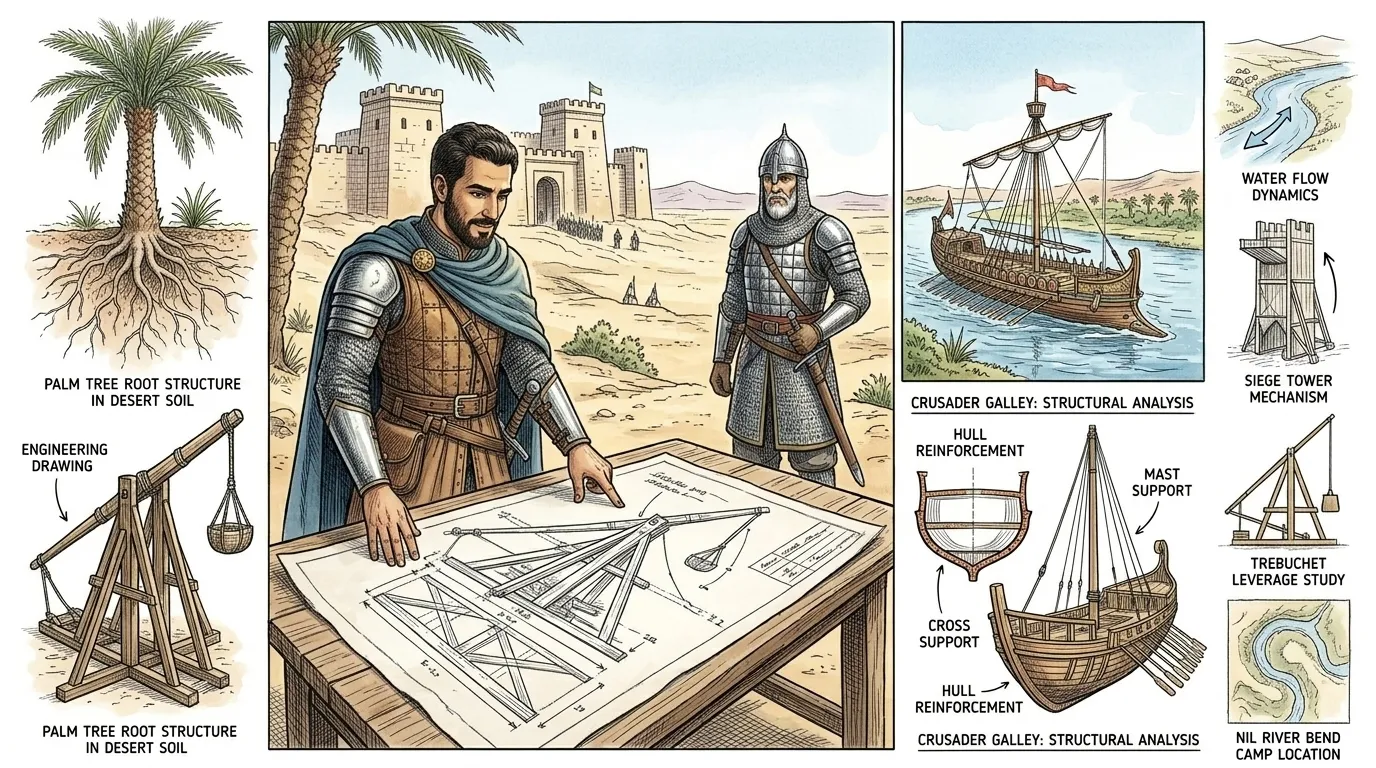
His true military and political education began in 1164, when he accompanied his uncle Shirkuh on a series of campaigns to secure Egypt. The Fatimid Caliphate in Cairo, weakened and internally divided, was under constant threat from Crusader incursions, which sought to establish a foothold on the Nile. Saladin served as a trusted lieutenant, proving his tactical acumen in battles like al-Babein. He absorbed the lessons of command, logistics, and siege warfare under Shirkuh's tutelage, navigating the complex alliances and betrayals of Egyptian politics. This period was crucial; it transformed him from an administrator into a seasoned military leader.
Page 4
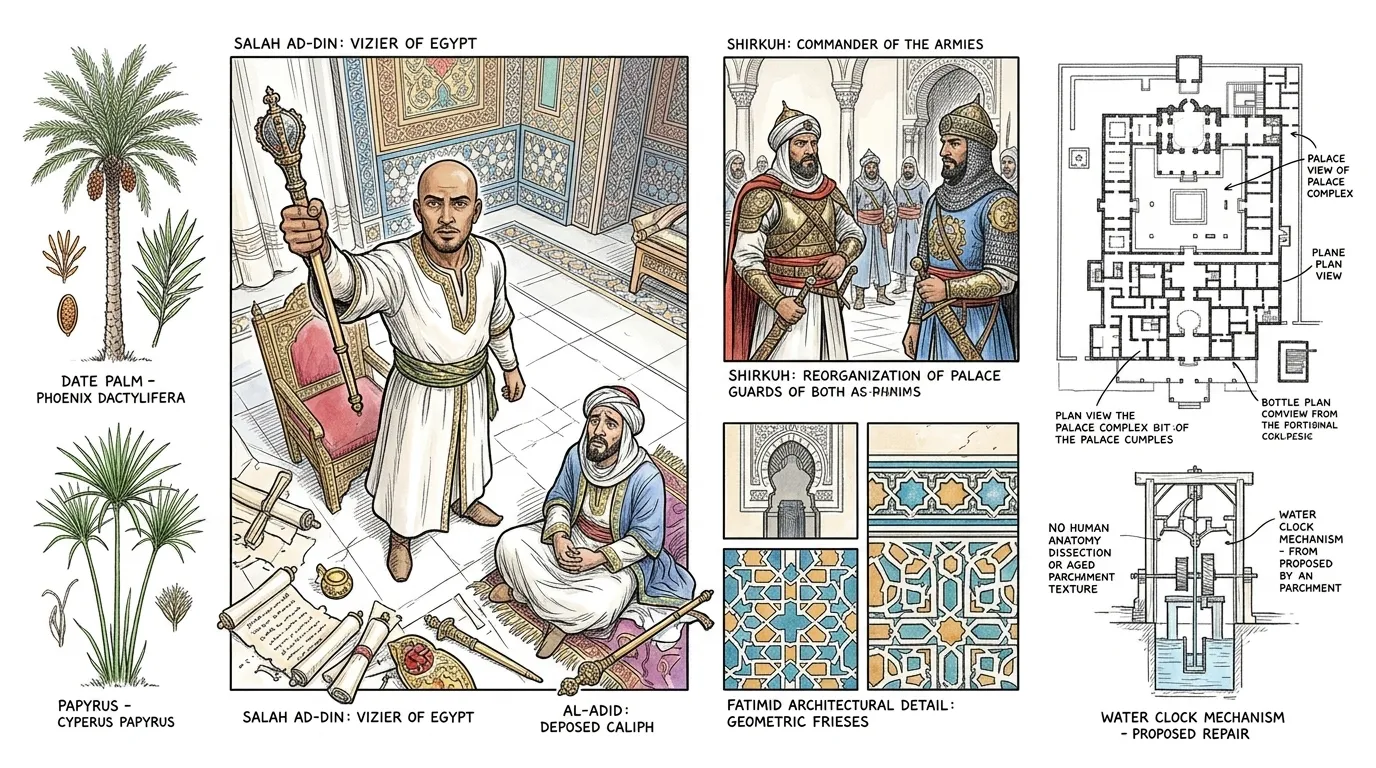
In 1169, following Shirkuh's death, Saladin found himself the most powerful figure in Egypt. At just 31, he was appointed Vizier by the Fatimid Caliph al-Adid, a position he strategically used to consolidate his authority. He moved swiftly to dismantle the Fatimid system, abolishing the Shia caliphate and re-establishing Sunni Islam as the official doctrine. This bold political maneuver eliminated a rival power center and brought Egypt firmly under his personal control, becoming the bedrock of his future empire. With Egypt's vast resources and strategic position, Saladin began to project his power beyond its borders, laying the foundation for a unified Islamic front against the Crusader states.
Page 5
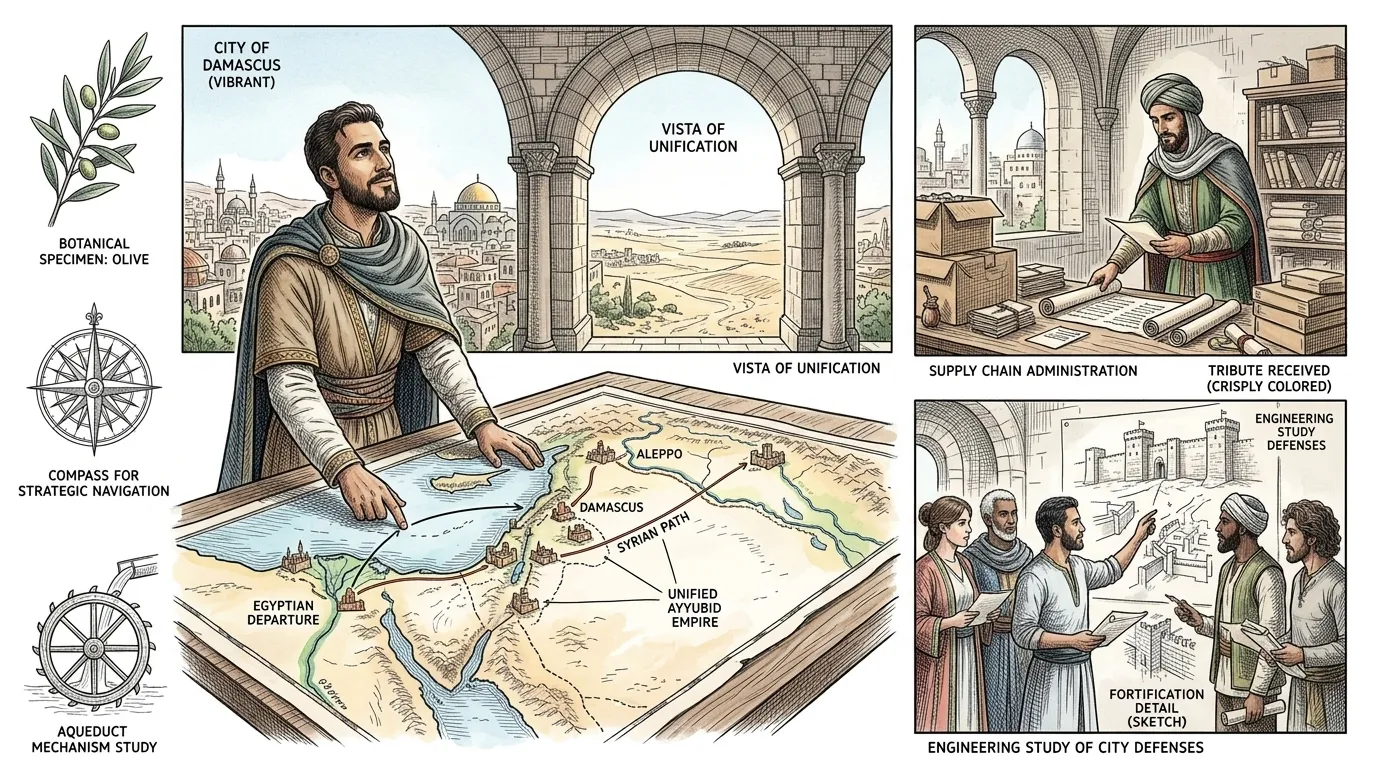
Having secured Egypt, Saladin embarked on a systematic campaign to unify the fractured Muslim territories under his banner, a critical step towards confronting the Crusader threat. Over the next decade, through a combination of military prowess and diplomatic skill, he gradually brought Syria, including Damascus and Aleppo, under his control. This process often involved intricate negotiations and strategic sieges against former allies and rivals within the Zangid dynasty. By 1183, with the capture of Aleppo, Saladin's Ayyubid Sultanate stretched from Egypt to Mesopotamia, forming a formidable, cohesive entity capable of challenging the Crusader states directly. He had forged a unified Muslim front, a power unprecedented since the early Islamic conquests.
Page 6
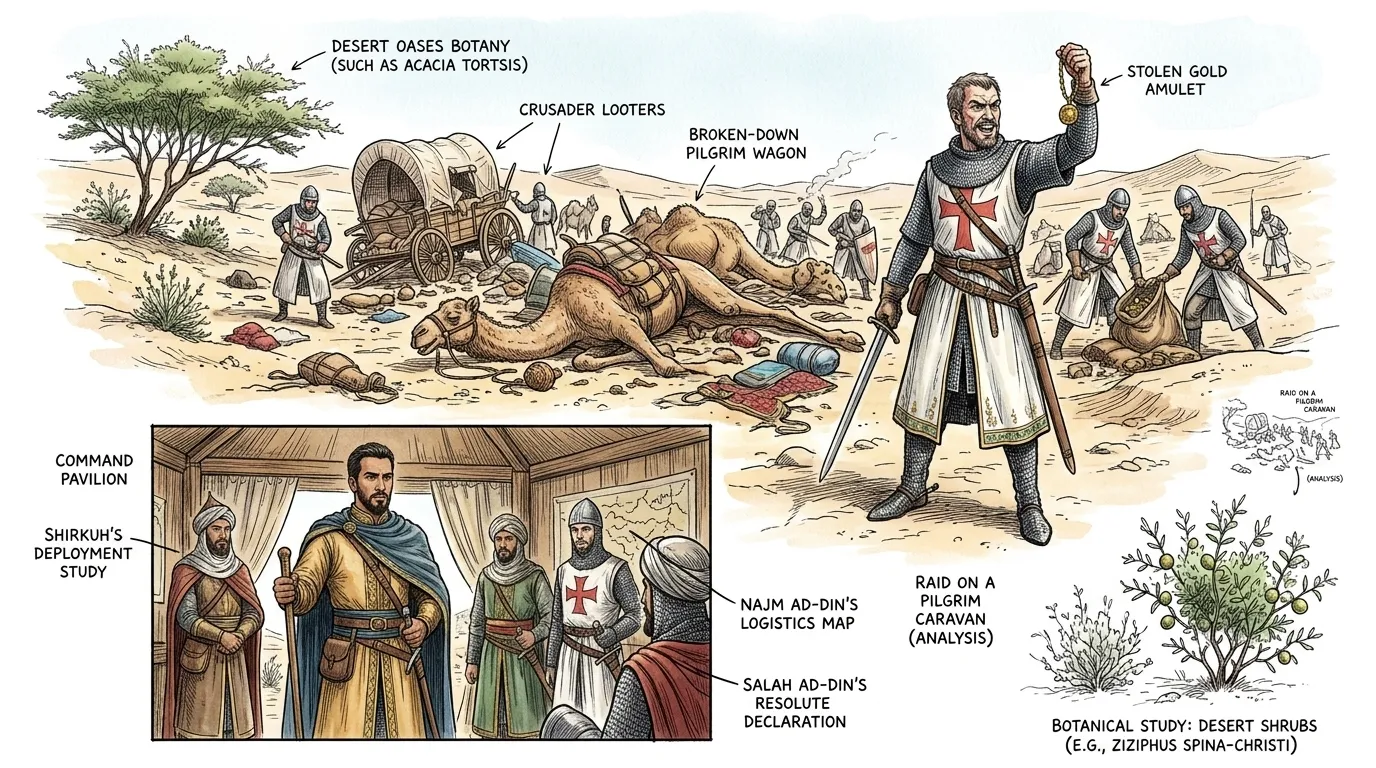
The fragile peace between Saladin's expanding empire and the Crusader Kingdom of Jerusalem fractured repeatedly due to escalating provocations. Figures like Raynald of Châtillon, Lord of Oultrejordain, repeatedly violated truces, attacking Muslim pilgrim caravans and even threatening Mecca. In 1187, Raynald raided a large caravan, capturing many and refusing Saladin's demand for their release. This act of blatant aggression became the final catalyst. Saladin, seeing the violation of sacred trust and the direct threat to Muslim pilgrims, declared a full jihad against the Crusader states. The stage was set for a decisive confrontation that would determine the fate of the Levant.
Page 7
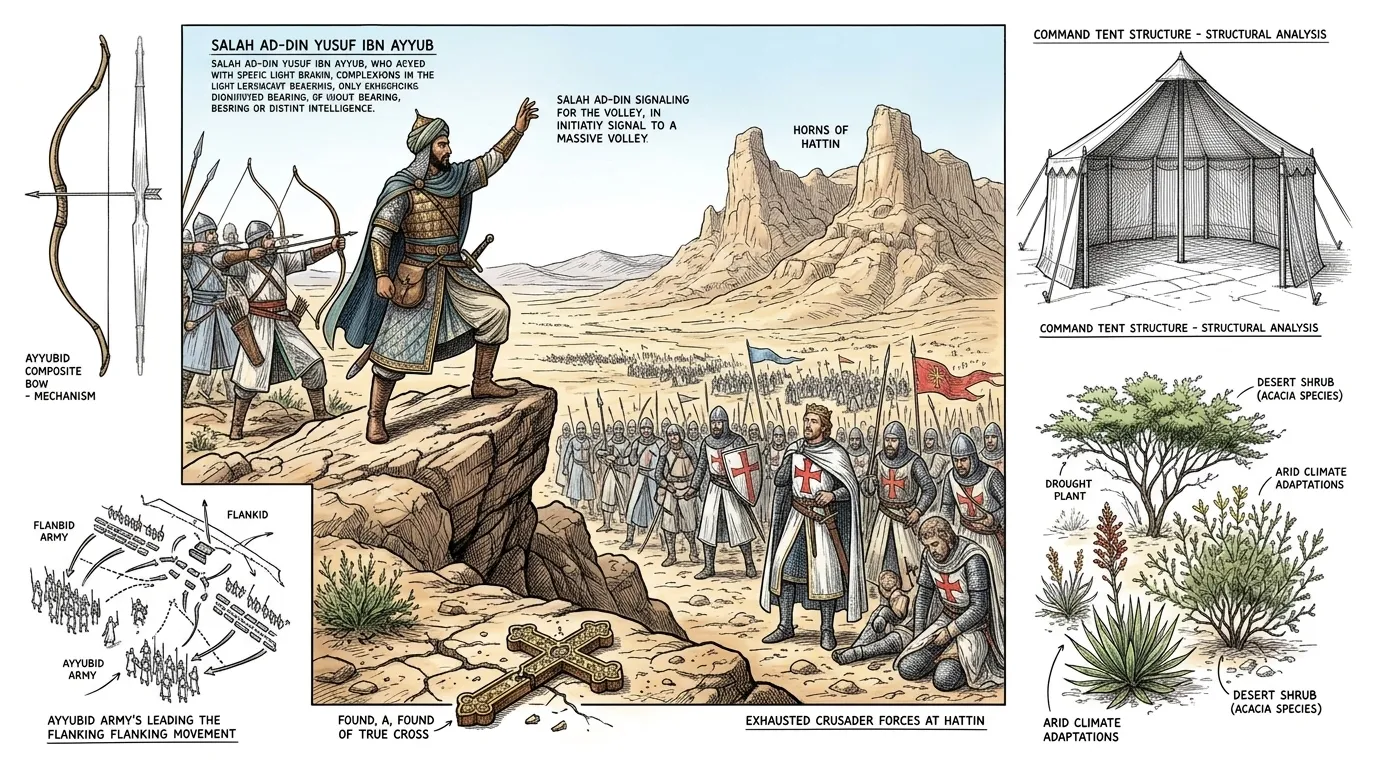
In July 1187, Saladin executed a brilliant tactical masterpiece at the Horns of Hattin. He lured the main Crusader army, led by King Guy of Lusignan, into a waterless plain, then cut off their retreat and harassed them with archers. Exhausted and dehydrated, the Crusaders launched a desperate charge which was repelled. The ensuing battle was a catastrophic defeat for the Kingdom of Jerusalem; almost its entire army was annihilated or captured. The True Cross, their most sacred relic, was seized. Hattin was not merely a victory; it was a devastating blow that decapitated the Crusader military power, opening the path for Saladin's rapid conquest of their remaining fortresses and cities, including Jerusalem itself.
Page 8
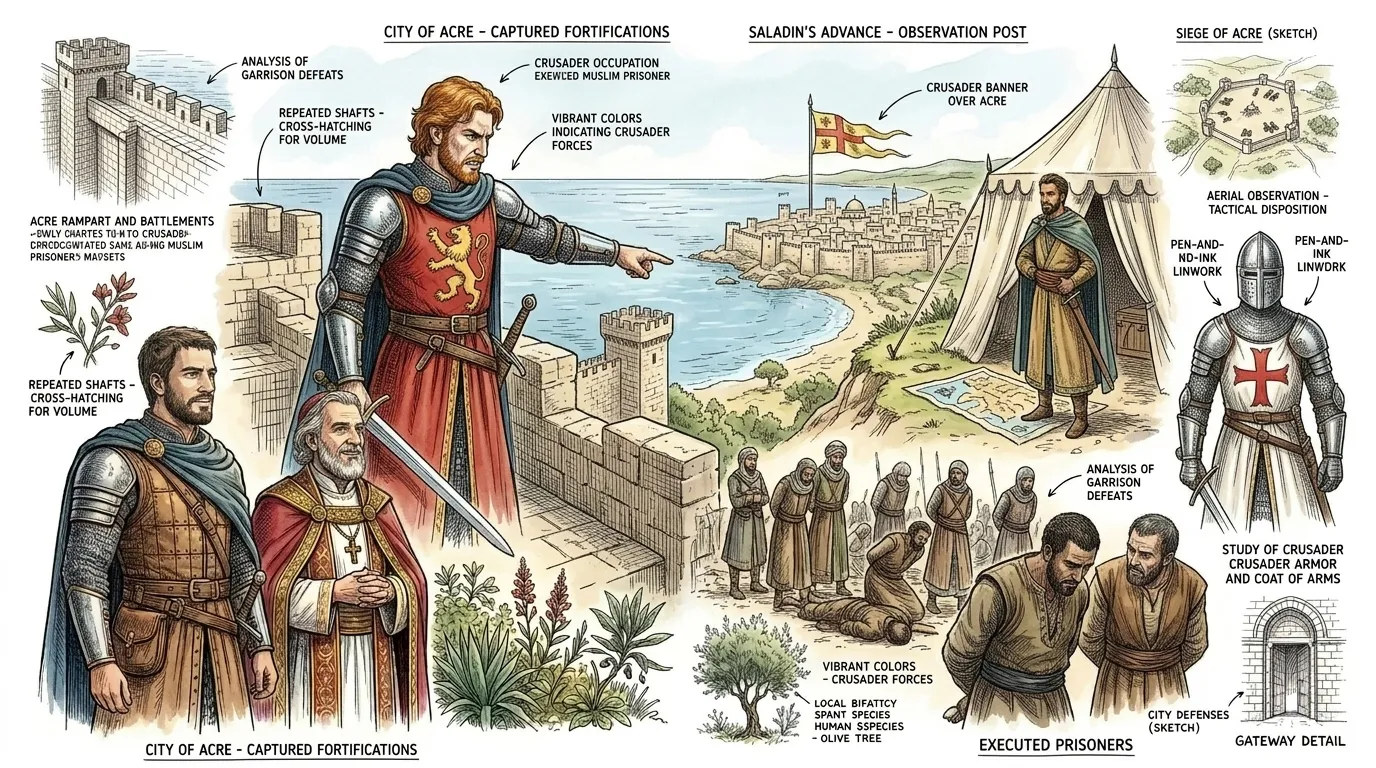
The fall of Jerusalem spurred Europe to action, launching the Third Crusade, led by formidable monarchs like Richard I of England, known as the Lionheart. Richard's arrival in the Levant brought a new, fierce challenge to Saladin's dominance. In 1191, the Crusaders laid siege to Acre, a vital coastal city. After a brutal two-year struggle, Acre fell, a significant setback for Saladin. The subsequent massacre of 2,700 Muslim prisoners by Richard, a stark contrast to Saladin's own treatment of Jerusalem's Christians, intensified the conflict. This period tested Saladin's resilience, forcing him to adapt to a renewed, potent European military threat.
Page 9
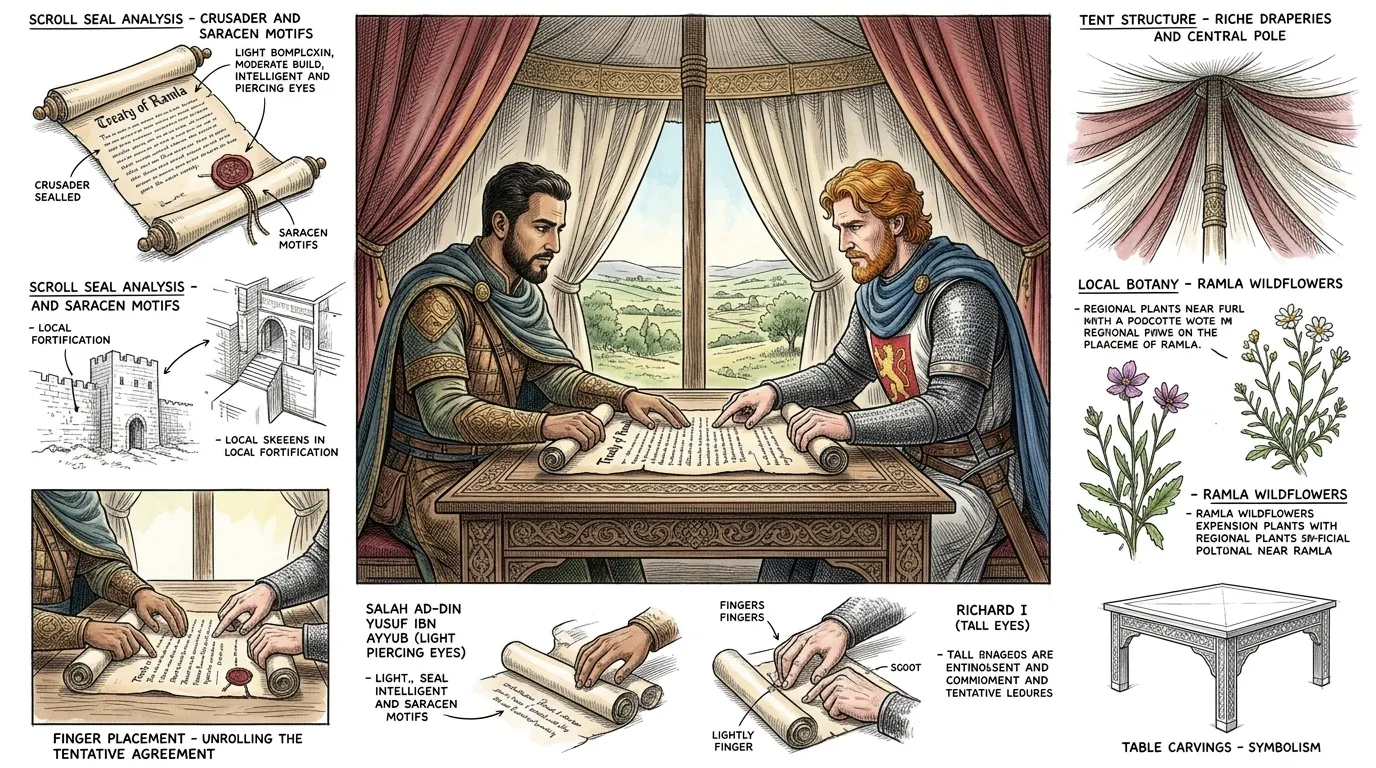
Despite the setbacks, Saladin held firm. After a series of indecisive battles, including the Battle of Arsuf, and a grueling standoff, neither side could achieve total victory. Recognizing the futility of prolonged, costly warfare, Saladin engaged in protracted negotiations with Richard the Lionheart. In 1192, they signed the Treaty of Ramla. This agreement secured Muslim control of Jerusalem but granted Christian pilgrims free and safe access to the city. It was a pragmatic peace, a testament to Saladin's diplomatic astuteness, ensuring stability and religious access while preserving his core gains. He demonstrated that true leadership sometimes lay in judicious compromise, not just conquest.
Page 10
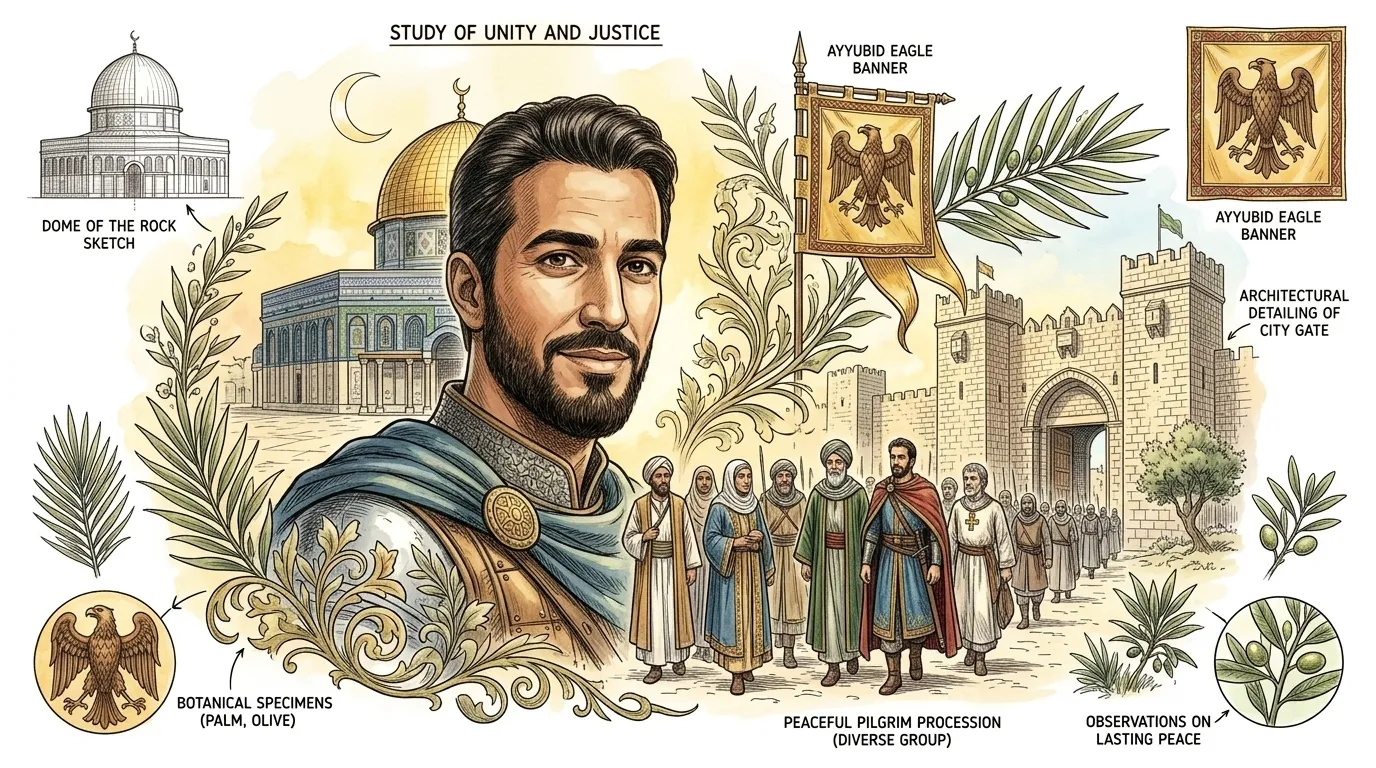
Saladin died in 1193, shortly after the Treaty of Ramla, leaving behind a profound and multifaceted legacy. He had unified the Muslim world against the Crusader threat, reclaimed Jerusalem, and established the enduring Ayyubid dynasty. Beyond his military and political achievements, he was revered for his chivalry, justice, and compassion, even by his Christian adversaries. His treatment of the conquered, particularly in Jerusalem, stood in stark contrast to the brutality often seen in medieval warfare. He became a symbol of Muslim unity and a paragon of knightly virtue, inspiring generations and shaping the historical memory of the Crusades for both East and West. His name remains synonymous with principled leadership and strategic brilliance.
About this story
- Location: Global
- Audience: general readers
Questions and answers
Read Wonder People on your phone
Wonder People is available on Android. Get Wonder People on Google Play.