Stephanie Kwolek
Stephanie Kwolek — an illustrated biography story, set in Global. 10 illustrated pages, free to read on Wonder People.
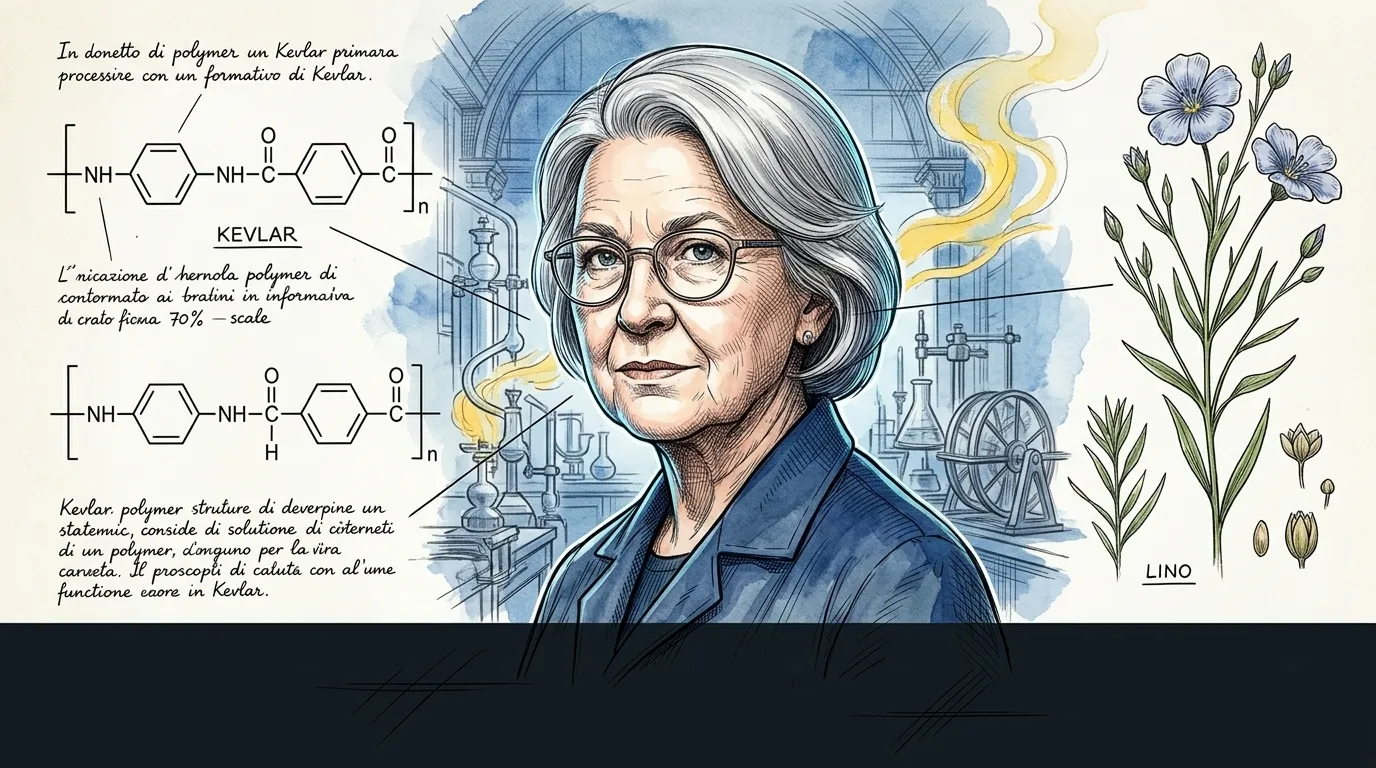
Page 1
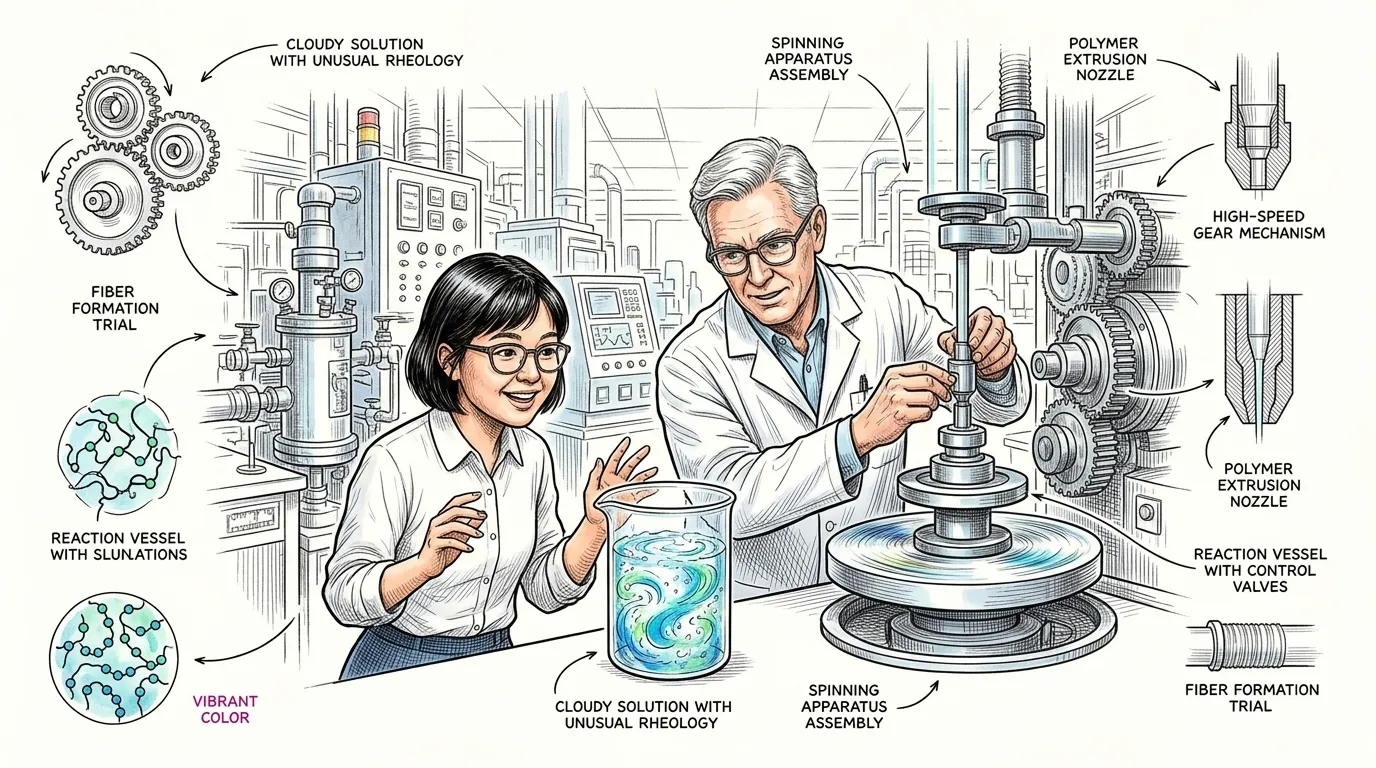
In 1965, at DuPont's Spruance plant in Richmond, Virginia, Stephanie Kwolek stood amidst the whirring machinery and the pungent scent of polymers. She had developed a unique, cloudy solution that defied every expectation of a usable polymer. Against prevailing wisdom, she insisted her technician, Charles Smullen, attempt to spin fibers from this anomalous liquid, leading to the creation of a material five times stronger than steel by weight. In that moment, the world gained Kevlar, and Kwolek became impossible to ignore.
Biographical Fact: Stephanie Kwolek's discovery of liquid crystalline polymers led directly to Kevlar, a material known for its exceptional strength-to-weight ratio. Her persistence in testing an unusual solution defied standard protocols, proving crucial for this invention.
Page 2
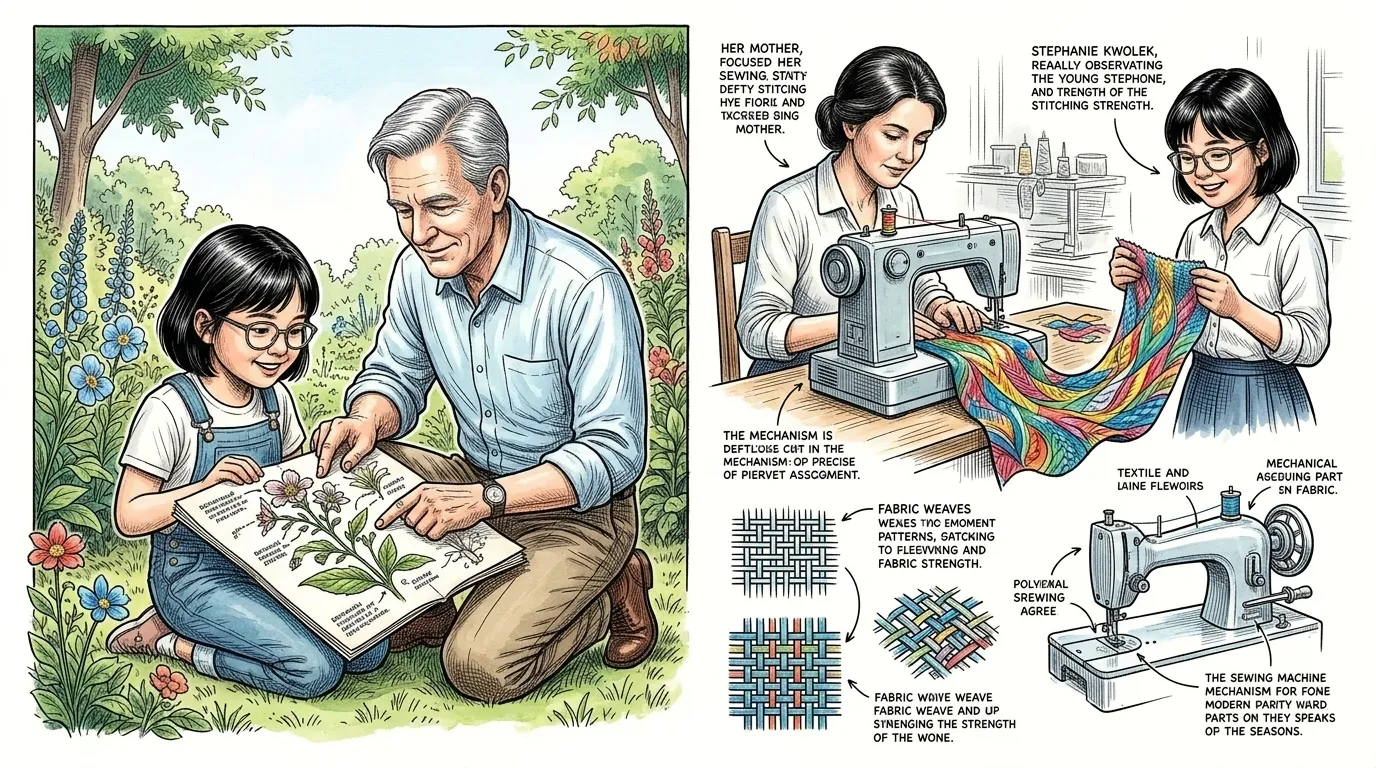
Born in New Kensington, Pennsylvania, in 1923, Stephanie Kwolek's early life was a crucible of intellectual curiosity and practical skill. Her father, a naturalist, fostered in her a deep appreciation for observation and the scientific method. Her mother, a skilled seamstress, imbued her with an understanding of textiles and material properties. This dual influence cultivated a mind uniquely prepared to see the unseen and challenge the conventional, shaping her future as an innovator.
Biographical Fact: Stephanie Kwolek's father, a naturalist, and her mother, a skilled seamstress, both significantly influenced her foundational interests in science and materials, respectively.
Page 3
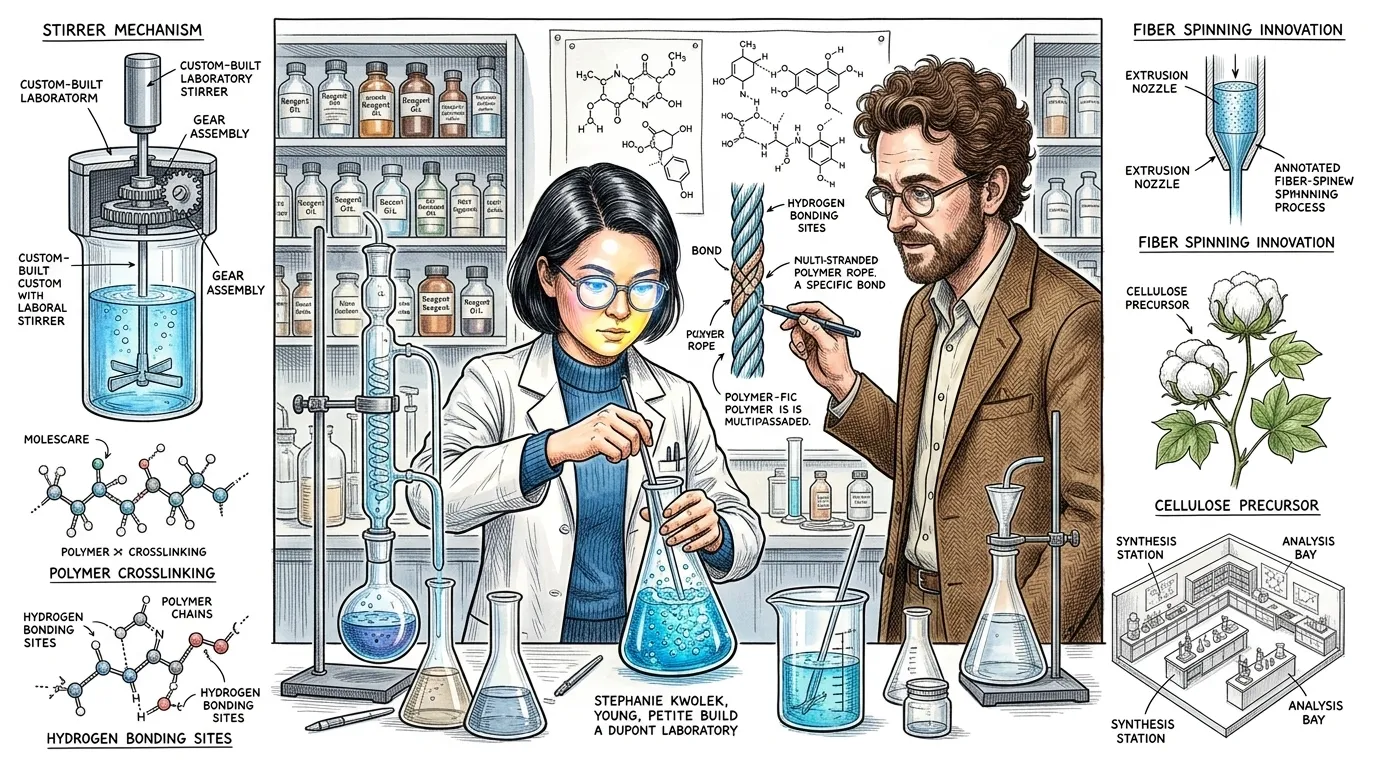
In 1946, a young Stephanie Kwolek joined DuPont at its Buffalo, New York, plant. Her initial goal was to earn money for medical school, but the dynamic world of polymer chemistry quickly captivated her. Under the guidance of mentors like Dr. Paul W. Morgan, she immersed herself in synthesizing new polymers, quickly demonstrating an exceptional aptitude for research. Her early work laid the groundwork for a career that would redefine material science.
Biographical Fact: Stephanie Kwolek joined DuPont initially to fund her medical education but found her true calling in polymer chemistry, becoming a protégé of Dr. Paul W. Morgan.
Page 4
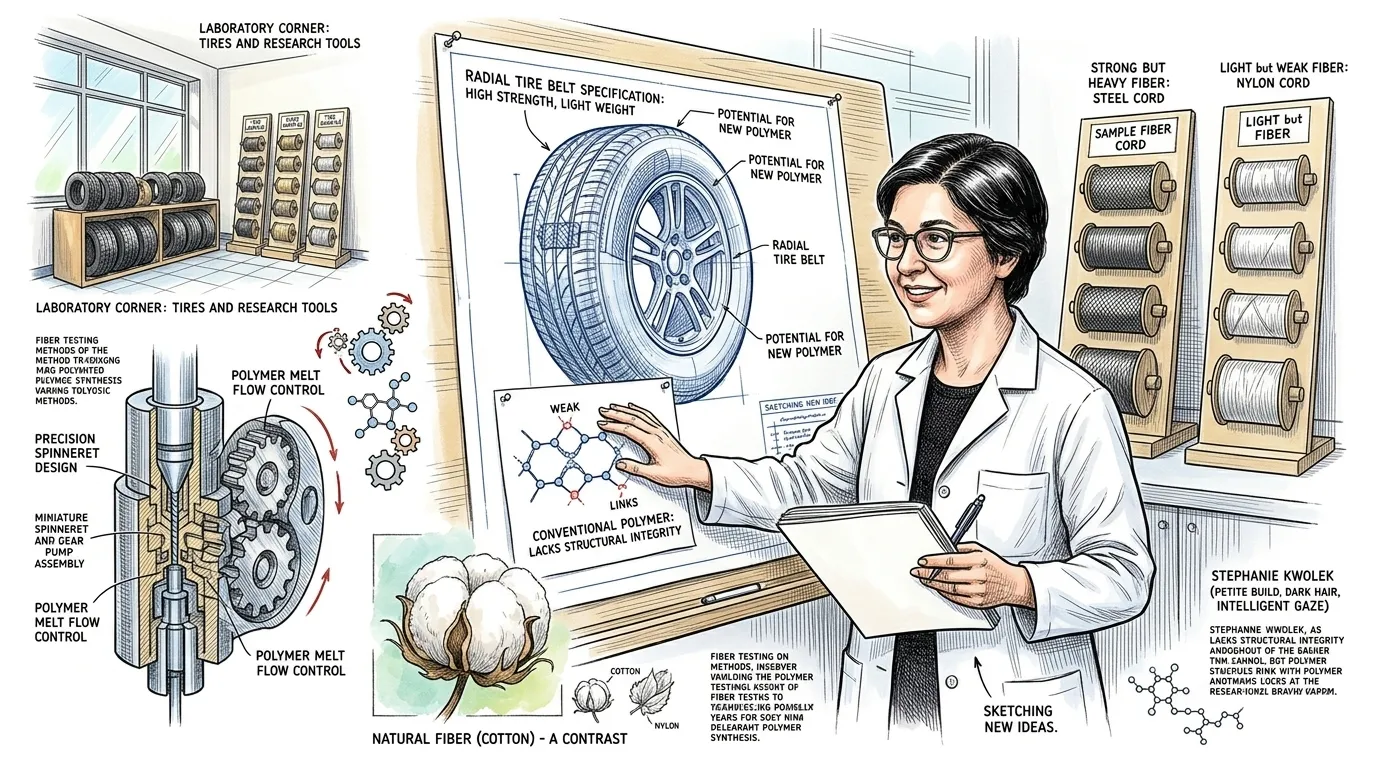
By the early 1960s, Stephanie Kwolek was tasked with a pressing challenge: developing a new lightweight yet exceptionally strong fiber. This material was urgently needed to reinforce radial tires, offering superior performance and fuel efficiency. Traditional polymers fell short, failing to combine both properties effectively. Kwolek embraced this formidable problem, knowing that a radical new approach would be required to achieve the desired strength and lightness.
Biographical Fact: Kwolek's team was challenged to find a lightweight, strong fiber for radial tires, a need that conventional materials could not meet, demanding a breakthrough in polymer science.
Page 5
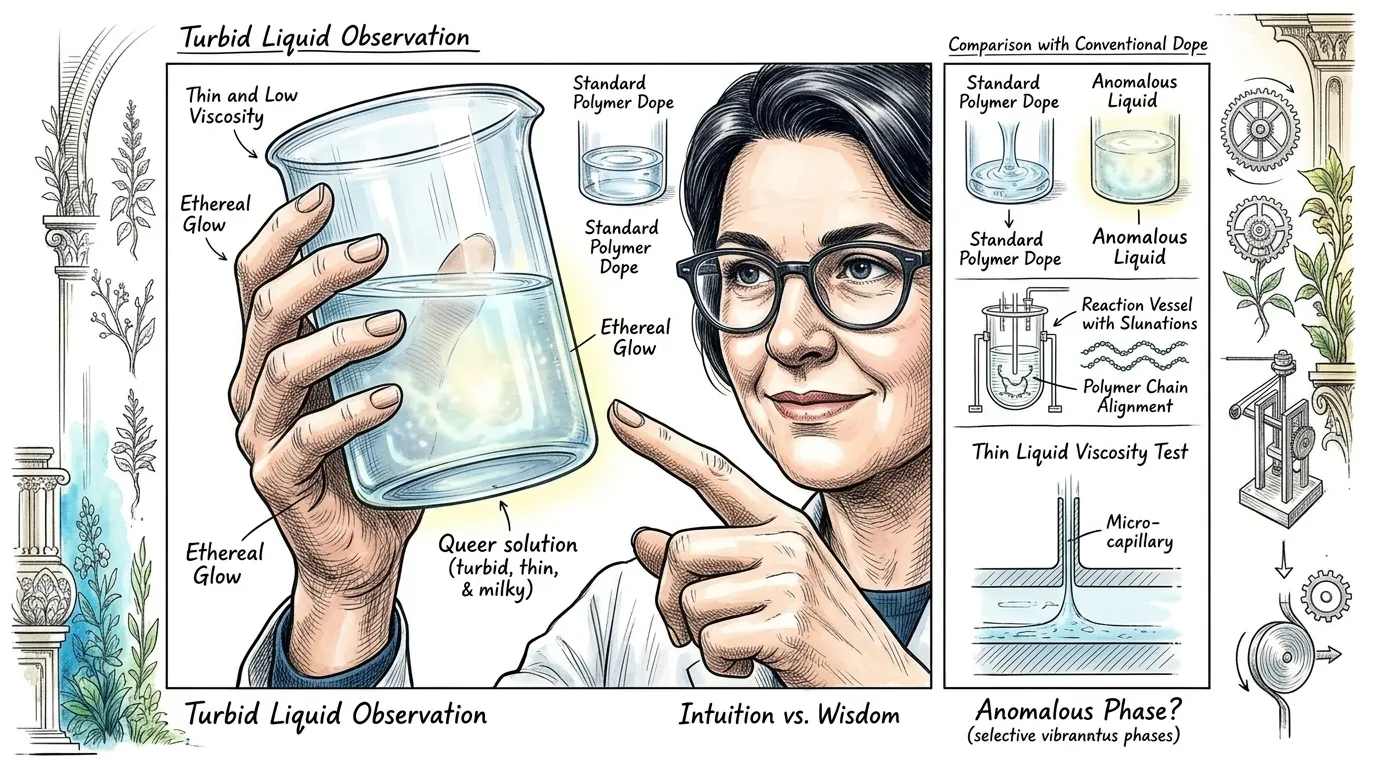
Kwolek began experimenting with low-temperature polymerizations, a less common method, using aromatic polyamides. Her experiments yielded a solution unlike any standard polymer dope: it was turbid, thin, and milky, not clear and viscous. Conventional wisdom suggested such a 'queer solution' would clog the spinneret and yield nothing useful. Yet, Kwolek, driven by intuition and careful observation, felt convinced that this anomaly held promise, refusing to discard what others saw as a failure.
Biographical Fact: Kwolek's low-temperature polymerizations produced an unconventional, opaque solution. Despite its unusual appearance, she trusted her instincts and pursued its potential, defying standard expectations.
Page 6
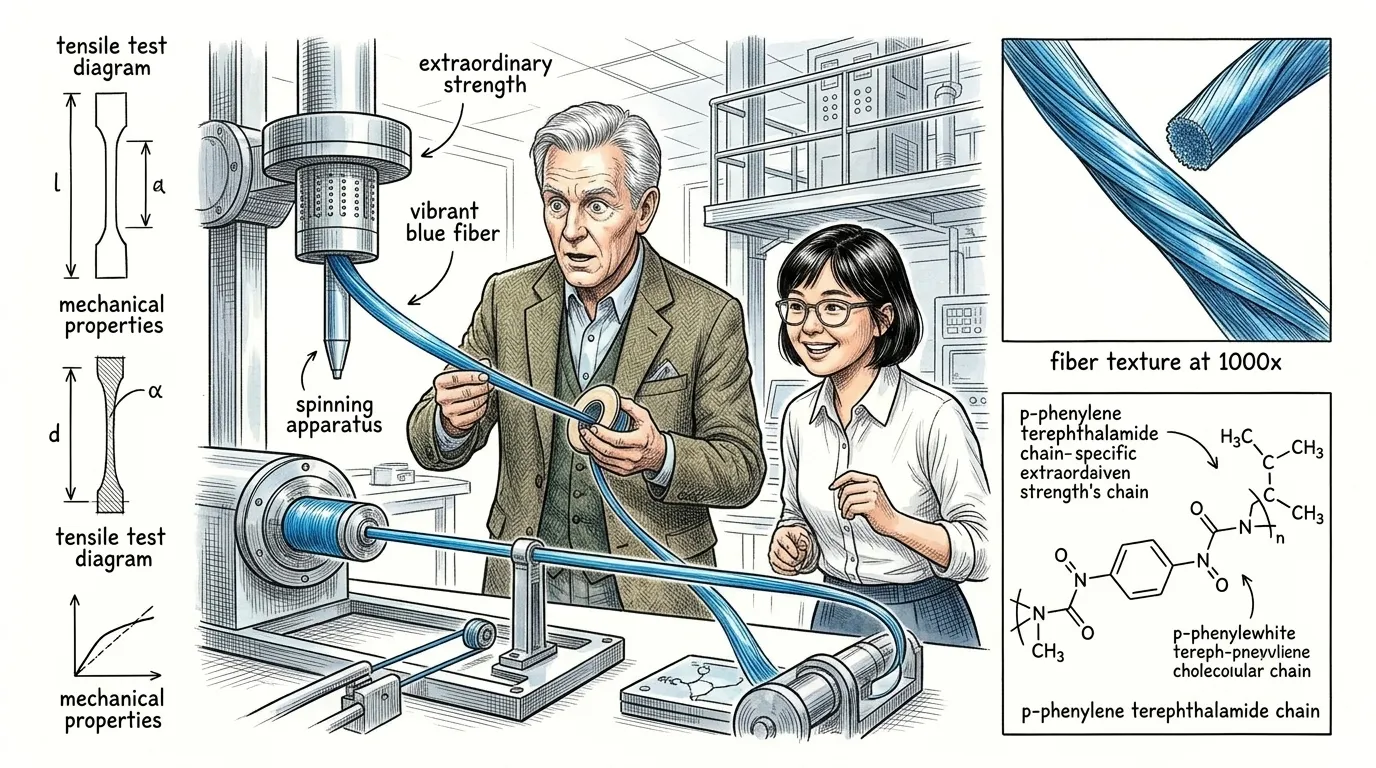
Despite the unusual appearance of Kwolek's solution, Charles Smullen, the skilled laboratory technician, prepared the spinning apparatus. As the polymer dope flowed through the spinneret, an extraordinary event unfolded. Instead of breaking or forming weak strands, a remarkably strong, stiff fiber emerged. The immediate sight of its resilience surprised Smullen, and Kwolek, witnessing the process, recognized the profound significance of what was being created. This was the first tangible proof of her unconventional theory.
Biographical Fact: Charles Smullen, Kwolek's technician, successfully spun fibers from her anomalous solution, revealing an unprecedented strength that immediately signaled a major breakthrough.
Page 7
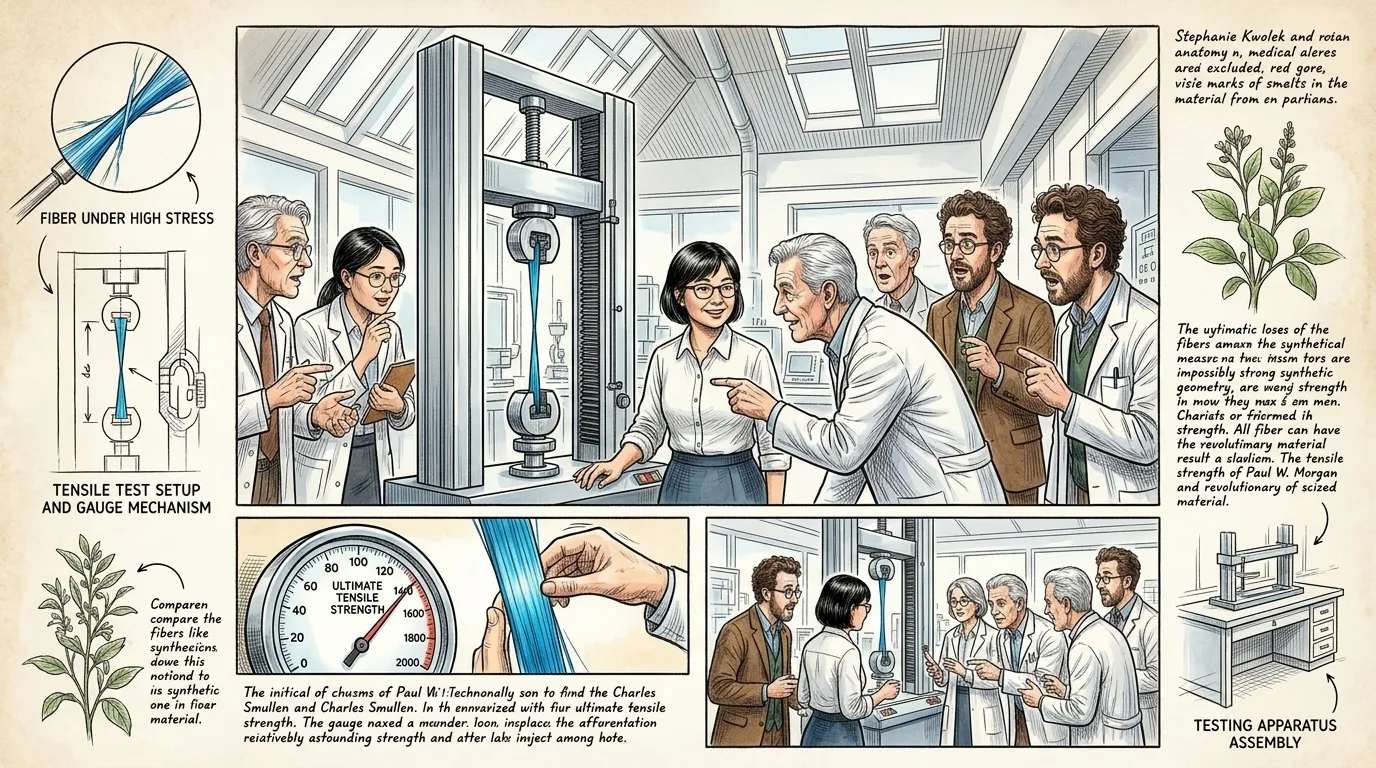
The new fiber was immediately subjected to rigorous tensile strength tests. The results were astounding. The material not only proved incredibly strong but also remarkably rigid, unlike anything previously encountered. Other scientists in the lab, initially skeptical of Kwolek's 'queer solution,' gathered around the testing equipment, their expressions shifting from doubt to profound amazement. The numbers on the gauges confirmed it: this was a revolutionary material, a direct consequence of Kwolek's scientific daring.
Biographical Fact: Tensile strength tests unequivocally confirmed the fiber's extraordinary properties, converting initial skepticism into widespread astonishment among Kwolek's colleagues.
Page 8
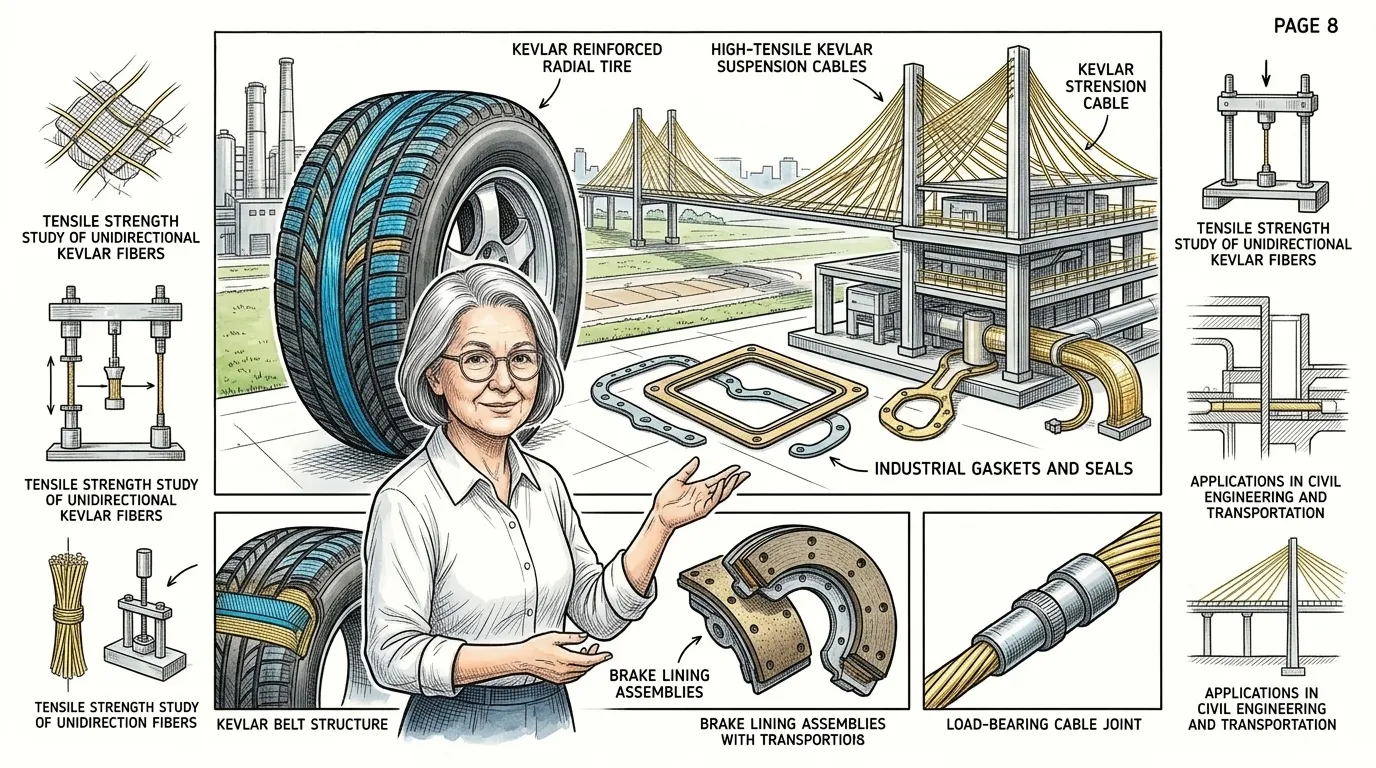
Following extensive development and optimization, DuPont introduced Kwolek's invention as Kevlar in 1971. Its immediate applications focused on replacing steel in radial tires, fulfilling the initial objective with unprecedented success. Beyond tires, Kevlar rapidly found its way into high-strength cables, brake linings, and specialized gaskets. The material's unique combination of high tensile strength and low weight quickly established it as a foundational element in industrial and engineering solutions worldwide.
Biographical Fact: Kevlar was officially introduced by DuPont in 1971. Its initial success in reinforcing radial tires quickly expanded to diverse industrial applications, including cables and brake linings.
Page 9
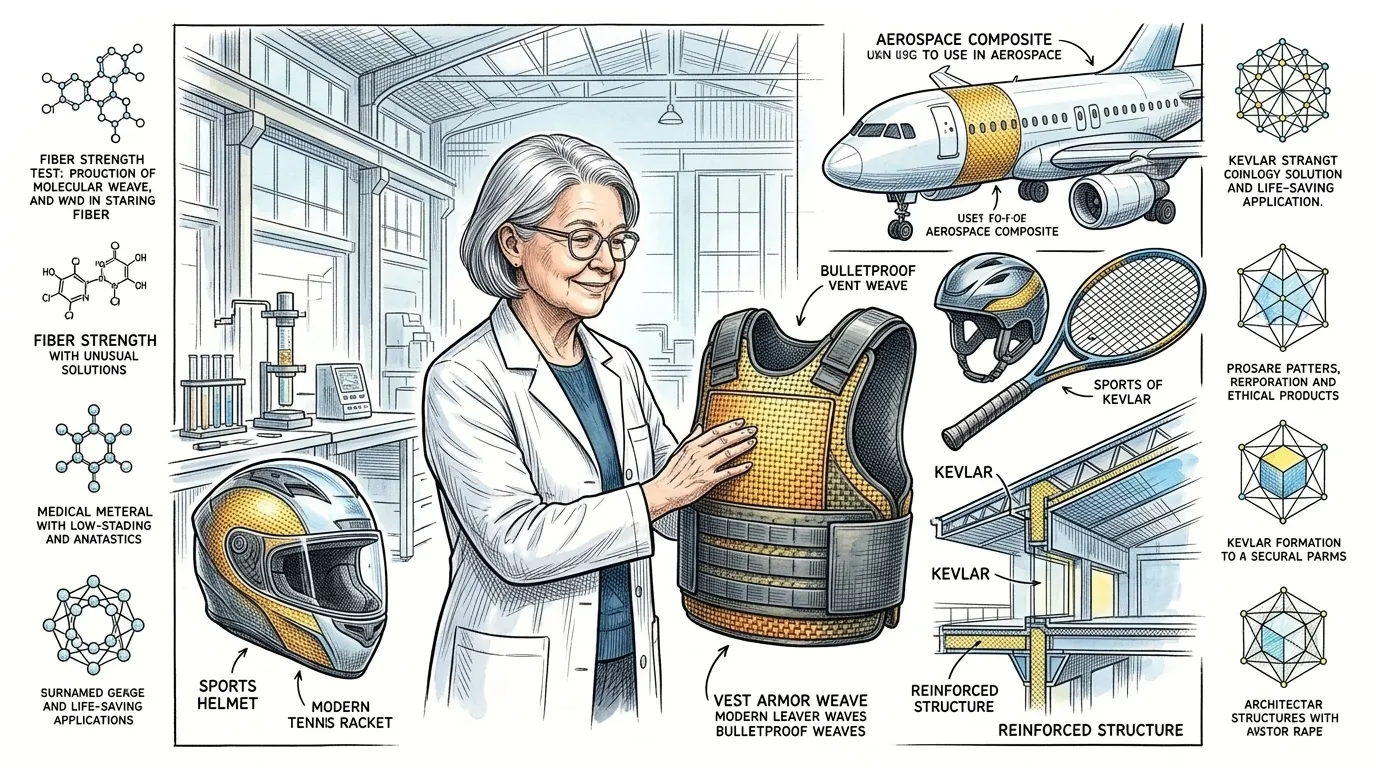
The impact of Kevlar transcended industry, becoming a vital protector of human life. By the late 1970s, its unparalleled strength-to-weight ratio made it the ideal material for bulletproof vests, protecting law enforcement and military personnel globally. Its applications expanded further into aerospace, sports equipment, and even structural components. Kevlar became a silent guardian, fundamentally altering safety standards and saving countless lives across myriad fields, a testament to Kwolek's profound contribution.
Biographical Fact: Kevlar revolutionized protective gear, particularly bulletproof vests for law enforcement and military. Its applications also spread to aerospace, sports, and structural components, saving countless lives.
Page 10
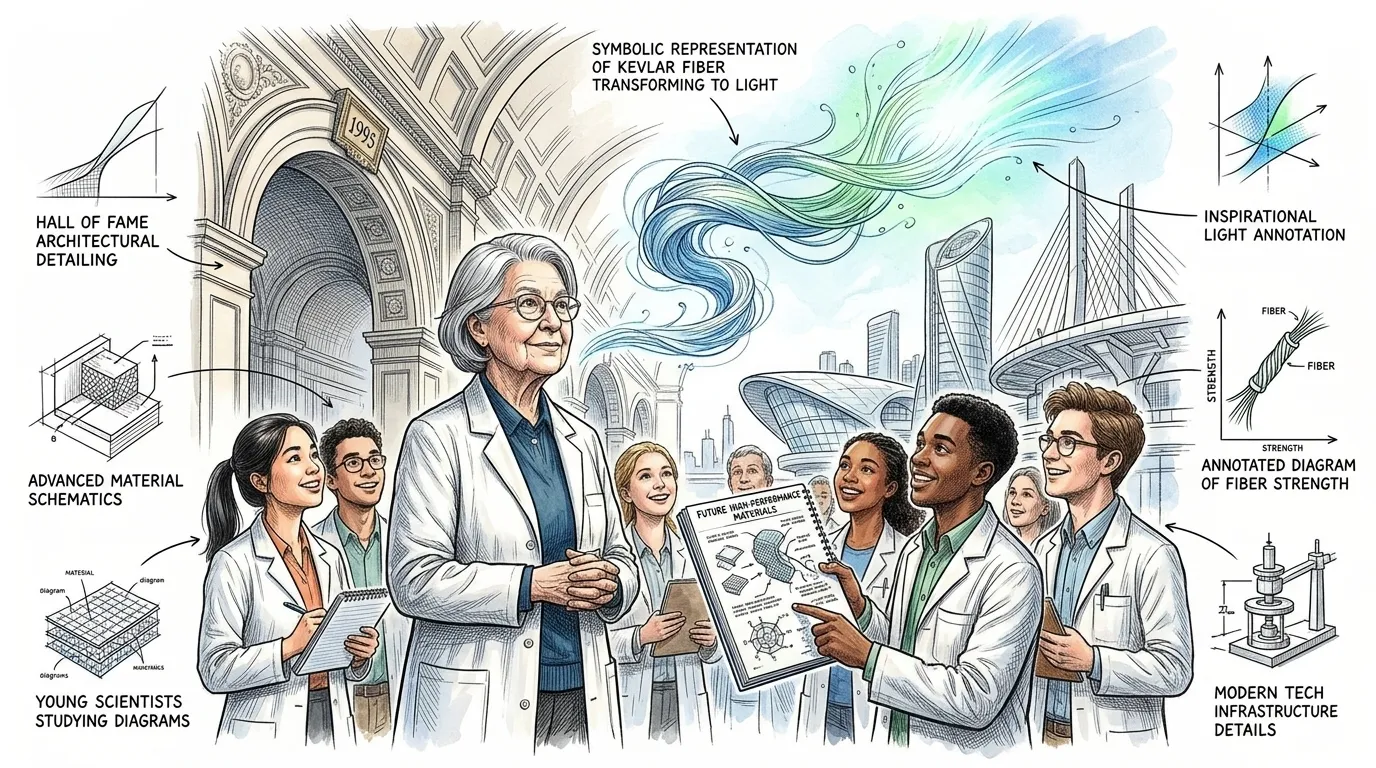
Stephanie Kwolek's invention of Kevlar stands as one of the most significant material science breakthroughs of the 20th century. Her unwavering scientific curiosity, coupled with the courage to challenge established norms, transformed an anomalous lab observation into a ubiquitous material. Inducted into the National Inventors Hall of Fame in 1995, her legacy extends beyond the material itself, inspiring generations of scientists. Kwolek's work forged a new era of high-performance materials, irrevocably shaping the safety and technology of the modern world.
Biographical Fact: Stephanie Kwolek's invention of Kevlar, recognized by her induction into the National Inventors Hall of Fame, remains a cornerstone of modern material science, influencing safety and technology globally.
About this story
- Location: Global
- Audience: general readers
Questions and answers
Read Wonder People on your phone
Wonder People is available on Android. Get Wonder People on Google Play.