Sun Yat-sen
Sun Yat-sen — an illustrated biography story, set in Global. 10 illustrated pages, free to read on Wonder People.
Page 1
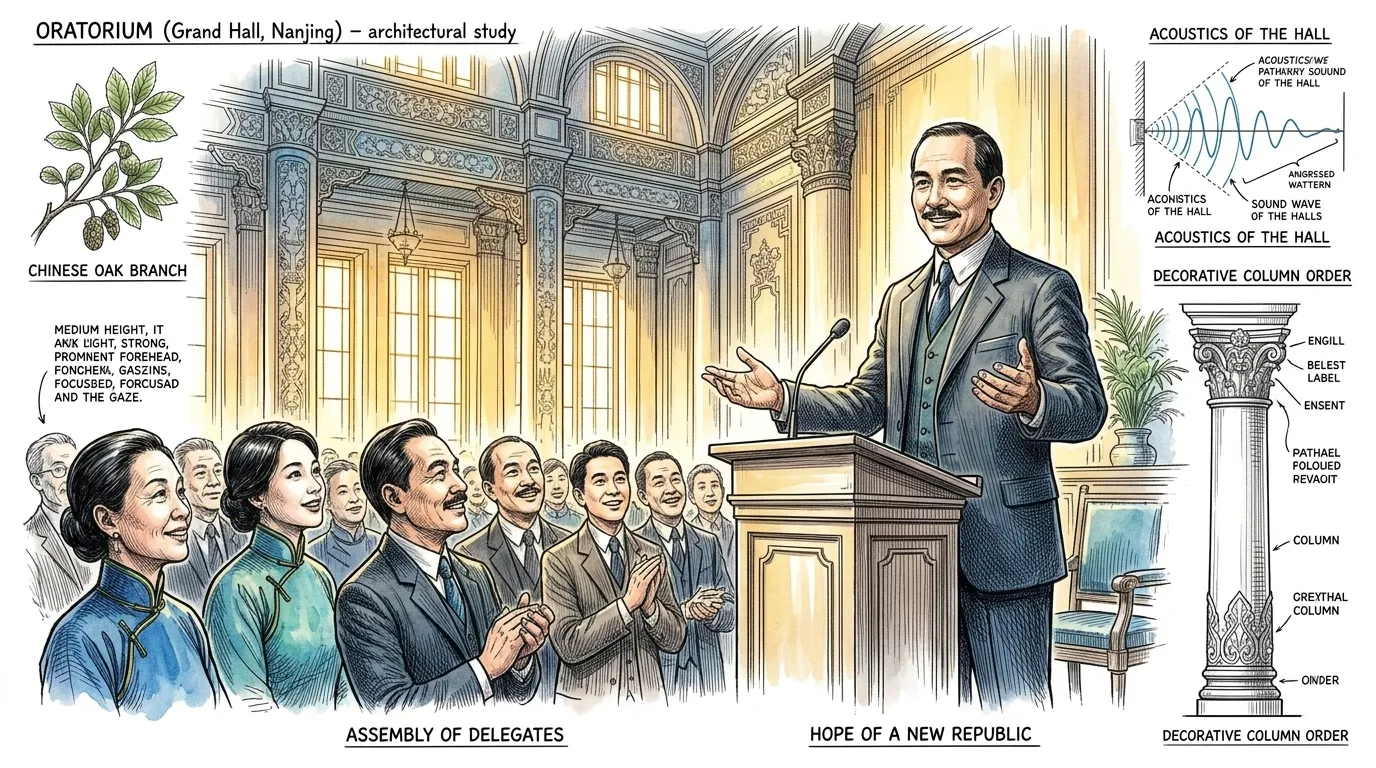
Delegates from across China, representing provinces that had thrown off Qing rule, gathered in Nanjing. The provisional government convened, ready to declare a new national identity. The weight of centuries of imperial rule was about to be lifted, replaced by an untested vision of self-governance. Sun Yat-sen, elected Provisional President, stepped forward to address the assembly, his voice resonating through the grand hall.
"'Today, we usher in a new era for China!' Sun Yat-sen declared, his gaze sweeping across the expectant faces of the delegates. 'The Republic of China is established. Our revolution has achieved its first monumental triumph, proving that the people's will for liberty cannot be suppressed.'"
Biographical Fact: On January 1, 1912, Sun Yat-sen officially proclaimed the establishment of the Provisional Government of the Republic of China in Nanjing, marking the end of millennia of imperial rule.
Page 2
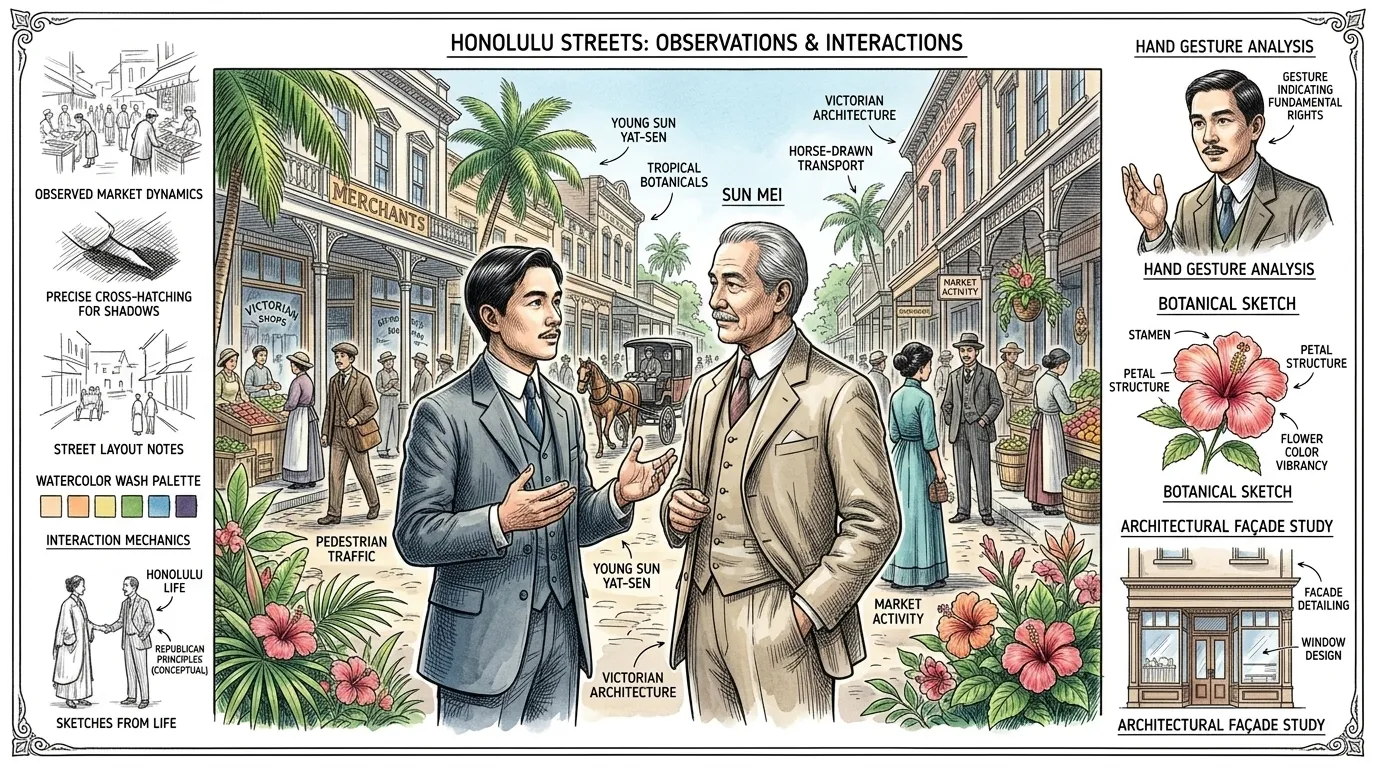
Long before the shouts of revolution, the seeds of change took root in the mind of a young Sun Yat-sen. Studying abroad, he witnessed societies built on principles starkly different from the decaying Qing dynasty. He absorbed ideas of democracy and national sovereignty, contrasting them with the corruption and weakness he saw in his homeland. These insights formed the bedrock of his revolutionary thought, transforming him from a curious student into a determined reformer.
"'Brother, do you not see the fundamental flaw in our imperial system?' a young Sun Yat-sen, aged 18, asked his older brother Sun Mei. They stood in a bustling Honolulu street, the air filled with the scent of tropical flowers and distant markets. 'In this land, people speak of rights, of elected representation, of a government that serves its citizens, not just a dynastic family. This knowledge of constitutional democratic principles, and the organized strength of their people, is what China lacks, and what we must build through united overseas Chinese support.'"
Biographical Fact: Sun Yat-sen's early education in Honolulu, beginning at Iolani School, exposed him to Western science, Christianity, and democratic ideals, profoundly shaping his worldview.
Page 3
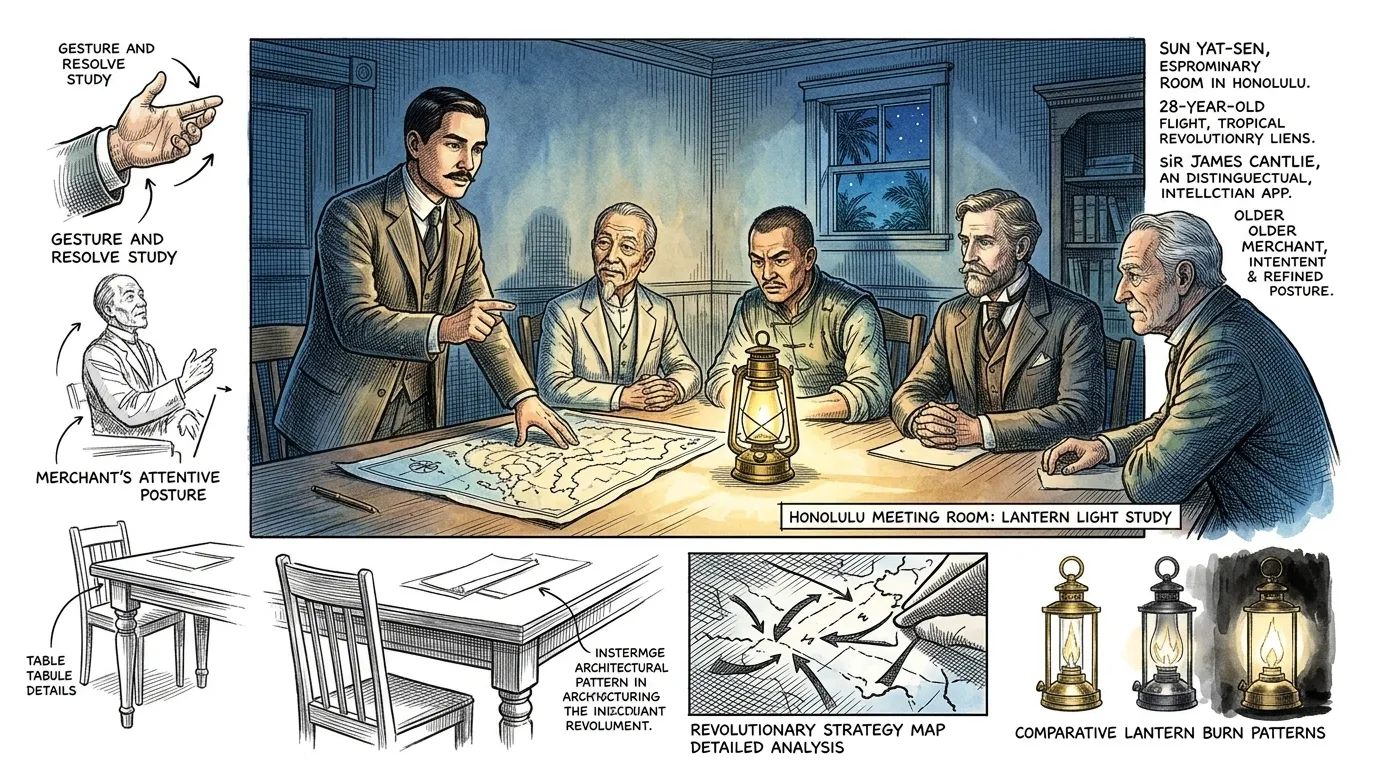
From intellectual conviction, Sun Yat-sen moved to organized action. In Honolulu, he assembled a small circle of like-minded expatriates, primarily merchants and students, who shared his fervent desire for a stronger China. In a clandestine meeting, they formally established the Revive China Society, the Xingzhonghui, marking his initial concrete step toward revolution.
"'Our nation is in peril; mere appeals to the Qing court are futile,' Sun Yat-sen, now 28, stated firmly, addressing the small group gathered in a Honolulu meeting room in 1894. He gestured to a map of China laid out on a table. 'We must unite our resolve, pool our resources, and prepare for decisive action. The Xingzhonghui will be the vanguard. This foundational overseas network is how we will secure the funds and revolutionary commitment required to truly change China.'"
Biographical Fact: The Revive China Society (Xingzhonghui), founded by Sun Yat-sen in Honolulu in 1894, was the first organized revolutionary group dedicated to overthrowing the Qing dynasty and establishing a republic.
Page 4
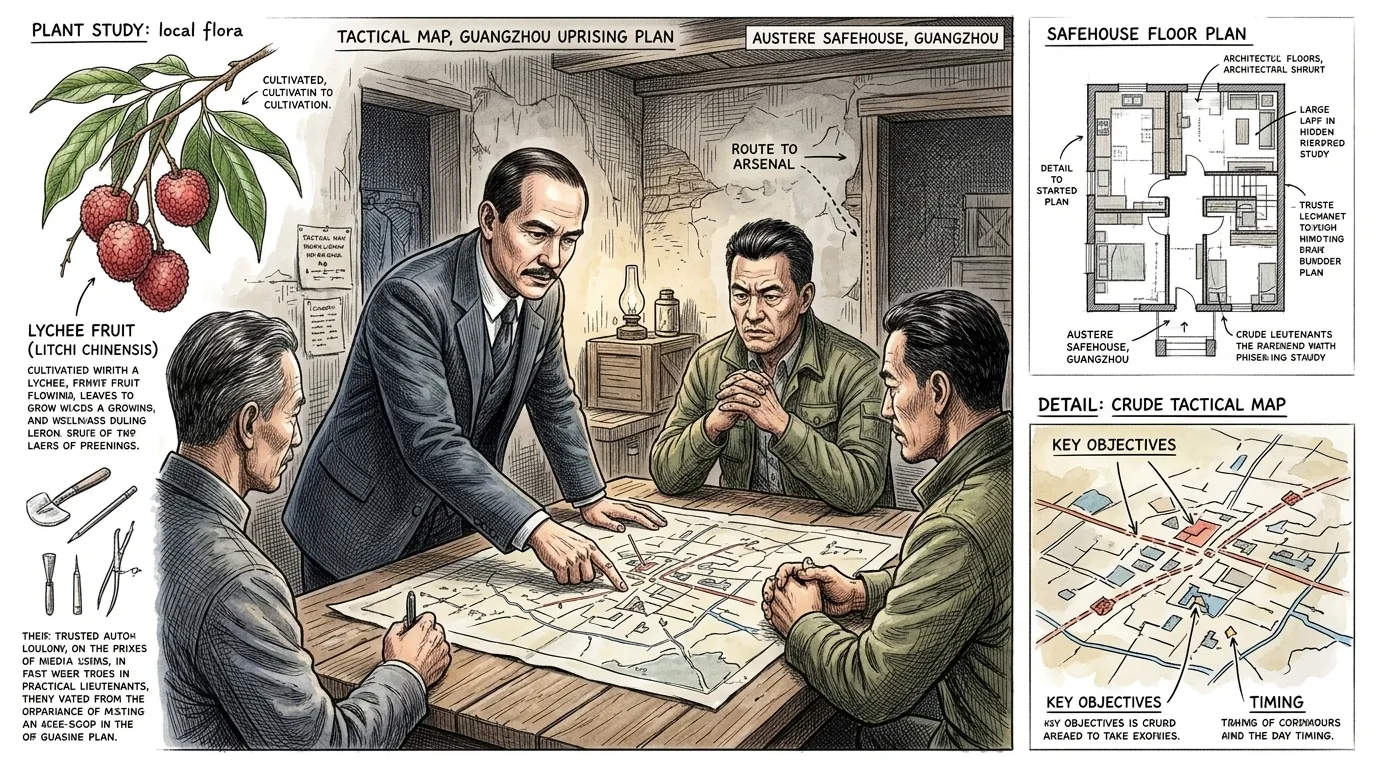
With the Xingzhonghui established, Sun Yat-sen turned his attention to a direct challenge against the Qing. The plan for an uprising in Guangzhou was meticulously laid, relying on secret cells and a daring seizure of power. This was his first armed confrontation, a test of his organizational strength and revolutionary resolve. The stakes were impossibly high.
"'Every detail must be precise,' Sun Yat-sen, 29, emphasized, leaning over a crude tactical map in a hidden Guangzhou safehouse in 1895. He addressed Zheng Shiliang, a seasoned revolutionary, and a few other trusted lieutenants. 'We target the Governor-General's yamun; simultaneous action is critical to prevent Qing reinforcements. This plan demands absolute secrecy and unwavering courage from every participant.'"
Biographical Fact: The 1895 Guangzhou Uprising, planned by Sun Yat-sen, was his first major armed attempt to overthrow the Qing dynasty. Though ultimately unsuccessful, it signaled his unwavering commitment to revolution.
Page 5

After the failure of the Guangzhou Uprising, Sun Yat-sen became a hunted man, a price on his head. He fled into exile, a global wanderer, but his fight was far from over. In London, in a dramatic turn of events, Qing agents kidnapped him, intending to smuggle him back to China for execution. His desperate cry for help reached the outside world, turning a personal struggle into an international incident.
"'The audacity of the Qing here, in British territory, shocked me,' Sun Yat-sen, 30, recounted to his former teacher, Sir James Cantlie, in London in 1896, shortly after his dramatic rescue. He clutched the arm of his chair, relief still tinged with outrage. 'They thought they could simply erase me. But as the ancient philosopher Mencius taught, 'He who exerts his mind to the utmost knows his nature.' My resolve, forged in the face of such peril, only hardens. My conviction in China's republican future remains unbroken.'"
Biographical Fact: In 1896, Sun Yat-sen was kidnapped by Qing agents in London. His former teacher, Sir James Cantlie, alerted the British authorities, leading to his dramatic release and significant international publicity for his cause.
Page 6
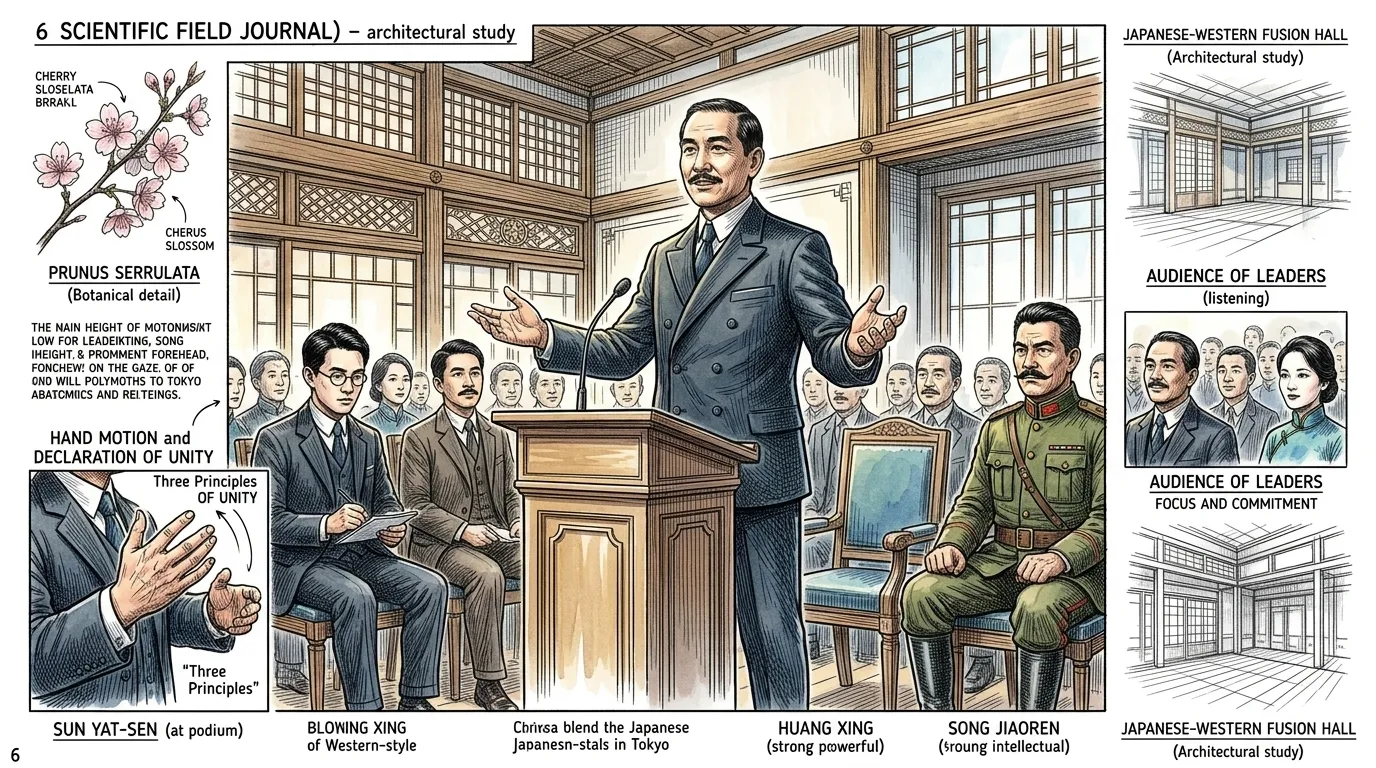
Years of exile were not spent in retreat, but in relentless organization. Sun Yat-sen traveled across the globe, appealing to Chinese expatriates, students, and secret society members, tirelessly building support. In Tokyo, he achieved a critical victory, uniting disparate revolutionary factions into a single, formidable entity: the Tongmenghui, or the Chinese Revolutionary Alliance. This consolidation of power was vital.
"'Disunity has plagued our efforts too long,' Sun Yat-sen, 39, declared in a resolute tone, addressing the gathered leaders in a Tokyo meeting hall in 1905. Beside him, figures like Huang Xing and Song Jiaoren listened intently. 'The time for fragmentation is over. My 'Three Principles of the People'—Nationalism, Democracy, and the People's Livelihood—offer the unified vision we need. Only under one banner, the Tongmenghui, can we effectively challenge the Qing and establish a true republic.'"
Biographical Fact: In 1905, in Tokyo, Sun Yat-sen successfully merged various anti-Qing revolutionary groups into the Tongmenghui (Chinese Revolutionary Alliance), providing a unified front and a clear ideological program for the revolution.
Page 7

While Sun Yat-sen was abroad, still raising funds and garnering international support, the revolutionary moment arrived unexpectedly. A small, unplanned uprising in Wuchang rapidly escalated, sparking widespread rebellion across the provinces. News reached him in Denver, USA. The Qing Empire was collapsing, but the fight for a republic now needed leadership on Chinese soil.
"'The Wuchang Uprising has begun!' a breathless aide, Wang Jingwei, announced to Sun Yat-sen, 45, in a Denver hotel room in October 1911, handing him a telegram. Sun Yat-sen, composed but with a flash of urgency in his eyes, studied the message. 'This is the moment we have prepared for. I will not rush directly to the battlefield. Our immediate strategy must shift: secure international recognition and financial support. The true battle for the Republic will be won through diplomacy and resources, not just arms. I must return home, but with strategic purpose.'"
Biographical Fact: The Wuchang Uprising erupted on October 10, 1911, while Sun Yat-sen was in Denver. Recognizing the critical juncture, he decided to return to China, focusing on diplomatic and financial efforts abroad before reaching the revolution's heartland.
Page 8
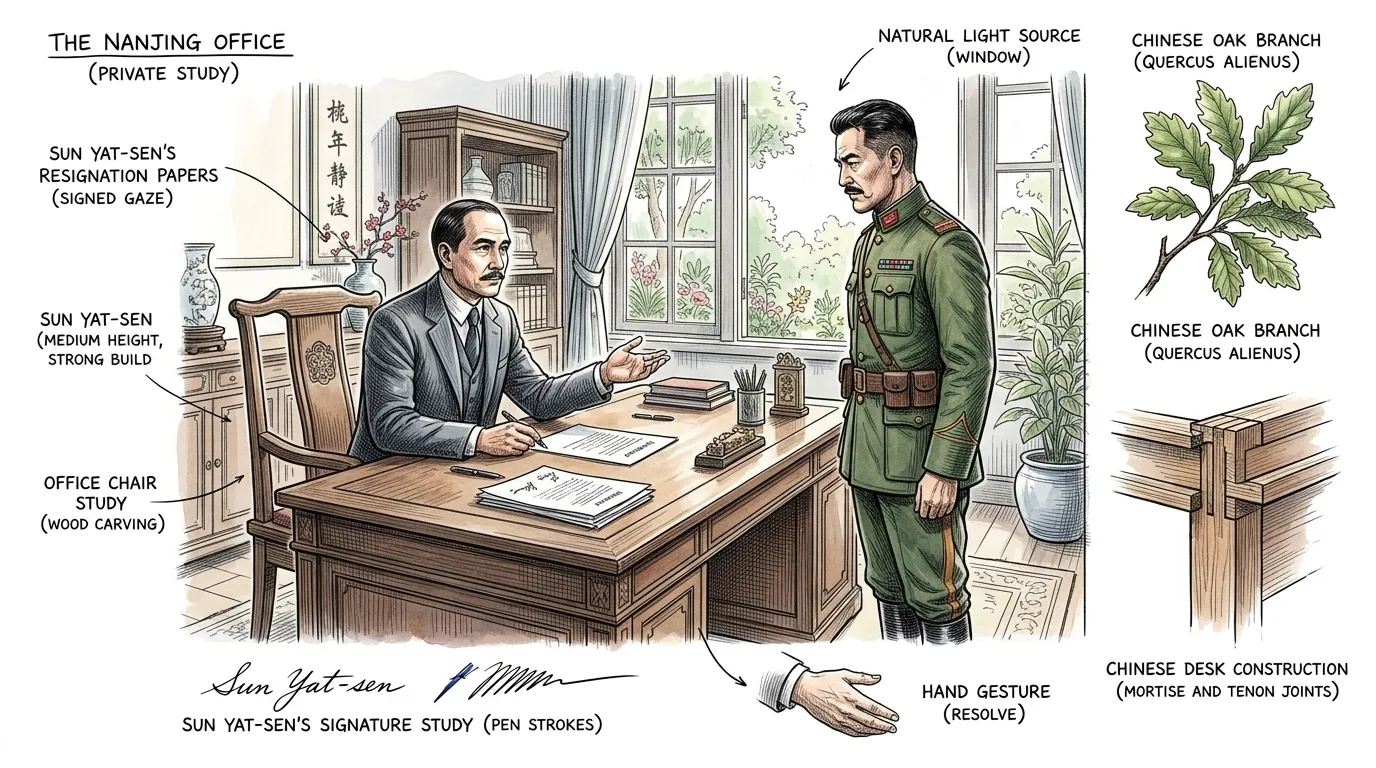
The new republic was fragile, its survival hanging by a thread. To avert a devastating civil war and secure the final abdication of the Qing Emperor, Sun Yat-sen made a strategic, albeit painful, decision. He stepped down from the provisional presidency, ceding power to Yuan Shikai, the powerful Qing general whose military might could stabilize the nation. It was a gamble for unity.
"'This decision, though it costs me greatly, is for the stability of China,' Sun Yat-sen, 46, stated to Huang Xing, his loyal revolutionary comrade, in a private office in Nanjing in March 1912. He gestured to the signed resignation papers on the desk. 'We learned early that constitutional democratic principles cannot take root in chaos, and united overseas Chinese support alone cannot command a divided nation. Yuan Shikai commands the Beiyang Army; his cooperation secures the Qing's final collapse without further bloodshed. It is a pragmatic step, a necessary compromise to protect the fledgling republic.'"
Biographical Fact: In March 1912, Sun Yat-sen resigned as Provisional President in favor of Yuan Shikai. This was a strategic move aimed at securing the Qing Emperor's abdication and preventing further civil war, a painful compromise for the sake of national unity.
Page 9
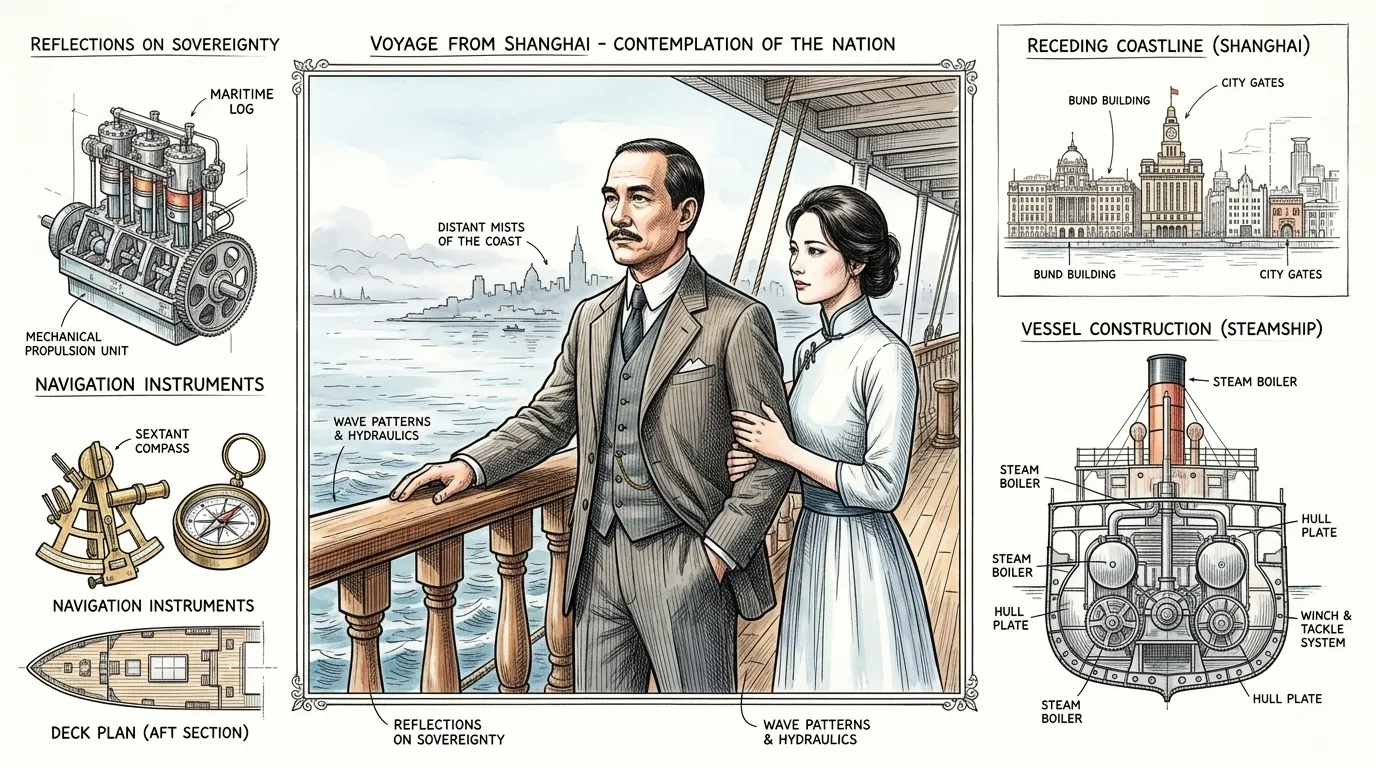
Yuan Shikai quickly betrayed the republican ideals, consolidating power and moving toward imperial rule himself. Sun Yat-sen, witnessing the unraveling of his dream, launched the 'Second Revolution' to challenge Yuan's authoritarianism. The uprising failed, forcing Sun Yat-sen into exile once more. Yet, even in defeat, his commitment to a truly democratic China remained unbroken.
"'Our path to a true republic is fraught with setbacks,' Sun Yat-sen, 47, confided to his loyal secretary, Song Qingling, in a hushed tone aboard a ship departing Shanghai in 1913. He stared out at the receding Chinese coastline. 'Yuan Shikai's ambition has cast a dark shadow over our nascent democracy. Though we are forced to withdraw now, this is not the end. The struggle continues; we will rebuild and return stronger. China deserves better than another emperor.'"
Biographical Fact: In 1913, Sun Yat-sen launched the 'Second Revolution' against Yuan Shikai's growing authoritarianism. The uprising was crushed, forcing Sun Yat-sen into another period of exile, but strengthening his resolve to fight for a genuine republic.
Page 10
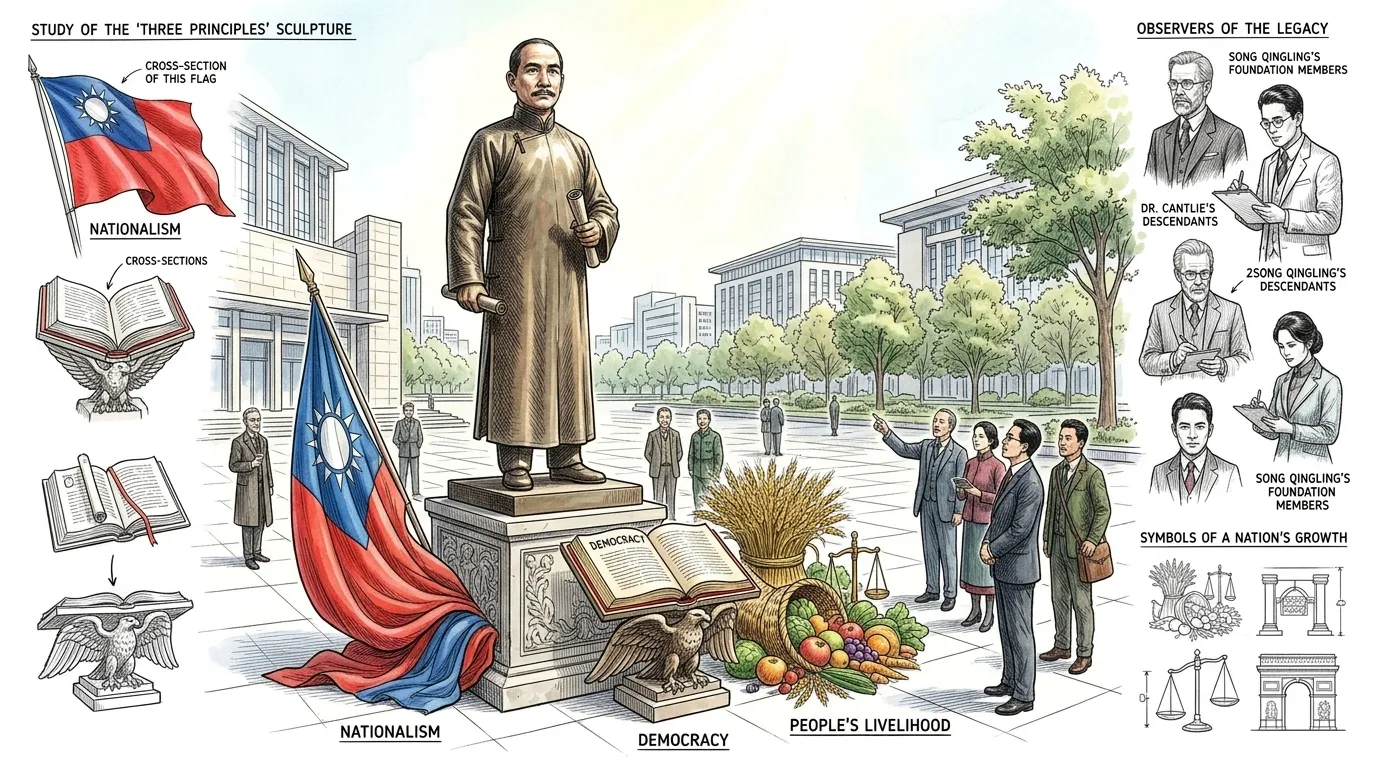
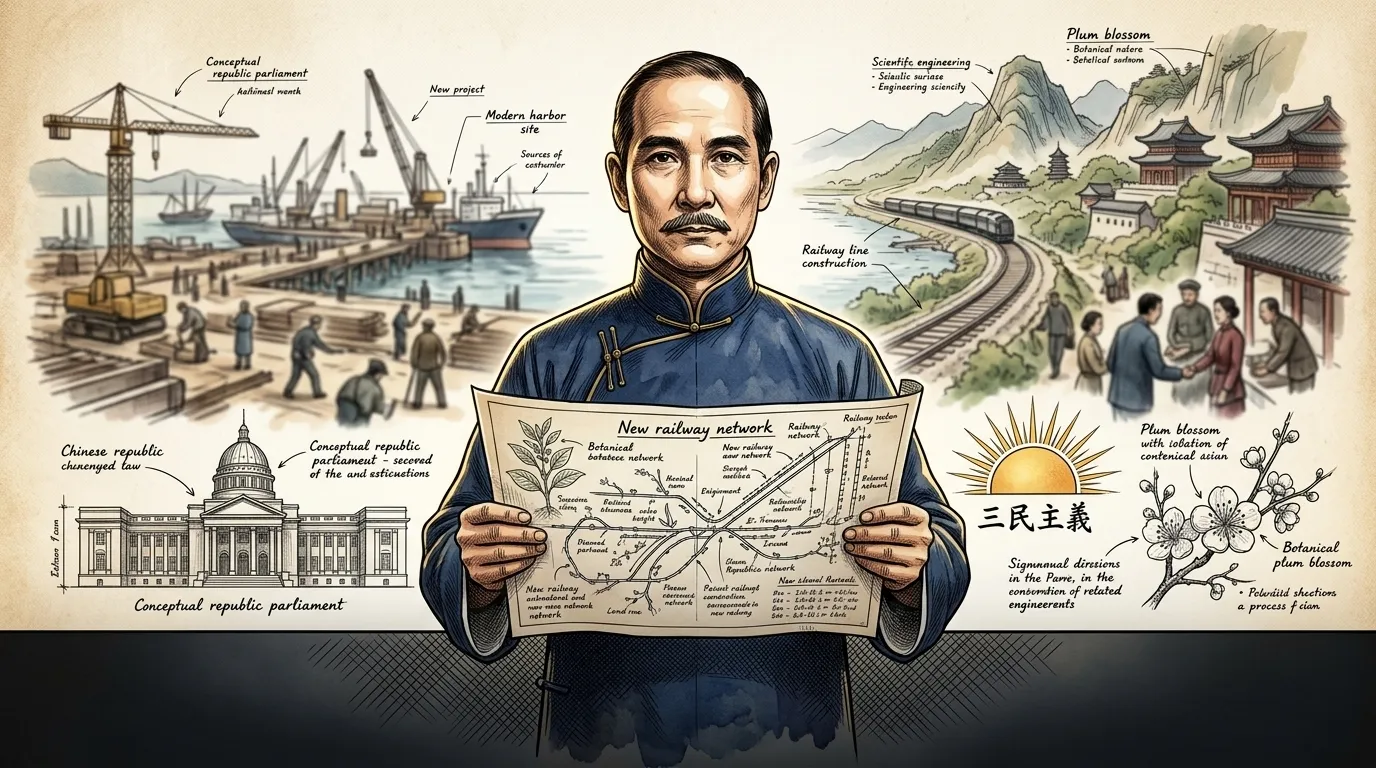
Sun Yat-sen's life was a relentless pursuit of a unified, democratic China, marked by both triumph and profound struggle. He died in 1925, never seeing his vision fully realized in his lifetime. Yet, his Three Principles of the People and his unwavering dedication cemented his legacy. He remains revered across political divides as the Father of the Nation, his image and ideals imprinted on the very fabric of modern Chinese identity.
Biographical Fact: Sun Yat-sen passed away in 1925, but his legacy as the 'Father of the Nation' endures. His 'Three Principles of the People'—Nationalism, Democracy, and the People's Livelihood—continue to influence Chinese political thought across various factions.
About this story
- Location: Global
- Audience: general readers
Questions and answers
Read Wonder People on your phone
Wonder People is available on Android. Get Wonder People on Google Play.