Theodore Roosevelt
Theodore Roosevelt — an illustrated biography story, set in Global. 10 illustrated pages, free to read on Wonder People.
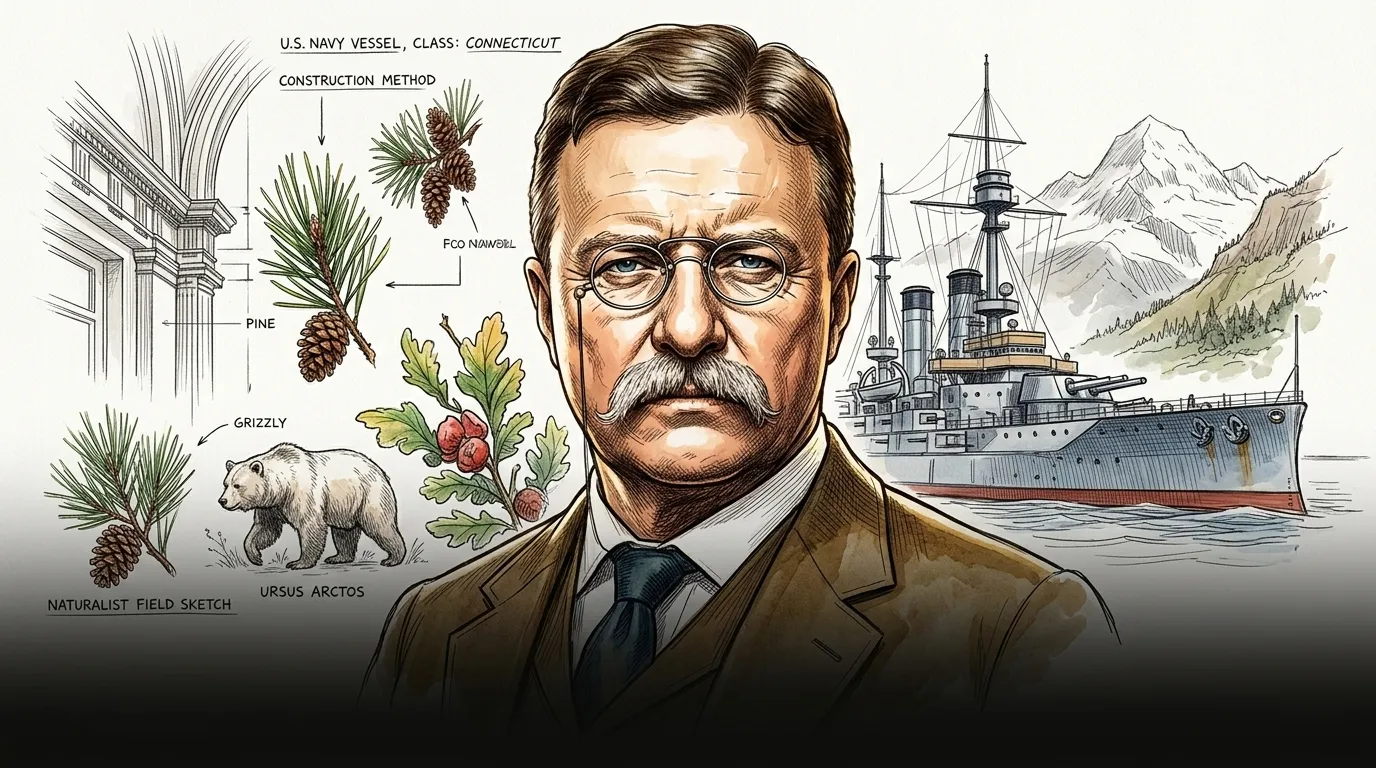
Page 1
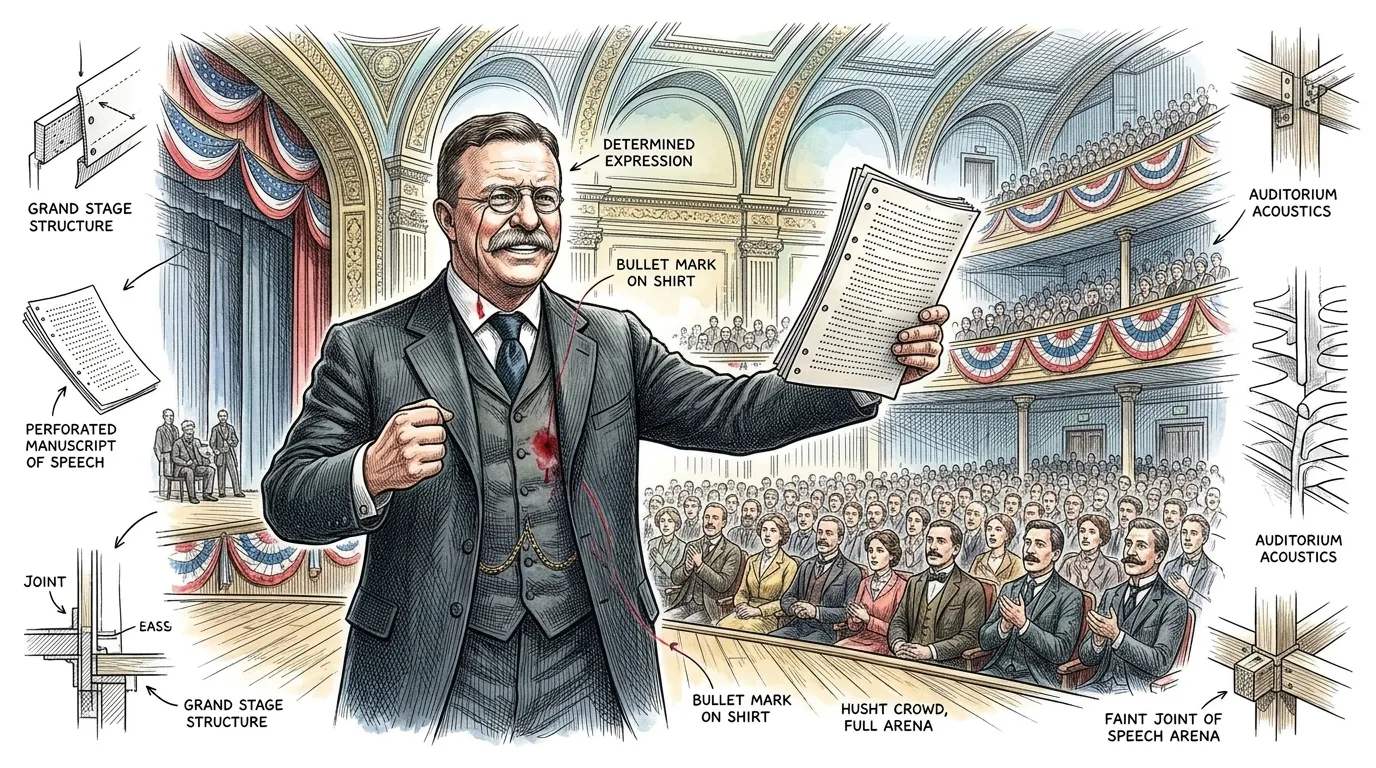
On October 14, 1912, in Milwaukee, Wisconsin, Theodore Roosevelt, running for President on the Progressive 'Bull Moose' ticket, faced an assassin's bullet just before delivering a major campaign speech. With a bullet lodged in his chest, slowed by a thick manuscript and spectacles case, he refused medical aid. Stepping onto the stage of the Milwaukee Auditorium, he pulled the perforated speech from his coat, silencing the shocked crowd with his unyielding gaze. For ninety minutes, he spoke, blood slowly seeping into his shirt, demonstrating a formidable will that stunned a nation and enshrined his legend.
""Friends, I shall ask you to be as quiet as possible. I don't know whether you fully understand that I have just been shot; but it takes more than that to kill a Bull Moose.""
Page 2
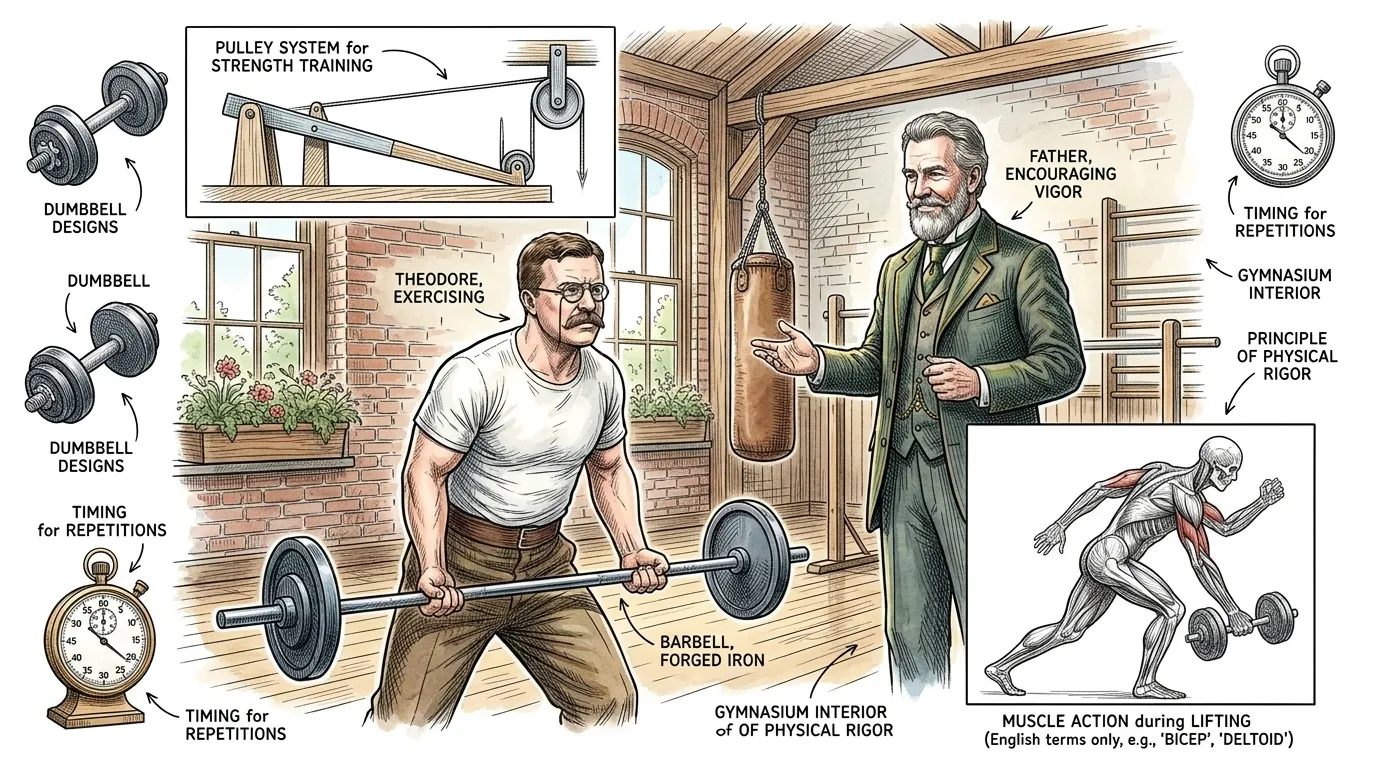
Born into a privileged New York family in 1858, young Theodore Roosevelt battled severe asthma and a frail constitution. Doctors advised a sedentary life, but his father, Theodore Roosevelt Sr., instilled a philosophy of self-reliance and physical rigor. In the family gymnasium, Roosevelt began a relentless regimen of exercise and self-improvement. He lifted weights, boxed, and hiked, transforming his delicate frame through sheer force of will, preparing himself for a 'strenuous life' he would later champion.
""Father taught me that I must make my own body, that I must develop every muscle and learn to hold my own against all comers.""
Page 3
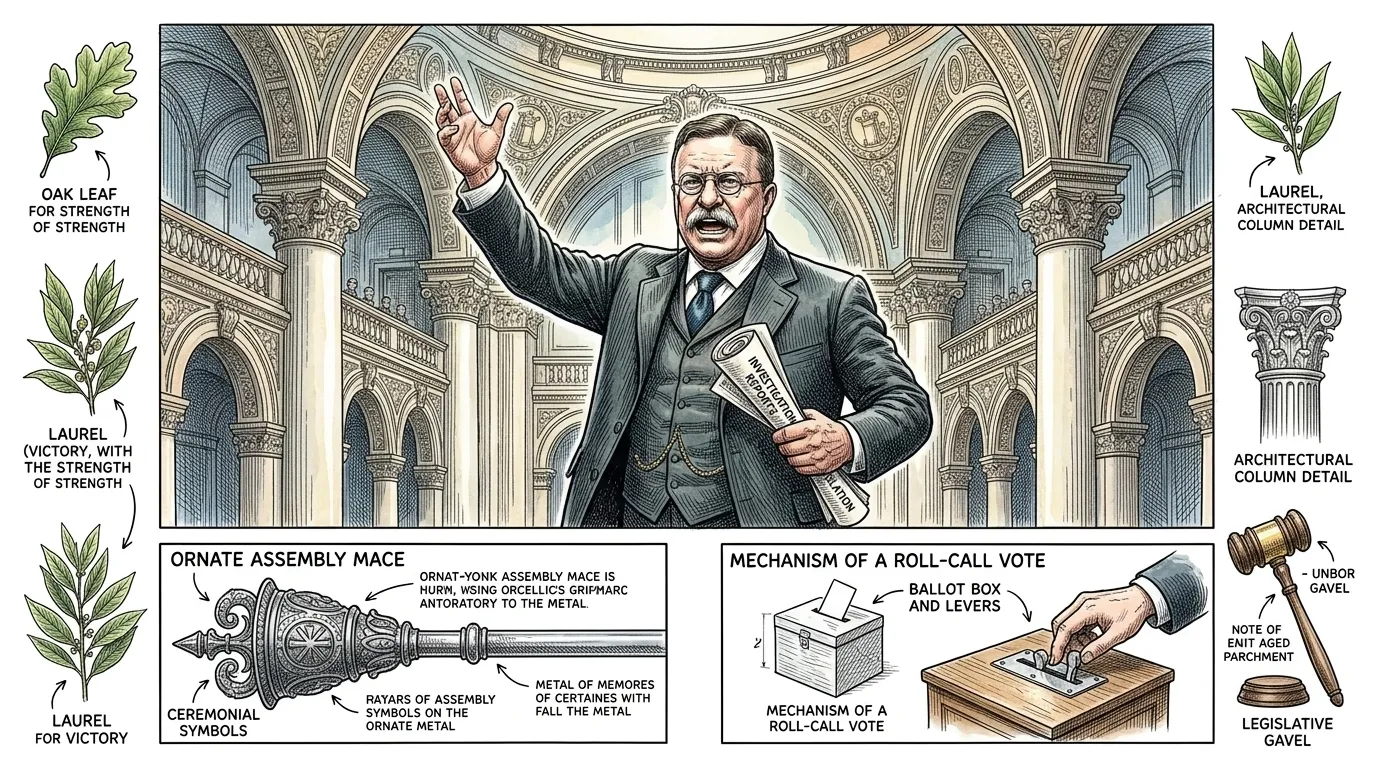
At 23, Theodore Roosevelt entered the New York State Assembly in Albany, 1882, a young Republican reformer in a landscape dominated by seasoned political machines. He immediately targeted corruption, particularly the influence of powerful corporate interests and 'boss' politics. He launched investigations into judges and state officials, his outspoken denunciations echoing through the chamber. This marked his decisive first entry into public life, fueled by an uncompromising moral conviction.
""The first duty of an American citizen, then, is that he shall work in politics.""
Page 4
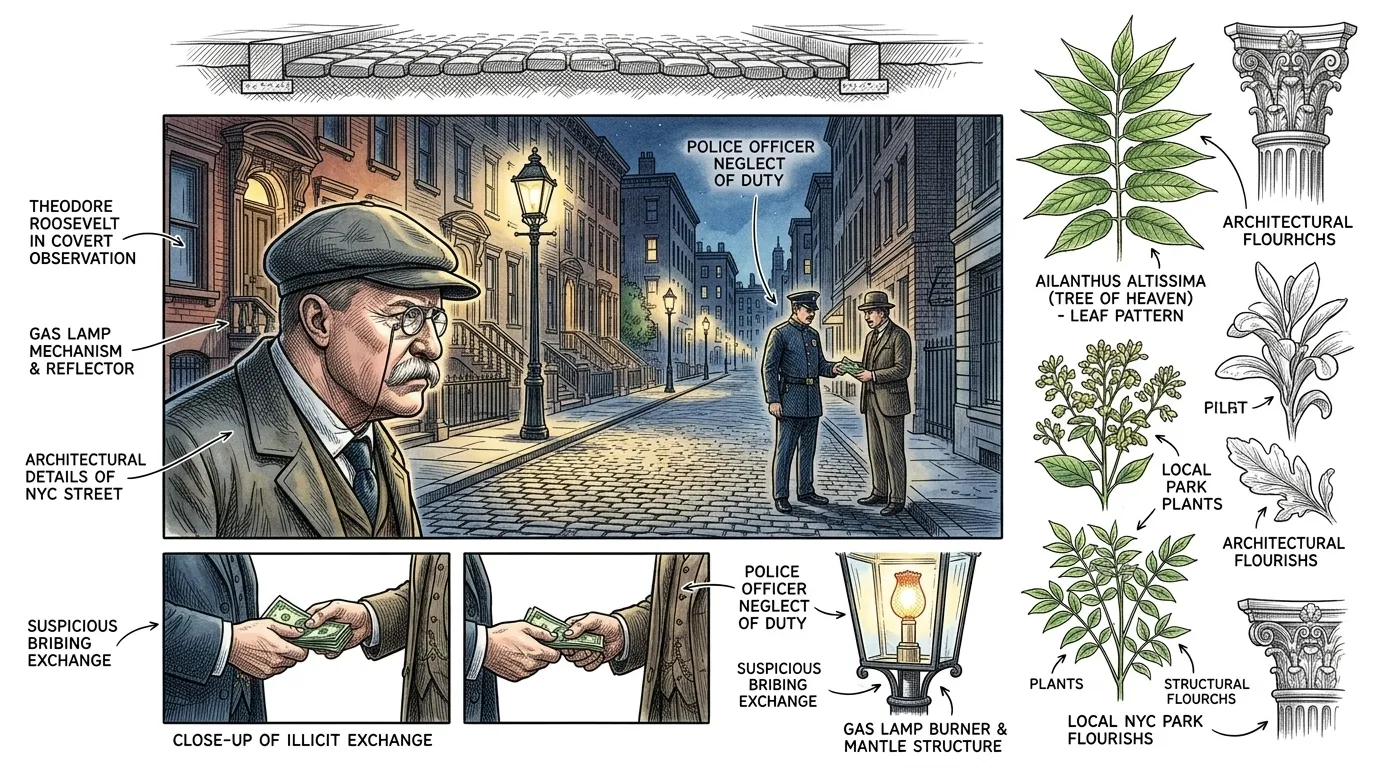
Appointed President of the New York City Police Board in 1895, Theodore Roosevelt embarked on a radical mission to clean up the notoriously corrupt force. He personally patrolled the city's streets at night, often in disguise, catching officers asleep on duty or accepting bribes. His direct, uncompromising methods shocked the department and galvanized public opinion, dramatically improving police efficiency and public trust. He demanded that the law be applied equally to all, without favor or fear.
""No man is above the law and no man is below it.""
Page 5
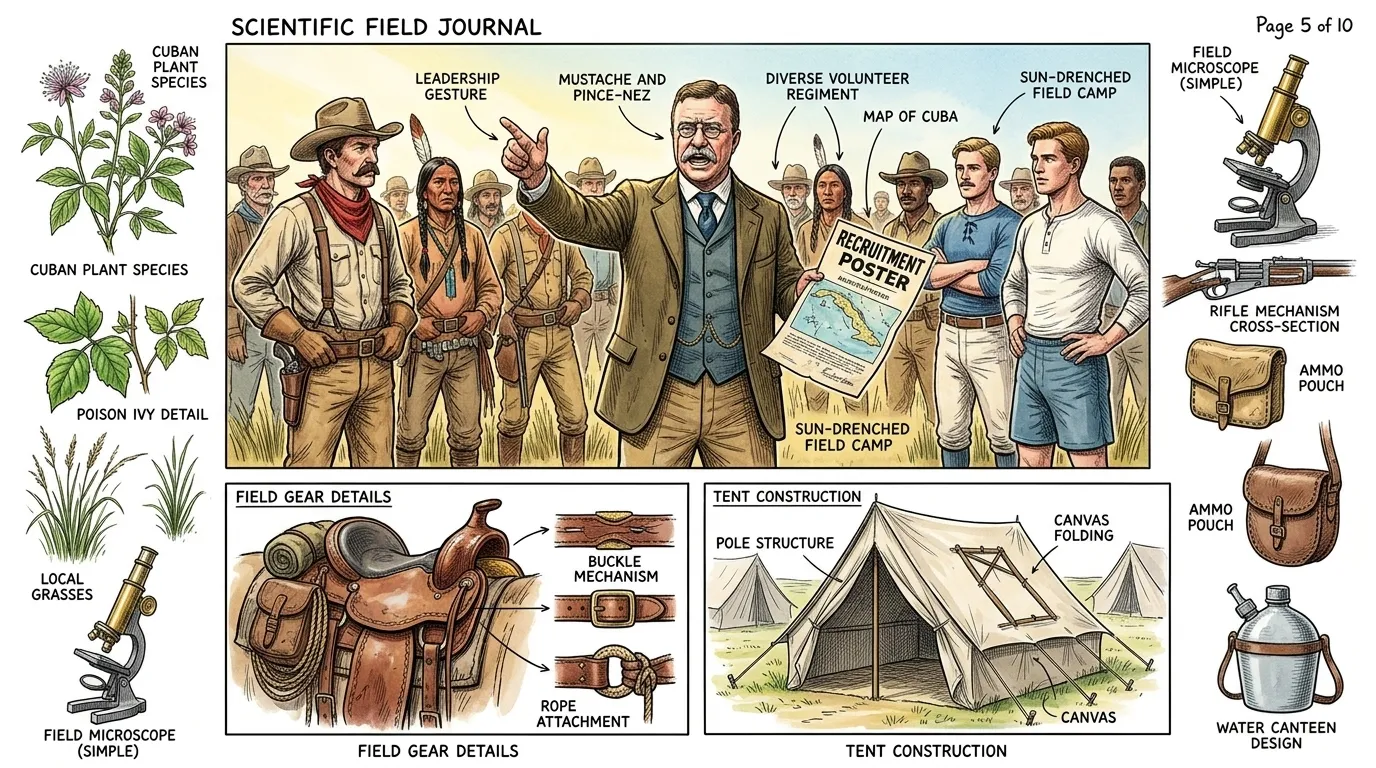
In 1897, Theodore Roosevelt became Assistant Secretary of the Navy, immediately advocating for a stronger, modern fleet. When the Spanish-American War erupted in 1898, he resigned his powerful desk job, declaring it his duty to fight. He organized the First U.S. Volunteer Cavalry, famously known as the 'Rough Riders,' attracting cowboys, Native Americans, and Ivy League athletes. His decisive action inspired a nation, demonstrating a unique readiness to lead by example on the battlefield.
""I preach to you, my countrymen, that our country calls not for the life of ease but for the life of strenuous endeavor.""
Page 6
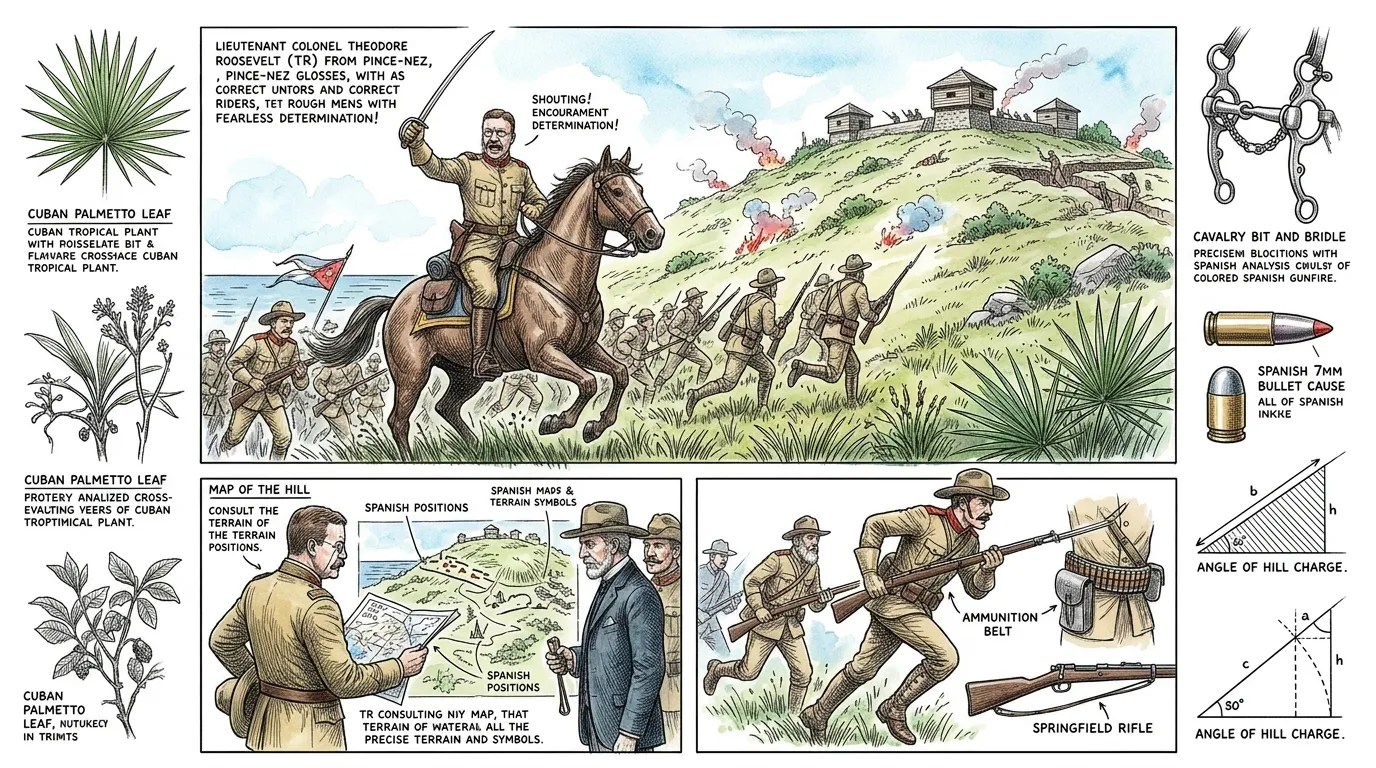
On July 1, 1898, Lieutenant Colonel Theodore Roosevelt led the Rough Riders in the pivotal charge up Kettle Hill, adjacent to San Juan Hill, in Cuba. Despite being on horseback while his men were on foot, he galloped ahead, constantly encouraging his troops under heavy Spanish fire. His personal bravery and leadership in the face of intense combat became a defining moment of the Spanish-American War, forging his image as a fearless warrior and inspiring an entire generation.
""It is not the critic who counts; not the man who points out how the strong man stumbles, or where the doer of deeds could have done them better. The credit belongs to the man who is actually in the arena.""
Page 7
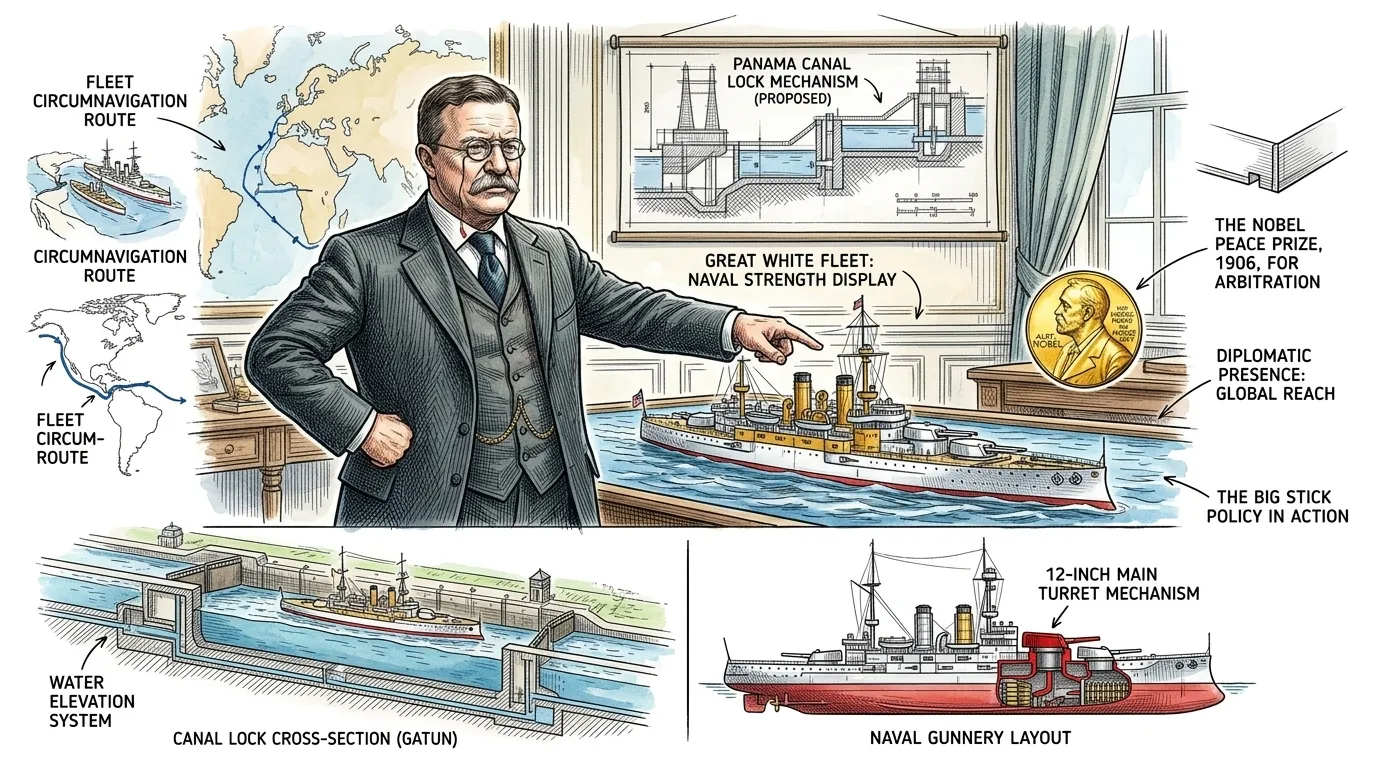
As President, Theodore Roosevelt pursued an assertive foreign policy, famously summarized by his adage: 'Speak softly and carry a big stick.' He modernized the U.S. Navy, sending the 'Great White Fleet' on a world tour from 1907-1909 to project American naval power globally. He brokered peace in the Russo-Japanese War, earning the Nobel Peace Prize, and oversaw the construction of the Panama Canal, transforming global trade and strategy. He firmly established the United States as a dominant force on the world stage.
""No people ever achieved anything worth achieving who did not have the virile virtues to back up their lofty ideals.""
Page 8
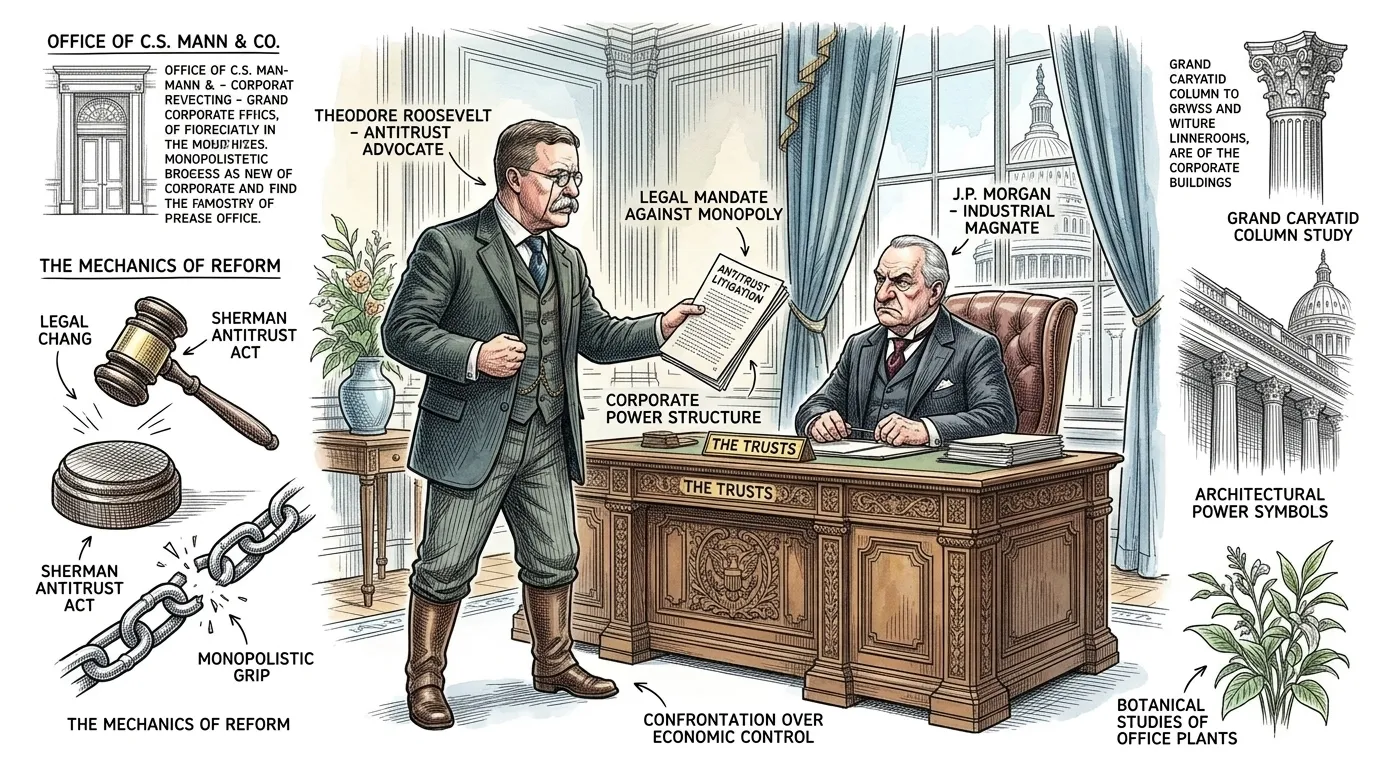
Theodore Roosevelt believed in a 'Square Deal' for all Americans, which meant curbing the unchecked power of industrial monopolies, known as 'trusts.' He initiated landmark antitrust lawsuits, famously breaking up J.P. Morgan's Northern Securities Company. He used the power of the federal government to regulate corporations, mediate labor disputes, and protect consumers from exploitation, fundamentally reshaping the relationship between business, labor, and government. His actions demonstrated that no entity, no matter how powerful, was above accountability.
""When I say I believe in a square deal, I mean not merely that I stand for fair play under the present rules of the game, but that I stand for having those rules changed so as to work for a more substantial equality of opportunity and of reward for the men and women who play the game.""
Page 9
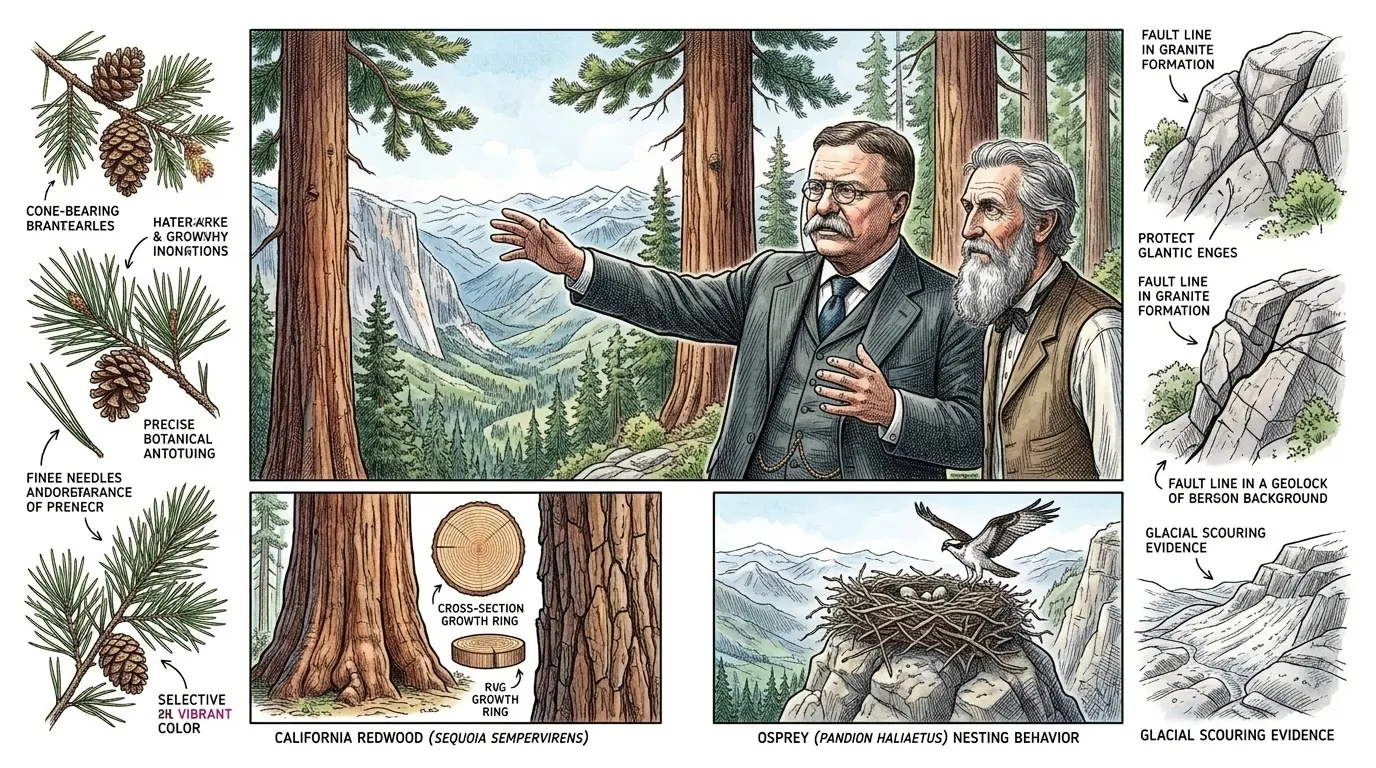
Beyond politics, Theodore Roosevelt was a passionate outdoorsman and pioneering conservationist. During his presidency, he used executive orders to protect vast swathes of American wilderness, creating 150 national forests, 51 federal bird reserves, 4 national game preserves, 5 national parks, and 18 national monuments, safeguarding approximately 230 million acres of land. His collaboration with figures like John Muir cemented his legacy as the father of American conservation, ensuring natural treasures for future generations.
""Here is your country. Cherish these natural wonders, cherish the natural resources, cherish the history and romance as a sacred heritage.""
Page 10
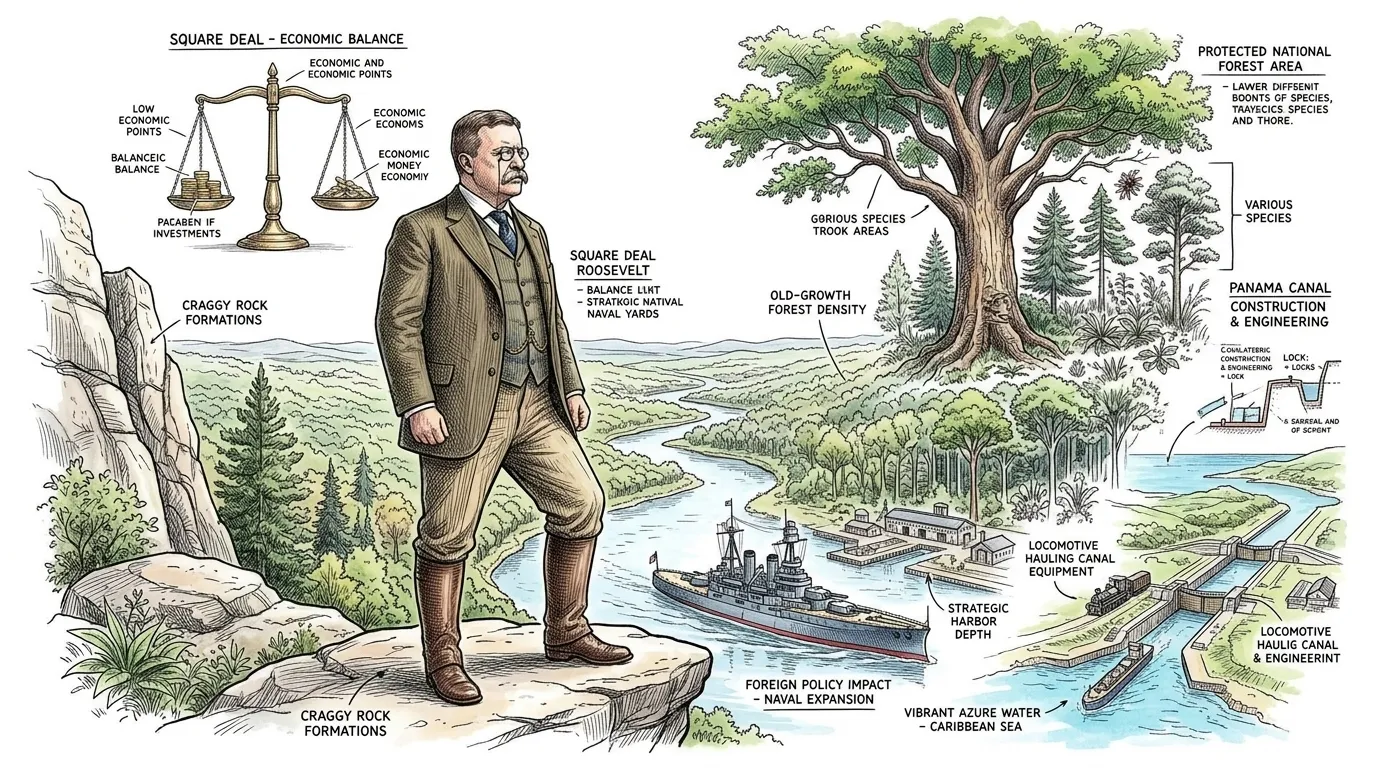
Theodore Roosevelt left an indelible mark on America. He expanded presidential power, championed environmental protection, confronted corporate excess, and redefined American foreign policy, all while embodying a spirit of relentless action and moral conviction. His vision of a 'Square Deal' and a 'strenuous life' continues to resonate, inspiring generations to engage actively in public service and to strive for both personal betterment and societal justice. His legacy is not merely one of policy, but of an indomitable character that shaped the course of a nation.
About this story
- Location: Global
- Audience: general readers
Questions and answers
Read Wonder People on your phone
Wonder People is available on Android. Get Wonder People on Google Play.