Virginia Woolf
Virginia Woolf — an illustrated biography story, set in Global. 10 illustrated pages, free to read on Wonder People.
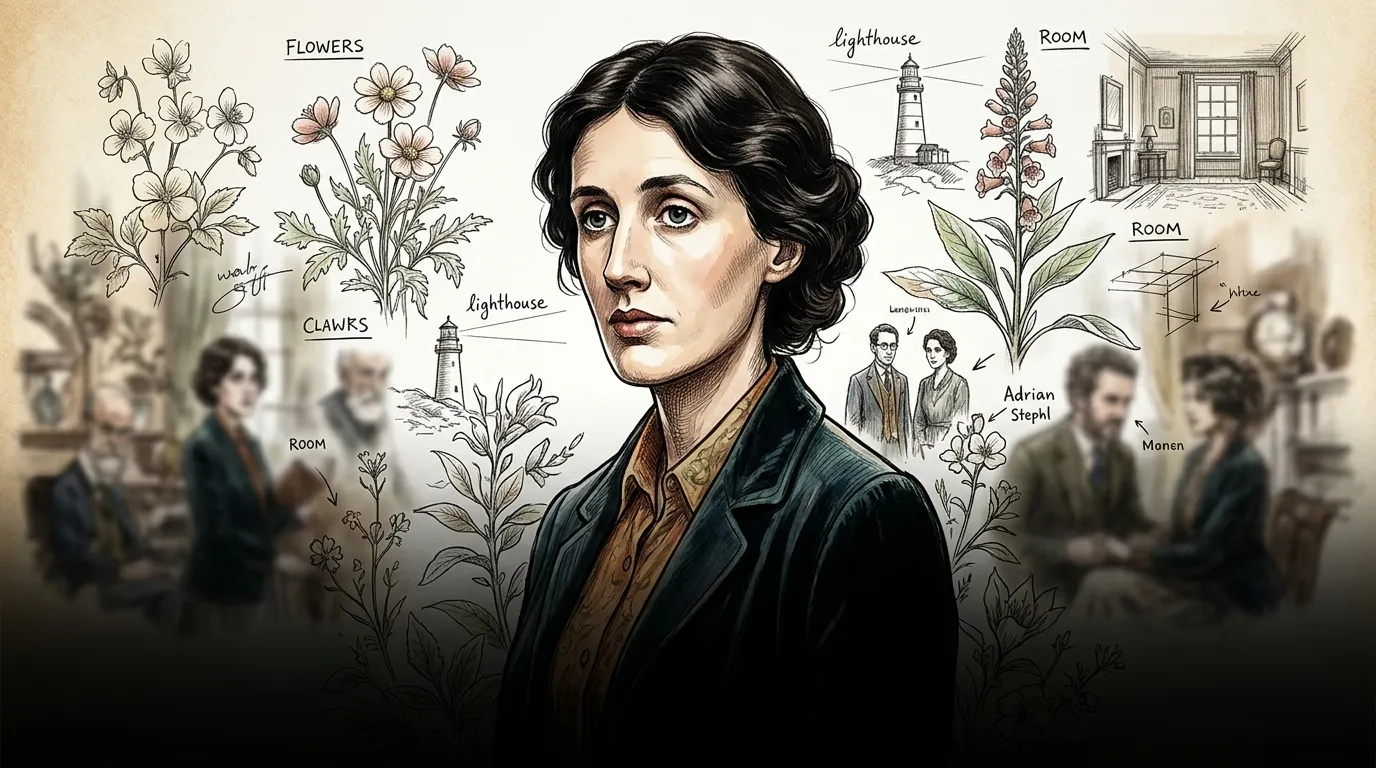
Page 1
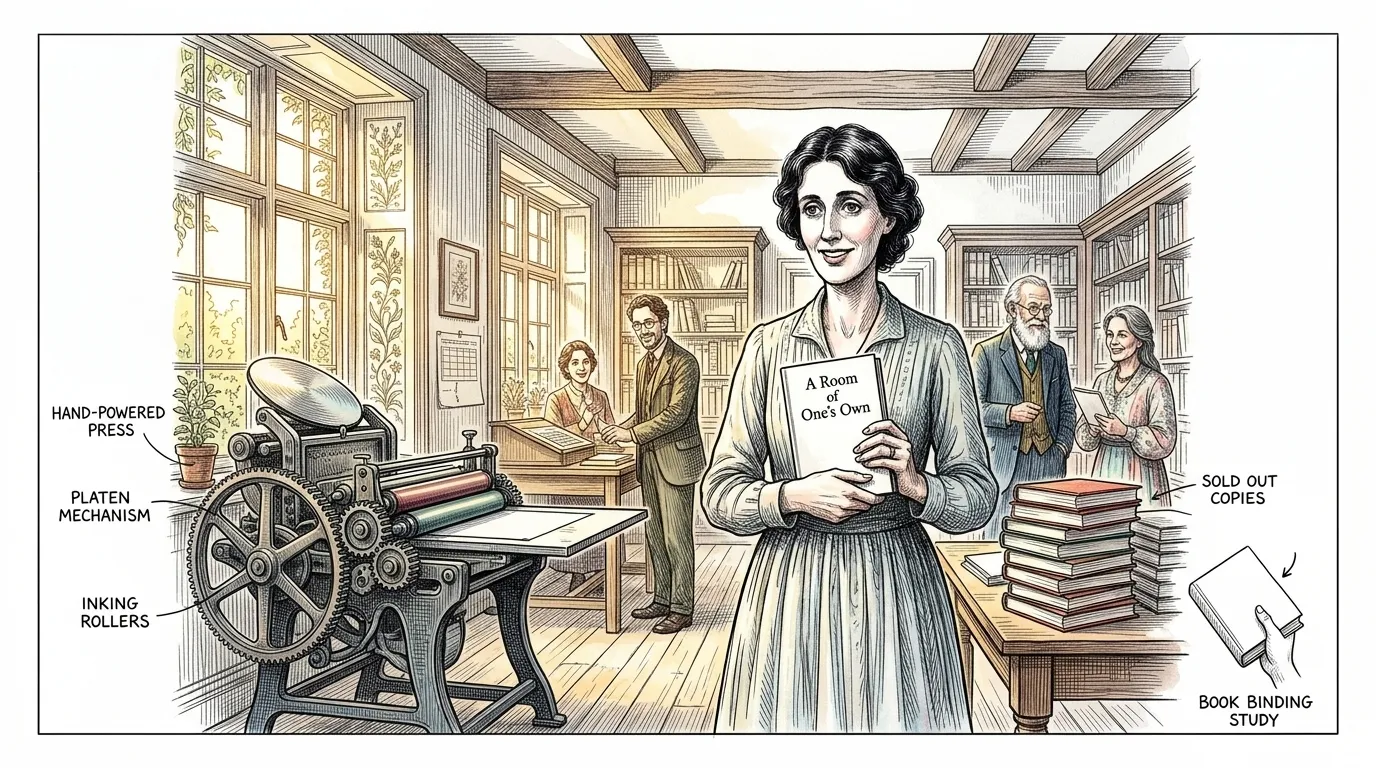
In October 1929, Virginia Woolf released A Room of One's Own into a world grappling with women's changing roles. From the small, independent Hogarth Press in Richmond, London, this slender volume of non-fiction ignited an immediate, ferocious debate. Its central argument—that 'a woman must have money and a room of her own if she is to write fiction'—challenged centuries of patriarchal literary and societal structures. The book sold out in a single week, proving its immediate, undeniable resonance and cementing Woolf's position as an intellectual force impossible to ignore.
Page 2
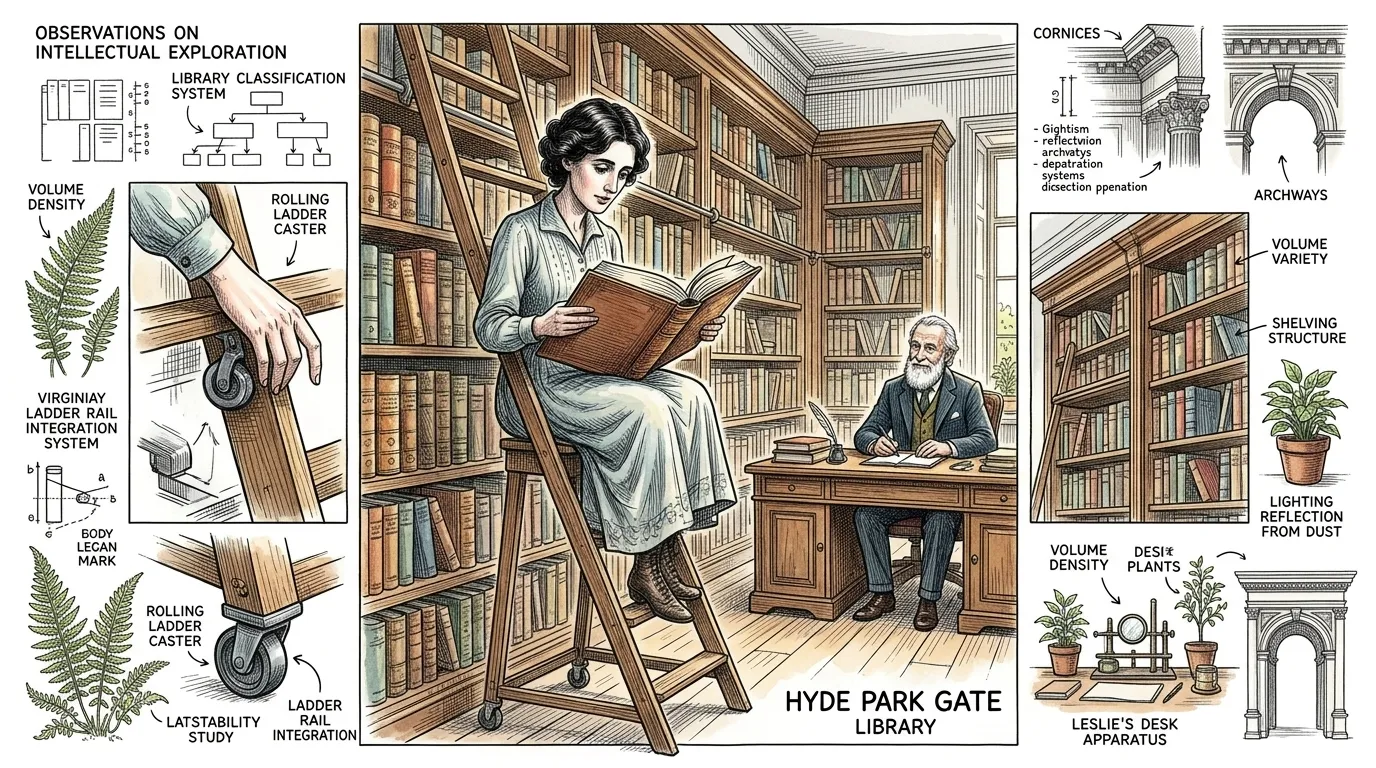
Virginia Stephen, born in 1882 in South Kensington, London, grew up within a formidable intellectual household, daughter of the eminent author Leslie Stephen. Unlike her brothers, she was denied formal university education, instead immersing herself in her father's vast library at Hyde Park Gate. This self-directed, unfettered access to literature and history profoundly shaped her intellect, fostering a radical independence of thought. Within those walls, the foundations of her unique literary voice were forged, a voice that would question every convention she encountered.
Page 3
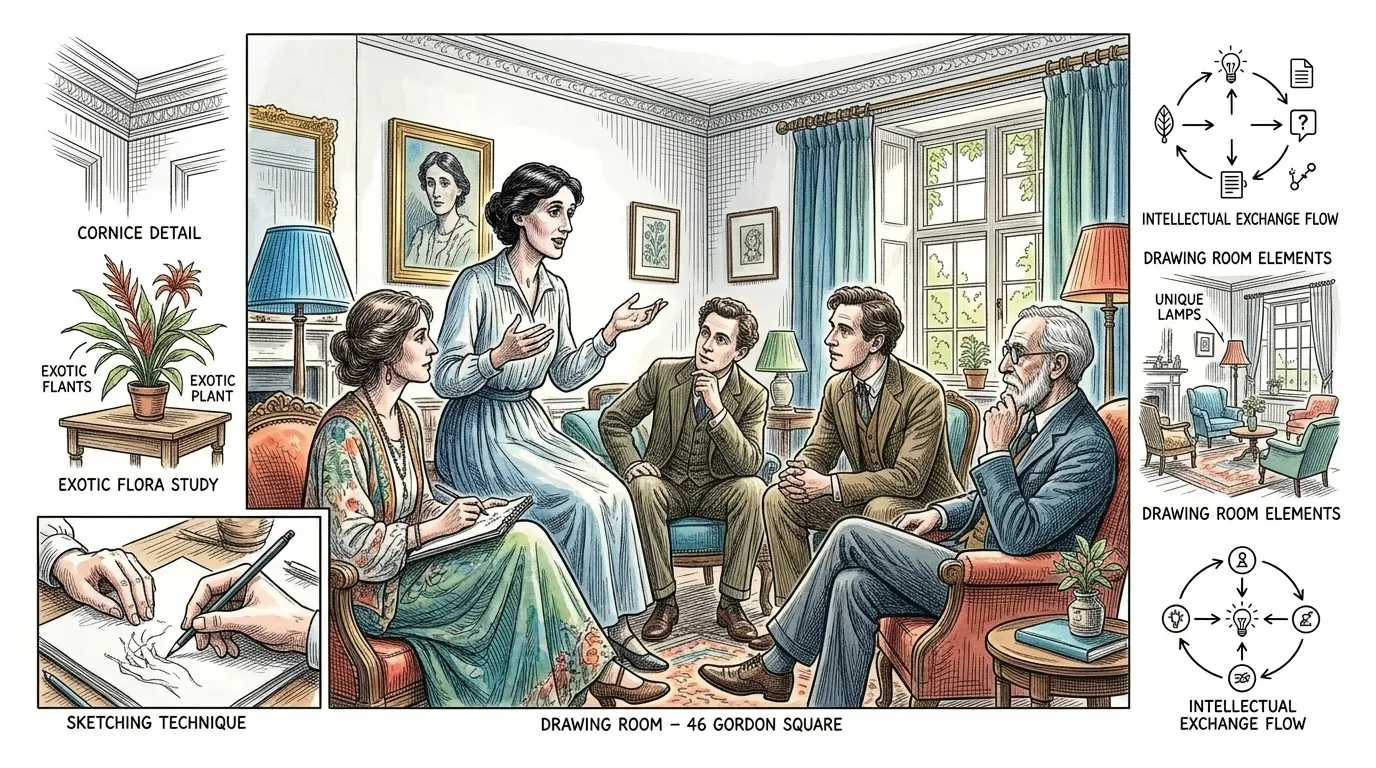
In the wake of her father's death in 1904, Virginia, alongside her siblings Vanessa, Thoby, and Adrian, moved to 46 Gordon Square in Bloomsbury. Here, they gathered a circle of friends, intellectuals, and artists who rejected Victorian prudery and class rigidity, forming the nascent Bloomsbury Group. These informal Thursday evening gatherings became a crucible for radical ideas, fervent debate, and unconventional living. Within this vibrant, challenging environment, Virginia Stephen refined her critical insights, emboldened her artistic vision, and began to articulate the rebellious spirit that would define her work.
Page 4
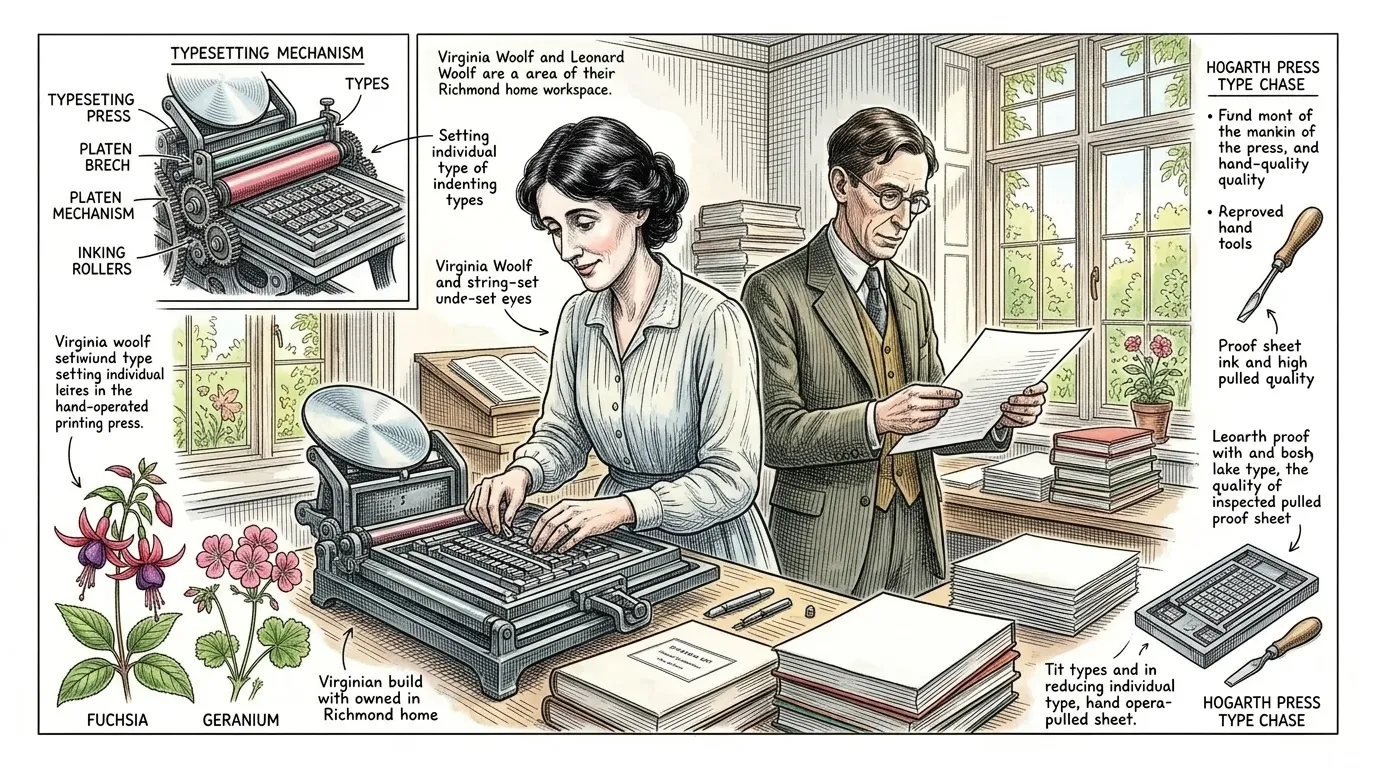
In 1917, Virginia married Leonard Woolf, forming a partnership that extended far beyond matrimony. Driven by a shared vision for experimental literature and a desire for creative independence, they acquired a small printing press and established the Hogarth Press in their Richmond home. This bold venture allowed them to publish their own groundbreaking works and introduce new, unconventional voices to the English-speaking world, free from commercial constraints. This act of self-publishing was a decisive move, granting Virginia the autonomy to pursue her radical literary experiments without compromise.
Page 5
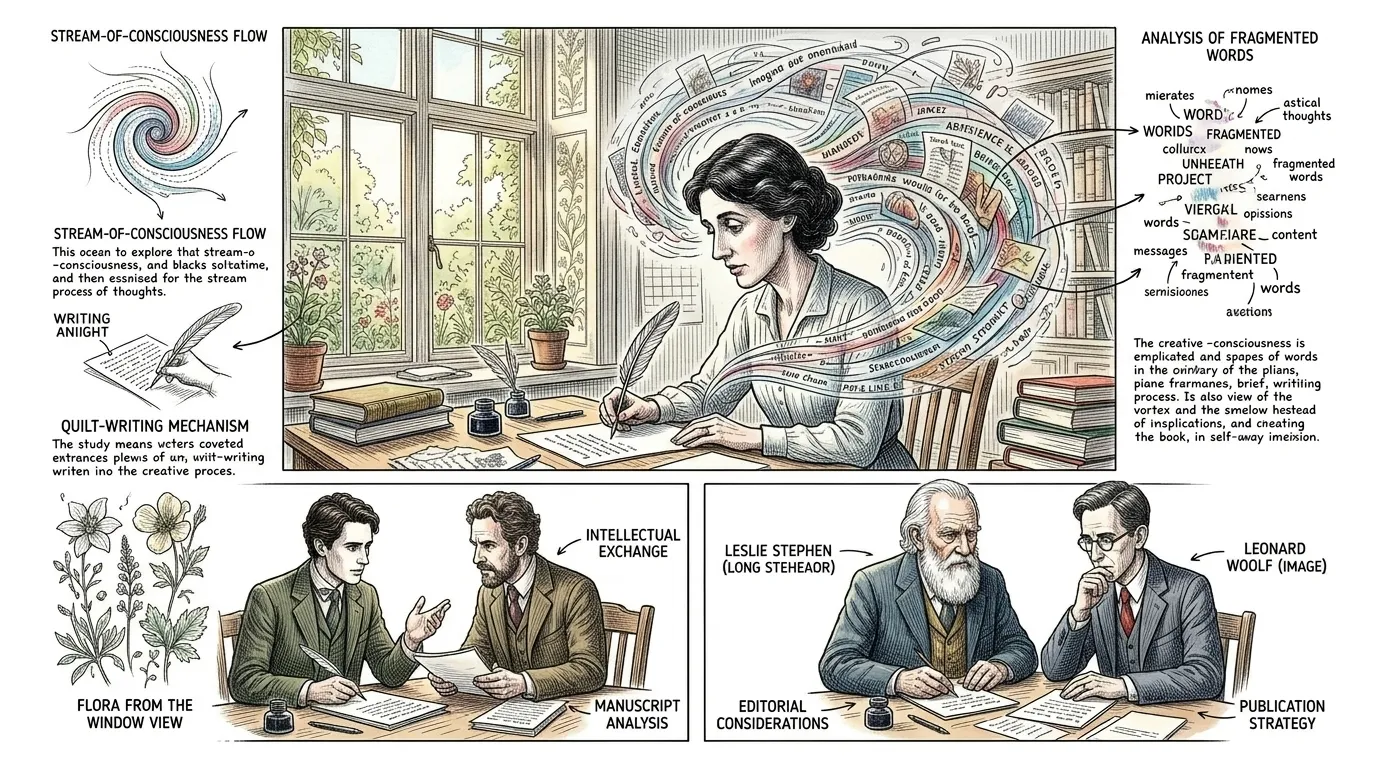
With the establishment of Hogarth Press, Virginia Woolf found the freedom to fully embrace her unique literary vision. Her novels, such as Jacob's Room (1922) and Mrs Dalloway (1925), abandoned traditional plot structures for a profound exploration of interiority, using stream-of-consciousness to capture the flux of human thought. This radical departure from Victorian realism marked a pivotal moment in modernist literature. Her characters' inner lives, their fragmented perceptions, and their subconscious currents became the new landscape of the novel, disrupting expectations and challenging readers to experience fiction anew.
Page 6
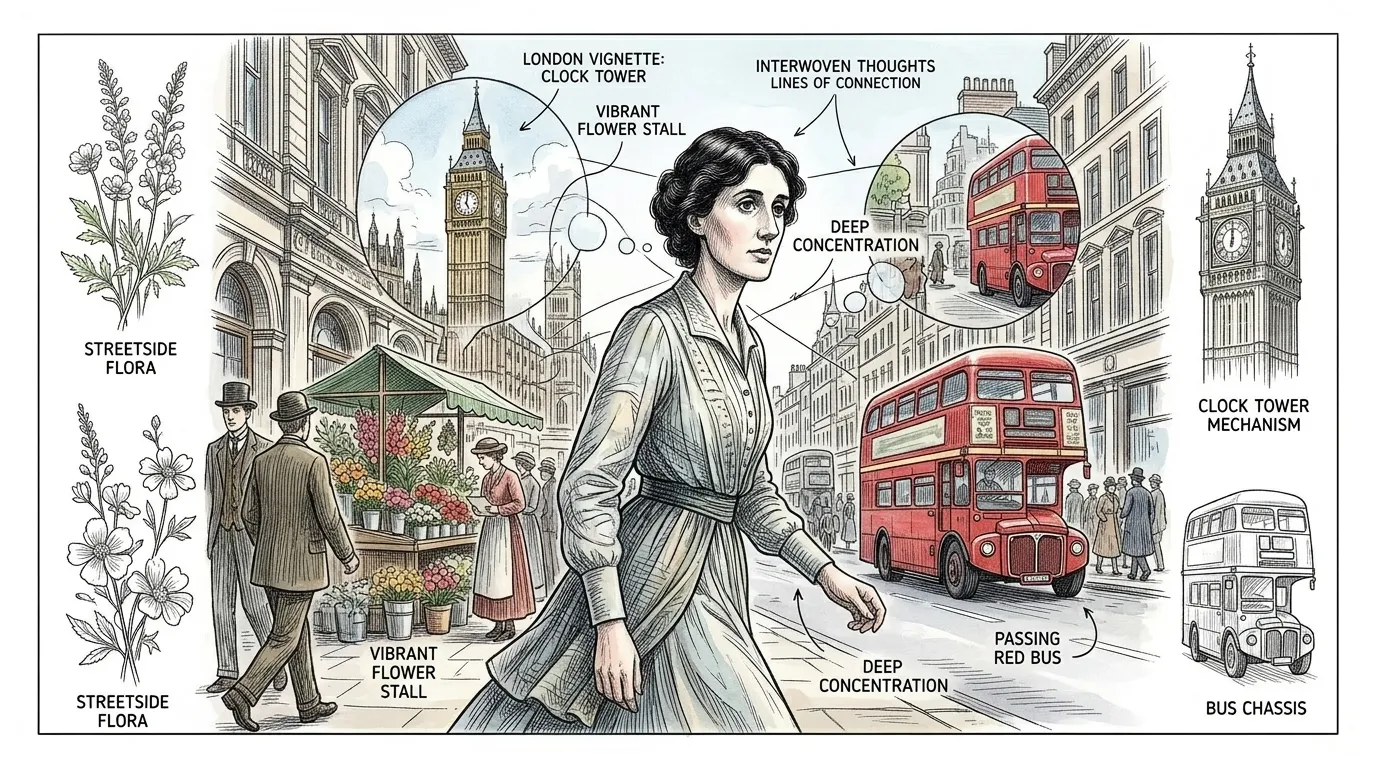
The path to Mrs Dalloway (1925) was a period of profound artistic concentration for Virginia Woolf. She wrestled with form, aiming to capture the essence of a single June day in London through the interwoven consciousnesses of her characters. This rigorous process demanded a new kind of narrative architecture, one that dissolved conventional boundaries of time and perspective. Her immersion in this monumental task moved her closer to perfecting the stream-of-consciousness technique, creating a novel that offered an unprecedented psychological landscape, anticipating the defining achievements that would follow.
Page 7
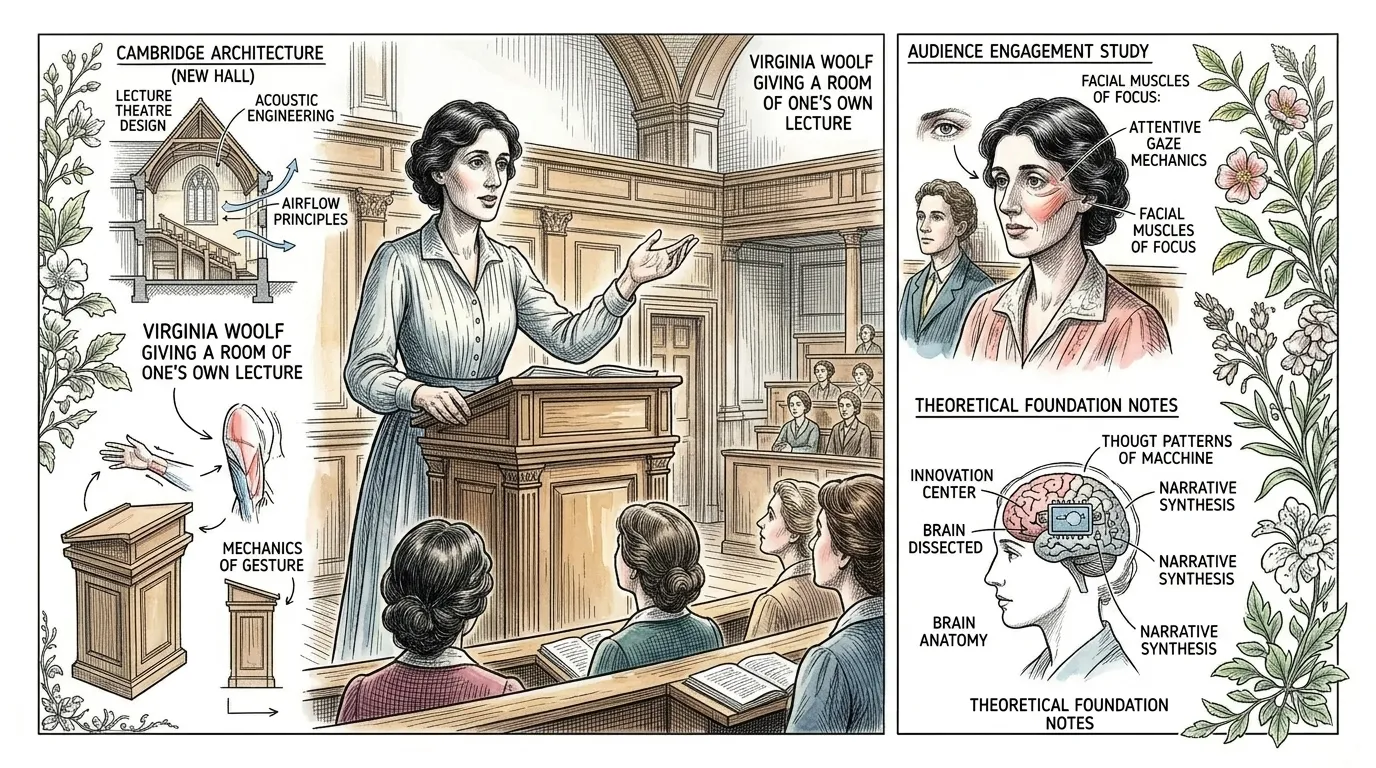
In 1928, Virginia Woolf delivered two pivotal lectures, 'Women and Fiction,' to female students at Newnham and Girton Colleges, Cambridge. These addresses directly challenged the historical suppression of women's creative potential, articulating the material and social barriers they faced. She spoke with a clear, authoritative voice, dissecting the systemic disadvantages that prevented women from achieving literary greatness. These lectures, precursors to A Room of One's Own, galvanized her audience and laid bare the urgent need for intellectual and financial autonomy for women writers, setting the stage for her most influential non-fiction work.
Page 8
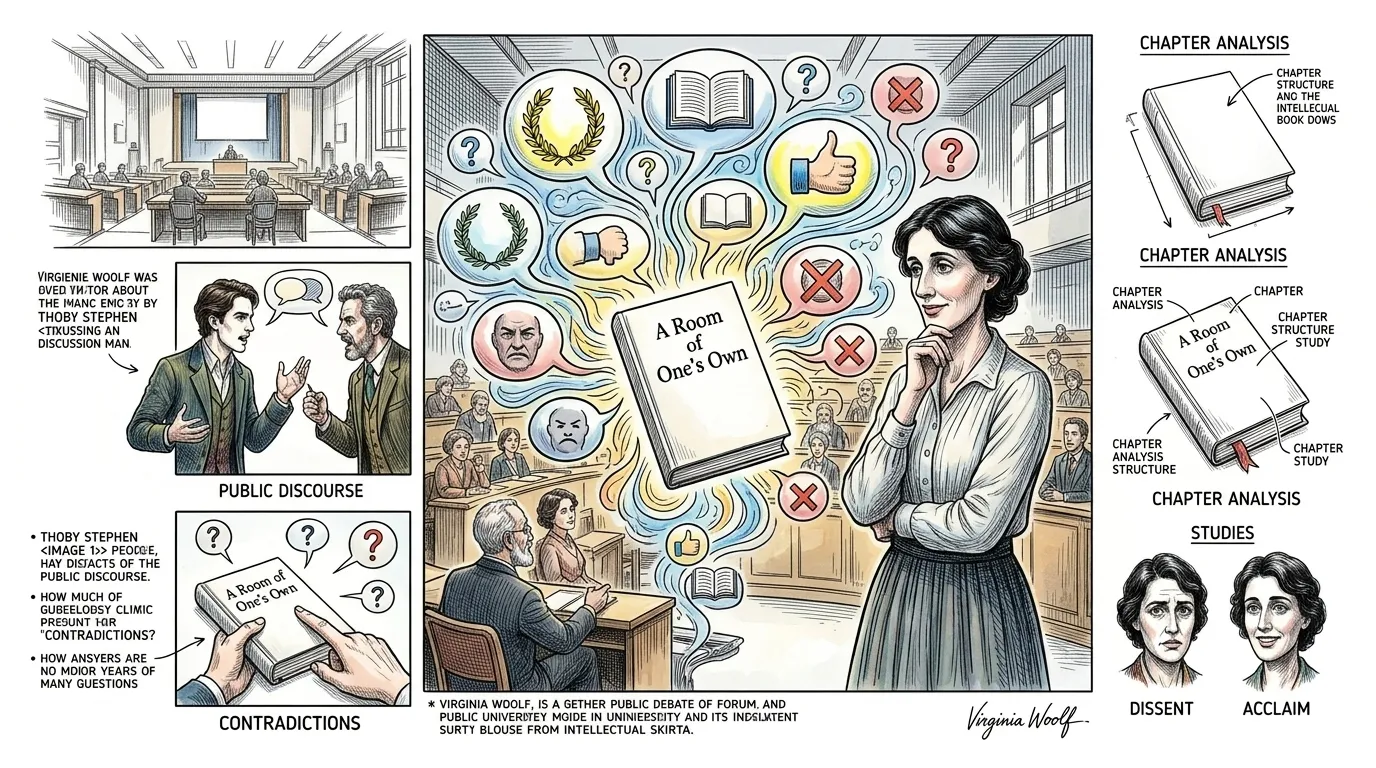
The publication of A Room of One's Own in 1929 sent ripples through society, generating immediate and often heated discussion across Britain and beyond. Critics lauded its incisive analysis, while others dismissed its radical feminist stance. This public discourse validated Woolf's arguments, proving the deeply entrenched nature of the issues she addressed. Her book became a manifesto for women's intellectual and creative liberation, shaping feminist thought for generations. The world was now reacting to her, not the other way around, as her ideas fundamentally reshaped the cultural conversation.
Page 9
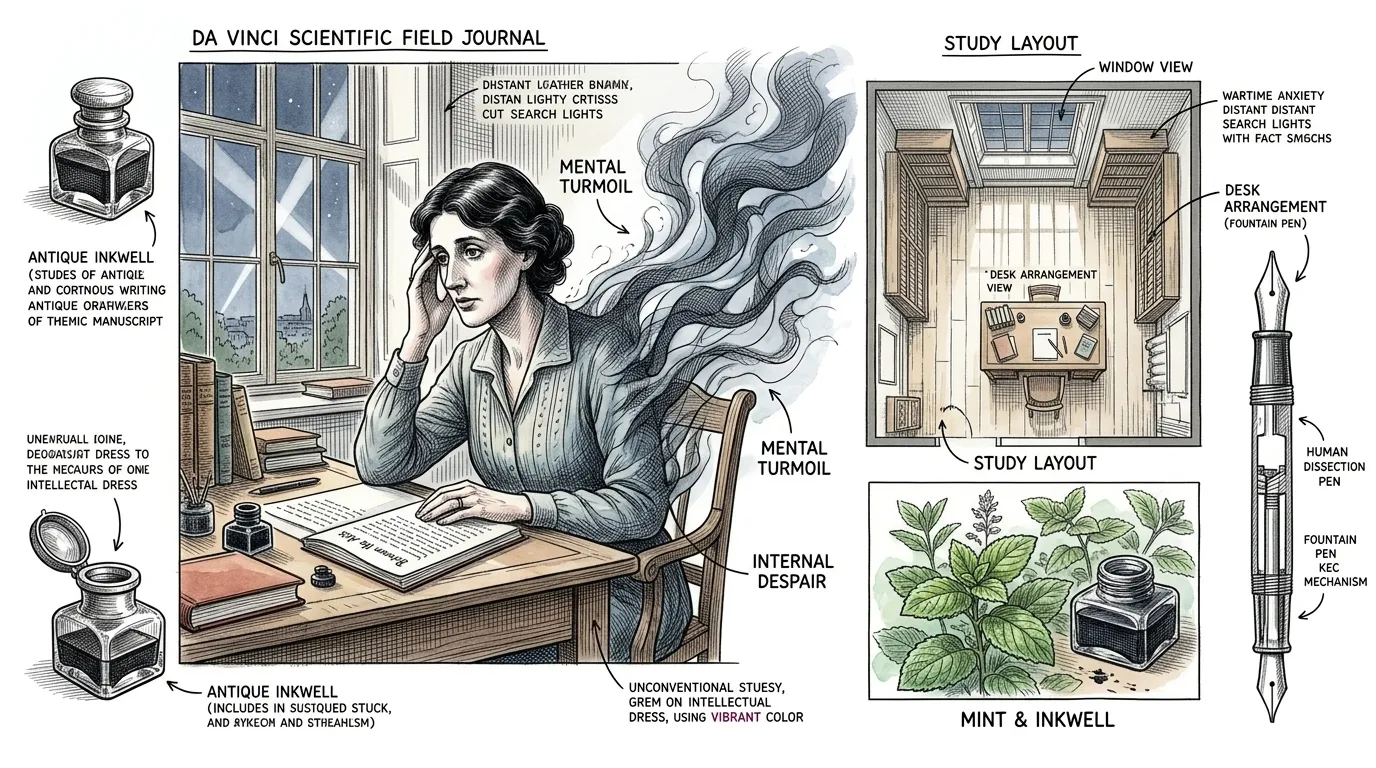
Despite monumental literary achievements, Virginia Woolf grappled with recurrent, debilitating bouts of mental illness throughout her life. The intense creative energy that fueled her groundbreaking novels often precipitated periods of profound despair and withdrawal. Even as she proofread her final novel, Between the Acts, in early 1941 amidst the anxieties of World War II, the strain became unbearable. Her life, a testament to enduring artistic genius, was tragically cut short by her own hand, leaving behind a complex legacy of triumph over artistic constraints but ultimate succumbing to personal demons.
Page 10
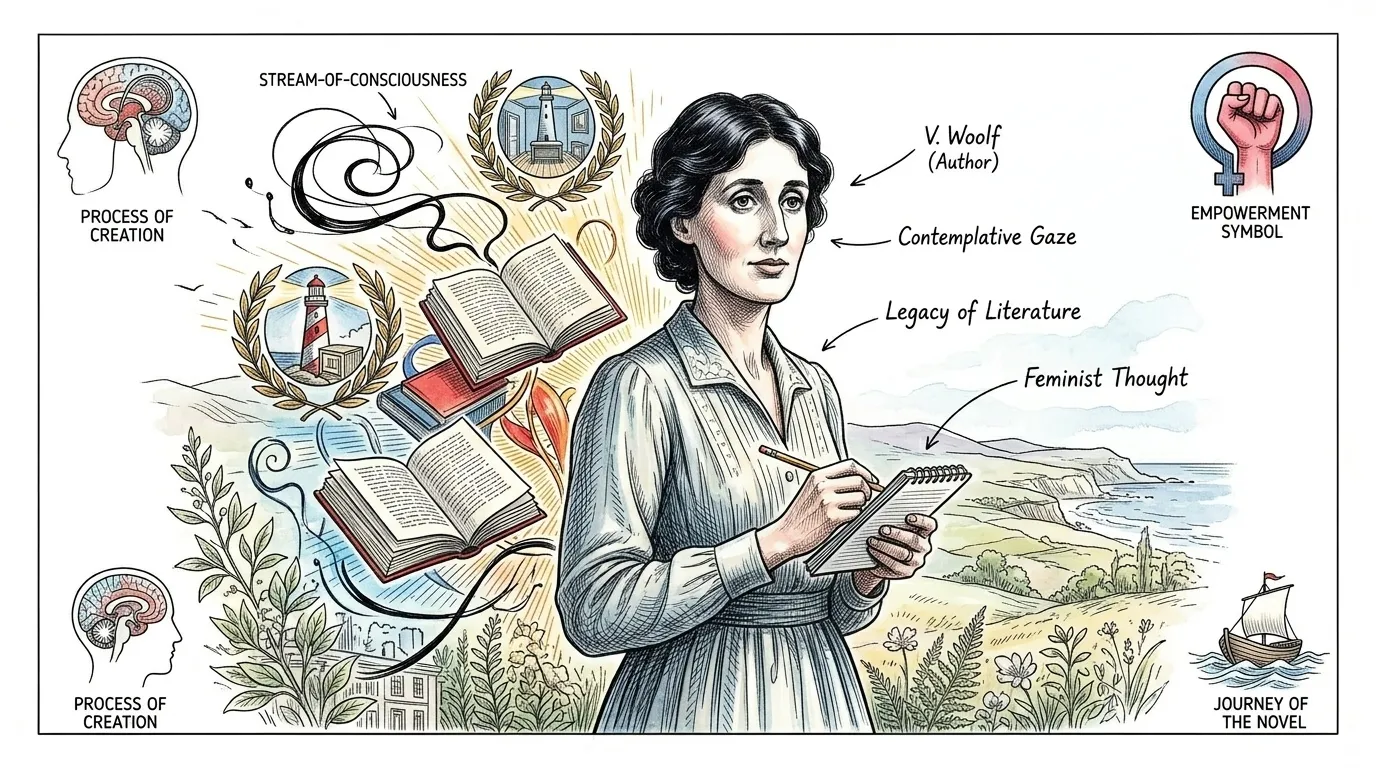
Virginia Woolf's voice, though silenced in 1941, continues to resonate with unparalleled force. Her literary innovations, particularly the stream-of-consciousness technique, redefined the novel for the 20th century. Her fierce advocacy for women's rights and intellectual freedom remains a cornerstone of feminist thought, inspiring generations. She confronted the complexities of identity, gender, and societal structures with unmatched acuity and poetic brilliance. Her legacy is not merely in the books she wrote, but in the enduring way she taught the world to look inward and challenge outward.
About this story
- Location: Global
- Audience: general readers
Questions and answers
Read Wonder People on your phone
Wonder People is available on Android. Get Wonder People on Google Play.