Willis Carrier
Willis Carrier — an illustrated biography story, set in Global. 10 illustrated pages, free to read on Wonder People.
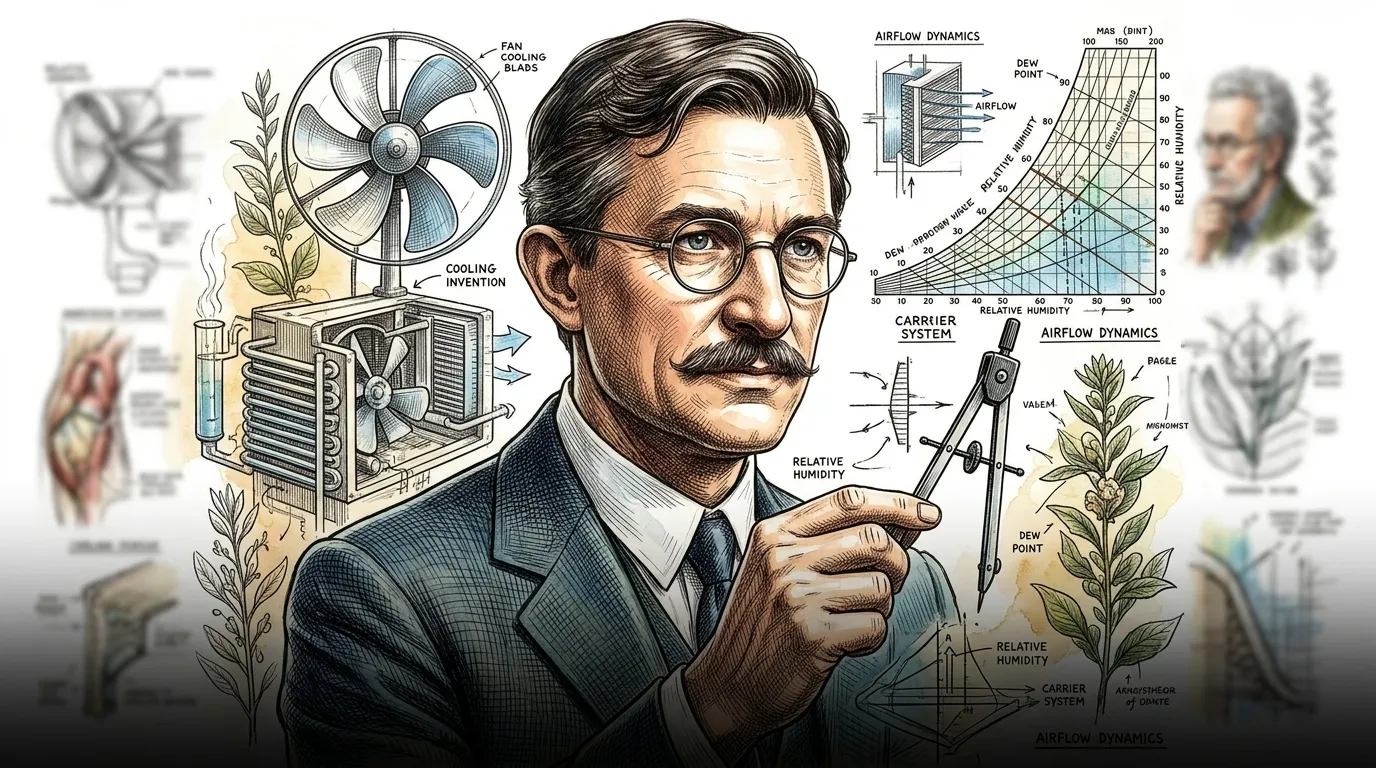
Page 1
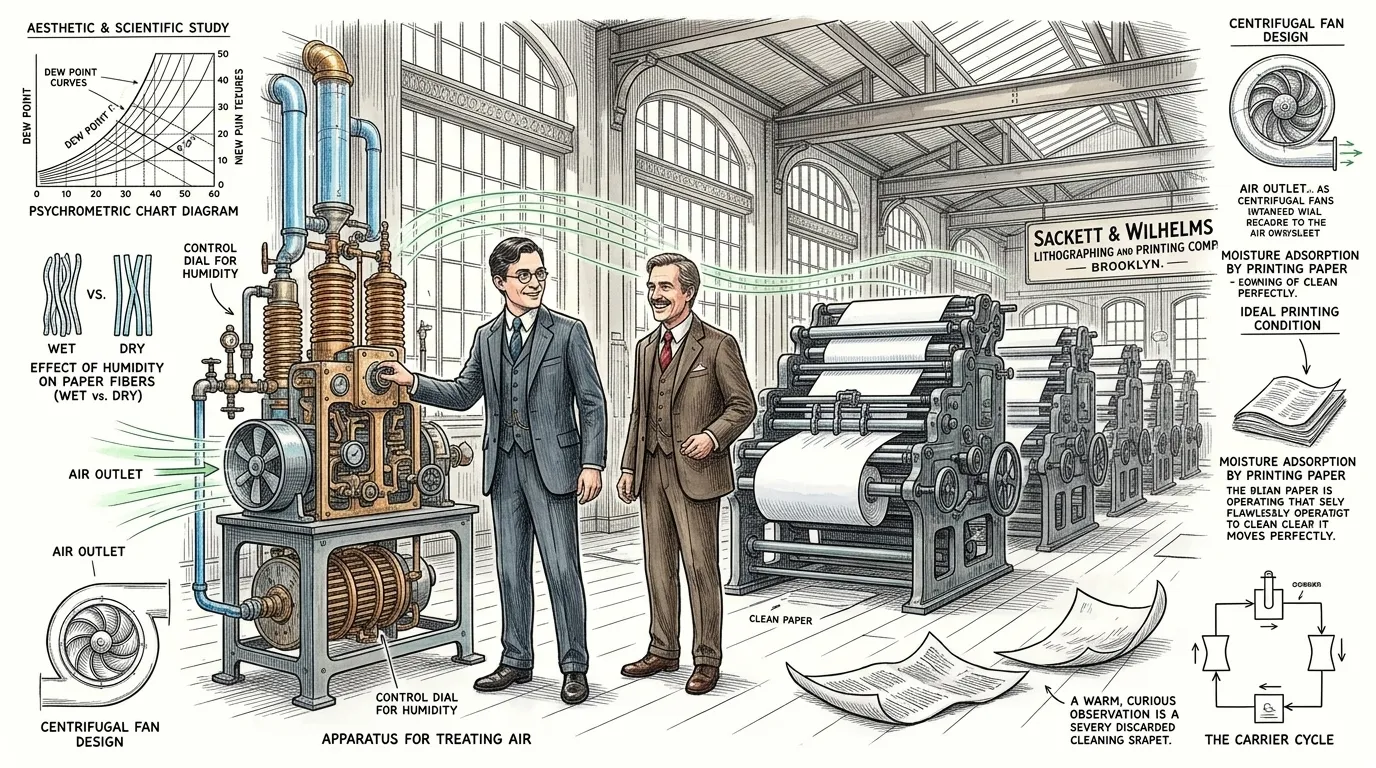
In the sweltering summer of 1902, within the massive Brooklyn plant of Sackett & Wilhelms Lithographing and Printing Company, a young engineer named Willis Carrier stood amidst his pioneering creation. The air in the pressroom, once thick with humidity that warped paper and smeared ink, was now stable, precise. Walter G. Wilhelms, the plant manager, observed the presses operating flawlessly, a stark contrast to the previous stoppages. Carrier's 'Apparatus for Treating Air' had not only stabilized the paper stock, eliminating an 85% spoilage rate, but had quietly ushered in an era where indoor climate would no longer be dictated by nature, but controlled by human ingenuity. This moment marked the precise birth of modern air conditioning, a scientific and industrial revolution unseen before.
Biographical Fact: Willis Carrier's invention at Sackett & Wilhelms Lithographing and Printing Company in Brooklyn, New York, 1902, solved a critical humidity problem, preventing paper spoilage and inaugurating the modern era of climate control for industrial processes.
Page 2
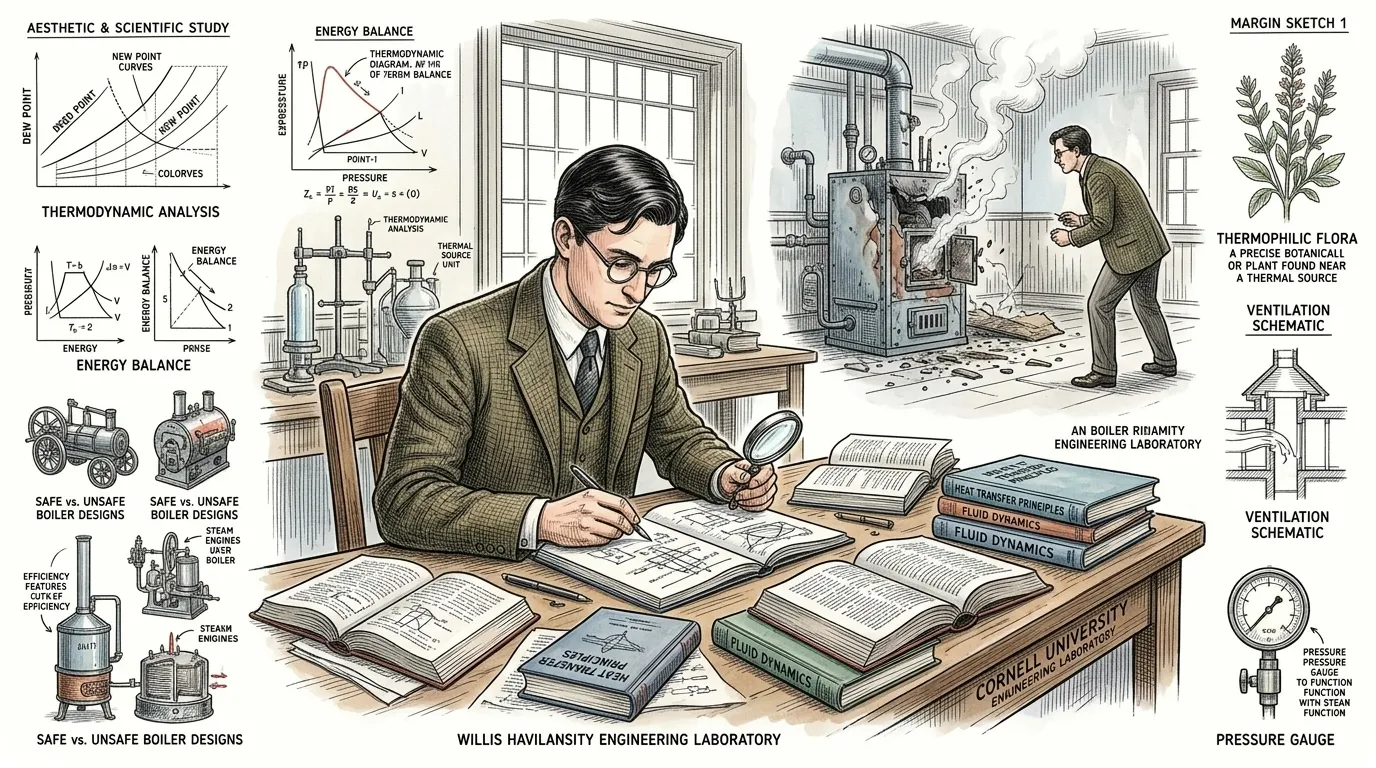
Years earlier, at Cornell University, Willis Carrier immersed himself in mechanical and electrical engineering. The theoretical principles of heat transfer, fluid dynamics, and thermodynamics captivated him. He was not merely absorbing knowledge; he was observing, questioning, and connecting disparate concepts. A specific incident involving an explosion in a laboratory boiler room during his student days further solidified his understanding of the raw power and volatile nature of steam, reinforcing his drive to master and control thermal forces. This foundational period forged the analytical mind that would later unlock the secrets of atmospheric control.
Biographical Fact: Carrier graduated from Cornell University in 1901 with a degree in mechanical engineering, laying the groundwork for his groundbreaking work in psychrometrics.
Page 3
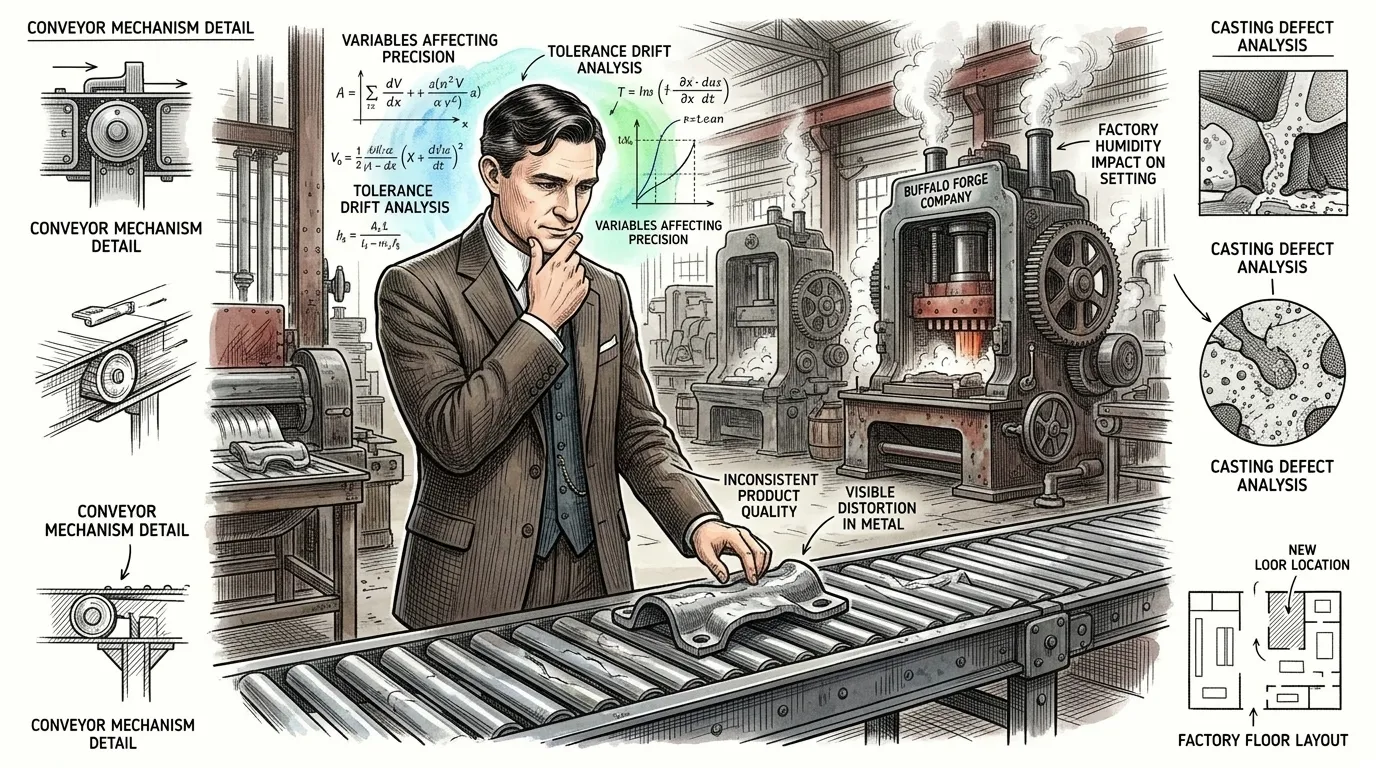
Upon graduation in 1901, Willis Carrier joined the Buffalo Forge Company, a manufacturer of heating and ventilation systems. Here, he was immediately confronted with the practical, often chaotic, realities of industrial environments. The company tasked him with solving real-world production problems, pushing him beyond theoretical models. It was this direct engagement with industrial limitations, such as inconsistent product quality due to uncontrolled factory atmospheres, that sharpened his focus on the critical need for precise environmental control, a need far beyond simple heating or cooling. He saw not just a problem, but a universal requirement.
Biographical Fact: Carrier's early work at Buffalo Forge Company exposed him to industrial challenges that demanded innovative solutions for atmospheric control, moving beyond simple ventilation.
Page 4
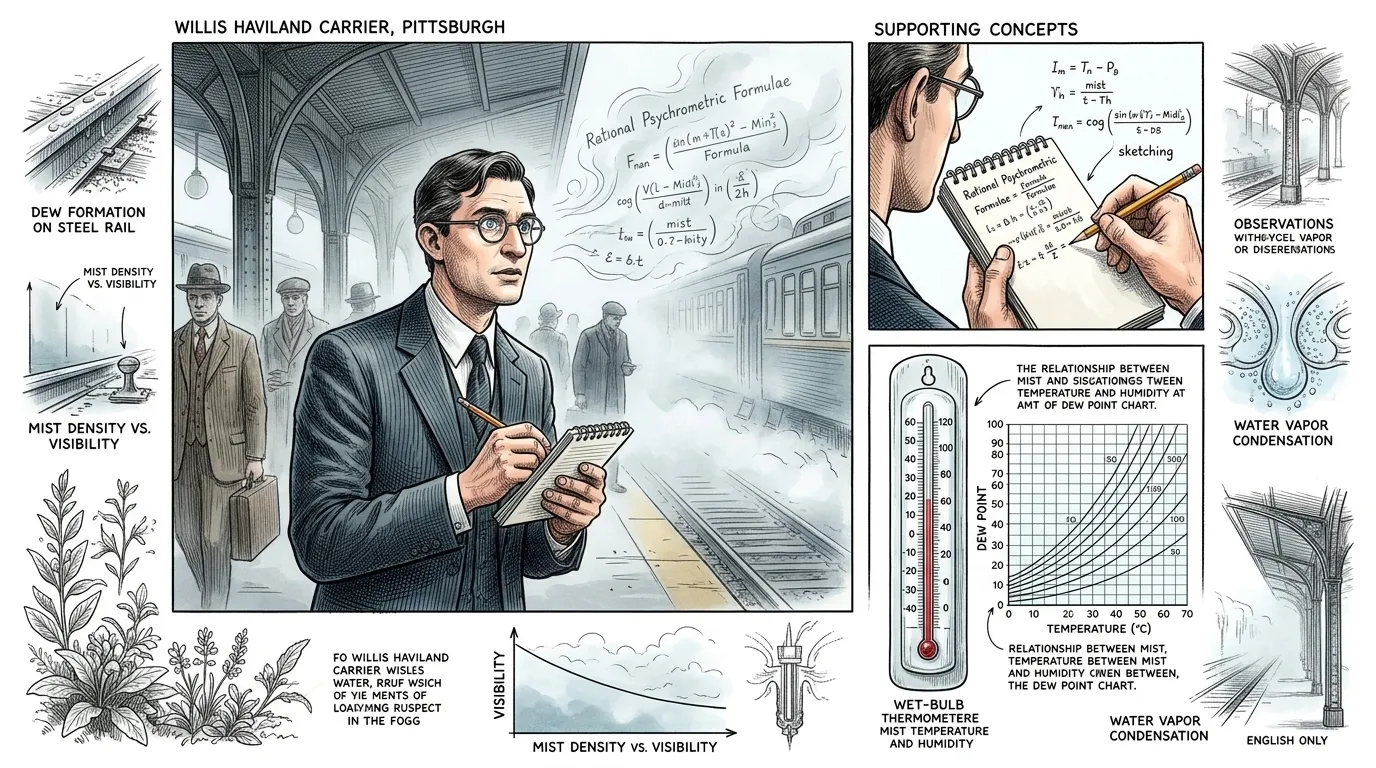
On a foggy Pittsburgh train platform in 1903, a moment of profound clarity struck Willis Carrier. Observing the mist, he suddenly conceived the relationship between temperature, humidity, and dew point. This revelation catalyzed years of intense study and experimentation, culminating in 1911 with the development of the 'Rational Psychrometric Formulae'—a set of mathematical equations that precisely defined the properties of moist air. This was no mere incremental improvement; it was the scientific framework that allowed for the accurate design of air conditioning systems, transforming intuitive guesswork into predictable engineering.
Biographical Fact: Carrier's 'Rational Psychrometric Formulae,' presented to the American Society of Mechanical Engineers in 1911, provided the scientific basis for all future air conditioning design.
Page 5
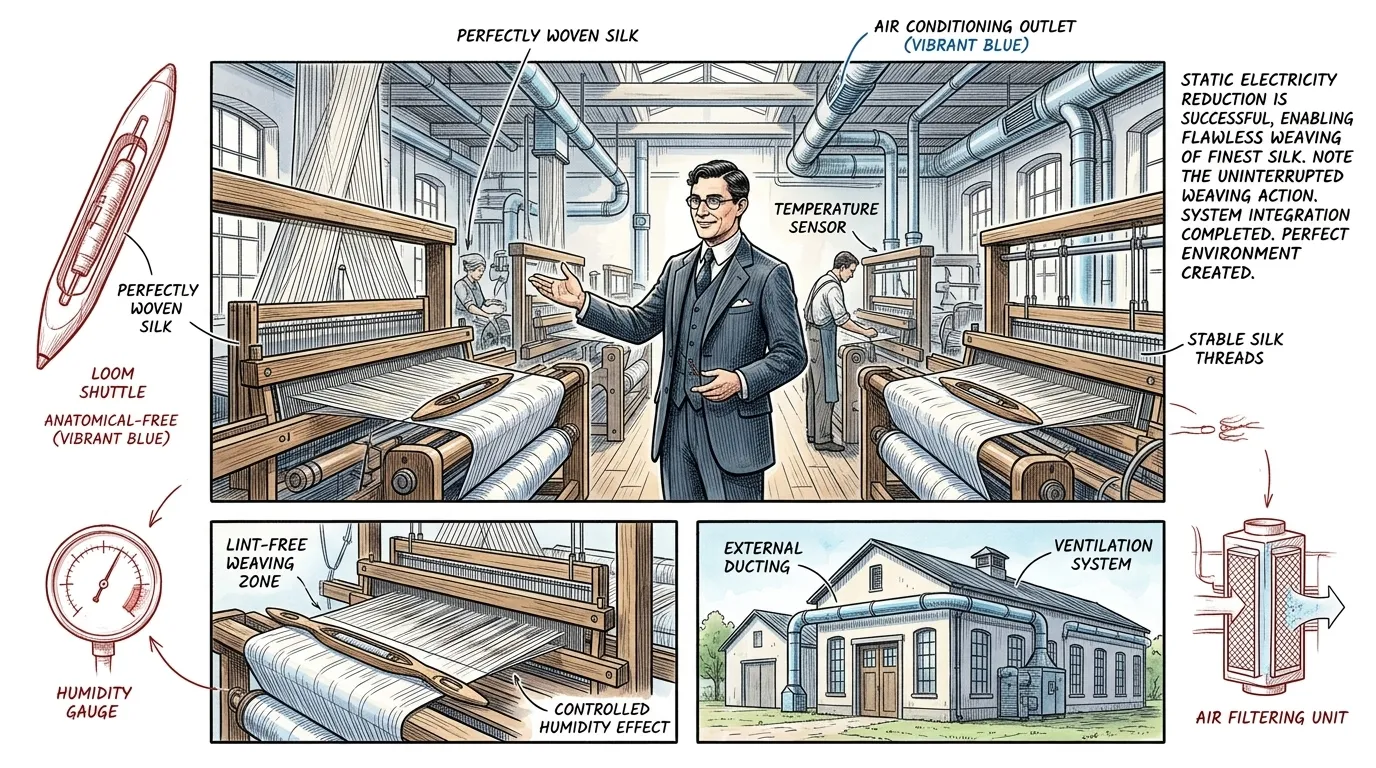
The success at Sackett & Wilhelms was just the beginning. The textile industry, plagued by static electricity and fiber breakage in dry winters and mildew in humid summers, became a prime candidate for Carrier's technology. In 1906, he installed his system at a silk mill, pioneering the use of humidity control to prevent static and improve thread quality. This precise application of his formulae demonstrated that controlled environments were not just about comfort, but were vital tools for industrial efficiency and product integrity. He was now actively shaping manufacturing processes.
Biographical Fact: Beyond printing, Carrier applied his system to textile mills by 1906, precisely controlling humidity to improve fiber quality and production efficiency, demonstrating its broad industrial utility.
Page 6
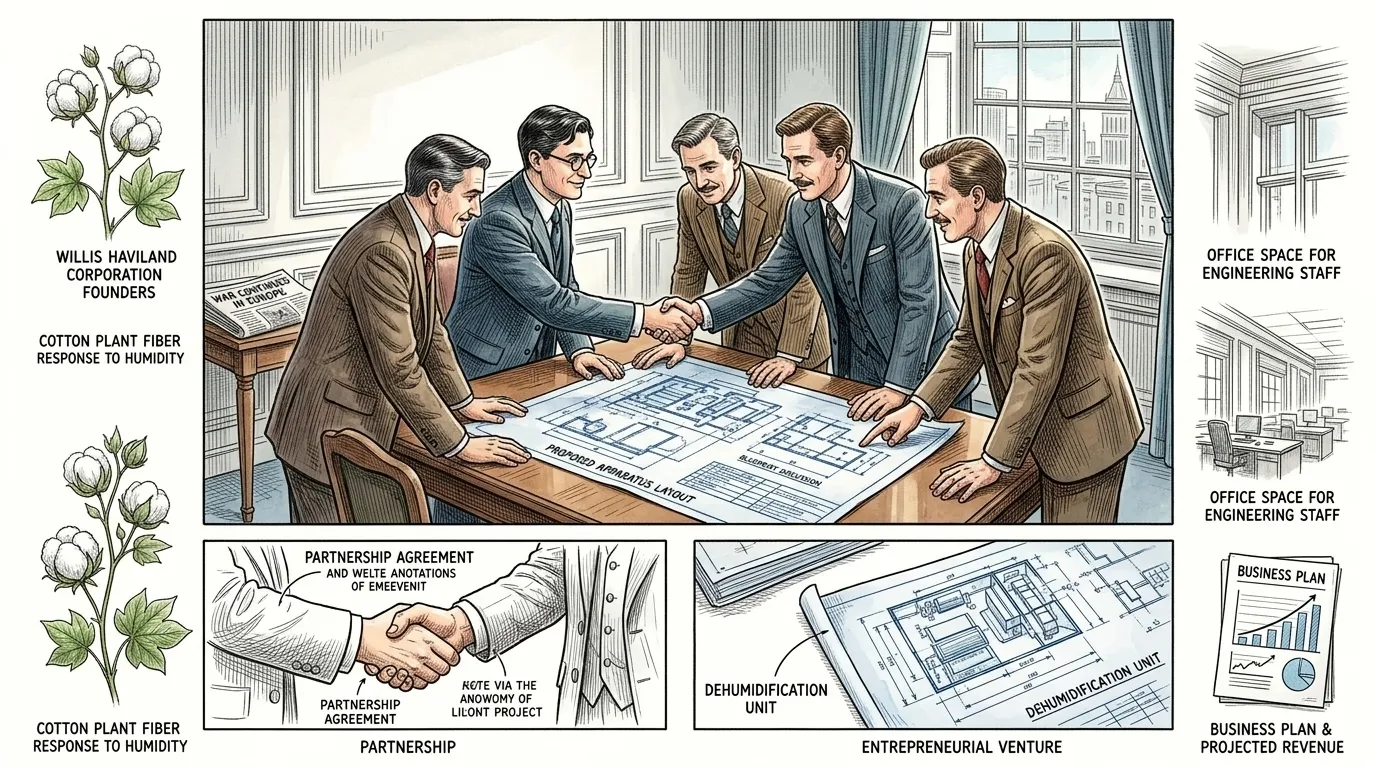
Willis Carrier recognized that his vision outgrew the confines of Buffalo Forge. In 1915, he made the decisive move, pooling resources with six fellow engineers—Irving Lyle Lewis, Ernest T. Lyle, Frank S. Jordan, Daniel C. Stocker, and Edward T. Murphy—to form the Carrier Engineering Corporation. This act of entrepreneurial courage, amidst the uncertainties of World War I, signaled a profound commitment to his burgeoning field. It was the moment he transitioned from an inventor within a company to the architect of an entire industry, taking full control of the commercialization and future development of air conditioning.
Biographical Fact: In 1915, Willis Carrier, along with six other engineers, founded the Carrier Engineering Corporation, solidifying his control over the future of air conditioning technology and its commercial expansion.
Page 7
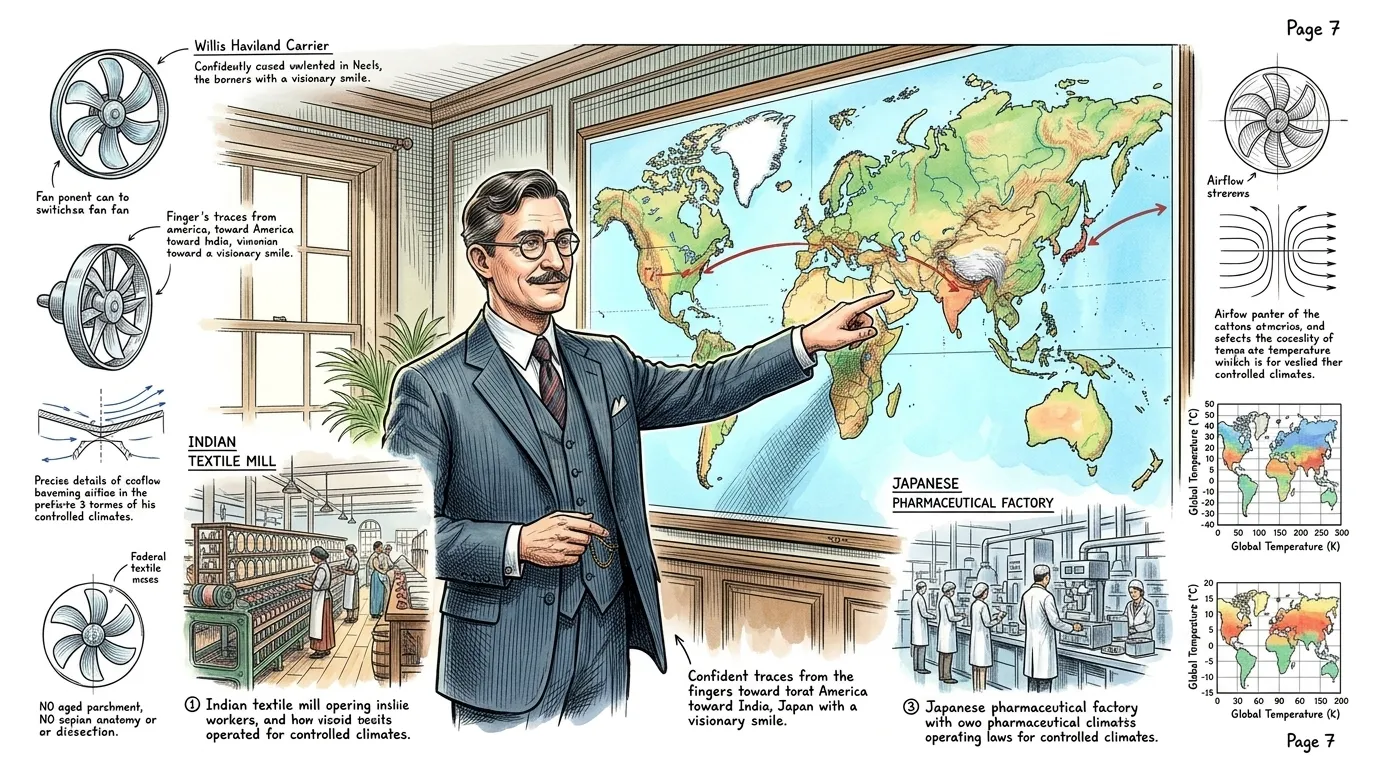
The demand for controlled environments was not confined to America. Carrier quickly recognized the global potential for his technology, particularly in industries vulnerable to climate extremes. By the early 1920s, Carrier Engineering Corporation was installing systems in diverse international locations, from the textile mills of India to pharmaceutical factories in Japan. This expansion was a testament to the universal utility of his invention, proving that precise climate control was a fundamental requirement for modern industry and commerce, regardless of geography. He was not just selling machines; he was exporting a new standard of industrial operation.
Biographical Fact: By the 1920s, Carrier's technology expanded globally, with installations in diverse industries across India, Japan, and Europe, establishing air conditioning as an international necessity.
Page 8
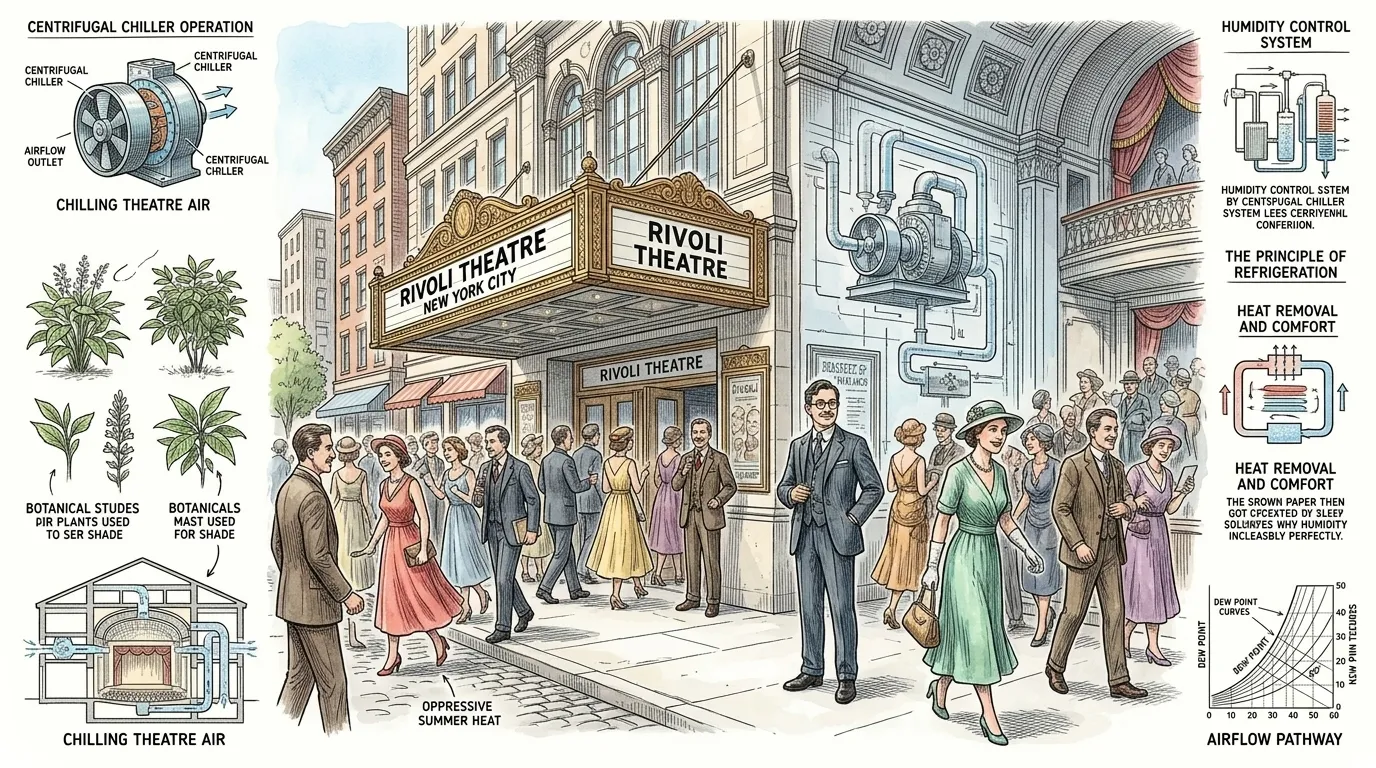
While industrial applications were critical, Carrier understood the broader societal impact of comfort cooling. In 1925, his centrifugal chiller brought air conditioning to public spaces, most notably the Rivoli Theatre in New York City. The sight of crowds escaping the summer heat into a refreshingly cool cinema was revolutionary. This moment democratized comfort, enabling year-round entertainment, driving consumer habits, and fundamentally altering how people interacted with public and commercial environments. It was no longer just about industrial efficiency; it was about enhancing human experience on a massive scale.
Biographical Fact: The installation of Carrier's centrifugal chiller at the Rivoli Theatre in New York City in 1925 introduced air conditioning to public spaces, igniting a 'comfort revolution' in entertainment and commerce.
Page 9
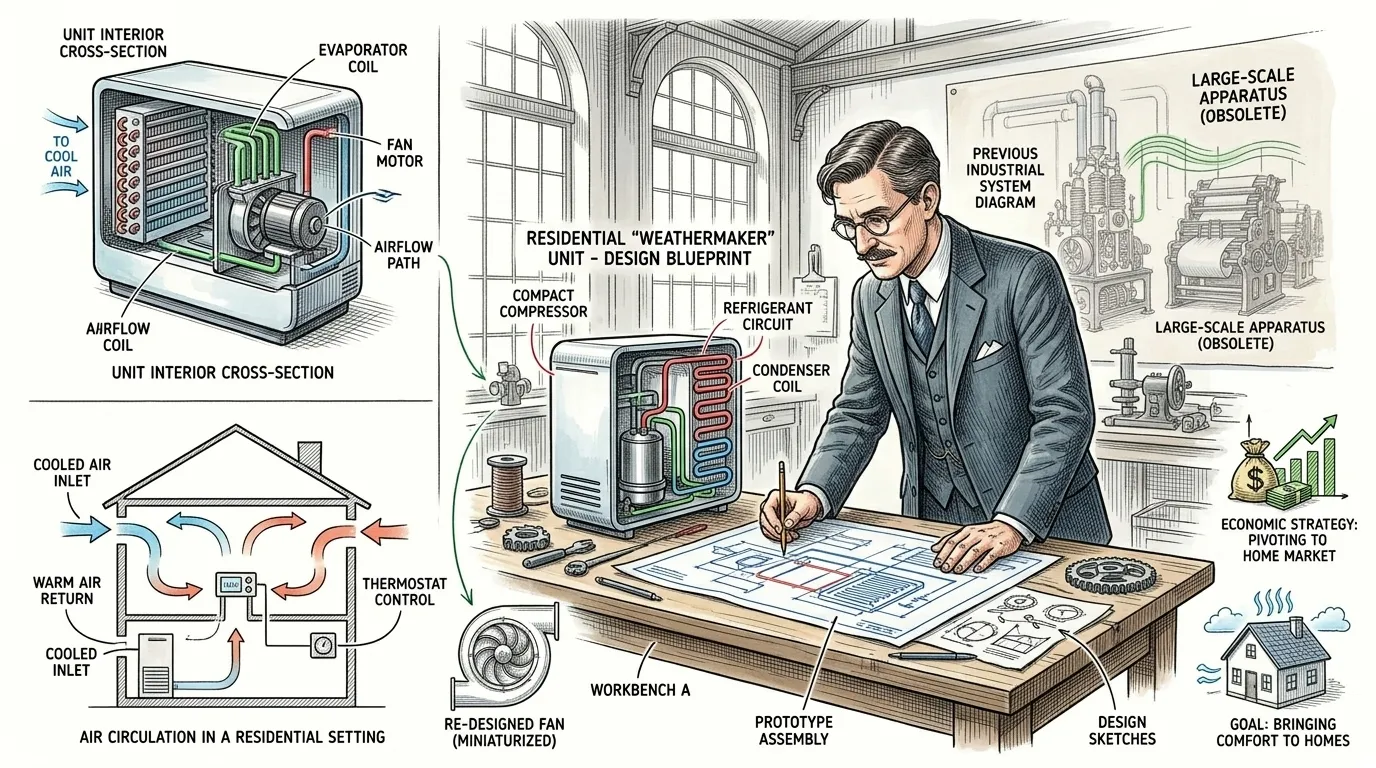
The Great Depression presented an existential threat to Carrier Engineering Corporation. Industrial and commercial construction halted, imperiling the company's core business. Willis Carrier, however, refused to yield. He pivoted, focusing on developing smaller, more affordable units for residential and light commercial use, like the 'Weathermaker' introduced in 1932. This strategic shift, driven by relentless innovation and an unwavering belief in his technology's enduring value, allowed the company to survive and even lay the groundwork for a broader consumer market once economic recovery began. He turned adversity into an opportunity for wider adoption.
Biographical Fact: During the Great Depression, Carrier strategically shifted focus to residential and light commercial units, like the 'Weathermaker' (1932), ensuring the company's survival and future market expansion.
Page 10
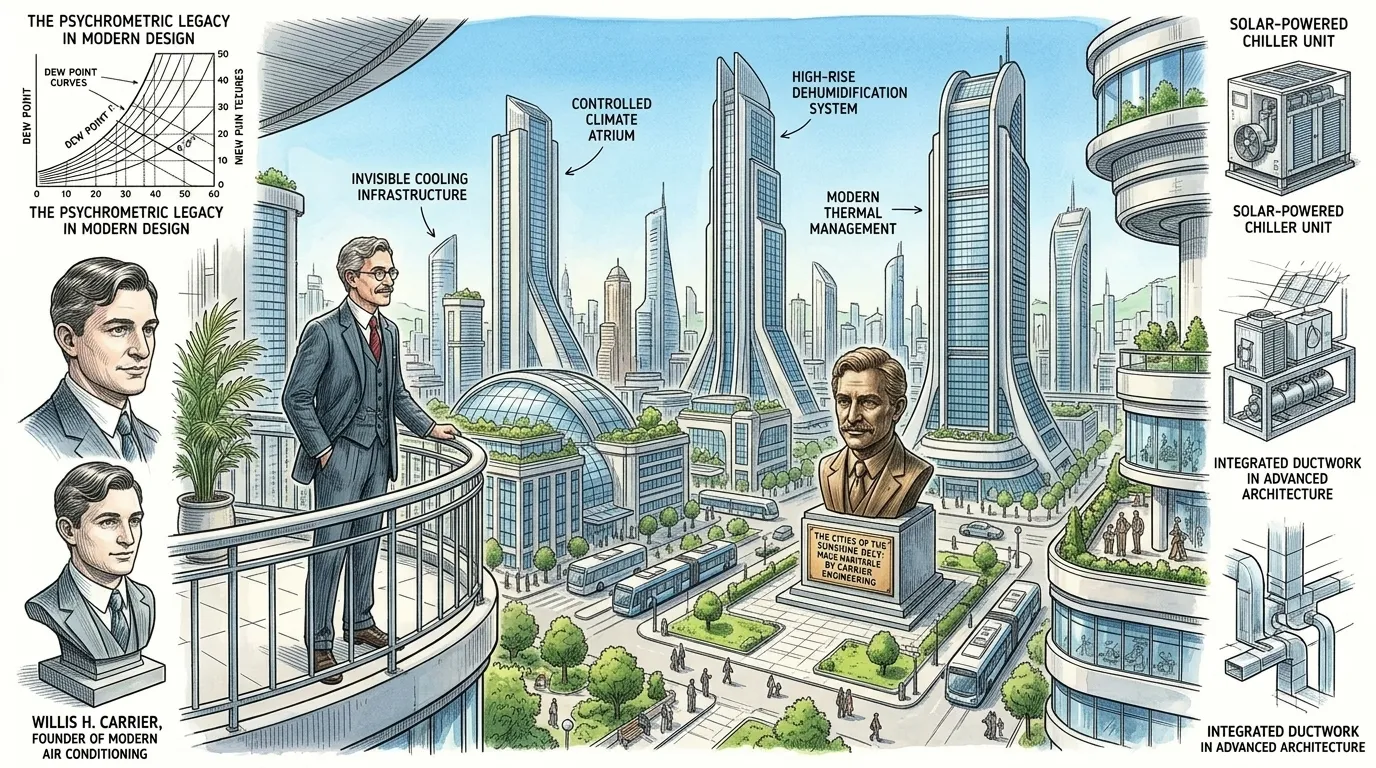
Willis Carrier passed away in 1950, but his invention had already reshaped the world. Air conditioning enabled the growth of cities in previously uninhabitable hot climates, fundamentally altered architectural design to create sealed, comfortable environments, and spawned entire new industries. It changed where people lived, how they worked, and their expectations of indoor comfort. His legacy is not merely a piece of machinery, but the invisible infrastructure that underpins modern global civilization, a testament to a singular mind that mastered the elements to serve human endeavor.
Biographical Fact: Willis Carrier's legacy, spanning his death in 1950 and beyond, lies in the foundational role of air conditioning in modern architecture, urban development in hot climates, and global industrial and human comfort.
About this story
- Location: Global
- Audience: general readers
Questions and answers
Read Wonder People on your phone
Wonder People is available on Android. Get Wonder People on Google Play.