Alexander the Great
Alexander the Great — an illustrated biography story, set in Global. 10 illustrated pages, free to read on Wonder People.
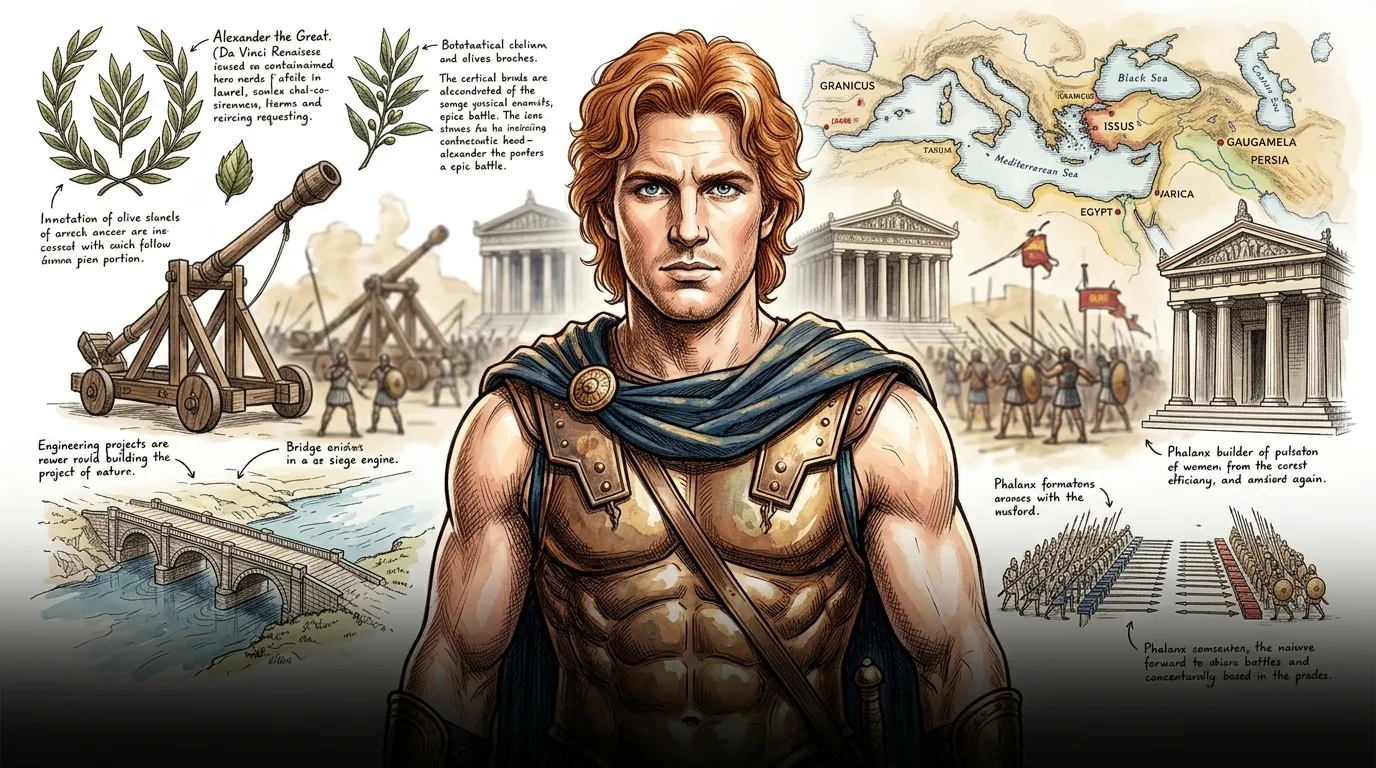
Page 1
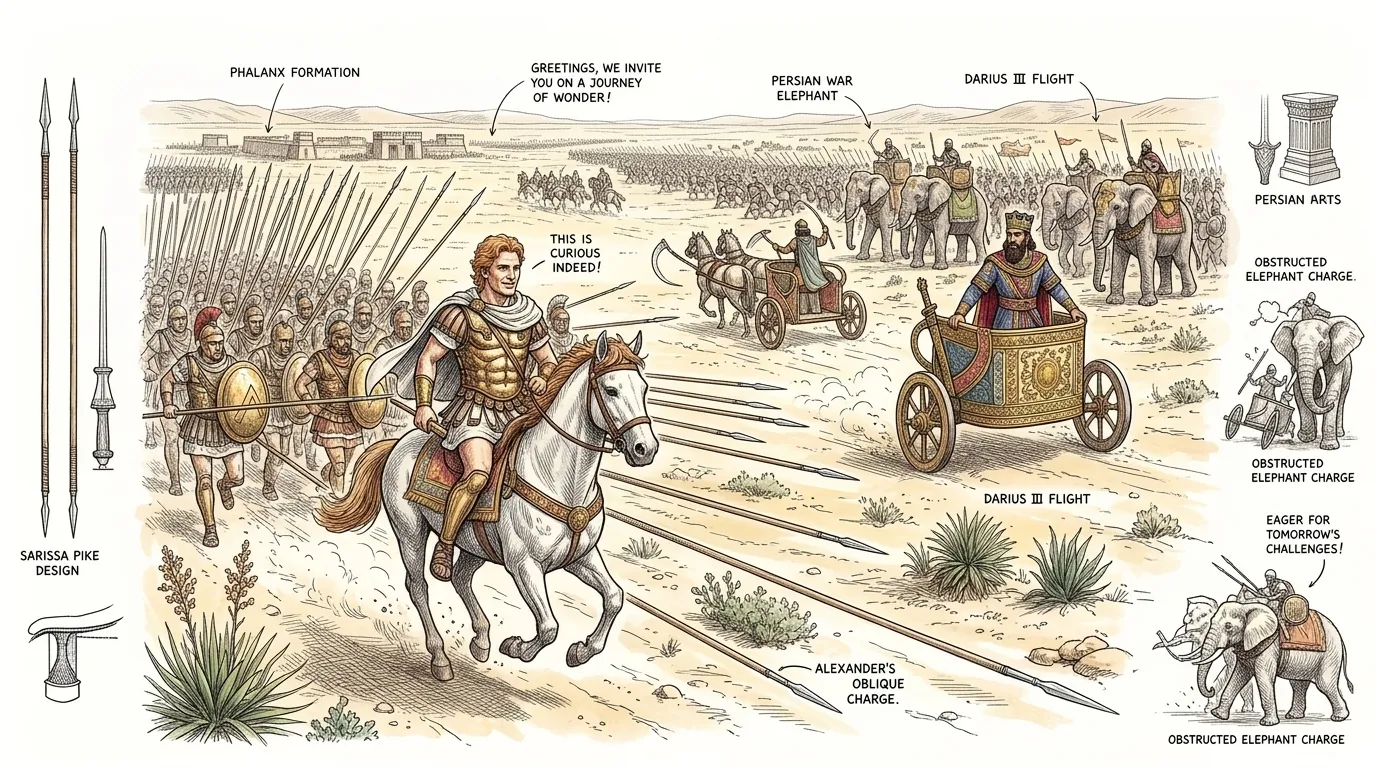
On the vast plains of Gaugamela in 331 BCE, Alexander the Great executed a maneuver that shattered the Persian Empire. Outnumbered by a factor of at least two to one, his forces faced Darius III's immense army, including scythed chariots and war elephants. Alexander's audacious oblique formation and 'hammer and anvil' strategy culminated in a charge directly at Darius's position, forcing the Great King to flee and sealing the fate of the Achaemenid dynasty.
Page 2
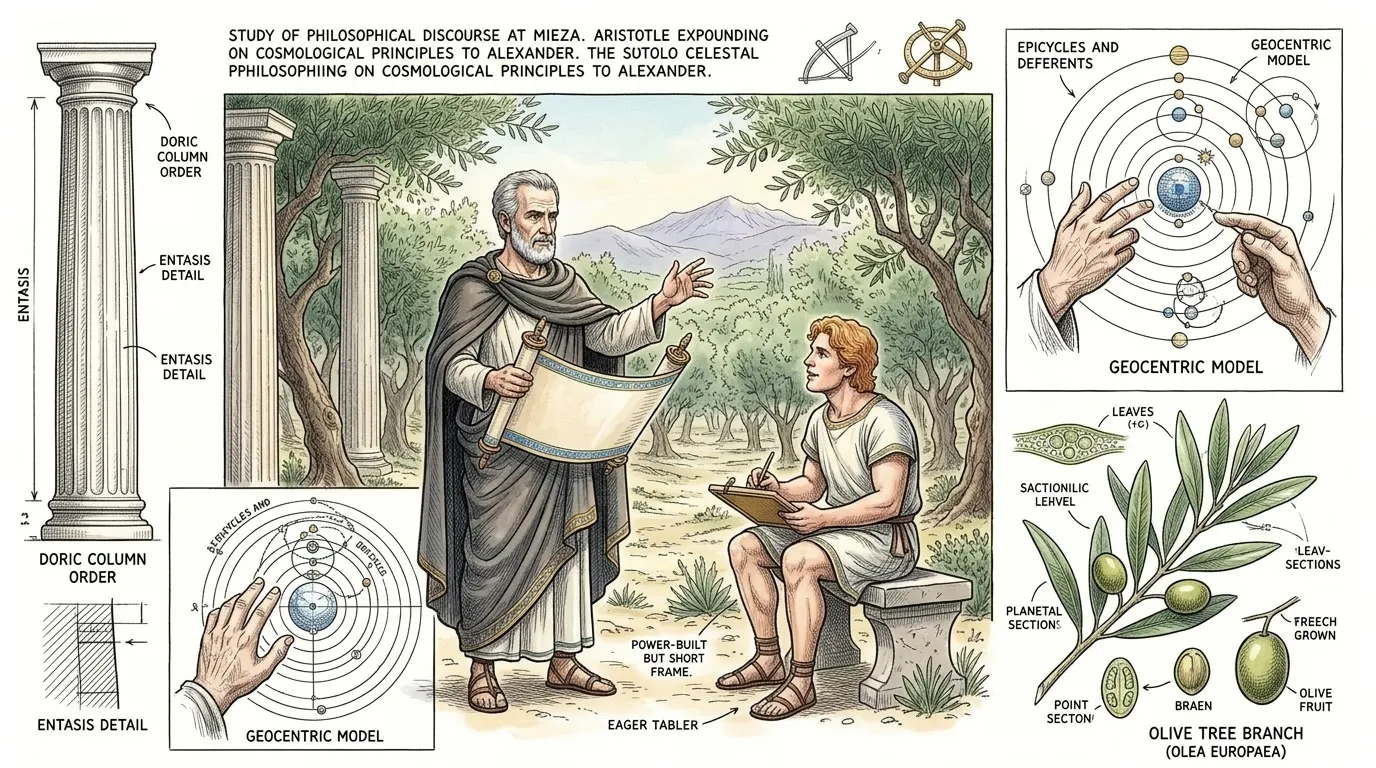
Years before the clash at Gaugamela, in the philosophical groves of Mieza around 343 BCE, Alexander received an education unlike any other. The philosopher Aristotle, a man of profound intellect and rigorous discipline, shaped the young prince's mind. Under Aristotle's tutelage, Alexander delved into ethics, politics, science, and the arts, absorbing the Hellenic ideal that would later define his empire-building. This intellectual foundation provided the strategic depth and cultural vision that guided his conquests.
Page 3
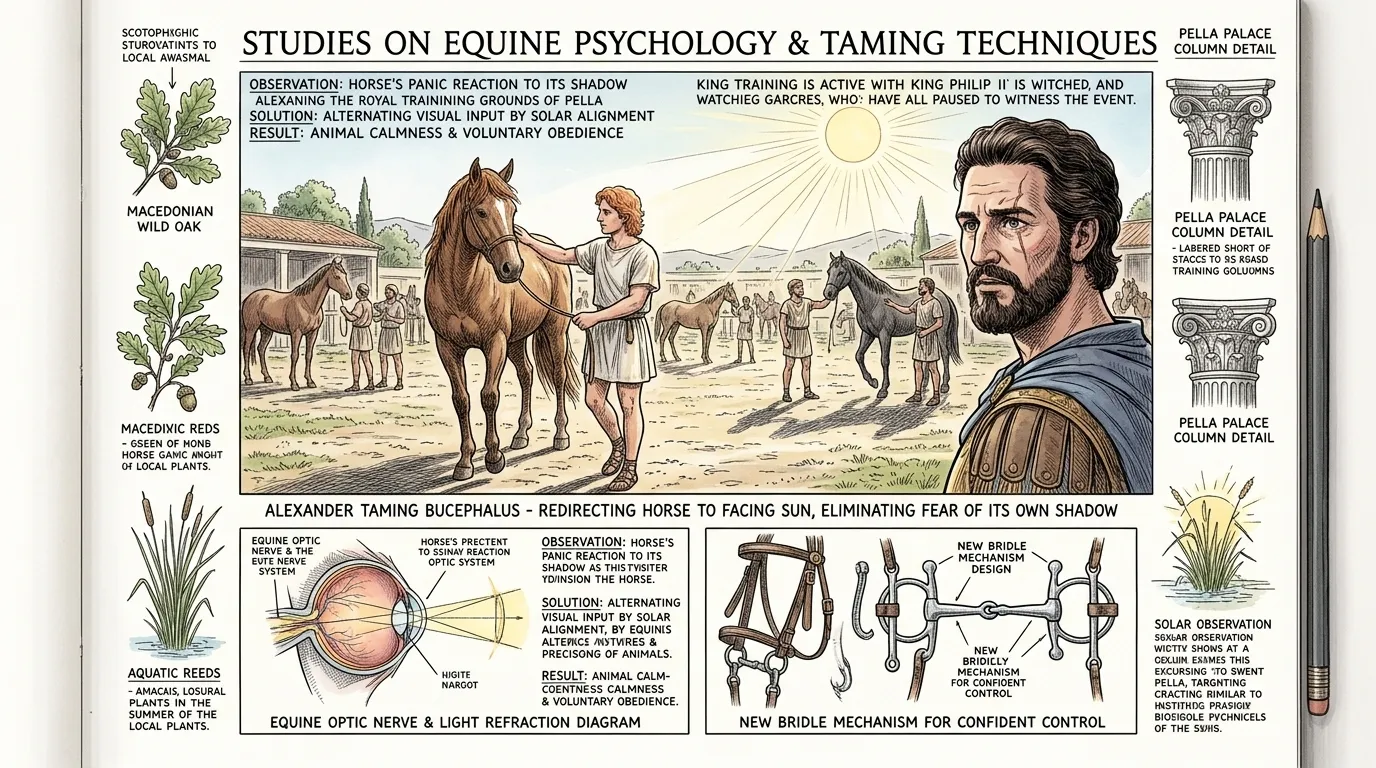
In the royal training grounds of Pella around 344 BCE, a wild, untamable horse named Bucephalus defied all attempts at mastery. King Philip II, Alexander's father, declared the horse useless. Yet, the young Alexander observed something no one else had: the horse was afraid of its own shadow. Stepping forward, he turned Bucephalus to face the sun, soothing the magnificent beast before mounting it effortlessly. This single act demonstrated profound insight, courage, and a unique ability to connect with power, earning his father's astonished declaration that Macedon was too small for him.
Page 4
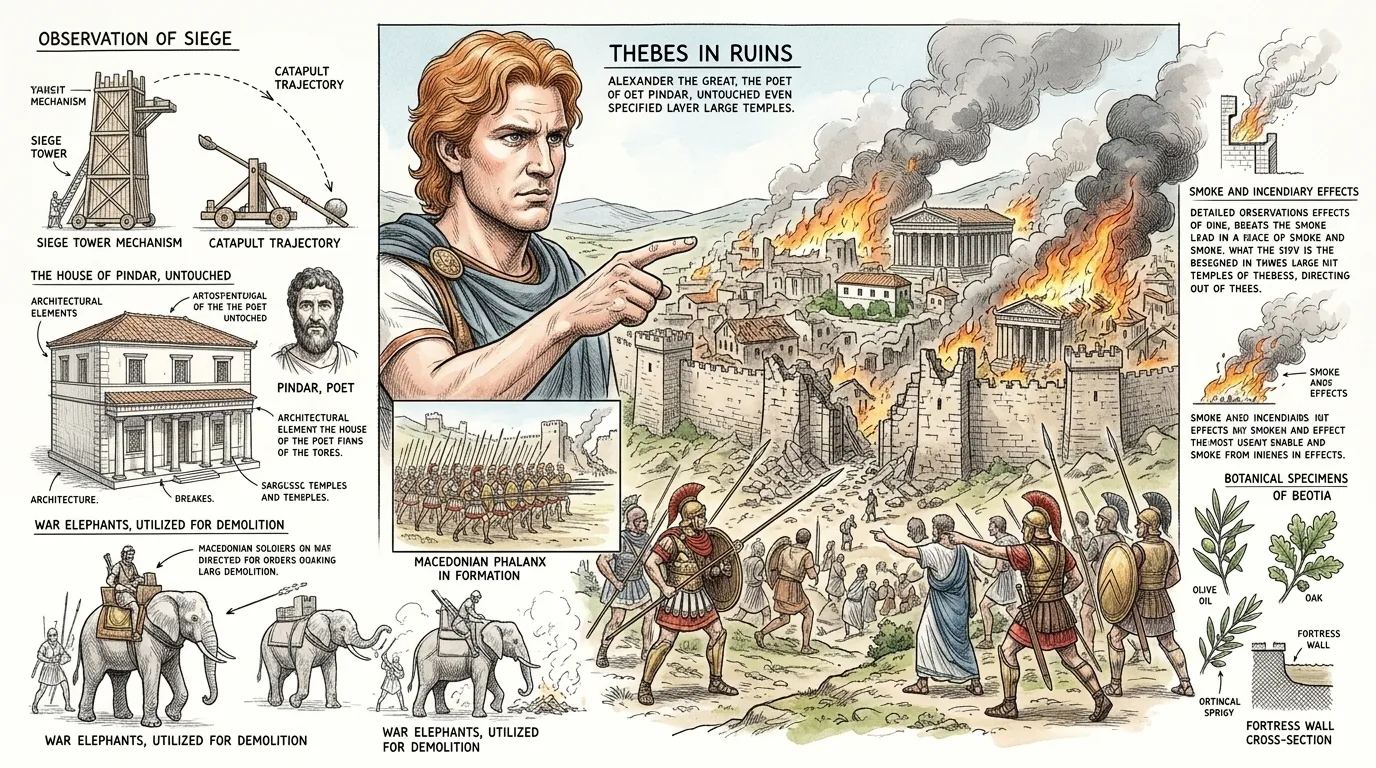
Following his father's assassination in 336 BCE, Alexander swiftly moved to secure his throne. When rumors of his death incited revolts, particularly in Thebes, he marched his army south with astonishing speed in 335 BCE. The Thebans, believing him dead, had reopened hostilities, but Alexander appeared unexpectedly at their gates. His subsequent destruction of Thebes, sparing only temples and the house of the poet Pindar, was a brutal, decisive act that served as a stark warning. It cemented his authority and crushed any further dissent before his eastward campaign began.
Page 5
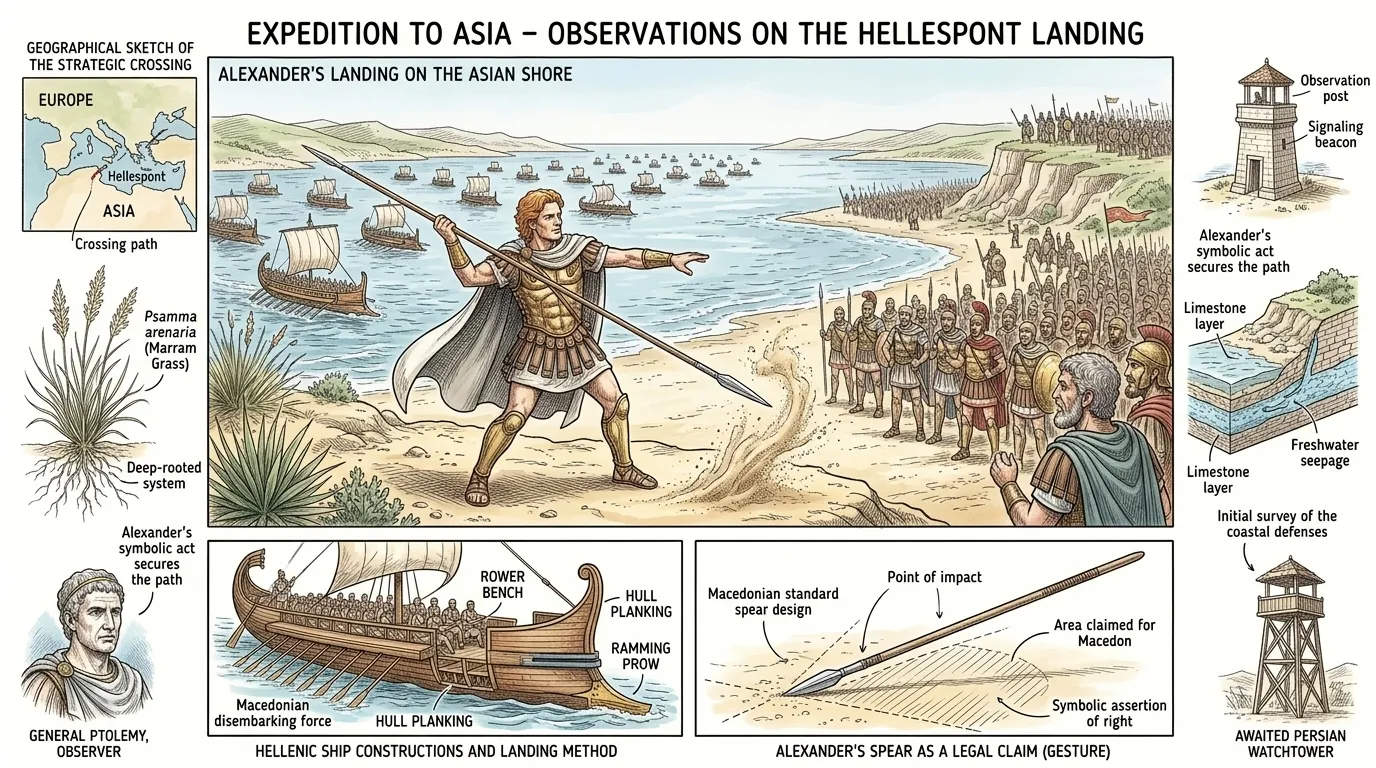
In 334 BCE, Alexander led his army across the Hellespont, leaving Europe behind for the shores of Asia. This was more than a military crossing; it was a profound act of commitment, symbolizing the launch of his grand expedition against the Persian Empire. Landing on Asian soil, he dramatically hurled his spear into the sand, claiming the continent as a prize won by the spear. This moment, witnessed by thousands of his soldiers and generals, signaled his unwavering resolve to conquer a world far larger than Macedon.
Page 6
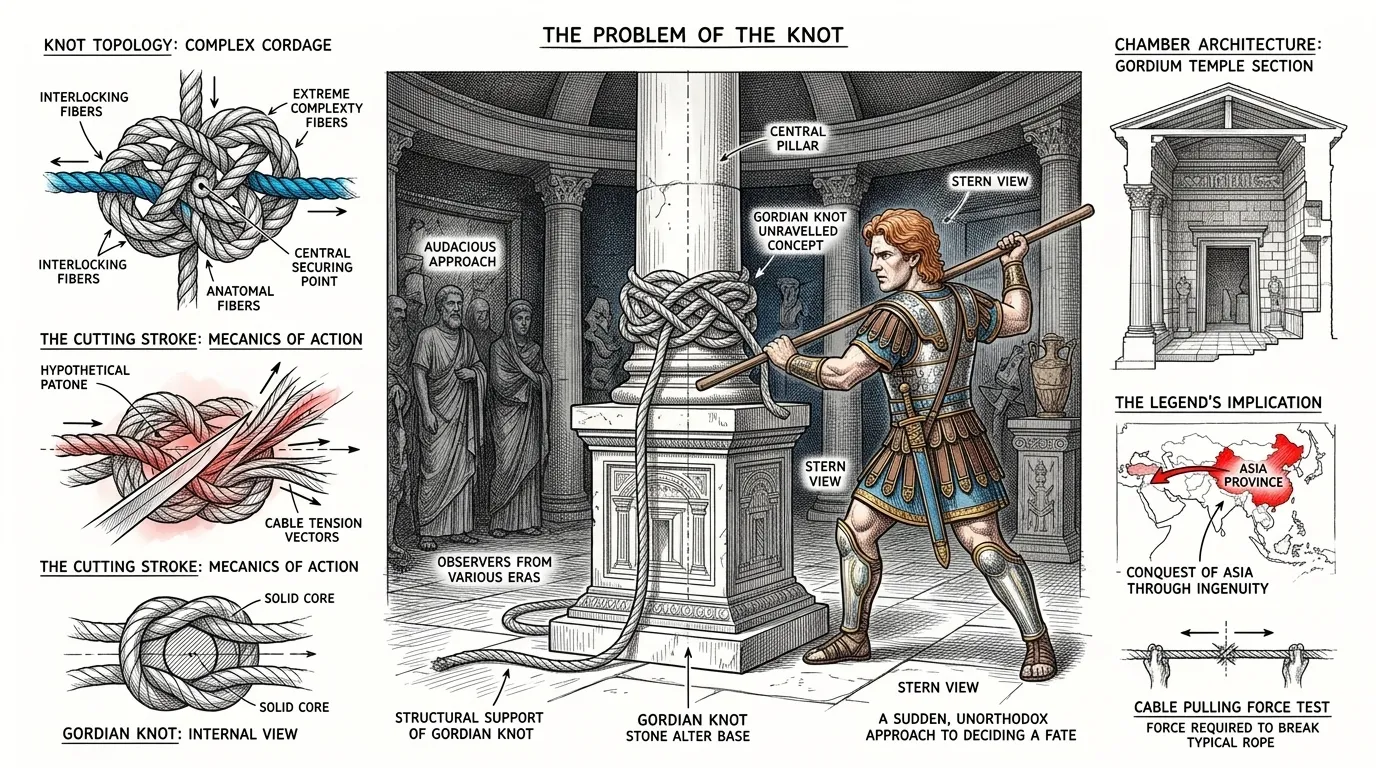
At Gordium in Phrygia in 333 BCE, Alexander confronted the legend of the Gordian Knot. An ancient prophecy claimed that whoever could untie this impossibly intricate knot would rule all of Asia. Many had tried and failed. Instead of painstakingly unraveling it, Alexander drew his sword and, with a single, decisive stroke, cut through the knot. This audacious act redefined the challenge, proving his ingenuity and reinforcing his image as a man destined for unparalleled power, unafraid to defy conventional wisdom to achieve his aims.
Page 7
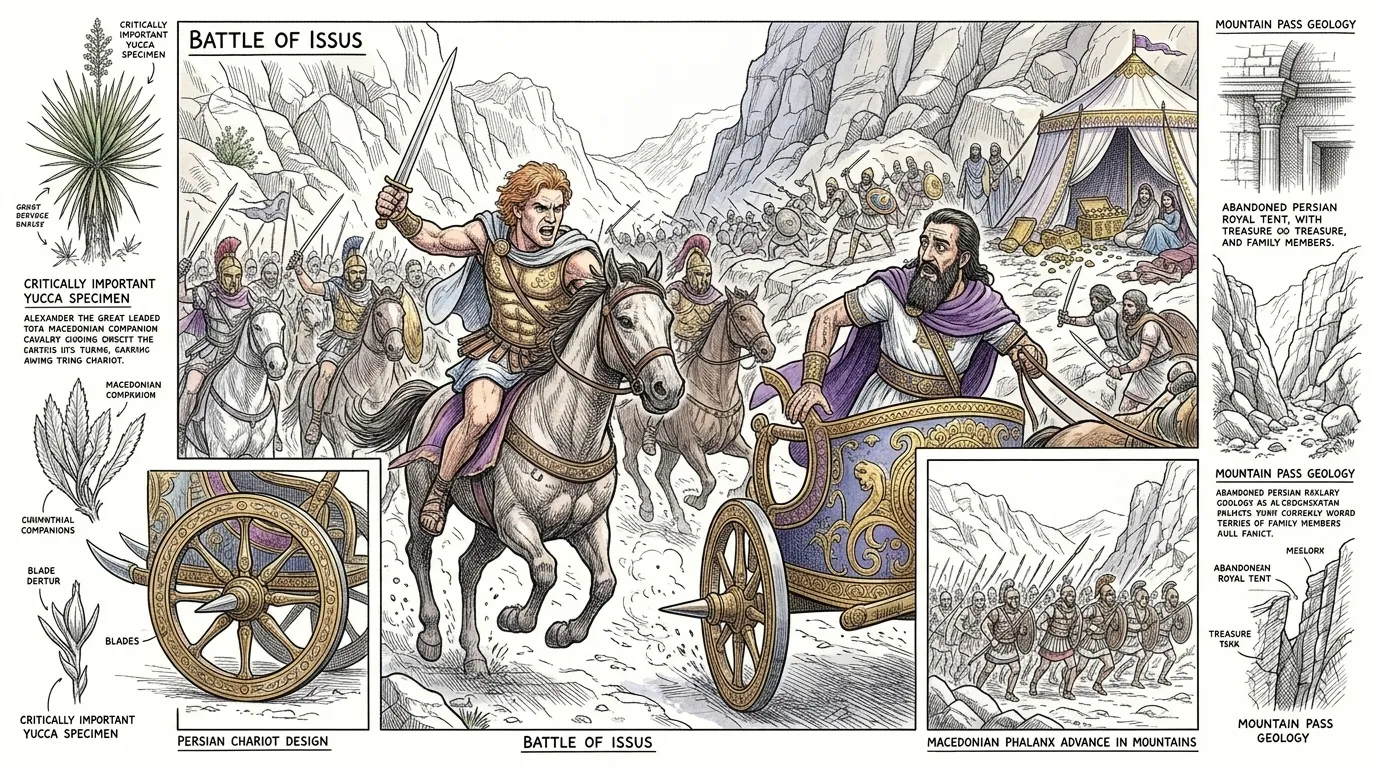
The Battle of Issus in 333 BCE marked the first direct confrontation between Alexander and Darius III. Despite being strategically disadvantaged by the narrow terrain, Alexander again led his forces with unparalleled aggression. His personal charge broke the Persian lines, driving directly toward Darius's chariot. Faced with the unstoppable Macedonian advance and the personal threat of Alexander, Darius fled the battlefield, leaving his family and treasure behind. This victory not only granted Alexander immense spoils but also psychologically crippled the Persian king, setting the stage for future encounters.
Page 8
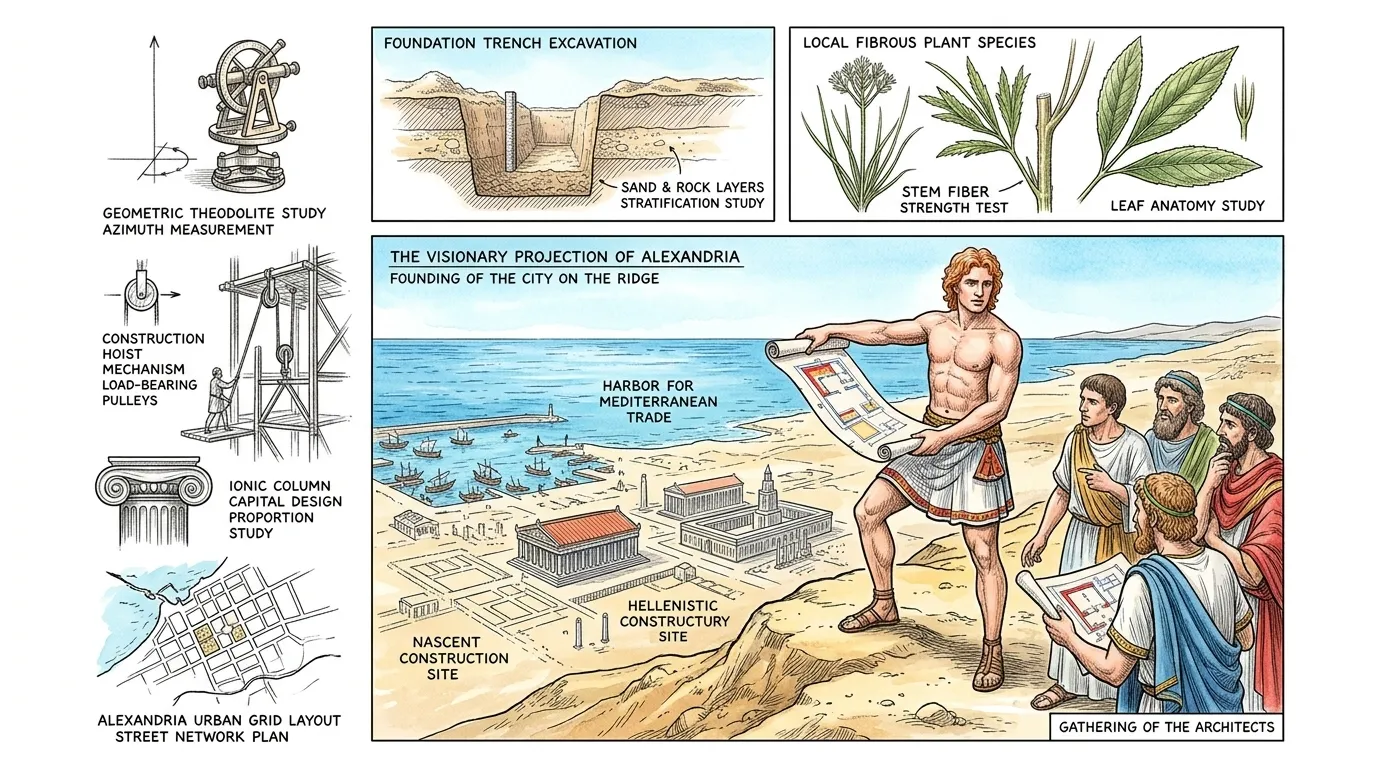
After conquering Egypt in 331 BCE, Alexander did not merely pass through; he initiated the construction of a new city, Alexandria. Envisioned as a cultural and economic hub, it would become a beacon of Hellenistic civilization. He personally directed its layout, foreseeing a grand port city that would fuse Greek and Egyptian cultures, fostering trade and learning. This act demonstrated a foresight beyond military strategy, a commitment to building a lasting legacy that would integrate his conquests into a new, interconnected world.
Page 9
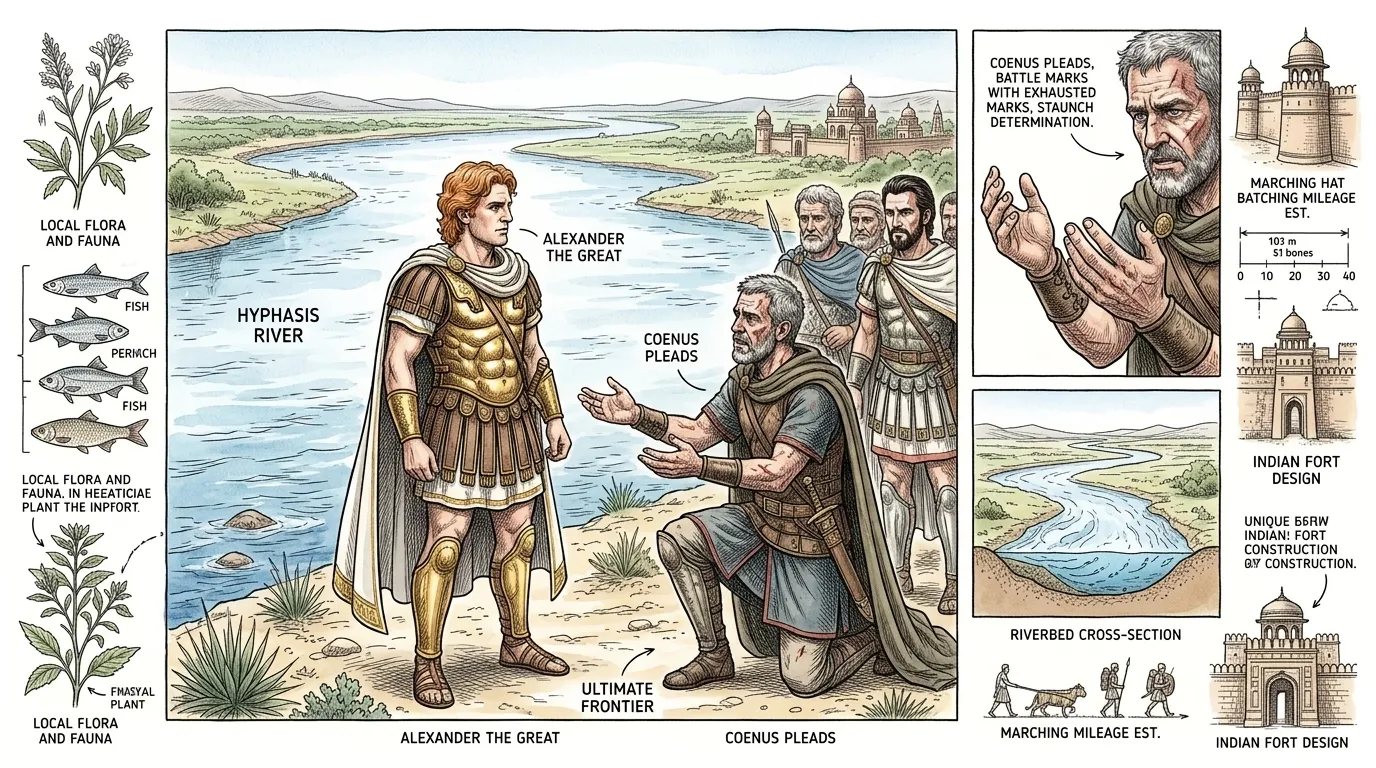
By 326 BCE, Alexander had pushed his army to the Hyphasis River in India, intending to conquer further east. For eight years, his Macedonian and Greek soldiers had marched, fought, and endured unimaginable hardships. Here, at the edge of the known world, their will broke. Led by Coenus, his veteran generals pleaded with him to turn back. Alexander, accustomed to absolute obedience, faced an unprecedented mutiny. After three days of reflection, recognizing the unyielding resolve of his exhausted men, he reluctantly agreed to return. This moment marked the geographic limit of his personal conquest, a rare instance where even his formidable will met an insurmountable obstacle.
Page 10
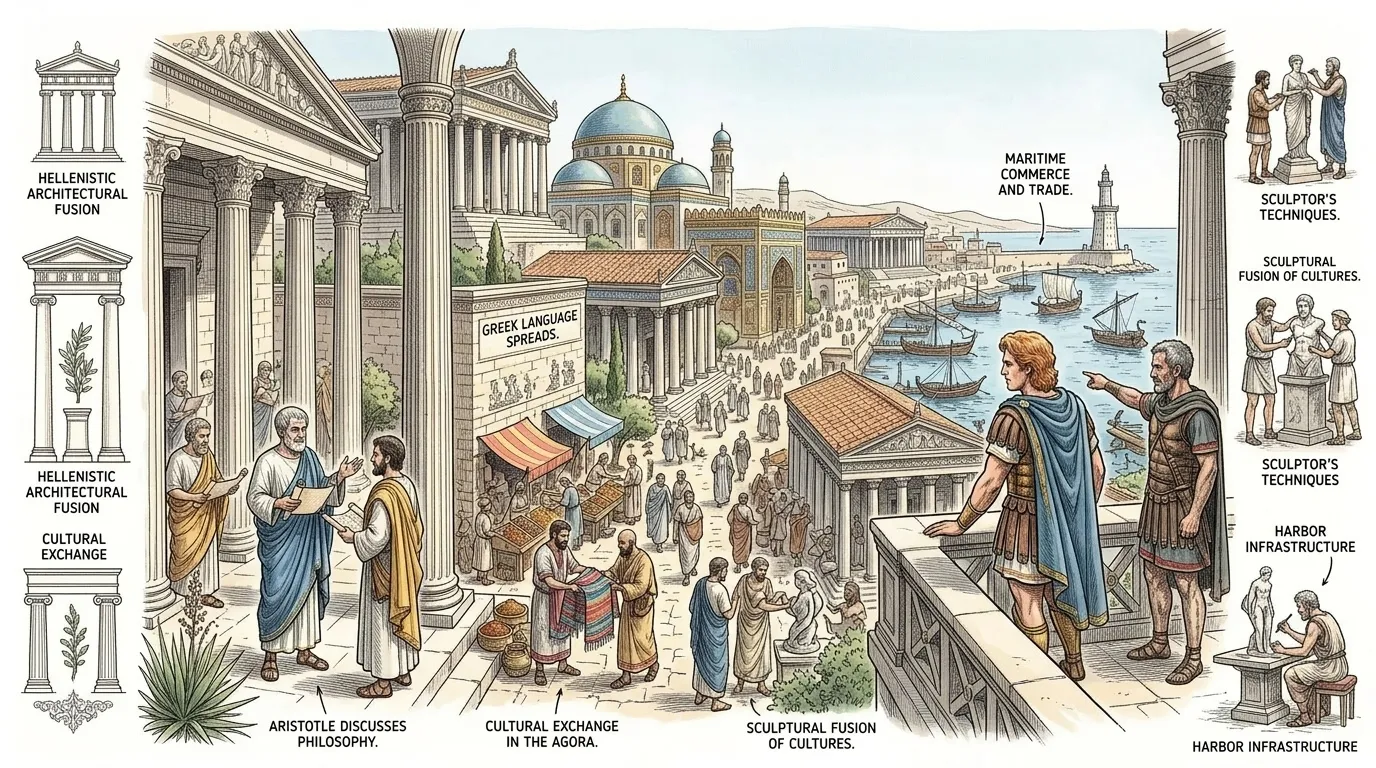
Alexander the Great's empire dissolved upon his death in 323 BCE, yet his impact persisted for centuries. His conquests irrevocably altered the course of history, initiating the Hellenistic Age. Greek language became the lingua franca of the Eastern Mediterranean, Greek art and philosophy spread across Asia, and new cities founded in his name became centers of learning and trade. The fusion of cultures he inadvertently catalyzed laid foundations for future empires and intellectual flourishing, a testament to a life lived with unmatched ambition and transformative power.
About this story
- Location: Global
- Audience: general readers
Questions and answers
Read Wonder People on your phone
Wonder People is available on Android. Get Wonder People on Google Play.