Auguste Rodin
Auguste Rodin — an illustrated biography story, set in Global. 10 illustrated pages, free to read on Wonder People.
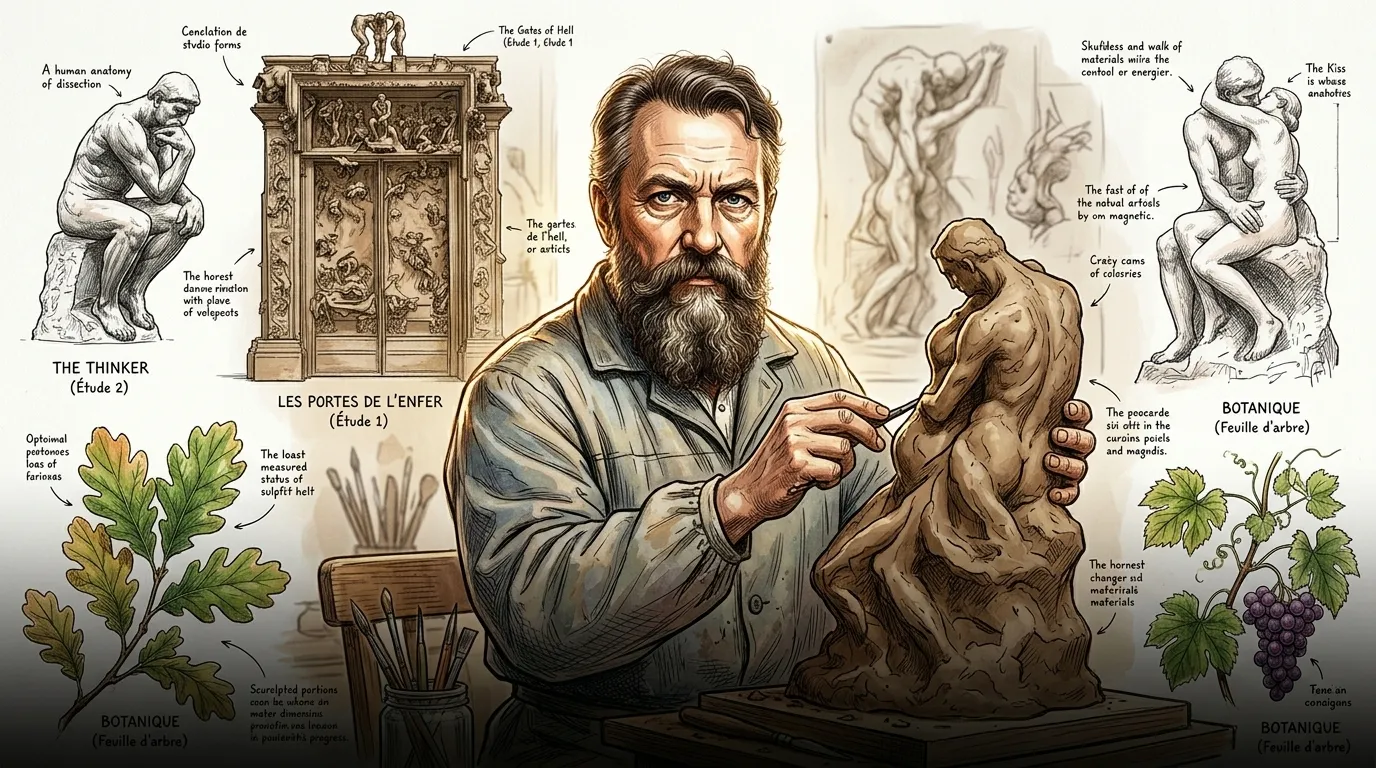
Page 1
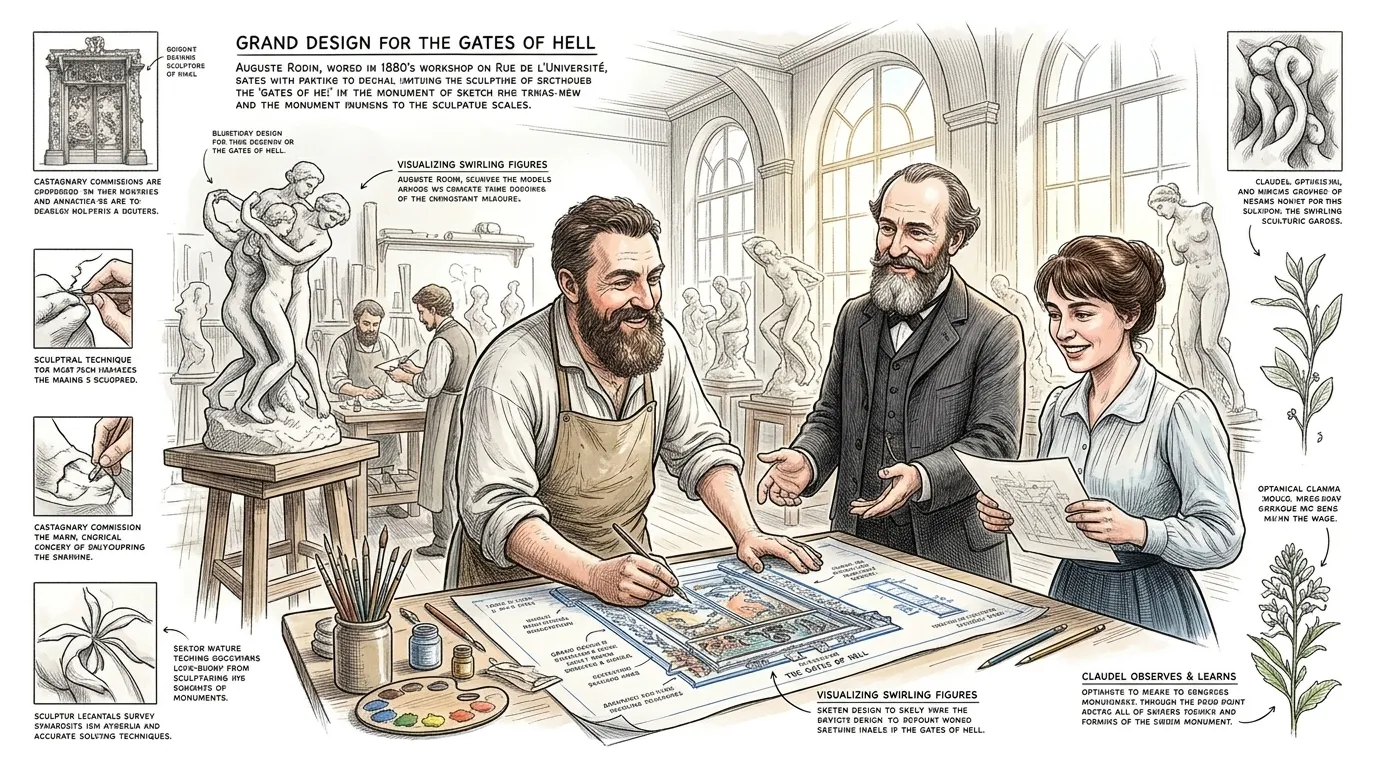
In 1880, at his workshop on Rue de l'Université, Paris, Auguste Rodin embarked on a monumental commission that would define his life's work: 'The Gates of Hell.' Intended for a new museum of decorative arts, the colossal bronze doors would ultimately comprise over 180 figures, a swirling vortex of human suffering and passion drawn from Dante's Inferno. Jules-Antoine Castagnary, Director of Fine Arts, had offered the commission, unknowingly unleashing an unprecedented force. Rodin, often assisted by Camille Claudel, dedicated decades to sculpting this singular vision, allowing it to evolve, rejecting completion in favor of expressive power, a testament to his relentless pursuit of truth in form.
Page 2
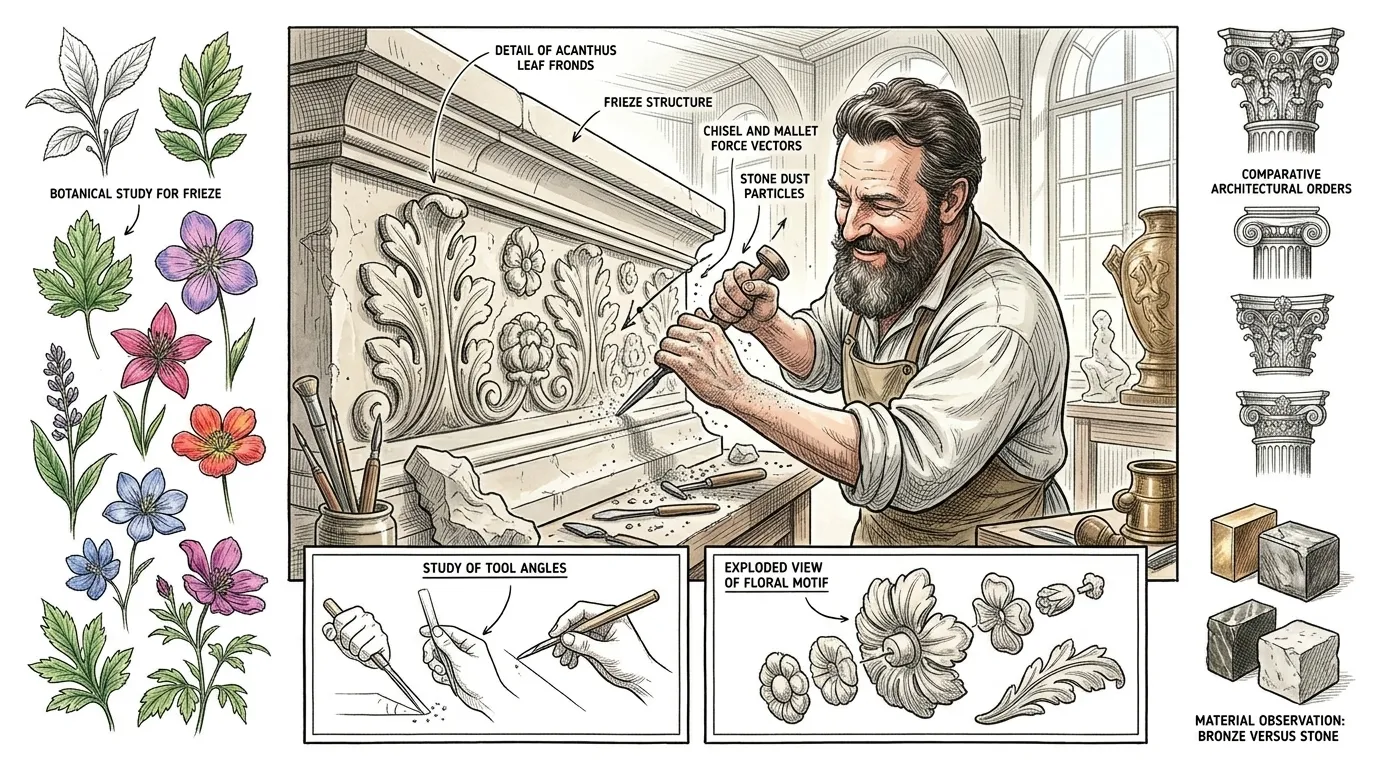
Auguste Rodin's early career was marked by repeated rejections from the prestigious École des Beaux-Arts, thwarting his ambition for formal academic training three times. Undeterred, he honed his craft in the workshops of ornamental sculptors, producing decorative pieces for buildings, which paradoxically sharpened his understanding of form and material. This arduous apprenticeship, devoid of classical veneration, forced him to master manual skill and direct observation, laying an unconventional foundation for his revolutionary approach to sculpture. He learned the secrets of stone and bronze not from theory, but from his own hands.
Page 3
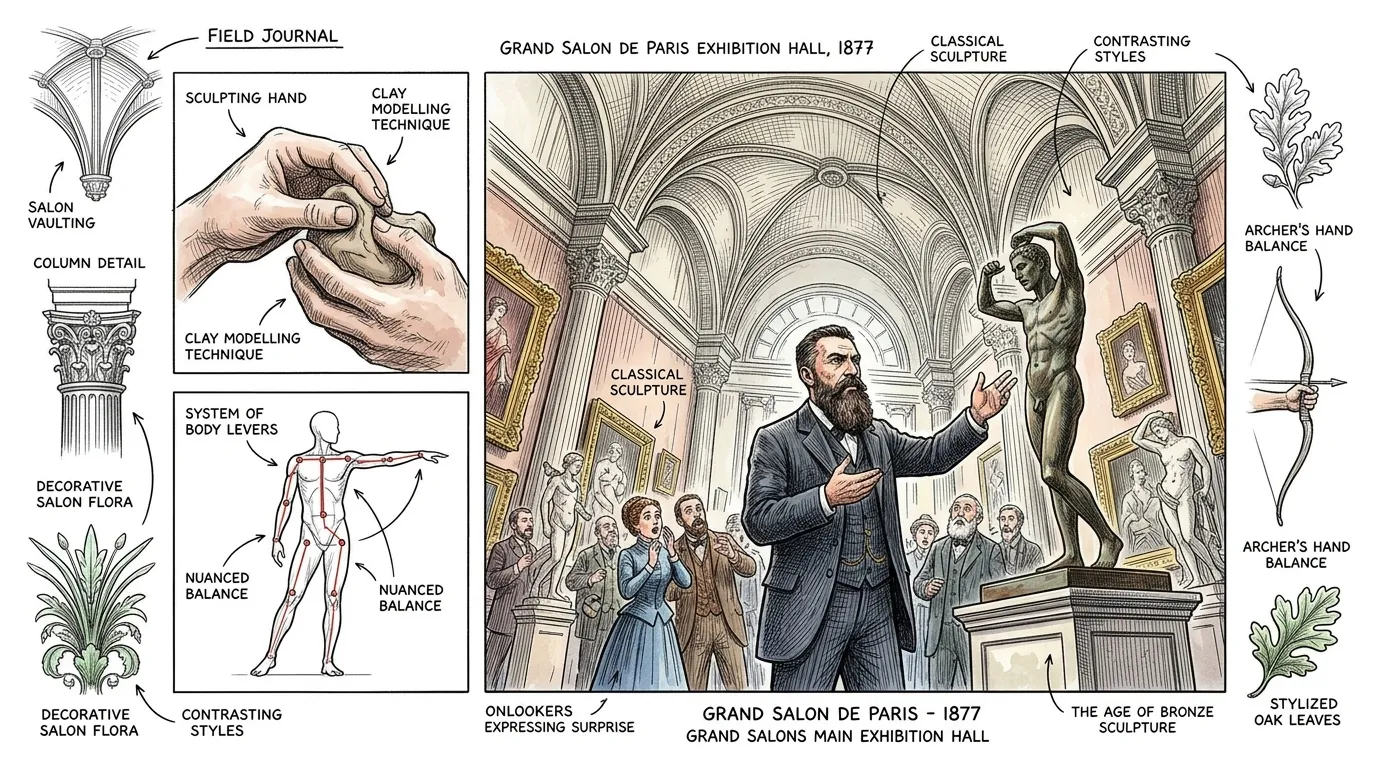
In 1877, Rodin's 'The Age of Bronze' debuted at the Salon de Paris, igniting a scandal that would paradoxically announce his genius. Its startling realism, captured in the nuanced pose of a waking man, led critics and academicians to accuse him of having cast the sculpture directly from a live model – a perceived shortcut that challenged artistic integrity. Rodin fiercely defended his method, asserting that intense study of the human form, not mechanical replication, was his true process. This controversy, rather than ruining his reputation, solidified his position as a sculptor of profound and challenging truth.
Page 4
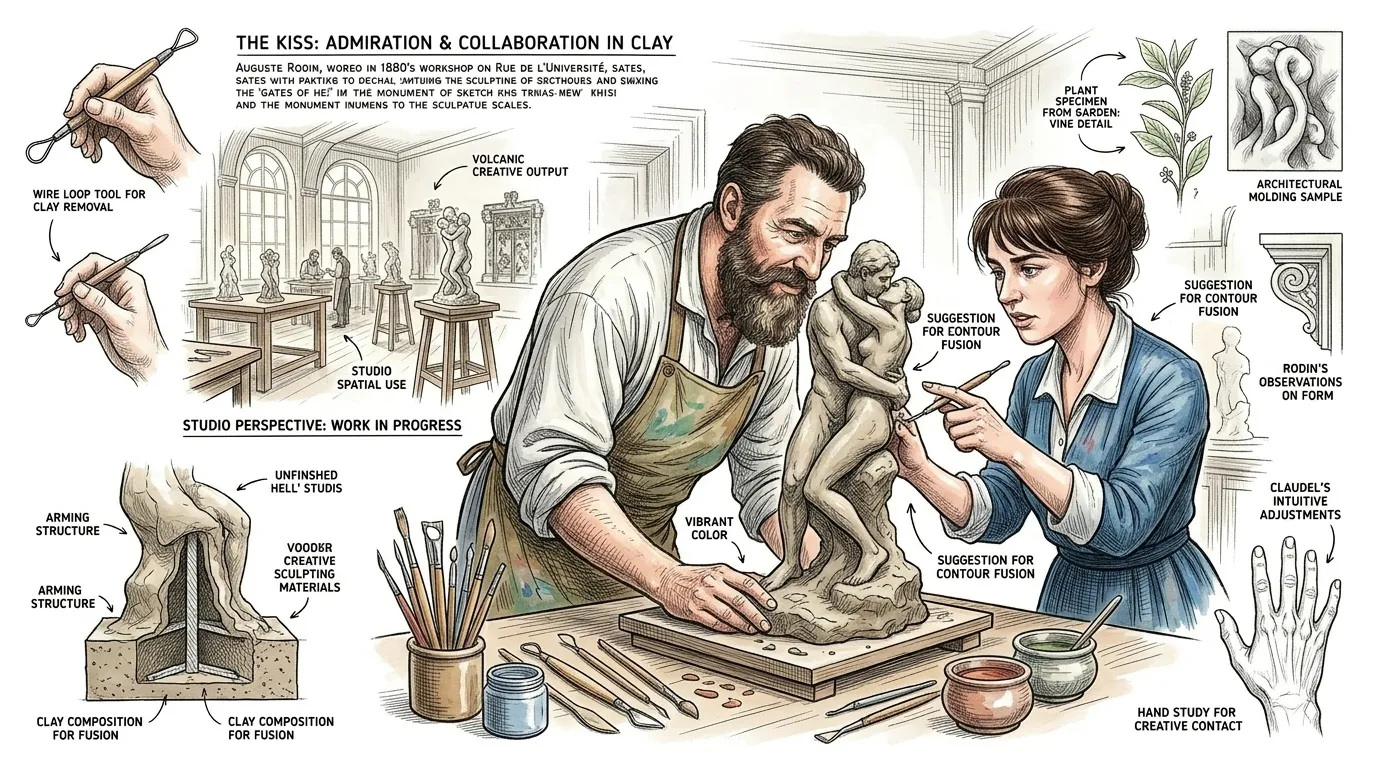
The year 1884 marked the beginning of Auguste Rodin's intense artistic and personal relationship with Camille Claudel, a brilliant sculptor who joined his studio as a practitioner and assistant. Their collaboration was volcanic, fueling some of his most expressive works, including figures later incorporated into 'The Gates of Hell' and iconic pieces like 'The Kiss.' Claudel brought her own formidable talent and vision, deeply influencing Rodin's understanding of sensuality and emotional depth in sculpture. Their shared creative space became a crucible where their individual genius ignited, pushing the boundaries of sculptural expression.
Page 5
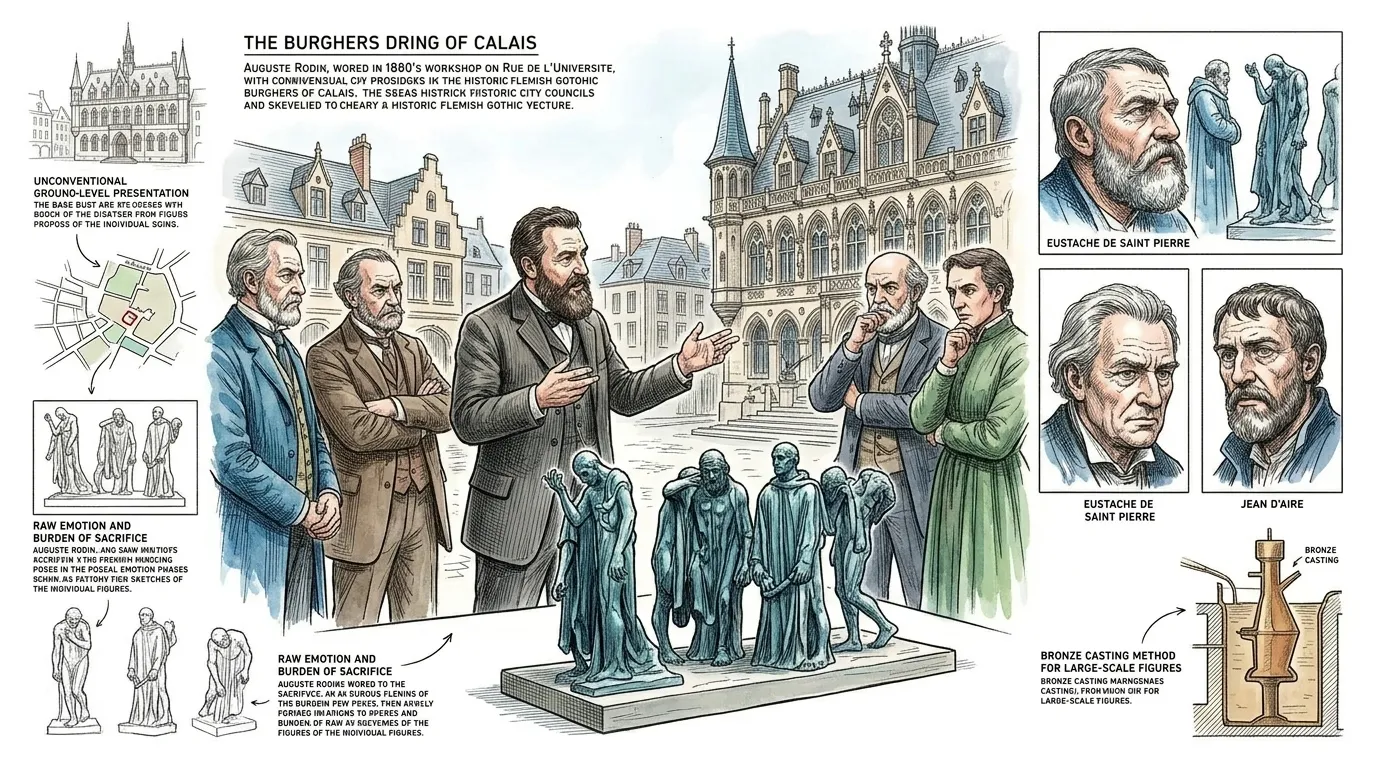
In 1884, Rodin received a commission for 'The Burghers of Calais,' commemorating six prominent citizens who, in 1347, offered their lives to save their city from English siege. Rodin rejected the traditional heroic monument, choosing instead to portray the burghers as ordinary men burdened by sacrifice and fear, walking toward their fate. This deeply human, raw depiction sparked a bitter struggle with the Calais city council over its presentation, with Rodin insisting on placing the figures at ground level to connect directly with the viewer. His artistic vision ultimately prevailed, forging a new paradigm for public sculpture.
Page 6
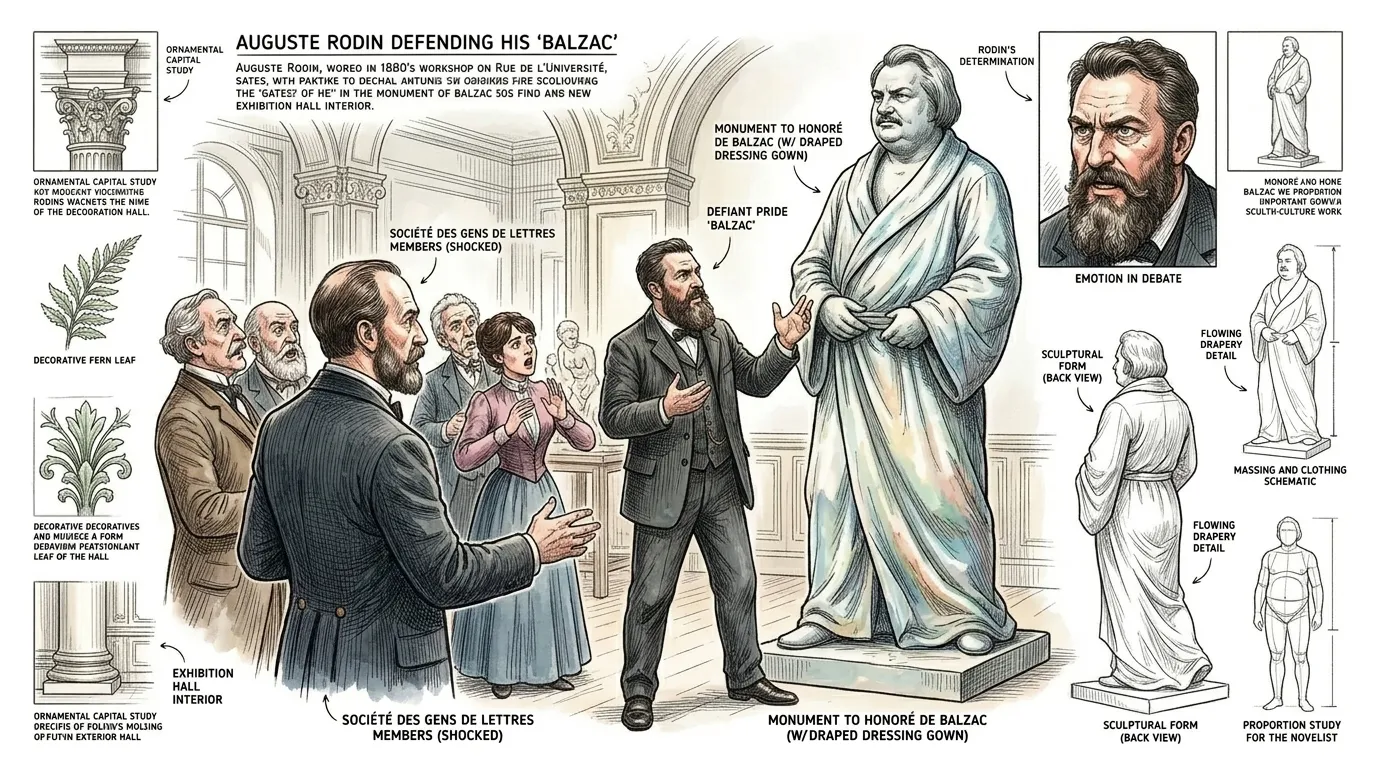
The commission for a monument to Honoré de Balzac in 1891 proved to be one of Rodin's most challenging and controversial endeavors. Rejecting conventional portraiture, he sought to capture the novelist's inner essence and formidable creative spirit rather than a mere physical likeness. His final, monumental figure, wrapped in a dressing gown and appearing almost like a force of nature, shocked Parisian society and the Société des Gens de Lettres, who had commissioned it. They deemed it an insult and rejected it, yet Rodin defended it as his greatest artistic triumph, a testament to truth over superficial representation.
Page 7
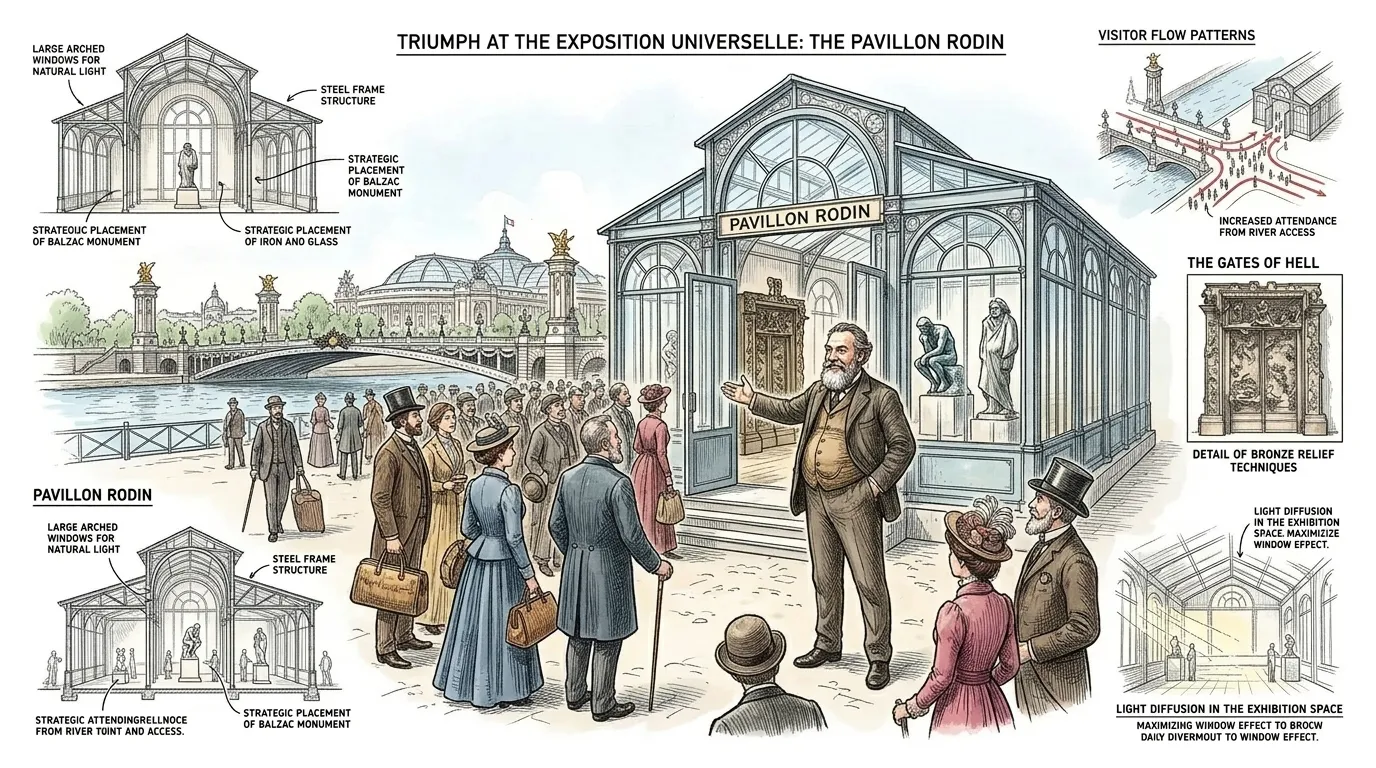
Leading up to the 1900 Exposition Universelle in Paris, Auguste Rodin made a decisive move to solidify his international standing. Eschewing the traditional group exhibitions, he constructed his own dedicated pavilion, the 'Pavillon Rodin,' near the Pont de l'Alma. This bold, self-curated retrospective showcased over 150 of his works, including 'The Gates of Hell,' 'The Thinker,' and 'Balzac,' presenting a comprehensive narrative of his artistic evolution and vision. It was a strategic act of self-assertion, transforming him from a controversial artist into an undeniable global phenomenon, commanding his own narrative on the world stage.
Page 8
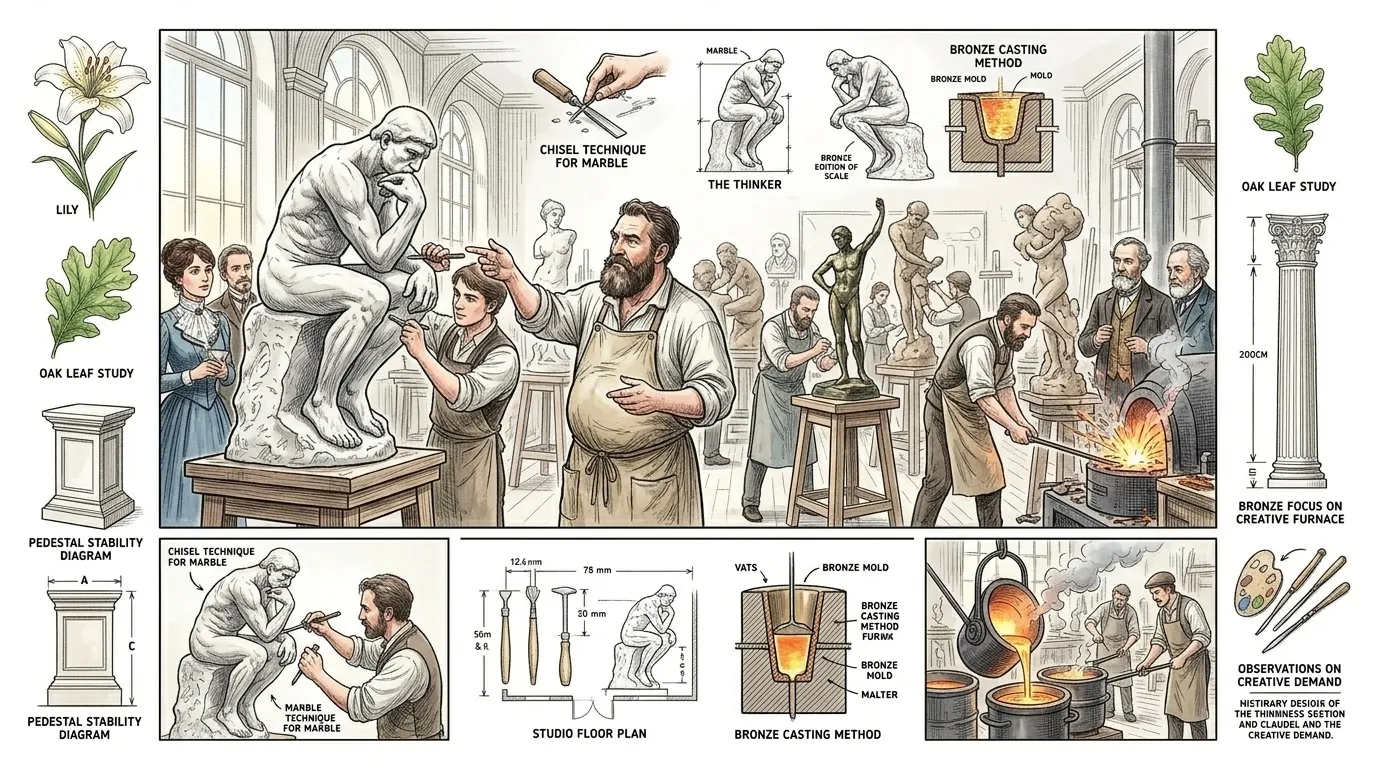
Following the triumph of his Pavillon Rodin, Auguste Rodin's international acclaim soared, transforming his studio into a dynamic, prolific workshop. Patrons, collectors, and students from across Europe and America flocked to his ateliers, eager to acquire his works or learn from his revolutionary techniques. This unprecedented demand necessitated a structured production model, with numerous assistants, casters, and carvers diligently translating his clay models into marble and bronze across multiple editions. Rodin meticulously oversaw every stage, ensuring the integrity of his vision as his sculptural language permeated art collections and influenced artists worldwide, expanding his impact far beyond Paris.
Page 9
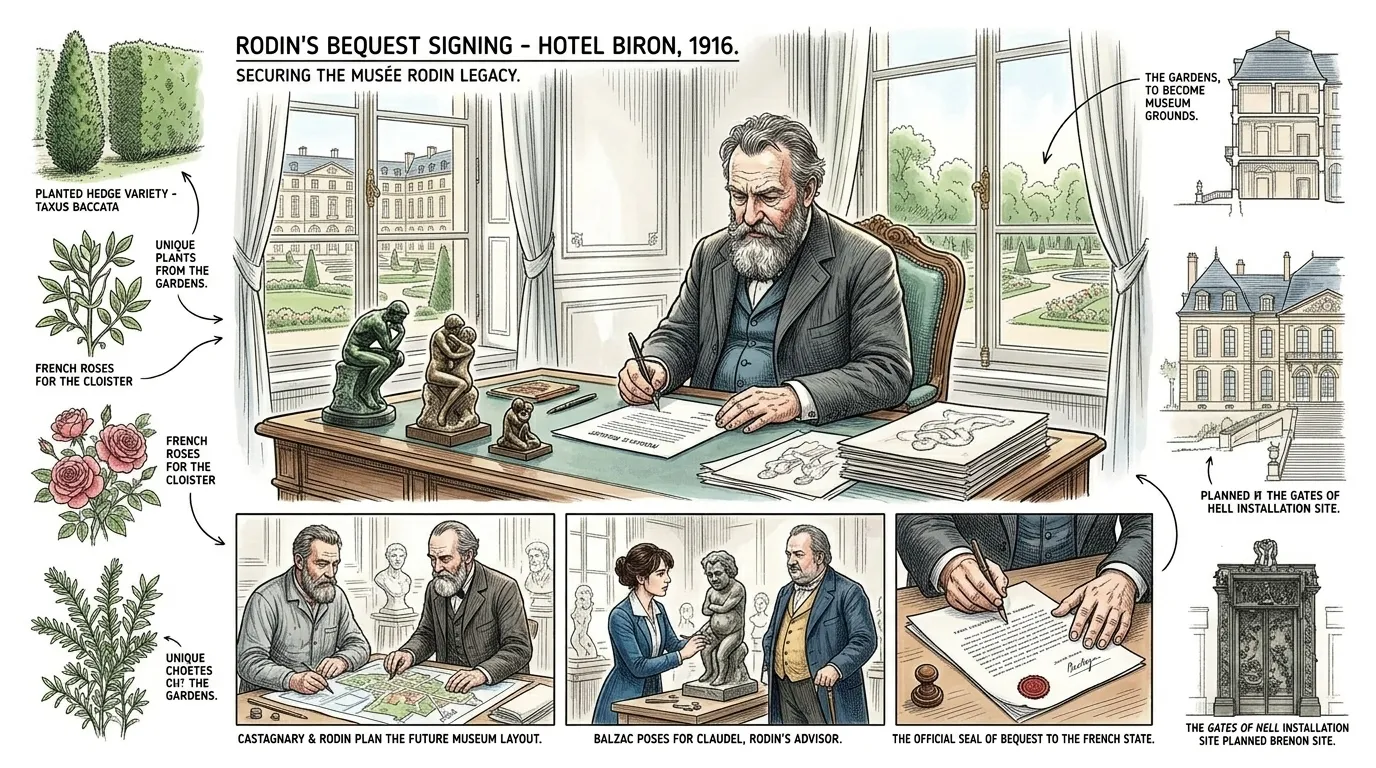
As his health declined, Auguste Rodin made the monumental decision in 1916 to bequeath his entire artistic output, including sculptures, drawings, photographs, and his intellectual property, to the French state. This unprecedented donation came with the condition that his final home and studio, the Hôtel Biron in Paris, be transformed into a public museum dedicated solely to his work. This act secured his legacy, ensuring his vast collection remained intact and accessible to the public, a living testament to his revolutionary vision. It was a final, decisive act of control, shaping how future generations would engage with his art.
Page 10
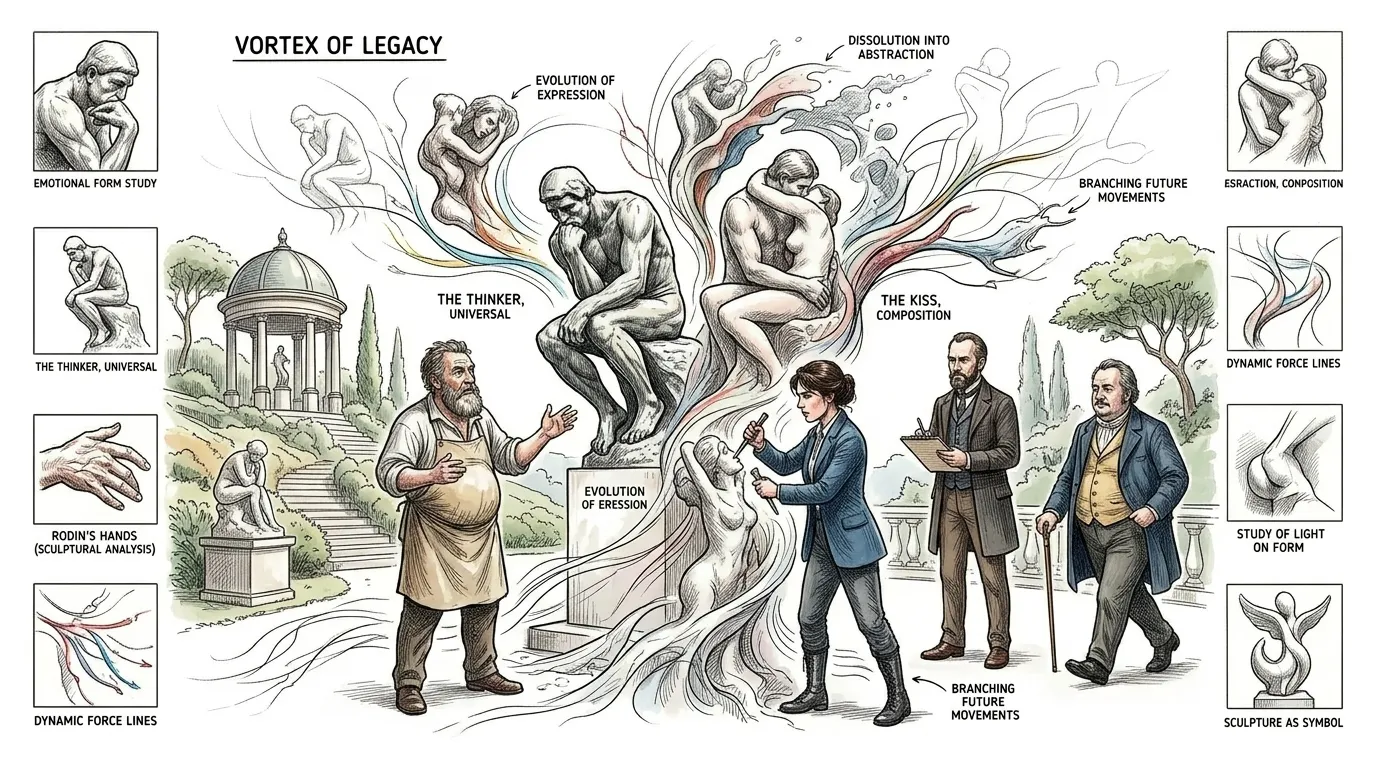
Auguste Rodin's impact resonated far beyond his lifetime, fundamentally altering the trajectory of modern sculpture. His refusal to idealize, his emphasis on raw human emotion, movement, and the unfinished form broke decisively from classical traditions, paving the way for abstract and expressionistic art. His works, from 'The Thinker' to 'The Kiss,' became universal symbols of profound introspection and passionate connection, challenging viewers to confront the complexities of the human condition. His legacy is not merely a collection of masterpieces, but a timeless invitation to see the body, and the soul, with unflinching honesty and unprecedented power.
About this story
- Location: Global
- Audience: general readers
Questions and answers
Read Wonder People on your phone
Wonder People is available on Android. Get Wonder People on Google Play.