Charles Babbage
Charles Babbage — an illustrated biography story, set in Global. 10 illustrated pages, free to read on Wonder People.
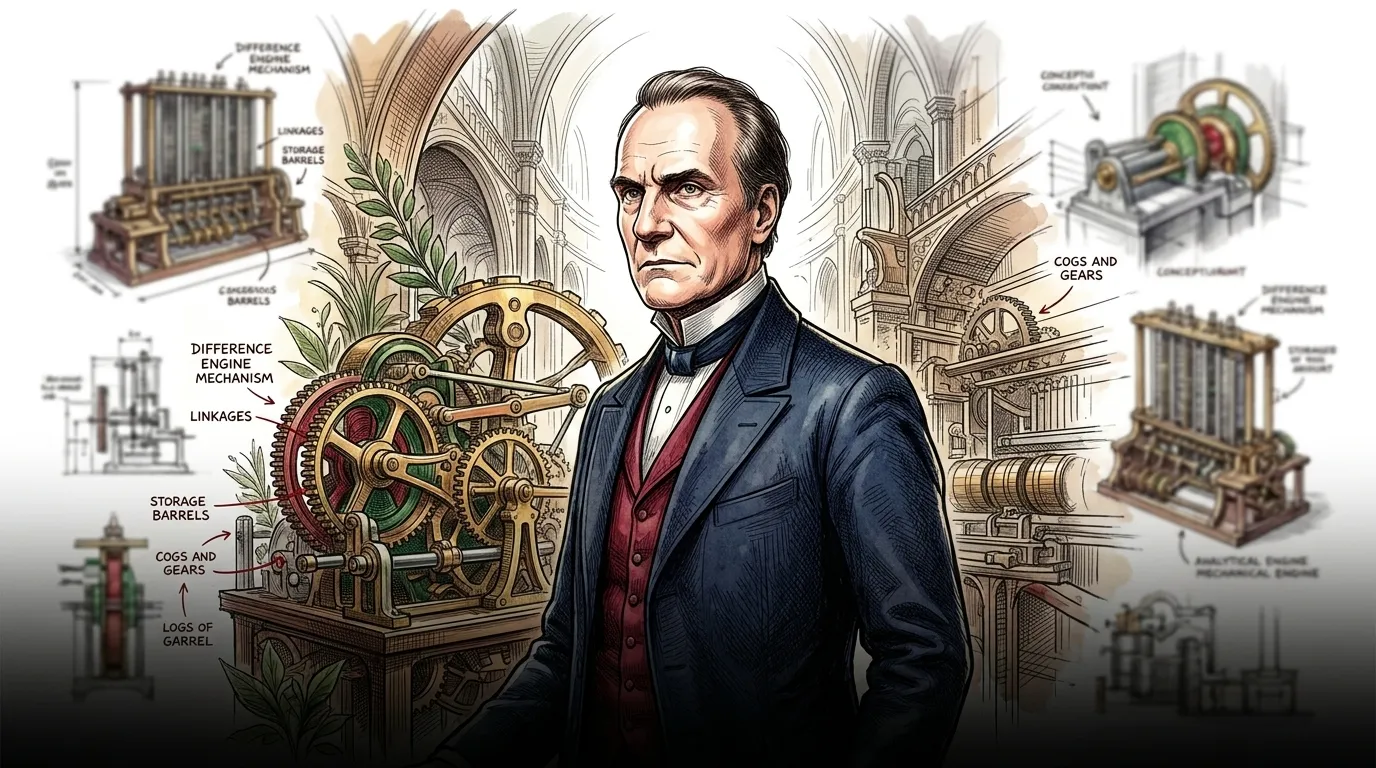
Page 1
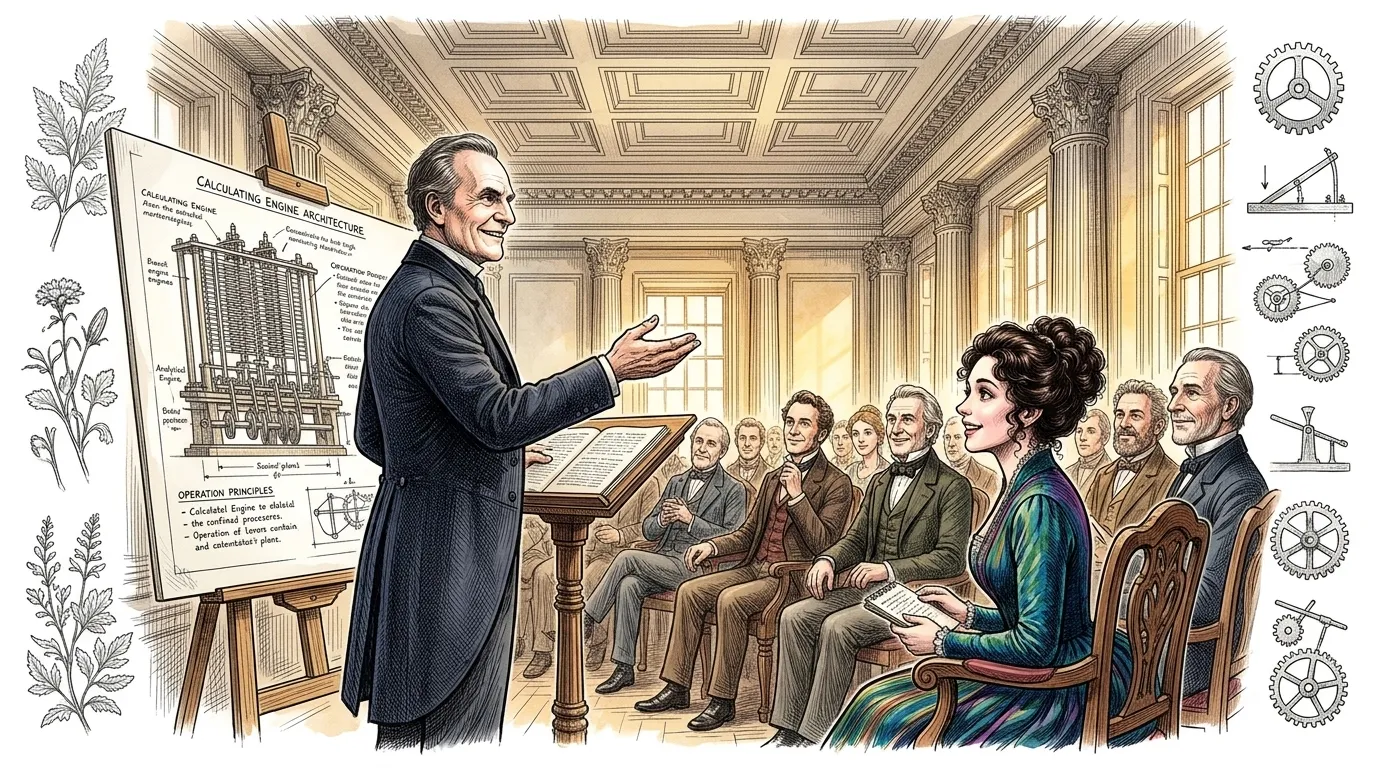
In London, amidst the hallowed halls of the Royal Society in 1837, Charles Babbage stood before a gathering of the era's foremost scientific minds. His intricate drawings and detailed specifications for the Analytical Engine laid bare a vision transcending mere calculation, proposing a universal machine capable of executing any mathematical operation programmatically. This audacious concept, which promised to revolutionize computation, captivated Ada Lovelace, daughter of Lord Byron, whose incisive understanding recognized its profound implications beyond arithmetic. He articulated a machine that could not only process numbers but also manipulate symbols, a staggering proposition that defied the limits of contemporary thought, demanding 100,000 precisely engineered components to realize.
Page 2
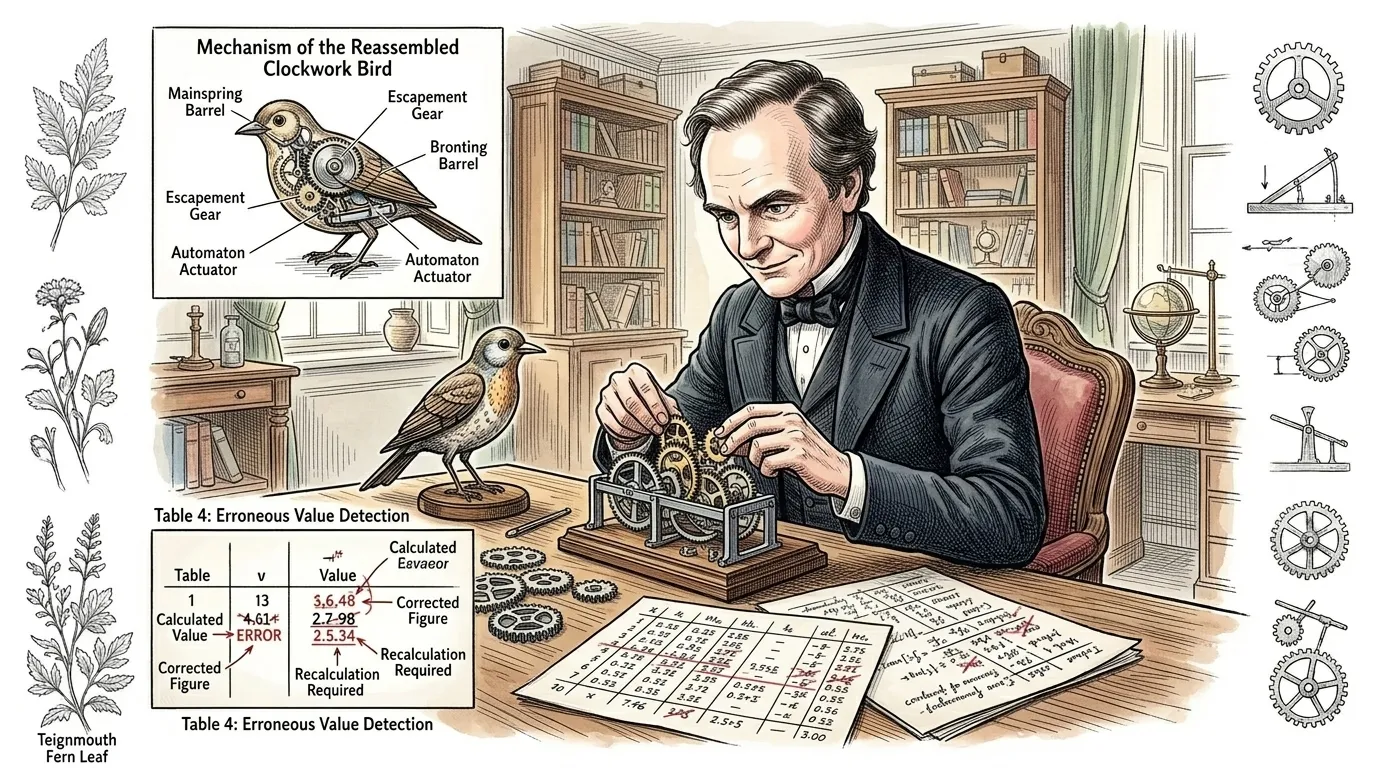
Born in Teignmouth, Devon, England, in 1791, Charles Babbage's early life revealed an insatiable curiosity for mechanics and mathematics. From a young age, he dismantled and reassembled mechanical toys, driven by a profound need to understand their inner workings. His fascination extended to the precise logic of numbers, recognizing their inherent order but also the ubiquitous human errors that plagued mathematical tables—errors that could lead to catastrophic miscalculations in navigation, engineering, and science. This early exposure to the fallibility of manual calculation ignited a lifelong quest for perfect, automated precision.
Page 3
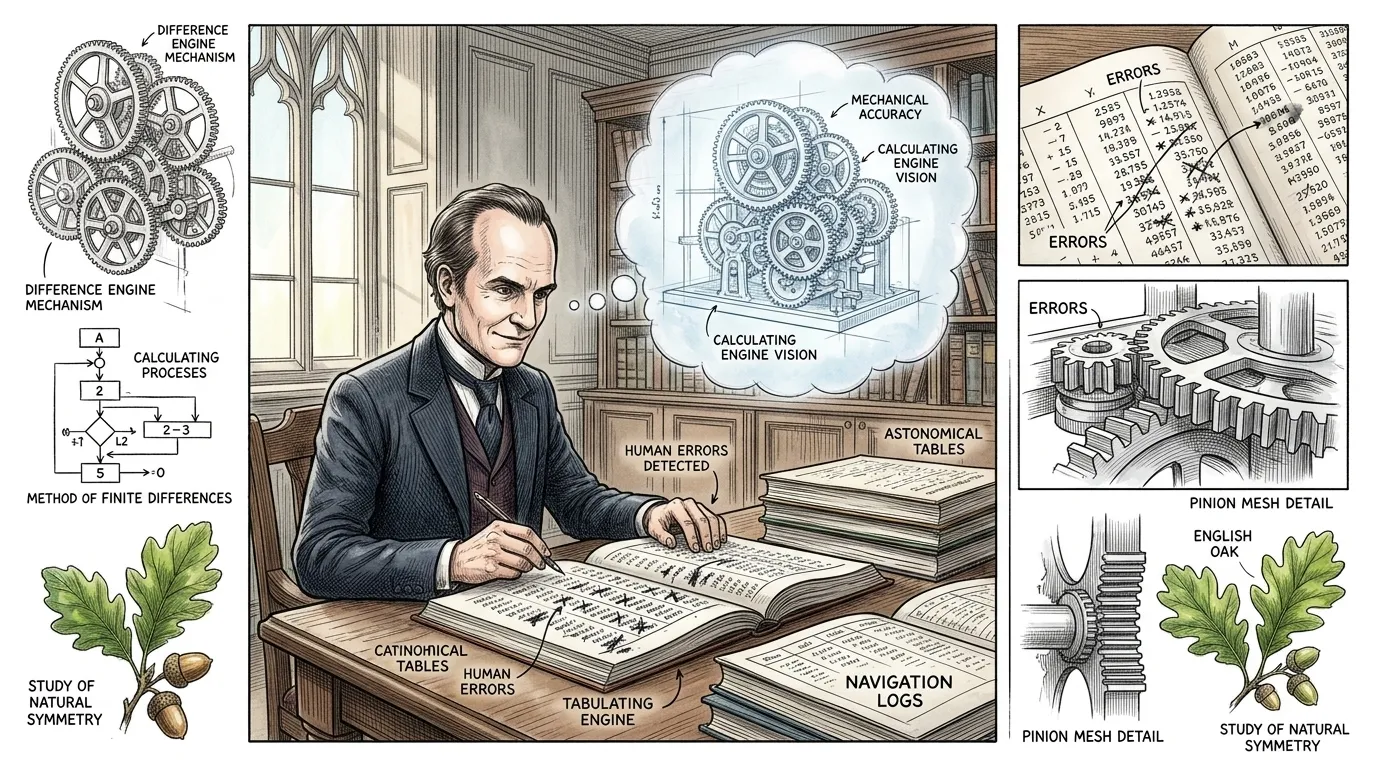
The catalyst for Babbage's revolutionary thinking struck him at Cambridge, while proofreading mathematical tables riddled with human errors. He envisioned a mechanism that could perform these tedious calculations with unerring accuracy, eliminating the fallibility of manual transcription. This initial spark, born from frustration with human imperfection, solidified into the concept of the Difference Engine, a specialized automatic calculator designed to compute polynomial functions. The realization that machines could transcend human limitations in repetitive, precise tasks galvanized his commitment to a monumental engineering challenge.
Page 4
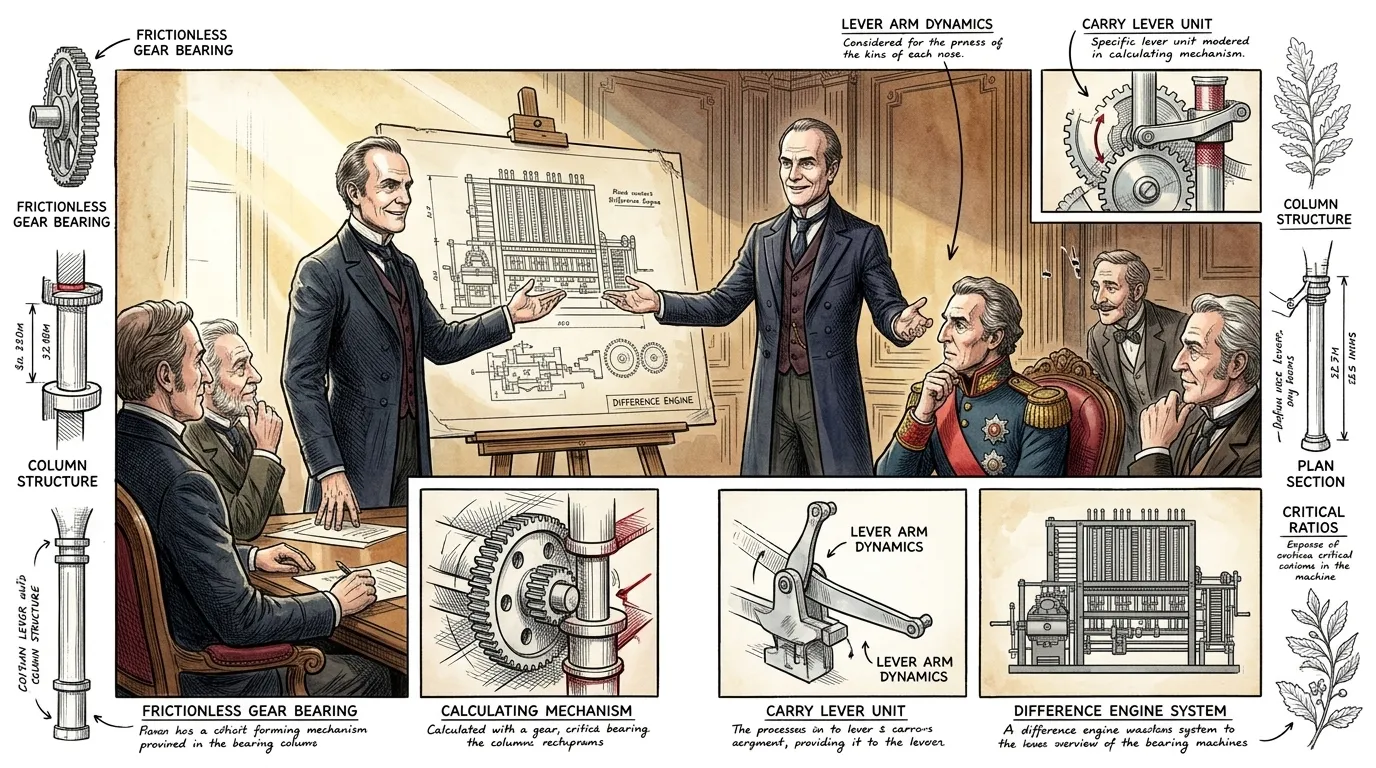
In 1823, Babbage successfully petitioned the British government for funding to construct the Difference Engine. He presented his compelling case for a machine that would produce reliable navigation tables, crucial for Britain's maritime dominance. Lord Wellington and other influential figures were convinced by the promise of unfailing accuracy and national prestige. This secured a grant of 1,500, marking the first government investment in a calculating machine, an unprecedented commitment to a project that would demand not only immense capital but also push the very boundaries of mechanical engineering.
Page 5
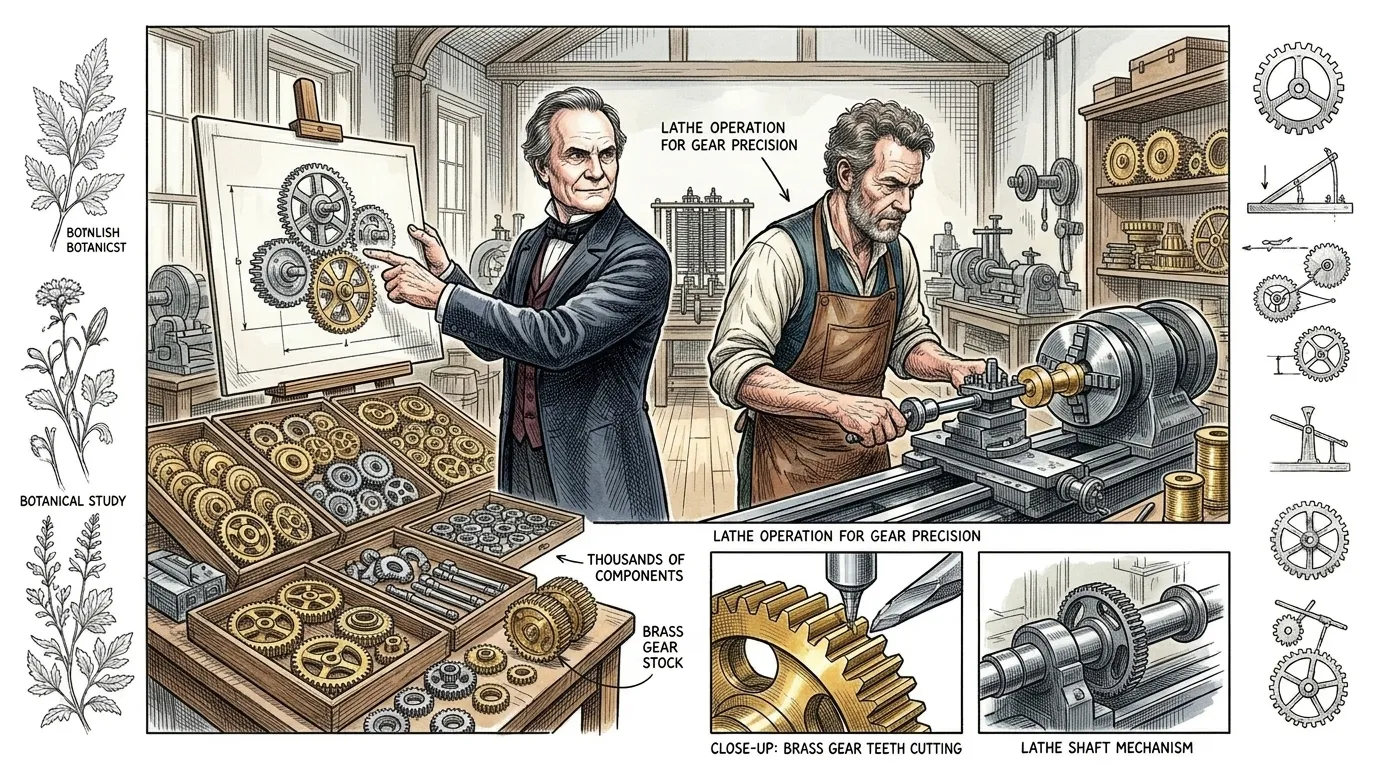
The practical challenges of constructing the Difference Engine were immense, demanding precision far beyond contemporary manufacturing capabilities. Babbage enlisted Joseph Clement, a master toolmaker and machinist, whose unparalleled skill transformed Babbage's theoretical designs into tangible brass and steel. For years, Babbage's workshop in Dorset Street buzzed with the grinding and shaping of thousands of bespoke components. This collaboration, though often fraught with friction over uncompromising standards, marked a critical phase where abstract mathematical principles began to take physical form, forging not just a machine but a new paradigm of industrial accuracy.
Page 6
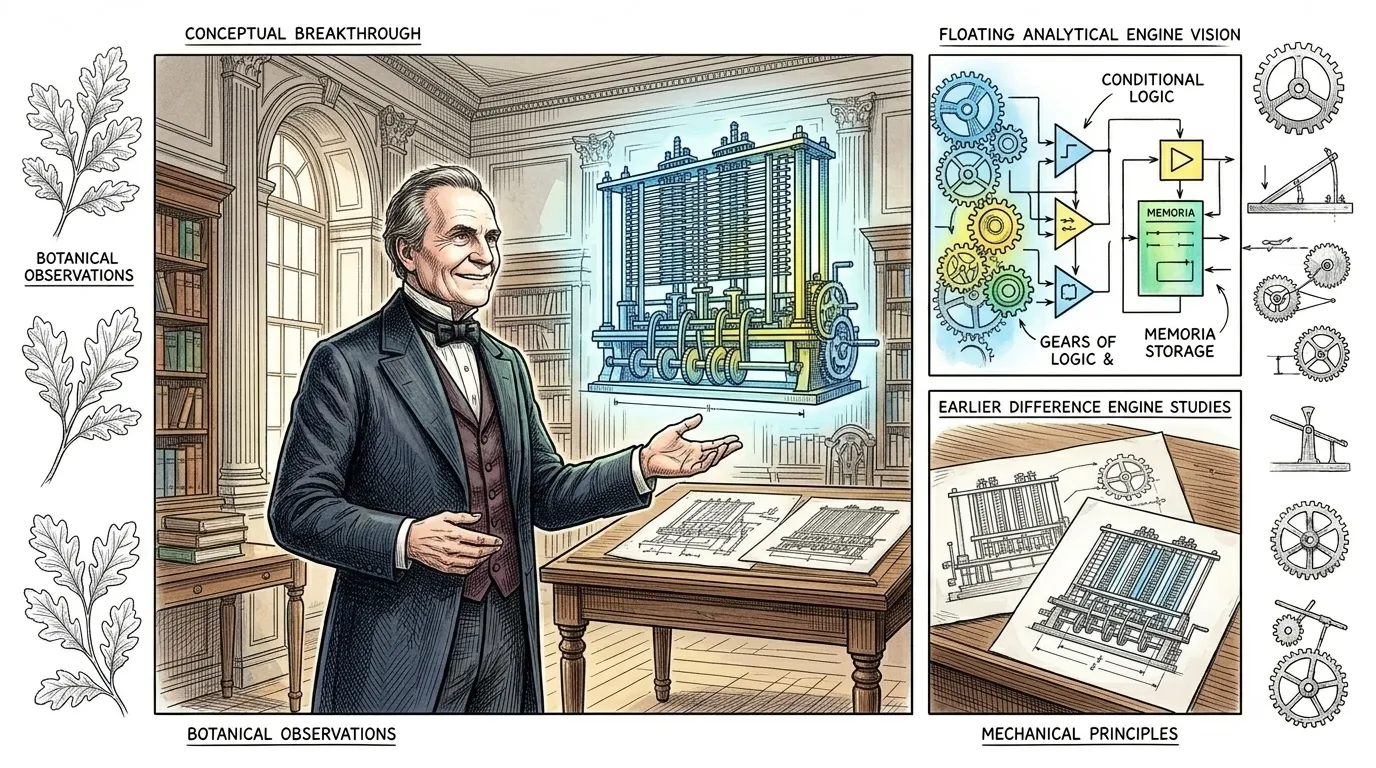
Even as the Difference Engine slowly took shape, Babbage's mind pressed beyond its specific limitations. He recognized that a machine capable of solving any mathematical problem, not just polynomial functions, was theoretically possible. This leap in conceptual design, from a specialized calculator to a general-purpose programmable computer, birthed the Analytical Engine. Babbage, like Isaac Newton before him, stood on the 'shoulders of giants,' building upon his own earlier work and the broader mathematical landscape, to conceive a machine that could process conditional logic, loops, and even store instructions—features essential to modern computing. He articulated his vision, a departure so radical it seemed almost fantastical, even to his most ardent supporters.
Page 7
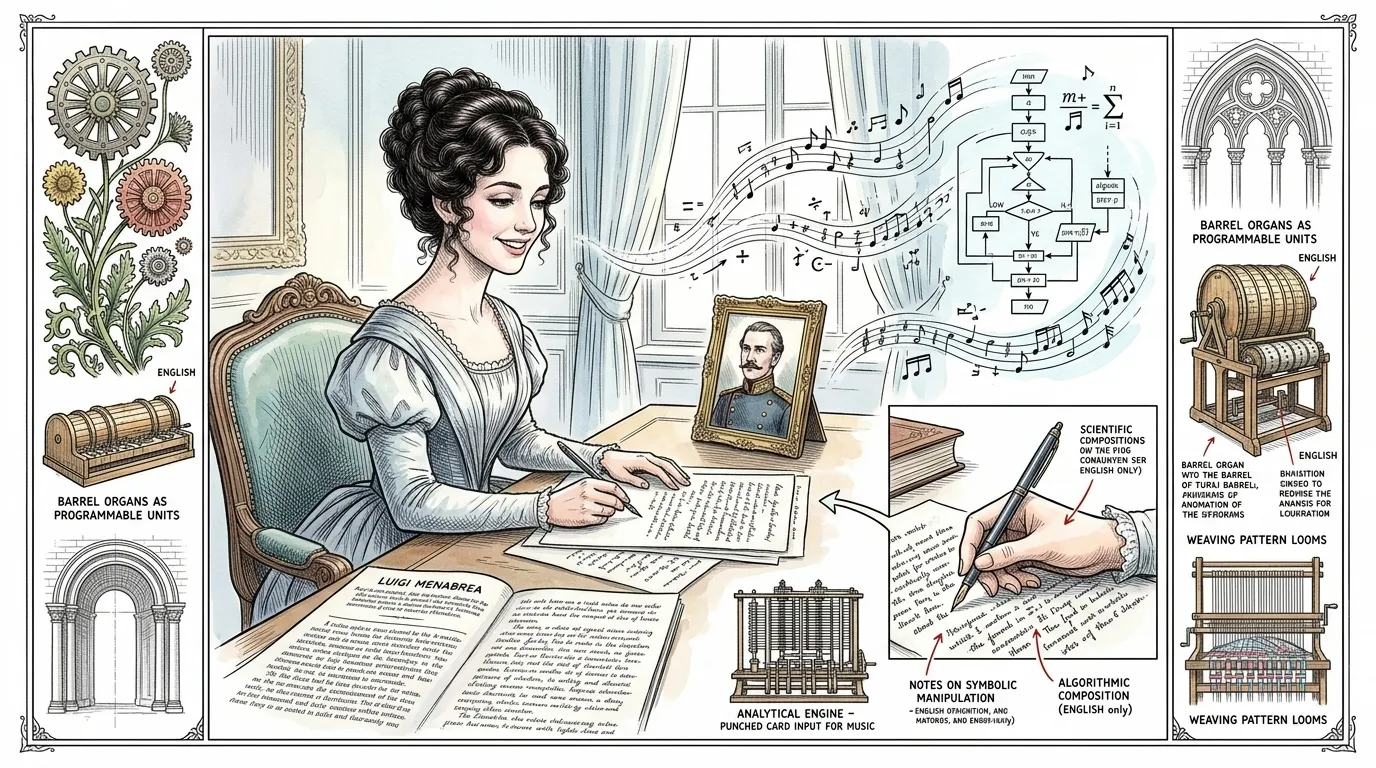
Ada Lovelace, deeply impressed by Babbage's designs, became his most significant collaborator and interpreter. She translated Italian military engineer Luigi Menabrea's article on the Analytical Engine, but critically, she added her own extensive notes, three times longer than the original text. In these notes, Lovelace articulated how the Analytical Engine could go beyond mere numerical calculation, envisioning its capacity to manipulate symbols and even compose music. She published what are now recognized as the world's first computer programs, detailed step-by-step operations for the Analytical Engine, thereby laying the theoretical groundwork for software development a century before the technology existed.
Page 8
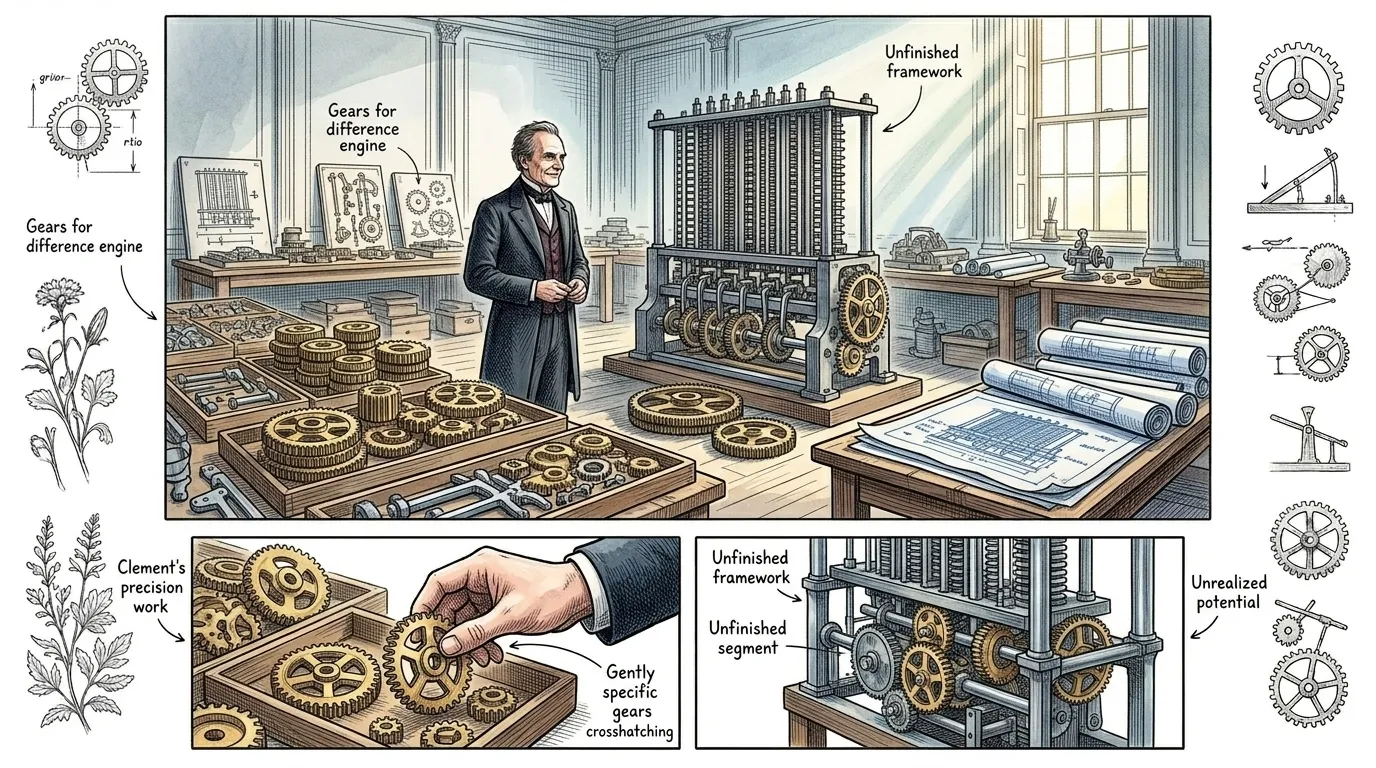
Despite the intellectual breakthroughs, the practical construction of the Difference Engine stalled. After nearly two decades and a staggering 17,000 of public funds—more than the cost of a battleship—the British government withdrew its support in 1842. The project was too expensive, too complex, and Babbage's frequent shifts in focus towards the even more ambitious Analytical Engine alienated his patrons. Charles Babbage was left with vast, intricate plans, thousands of perfectly crafted components, but no finished machine. His workshop became a mausoleum of an unbuilt future, a testament to a vision too grand for its era.
Page 9
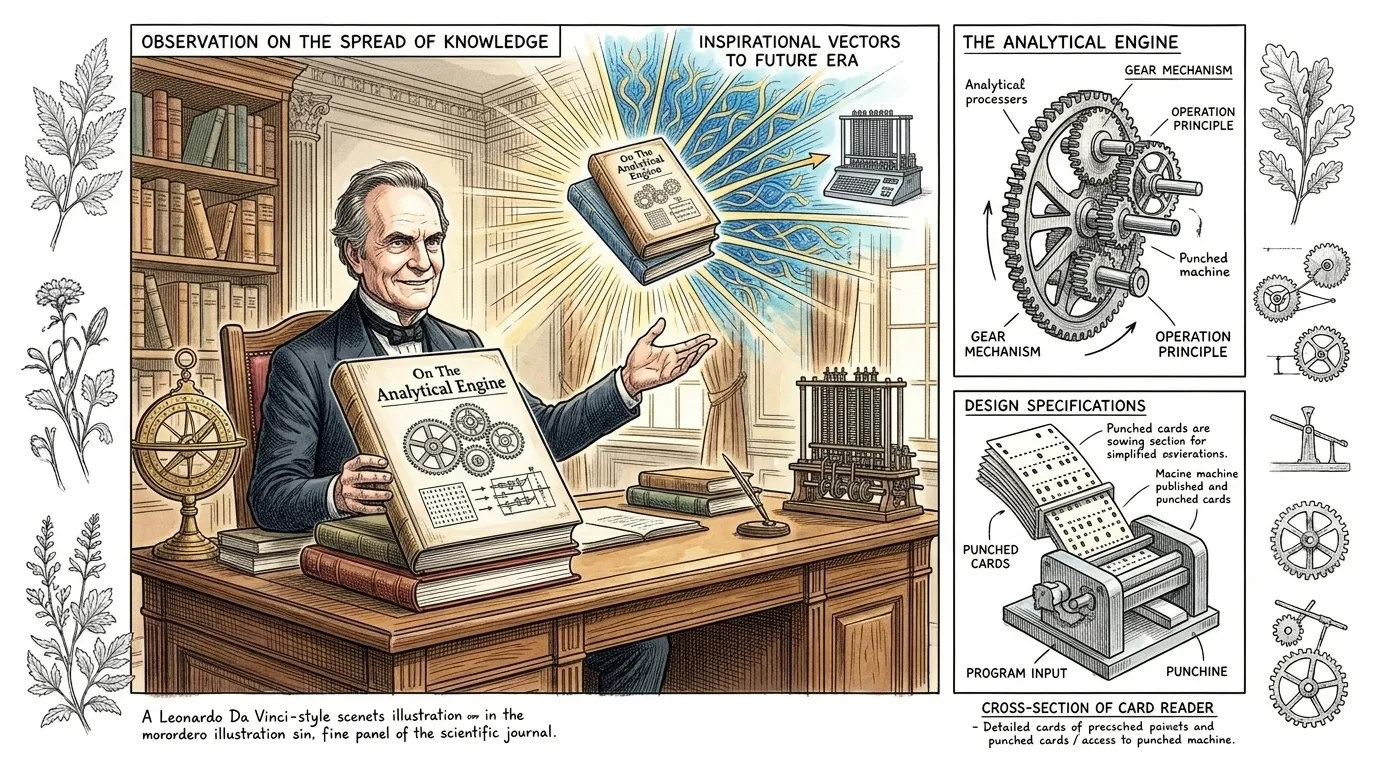
Throughout his life, Babbage continued to publish extensively on his Analytical Engine, tirelessly advocating for its potential. He faced a constant tension between intellectual admiration for his designs and practical skepticism regarding their feasibility. While he never saw a complete engine built, his meticulous drawings and detailed operational descriptions inspired later generations. His unwavering belief in the power of mechanical computation, even in the face of public indifference and financial ruin, solidified his reputation as a visionary, though one often misunderstood. He understood that the future belonged to machines capable of complex, automated thought, and his publications ensured that the blueprint for that future would endure.
Page 10
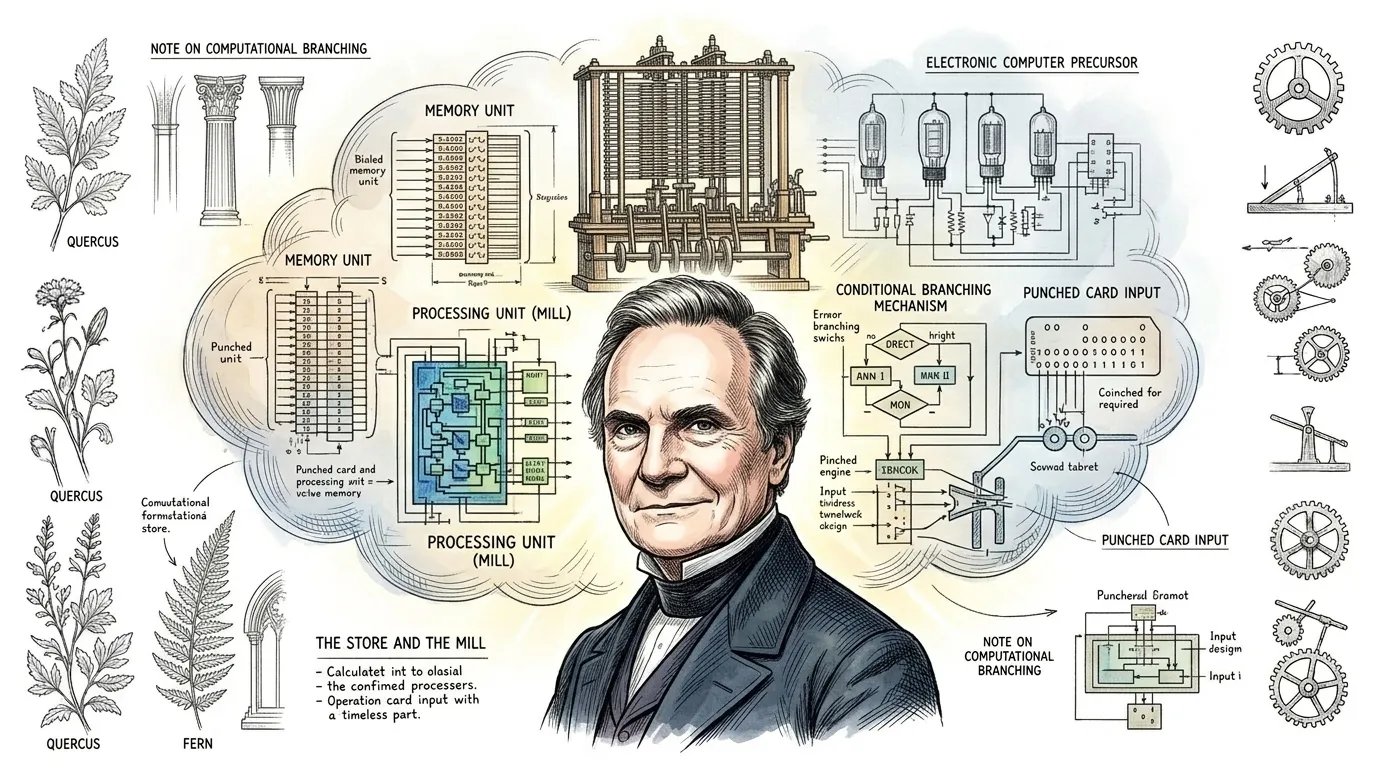
Charles Babbage died in 1871, his grand computing machines unrealized during his lifetime. Yet, his profound conceptual work on the Analytical Engine, with its separate memory and processing units, conditional branching, and punched card input, laid the foundational principles for every computer that followed. A century after his death, engineers building the first electronic computers looked back at his designs and recognized the blueprint. He is rightly hailed as the 'Father of the Computer,' his genius resonating through the digital age, a timeless testament to a mind that envisioned the future of information technology long before the world was ready to build it.
About this story
- Location: Global
- Audience: general readers
Questions and answers
Read Wonder People on your phone
Wonder People is available on Android. Get Wonder People on Google Play.