Cleopatra
Cleopatra — an illustrated biography story, set in Global. 10 illustrated pages, free to read on Wonder People.
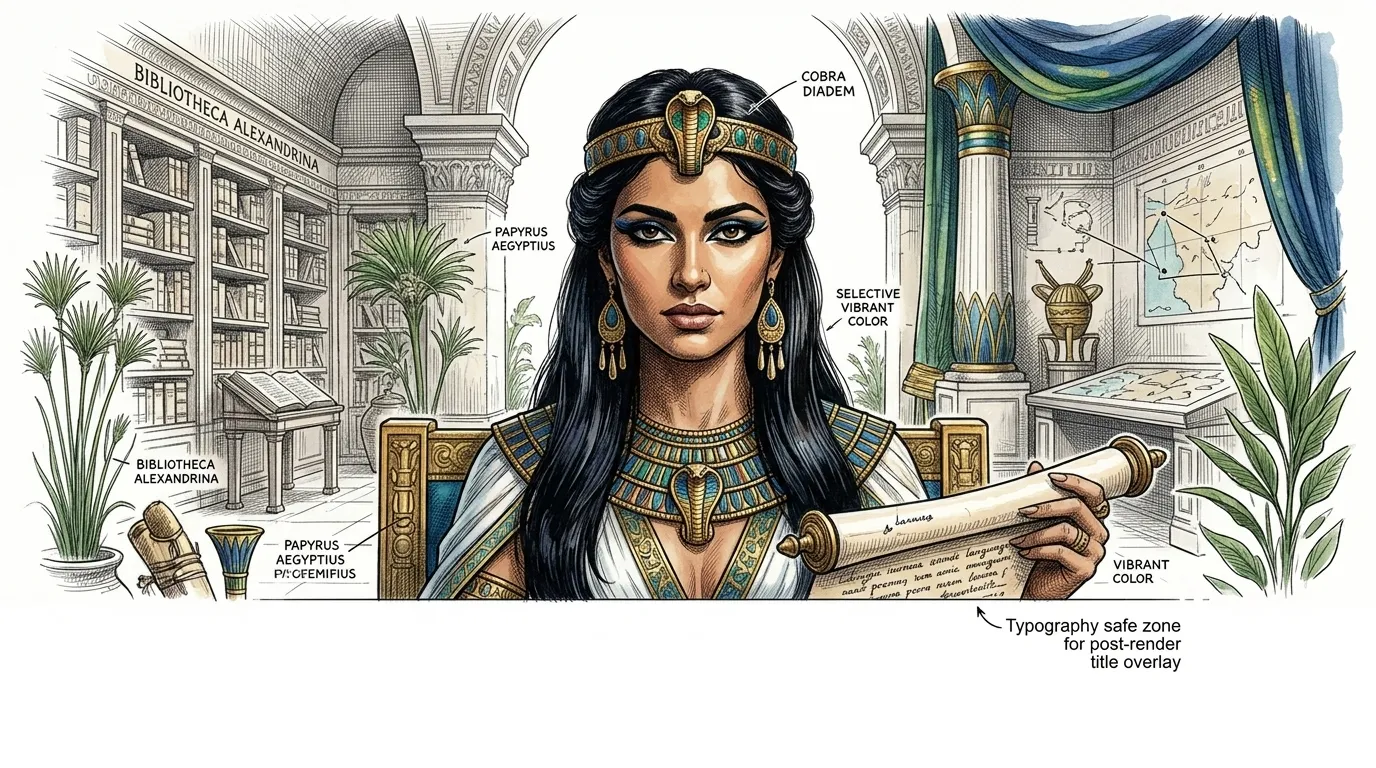
Page 1
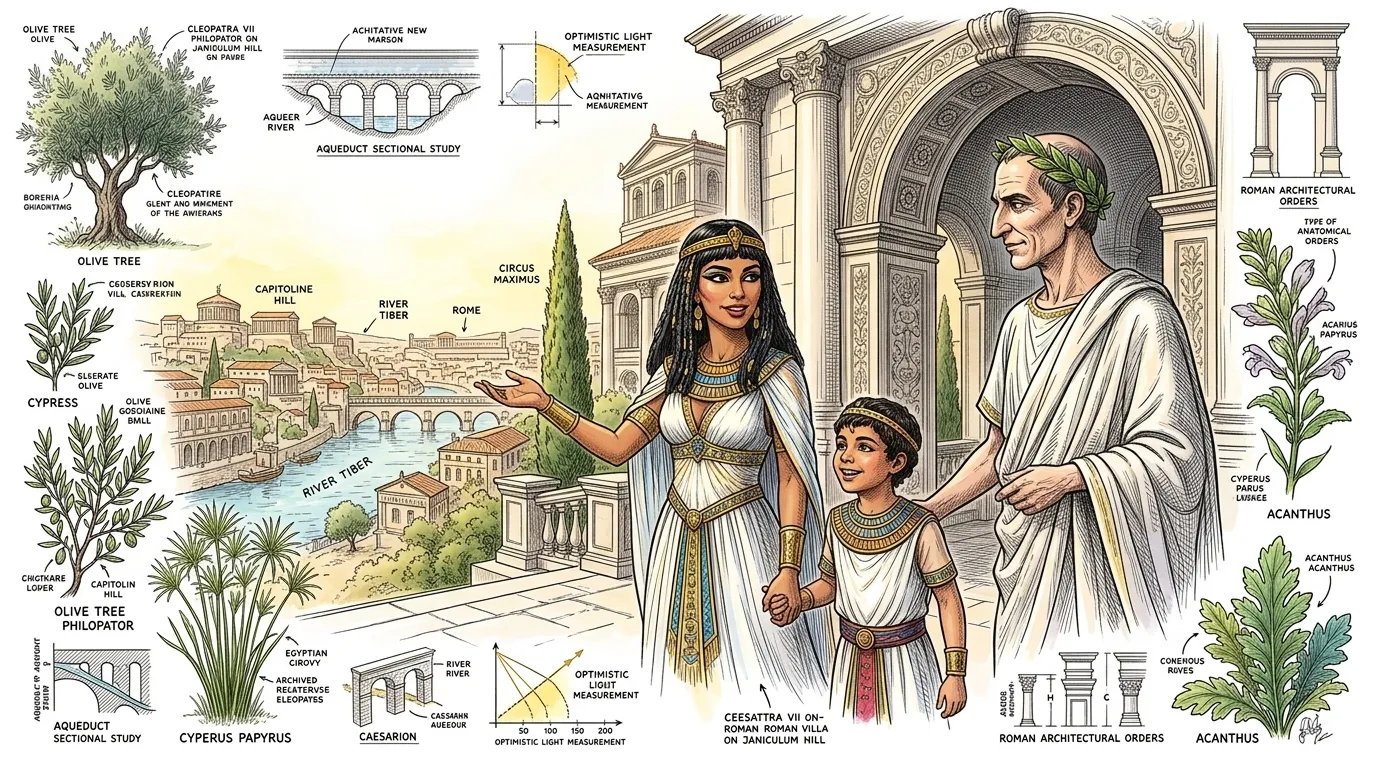
In 46 BCE, in the heart of Rome, Cleopatra VII Philopator made her formidable entrance, not as a captive, but as a sovereign queen, a direct challenge to Roman norms. She arrived alongside her son Caesarion, publicly acknowledging his paternity by Julius Caesar, an act that sent shockwaves through the Republic's elite. Her presence in Caesar's villa on the Janiculum Hill immediately asserted her political power and personal magnetism over Rome's most dominant figure, defying expectations of a conquered queen. Through this audacious maneuver, Cleopatra fundamentally altered the course of Roman politics, establishing her influence directly within its highest echelons and securing her dynasty's immediate future.
Page 2
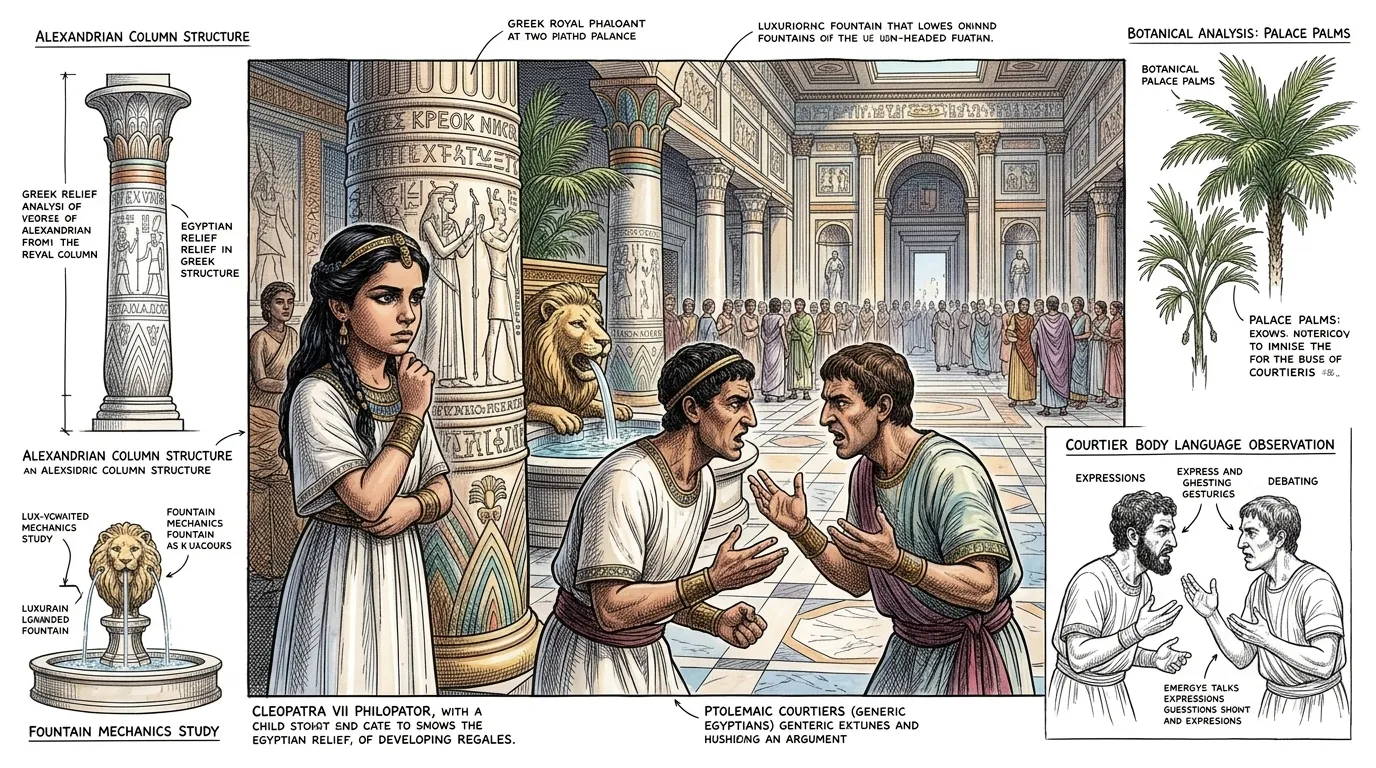
Born in 69 BCE into the Ptolemaic dynasty of Egypt, Cleopatra inherited a realm defined by immense wealth and constant internal strife, a Greek-speaking line ruling an ancient land. From her early years in the royal palace of Alexandria, she witnessed the treacherous power struggles endemic to her family, where siblings and rivals vied for the throne through assassination and manipulation. This volatile environment forged her understanding of power dynamics and the necessity of ruthless political acumen. She recognized that her lineage demanded more than mere succession; it demanded active, intelligent, and often brutal statecraft to survive.
Page 3
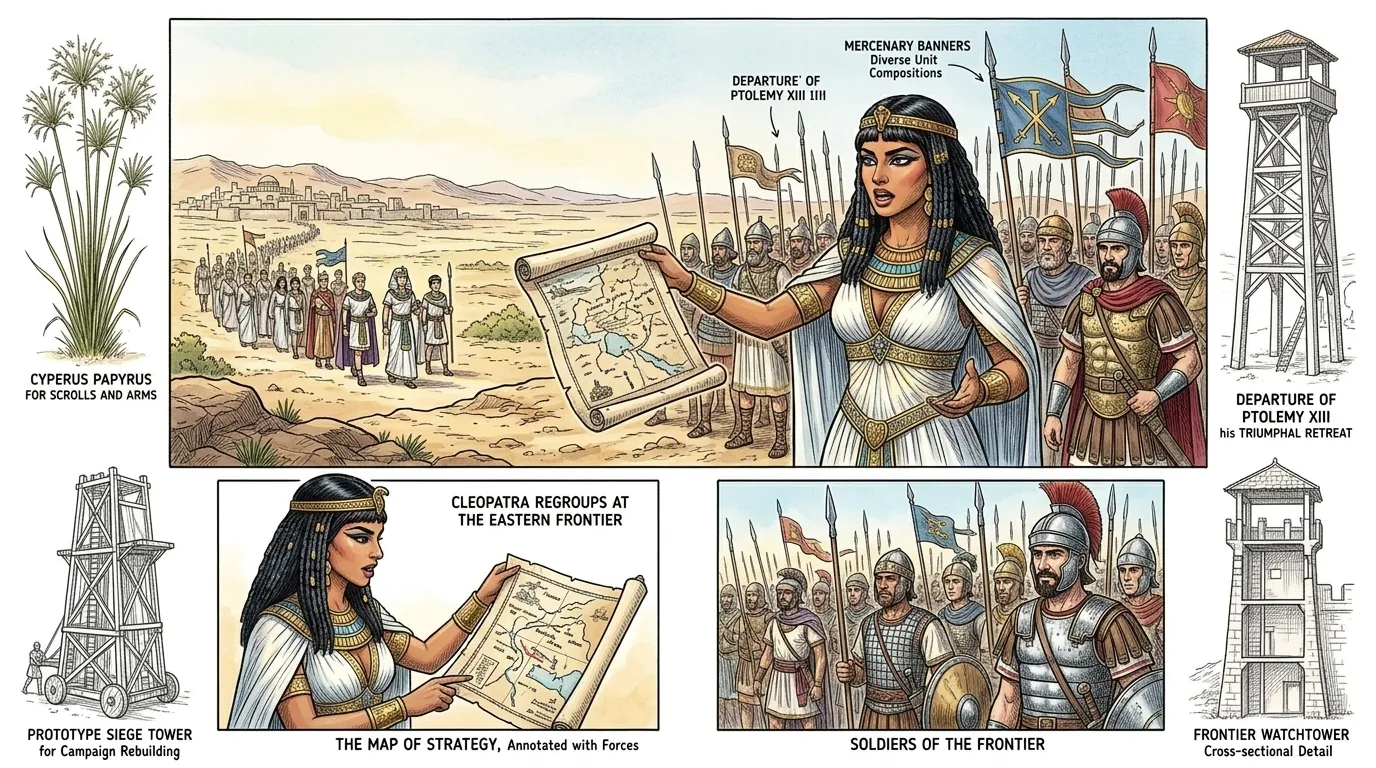
Ascending the throne in 51 BCE with her younger brother Ptolemy XIII, Cleopatra quickly faced the inherent instability of shared rule and the machinations of the Alexandrian court. Her independent spirit and strategic intelligence clashed with the established eunuchs and generals, leading to her expulsion from the city. Exiled to the eastern frontier, she did not retreat; instead, she began meticulously raising a mercenary army, demonstrating her resolve and capacity for leadership. This period of forced removal honed her military understanding and cemented her determination to reclaim her rightful place, transforming her from a deposed queen into a calculating commander.
Page 4
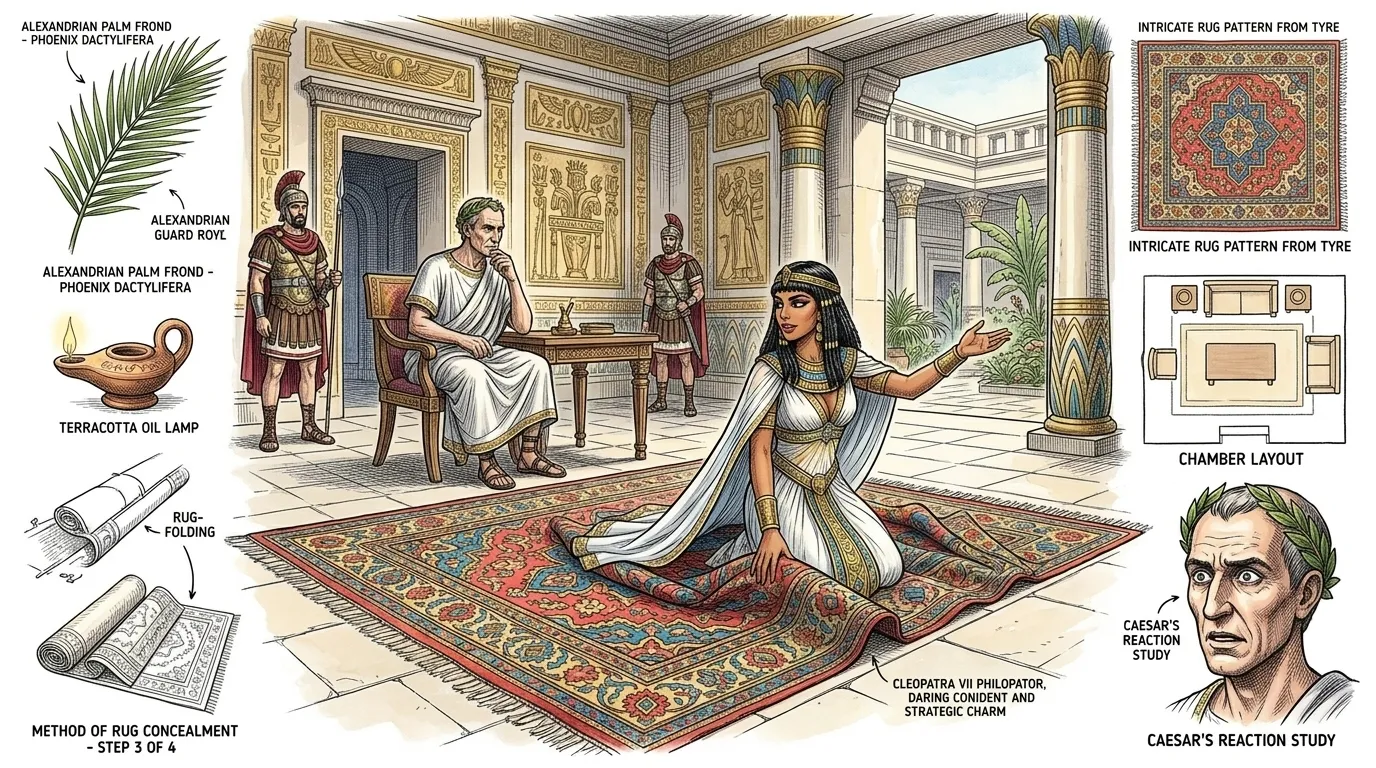
When Julius Caesar arrived in Alexandria in 48 BCE, embroiled in the Roman Civil War, Cleopatra recognized her singular opportunity. Facing the entrenched opposition of her brother Ptolemy XIII's faction, she orchestrated her now-legendary secret meeting with Caesar. Smuggled into the palace rolled inside a rug, she bypassed her enemies and directly confronted the most powerful man in the world, a daring act of personal diplomacy. This dramatic encounter ignited a strategic alliance, securing Caesar's support for her cause and initiating a relationship that would irrevocably link their destinies. It was a calculated gamble that paid immediate and profound dividends.
Page 5
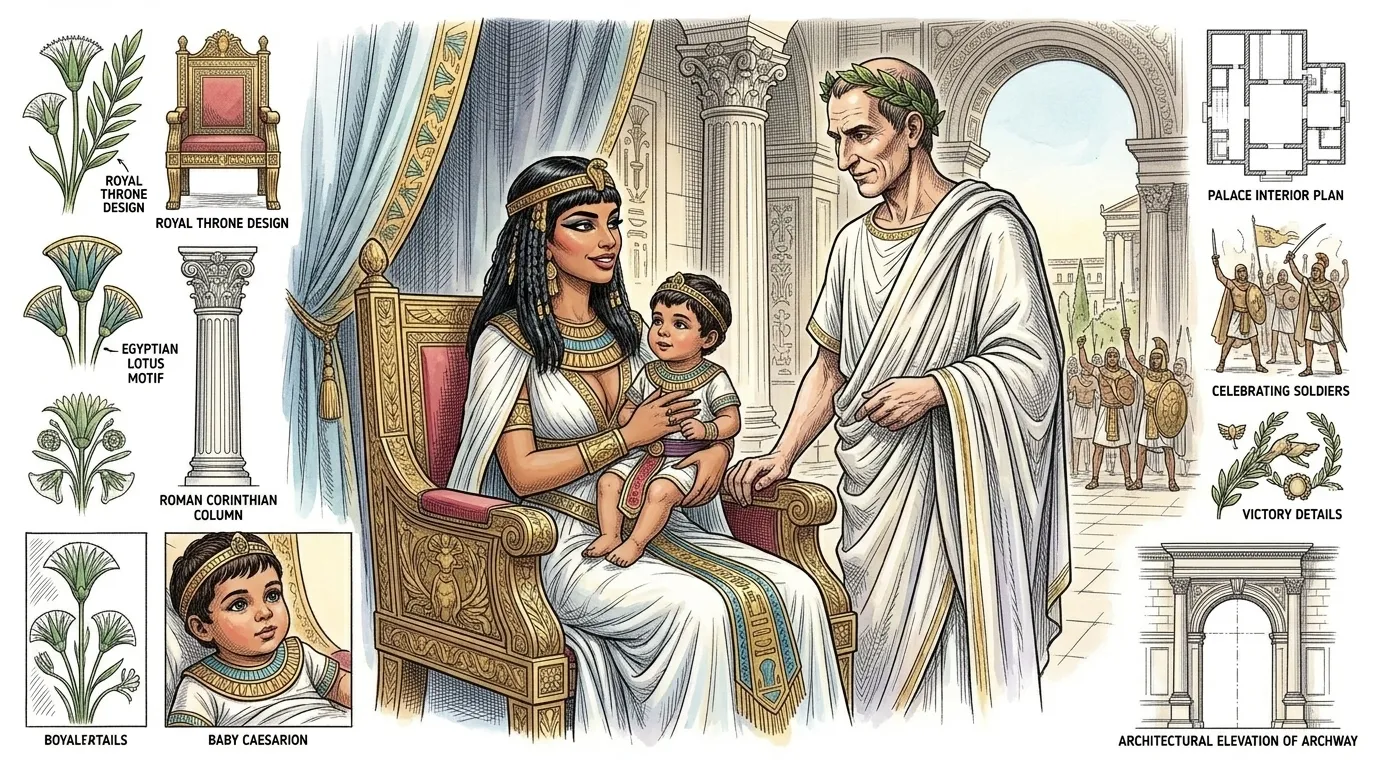
With Caesar's backing, Cleopatra swiftly crushed Ptolemy XIII's forces in the Alexandrian War, reclaiming her throne in 47 BCE and solidifying her rule over Egypt. Her position was further secured by the birth of Caesarion, her son with Julius Caesar, a living testament to their alliance and a potential heir to both Egyptian and, by implication, Roman influence. Her ability to secure the unwavering support of the Roman Republic's greatest general marked a decisive turning point. Through shrewd political maneuvering and a powerful personal bond, Cleopatra had not only survived but had strategically elevated her dynasty's standing in the Mediterranean world.
Page 6
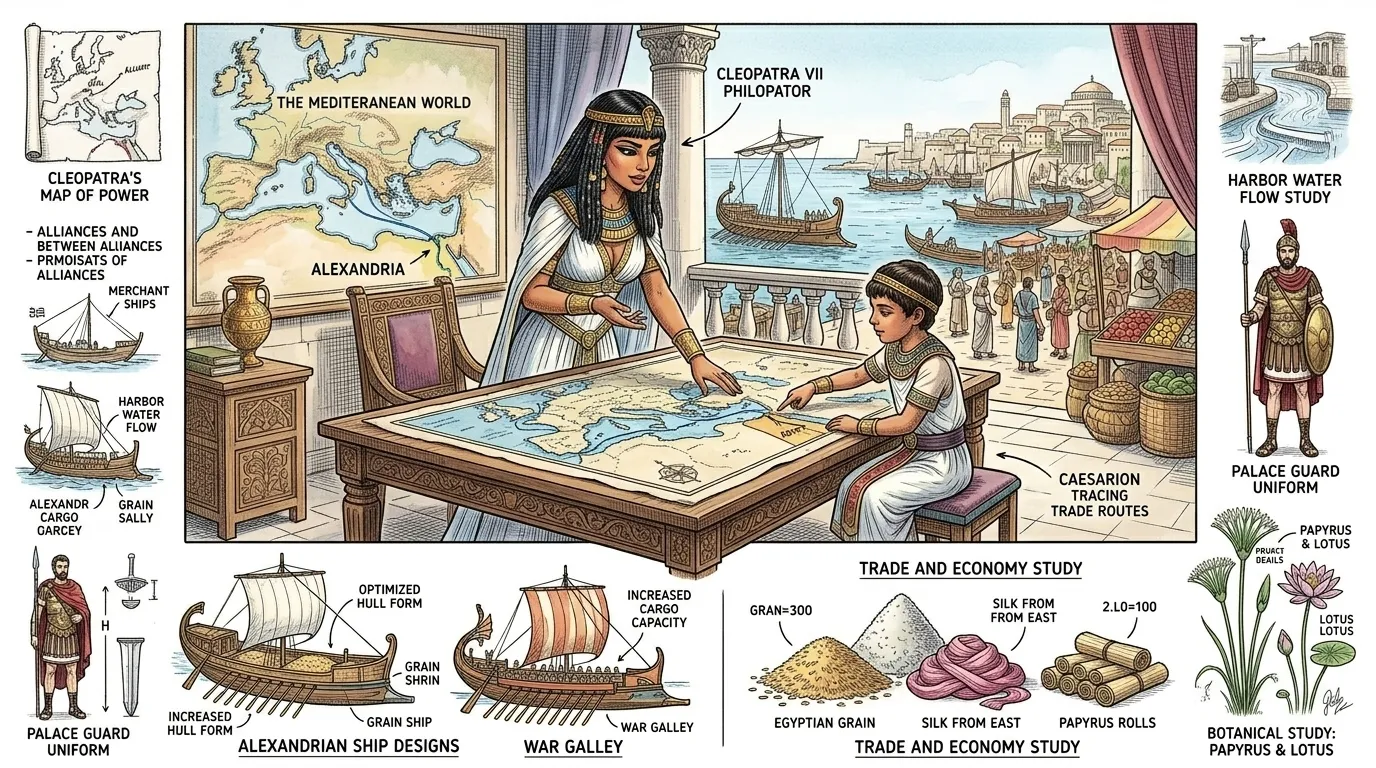
The assassination of Julius Caesar in 44 BCE plunged Rome into renewed chaos and left Cleopatra in a precarious position, severing her direct link to power. She returned to Egypt, consolidating her rule and protecting her son, Caesarion, now a symbolic anchor to Roman influence. Rather than despair, she focused on strengthening Egypt's economy and military, acutely aware that her nation's survival depended on its independence and its strategic value to any emerging Roman faction. Cleopatra waited, observing the brutal civil wars that consumed Rome, understanding that a new opportunity would eventually arise from the ashes of the old order.
Page 7
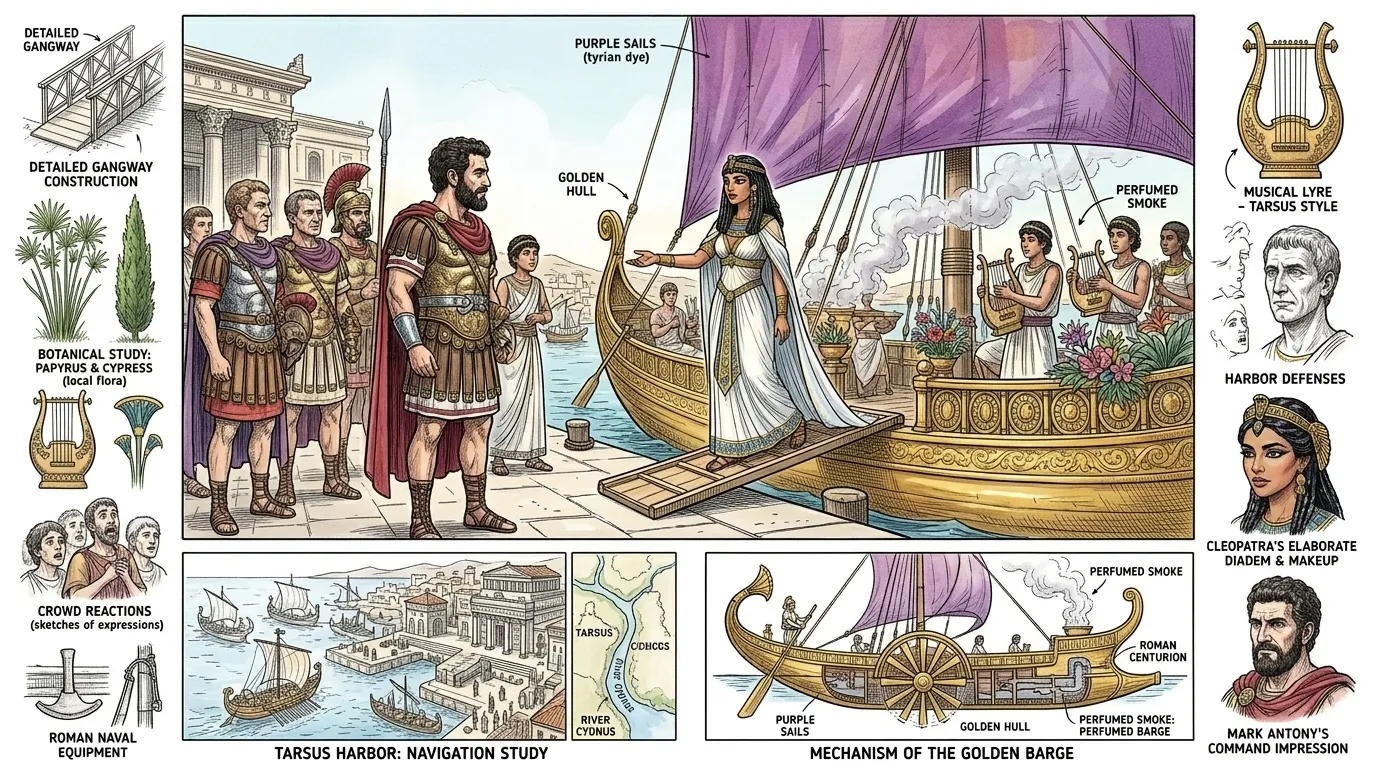
In 41 BCE, the triumvir Mark Antony summoned Cleopatra to Tarsus, ostensibly to account for her loyalty during Rome's civil war. She responded with an unforgettable display of opulence and calculated allure, arriving on a magnificent golden barge, its sails perfumed and its deck adorned. This grand entrance was not mere extravagance; it was a potent demonstration of Egypt's wealth and Cleopatra's sovereignty, designed to impress and subtly dominate the Roman general. Her strategic theatricality successfully captivated Antony, initiating a deep personal and political alliance that would shape the destiny of both Egypt and Rome for years to come.
Page 8
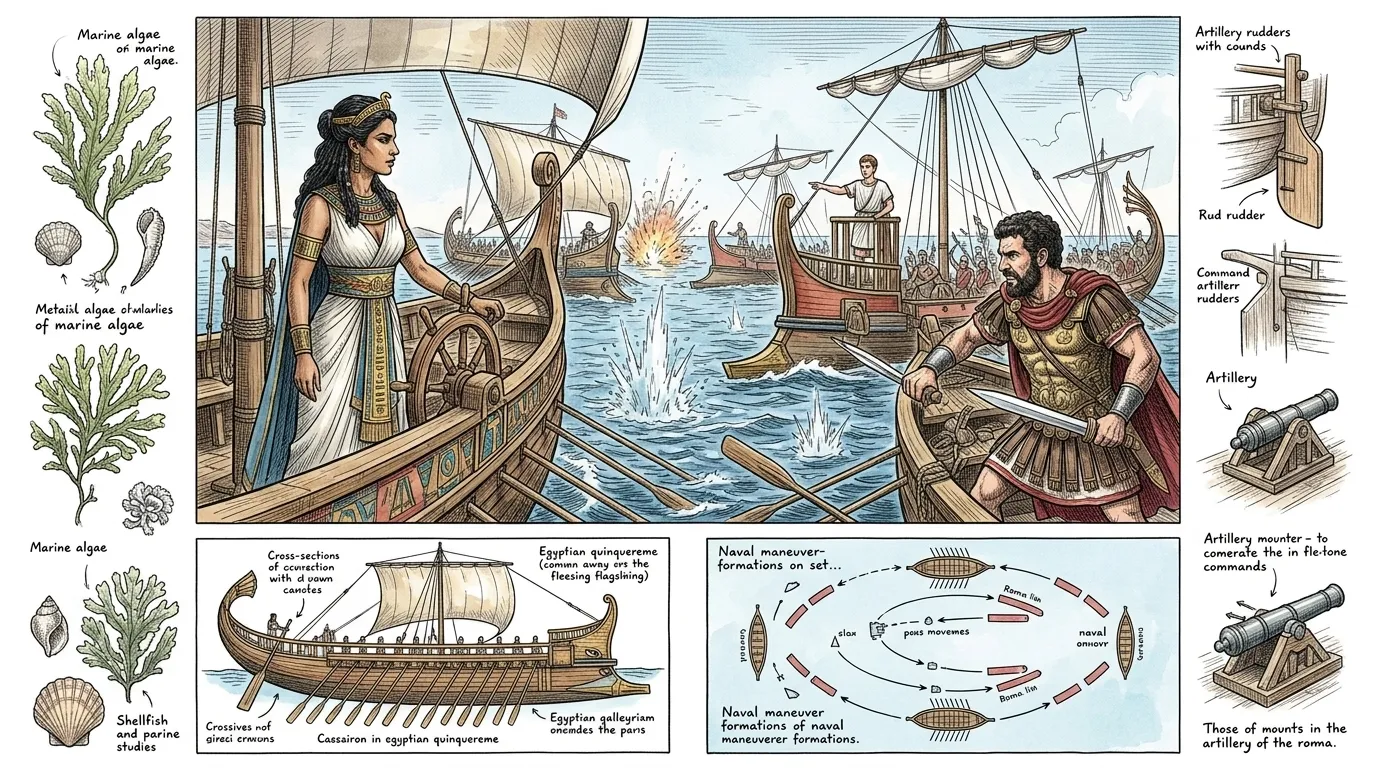
The alliance between Cleopatra and Mark Antony ultimately clashed with the rising power of Octavian, culminating in the monumental naval battle of Actium in 31 BCE. Cleopatra commanded a significant portion of the allied fleet, fighting fiercely alongside Antony against Octavian's forces. However, facing overwhelming odds and Antony's strategic miscalculations, her ships began to retreat in a desperate attempt to save their land forces and treasury. This decision, though pragmatic, was perceived as a betrayal by many, shattering morale and marking a catastrophic military defeat that irrevocably shifted the balance of power in the Roman world. The consequences of Actium were immediate and devastating, sealing the fate of the Ptolemaic dynasty.
Page 9
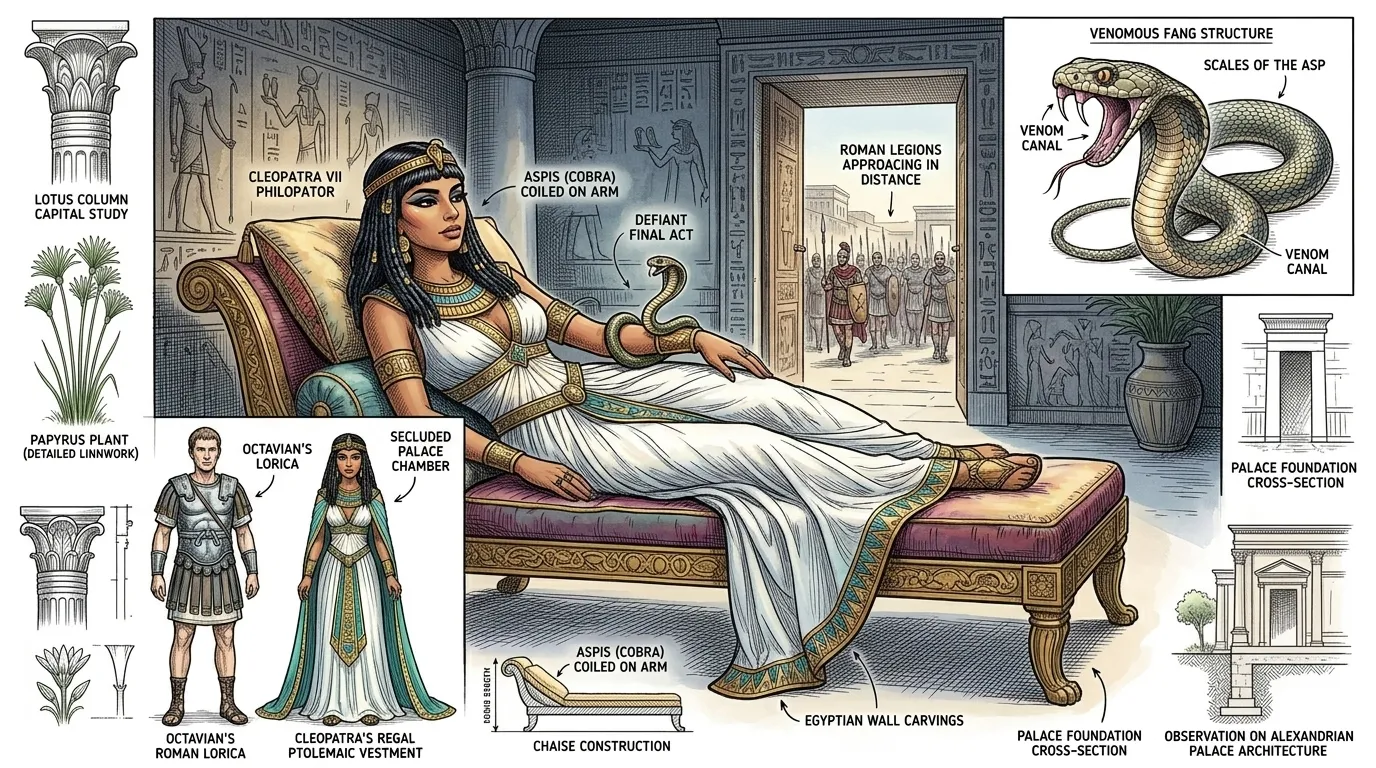
As Octavian's legions closed in on Alexandria in 30 BCE, Cleopatra faced the inevitable end of her reign and the complete subjugation of Egypt. After Mark Antony's suicide, rather than endure the humiliation of being paraded as a captive in Rome, she chose her own dramatic conclusion. Secluding herself, she arranged for a fatal asp bite, embracing death on her own terms. This final act was a defiant assertion of her sovereignty, denying Octavian the ultimate triumph of publicly displaying her. Her death marked the definitive end of the Ptolemaic dynasty, and with it, the last independent Hellenistic kingdom, ushering Egypt directly into the Roman Empire.
Page 10
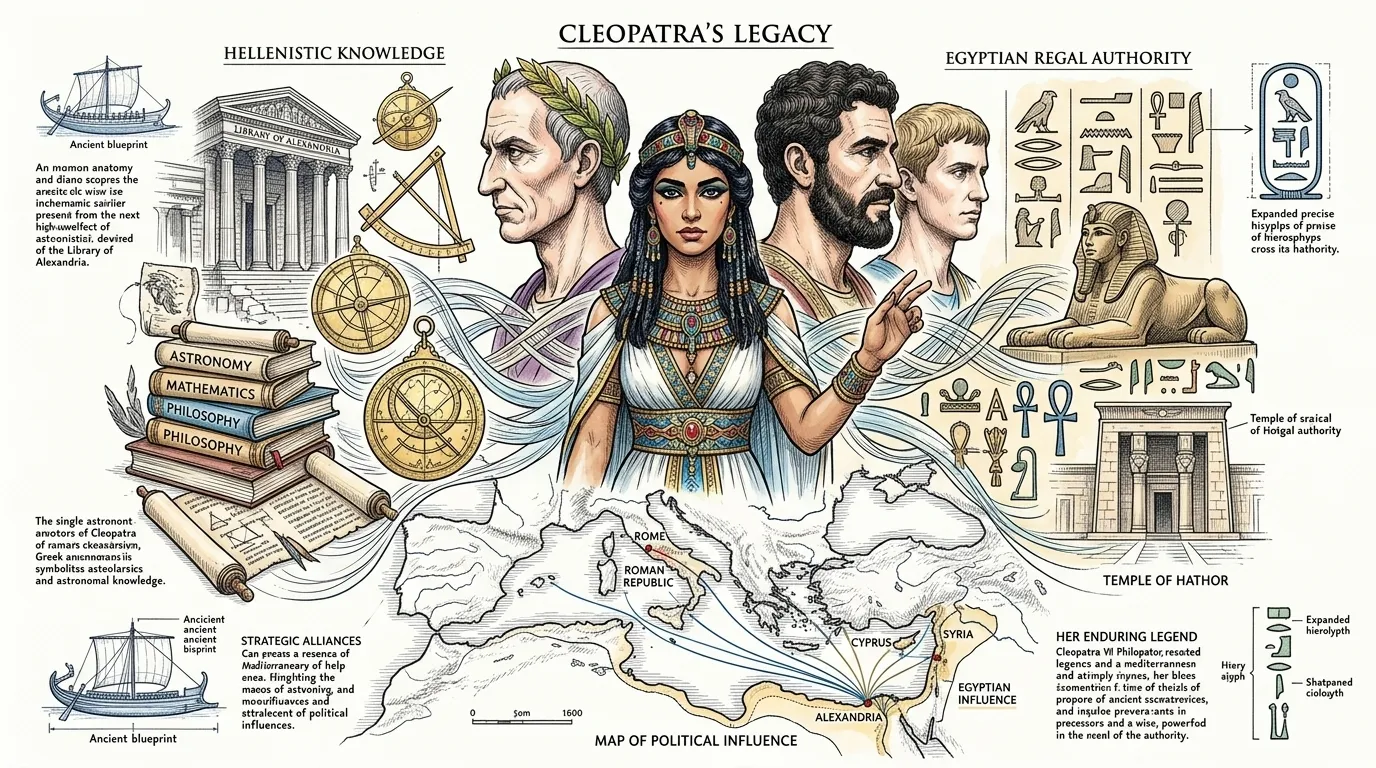
Cleopatra VII Philopator, the last pharaoh of Egypt, left an indelible mark on history, embodying a unique fusion of Greek Hellenistic intellect and Egyptian regal authority. Her strategic alliances with Rome's most powerful figures, Julius Caesar and Mark Antony, reshaped the political landscape of the ancient world. She was a transformative leader whose life and death secured Egypt's wealth, however briefly, and then absorbed it into the Roman imperium, forever changing its trajectory. Her legend endures through millennia, a testament to her intelligence, ambition, and the sheer force of her will, forever captivating the human imagination.
About this story
- Location: Global
- Audience: general readers
Questions and answers
Read Wonder People on your phone
Wonder People is available on Android. Get Wonder People on Google Play.