Elias Howe
Elias Howe — an illustrated biography story, set in Global. 10 illustrated pages, free to read on Wonder People.
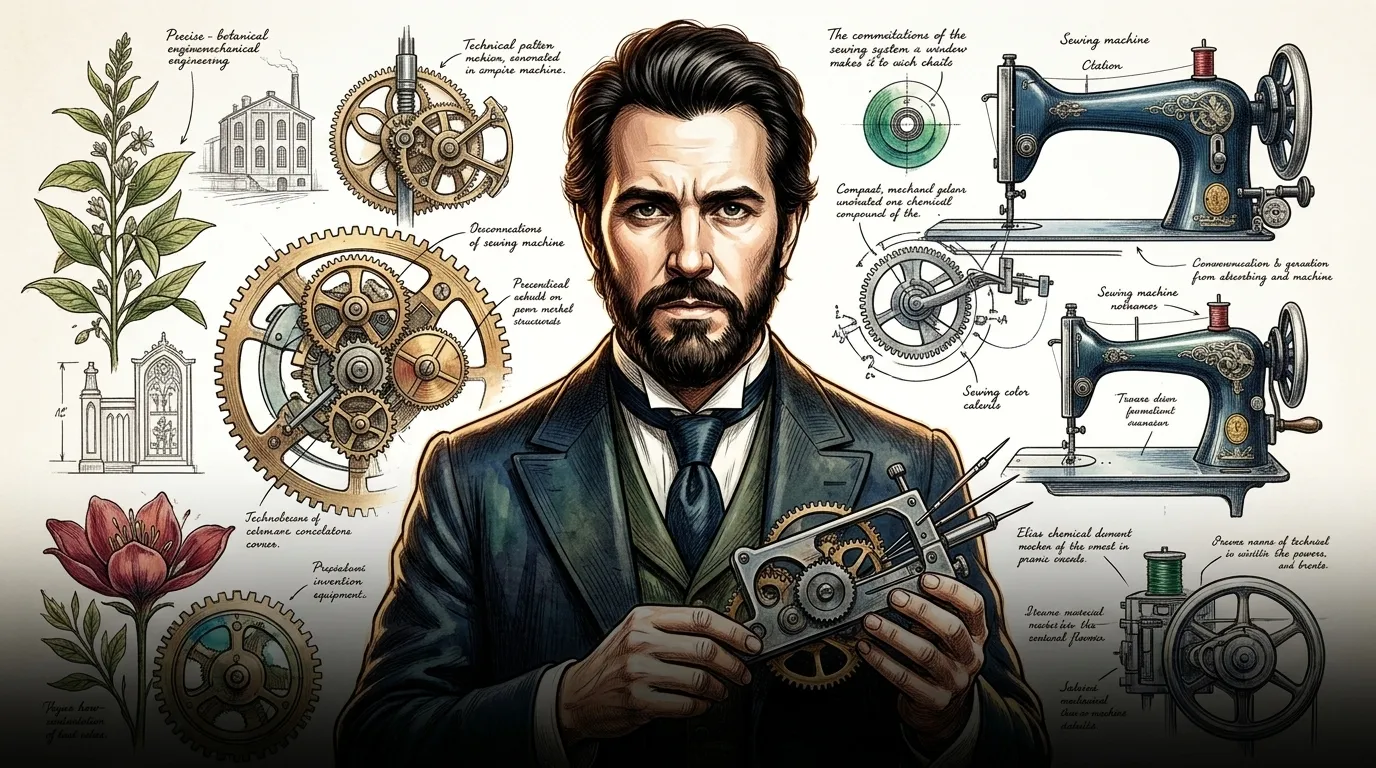
Page 1
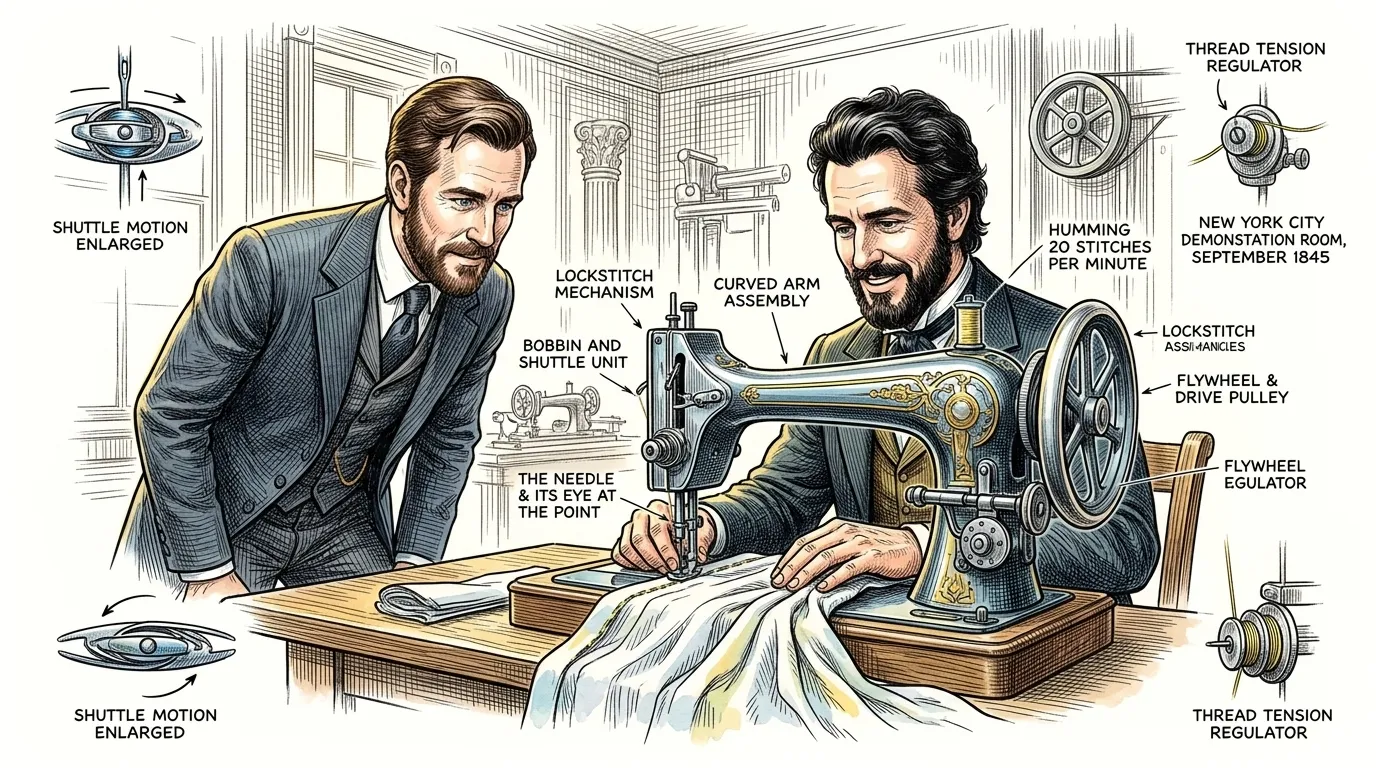
In September 1845, Elias Howe Jr. stood before a skeptical audience in New York City, demonstrating his revolutionary Lockstitch Sewing Machine. With a quiet hum, the intricate mechanism, operated by Howe, performed twenty stitches a minute, outperforming five of the fastest hand-sewers in the room combined. Among the discerning crowd, George Fisher, a capitalist seeking mechanical innovation, observed the precise, unwavering movement of the needle and shuttle, recognizing the profound implications of this silent, relentless work. This single public demonstration shattered centuries of manual labor, proving that the future of garment production was now irrevocably mechanized.
Page 2
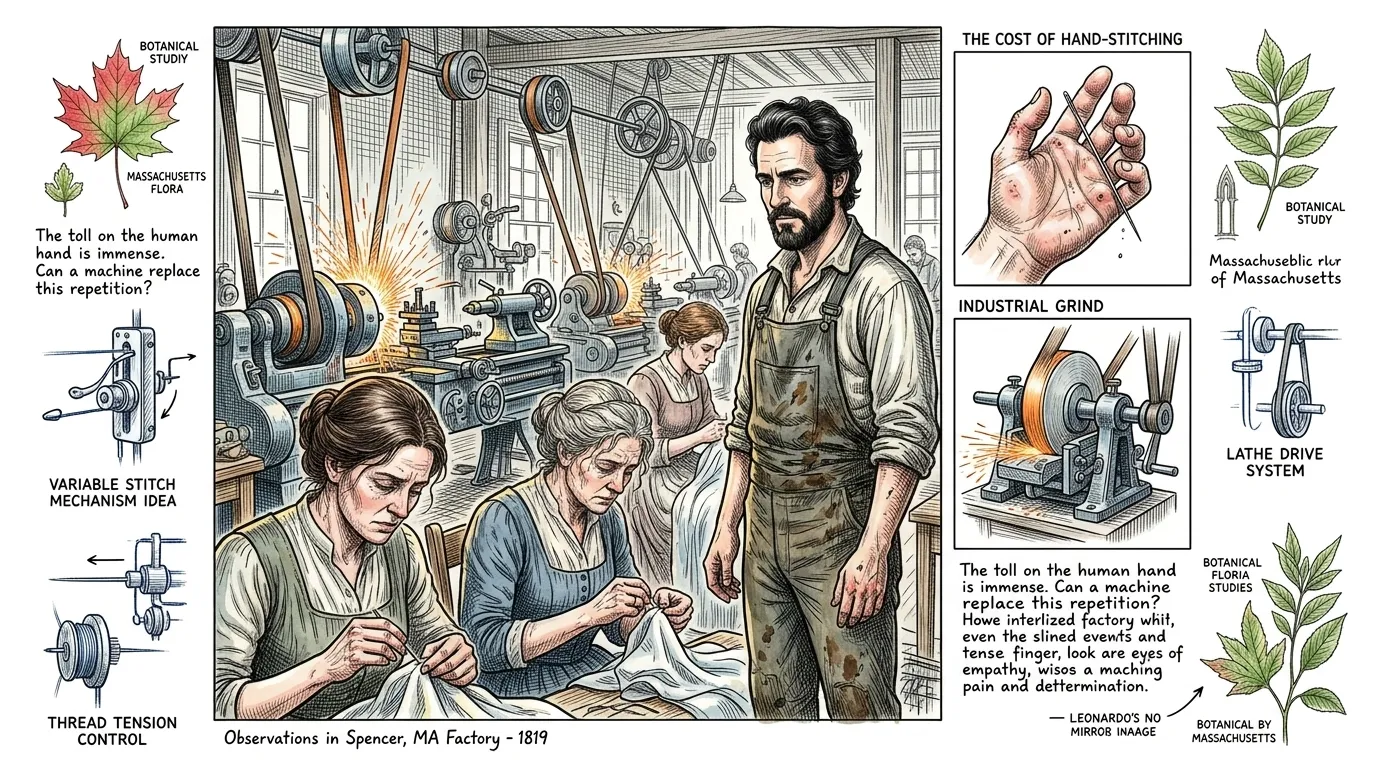
Born in Spencer, Massachusetts, in 1819, Elias Howe's early life was steeped in the demanding world of factory floors and precision machinery. As a young apprentice machinist, he spent long hours amidst the whirring lathes and grinding metal, witnessing firsthand the sheer physical toll of manual labor. He observed seamstresses toiling for endless hours, their fingers moving with painful repetition, pushing needles through fabric, their output limited by human endurance. This intimate understanding of arduous, repetitive work ignited a deep-seated conviction within him: there had to be a better, faster, less painful way to produce clothing.
Page 3
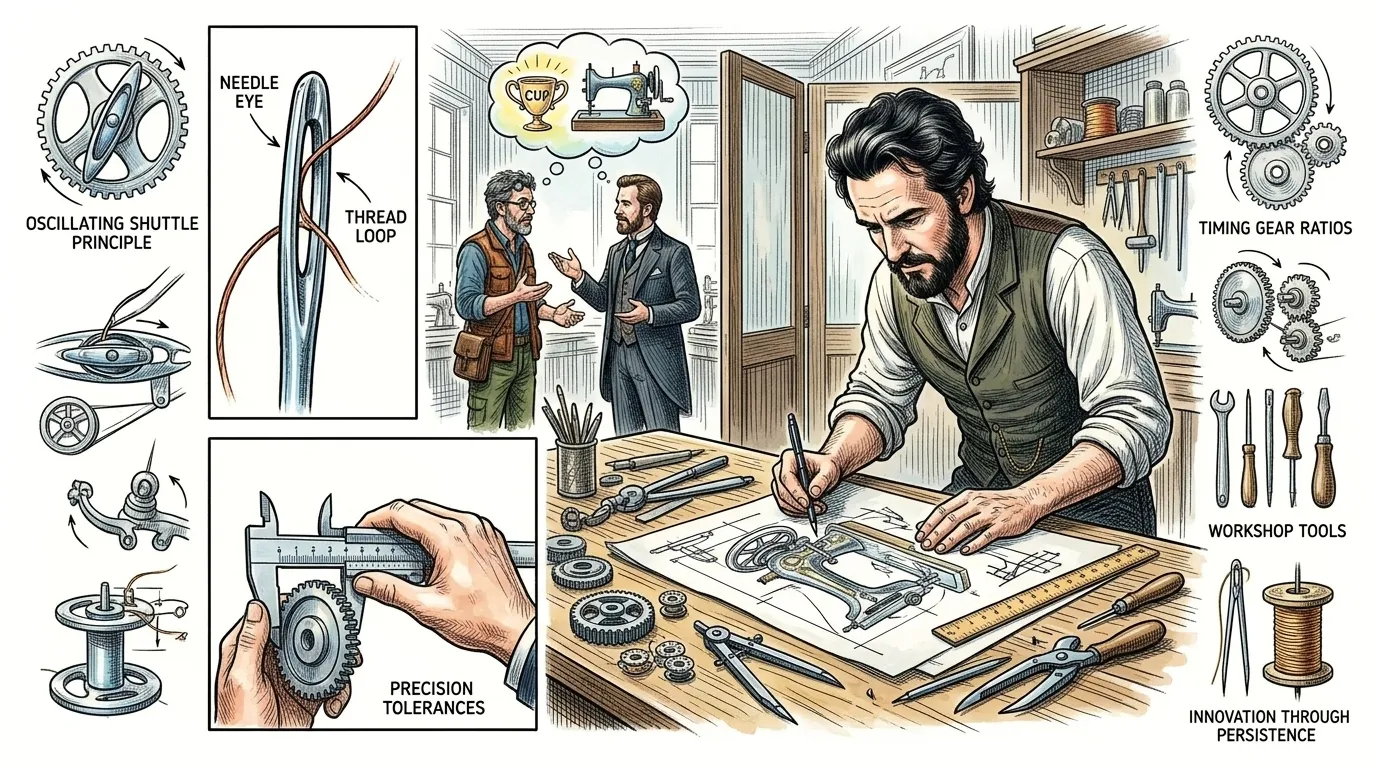
The year 1837 marked a pivotal moment for Howe. While working in Boston as a master mechanic, he overheard a conversation between inventor Charles Brooks and a wealthy businessman discussing the astronomical reward awaiting anyone who could invent a practical sewing machine. This challenge, combined with his observations of laborious hand-sewing, coalesced into a singular purpose. Howe began to spend his evenings sketching, tirelessly conceptualizing a mechanism that could automate the intricate dance of needle and thread, a machine that would free hands from endless repetition. The vision for an automated stitch consumed him.
Page 4
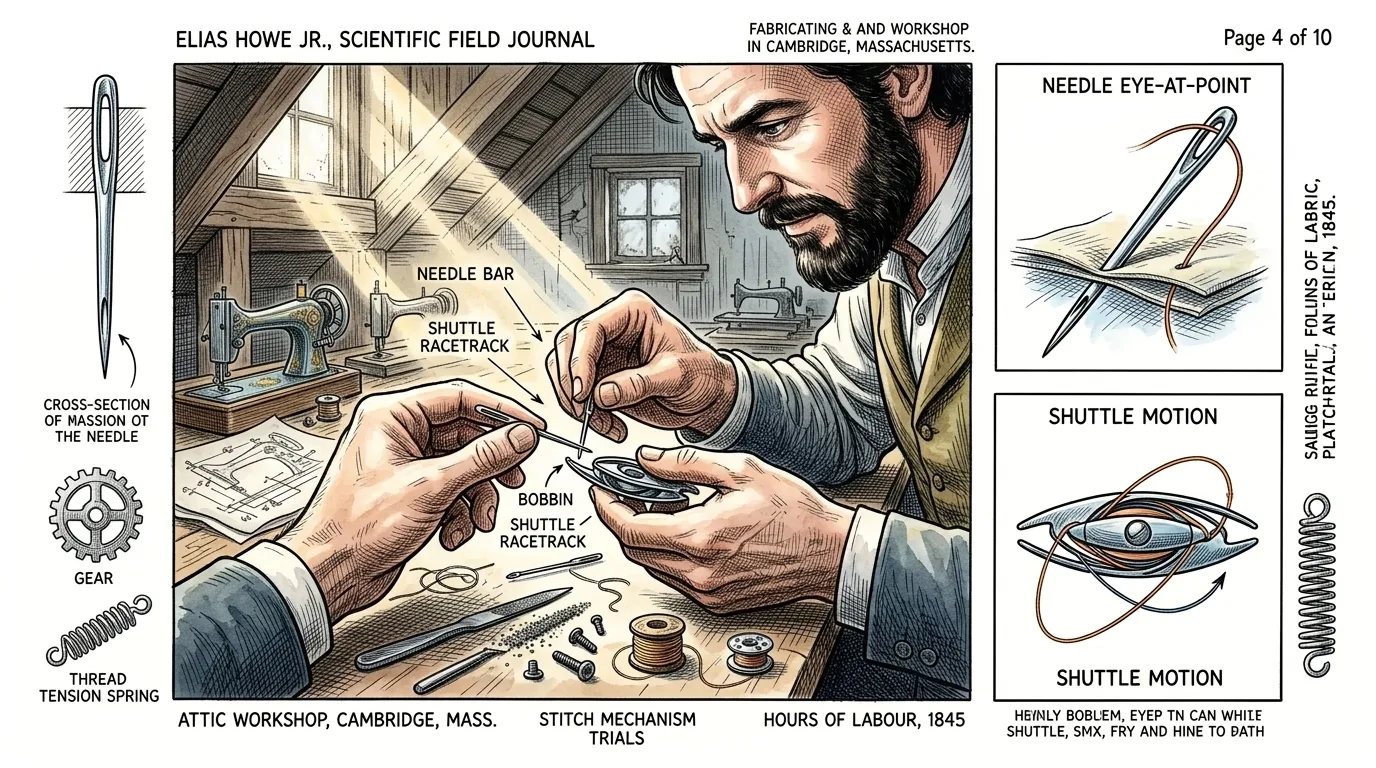
Howe grappled with fundamental design challenges for years, struggling to replicate the human stitch. Traditional needles, with eyes at the blunt end, proved inadequate for machine operation. Then, a sudden, crucial insight emerged: the needle's eye must be at its point. This seemingly small alteration, paired with a shuttle mechanism carrying a second thread, unlocked the principle of the lockstitch. In a cramped attic workshop in Cambridge, Massachusetts, Howe painstakingly fabricated the components, meticulously testing each iteration, driven by the absolute certainty that this novel combination would form a stitch far stronger and more reliable than any hand could produce.
Page 5
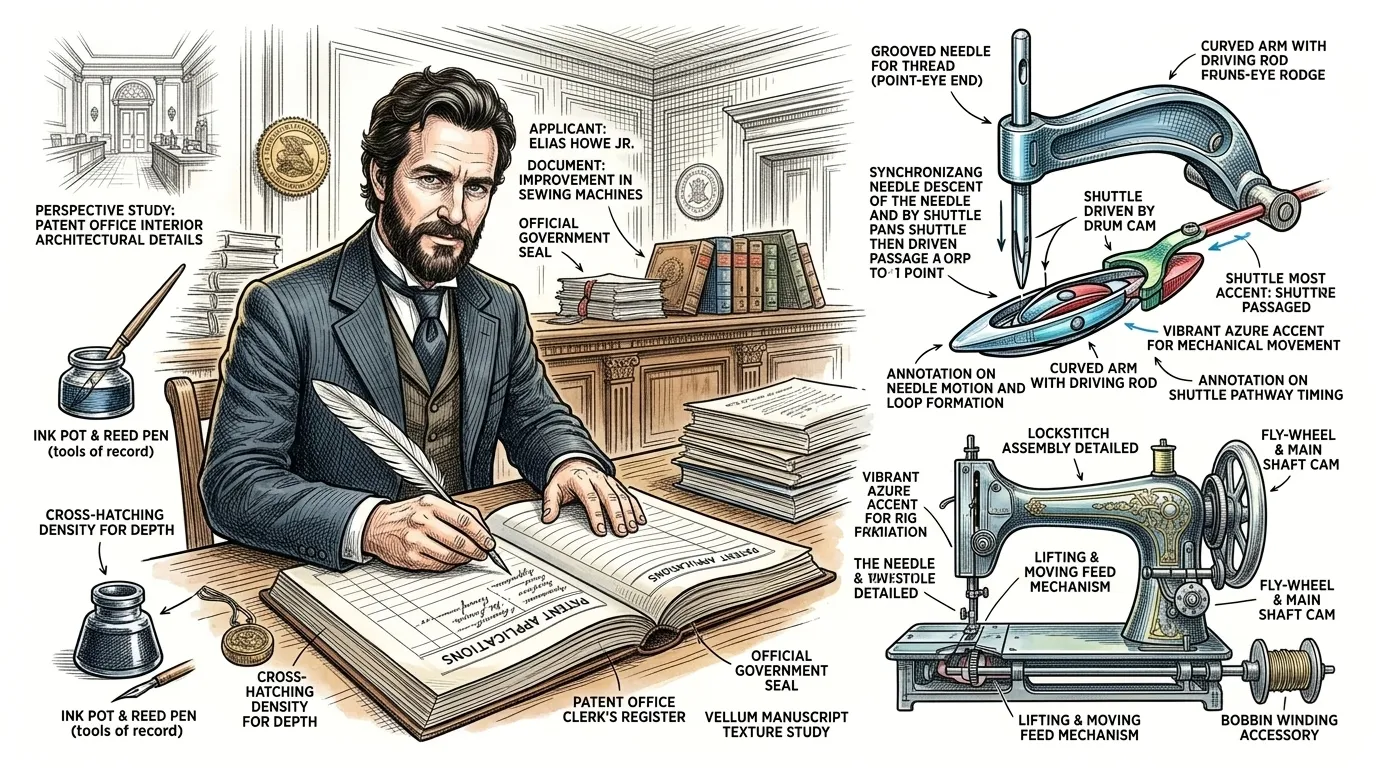
After years of relentless development, struggling with poverty and the skepticism of others, Elias Howe finally stood at the precipice of formal recognition. On September 10, 1846, he walked into the United States Patent Office in Washington D.C., holding the meticulously prepared documents detailing his 'Improvement in Sewing Machines.' This act was a declaration, a legal assertion of his ingenuity. With his signature, Howe officially laid claim to a device capable of automating one of humanity's oldest and most laborious tasks, securing the legal foundation that would eventually underpin the industrial revolution of garment manufacturing.
Page 6
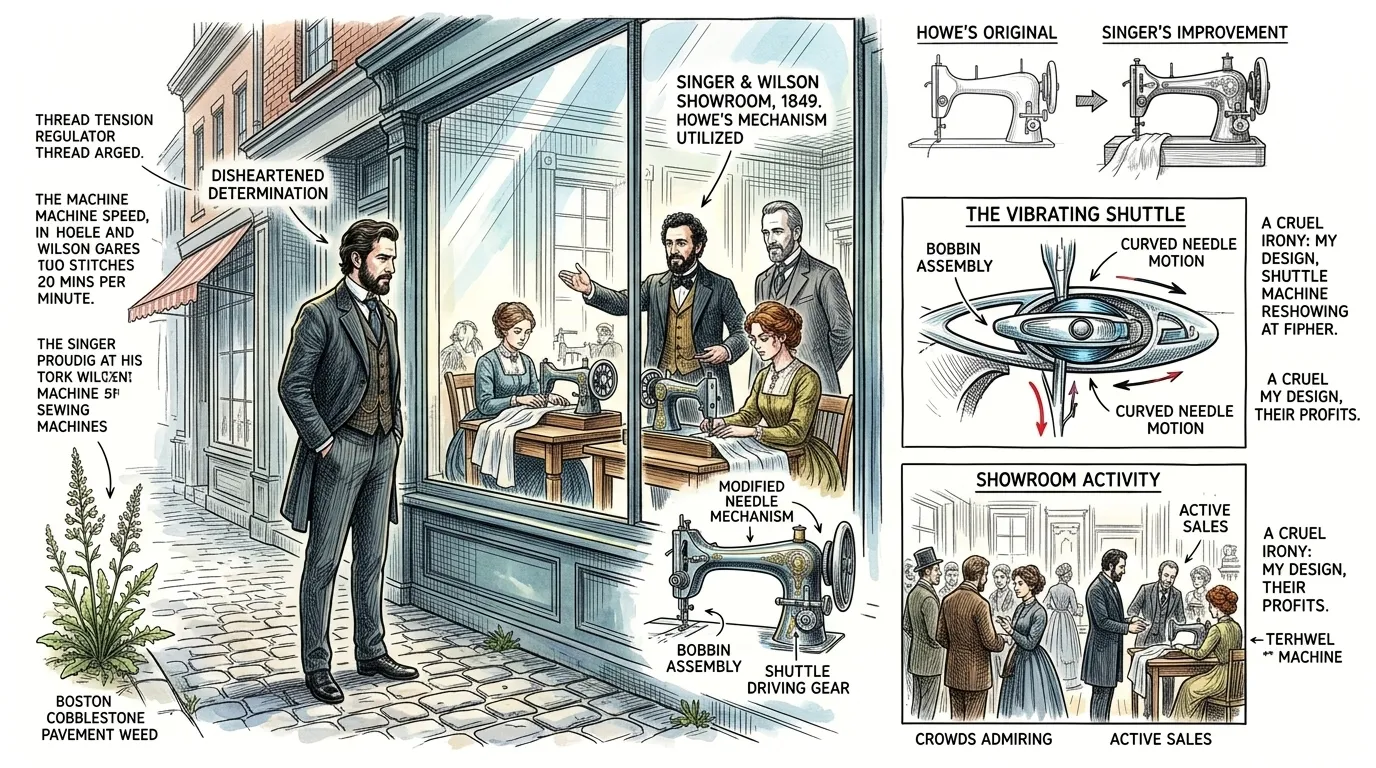
Despite securing his patent, Howe faced an uphill battle. His initial attempts to market the machine in America were met with indifference and financial hardship, forcing him to seek opportunities in England. During his absence, other inventors, most notably Isaac Singer and Allen Wilson, developed and began selling their own versions of sewing machines, many of which incorporated Howe's fundamental lockstitch mechanism. Returning to the United States in 1849, Howe found a nascent industry thriving on his invention, yet he received no credit and no compensation. The world had taken his idea, but denied him his due.
Page 7
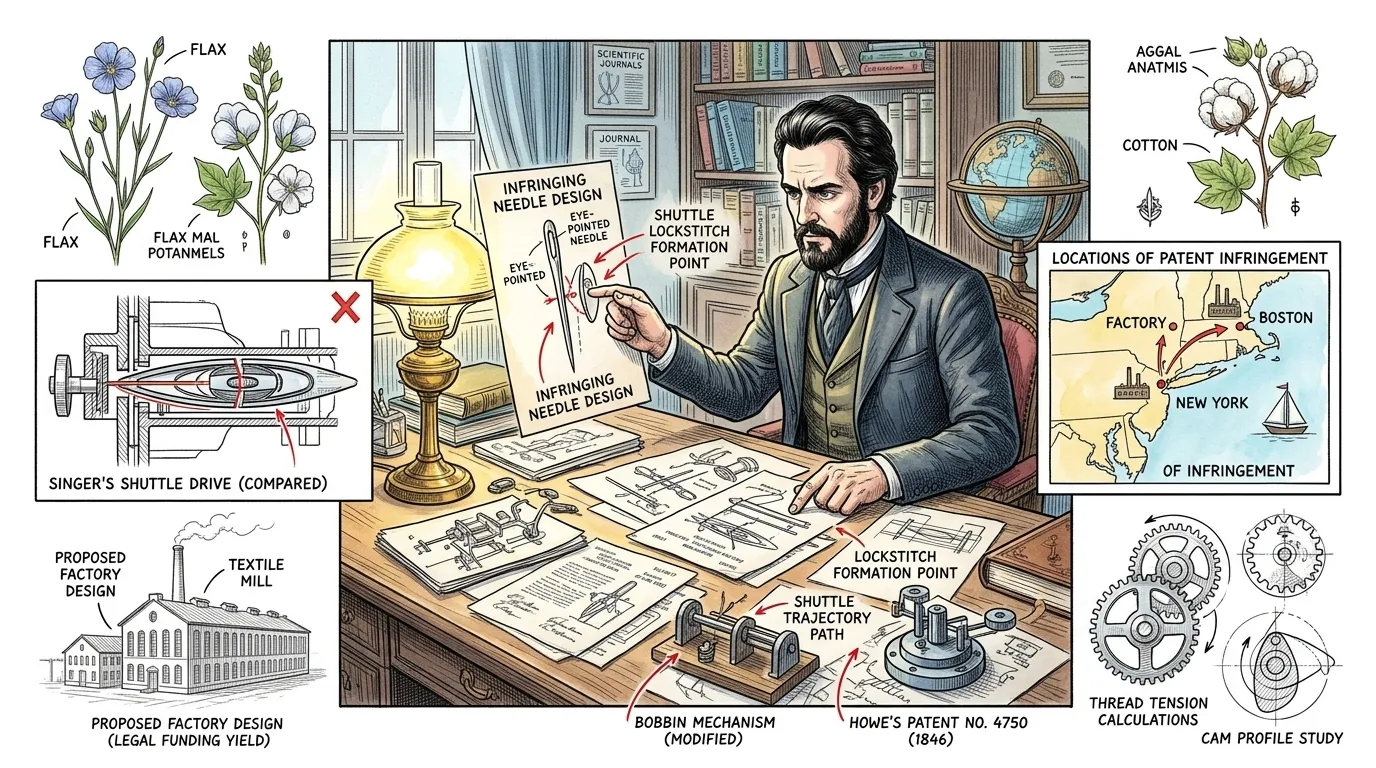
Howe could not ignore the blatant infringement. With scarce funds and renewed determination, he systematically began to collect evidence against those profiting from his invention. He meticulously documented every machine that employed his patented eye-pointed needle and shuttle mechanism, preparing for a legal confrontation. This was not merely about money; it was about the rightful ownership of an idea that had demanded years of his life, his ingenuity, and his perseverance. In 1850, Elias Howe initiated legal proceedings, plunging into a protracted, complex patent war against the most powerful manufacturing interests of his time, notably the burgeoning I.M. Singer & Co.
Page 8
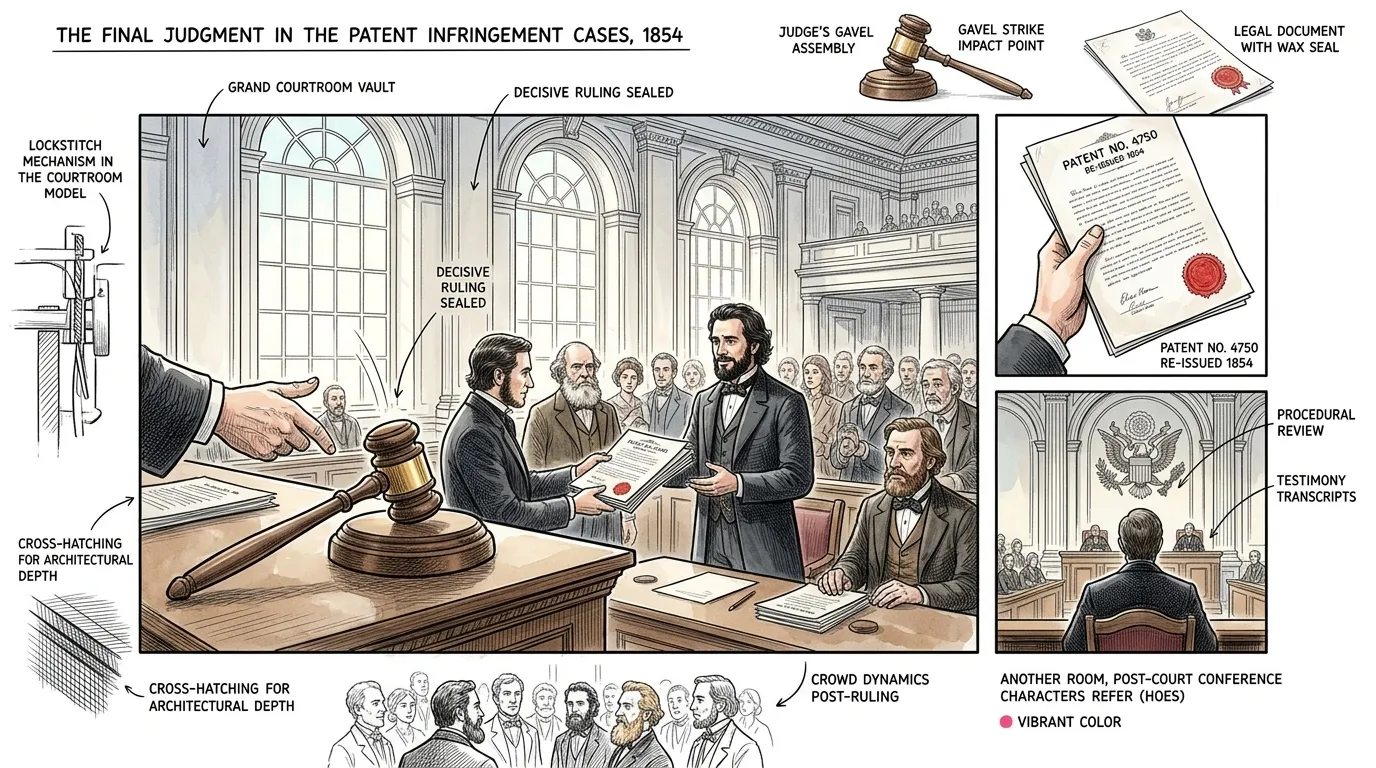
The legal battles culminated in 1854 with a decisive ruling. The United States courts, after reviewing exhaustive evidence and expert testimonies, unequivocally upheld Elias Howe's original patent. This landmark decision affirmed his fundamental contribution to the sewing machine and established his legal right to collect royalties on every machine manufactured in the United States that utilized his core lockstitch mechanism. It was a victory not just for Howe, but for the principle of intellectual property rights, validating the inventor's claim against powerful corporations and recognizing years of unacknowledged labor and genius.
Page 9
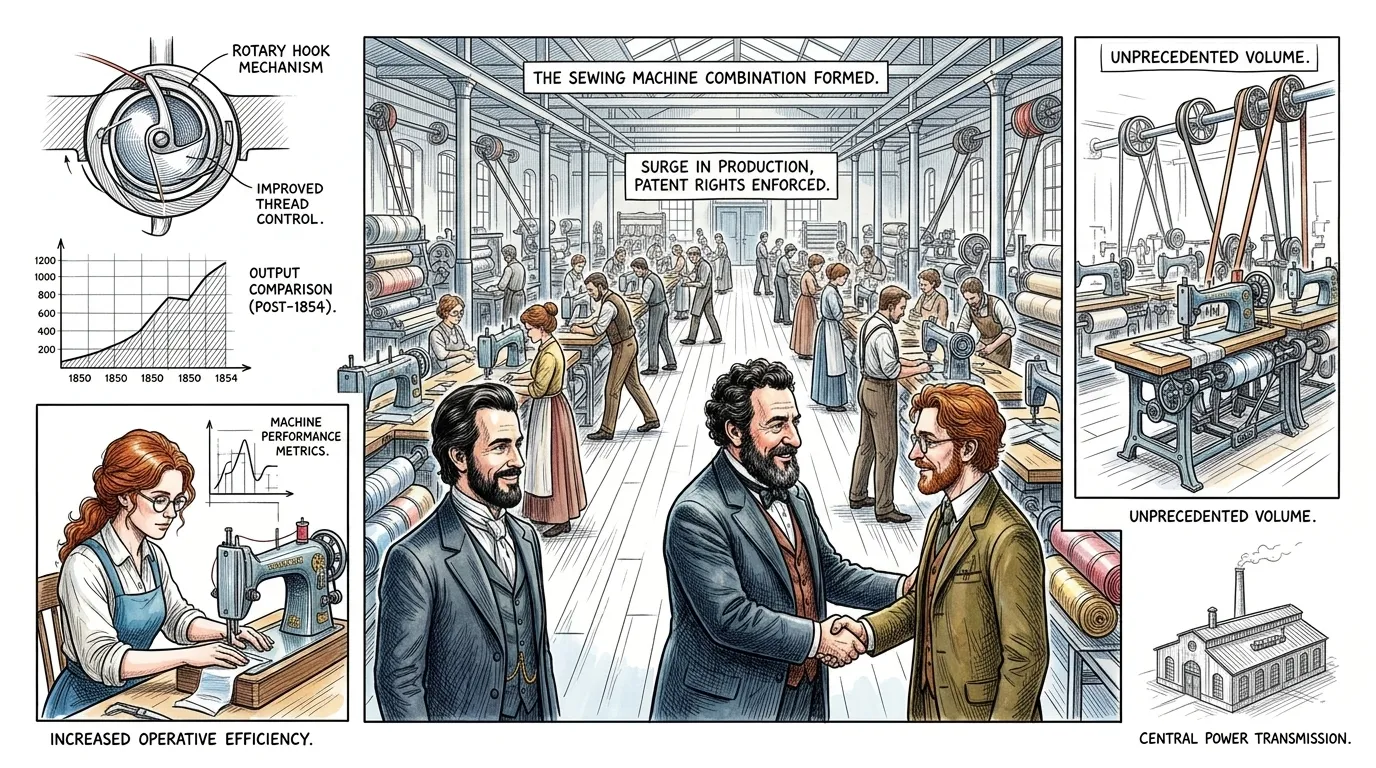
The 1854 patent victory transformed Elias Howe's fortunes and, more significantly, the global textile industry. With his patent rights enforced, the major manufacturers, including Isaac Singer and Wheeler & Wilson, were compelled to form a 'Sewing Machine Combination,' agreeing to pay Howe a royalty on every machine sold. This collaboration stabilized the industry and accelerated innovation, leading to a massive surge in production. Howe's invention moved from curiosity to ubiquity, streamlining garment manufacturing in factories and fundamentally altering domestic life, liberating countless women from the relentless drudgery of hand-sewing and giving rise to ready-to-wear clothing on an unprecedented scale.
Page 10
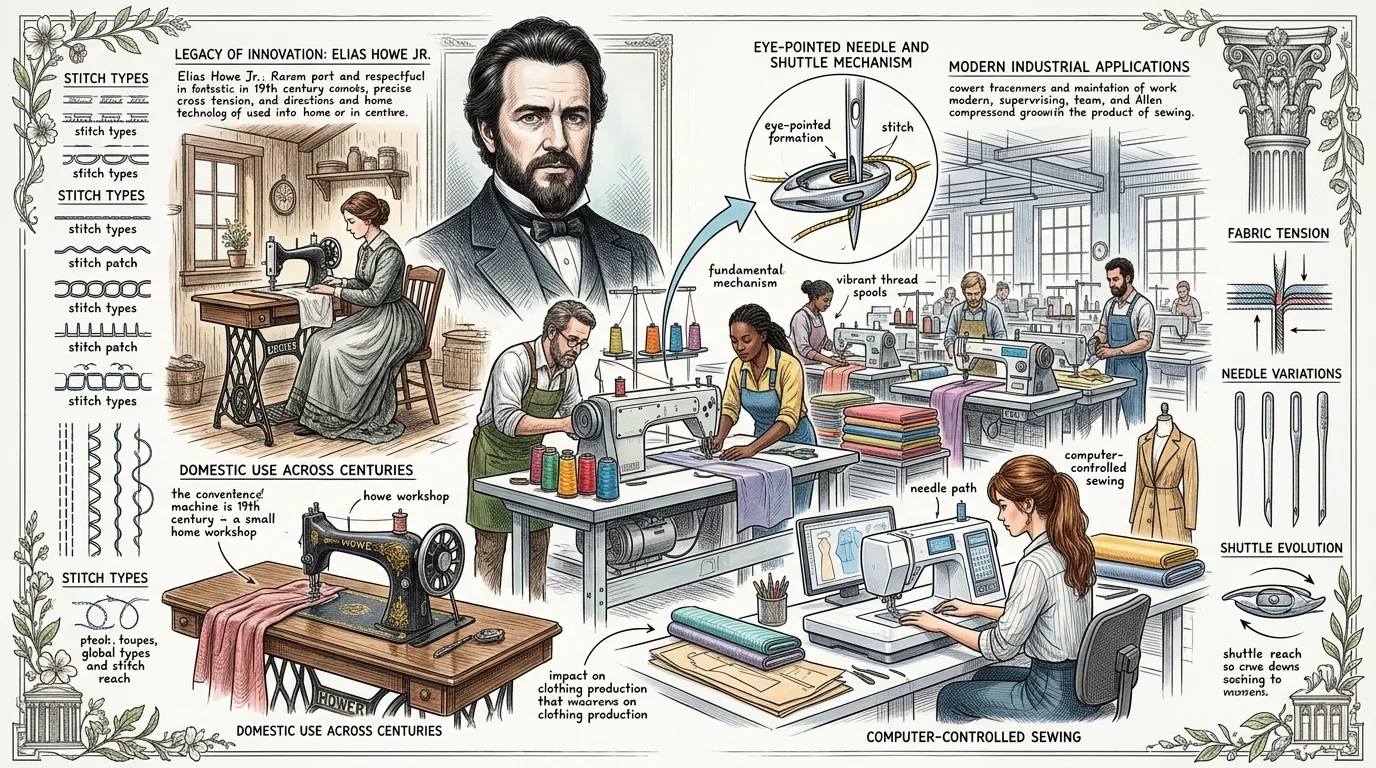
Elias Howe Jr. passed away in 1867, but his legacy extended far beyond his lifetime. His invention, the lockstitch sewing machine, became an indispensable tool that propelled the Second Industrial Revolution, reshaping economies and societies worldwide. It democratized clothing, making affordable, well-made garments accessible to the masses. It also profoundly impacted women's roles, both by creating factory employment and by easing household labor. Howe's singular insight—the eye-pointed needle combined with the shuttle—remains the fundamental principle behind virtually every sewing machine in use today, a testament to his enduring genius and the quiet power of a meticulously engineered stitch.
About this story
- Location: Global
- Audience: general readers
Questions and answers
Read Wonder People on your phone
Wonder People is available on Android. Get Wonder People on Google Play.