Franklin D Roosevelt
Franklin D Roosevelt — an illustrated biography story, set in Global. 10 illustrated pages, free to read on Wonder People.
Page 1
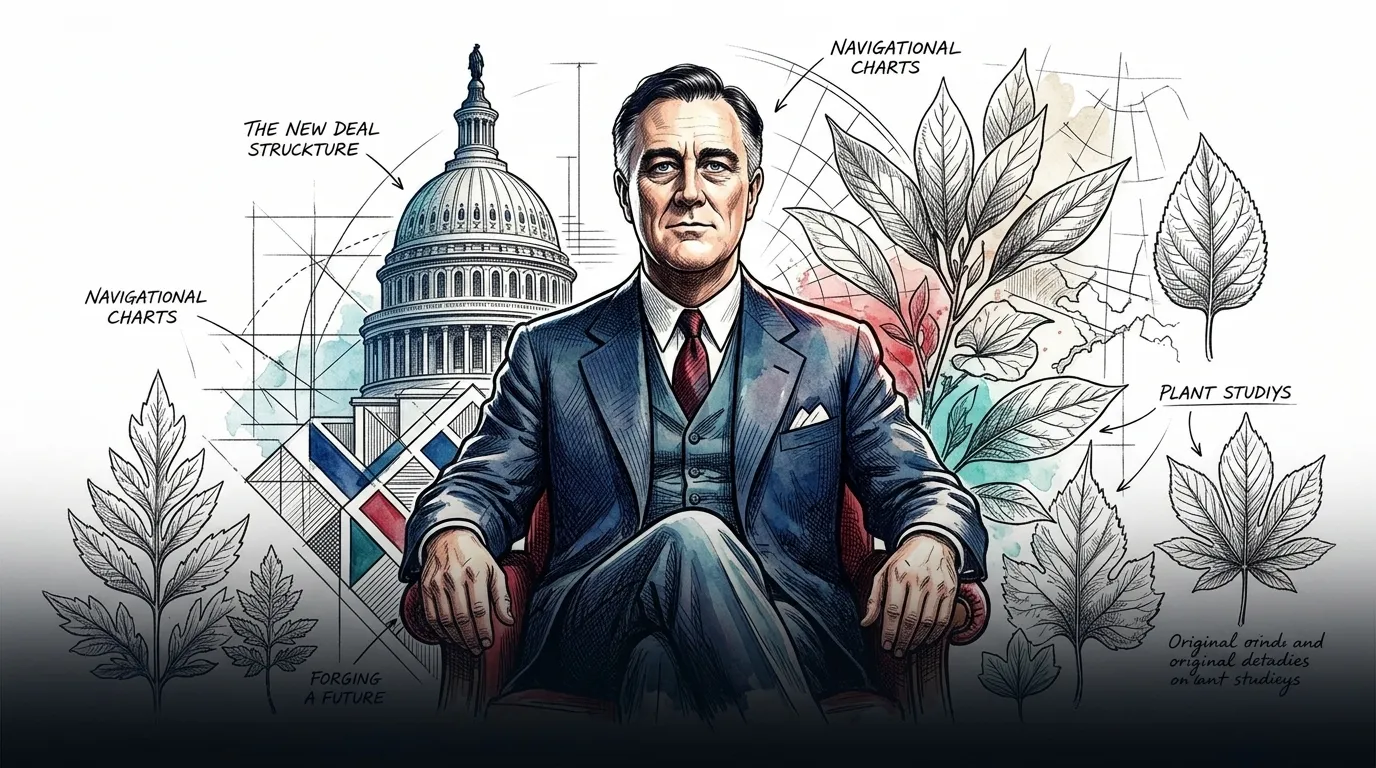
On March 4, 1933, the nation was paralyzed. Thirteen million Americans faced unemployment, banks had shuttered nationwide, and despair hung heavy over Washington D.C. From the inaugural podium, Franklin D. Roosevelt ascended, a man whose very presence embodied defiance against adversity. He declared, with unwavering resolve, that 'the only thing we have to fear is fear itself,' a powerful invocation of courage to a broken populace. In that moment, he became impossible to ignore, galvanizing a generation towards an unprecedented era of federal action.
Biographical Fact: President Franklin D. Roosevelt's First Inaugural Address, March 4, 1933, Washington D.C. Facing the Great Depression, he delivered an iconic speech that would define his initial presidency.
Page 2
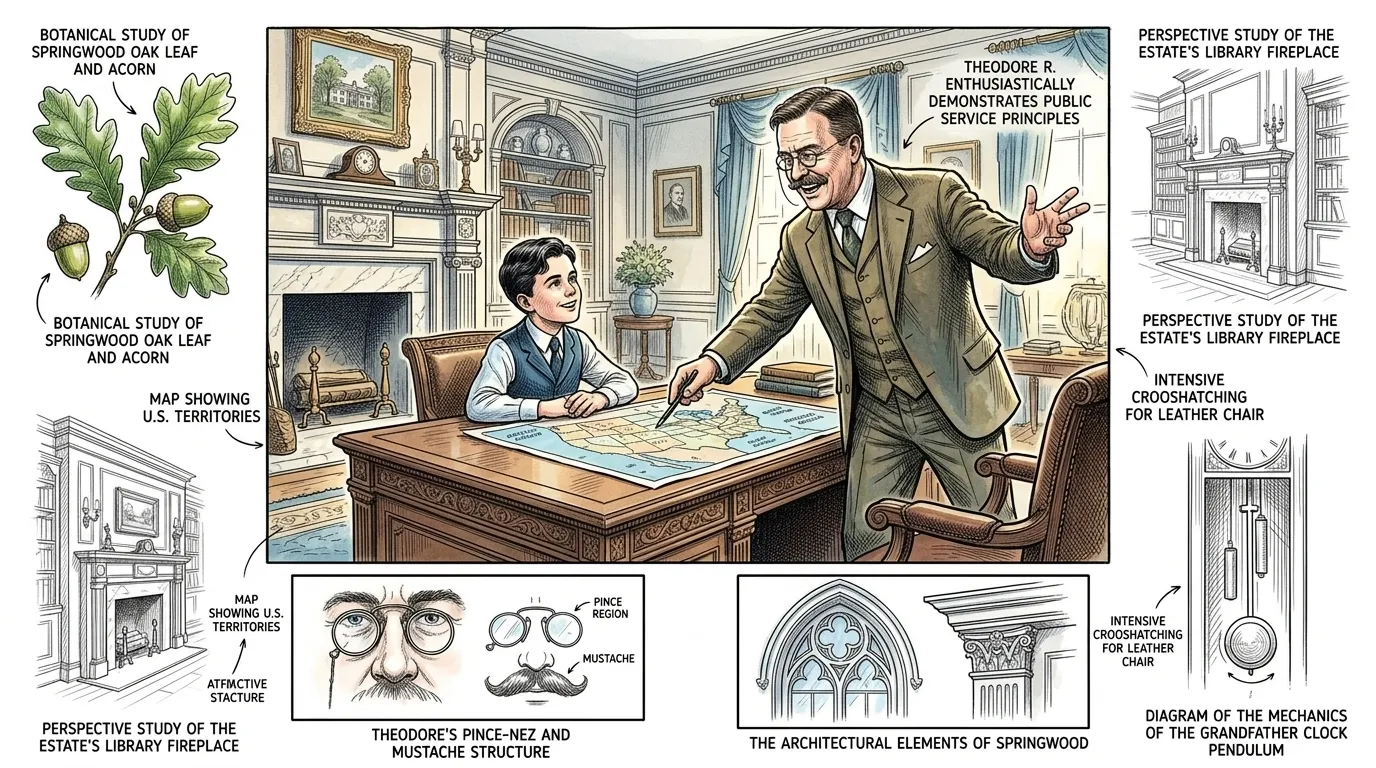
Franklin D. Roosevelt was born into the established aristocracy of Hyde Park, New York, in 1882. His distant cousin, Theodore Roosevelt, already a national figure, cast a long shadow of public service and political ambition. Young Franklin, surrounded by the comforts of Springwood Estate, absorbed the values of his class: leadership, responsibility, and the expectation of contributing to the nation. His early life offered little hint of the personal trials to come, yet it instilled a profound, almost inherited, sense of duty to his country and its people.
Biographical Fact: Franklin D. Roosevelt's childhood at Springwood Estate, Hyde Park, New York. His upbringing among the Dutchess County elite instilled a sense of public service and responsibility.
Page 3
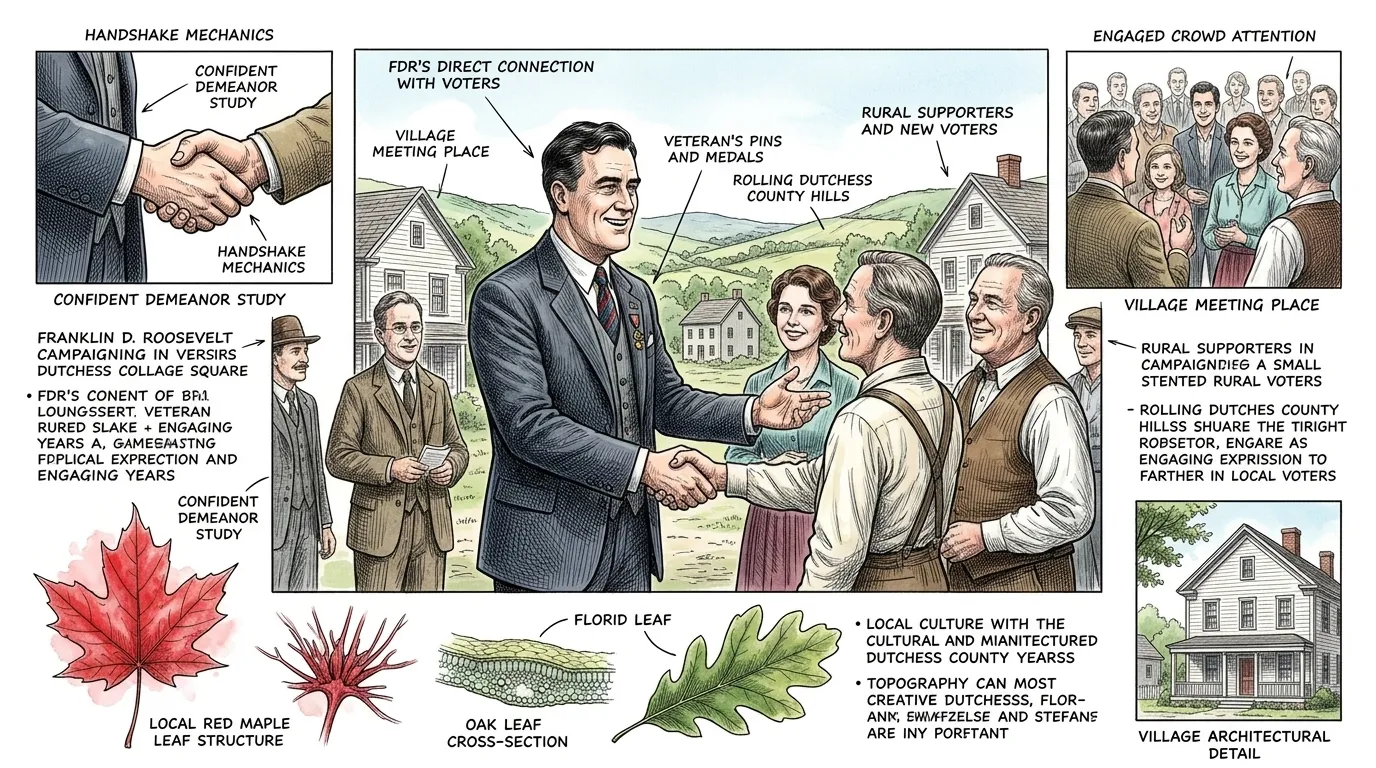
In 1910, Franklin D. Roosevelt, then a 28-year-old lawyer, plunged into politics, running for the New York State Senate. He campaigned against the formidable Tammany Hall political machine, a force widely perceived as corrupt and invincible. Against all expectations, and by tirelessly connecting with rural voters, he secured victory. This audacious challenge to entrenched power marked his arrival, signaling a reformer's spirit and a willingness to fight for his own vision.
"'They called me an outsider,' he often remarked, 'but the people of Dutchess County understood that genuine representation matters.'"
Biographical Fact: Franklin D. Roosevelt's successful campaign for the New York State Senate in 1910, challenging the powerful Tammany Hall political machine and establishing his independent political identity.
Page 4
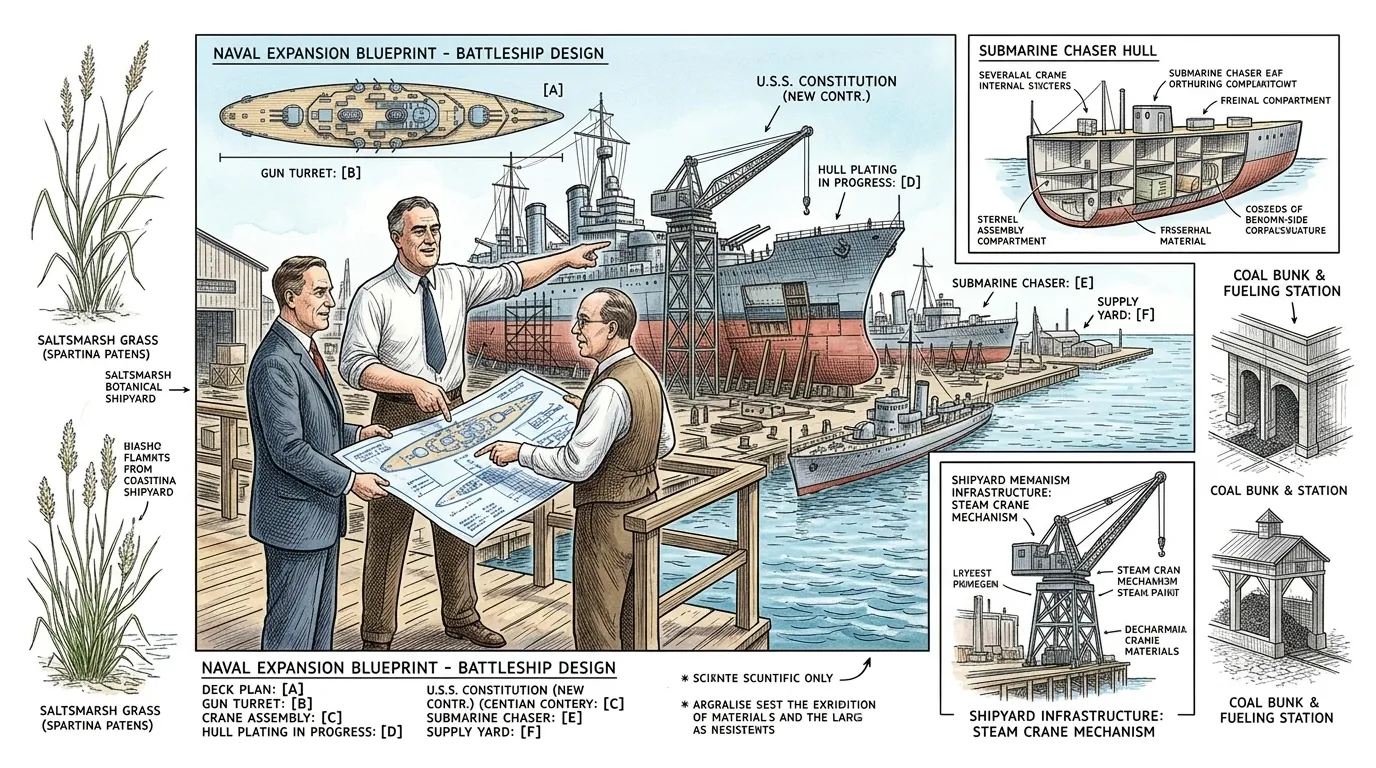
With America's entry into World War I, Franklin D. Roosevelt served as Assistant Secretary of the Navy, a position once held by his cousin Theodore. He championed naval expansion, overseeing the construction of new ships and submarine chasers. In this vital role from 1917 to 1920, he acquired invaluable experience in large-scale administration and strategic planning. The global conflict broadened his perspective, revealing the intricate connections between national security and international affairs, lessons that would shape his future leadership.
"'The ocean,' he once observed to Secretary Josephus Daniels, 'is a highway, not a barrier. Our future depends on our reach across it.'"
Biographical Fact: Franklin D. Roosevelt's tenure as Assistant Secretary of the Navy during World War I, where he advocated for naval expansion and gained crucial administrative and strategic experience.
Page 5
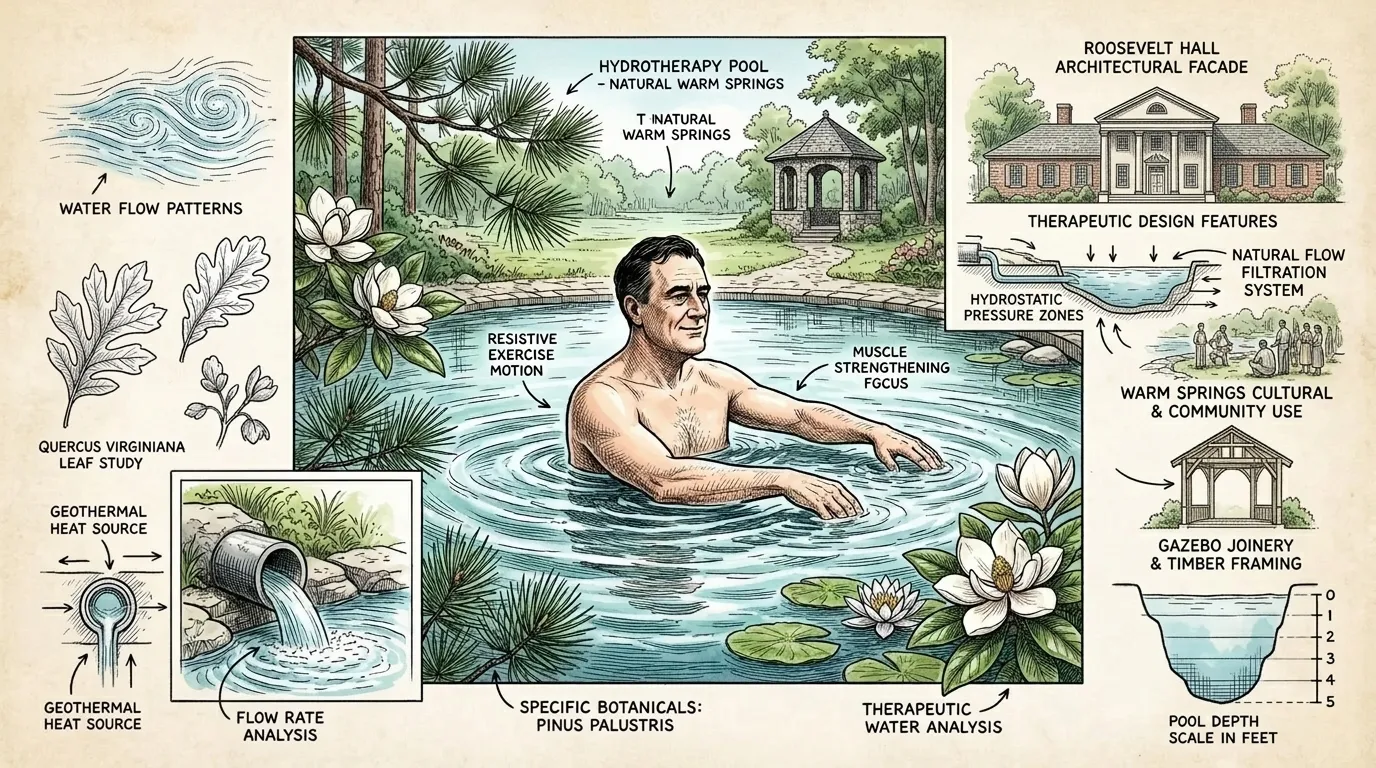
In August 1921, at the age of 39, Franklin D. Roosevelt was struck by poliomyelitis, which left him permanently paralyzed from the waist down. The diagnosis was devastating, threatening to end his promising career. Yet, he refused to yield to the disease. He sought therapy in Warm Springs, Georgia, turning the natural springs into a personal battleground for recovery. This struggle, far from public view, became a crucible, refining his empathy for suffering and hardening his resolve against seemingly insurmountable odds.
"'Each small victory in the water is a testament to perseverance,' he confided to his physical therapist, 'a reminder that the human spirit can always find a way forward.'"
Biographical Fact: Franklin D. Roosevelt's battle with polio at Warm Springs, Georgia, beginning in 1921. This personal adversity profoundly shaped his character and understanding of struggle.
Page 6
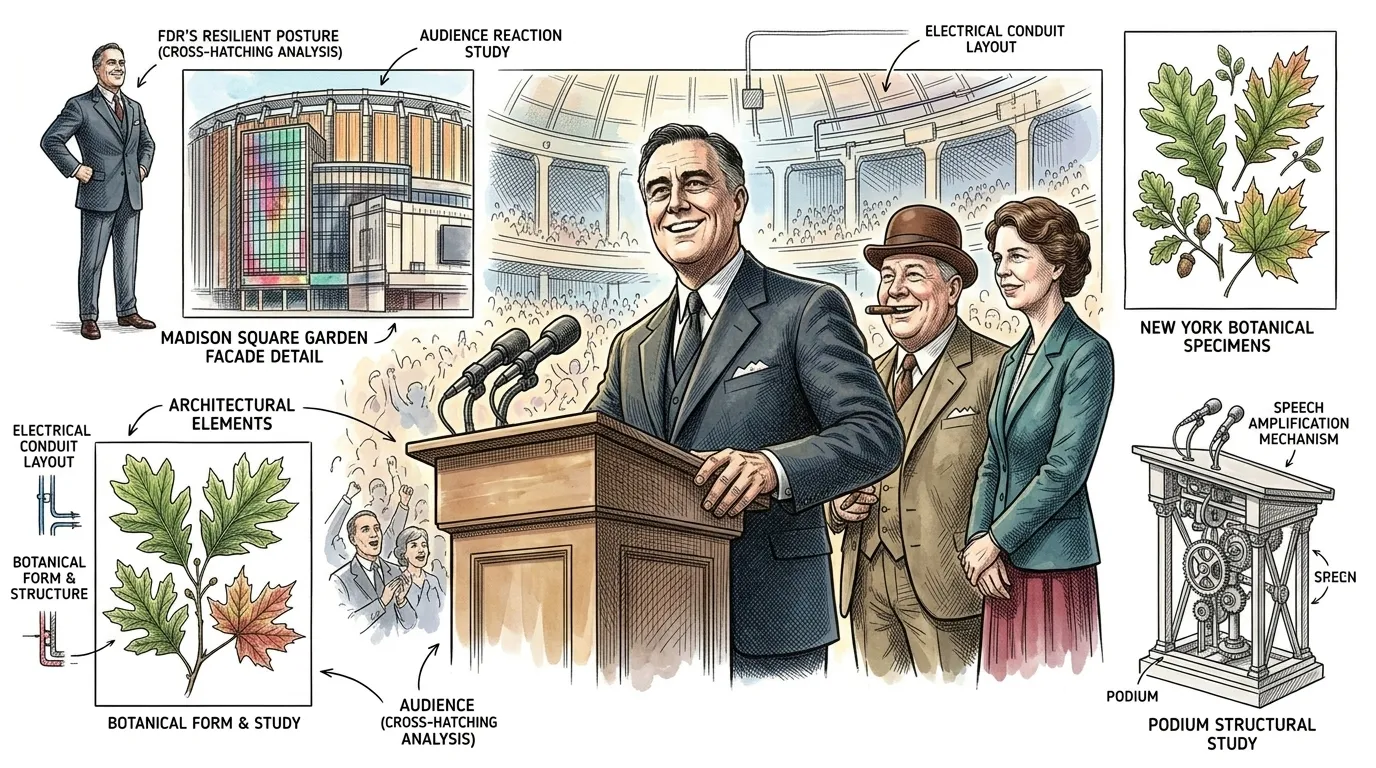
Eight years after contracting polio, Franklin D. Roosevelt made a triumphant return to the national political stage at the 1924 Democratic National Convention in Madison Square Garden. He nominated Governor Al Smith for president, delivering his famous 'Happy Warrior' speech. The spectacle of a man, still battling the physical effects of his illness, rising to address a roaring crowd, symbolized an extraordinary resilience. Eleanor Roosevelt, a powerful figure in her own right, stood nearby, visibly supporting him. He returned to the public arena, not diminished, but strengthened by his trials, a voice for the struggling.
Biographical Fact: Franklin D. Roosevelt's powerful return to national politics at the 1924 Democratic National Convention, where he delivered the 'Happy Warrior' speech, nominating Al Smith.
Page 7
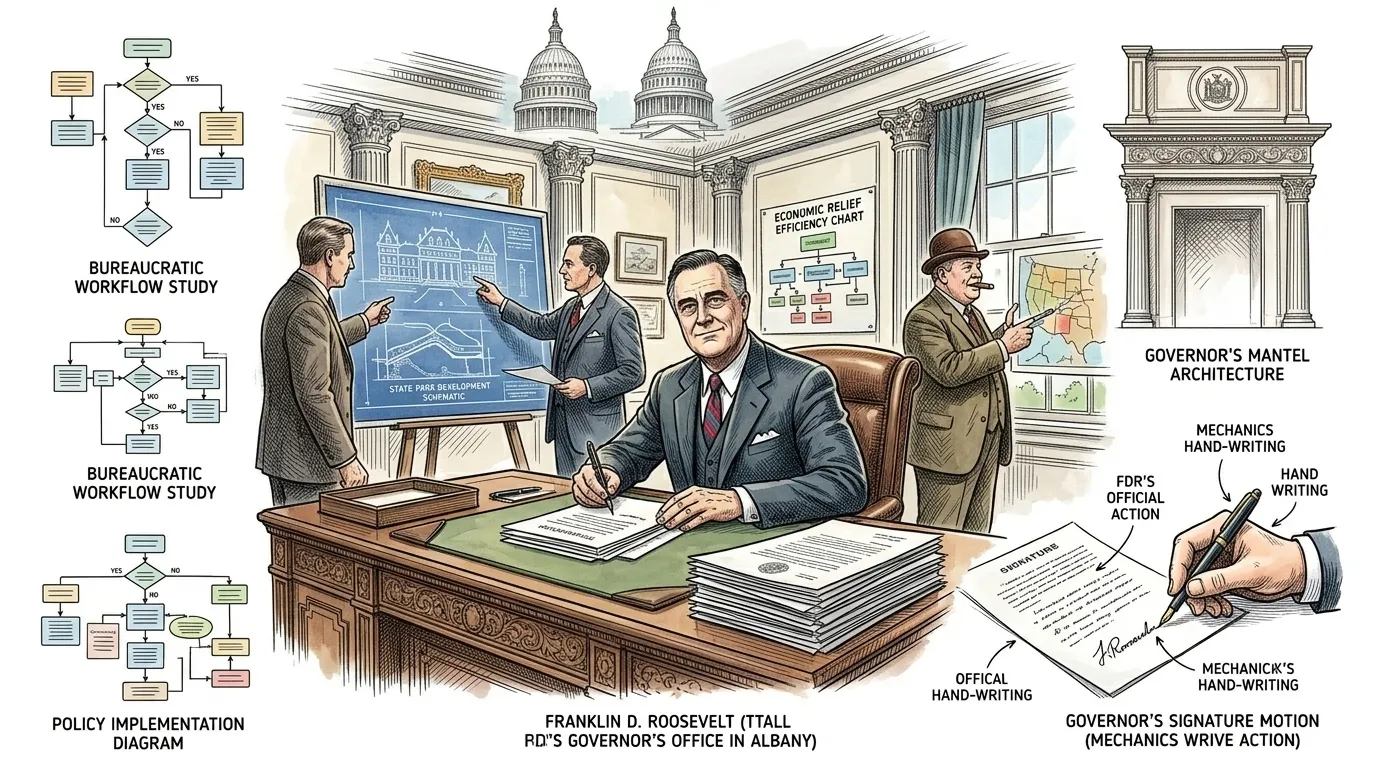
In 1928, Franklin D. Roosevelt was elected Governor of New York, a crucial stepping stone to the presidency. As the Great Depression began to cast its shadow, he initiated bold relief programs, including temporary emergency relief and public works projects. His administration in Albany became a laboratory for innovative government intervention, foreshadowing the scale of federal action he would later pursue. He signed legislation and oversaw emergency aid, demonstrating an executive capacity to address widespread economic hardship. As crisis deepened, his state became a proving ground for the bold federal action the nation would soon demand.
"'This is no time for timid measures,' Governor Roosevelt stated, addressing his advisors. 'New York demands action, and we will deliver it.'"
Biographical Fact: Franklin D. Roosevelt's governorship of New York (1929-1932), where he implemented innovative relief programs during the onset of the Great Depression, laying groundwork for the New Deal.
Page 8
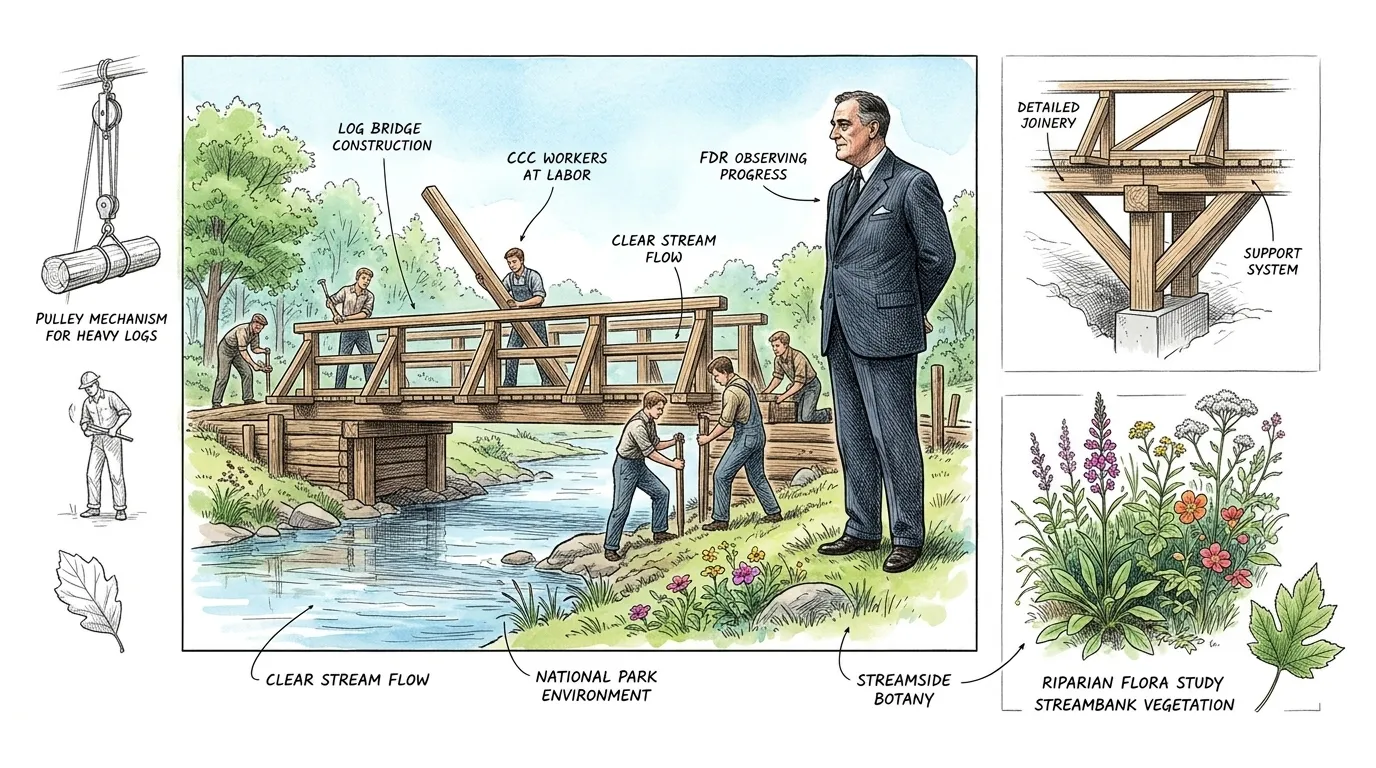
As President, Franklin D. Roosevelt launched the New Deal, a series of ambitious programs designed to provide relief, recovery, and reform. Drawing on his empathy forged in his own struggle against polio, he understood the psychological toll of despair. From the Civilian Conservation Corps, employing young men in national parks, to agricultural subsidies and banking reforms, the government he envisioned reached into every corner of American life, offering work, relief, and a renewed sense of purpose. His administration directly intervened to rebuild both infrastructure and the national spirit.
Biographical Fact: President Franklin D. Roosevelt overseeing Civilian Conservation Corps (CCC) projects, part of his New Deal initiatives, which provided employment and rebuilt infrastructure across America.
Page 9
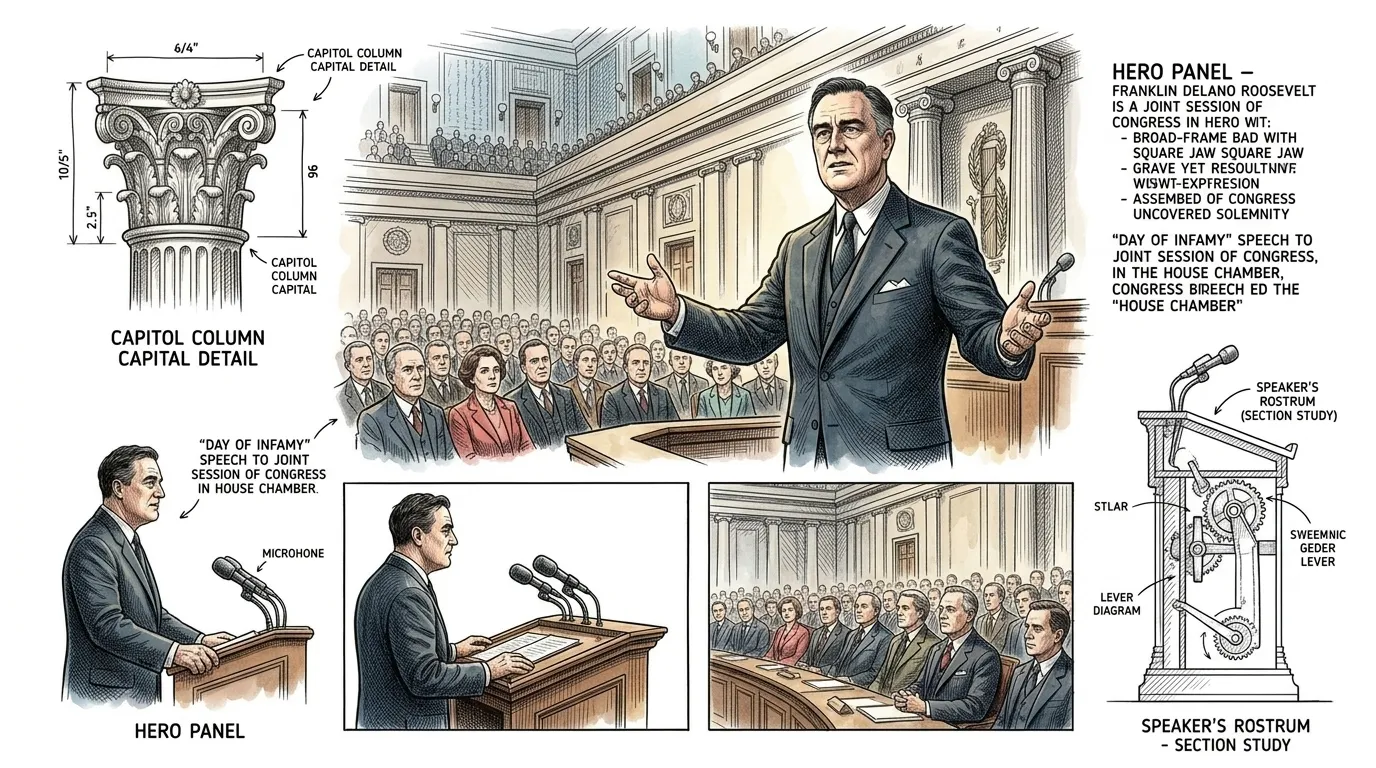
On December 8, 1941, following the attack on Pearl Harbor, Franklin D. Roosevelt addressed a joint session of Congress, requesting a declaration of war against Japan. His 'Day of Infamy' speech solidified national resolve, casting the conflict as a defense of freedom itself. He articulated a clear, moral imperative to a stunned nation. He steered America into global conflict, transforming the country into 'the arsenal of democracy,' marshaling its vast industrial and human resources to fight fascism across two distant fronts.
"'Yesterday, December 7th, 1941 — a date which will live in infamy — the United States of America was suddenly and deliberately attacked,' he proclaimed to the assembled Congress. 'I ask that the Congress declare that since the unprovoked and dastardly attack by Japan on Sunday, December 7th, 1941, a state of war has existed between the United States and the Japanese Empire.'"
Biographical Fact: President Franklin D. Roosevelt delivering his 'Day of Infamy' speech to Congress on December 8, 1941, requesting a declaration of war after the attack on Pearl Harbor.
Page 10
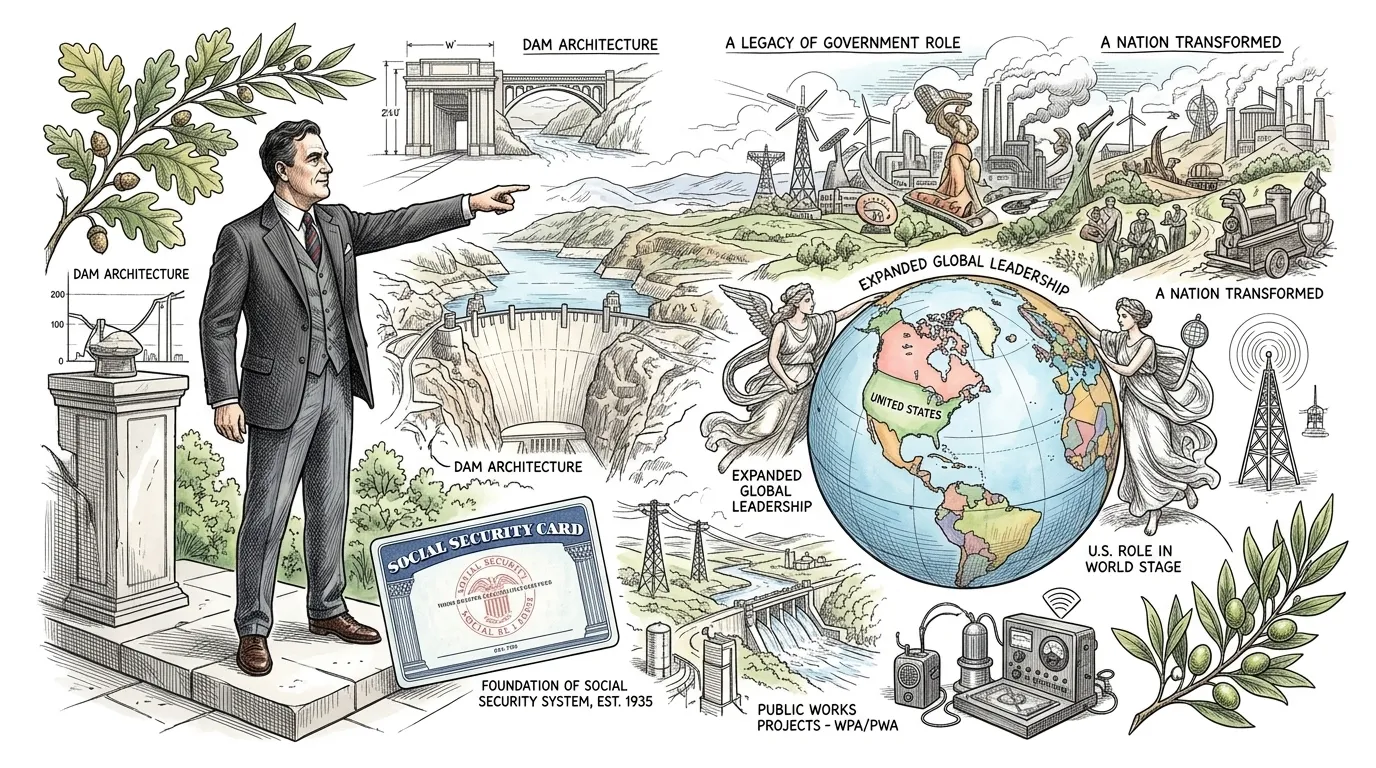
Franklin D. Roosevelt's legacy is etched into the very fabric of American governance and global leadership. He expanded the role of the federal government, establishing social safety nets like Social Security and unemployment insurance, profoundly altering the contract between citizen and state. He led America through its greatest economic crisis and its most destructive war, fostering a sense of shared national purpose. His vision reshaped government's role, expanded human rights, and cemented America's place on the world stage, an enduring blueprint for leadership in times of profound crisis.
Biographical Fact: Franklin D. Roosevelt's lasting legacy: the expanded role of government through the New Deal, his leadership through World War II, and the establishment of America's modern social safety net.
About this story
- Location: Global
- Audience: general readers
Questions and answers
Read Wonder People on your phone
Wonder People is available on Android. Get Wonder People on Google Play.